【 The Concept 】
A hand-carved wooden raichō — the Japanese rock ptarmigan — standing on a tall wooden pillar carved at the top into a small mountain peak. The bird's back, wings and head have been darkened with fire, so the dark summer feathers fade into the pale wood of its breast, where the knife has left rows of small crescent cuts like soft down. Its feet grip the peak with carved claws. On the sloping top of the pillar, the name of the mountain is brushed in red: Tateyama (立山). On one side is a hand-painted black lily, labelled kuroyuri, and on the back, burned into the wood, a short verse loved by Japanese mountaineers: "When I think of the mountains, I long for people; when I think of people, I long for the mountains." It is a souvenir from Tateyama, one of Japan's three holy mountains, and it holds the bird, the flower and the feeling of that mountain in one small object.
【 The Thunder Bird of the Sacred Peaks 】
The raichō lives only in the high alpine zone of Japan's mountains, above about 2,400 metres, among creeping pines and rocks. It is a survivor of the Ice Age: when the glaciers retreated, a small population stayed behind on the cold summits, and it has lived there ever since. Japan's raichō are the southernmost rock ptarmigans in the world. It was designated a Special Natural Monument in 1955 and is the official bird of Toyama, Nagano and Gifu prefectures.
Its name means "thunder bird." On clear days the raichō hides from eagles and hawks among the low pines, and it comes out to feed when mist and storm clouds roll in. Watching it appear calmly in thunder and fog, people believed it had power over lightning, and pictures of the raichō were long kept as charms against thunder and fire. It changes its coat with the seasons — pure white in winter, dark mottled brown in summer — and this carving shows its summer dress.
One more remarkable thing: Japan's raichō are not afraid of people. In many countries ptarmigans were hunted, but on Tateyama the bird was treated as a messenger of the mountain gods, and harming it was forbidden for centuries. Even today, hikers can watch a raichō walk only a few steps away — the result of a trust between people and a wild bird that has been kept for generations.
【 The Verse on the Back 】
The words burned into the back of the pillar, "Yama o omoeba hito koishi, hito o omoeba yama koishi," are a verse associated with Momose Shintarō, a mountaineer and poet from Ōmachi at the foot of the Northern Alps, who ran an inn for climbers. They describe a feeling every mountain lover knows. Up among the peaks, you miss the people you love; back home among them, you miss the mountains. The verse has been inscribed on stone and repeated in mountain huts for generations. Here it turns a simple souvenir into a small keepsake of that longing.
【 What Owning This Piece Brings 】
・ A charm against misfortune. As the old thunder-bird talismans of Tateyama were kept against lightning and fire, a raichō on the shelf is a small, gentle guardian for the home.
・ A piece of the high mountains. For anyone who has walked in the Japanese Alps, or dreams of it, this brings the cool air of the summits into the room.
・ A reminder of the people and places you love. The verse on the back speaks to anyone who lives between two places: the city and the hills, home and away, family and the open road.
・ Trust and patience. The raichō's calm trust in people, earned over centuries, is a quiet lesson in how care, kept up over a long time, changes the world.
A fitting gift for a hiker or climber, a birdwatcher, a lover of Japanese folk carving, or a friend who lives far away.
【 Stories of Tateyama and the Black Lily 】
Tateyama's own story begins with a bird. In 701, legend says, the young Saeki Ariyori, son of the provincial governor, chased his father's runaway white hawk into the mountains and shot an arrow at a great bear. Following its trail of blood deep into the peaks, he found that the bear had become the golden Amida Buddha and the hawk had become the deity Fudō Myōō. Ariyori became a monk and opened Tateyama as a sacred mountain. On Tateyama, animals have always been more than animals.
The black lily on the front carries a darker tale. In the late sixteenth century, the warlord Sassa Narimasa ruled this region. While he was away crossing the frozen Northern Alps in winter, rumours spread that his beautiful consort Sayuri had been unfaithful, and on his return he had her killed. Before she died she cursed him: "When black lilies bloom on Tateyama, the house of Sassa will fall." Years later Narimasa sent black lilies from Tateyama as a gift to Nene, wife of the ruler Toyotomi Hideyoshi. But her rival Lady Yodo filled her own rooms with black lilies, as if they were common weeds, and Nene, embarrassed, turned against Narimasa. In 1588 he was ordered to take his own life. Historians now think much of this story was invented later, but the black lily has carried the name of Tateyama ever since.
【 Where to Place It 】
On a bookshelf or desk, on a windowsill, or beside maps and mountain photographs. Turn it now and then: the bird and the red Tateyama face one way, the black lily another, and the verse on the back is a quiet surprise for anyone who picks it up. Soft side light brings out the knife cuts and the burned feathers.
【 Care 】
Dust with a soft, dry brush. Keep away from direct sunlight, heat and humidity to protect the painted lily and the pale wood. Do not use water or polish. Lift by the pillar, not by the bird.
【 Reading the Object 】
A carved raichō standing on a tall square pillar, its head turned a little to one side, round eyes and a short beak. The head, back and wings are scorched dark brown, fading into the bare pale wood of the breast, which is carved with rows of crescent cuts. The feet, with carved claws, grip a peak carved from the top of the pillar, and an opening is cut through between the legs. The tail extends down over the back edge. On the sloping top, 立山 (Tateyama) in red; on one side, a hand-painted black lily with the word くろゆり; on the back, a verse burned into the wood.
【 Presence 】
Calm, watchful and warm. A small bird from the high peaks, carrying a mountain and a feeling with it.
Archive Note: The number in the name (701) refers to the year in which, according to legend, Saeki Ariyori opened Tateyama as a sacred mountain. NOT the date this piece was made.
Provenance Note: Sourced from a private household in Japan. A carved wooden raichō souvenir from the Tateyama region, with a hand-painted black lily and a pyrographed verse. Attributed to the regional tradition of mountain-souvenir woodcarving rather than to a specific maker.
Condition Note: Good vintage condition. Small natural marks in the wood and light surface wear consistent with age. No breaks observed.


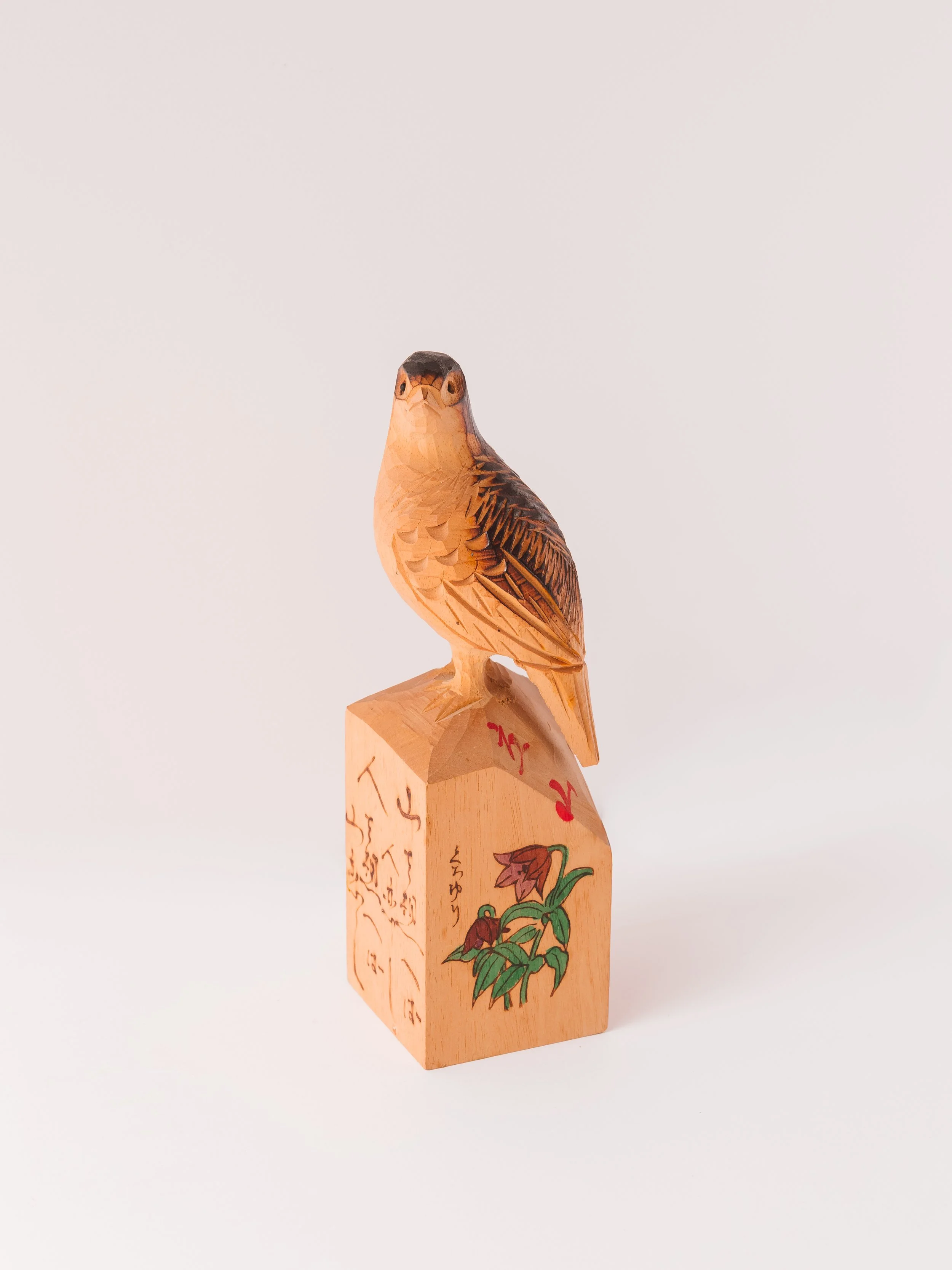 Image 1 of 12
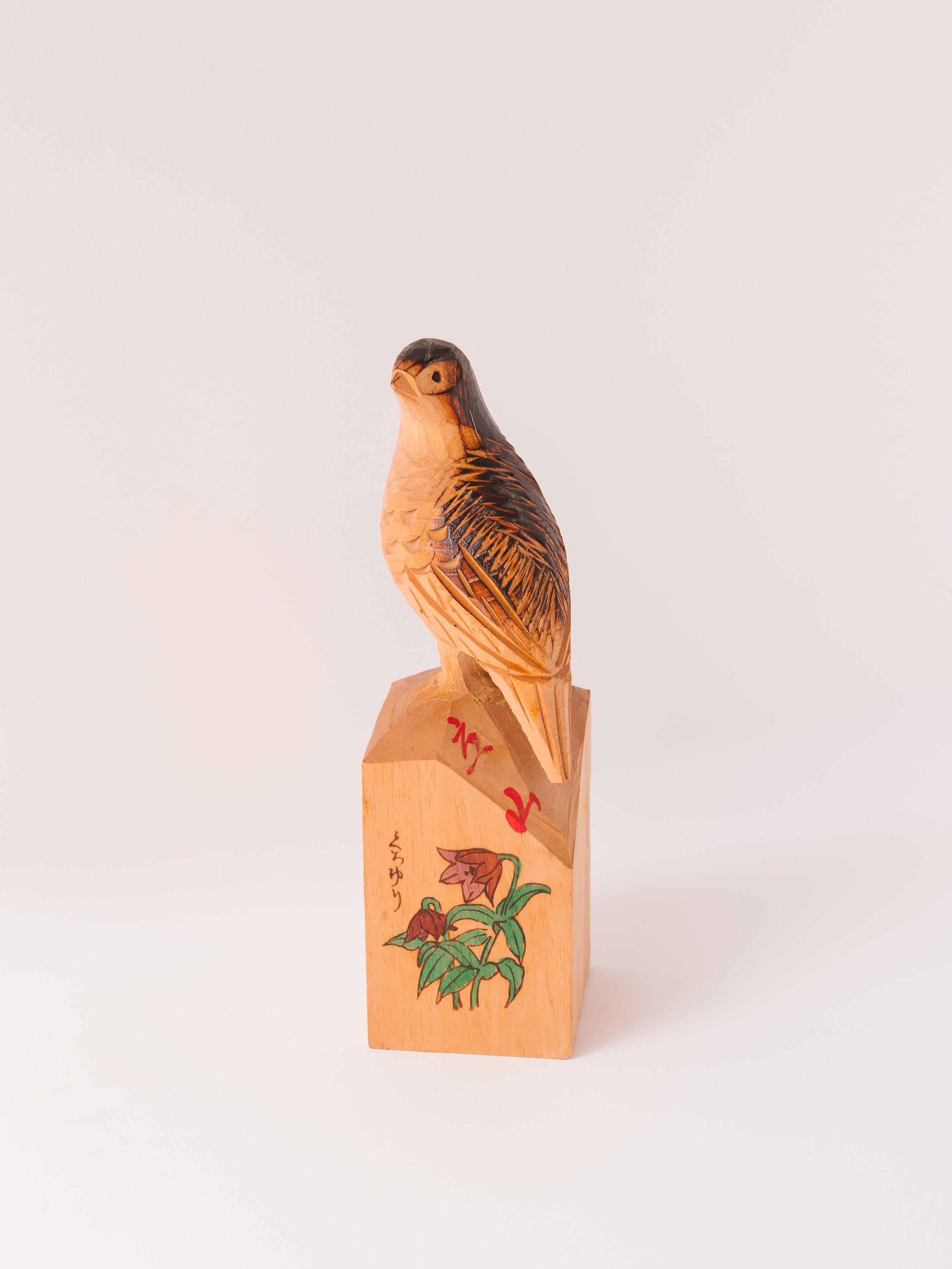 Image 2 of 12
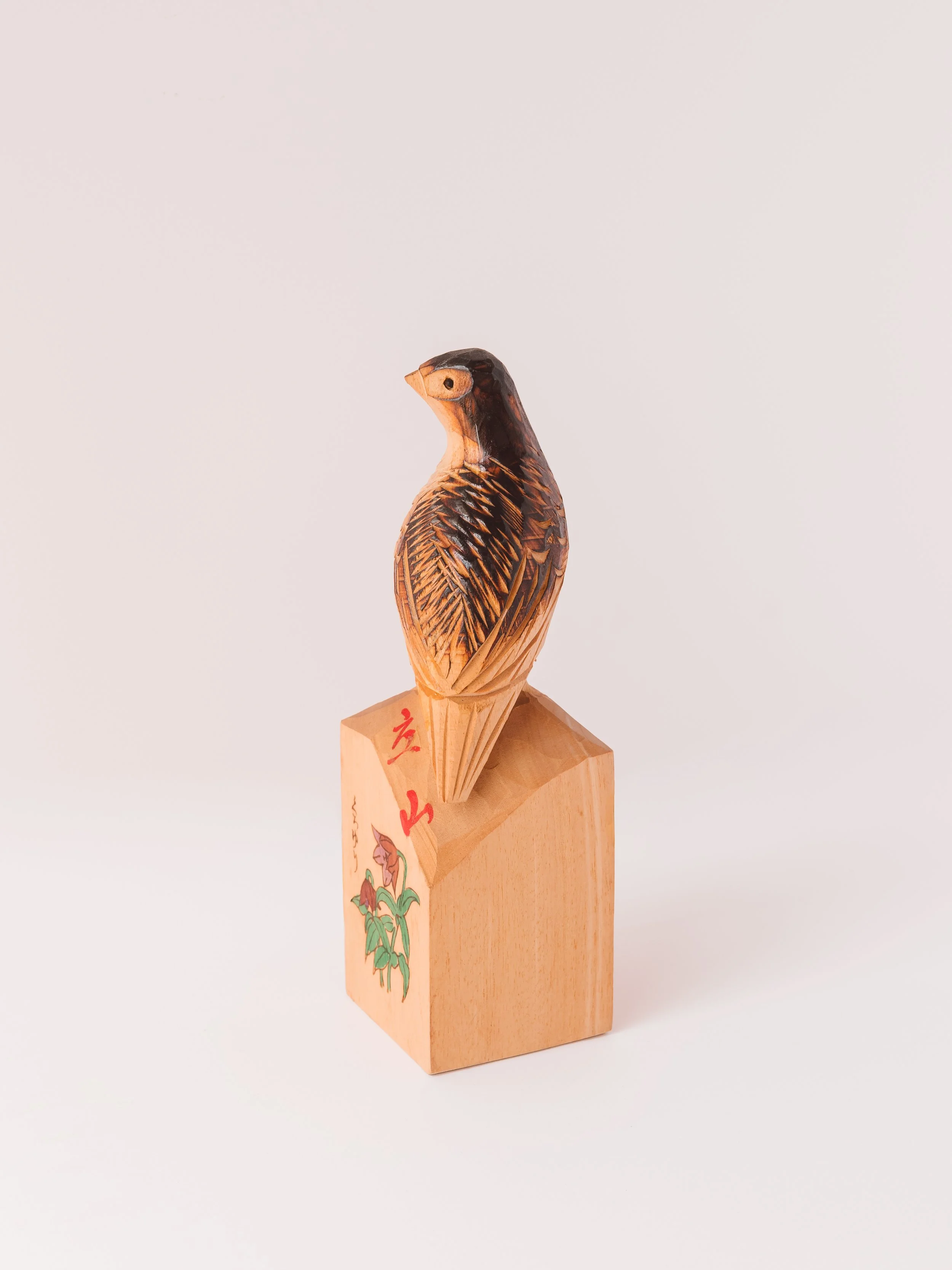 Image 3 of 12
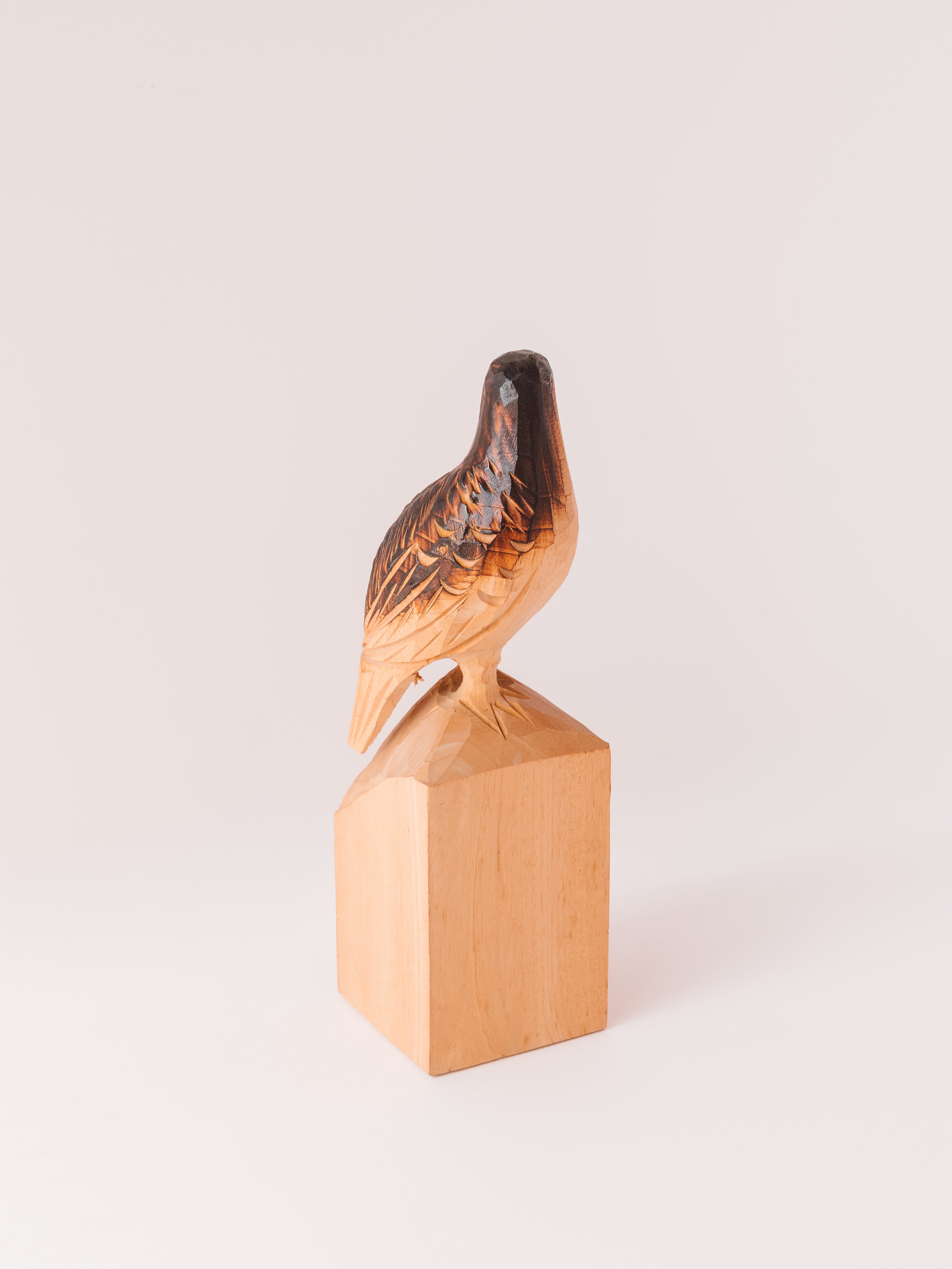 Image 4 of 12
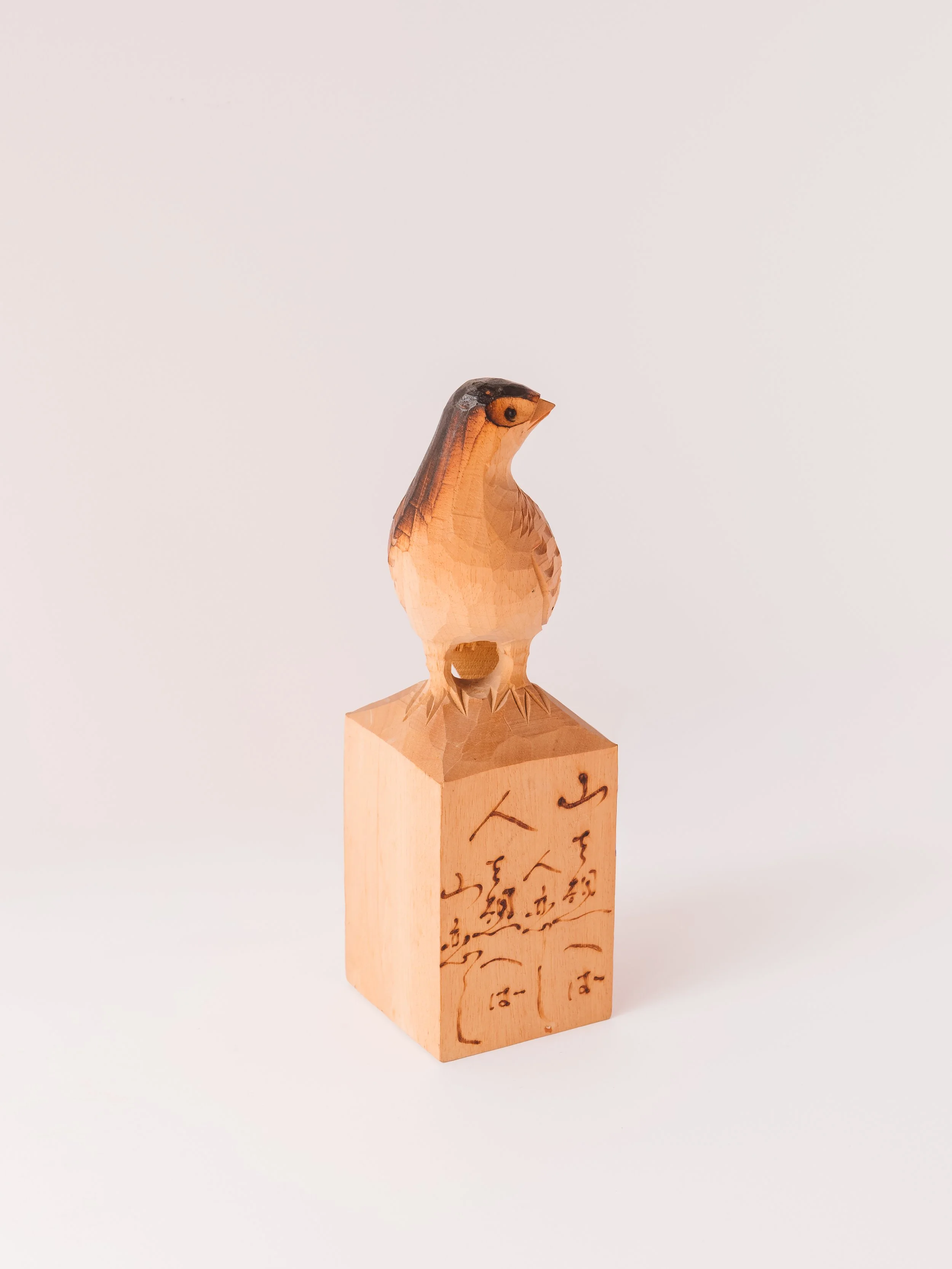 Image 5 of 12
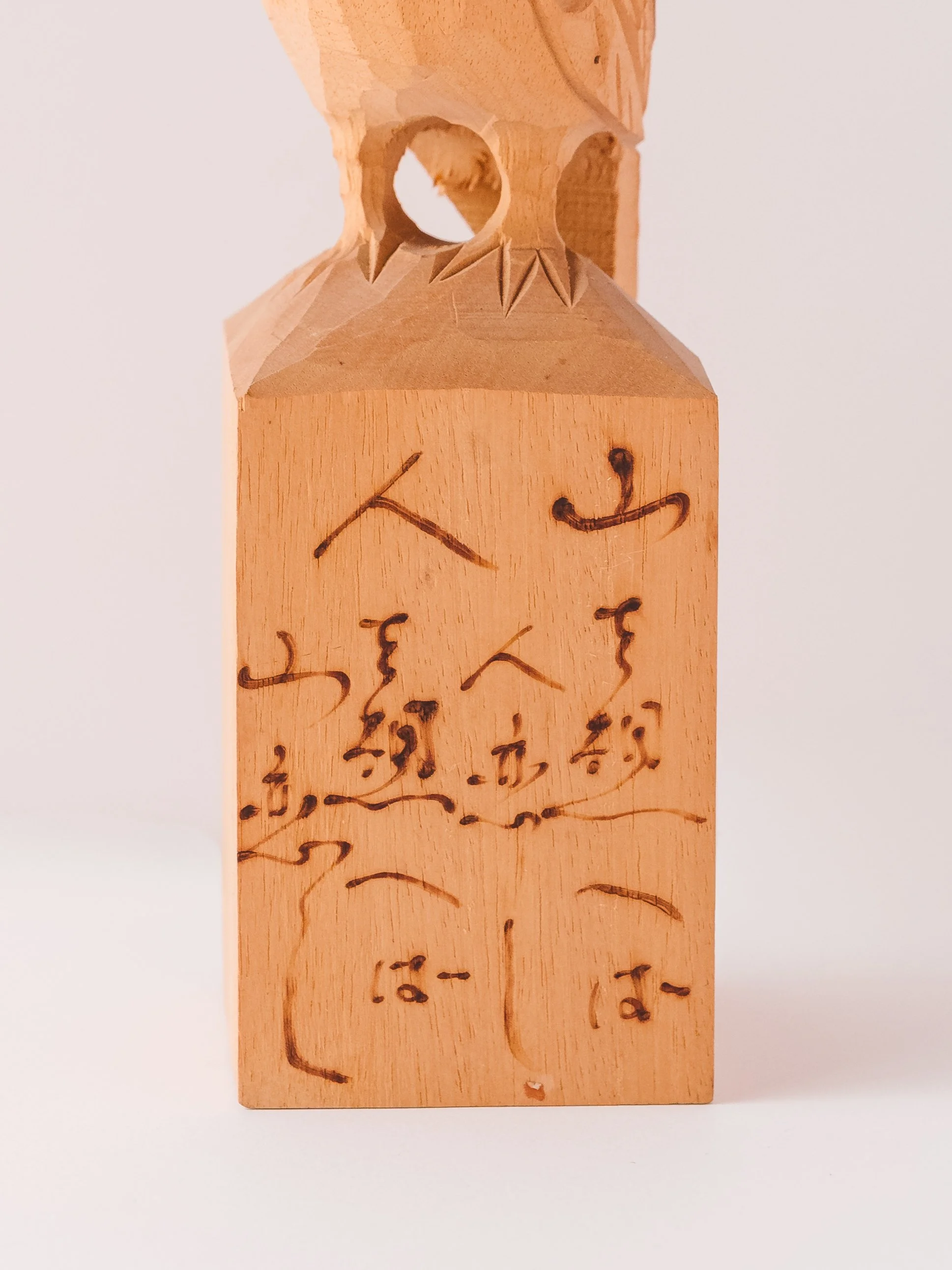 Image 6 of 12
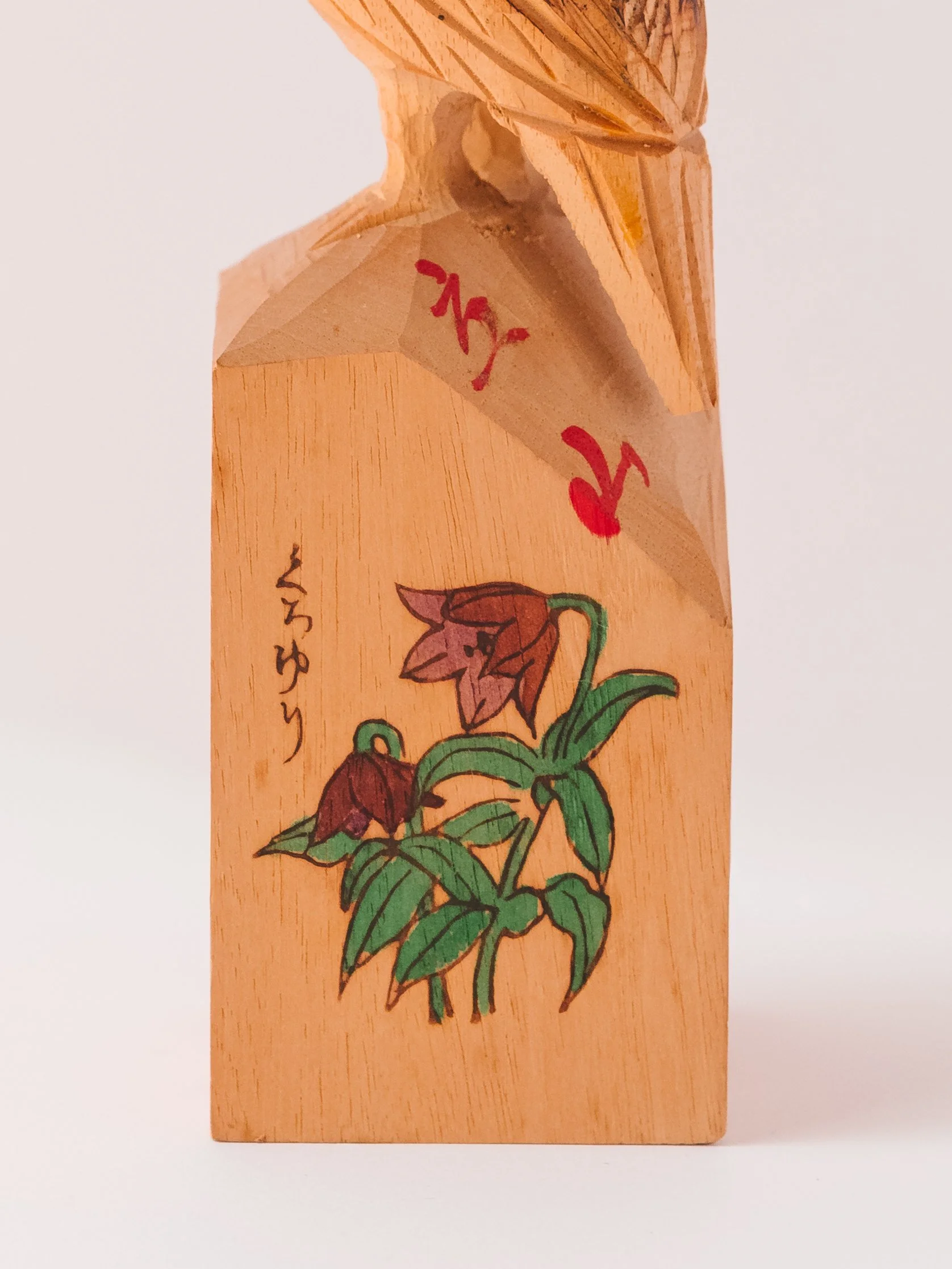 Image 7 of 12
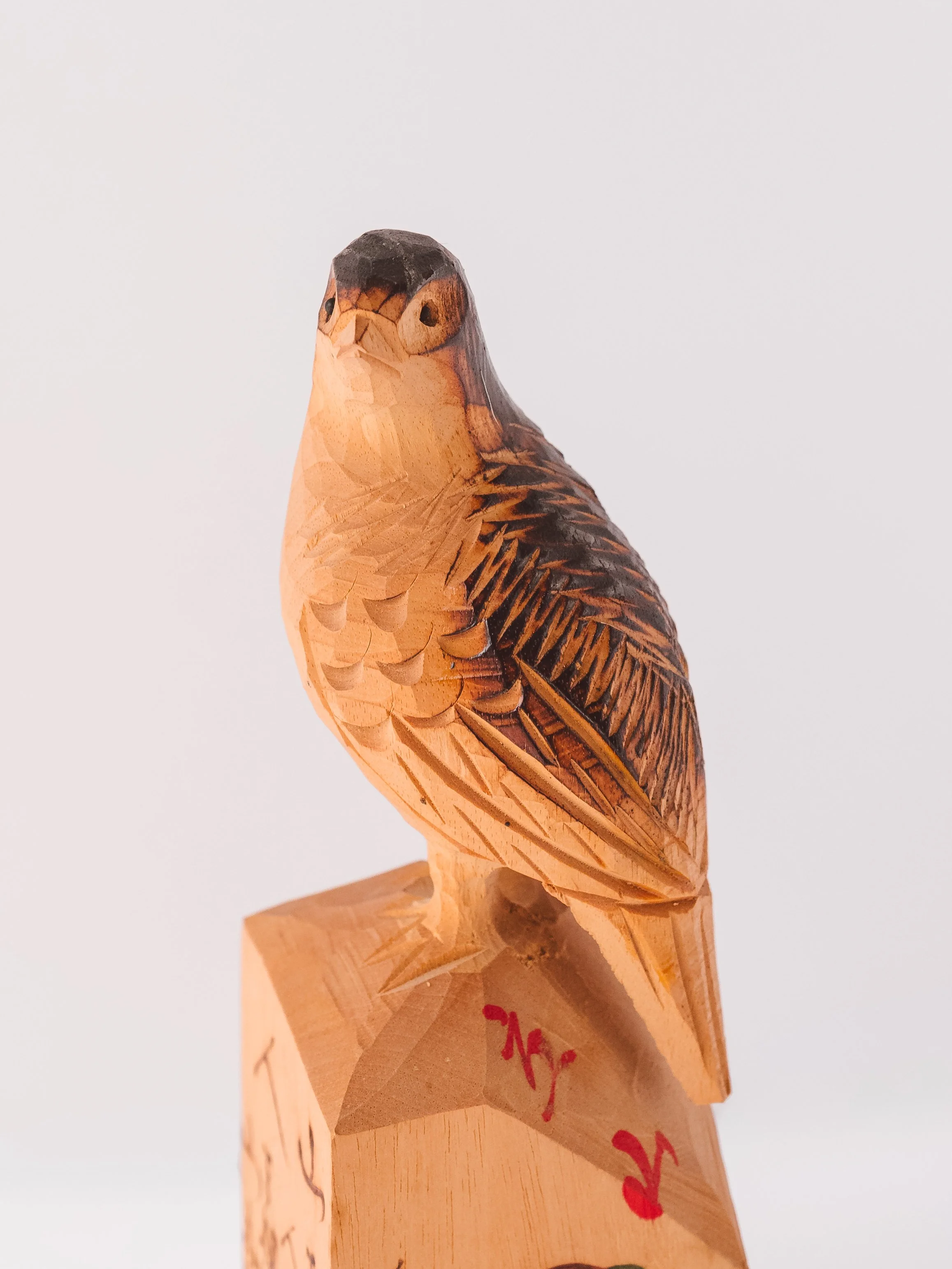 Image 8 of 12
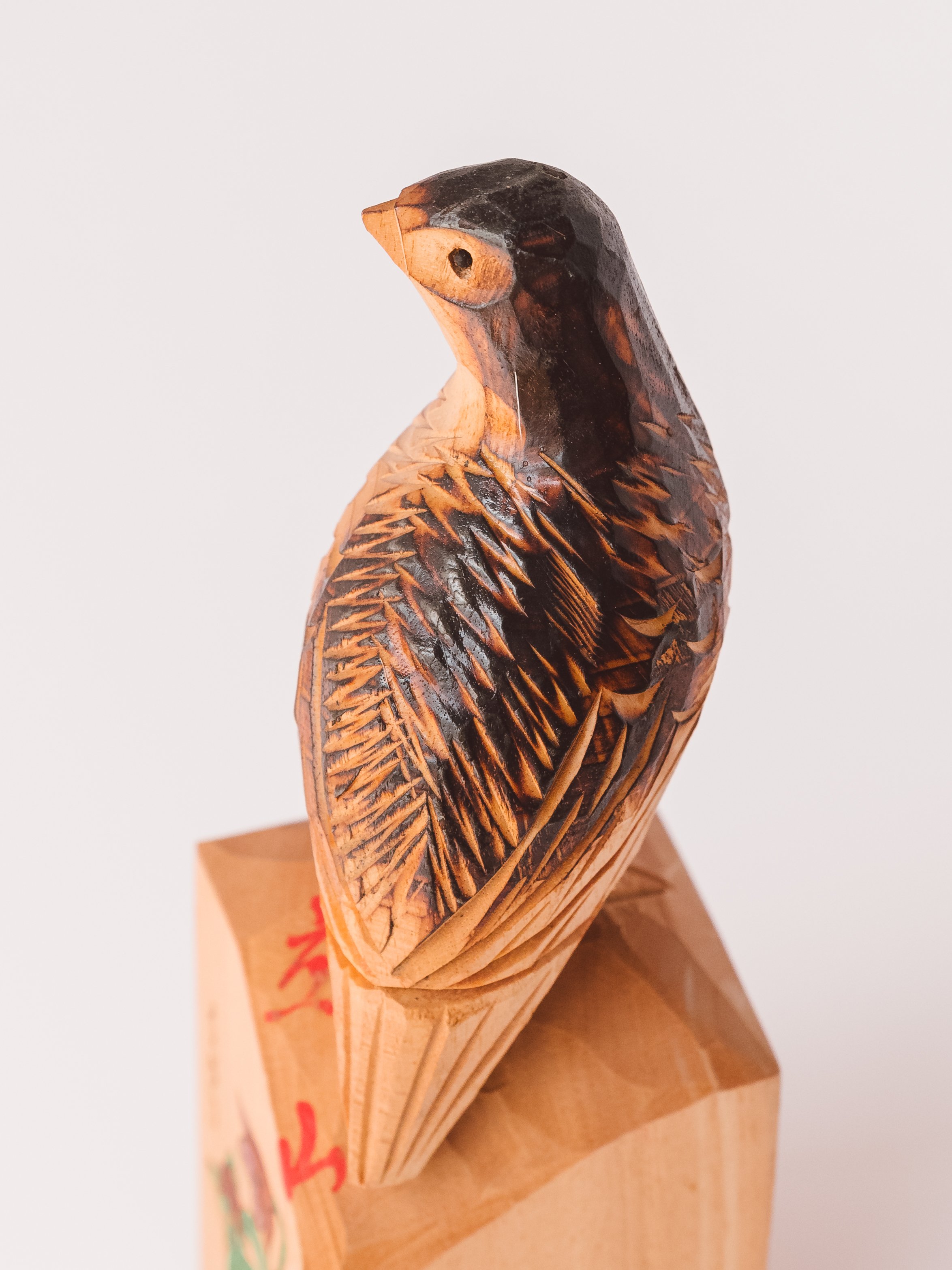 Image 9 of 12
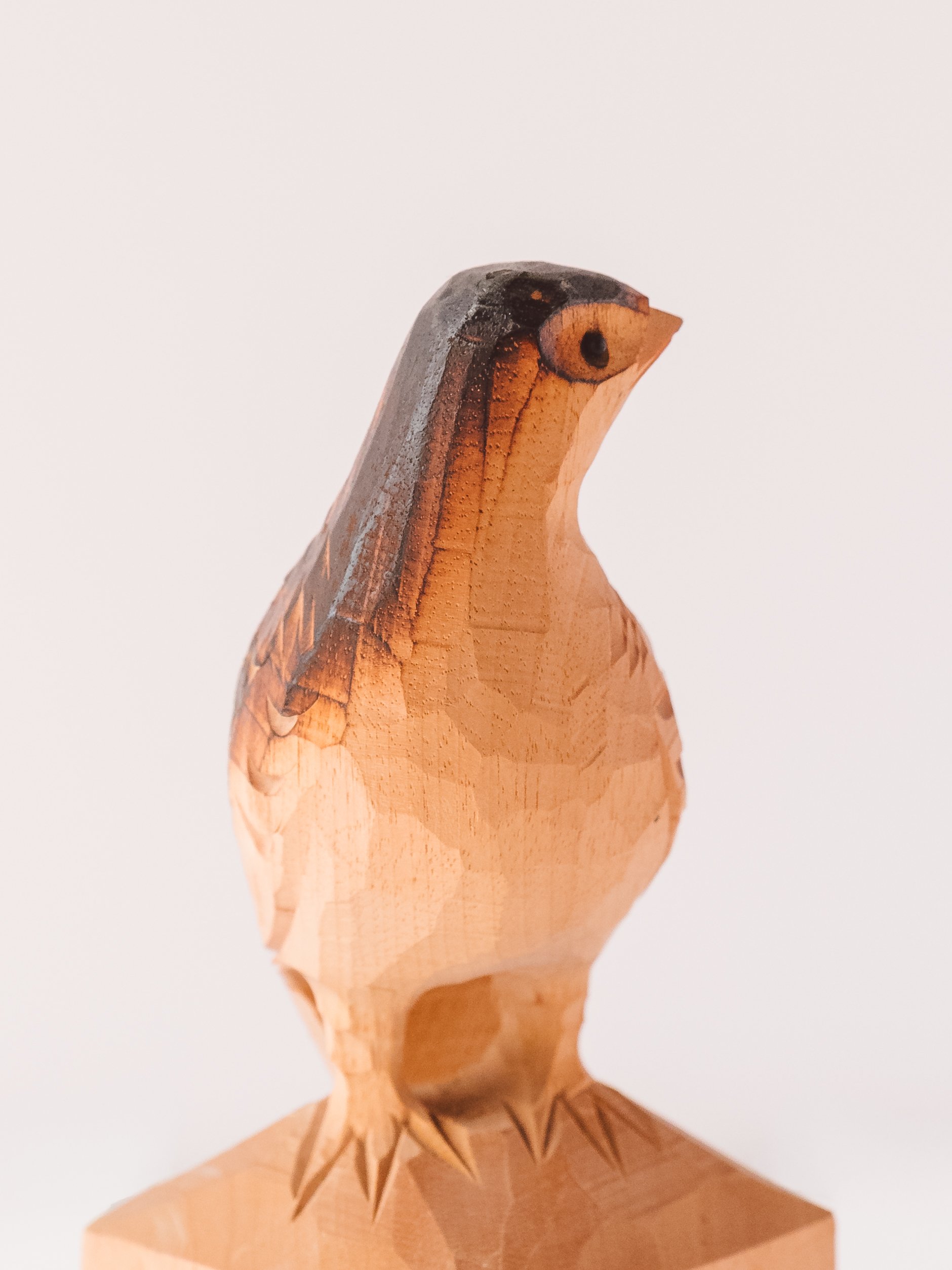 Image 10 of 12
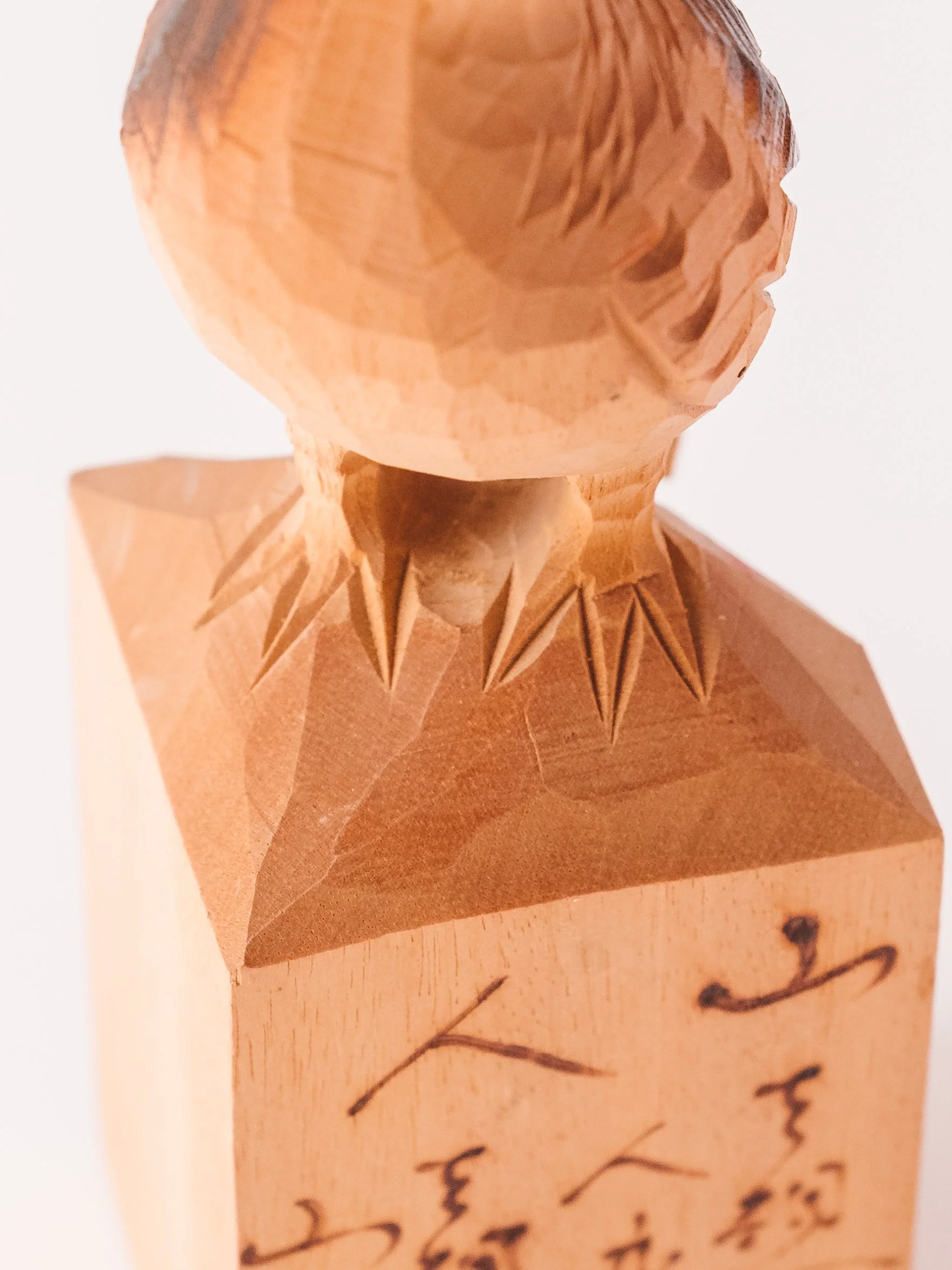 Image 11 of 12
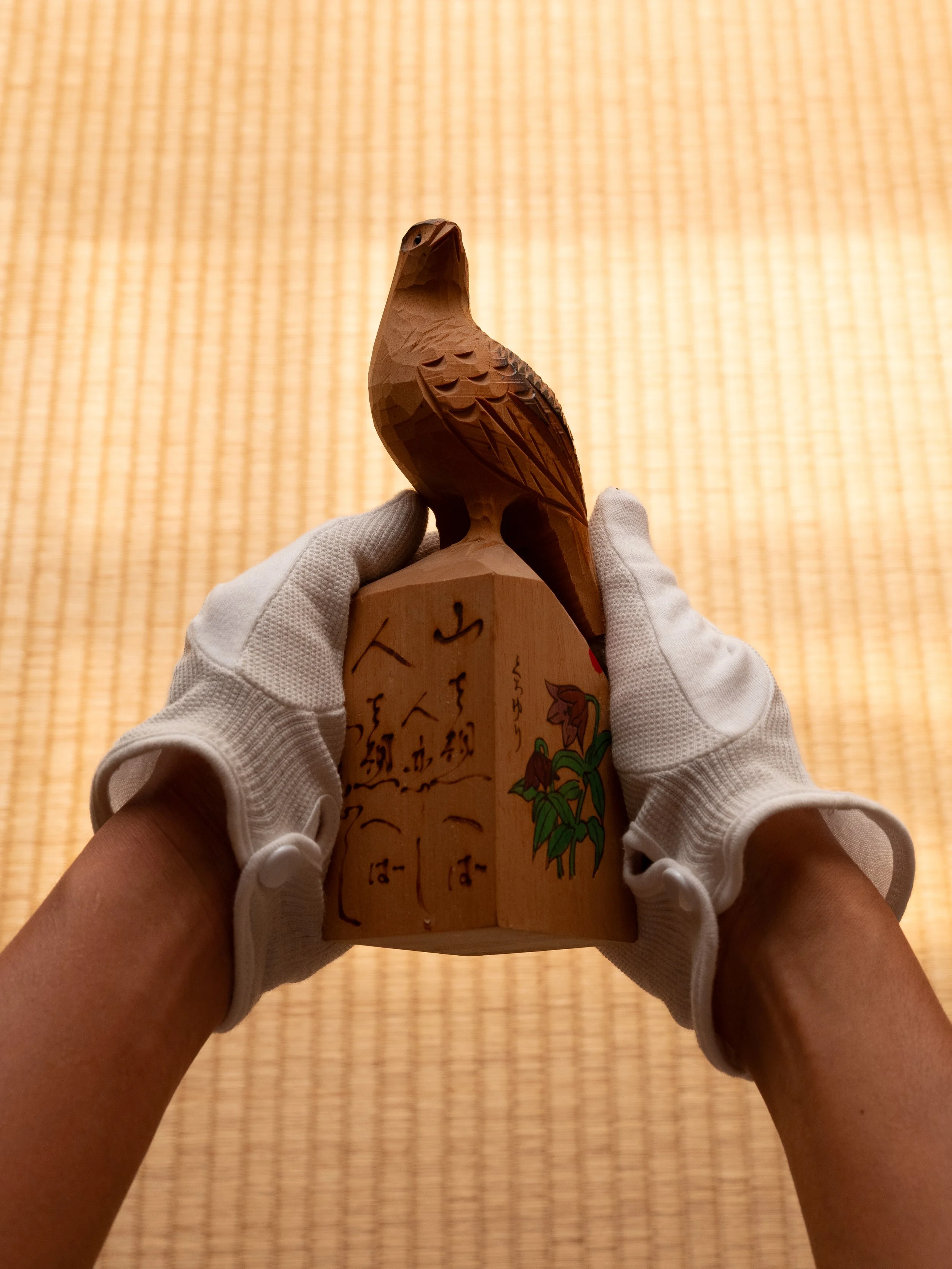 Image 12 of 12