【 The Concept 】
A small standing crane, sixteen centimetres tall, hand-woven entirely from the pale golden stems of broom corn — the very plant used to make the traditional brooms of Kanuma, in Tochigi Prefecture. It stands on two long, slender legs bound in red-brown thread, ending in slim black wire feet that splay for balance. The body is worked as a dense, scale-like weave; the long neck rises in a rhythm of stacked leaflets held by fine brown binding; the head is small, poised, marked with a single vivid red disc for the tancho crown; the beak is a long, sharp dark line reaching forward and slightly down. The tail is not woven at all — the raw broom-corn stems are simply gathered, bound with a heavy band of thread, and left to fan out at the back as a spray of natural fibre. Everything about the piece is honest to its material: this is a crane, and, at the same time, it is unmistakably a bundle of the plant used to sweep Japanese floors. That double reading is the whole point of the tradition it belongs to.
【 What Kibigara-zaiku Is 】
Kibigara-zaiku (きびがら細工) is a folk craft from Kanuma, in the mountains of central Tochigi Prefecture, in which small animal figures — the twelve zodiac creatures, cranes, tortoises and other auspicious motifs — are hand-woven from the dried stems of hōkigusa, the broom corn plant grown locally for making brooms. The name "kibigara" refers to those stems: the material that is left over, or set aside, when broom corn is being selected and processed for broom-making. The technique itself — the wetting, binding, twisting and tying of the fibres — is drawn directly from the broom-maker's own craft. To learn kibigara detail work is, in a very literal sense, to inherit the broom-maker's hands. Kanuma's own municipal materials describe kibigara-zaiku as a form of good-luck folk craft made from the stems of the broom plant, expressing zodiac animals and auspicious creatures such as the crane and tortoise in hand-woven form.
【 The Kanuma Broom Tradition Behind It 】
To understand this crane it helps to look at the broom that stands behind it. The Kanuma broom — Kanuma-bōki — has been made in this area since the late Edo period, traditionally traced to the local magistrate Arai Kiemon, who is said to have introduced broom-corn seeds to the district around 1842. Since then the whole area has grown, dried, sorted and woven this one plant into brooms of unusual refinement, celebrated for the taut, rounded, clam-shell shaped head that binds the fibres to the handle. But not every stalk is fit to become a broom; and as demand for domestic brooms fell in the twentieth century, the craftsmen of Kanuma found a second life for both the surplus stems and their own accumulated skill. From that came kibigara-zaiku — first developed in the mid-twentieth century — in which the same material and the same trained hands are used to make small animals, cranes and tortoises for the household shelf rather than the household floor. In that sense the piece in front of you is not a decoration invented in isolation; it is the broom's other life.
【 Why a Crane, and Why Tanchō 】
Of all the animals in the kibigara repertoire, the crane is one of the most beloved — and the choice is not incidental. In Japanese decorative tradition the crane and the tortoise together (鶴亀, tsuru-kame) are among the oldest paired symbols of longevity, dignity and household good fortune, appearing on wedding kimono, lacquerware, tea-ceremony trays and shrine offerings from the Edo period onward. To weave a crane in the same material one would use for a good-luck broom is to double the auspiciousness: the object itself is a wish for a long life and a well-swept home. This particular crane is named for the tanchō (丹頂) — the red-crowned crane, Japan's largest and most iconic wild bird, a protected national natural treasure and one of the most enduring emblems of the country's northern landscapes. The small vivid red disc on the head is the tanchō's signature crown, compressed into a single graphic mark against the pale gold of the woven body.
【 Reading the Object 】
The composition works vertically, from wire feet upward.
The feet are made of very fine black wire, splayed forward and back in the classic four-toed print of a wading bird; they are the piece's only truly hard, dark material, and they give the whole standing figure its balance.
The legs are long and slender, each one bound its entire length with a fine red-brown thread wound in a tight spiral, with a slightly thickened joint at the ankle. The colour of the thread is deliberately close to the darker natural tone of the stems, so the legs read as continuous with the body above.
The body is a rounded, teardrop-shaped mass, densely woven from short, folded broom-corn leaflets that overlap in staggered rows — the classic "scaled" surface of the kibigara technique. Each row is bound to the next with a thin band of the same red-brown thread. Read from a distance the effect is of layered feathers; read closely it is beautifully honest basketry.
The neck rises tall and vertical, tapering gently upward. Here the same leaflet-and-thread unit is used, but the leaflets are stacked in a single narrow column, so the neck reads as a stacked chain of small scallops — an ornamental ridge running from shoulder to head.
The head is a small, folded-in bundle of stems, closed at the front and side and marked with a small round patch of red material for the tanchō crown. From the head extends a long, straight, dark beak of natural fibre, sharp and slender.
The tail, by contrast, is deliberately left un-woven. The raw broom-corn stems are simply gathered, tied at the base with a heavy band of the red-brown thread, and allowed to fan out at the rear as a broad spray of natural fibre, each stem ending a little differently — a beautiful controlled roughness that shows the material as it comes from the field.
【 The Object 】
A small hand-woven crane, standing upright and free on its own two legs. Very light in the hand — barely fourteen grams — yet dimensionally stable, with the wire feet acting as a discreet built-in stand. Meant to be looked at from the side (the whole silhouette of the standing bird) and from slightly above (to catch the red crown against the pale body).
【 Where to Place It 】
On a windowsill, a low shelf, a tokonoma alcove, an entrance console, a study desk, or a bedside table. A traditional Japanese placement would be together with a tortoise (real or symbolic) as the classical tsuru-kame pair, but the crane stands beautifully on its own — anywhere it can be seen at eye level or slightly above, so the long neck and small red crown are visible. Keep it out of direct sunlight, away from humidifiers and open windows in rain, and away from the reach of curious pets and small children — the tail and legs are fragile by nature.
【 Care 】
Dust with a soft dry brush or a gentle puff of air, always in the direction of the fibre. Do not wipe with a wet cloth. Do not spray with liquid cleaners. Keep it in a stable dry indoor environment. If the piece is ever moved, lift it by the body — never by the neck, beak or tail.
【 Function & What It Brings 】
Keep it, place it, or give it. As a folk art it is a compact, honest example of a specifically Kanuma tradition — the broom-maker's craft reborn as household iconography. As a talisman it carries the crane's classical role: long life, dignity, and steady household fortune, with the added specificity of the tanchō, Japan's revered northern crane. A very fitting gift for a wedding, a milestone birthday, a housewarming, a retirement, or for anyone born in a crane-associated year.
【 The Texture 】
Pale golden broom-corn stems, dry and softly matte, with the plant's natural longitudinal fibres visible under close light. Fine red-brown binding thread with a slight matte texture crosses the body and neck at regular intervals and wraps the legs their full length. A single small patch of intense vermilion-red material sits on the side of the head. The beak and lower legs' wire feet contrast with the rest as darker, harder lines. The tail is a spray of un-woven, softly ragged natural stems.
【 Presence 】
Alert, upright, quiet. This is not a preening or dancing crane but a standing one, watching the ground a step ahead of itself with the steady patience of a wading bird. Its beauty is not in polish — the tail is deliberately rough, the leaflets are not perfectly matched — but in the truthfulness of its material and the delicacy of its balance on two thread-thin legs.
Archive Note: The number in the name (1962) references the year in which kibigara-zaiku is credited as having been conceived as a distinct folk craft in Kanuma — developed as a way to carry the broom-maker's material and technique into a new generation, at a time when demand for the traditional Kanuma broom itself was falling. It is NOT the date this particular piece was made.
Provenance Note: Sourced from a private household in Japan. A hand-woven tanchō crane in the tradition of Kanuma kibigara-zaiku (鹿沼きびがら細工), Tochigi Prefecture; a folk craft rooted in the local Kanuma broom (鹿沼箒) tradition of broom-corn cultivation and hand-binding. Attributed to the Kanuma kibigara-zaiku tradition rather than to a specific individual maker.
Condition Note: Sold as acquired, in very good condition. The naturally uneven ends of the un-woven tail feathers, the slight variations in leaflet size across the body, and the visible longitudinal fibre of the broom-corn stems are inherent features of a hand-woven kibigara piece, not damage. The tail, neck, beak and legs are fragile by design; please handle by the body and keep out of direct light and humidity. Please see the photographs as part of the description.
【 The Concept 】
A small standing crane, sixteen centimetres tall, hand-woven entirely from the pale golden stems of broom corn — the very plant used to make the traditional brooms of Kanuma, in Tochigi Prefecture. It stands on two long, slender legs bound in red-brown thread, ending in slim black wire feet that splay for balance. The body is worked as a dense, scale-like weave; the long neck rises in a rhythm of stacked leaflets held by fine brown binding; the head is small, poised, marked with a single vivid red disc for the tancho crown; the beak is a long, sharp dark line reaching forward and slightly down. The tail is not woven at all — the raw broom-corn stems are simply gathered, bound with a heavy band of thread, and left to fan out at the back as a spray of natural fibre. Everything about the piece is honest to its material: this is a crane, and, at the same time, it is unmistakably a bundle of the plant used to sweep Japanese floors. That double reading is the whole point of the tradition it belongs to.
【 What Kibigara-zaiku Is 】
Kibigara-zaiku (きびがら細工) is a folk craft from Kanuma, in the mountains of central Tochigi Prefecture, in which small animal figures — the twelve zodiac creatures, cranes, tortoises and other auspicious motifs — are hand-woven from the dried stems of hōkigusa, the broom corn plant grown locally for making brooms. The name "kibigara" refers to those stems: the material that is left over, or set aside, when broom corn is being selected and processed for broom-making. The technique itself — the wetting, binding, twisting and tying of the fibres — is drawn directly from the broom-maker's own craft. To learn kibigara detail work is, in a very literal sense, to inherit the broom-maker's hands. Kanuma's own municipal materials describe kibigara-zaiku as a form of good-luck folk craft made from the stems of the broom plant, expressing zodiac animals and auspicious creatures such as the crane and tortoise in hand-woven form.
【 The Kanuma Broom Tradition Behind It 】
To understand this crane it helps to look at the broom that stands behind it. The Kanuma broom — Kanuma-bōki — has been made in this area since the late Edo period, traditionally traced to the local magistrate Arai Kiemon, who is said to have introduced broom-corn seeds to the district around 1842. Since then the whole area has grown, dried, sorted and woven this one plant into brooms of unusual refinement, celebrated for the taut, rounded, clam-shell shaped head that binds the fibres to the handle. But not every stalk is fit to become a broom; and as demand for domestic brooms fell in the twentieth century, the craftsmen of Kanuma found a second life for both the surplus stems and their own accumulated skill. From that came kibigara-zaiku — first developed in the mid-twentieth century — in which the same material and the same trained hands are used to make small animals, cranes and tortoises for the household shelf rather than the household floor. In that sense the piece in front of you is not a decoration invented in isolation; it is the broom's other life.
【 Why a Crane, and Why Tanchō 】
Of all the animals in the kibigara repertoire, the crane is one of the most beloved — and the choice is not incidental. In Japanese decorative tradition the crane and the tortoise together (鶴亀, tsuru-kame) are among the oldest paired symbols of longevity, dignity and household good fortune, appearing on wedding kimono, lacquerware, tea-ceremony trays and shrine offerings from the Edo period onward. To weave a crane in the same material one would use for a good-luck broom is to double the auspiciousness: the object itself is a wish for a long life and a well-swept home. This particular crane is named for the tanchō (丹頂) — the red-crowned crane, Japan's largest and most iconic wild bird, a protected national natural treasure and one of the most enduring emblems of the country's northern landscapes. The small vivid red disc on the head is the tanchō's signature crown, compressed into a single graphic mark against the pale gold of the woven body.
【 Reading the Object 】
The composition works vertically, from wire feet upward.
The feet are made of very fine black wire, splayed forward and back in the classic four-toed print of a wading bird; they are the piece's only truly hard, dark material, and they give the whole standing figure its balance.
The legs are long and slender, each one bound its entire length with a fine red-brown thread wound in a tight spiral, with a slightly thickened joint at the ankle. The colour of the thread is deliberately close to the darker natural tone of the stems, so the legs read as continuous with the body above.
The body is a rounded, teardrop-shaped mass, densely woven from short, folded broom-corn leaflets that overlap in staggered rows — the classic "scaled" surface of the kibigara technique. Each row is bound to the next with a thin band of the same red-brown thread. Read from a distance the effect is of layered feathers; read closely it is beautifully honest basketry.
The neck rises tall and vertical, tapering gently upward. Here the same leaflet-and-thread unit is used, but the leaflets are stacked in a single narrow column, so the neck reads as a stacked chain of small scallops — an ornamental ridge running from shoulder to head.
The head is a small, folded-in bundle of stems, closed at the front and side and marked with a small round patch of red material for the tanchō crown. From the head extends a long, straight, dark beak of natural fibre, sharp and slender.
The tail, by contrast, is deliberately left un-woven. The raw broom-corn stems are simply gathered, tied at the base with a heavy band of the red-brown thread, and allowed to fan out at the rear as a broad spray of natural fibre, each stem ending a little differently — a beautiful controlled roughness that shows the material as it comes from the field.
【 The Object 】
A small hand-woven crane, standing upright and free on its own two legs. Very light in the hand — barely fourteen grams — yet dimensionally stable, with the wire feet acting as a discreet built-in stand. Meant to be looked at from the side (the whole silhouette of the standing bird) and from slightly above (to catch the red crown against the pale body).
【 Where to Place It 】
On a windowsill, a low shelf, a tokonoma alcove, an entrance console, a study desk, or a bedside table. A traditional Japanese placement would be together with a tortoise (real or symbolic) as the classical tsuru-kame pair, but the crane stands beautifully on its own — anywhere it can be seen at eye level or slightly above, so the long neck and small red crown are visible. Keep it out of direct sunlight, away from humidifiers and open windows in rain, and away from the reach of curious pets and small children — the tail and legs are fragile by nature.
【 Care 】
Dust with a soft dry brush or a gentle puff of air, always in the direction of the fibre. Do not wipe with a wet cloth. Do not spray with liquid cleaners. Keep it in a stable dry indoor environment. If the piece is ever moved, lift it by the body — never by the neck, beak or tail.
【 Function & What It Brings 】
Keep it, place it, or give it. As a folk art it is a compact, honest example of a specifically Kanuma tradition — the broom-maker's craft reborn as household iconography. As a talisman it carries the crane's classical role: long life, dignity, and steady household fortune, with the added specificity of the tanchō, Japan's revered northern crane. A very fitting gift for a wedding, a milestone birthday, a housewarming, a retirement, or for anyone born in a crane-associated year.
【 The Texture 】
Pale golden broom-corn stems, dry and softly matte, with the plant's natural longitudinal fibres visible under close light. Fine red-brown binding thread with a slight matte texture crosses the body and neck at regular intervals and wraps the legs their full length. A single small patch of intense vermilion-red material sits on the side of the head. The beak and lower legs' wire feet contrast with the rest as darker, harder lines. The tail is a spray of un-woven, softly ragged natural stems.
【 Presence 】
Alert, upright, quiet. This is not a preening or dancing crane but a standing one, watching the ground a step ahead of itself with the steady patience of a wading bird. Its beauty is not in polish — the tail is deliberately rough, the leaflets are not perfectly matched — but in the truthfulness of its material and the delicacy of its balance on two thread-thin legs.
Archive Note: The number in the name (1962) references the year in which kibigara-zaiku is credited as having been conceived as a distinct folk craft in Kanuma — developed as a way to carry the broom-maker's material and technique into a new generation, at a time when demand for the traditional Kanuma broom itself was falling. It is NOT the date this particular piece was made.
Provenance Note: Sourced from a private household in Japan. A hand-woven tanchō crane in the tradition of Kanuma kibigara-zaiku (鹿沼きびがら細工), Tochigi Prefecture; a folk craft rooted in the local Kanuma broom (鹿沼箒) tradition of broom-corn cultivation and hand-binding. Attributed to the Kanuma kibigara-zaiku tradition rather than to a specific individual maker.
Condition Note: Sold as acquired, in very good condition. The naturally uneven ends of the un-woven tail feathers, the slight variations in leaflet size across the body, and the visible longitudinal fibre of the broom-corn stems are inherent features of a hand-woven kibigara piece, not damage. The tail, neck, beak and legs are fragile by design; please handle by the body and keep out of direct light and humidity. Please see the photographs as part of the description.


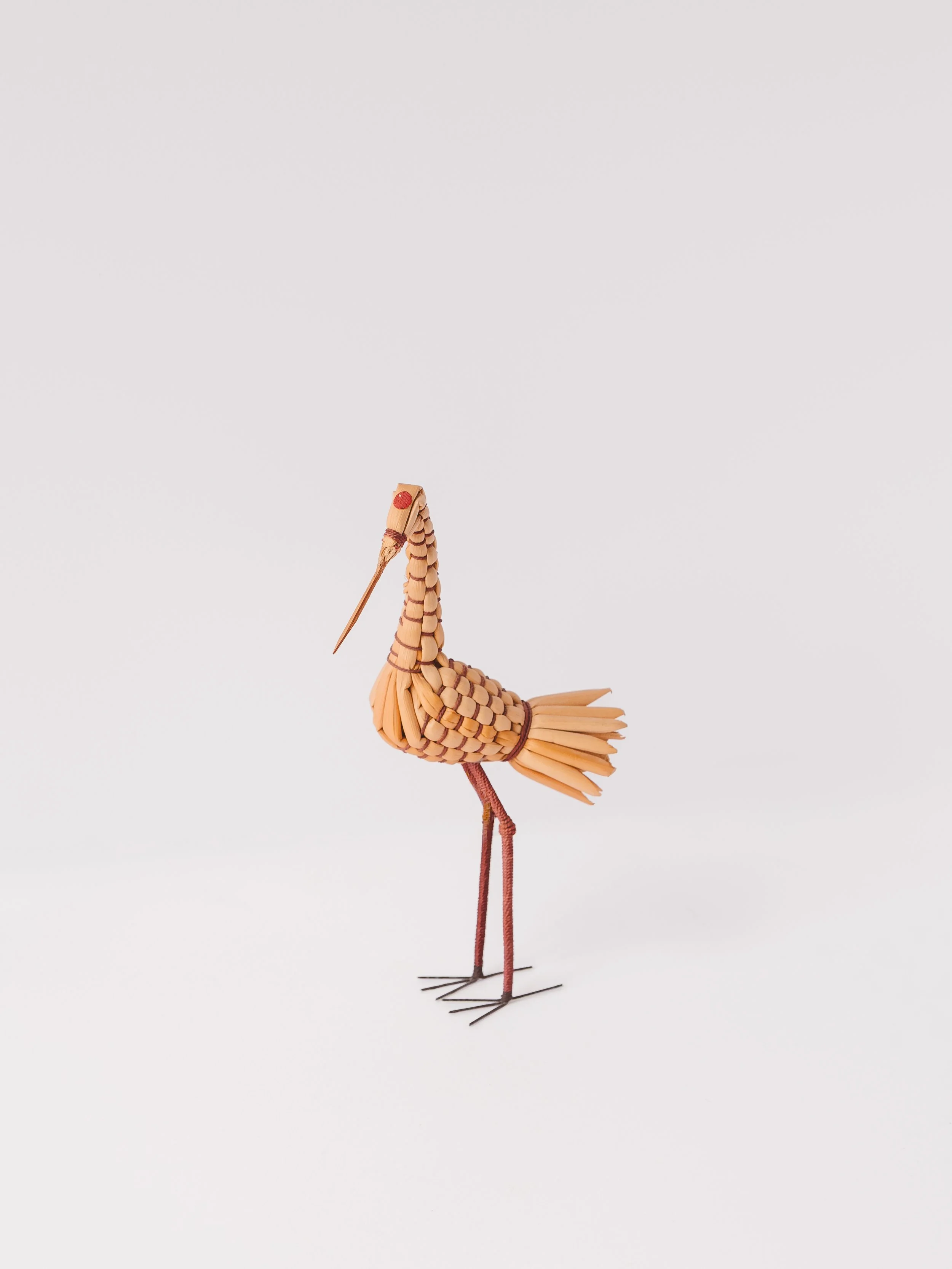 Image 1 of 14
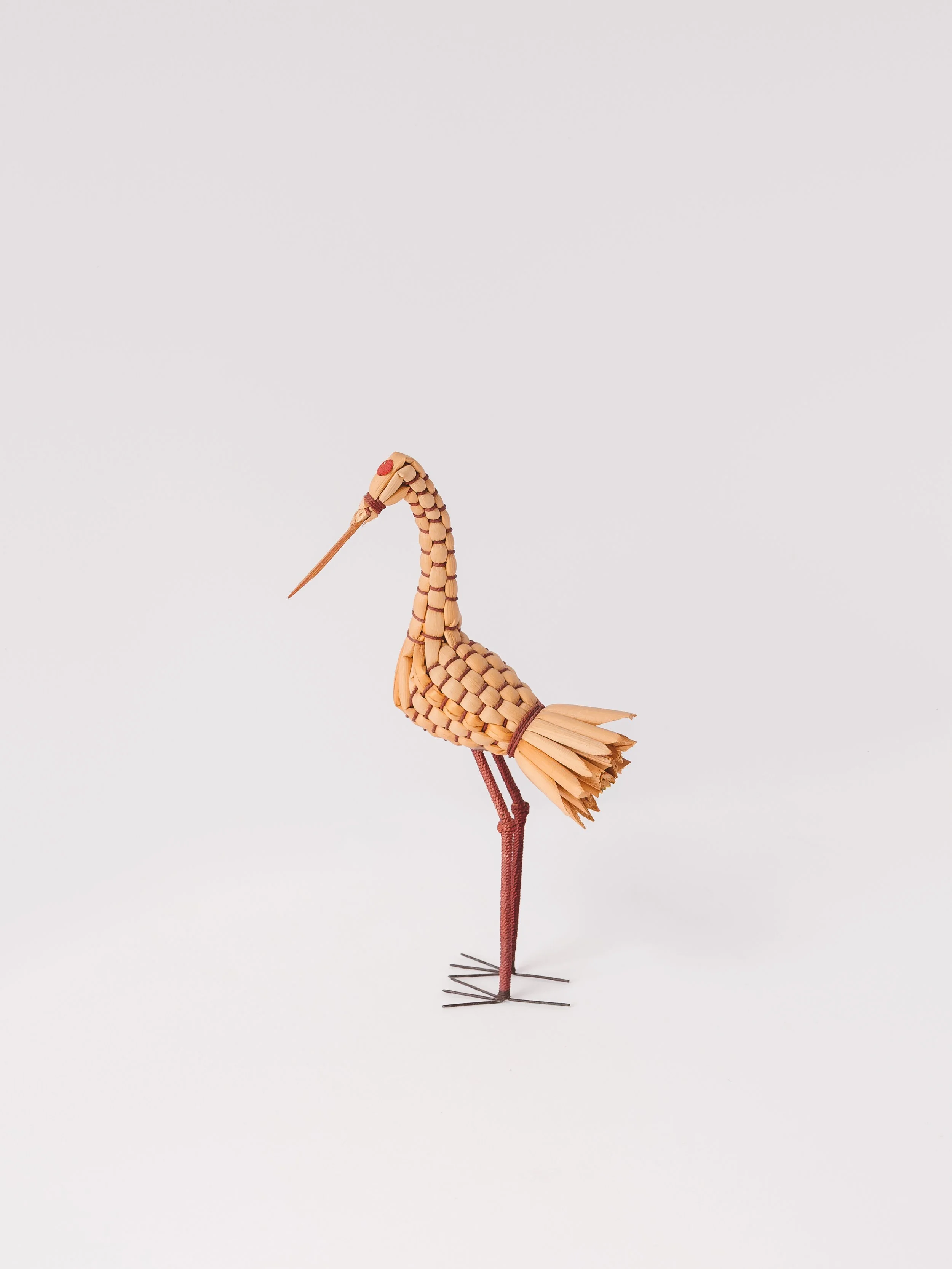 Image 2 of 14
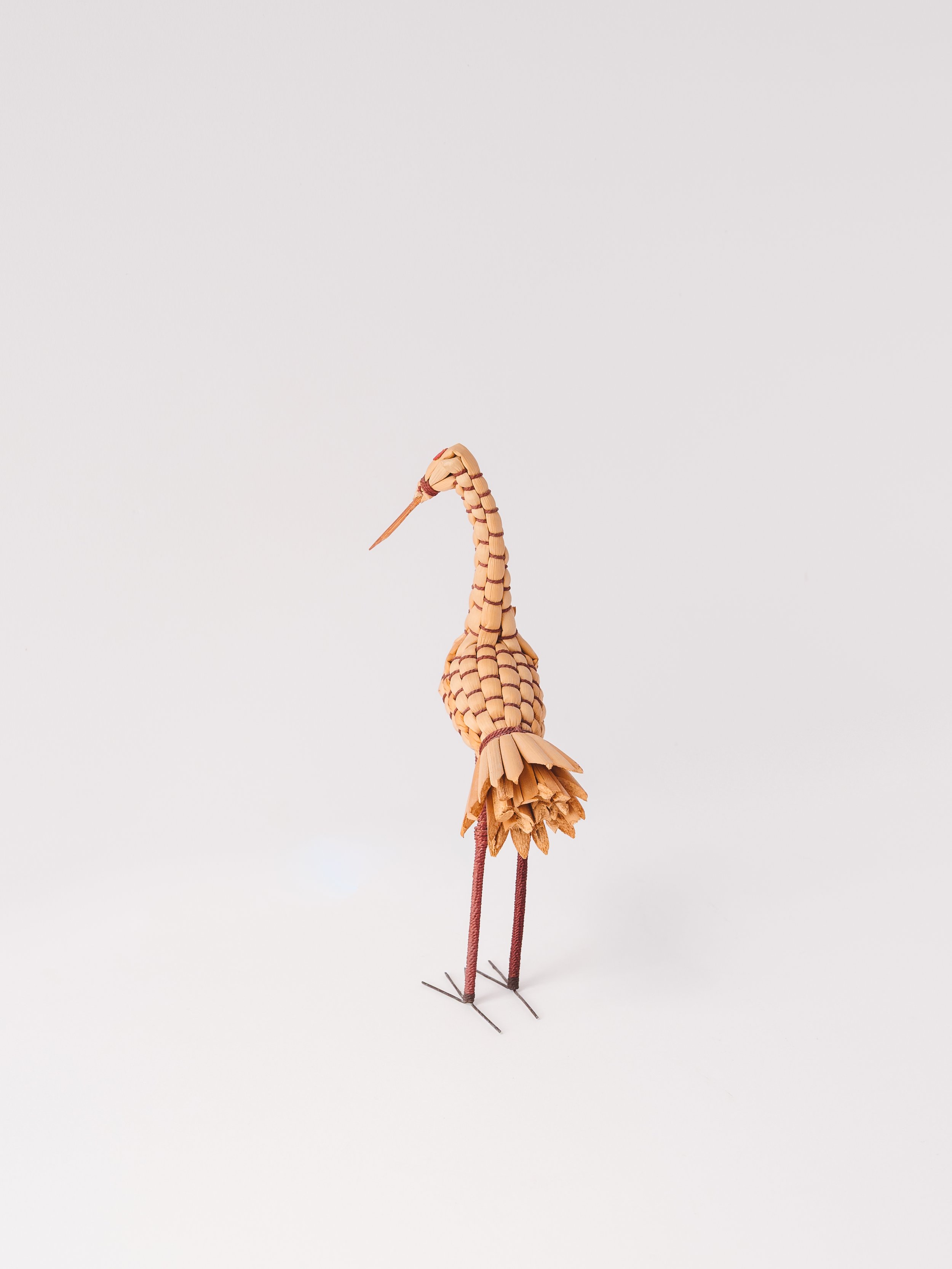 Image 3 of 14
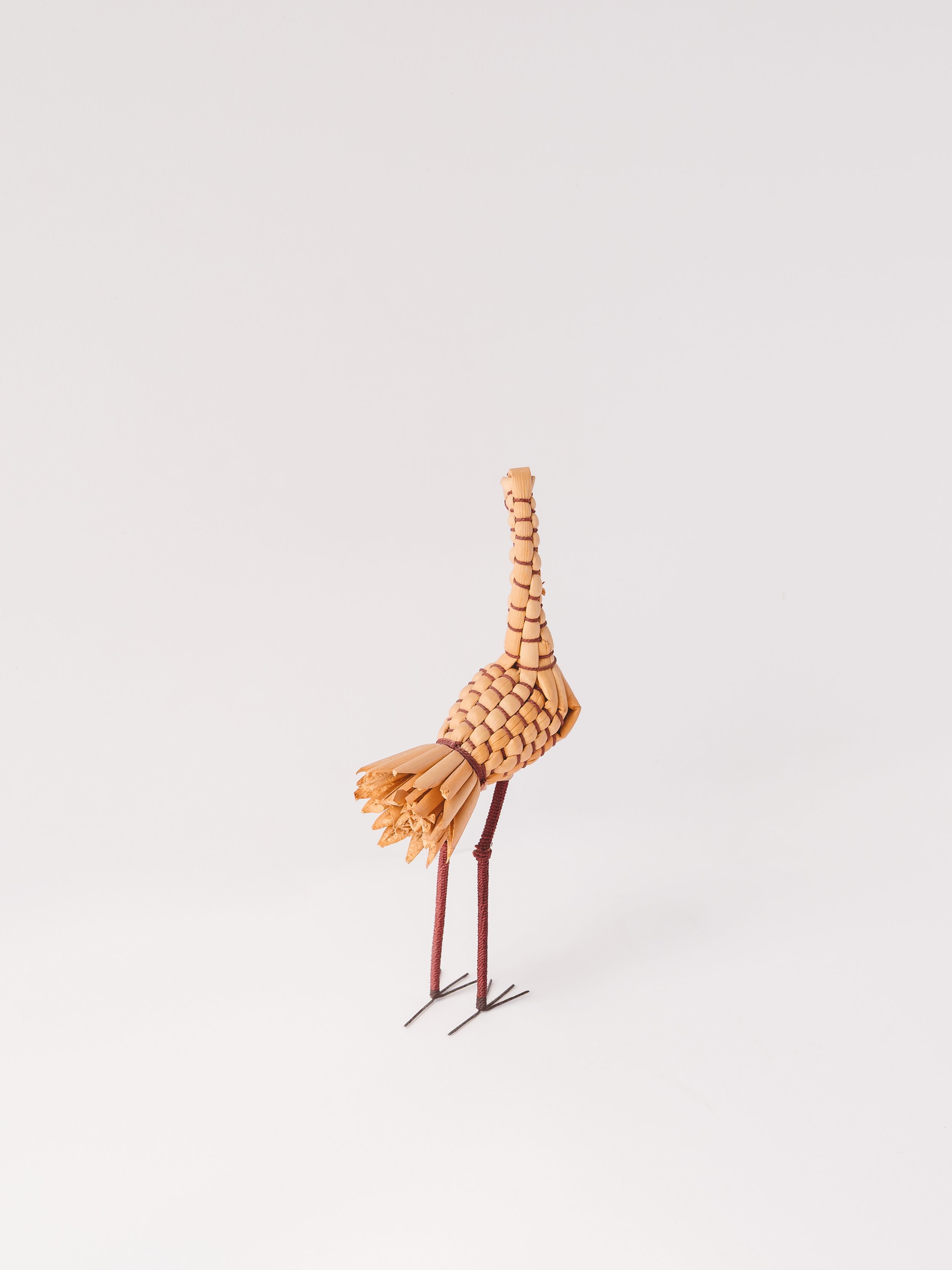 Image 4 of 14
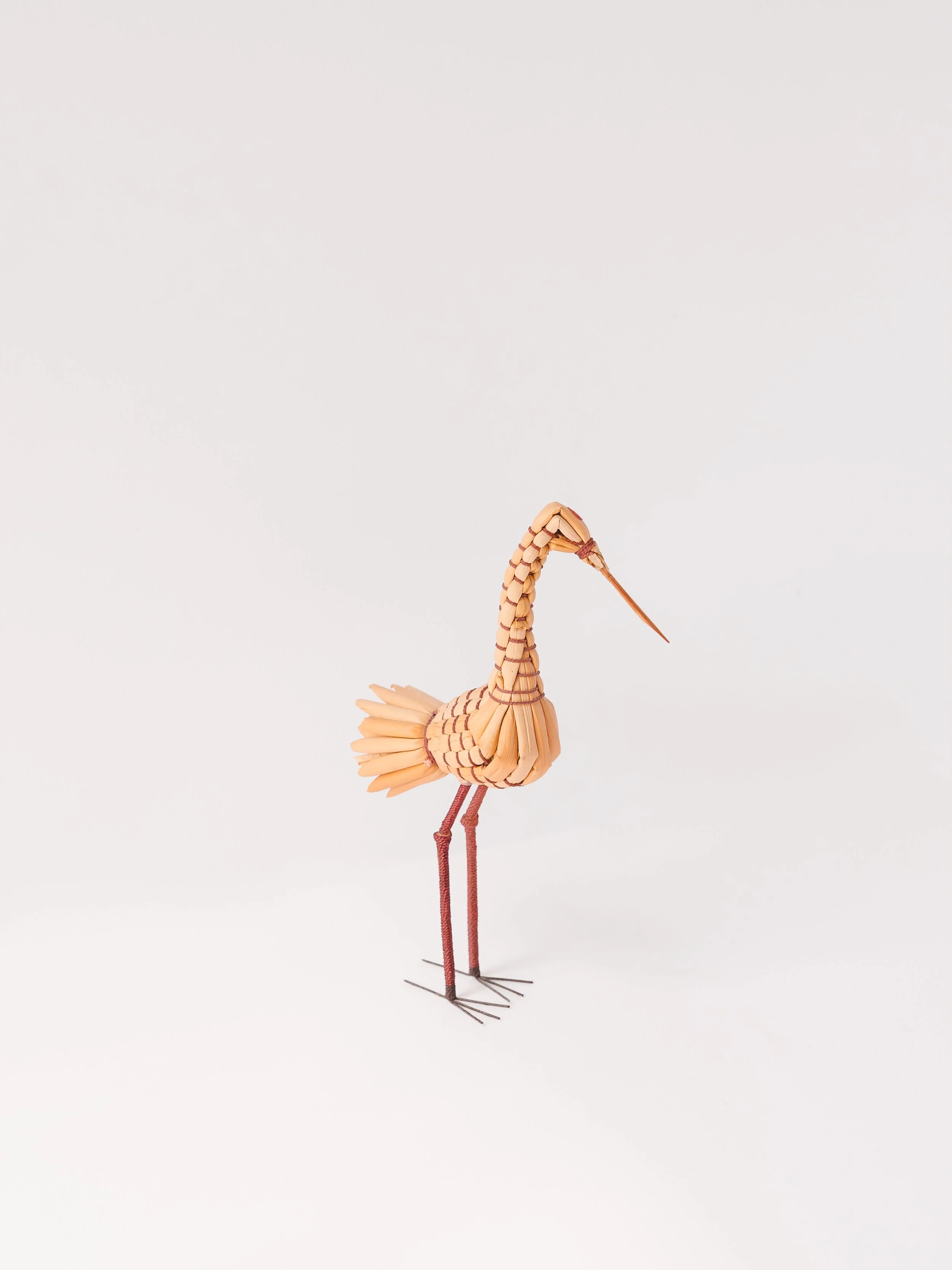 Image 5 of 14
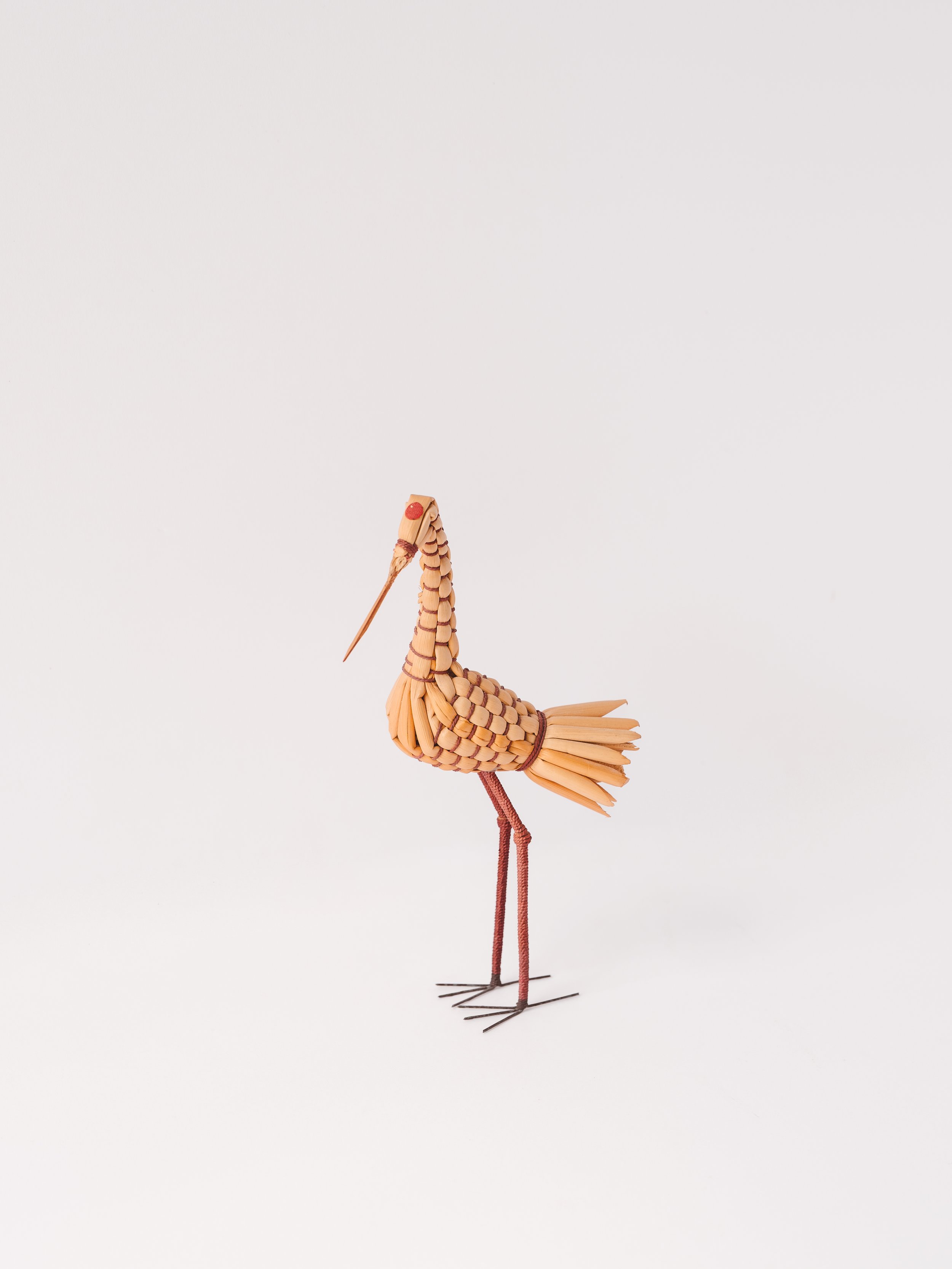 Image 6 of 14
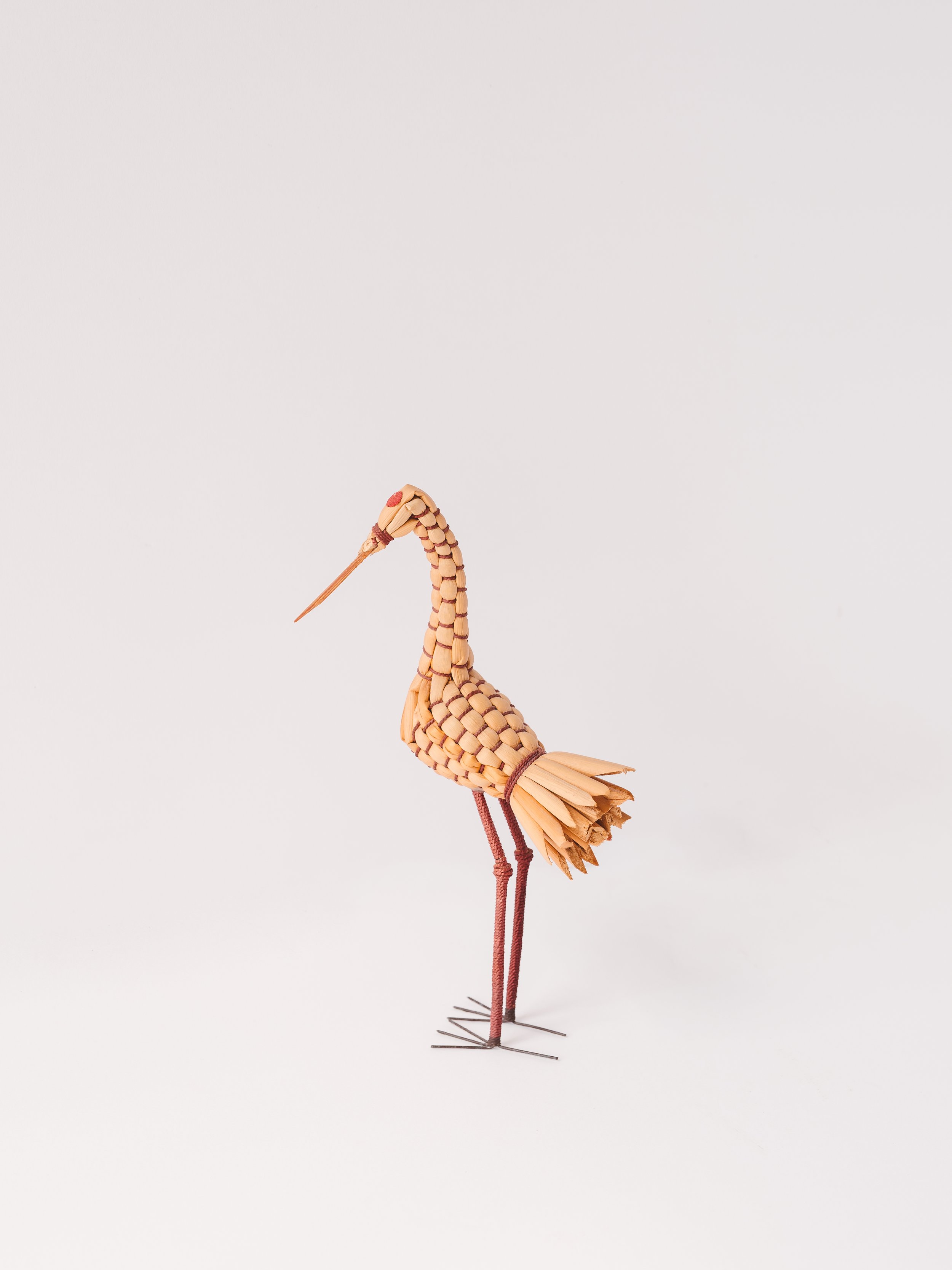 Image 7 of 14
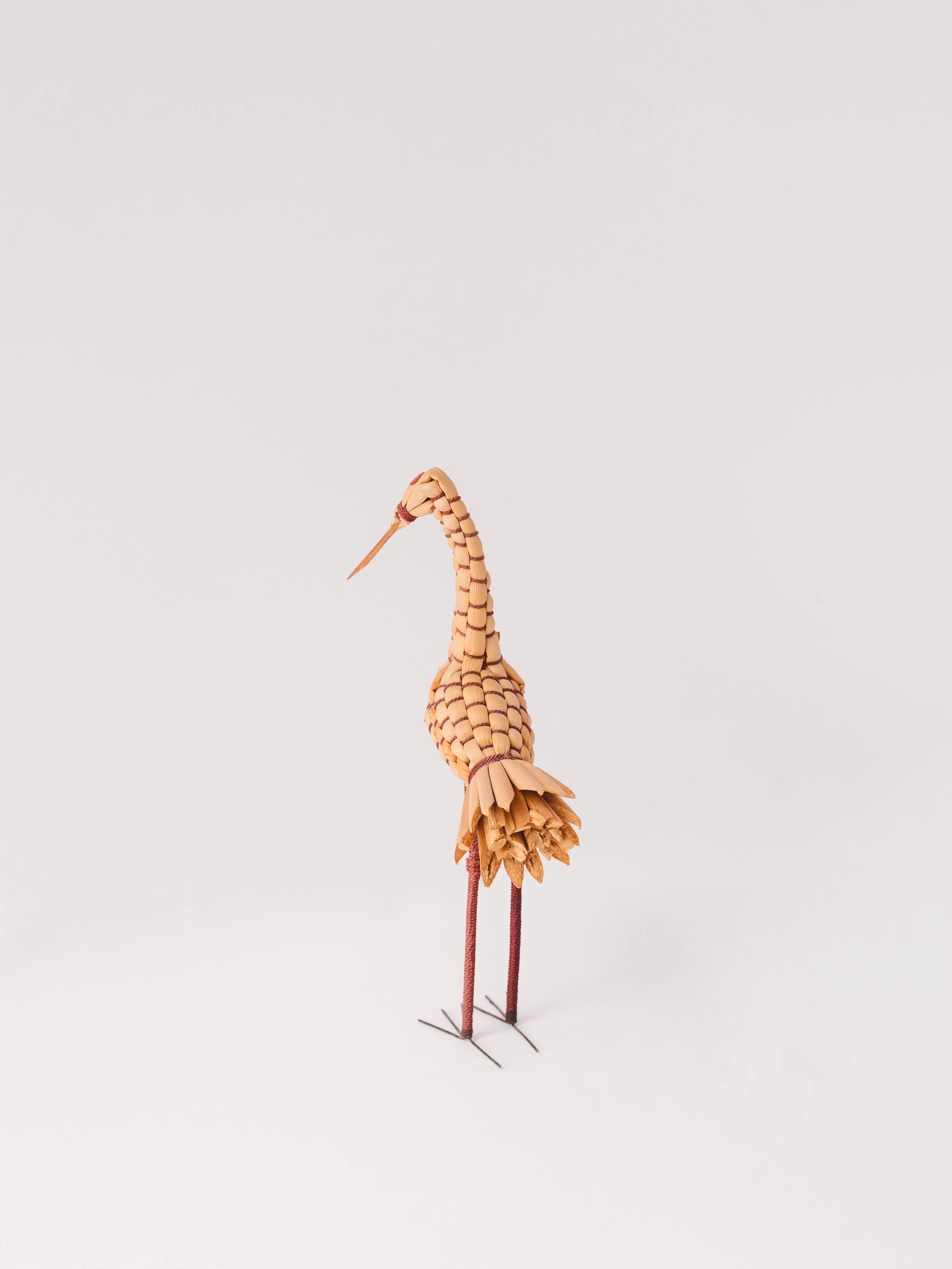 Image 8 of 14
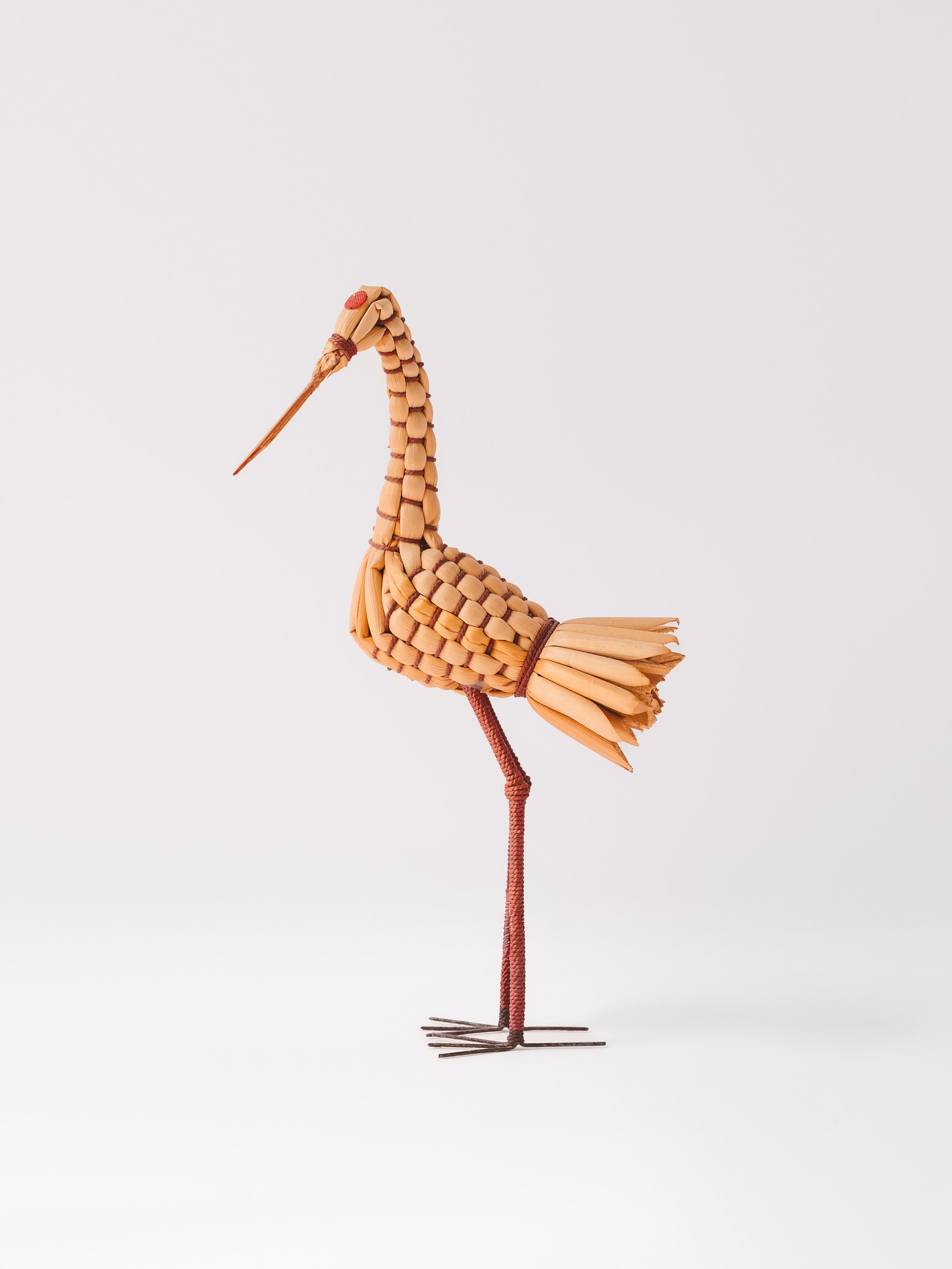 Image 9 of 14
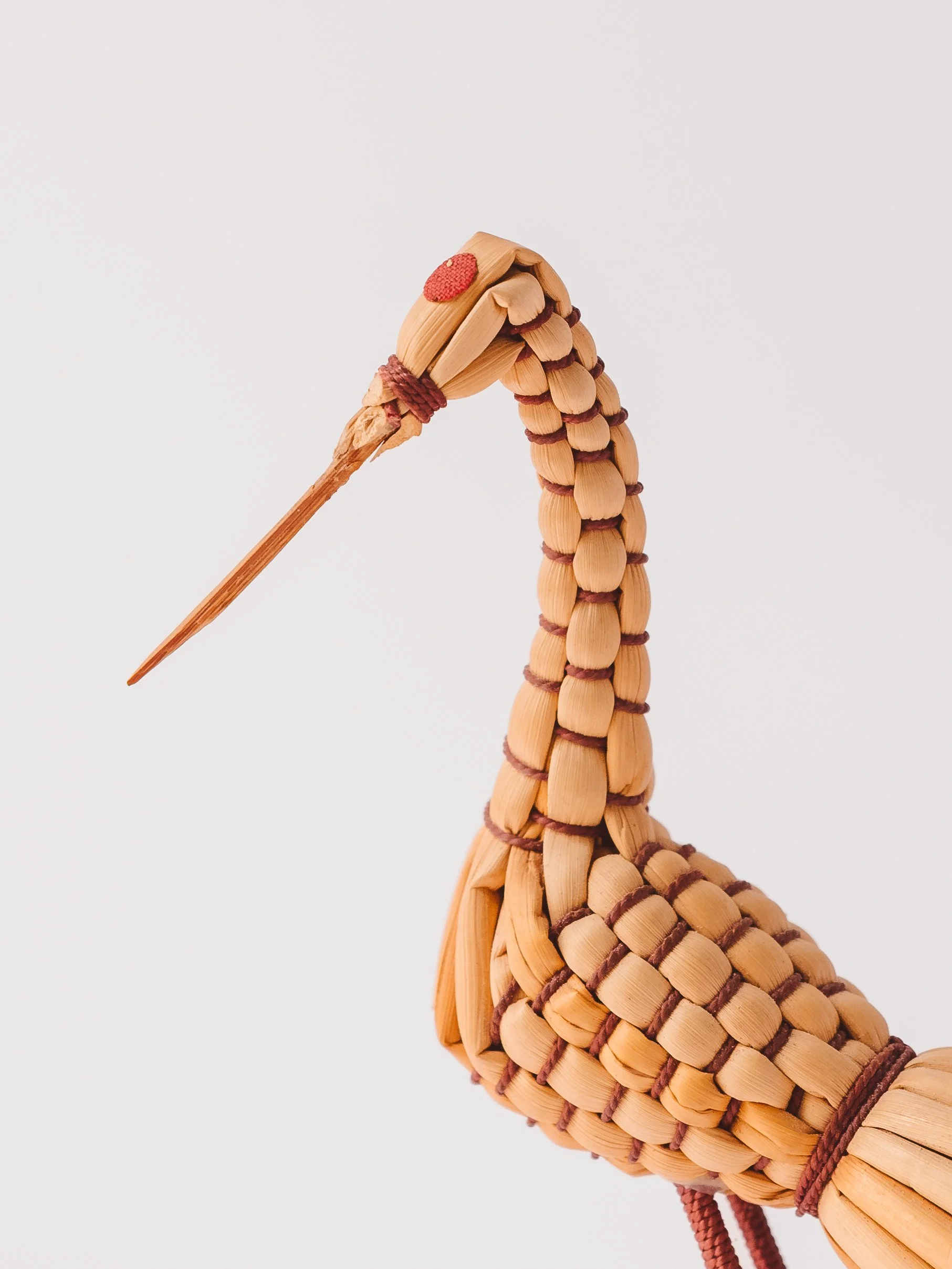 Image 10 of 14
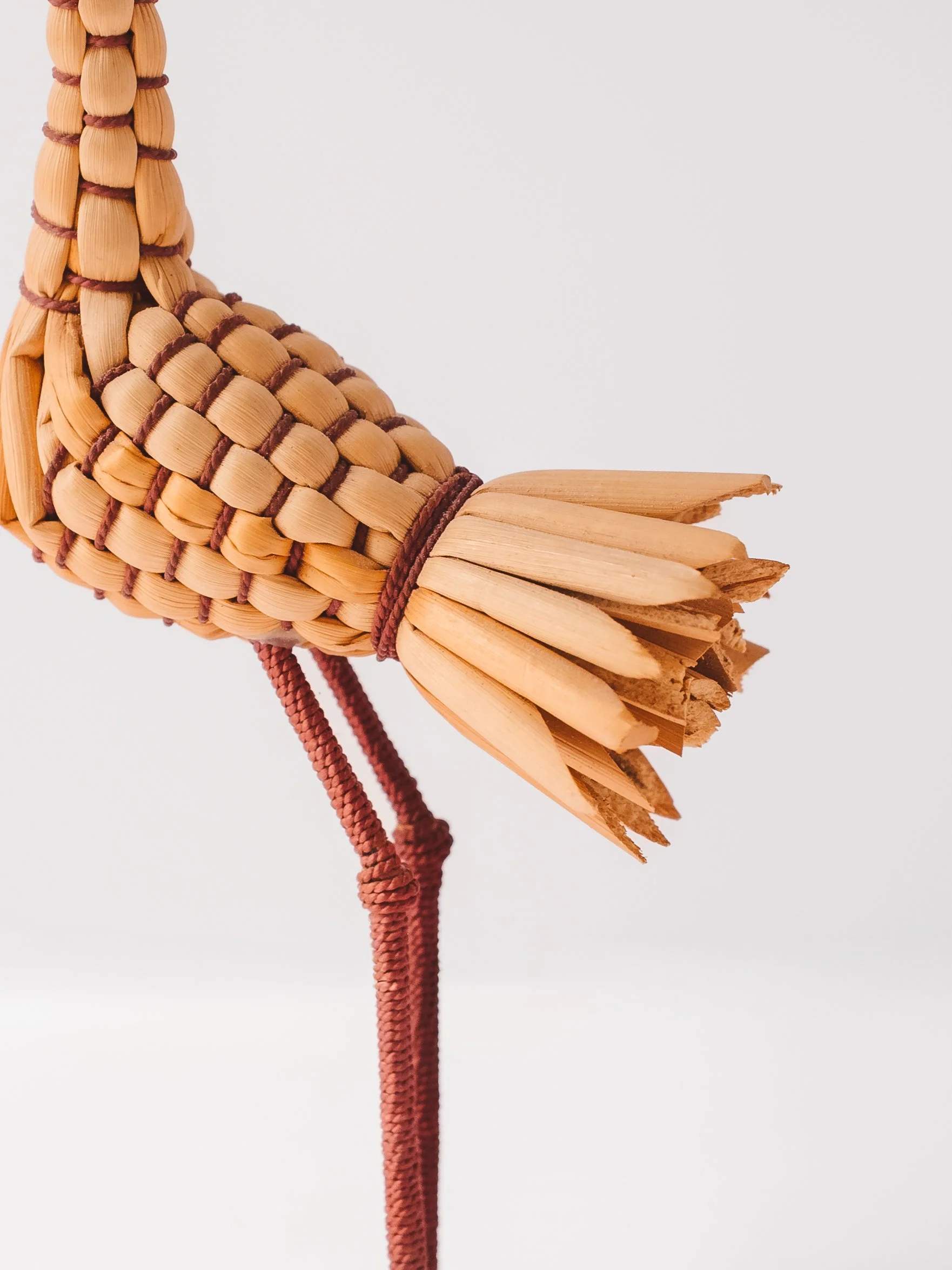 Image 11 of 14
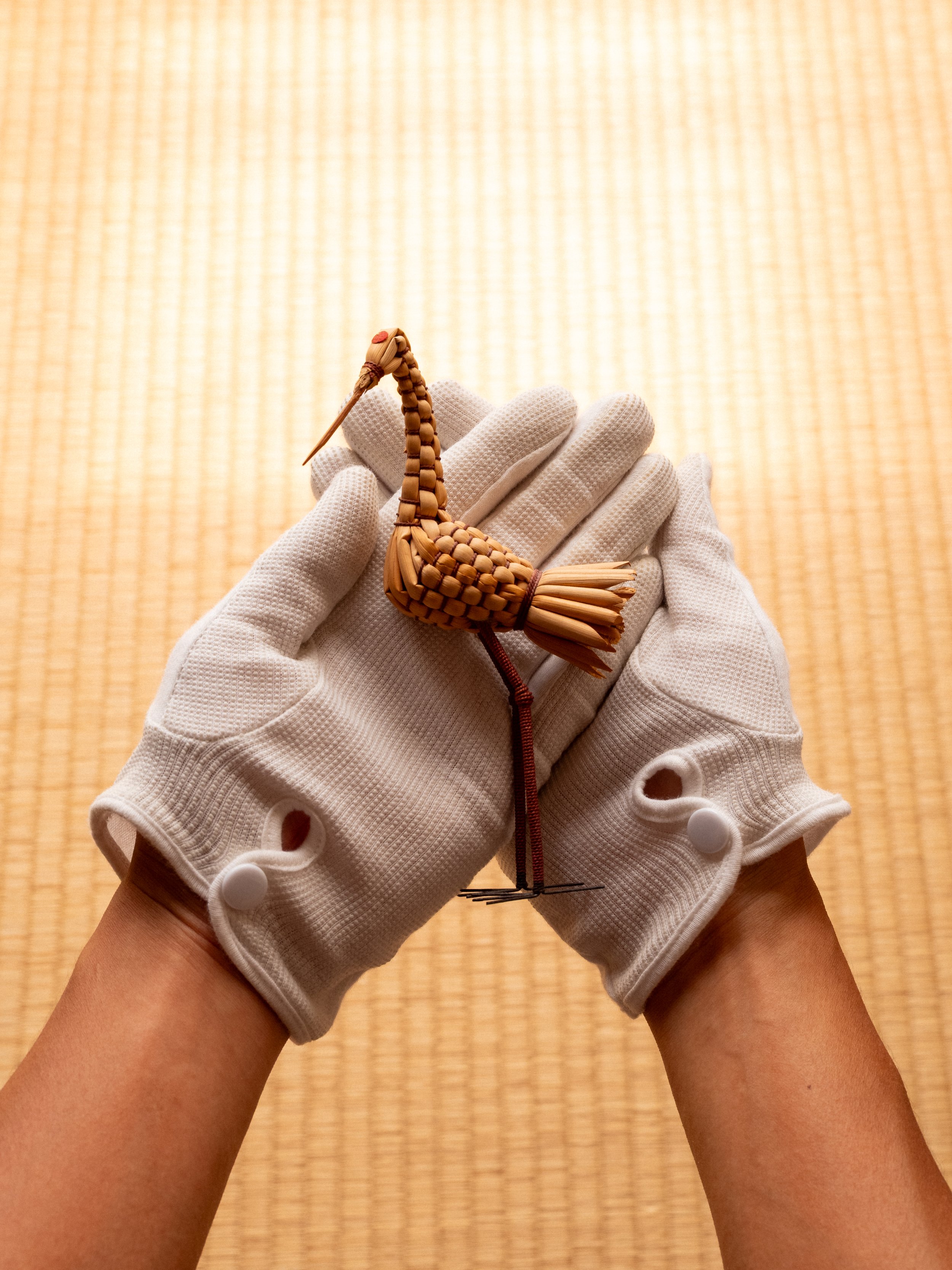 Image 12 of 14