【 The Concept 】
A small, modern horse made of layered coloured clays, like a hillside cut open to show its strata. A single head and arched neck rise from a smooth, rounded body that sits flat on the table, without legs or tail, so that the whole figure reads almost like a chess knight drawn with one soft line. A flat ridge runs down the back of the neck for the mane, the muzzle is a simple step, and a tiny pierced hole marks the eye. The colour comes not from paint but from the clay itself: from the top down, a warm cream flecked with dark specks, then soft sage green, then a band of pale terracotta, and finally a deep earth brown at the base. The bands wave gently across the body, with fine brown lines running through the cream like the grain of stone. The cream upper part is glazed with a soft gloss; the lower bands are left matt, so you can feel the grain of each clay under your fingers.
【 Pattern Made of Clay Itself 】
This horse is made with the technique the Japanese call neriage or nerikomi: clays of different colours are prepared separately, then stacked, pressed and shaped together, so that the pattern runs right through the body instead of sitting on the surface. Nothing is painted on. Each coloured clay shrinks a little differently in drying and firing, which makes the technique demanding, and the hand that presses the layers together gives every line its own slight wave. No two pieces made this way are ever exactly alike.
The same idea appears in other Japanese crafts: in yosegi, the marquetry of different woods, and even in kintarō-ame, the old-fashioned stick candy in which the same little face appears in every slice, because the picture runs all the way through. Here it is the layers of the earth that run through a horse.
【 The Horse of the Zodiac 】
The horse is the seventh of the twelve animals of the East Asian zodiac, and in Japan it is associated with energy and moving forward. Small figures of the year’s animal are set out at home at New Year to welcome good fortune, and many are kept on display long after. With its calm, upright head and its colours of earth and field, this one carries that wish quietly.
【 What Owning This Piece Brings 】
・ Forward movement. The horse is the animal of energy and progress, a small charm for things to go well.
・ Earth and calm. Layered colours of cream, sage, terracotta and brown bring the feeling of a landscape into a room.
・ A one-of-a-kind pattern. Because the pattern is built from clay, not painted, no other horse has exactly these waves.
・ Modern and timeless. Simple enough for a contemporary interior, warm enough for a traditional one.
A delightful gift for someone born in a Year of the Horse (1954, 1966, 1978, 1990, 2002, 2014, 2026), a horse or chess lover, or anyone who enjoys modern Japanese ceramics.
【 Where to Place It 】
On a desk, a bookshelf, a windowsill or beside a plant. It looks especially good in profile, where the line of the head and neck and the waves of colour read most clearly, and in soft natural light that shows the difference between the glossy cream and the matt earth tones.
【 Care 】
Dust with a soft, dry cloth; if needed, wipe gently with a slightly damp cloth and dry. Do not soak it, and keep the unglazed lower part and base dry. Handle with care and avoid knocking the ears and mane.
【 Reading the Object 】
A small ceramic horse in layered coloured clays (neriage). Head and neck rising from a rounded, flat-sided body without legs or tail; a narrow flat ridge for the mane along the back of the neck; a stepped muzzle and a small pierced eye. Horizontal, gently waving bands of clay: cream with dark specks at the top, then sage green, pale terracotta and dark brown at the base, with fine brown lines within the cream. Clear glaze with a soft gloss over the upper part; the lower bands are unglazed and matt. The base is unglazed and carries a small impressed mark. It stands securely on its own.
【 Presence 】
Quiet, warm and grounded. A little horse made of the layers of the earth.
Archive Note: The number in the name (2002) marks a Year of the Horse in the East Asian zodiac. NOT the date this piece was made.
Provenance Note: Sourced from a private household in Japan. A Japanese studio ceramic horse in neriage (layered coloured clay), with an impressed mark on the base.


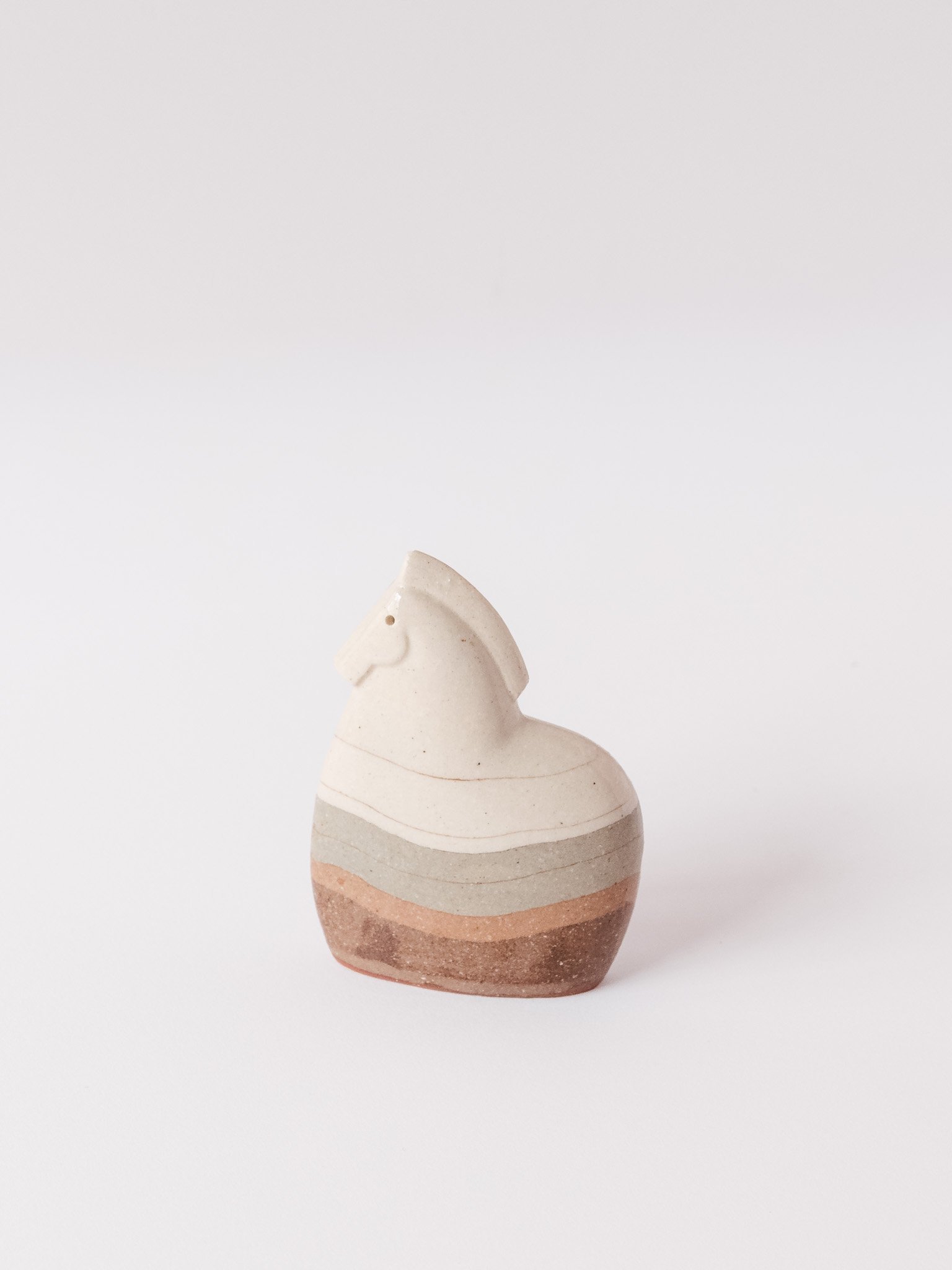 Image 1 of 10
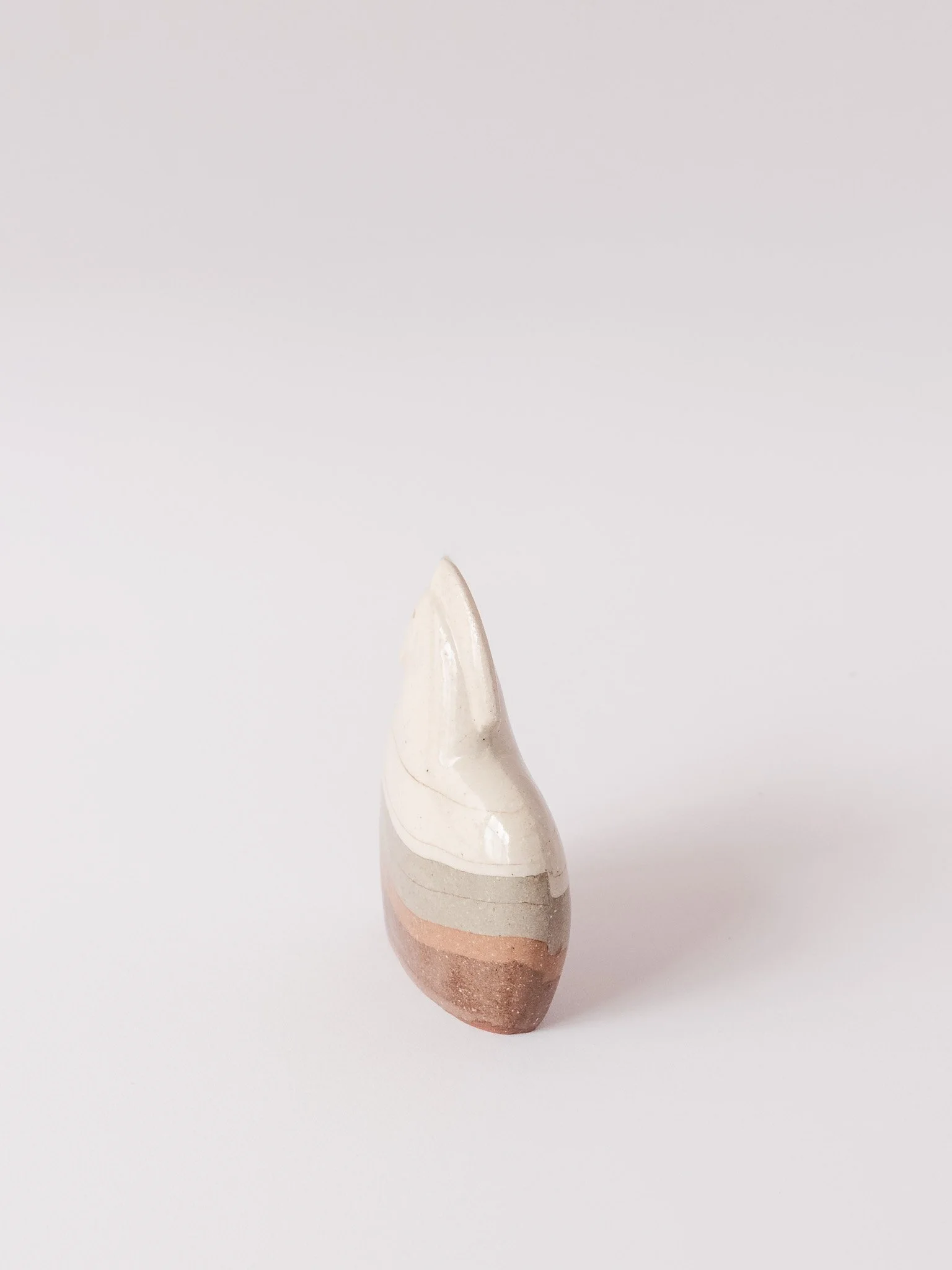 Image 2 of 10
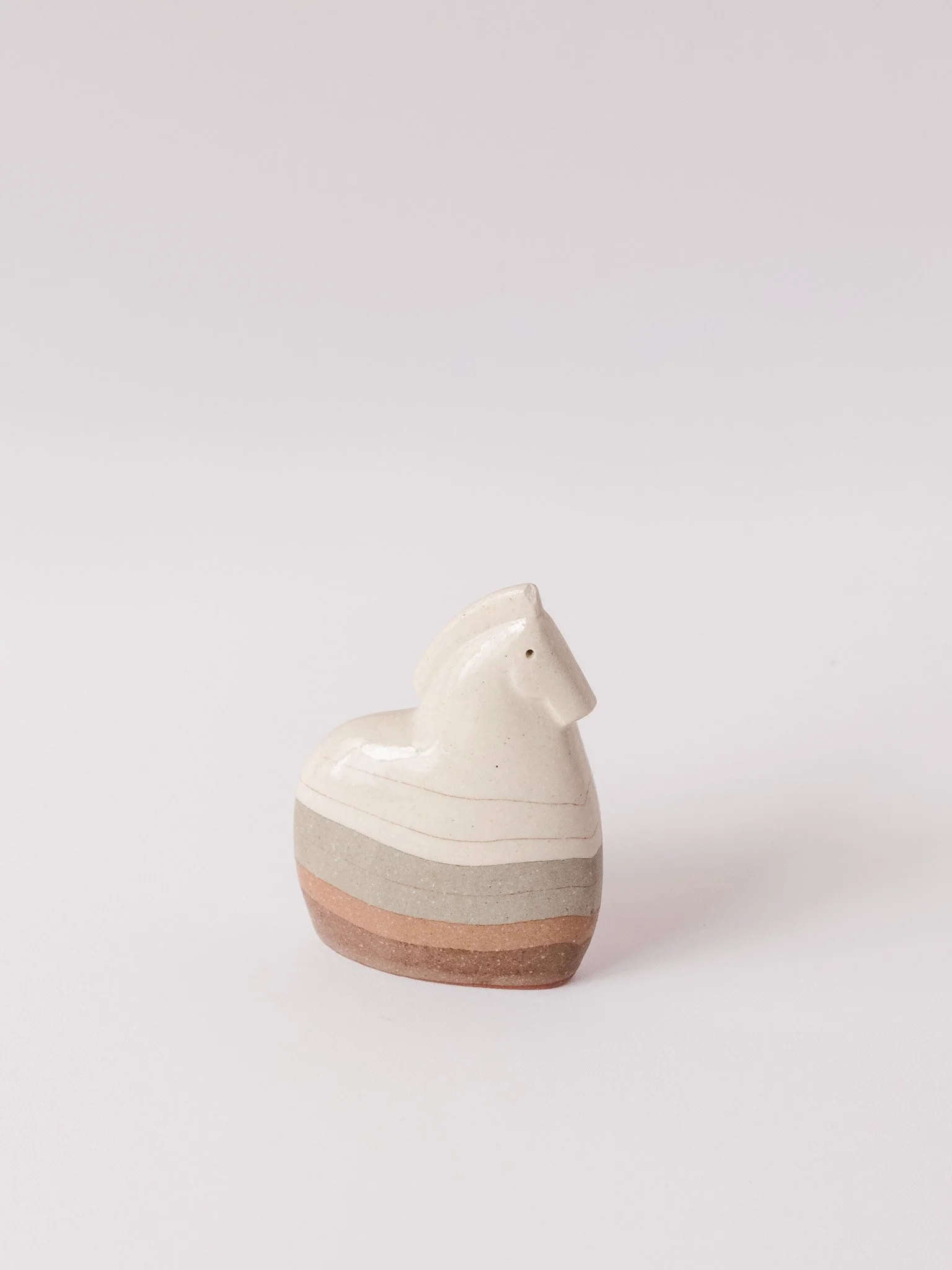 Image 3 of 10
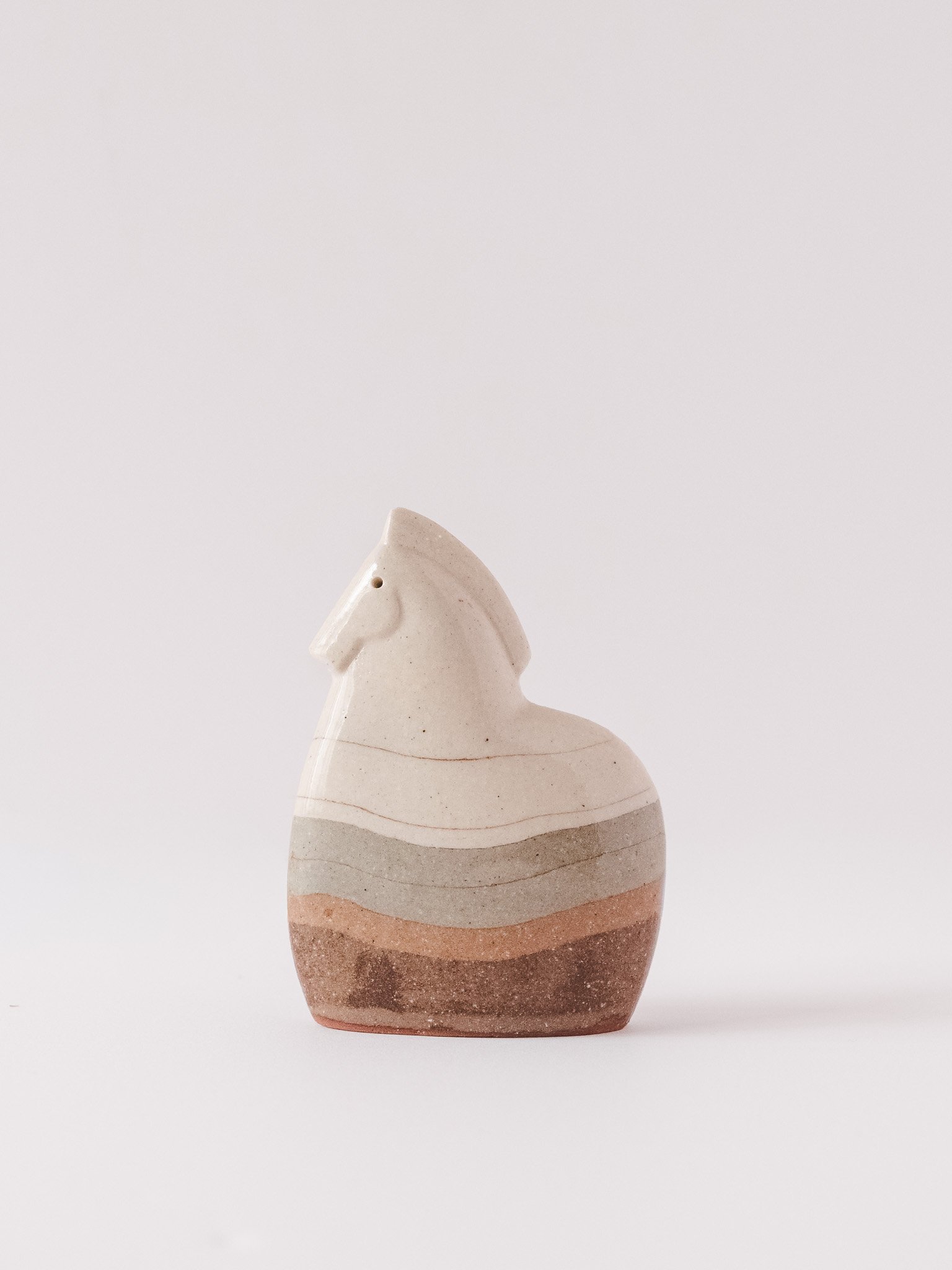 Image 4 of 10
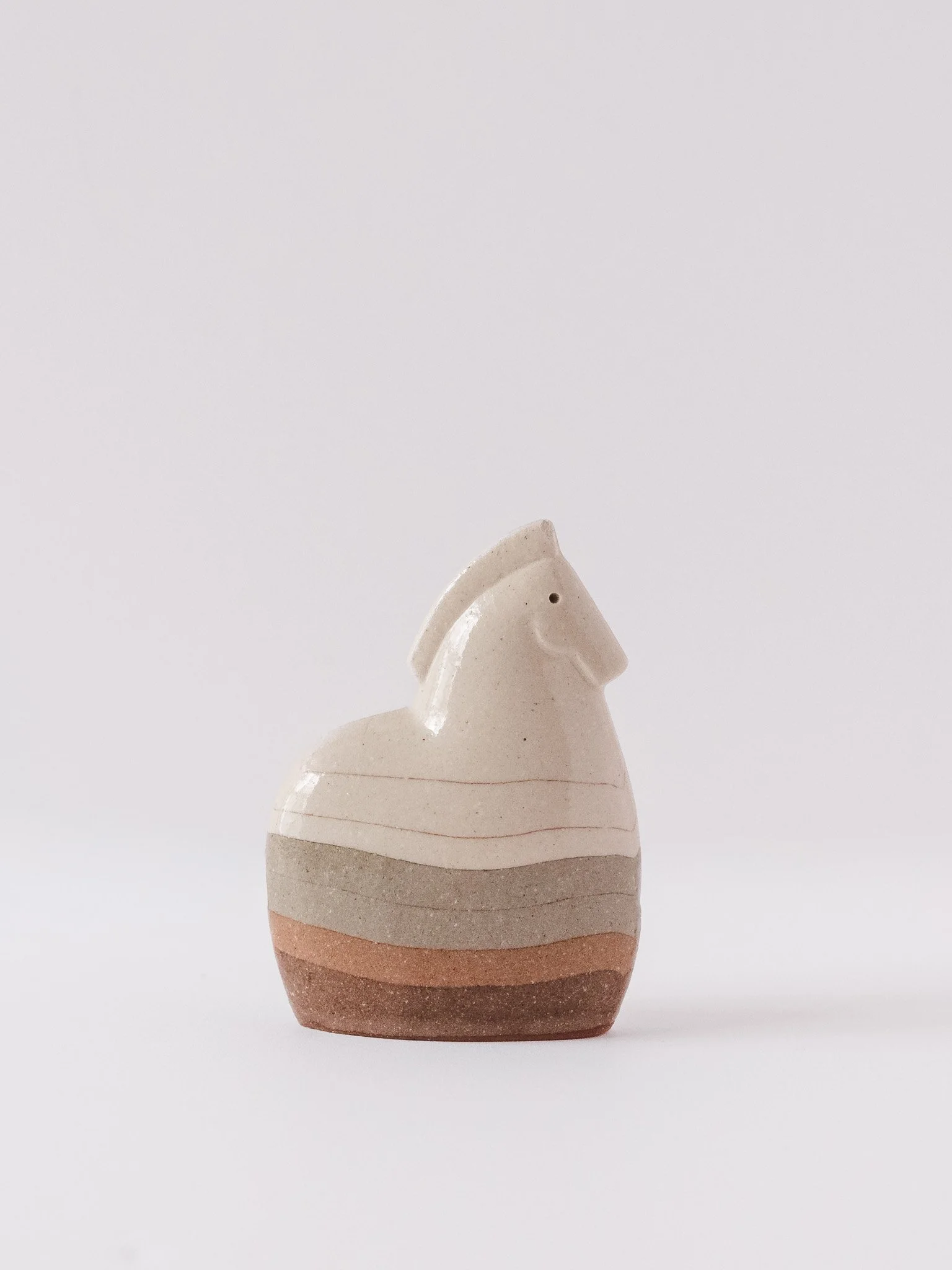 Image 5 of 10
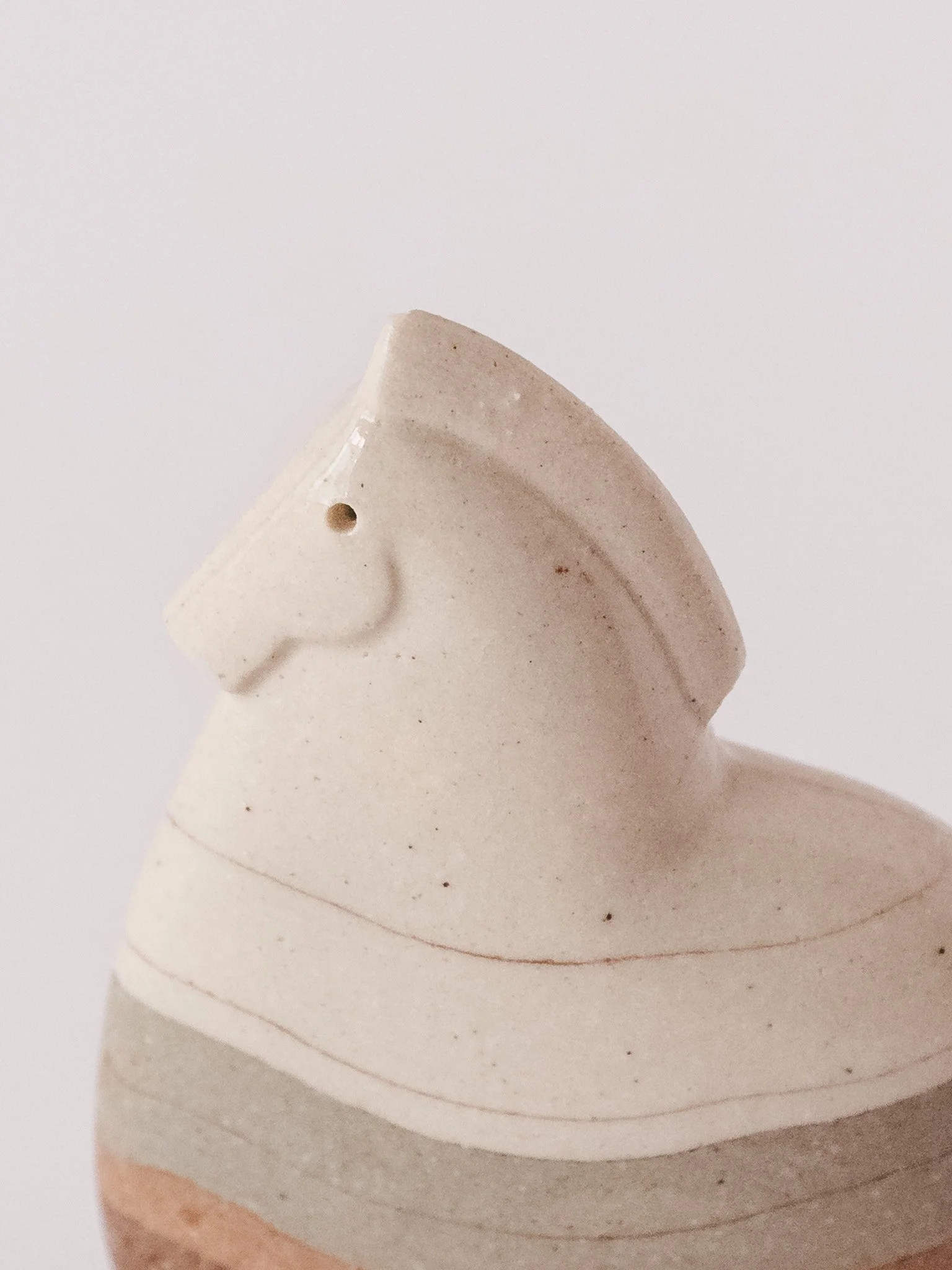 Image 6 of 10
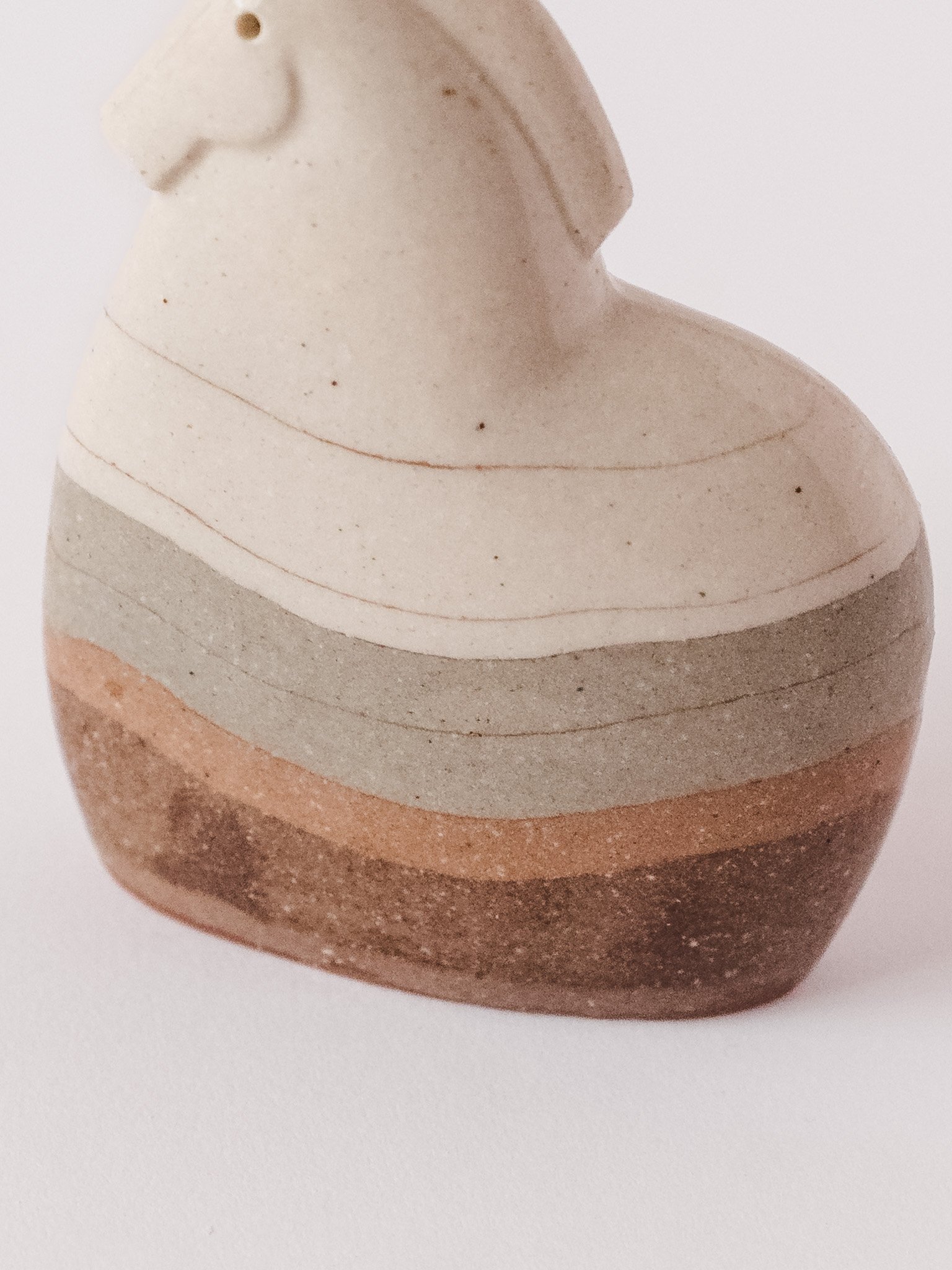 Image 7 of 10
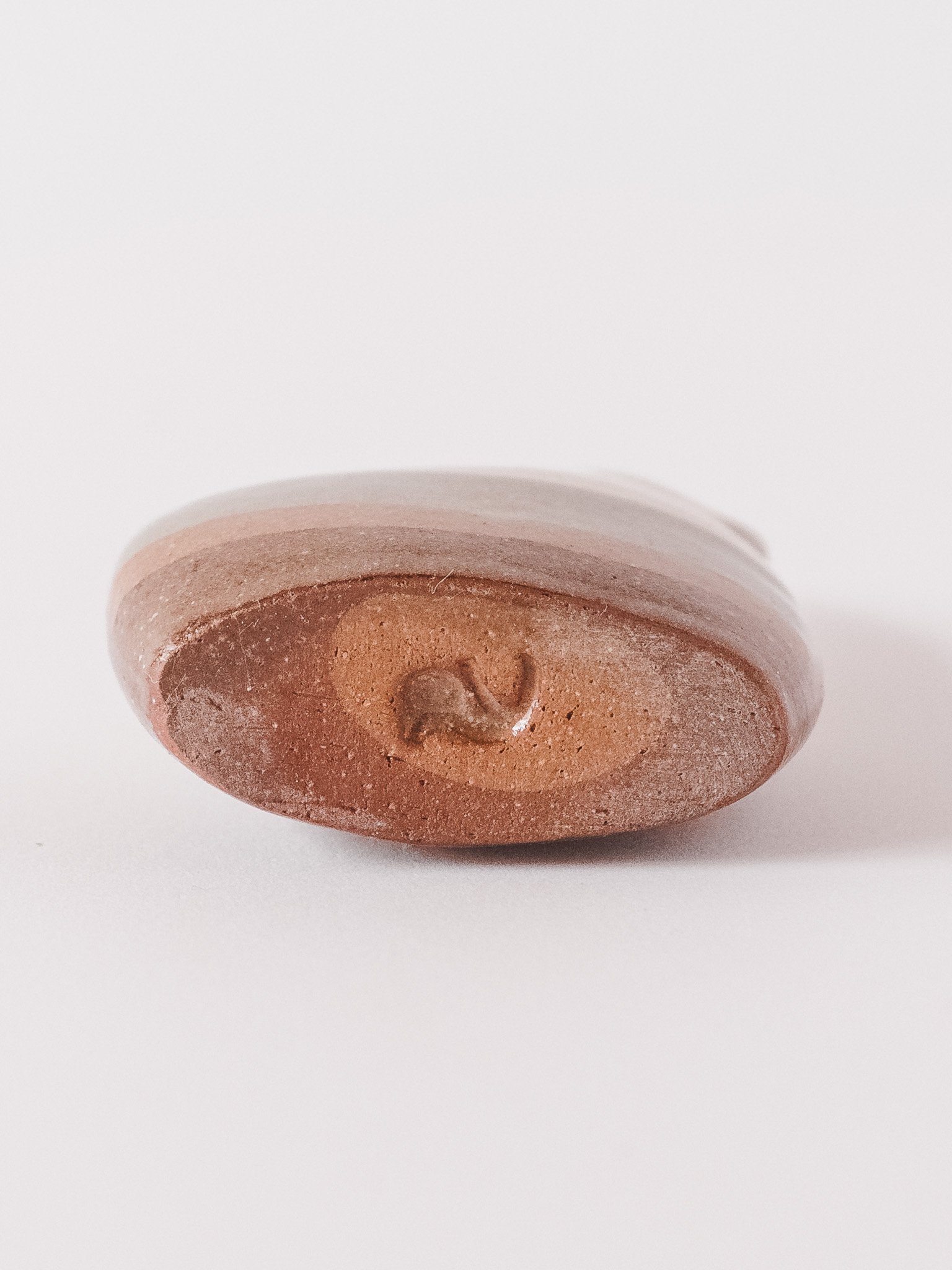 Image 8 of 10
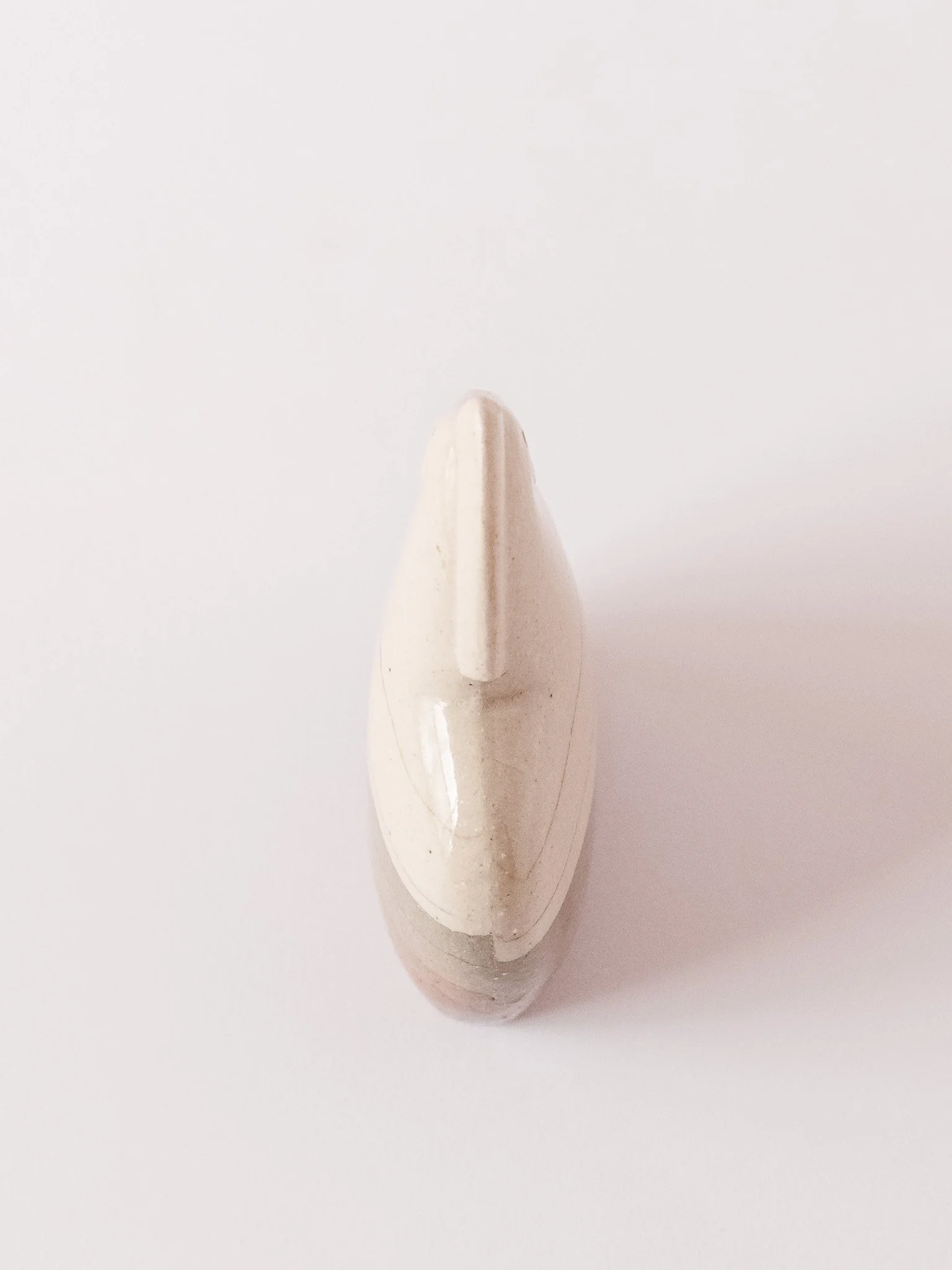 Image 9 of 10
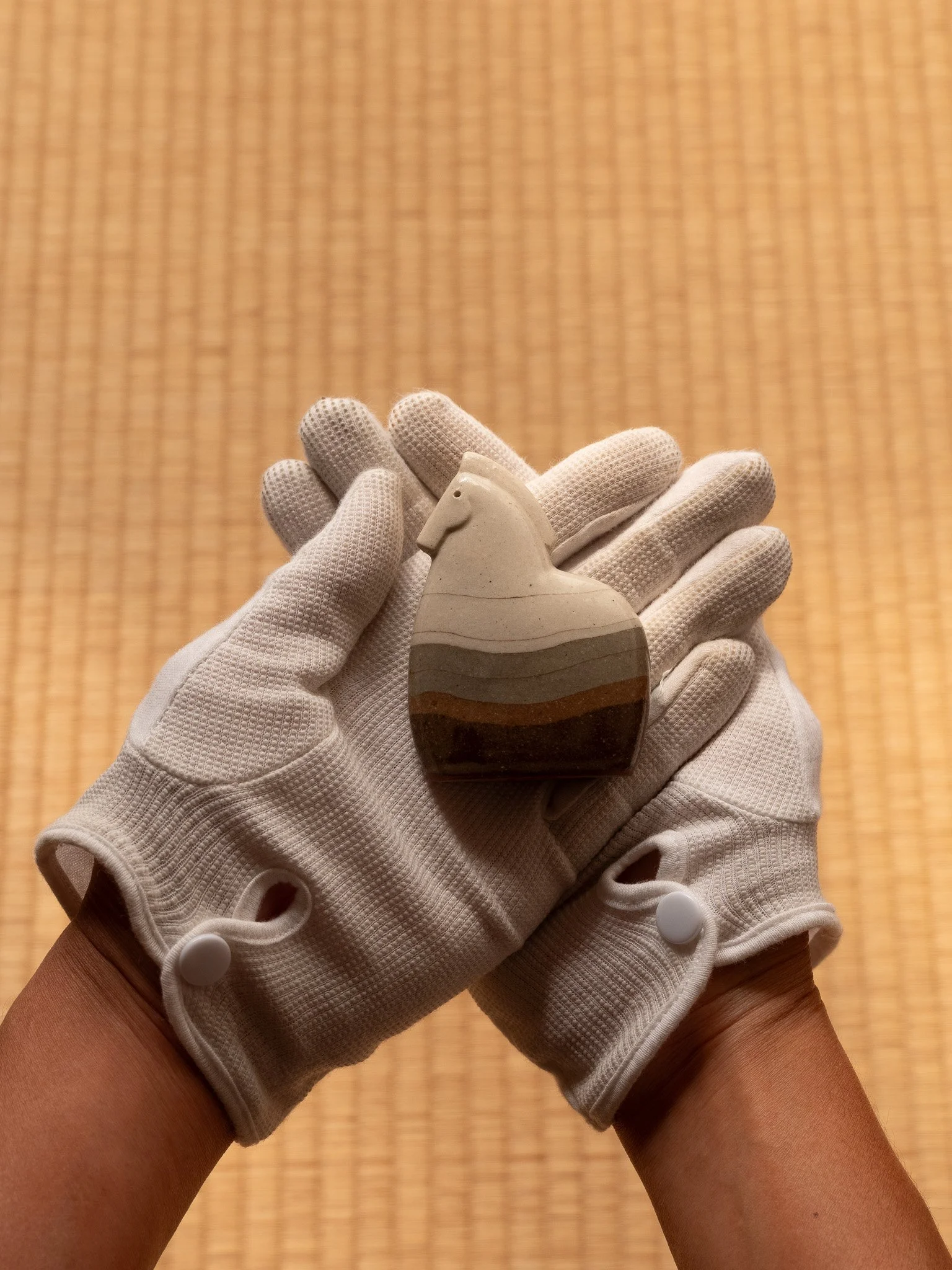 Image 10 of 10