【 The Concept 】
Earth fired into something that carries the weight of bronze. This is a standing figure of Kannon, the bodhisattva of compassion, in the byakue ("white-robed") form — a soft veil drawn over the head and falling in long folds to the shoulders, the face lowered in a calm, half-lidded gaze of mercy. The hands are gathered quietly at the waist; a delicate necklace (yōraku) rests on the open chest; and at the very hem two bare feet just emerge, grounding the deity in the human world she has come to console.
Though modelled in unglazed stoneware, the surface reads as aged, dark bronze — a deep, smoky brown that lifts to warm russet down the length of the robe, with a soft metallic sheen catching the ridges of every fold. There is no bright glaze, no colour, no ornament beyond the drapery and the necklace: the whole effect depends on silhouette, on the fall of cloth, and on that quiet, burnished skin. A Kannon of clay given the gravity and permanence of metal.
【 The Function 】
A devotional and contemplative figure (仏像 / butsuzō) for a home altar (butsudan), a tokonoma alcove, a shelf, a study, or an entryway. At twenty-three centimetres tall it is a slender, upright presence — a still point for a quiet corner. Equally at home as an object of faith or as a piece of serene sculpture.
【 The Texture 】
Unglazed high-fired stoneware with a smooth, satin, bronze-like surface. The drapery flows in long, rhythmic folds from the veiled head to the base; the raised edges take on a soft sheen while the recesses hold deeper shadow. The colour shifts naturally from a dark, smoky brown at the head and shoulders to a warmer reddish-brown across the lower robe — a variation born of the firing, not applied. The body is hollow, giving the piece a lighter, more resonant feel in the hand than its size suggests.
【 Presence 】
Serene, maternal, inward. The lowered eyes and folded hands hold a deep stillness; the veiled figure seems caught in a moment of quiet blessing. Nothing is loud here — the appeal is entirely in composure and grace.
Archive Note: The number in the name (1690) is a catalogue reference echoing the Genroku era, when Bizen figurative pieces (saikumono) were especially prized. It is NOT the date this piece was made.
Provenance Note: Sourced from a private collection in Japan.
Condition Note: A vintage piece sold as acquired. It shows light surface wear and rubbing to the high points — most noticeably a small lighter abrasion at the crown of the veil and along the nose and folds — together with natural colour variation from the firing. The body is hollow. No significant structural damage was observed. Please see the photographs as part of the description.
【 The Concept 】
Earth fired into something that carries the weight of bronze. This is a standing figure of Kannon, the bodhisattva of compassion, in the byakue ("white-robed") form — a soft veil drawn over the head and falling in long folds to the shoulders, the face lowered in a calm, half-lidded gaze of mercy. The hands are gathered quietly at the waist; a delicate necklace (yōraku) rests on the open chest; and at the very hem two bare feet just emerge, grounding the deity in the human world she has come to console.
Though modelled in unglazed stoneware, the surface reads as aged, dark bronze — a deep, smoky brown that lifts to warm russet down the length of the robe, with a soft metallic sheen catching the ridges of every fold. There is no bright glaze, no colour, no ornament beyond the drapery and the necklace: the whole effect depends on silhouette, on the fall of cloth, and on that quiet, burnished skin. A Kannon of clay given the gravity and permanence of metal.
【 The Function 】
A devotional and contemplative figure (仏像 / butsuzō) for a home altar (butsudan), a tokonoma alcove, a shelf, a study, or an entryway. At twenty-three centimetres tall it is a slender, upright presence — a still point for a quiet corner. Equally at home as an object of faith or as a piece of serene sculpture.
【 The Texture 】
Unglazed high-fired stoneware with a smooth, satin, bronze-like surface. The drapery flows in long, rhythmic folds from the veiled head to the base; the raised edges take on a soft sheen while the recesses hold deeper shadow. The colour shifts naturally from a dark, smoky brown at the head and shoulders to a warmer reddish-brown across the lower robe — a variation born of the firing, not applied. The body is hollow, giving the piece a lighter, more resonant feel in the hand than its size suggests.
【 Presence 】
Serene, maternal, inward. The lowered eyes and folded hands hold a deep stillness; the veiled figure seems caught in a moment of quiet blessing. Nothing is loud here — the appeal is entirely in composure and grace.
Archive Note: The number in the name (1690) is a catalogue reference echoing the Genroku era, when Bizen figurative pieces (saikumono) were especially prized. It is NOT the date this piece was made.
Provenance Note: Sourced from a private collection in Japan.
Condition Note: A vintage piece sold as acquired. It shows light surface wear and rubbing to the high points — most noticeably a small lighter abrasion at the crown of the veil and along the nose and folds — together with natural colour variation from the firing. The body is hollow. No significant structural damage was observed. Please see the photographs as part of the description.


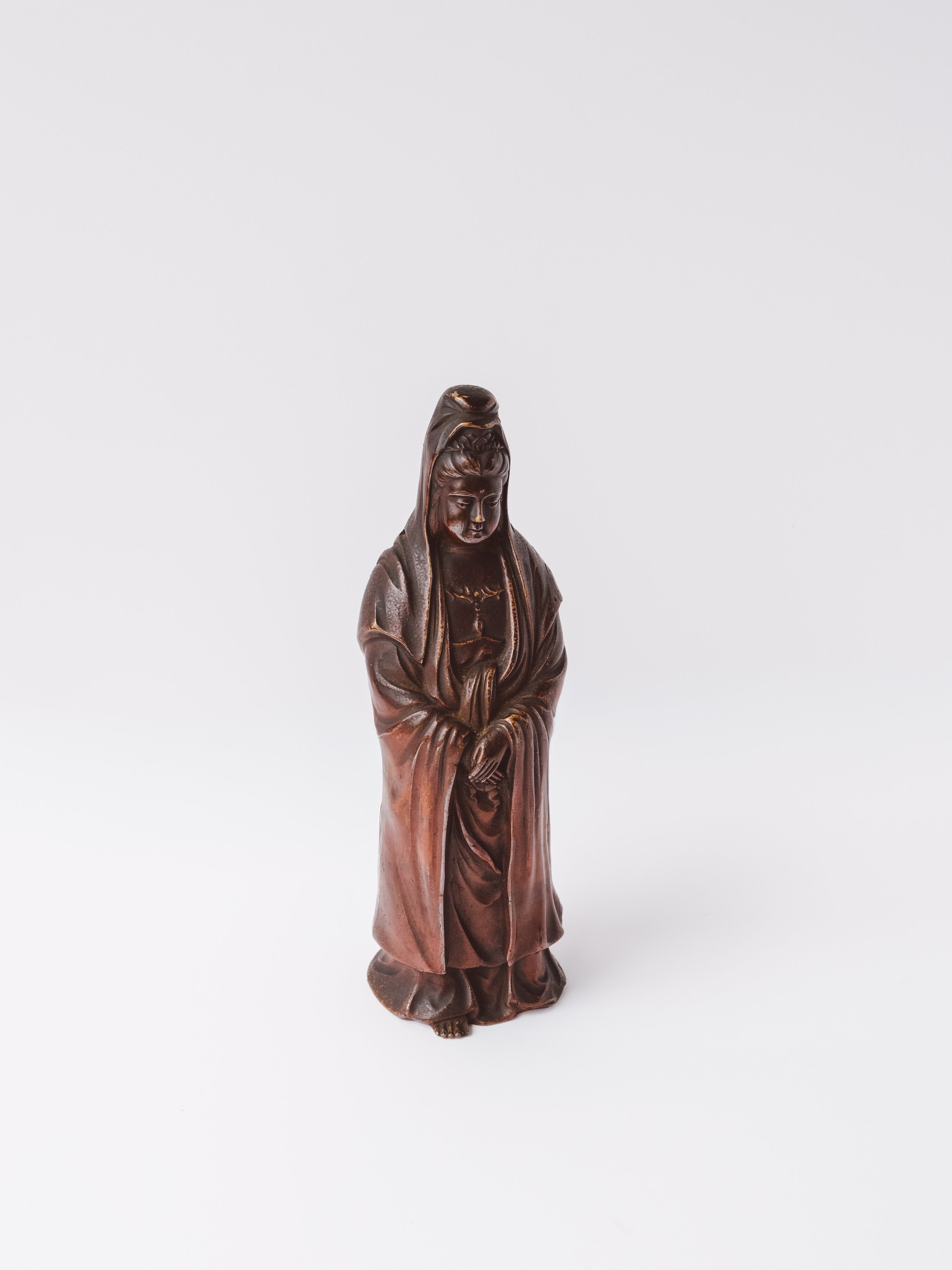 Image 1 of 13
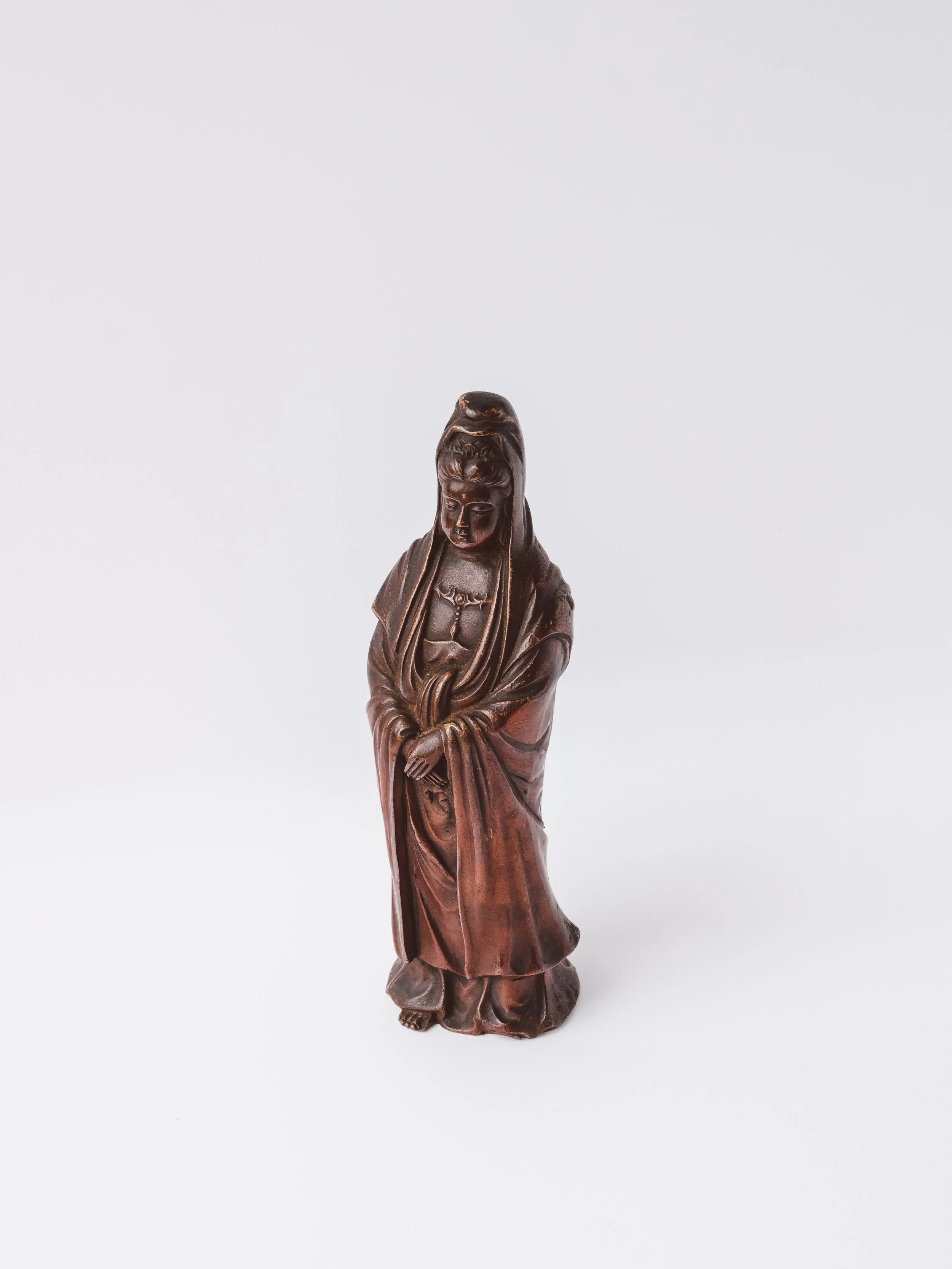 Image 2 of 13
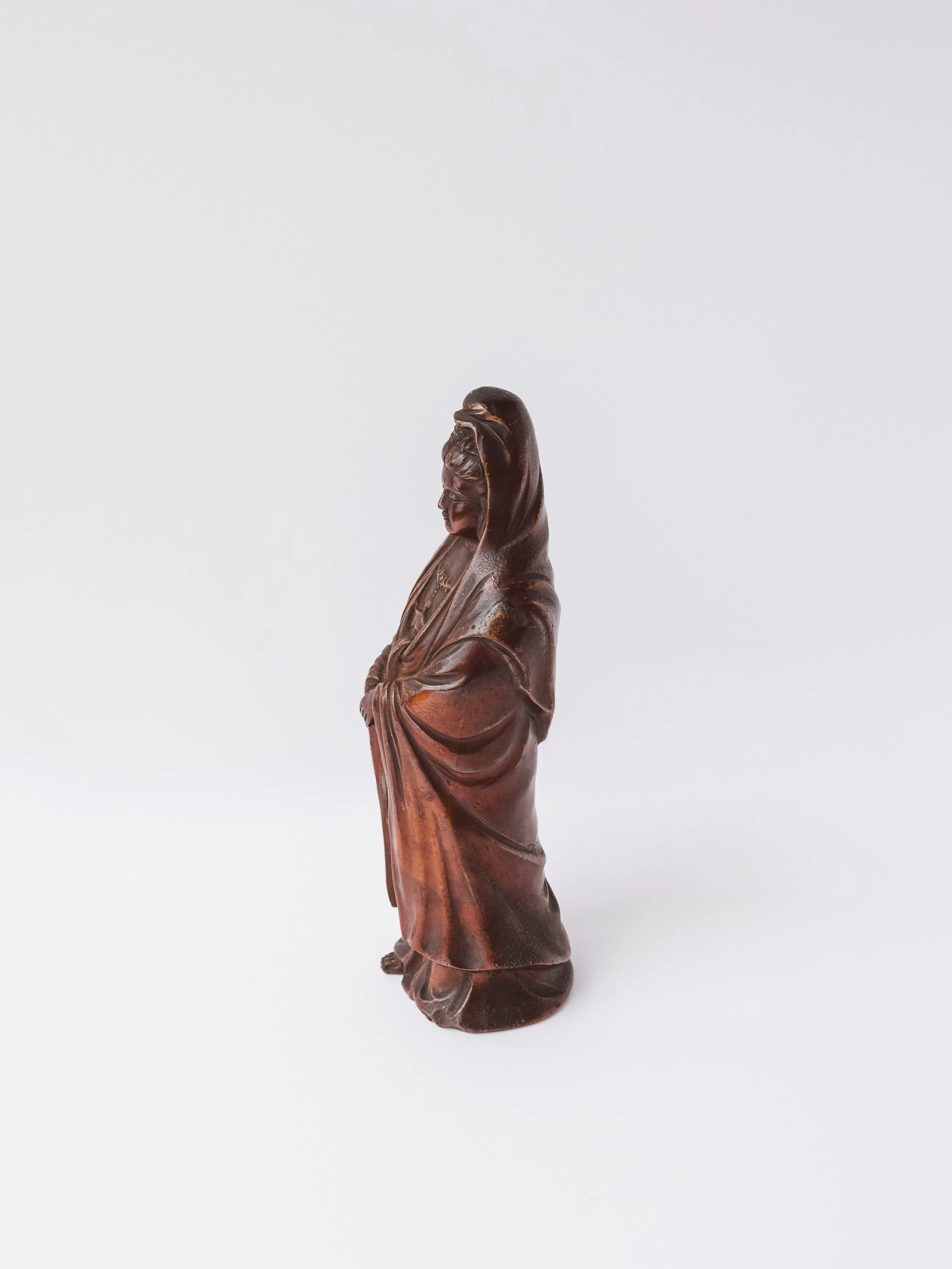 Image 3 of 13
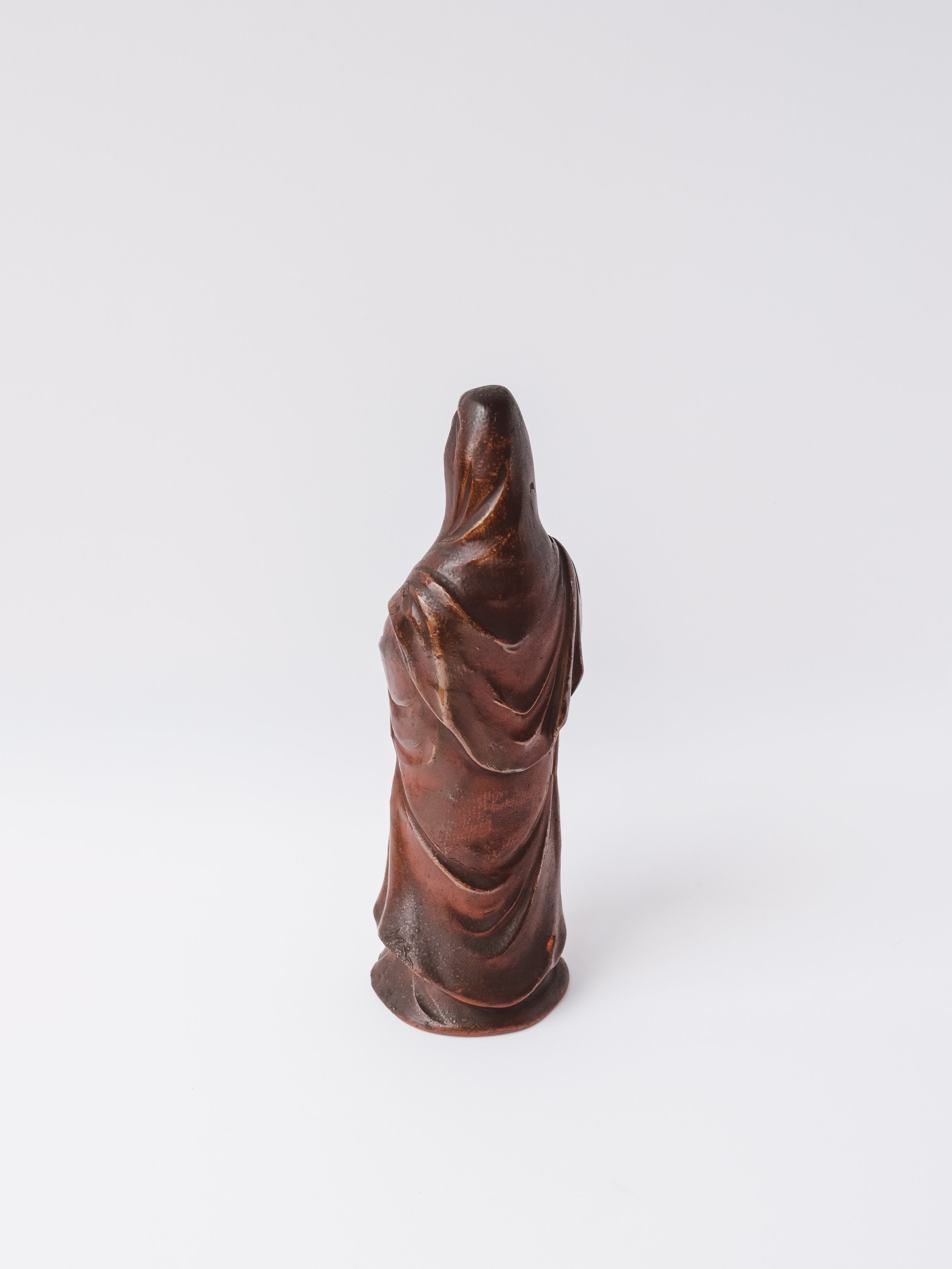 Image 4 of 13
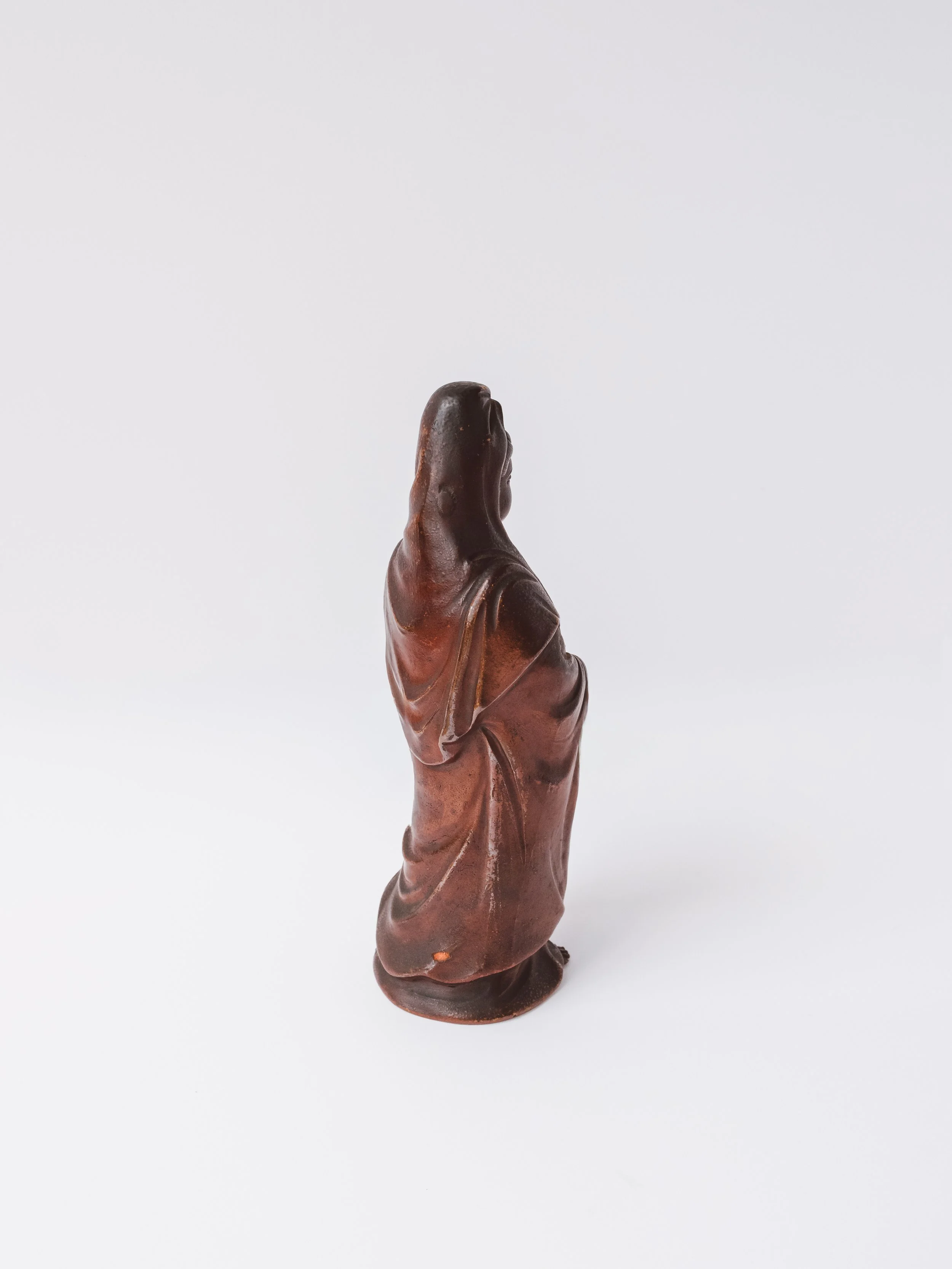 Image 5 of 13
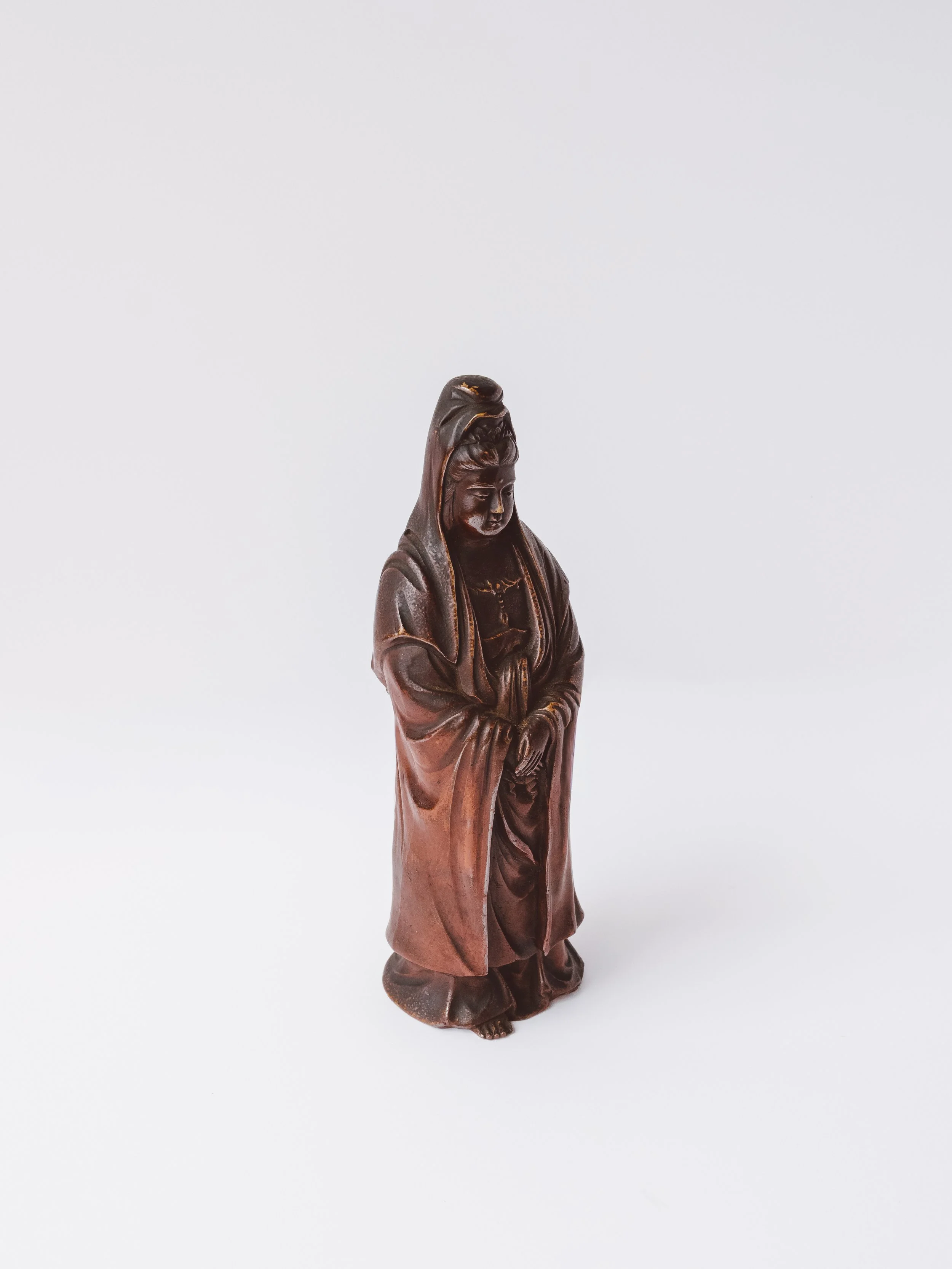 Image 6 of 13
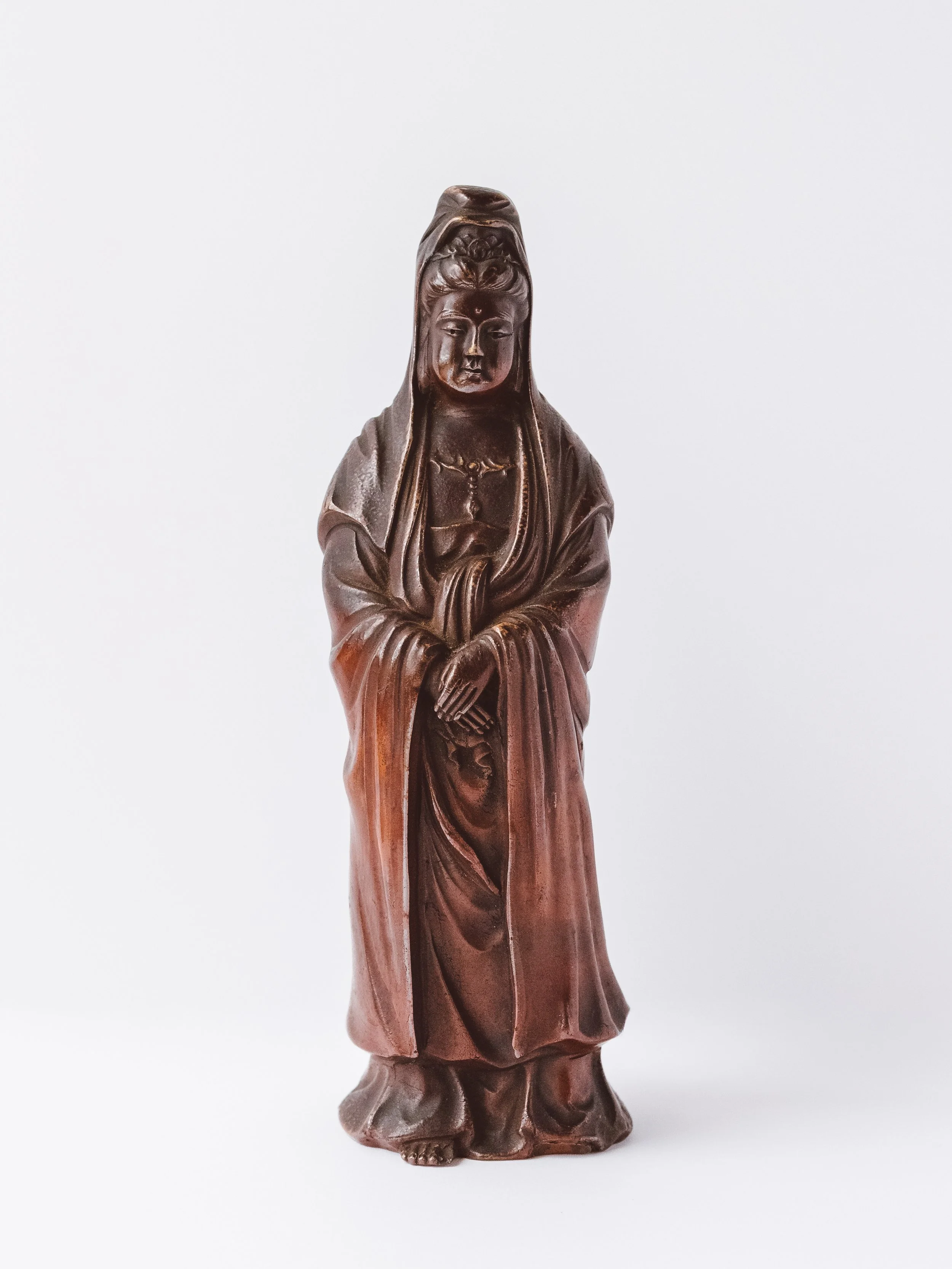 Image 7 of 13
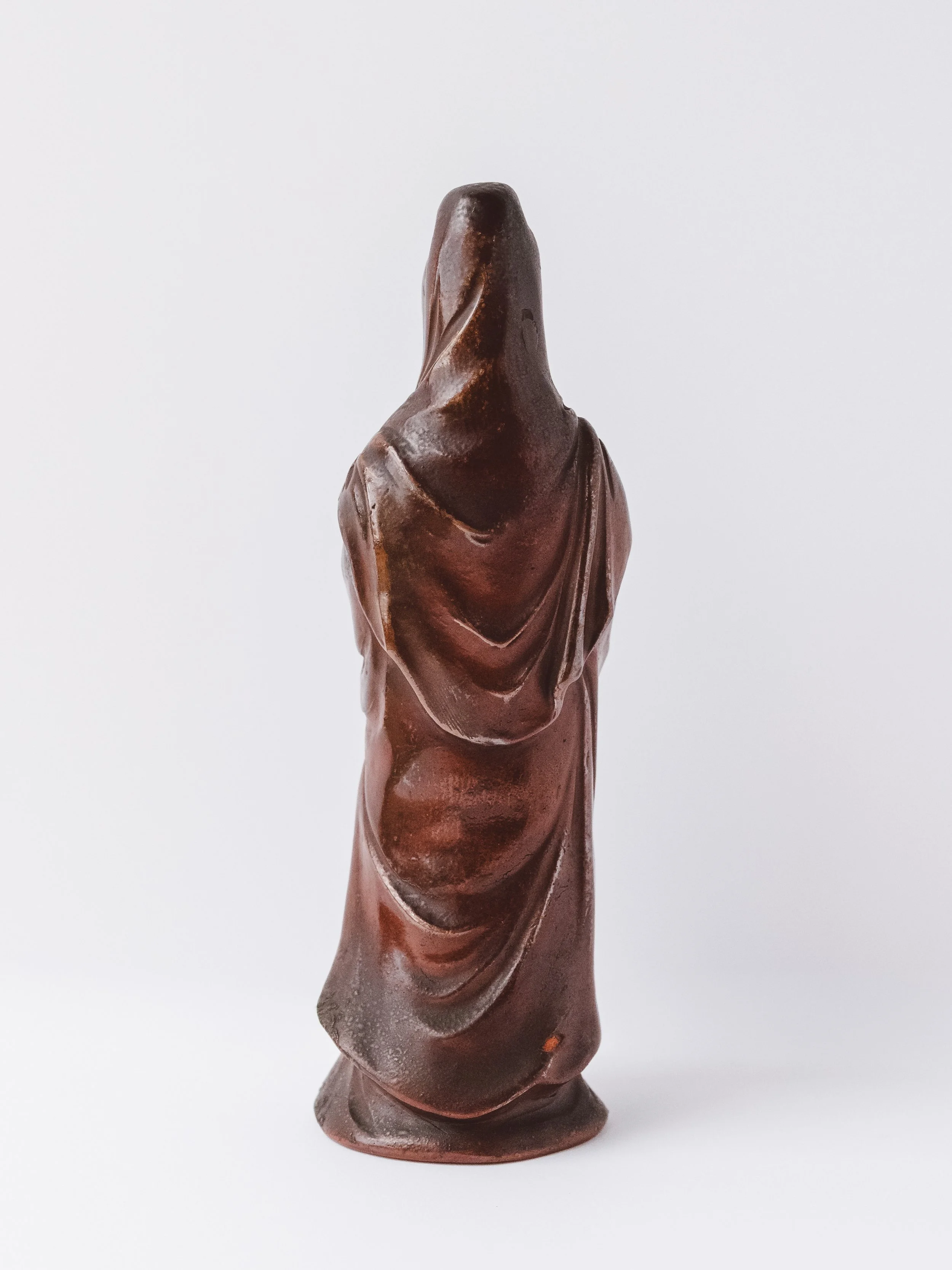 Image 8 of 13
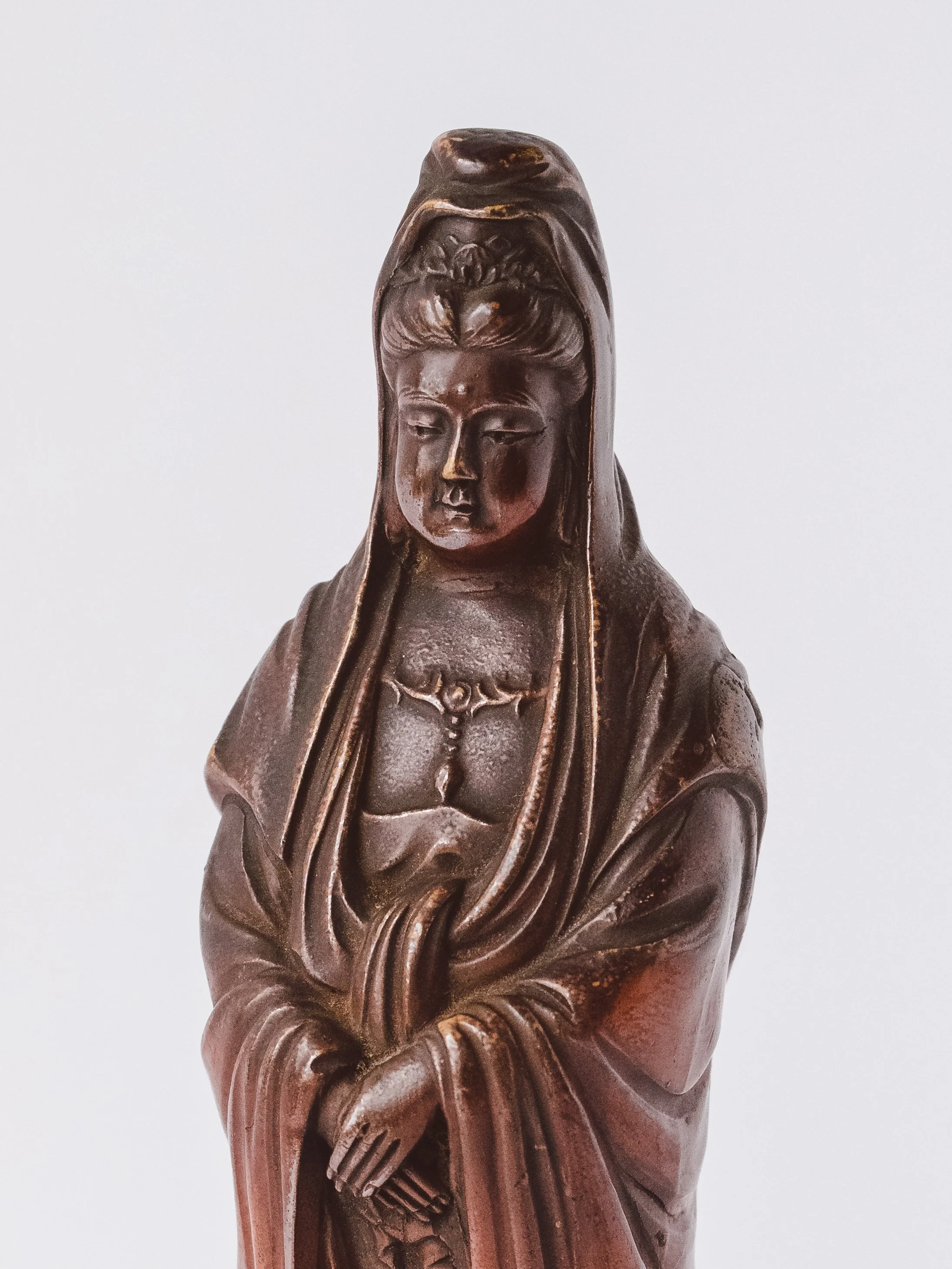 Image 9 of 13
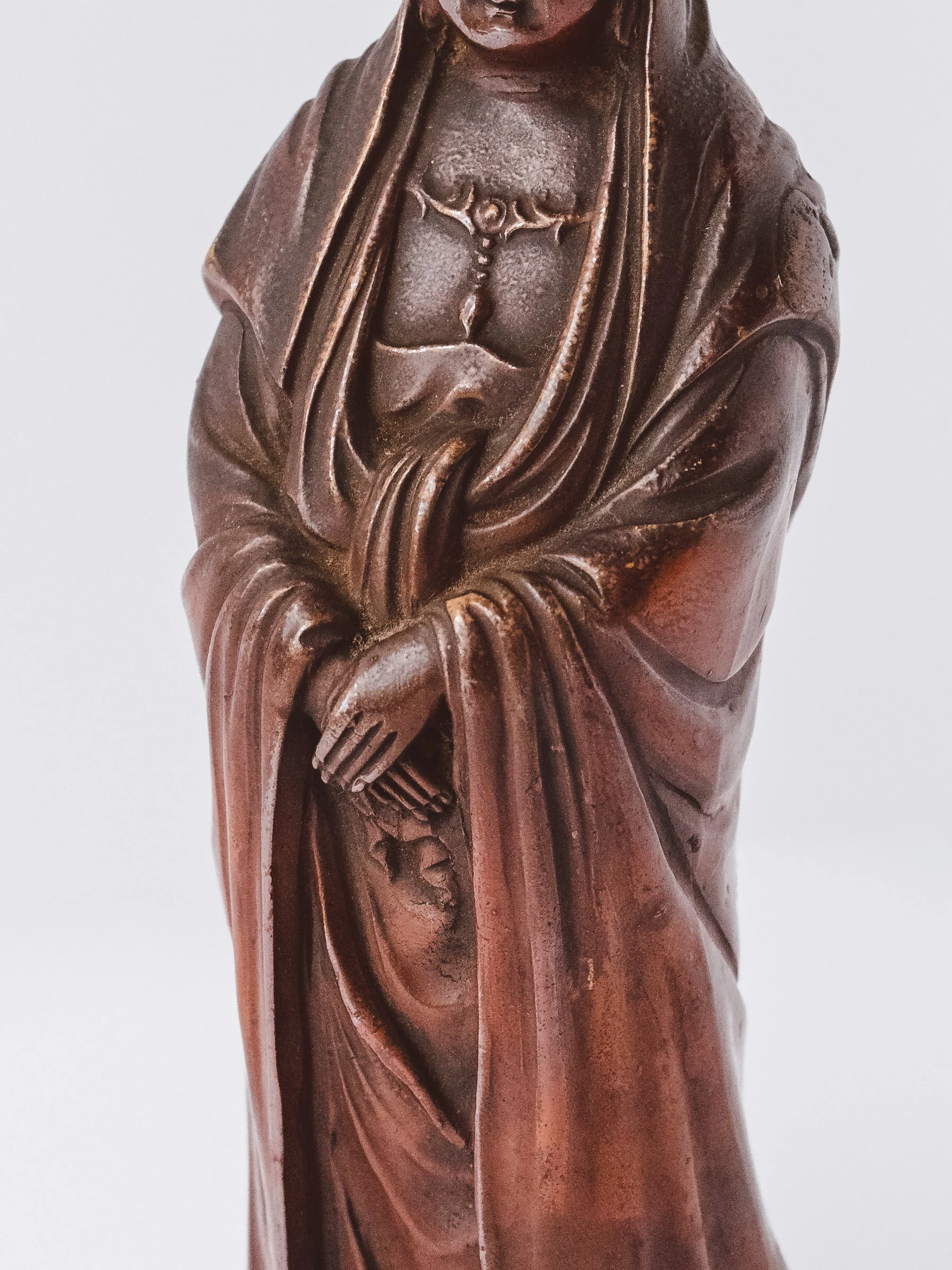 Image 10 of 13
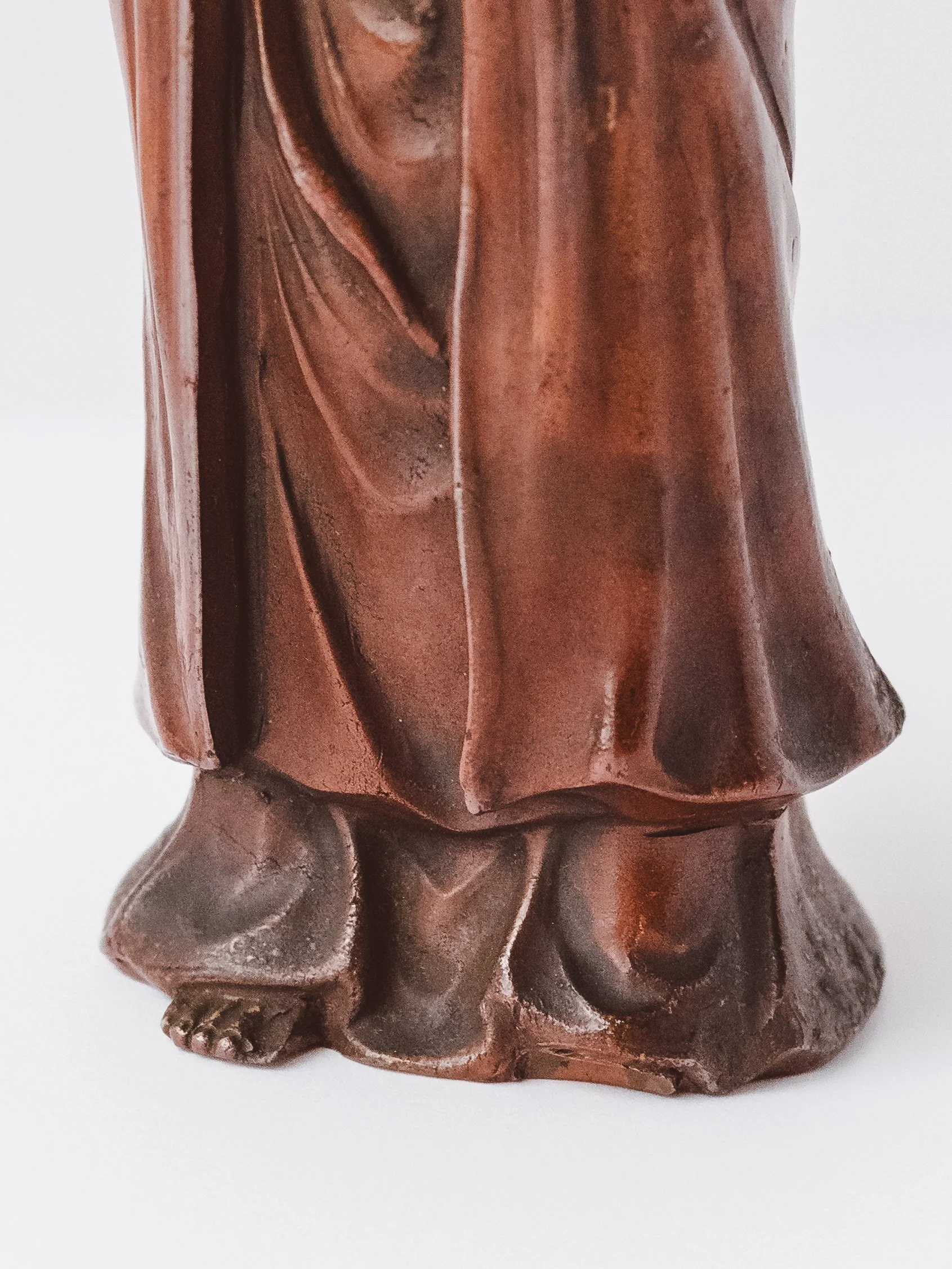 Image 11 of 13
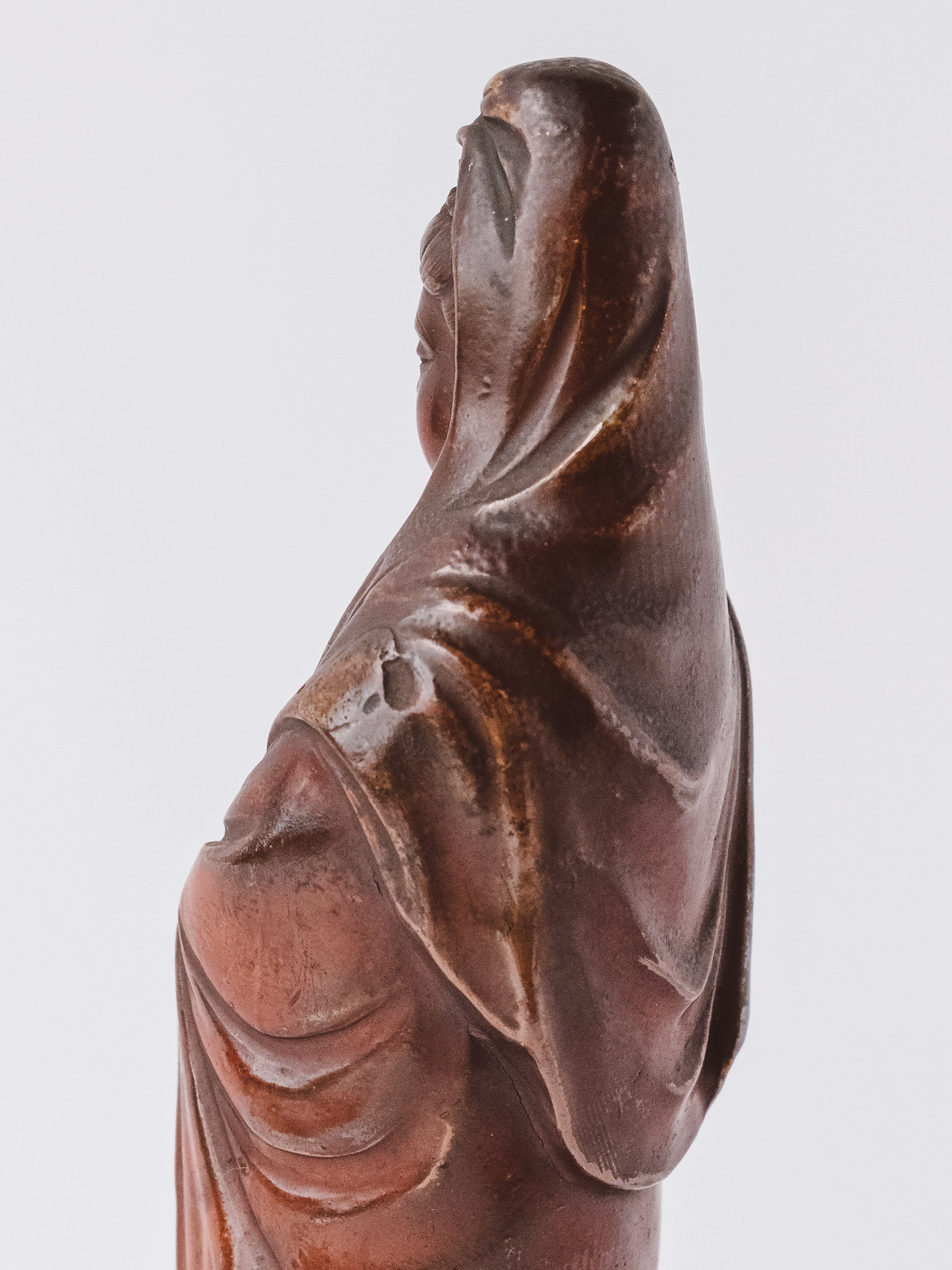 Image 12 of 13
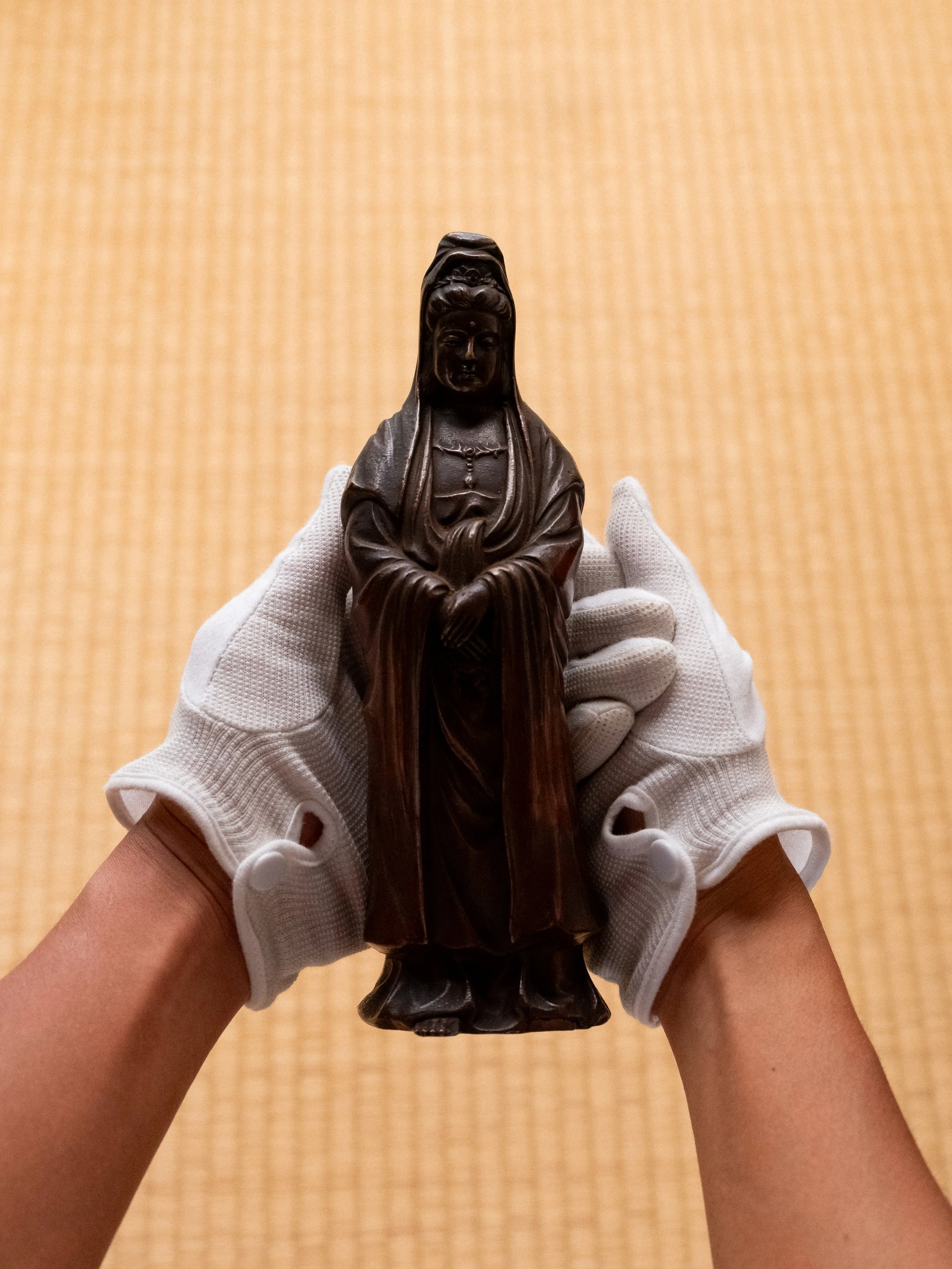 Image 13 of 13