【 The Concept 】
A Daruma carved as if from a block of rock and cast in iron. The whole body is cut into broad, flat facets, like a stone split by a chisel, and only near the top does the figure reveal itself: a heavy hood falls over the head, and from deep inside it the face of Daruma stares out. His thick brows curl and knot, his wide eyes look upward with fierce concentration, his nose is broad, his mouth is set hard, and a beard runs along his jaw. A large ring hangs from his ear, the mark of a monk from India. Below the face, the robe and the body vanish into a single faceted mass, so that he seems to be both a man in meditation and the rock he sits upon. The dark iron surface carries warm reddish-brown tones in the hollows and a dull silver sheen on the edges of the facets and on the raised features of the face.
【 The Monk Who Faced the Wall 】
Daruma is the Japanese name for Bodhidharma, the semi-legendary Indian monk who, around the fifth or sixth century, is said to have carried the teaching of Zen to China. The most famous story about him tells that he sat in meditation facing the wall of a cave near the Shaolin temple for nine years without moving. In Japanese the episode is called menpeki kunen, “nine years facing the wall,” and it became the very image of patience and unshakable will.
Later legends added to the story. Some say that after so many years of sitting, his arms and legs withered away, which is why Daruma dolls have no limbs. Others say that, angry with himself for falling asleep during meditation, he cut off his own eyelids, which is why he is always shown with huge, staring eyes, just like the eyes looking out of this hood.
【 “No Merit” and the Arm in the Snow 】
In the best-known telling, when Bodhidharma arrived in China he was received by Emperor Wu of Liang, a devout ruler who had built many temples and supported countless monks. The emperor asked how much merit he had earned by all this. “No merit at all,” Bodhidharma replied, teaching that good deeds done in the hope of reward are not the true path. The emperor did not understand him, and the monk went on his way.
Another story tells of the monk Huike, who came to beg Bodhidharma for teaching while he sat facing the wall. To prove how serious he was, Huike stood in the snow and cut off his own arm. Bodhidharma accepted him, and Huike became the second patriarch of Zen.
【 From Zen Master to Lucky Charm 】
In Japan, the stern Zen master gradually became one of the best-loved good-luck figures. Round, red Daruma dolls without arms or legs spread in the Edo period. Their red colour comes from the red robe in which Daruma is traditionally painted, and from the old belief that red keeps evil away; in the Edo period they were even used as charms against smallpox. Because a round Daruma always rolls back upright when knocked over, it stands for the saying nana korobi ya oki, “fall down seven times, get up eight.”
The Shorinzan Daruma-ji temple in Takasaki, founded in 1697 and named after Shaolin (Shorin in Japanese), is known as the birthplace of the good-luck Daruma of Takasaki. Every January it holds a famous Daruma market, where people buy a new Daruma for the year. Many still follow the custom of painting in one eye when making a wish, and the second eye when the wish comes true.
【 What Owning This Piece Brings 】
・ Perseverance. Daruma is the figure of not giving up: nine years facing the wall, seven falls and eight risings.
・ Focus and resolve. Those upward-staring eyes are a reminder to stay with a goal until it is reached.
・ A guardian for the home or office. Daruma has long been kept as a charm against misfortune and for success in business and study.
・ Lasting strength. Where a paper Daruma bounces back, an iron Daruma simply does not move.
A meaningful gift for someone starting a business, facing an exam, recovering from a setback, or beginning a new chapter, and for anyone drawn to Zen.
【 Where to Place It 】
On a desk, a bookshelf, beside the entrance, or in a tokonoma alcove. A window or lamp to one side brings out the facets and the sheen on the face. It looks especially good among stone, wood and other natural materials, and its weight makes it a fine paperweight too.
【 Care 】
This is cast iron: keep it dry and away from humidity. Dust it with a soft, dry cloth. Do not wash it; if it gets wet, dry it at once. A very light wipe with a cloth and a drop of oil can help protect the surface. Being heavy, place it on a stable surface.
【 Reading the Object 】
A cast-iron Daruma in the form of a faceted, rock-like mass, rounded at the top and narrowing toward the base. A deep hood frames the face in the upper front: curled, knotted brows; large round eyes looking upward; a broad nose; a firmly closed mouth; a beard along the jaw and cheeks; a large ring earring on one side. A vertical fold suggests the opening of the robe below the face. The rest of the body, including the back, is cut into large flat facets with a fine cast texture. Dark iron surface with reddish-brown tones and a dull silvery sheen on the raised edges and features; some lighter, worn patches on the lower side. On a lower facet at the back, three characters are incised vertically, the maker’s signature. It stands securely on its own.
【 Presence 】
Heavy, silent and unshakable. A Zen master turned to stone, still staring at the wall.
Archive Note: The number in the name (1697) marks the founding of Shorinzan Daruma-ji in Takasaki, the temple known as the birthplace of the Takasaki good-luck Daruma. NOT the date this piece was made.
Provenance Note: Sourced from a private household in Japan. A cast-iron Daruma figure by a Japanese metal artist, signed on the back.
Condition Note: Good vintage condition. Natural variation in the iron finish, with some lighter worn patches and reddish tones on the surface, consistent with age and the nature of cast iron. No cracks or breaks observed.


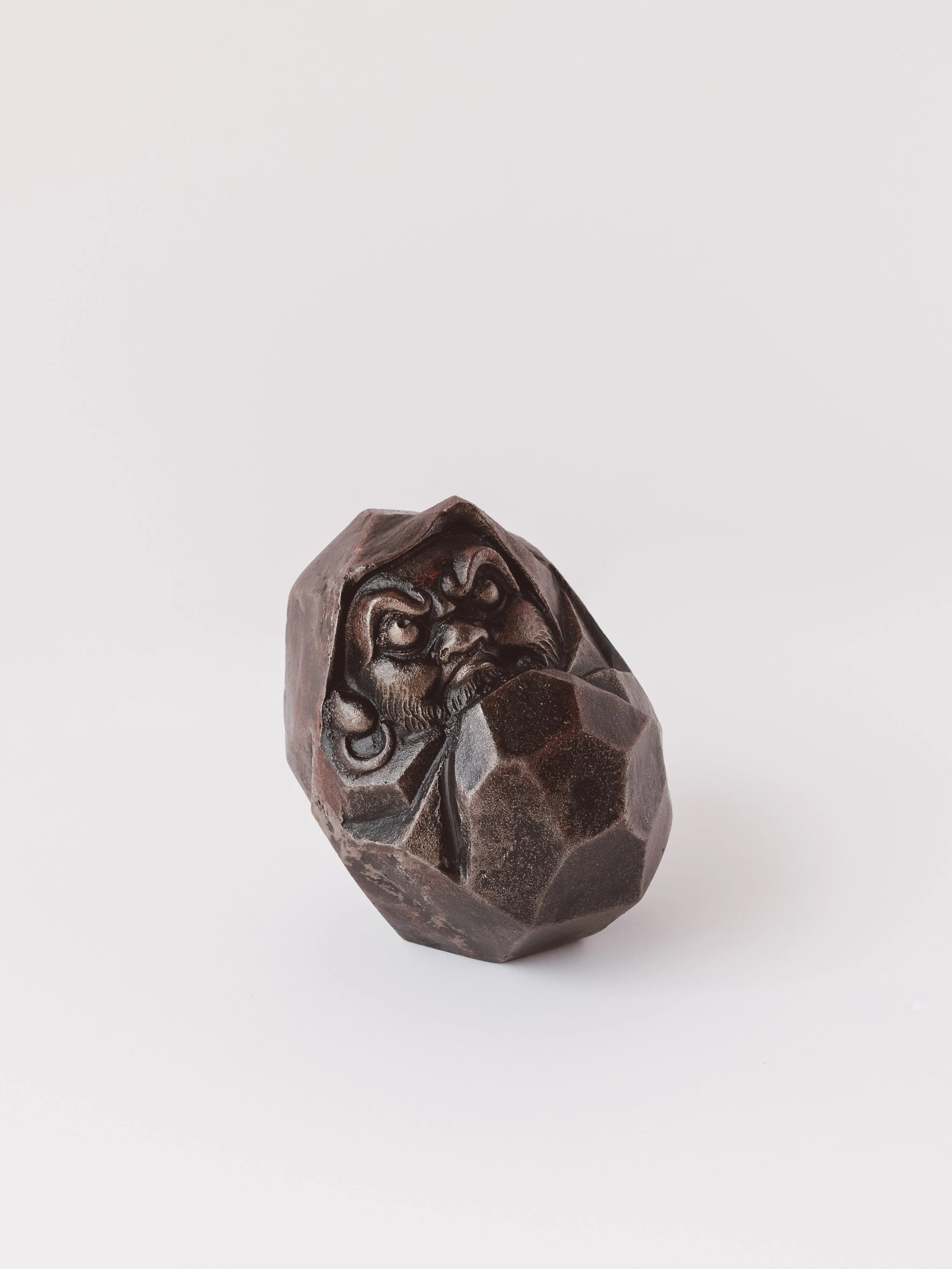 Image 1 of 9
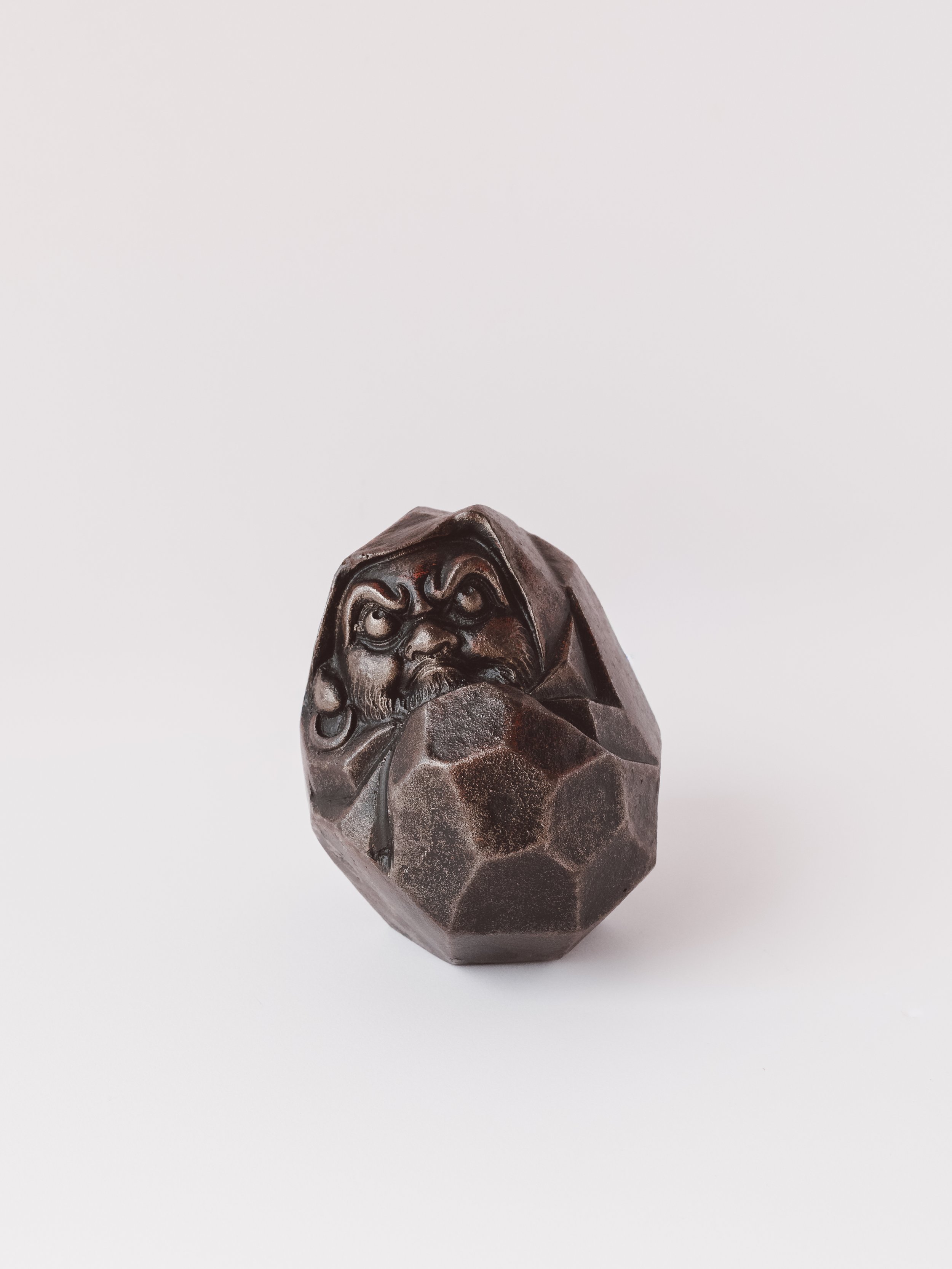 Image 2 of 9
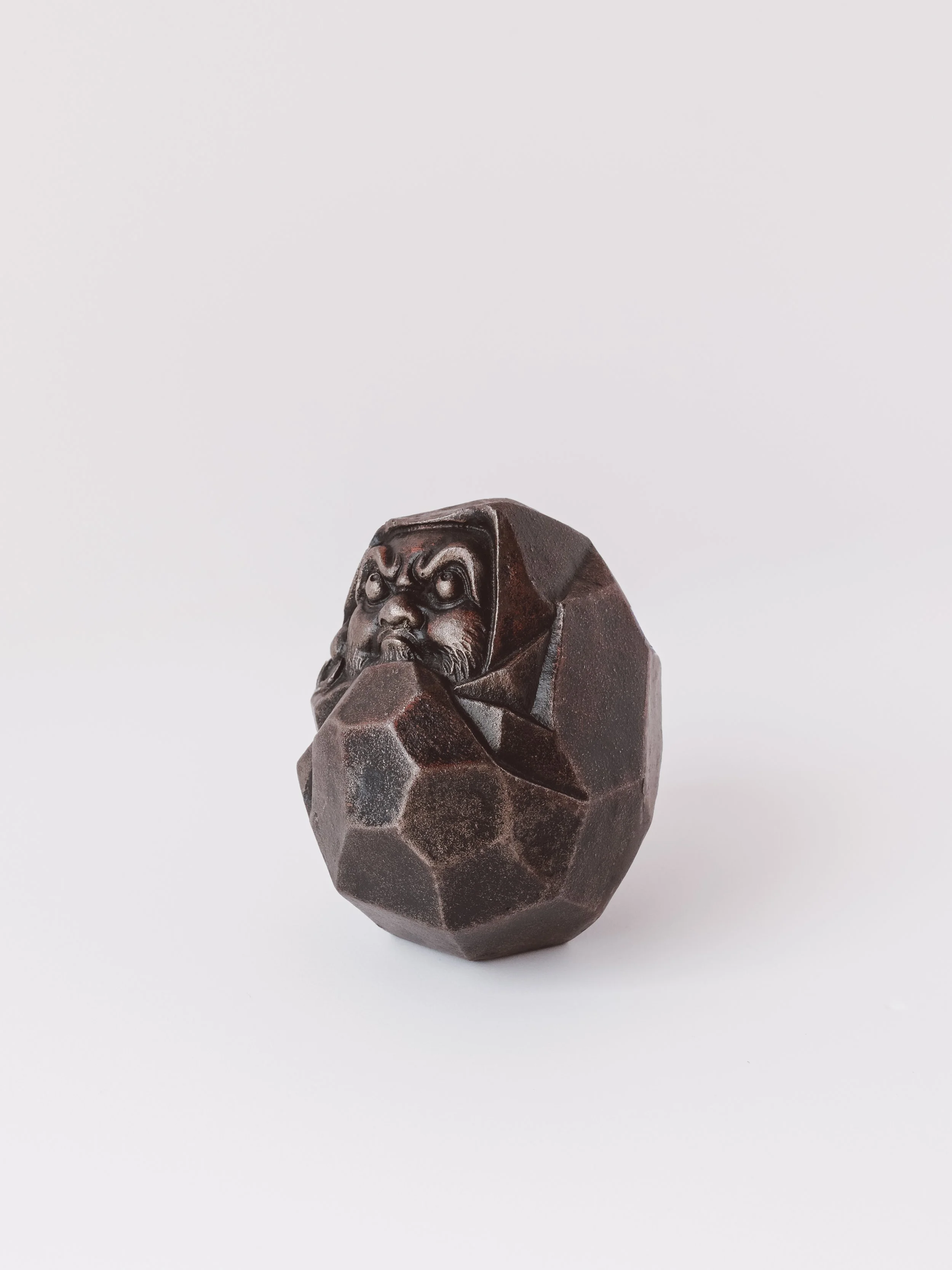 Image 3 of 9
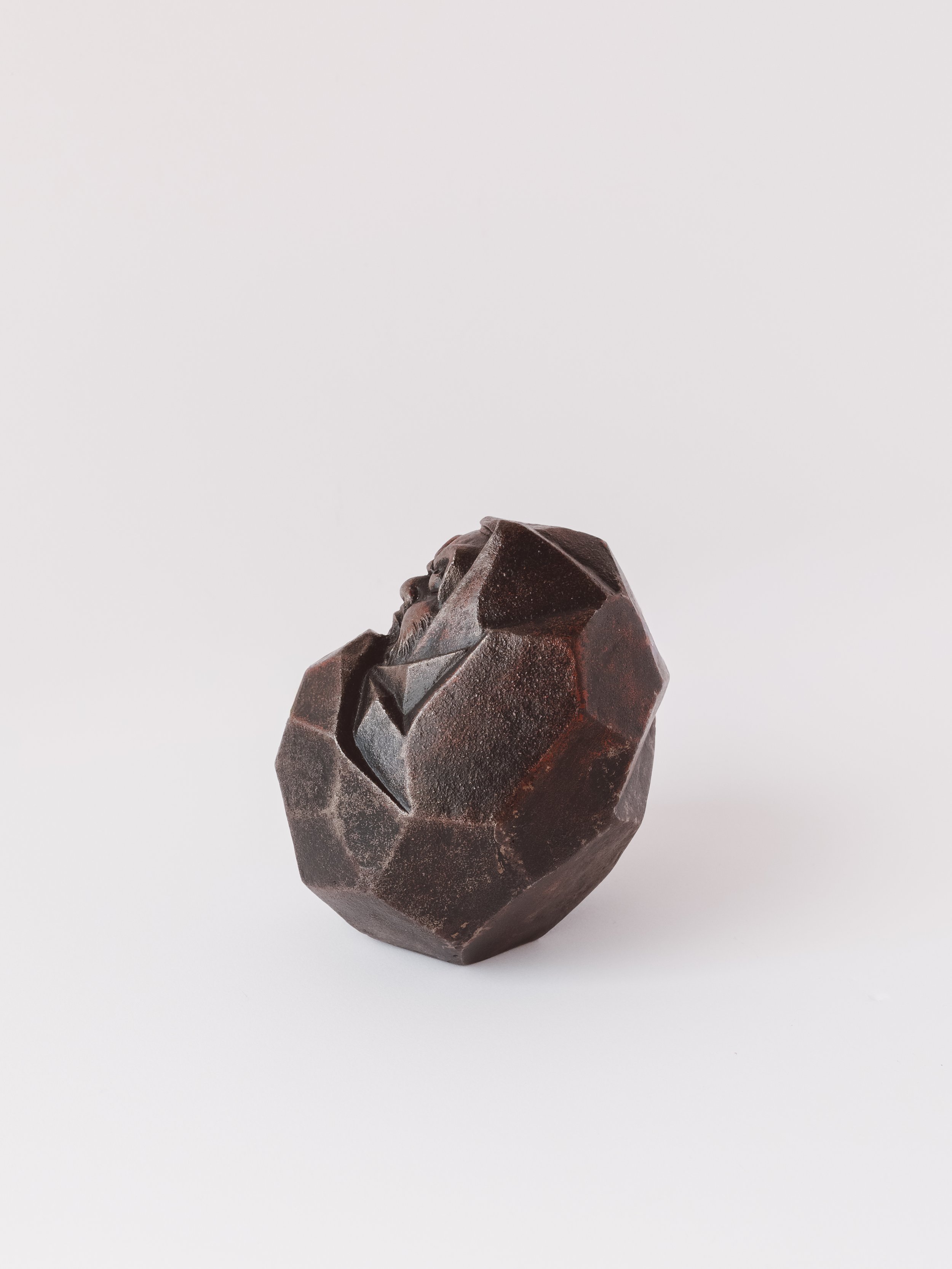 Image 4 of 9
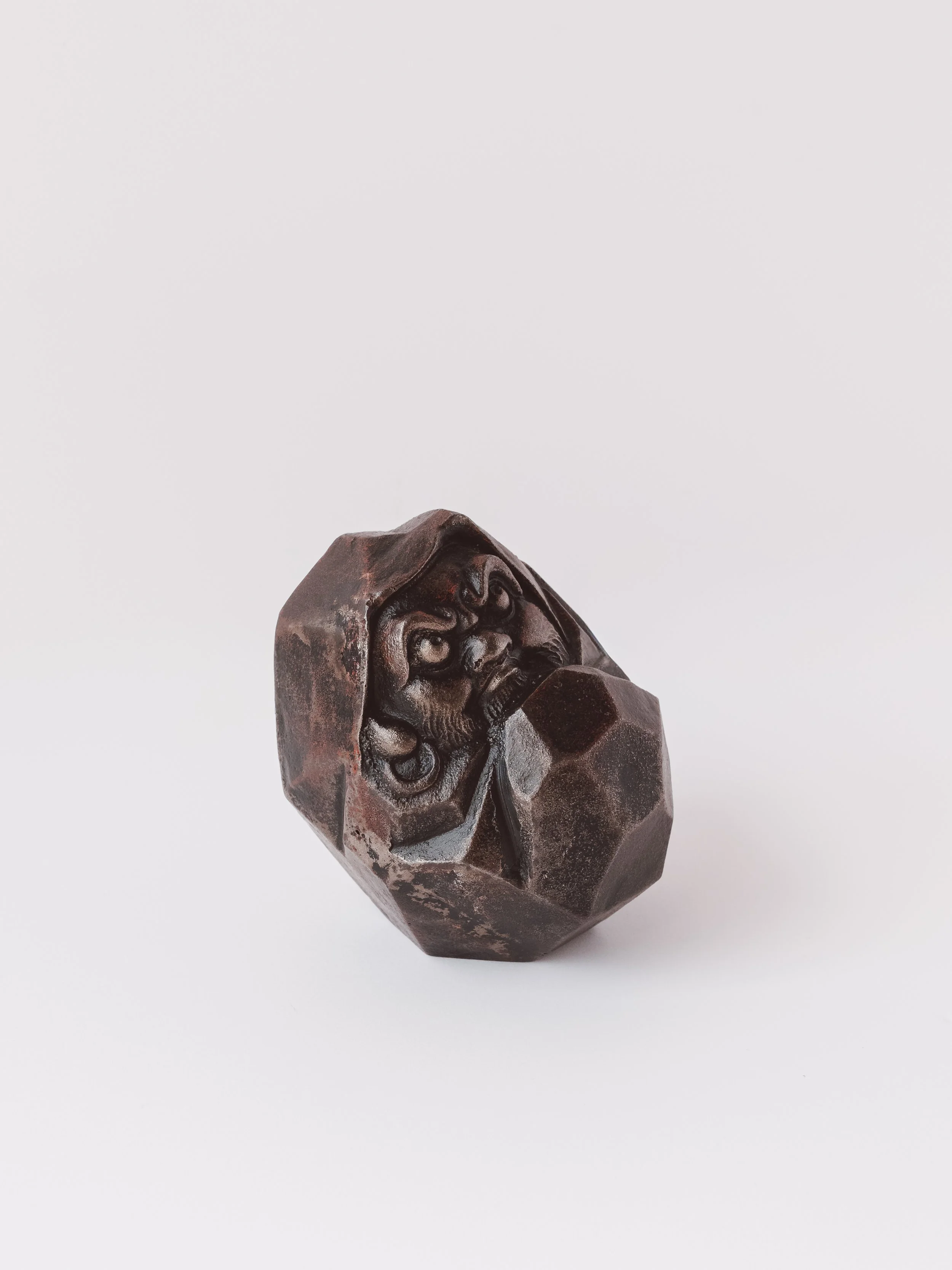 Image 5 of 9
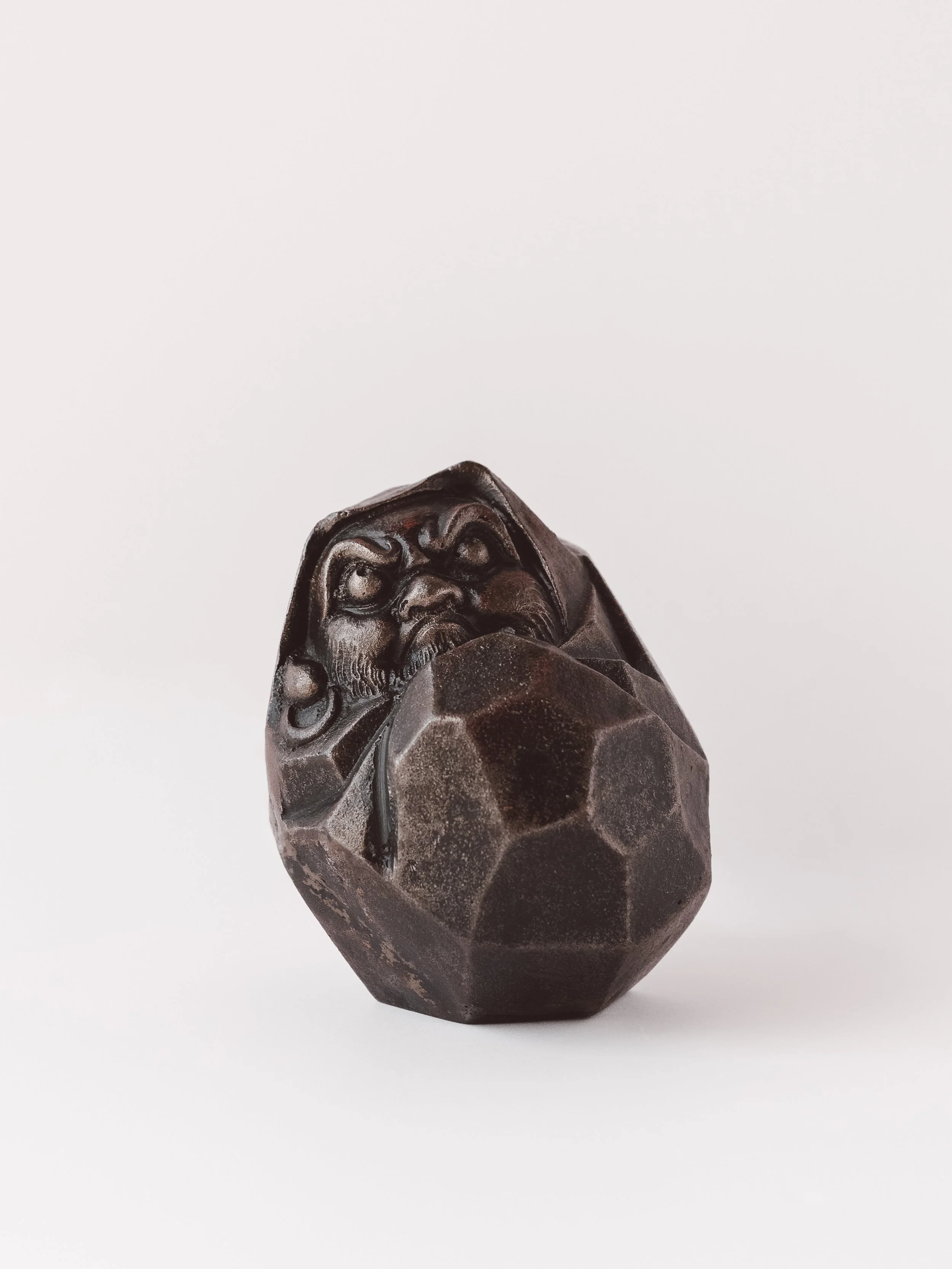 Image 6 of 9
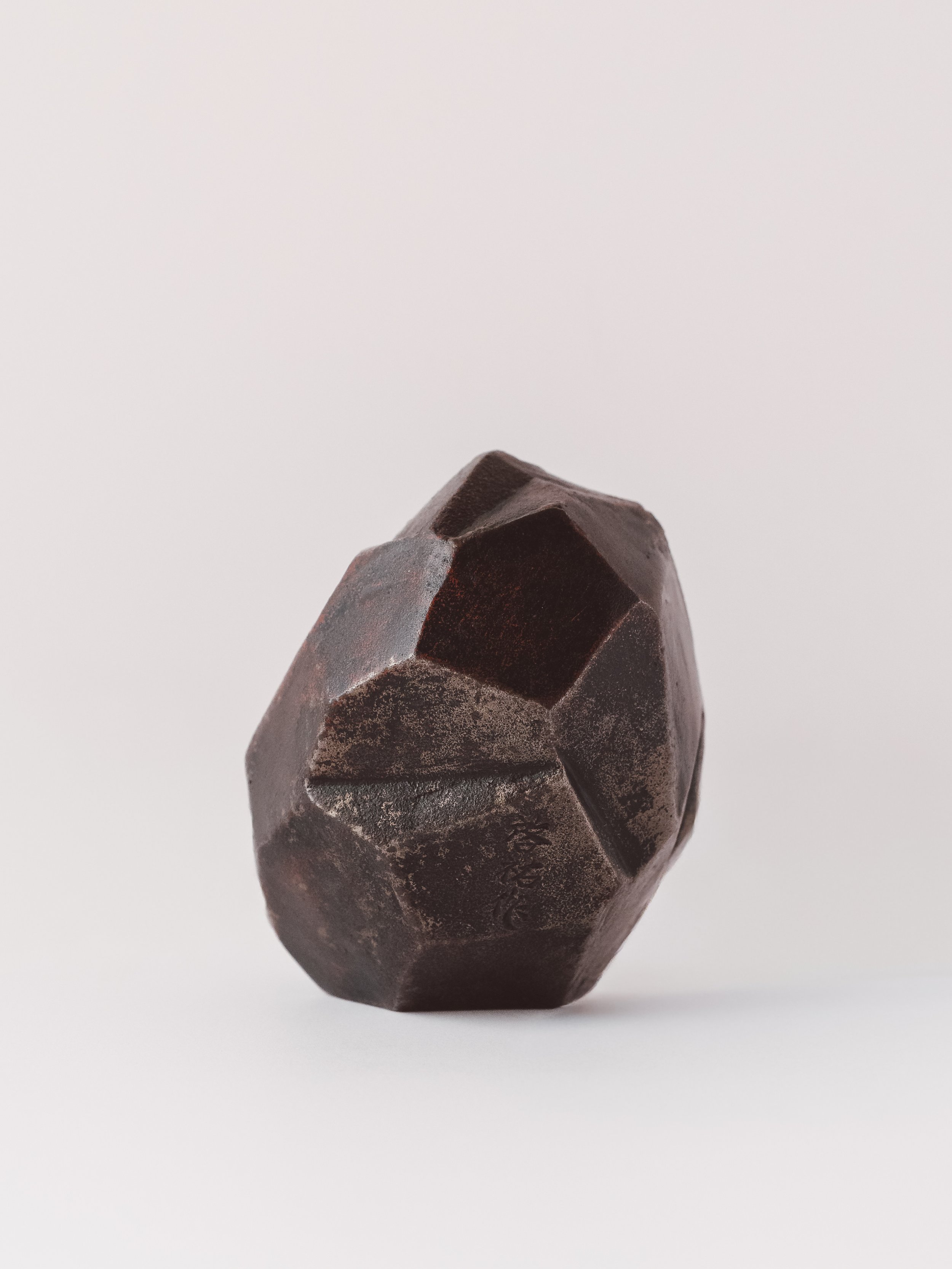 Image 7 of 9
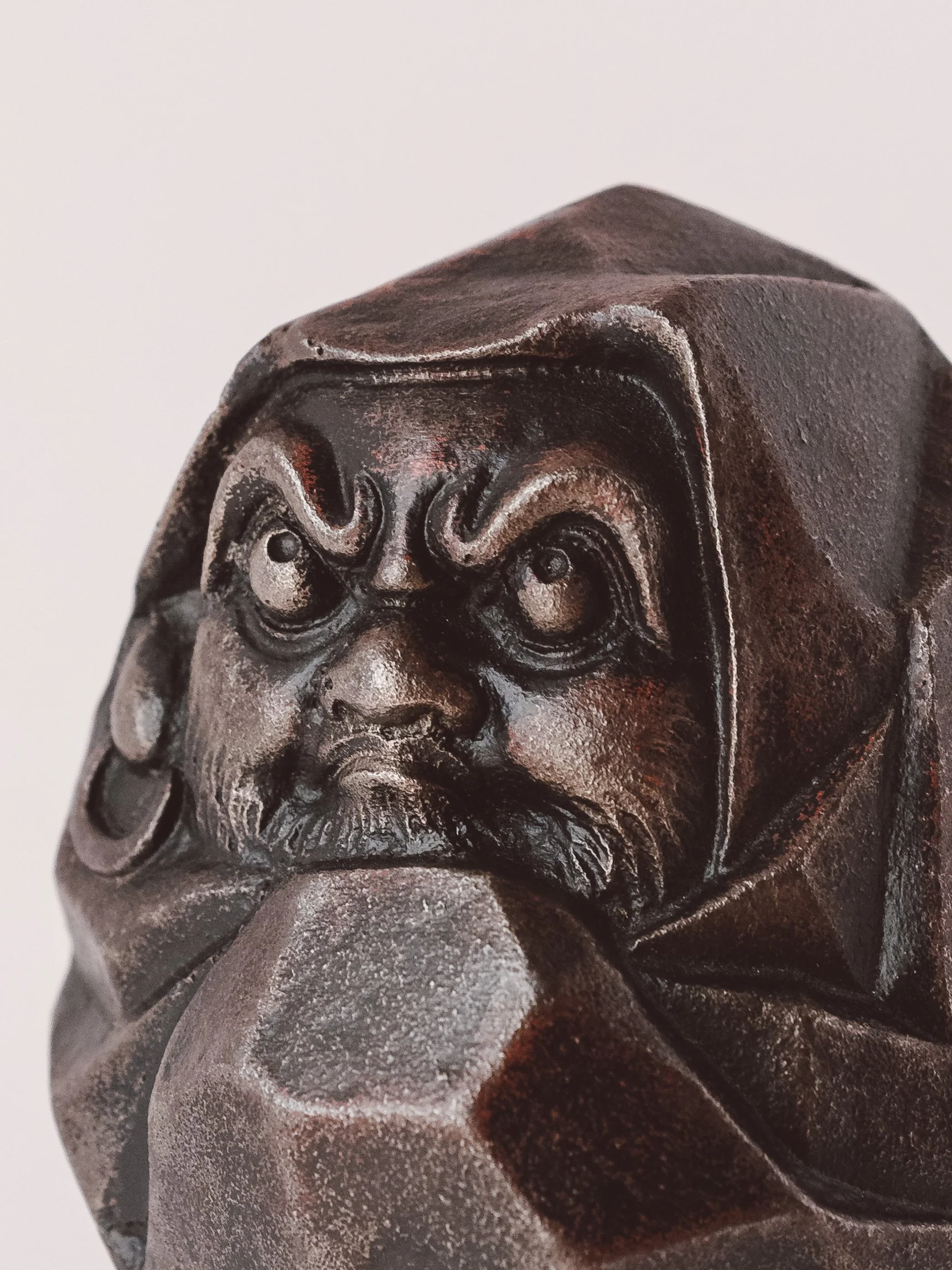 Image 8 of 9
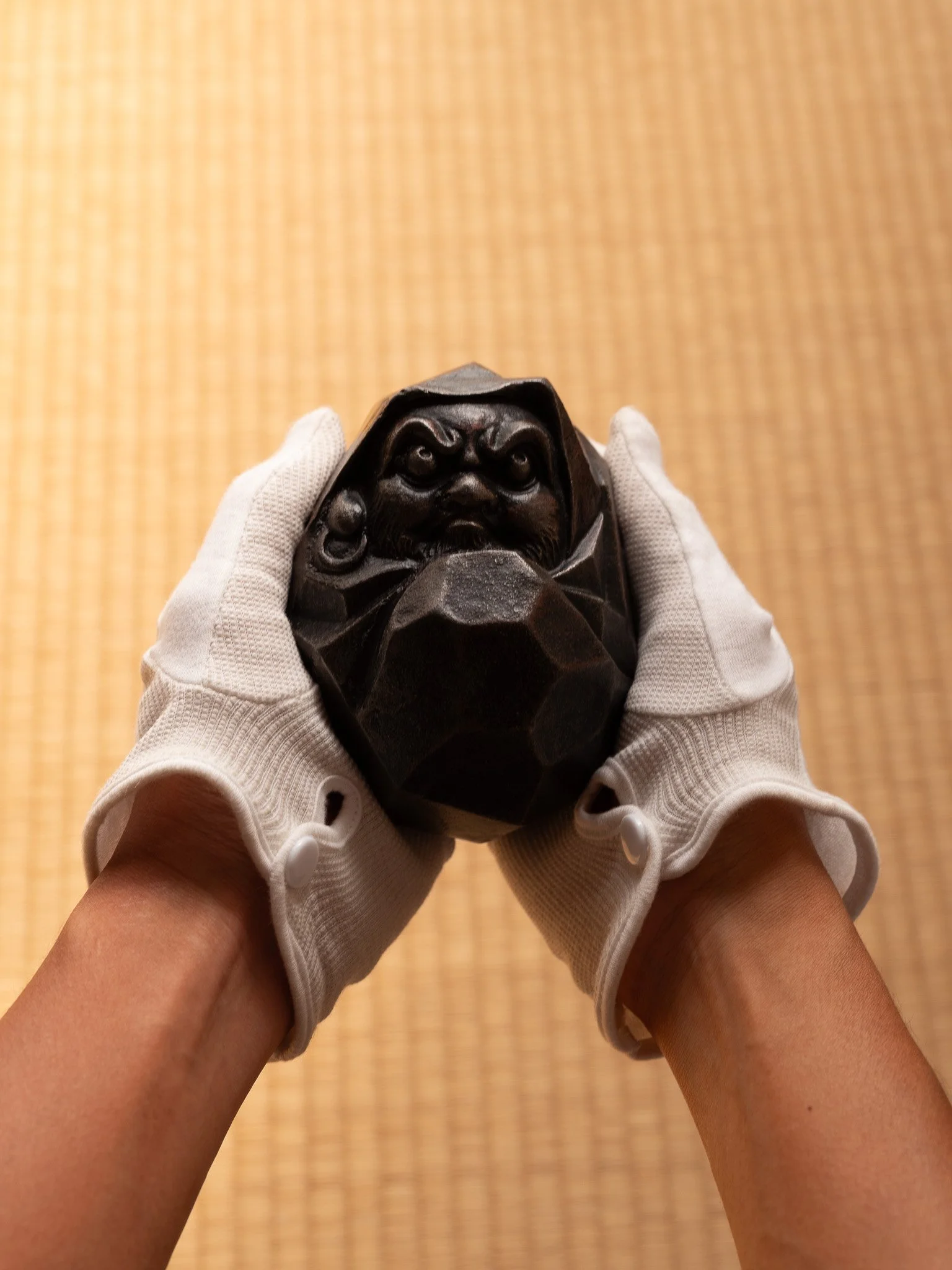 Image 9 of 9