【 The Concept 】
A saddled horse in pale sky-blue glaze, standing square on four sturdy legs and lifting its head to look up at the sky. The forms are simplified almost to a sketch: a long neck with a single sharp ridge for the mane, a smooth muzzle, two small upright ears, a round, full body and a short tail that juts straight out behind like a little spout. On its back sits a saddle with raised front and rear, and a softly modelled saddle cloth hangs down each side. The glaze is a clear, cool blue with a soft sheen, faintly speckled, and where it thins over the ear tips, the saddle rims and the mane it lets a warm, pale earth tone glow through. At the base of each leg the glaze stops, revealing the reddish-brown clay of the body. It is the kind of horse that seems to be waiting patiently for someone to mount it, and its upward gaze gives it a quiet, almost hopeful dignity.
【 The Sacred Horse 】
In Japan, the horse has long been more than a working animal. It was believed to be the mount of the gods, and since ancient times living horses were offered to shrines as shinme, “sacred horses,” a custom that continues today, usually with a white horse. At Kibune Shrine in the hills north of Kyoto, the court prayed to the god of rain and water: when they wished for clear skies they offered a white horse, and when they needed rain, a black one. In the Heian period the ritual was simplified, and instead of a living animal, people offered a wooden board painted with a horse. This is thought to be the origin of the ema, the small wooden prayer plaques that still hang in their thousands at every Japanese shrine.
A saddled horse like this one is not a wild horse but one prepared for a rider, the kind of horse that would be led to a shrine and offered to the gods.
【 The Horse of the Zodiac 】
The horse is the seventh of the twelve animals of the East Asian zodiac, and in Japan its year is associated with energy, vitality and moving forward. Figures of the year’s animal, often in a fine wooden box like this one, are displayed at home at New Year to bring good fortune, and a horse is a favourite gift for someone born in a Year of the Horse.
【 Celadon Blue 】
The soft blue of this glaze belongs to the long family of celadon glazes, prized in China, Korea and Japan for more than a thousand years for their quiet, jade-like colours. Celadon is one of the most demanding glazes a potter can work with: its colour shifts with the slightest change in the kiln, and the clear blue seen here is the result of careful control of both glaze and firing. In Kyoto, where this piece comes from, potters have long admired the celadons of China, and many began their careers by mastering them.
【 What Owning This Piece Brings 】
・ Forward movement. The horse is the animal of energy and progress, a charm for things to move ahead smoothly.
・ Hope and aspiration. Its raised head and upward gaze make it an image of looking ahead to better things.
・ Calm in a room. The pale, clear blue brings a cool, restful quality to any space.
・ A Kyoto studio work. A hand-finished piece in its signed wooden box, made by a ceramic artist rather than a souvenir workshop.
A meaningful gift for someone born in a Year of the Horse (1954, 1966, 1978, 1990, 2002, 2014, 2026), for a rider or horse lover, or for someone starting a new venture.
【 Where to Place It 】
On a shelf, a sideboard, a desk or in a tokonoma alcove, ideally where it can be seen in profile so that the line of the neck, saddle and tail reads clearly. It looks beautiful against wood or a white wall, and soft natural light brings out the depth of the blue.
【 Care 】
Dust with a soft, dry cloth; if needed, wipe gently with a slightly damp cloth and dry. Do not soak it, and keep the unglazed feet dry. Handle with both hands, supporting the body rather than lifting by the head, neck or tail, and keep it in its wooden box when not on display.
【 Reading the Object 】
A ceramic standing horse with a saddle, in a simplified, modern style. Head raised and turned slightly upward; smooth muzzle with softly indicated eyes, nostrils and mouth; two small upright ears. A narrow raised ridge runs down the back of the neck for the mane. The saddle, with raised pommel and cantle, is modelled as part of the body, with a saddle cloth panel on each side. Full, rounded barrel and hindquarters; a short, cylindrical tail pointing straight out. Four straight, slightly flared legs, each with a vertical groove at the hoof. Pale sky-blue celadon-type glaze with a soft gloss and fine speckling; the glaze thins to a pale earth tone on the ears, saddle edges and mane. The bases of the legs are unglazed, showing a reddish-brown clay body. It stands on its own. Comes in a wooden box inscribed in ink with the characters for “horse” (the zodiac sign) and “okimono” (ornament), signed and sealed by the artist.
【 Presence 】
Cool, gentle and quietly proud. A sacred horse in the colour of the sky, waiting for its rider.
Archive Note: The number in the name (1978) marks a Year of the Horse in the East Asian zodiac. NOT the date this piece was made.
Provenance Note: Sourced from a private household in Japan. A ceramic horse figure by a Kyoto ceramic artist, in its original wooden box (tomobako) inscribed, signed and sealed by the artist.


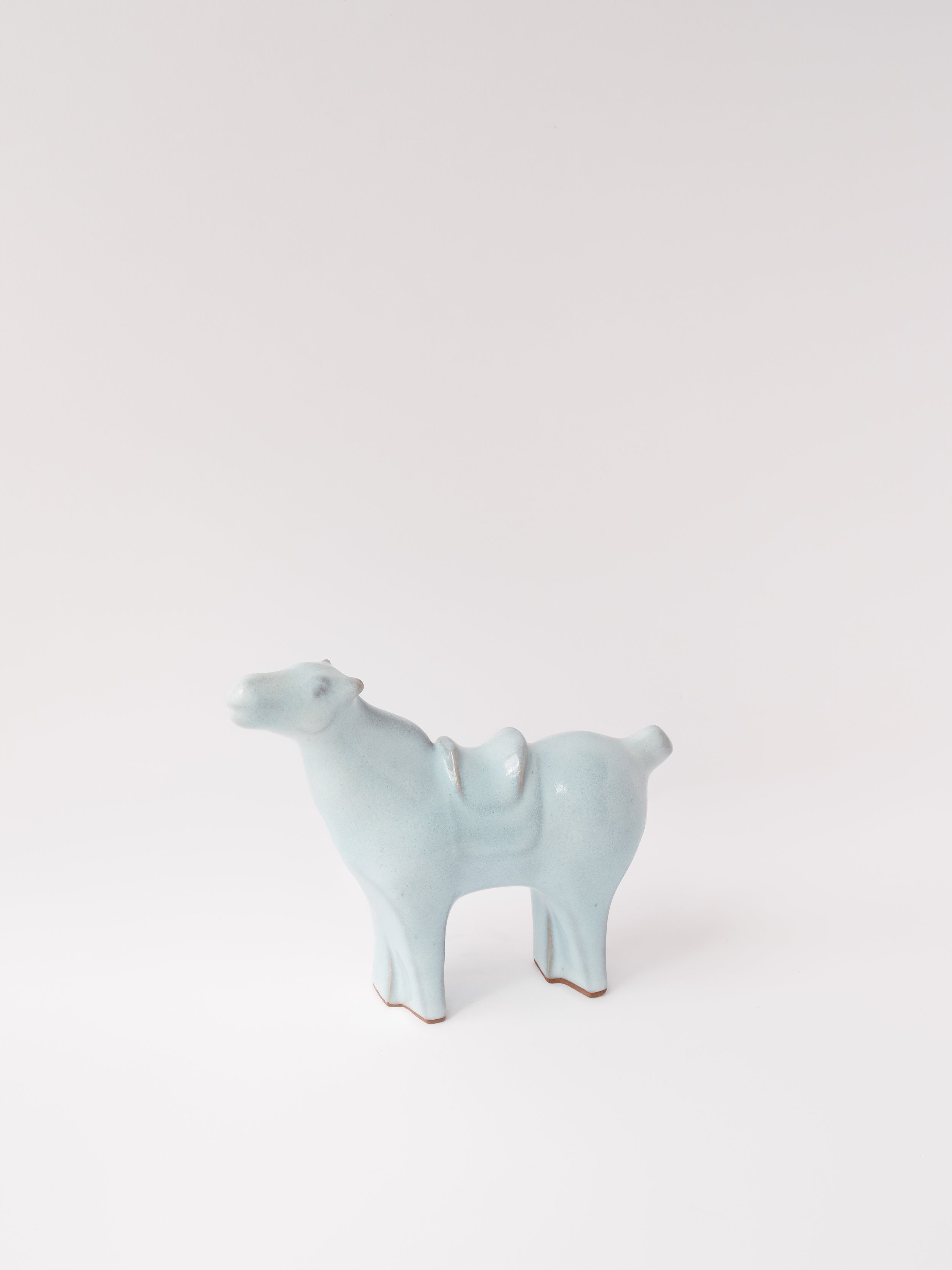 Image 1 of 11
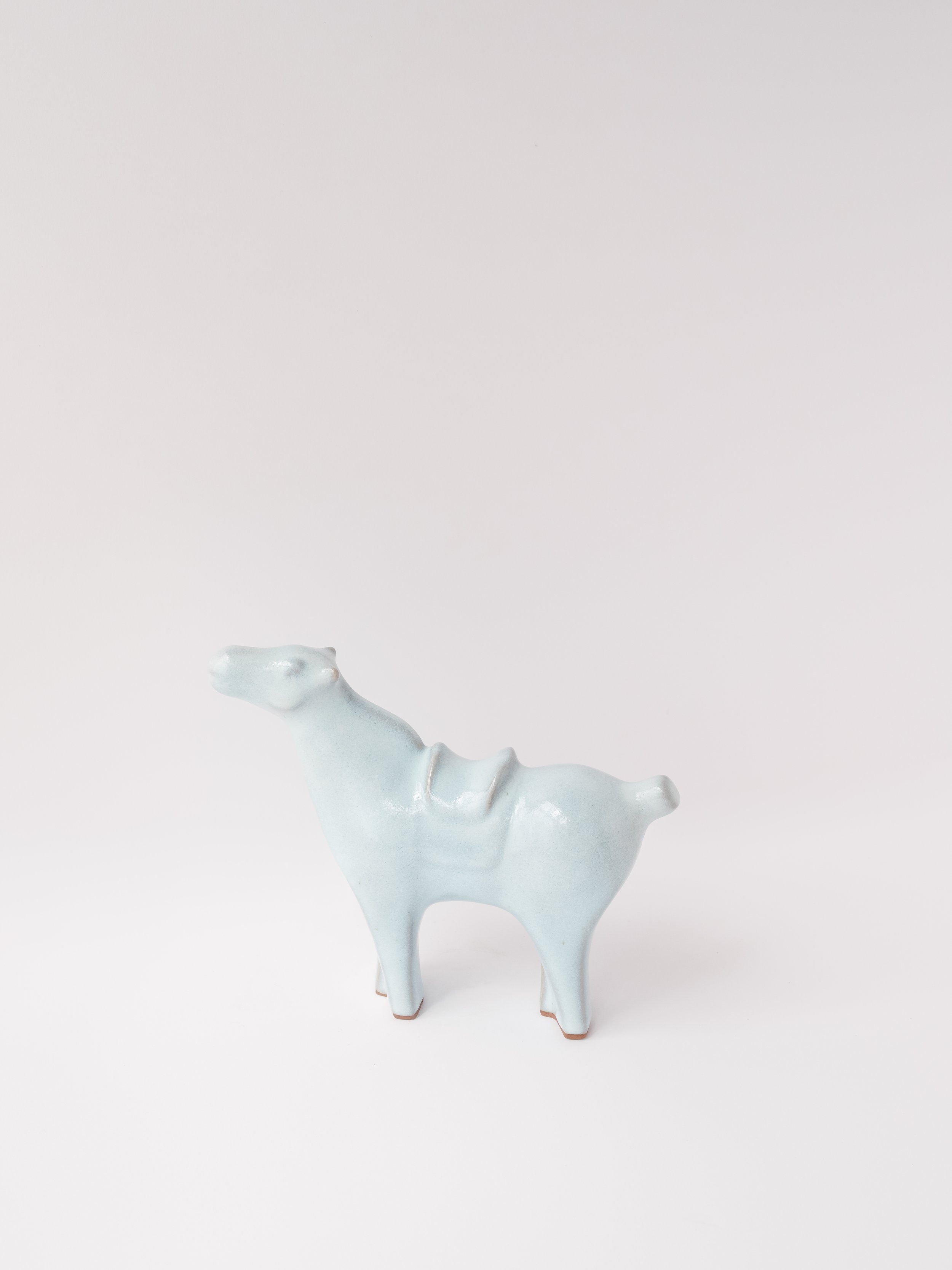 Image 2 of 11
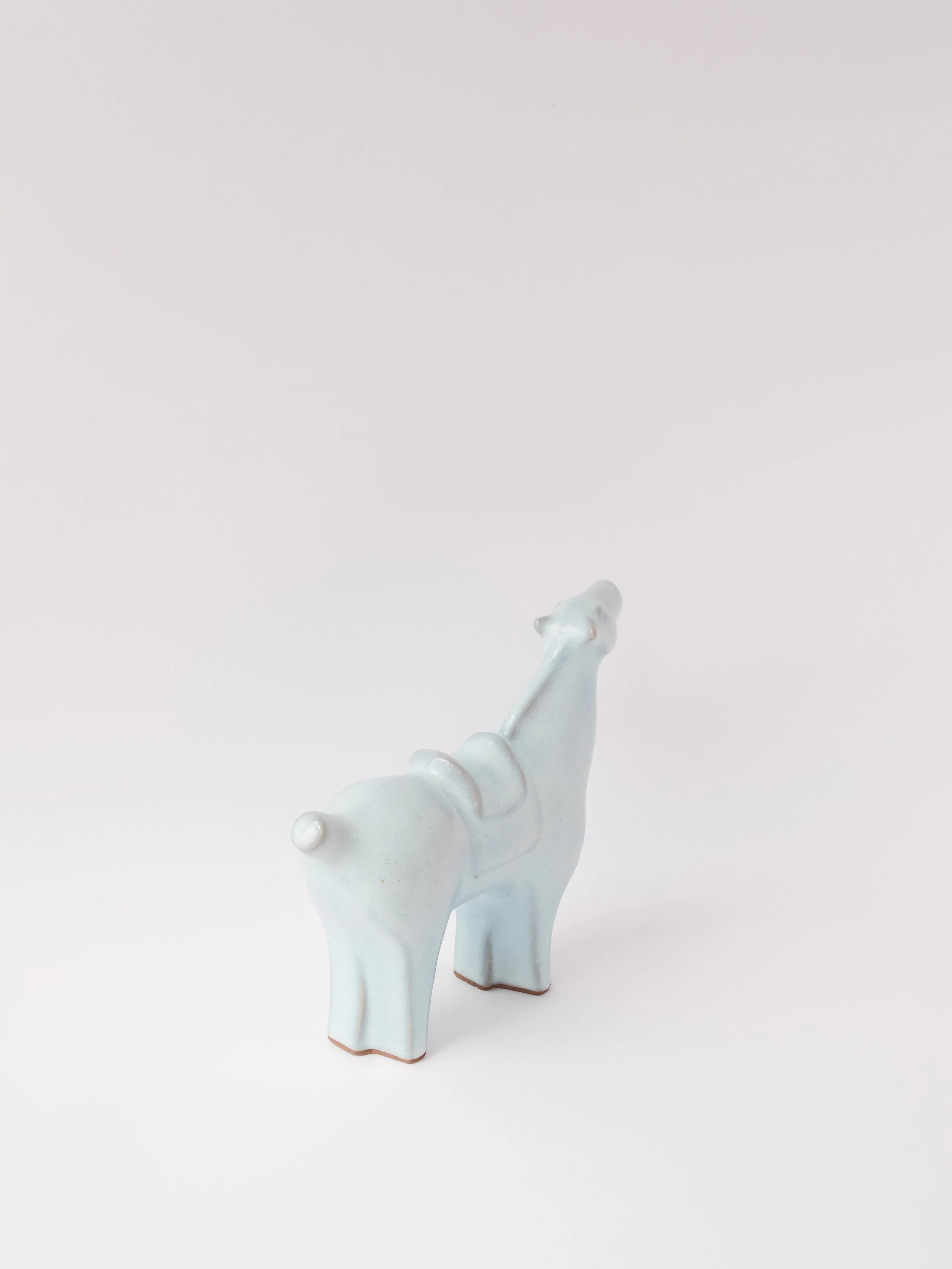 Image 3 of 11
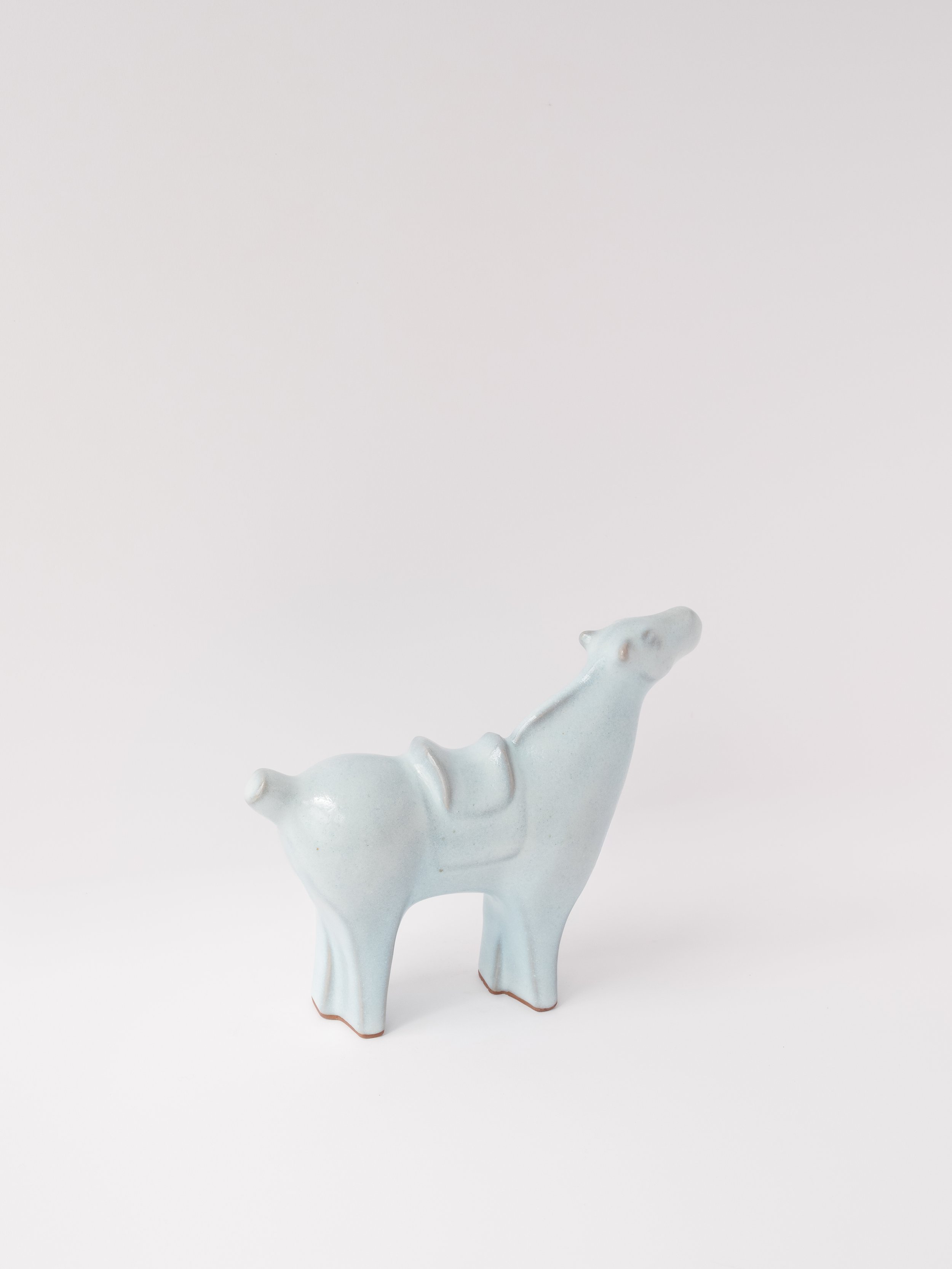 Image 4 of 11
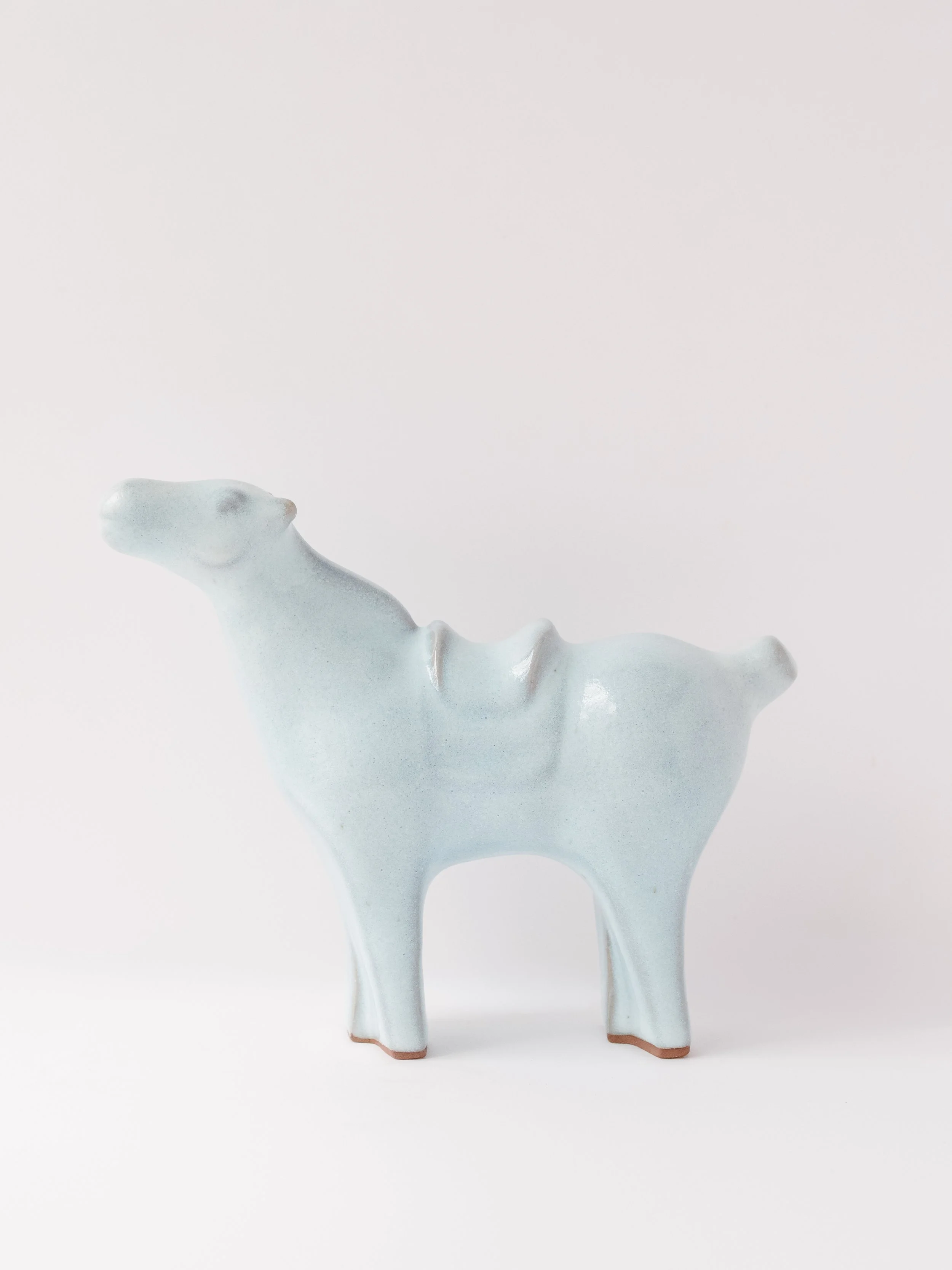 Image 5 of 11
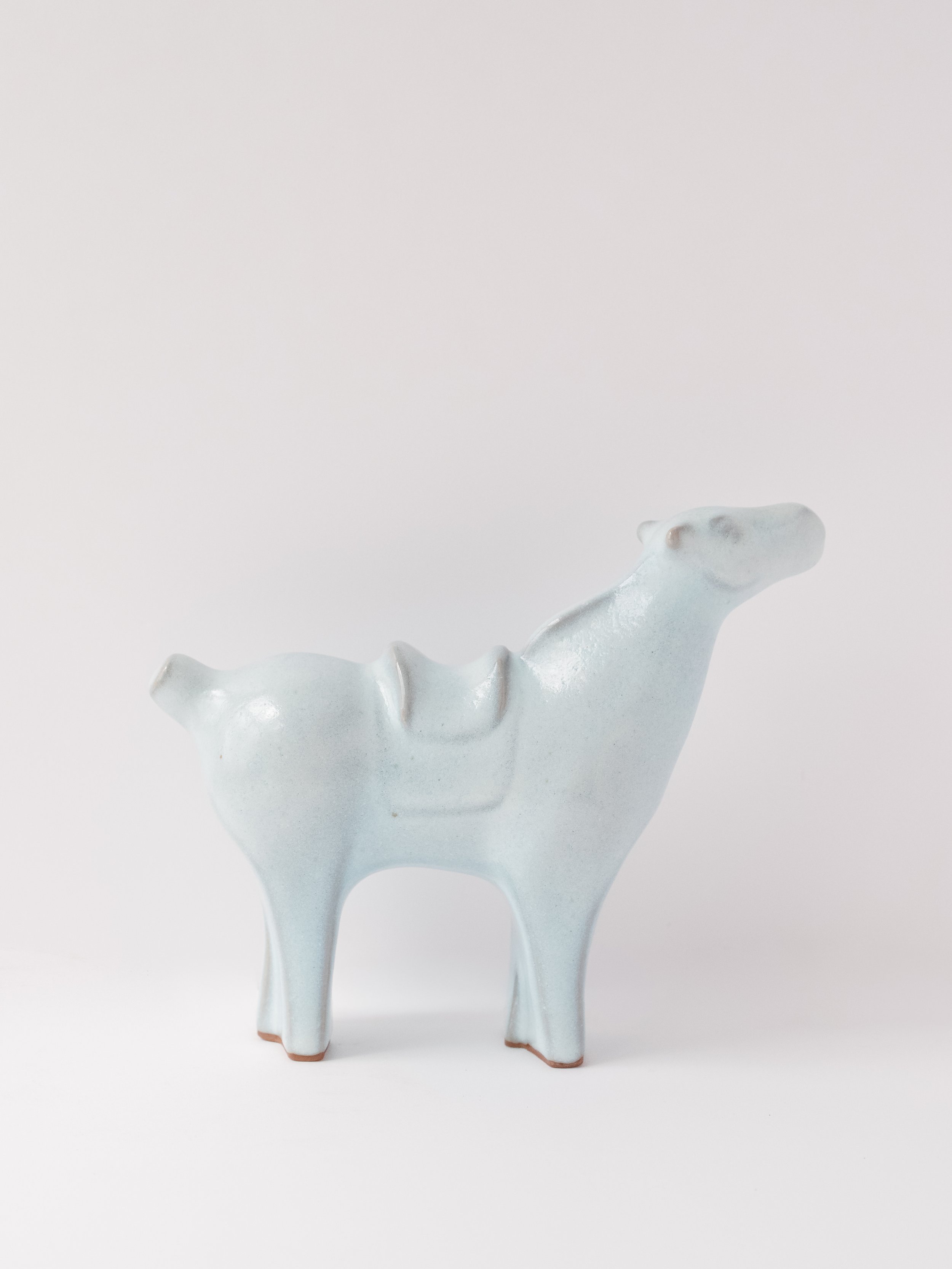 Image 6 of 11
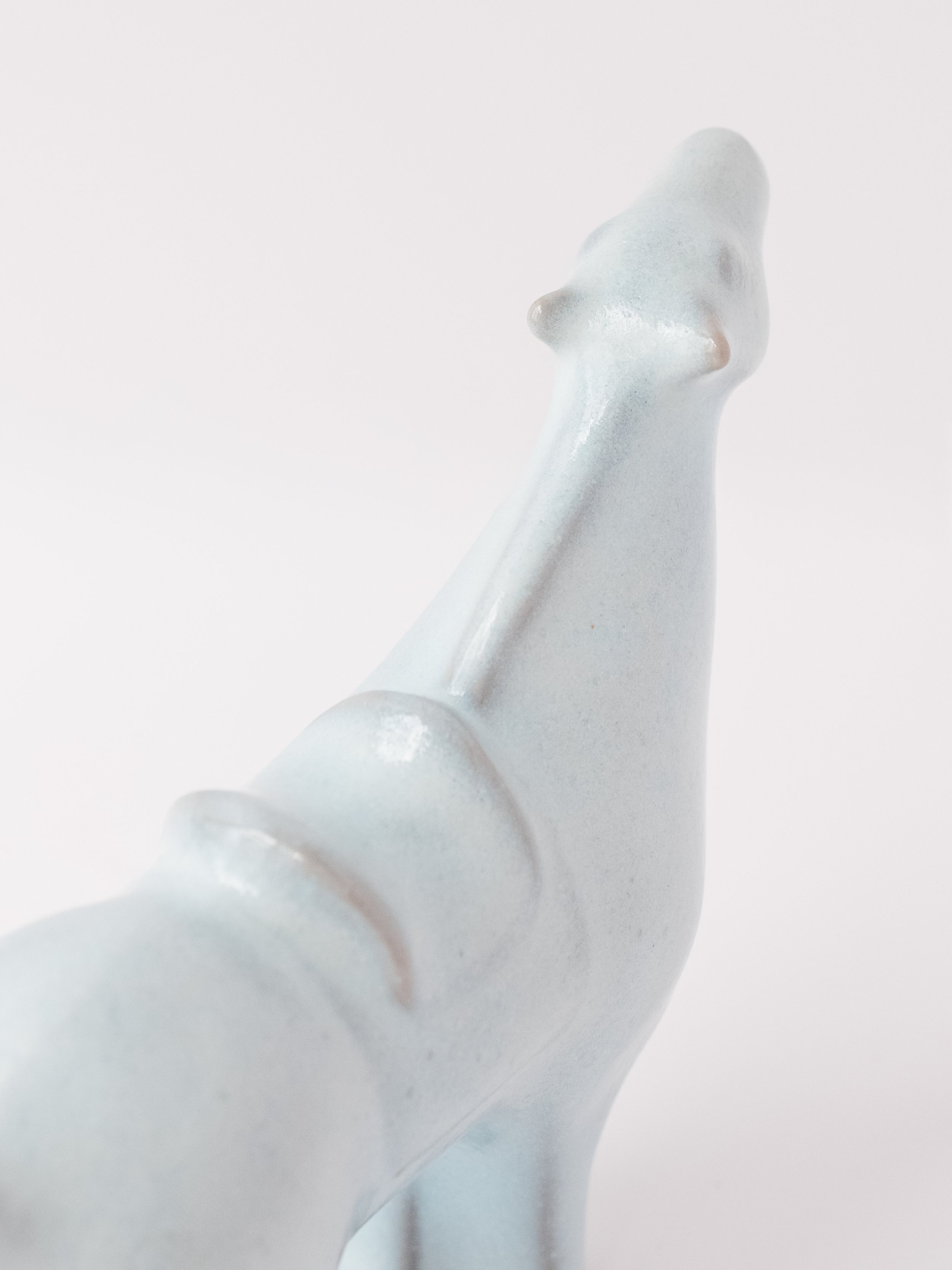 Image 7 of 11
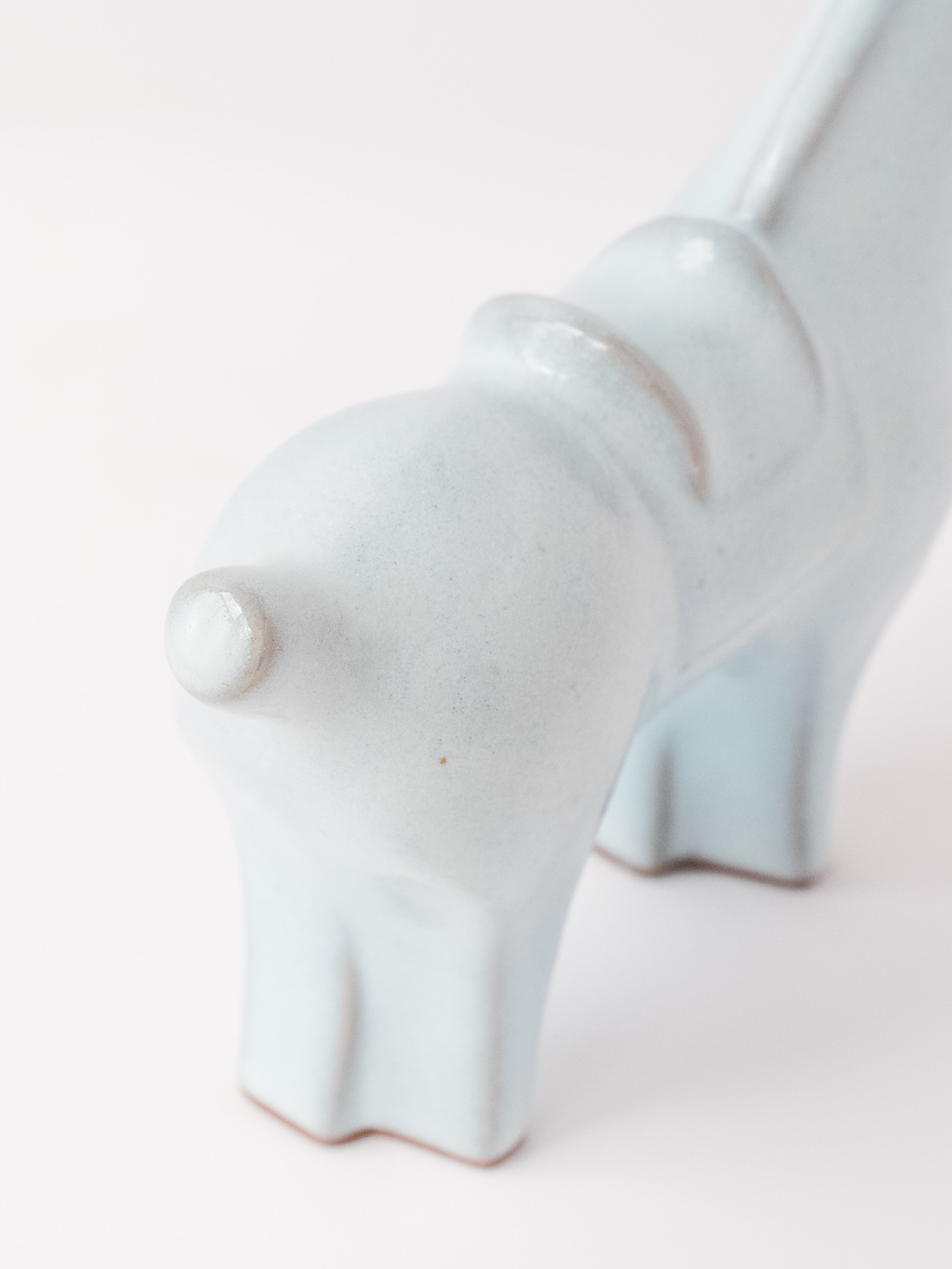 Image 8 of 11
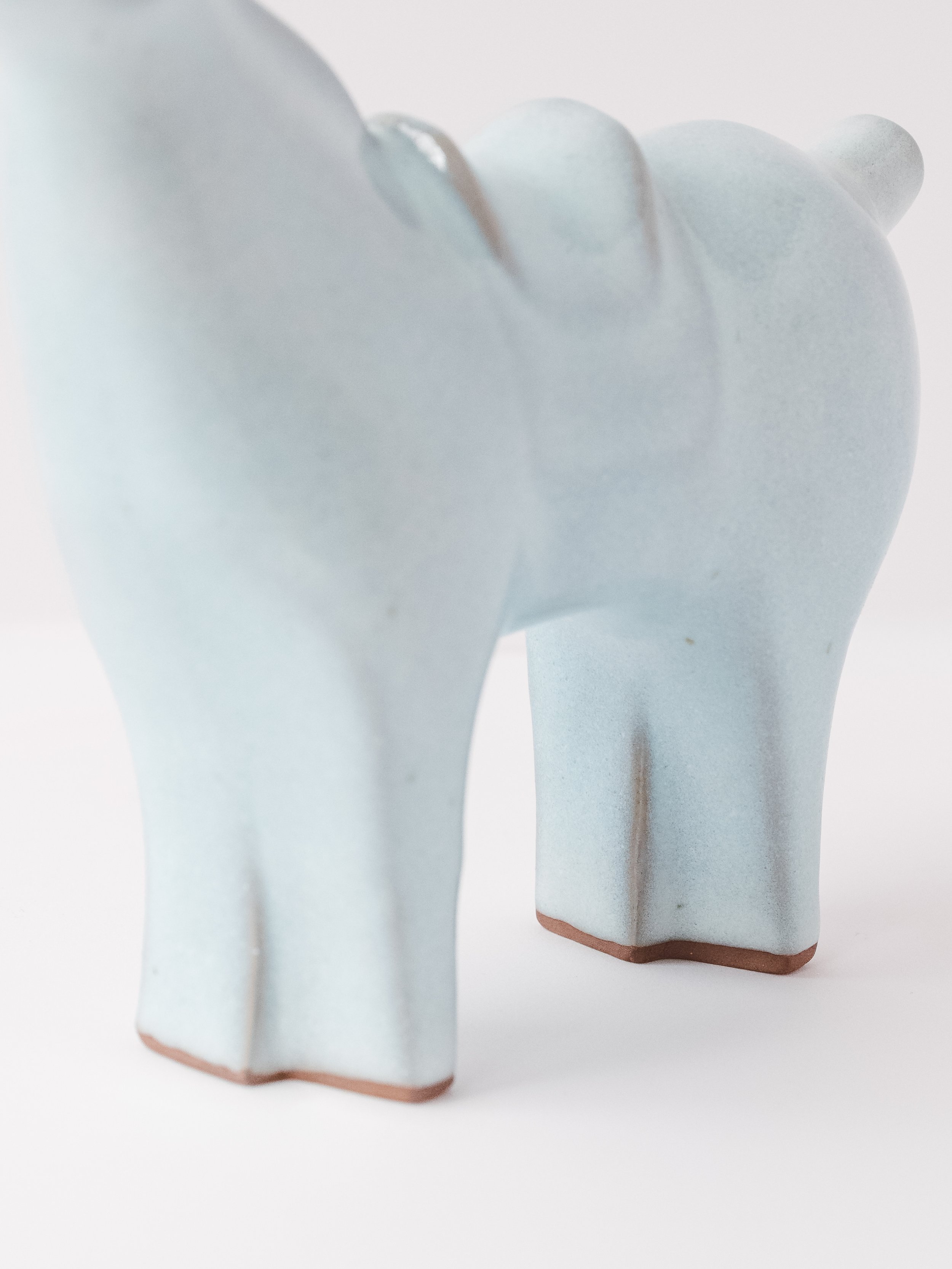 Image 9 of 11
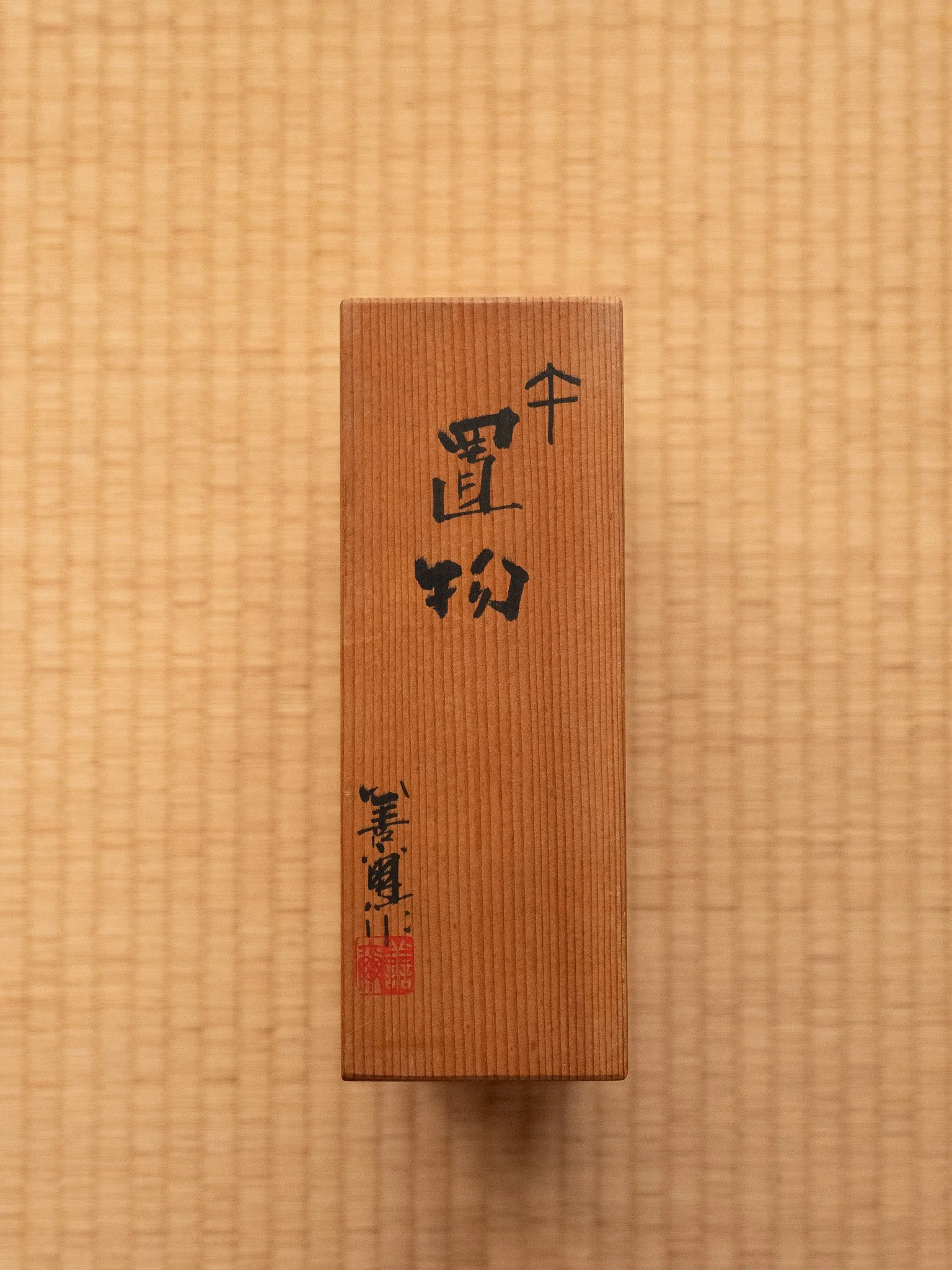 Image 10 of 11
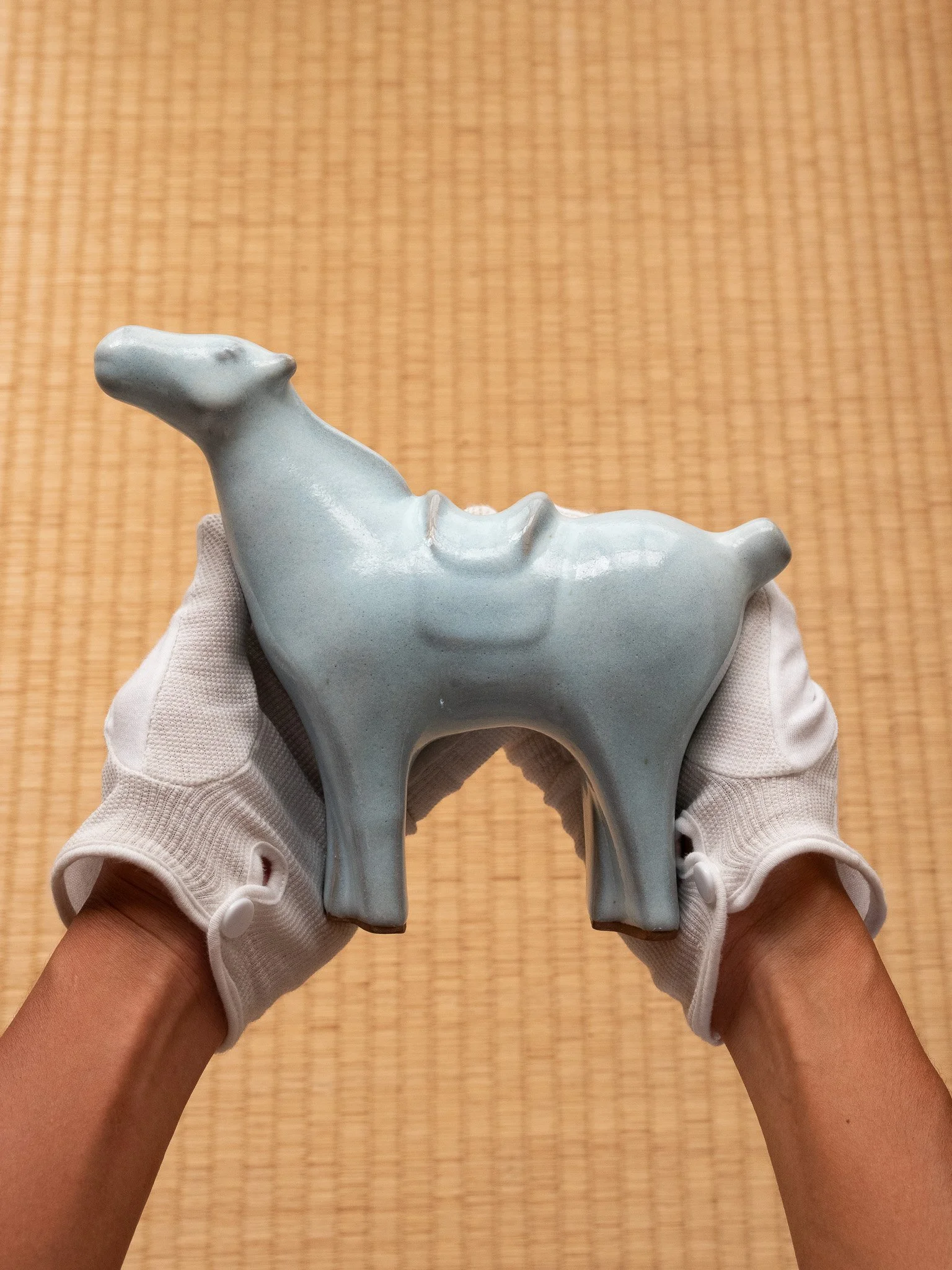 Image 11 of 11