【 The Concept 】
A small, deliberately blocky ceramic horse in the ancient stoneware tradition of Shigaraki — one of the six oldest kilns of Japan. Four thick, cylindrical legs plant the animal squarely on the ground; the body is a solid horizontal slab; the mane rises as a single raised ridge along the top of the head and neck; two small humped forms on the back read as a laden pack-horse. The whole surface, from crown to belly, is encrusted with the natural signatures of a wood-fired kiln: warm iron-red clay showing through the base, a deep translucent brown glaze pooling in the low places, and, over everything, a scatter of grey-green and cream-white ash pebbles — the melted, hardened residue of a week of burning red pine, fused directly into the surface of the pot. What in a more polished ceramic would be an accident to be avoided is here the whole point. The maker set the horse into the kiln, closed the door on it, and let the fire and the falling ash finish the sculpture. The result is a piece that looks less made than found: a horse-shaped stone worn smooth in some parts and encrusted in others, as if it had been standing in a mountain riverbed for centuries.
【 What Shigaraki-yaki Is 】
Shigaraki-yaki (信楽焼) is the stoneware of the Shigaraki basin in southern Shiga Prefecture — one of the six most ancient kiln districts of Japan (the Rokkoyo), whose continuous production is traditionally traced back to the mid-thirteenth century, when the local potters began firing the region's unusually iron-rich, feldspar-flecked clay into large storage jars for tea, water and rice. Shigaraki clay is the whole story: dug from a former lake bed, it contains large white feldspar inclusions, a high proportion of iron, and small amounts of grit and pebbles. When wood-fired at high temperature, the iron turns the surface a warm red-orange (the hi-iro, "fire colour"); the feldspar melts partially and stands proud of the surface as pale beads; and ash from the burning red pine falls onto the pot and fuses into a natural green-yellow glaze called bidoro ("glass"). No two Shigaraki pieces come out of the kiln the same. This aesthetic — rough, red-brown, ash-flecked, unpretentious, and quietly beautiful in the way only unglazed high-fired stoneware can be — has been prized since the Momoyama period, when the founding tea masters recognised it as one of the purest visual expressions of wabi.
【 Why a Horse, and Why This One 】
The horse has been a Shigaraki subject since the tradition first turned from purely utilitarian jars toward the small sculpted animals and figures that decorate a scholar's shelf. In Japanese folk belief the horse is an emblem of forward momentum, of good fortune arriving, of the New Year, of the Year of the Horse (uma-doshi). The particular form worked here — a squared, blocky standing horse with a solid ridge mane, small triangular ears, and two humped bundles on the back — draws visibly on two of the oldest Japanese images of the horse: the sixth-century haniwa (埴輪) tomb-figure horses of the Kofun period, and the folk pack-horse (駄馬, dabā) of the mountain roads. Both were carried in clay; both stood on four thick legs; both were built as much for symbolic weight as for likeness. This modern Shigaraki horse belongs to that lineage — not the running racehorse of the field, but the steady, laden, dignified horse of the road, made to bring the household forward.
【 Reading the Object 】
The composition is austere and blocky, and works from the four legs up.
Four thick cylindrical legs plant the horse on the surface, splayed just slightly outward. They are the least decorated part of the piece — solid columns of iron-red Shigaraki clay, tapering to slightly narrower bases, showing the bare, unglazed "fire colour" that is Shigaraki's signature. Small pale ash pebbles cling here and there, but the fields of the legs remain calm.
The body is a horizontal slab — a single volume from chest to rump, flat-sided, honestly geometric. The maker has not tried to model muscle or gait; the body is a block, and the block is the horse.
On the back, two small raised humps — one over the withers, one over the loin — read unmistakably as the bundles of a laden pack-horse: the burden this animal carries. Between them a small raised roundel sits at the base of the mane, like the buckle of a girth.
The head is wedge-shaped, thrust forward and slightly down at the end of a strong neck. The muzzle is squared off, the mouth suggested only by a single incised line, the eye barely indicated. Two small triangular ears rise from the crown.
The mane is a single raised ridge running from the brow along the crest of the neck and back — not a fringe of hair but a solid architectural spine, and the part of the piece where the natural ash glaze has fallen most thickly, so that the crown reads as almost geologically encrusted.
The whole surface changes character from area to area: burnt-orange fire-colour where the clay is bare; a warm caramel-brown transparent glaze where a light run of natural ash has pooled; and, laid over everything, a scattered white-grey-and-green crust of natural ash pebbles — the melted, hardened residue of the pinewood the kiln burned.
【 A Fire-Painted Object 】
The pleasure of a Shigaraki piece like this one is that its surface was not decorated by a hand. It was decorated by a fire. A wood-fired chamber kiln — an anagama or a noborigama — is packed with pots, sealed, and stoked for several days and nights with red pine. Ash rises from the fire, drifts through the chamber, and lands on whatever it lands on. Where the ash lands lightly, the surface stays clear; where it lands heavily, it melts into a river of glassy green-brown glaze; where the pot happens to sit near a piece of falling ember, a small pale pebble of feldspar-and-ash fuses in place forever. Every mark on this horse is the record of where a particular flame or a particular draft passed through the kiln that week. It is, in a very literal sense, a piece of the fire that made it, held in clay.
【 The Object 】
A compact, densely made, satisfyingly heavy Shigaraki-yaki stoneware horse — palm-sized in footprint but with the weight and presence of a much larger piece. The four legs give it a stable, self-supporting stance on any flat surface. It sits perfectly on a shelf and rewards being handled: the surface changes markedly to the fingertip between the smooth cool clay of the legs and the rougher encrustation on the back.
【 Where to Place It 】
On a low bookshelf, a mantel, a study desk, a tokonoma alcove, an entrance console. Because so much of the piece's beauty is in the way its surface catches light — the way the iron-red fire-colour glows warmer near a lamp, the way the ash pebbles glint — a location with a little directed light on it repays the choice. In the traditional Japanese reading, a horse figure of this kind is placed facing into the room, so that the good fortune the horse is bringing enters the house.
【 Care 】
Dust with a soft dry cloth or brush. If cleaning is truly needed, wipe with a slightly damp soft cloth and dry immediately; do not soak, do not put in a dishwasher, do not use any solvent or abrasive. The pale ash pebbles on the surface are melted glass fused permanently into the clay and are part of the piece; they should not be scraped or picked at. The bare clay areas may darken slightly with years of handling, which is welcome patination.
【 Function & What It Brings 】
Keep it, place it, or give it. As a piece of Japanese ceramics it is a compact, honest example of one of the six oldest kiln traditions of Japan — a working carrier of the Shigaraki aesthetic, in the form of one of the tradition's oldest subjects. As a talisman it carries the classical wish of the horse — forward momentum, dignified strength, the arrival of good fortune — with the added quiet meaning of the pack-horse form: bringing something to the house. A very fitting gift for a Year of the Horse, a housewarming, a milestone birthday, the opening of a new business, or for anyone who loves Japanese wood-fired stoneware.
【 The Texture 】
High-fired unglazed Shigaraki stoneware. Bare clay in warm red-orange fire-colour on the flanks and legs. Deep caramel-brown transparent glaze pooling in the low places. A scatter of pale grey-green and cream-white natural ash pebbles — melted feldspar-and-pinewood-ash — fused into the surface, concentrated most heavily on the mane, the crown of the head, and the top of the back. Cool, dense, and pleasantly weighty in the hand.
【 Presence 】
Heavy, quiet, deeply grounded. Not a running or rearing horse but a standing one — a horse at rest under its load, patient in the classical Japanese folk manner. Its beauty is not in polish or in likeness but in the confidence with which the maker gave the fire so much room to finish the piece.
Archive Note: The number in the name (1240) references the traditional mid-thirteenth-century founding date of the Shigaraki kilns, when the local potters of the Shigaraki basin first began firing the region's iron-rich clay into large stoneware jars — the beginning of one of Japan's Six Ancient Kilns (Rokkoyo). It marks the tradition this piece continues — not the date this piece was made.
Provenance Note: Sourced from a private collection in Japan. A wood-fired Shigaraki-yaki (信楽焼) stoneware horse figure in the local vocabulary of iron-rich clay, natural ash glaze and unmoulded animal form. Attributed to the Shigaraki-yaki tradition rather than to a specific kiln or individual maker.
Condition Note: Sold as acquired, in very good vintage condition. The heavy natural ash encrustation, the melted glass pebbles fused into the surface, the pooled brown glaze runs, and the bare fire-colour clay on the legs and belly are all inherent features of a wood-fired Shigaraki piece, not damage. No cracks through the body. Please see the photographs as part of the description.


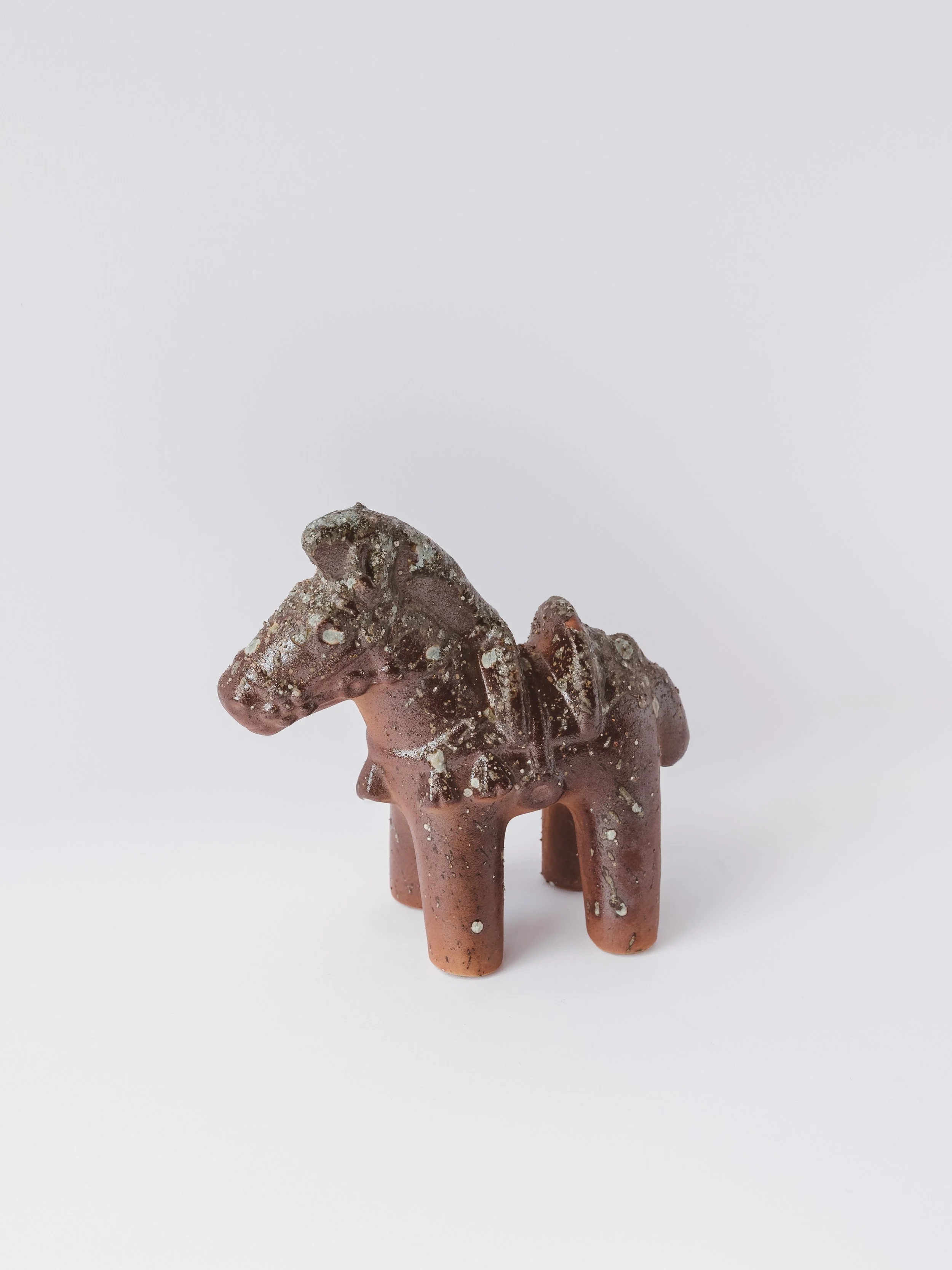 Image 1 of 9
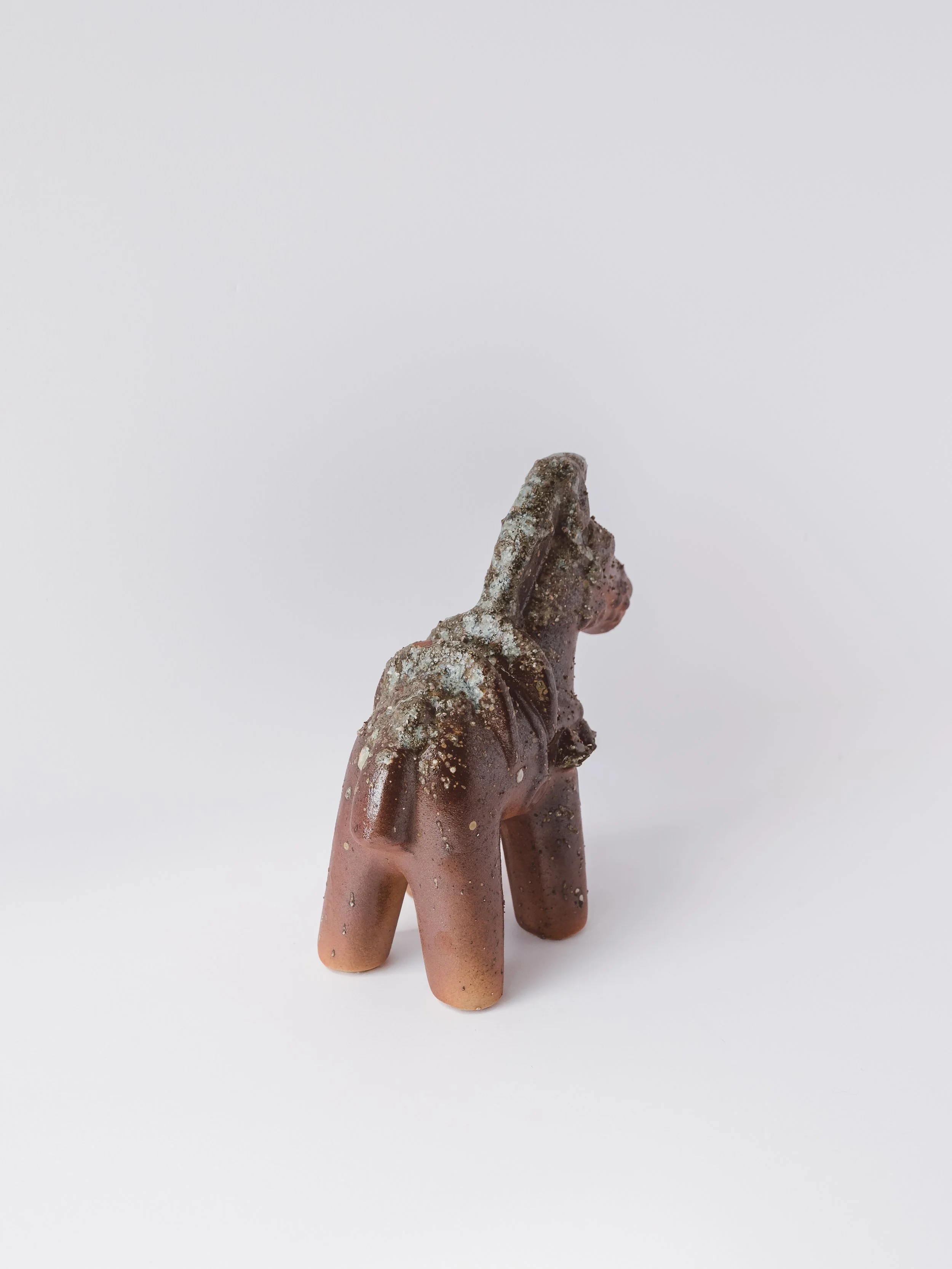 Image 2 of 9
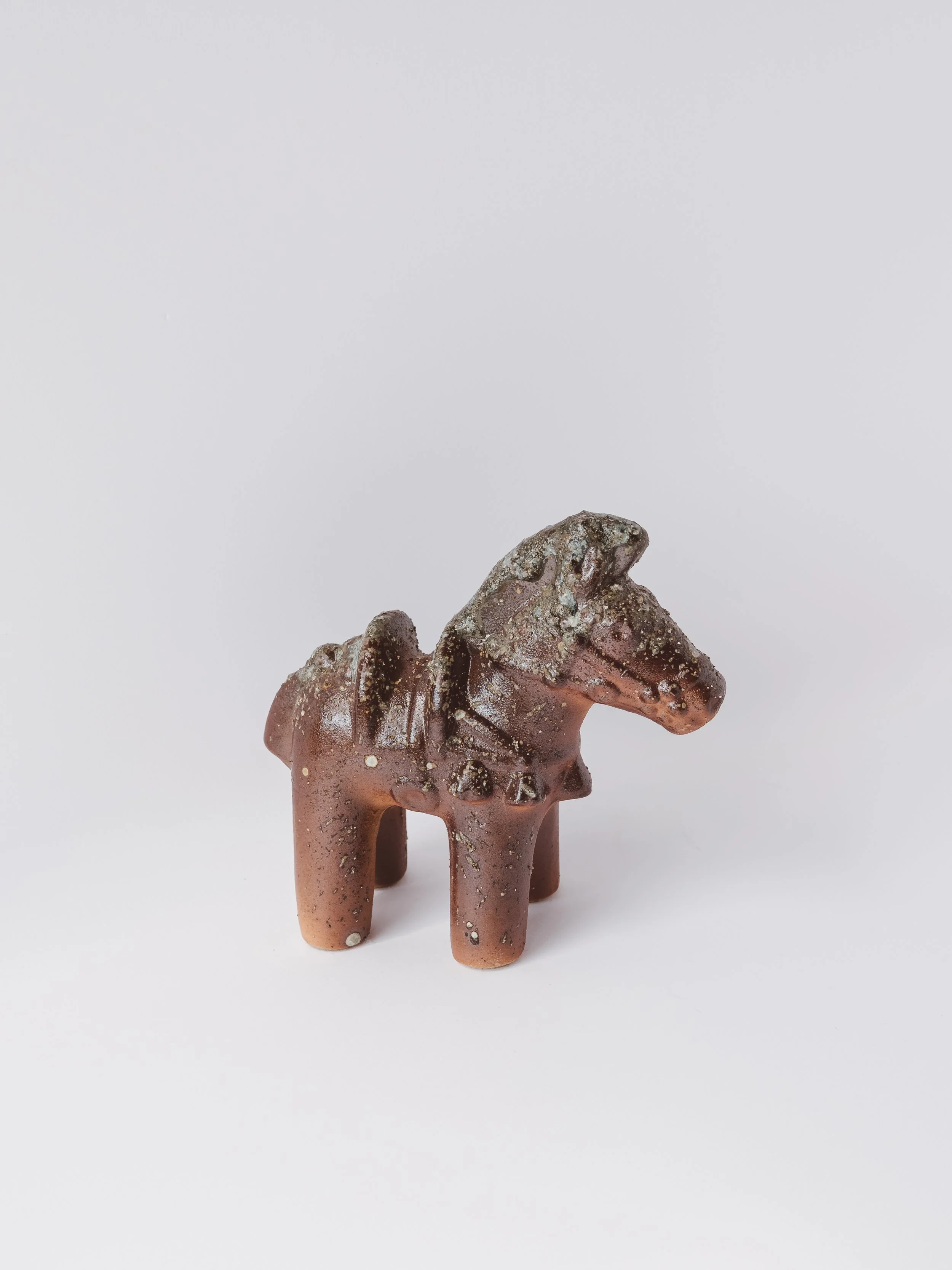 Image 3 of 9
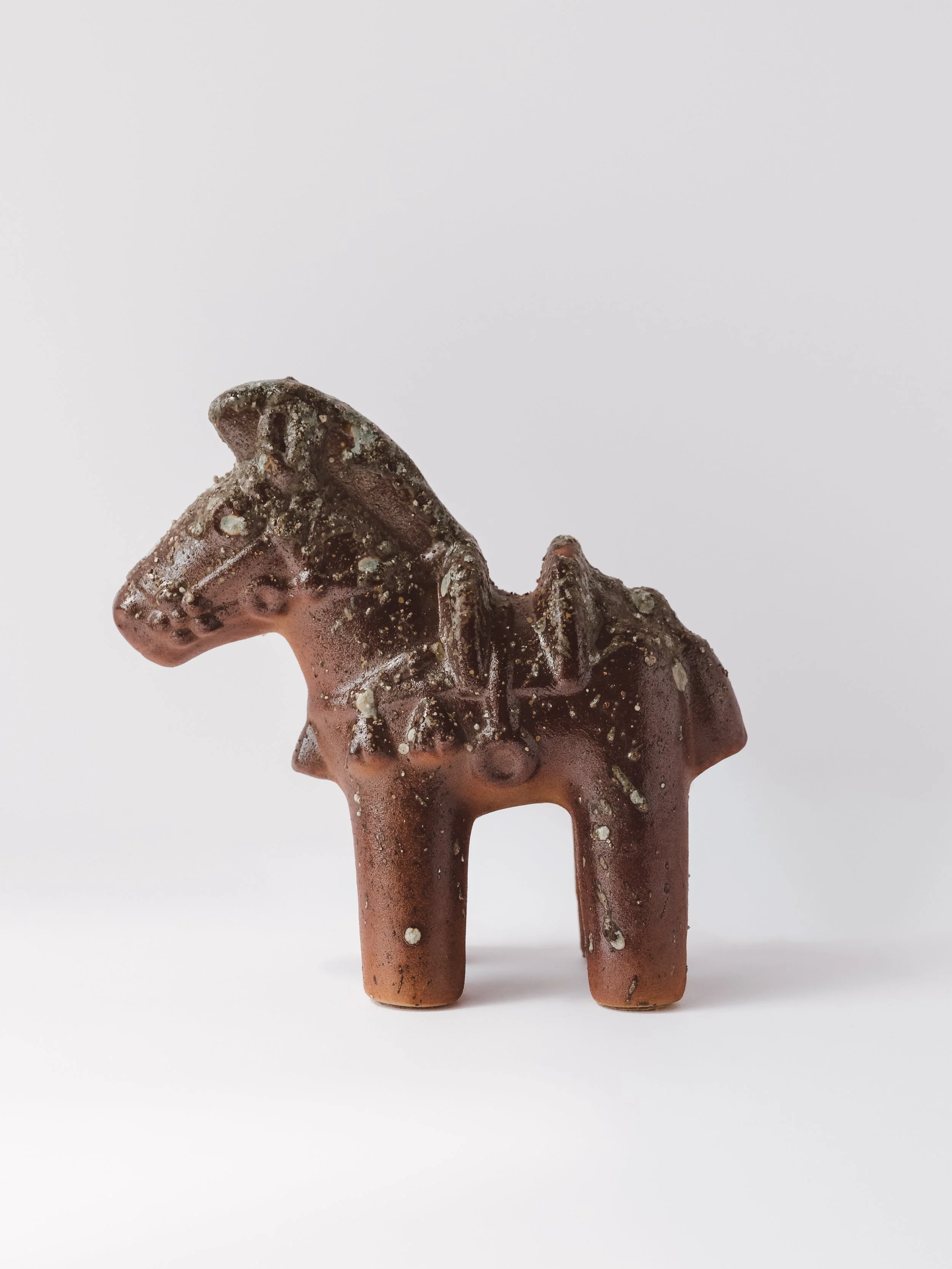 Image 4 of 9
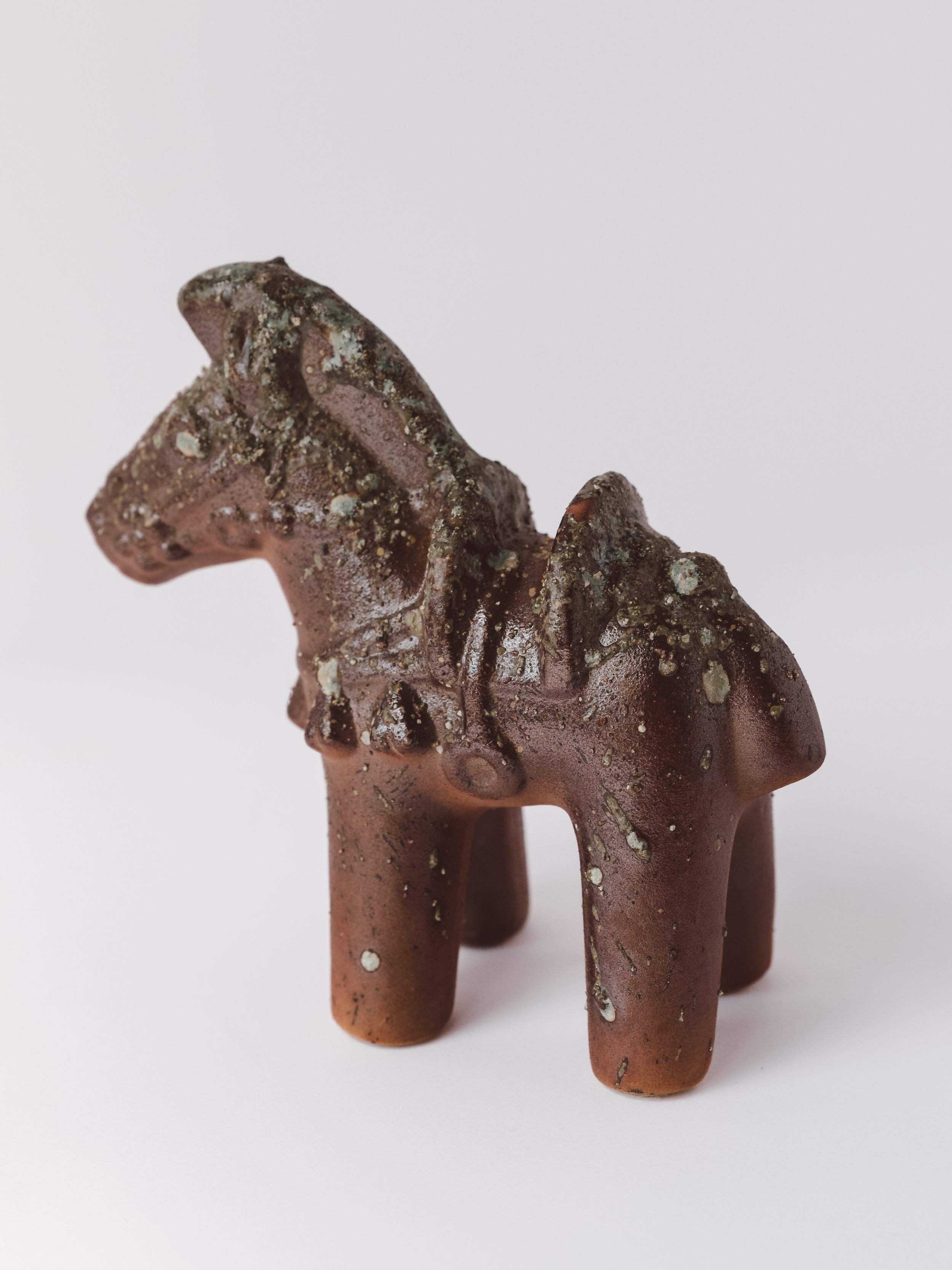 Image 5 of 9
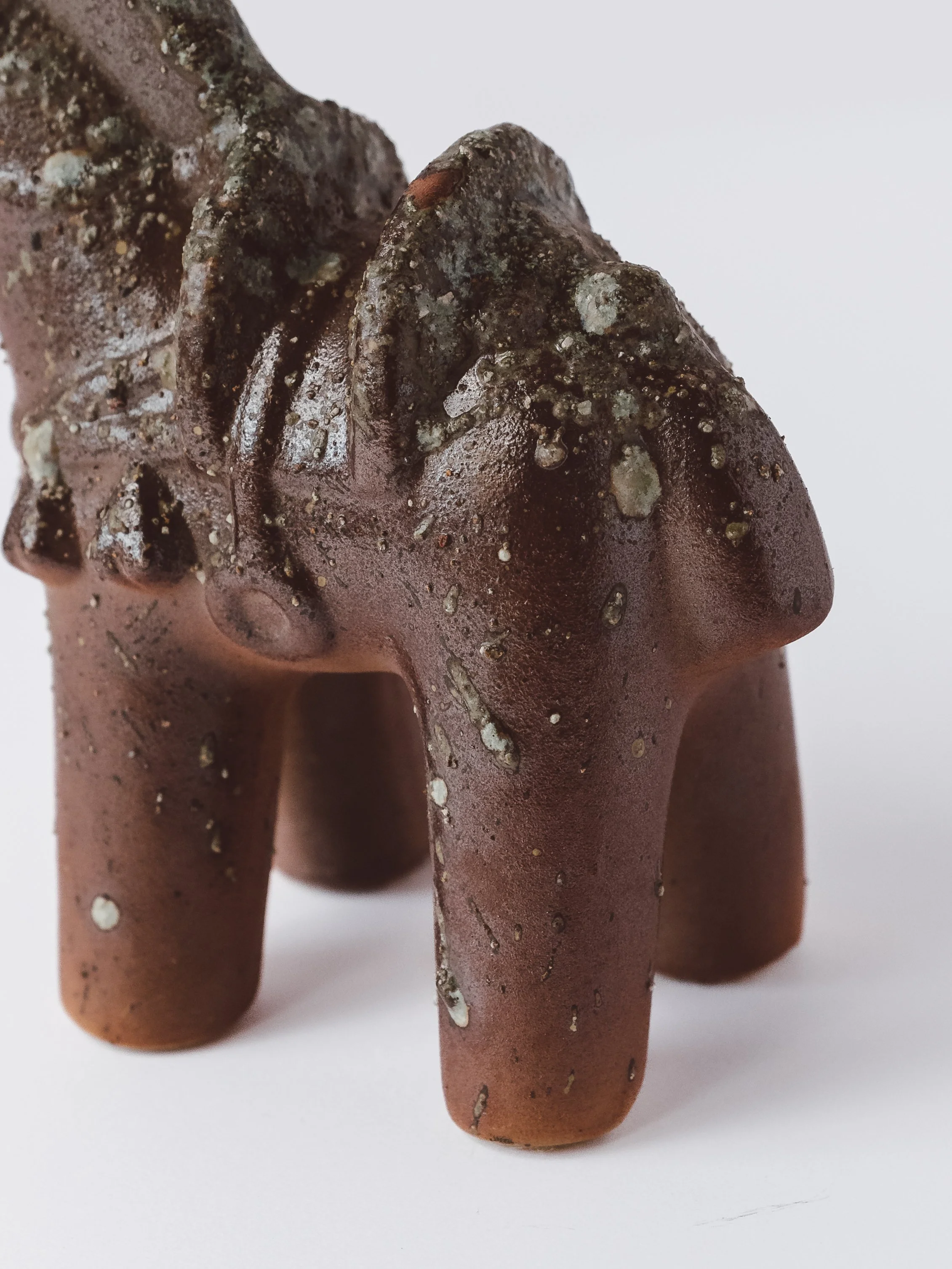 Image 6 of 9
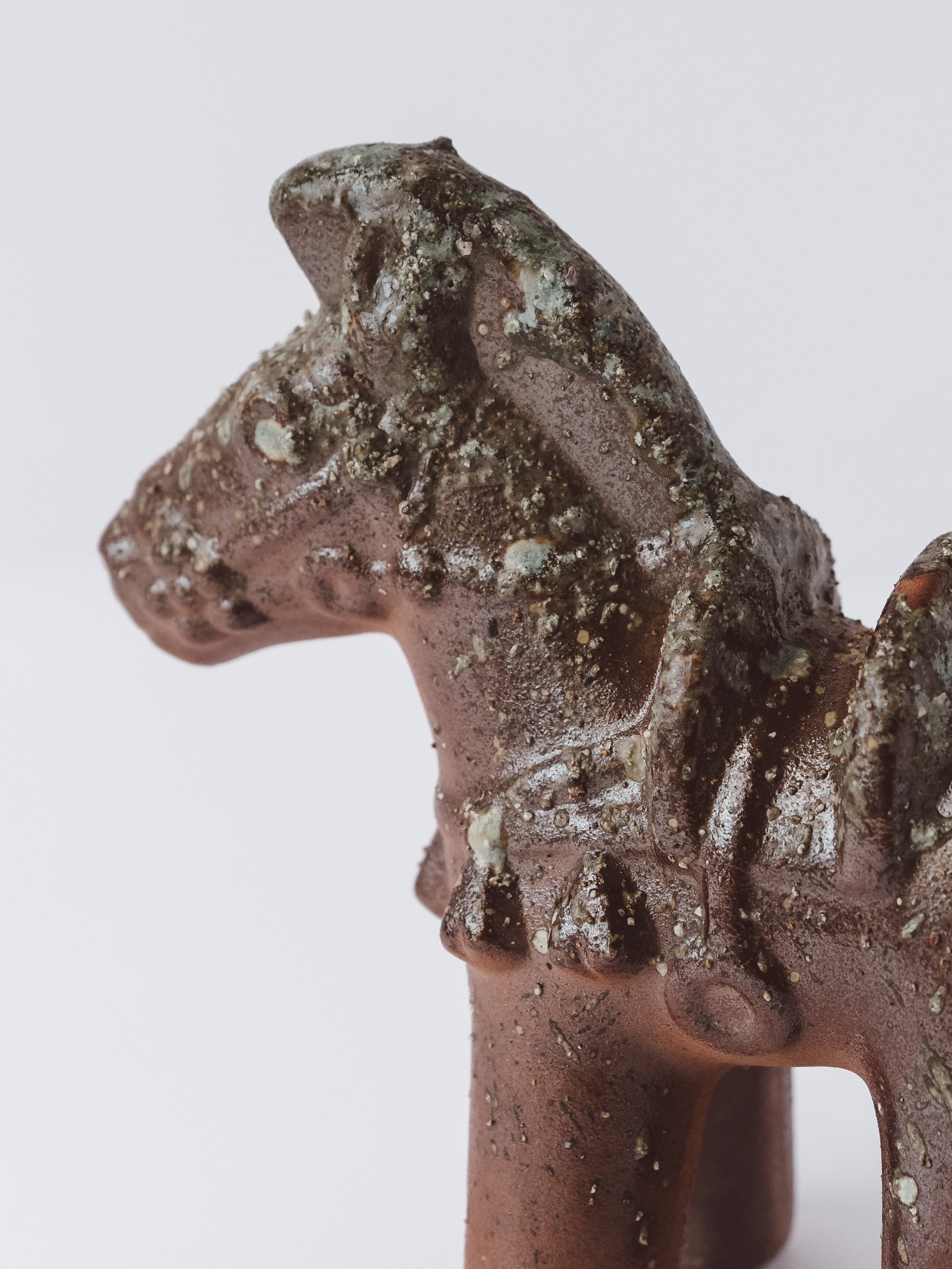 Image 7 of 9
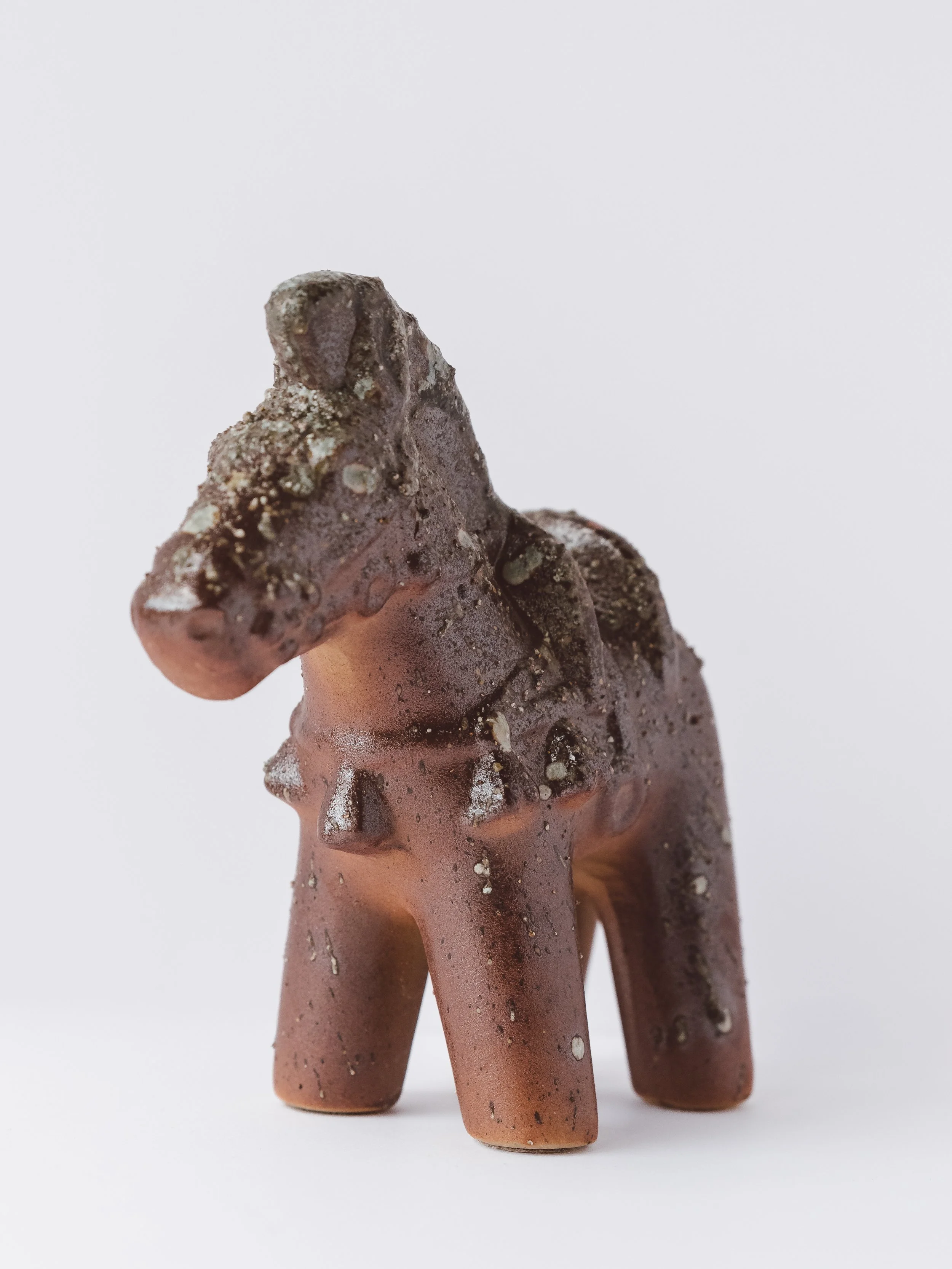 Image 8 of 9
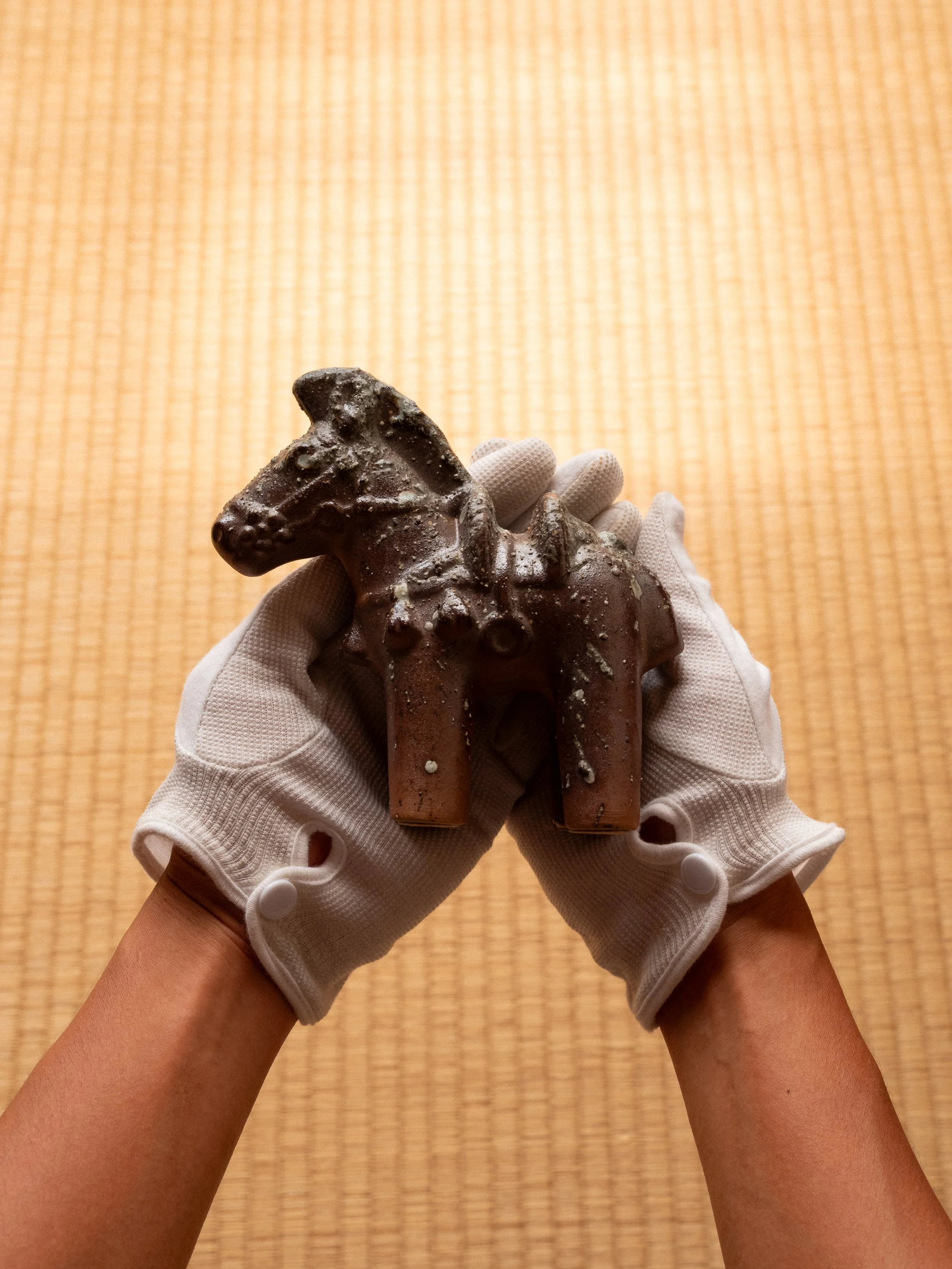 Image 9 of 9