【 The Concept 】
The whole pantheon of good fortune, gathered as a set of seven little clay bells. These are the Shichifukujin, the Seven Lucky Gods of Japan — a crew assembled over centuries from the gods of India, China, and Japan and set sailing together on the treasure ship that brings fortune into the house. Here is the full company: Ebisu, the laughing fisherman with his sea-bream and rod, god of honest trade and good catches; Daikokuten, with his magic mallet and treasure sack, god of wealth and the harvest; Bishamonten, the armoured guardian with his pagoda and spear; Benzaiten, the one goddess, cradling her lute, patron of music, eloquence, and riches; Hotei, the fat-bellied laughing monk of contentment and generosity; and Fukurokuju and Jurojin, the long-headed and long-bearded sages of happiness, rank, and long life. Together they carry an old promise — shichinan sokumetsu, shichifuku sokusho, "seven misfortunes vanish, seven fortunes arise." And each is a bell: a thing to be rung, its clay note believed both to drive off ill fortune and to call the gods near. A full set of luck, small enough to hold in a hand.
【 The Function 】
A set of seven small good-luck bells, made to be shown together. Each is tiny — a few centimetres — and the seven line up happily on a shelf, a cabinet, a windowsill, a kamidana shelf, or a New-Year display, a little congregation of gods keeping watch over a room. Light and hollow, each with a purple cord at the crown for hanging or holding, they can be grouped in a row, gathered in a cluster, or hung; brought out for the New Year, or kept out all year. Set them where their seven faces can be seen — and, now and then, rung.
【 The Texture 】
Small clay bells in warm terracotta, finished in two contrasting surfaces. The robes and attributes — the sack, the mallet, the armour, the lute — are washed in a glossy amber-brown ame glaze that pools dark in every fold and crease and thins to translucent honey over the raised forms; the faces and hands are left as bare, unglazed clay, matte and warm, so each god's expression reads soft and human against the shine of the robes. The modelling is folk-simple and fond — two- and three-head-tall little bodies, big characterful faces — and being small and hand-finished, every one of the seven is distinct: a laugh here, a scowl there, a serene half-smile. A twisted purple cord — purple, the old colour of the highest rank — is knotted through the top of each. Hollow, light, and made to ring.
【 Presence 】
Cheerful, warm, and companionable — a small crowd rather than a single figure. Where one god sits quietly, seven together make a scene: the whole lucky company assembled, each with a face of his or her own, glazed robes glowing against soft terracotta skin. They bring a shelf the coziness of a gathering and the plain hopeful cheer of a New-Year charm, and they carry, in miniature and all at once, the household's wishes — for trade and harvest, protection, art, contentment, and long life. A warm, hopeful set to keep in view: the whole of good fortune, in seven small voices.
Sourced from a private collection in Japan.
【 The Concept 】
The whole pantheon of good fortune, gathered as a set of seven little clay bells. These are the Shichifukujin, the Seven Lucky Gods of Japan — a crew assembled over centuries from the gods of India, China, and Japan and set sailing together on the treasure ship that brings fortune into the house. Here is the full company: Ebisu, the laughing fisherman with his sea-bream and rod, god of honest trade and good catches; Daikokuten, with his magic mallet and treasure sack, god of wealth and the harvest; Bishamonten, the armoured guardian with his pagoda and spear; Benzaiten, the one goddess, cradling her lute, patron of music, eloquence, and riches; Hotei, the fat-bellied laughing monk of contentment and generosity; and Fukurokuju and Jurojin, the long-headed and long-bearded sages of happiness, rank, and long life. Together they carry an old promise — shichinan sokumetsu, shichifuku sokusho, "seven misfortunes vanish, seven fortunes arise." And each is a bell: a thing to be rung, its clay note believed both to drive off ill fortune and to call the gods near. A full set of luck, small enough to hold in a hand.
【 The Function 】
A set of seven small good-luck bells, made to be shown together. Each is tiny — a few centimetres — and the seven line up happily on a shelf, a cabinet, a windowsill, a kamidana shelf, or a New-Year display, a little congregation of gods keeping watch over a room. Light and hollow, each with a purple cord at the crown for hanging or holding, they can be grouped in a row, gathered in a cluster, or hung; brought out for the New Year, or kept out all year. Set them where their seven faces can be seen — and, now and then, rung.
【 The Texture 】
Small clay bells in warm terracotta, finished in two contrasting surfaces. The robes and attributes — the sack, the mallet, the armour, the lute — are washed in a glossy amber-brown ame glaze that pools dark in every fold and crease and thins to translucent honey over the raised forms; the faces and hands are left as bare, unglazed clay, matte and warm, so each god's expression reads soft and human against the shine of the robes. The modelling is folk-simple and fond — two- and three-head-tall little bodies, big characterful faces — and being small and hand-finished, every one of the seven is distinct: a laugh here, a scowl there, a serene half-smile. A twisted purple cord — purple, the old colour of the highest rank — is knotted through the top of each. Hollow, light, and made to ring.
【 Presence 】
Cheerful, warm, and companionable — a small crowd rather than a single figure. Where one god sits quietly, seven together make a scene: the whole lucky company assembled, each with a face of his or her own, glazed robes glowing against soft terracotta skin. They bring a shelf the coziness of a gathering and the plain hopeful cheer of a New-Year charm, and they carry, in miniature and all at once, the household's wishes — for trade and harvest, protection, art, contentment, and long life. A warm, hopeful set to keep in view: the whole of good fortune, in seven small voices.
Sourced from a private collection in Japan.


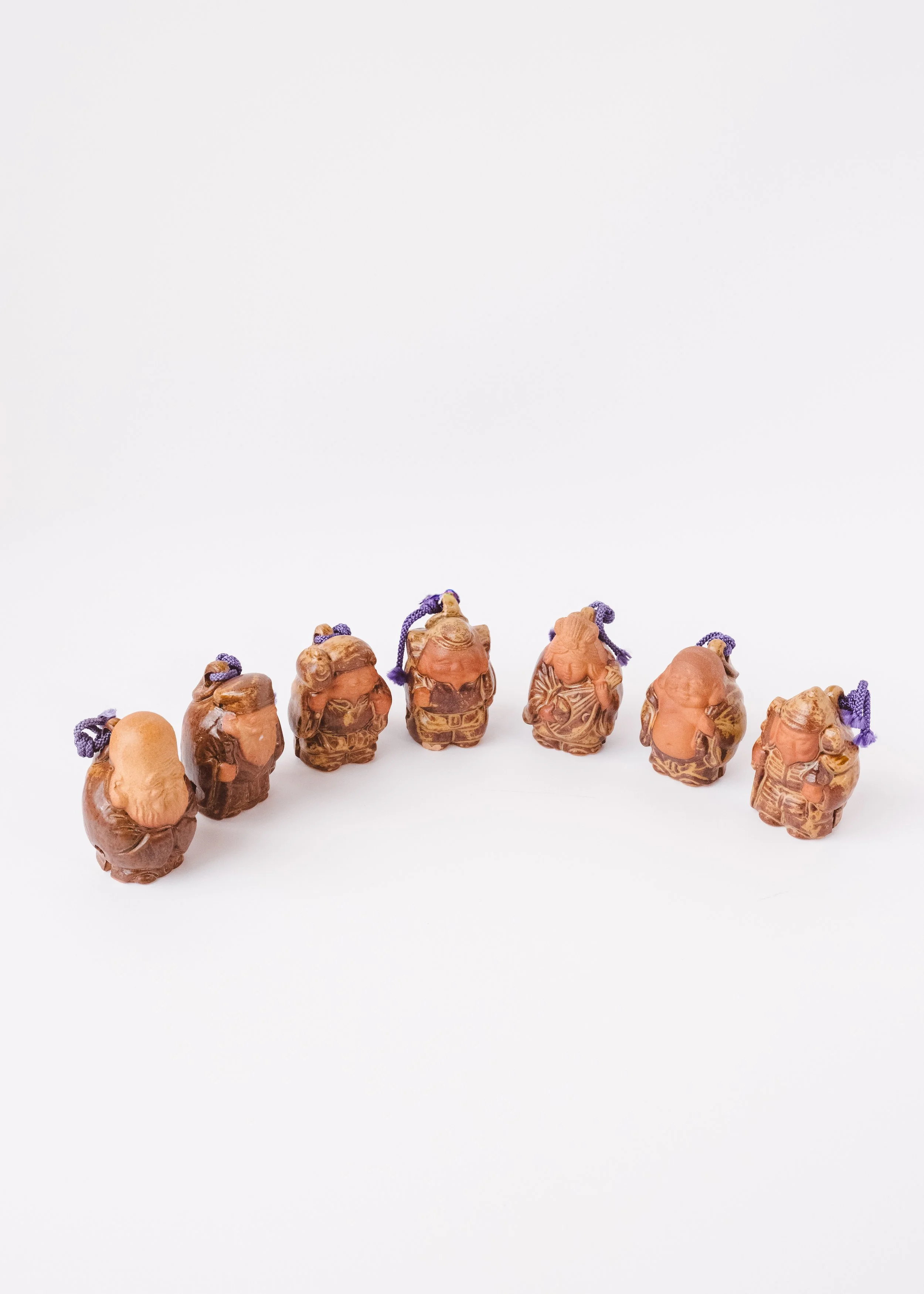 Image 1 of 22
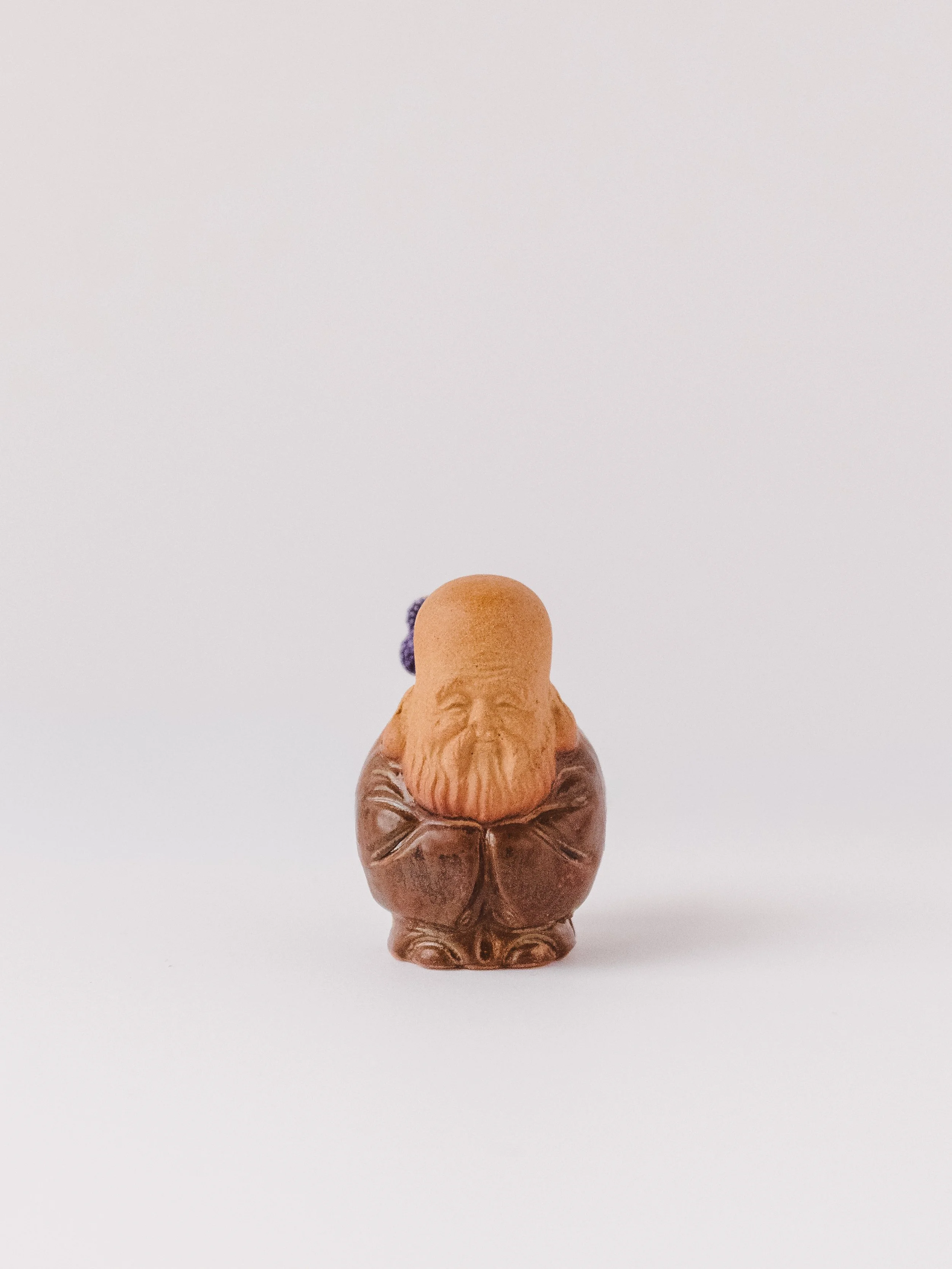 Image 2 of 22
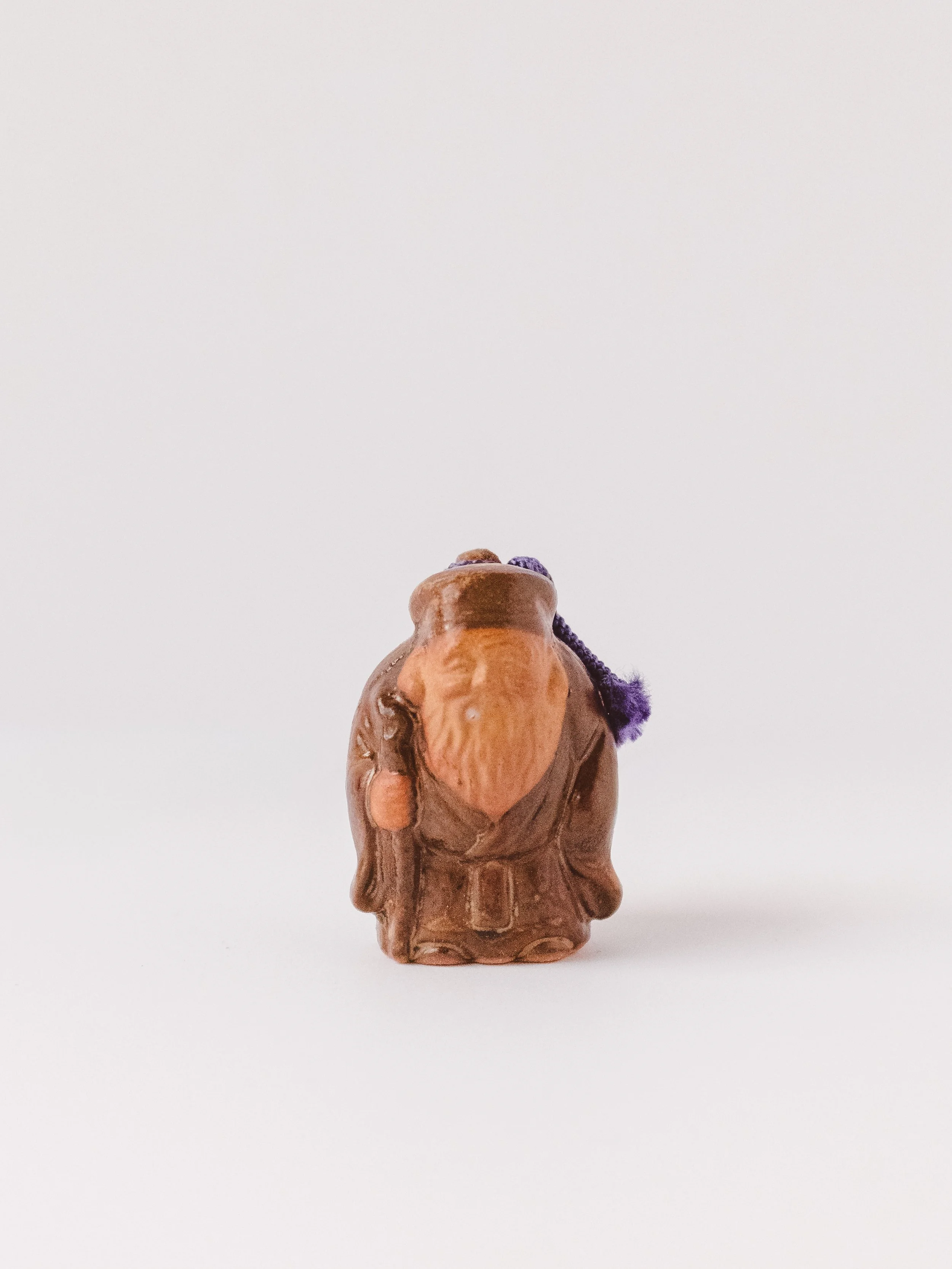 Image 3 of 22
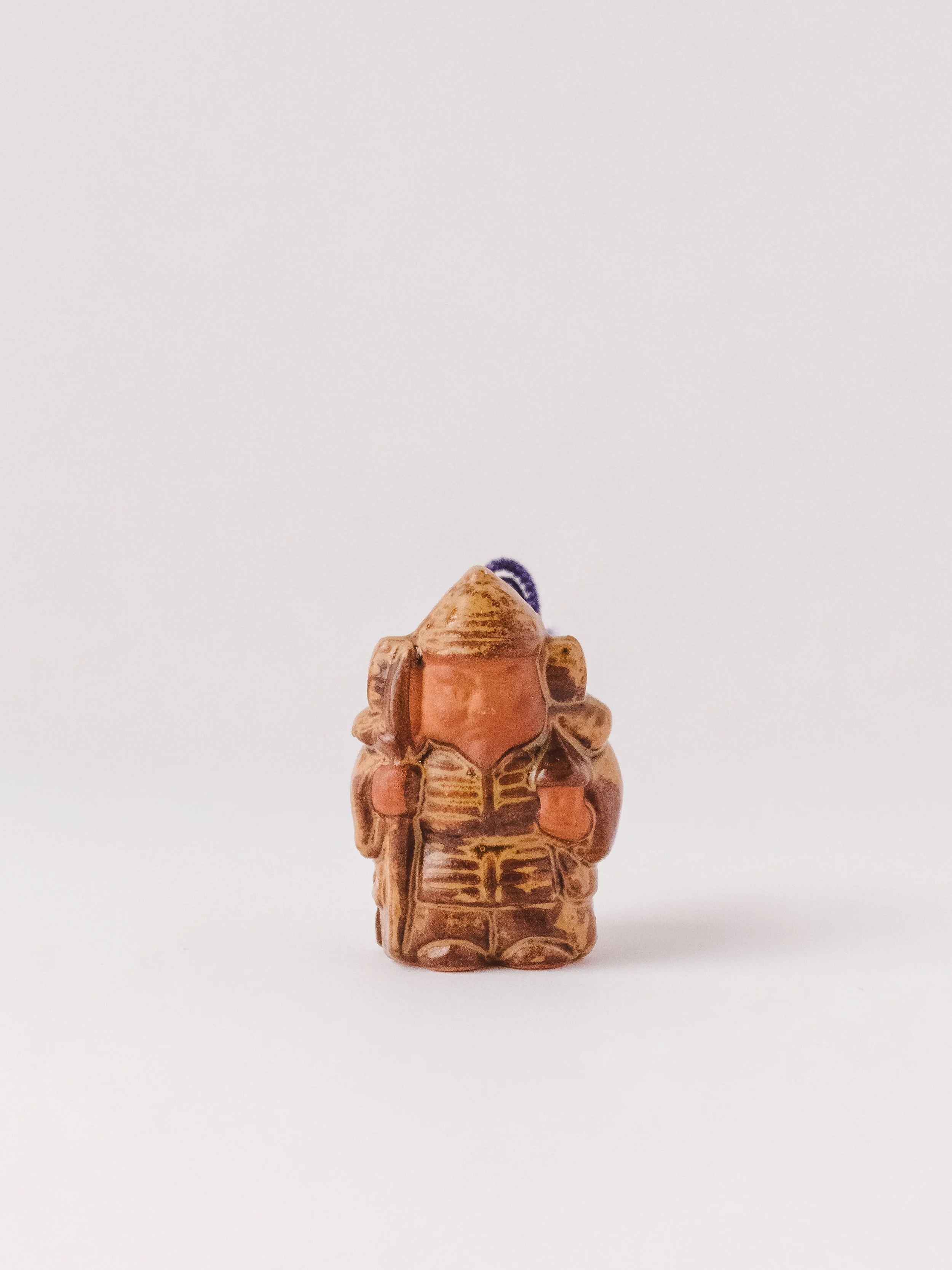 Image 4 of 22
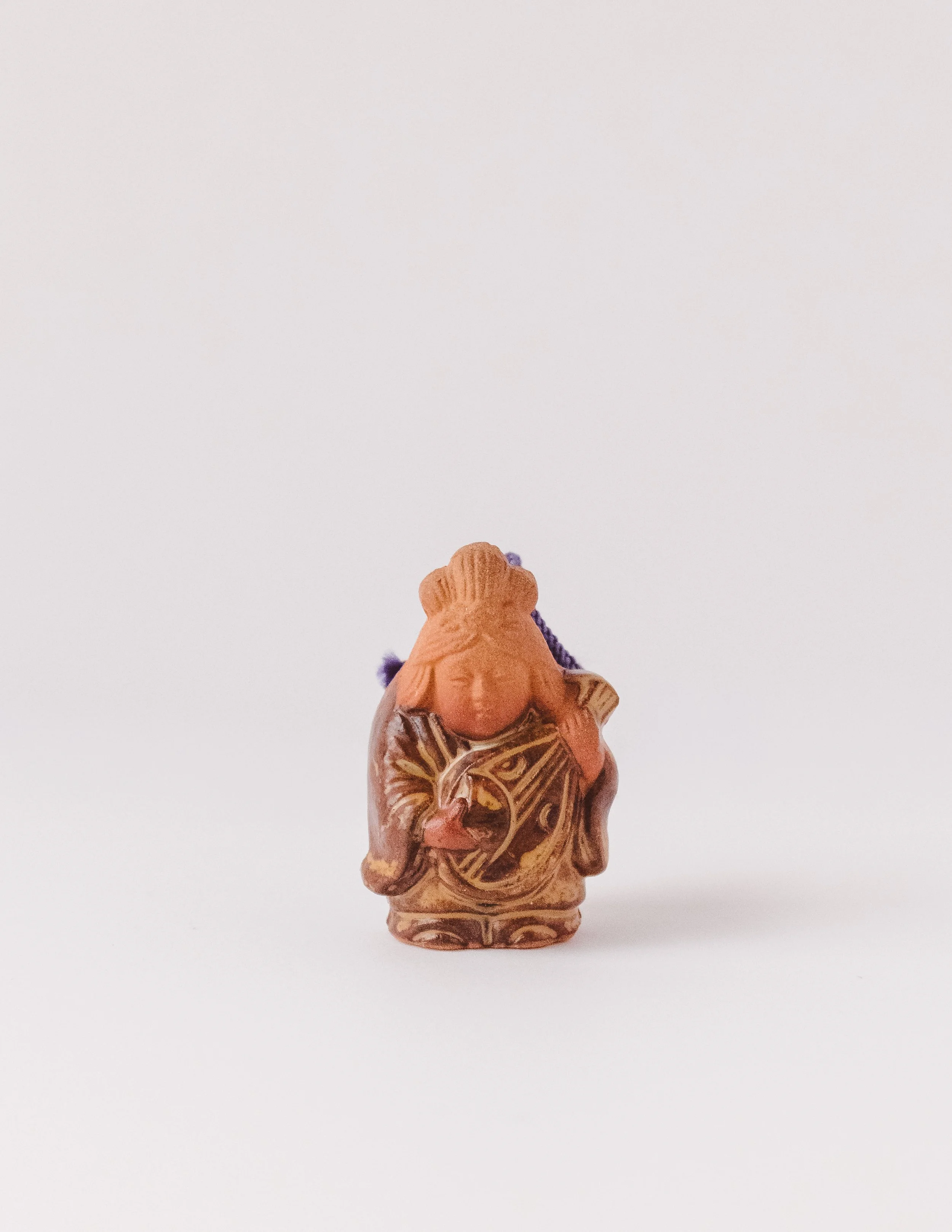 Image 5 of 22
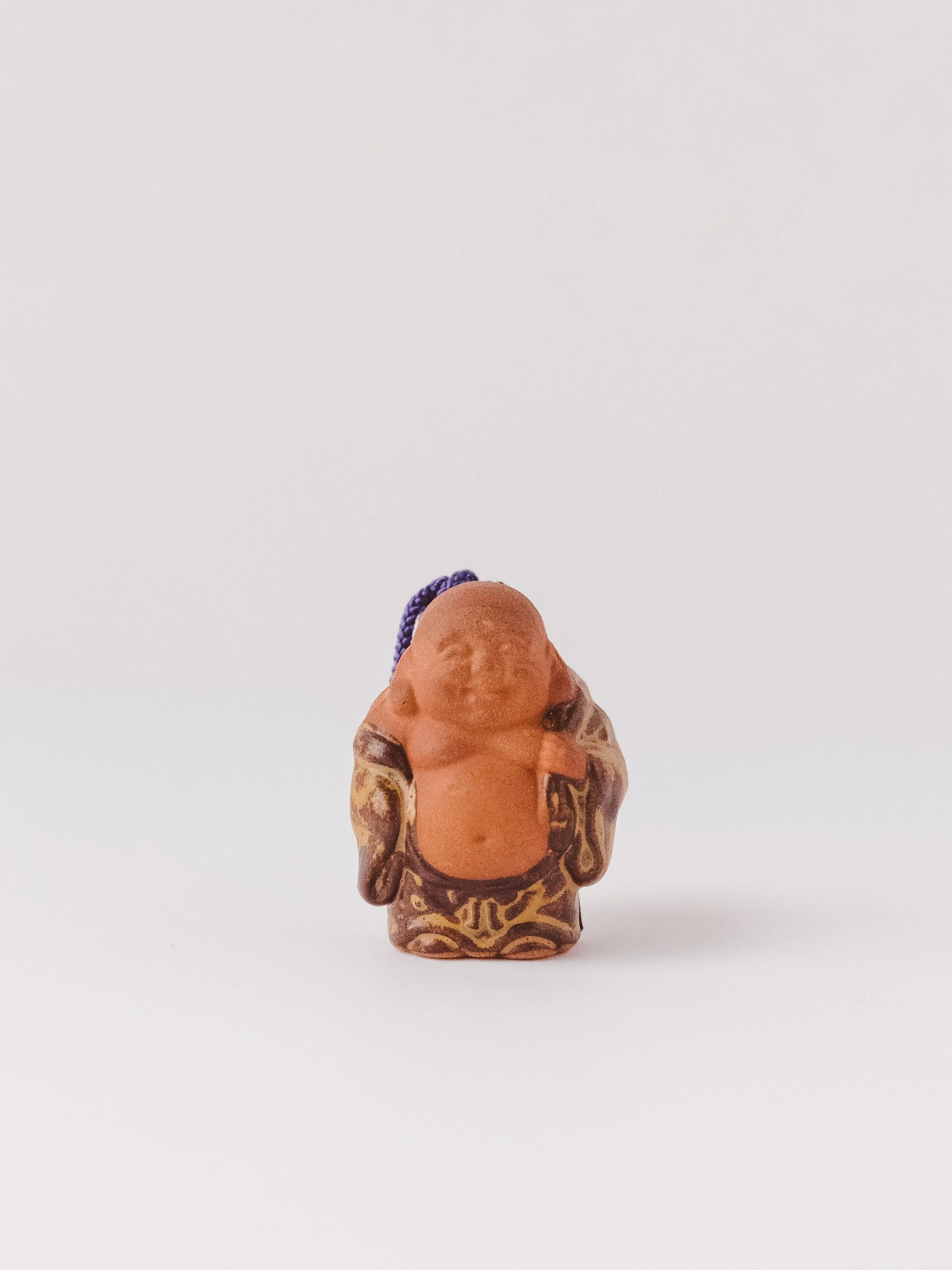 Image 6 of 22
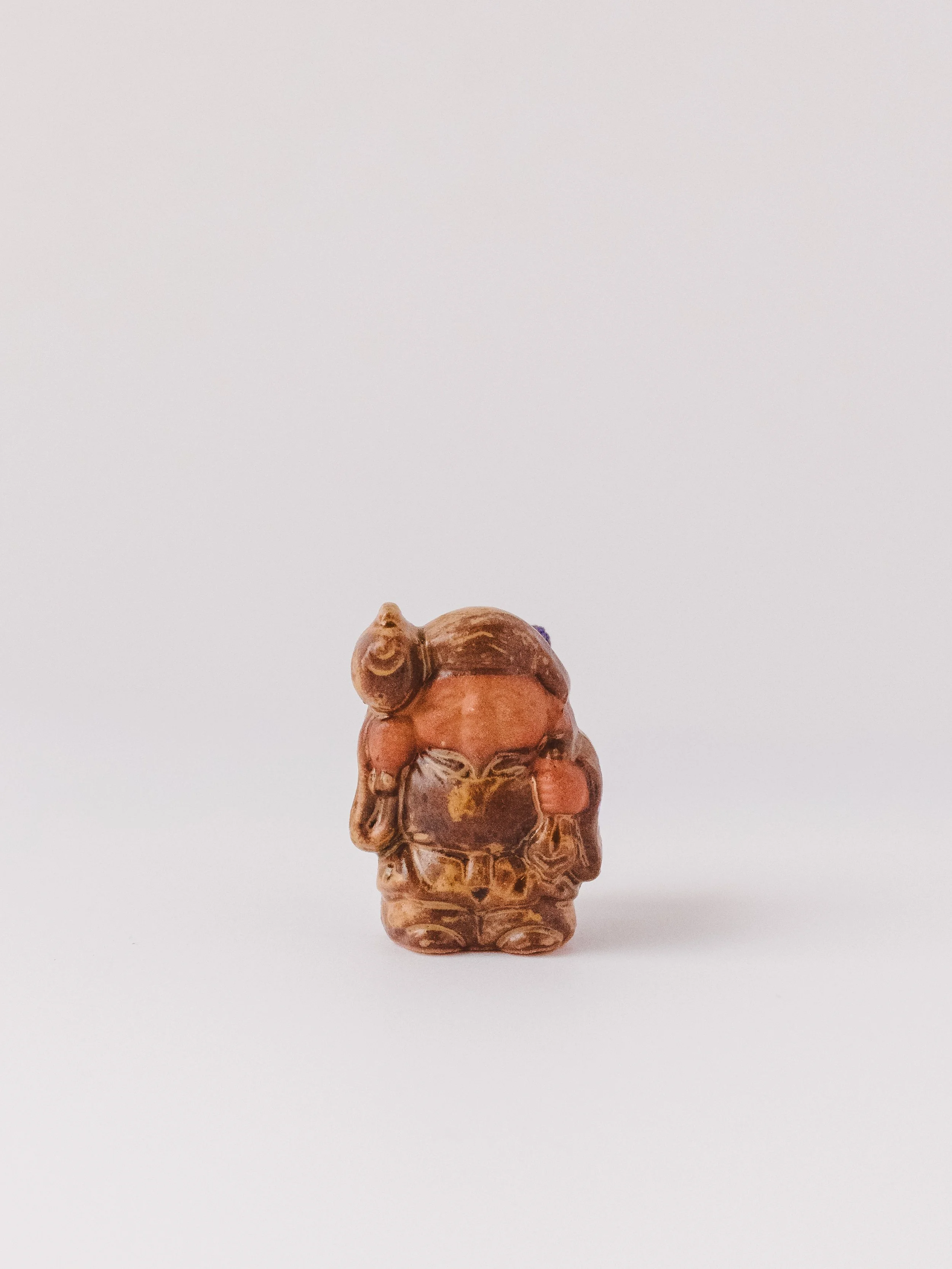 Image 7 of 22
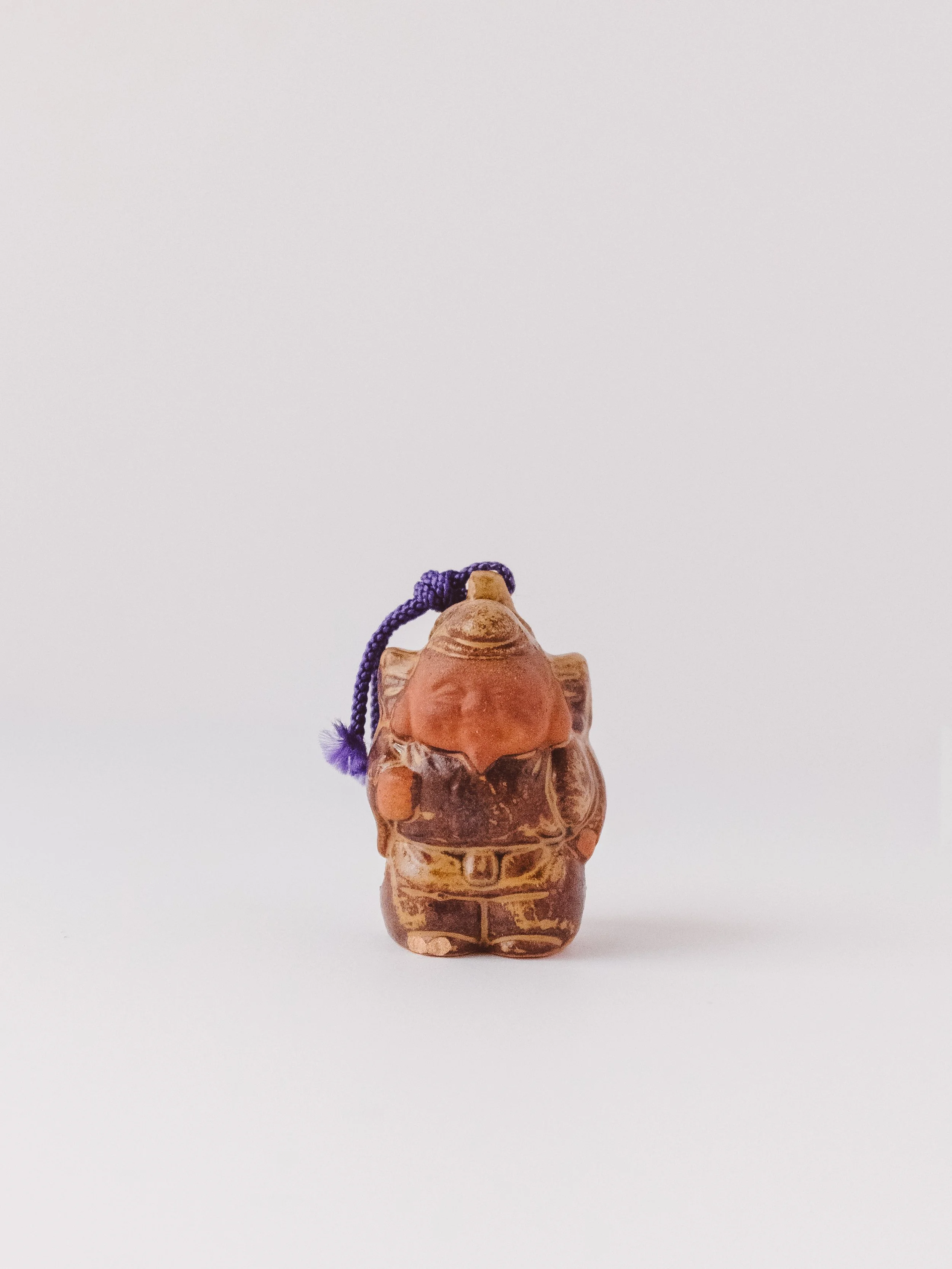 Image 8 of 22
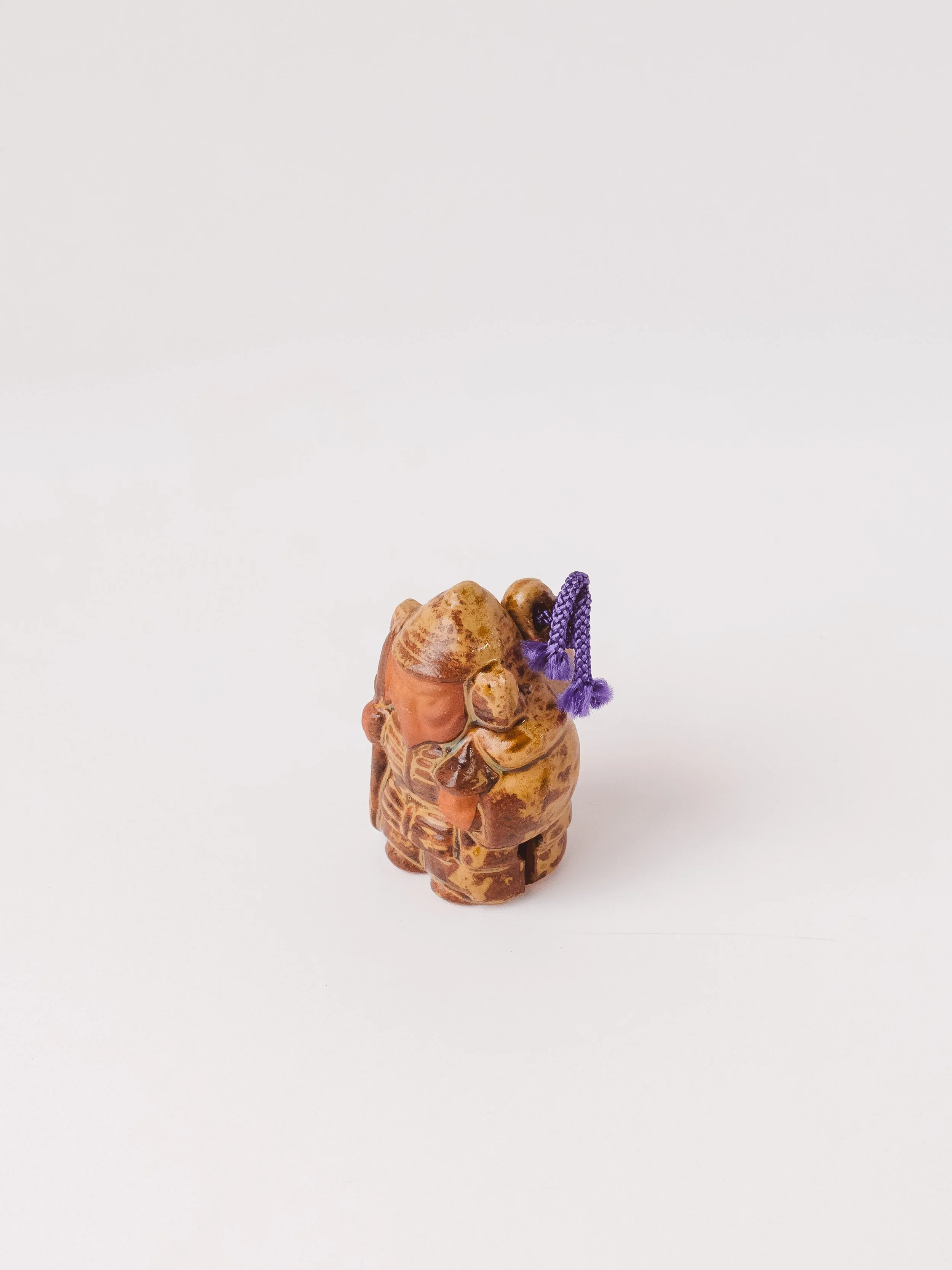 Image 9 of 22
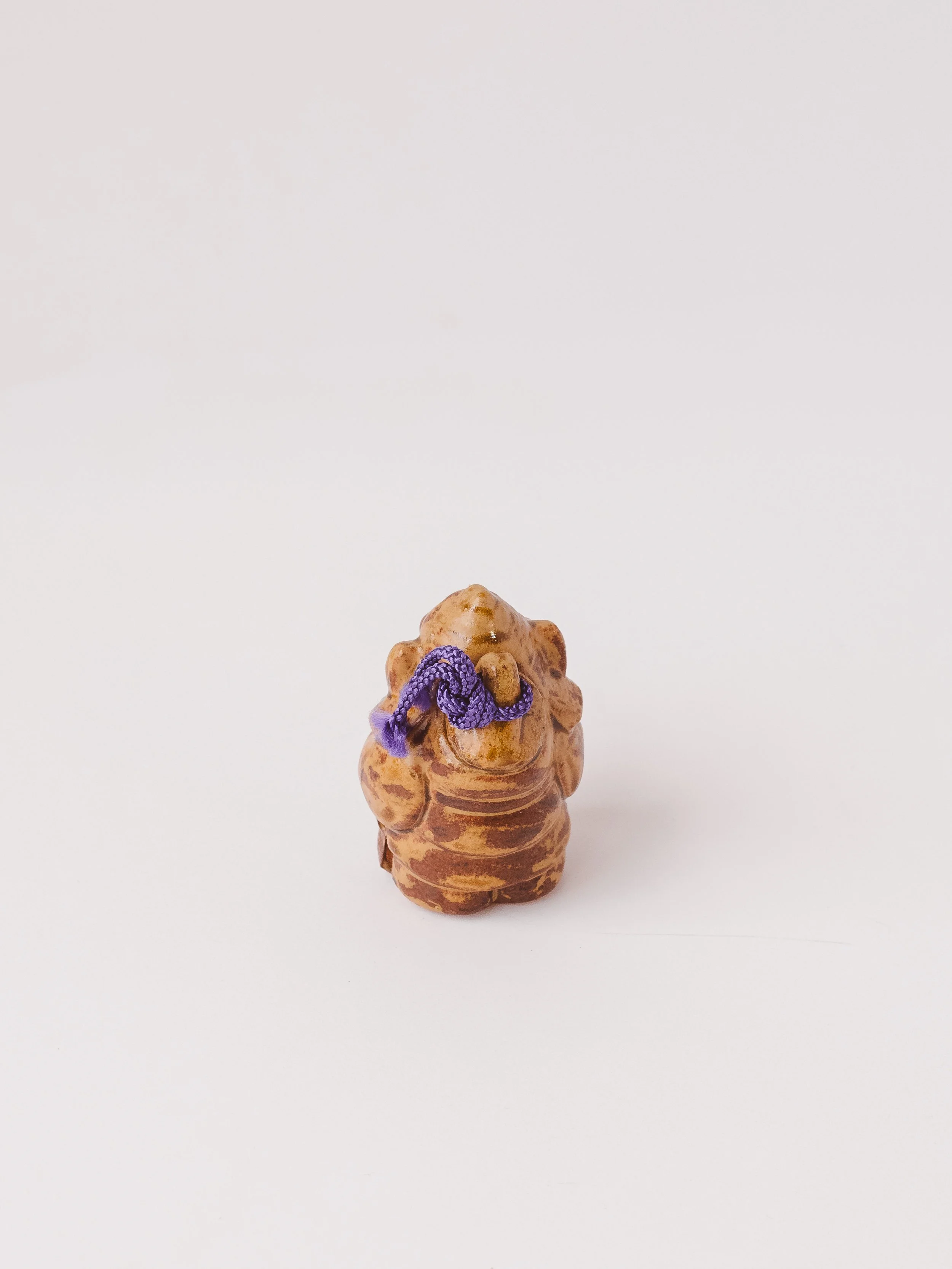 Image 10 of 22
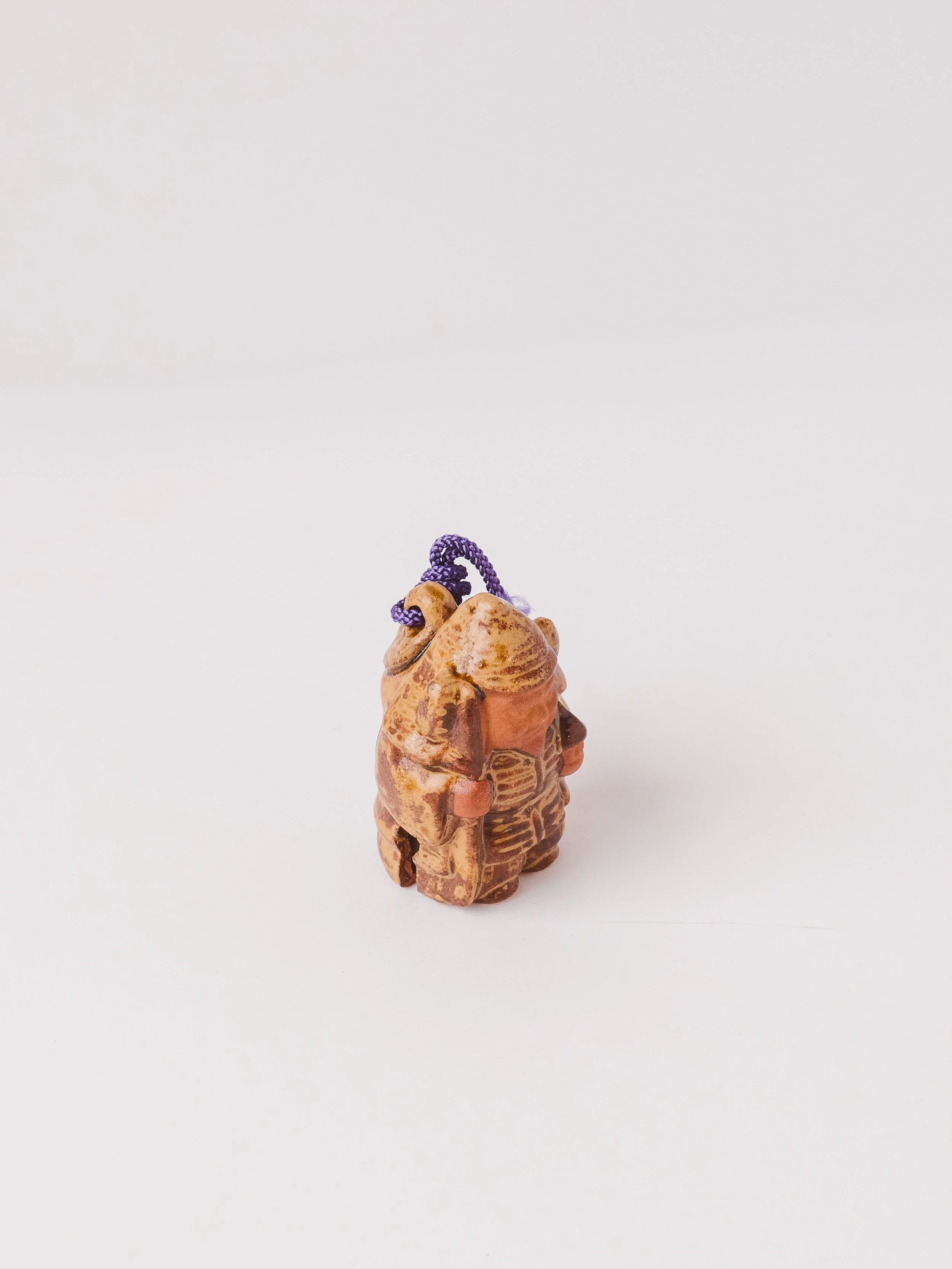 Image 11 of 22
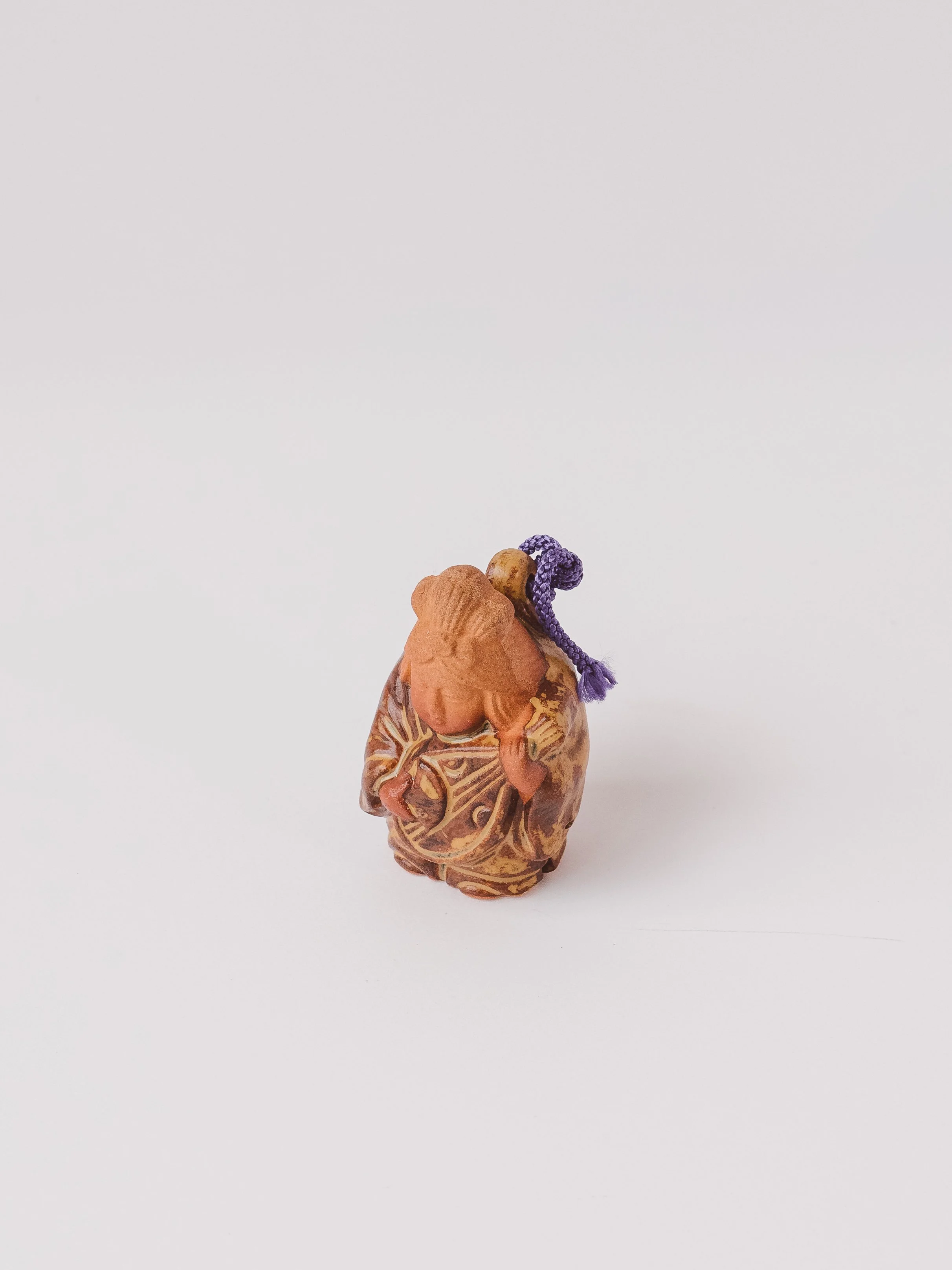 Image 12 of 22
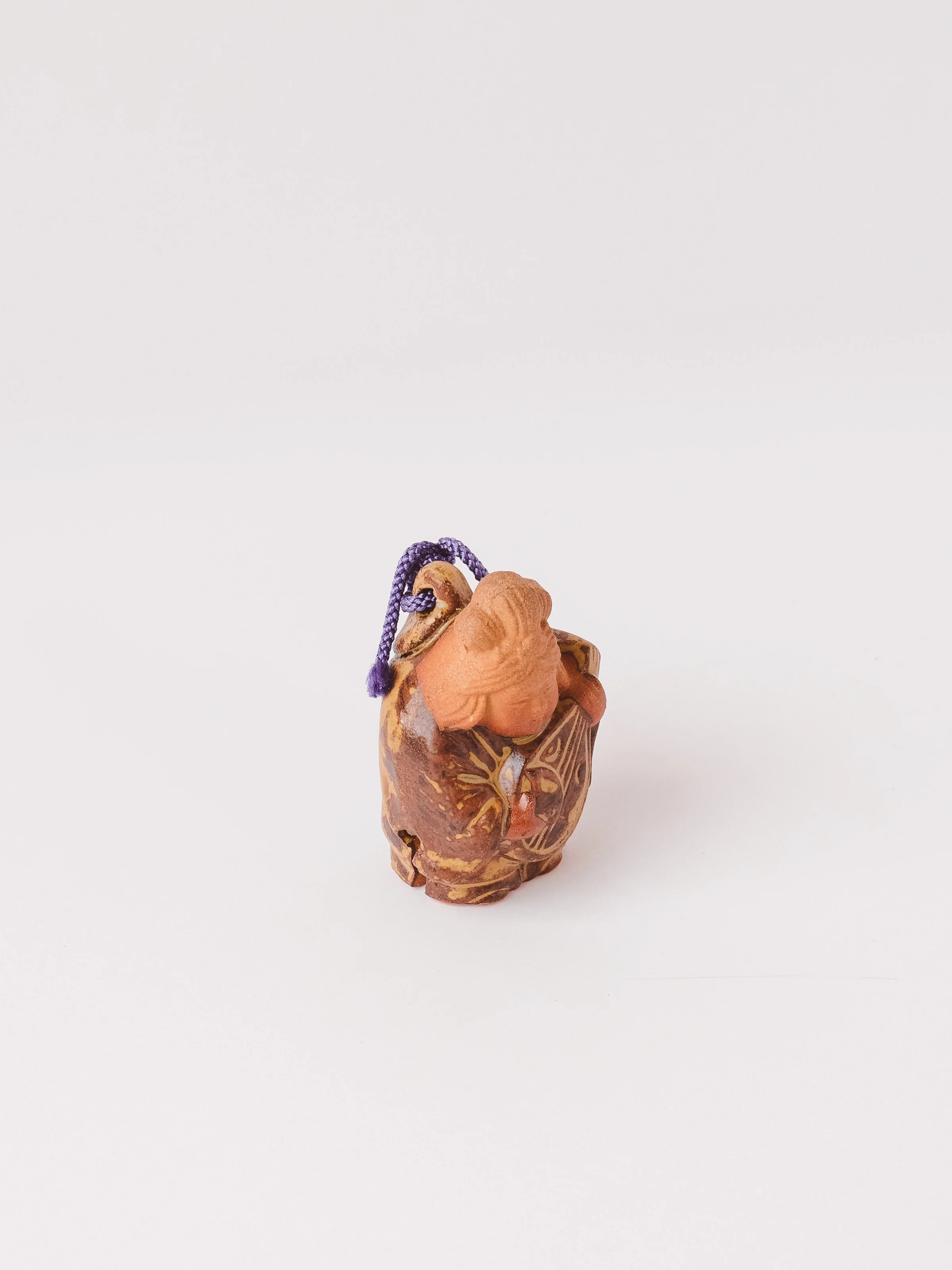 Image 13 of 22
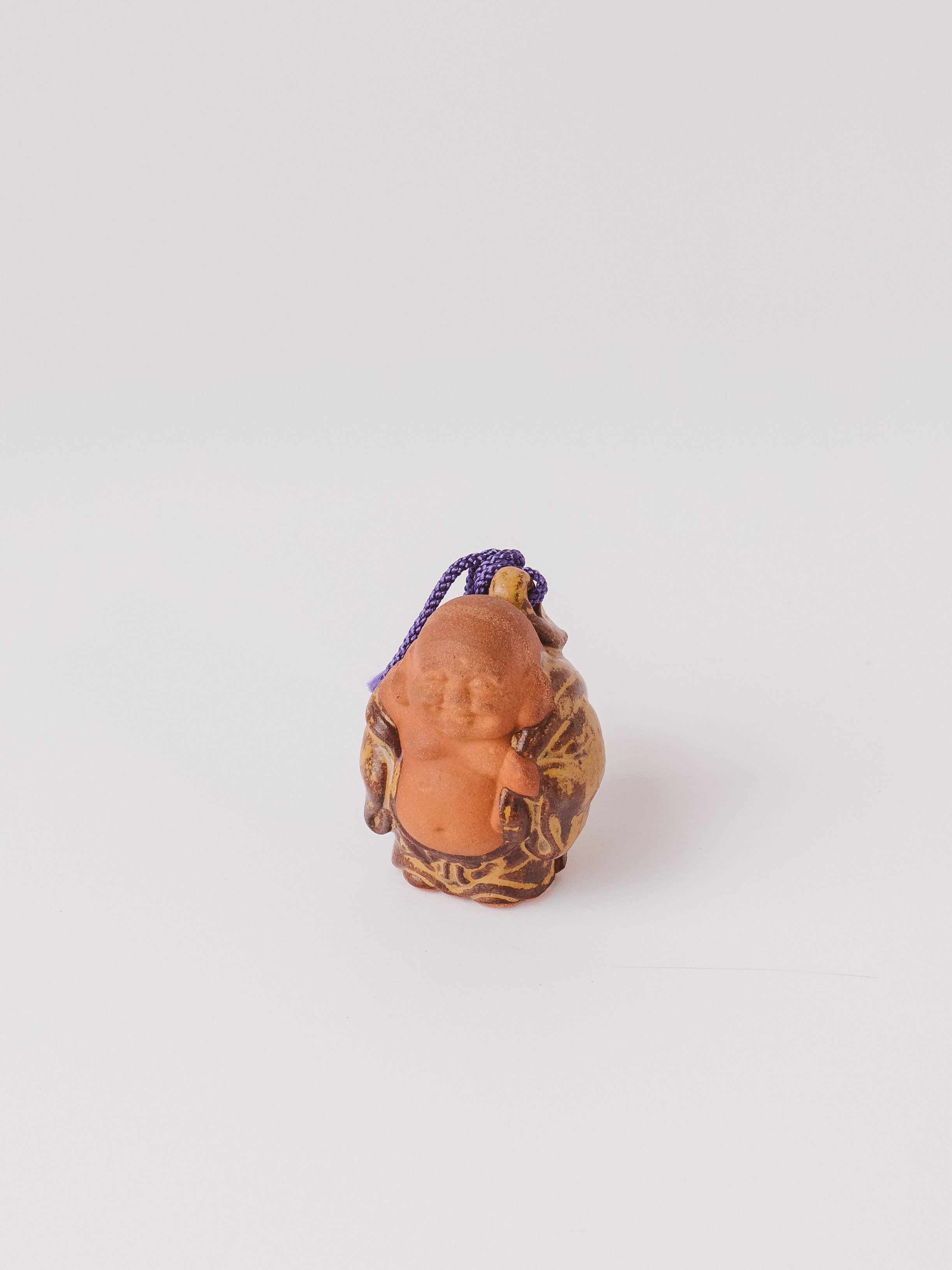 Image 14 of 22
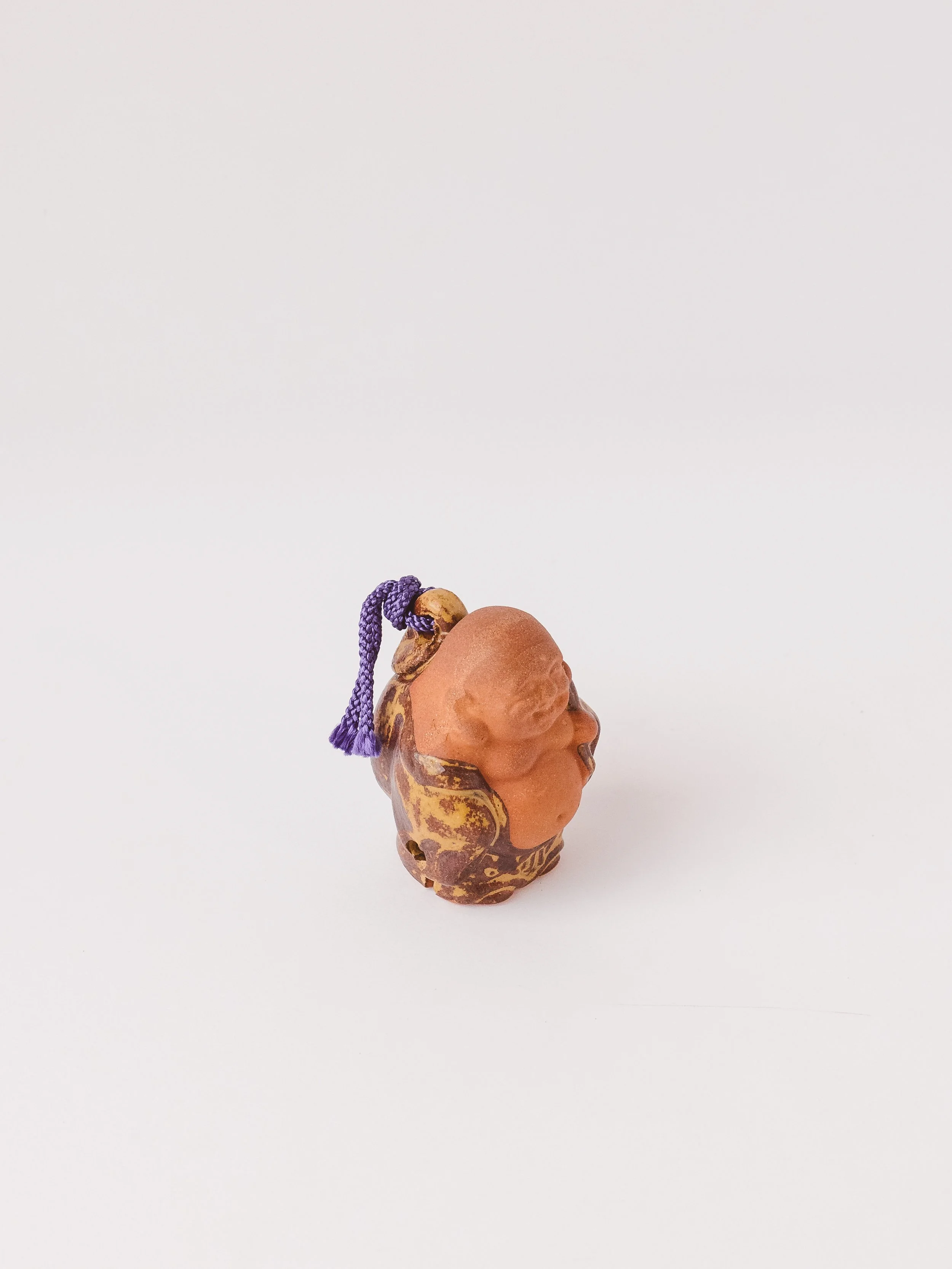 Image 15 of 22
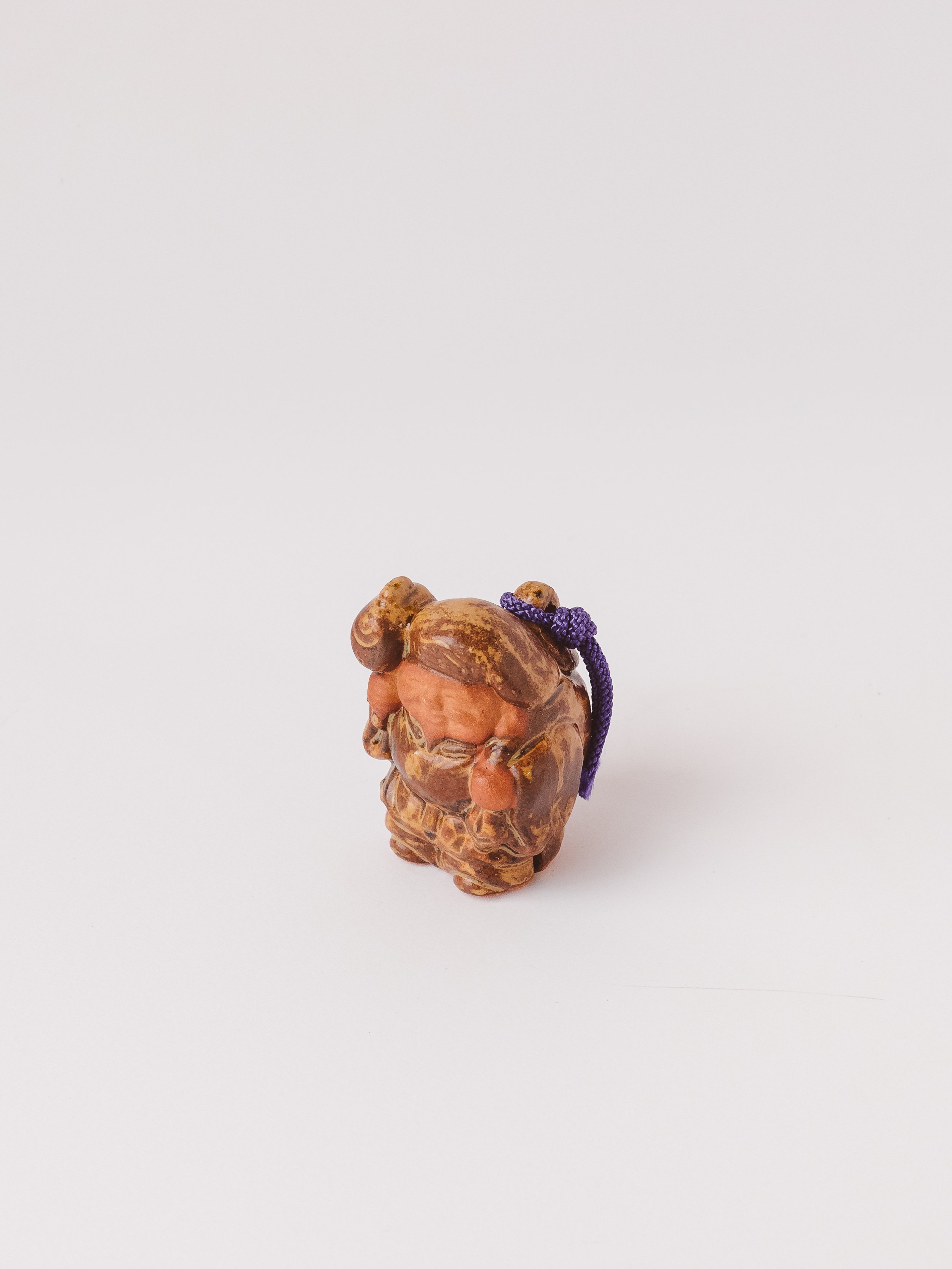 Image 16 of 22
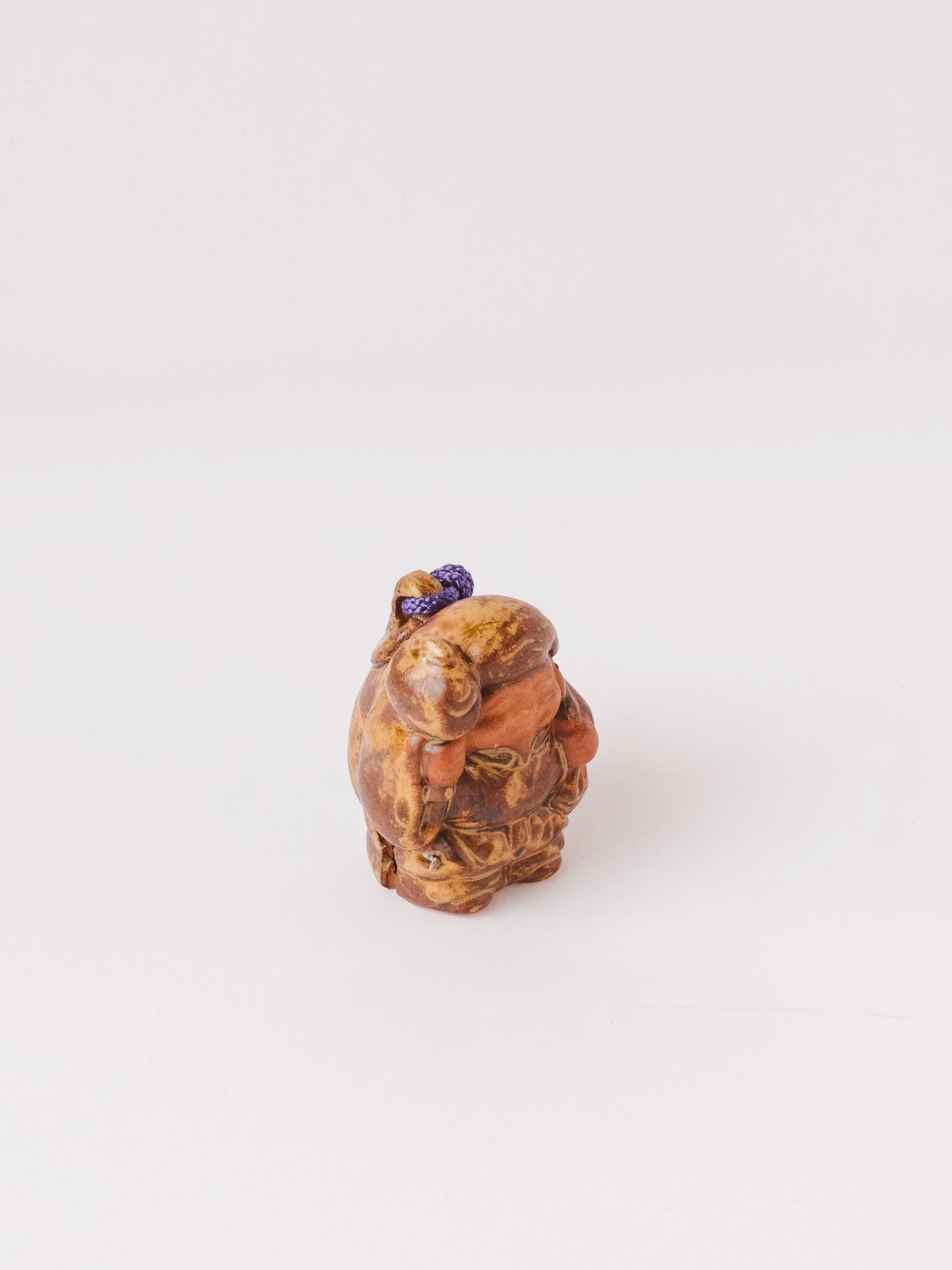 Image 17 of 22
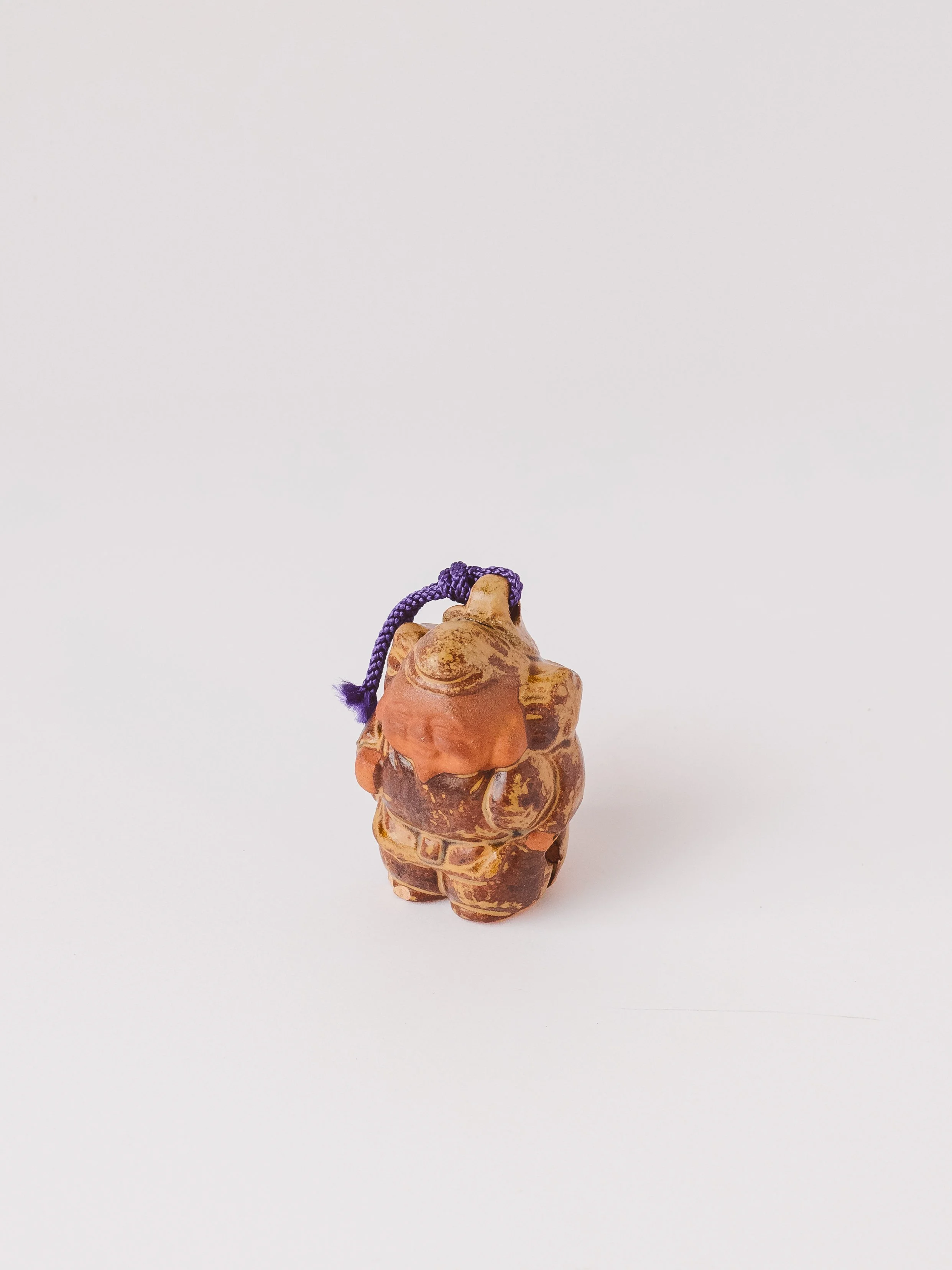 Image 18 of 22
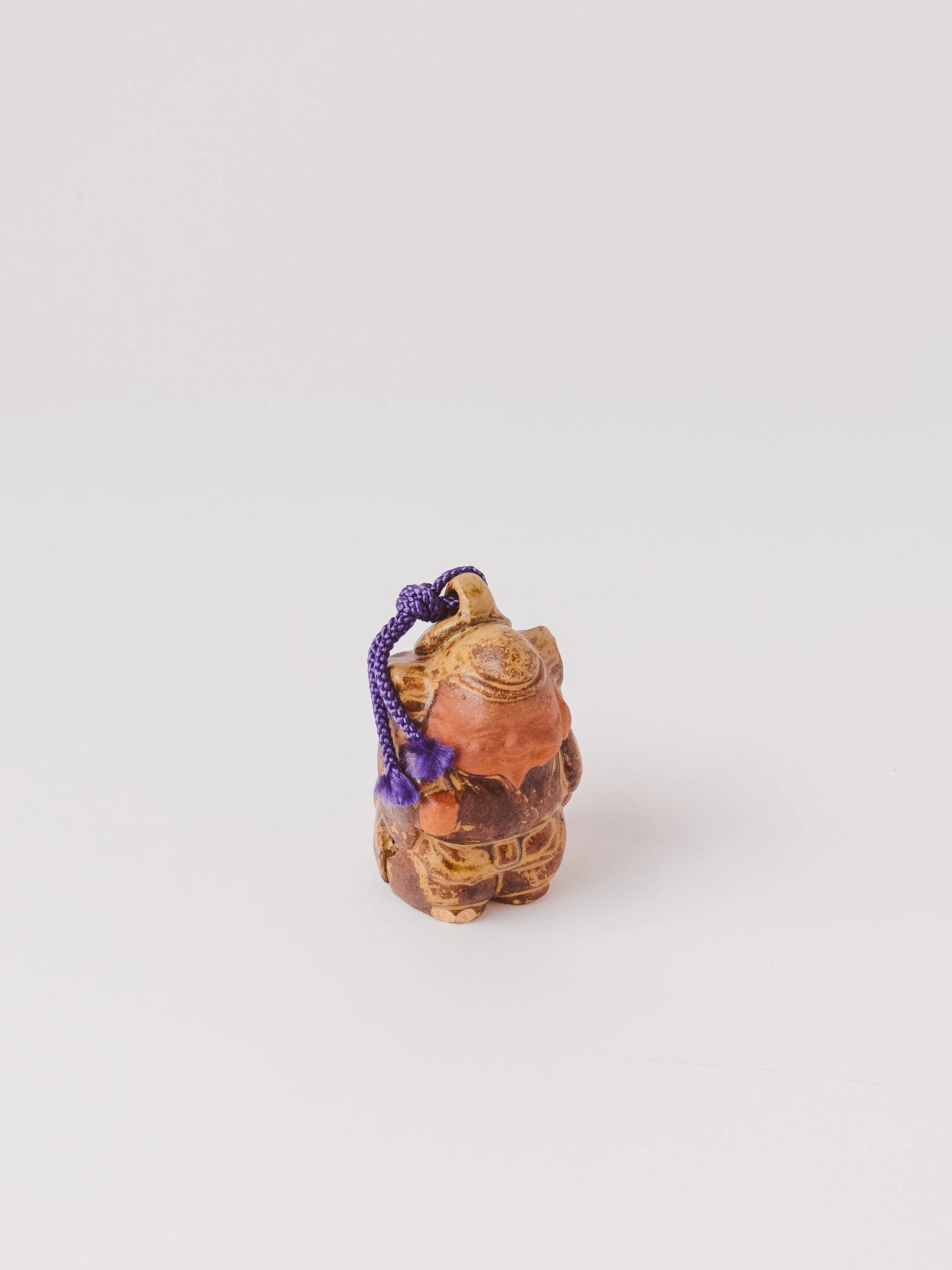 Image 19 of 22
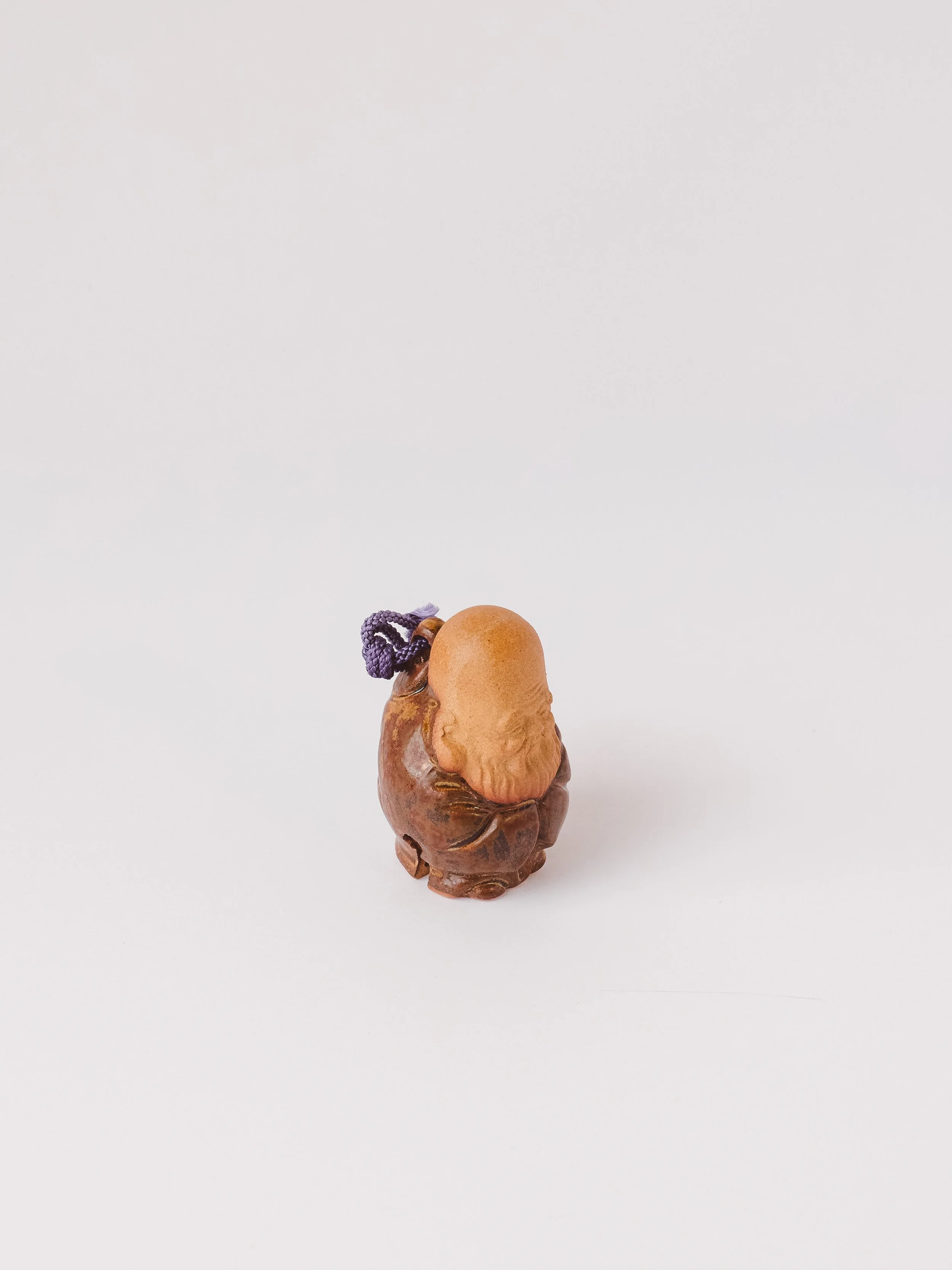 Image 20 of 22
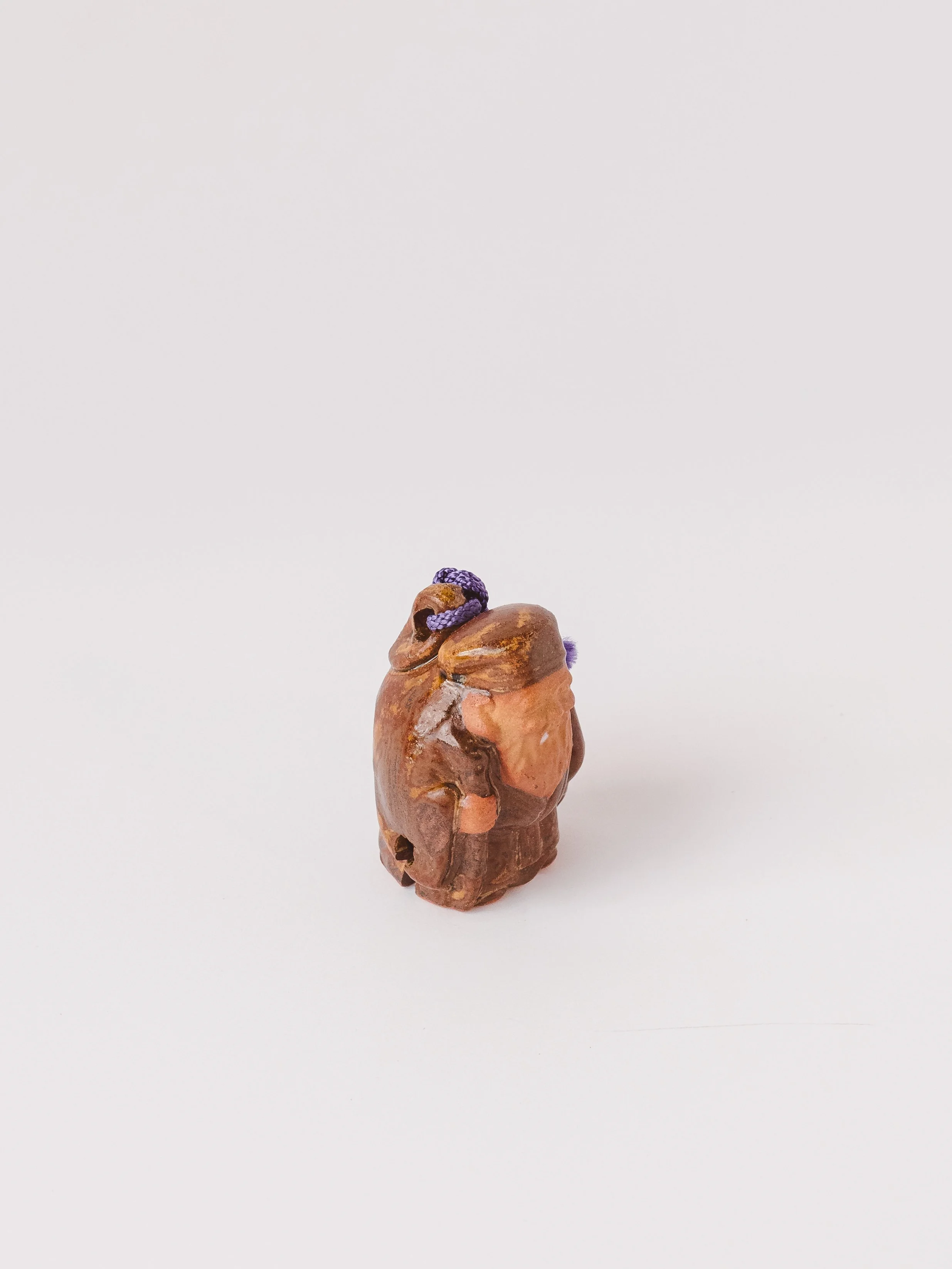 Image 21 of 22
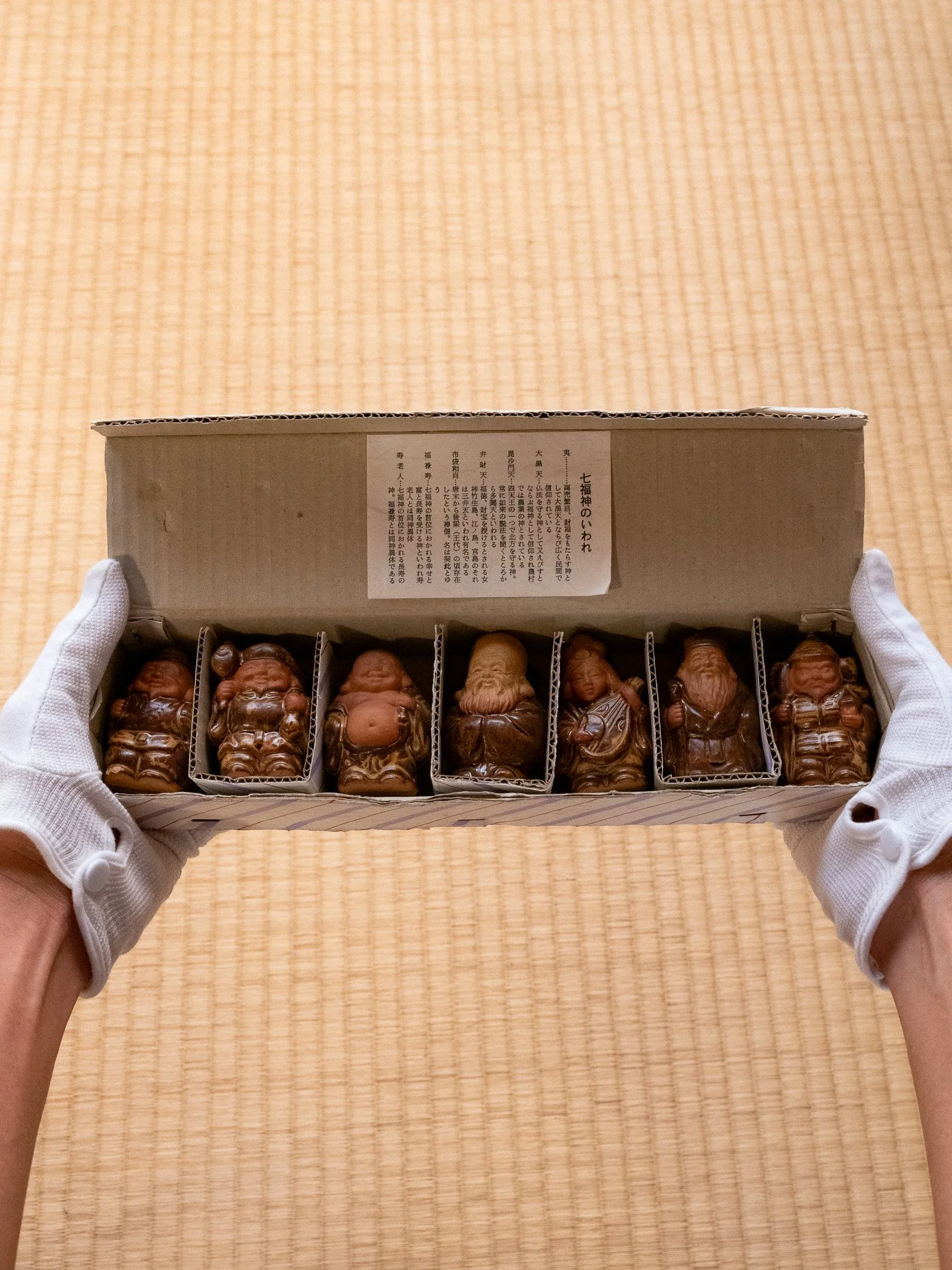 Image 22 of 22