【 The Concept 】
A long, low, horizontal bird carved from a single length of pale koshiabura wood — the phoenix, hōō, in the folk-carving language of Sasano ittōbori. It sits on a small oval plinth of a separate, harder wood joined to the underside of the bird; the head is drawn back over the shoulders and held facing straight forward, painted in the confident, quick colours of the tradition — a bright green crown, a vermilion mask across the face, an eye drawn as a black outer ring around a white field around a small black centre, a pale orange breast, small dots of white worked as stitched pattern; a tiny red crest lifts from the top of the head. From the shoulders back, the piece transforms entirely. Wings and body dissolve into thin wood shavings, sliced up from the trunk itself and left curling outward — about seventeen wing shavings, beginning as gentle curves and finishing in a firm inward roll — and the great long tail sweeps horizontally away in a single row of about twelve tightly rolled curls, each shaving painted at its cut face in red, green and ochre. What in a hawk is a still, vertical presence is here a horizontal sweep of colour and light: a phoenix caught in mid-glide, its whole body still made of the wood it was cut from.
【 What Sasano Ittōbori Is 】
Sasano ittōbori (笹野一刀彫) is a folk woodcarving tradition from the Sasano district of Yonezawa, in the mountains of southern Yamagata Prefecture. Its name means "single-blade carving": the entire piece, from the rough shape of the trunk down to the finest curled feather, is worked with one specialised knife called a saru-kiri. The wood is always koshiabura, a soft, pale local tree that shaves cleanly. The signature move of the technique is not to cut a curl away but to leave it attached — the maker slices a thin sliver upward and stops before it separates, then does it again below, and again below that, until a fan of layered wood ribbons has been raised from the trunk. In winter, when the Yonezawa valley is buried in metres of snow, those curls become the wings of a hawk, the tail of a phoenix, and, most famously, the petals of the sasano-bana, the "Sasano flower," offered every 17 January at Sasano Kannon temple to bring flowers into a season that has none. The tradition is far older than the modern era; local records date its origins to well over a thousand years ago, linked to the temple's founding.
【 Why a Phoenix 】
The hōō — the phoenix of East Asia — is one of the most exalted birds in the Japanese decorative vocabulary. It is not the Western firebird that dies and is reborn from its own ashes. It is instead a peaceful auspice: the bird that appears only when a virtuous ruler is on the throne, when the age is at peace, when the paulownia is in bloom. It is the bird that sits on the ridgepole of the Byōdō-in in Uji. It is embroidered on the sleeves of imperial ceremonial robes and worked into the finest Japanese lacquer, brocade and metalwork. Its body is composed of parts borrowed from many other creatures — a pheasant's tail, a peacock's plumage, a swallow's throat, a fowl's head — and its great, sweeping tail is the feature every artist has struggled to give it. The Sasano tradition solves that problem beautifully by making the tail from the wood itself: dozens of long, thin curls that catch the light like real feathers, in a single sweep half the length of the whole bird.
【 Reading the Object 】
The composition works horizontally, from the plinth forward.
The base is a small oval of a separate, harder wood — a slightly warmer, denser tone than the pale koshiabura of the bird itself — joined to the underside of the phoenix and barely larger than its own feet. It lifts the bird just clear of the surface below and gives the composition its ground. On the upper face of the base, the maker has hand-brushed two small three-toed bird-prints in dark ink — one facing left, one facing right — the phoenix's own feet drawn onto the ground it stands on.
The head is drawn back over the shoulders and held facing straight forward, upright and alert. It is the most fully coloured part of the piece: a wedge-shaped head with a bright green cap, a vermilion mask across the cheeks, an eye drawn as three concentric marks — a black outer ring, a white field, a small black centre — a pale orange breast and throat, and small painted patterns in white and pale pink that read as stitched or embroidered detail. A tiny red crest lifts from the crown, and a sharp, pale-yellow beak points straight forward.
The body carries the classic layered-curl treatment of the Sasano hand: short shavings raised in staggered rows along the flanks, catching the light at their pale, freshly-cut faces.
The wings are the piece's first great gesture — about seventeen thin shavings sweeping back from the shoulders, beginning as long, gentle, almost-flat curves and finishing, at their tips, in a firm inward roll. The change of curvature along one shaving — open at the root, tight at the tip — is the whole character of the wing.
The tail is the piece's real jewel — a long, low, horizontal sweep, longer than the bird's body, composed of a single row of about twelve tightly rolled curls. Each curl is one thin shaving of koshiabura, sliced up from the trunk and left attached to it, then rolled at its tip. At the outer face of each curl the maker has laid quick brushed dashes of red-orange, green and ochre — the phoenix's tail-eye pattern, worked as painted markings on real wood curls rather than as painted feather forms.
【 Where the Shavings Become the Sculpture 】
The philosophical heart of Sasano ittōbori is this: the shavings are the sculpture. In most woodcarving, what falls to the workbench is thrown away; here, what would be waste is kept, curled, and lifted into feathers. This piece shows that principle at its most beautiful. Every tail feather is a single continuous shaving still attached to the log it was cut from. The layered edges are meant to be slightly irregular, and the pale, freshly-sliced faces of the wood are meant to stay visible; the small brushed colour marks read as painted decoration on real wood rather than as illusionistic feathers. Nothing here is added onto the trunk; everything is lifted from it.
【 The Object 】
A horizontal hand-scale carving in pale koshiabura wood, worked in the Sasano ittōbori tradition. Extraordinarily light — twenty grams — yet dimensionally stable on its small oval plinth. Meant to be looked at from the side (the whole long sweep of head, body and tail) and from slightly above (to see the painted curl-faces of the tail catch the light).
【 Where to Place It 】
On a shelf where the eye can travel the whole length of the tail — a low bookcase, a tokonoma alcove, a long console, a study desk. In its home country the hōō is a bird of ceremonial and imperial associations, traditionally placed where its presence blesses the room; the folk-carving version keeps that spirit but at hand-scale. Keep it out of direct sun and away from heaters and humidifiers, which move any thin-shaved wood too much. A high shelf where curious hands cannot reach the tail is best.
【 Care 】
Dust with a soft dry brush or a gentle puff of air, always in the direction of the curls. Never wipe the shaved feathers with a cloth — the curls are fragile by design and are the piece's most valuable feature. Keep it in a stable dry indoor environment. Lift it by the plinth, never by the tail or head. Do not oil the wood.
【 Function & What It Brings 】
Keep it, place it, or give it. As a piece of Japanese folk art it is a fine example of a genuinely distinctive regional tradition, and it sits comfortably alongside kokeshi, Ainu carving, or any collection of mingei woodwork. As an image it carries the classical meaning of the hōō — peace, virtue, an auspicious age, the arrival of good fortune — a fitting gift for a wedding, a new home, an important promotion, a milestone birthday, the opening of any new chapter.
【 The Texture 】
Pale koshiabura wood, satin-smooth on the belly and along the wing roots. Strong sumi-black outline and bright vermilion, green, orange, white and pale yellow painting on the head, face and beak. Small pink-and-white stitched dot patterns on the throat and shoulder. The wings and long horizontal tail are made of many thin, layered wood curls with slightly irregular edges — light, feathery, and dry to the touch — each carrying small quick brushed marks of red-orange, green and ochre along the cut face. On the upper face of the plinth, two hand-brushed three-toed bird-prints stand as the phoenix's own feet on its ground.
【 Presence 】
Ceremonial, alert, and unusually long. The Sasano hōō stands upright with the head drawn back and eye set forward — not a settling bird but a watchful one — while behind it the long tail streams away like the trailing hem of a court robe. Its beauty is not in polish but in the honesty of the wood and the courage of the maker's brush on the tail.
Archive Note: The number in the name (806) references the traditional founding date of Sasano Kannon-dō, the temple with which the Sasano ittōbori tradition of Yonezawa is most closely linked and from which the tradition is locally understood to descend. It marks the tradition this piece continues — not the date this piece was made.
Provenance Note: Sourced from a private collection in Japan. A hand-carved hōō (phoenix) in the Sasano ittōbori (笹野一刀彫) folk tradition of Yonezawa, Yamagata Prefecture; the wooden base carries the phoenix's own three-toed feet painted in dark ink. Attributed to the Sasano workshop tradition rather than to a specific individual maker.
Condition Note: Sold as acquired, in very good vintage condition. The naturally uneven edges of the layered wood curls that form the wings and tail, and the visible freshly-cut faces of the shavings, are inherent features of a single-blade Sasano carving, not damage. The thin curled feathers are fragile by design and should not be wiped with a cloth. Please see the photographs as part of the description.
【 The Concept 】
A long, low, horizontal bird carved from a single length of pale koshiabura wood — the phoenix, hōō, in the folk-carving language of Sasano ittōbori. It sits on a small oval plinth of a separate, harder wood joined to the underside of the bird; the head is drawn back over the shoulders and held facing straight forward, painted in the confident, quick colours of the tradition — a bright green crown, a vermilion mask across the face, an eye drawn as a black outer ring around a white field around a small black centre, a pale orange breast, small dots of white worked as stitched pattern; a tiny red crest lifts from the top of the head. From the shoulders back, the piece transforms entirely. Wings and body dissolve into thin wood shavings, sliced up from the trunk itself and left curling outward — about seventeen wing shavings, beginning as gentle curves and finishing in a firm inward roll — and the great long tail sweeps horizontally away in a single row of about twelve tightly rolled curls, each shaving painted at its cut face in red, green and ochre. What in a hawk is a still, vertical presence is here a horizontal sweep of colour and light: a phoenix caught in mid-glide, its whole body still made of the wood it was cut from.
【 What Sasano Ittōbori Is 】
Sasano ittōbori (笹野一刀彫) is a folk woodcarving tradition from the Sasano district of Yonezawa, in the mountains of southern Yamagata Prefecture. Its name means "single-blade carving": the entire piece, from the rough shape of the trunk down to the finest curled feather, is worked with one specialised knife called a saru-kiri. The wood is always koshiabura, a soft, pale local tree that shaves cleanly. The signature move of the technique is not to cut a curl away but to leave it attached — the maker slices a thin sliver upward and stops before it separates, then does it again below, and again below that, until a fan of layered wood ribbons has been raised from the trunk. In winter, when the Yonezawa valley is buried in metres of snow, those curls become the wings of a hawk, the tail of a phoenix, and, most famously, the petals of the sasano-bana, the "Sasano flower," offered every 17 January at Sasano Kannon temple to bring flowers into a season that has none. The tradition is far older than the modern era; local records date its origins to well over a thousand years ago, linked to the temple's founding.
【 Why a Phoenix 】
The hōō — the phoenix of East Asia — is one of the most exalted birds in the Japanese decorative vocabulary. It is not the Western firebird that dies and is reborn from its own ashes. It is instead a peaceful auspice: the bird that appears only when a virtuous ruler is on the throne, when the age is at peace, when the paulownia is in bloom. It is the bird that sits on the ridgepole of the Byōdō-in in Uji. It is embroidered on the sleeves of imperial ceremonial robes and worked into the finest Japanese lacquer, brocade and metalwork. Its body is composed of parts borrowed from many other creatures — a pheasant's tail, a peacock's plumage, a swallow's throat, a fowl's head — and its great, sweeping tail is the feature every artist has struggled to give it. The Sasano tradition solves that problem beautifully by making the tail from the wood itself: dozens of long, thin curls that catch the light like real feathers, in a single sweep half the length of the whole bird.
【 Reading the Object 】
The composition works horizontally, from the plinth forward.
The base is a small oval of a separate, harder wood — a slightly warmer, denser tone than the pale koshiabura of the bird itself — joined to the underside of the phoenix and barely larger than its own feet. It lifts the bird just clear of the surface below and gives the composition its ground. On the upper face of the base, the maker has hand-brushed two small three-toed bird-prints in dark ink — one facing left, one facing right — the phoenix's own feet drawn onto the ground it stands on.
The head is drawn back over the shoulders and held facing straight forward, upright and alert. It is the most fully coloured part of the piece: a wedge-shaped head with a bright green cap, a vermilion mask across the cheeks, an eye drawn as three concentric marks — a black outer ring, a white field, a small black centre — a pale orange breast and throat, and small painted patterns in white and pale pink that read as stitched or embroidered detail. A tiny red crest lifts from the crown, and a sharp, pale-yellow beak points straight forward.
The body carries the classic layered-curl treatment of the Sasano hand: short shavings raised in staggered rows along the flanks, catching the light at their pale, freshly-cut faces.
The wings are the piece's first great gesture — about seventeen thin shavings sweeping back from the shoulders, beginning as long, gentle, almost-flat curves and finishing, at their tips, in a firm inward roll. The change of curvature along one shaving — open at the root, tight at the tip — is the whole character of the wing.
The tail is the piece's real jewel — a long, low, horizontal sweep, longer than the bird's body, composed of a single row of about twelve tightly rolled curls. Each curl is one thin shaving of koshiabura, sliced up from the trunk and left attached to it, then rolled at its tip. At the outer face of each curl the maker has laid quick brushed dashes of red-orange, green and ochre — the phoenix's tail-eye pattern, worked as painted markings on real wood curls rather than as painted feather forms.
【 Where the Shavings Become the Sculpture 】
The philosophical heart of Sasano ittōbori is this: the shavings are the sculpture. In most woodcarving, what falls to the workbench is thrown away; here, what would be waste is kept, curled, and lifted into feathers. This piece shows that principle at its most beautiful. Every tail feather is a single continuous shaving still attached to the log it was cut from. The layered edges are meant to be slightly irregular, and the pale, freshly-sliced faces of the wood are meant to stay visible; the small brushed colour marks read as painted decoration on real wood rather than as illusionistic feathers. Nothing here is added onto the trunk; everything is lifted from it.
【 The Object 】
A horizontal hand-scale carving in pale koshiabura wood, worked in the Sasano ittōbori tradition. Extraordinarily light — twenty grams — yet dimensionally stable on its small oval plinth. Meant to be looked at from the side (the whole long sweep of head, body and tail) and from slightly above (to see the painted curl-faces of the tail catch the light).
【 Where to Place It 】
On a shelf where the eye can travel the whole length of the tail — a low bookcase, a tokonoma alcove, a long console, a study desk. In its home country the hōō is a bird of ceremonial and imperial associations, traditionally placed where its presence blesses the room; the folk-carving version keeps that spirit but at hand-scale. Keep it out of direct sun and away from heaters and humidifiers, which move any thin-shaved wood too much. A high shelf where curious hands cannot reach the tail is best.
【 Care 】
Dust with a soft dry brush or a gentle puff of air, always in the direction of the curls. Never wipe the shaved feathers with a cloth — the curls are fragile by design and are the piece's most valuable feature. Keep it in a stable dry indoor environment. Lift it by the plinth, never by the tail or head. Do not oil the wood.
【 Function & What It Brings 】
Keep it, place it, or give it. As a piece of Japanese folk art it is a fine example of a genuinely distinctive regional tradition, and it sits comfortably alongside kokeshi, Ainu carving, or any collection of mingei woodwork. As an image it carries the classical meaning of the hōō — peace, virtue, an auspicious age, the arrival of good fortune — a fitting gift for a wedding, a new home, an important promotion, a milestone birthday, the opening of any new chapter.
【 The Texture 】
Pale koshiabura wood, satin-smooth on the belly and along the wing roots. Strong sumi-black outline and bright vermilion, green, orange, white and pale yellow painting on the head, face and beak. Small pink-and-white stitched dot patterns on the throat and shoulder. The wings and long horizontal tail are made of many thin, layered wood curls with slightly irregular edges — light, feathery, and dry to the touch — each carrying small quick brushed marks of red-orange, green and ochre along the cut face. On the upper face of the plinth, two hand-brushed three-toed bird-prints stand as the phoenix's own feet on its ground.
【 Presence 】
Ceremonial, alert, and unusually long. The Sasano hōō stands upright with the head drawn back and eye set forward — not a settling bird but a watchful one — while behind it the long tail streams away like the trailing hem of a court robe. Its beauty is not in polish but in the honesty of the wood and the courage of the maker's brush on the tail.
Archive Note: The number in the name (806) references the traditional founding date of Sasano Kannon-dō, the temple with which the Sasano ittōbori tradition of Yonezawa is most closely linked and from which the tradition is locally understood to descend. It marks the tradition this piece continues — not the date this piece was made.
Provenance Note: Sourced from a private collection in Japan. A hand-carved hōō (phoenix) in the Sasano ittōbori (笹野一刀彫) folk tradition of Yonezawa, Yamagata Prefecture; the wooden base carries the phoenix's own three-toed feet painted in dark ink. Attributed to the Sasano workshop tradition rather than to a specific individual maker.
Condition Note: Sold as acquired, in very good vintage condition. The naturally uneven edges of the layered wood curls that form the wings and tail, and the visible freshly-cut faces of the shavings, are inherent features of a single-blade Sasano carving, not damage. The thin curled feathers are fragile by design and should not be wiped with a cloth. Please see the photographs as part of the description.


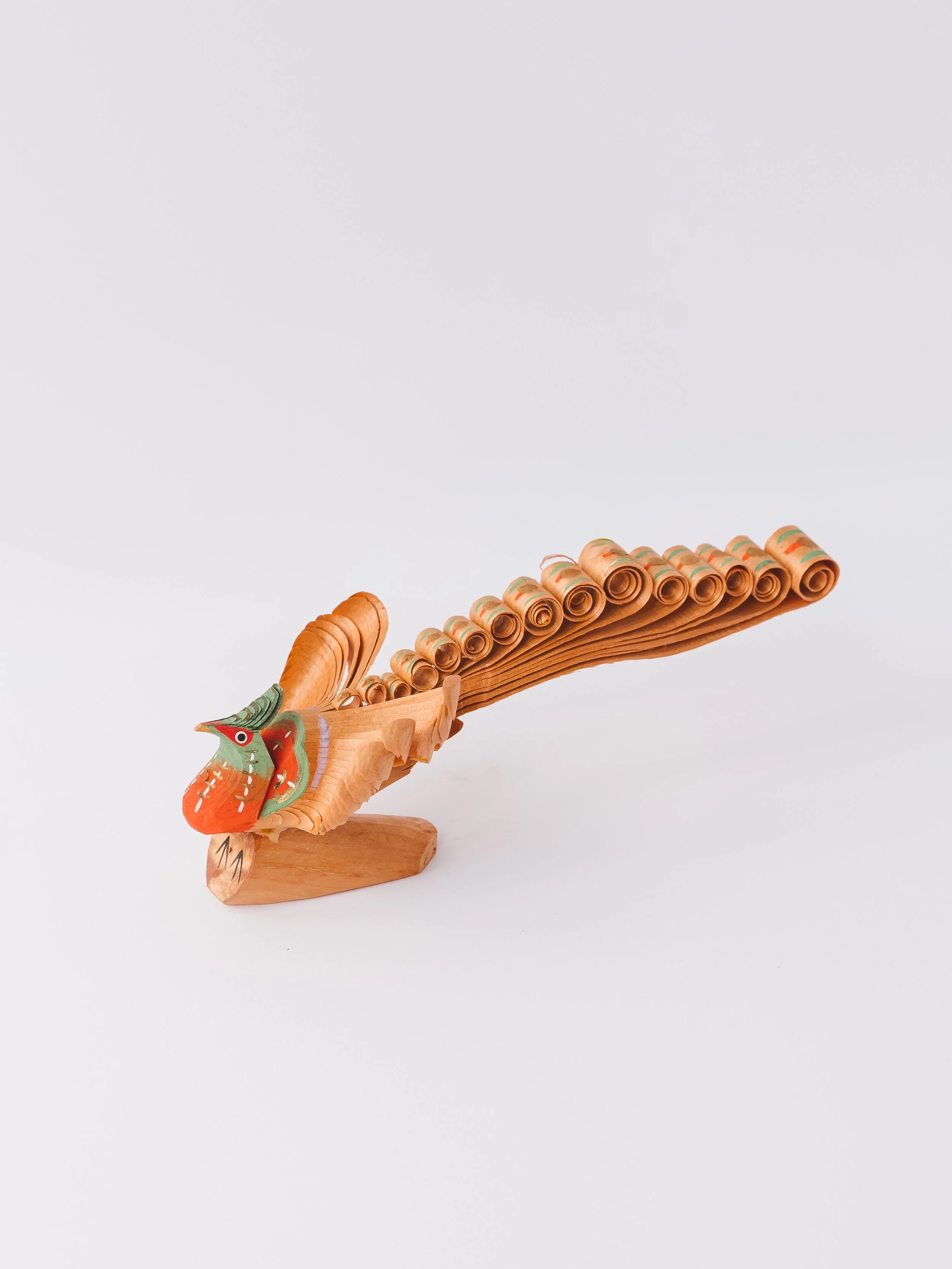 Image 1 of 9
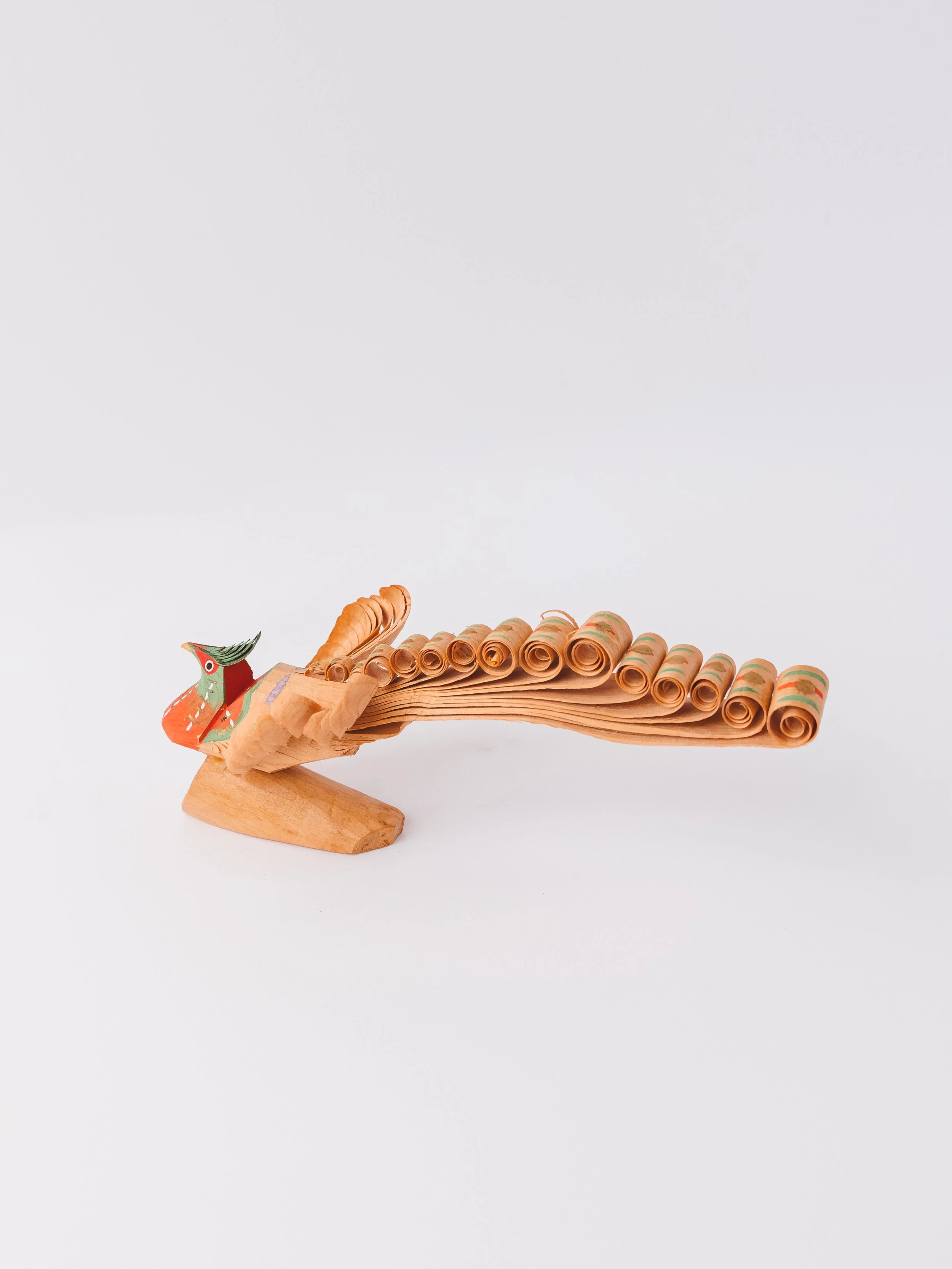 Image 2 of 9
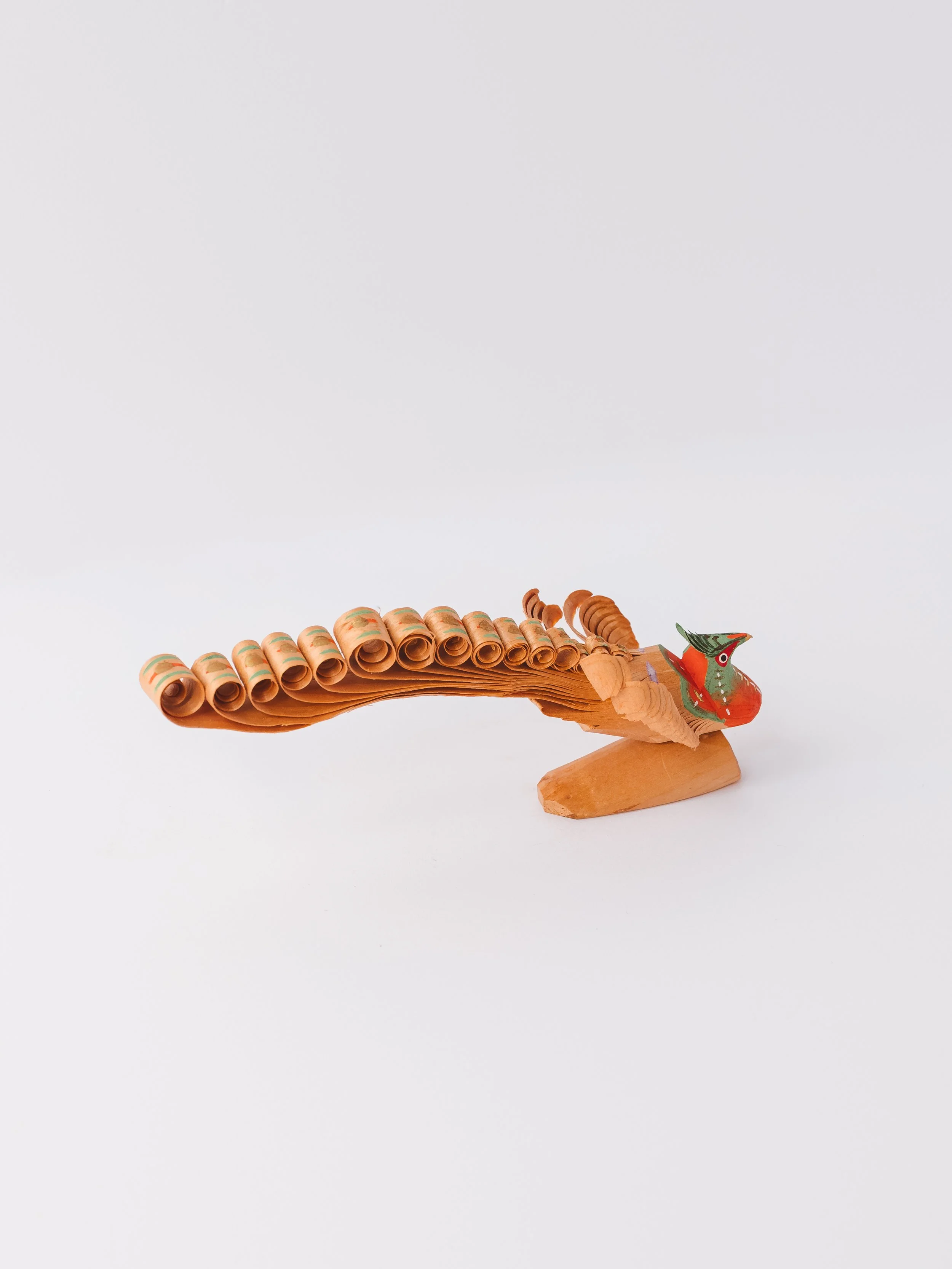 Image 3 of 9
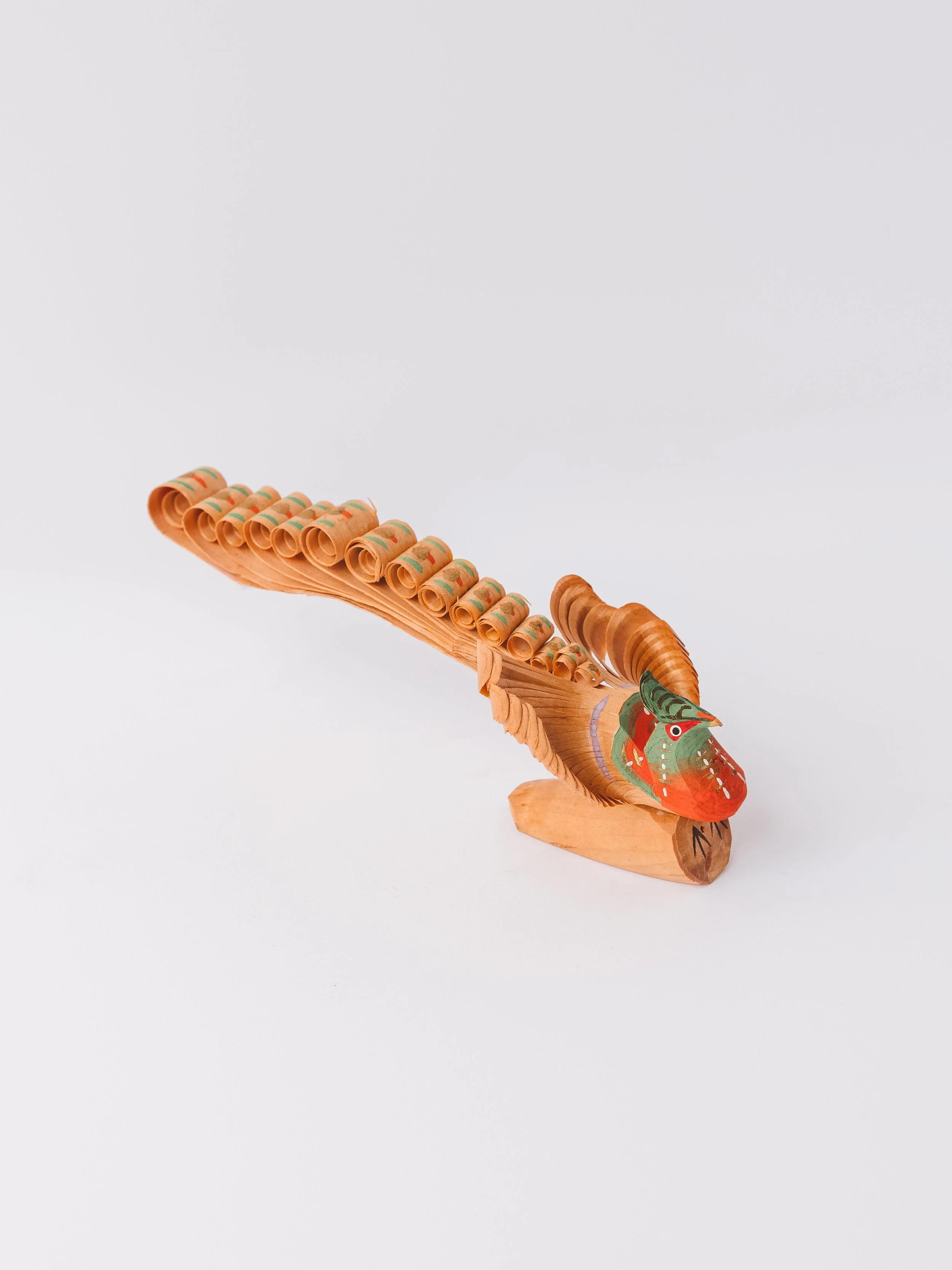 Image 4 of 9
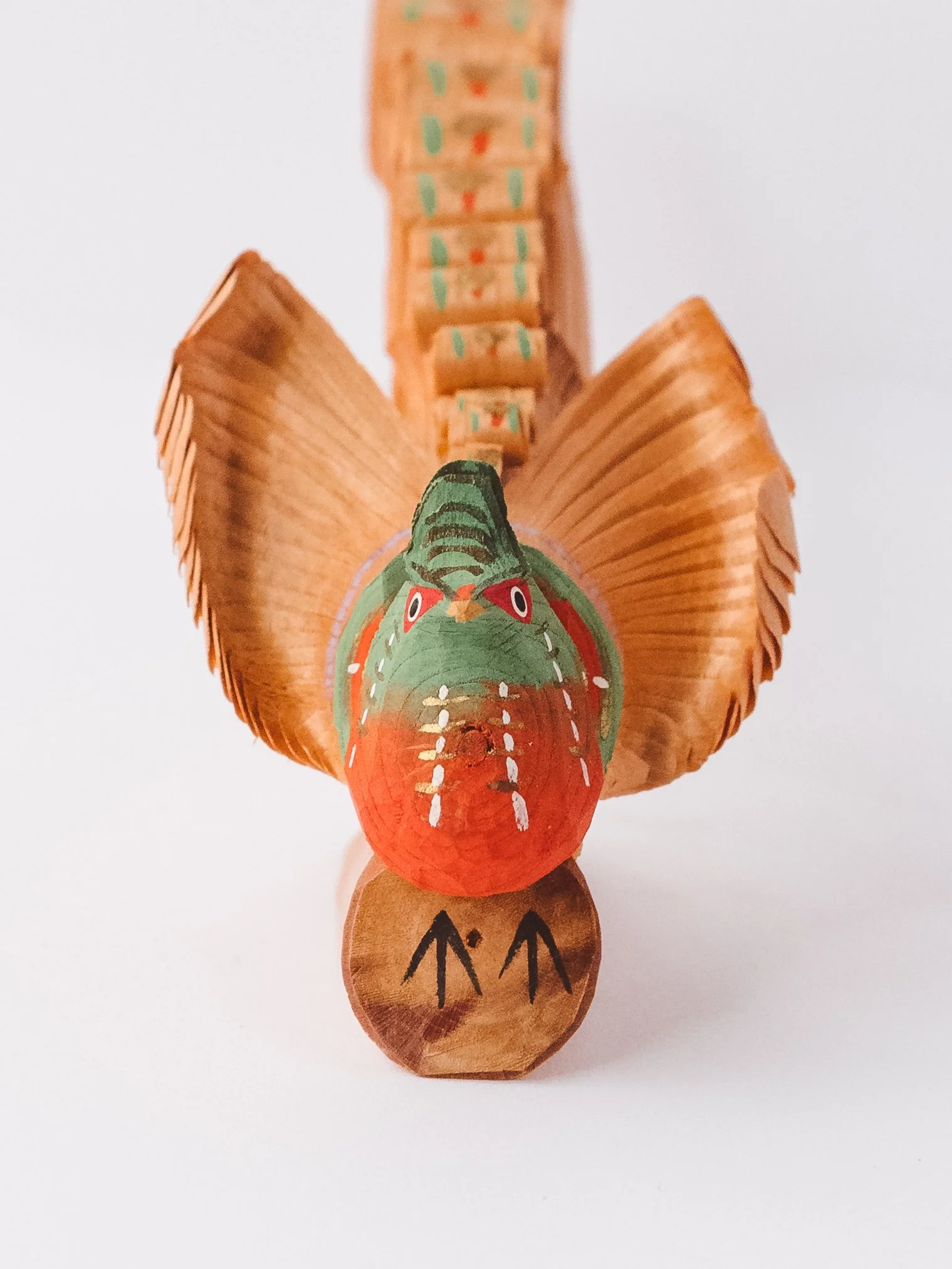 Image 5 of 9
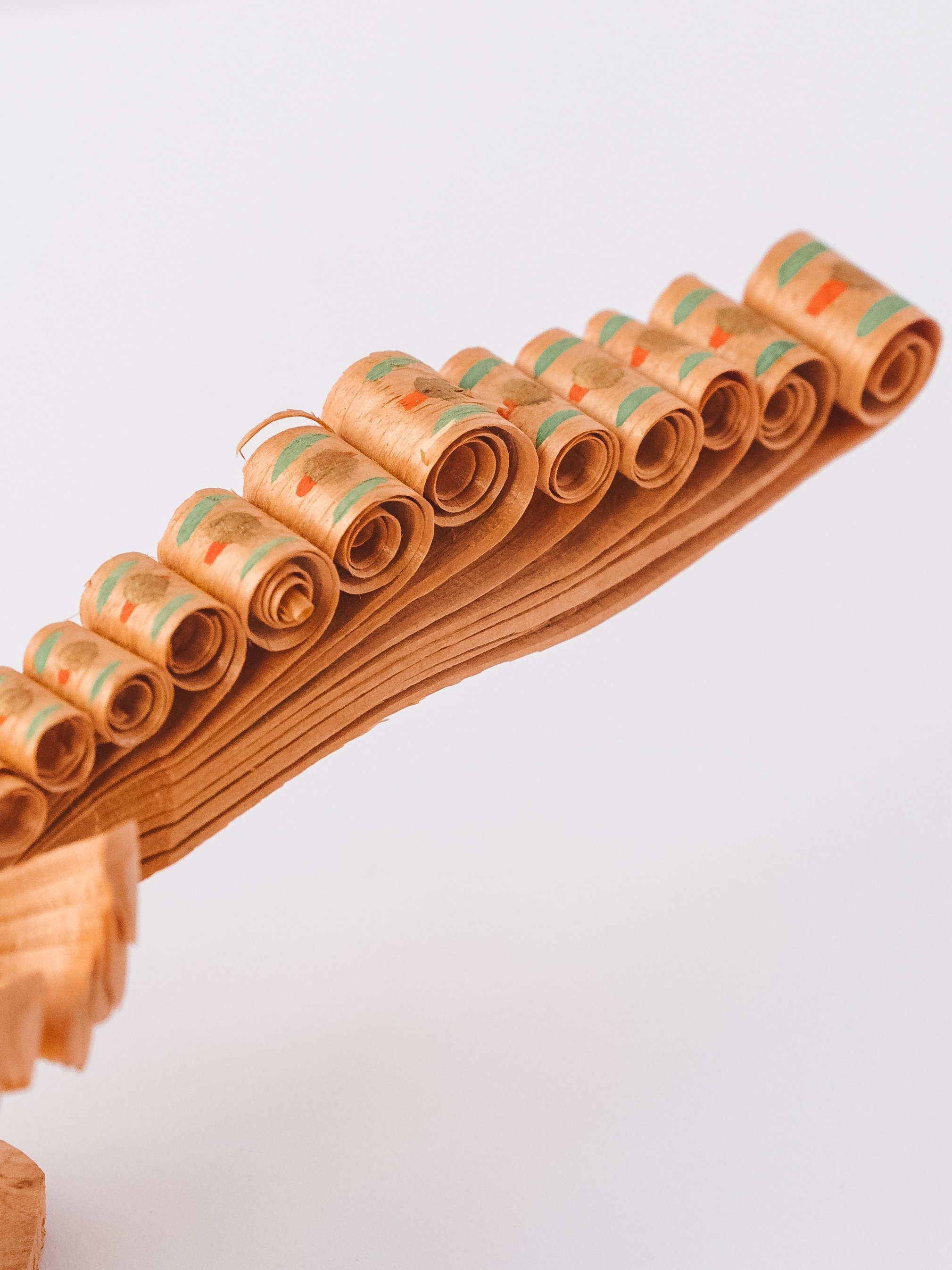 Image 6 of 9
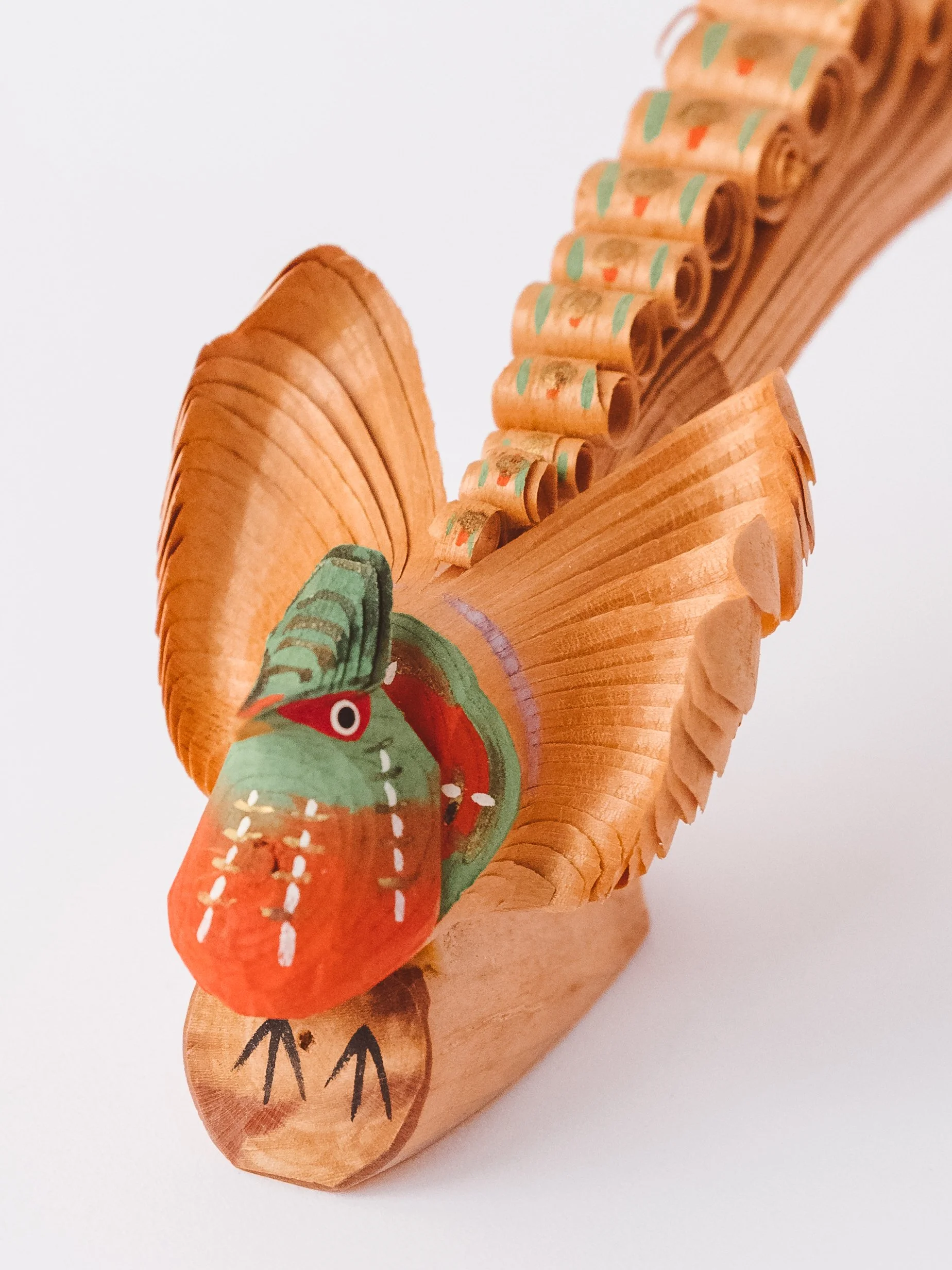 Image 7 of 9
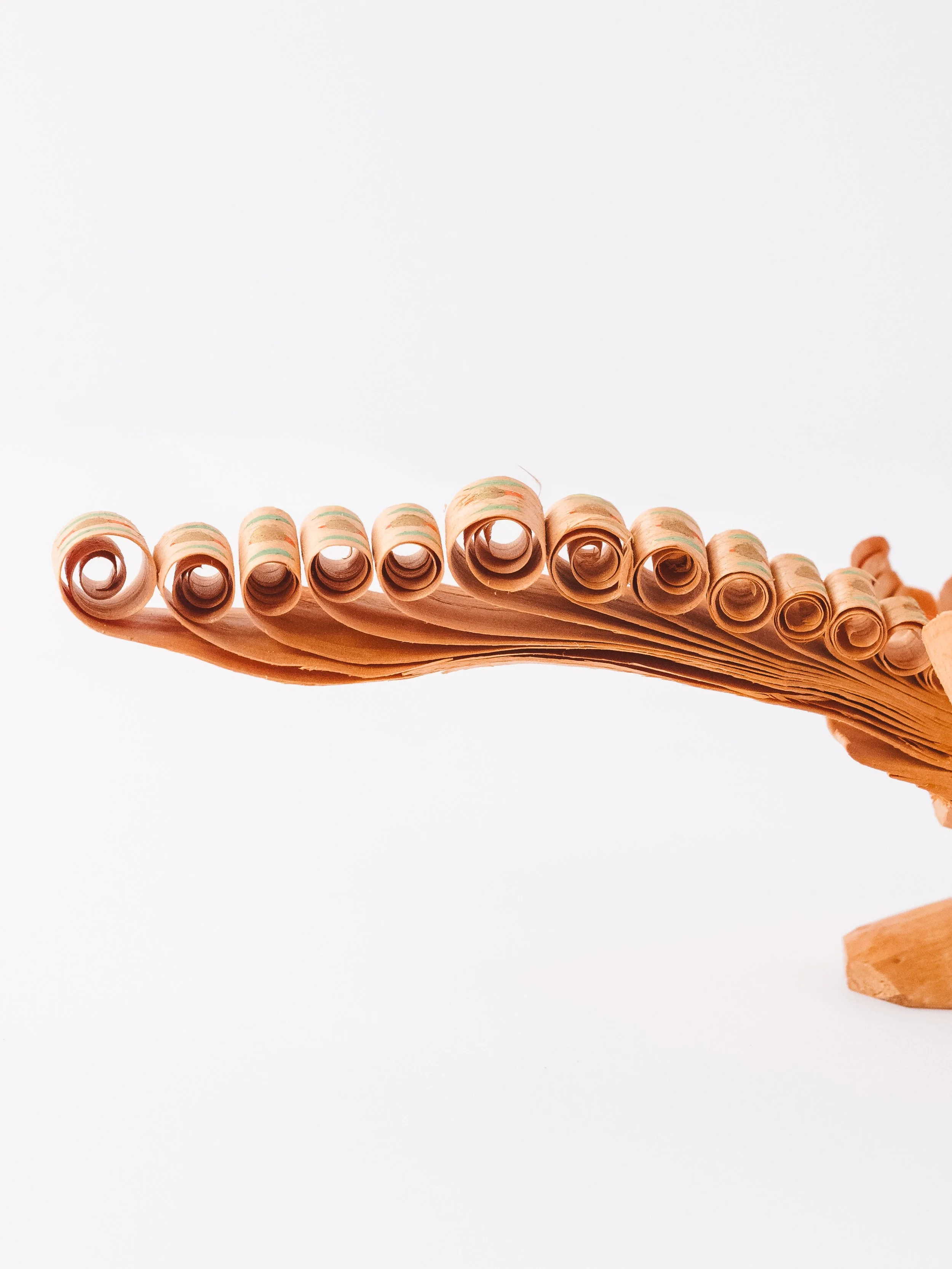 Image 8 of 9
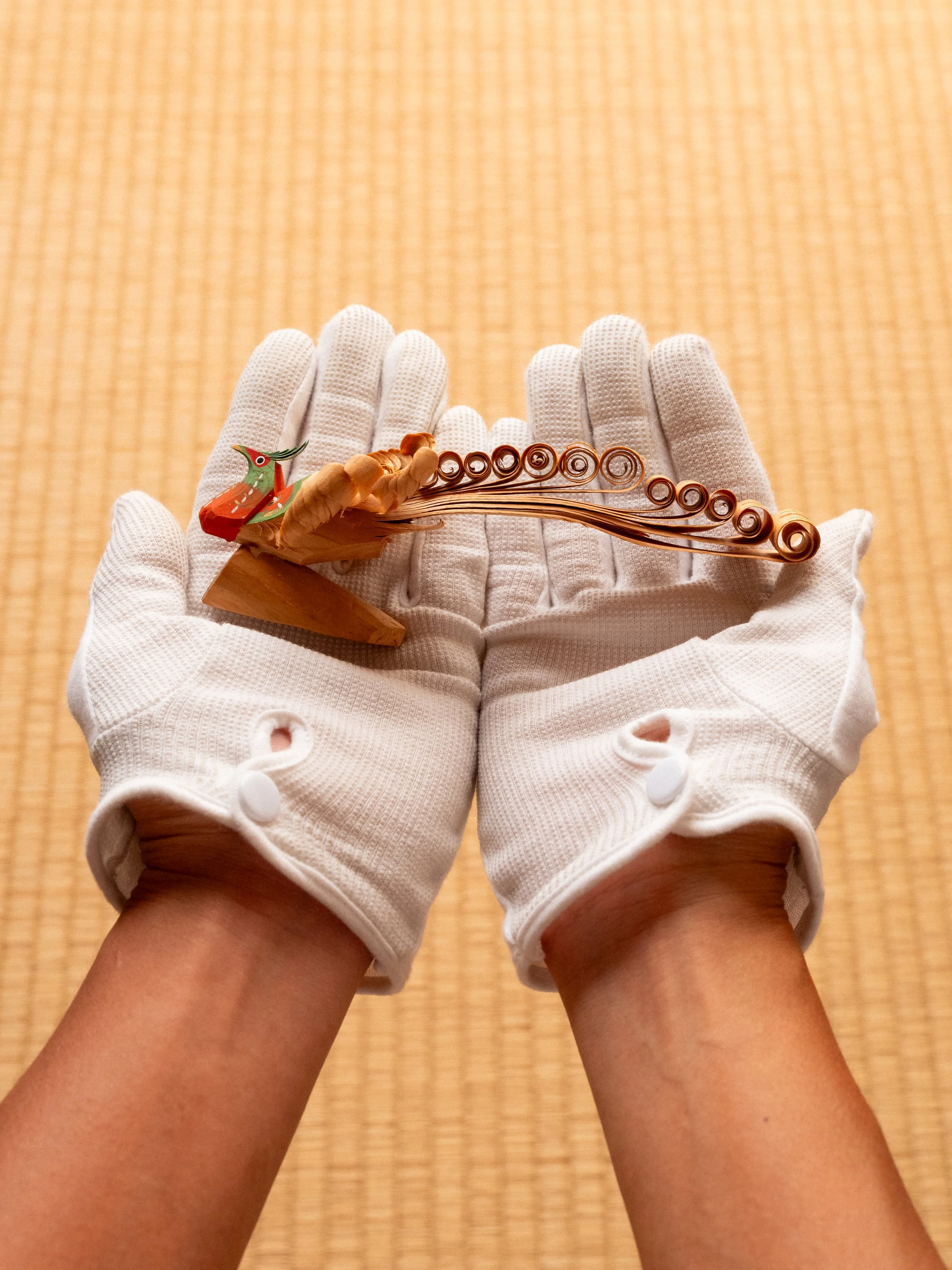 Image 9 of 9