【 The Concept 】
A small, fierce ceramic tengu mask in brilliant vermilion red, made in the tradition of Saga-men, the folk masks of the Saga district of Kyoto. The brows knot hard above the nose, swept upward in strokes of white paint, and beneath them two gold eyes glare out, each pierced through at the pupil. The nose rises boldly from the face, standing out a full two centimetres, its nostrils pierced, and a white moustache curls down to a mouth clamped shut in a deep, stubborn frown. A band of black at the top marks the hairline. The surface is glossy and smooth, almost like lacquered porcelain, and the dark shading in the creases of the brow and around the mouth makes the face seem even angrier. It is only nine centimetres tall, small enough to hold in the palm of your hand, yet it has the full force of the mountain spirit it portrays.
【 The Tengu of the Mountains 】
In Japanese belief, the tengu is a powerful spirit of the mountains, often shown with a red face, a high nose and a fierce glare. Feared and respected at once, the tengu was thought to punish the proud and to guard the sacred peaks, and in many places it was honoured as a protector.
The most famous tengu of all lived on Mount Kurama, north of Kyoto. In the Noh play Kurama Tengu, the Great Tengu of the mountain meets a lonely boy, Ushiwakamaru, the orphaned son of the Minamoto clan, under the spring cherry blossoms. Taking pity on him, the tengu trains him in the secrets of warfare, and before flying away over the mountain promises to stand by him in the coming battle against the Heike. The boy grew up to become Minamoto no Yoshitsune, the greatest warrior hero of Japanese legend. In Noh, the tengu is played in a great mask with a firmly clenched mouth and gold eyes that seem to pop out of the face, the ōbeshimi, the same fierce expression seen on this small mask.
【 The Silent Plays of Saga 】
Saga-men grew out of the Saga Dainenbutsu Kyōgen, the masked plays performed at Seiryōji, the temple also known as Saga Shakadō, on the western edge of Kyoto. They are said to have been started in the late Kamakura period by the monk Enkaku to spread the teaching of the nembutsu, the calling of the Buddha’s name. The plays are performed entirely without words: every actor wears a mask fixed to his role, and the story is told only through movement and gesture. Masks made in 1529 are still kept at the temple, and the Saga plays are counted, together with those of Mibu and Senbon, among the three great nembutsu kyōgen of Kyoto.
【 From Stage Mask to House Guardian 】
In the Edo period, people began to make small masks modelled on those of the Saga plays and take them home from the temple district. These were the first Saga-men. Each type came to carry its own blessing: the red and blue oni (ogres) protect against evil, the gentle faces such as Otafuku bring happiness and good fortune, and the tengu is the guardian against fire. The tradition died out in the early Shōwa period, and was later revived by a family of craftsmen in Saga, who still make the masks today, traditionally pressing layers of strong old Japanese paper over a clay mould. This small tengu is a ceramic version of the same Saga mask, harder and more durable than paper.
In Kyoto homes, fierce masks of oni and tengu have long been hung on the wall to guard the house. One family remembers that when a child knocked down and cracked the mask in the guest room, the mother scolded: these masks protect our home, and if you damage them, they will be very angry. After that, the child was afraid to go into the room at night.
【 What Owning This Piece Brings 】
・ Protection against fire. Among the Saga masks, the tengu is the one entrusted with keeping the house safe from fire.
・ Protection for the home. A fierce mask hung by the door or in the living room has long been a charm to keep evil away.
・ Courage and strength. The tengu who trained the young Yoshitsune is a symbol of discipline and fearless spirit.
・ A piece of Kyoto. A souvenir of the old temple district of Saga, with its silent plays and centuries of folk belief.
A delightful gift for a lover of Japanese folk art, Noh and theatre, martial arts, or Kyoto, or for a new home.
【 Where to Place It 】
Hang it on a wall by the entrance, in the living room or near the kitchen using its cord, or lean it on a small stand on a shelf. It also looks lovely displayed with its wooden box. Keep it out of strong direct sunlight to protect the colours.
【 Care 】
Dust lightly with a soft, dry brush. Do not wash it or wipe it with a damp cloth. Keep it away from humidity and direct sunlight, and store it in its wooden box when not on display. Handle by the edges and avoid knocking the nose or the rim, which can chip.
【 Reading the Object 】
A miniature tengu mask with a fierce red face. Black band along the top for the hairline; deep creases in the forehead and between the brows, shaded in dark brown; white upswept eyebrows painted in loose strokes; gold eye panels, pierced through at the pupils; a prominent nose projecting about 2 cm from the face, with pierced nostrils; a white moustache; a firmly closed, down-turned mouth. Only the eyes and nostrils are pierced. Glossy vermilion surface. The back is painted orange-red over the ceramic body, with the shaping marks of the hand still visible. A cream-coloured braided cord passes through holes at each side for hanging. Comes in a small wooden box with a sliding lid and a paper label inscribed in ink “Saga-men” with the maker’s name.
【 Presence 】
Small, fiery and fearless. A Kyoto mountain spirit that fits in the palm of your hand.
Archive Note: The number in the name (1529) marks the date of the oldest masks preserved at Seiryōji (Saga Shakadō), home of the Saga Dainenbutsu Kyōgen. NOT the date this piece was made.
Provenance Note: Sourced from a private household in Japan. A miniature Saga-men tengu mask from Kyoto, in its original wooden box with a label inscribed with the maker’s name.


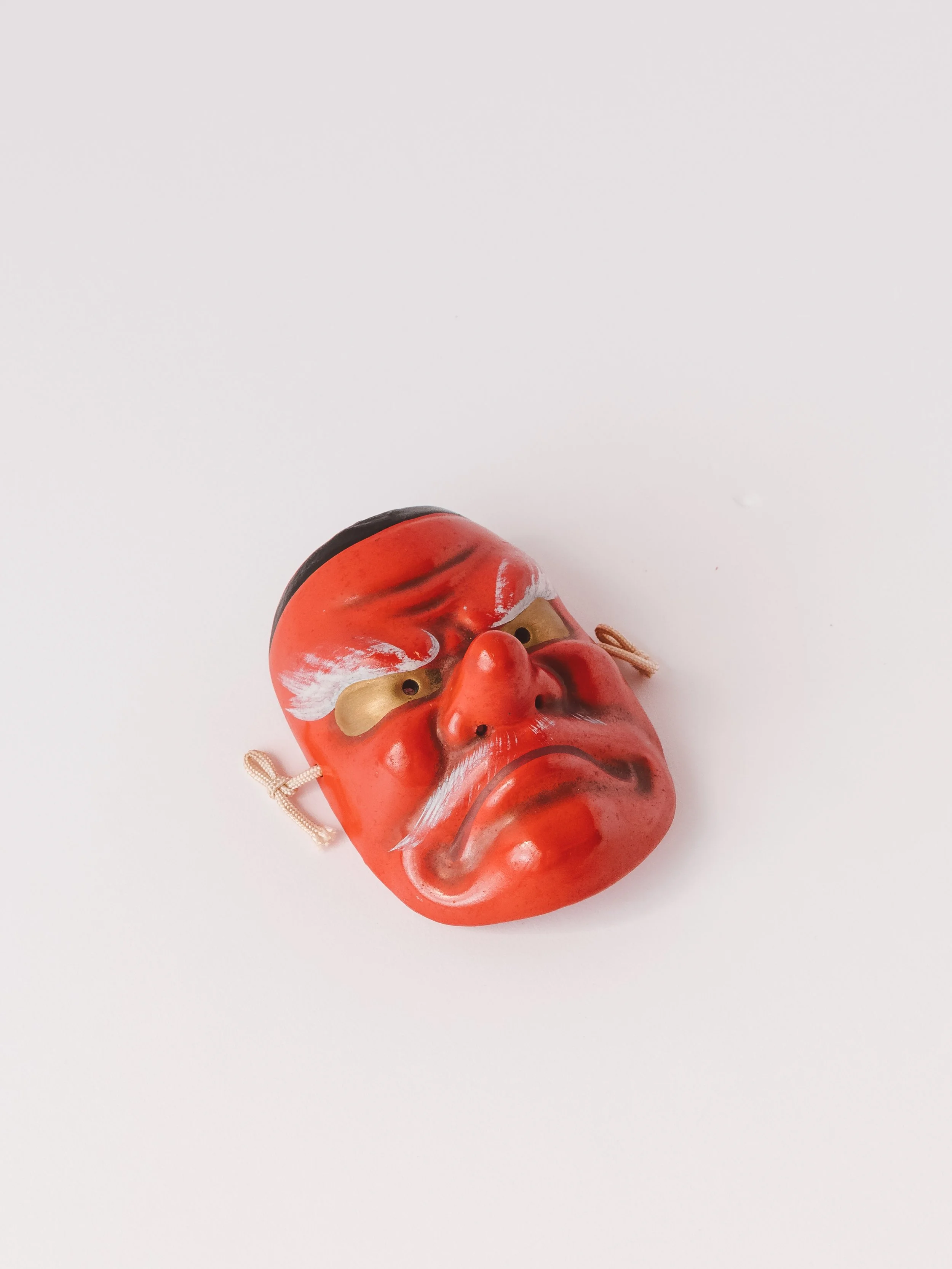 Image 1 of 6
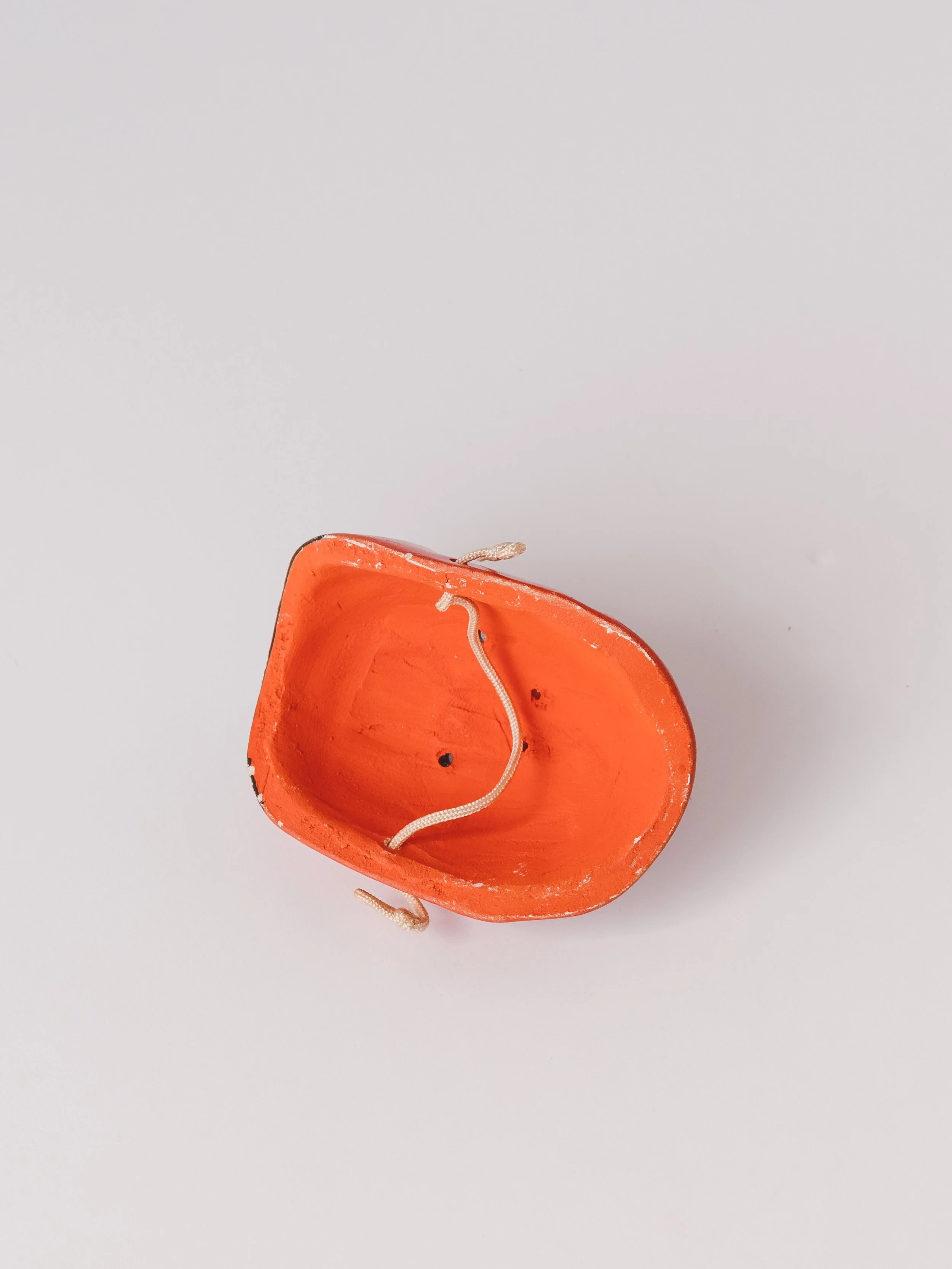 Image 2 of 6
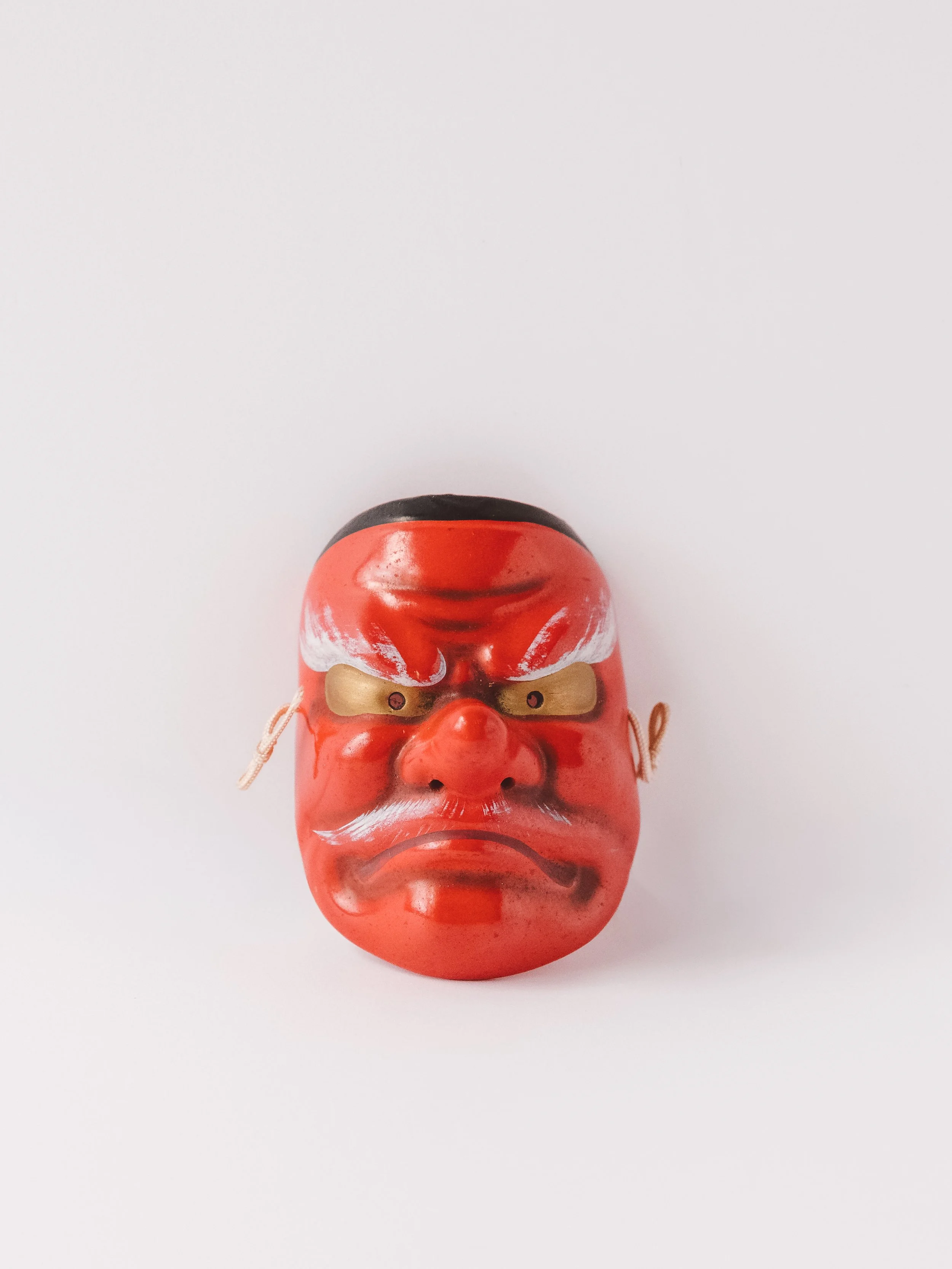 Image 3 of 6
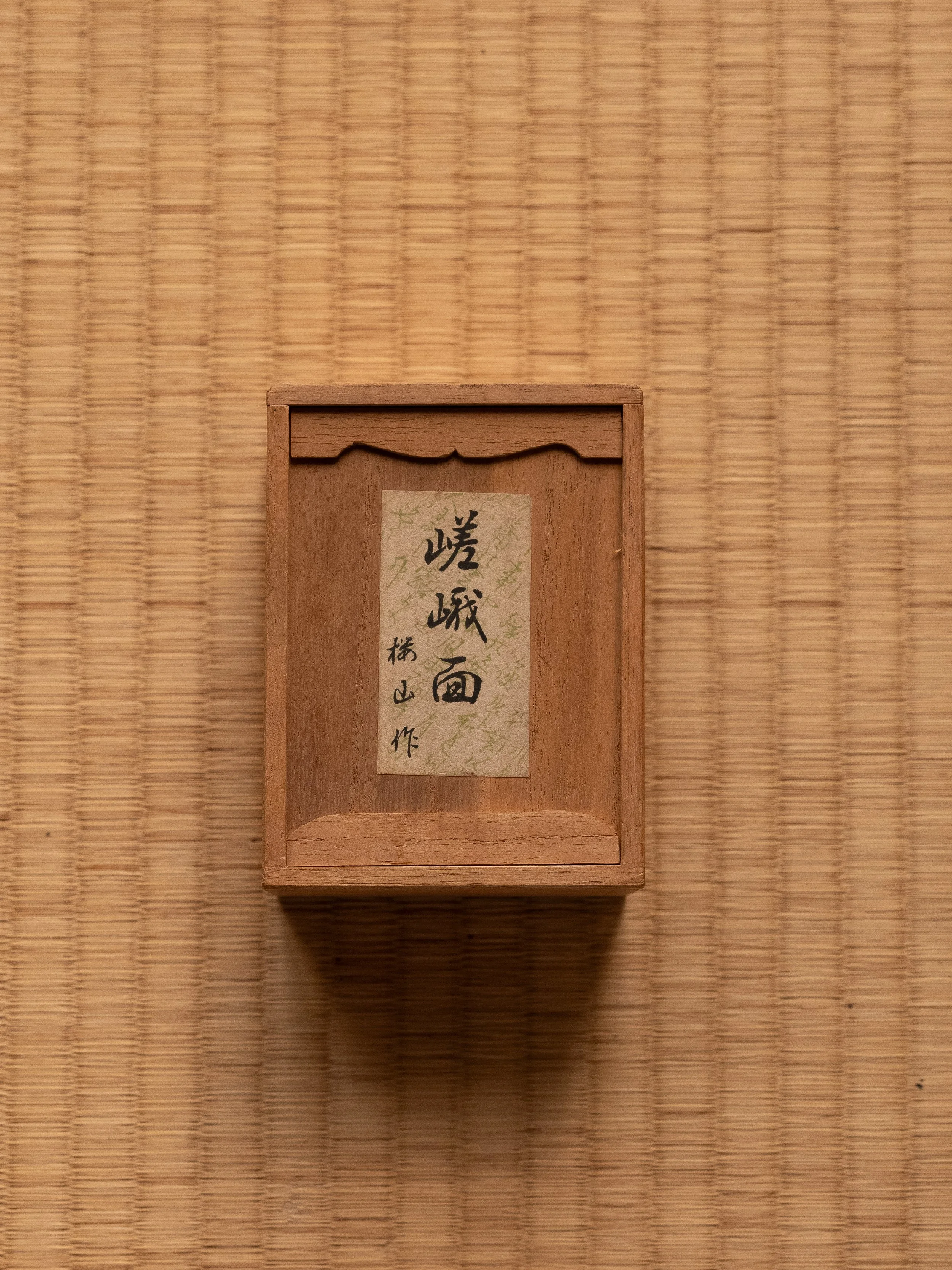 Image 4 of 6
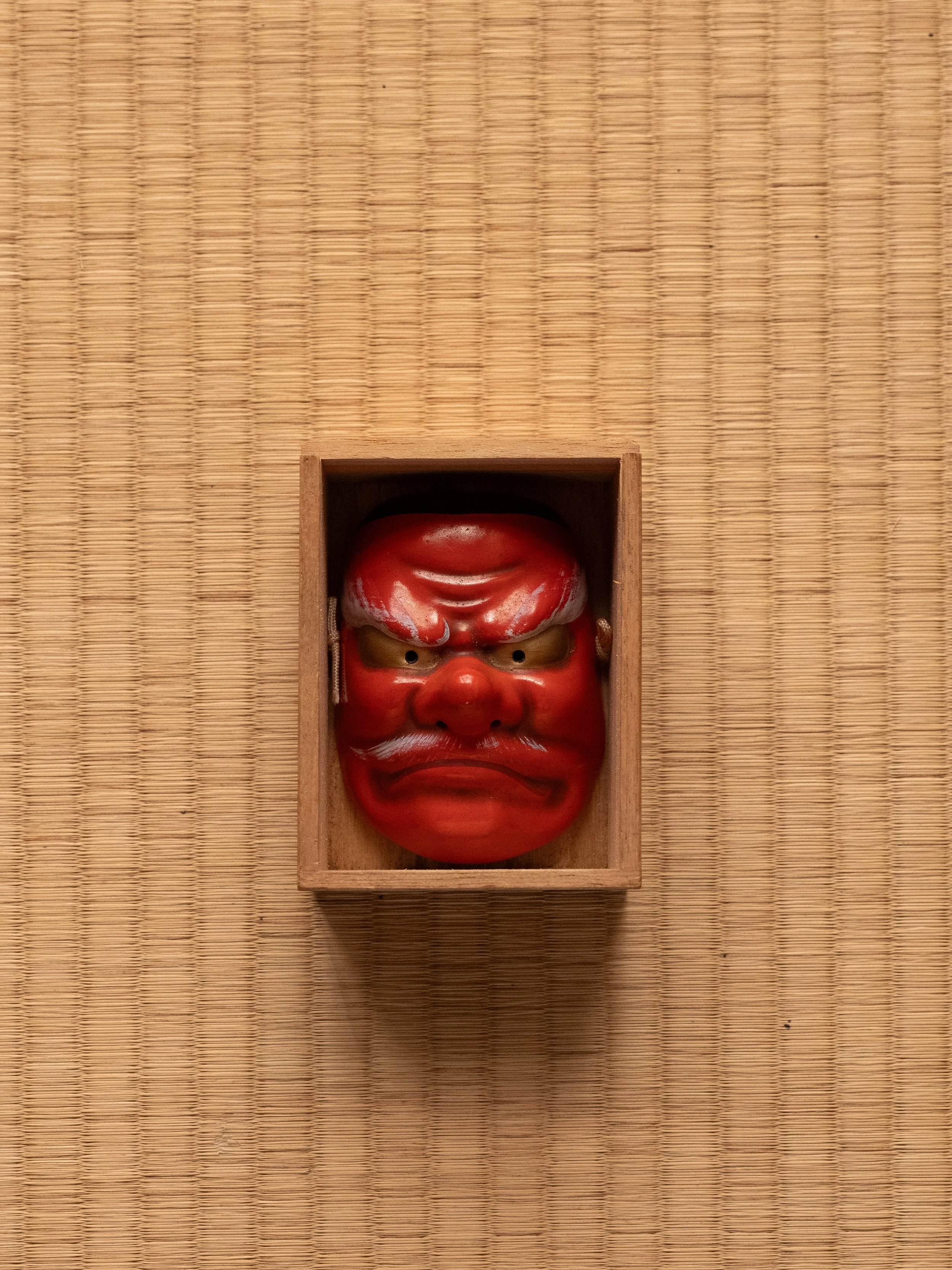 Image 5 of 6
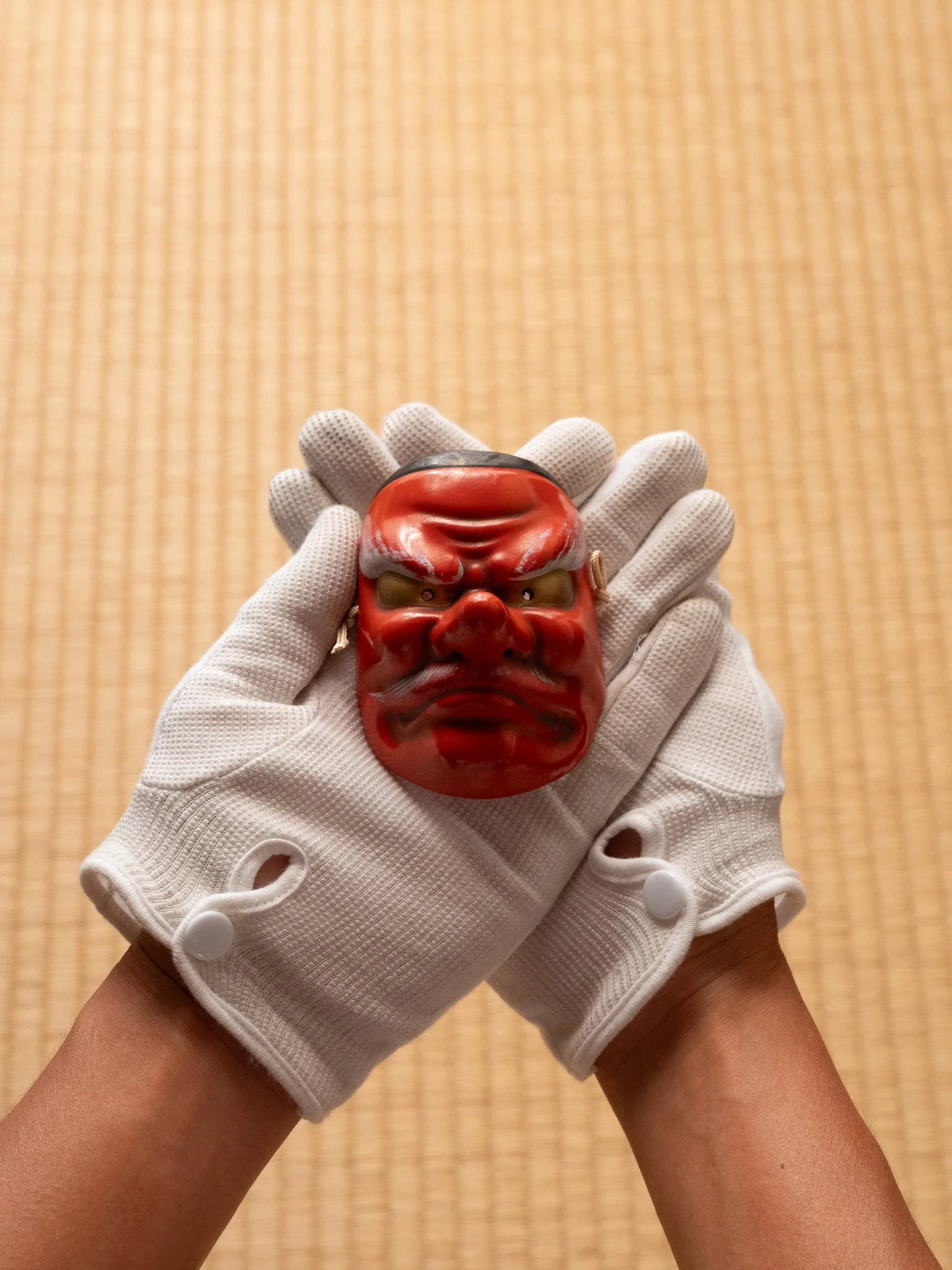 Image 6 of 6