SACRED HORSE 1990

$255.00

【 The Concept 】

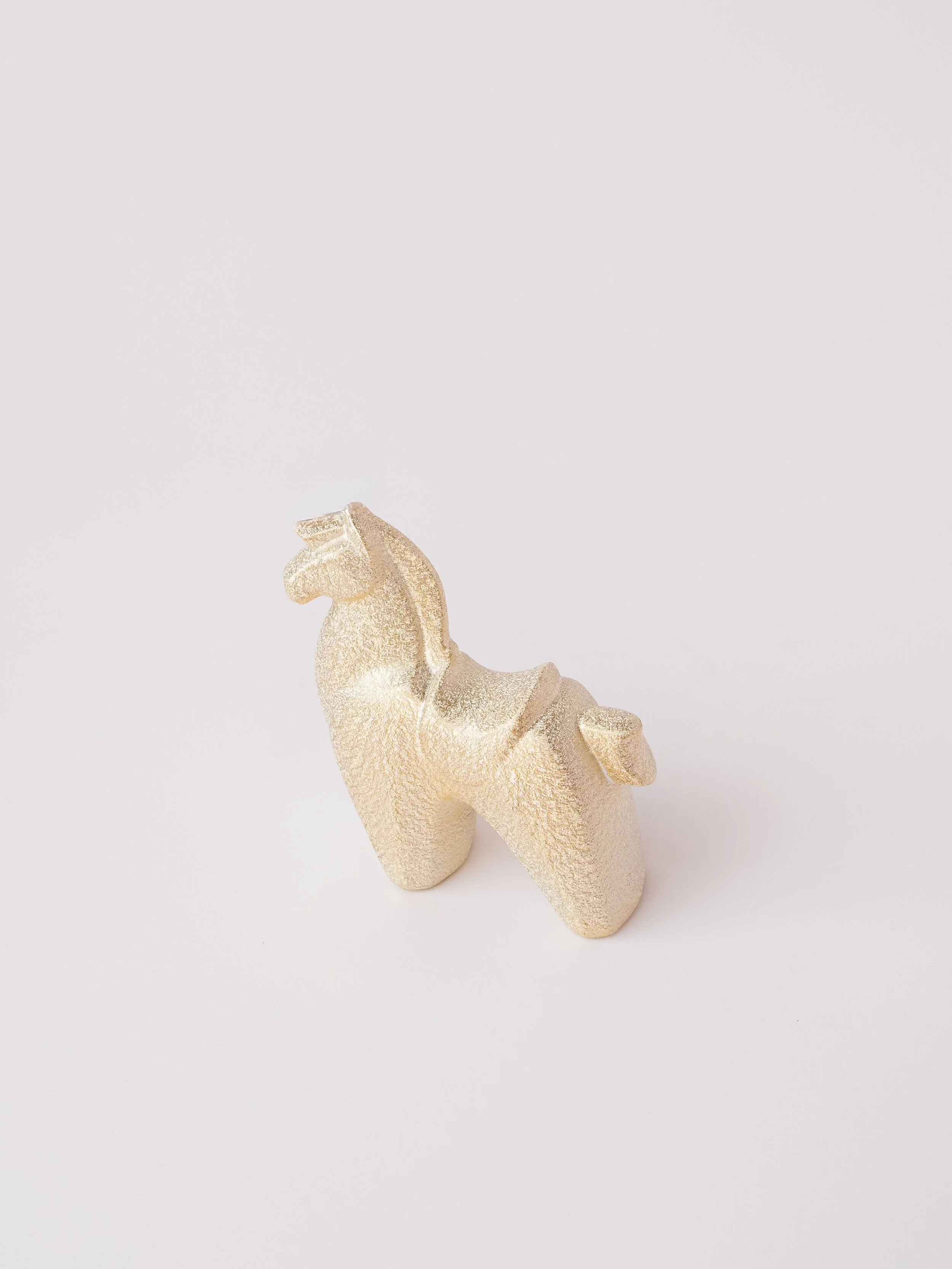
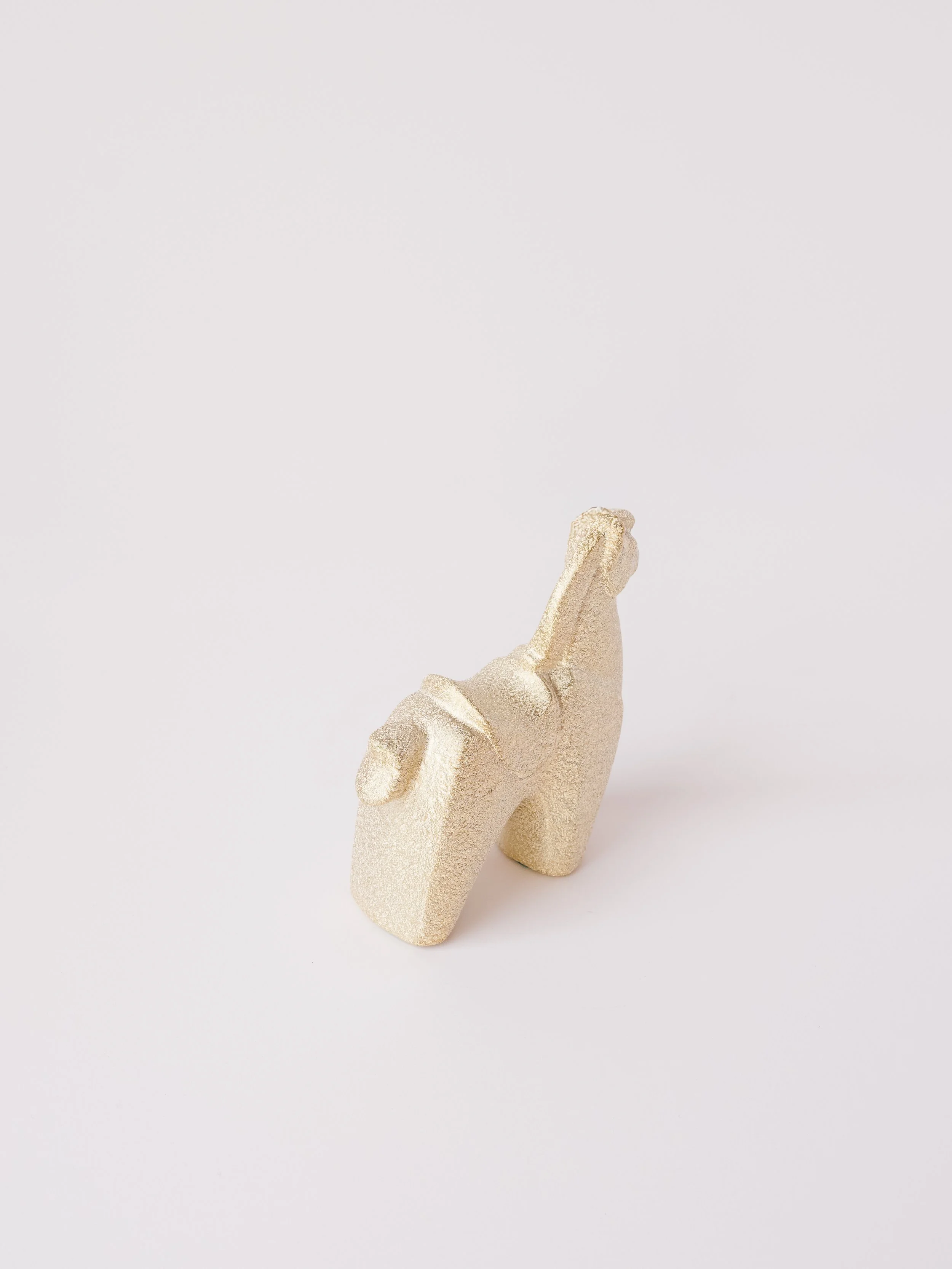
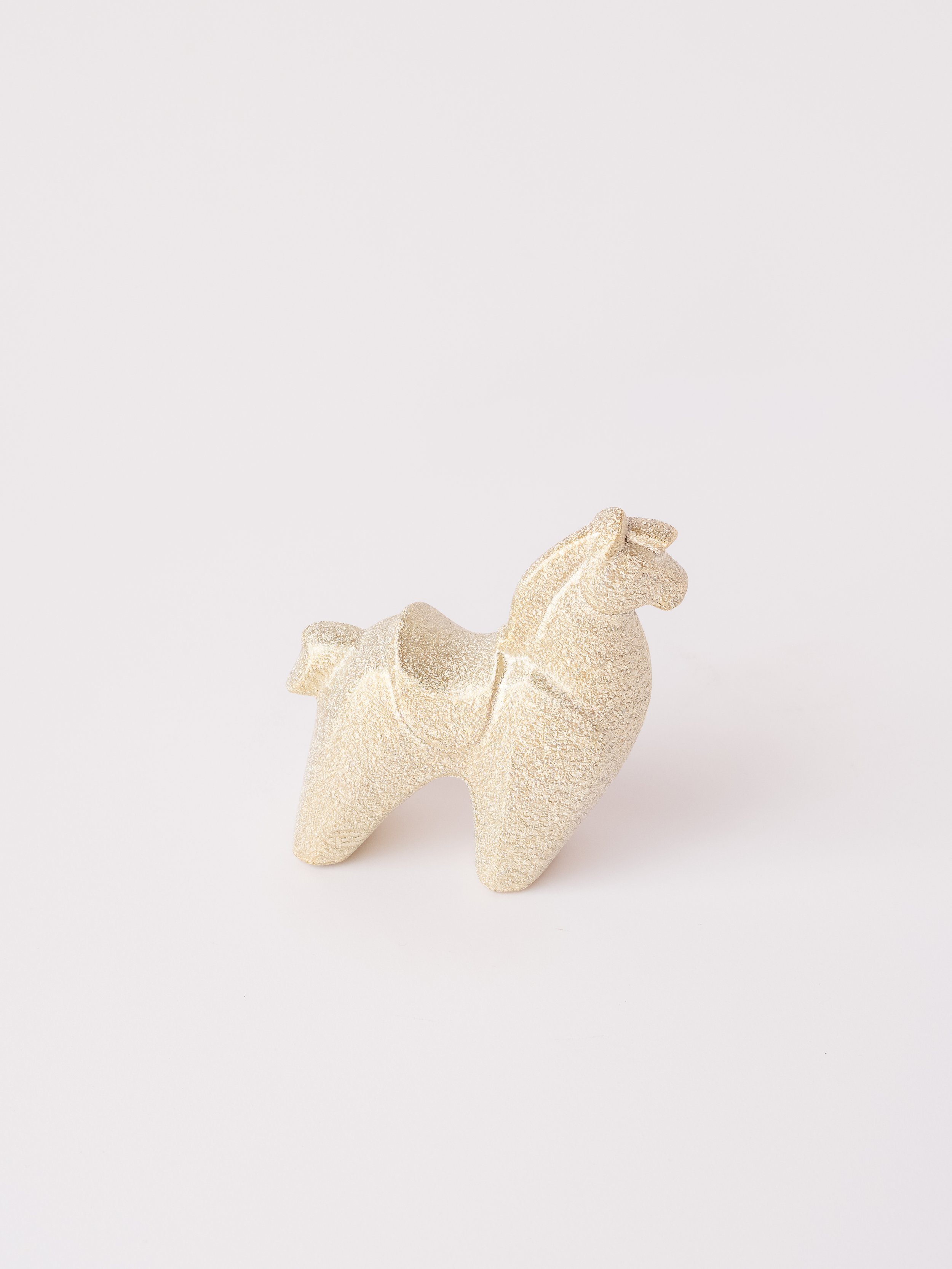
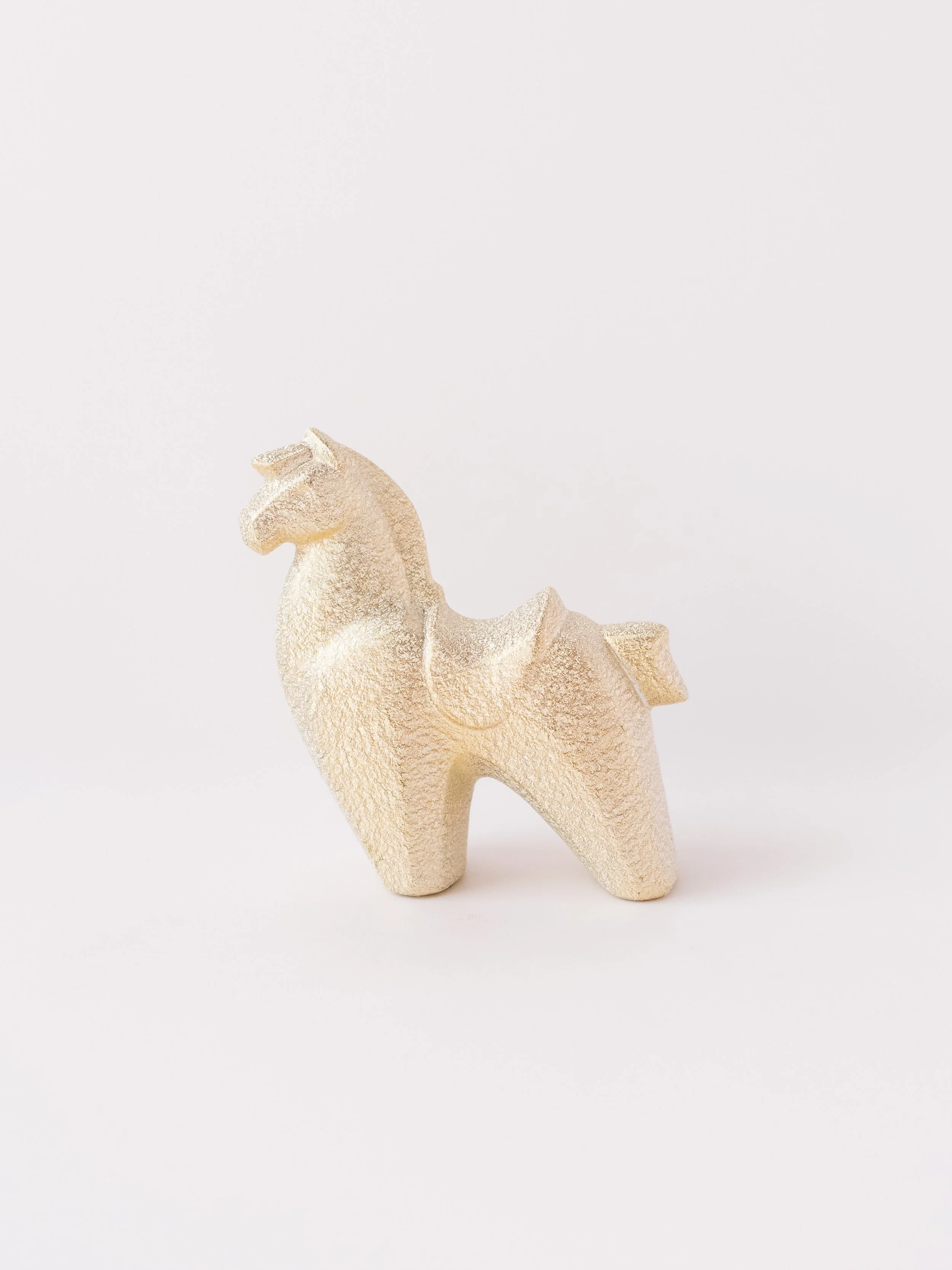
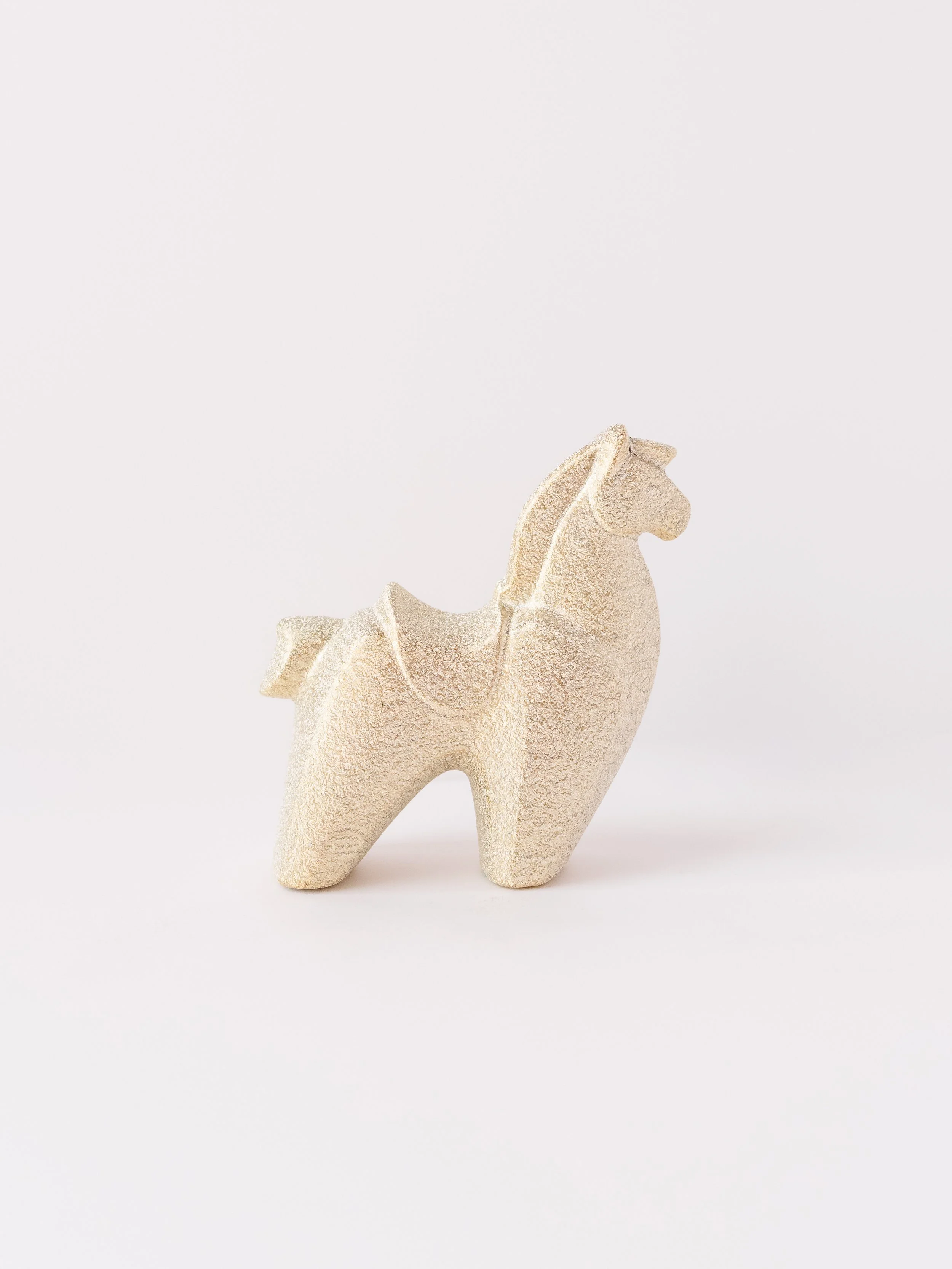
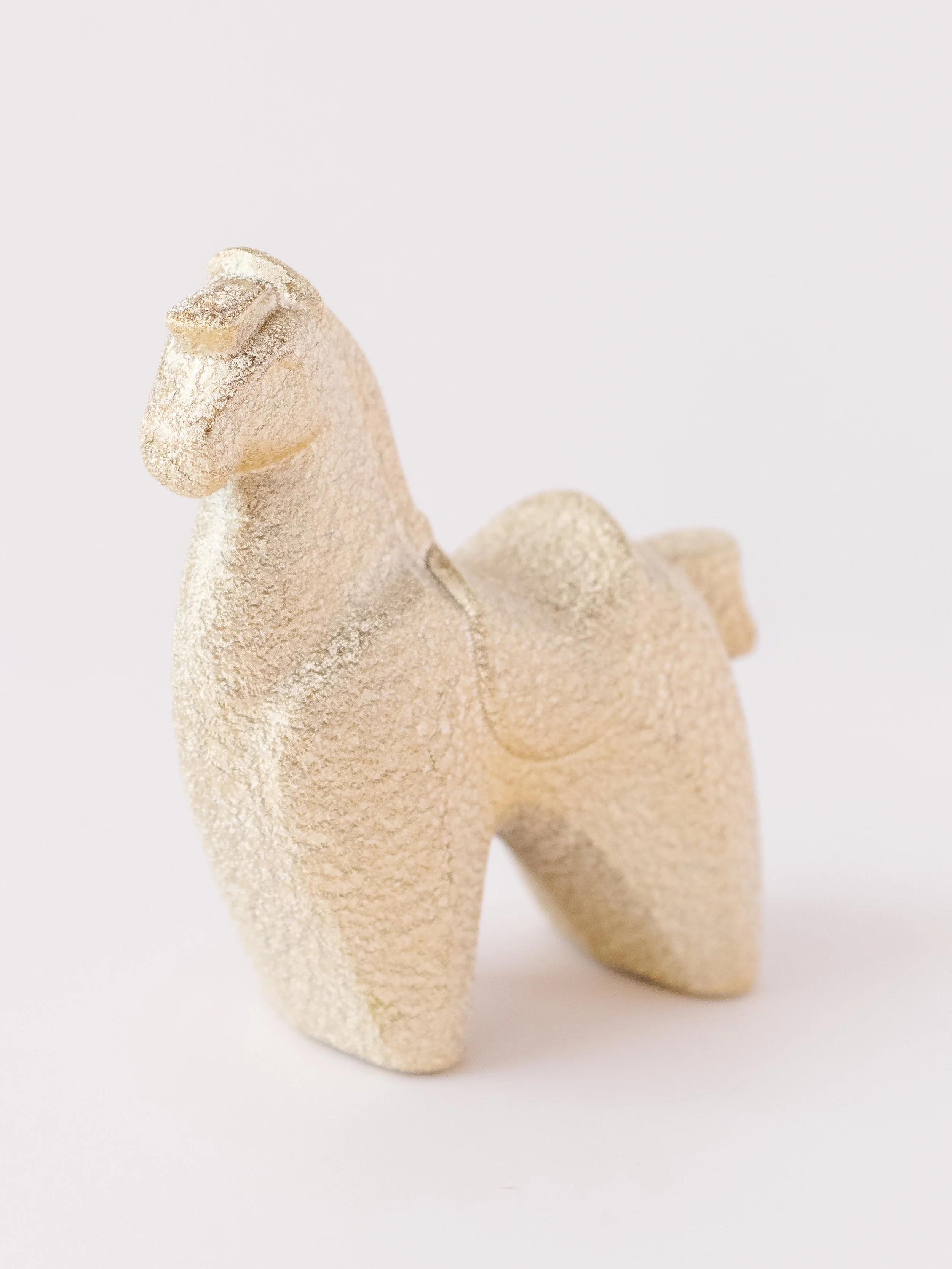
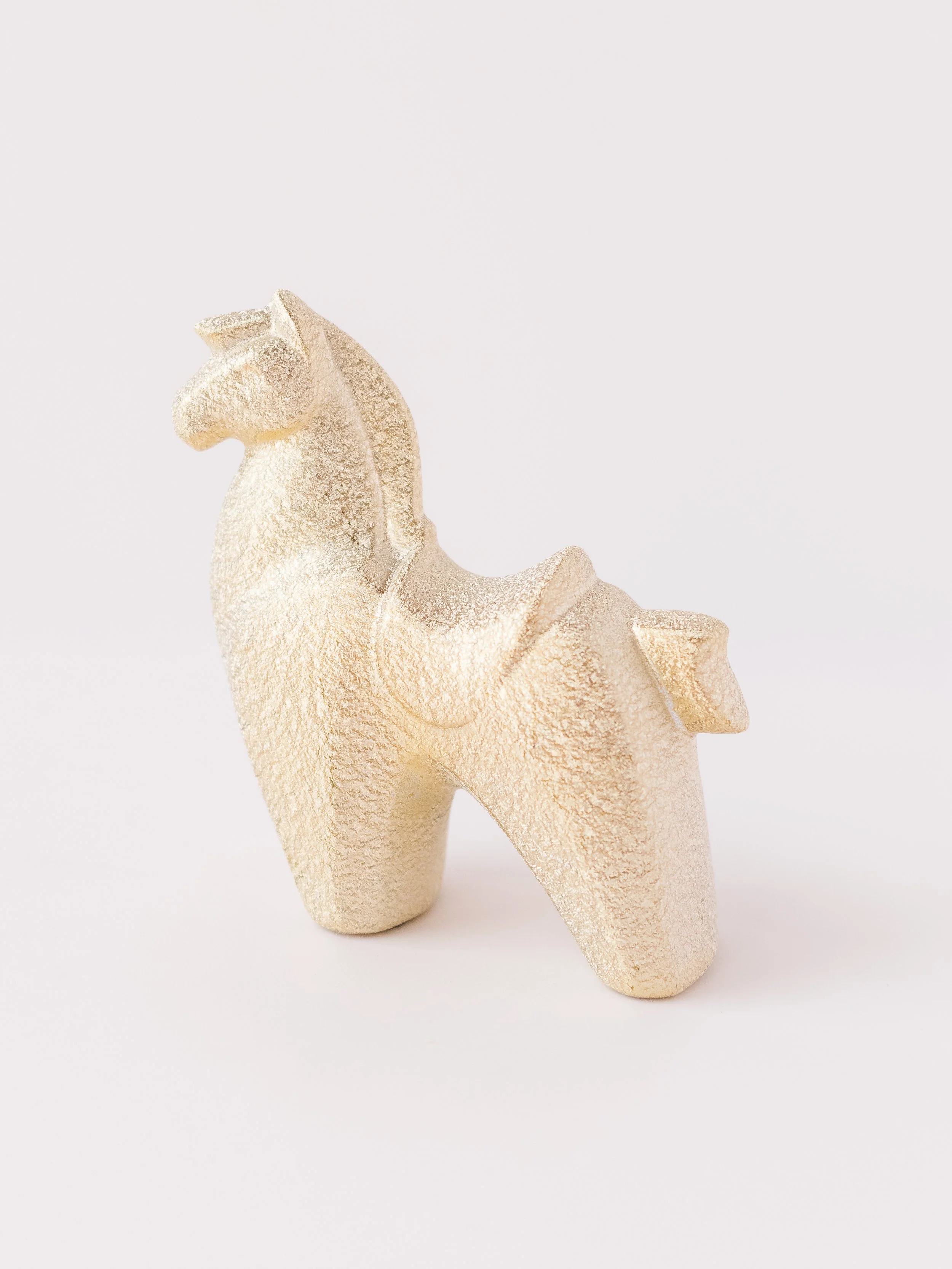
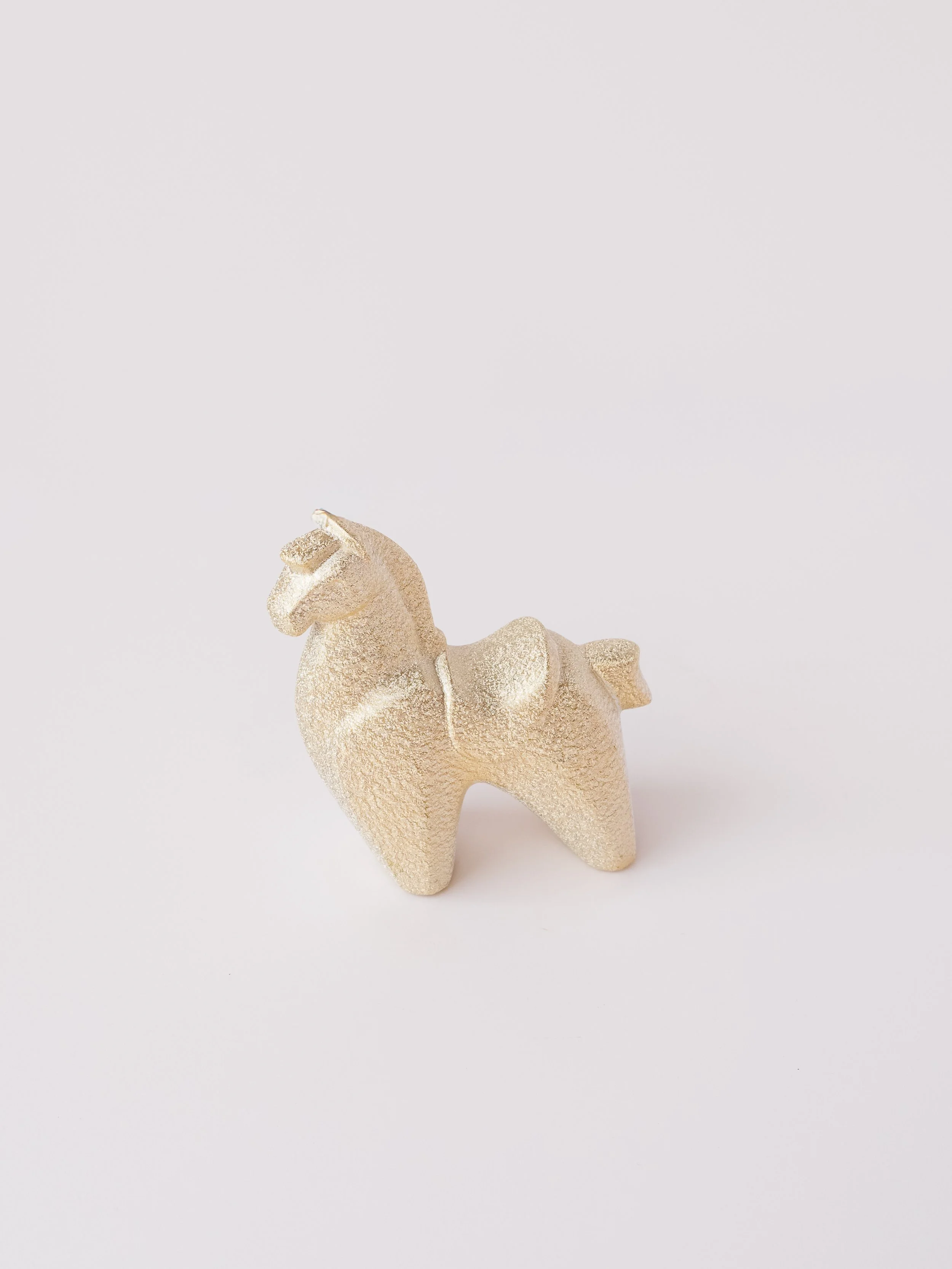
A zodiac horse pared down to its essentials — a small standing figure in matte champagne gold, its body reduced to a few broad planes and its legs to two thick, tapering columns joined by a single clean arch. There is no attempt at anatomy: the muzzle is a squared block, the eyes and mouth are left uncarved, the mane is a single raised ridge, and the tail is a short, blunt wedge. What remains is stance and mass — a horse understood as a stable, four-square presence rather than a running animal.

The surface completes the effect. The gold is not a mirror but a fine, sandy matte — a granular skin that scatters light into a soft, even glow rather than a hard shine — so the figure reads as warm and quiet under lamplight rather than flashy. It is the kind of small object that anchors a shelf or an entry without ever demanding the eye.

【 The Function 】

A zodiac figure (干支置物 / eto okimono) for the Year of the Horse — the sort of auspicious ornament kept out year-round or brought forward at the New Year. Small and self-standing, it suits a shelf, an entry, a desk, or a tokonoma alcove.

【 The Texture 】

A fine, granular matte-gold surface, closer to fine sand than to metal, that diffuses light and lends the small mass a soft, lamp-lit warmth. Smooth planes meet at clean ridges, and the finish is even across the whole piece.

【 Presence 】

Small but grounded. The low, planted stance and the broad body give it a surprising sense of weight and stillness — a calm, four-square figure that settles a space rather than energising it.

Provenance Note: Sourced from a private collection in Japan.

【 The Concept 】

A zodiac horse pared down to its essentials — a small standing figure in matte champagne gold, its body reduced to a few broad planes and its legs to two thick, tapering columns joined by a single clean arch. There is no attempt at anatomy: the muzzle is a squared block, the eyes and mouth are left uncarved, the mane is a single raised ridge, and the tail is a short, blunt wedge. What remains is stance and mass — a horse understood as a stable, four-square presence rather than a running animal.

The surface completes the effect. The gold is not a mirror but a fine, sandy matte — a granular skin that scatters light into a soft, even glow rather than a hard shine — so the figure reads as warm and quiet under lamplight rather than flashy. It is the kind of small object that anchors a shelf or an entry without ever demanding the eye.

【 The Function 】

A zodiac figure (干支置物 / eto okimono) for the Year of the Horse — the sort of auspicious ornament kept out year-round or brought forward at the New Year. Small and self-standing, it suits a shelf, an entry, a desk, or a tokonoma alcove.

【 The Texture 】

A fine, granular matte-gold surface, closer to fine sand than to metal, that diffuses light and lends the small mass a soft, lamp-lit warmth. Smooth planes meet at clean ridges, and the finish is even across the whole piece.

【 Presence 】

Small but grounded. The low, planted stance and the broad body give it a surprising sense of weight and stillness — a calm, four-square figure that settles a space rather than energising it.

Provenance Note: Sourced from a private collection in Japan.

【Context】

  • Identity: A ceramic figure of a horse, one of the twelve zodiac animals (十二支), rendered in a minimalist, abstracted style. In Japan the horse carries a long sacred charge as the shinme (神馬), the mount of the gods; because dedicating a living horse at a shrine was costly, the custom gave rise in time to the painted ema (絵馬) votive tablet, still offered today.
  • Origin: Japanese.
  • Technique: Slip-cast ceramic — the method suited to the smooth, symmetrical, hollow forms of small figurines — finished in a granular matte gold. Its heavy, self-supporting legs and blank, planar face recall the horse haniwa (埴輪) of the Kofun period, where clay was abstracted as much for stability as for likeness.
  • Material: Glazed ceramic with a matte metallic-gold finish. Gold is read across East Asia as the colour of prosperity and wealth.
  • Motif: The horse is an emblem of vigour, forward motion, and success. Two pieces of Japanese wordplay attach to it: hidari-uma (左馬), the character for horse written in mirror image — read as mau, "to dance," a sign of celebration, and taken to "draw customers in" — and uma-ku-iku (馬九行久), a play on "all goes well."
  • Function: A New Year and year-round auspicious ornament. In feng shui a gold horse is placed for success and wealth, often set to face an entrance so as to draw in opportunity.
  • Construction: A single hollow ceramic form, self-standing on four columnar legs.

【 Dimensions (Approx.) 】

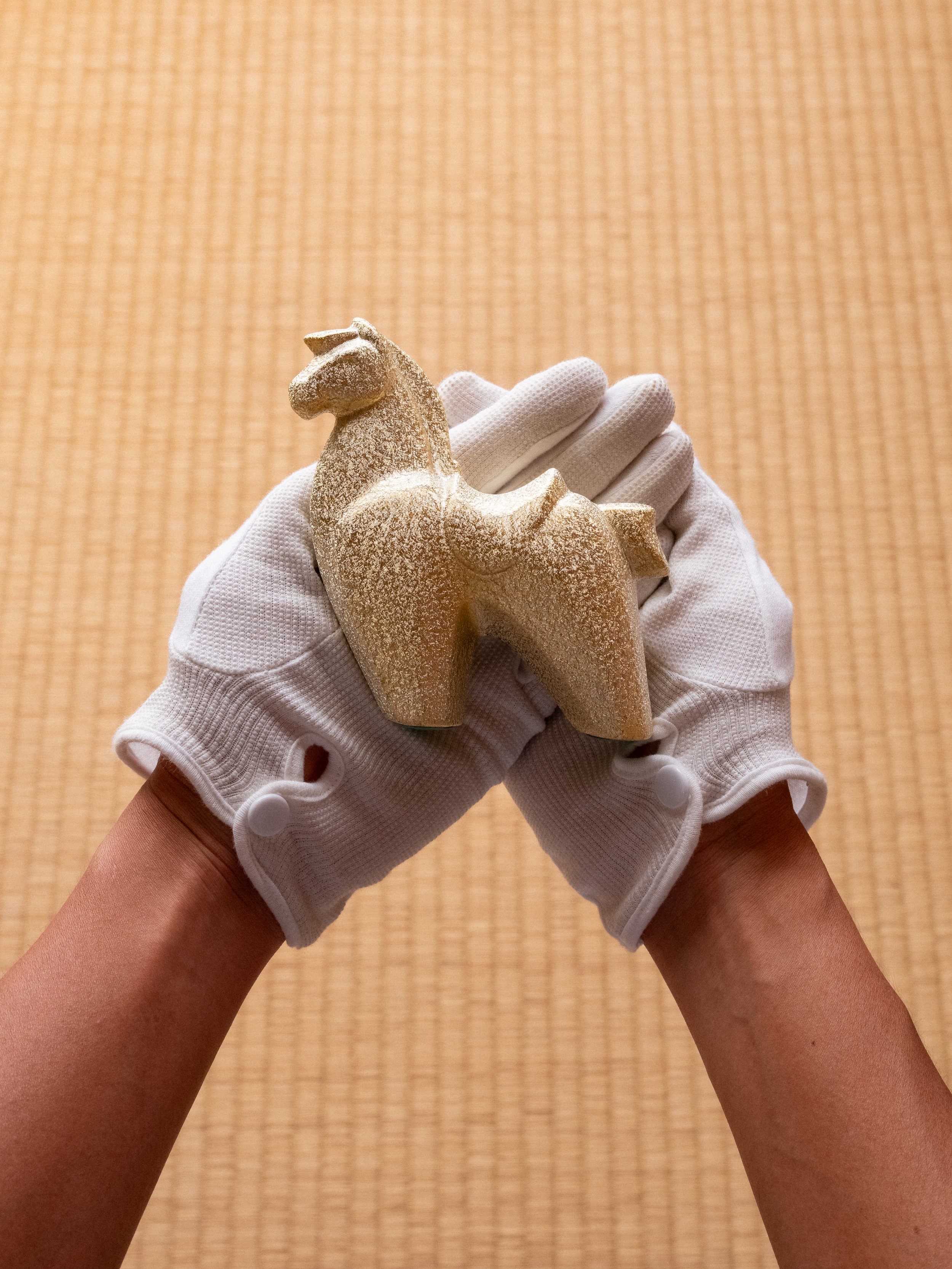
  • Length: 11 cm (4.3 in)
  • Width: 4 cm (1.6 in)
  • Height: 12 cm (4.7 in)
  • Weight: 0.129 kg (0.28 lb)