【 The Concept 】
A dragon reduced to a single rising S-curve. The coil of the tail forms a rounded, low base; from it the body sweeps up in one smooth, tapering line to a lifted head with an open mouth, upturned snout, and swept-back horns. A serrated mane runs down the back of the neck — the one sharp, ridged passage in an object otherwise built entirely from soft curves. It is the nobori-ryū, the ascending dragon, abstracted into a piece of modern sculpture: all upward motion, held still.
The glaze carries the drama. The rounded base is a deep, earthen red-brown, flecked and speckled where the iron in the clay has burned through; from there the colour climbs and shifts — through a rust band — into a smooth olive-gold that covers the neck and head, with cooler blue-white pooling in the hollows of the face. Across the pale upper glaze runs a fine web of crackle (貫入 / kannū), the natural crazing of glaze over stoneware. The effect reads as a dragon climbing out of the red earth and into the open air.
【 The Function 】
A substantial decorative and auspicious object (縁起物 / engimono) — an ascending dragon for a shelf, a cabinet, an entrance console, or a tokonoma alcove. At twenty-three centimetres tall it has genuine vertical presence, low and stable on its rounded base.
【 The Texture 】
Smooth, glassy glaze over stoneware. The upper body is olive-gold and glossy, veined with fine crackle; the base drops to a drier, speckled red-brown where iron has spotted the surface. Ridged and tooled along the mane, smooth and flowing everywhere else.
【 Presence 】
Calm and upward. The piece has none of the snarling menace usually given to dragons — the curve is serene, almost swan-like, and the earth-to-air colour shift gives it a quiet sense of ascent. A modern object that still carries the old charge of the dragon.
Provenance Note: Sourced from a private collection in Japan.
Condition Note: A vintage piece sold as acquired. The lowest point of the mane has an old chip that had already been repaired with adhesive before it came to us; the repair is stable but is somewhat visible on close inspection. Fine glaze crackle (kannū) throughout is an inherent feature of the glaze, not damage. Please see the photographs as part of the description.
【 The Concept 】
A dragon reduced to a single rising S-curve. The coil of the tail forms a rounded, low base; from it the body sweeps up in one smooth, tapering line to a lifted head with an open mouth, upturned snout, and swept-back horns. A serrated mane runs down the back of the neck — the one sharp, ridged passage in an object otherwise built entirely from soft curves. It is the nobori-ryū, the ascending dragon, abstracted into a piece of modern sculpture: all upward motion, held still.
The glaze carries the drama. The rounded base is a deep, earthen red-brown, flecked and speckled where the iron in the clay has burned through; from there the colour climbs and shifts — through a rust band — into a smooth olive-gold that covers the neck and head, with cooler blue-white pooling in the hollows of the face. Across the pale upper glaze runs a fine web of crackle (貫入 / kannū), the natural crazing of glaze over stoneware. The effect reads as a dragon climbing out of the red earth and into the open air.
【 The Function 】
A substantial decorative and auspicious object (縁起物 / engimono) — an ascending dragon for a shelf, a cabinet, an entrance console, or a tokonoma alcove. At twenty-three centimetres tall it has genuine vertical presence, low and stable on its rounded base.
【 The Texture 】
Smooth, glassy glaze over stoneware. The upper body is olive-gold and glossy, veined with fine crackle; the base drops to a drier, speckled red-brown where iron has spotted the surface. Ridged and tooled along the mane, smooth and flowing everywhere else.
【 Presence 】
Calm and upward. The piece has none of the snarling menace usually given to dragons — the curve is serene, almost swan-like, and the earth-to-air colour shift gives it a quiet sense of ascent. A modern object that still carries the old charge of the dragon.
Provenance Note: Sourced from a private collection in Japan.
Condition Note: A vintage piece sold as acquired. The lowest point of the mane has an old chip that had already been repaired with adhesive before it came to us; the repair is stable but is somewhat visible on close inspection. Fine glaze crackle (kannū) throughout is an inherent feature of the glaze, not damage. Please see the photographs as part of the description.


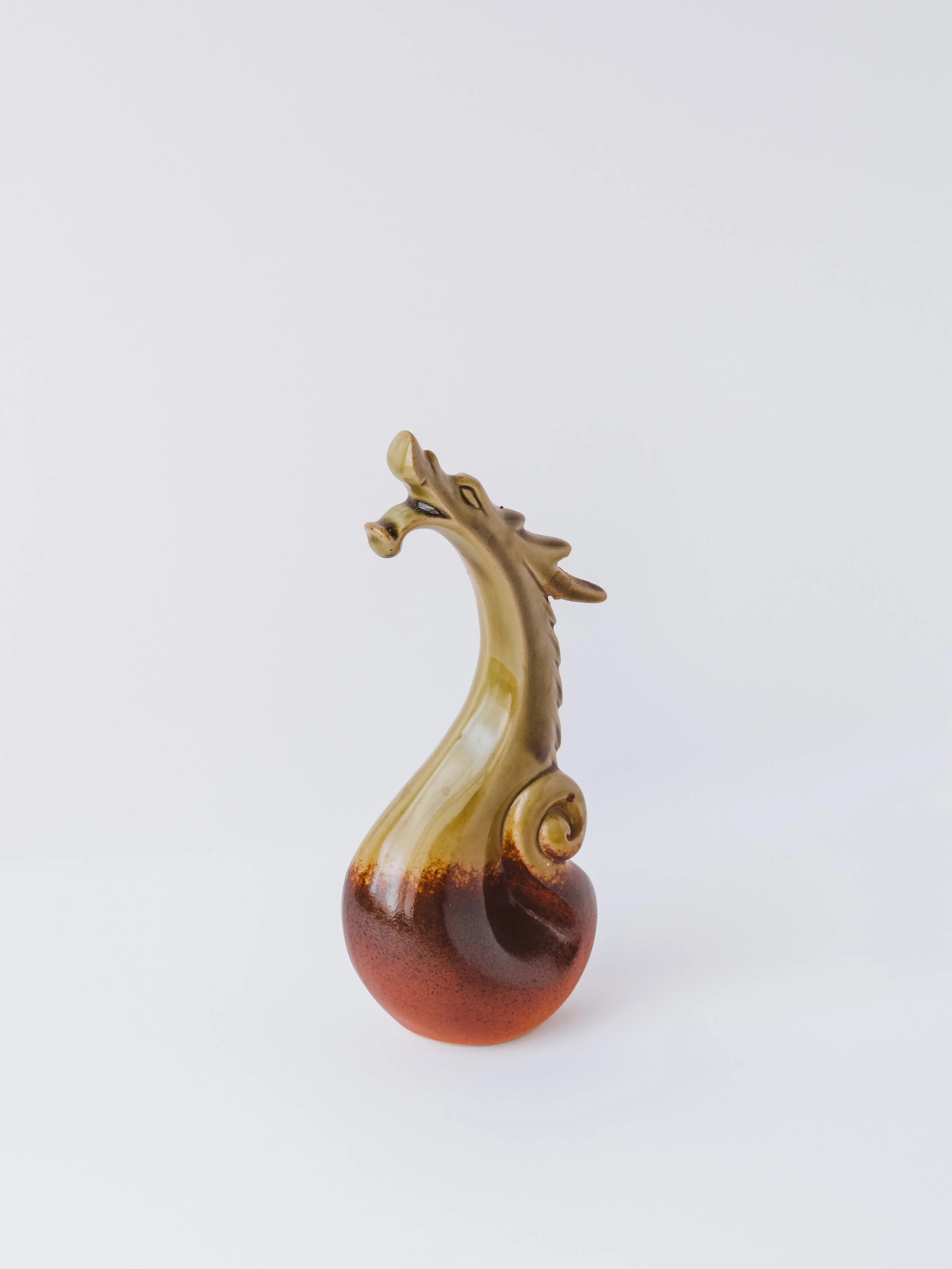 Image 1 of 12
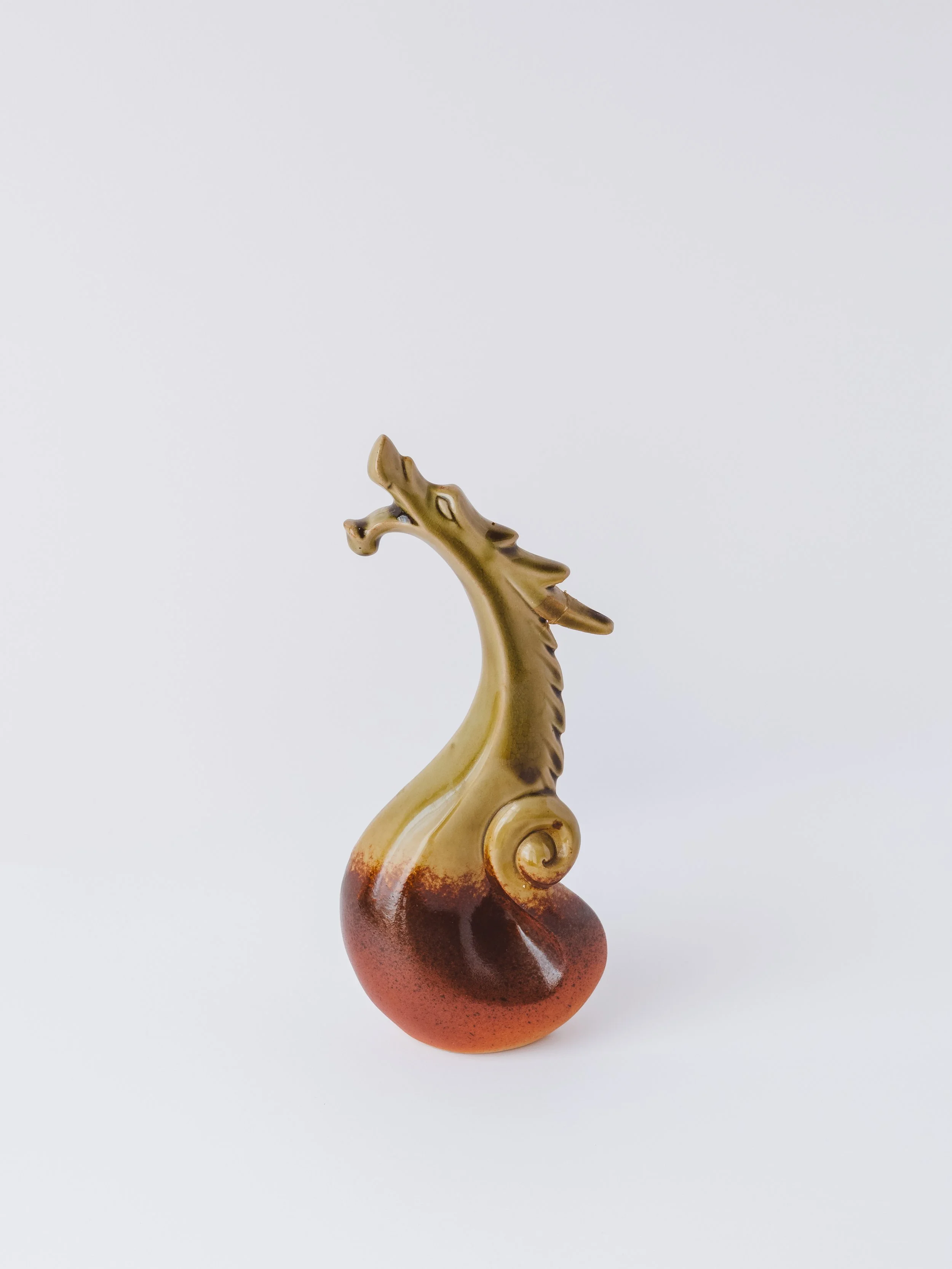 Image 2 of 12
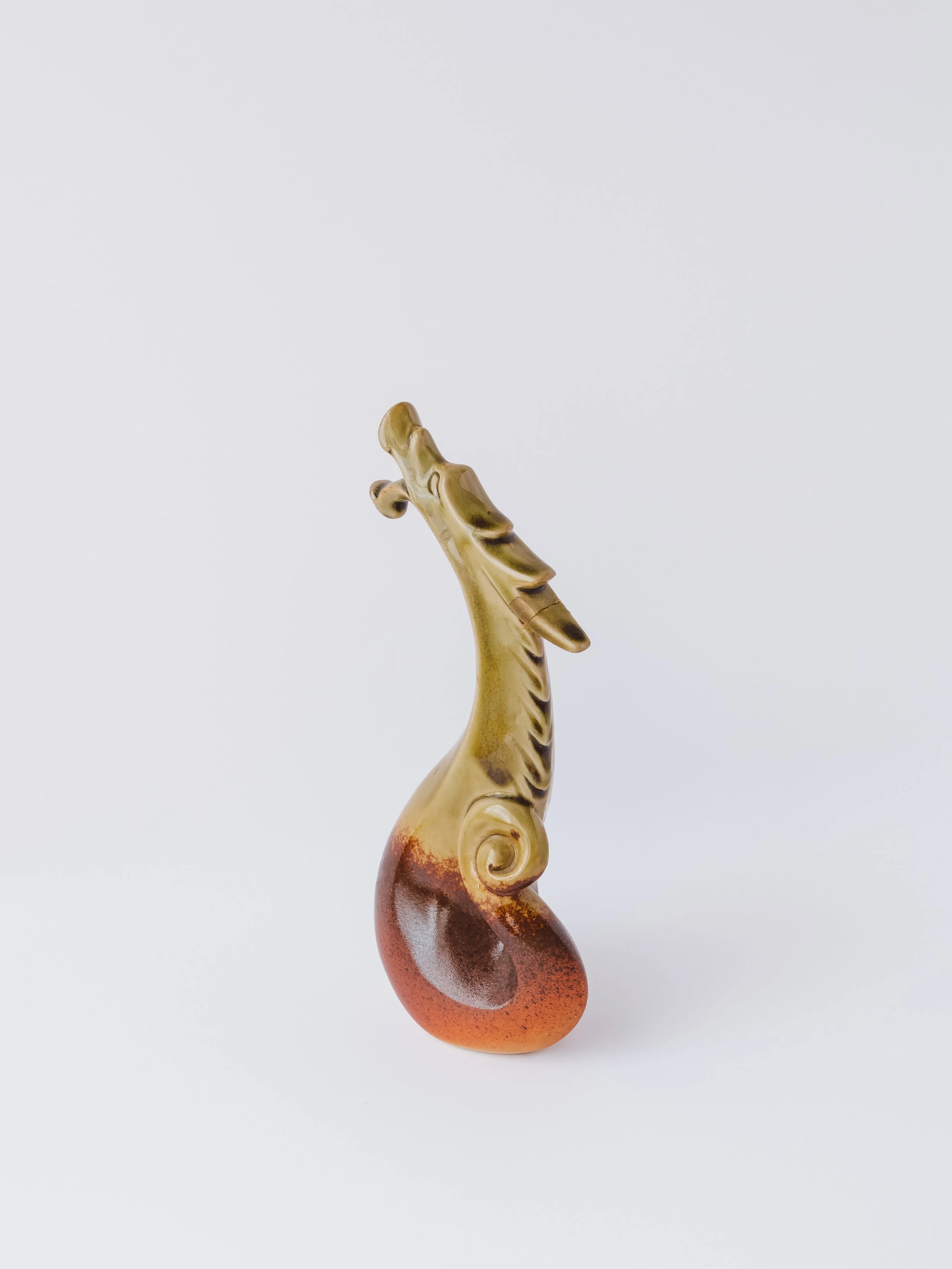 Image 3 of 12
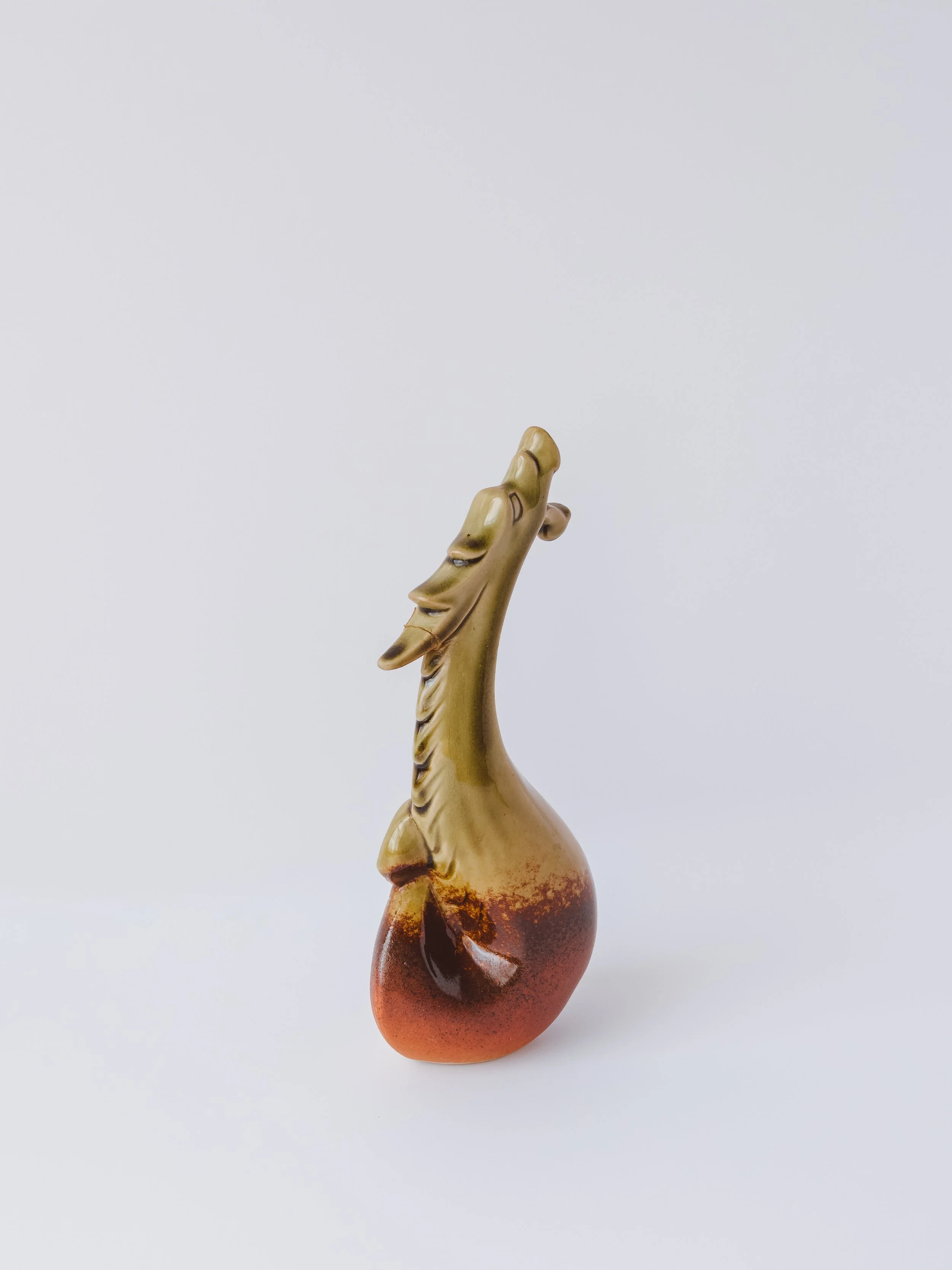 Image 4 of 12
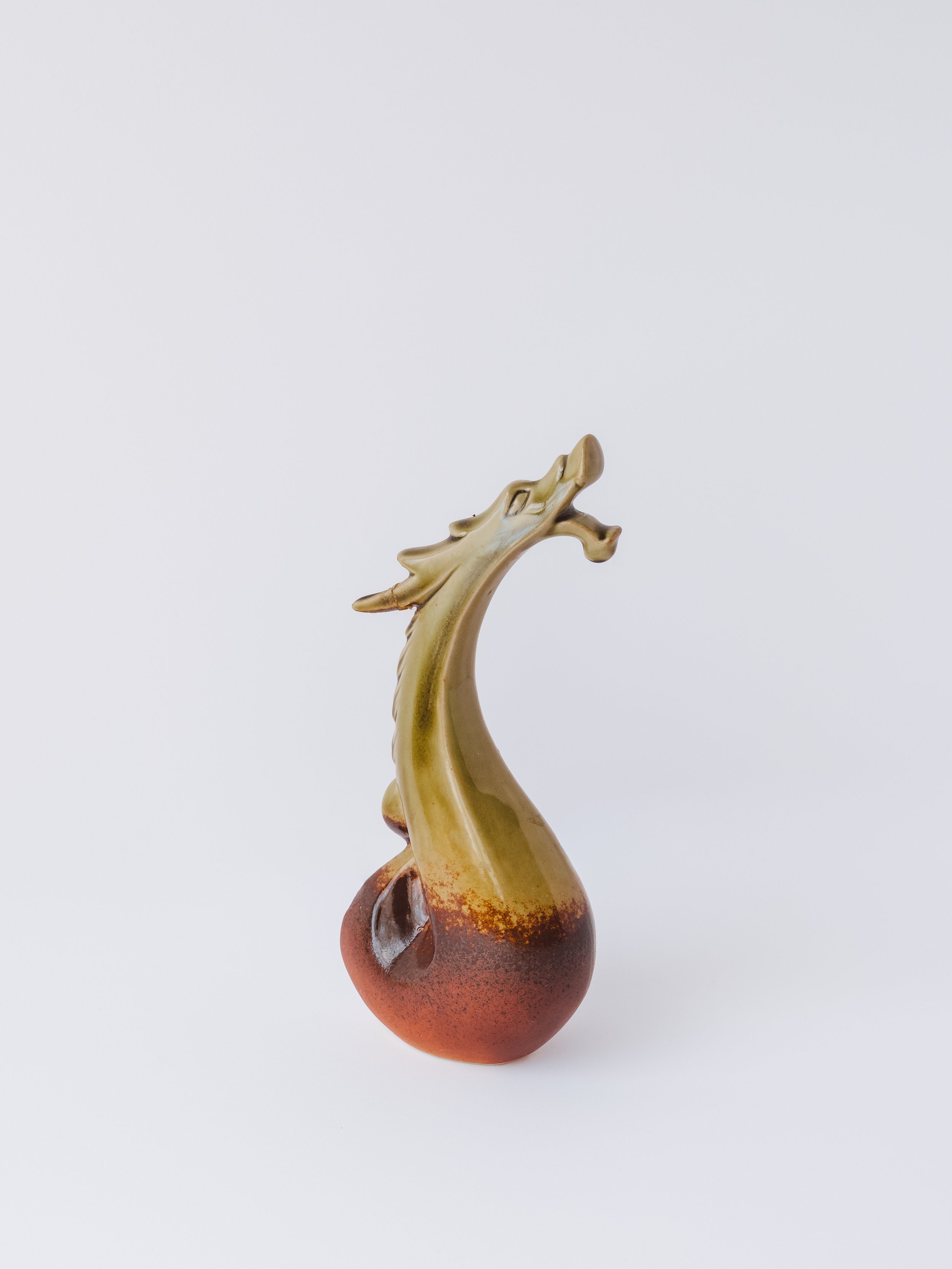 Image 5 of 12
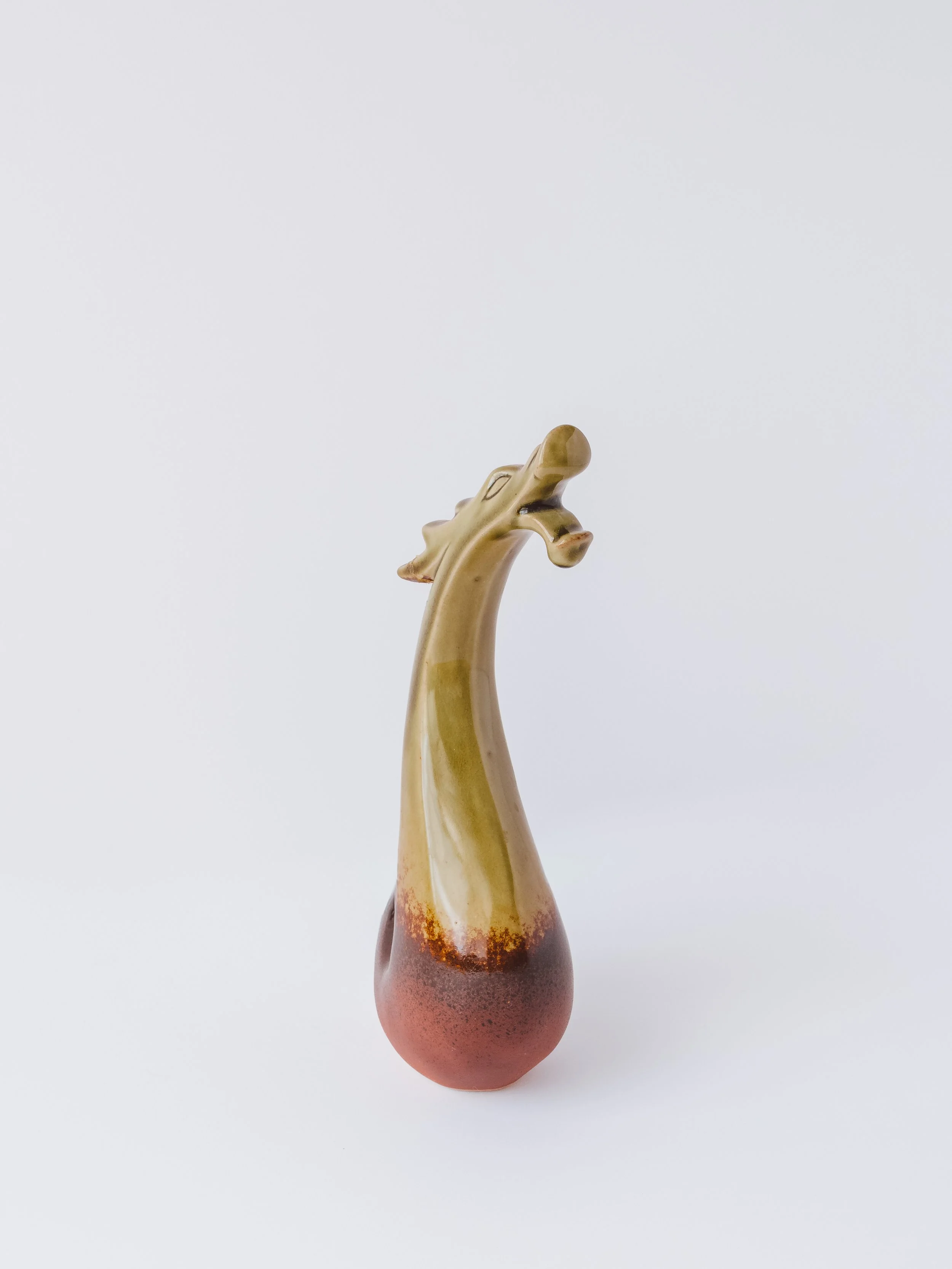 Image 6 of 12
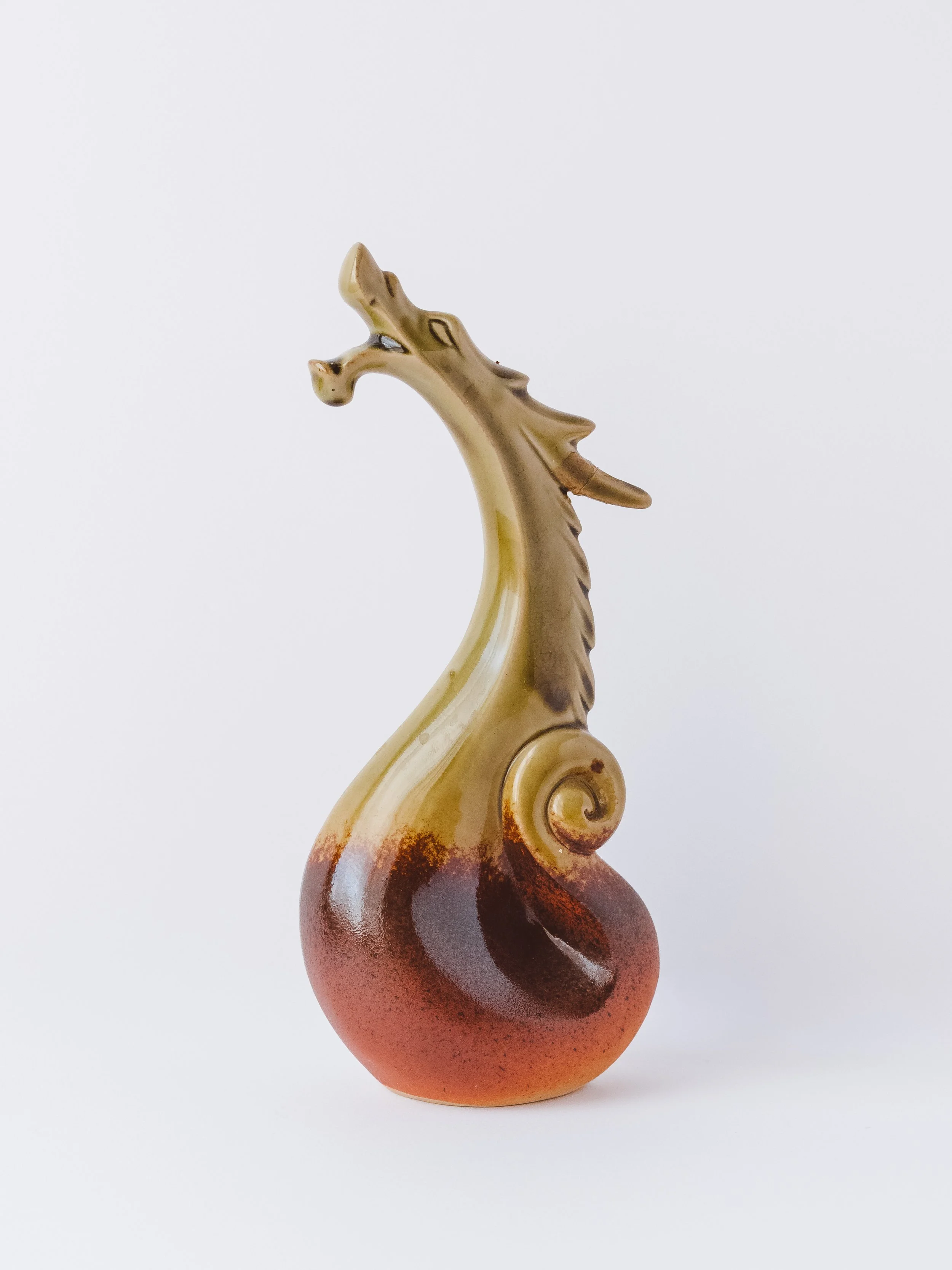 Image 7 of 12
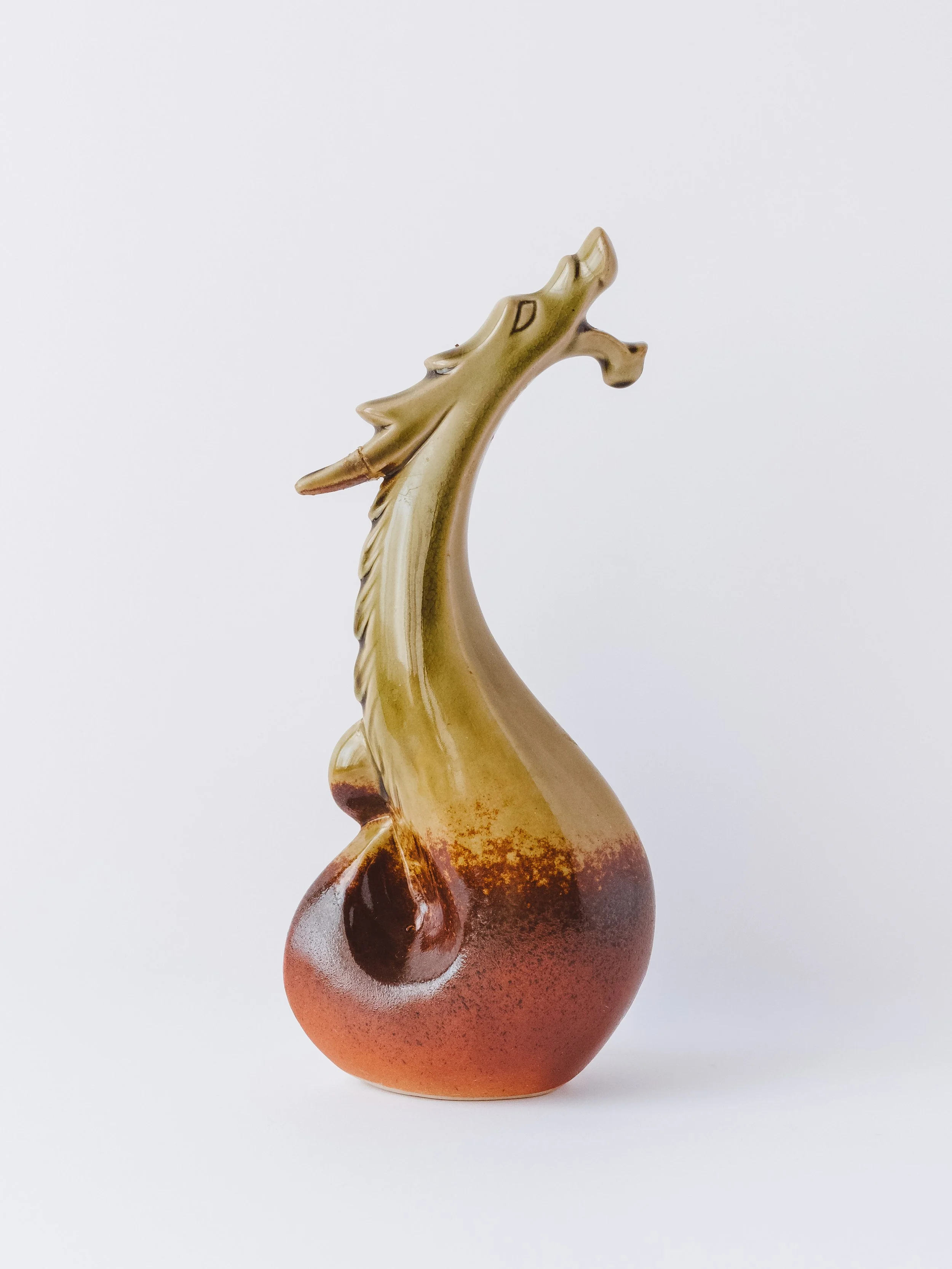 Image 8 of 12
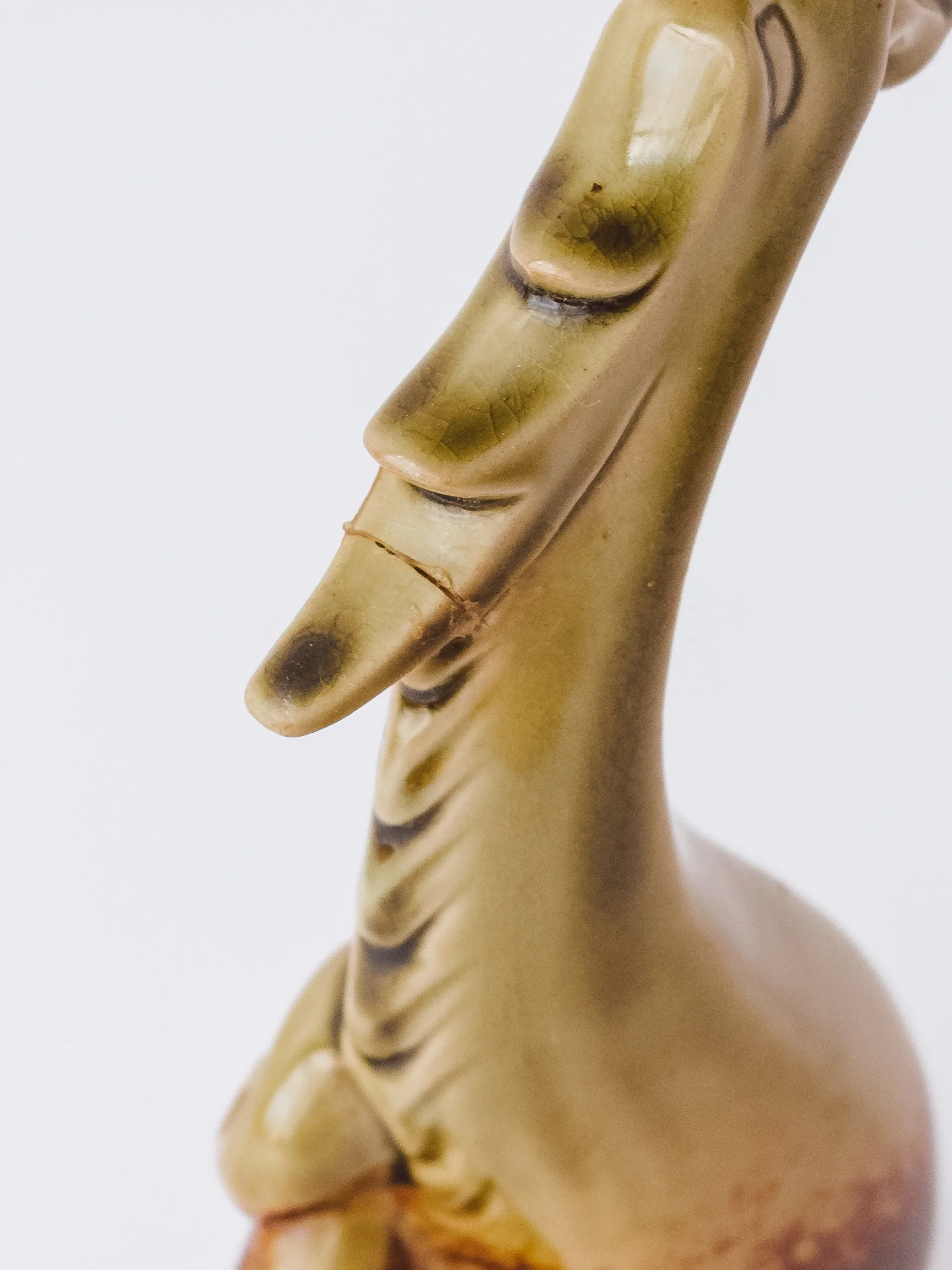 Image 9 of 12
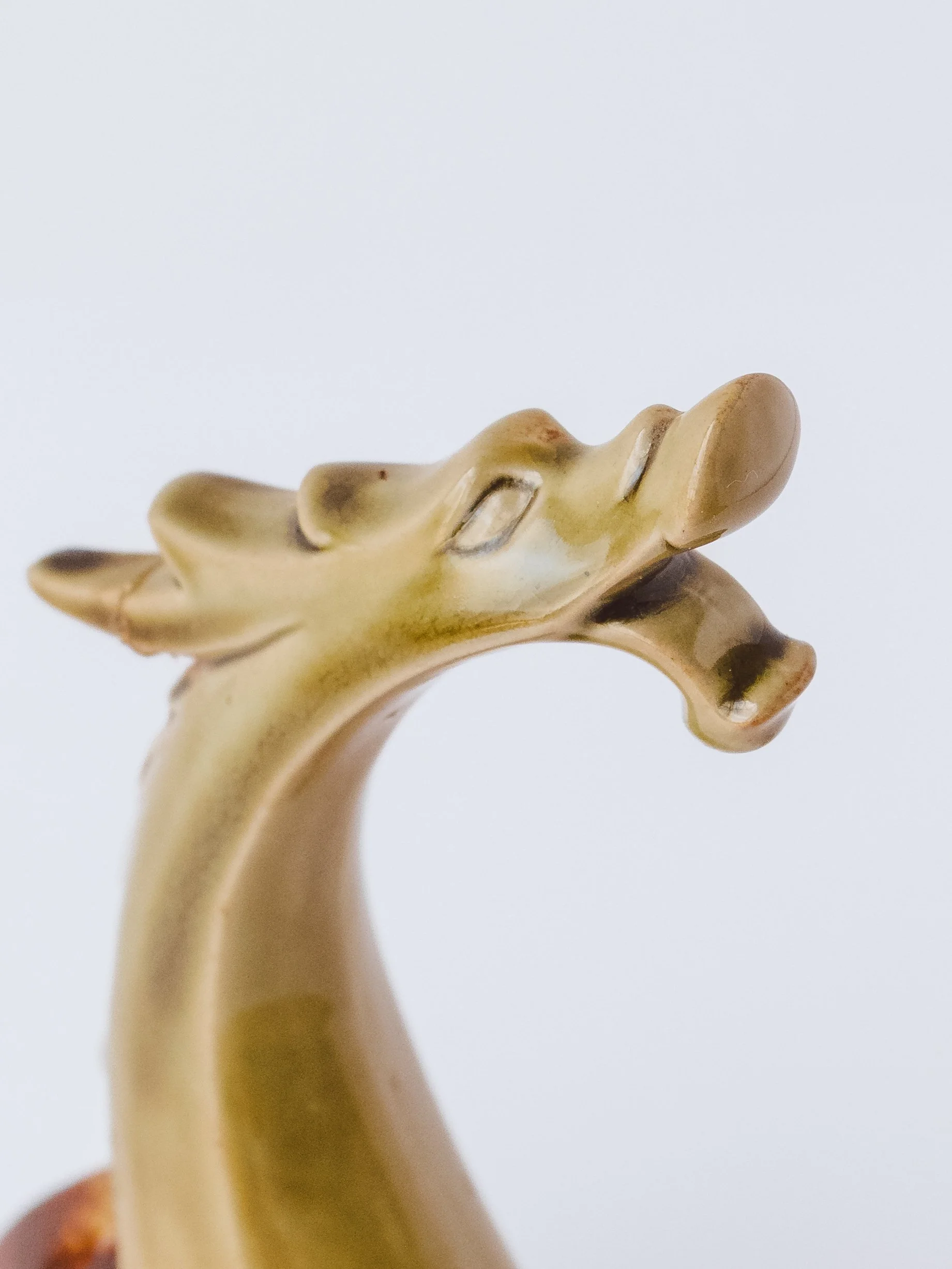 Image 10 of 12
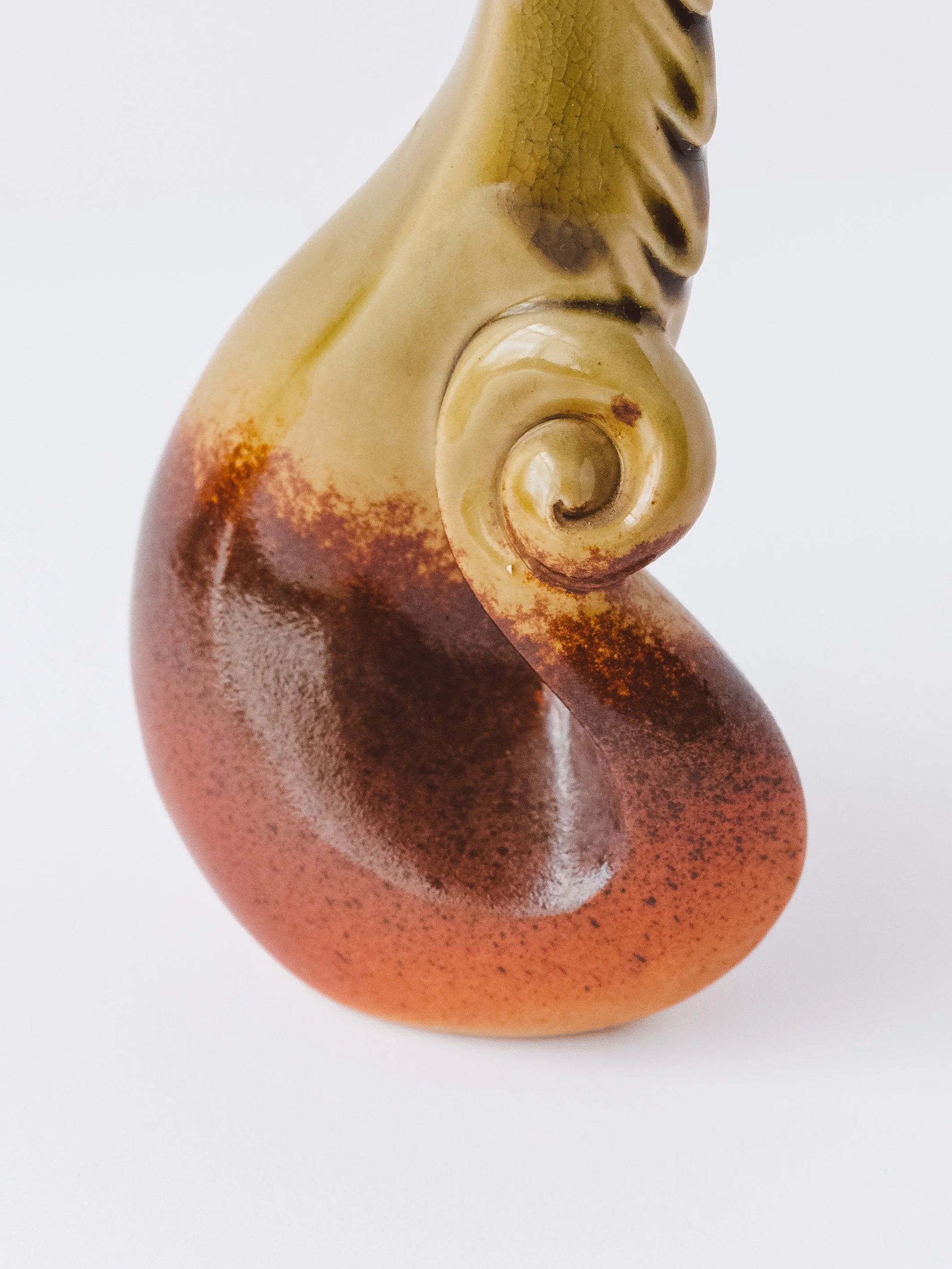 Image 11 of 12
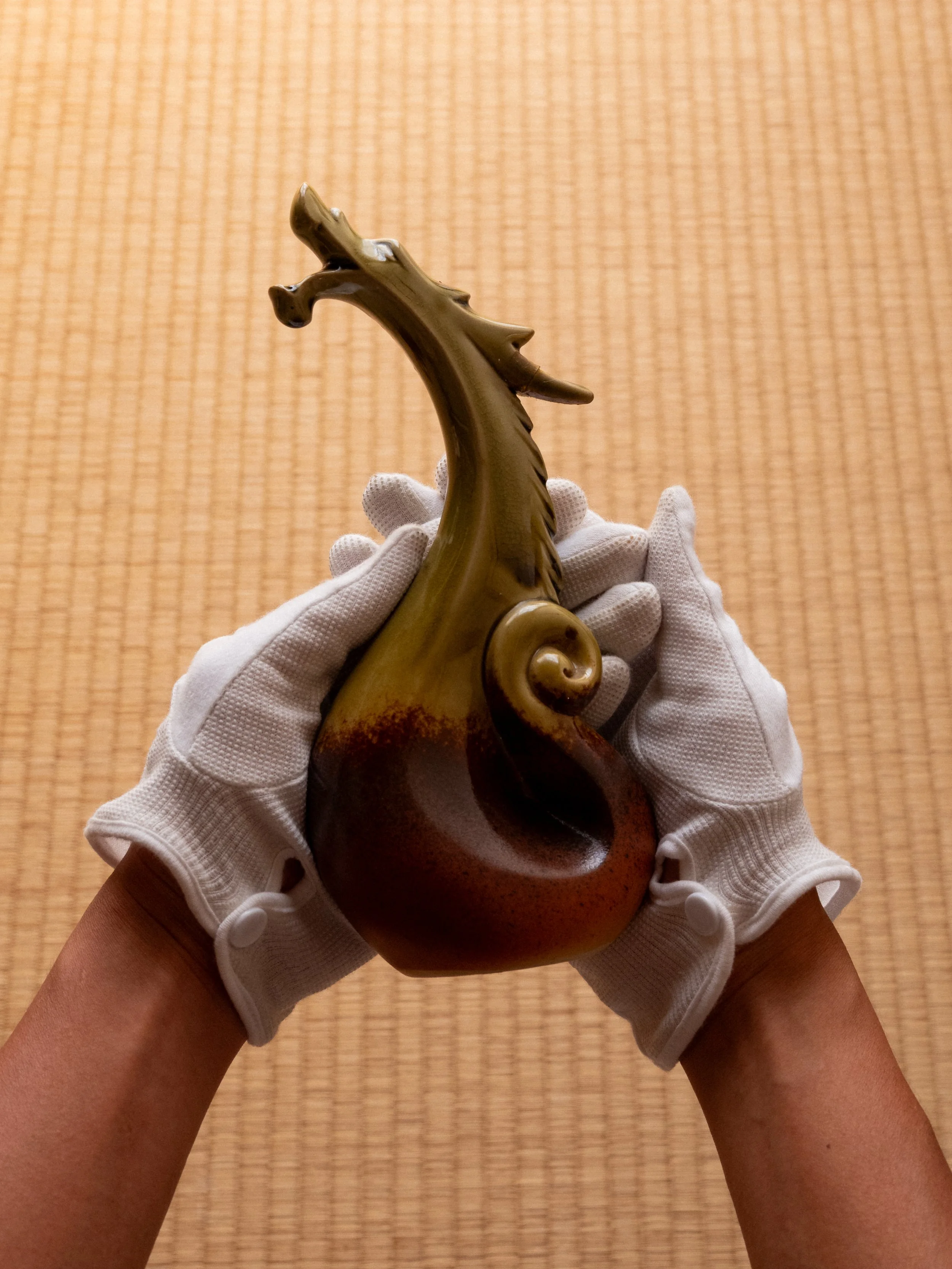 Image 12 of 12