【 The Concept 】
A small horse, folded down at rest, that quietly opens in two. This is a kōgō (香合) — a lidded incense container for the Japanese tea ceremony — modelled as a seated horse in warm amber-glazed Shigaraki stoneware. The upper body lifts away as the lid; the lower body and legs form the base. The mane, the line of a bridle, and the folds of the legs are drawn into the clay with simple incised lines that darken where the glaze gathers, and the whole piece sits comfortably in the palm. It comes with its maker's original signed wooden box.
【 What a Kōgō Is 】
In chanoyu, the Japanese way of tea, a kōgō is the little covered vessel that holds the incense used to scent and purify the tea room. It is small, but never minor: during sumidemae, the laying of the charcoal, the incense is placed by the fire and the container is then set out for the guests, who take it up in both hands and study it closely — the lid, the inside, the base — as one of the quiet high points of the gathering. Figural incense containers like this one, shaped as animals or auspicious objects, are called katamono kōgō and have been collected and treasured by tea people for centuries. When the charcoal procedure is not performed, the kōgō is displayed in the tokonoma alcove as a small guest of honour.
【 The Horse in Japanese Culture 】
The horse (午 / uma) is the seventh animal of the zodiac, and in Japan it has long been more than a beast of burden. Horses were the mounts of the gods — shinme, sacred horses kept at shrines — and the custom of offering ema, small votive "horse pictures," to carry a prayer to the gods still keeps that memory alive. The very sound of the word invites good fortune: uma echoes umaku iku, "to go well," so the horse became a favourite emblem for wishing that all things turn out well. There is even a beloved motif, the hidari-uma or "left-facing horse," read as "no one gets ahead of you" and used as a charm for success and thriving business. This horse is shown resting rather than galloping — folded down, gathering its strength, the way life waits through deep winter for its leap into spring.
【 Made for the New Year 】
In tea, the first gathering of the new year is the hatsugama, a bright, celebratory occasion for which auspicious, zodiac-themed utensils are chosen — so a horse kōgō belongs to the Year of the Horse and to the opening of the year. There is a practical logic to it as well. In the cold season, when the sunken hearth (ro) is in use, the incense burned is nerikō — fragrant powders kneaded with honey into a moist paste — and ceramic containers are used precisely because they resist that moisture. That is why the inside of this piece is finished with a generous, glassy pool of glaze, while lacquer and wood containers are kept for the dry incense of the warm season.
【 The Ware 】
Shigaraki is one of Japan's Six Ancient Kilns, worked since the Middle Ages from a sandy, iron-bearing clay. It is famous for wild, fire-born effects — scarlet flashing, green ash runs, blackened scorch — but here those are set aside in favour of a calm, even amber glaze in the manner of iraho (a soft yellow-brown glaze long prized on tea wares). The choice is deliberate: a small utensil should sit in harmony with everything else on the mat, pleasant in the hand and quiet to the eye. Turn the piece over and the base is left unglazed, showing the bare sandy Shigaraki clay, and impressed there with the maker's seal.
【 The Signed Box 】
The piece is sold with its tomobako — the maker's own wooden storage box. In Japanese art, and above all in tea, the tomobako is far more than packaging: brushed with the piece's title and the maker's signature and seal, it is the object's certificate and its "address," the maker's own word that the work is genuine. In the tea room the box itself is often shown and appreciated, and its presence raises the formality and standing of what it holds. Kept with the box, a piece carries its identity forward to whoever owns it next.
【 Function & What It Brings 】
Ready to keep, use, or give — and it arrives boxed. Use it as intended, to hold incense for winter tea; set it in a tokonoma, on a shelf, or on a desk as a small, tactile sculpture; or give it as a New Year and Year-of-the-Horse token, a wish that the year ahead go umaku — well. Small enough to close a hand around, it is the kind of object that is meant to be picked up and turned over, not only looked at.
【 The Texture 】
Glazed stoneware. A warm, honeyed amber glaze, glossy and smooth over the rounded body, pooling darker in the incised mane and joints; the underside is bare, slightly rough Shigaraki clay with visible sand. Solid and firm in the hand, with the cool, dense feel of fired ceramic.
【 Presence 】
Calm and good-natured. The rounded, simplified form and the small round eye give the horse a folk warmth, while the two-part construction and the well-fitted lid give it the quiet precision of a tea utensil.
Archive Note: The number in the name (1954) is a catalogue reference echoing a Year of the Horse in the twelve-year zodiac cycle, to which this horse kōgō belongs. It is NOT the date this piece was made.
Provenance Note: Sourced from a private collection in Japan. Sold with the maker's original signed wooden box (tomobako); the maker is not named here.
Condition Note: Sold as acquired, in very good condition. A two-part lidded container: the lid seats cleanly on the base, the interior is glazed, and the unglazed base bears an impressed maker's seal. Natural glaze pooling and small iron specks are inherent features of the ware, not damage. Please see the photographs as part of the description.
【 The Concept 】
A small horse, folded down at rest, that quietly opens in two. This is a kōgō (香合) — a lidded incense container for the Japanese tea ceremony — modelled as a seated horse in warm amber-glazed Shigaraki stoneware. The upper body lifts away as the lid; the lower body and legs form the base. The mane, the line of a bridle, and the folds of the legs are drawn into the clay with simple incised lines that darken where the glaze gathers, and the whole piece sits comfortably in the palm. It comes with its maker's original signed wooden box.
【 What a Kōgō Is 】
In chanoyu, the Japanese way of tea, a kōgō is the little covered vessel that holds the incense used to scent and purify the tea room. It is small, but never minor: during sumidemae, the laying of the charcoal, the incense is placed by the fire and the container is then set out for the guests, who take it up in both hands and study it closely — the lid, the inside, the base — as one of the quiet high points of the gathering. Figural incense containers like this one, shaped as animals or auspicious objects, are called katamono kōgō and have been collected and treasured by tea people for centuries. When the charcoal procedure is not performed, the kōgō is displayed in the tokonoma alcove as a small guest of honour.
【 The Horse in Japanese Culture 】
The horse (午 / uma) is the seventh animal of the zodiac, and in Japan it has long been more than a beast of burden. Horses were the mounts of the gods — shinme, sacred horses kept at shrines — and the custom of offering ema, small votive "horse pictures," to carry a prayer to the gods still keeps that memory alive. The very sound of the word invites good fortune: uma echoes umaku iku, "to go well," so the horse became a favourite emblem for wishing that all things turn out well. There is even a beloved motif, the hidari-uma or "left-facing horse," read as "no one gets ahead of you" and used as a charm for success and thriving business. This horse is shown resting rather than galloping — folded down, gathering its strength, the way life waits through deep winter for its leap into spring.
【 Made for the New Year 】
In tea, the first gathering of the new year is the hatsugama, a bright, celebratory occasion for which auspicious, zodiac-themed utensils are chosen — so a horse kōgō belongs to the Year of the Horse and to the opening of the year. There is a practical logic to it as well. In the cold season, when the sunken hearth (ro) is in use, the incense burned is nerikō — fragrant powders kneaded with honey into a moist paste — and ceramic containers are used precisely because they resist that moisture. That is why the inside of this piece is finished with a generous, glassy pool of glaze, while lacquer and wood containers are kept for the dry incense of the warm season.
【 The Ware 】
Shigaraki is one of Japan's Six Ancient Kilns, worked since the Middle Ages from a sandy, iron-bearing clay. It is famous for wild, fire-born effects — scarlet flashing, green ash runs, blackened scorch — but here those are set aside in favour of a calm, even amber glaze in the manner of iraho (a soft yellow-brown glaze long prized on tea wares). The choice is deliberate: a small utensil should sit in harmony with everything else on the mat, pleasant in the hand and quiet to the eye. Turn the piece over and the base is left unglazed, showing the bare sandy Shigaraki clay, and impressed there with the maker's seal.
【 The Signed Box 】
The piece is sold with its tomobako — the maker's own wooden storage box. In Japanese art, and above all in tea, the tomobako is far more than packaging: brushed with the piece's title and the maker's signature and seal, it is the object's certificate and its "address," the maker's own word that the work is genuine. In the tea room the box itself is often shown and appreciated, and its presence raises the formality and standing of what it holds. Kept with the box, a piece carries its identity forward to whoever owns it next.
【 Function & What It Brings 】
Ready to keep, use, or give — and it arrives boxed. Use it as intended, to hold incense for winter tea; set it in a tokonoma, on a shelf, or on a desk as a small, tactile sculpture; or give it as a New Year and Year-of-the-Horse token, a wish that the year ahead go umaku — well. Small enough to close a hand around, it is the kind of object that is meant to be picked up and turned over, not only looked at.
【 The Texture 】
Glazed stoneware. A warm, honeyed amber glaze, glossy and smooth over the rounded body, pooling darker in the incised mane and joints; the underside is bare, slightly rough Shigaraki clay with visible sand. Solid and firm in the hand, with the cool, dense feel of fired ceramic.
【 Presence 】
Calm and good-natured. The rounded, simplified form and the small round eye give the horse a folk warmth, while the two-part construction and the well-fitted lid give it the quiet precision of a tea utensil.
Archive Note: The number in the name (1954) is a catalogue reference echoing a Year of the Horse in the twelve-year zodiac cycle, to which this horse kōgō belongs. It is NOT the date this piece was made.
Provenance Note: Sourced from a private collection in Japan. Sold with the maker's original signed wooden box (tomobako); the maker is not named here.
Condition Note: Sold as acquired, in very good condition. A two-part lidded container: the lid seats cleanly on the base, the interior is glazed, and the unglazed base bears an impressed maker's seal. Natural glaze pooling and small iron specks are inherent features of the ware, not damage. Please see the photographs as part of the description.


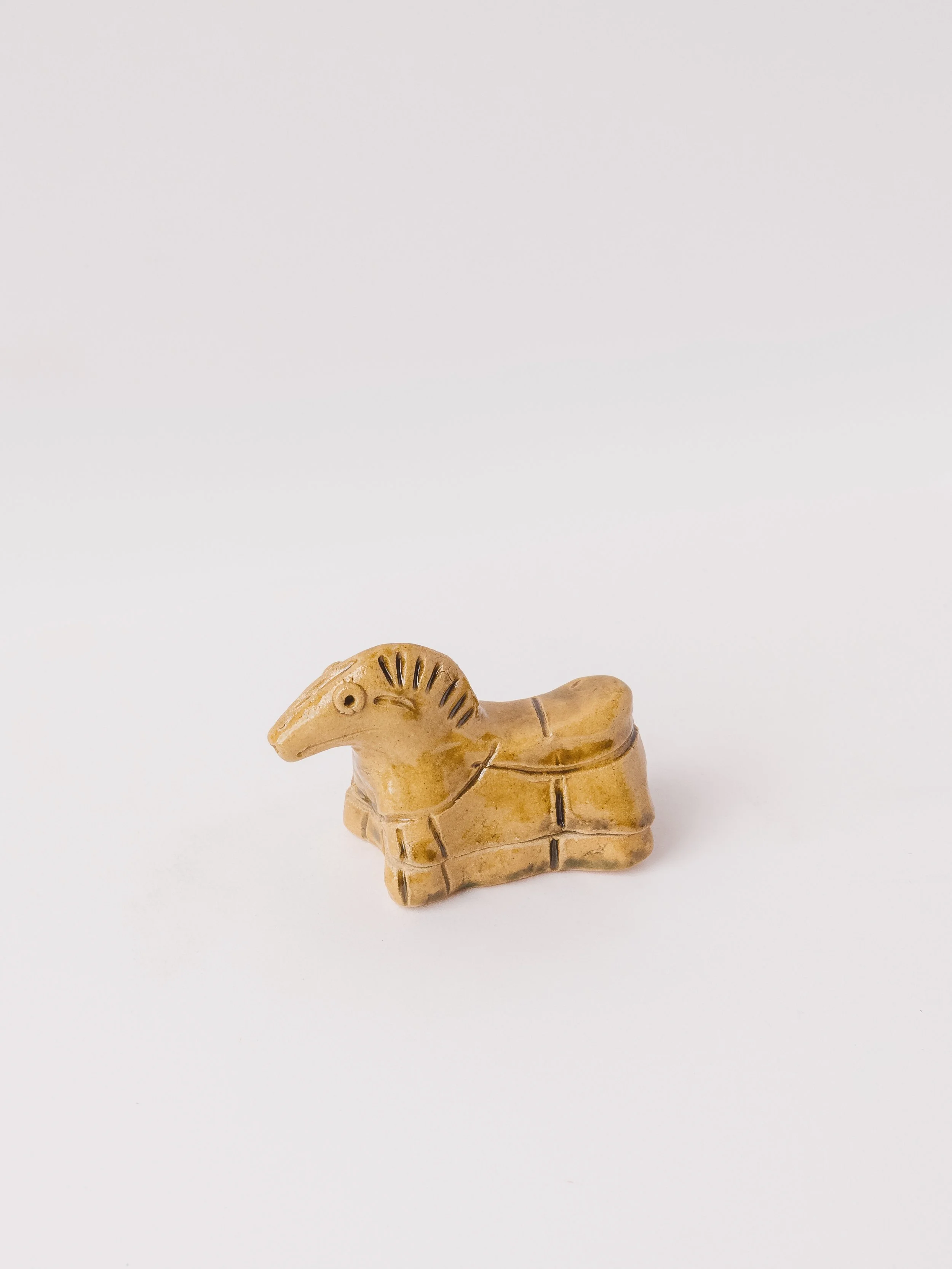 Image 1 of 15
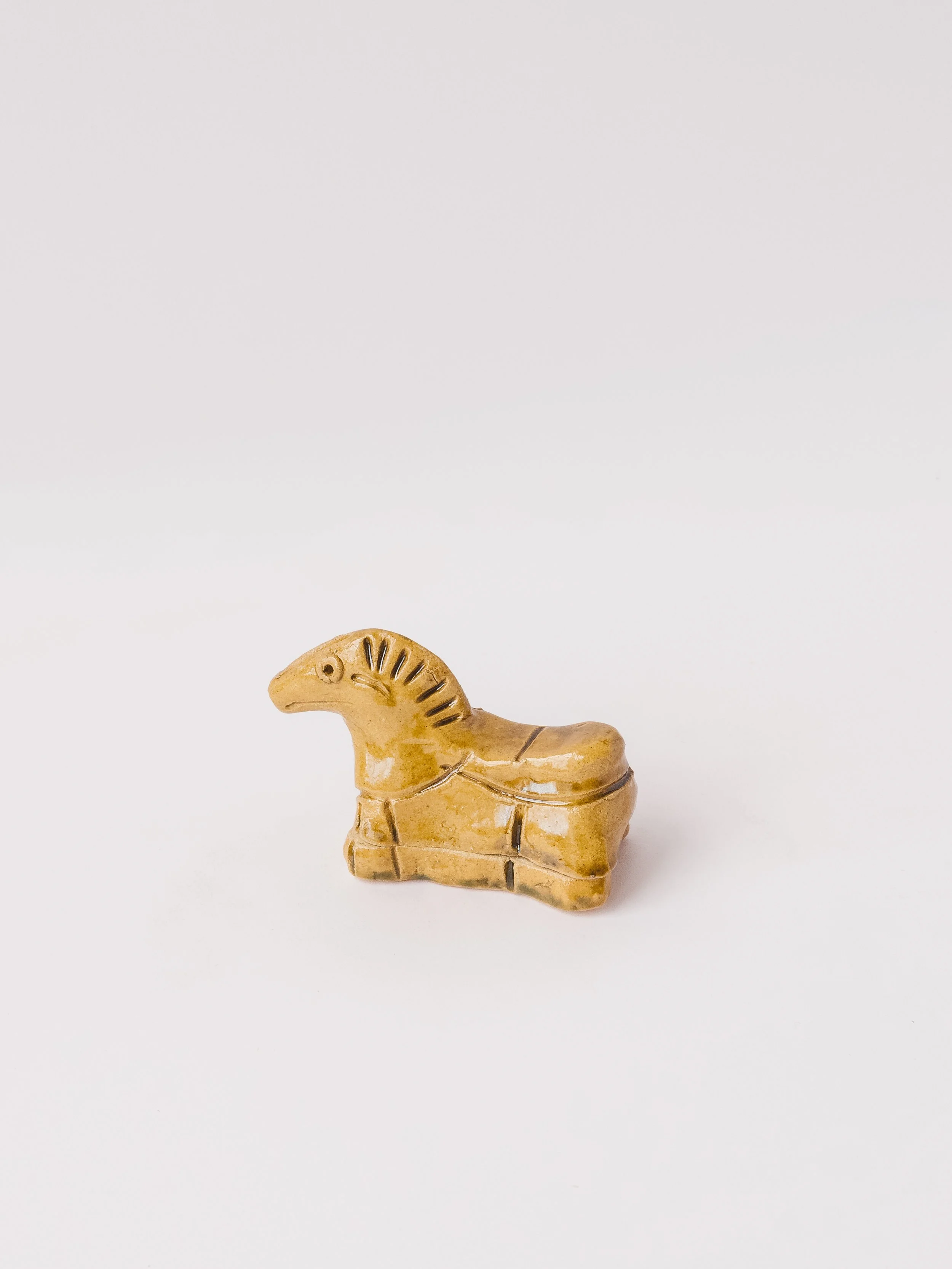 Image 2 of 15
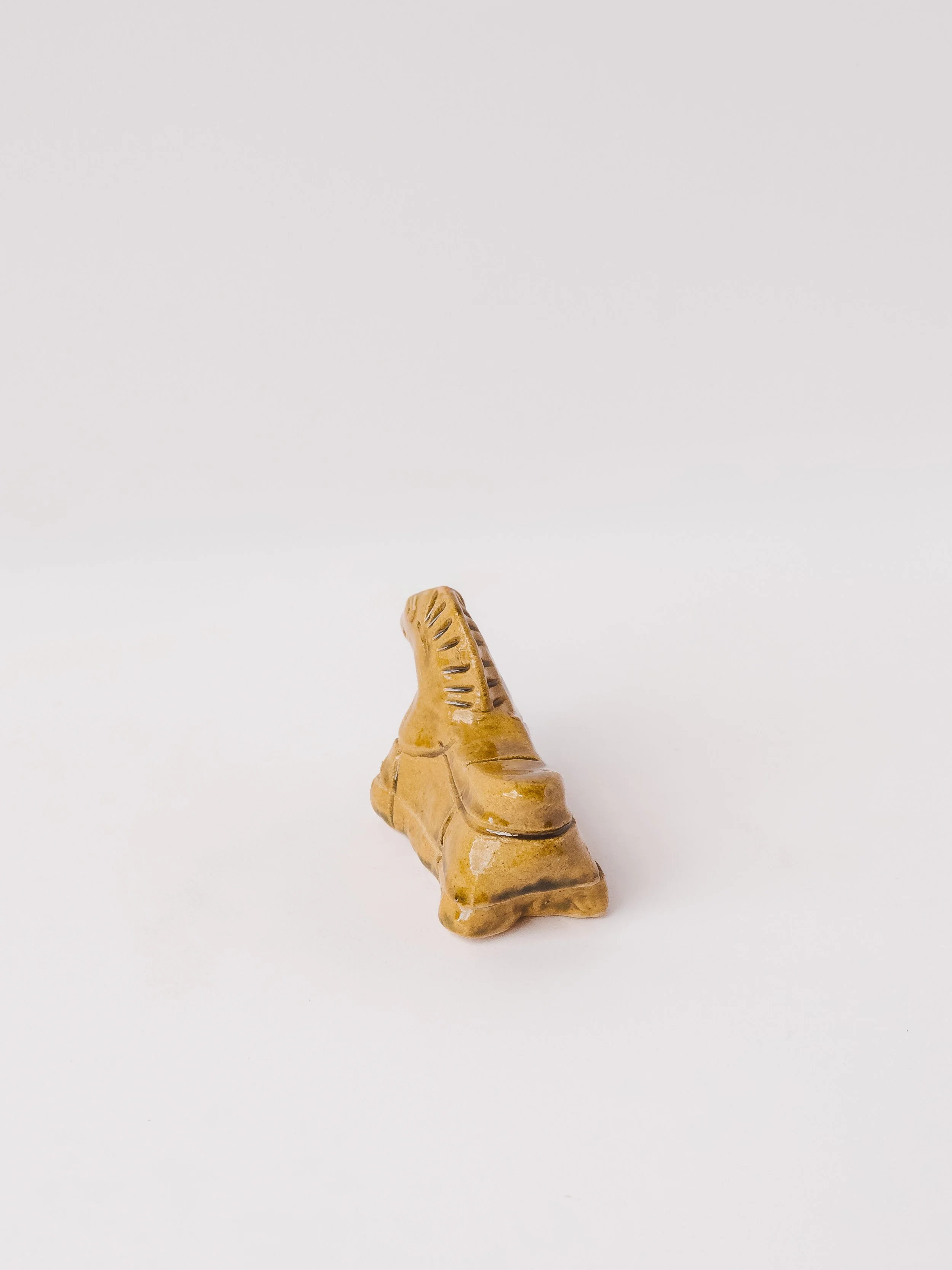 Image 3 of 15
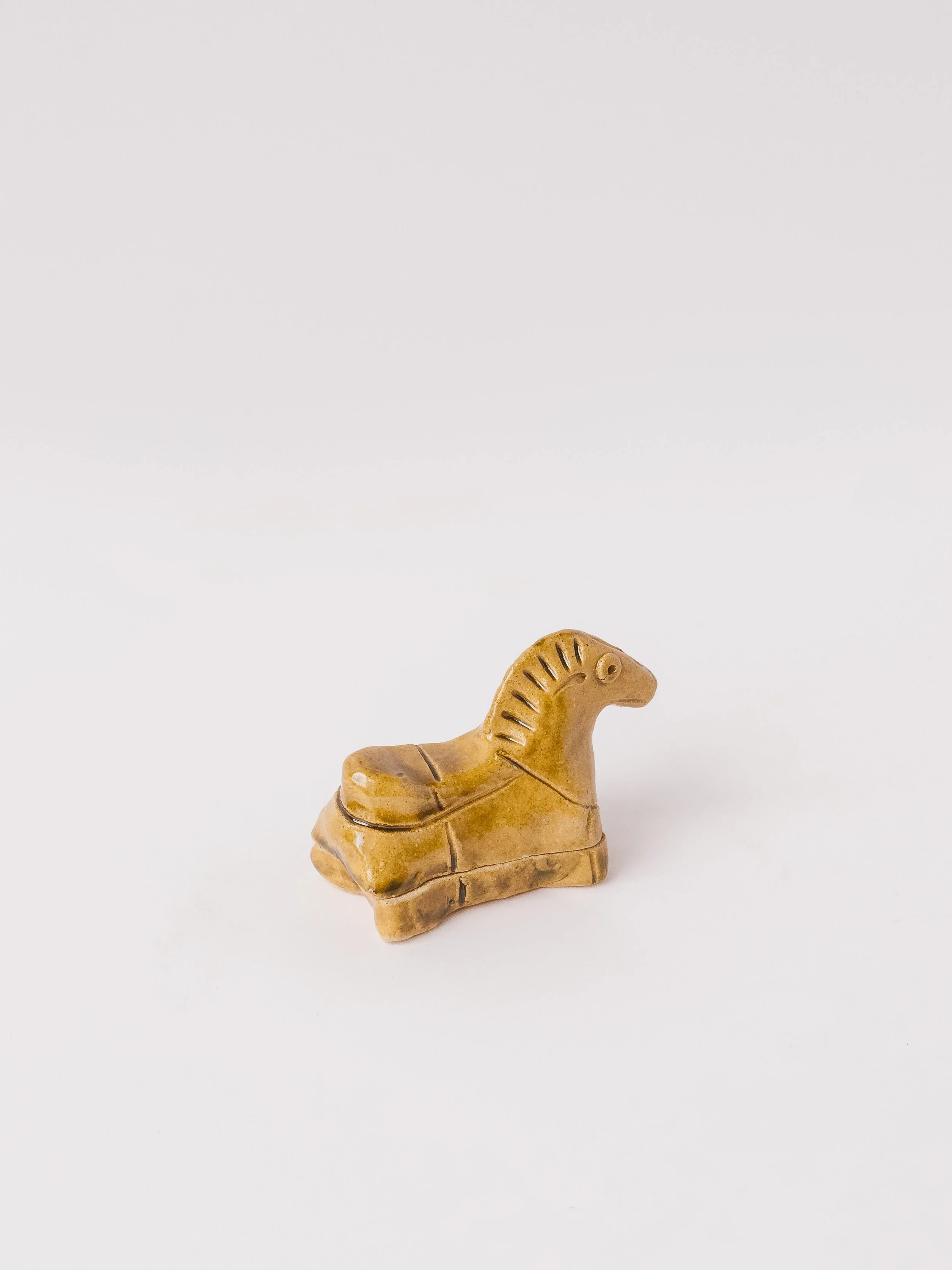 Image 4 of 15
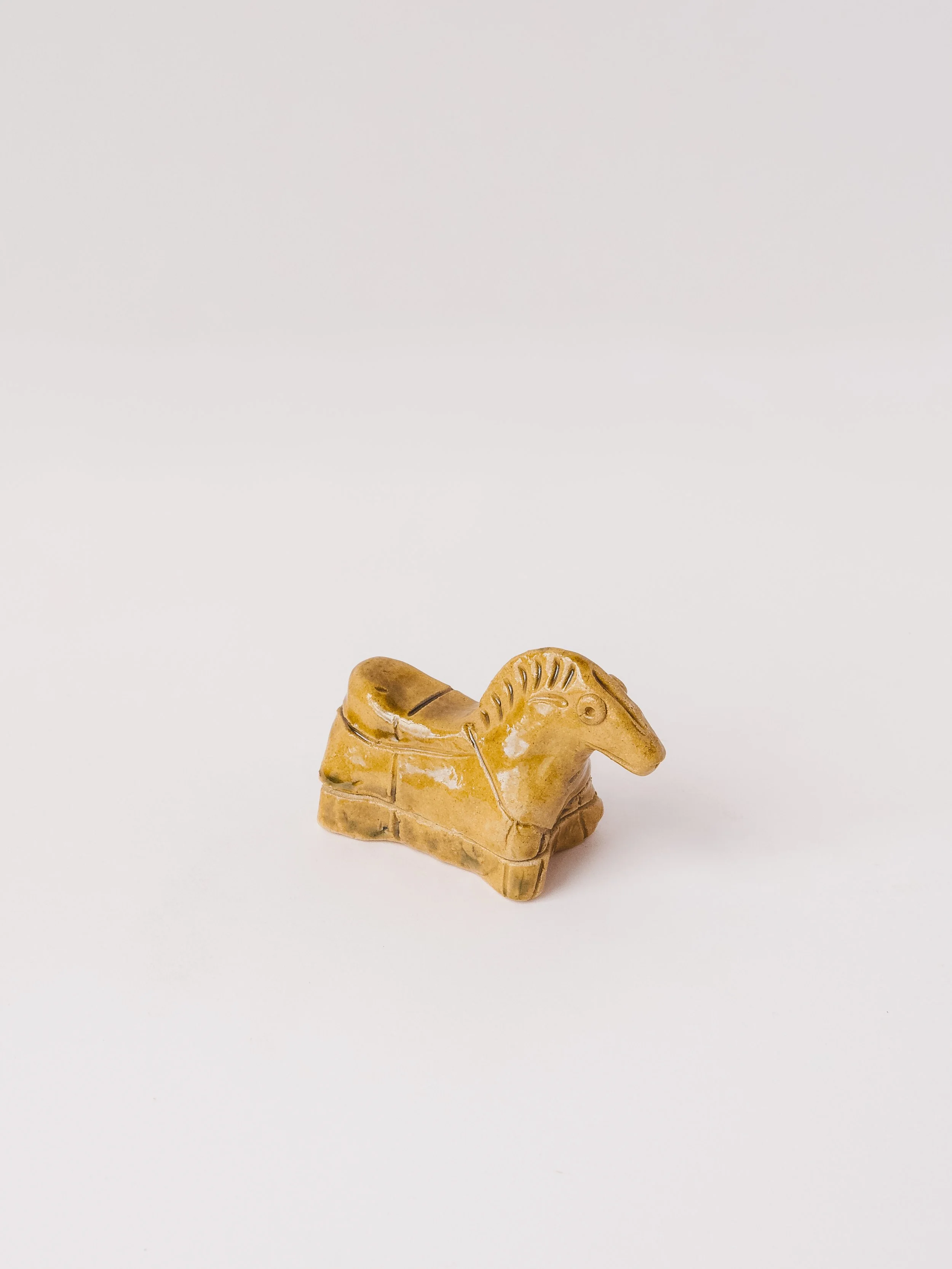 Image 5 of 15
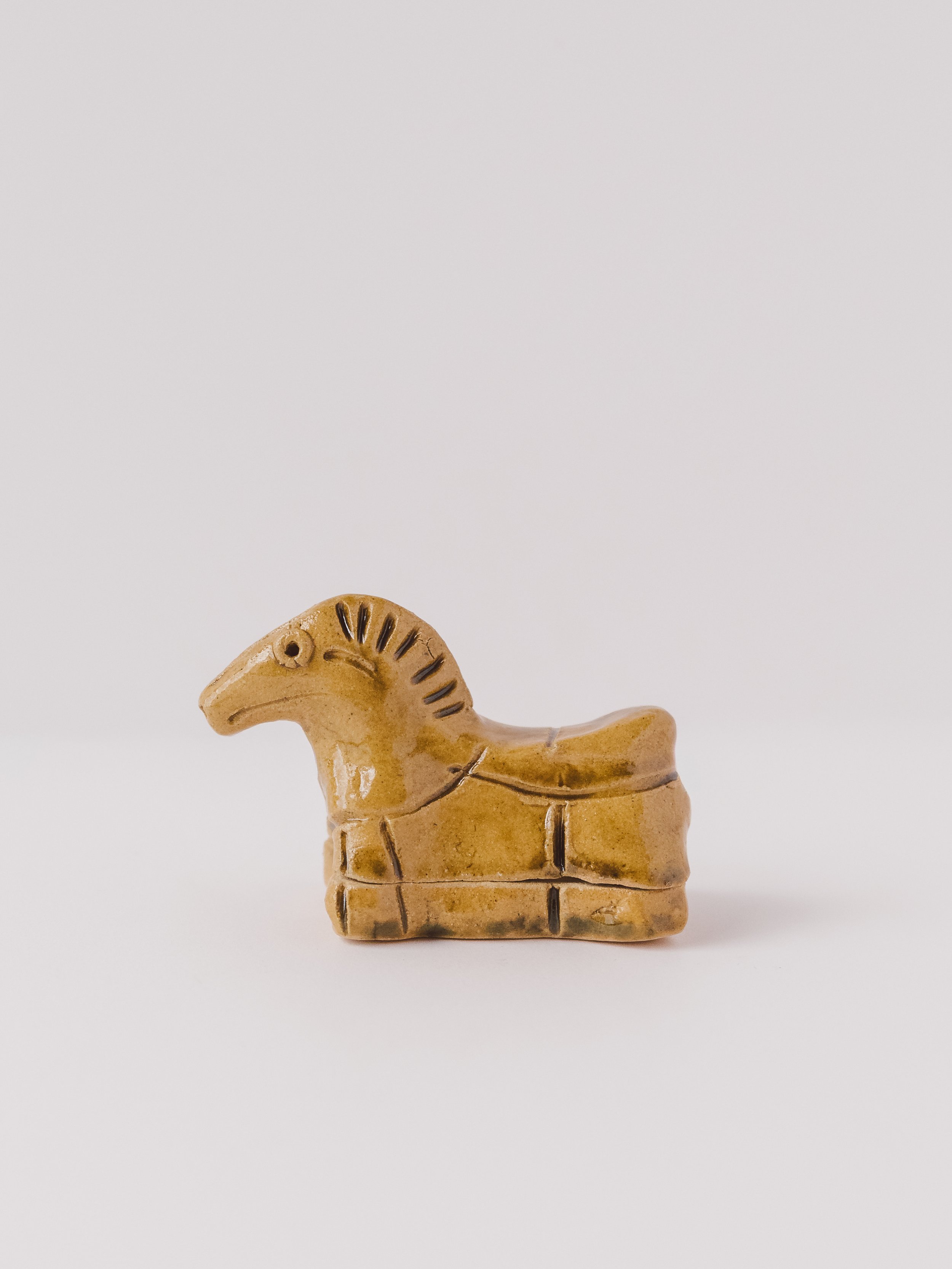 Image 6 of 15
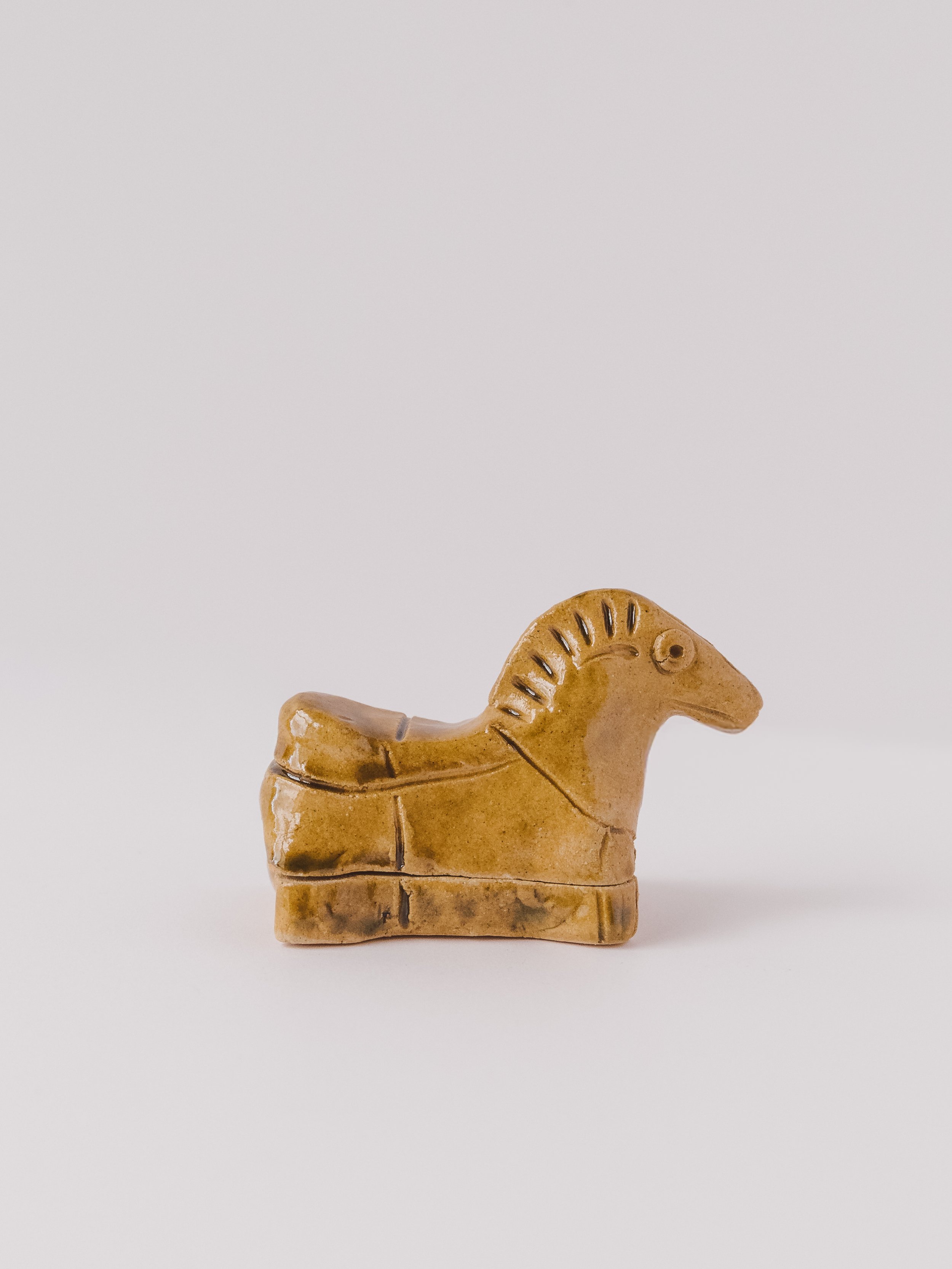 Image 7 of 15
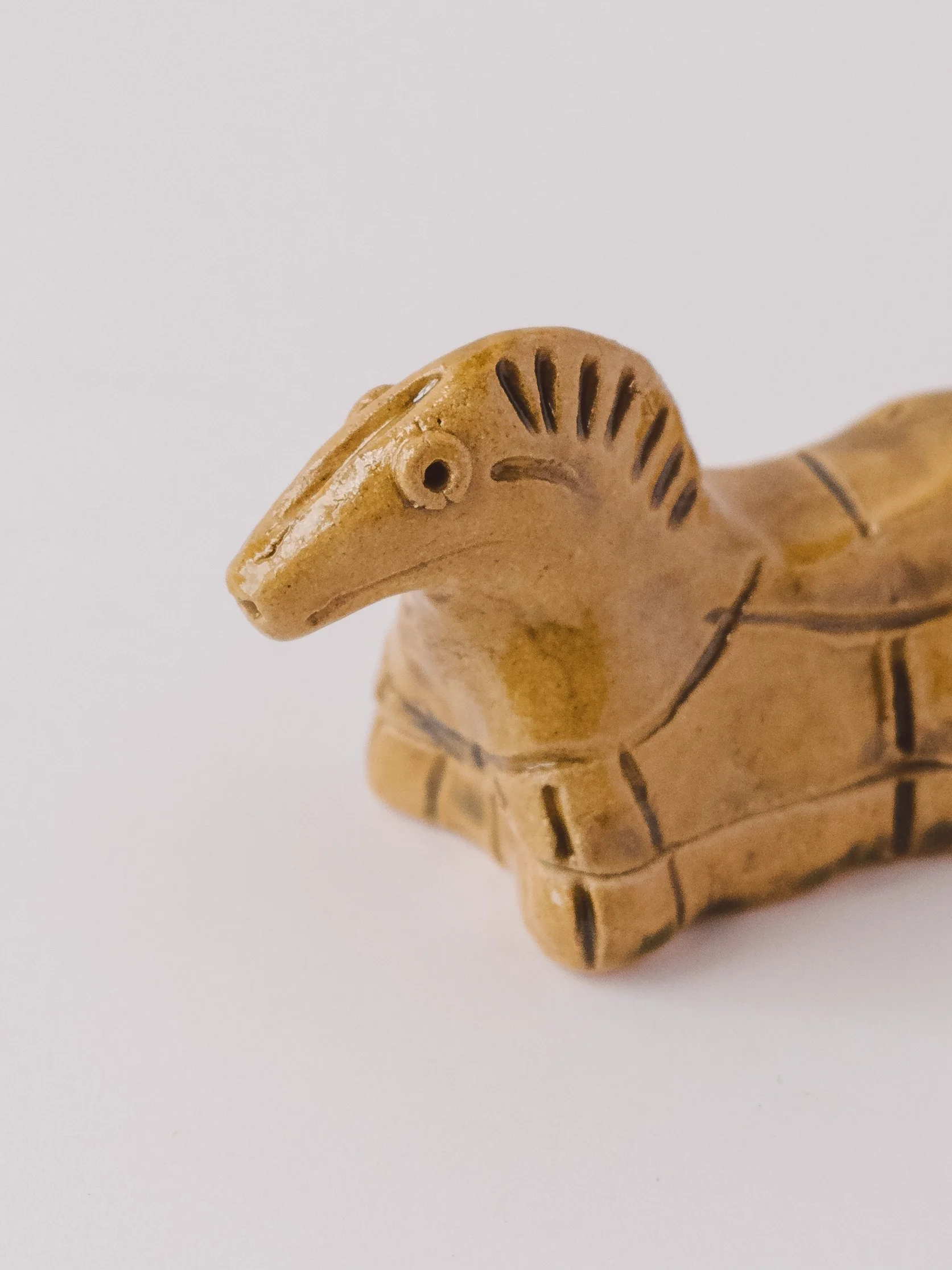 Image 8 of 15
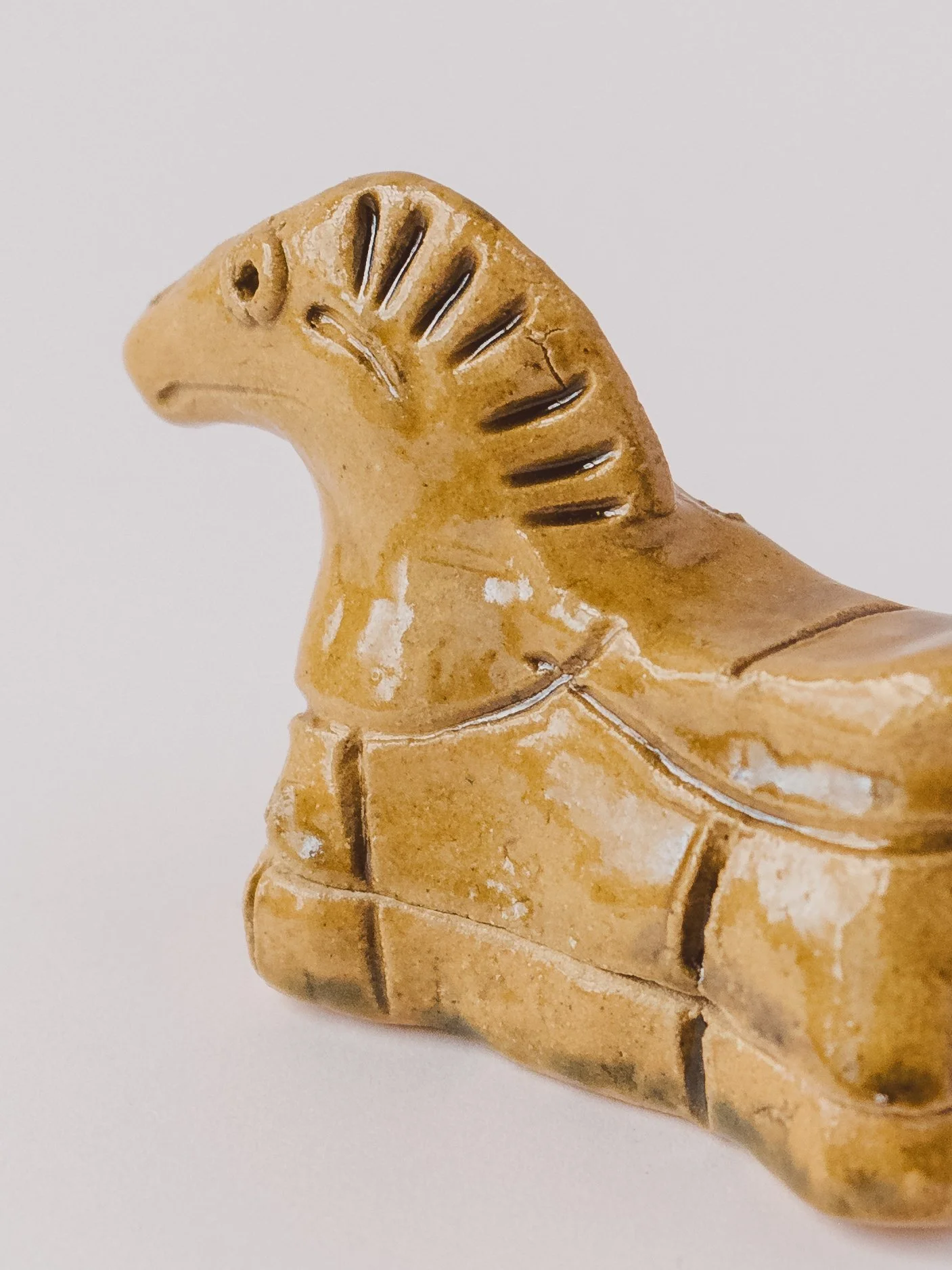 Image 9 of 15
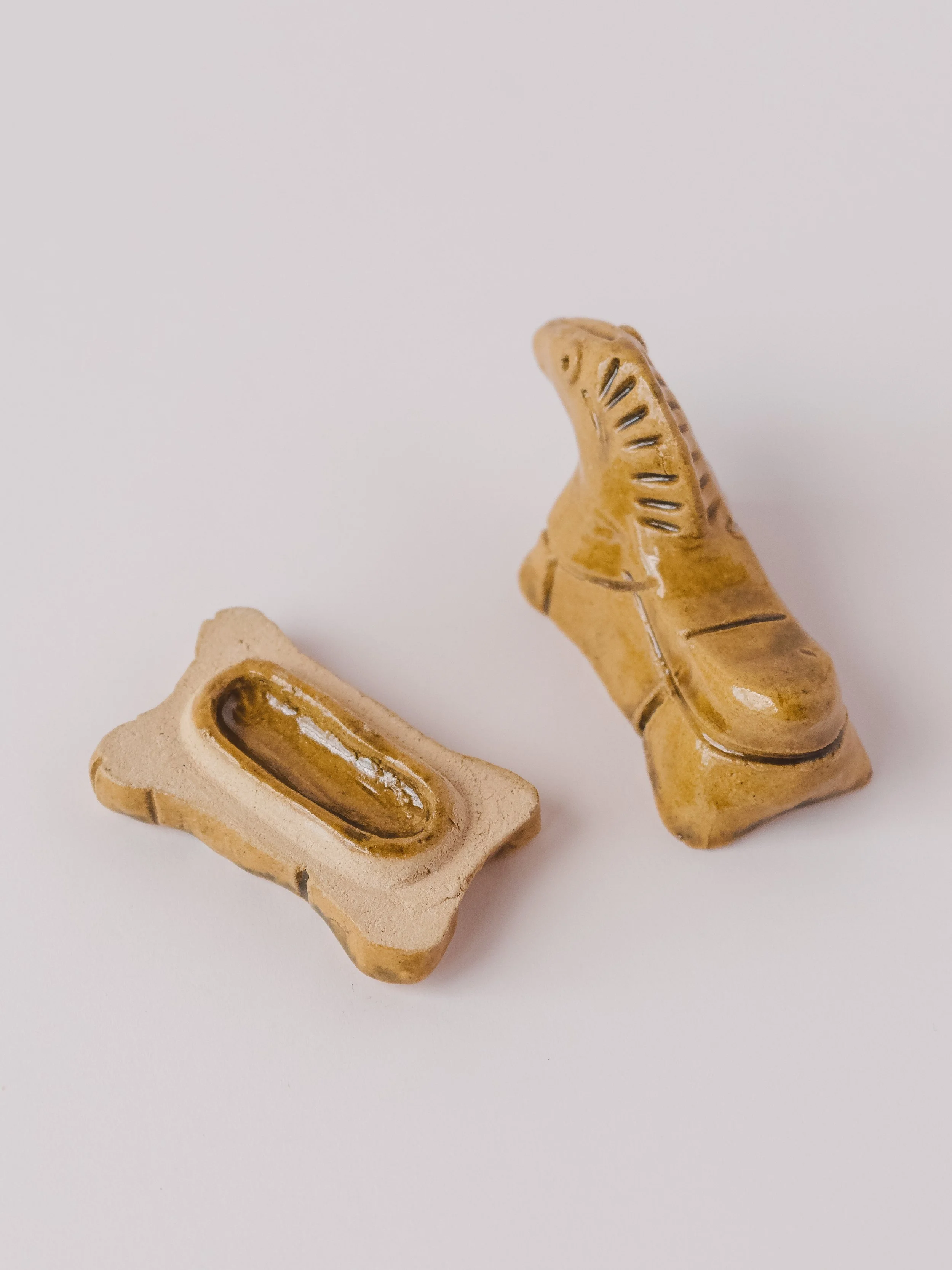 Image 10 of 15
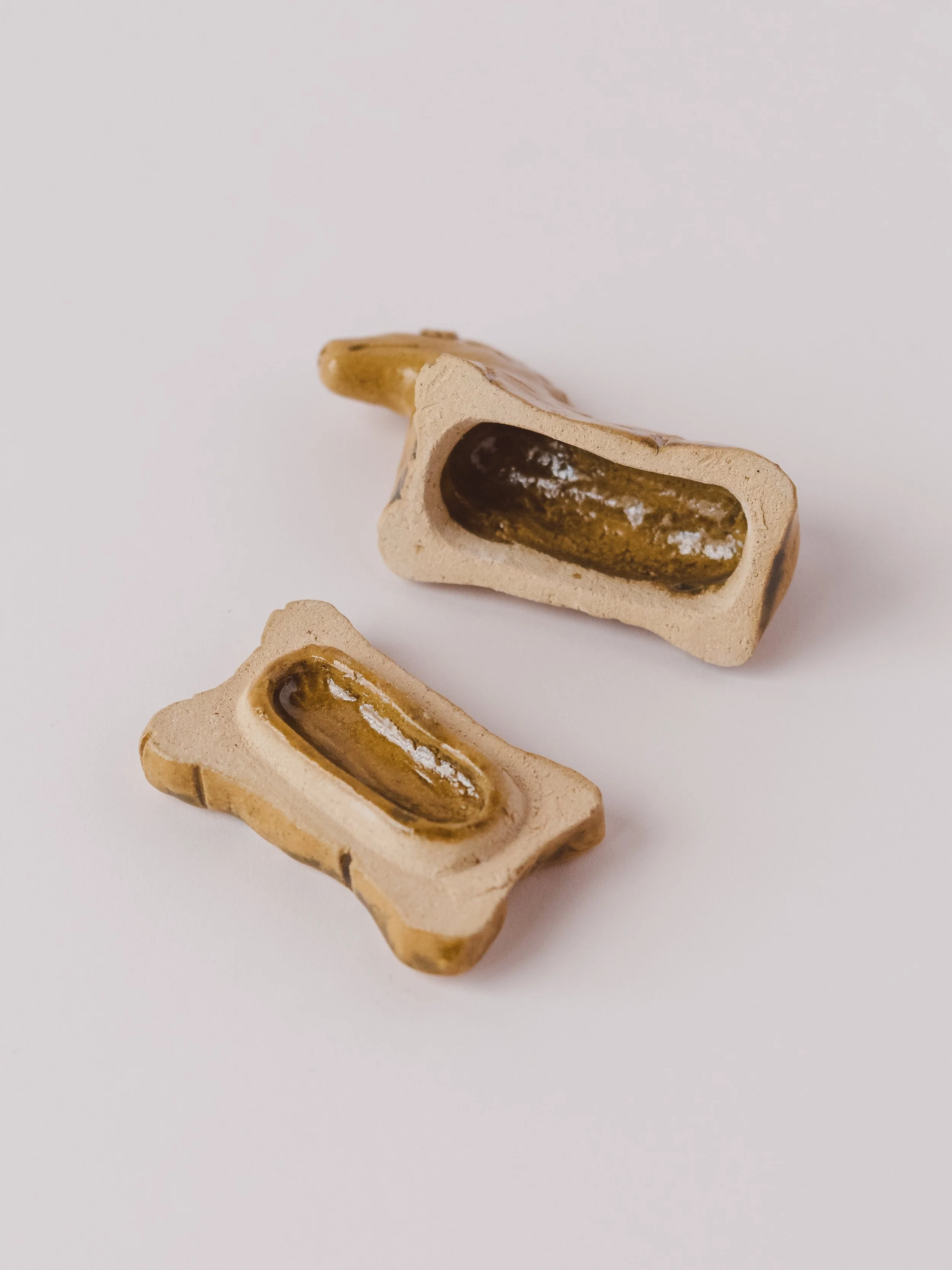 Image 11 of 15
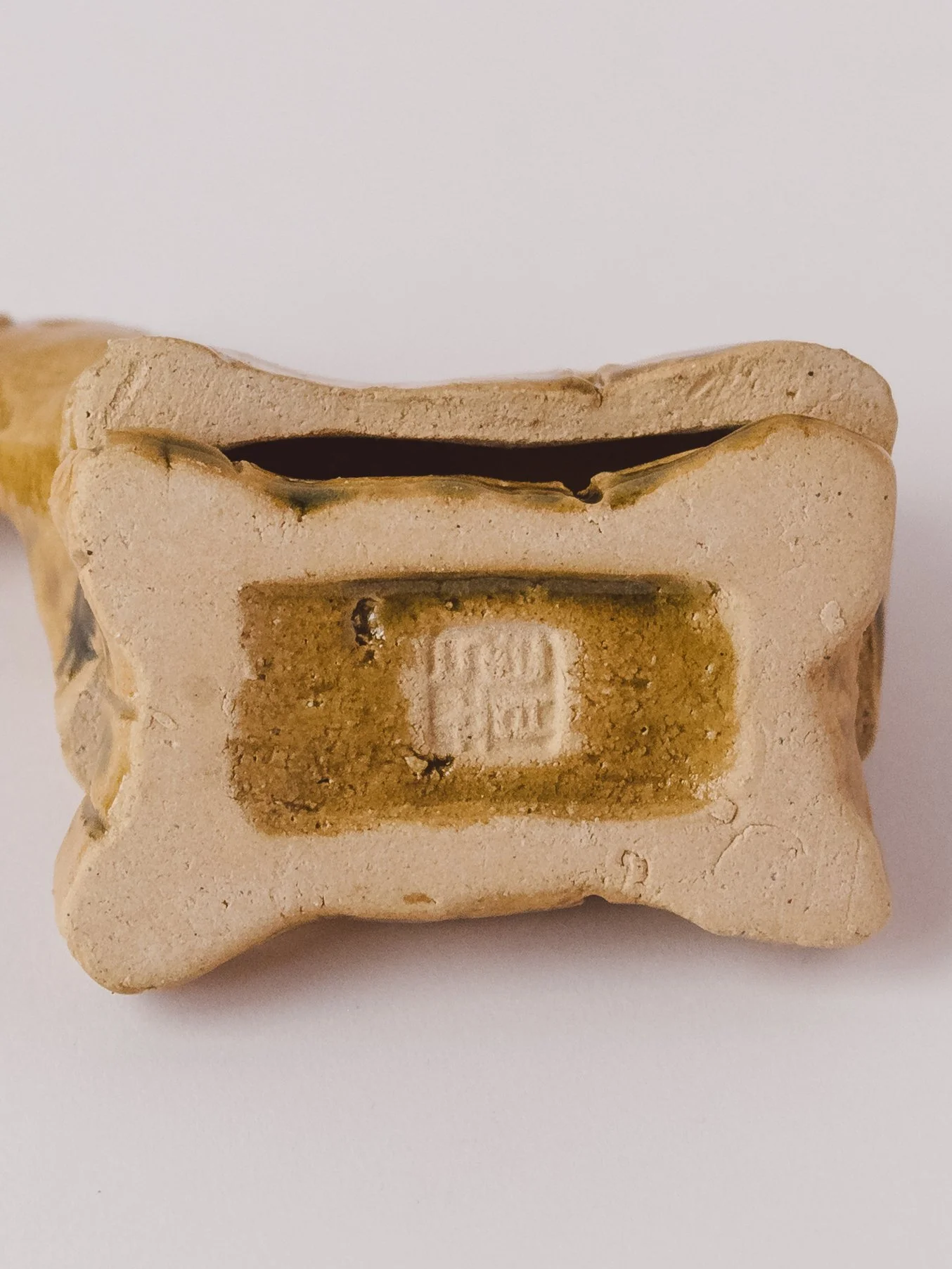 Image 12 of 15
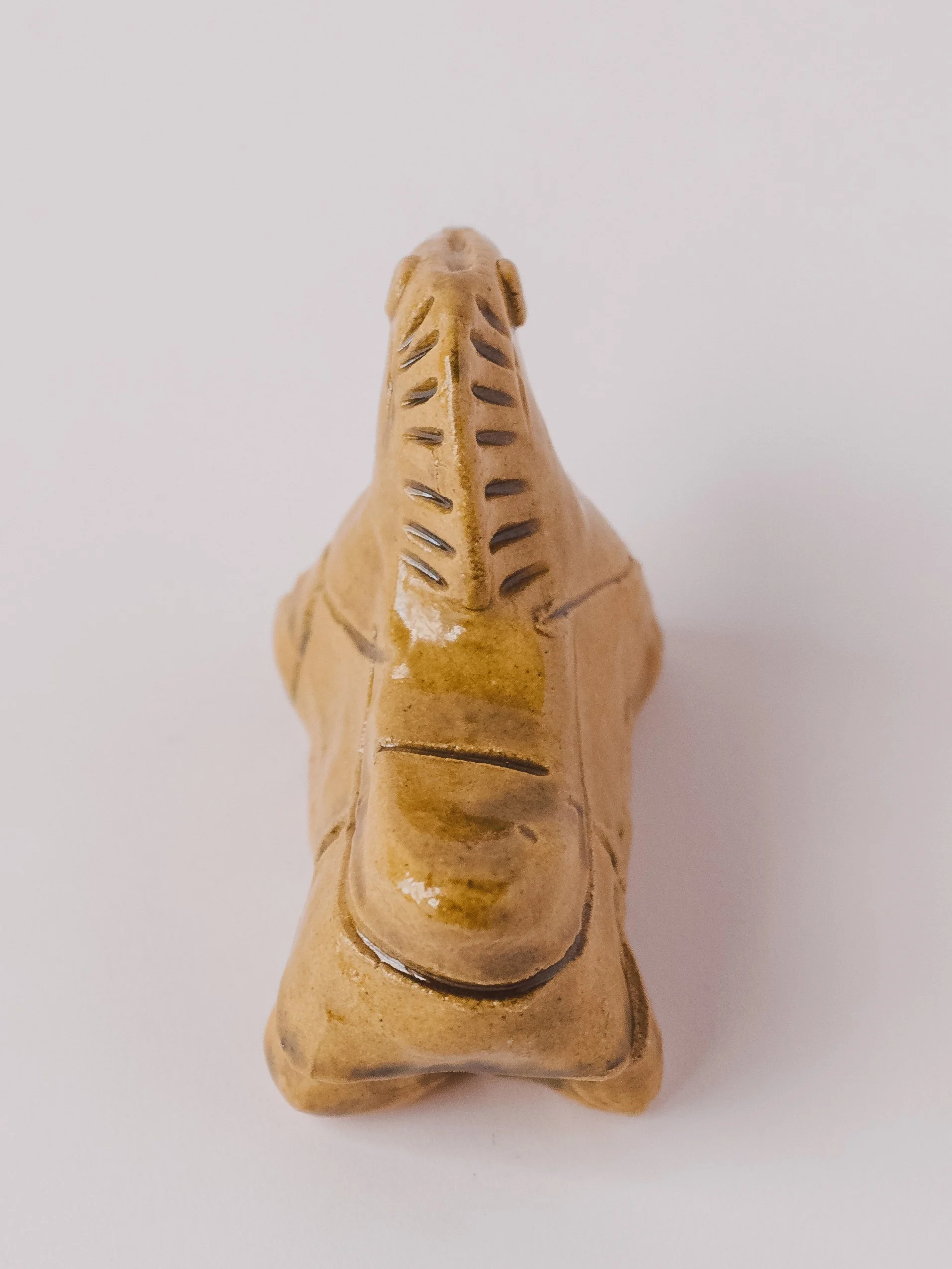 Image 13 of 15
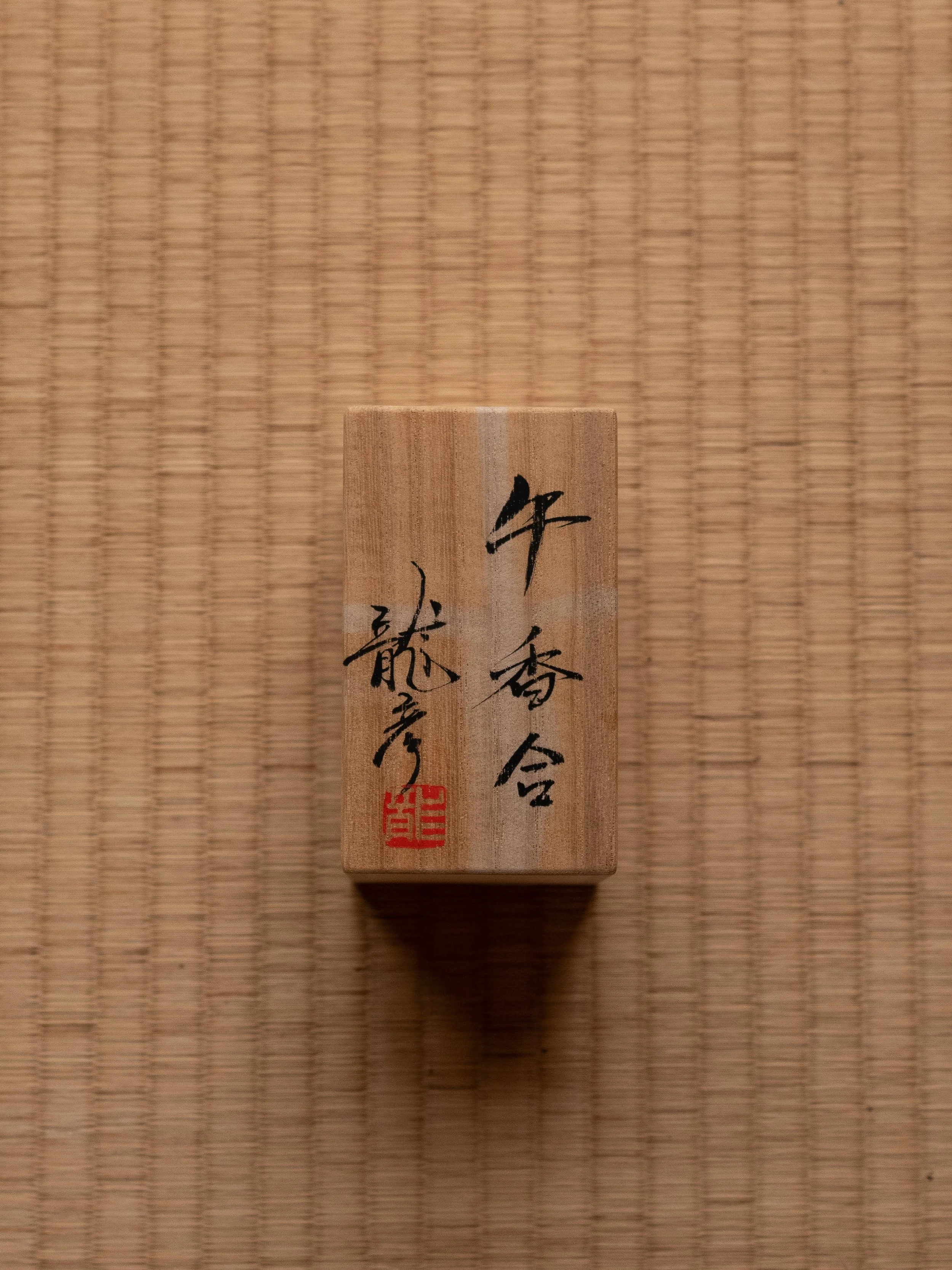 Image 14 of 15
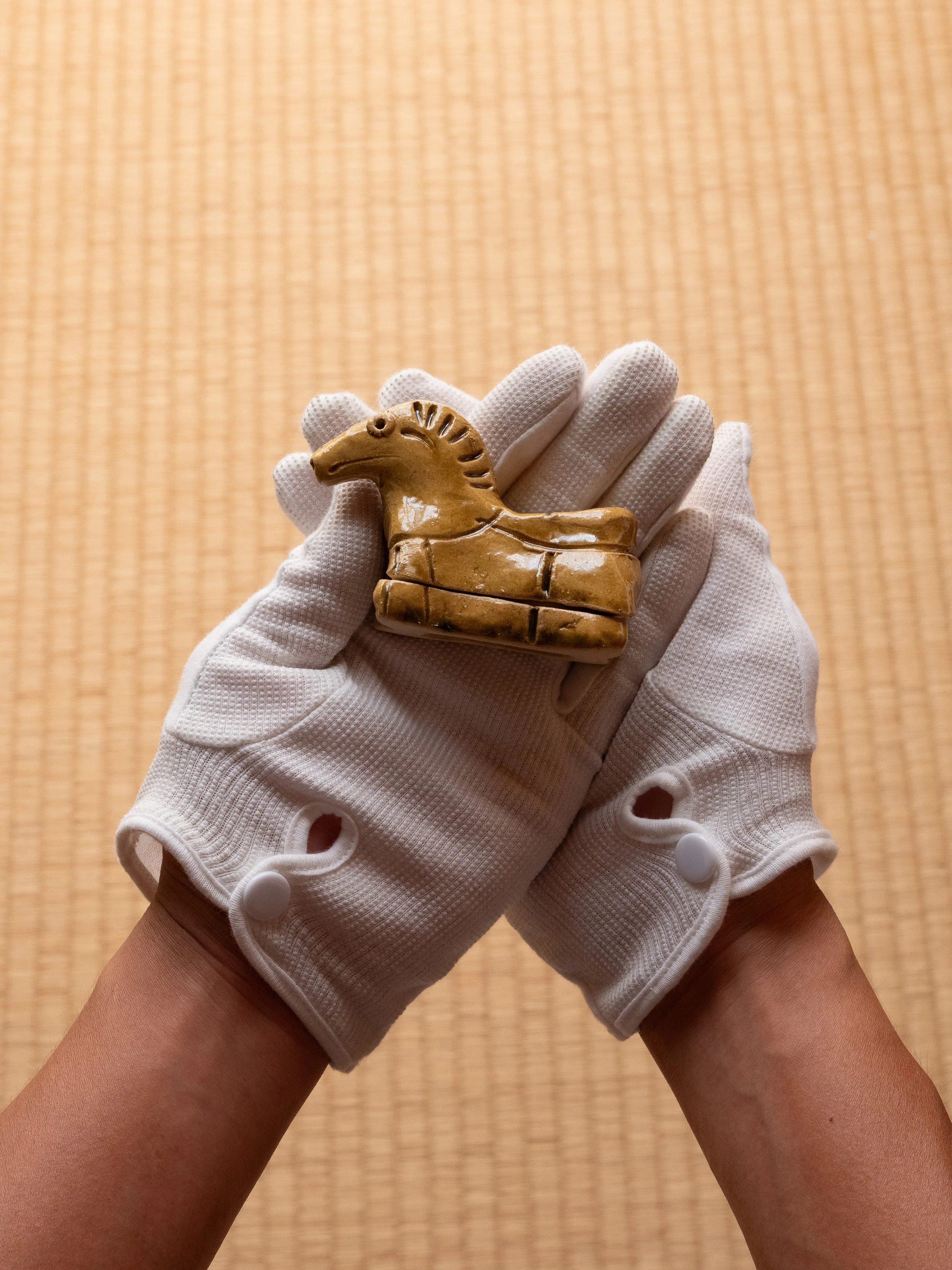 Image 15 of 15