【 The Concept 】
A standing Buddha caught in the act of arriving. Behind the head, a disc of light; behind the body, a pierced halo of gilt scrollwork; and springing from the head-halo, a full fan of fine gold rays, a sunburst thrown out into the air. This is raigō — the welcoming descent — the moment the Buddha of the Pure Land comes forward to receive a soul, and the whole object is built to hold that single instant of light and motion.
The figure is Amida, whose name means Infinite Light, and everything here serves that name. He does not sit and wait: he stands, weight forward, right hand raised and left lowered with thumb and finger touching in the gesture of welcome, already stepping down to meet whoever calls. The rays are that light made literal — not a painted glow but actual gold spokes, radiating from behind the head into the room.
The archive holds one other fully awakened Buddha, and though both are gilt metal, the two make a deliberate pair. Where GILDED THRONG fills its halo with a throng of tiny buddhas and stands still with open palms, RAYED ADVENT fills its halo with light itself and leans into a descent. One multiplies the Buddha; the other radiates him.
【 The Function 】
At 24 centimetres tall and 808 grams, it is a devotional figure built to be the still point of an altar — tall enough to command a niche, weighted low in a deep hexagonal pedestal so the fragile crown of rays stands without a tremor. The pedestal is its own small architecture: a lotus, opened over a stack of six-sided tiers worked with scrolling relief, lifting the Buddha up out of the everyday and into the middle of his own light. It is an assembly of three parts — figure, halo and pedestal — each made separately and brought together into one silhouette.
【 The Texture 】
The gold is warm and matte, a soft even gilding rather than a hard mirror-shine, and it takes the light differently on every surface: broad and calm across the robe, broken into fine glints along the folds, scattered to a thin bright line down each radiating spoke. The robe is the piece's showpiece — long, even drapery falling in deep parallel troughs from shoulder to hem, each fold holding its own seam of shadow.
The halo tells the truth about how the object is made. The radiance is an assembly, built up and fastened rather than cast in one piece with the figure, and it is steadied at two points. At the back of the head a single screw gathers the elements in order — first the head, then the disc of fine rays, then the pierced wing-board behind — pinning them at the crown; and the foot of the board sets into a recess cut in the pedestal, holding it at the base. The board itself is a boat-shaped panel of gilt scroll pierced clean through, so the wall shows between the tendrils and a tall opening stands at its centre. Behind all that pierced light the figure is a plain, unbroken Buddha — the radiance held to it at crown and base rather than grown from it. None of it is hidden. Like much devotional work, the piece is made in parts and fitted together, and it wears that construction as an honest record rather than a flaw. Here and there the gold has thinned to a warmer under-tone where a surface has been handled over the years.
【 Presence 】
Much of the archive sits quietly with itself. RAYED ADVENT does the opposite: it reaches outward, a small figure at the centre of a burst of light larger than the body it crowns. On a shelf it draws the eye from across a room and then rewards the near look — the fineness of the rays, the pierced vine, the drapery, the plain serene face at the middle of all that radiance.
It is an image of a Buddha who does not stay where he is. Standing on his lotus, wrapped in light and already leaning forward, he is held forever in the one gesture the whole tradition turns on: coming to meet you.
Sourced from a private collection in the Shikoku region, Japan.
【 The Concept 】
A standing Buddha caught in the act of arriving. Behind the head, a disc of light; behind the body, a pierced halo of gilt scrollwork; and springing from the head-halo, a full fan of fine gold rays, a sunburst thrown out into the air. This is raigō — the welcoming descent — the moment the Buddha of the Pure Land comes forward to receive a soul, and the whole object is built to hold that single instant of light and motion.
The figure is Amida, whose name means Infinite Light, and everything here serves that name. He does not sit and wait: he stands, weight forward, right hand raised and left lowered with thumb and finger touching in the gesture of welcome, already stepping down to meet whoever calls. The rays are that light made literal — not a painted glow but actual gold spokes, radiating from behind the head into the room.
The archive holds one other fully awakened Buddha, and though both are gilt metal, the two make a deliberate pair. Where GILDED THRONG fills its halo with a throng of tiny buddhas and stands still with open palms, RAYED ADVENT fills its halo with light itself and leans into a descent. One multiplies the Buddha; the other radiates him.
【 The Function 】
At 24 centimetres tall and 808 grams, it is a devotional figure built to be the still point of an altar — tall enough to command a niche, weighted low in a deep hexagonal pedestal so the fragile crown of rays stands without a tremor. The pedestal is its own small architecture: a lotus, opened over a stack of six-sided tiers worked with scrolling relief, lifting the Buddha up out of the everyday and into the middle of his own light. It is an assembly of three parts — figure, halo and pedestal — each made separately and brought together into one silhouette.
【 The Texture 】
The gold is warm and matte, a soft even gilding rather than a hard mirror-shine, and it takes the light differently on every surface: broad and calm across the robe, broken into fine glints along the folds, scattered to a thin bright line down each radiating spoke. The robe is the piece's showpiece — long, even drapery falling in deep parallel troughs from shoulder to hem, each fold holding its own seam of shadow.
The halo tells the truth about how the object is made. The radiance is an assembly, built up and fastened rather than cast in one piece with the figure, and it is steadied at two points. At the back of the head a single screw gathers the elements in order — first the head, then the disc of fine rays, then the pierced wing-board behind — pinning them at the crown; and the foot of the board sets into a recess cut in the pedestal, holding it at the base. The board itself is a boat-shaped panel of gilt scroll pierced clean through, so the wall shows between the tendrils and a tall opening stands at its centre. Behind all that pierced light the figure is a plain, unbroken Buddha — the radiance held to it at crown and base rather than grown from it. None of it is hidden. Like much devotional work, the piece is made in parts and fitted together, and it wears that construction as an honest record rather than a flaw. Here and there the gold has thinned to a warmer under-tone where a surface has been handled over the years.
【 Presence 】
Much of the archive sits quietly with itself. RAYED ADVENT does the opposite: it reaches outward, a small figure at the centre of a burst of light larger than the body it crowns. On a shelf it draws the eye from across a room and then rewards the near look — the fineness of the rays, the pierced vine, the drapery, the plain serene face at the middle of all that radiance.
It is an image of a Buddha who does not stay where he is. Standing on his lotus, wrapped in light and already leaning forward, he is held forever in the one gesture the whole tradition turns on: coming to meet you.
Sourced from a private collection in the Shikoku region, Japan.


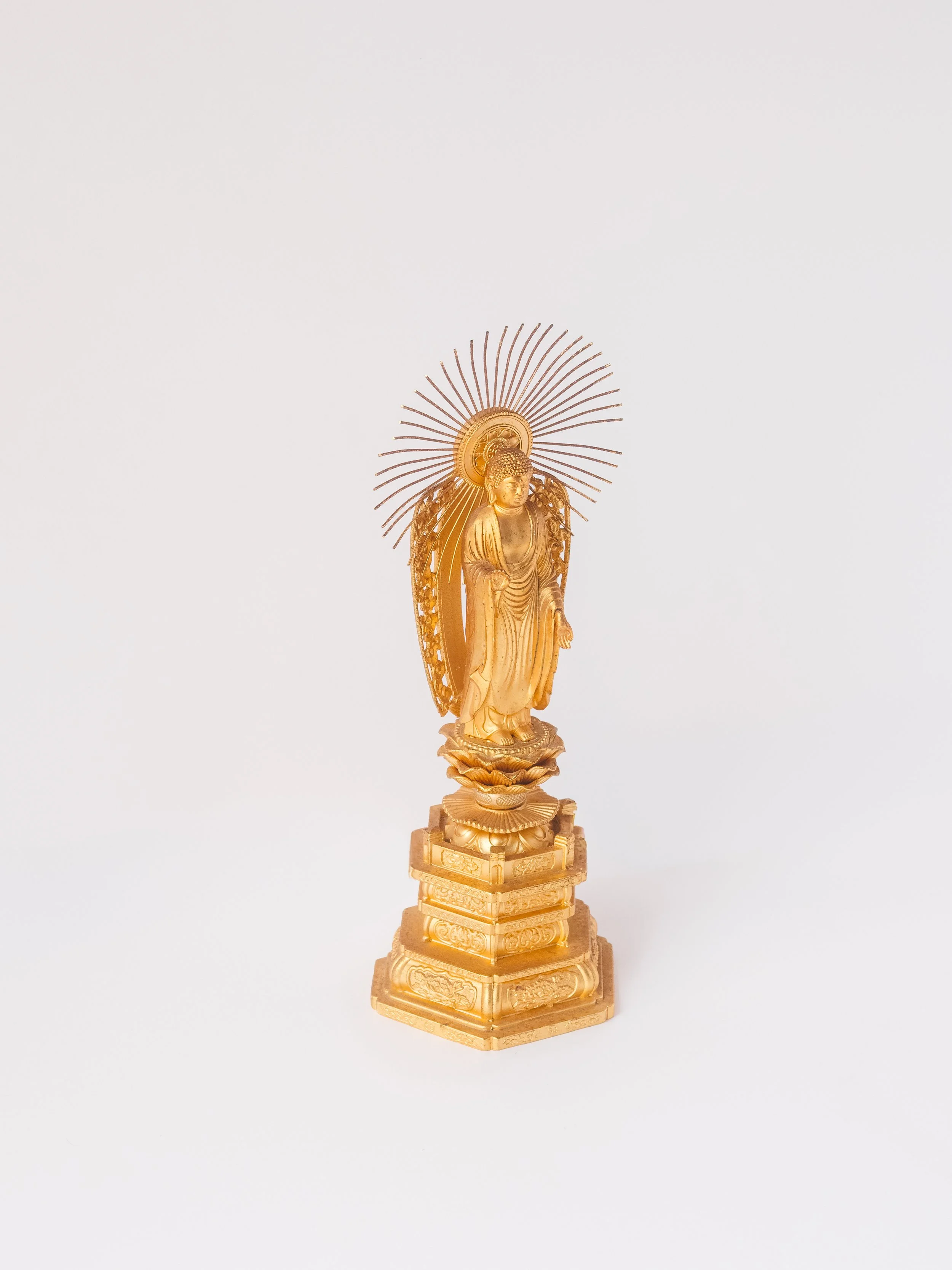 Image 1 of 11
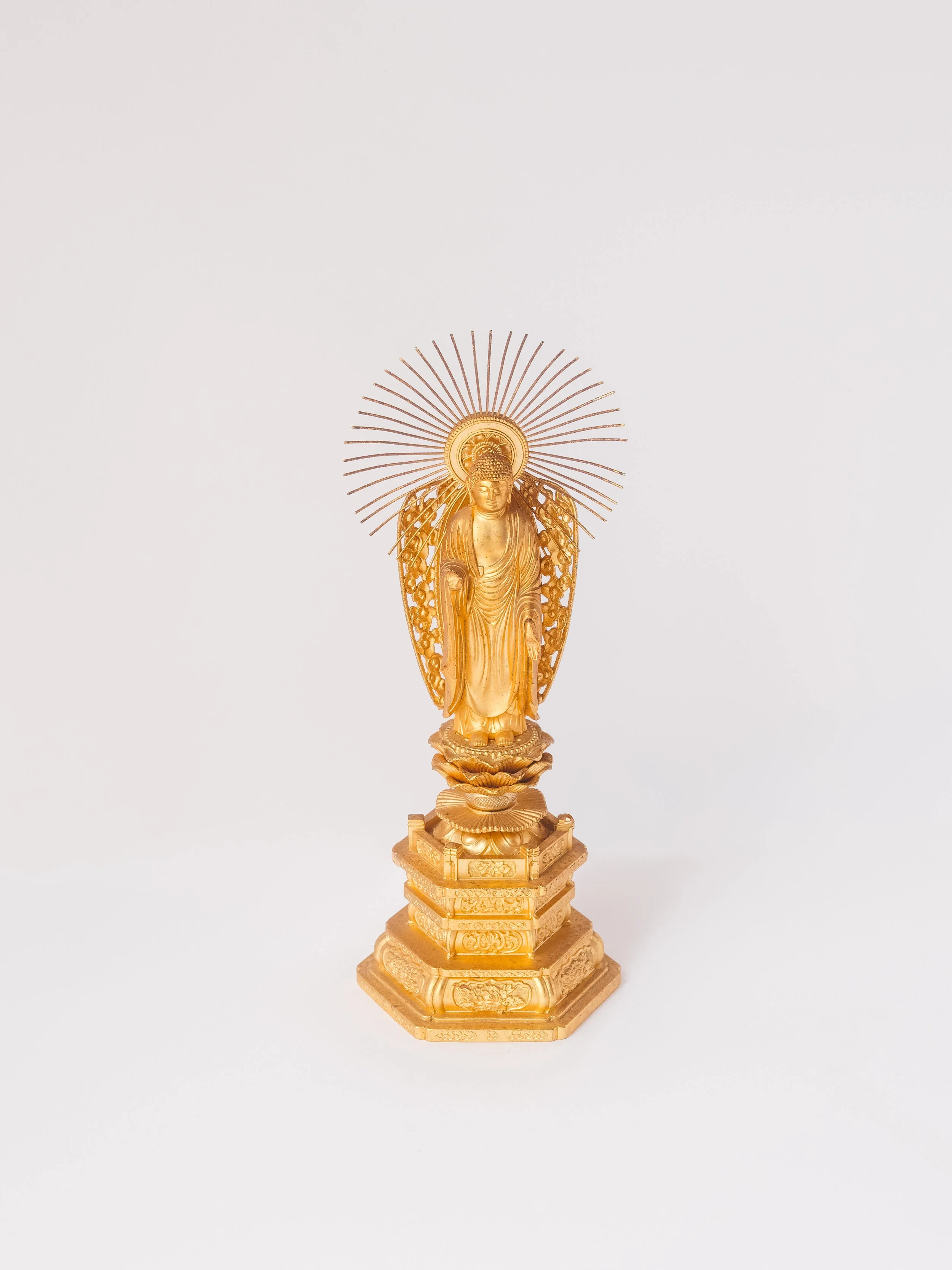 Image 2 of 11
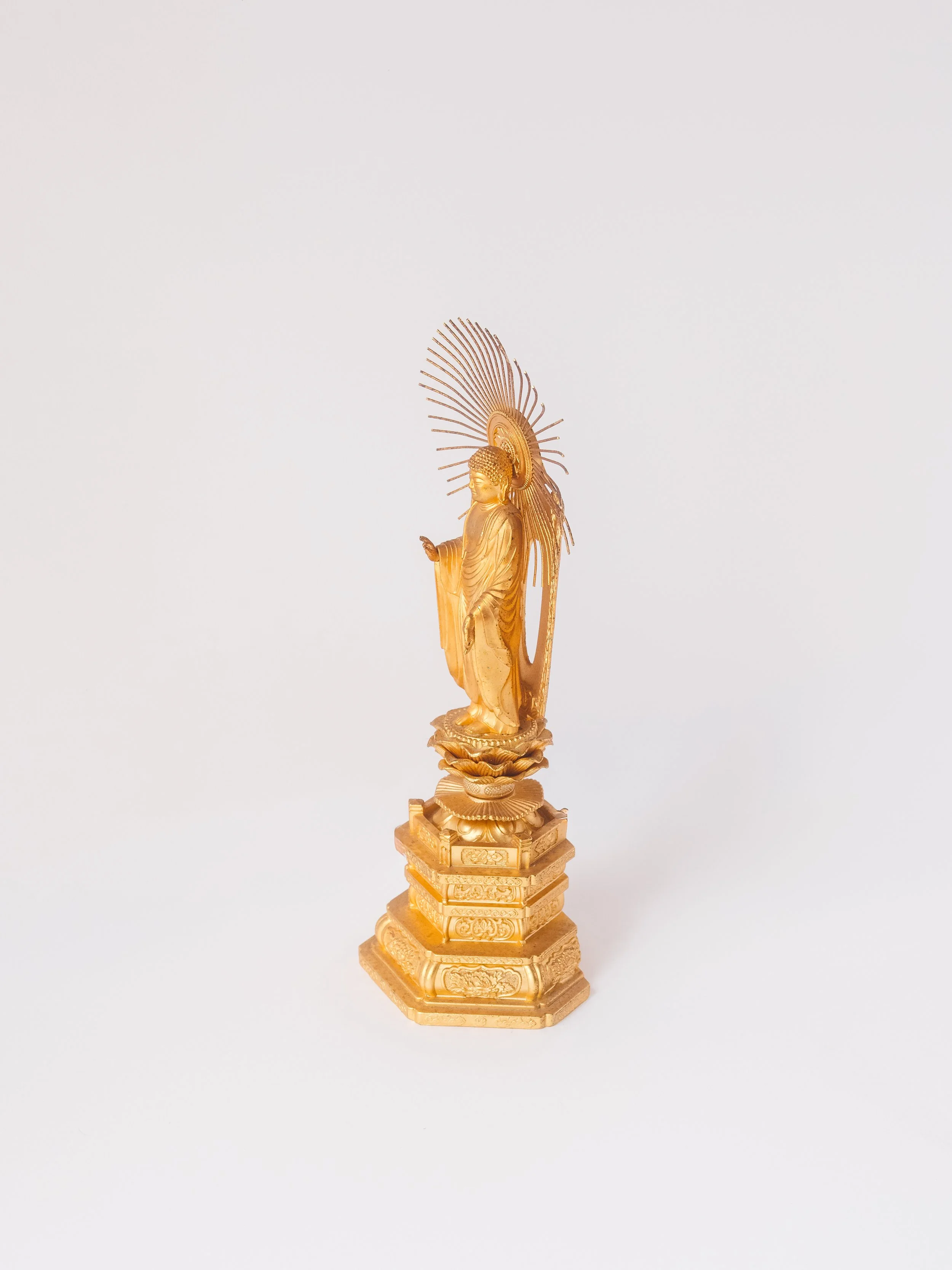 Image 3 of 11
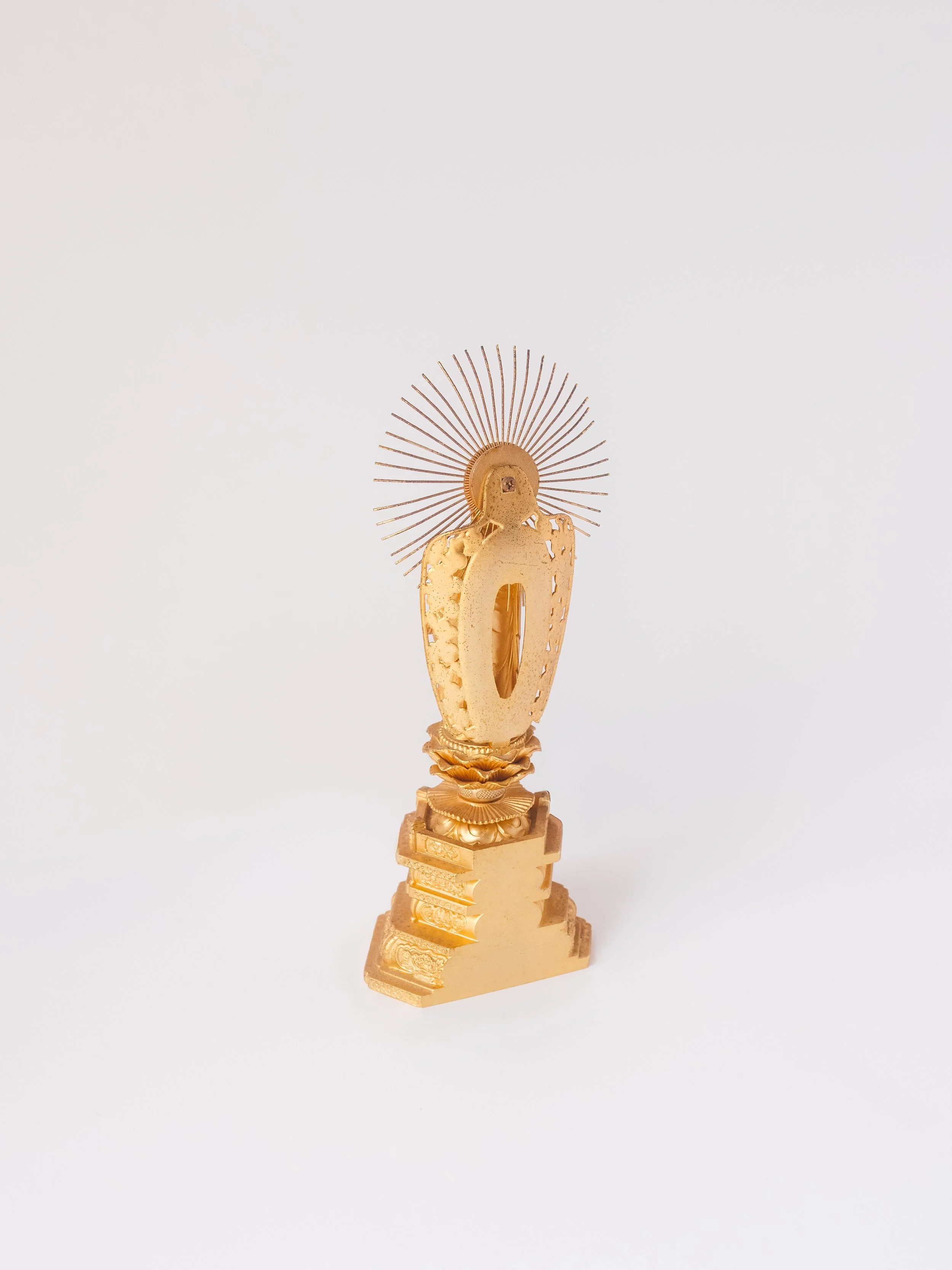 Image 4 of 11
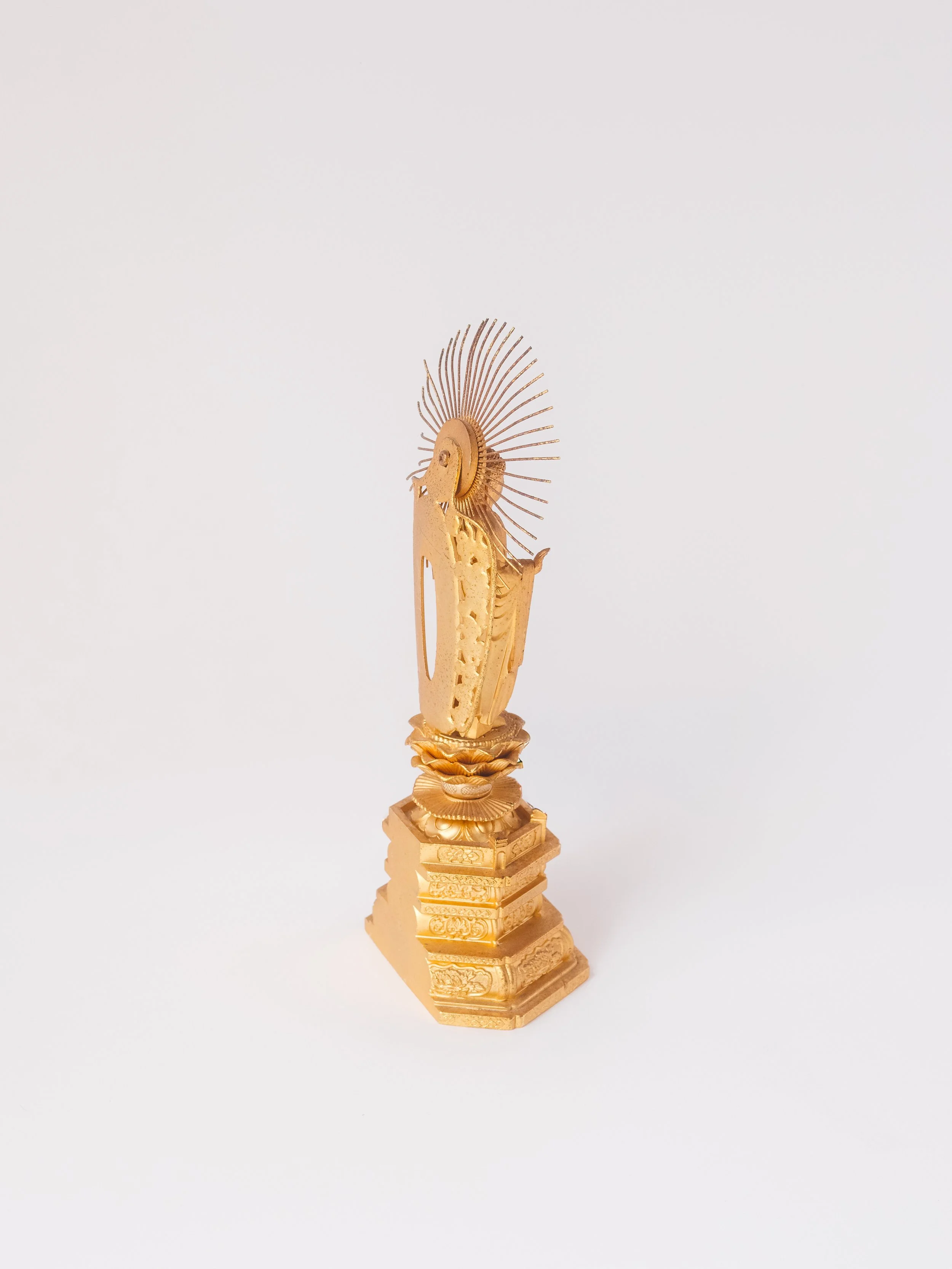 Image 5 of 11
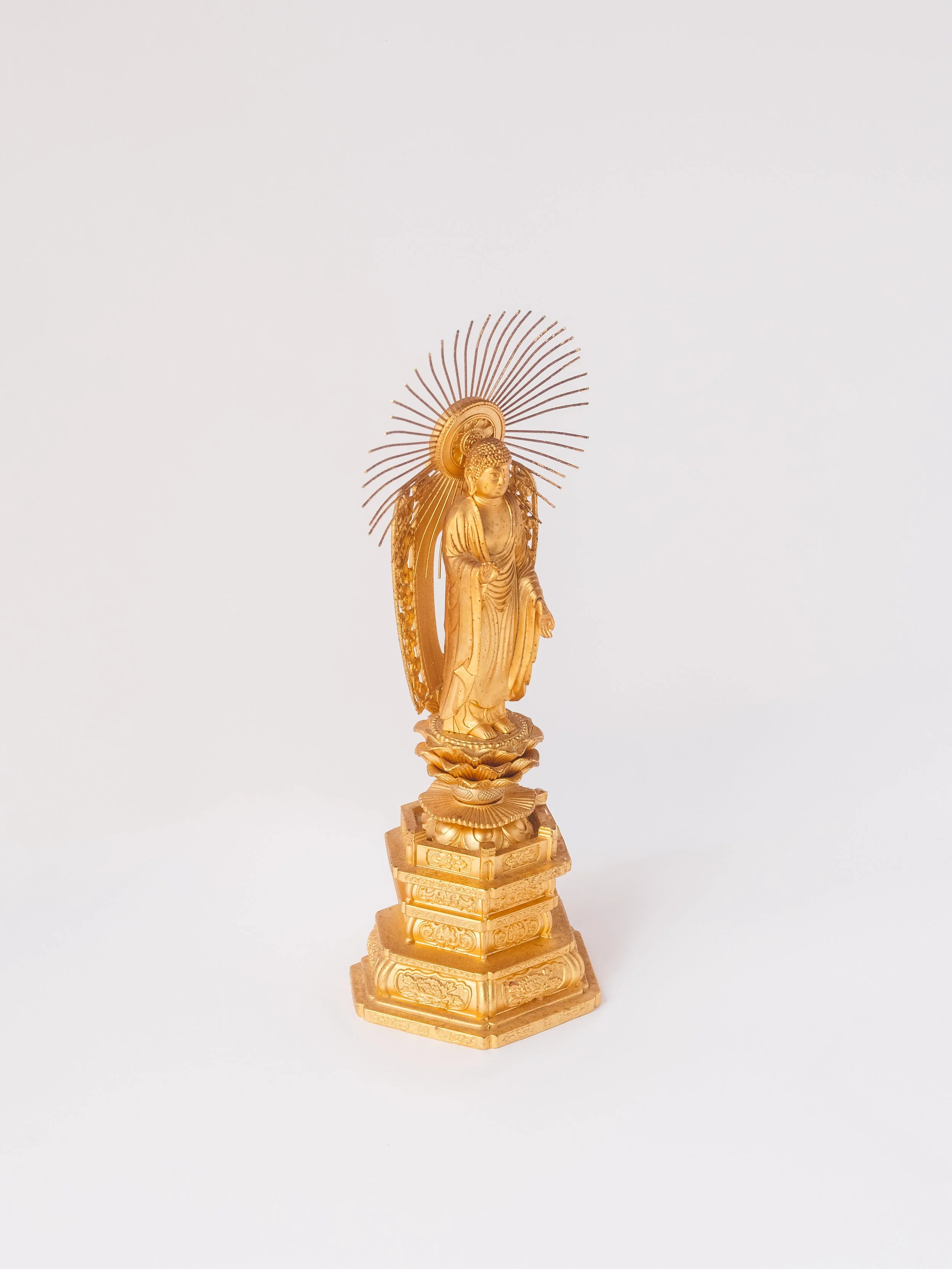 Image 6 of 11
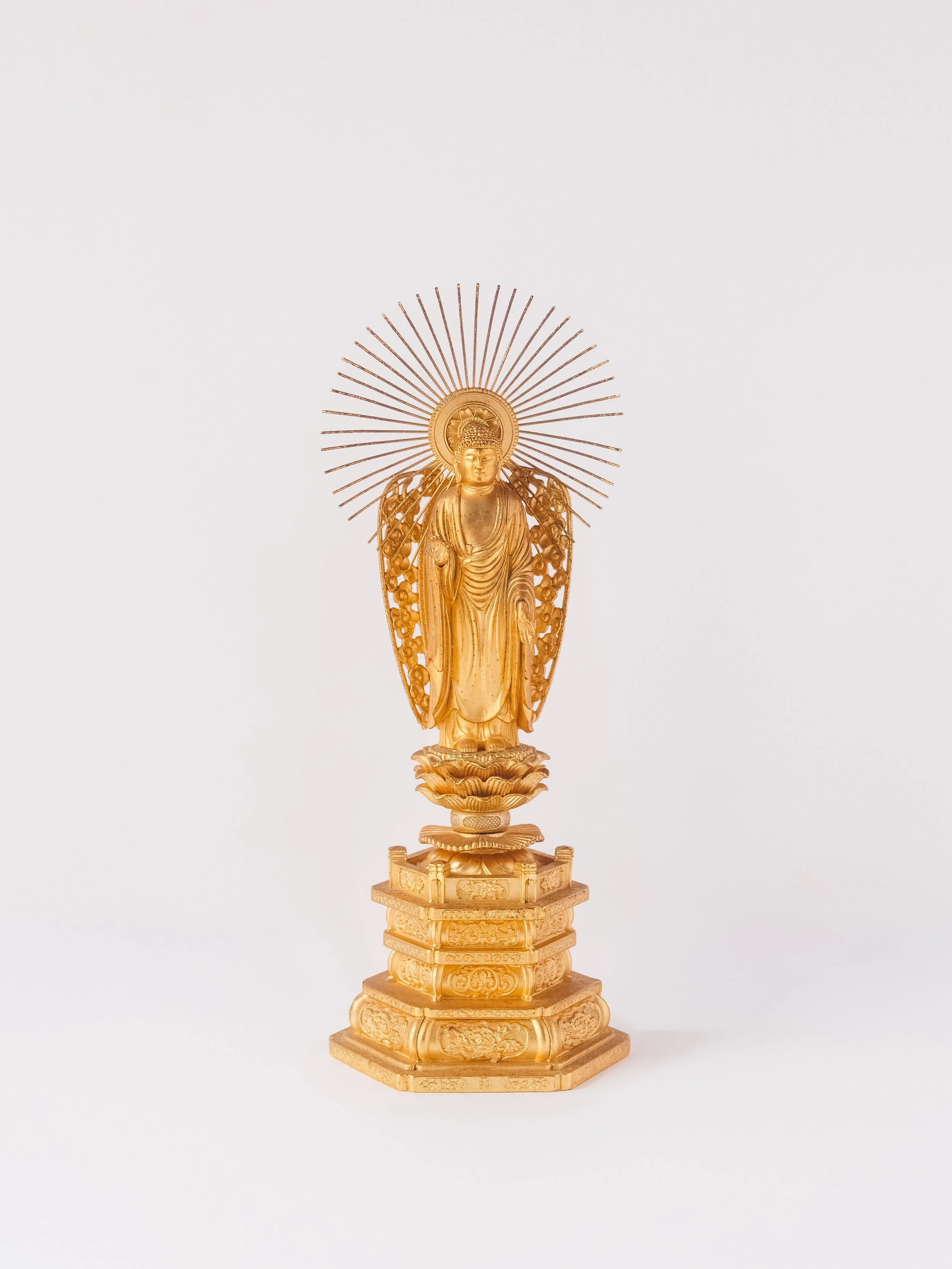 Image 7 of 11
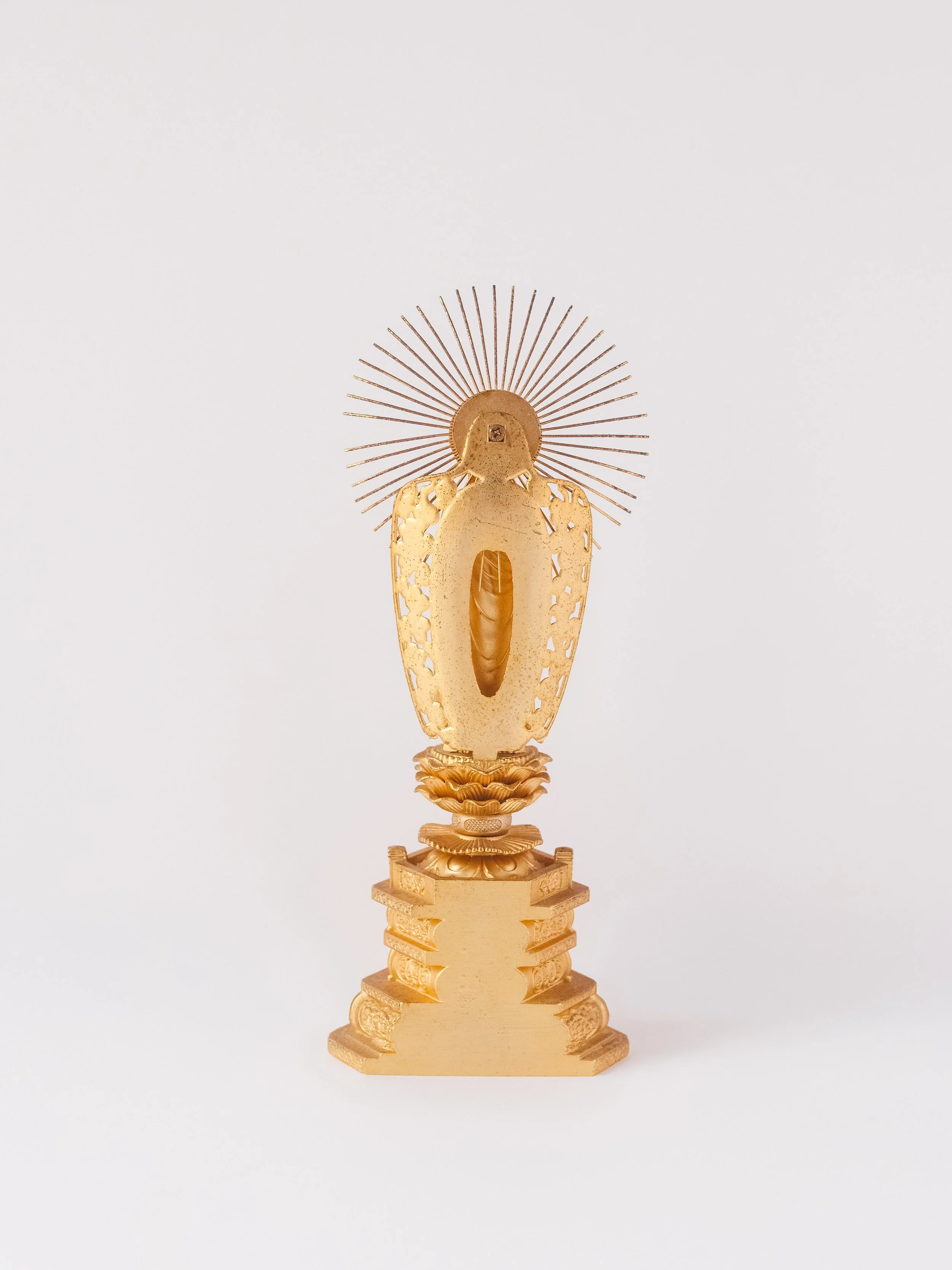 Image 8 of 11
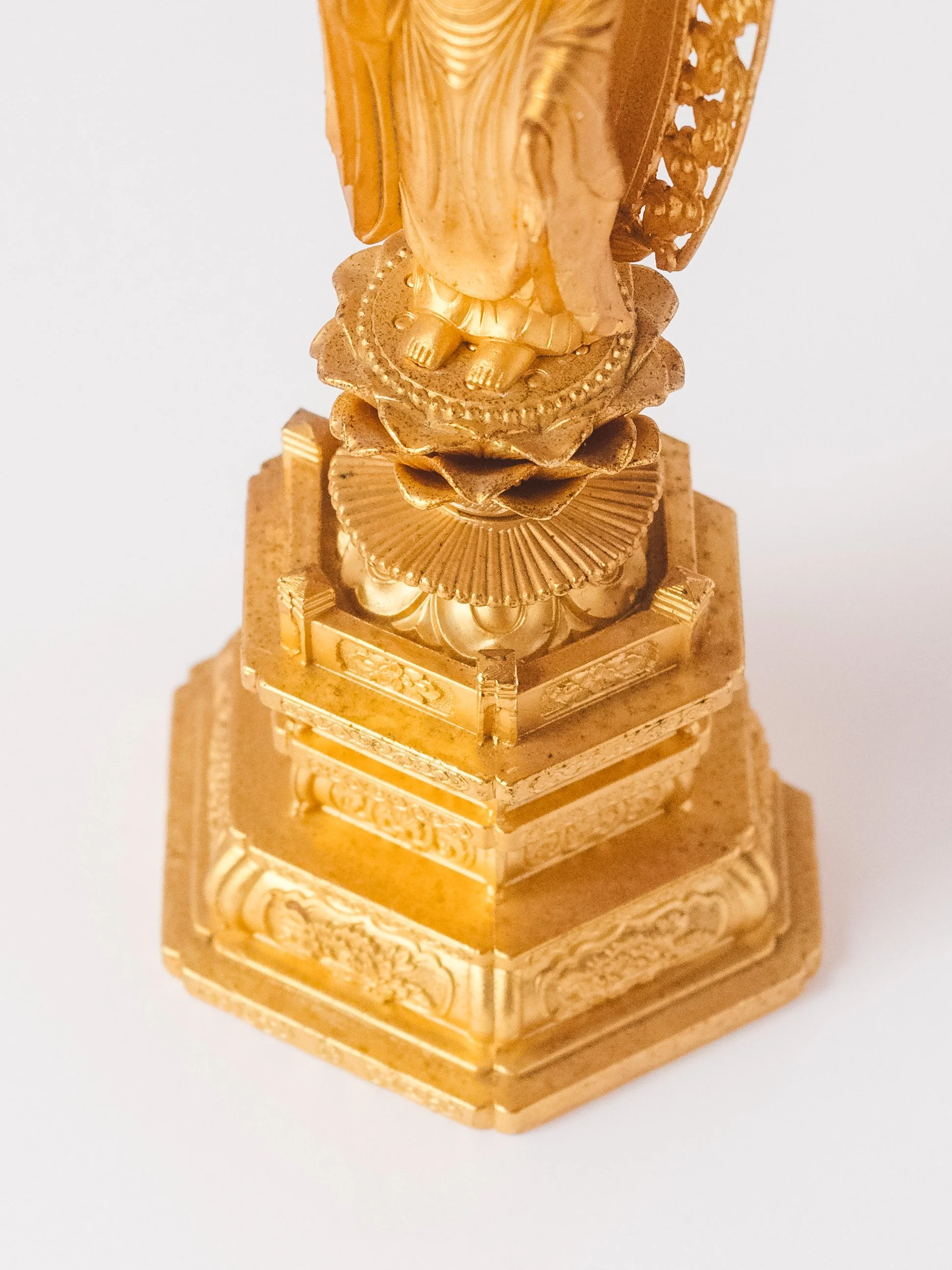 Image 9 of 11
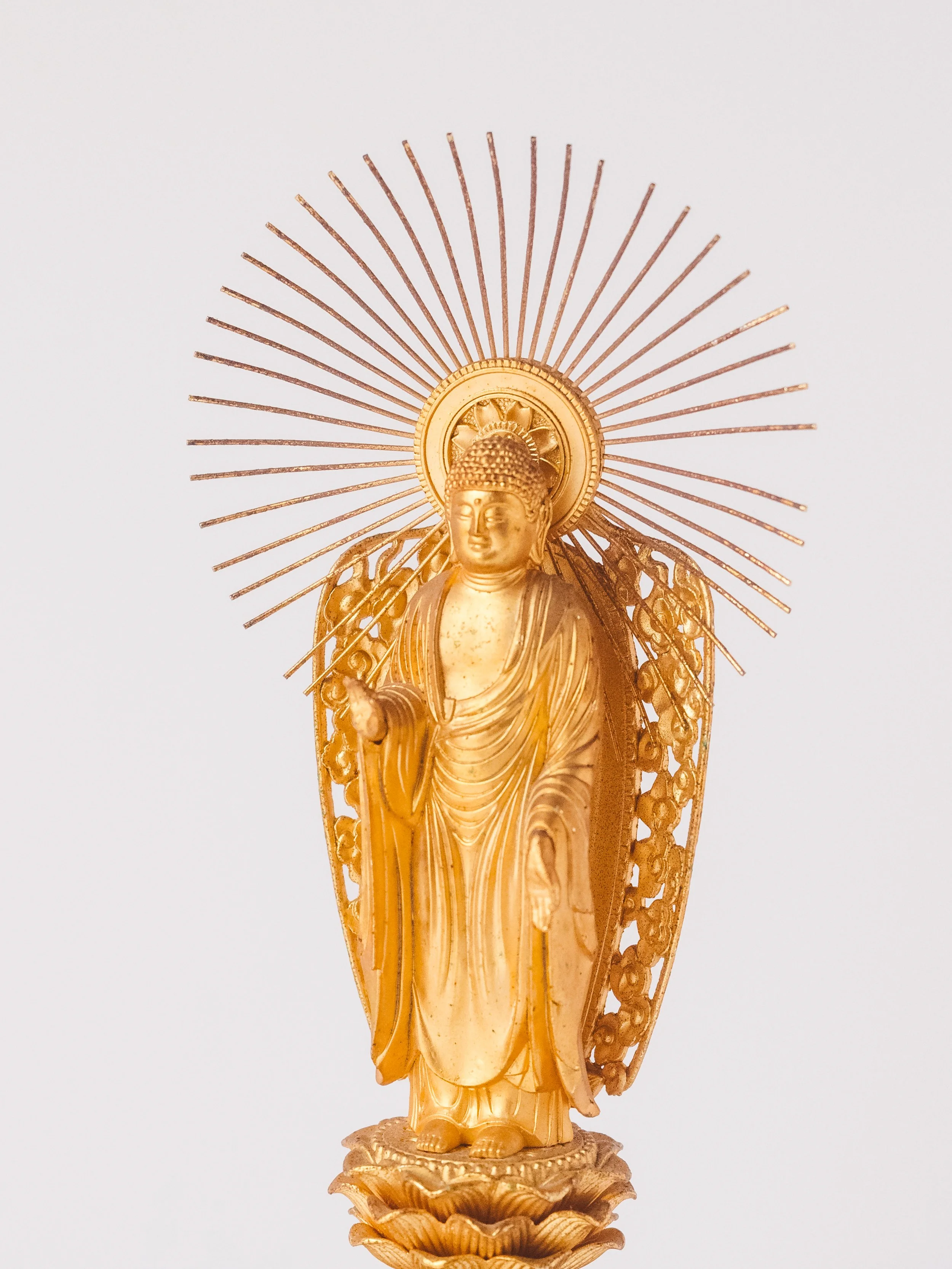 Image 10 of 11
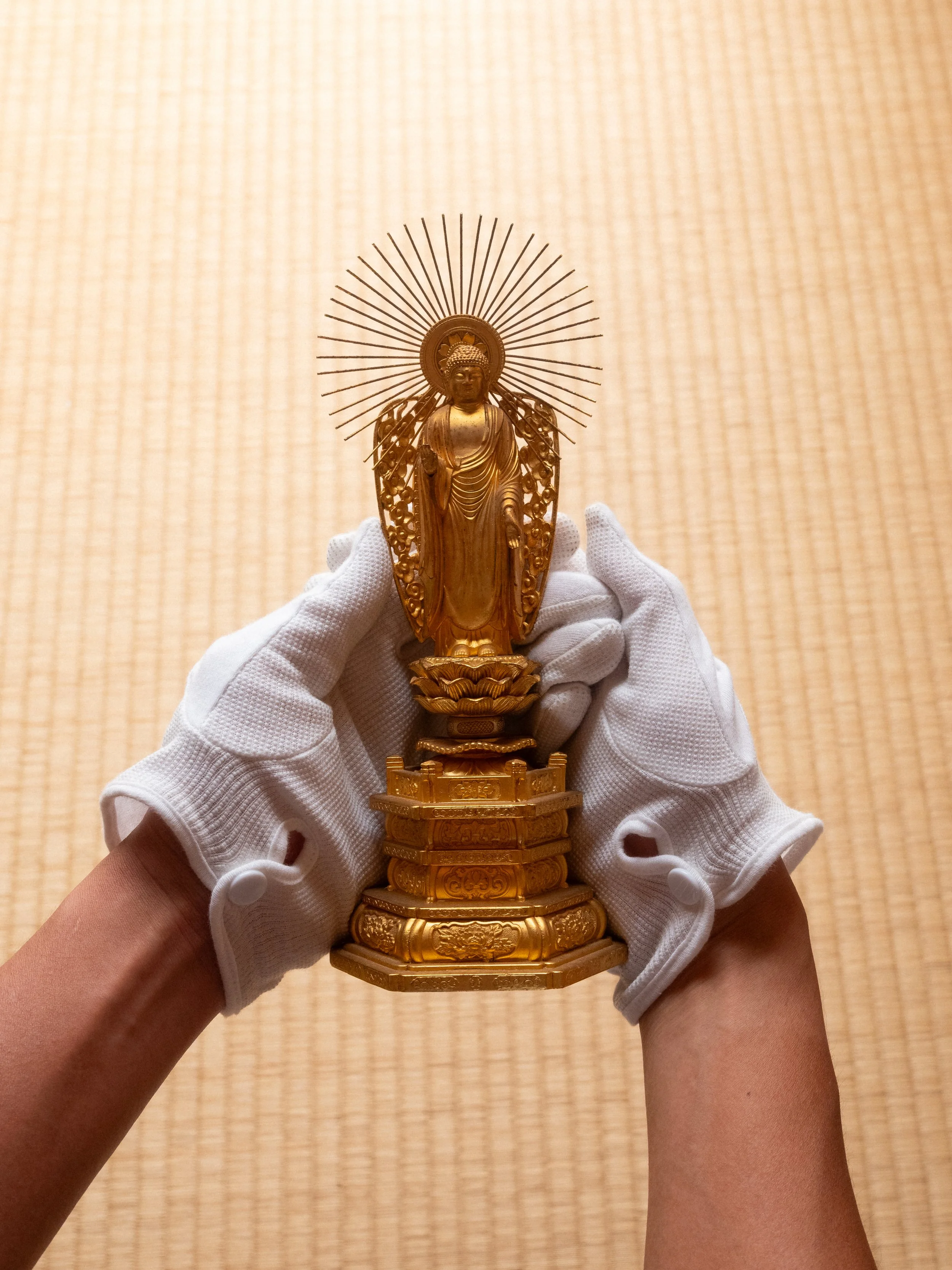 Image 11 of 11