

 Image 1 of 13
 Image 2 of 13
 Image 3 of 13
 Image 4 of 13
 Image 5 of 13
 Image 6 of 13
 Image 7 of 13
 Image 8 of 13
 Image 9 of 13
 Image 10 of 13
 Image 11 of 13
 Image 12 of 13
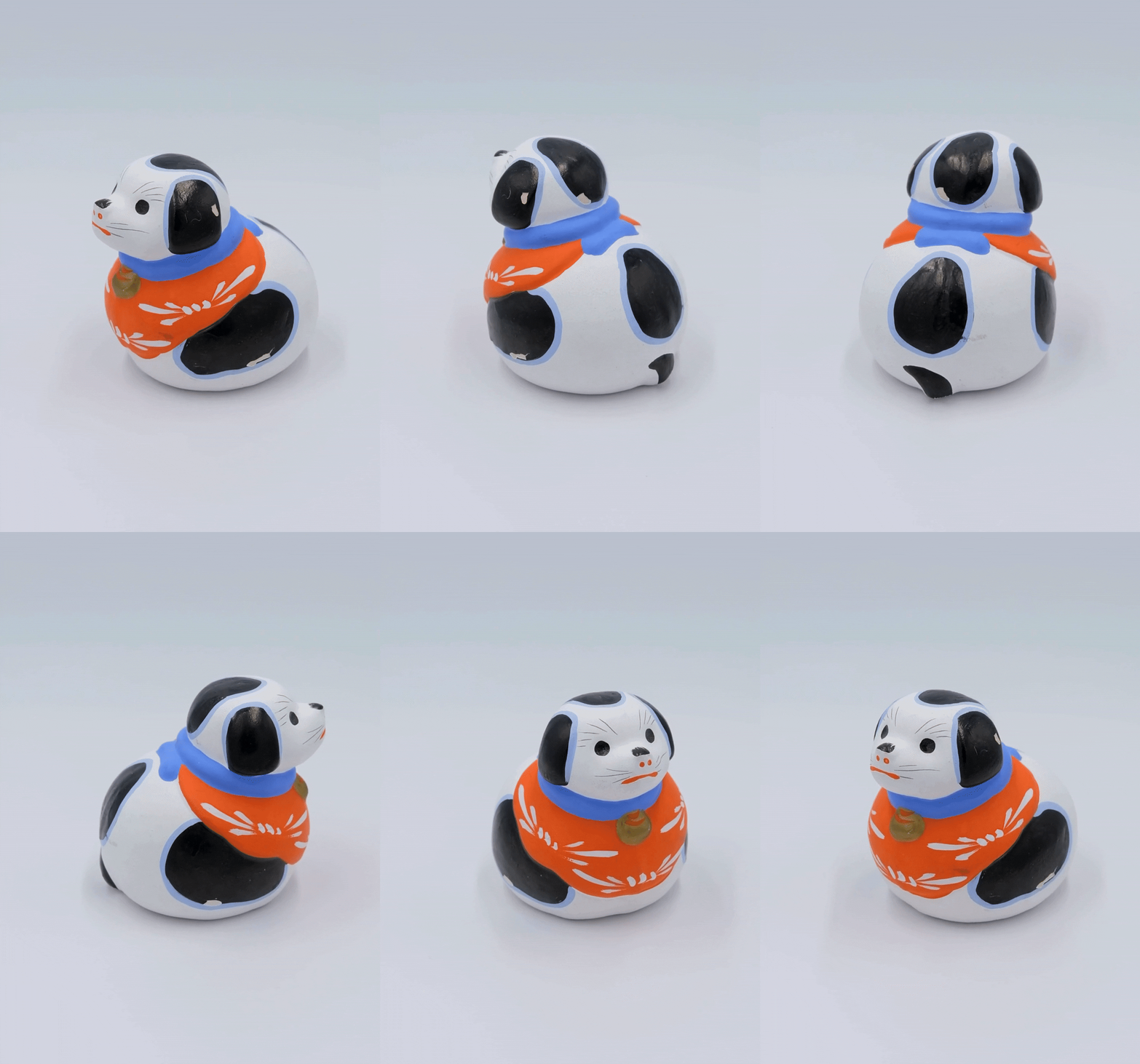 Image 13 of 13
【Context】
Period: Showa Era (Mid-20th Century)Origin: JapanMaterial: Solid Fired Clay (Hand-painted)Condition: Authentic Vintage (Presence of natural wear and patina)
【Dimensions (Approx.)】
H: 7 cm (2.8 in)W: 3.5 cm (1.4 in)Weight: Solid and substantial (Clay body).
RELATED ARCHIVAL SPECIMENS
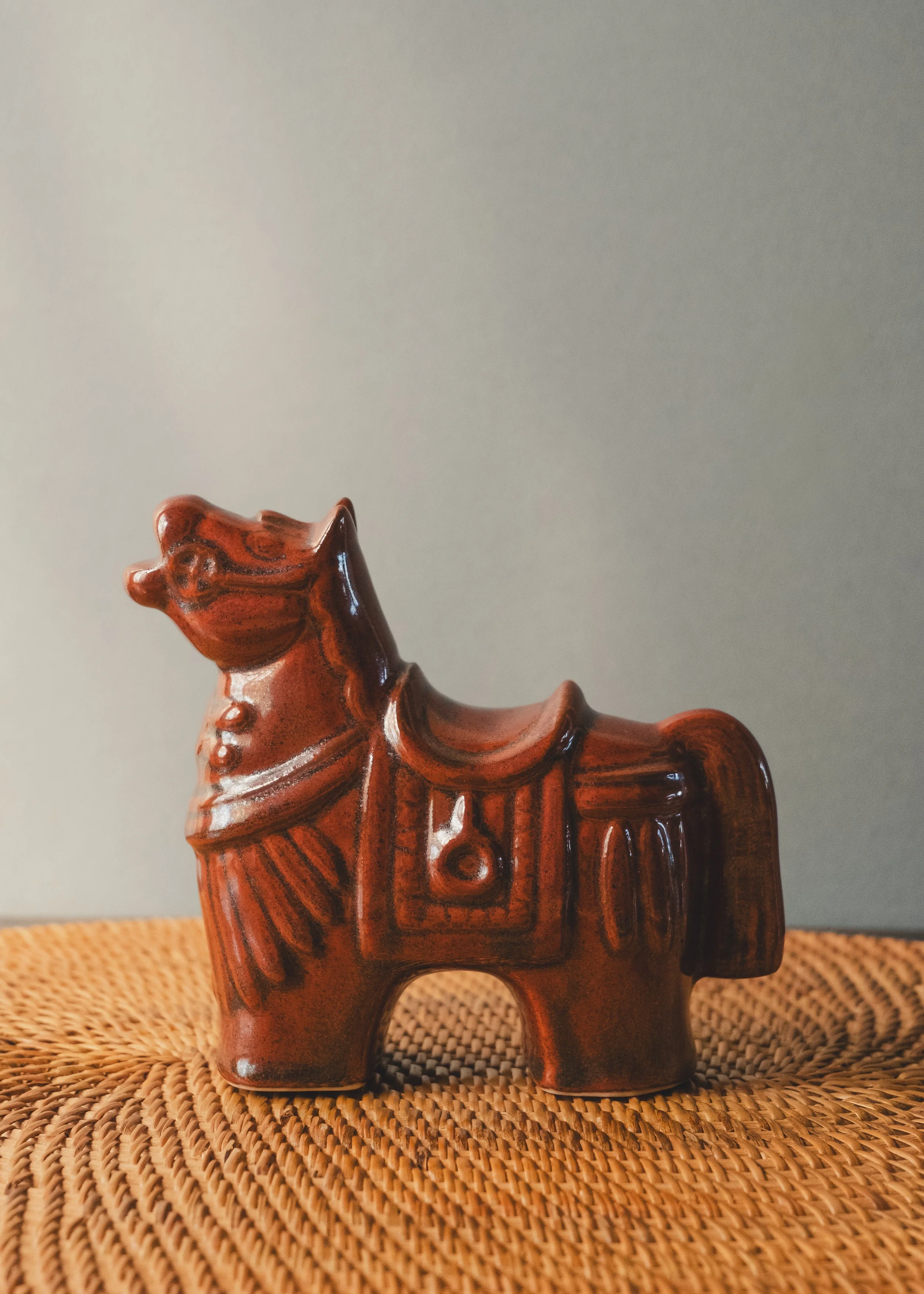
【 The Concept 】
Ancestral prayer translated into modern ceramic.
This object captures a specific moment in Japanese design history—the "Showa Modern" era of the 1970s. While it takes the form of a horse, it is not a realistic depiction of an animal. It is a sculptural translation of Japan's ancient "Miharukoma" (wooden votive horses) and "Haniwa" (burial clay figures), re-imagined through the lens of mid-century pottery techniques.
Coated in a deep, lustrous "Ameyu" (Amber Glaze), this anonymous work does not scream for attention. Instead, it offers a warm, rounded silence that serves as a nostalgic bridge between the folklore of the past and the modern living space.
【 Material Integrity 】
The alchemy of Iron and Kiln.
The visual gravity of this piece comes from its glaze. "Ameyu," a traditional Japanese caramel-colored glaze rich in iron oxide, is fired in an oxygen-rich kiln to produce this distinct, glossy warmth. Note the accumulation of darker glaze in the grooves of the saddle and mane. These "pools" of color create a natural contrast, highlighting the depth of the sculpture without the need for artificial painting.
Despite its solid, grounded appearance, the object is surprisingly light (208g). This is due to the "Slip Casting" (Deisho-ikomi) technique—a specialized method developed in the historic kilns of Seto (Aichi Prefecture), where liquid clay is poured into molds to create a hollow, durable shell. It is a testament to the industrial craft of post-war Japan.
【 The Architecture 】
Primitive geometry.
The silhouette rejects sharp realism in favor of a primitive, geometric charm. The legs are thick pillars, providing unwavering stability. The mouth is slightly open, and the head is tilted upward—a posture known in Feng Shui and Japanese symbolism to represent "rising fortune" and "forward momentum."
The detailed relief of the saddle and the decorative bands across the chest (Munagai) and rump (Shirigai) serve as historical footprints, tracing back to the ceremonial decorations used on sacred horses in Shinto rituals.
【 Presence 】
A warm anchor for the cold desk.
This Amber Nomad is designed for the focused home archive.
Standing at 15cm, it possesses the perfect scale to sit on a stack of books, a mid-century sideboard, or next to a computer monitor. The amber color harmonizes beautifully with vintage teak or walnut furniture, typical of the Japandi style.
While originally intended as a talisman for protection and family prosperity, today it functions as a "Guardians of Solitude," watching over your workspace with a quiet, optimistic gaze.
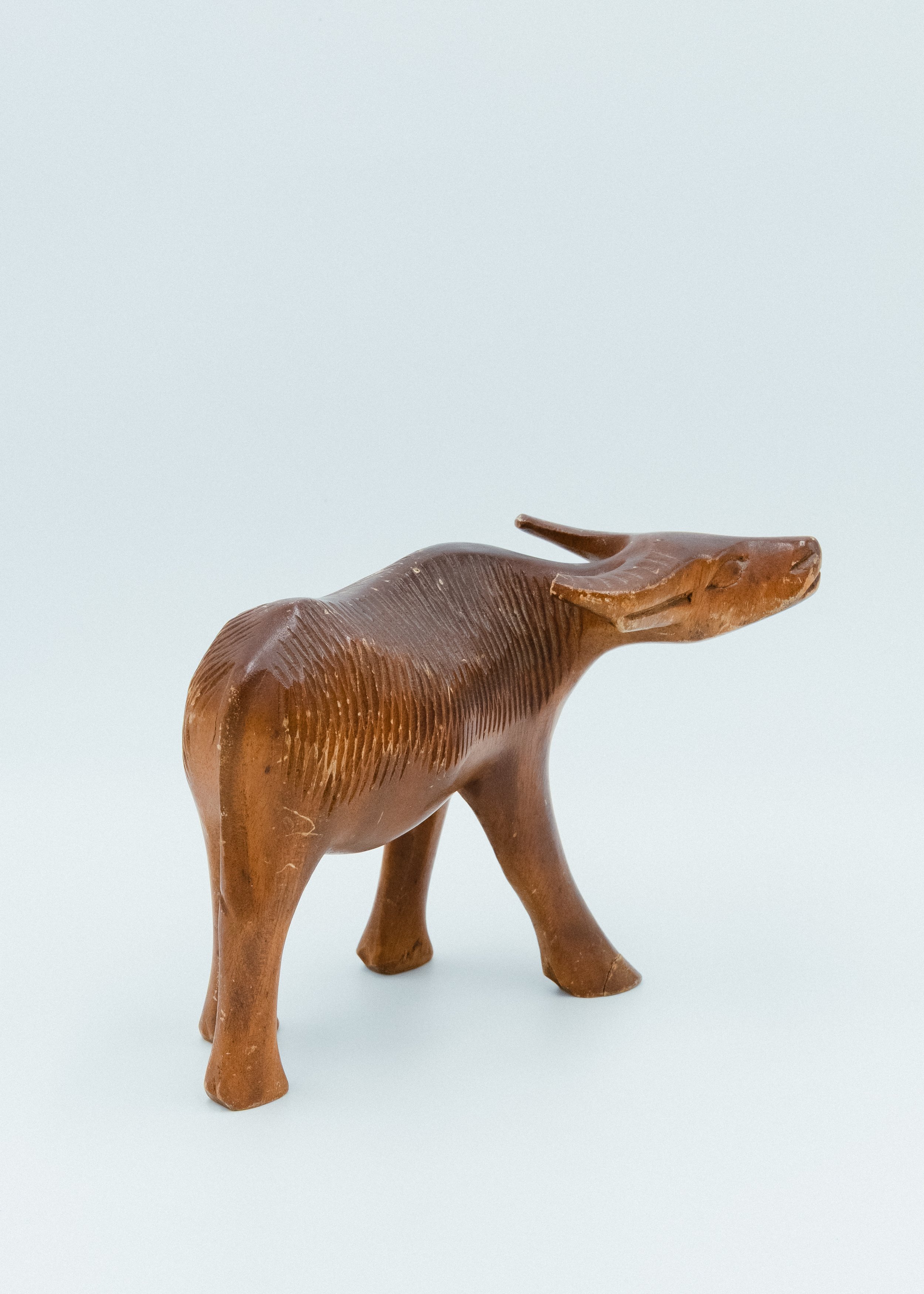
【Narrative】
The labor that built a house. In the 1930s, water buffaloes were introduced to Taketomi—a remote coral island of Okinawa. Long before tractors arrived, these animals were the "Silent Partners" of the subtropical sun, plowing through deep mud and sugar cane fields to sustain human life. This hand-carved sculpture immortalizes the buffalo not as a pet, but as a dignified laborer. It represents a vital archive of a forgotten era: the moment when survival depended on the shared heartbeat of man and beast.
【The Artistry of the Chisel】
"Sentinel of Stillness." Unlike factory-made souvenirs, this piece retains the raw energy of its maker. The artisan used bold, unpolished chisel marks to express the animal’s rugged fur and muscular resilience. With its head raised toward the horizon and legs firmly planted, the form radiates an immovable stability—a physical embodiment of endurance and the transition from a life of toil to the Okinawan "Slow Life" of today.
【Patina of Resilience】
The solid wood has deepened into a rich, amber patina through decades of oxidation and human touch. The small scuffs and weathered marks on the limbs are not imperfections; they are the "signatures of time." They serve as proof that this object was part of a lived history, held and cherished through the shifting decades of the Showa era. It is imperfect, and in that imperfection lies its soulful authenticity.
【Placement】
With a commanding width of 20 cm (8 in), this sculpture possesses a grounding, "heavy" presence. We recommend placing it on a wide sideboard, a wooden shelf, or within a minimalist workspace. Its wooden calmness serves as a primal anchor for the room—a silent, physical reminder to slow down and breathe with the pace of the island.