【 The Concept 】
A dog that will not leave, with its arms full of fish. The scene is made twice — once large, once small — a white dog seated square to the front, holding a red sea bream nearly as big as itself against its chest, planted and unwilling to let go. Behind the charm is a pun that only works aloud. The dog is inu, and in the local speech of its region inu also carries the sense of inuru — "to go home, to leave." Seated face-front and refusing to turn away, the dog says inu-mai: "I will not leave." The fish is tai, the tail of medetai, the word for all things auspicious. Together the two make a single spoken vow — inu-mai, medetai: "I will not go back, and that is a blessing."
That vow gives the piece its old use. This was a bride's figure — a wedding token from the household toys of its region, carried to a new home as a promise to stay in it; the dog stands, as dogs do in Japan, for easy birth and the warding of harm. A guarding animal and a celebratory fish, folded into one small red-and-white blessing.
The archive is not short of dogs — IRON GAZE in cast iron, QUIET KIN in celadon, WHITTLED WATCH in wood — but this is the one made of paper, where iron and glaze give way to gofun and glue, and its charm is a pun you have to say out loud. Where those dogs sit and watch, this one holds something, and will not give it up.
【 The Function 】
The pair is tiny and almost weightless: the large piece stands 8.5 centimetres tall at 30 grams, the small one 5.5 centimetres at 10 grams — hollow shells of paper that a breath could rock but a fall would rarely break, which is the whole point of a toy once carried in a wedding procession and passed into children's hands. It is the New-Year and household kind of object, a bringer of fortune set by the entry or on a shelf where the year is welcomed in. On the back of the larger dog an inked seal is pressed into the white — the maker's mark, left as a small red rectangle of authorship without a word of explanation.
【 The Texture 】
The white is gofun — a matte ground of shell-white, thick and soft, brushed over the paper body and dried to a dry, chalky bloom that no glaze ever gives. Under it, in a raking light, the paper still shows: faint ridges where sheets were laid and pressed, a seam running where the shell was cut from its mould and closed again. Nothing is sanded away to hide the making.
On that white ground the colour is laid on frankly, wet and direct. The dog's face is a few sure strokes — blue-rimmed eyes, a russet nose drawn like a small omega, a whisker or two to a cheek, ears washed pink inside. The collar is a green band studded with gold; the bib below it is red, dotted white, edged in gold. And the sea bream is the piece's furnace: a deep coral-red body carried over in gold on the large one — cross-hatched scales, gold fins — and cooled to red and blue on the small. The eye of each fish is a single black bead ringed in white, the one wet dark note in all that red.
Look closely and no two marks match across the pair — a whisker longer here, a dot heavier there. It is the honest unevenness of a thing painted by one hand, twice, without a stencil.
【 Presence 】
Much of the archive keeps its voice low — patinated bronze, muted celadon, bare wood. PAPERED CATCH does not. It is the folk-toy corner of the collection: bright, plainspoken, openly glad, a small red-and-white promise of a dog that has hold of a fine fish and every intention of staying put.
Set the two together and the scene reads at a glance — the big dog and its echo, both seated front, both holding on, both saying the same auspicious word. It asks for nothing but a place near the door, where the year — and everyone in the house — comes in and does not leave.
Sourced from a private collection in the Shikoku region, Japan.
【 The Concept 】
A dog that will not leave, with its arms full of fish. The scene is made twice — once large, once small — a white dog seated square to the front, holding a red sea bream nearly as big as itself against its chest, planted and unwilling to let go. Behind the charm is a pun that only works aloud. The dog is inu, and in the local speech of its region inu also carries the sense of inuru — "to go home, to leave." Seated face-front and refusing to turn away, the dog says inu-mai: "I will not leave." The fish is tai, the tail of medetai, the word for all things auspicious. Together the two make a single spoken vow — inu-mai, medetai: "I will not go back, and that is a blessing."
That vow gives the piece its old use. This was a bride's figure — a wedding token from the household toys of its region, carried to a new home as a promise to stay in it; the dog stands, as dogs do in Japan, for easy birth and the warding of harm. A guarding animal and a celebratory fish, folded into one small red-and-white blessing.
The archive is not short of dogs — IRON GAZE in cast iron, QUIET KIN in celadon, WHITTLED WATCH in wood — but this is the one made of paper, where iron and glaze give way to gofun and glue, and its charm is a pun you have to say out loud. Where those dogs sit and watch, this one holds something, and will not give it up.
【 The Function 】
The pair is tiny and almost weightless: the large piece stands 8.5 centimetres tall at 30 grams, the small one 5.5 centimetres at 10 grams — hollow shells of paper that a breath could rock but a fall would rarely break, which is the whole point of a toy once carried in a wedding procession and passed into children's hands. It is the New-Year and household kind of object, a bringer of fortune set by the entry or on a shelf where the year is welcomed in. On the back of the larger dog an inked seal is pressed into the white — the maker's mark, left as a small red rectangle of authorship without a word of explanation.
【 The Texture 】
The white is gofun — a matte ground of shell-white, thick and soft, brushed over the paper body and dried to a dry, chalky bloom that no glaze ever gives. Under it, in a raking light, the paper still shows: faint ridges where sheets were laid and pressed, a seam running where the shell was cut from its mould and closed again. Nothing is sanded away to hide the making.
On that white ground the colour is laid on frankly, wet and direct. The dog's face is a few sure strokes — blue-rimmed eyes, a russet nose drawn like a small omega, a whisker or two to a cheek, ears washed pink inside. The collar is a green band studded with gold; the bib below it is red, dotted white, edged in gold. And the sea bream is the piece's furnace: a deep coral-red body carried over in gold on the large one — cross-hatched scales, gold fins — and cooled to red and blue on the small. The eye of each fish is a single black bead ringed in white, the one wet dark note in all that red.
Look closely and no two marks match across the pair — a whisker longer here, a dot heavier there. It is the honest unevenness of a thing painted by one hand, twice, without a stencil.
【 Presence 】
Much of the archive keeps its voice low — patinated bronze, muted celadon, bare wood. PAPERED CATCH does not. It is the folk-toy corner of the collection: bright, plainspoken, openly glad, a small red-and-white promise of a dog that has hold of a fine fish and every intention of staying put.
Set the two together and the scene reads at a glance — the big dog and its echo, both seated front, both holding on, both saying the same auspicious word. It asks for nothing but a place near the door, where the year — and everyone in the house — comes in and does not leave.
Sourced from a private collection in the Shikoku region, Japan.


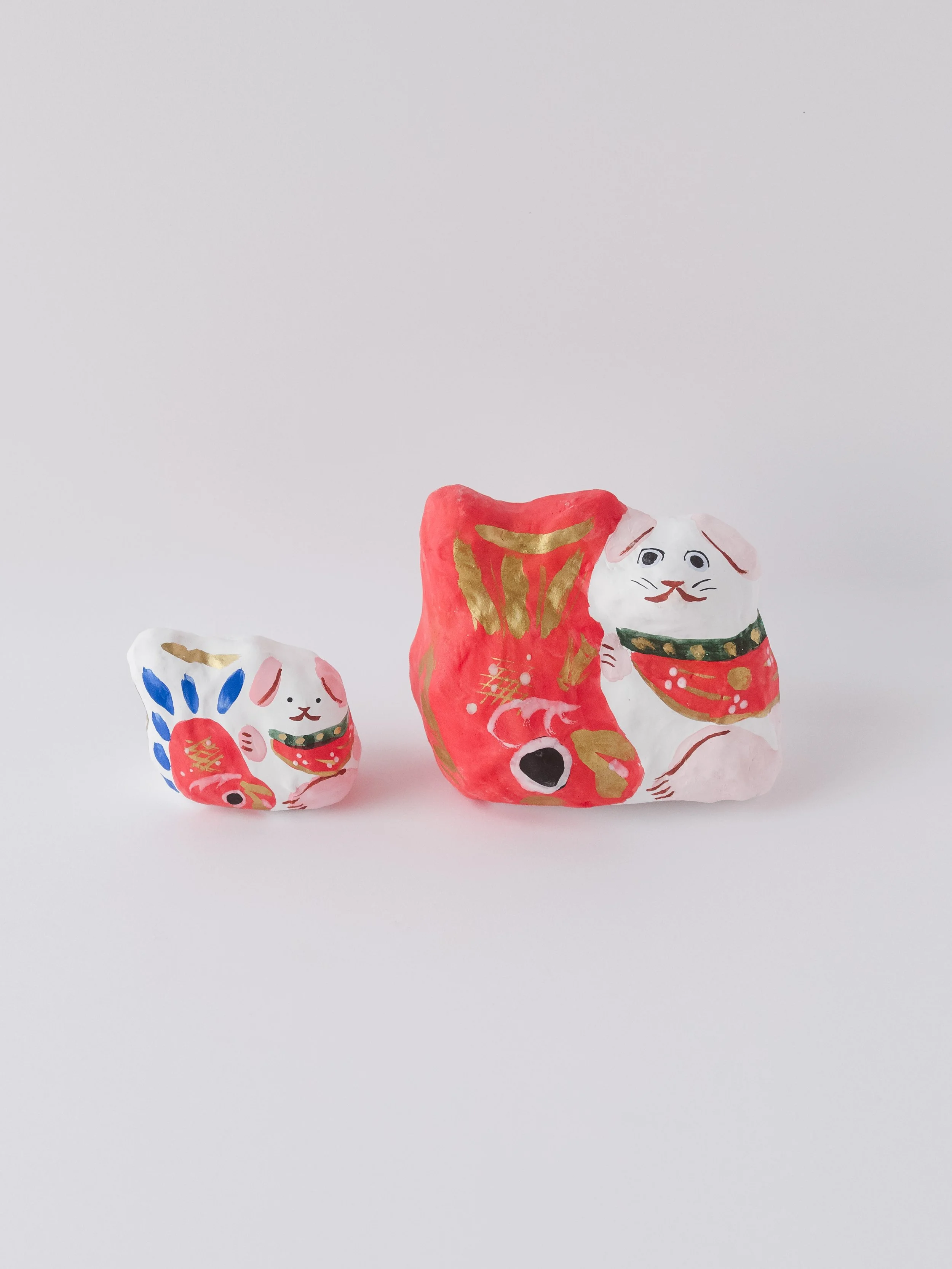 Image 1 of 16
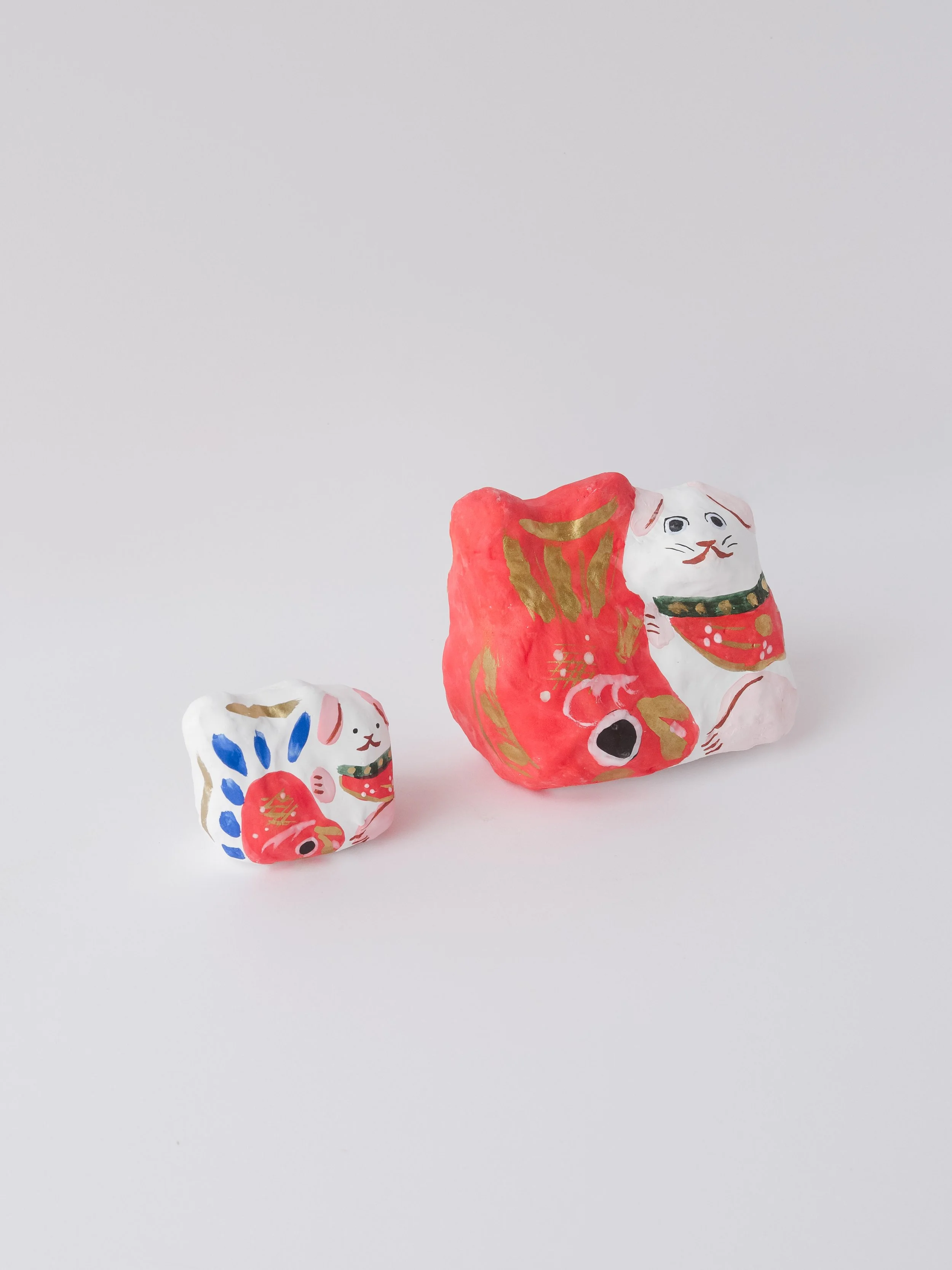 Image 2 of 16
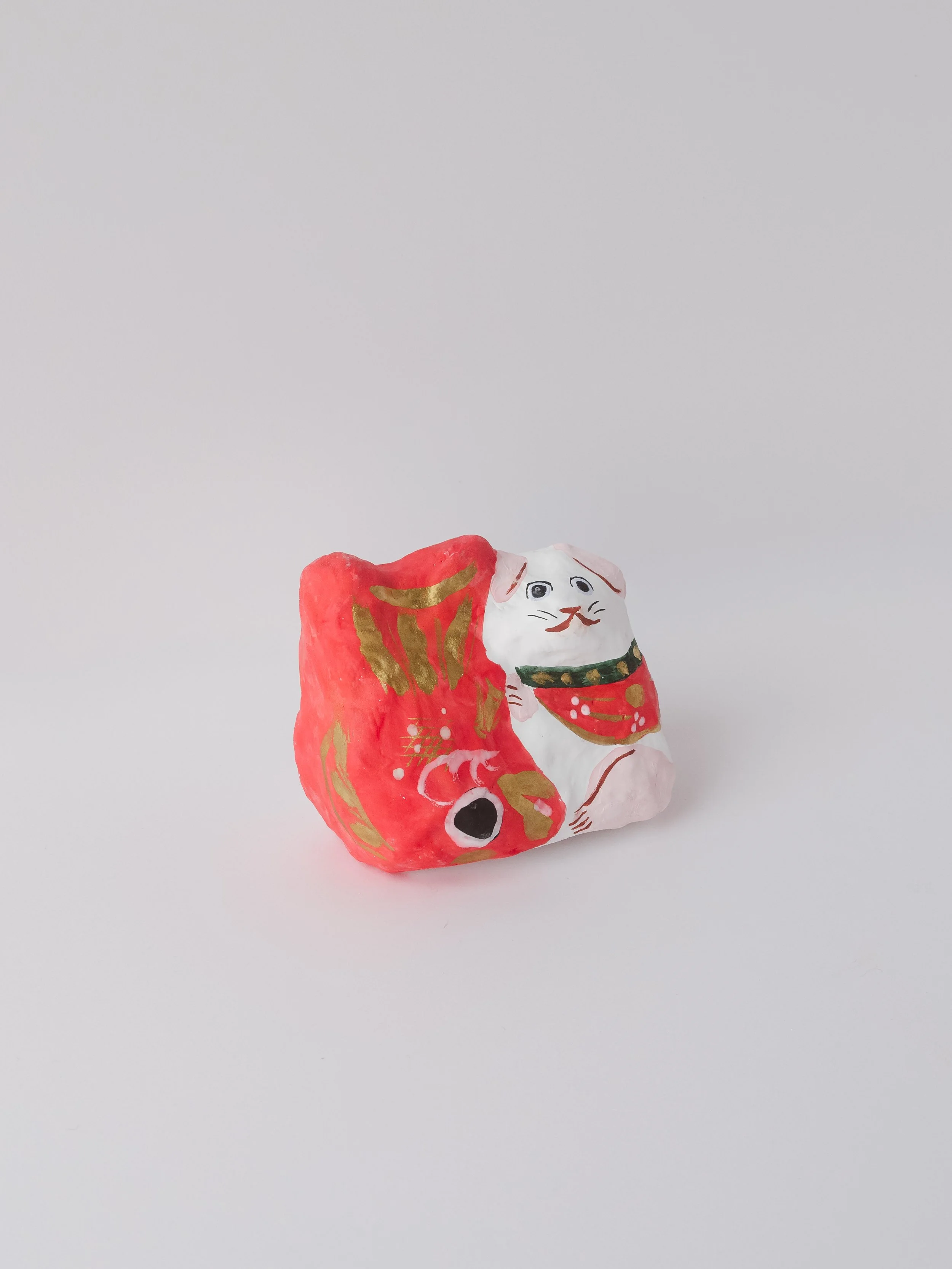 Image 3 of 16
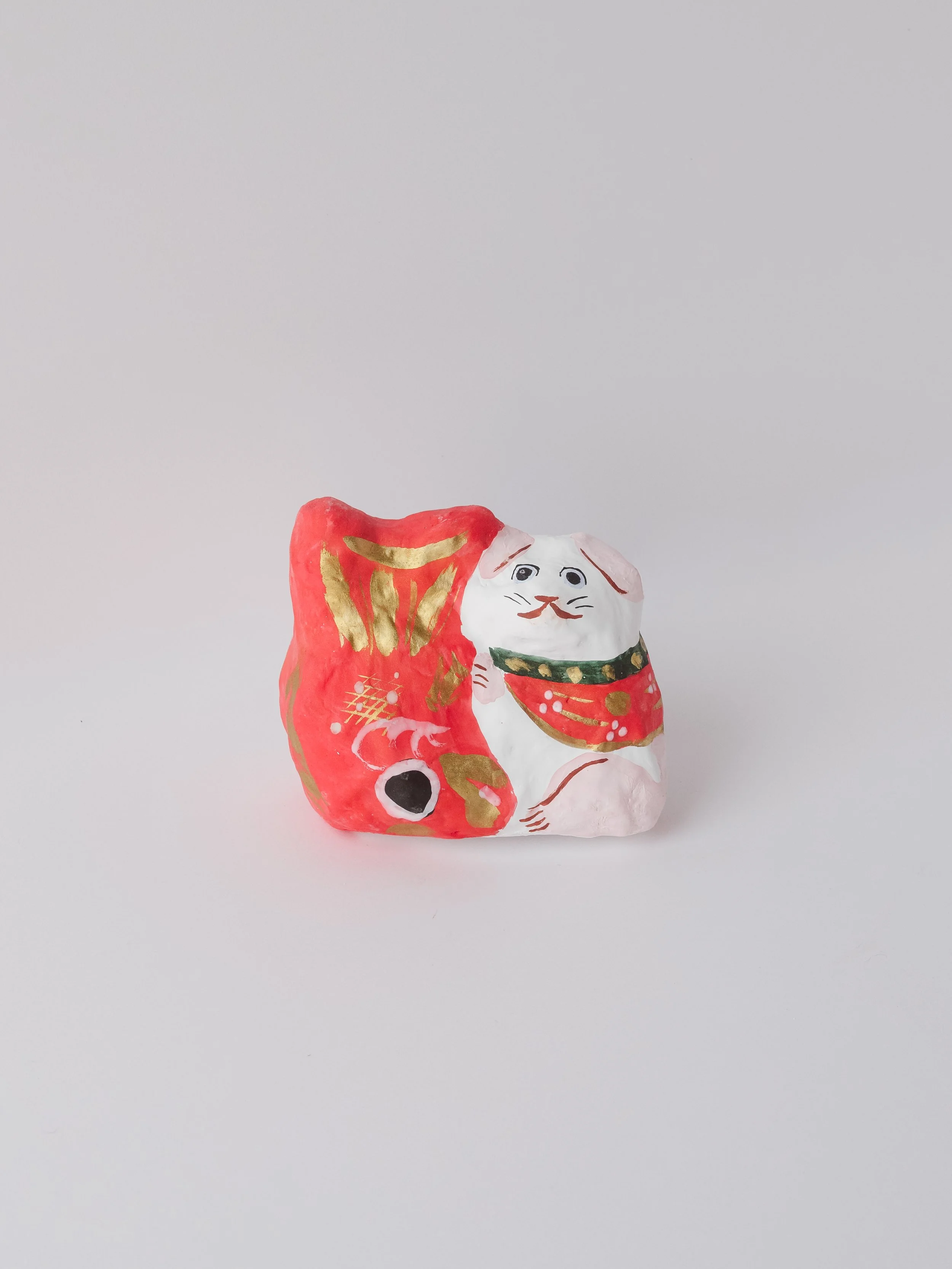 Image 4 of 16
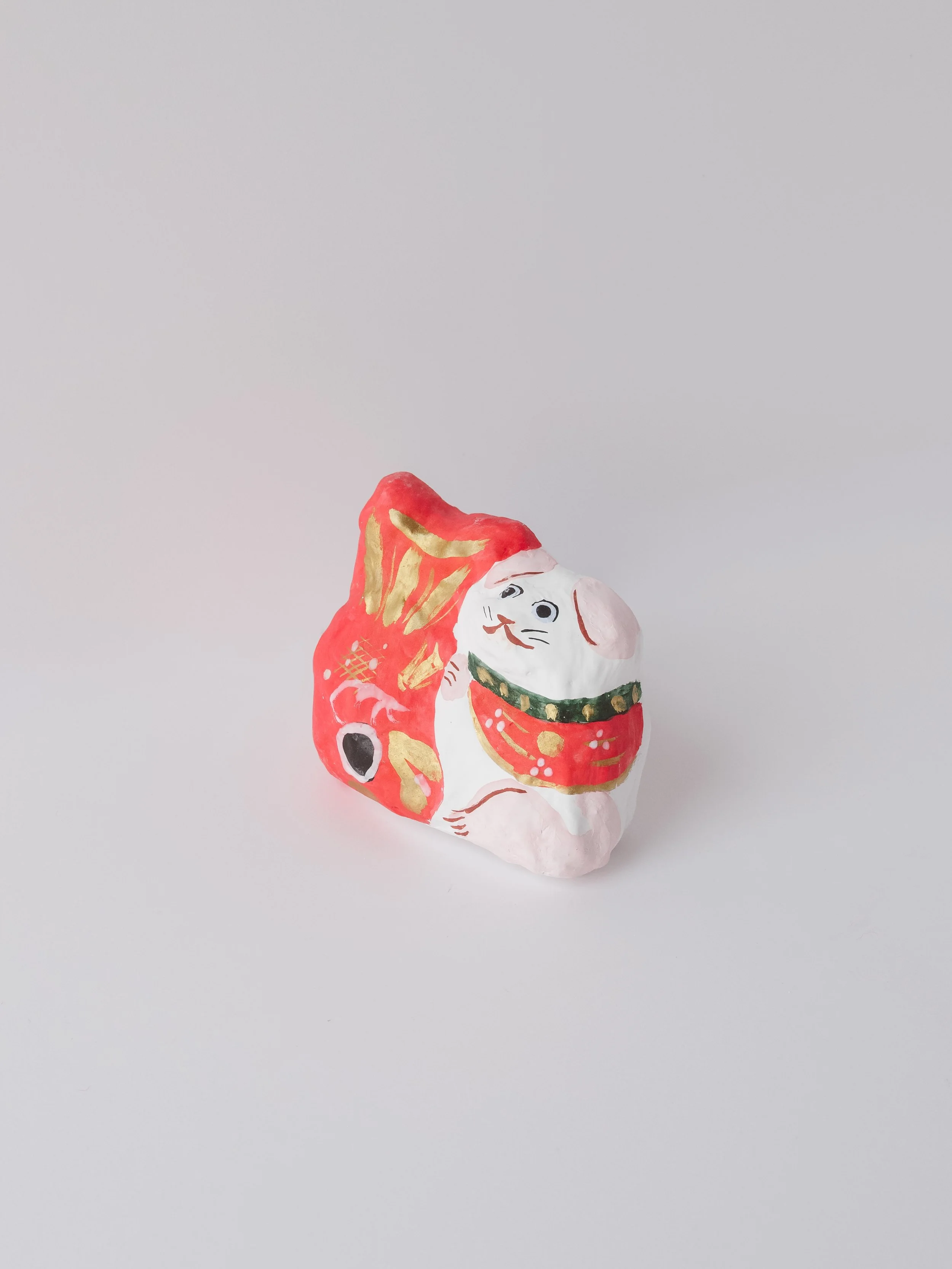 Image 5 of 16
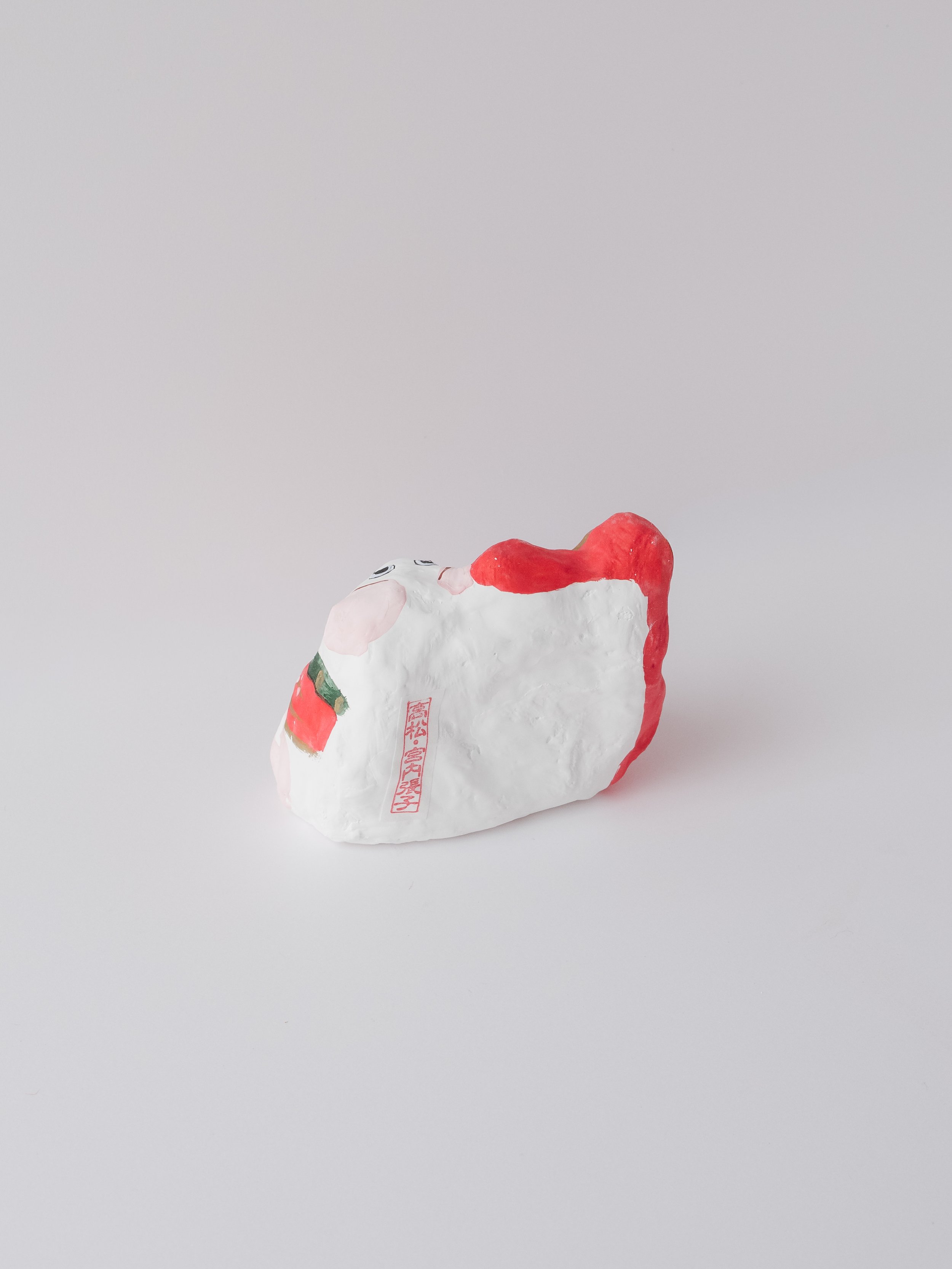 Image 6 of 16
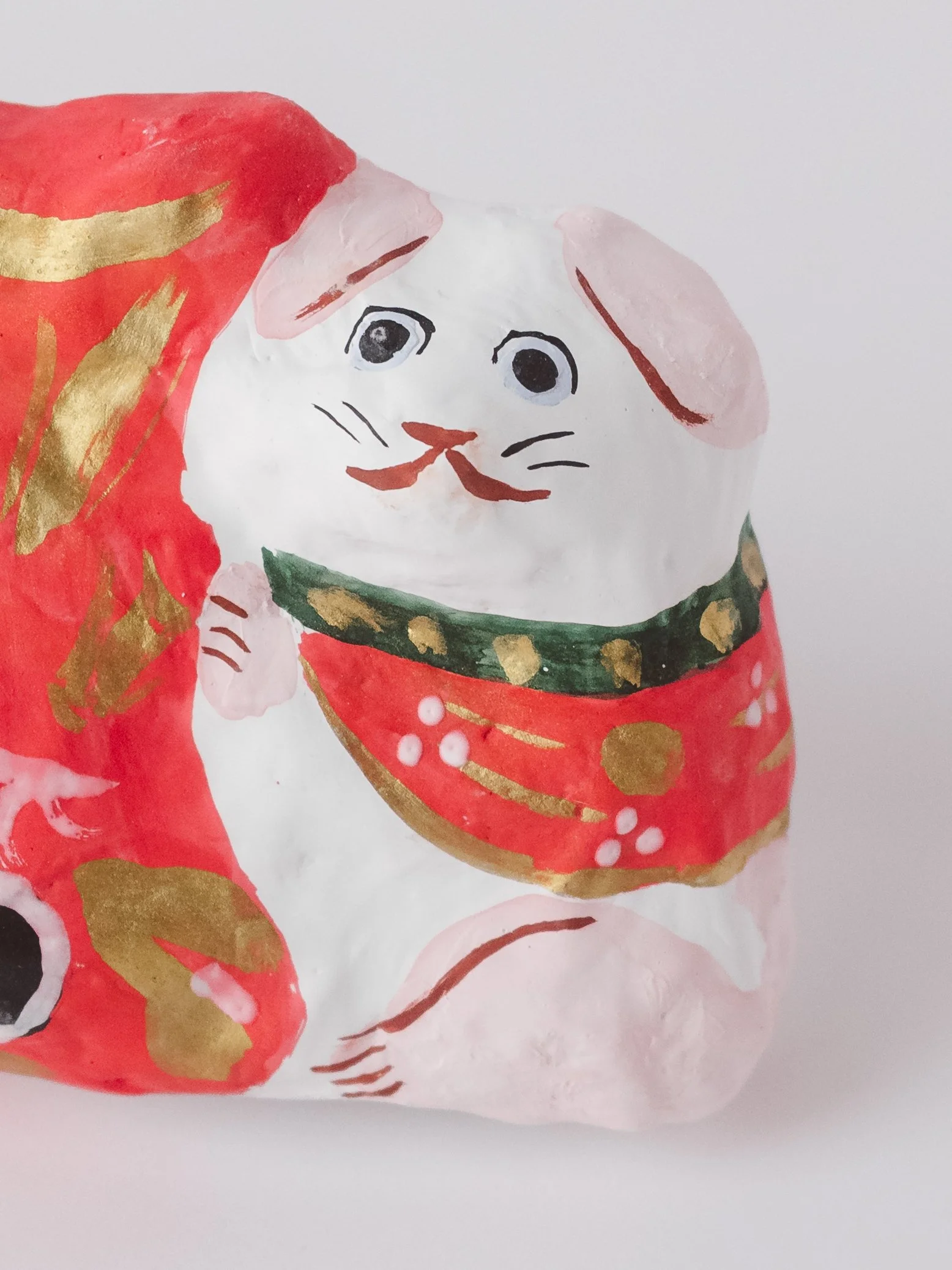 Image 7 of 16
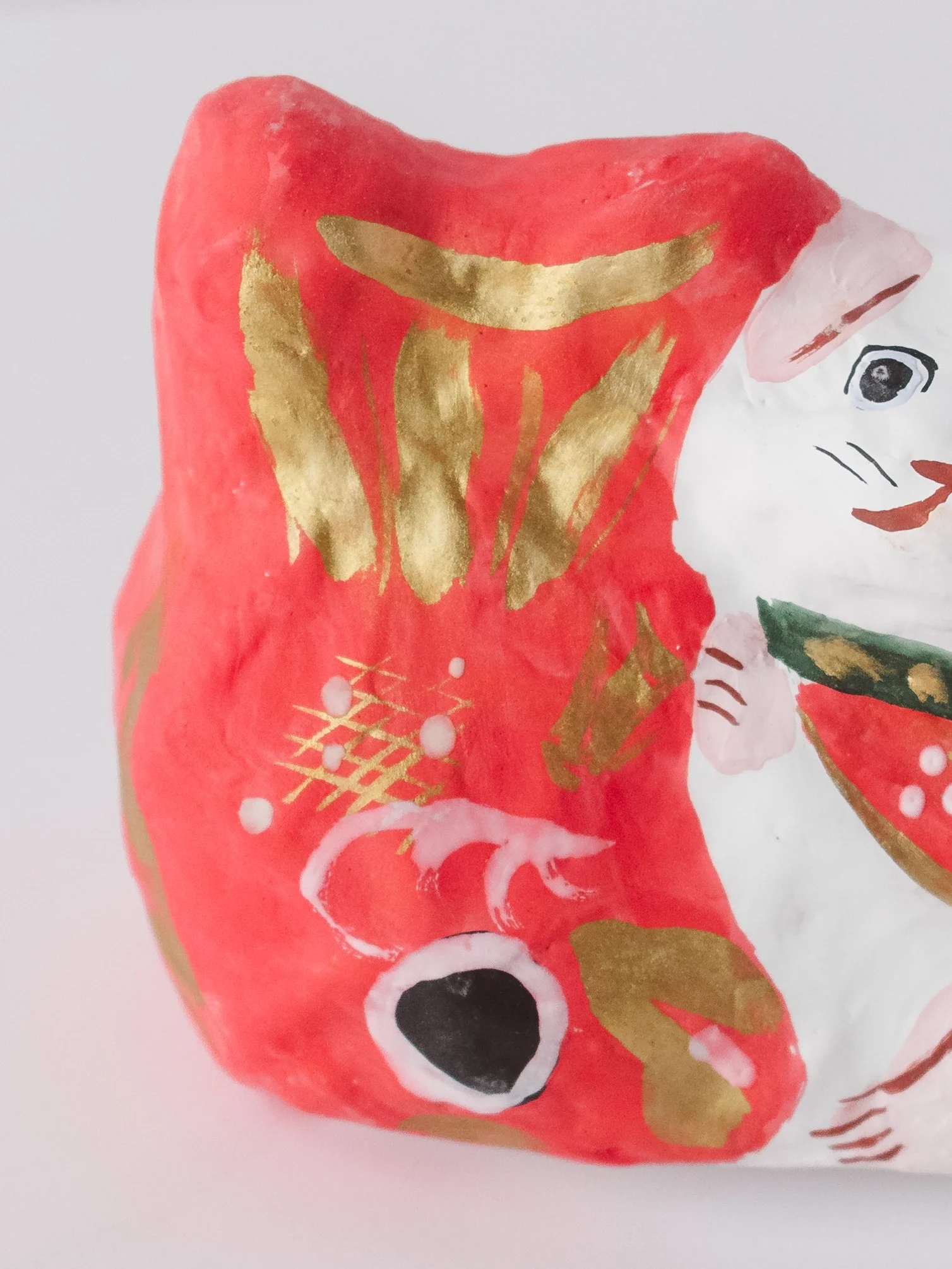 Image 8 of 16
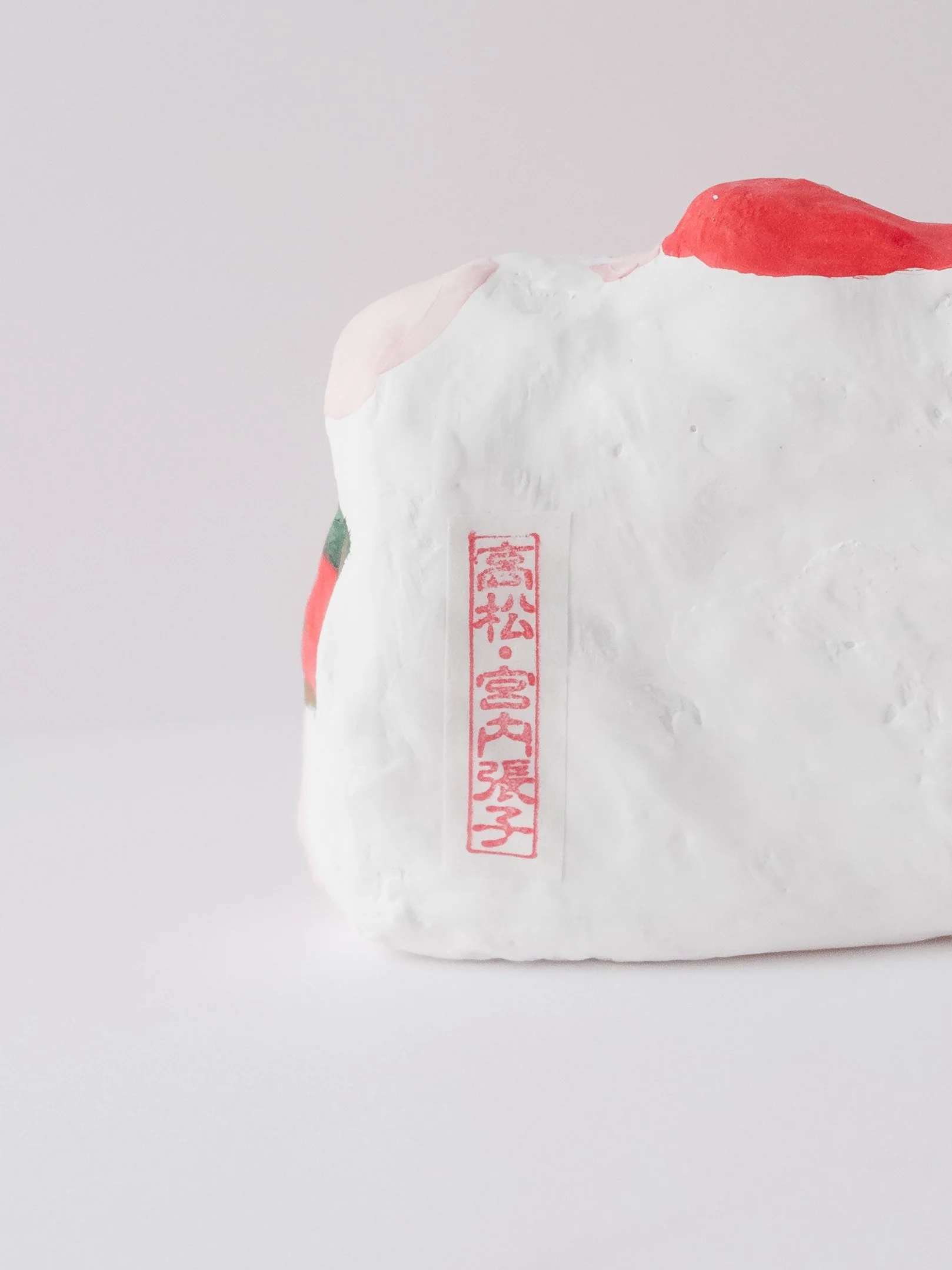 Image 9 of 16
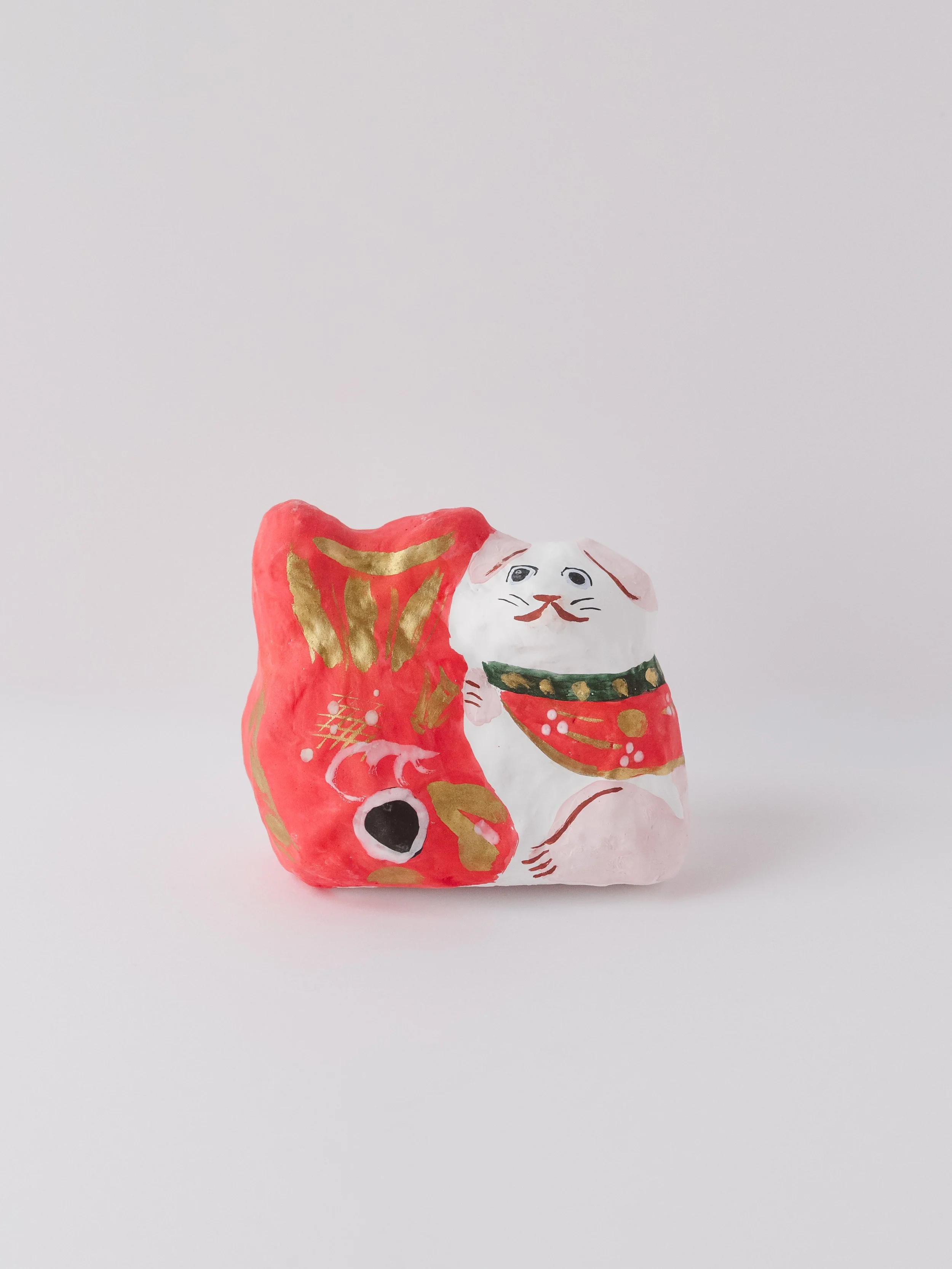 Image 10 of 16
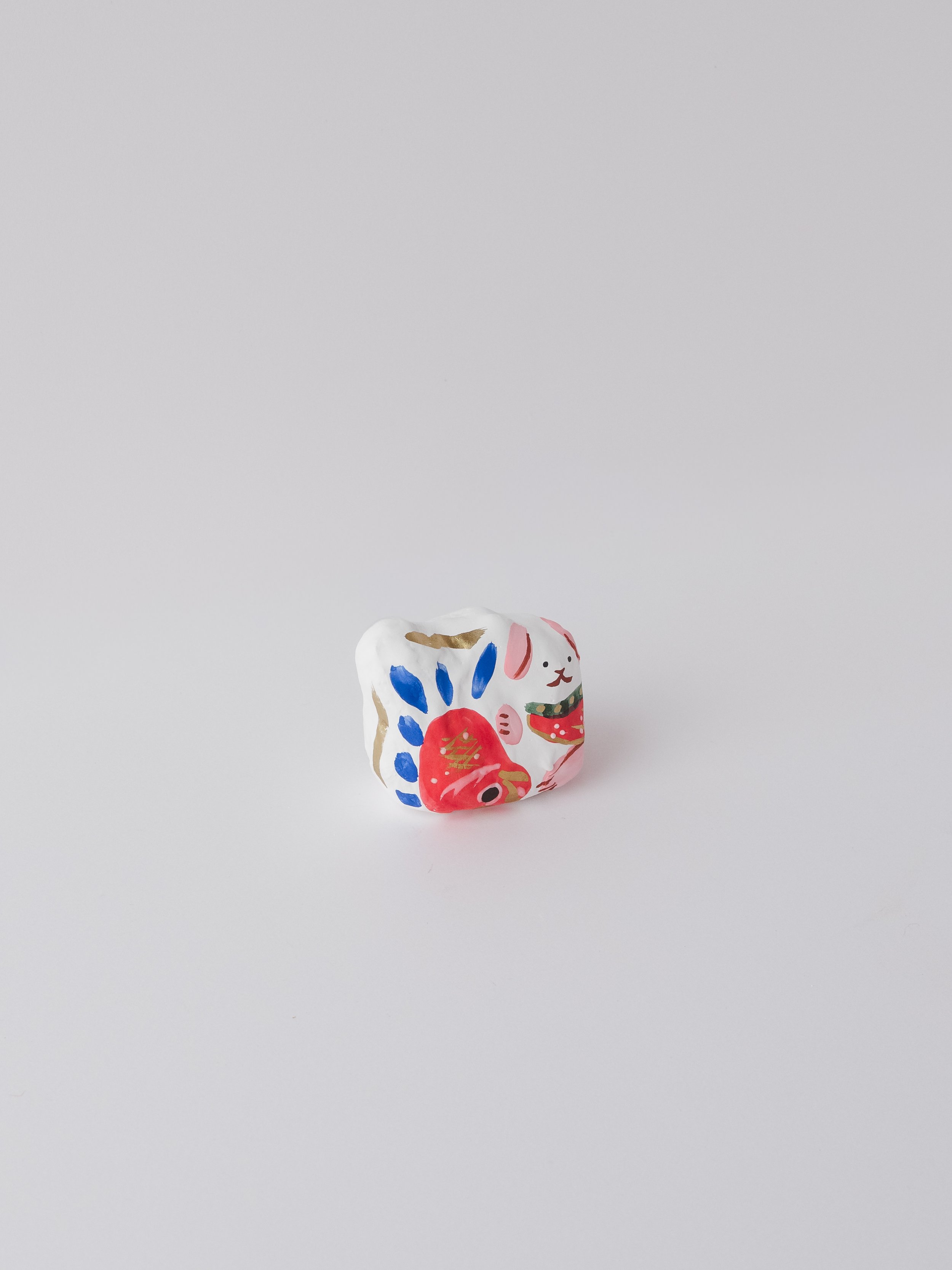 Image 11 of 16
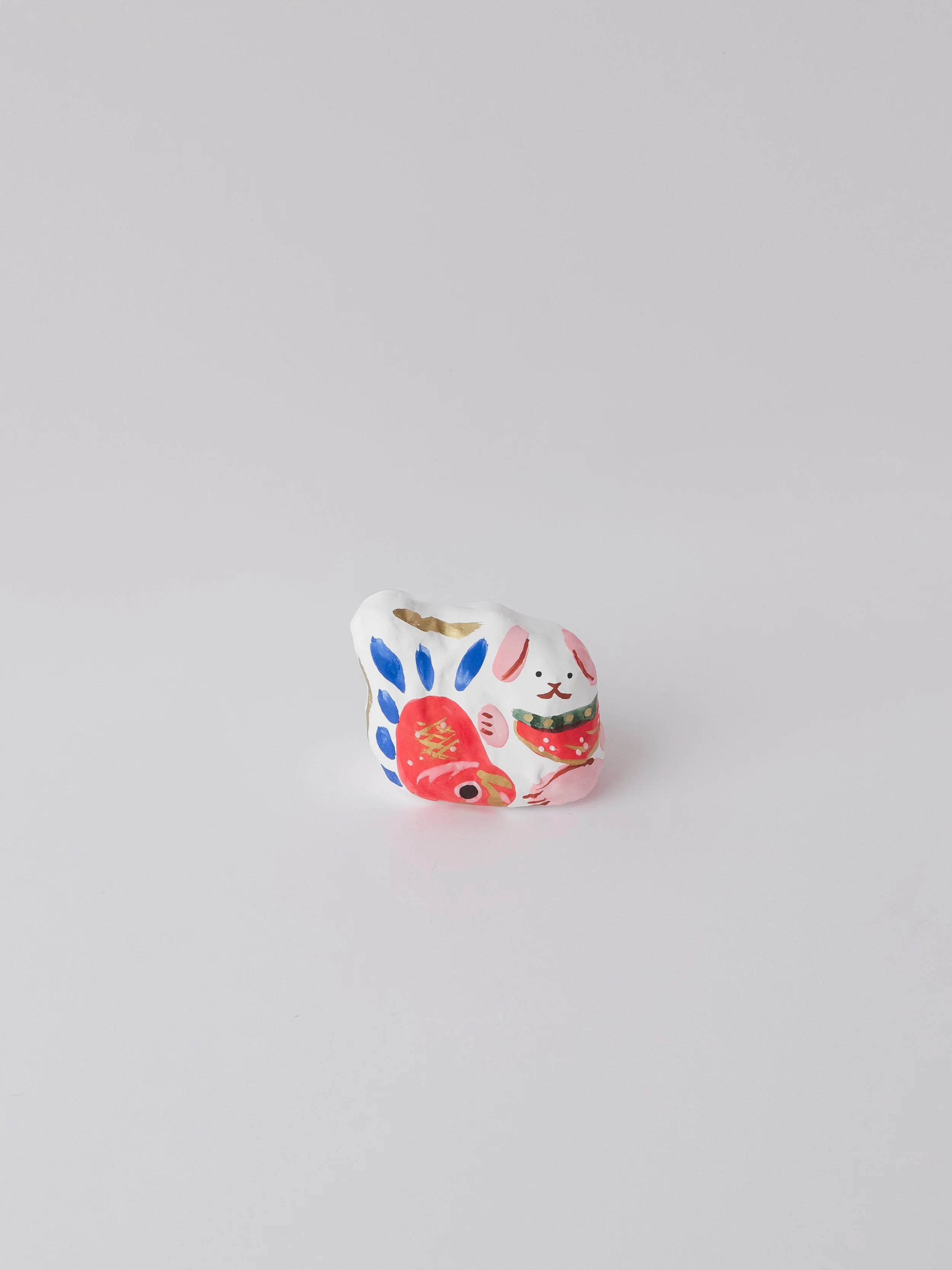 Image 12 of 16
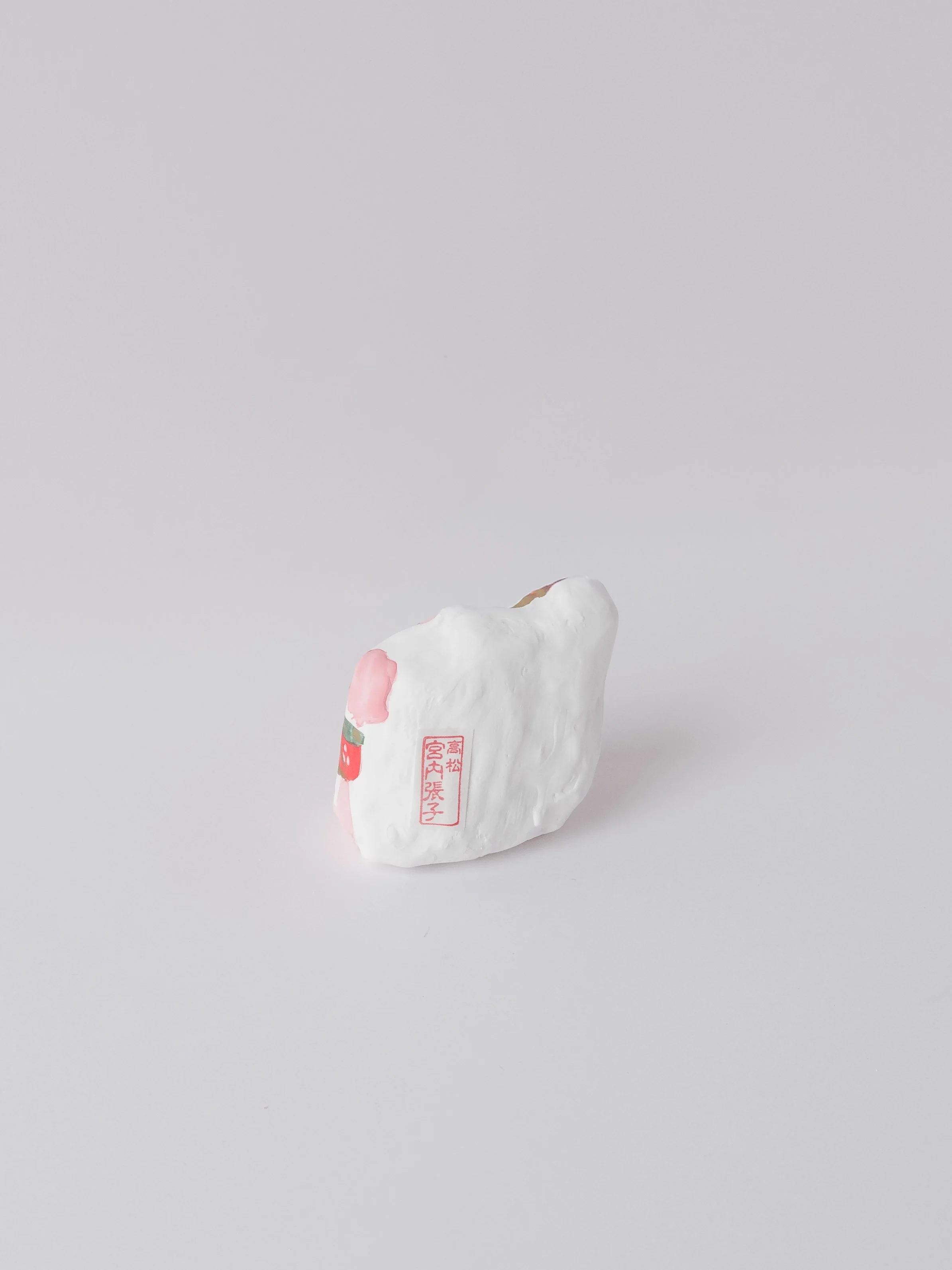 Image 13 of 16
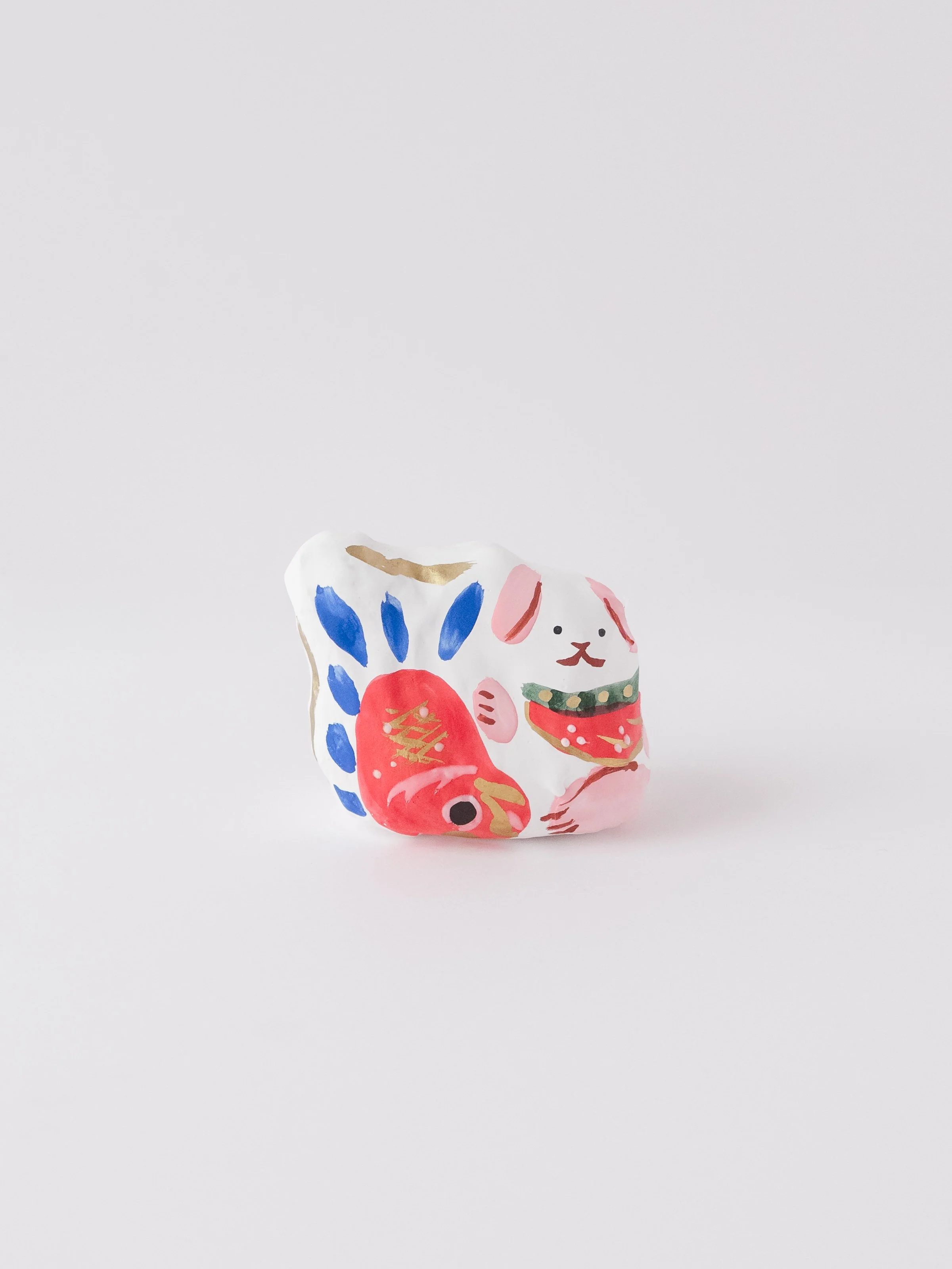 Image 14 of 16
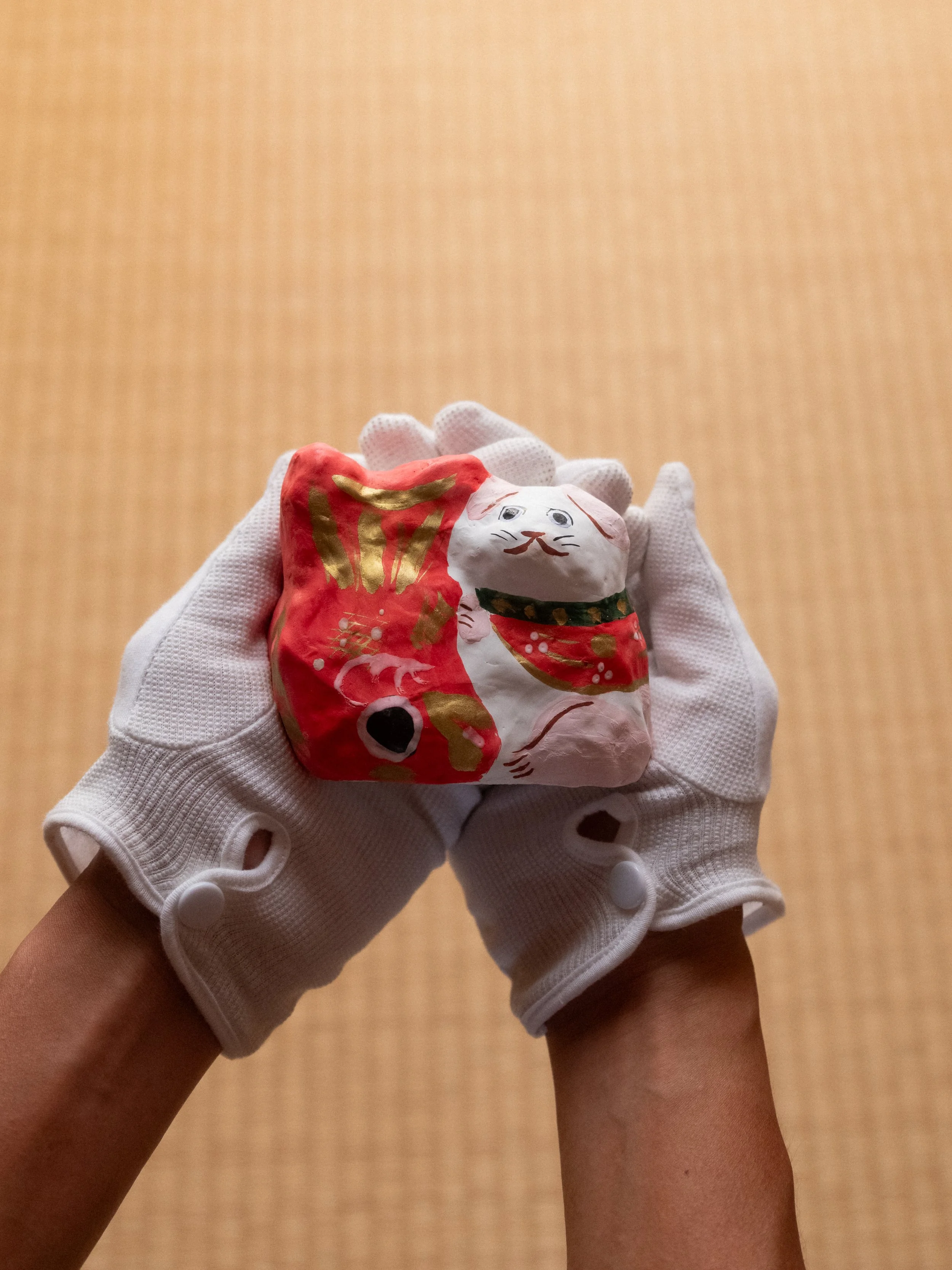 Image 15 of 16
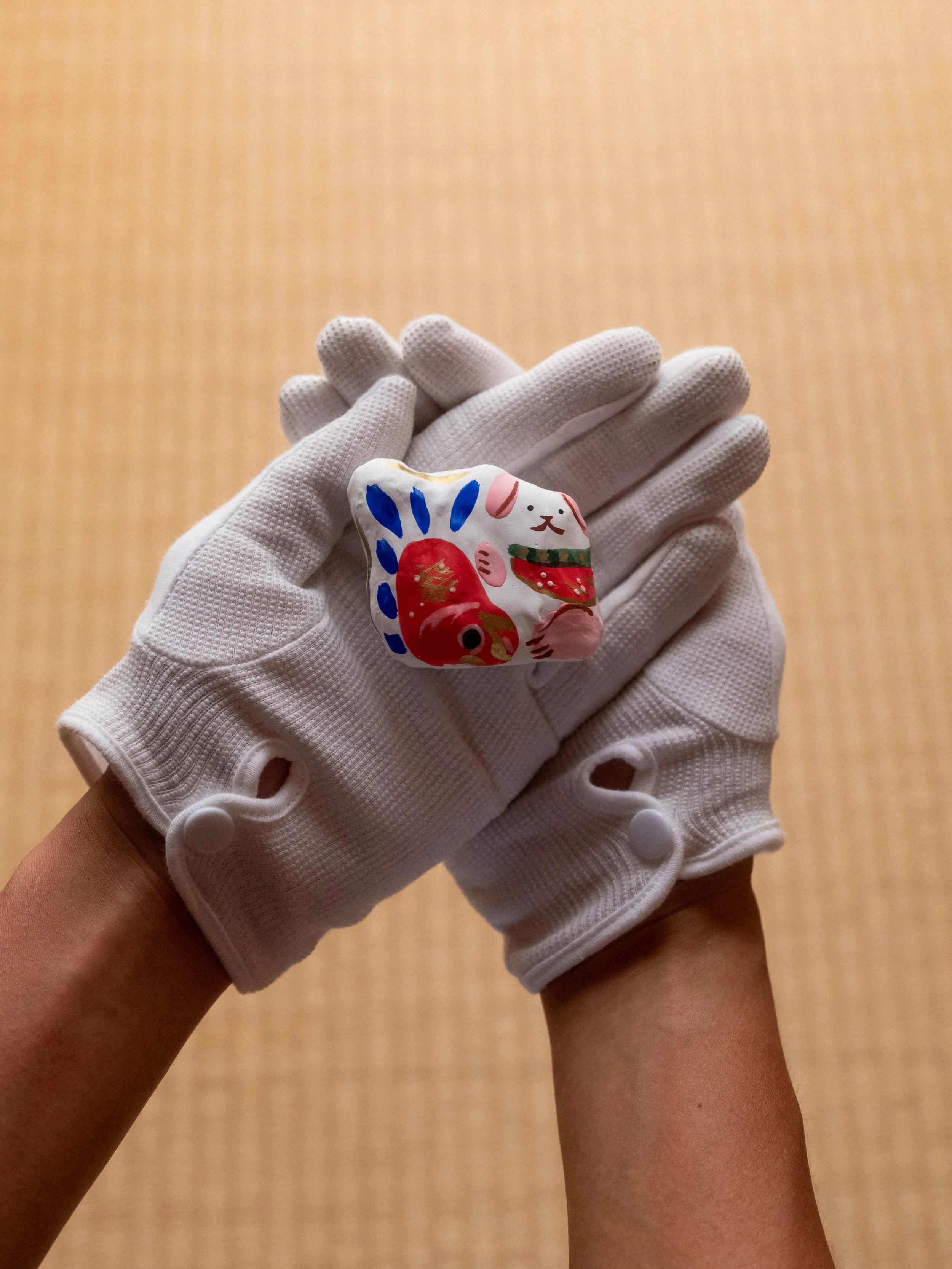 Image 16 of 16