【 The Concept 】
A red-faced demon in a monk’s black robe, a graceful young woman with a branch of wisteria, a warrior with his weapons on his back, and a long-headed god having his scalp shaved from a ladder. Four characters from Japan’s oldest street-side folk painting, raised in relief around a single clay bell.
This hand-painted clay bell (dorei) carries the four best-known figures of Otsu-e, the folk pictures once sold to travelers on the great Tokaido road. Give it a gentle shake and a small clay pellet inside answers with a soft, earthy rattle.
【 Pictures for Travelers 】
Otsu-e (“Otsu pictures”) were folk paintings sold during the Edo period at Oiwake and around Miidera temple in Otsu, the last stop on the Tokaido before Kyoto. The earliest written mention dates to 1661. Painted quickly by anonymous artisans in a handful of bold colors, they were cheap, light and easy to carry, and travelers took them home as souvenirs.
The first Otsu-e were Buddhist images for worship in ordinary homes. From around the Genroku era (1688–1704), secular subjects took over: humorous, satirical figures, often with a short moral verse written beside them. In time the most popular themes settled into a set of ten, and each picture came to be kept as a charm against a particular trouble. When travel on the Tokaido declined in the Meiji era, so did Otsu-e, and today the tradition is carried on by only a very small number of painters in Otsu.
【 The Demon Who Chants the Nembutsu 】
The front of the bell shows Oni no Nembutsu, the most famous Otsu-e of all. A fearsome demon has disguised himself as a monk and walks about chanting prayers and begging for alms. Here he wears a black robe, a round gong hangs at his chest, he holds a T-shaped striker, and he carries a donation register marked 奉加帳 (hōgachō). It is a joke about hypocrisy: piety on the outside, a demon within. Yet the same picture was also kept as a charm to stop children crying at night.
【 The Wisteria Maiden 】
Beside him stands Fuji Musume, the Wisteria Maiden, in a black lacquered hat and a black kimono with red trim, a branch of pale purple wisteria over her shoulder. She was the favorite beauty of Otsu-e, kept as a charm for a good marriage, and the drooping wisteria is said to hint at how briefly beauty lasts. In 1826 she stepped out of the painting and onto the stage, in a Kabuki dance first performed at the Nakamura-za theater in Edo that is still loved today.
【 Shaving the Long Head 】
On the next side, a smiling figure with an impossibly tall head sits holding a golden fan, while Daikoku, a god of good fortune, climbs a ladder to shave the top of it. The scene, Gehō no Hashigo-zori, laughs at the idea of one lucky god needing another just to get a haircut. As a charm it was kept for a long and healthy life.
【 Benkei 】
The last side shows Benkei, the legendary warrior monk, planted firmly on his feet with a long-bladed pole in hand, a sword at his waist and a bundle of weapons and tools on his back. Among the ten Otsu-e charms, Benkei was the one kept for protection from fire.
【 The Voice of a Clay Bell 】
In Japan, the sound of a bell has long been believed to drive away evil and call the gods, which is why bells hang at shrine halls. Clay bells, known as dorei, are given out at shrines across the country and hold a special place among Japanese folk toys. Here the bell and the four Otsu-e charms work together: something to look at, and something to hear.
【 What Owning This Piece Brings 】
・Four classic Otsu-e characters in one object, each with its own story and charm
・Raised, hand-painted relief with bold black outlines, true to the spirit of the original paintings
・A soft rattle when moved, the voice of a traditional Japanese clay bell
・Humor, satire and good wishes from the Edo period, in a form you can hold in your hands
A thoughtful gift for lovers of Japanese folk art, for collectors of folk toys, or as a good-luck charm for a new home.
【 Where to Place It 】
On a bookshelf or side table, turned now and then so each character takes its turn facing the room. Hung by its cord near an entrance, as bells traditionally are. Or among other folk toys and souvenirs, where the red demon is sure to start a conversation.
【 Care 】
Unglazed clay with painted relief. Dust with a soft, dry brush and avoid water and rubbing, which can lift the paint. Handle with both hands and set it down gently; the rim around the sound slit is the most fragile part.
【 Reading the Object 】
・Form: a four-sided bell that narrows toward a rounded top, pierced for a knotted brown rope
・Front: Oni no Nembutsu, the demon monk with gong, striker and donation register
・Second side: Fuji Musume, the Wisteria Maiden with her hat and wisteria branch
・Third side: Gehō no Hashigo-zori, the long-headed god shaved by Daikoku on a ladder
・Fourth side: Benkei with his long-bladed pole and weapons on his back
・Base: flat, with a long diagonal sound slit; a clay pellet rattles inside
・Surface: matte dark brown clay body with red, yellow, black, white and pale purple paint
【 Presence 】
Turn it slowly and a small Edo-period street opens up: a demon pretending to pray, a beauty with her flowers, two gods sharing a joke and a warrior standing guard. Shake it, and the whole crowd speaks with one voice.
Archive Note
The year 1661 refers to the earliest written mention of Otsu-e. It is not the production date of this piece. Its maker and production date are unknown.
Provenance Note
Sourced in Japan. No maker’s mark was found. The designs follow Otsu-e themes; the exact place of manufacture is not confirmed.


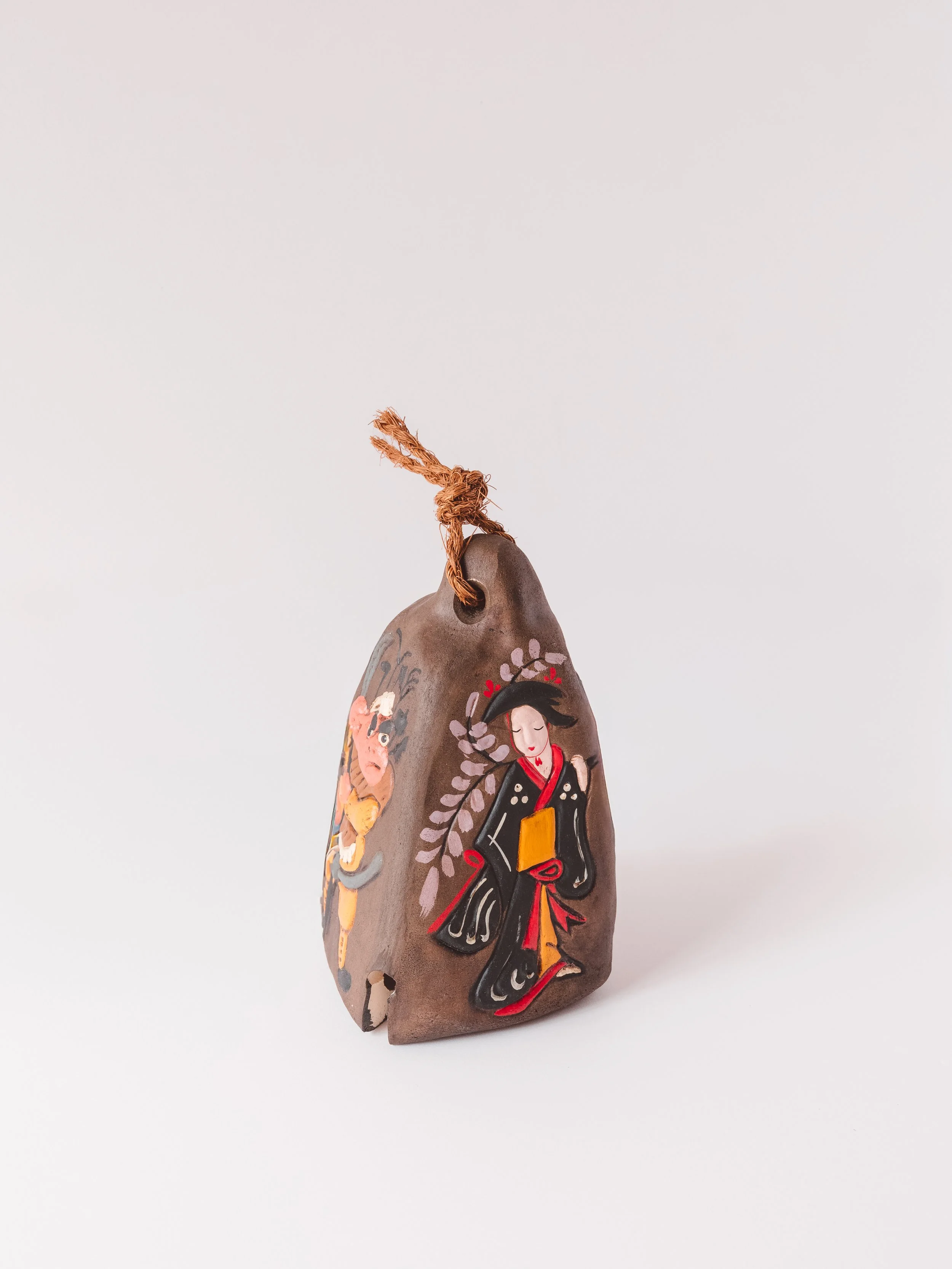 Image 1 of 11
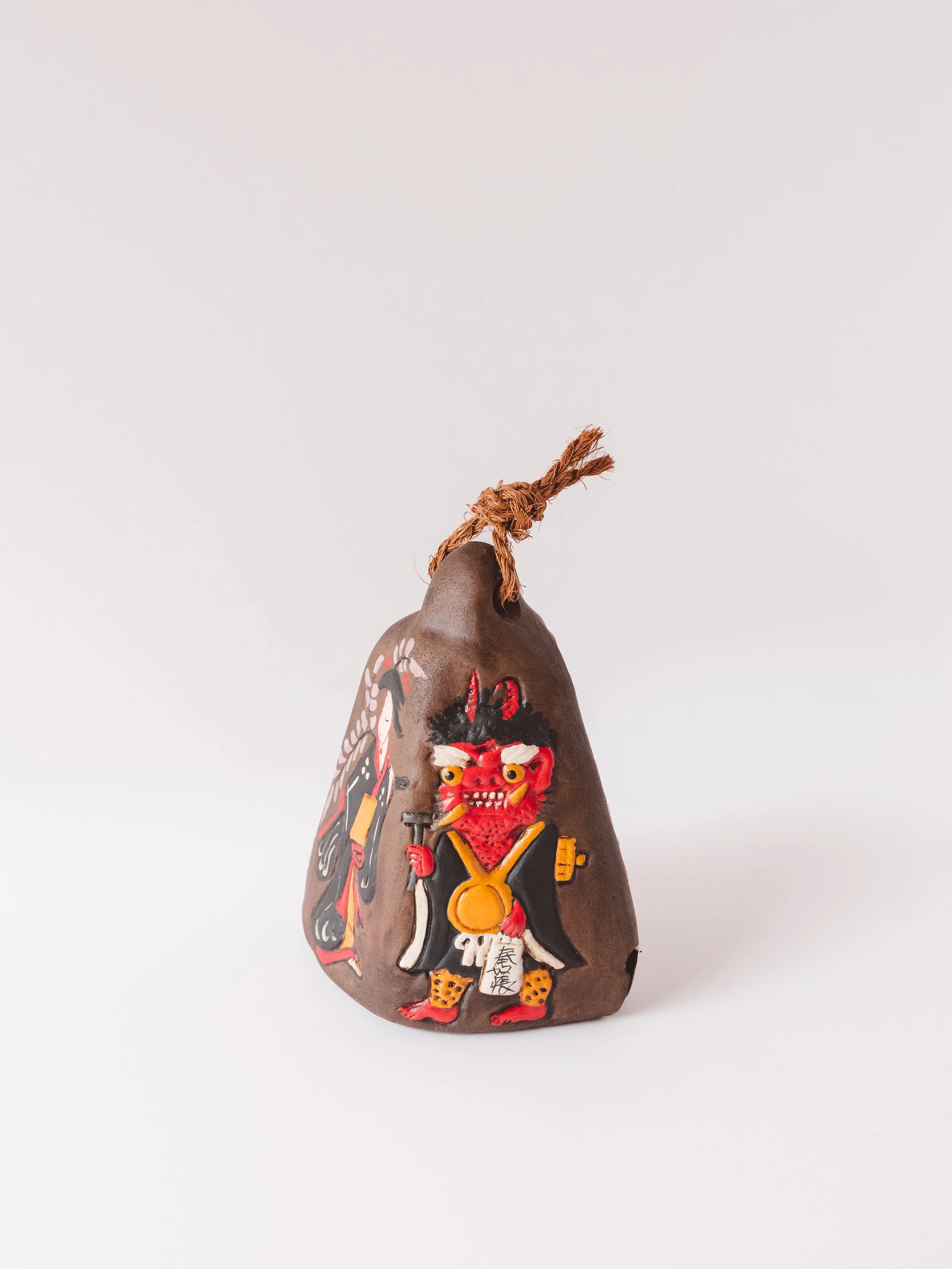 Image 2 of 11
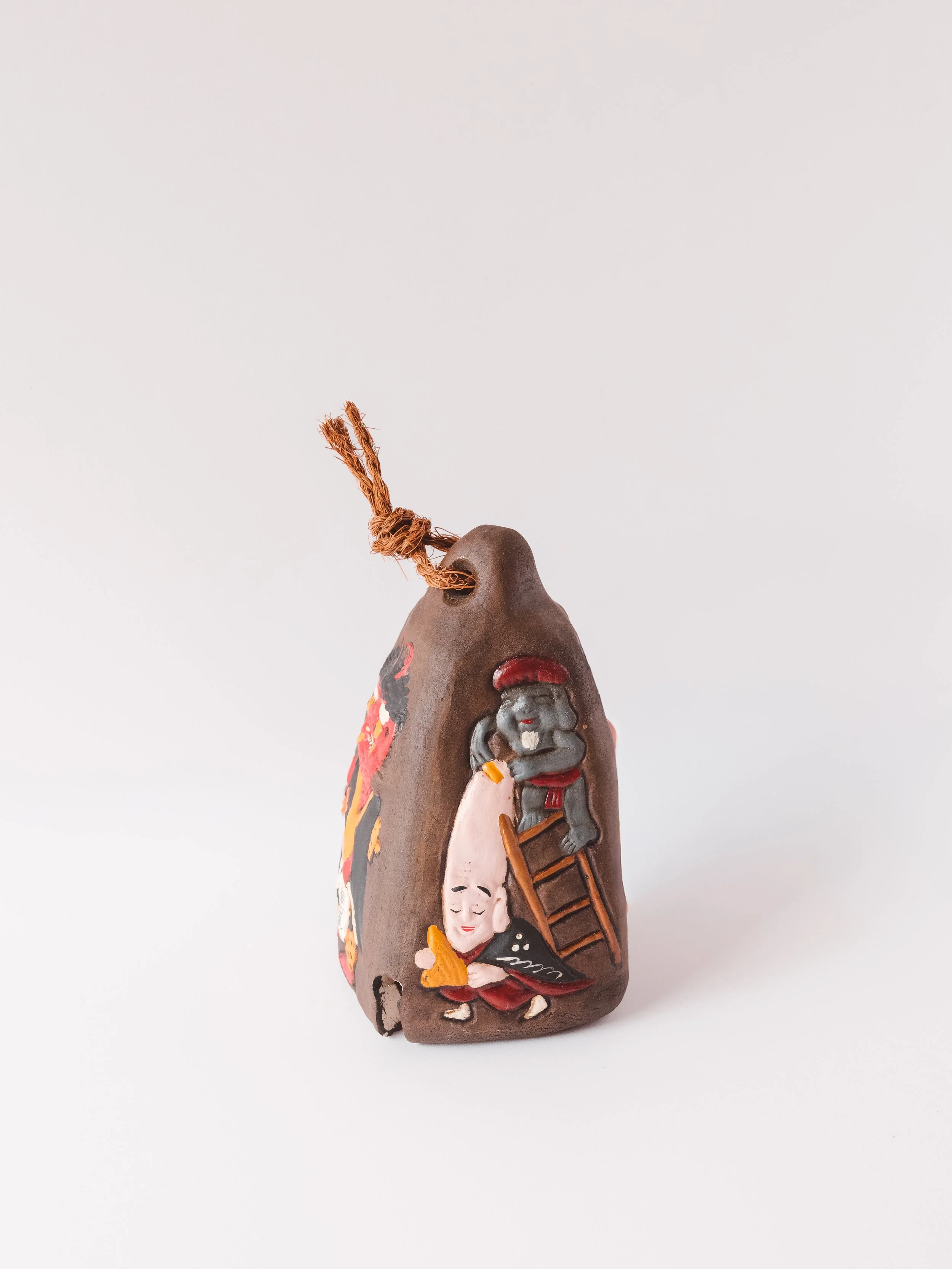 Image 3 of 11
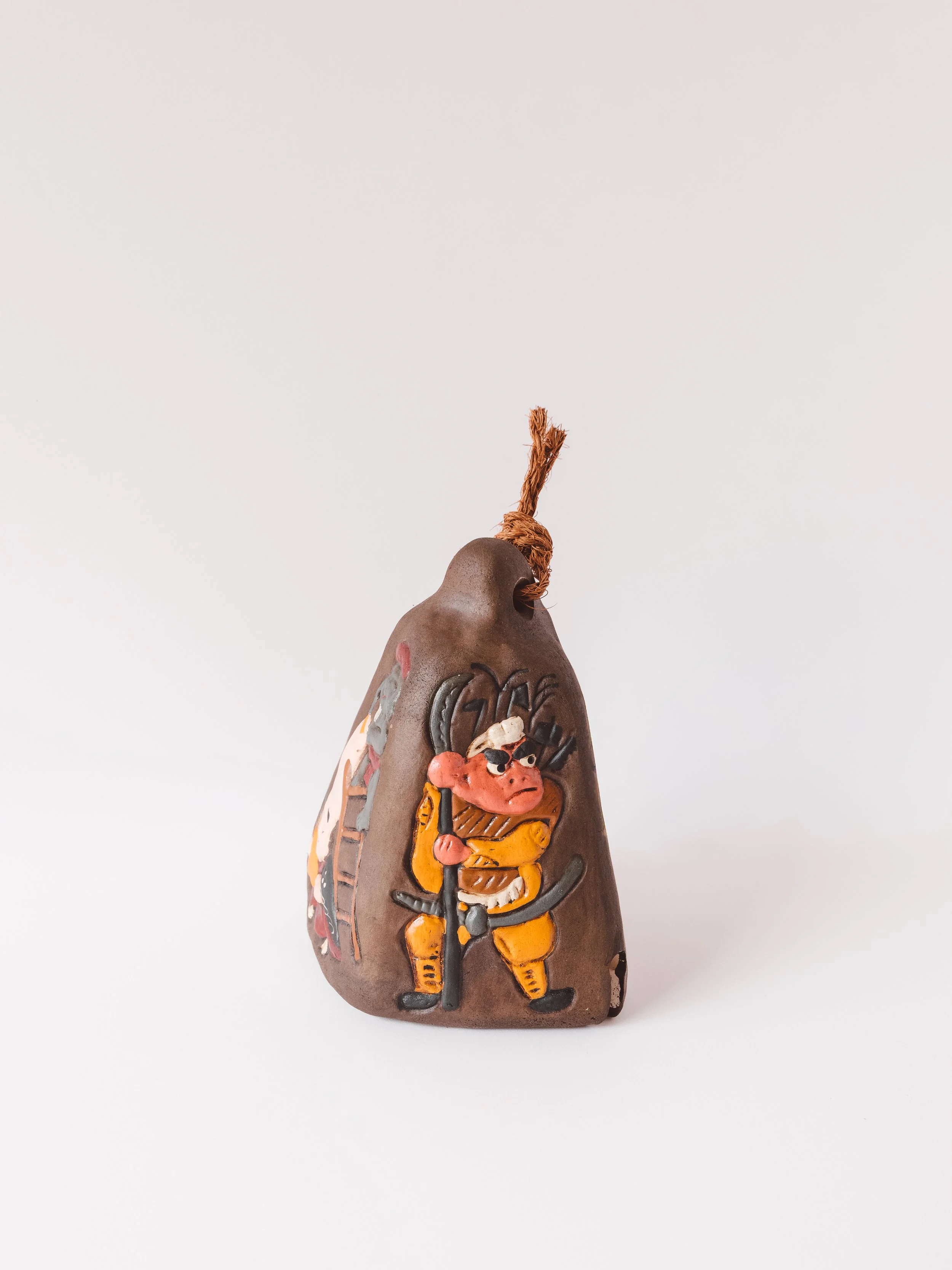 Image 4 of 11
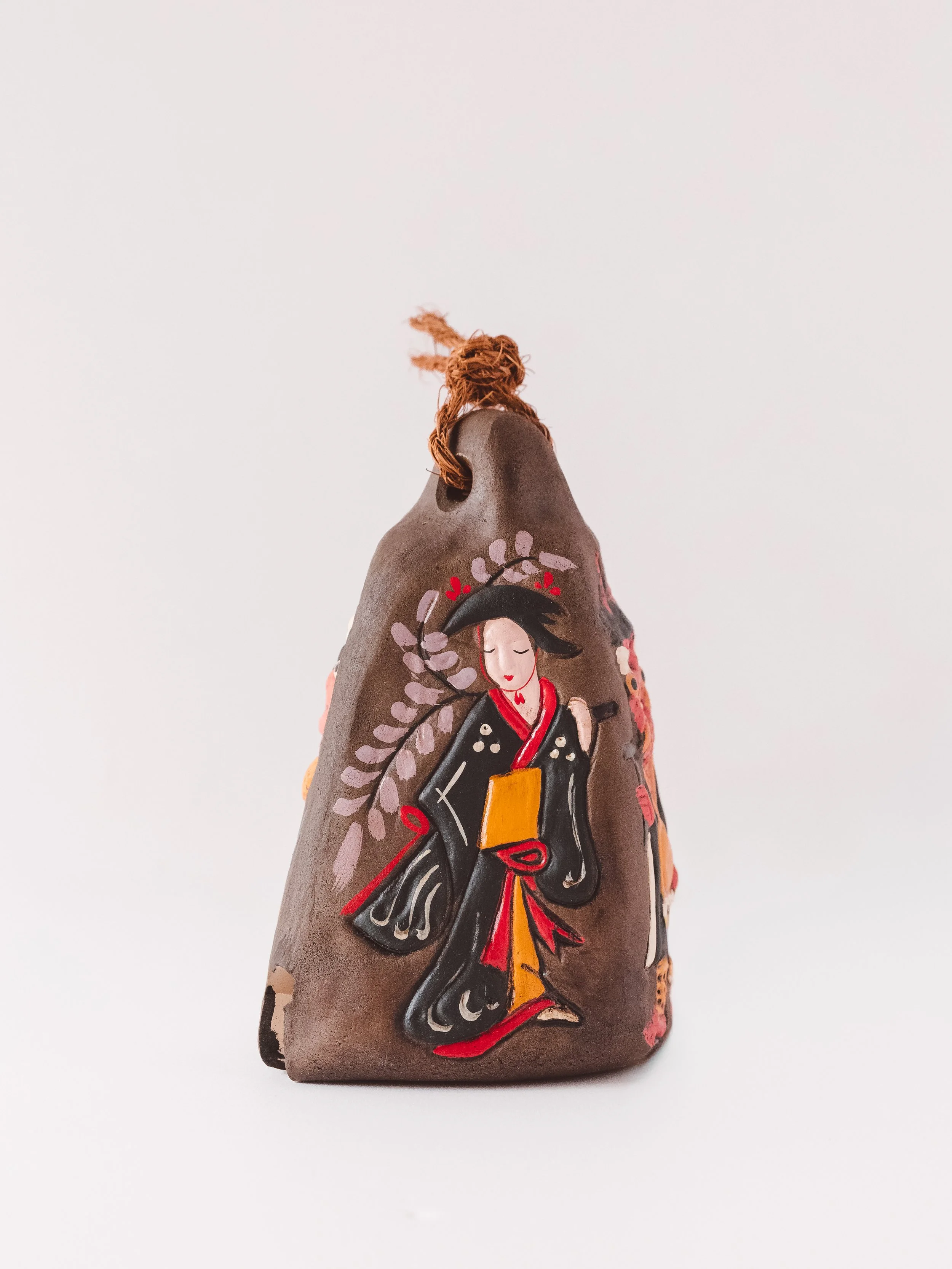 Image 5 of 11
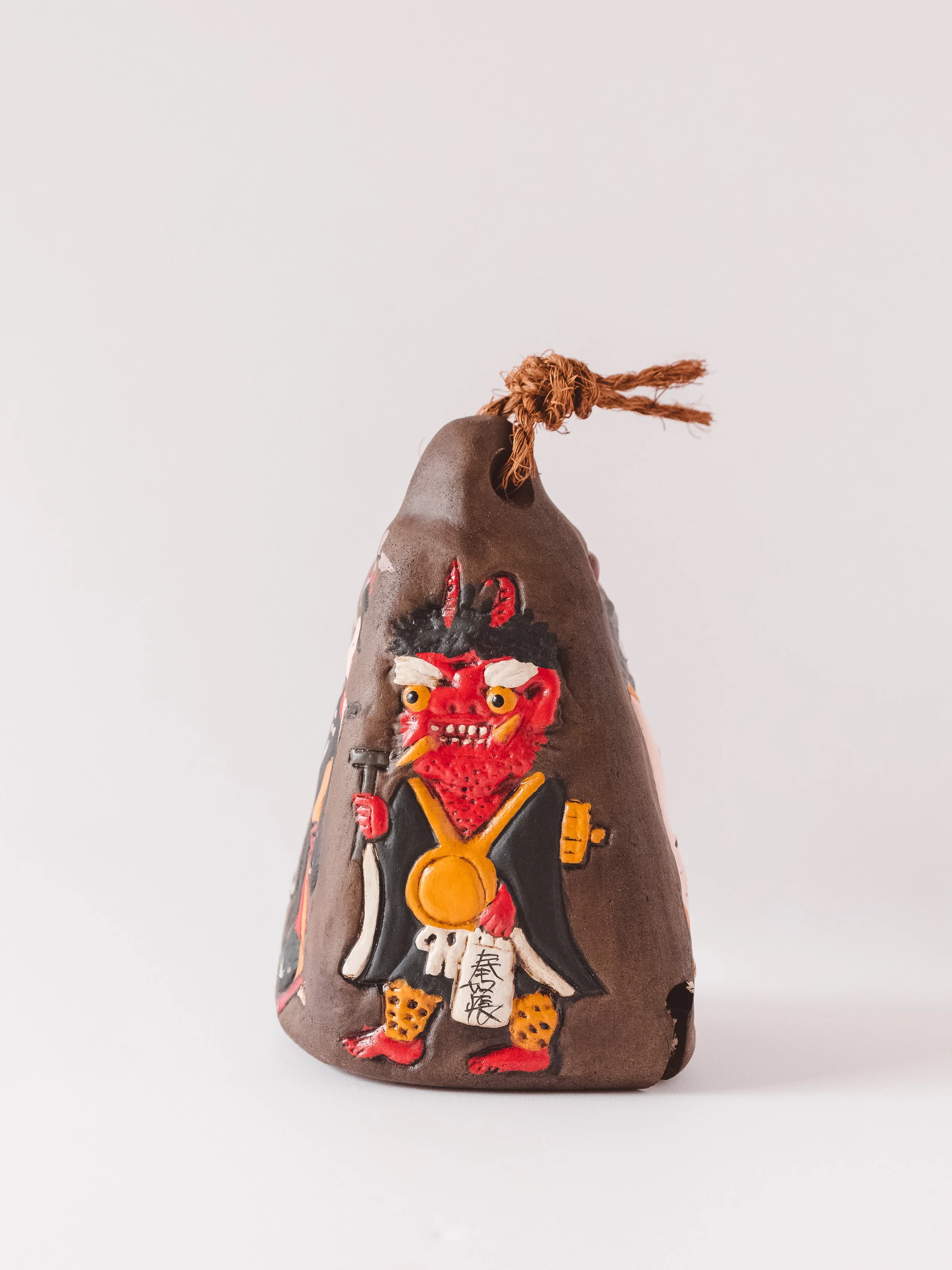 Image 6 of 11
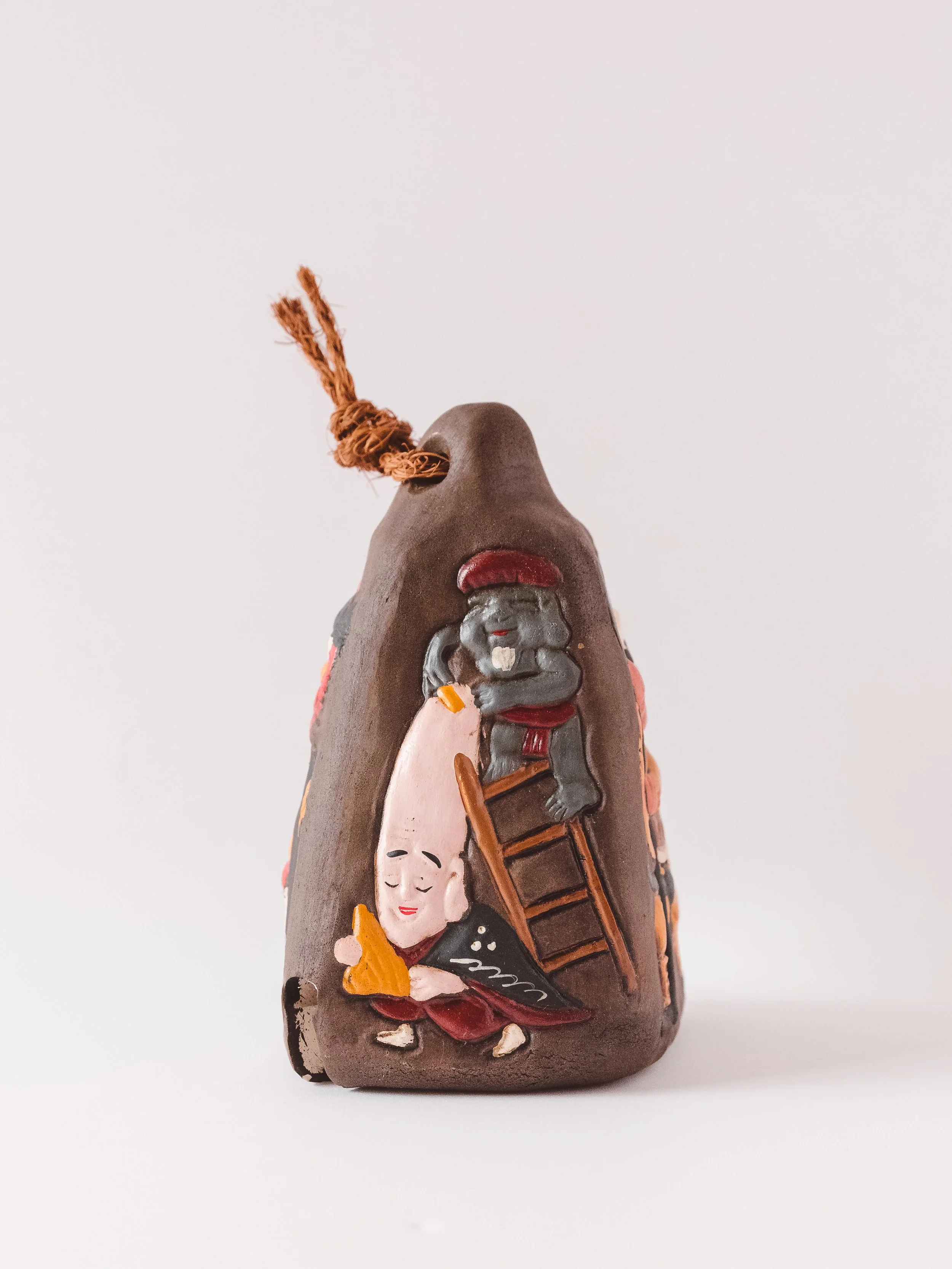 Image 7 of 11
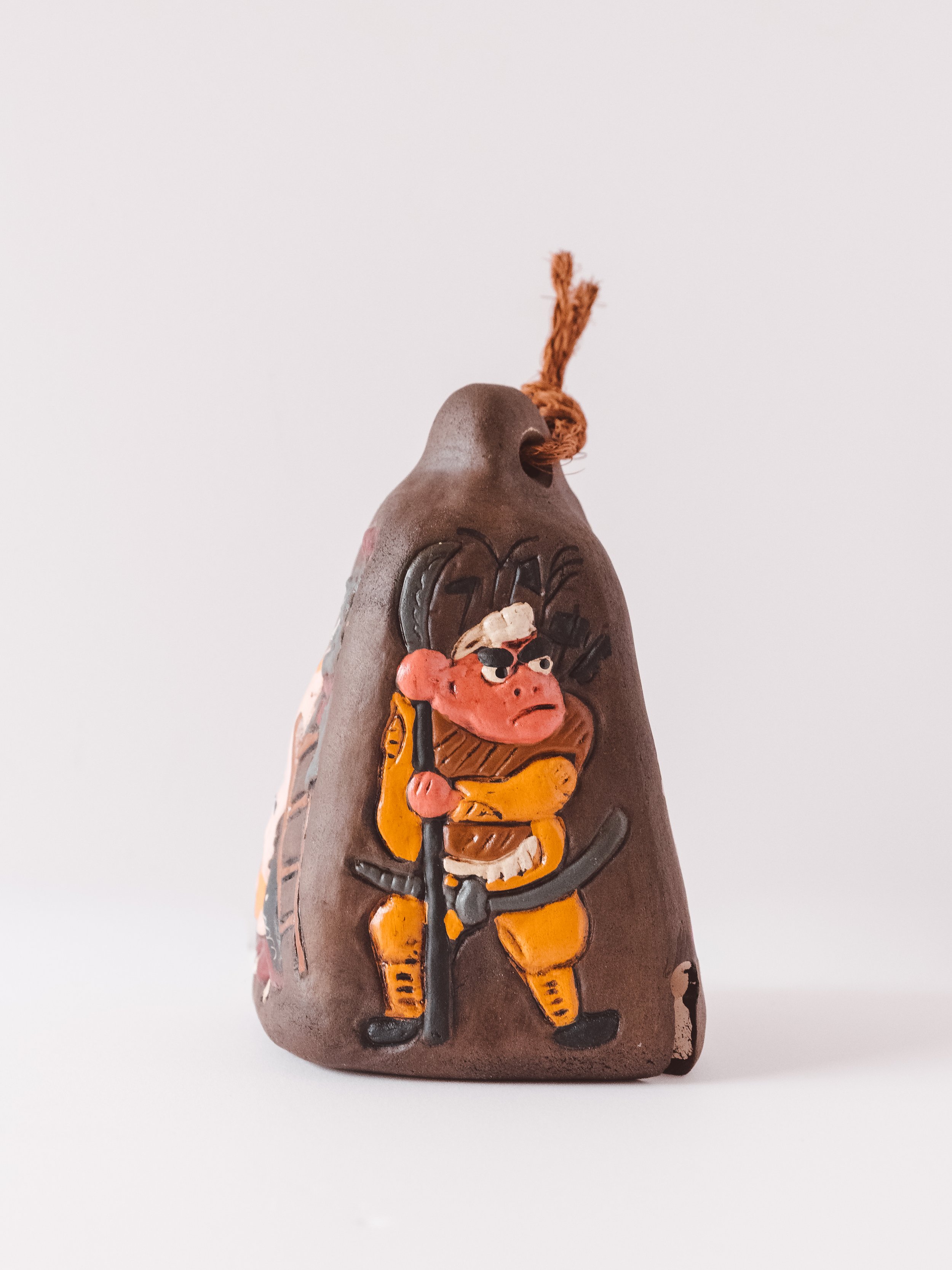 Image 8 of 11
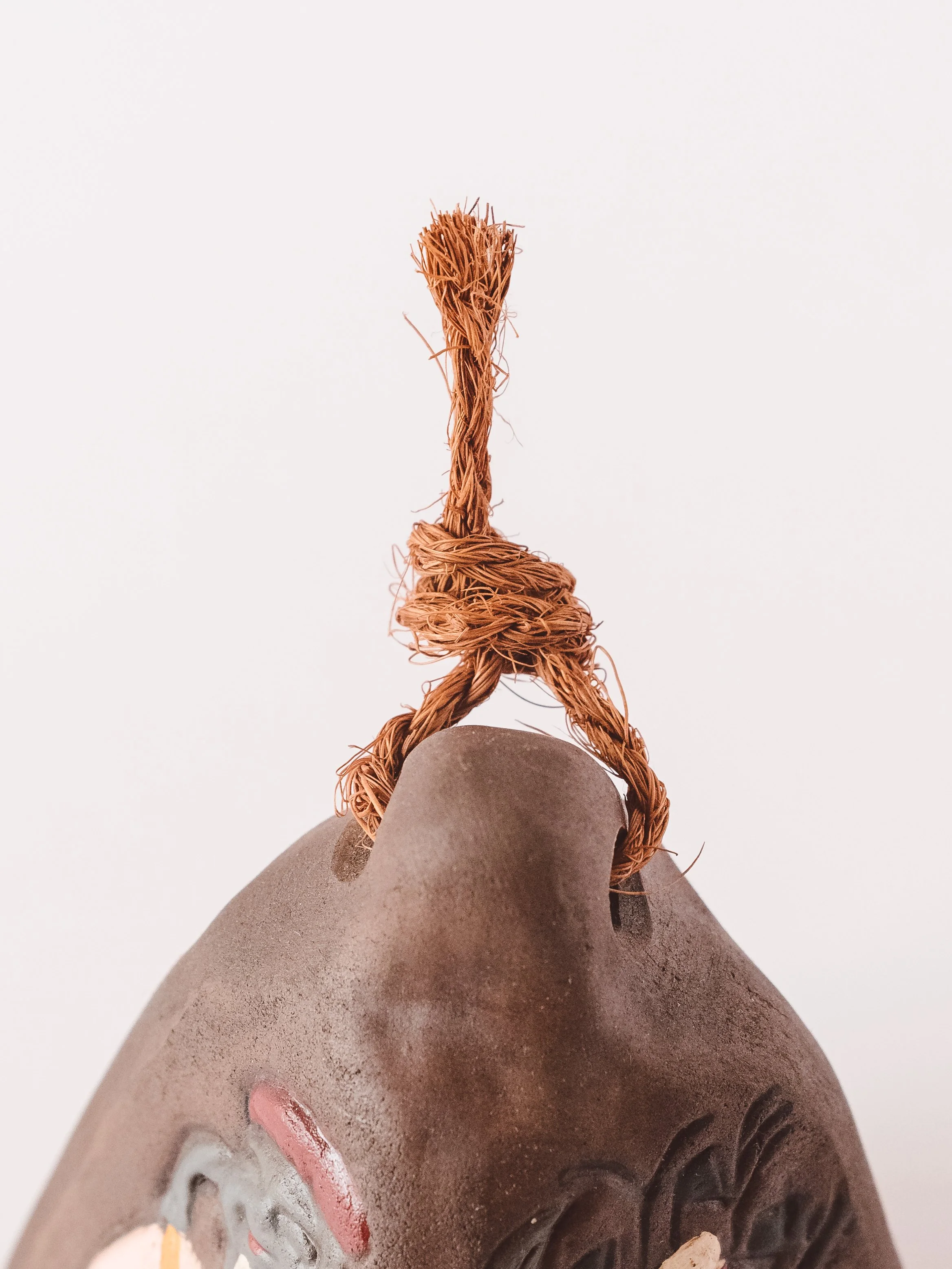 Image 9 of 11
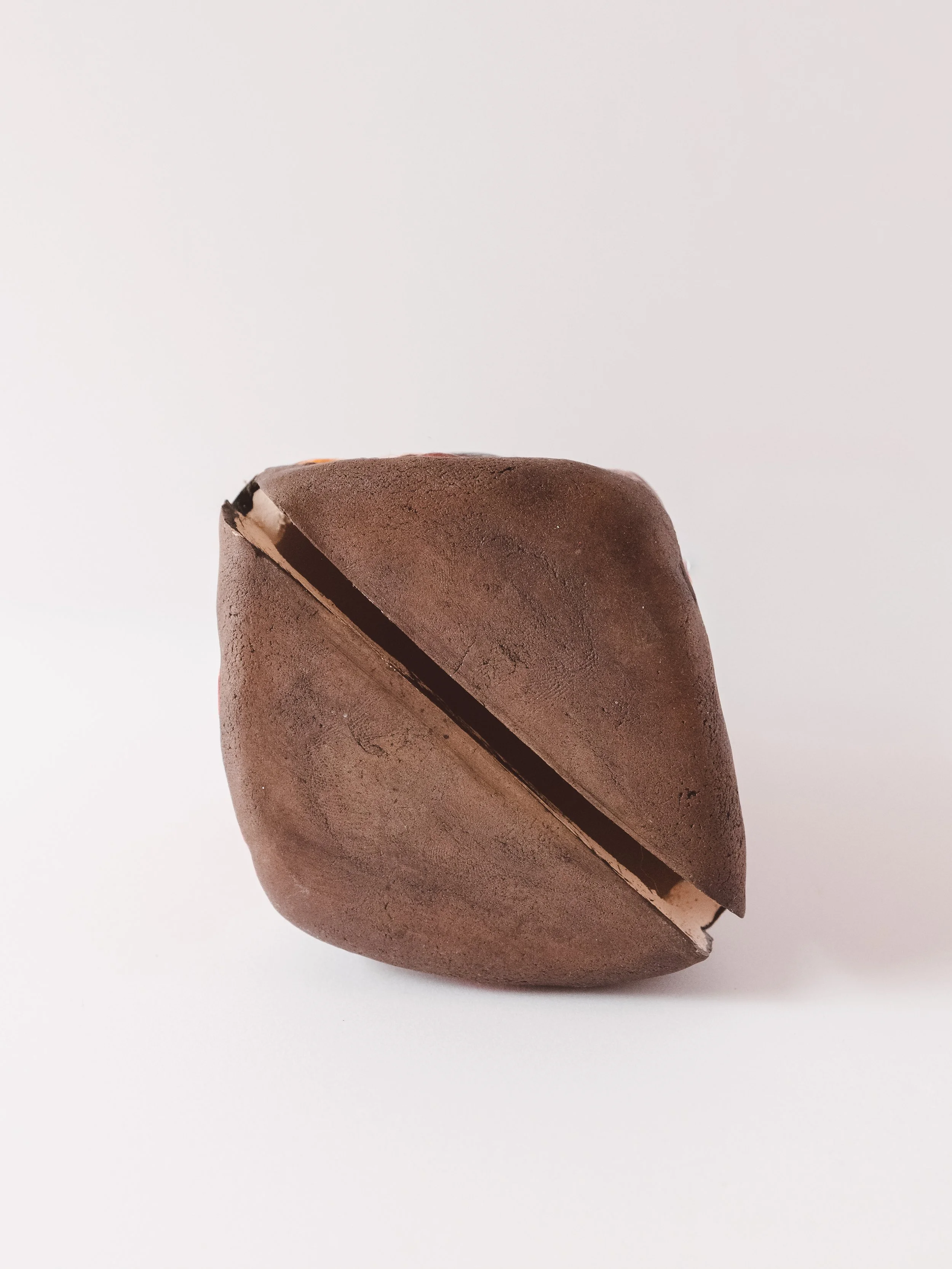 Image 10 of 11
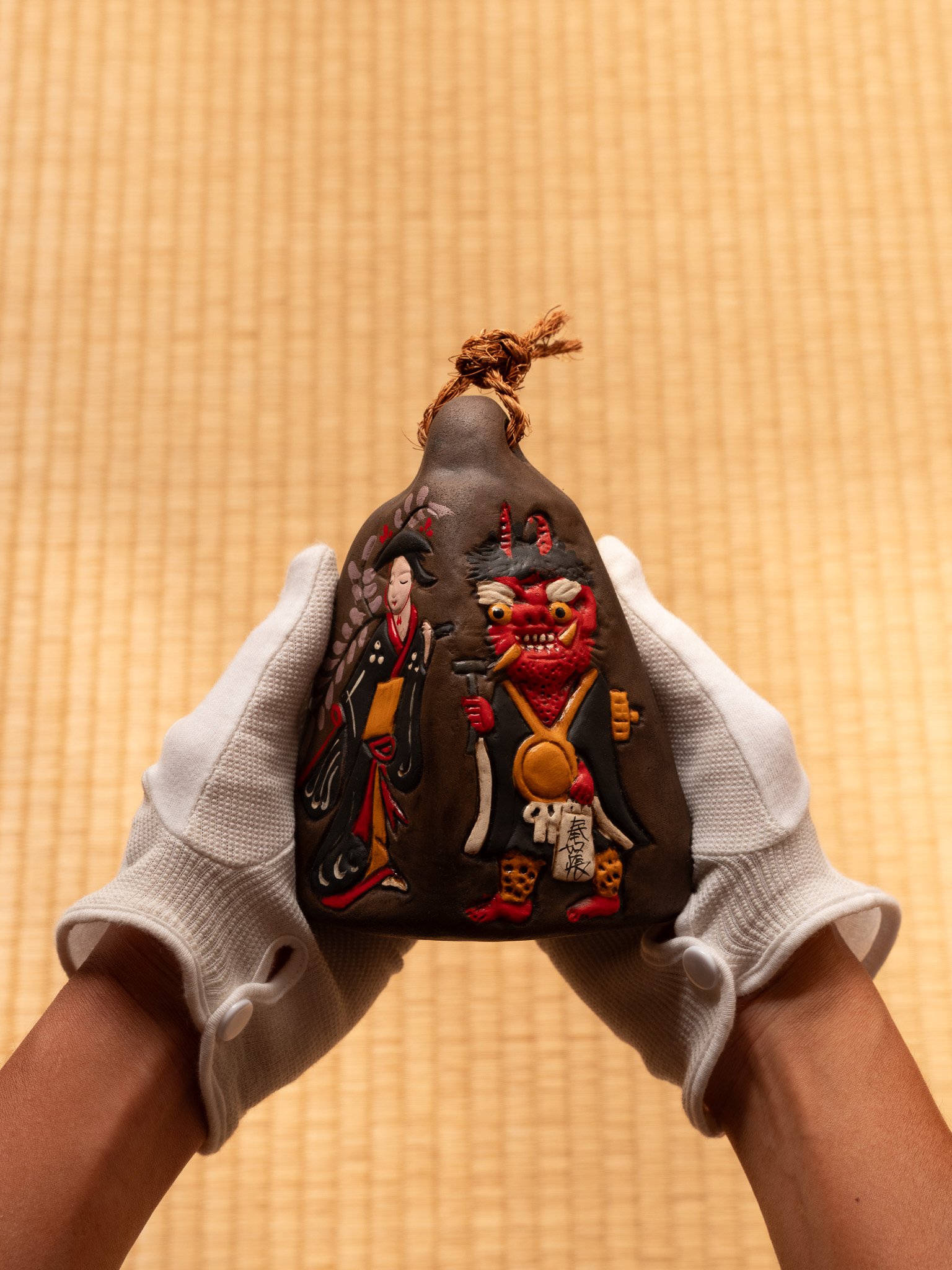 Image 11 of 11