【 The Concept 】
Three figures huddle into a single form. A parent, flanked by two smaller bodies pressed close against its sides. This is not a proverb or a lesson — it is a portrait of protection. In Japanese folk tradition, the monkey is a guardian animal: a creature believed to ward off misfortune, watch over safe births, and keep illness from the threshold. An anonymous ironworker in a northern province renowned for four centuries of casting mastery compressed that belief into a single object narrow enough to rest beside a pen. The result is not sentimental. It is structural — a family reduced to its essential geometry, bonded together in iron.
【 The Function 】
Engineered as both a paperweight and a brush rest, this object serves a dual purpose that reflects its origin in the culture of calligraphy. The iron density holds paper flat without shifting. The gentle curvature along the figures' shoulders cradles a brush or pen at rest, keeping its tip suspended above the surface. It is a desk instrument disguised as devotion.
【 The Texture 】
The surface carries a hand-applied lacquer finish baked directly onto heated iron — producing a deep, warm tone that falls between umber and black. The texture is not polished. It retains the faint grain of the casting process, a tactile quality that rewards repeated handling. Over decades of contact with skin and air, the iron develops a quiet patina — not degradation, but evidence of use.
【 Presence 】
The three figures introduce a rare warmth to a workspace — not through colour or ornament, but through posture alone. They lean into each other. They do not perform. They simply hold. In Japanese folk belief, the very word for this animal is a homophone for "to depart" — making these figures a talisman that quietly drives misfortune from any room they occupy. Place it where something needs protecting.
Sourced from a private collection in a northern province, Japan.
【 The Concept 】
Three figures huddle into a single form. A parent, flanked by two smaller bodies pressed close against its sides. This is not a proverb or a lesson — it is a portrait of protection. In Japanese folk tradition, the monkey is a guardian animal: a creature believed to ward off misfortune, watch over safe births, and keep illness from the threshold. An anonymous ironworker in a northern province renowned for four centuries of casting mastery compressed that belief into a single object narrow enough to rest beside a pen. The result is not sentimental. It is structural — a family reduced to its essential geometry, bonded together in iron.
【 The Function 】
Engineered as both a paperweight and a brush rest, this object serves a dual purpose that reflects its origin in the culture of calligraphy. The iron density holds paper flat without shifting. The gentle curvature along the figures' shoulders cradles a brush or pen at rest, keeping its tip suspended above the surface. It is a desk instrument disguised as devotion.
【 The Texture 】
The surface carries a hand-applied lacquer finish baked directly onto heated iron — producing a deep, warm tone that falls between umber and black. The texture is not polished. It retains the faint grain of the casting process, a tactile quality that rewards repeated handling. Over decades of contact with skin and air, the iron develops a quiet patina — not degradation, but evidence of use.
【 Presence 】
The three figures introduce a rare warmth to a workspace — not through colour or ornament, but through posture alone. They lean into each other. They do not perform. They simply hold. In Japanese folk belief, the very word for this animal is a homophone for "to depart" — making these figures a talisman that quietly drives misfortune from any room they occupy. Place it where something needs protecting.
Sourced from a private collection in a northern province, Japan.


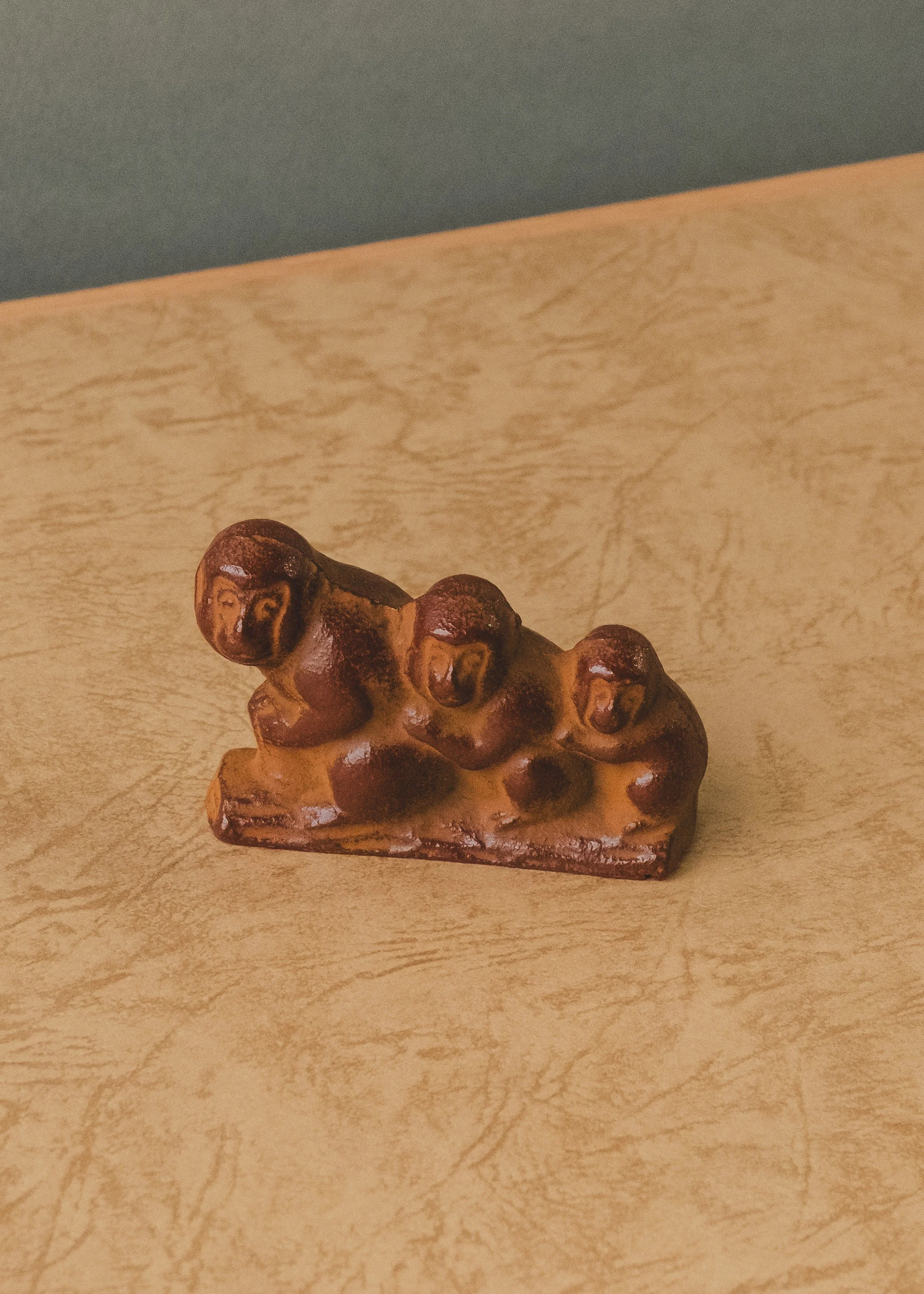 Image 1 of 5
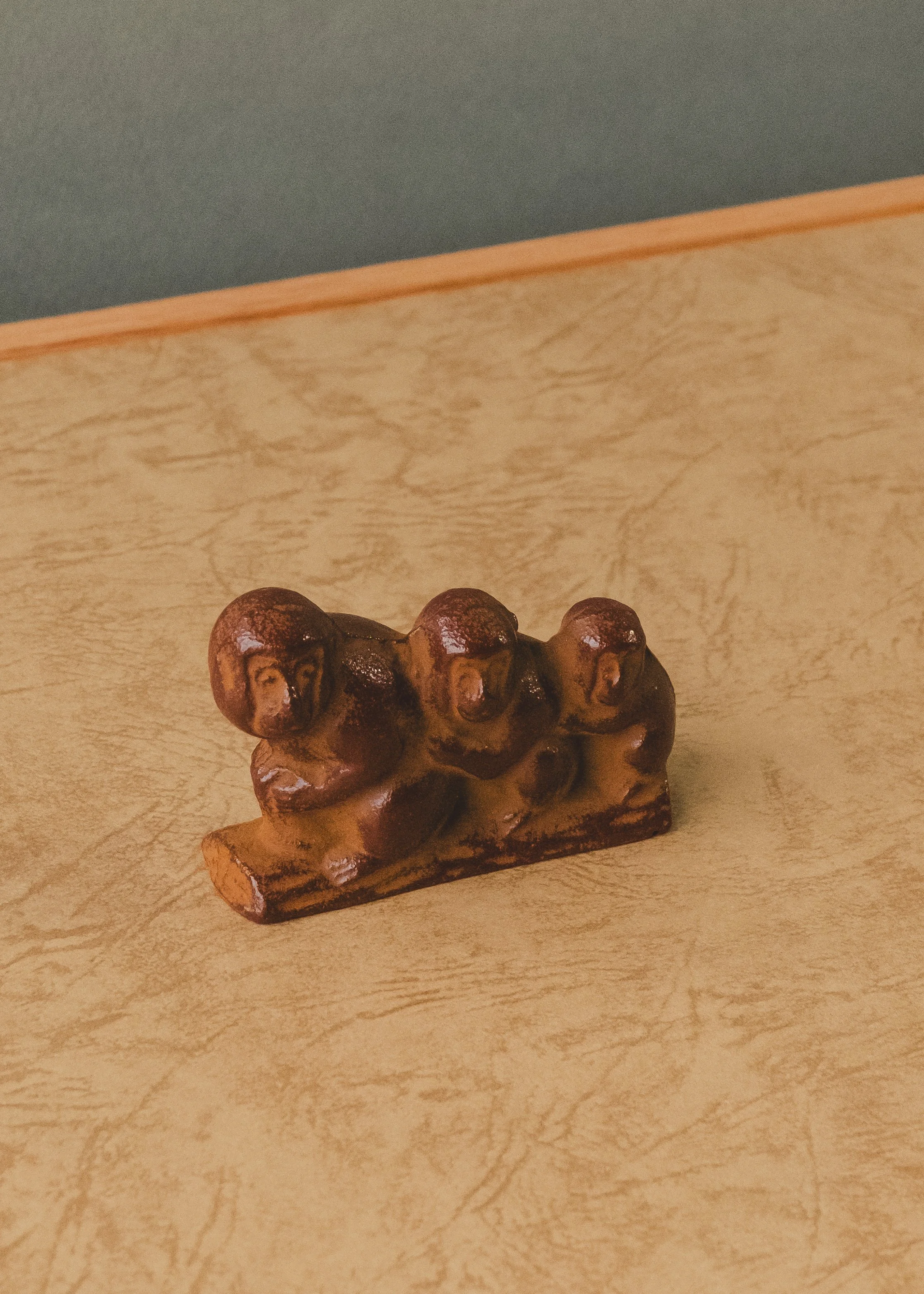 Image 2 of 5
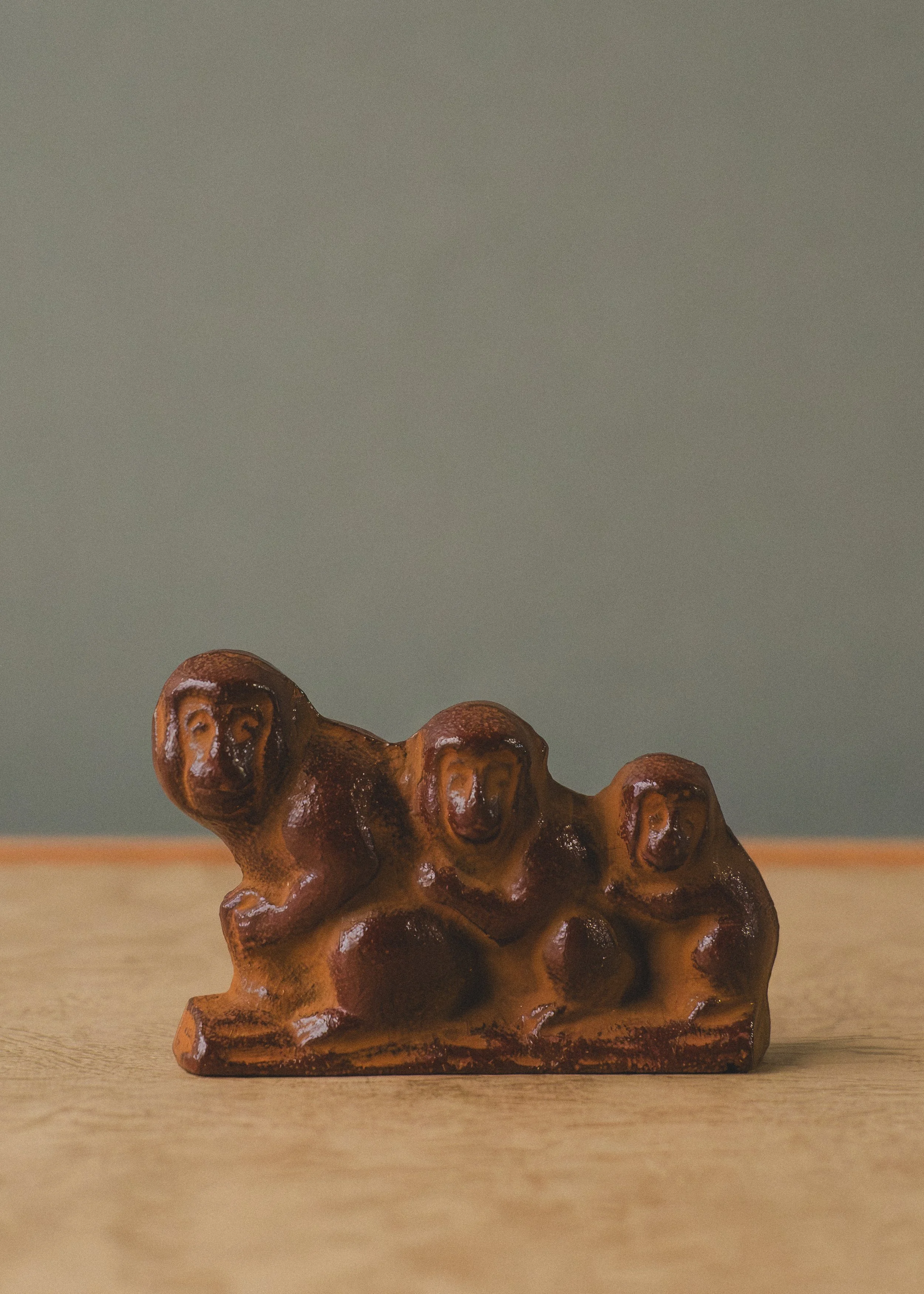 Image 3 of 5
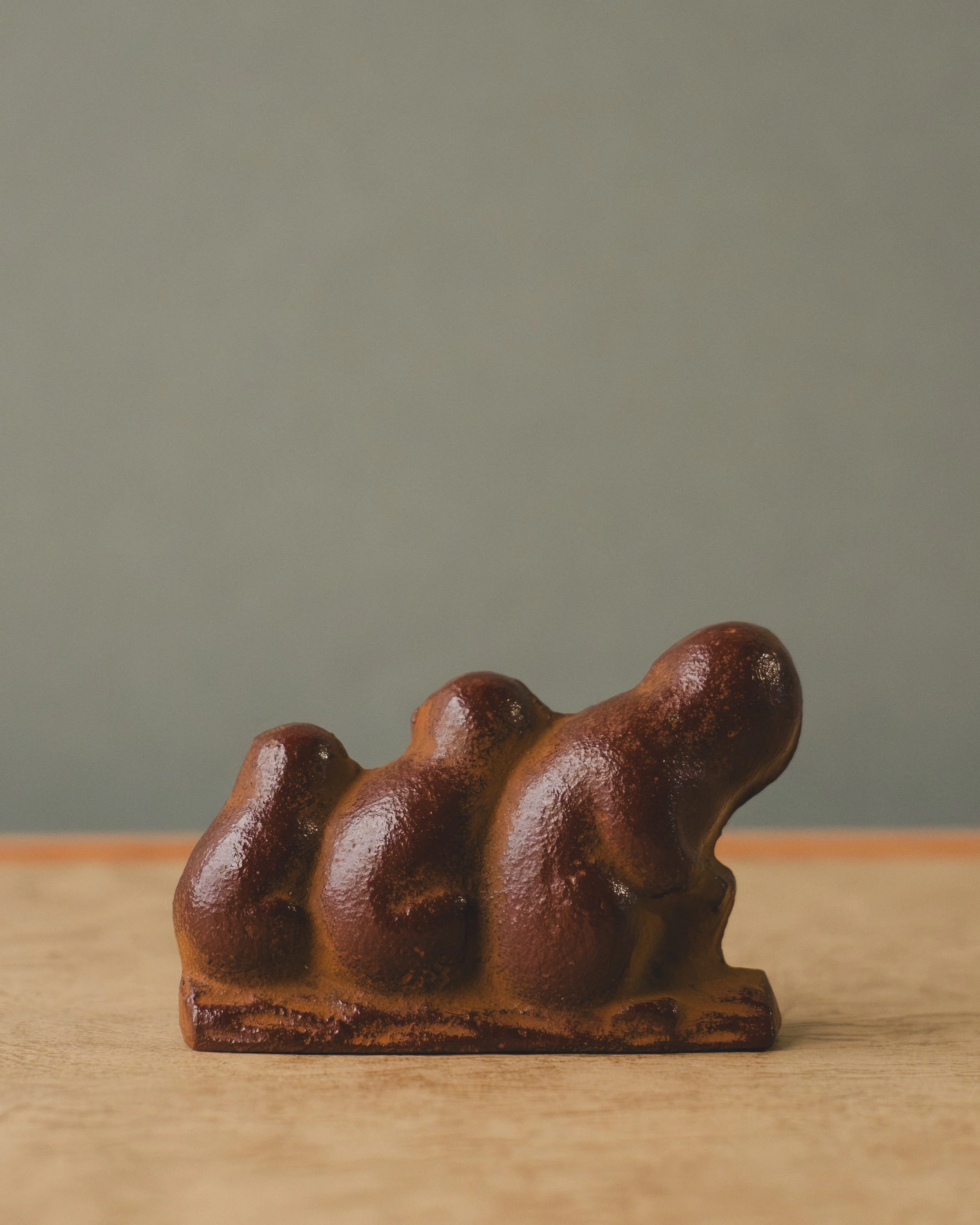 Image 4 of 5
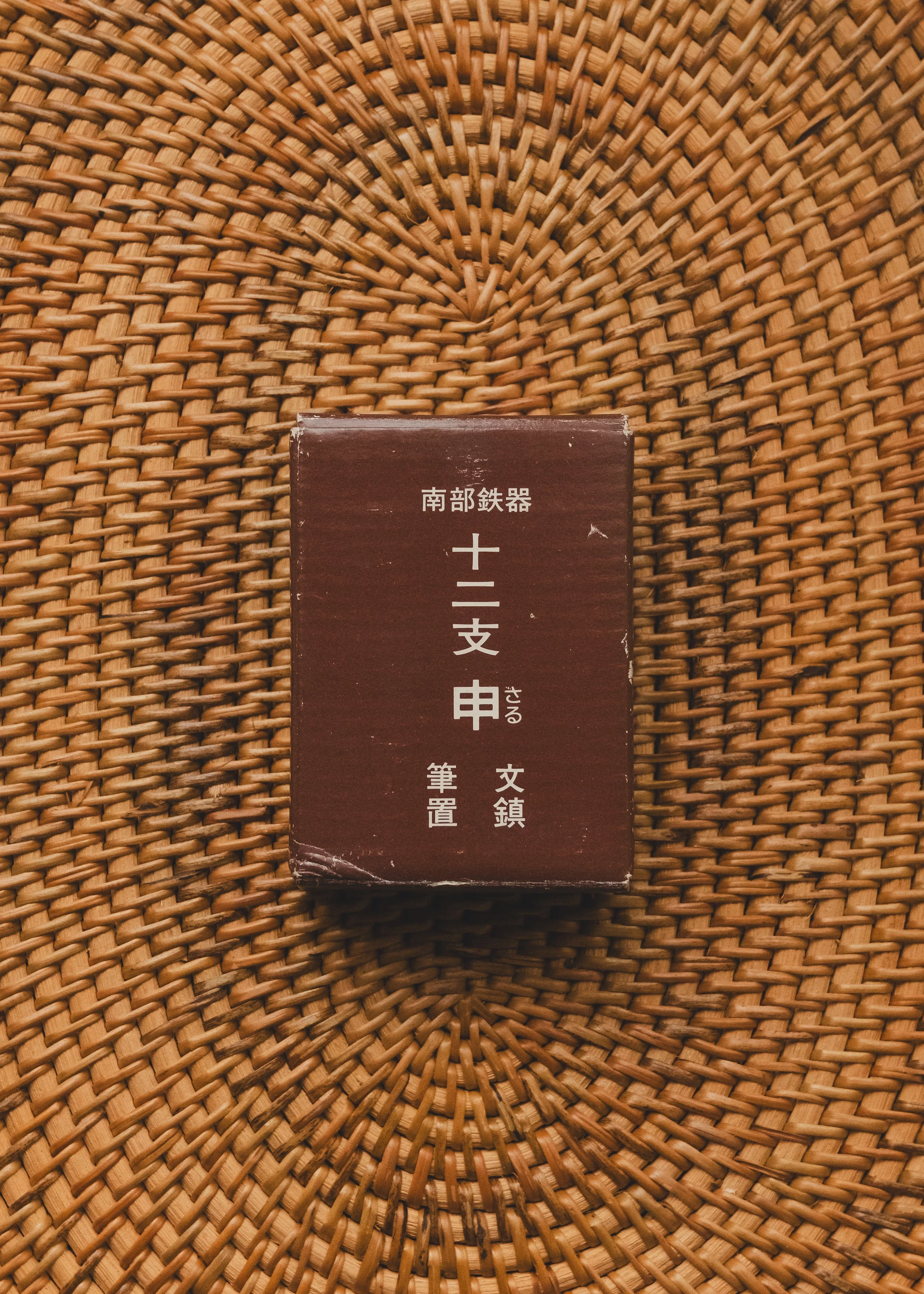 Image 5 of 5