【 The Concept 】
A parent and child, rendered as two horses pared down almost to their shadows. The little one is nearly a sphere — a round body on four stub legs, a thick upright neck, a blunt blocky head with two small bud eyes and a single ridge for a mane — all the roundness and top-heavy stance of something very young. The parent is taller and squarer, its neck rising in a long easy S-curve and its mane carved into flowing strands, the calm and carriage of the grown animal. Together they are the zodiac horse in its most distilled form — the animal of forward drive, momentum, and success, of things that go well and keep moving ahead. Made as a pair, they carry the older wish of every parent-and-child figure: a household kept safe, children grown strong, a family line that continues. It is less an ornament than a small blessing for the home — and, as a horse, one meant especially for the New Year and the years that follow.
【 The Function 】
A small pair of objects, made to sit together and be seen as a set. They ask for almost no room — a shelf, a windowsill, a desk, the corner of an entrance — and the two forms play off each other wherever they land: the round child and the taller parent, one white, one warm brown, turned to face or follow one another. Compact enough to move with the seasons — out for the New Year, kept out all year if you like — and pleasing from every side, with no front and no back. Set them where a glance will catch the pair.
【 The Texture 】
Two glazes, deliberately opposed. The child is a soft near-white, and over its whole surface runs a fine web of crackle — kannyu — the network of hairline lines that forms in a glaze as it cools, an effect prized in Japanese ceramics as a natural "landscape" in the surface. It gives the clean, man-made little shape an organic, hand-made warmth, and it is the kind of surface that deepens over the years as the lines slowly take on colour. The parent wears a matte caramel-to-mustard glaze, smooth and even, the light spreading softly across it with no crackle to break it — quiet where the child is busy. Round against square, crackled against matte, white against brown: the contrast is the whole point, and it is what makes the two read as a pair rather than a repeat.
【 Presence 】
Quiet, warm, and a little tender. The two together tell a small story without a single realistic detail — the round, top-heavy young one and the calm, carried parent — and a viewer reads the family into them at once. They lift the mood of a shelf the way any small, well-made animal does, but doubled, and with the added softness of a pair that belongs together. Modern enough for a plain contemporary room, rooted enough to carry the old New-Year wishes of health, growth, and good fortune. A gentle, hopeful thing to keep in sight.
Sourced from a private collection in Japan.
【 The Concept 】
A parent and child, rendered as two horses pared down almost to their shadows. The little one is nearly a sphere — a round body on four stub legs, a thick upright neck, a blunt blocky head with two small bud eyes and a single ridge for a mane — all the roundness and top-heavy stance of something very young. The parent is taller and squarer, its neck rising in a long easy S-curve and its mane carved into flowing strands, the calm and carriage of the grown animal. Together they are the zodiac horse in its most distilled form — the animal of forward drive, momentum, and success, of things that go well and keep moving ahead. Made as a pair, they carry the older wish of every parent-and-child figure: a household kept safe, children grown strong, a family line that continues. It is less an ornament than a small blessing for the home — and, as a horse, one meant especially for the New Year and the years that follow.
【 The Function 】
A small pair of objects, made to sit together and be seen as a set. They ask for almost no room — a shelf, a windowsill, a desk, the corner of an entrance — and the two forms play off each other wherever they land: the round child and the taller parent, one white, one warm brown, turned to face or follow one another. Compact enough to move with the seasons — out for the New Year, kept out all year if you like — and pleasing from every side, with no front and no back. Set them where a glance will catch the pair.
【 The Texture 】
Two glazes, deliberately opposed. The child is a soft near-white, and over its whole surface runs a fine web of crackle — kannyu — the network of hairline lines that forms in a glaze as it cools, an effect prized in Japanese ceramics as a natural "landscape" in the surface. It gives the clean, man-made little shape an organic, hand-made warmth, and it is the kind of surface that deepens over the years as the lines slowly take on colour. The parent wears a matte caramel-to-mustard glaze, smooth and even, the light spreading softly across it with no crackle to break it — quiet where the child is busy. Round against square, crackled against matte, white against brown: the contrast is the whole point, and it is what makes the two read as a pair rather than a repeat.
【 Presence 】
Quiet, warm, and a little tender. The two together tell a small story without a single realistic detail — the round, top-heavy young one and the calm, carried parent — and a viewer reads the family into them at once. They lift the mood of a shelf the way any small, well-made animal does, but doubled, and with the added softness of a pair that belongs together. Modern enough for a plain contemporary room, rooted enough to carry the old New-Year wishes of health, growth, and good fortune. A gentle, hopeful thing to keep in sight.
Sourced from a private collection in Japan.


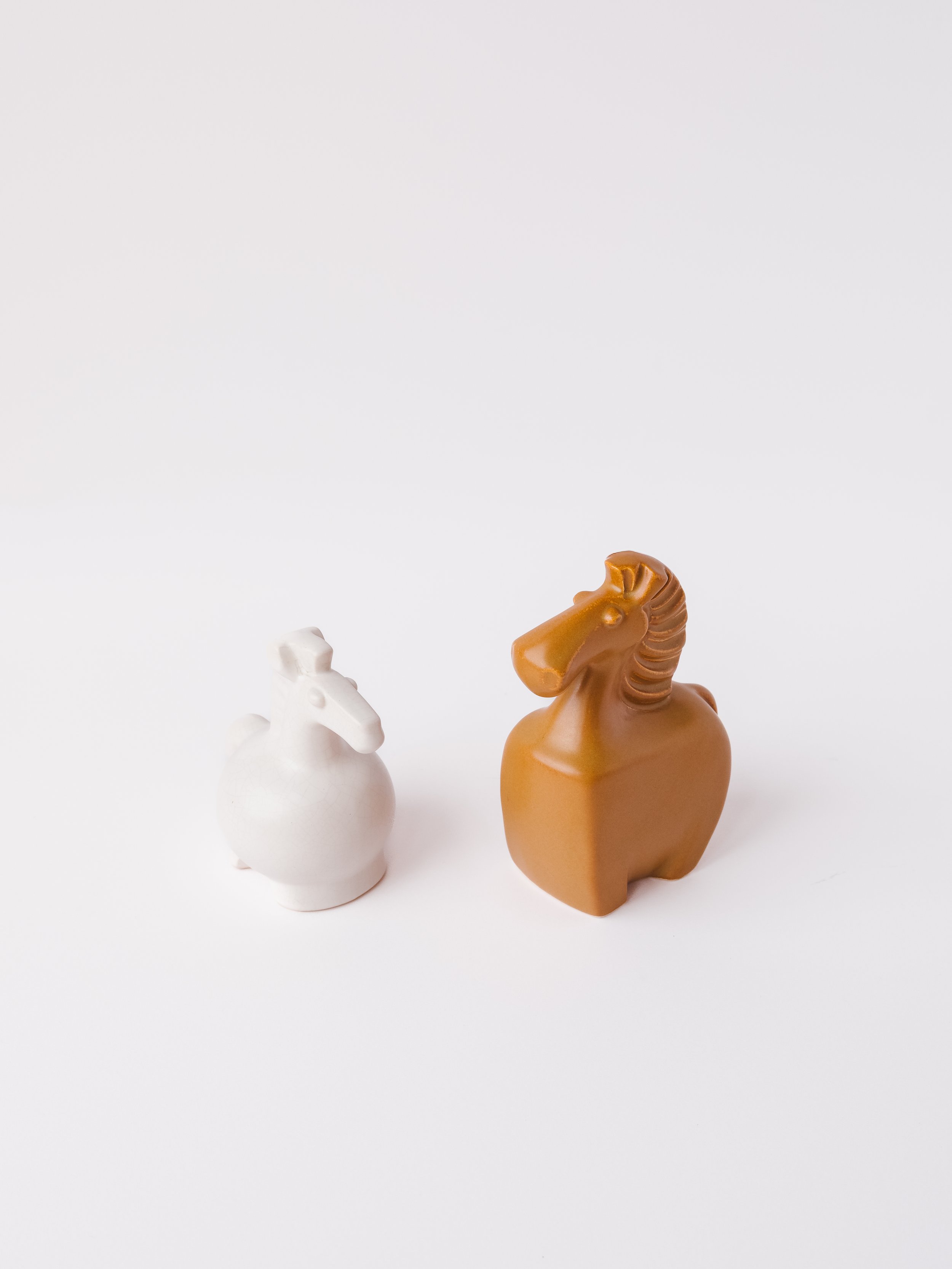 Image 1 of 18
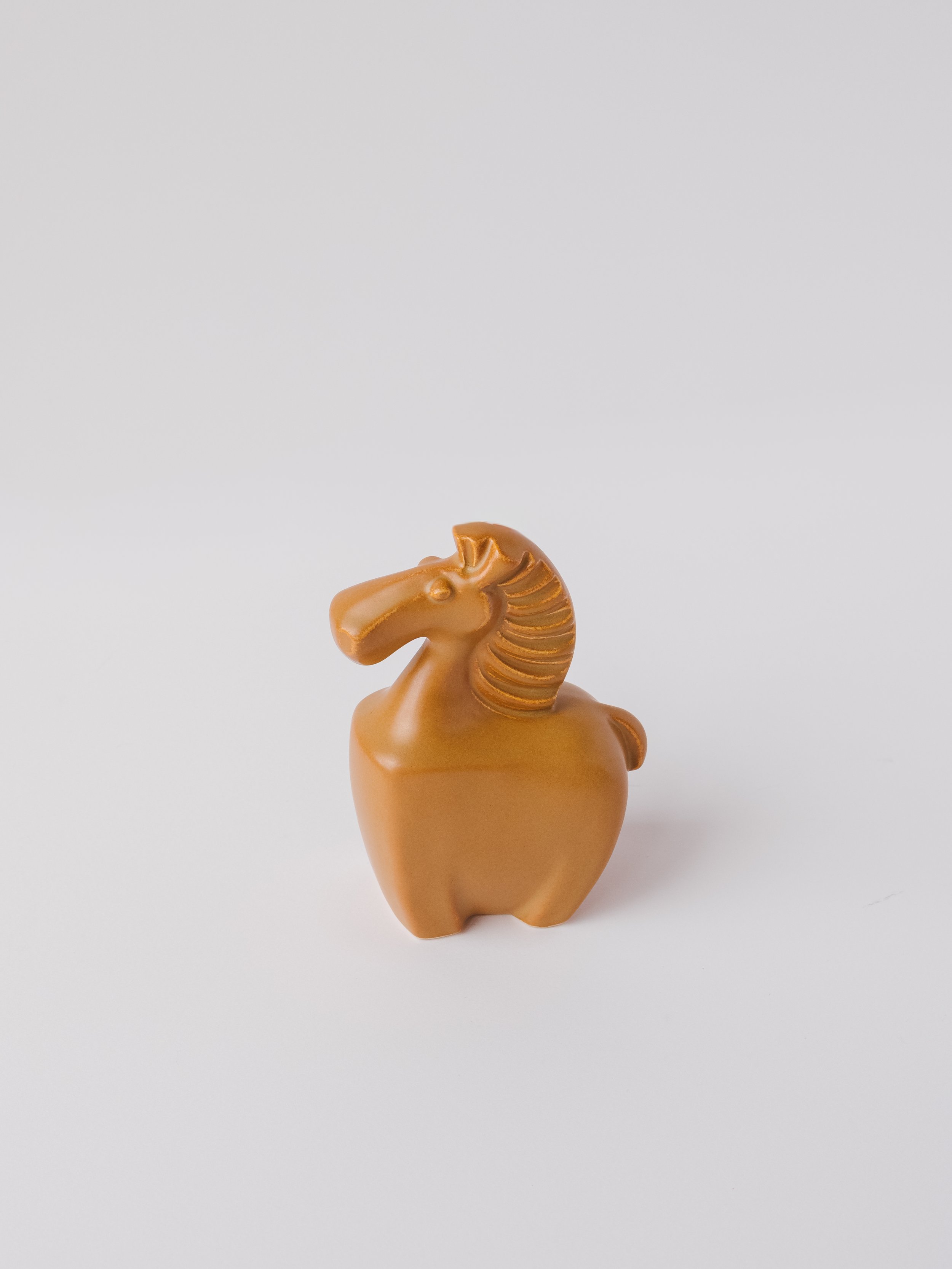 Image 2 of 18
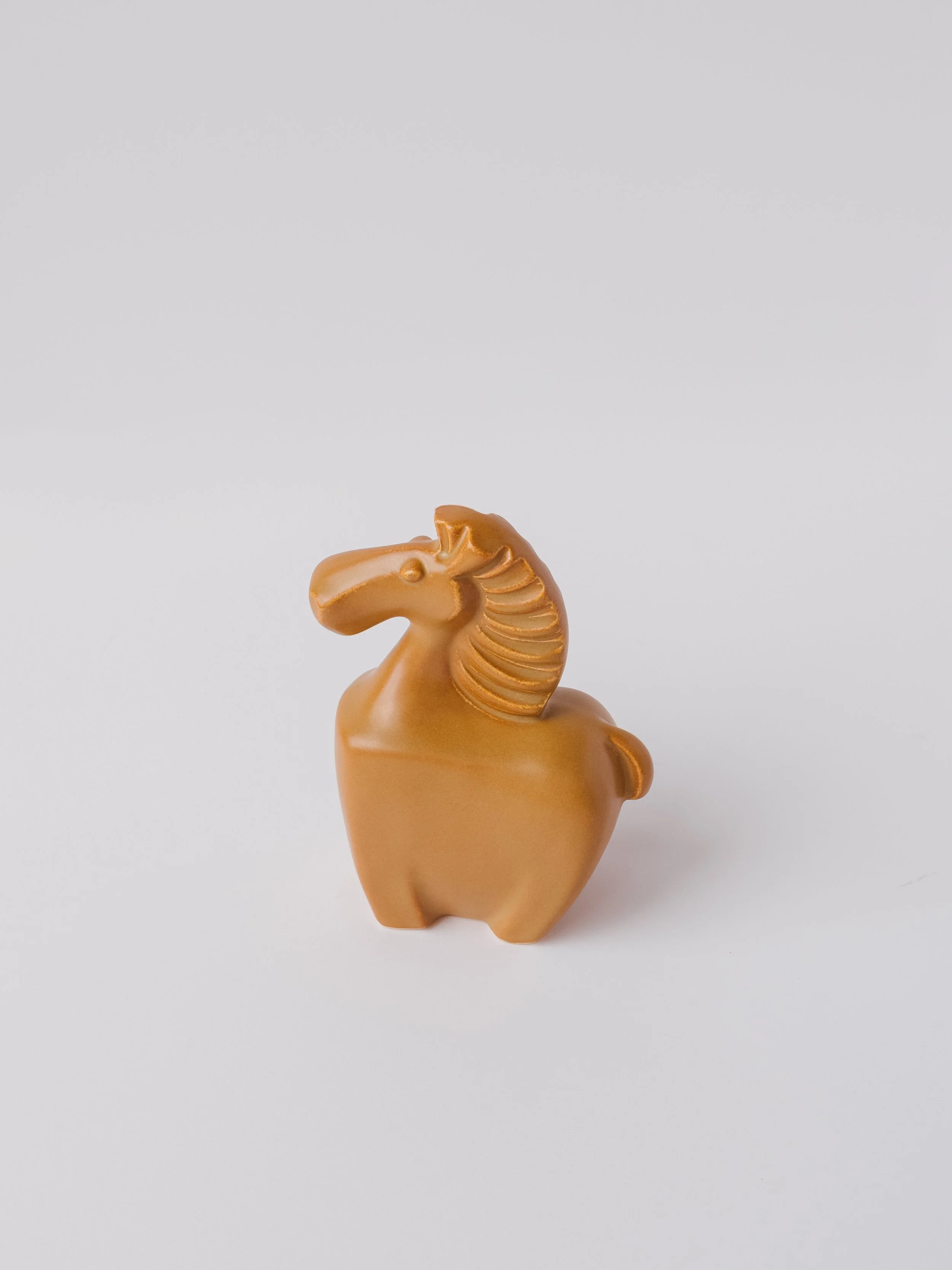 Image 3 of 18
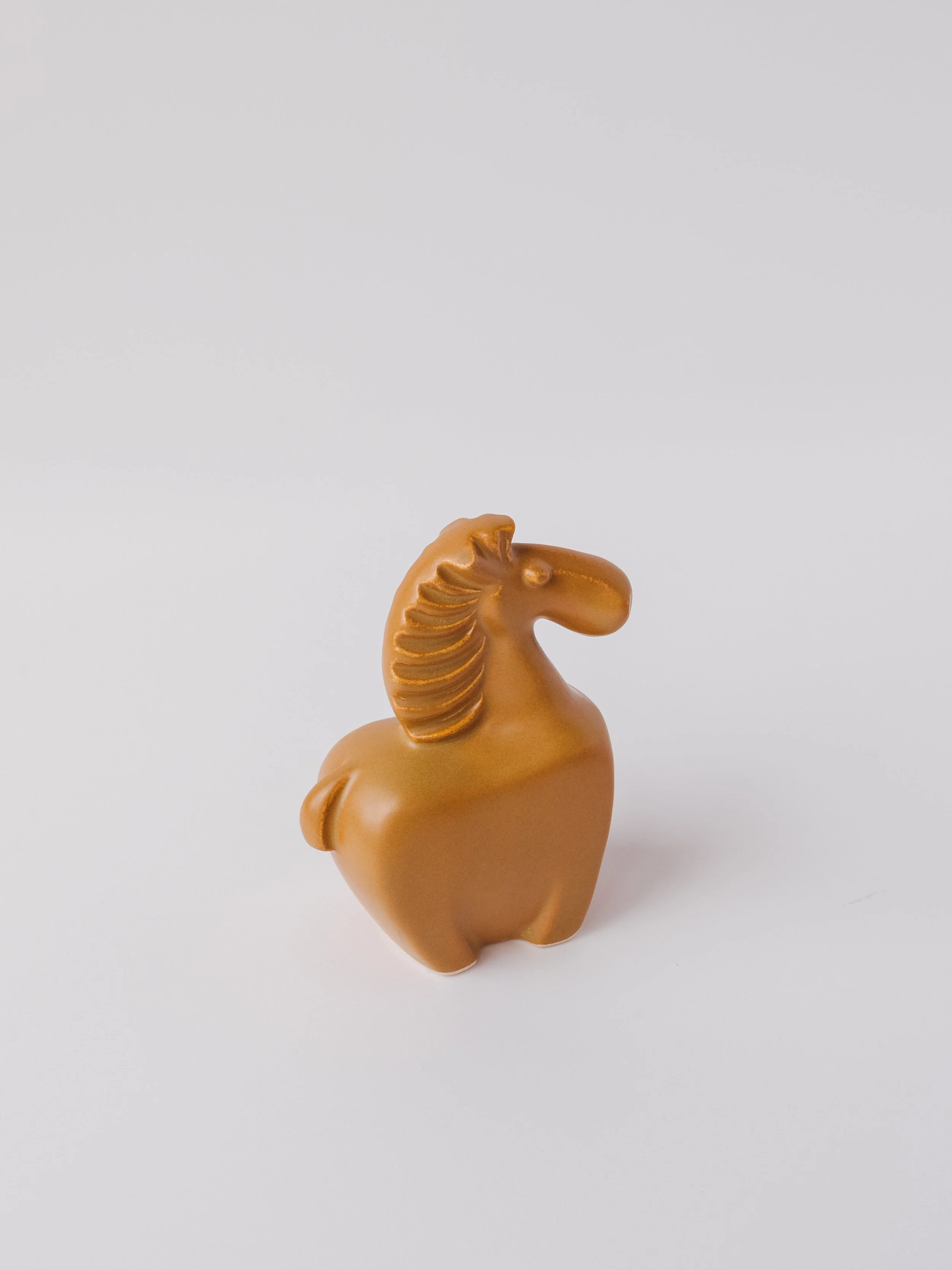 Image 4 of 18
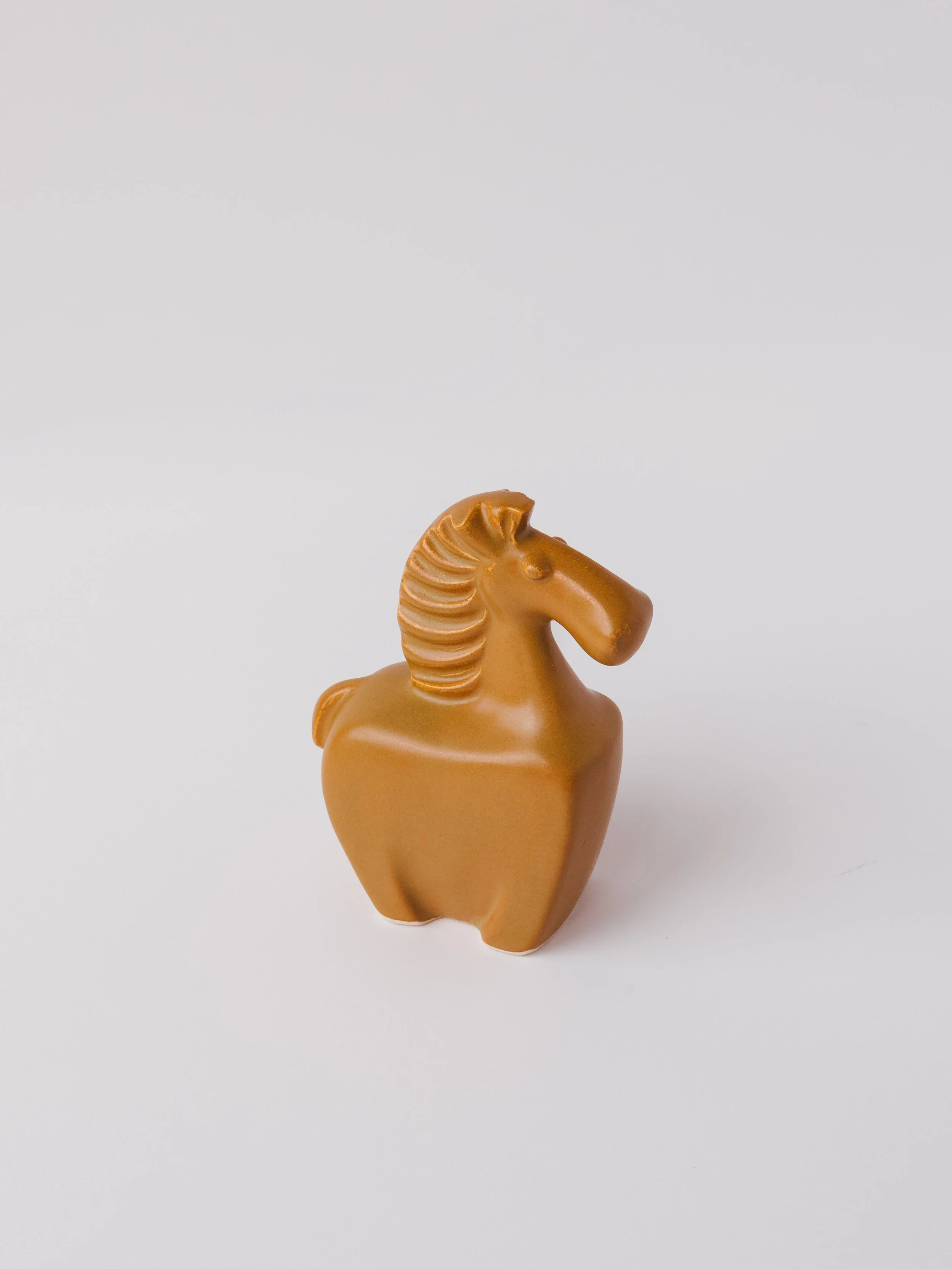 Image 5 of 18
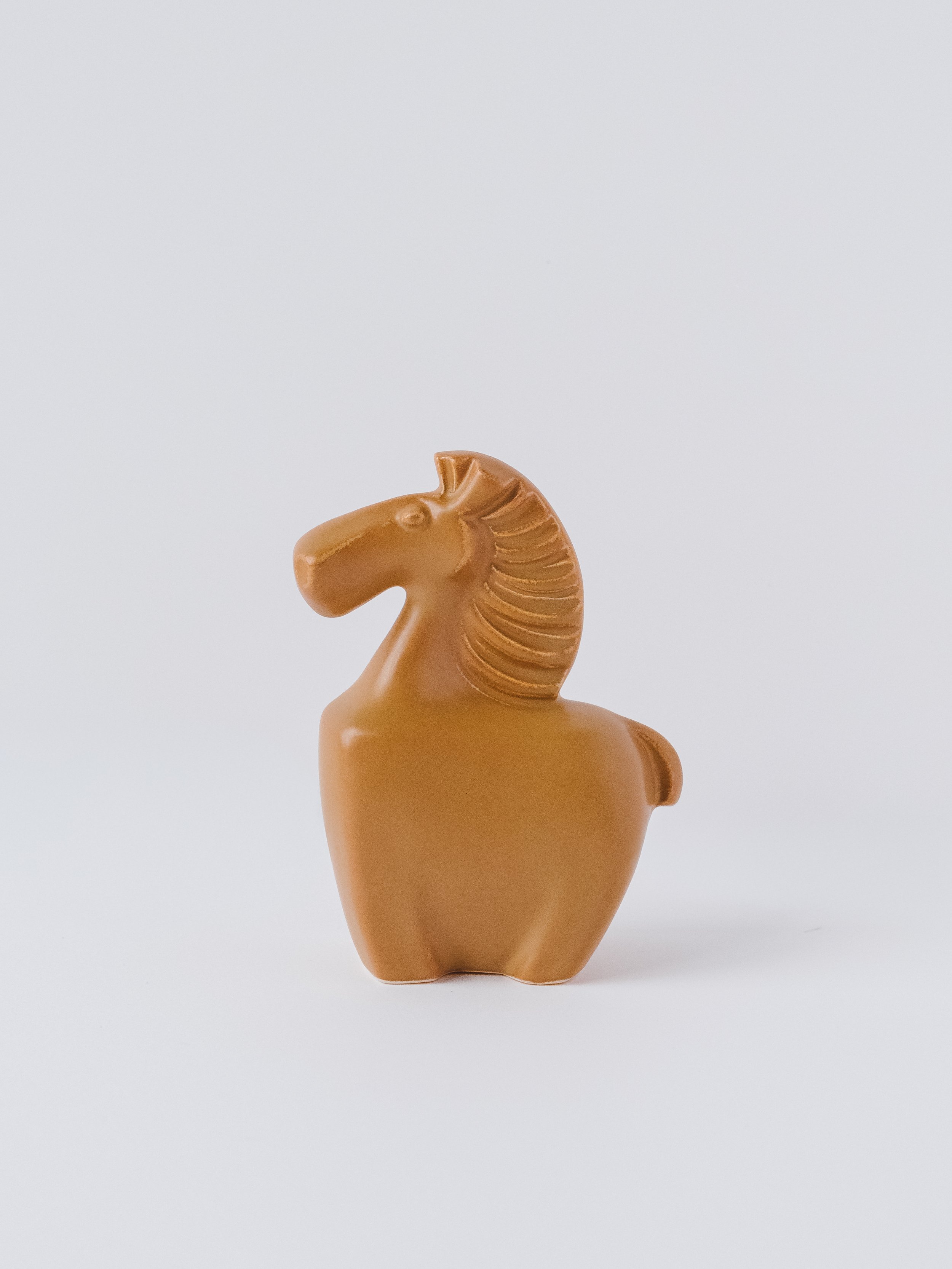 Image 6 of 18
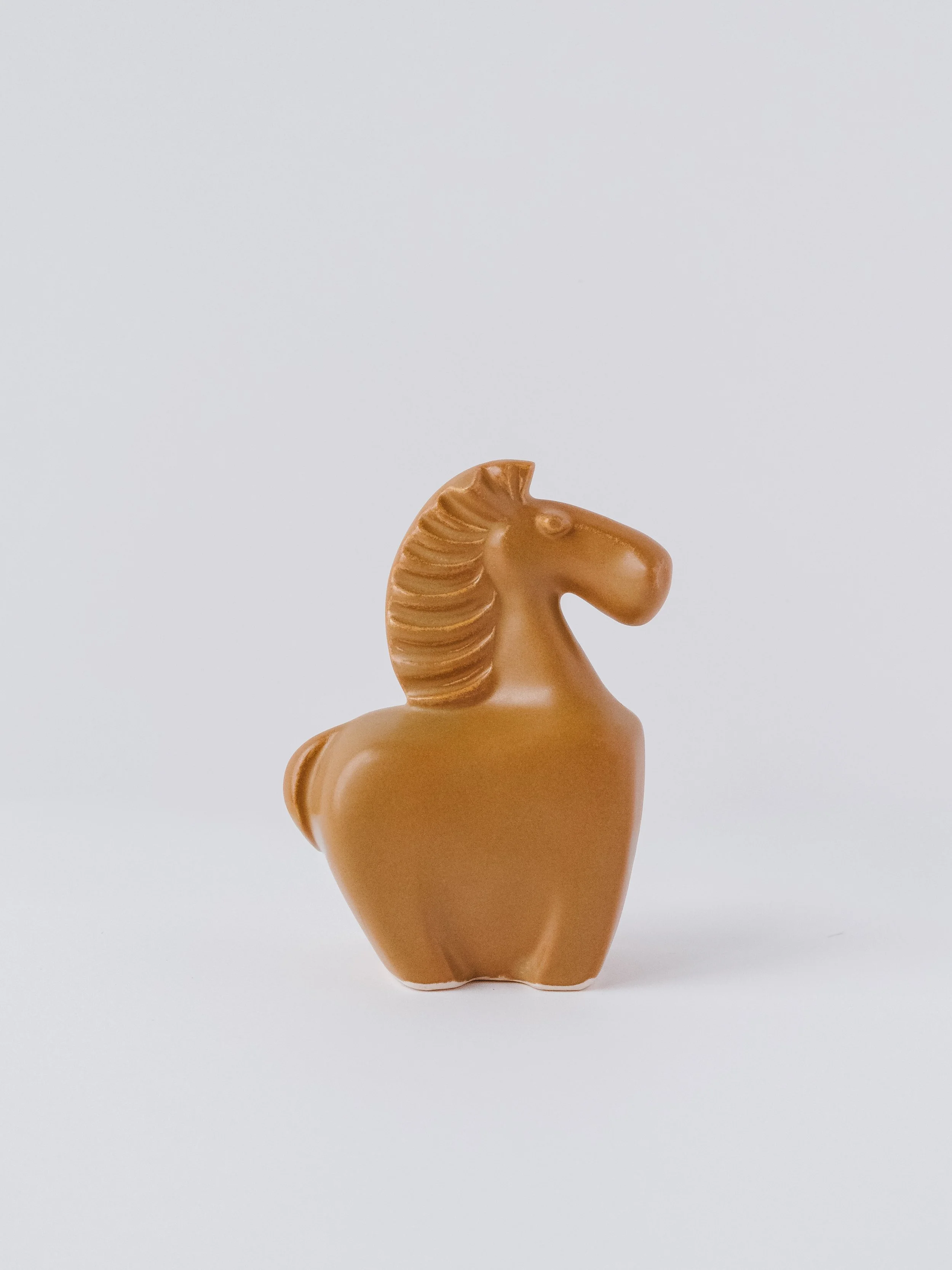 Image 7 of 18
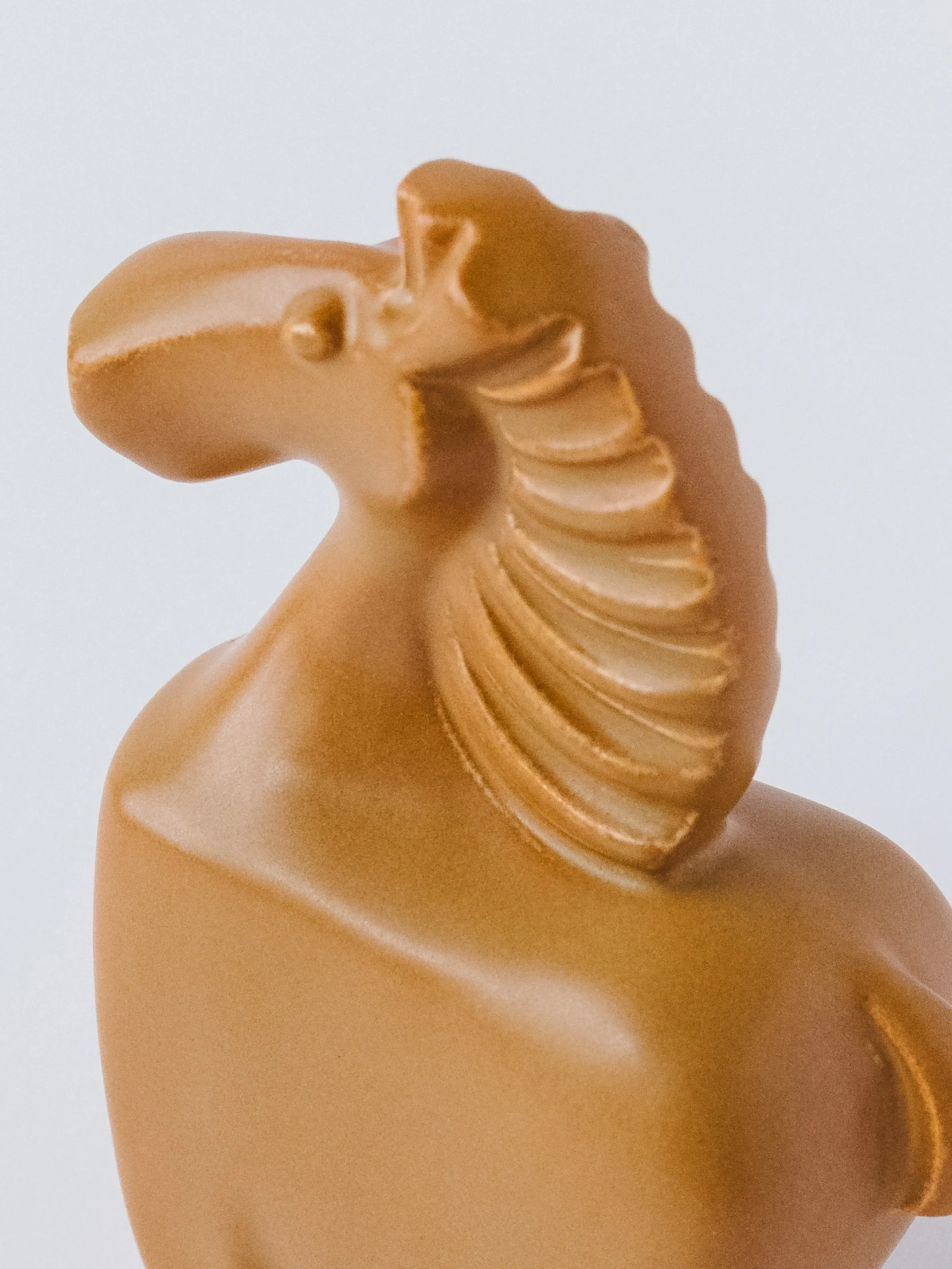 Image 8 of 18
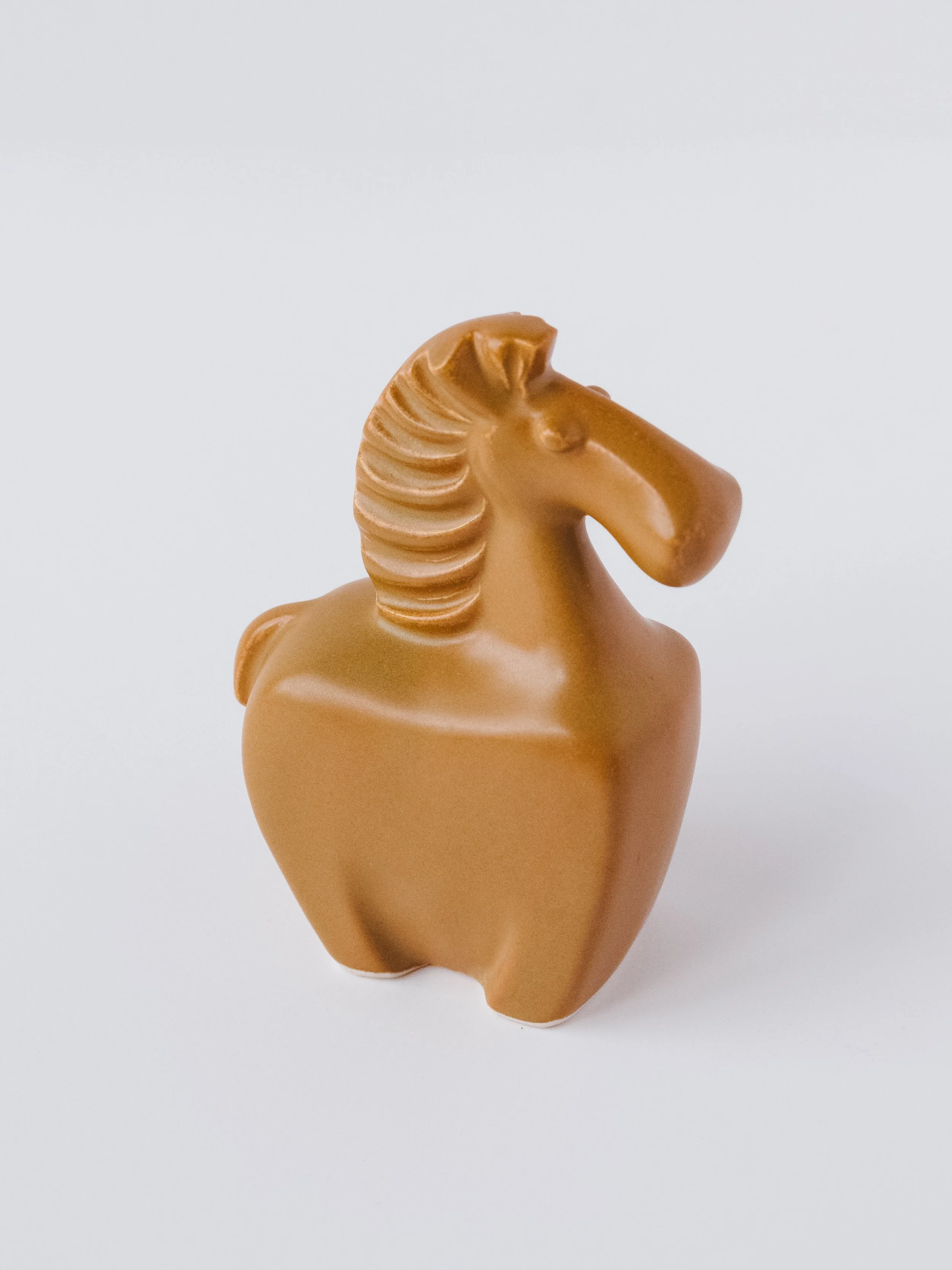 Image 9 of 18
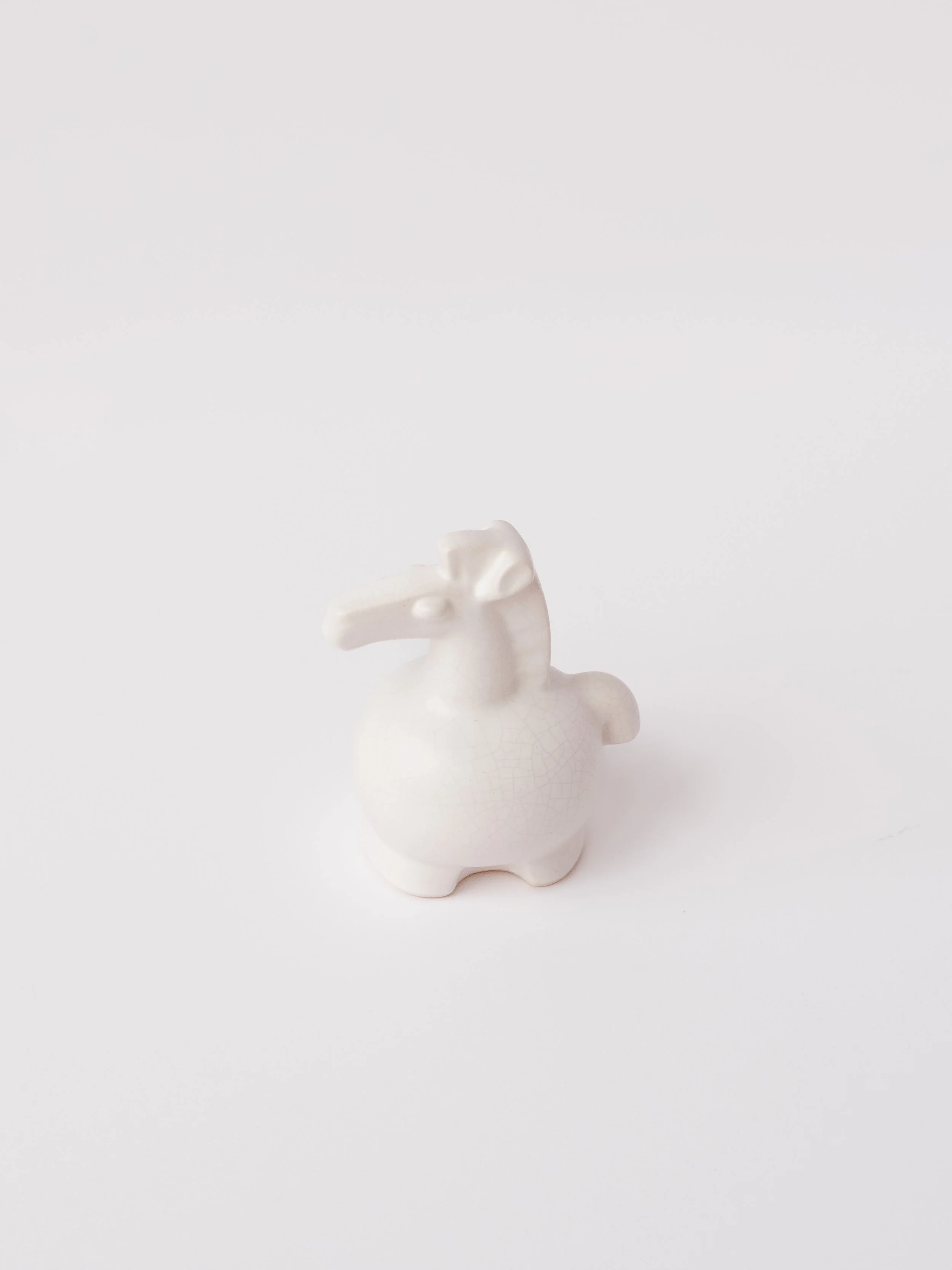 Image 10 of 18
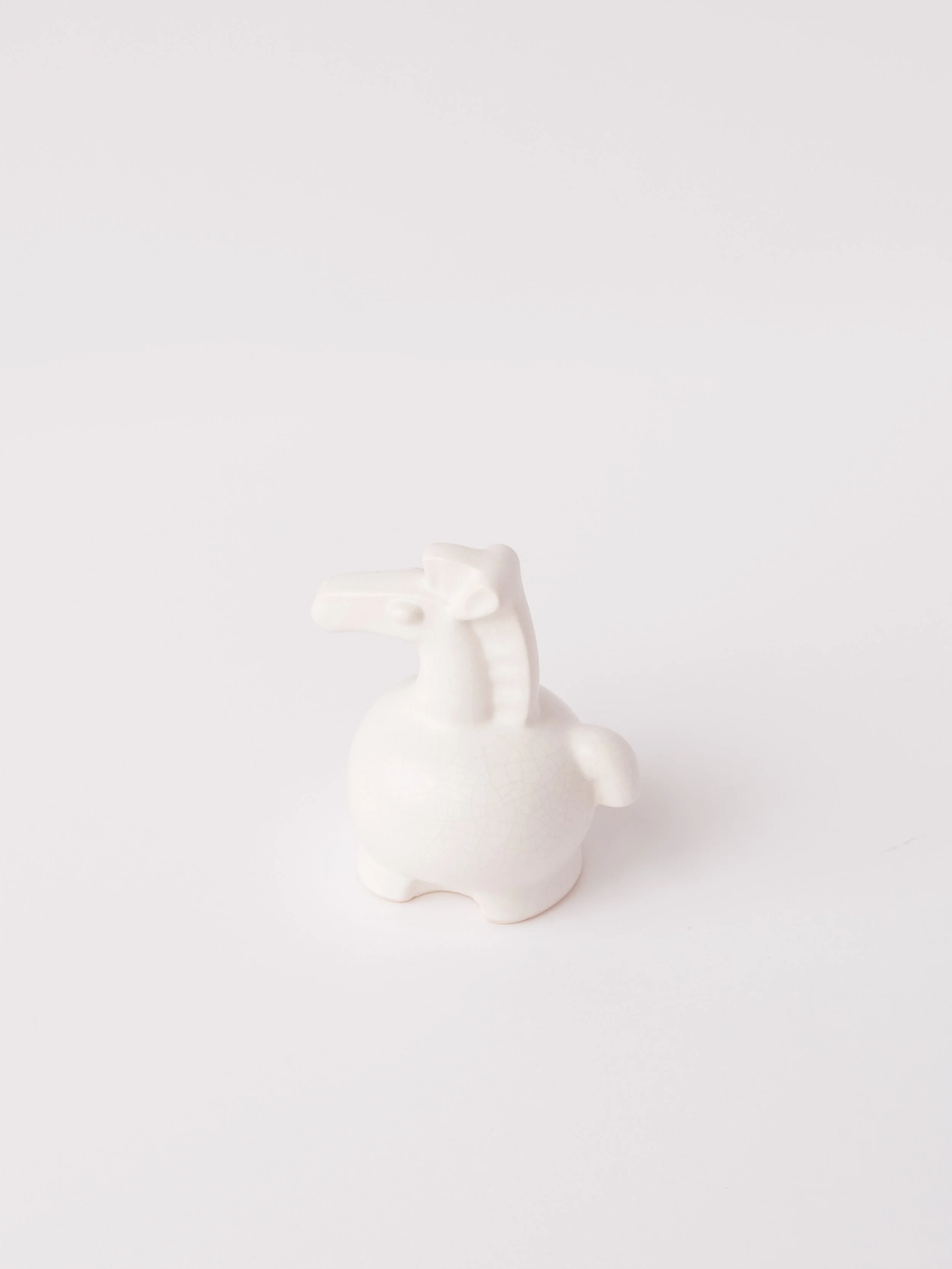 Image 11 of 18
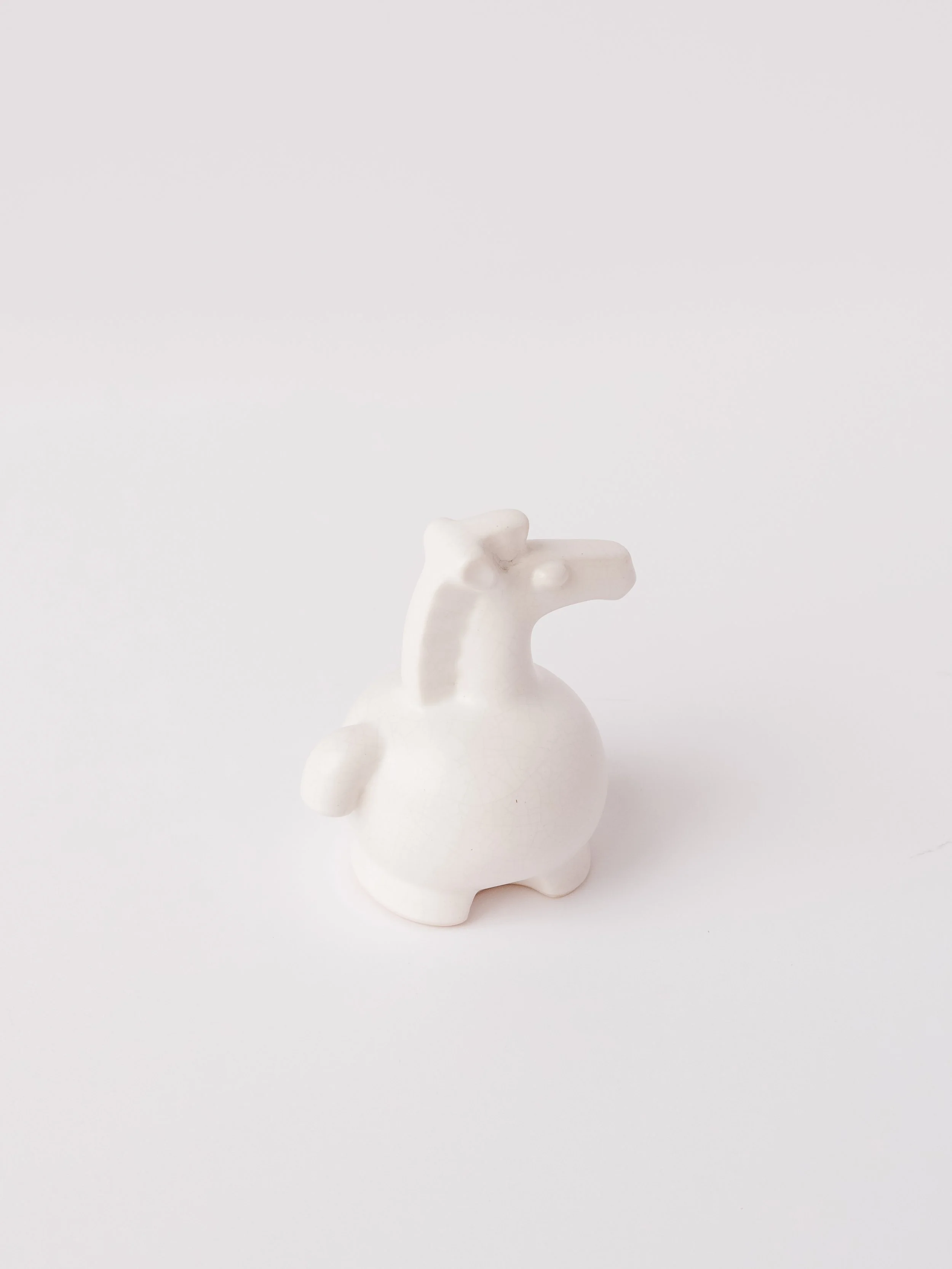 Image 12 of 18
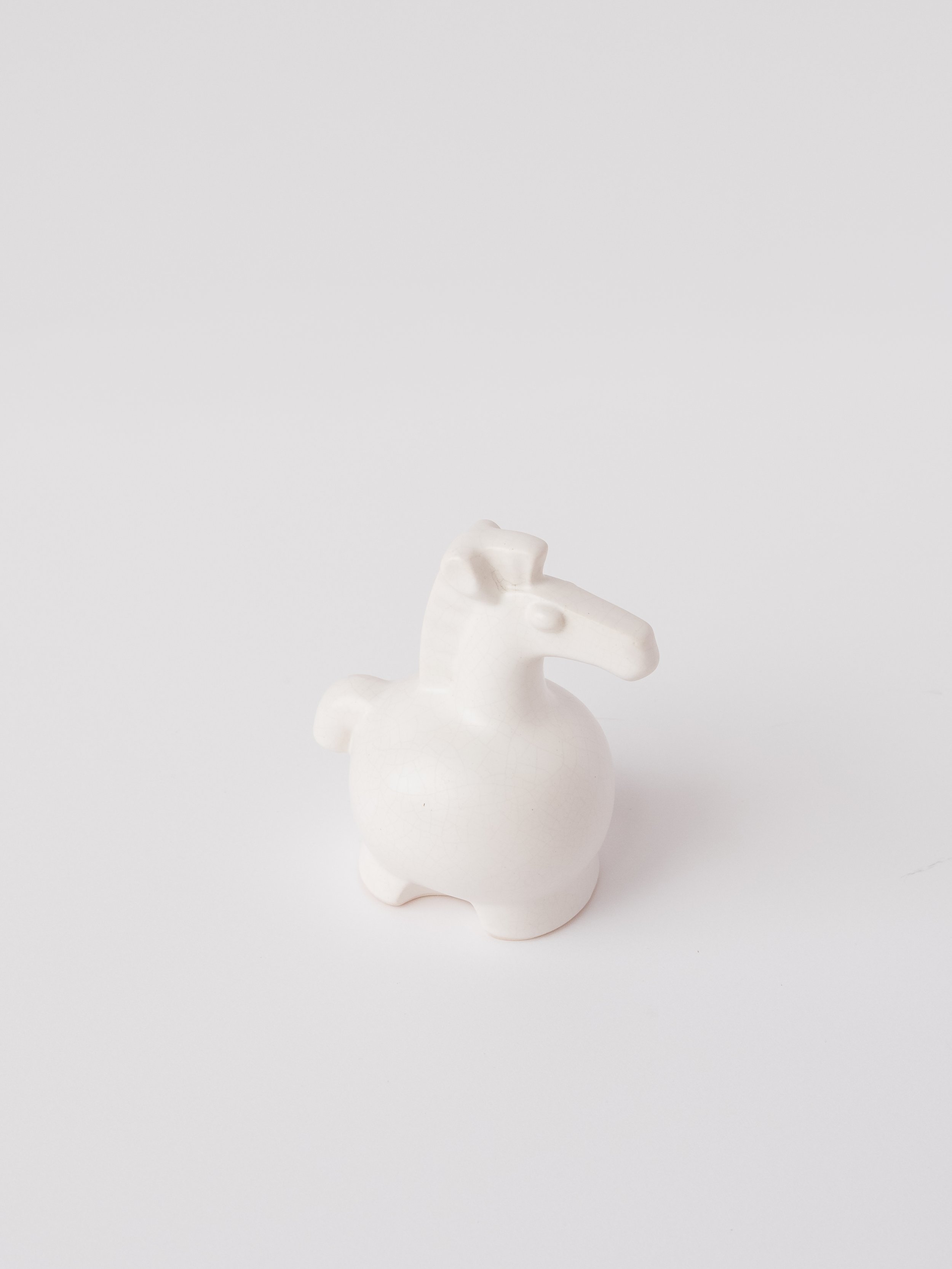 Image 13 of 18
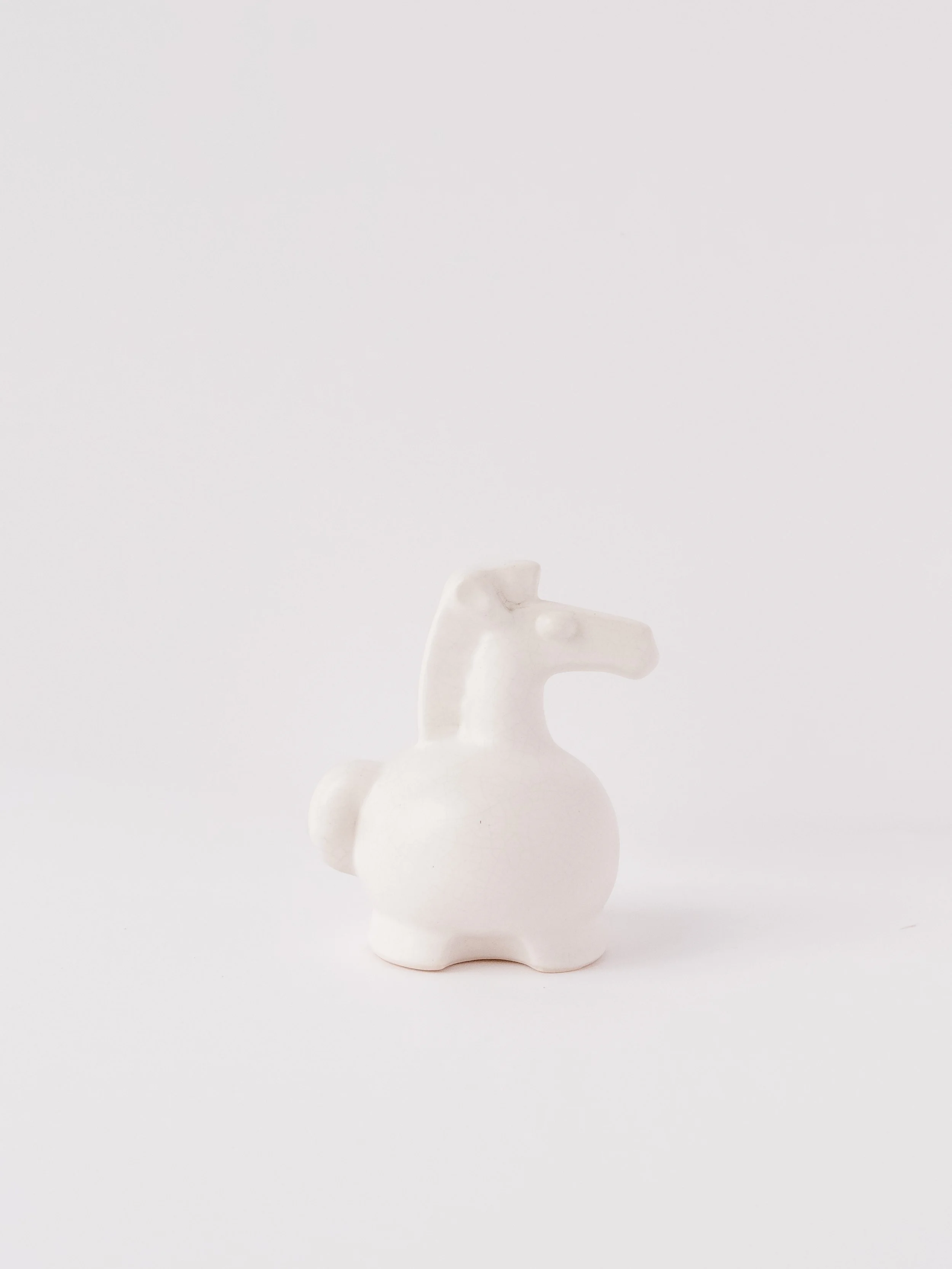 Image 14 of 18
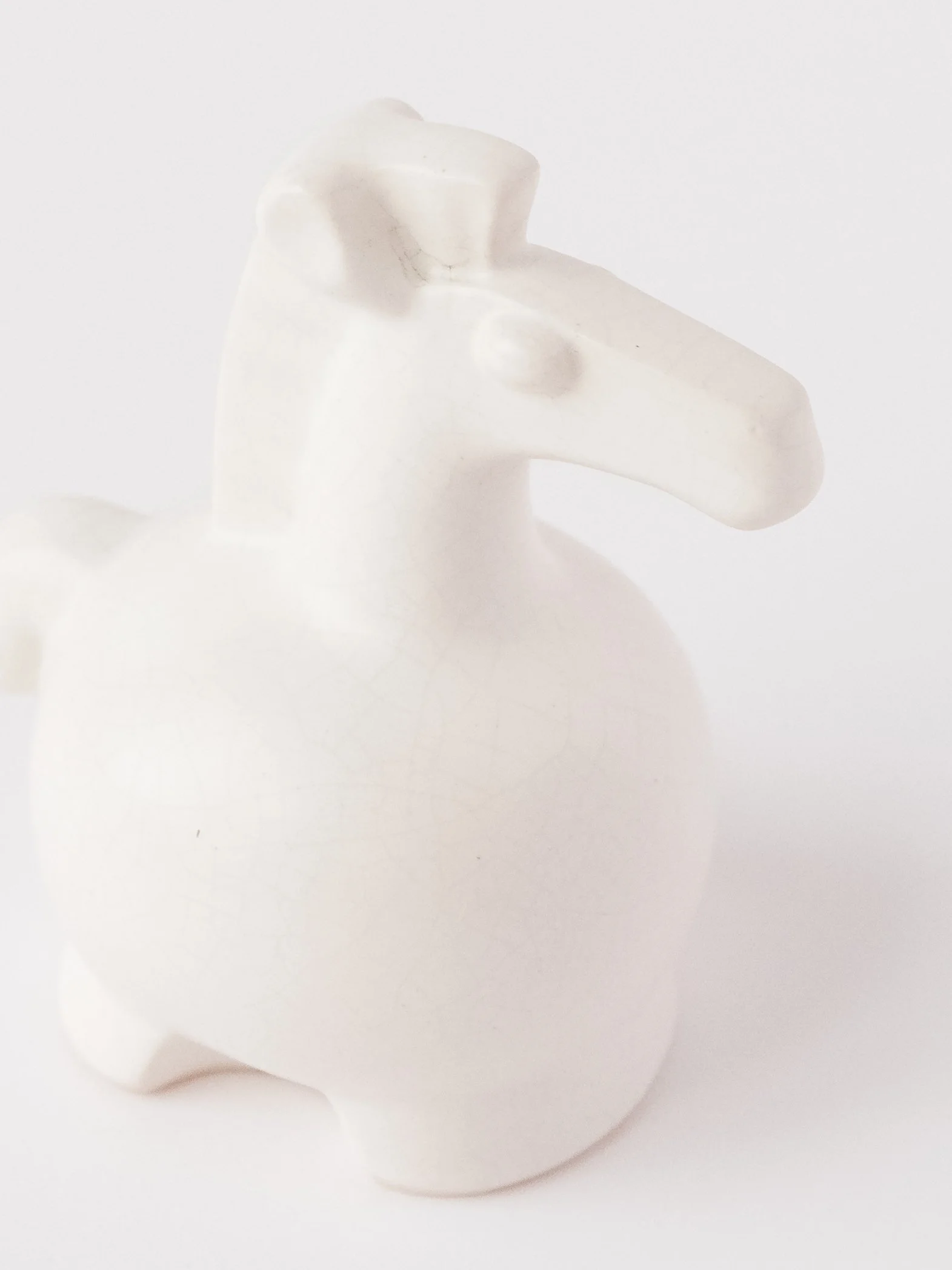 Image 15 of 18
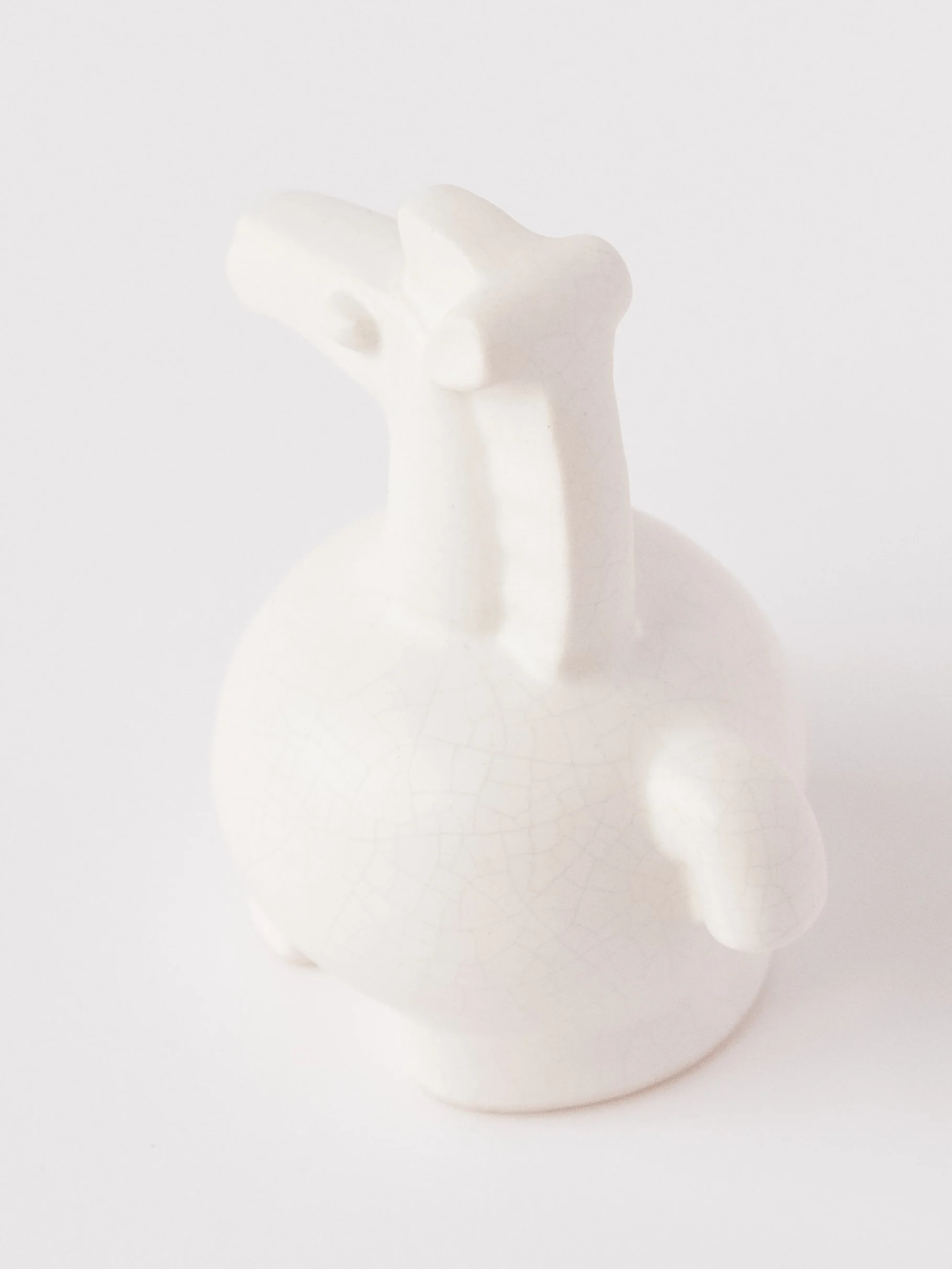 Image 16 of 18
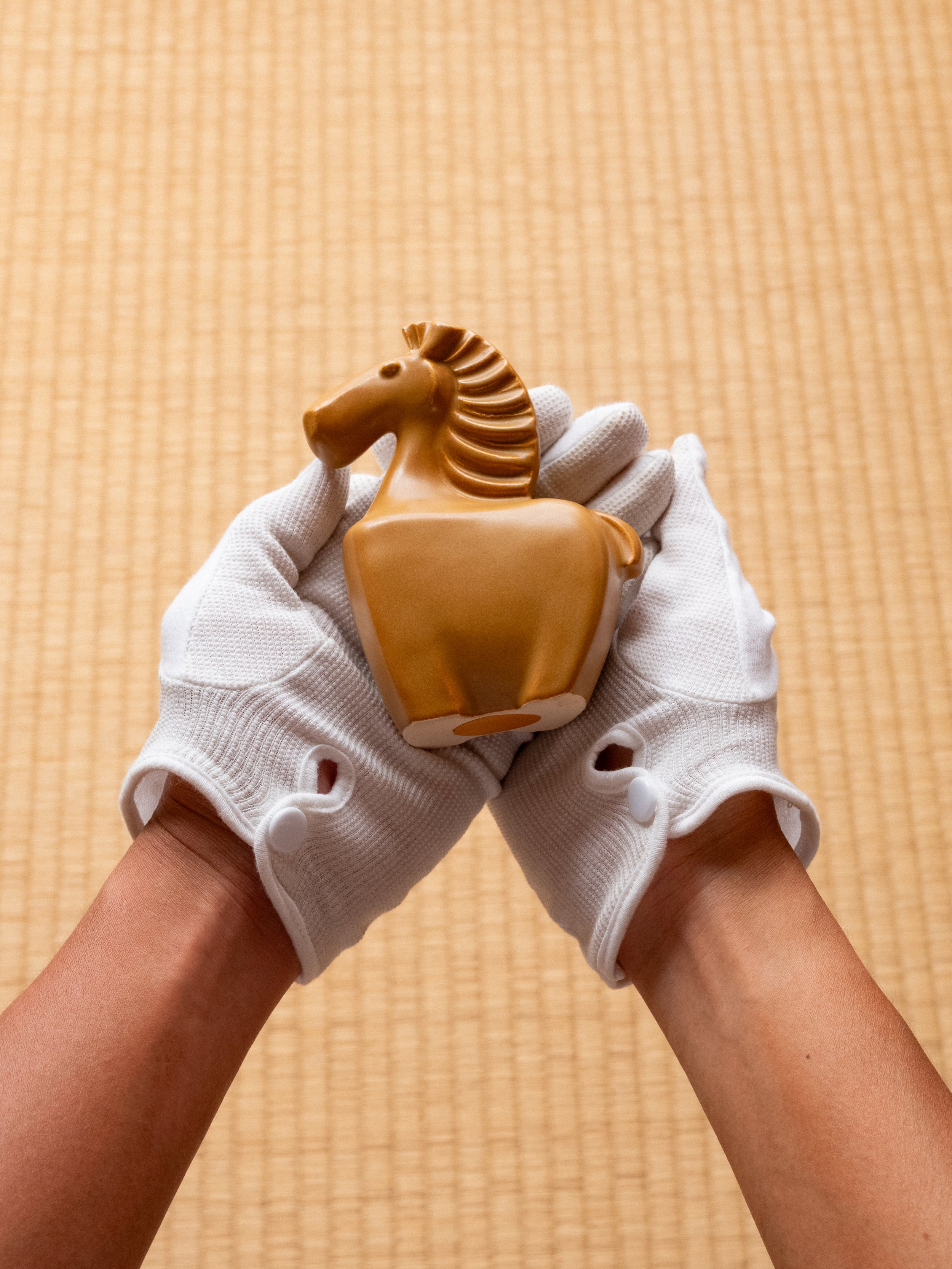 Image 17 of 18
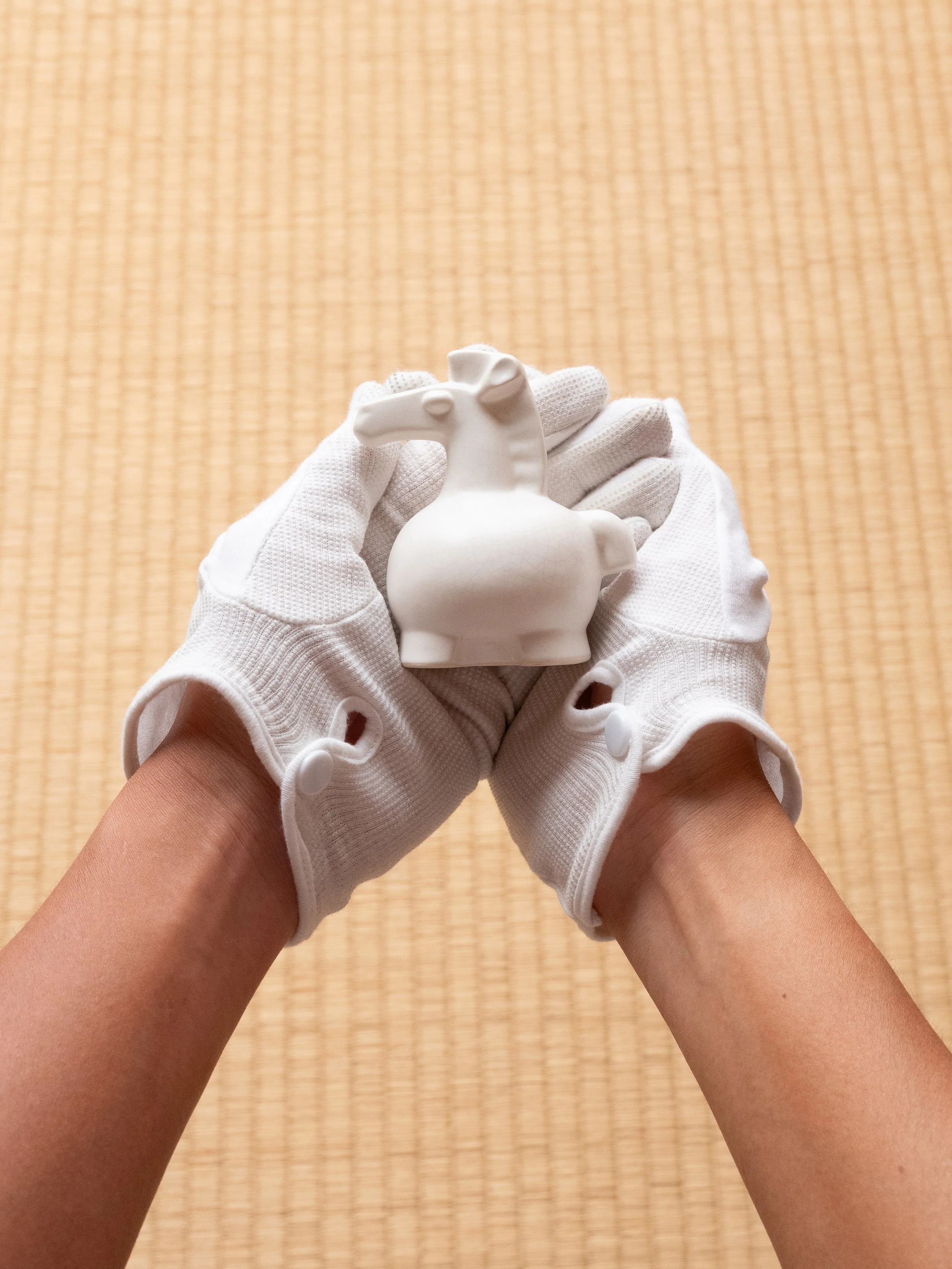 Image 18 of 18