【 The Concept 】
A small eight-sided box in deep reddish-brown glaze, scattered with dark speckles. On the lid sits a single curved shape in creamy white: a magatama, the comma-shaped jewel of ancient Japan. Lift the lid and the box divides cleanly into two halves.
In size and form it follows the kōgō, the tiny lidded container that holds incense in the Japanese tea ceremony.
【 The Magatama 】
The magatama is one of the oldest shapes in Japanese culture. Curved jewels were already being worn in the Jomon period, and one common theory holds that the earliest were animal fangs pierced with a hole. By the Yayoi period the familiar C-shape had taken form, and in the Kofun period magatama became symbols of power. One of the three Imperial Regalia of Japan, alongside a sacred mirror and a sword, is a magatama. Here that ancient sign of power and protection becomes the single mark on a small vessel.
【 A Box for Incense 】
Incense has a long history in Japan. The country’s oldest chronicles record that in the year 595, a large log of fragrant wood drifted ashore on Awaji Island. The islanders burned it as firewood and were astonished by the scent that spread around them, so the wood was presented to the imperial court.
In the tea ceremony, the kōgō carries the incense that is added to the fire, and guests are usually invited to admire it during the laying of the charcoal. The choice of material follows the seasons. In the warm months, when dry incense wood is used, kōgō of lacquer or plain wood are preferred. In the cold months of the sunken hearth, roughly November to April, kneaded incense is used, and ceramic kōgō like this one are the natural choice.
【 The Great Ranking of 1855 】
Small as they are, kōgō have been collected with passion. In 1855, a ranking of famous ceramic incense boxes was published in the style of a sumo wrestlers’ chart, listing them by rank like champions. The fascination never faded. The industrialist and collector Fujita Denzaburō is said to have won the celebrated “Great Turtle” incense box, a 17th-century Chinese piece now an Important Cultural Property, at auction for 90,000 yen while already gravely ill. It was the last piece he ever acquired, and he is said to have died before it reached his hands.
【 What Owning This Piece Brings 】
・A true small kōgō form, ready for incense, or simply kept as a tiny treasure box
・The magatama, one of Japan’s oldest symbols of protection and power, on its lid
・A piece for a tea gathering in the cold months, the season for ceramic kōgō
・A small object that opens a conversation about tea, incense and ancient Japan
A thoughtful gift for tea practitioners, incense lovers, or anyone who collects small Japanese ceramics.
【 How to Use It 】
Hold a few pieces of kneaded incense or incense pellets, or keep rings, earrings or other small keepsakes. Set it on a tea tray, a shelf or a desk, where the white magatama catches the eye.
【 Care 】
Wipe with a soft, dry cloth. If needed, rinse gently with water and let both halves dry completely before closing. Avoid knocking the edges, which are unglazed where the lid and box meet.
【 Reading the Object 】
・Form: a low, eight-sided box with a fitted lid
・Glaze: glossy reddish brown, with dark speckles and darker patches
・Lid: a creamy white magatama with fine dark speckling and fine crackle
・Rims: unglazed light clay where the lid and box meet, giving a snug fit
・Interior: the box is glazed brown inside; the underside of the lid is unglazed with a pool of brown glaze
【 Presence 】
Small enough to sit in the palm, with one white curve that holds the whole surface together.
Archive Note
The year 1855 refers to the publication of the famous ranking of ceramic incense boxes. It is not the production date of this piece.
Provenance Note
Sourced in Japan. Maker and production date unknown.


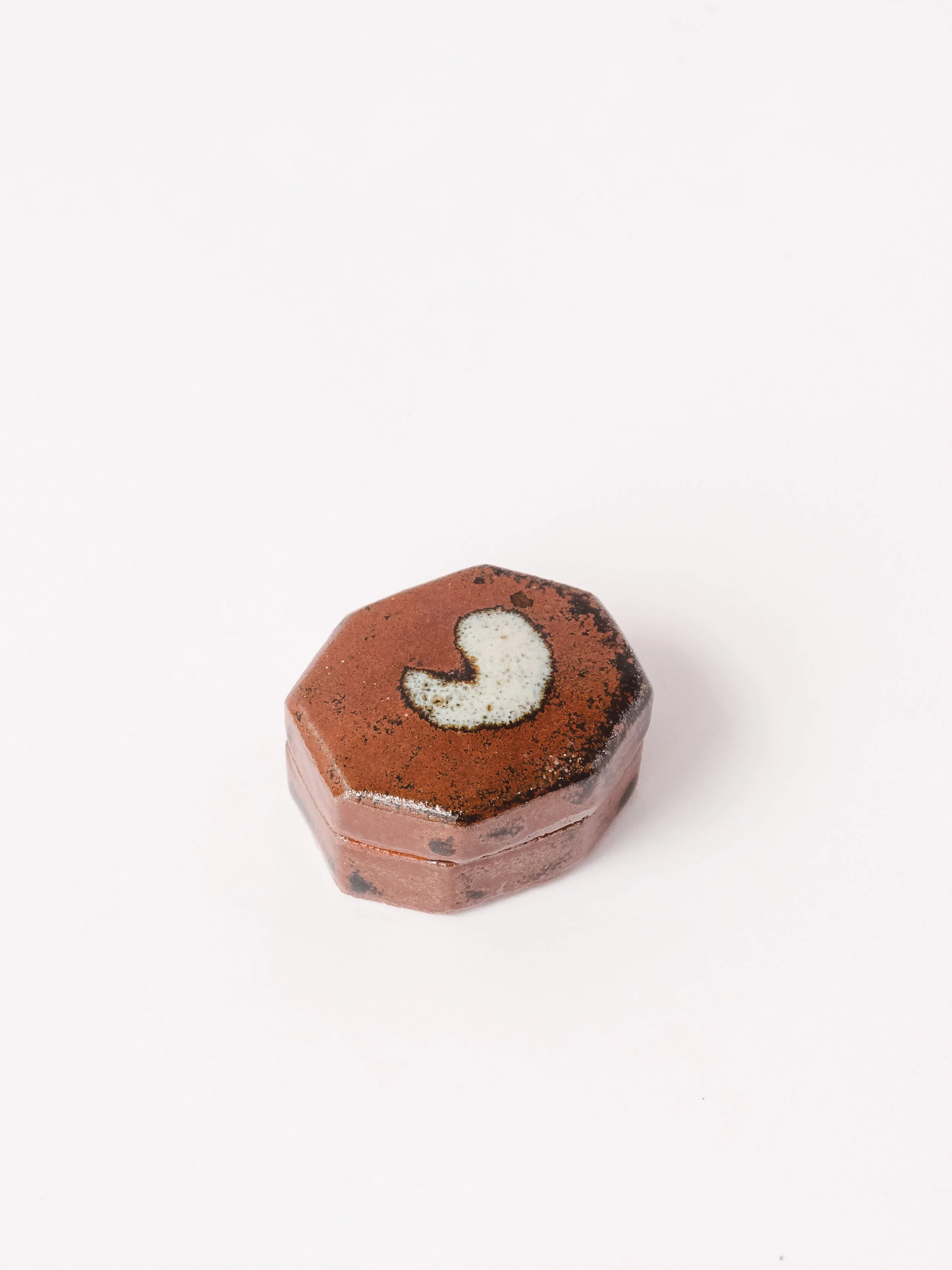 Image 1 of 6
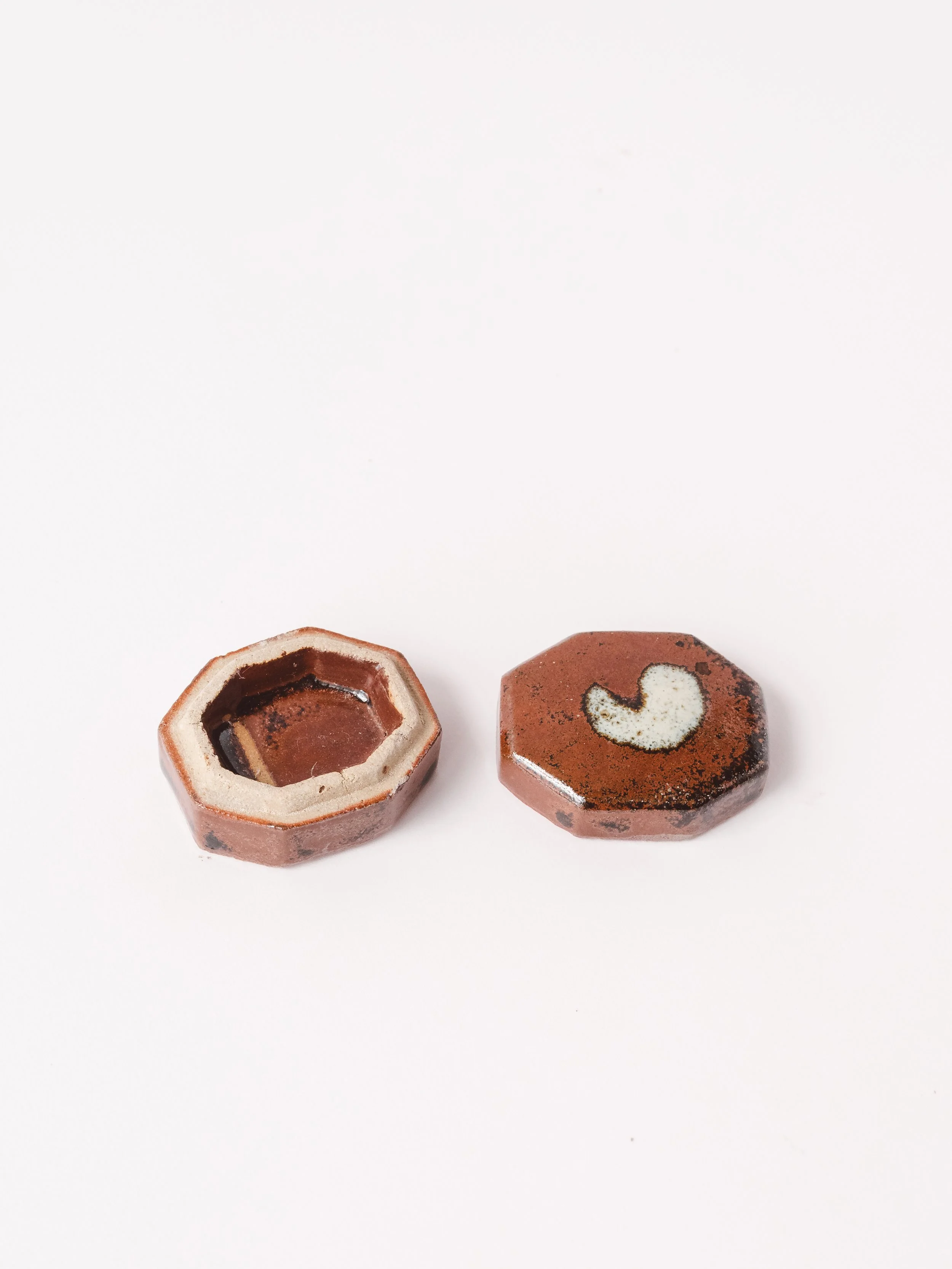 Image 2 of 6
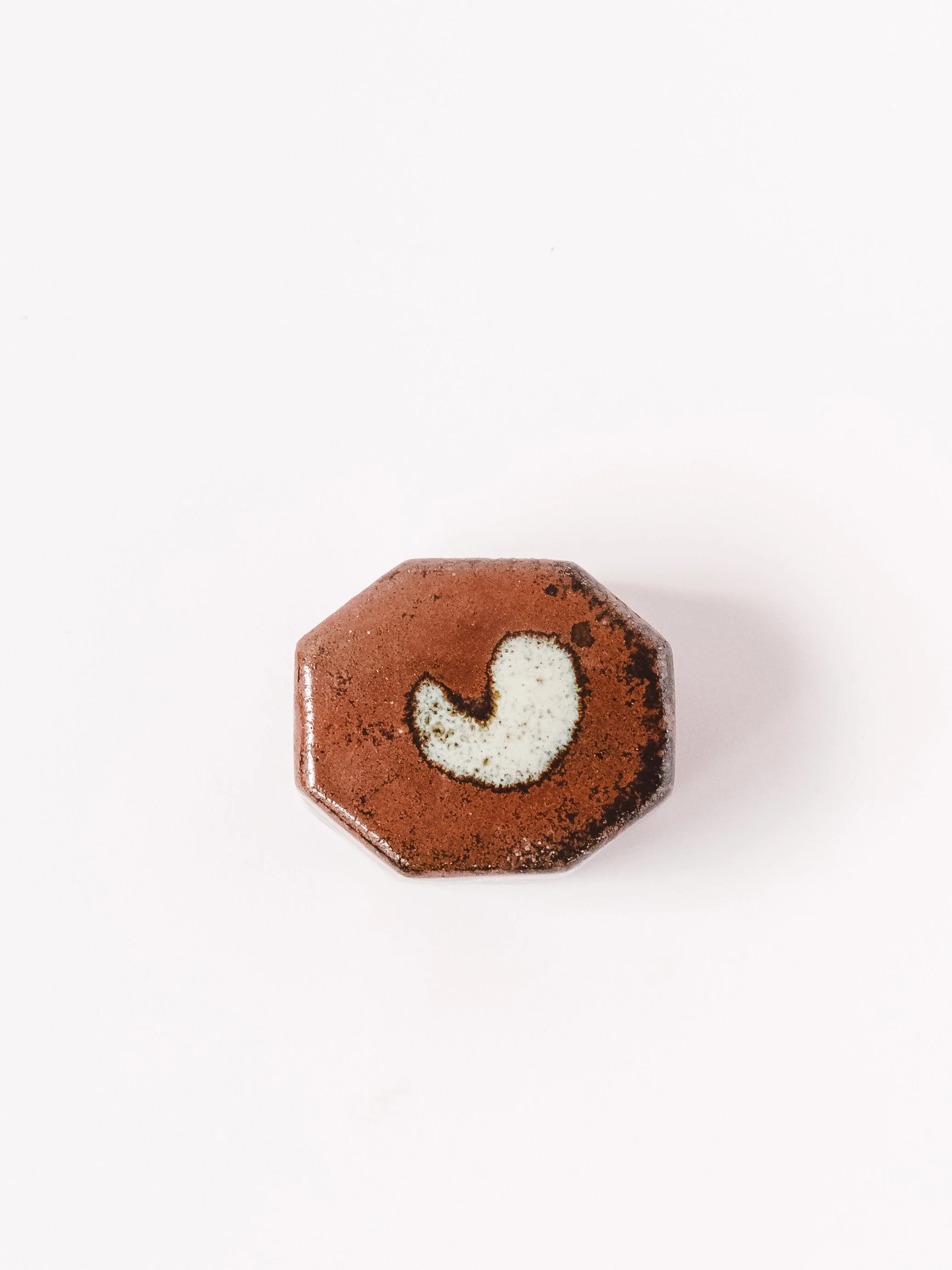 Image 3 of 6
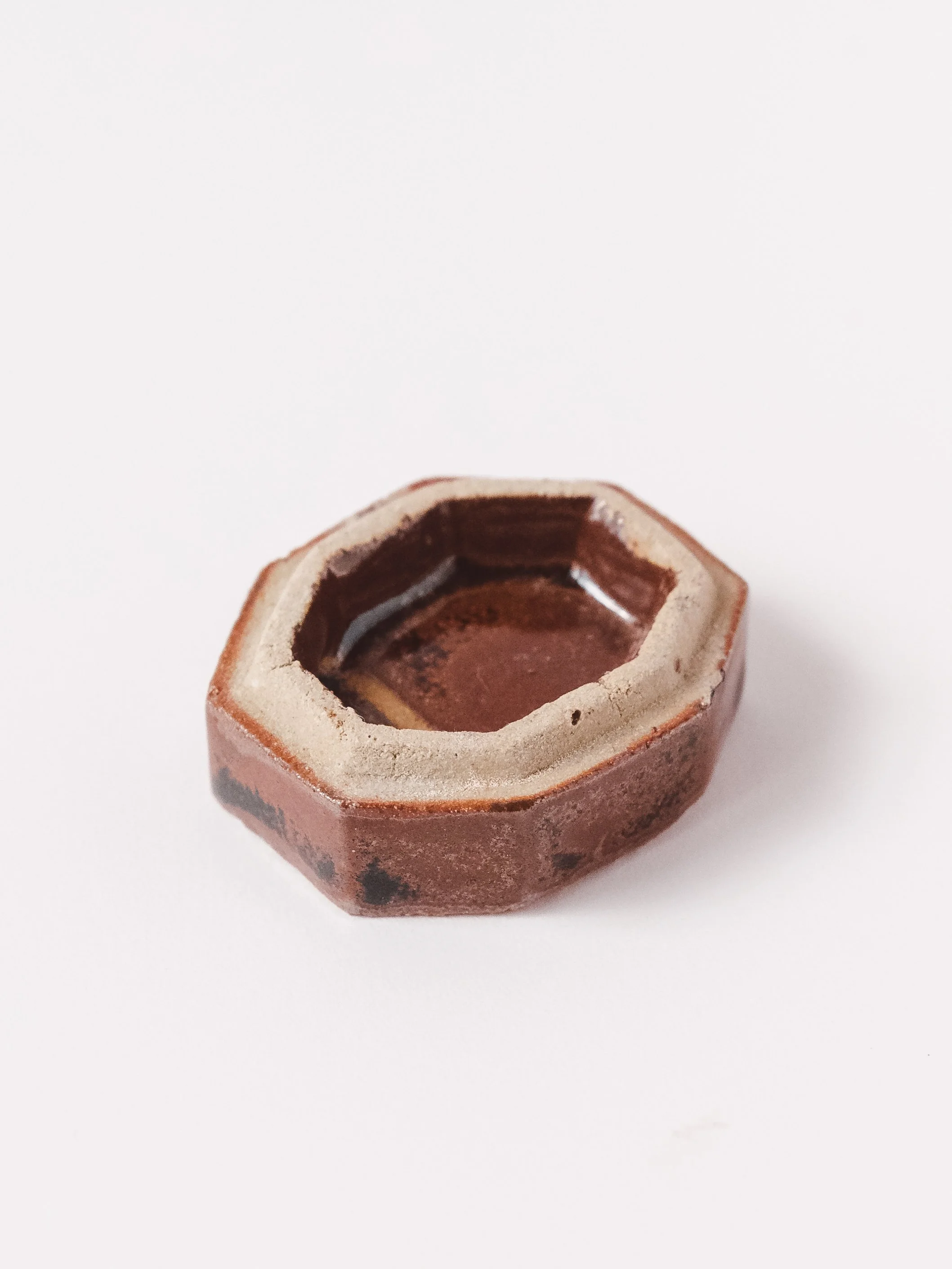 Image 4 of 6
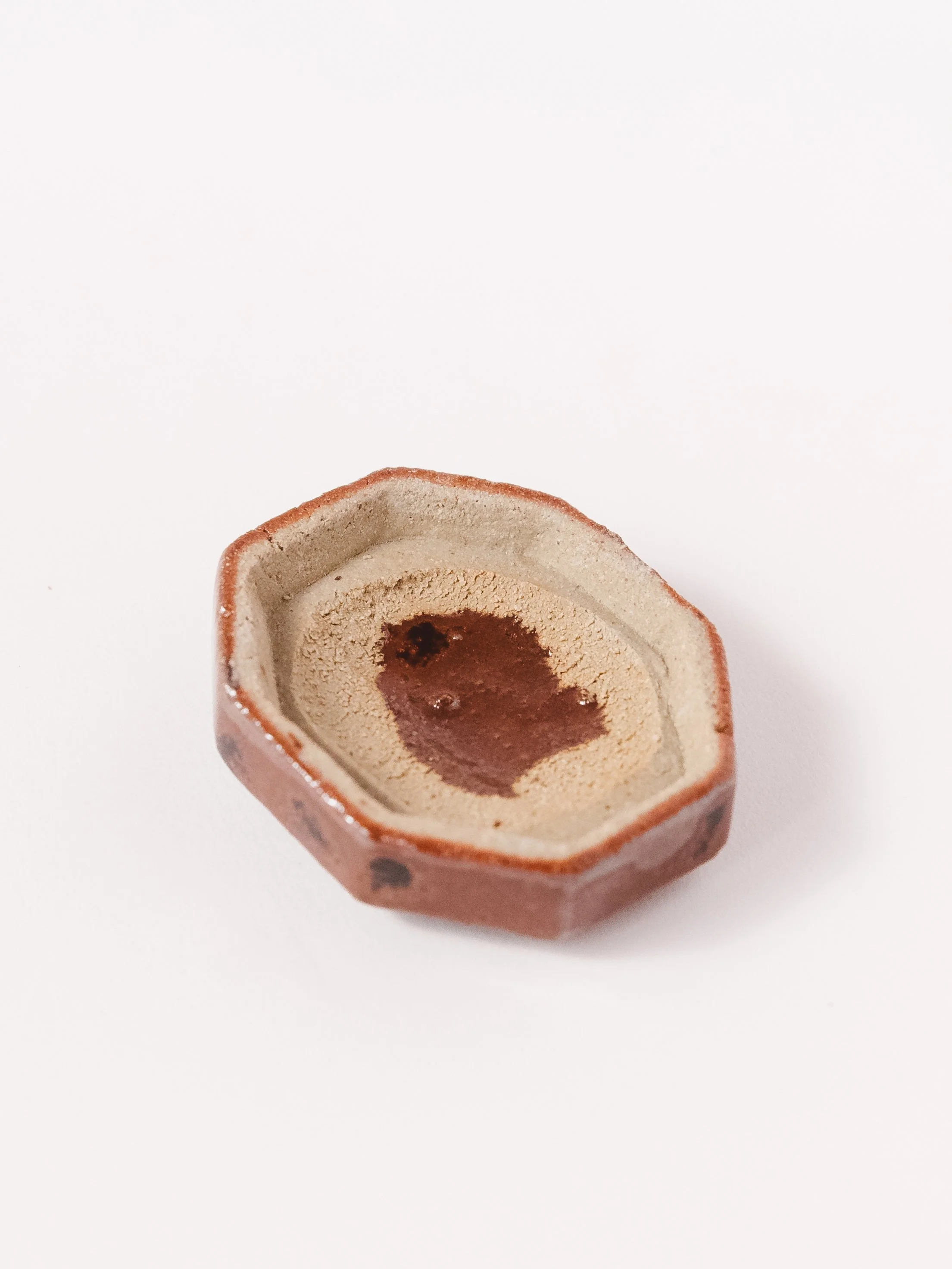 Image 5 of 6
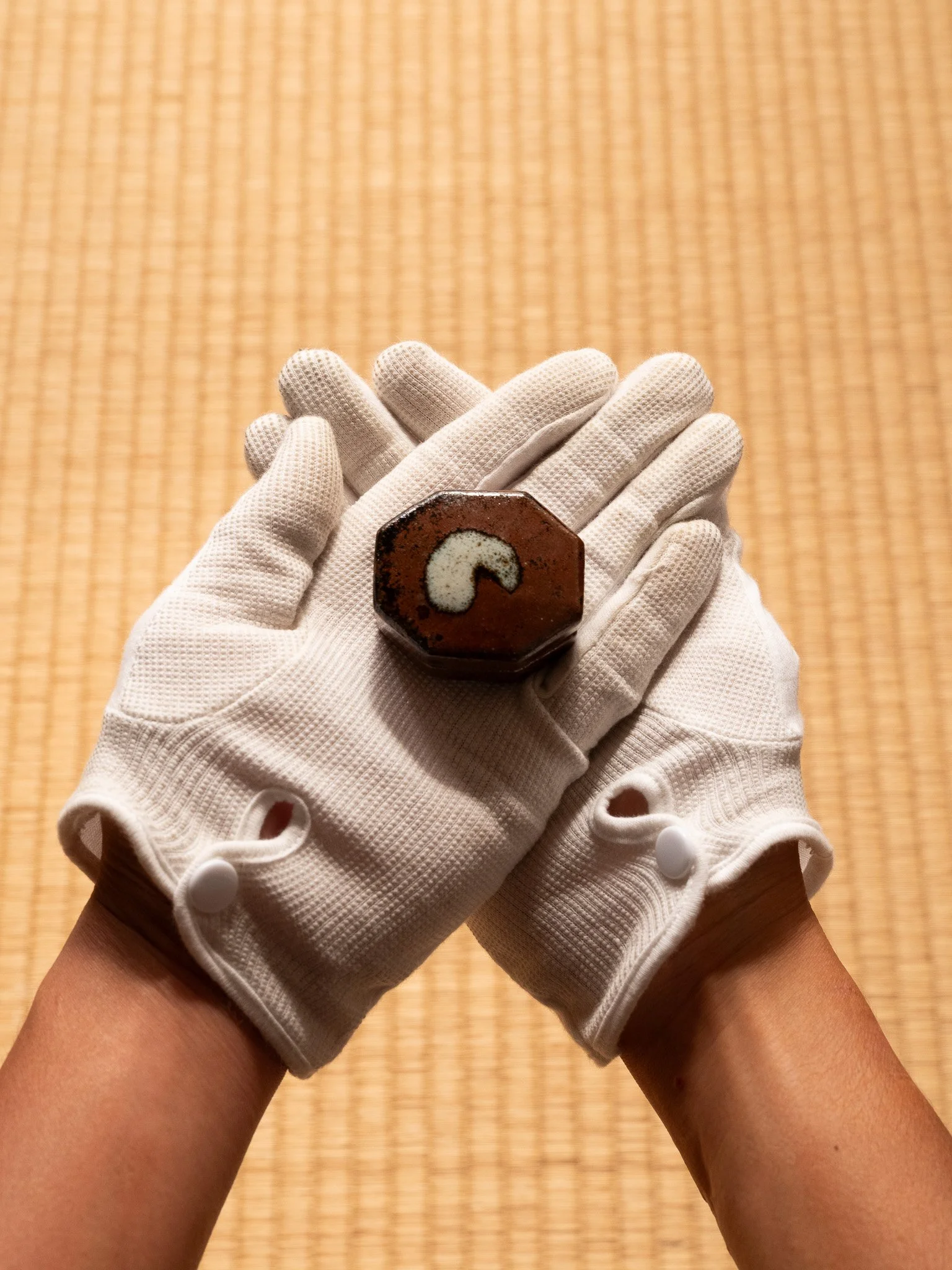 Image 6 of 6