LADEN OX 1985

$245.00

【 The Concept 】

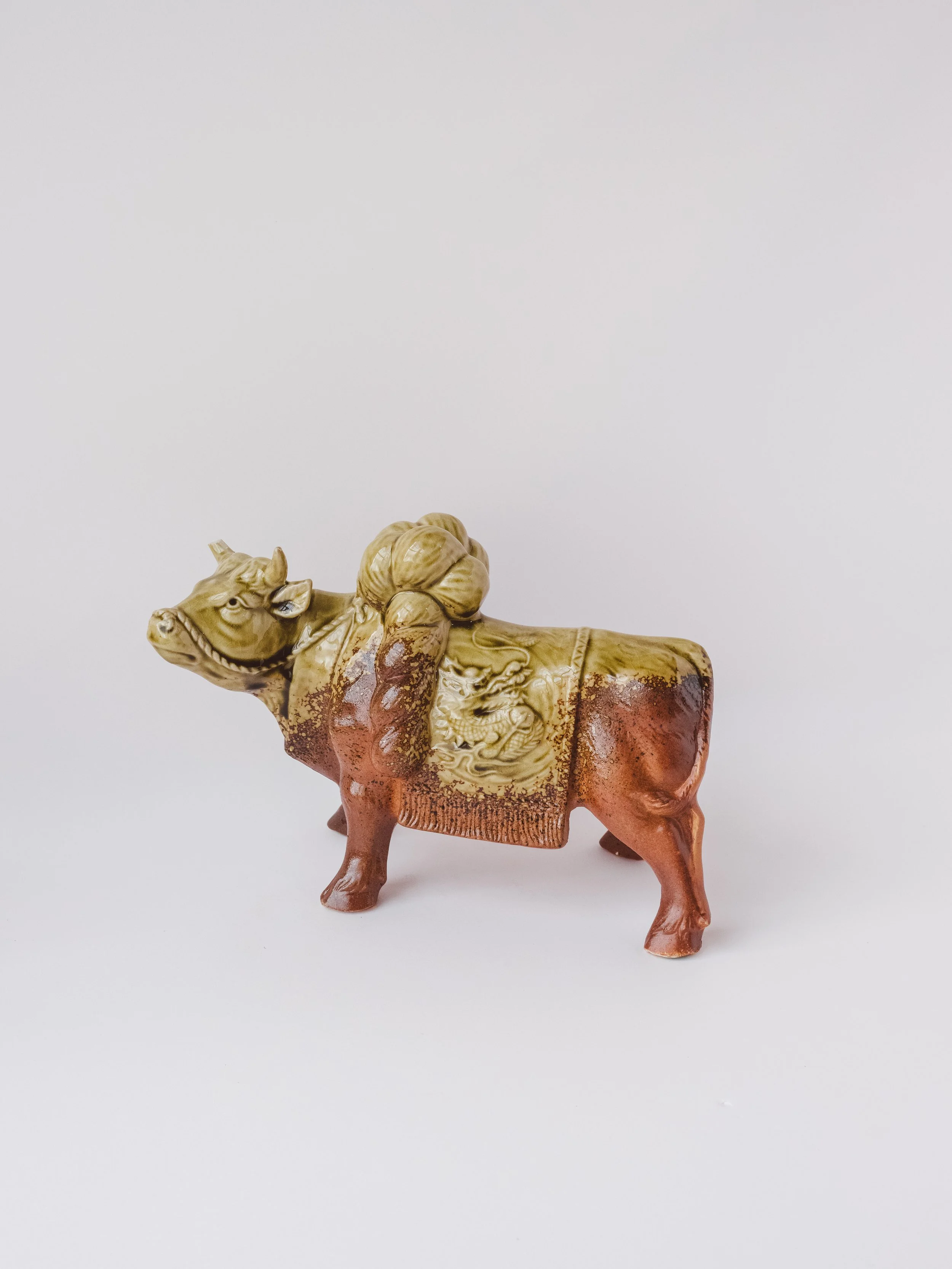
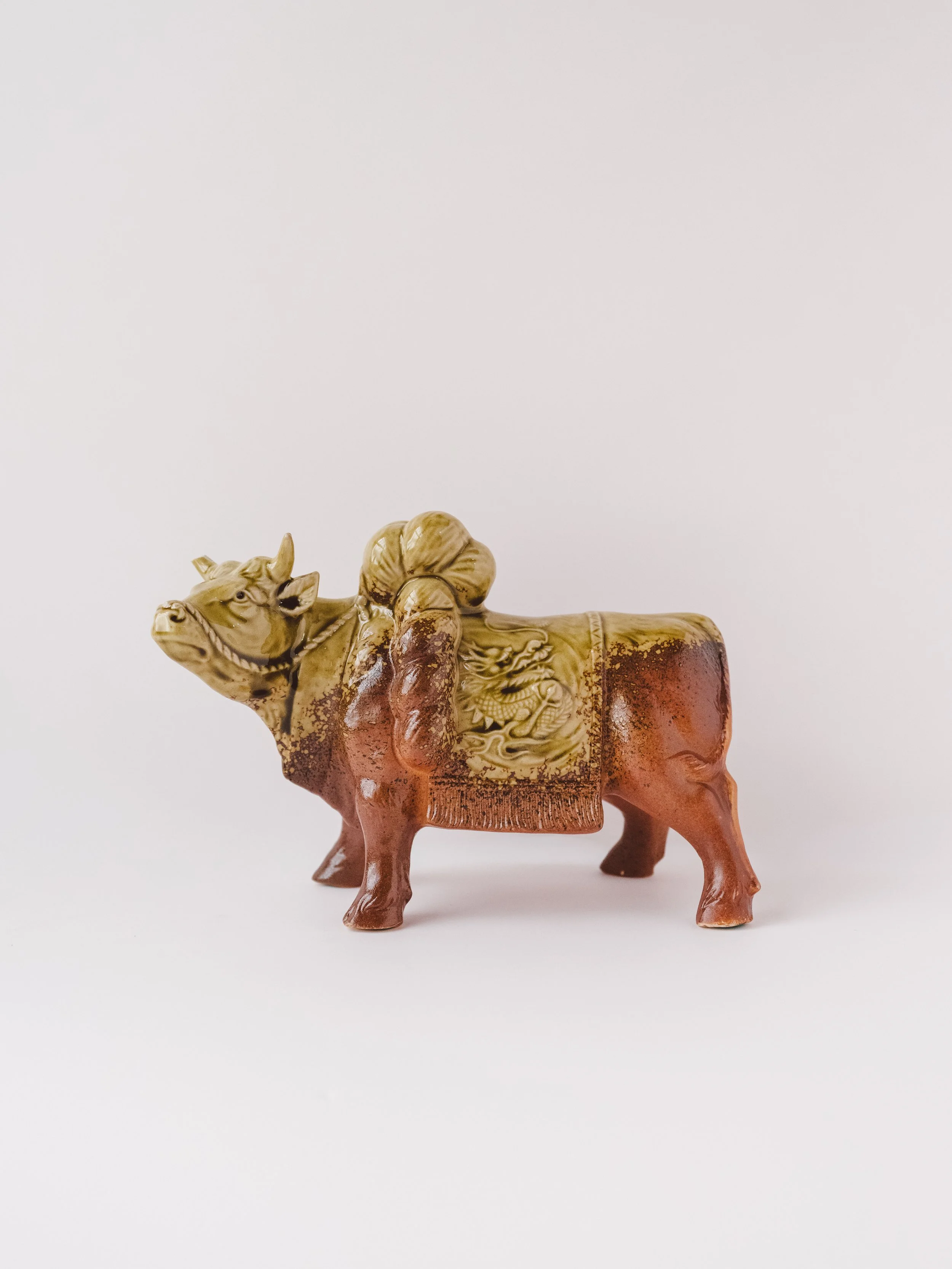
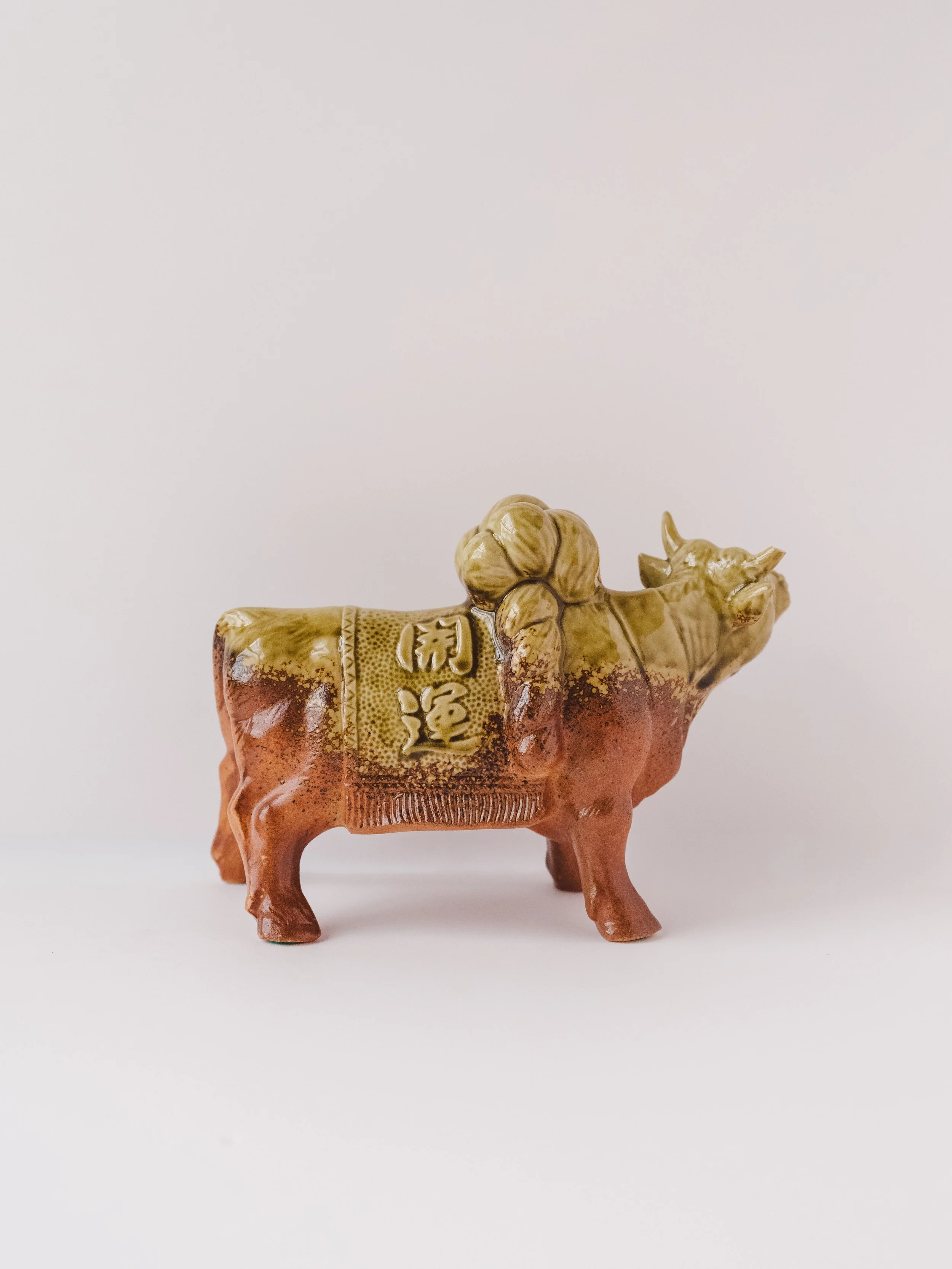
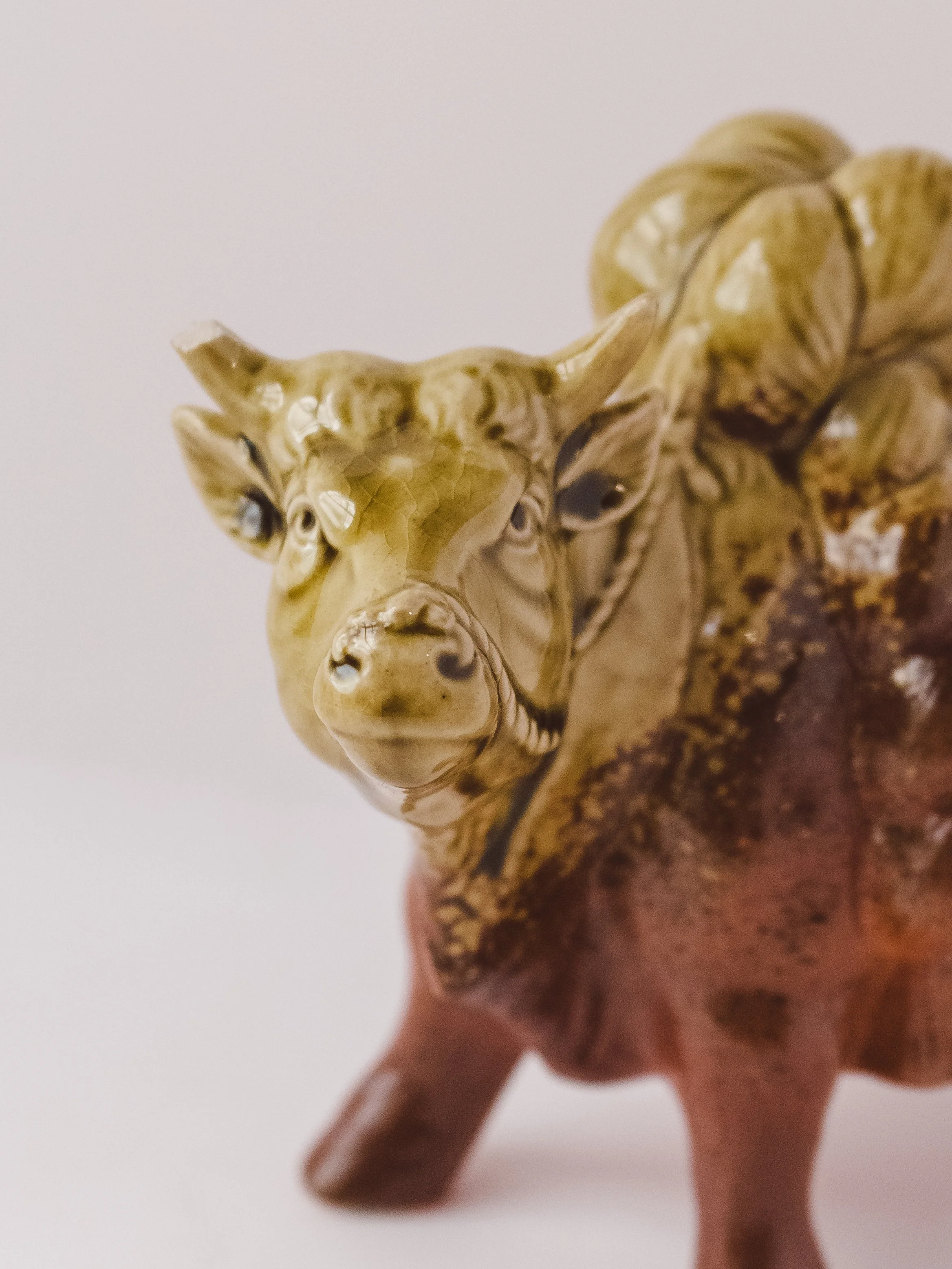
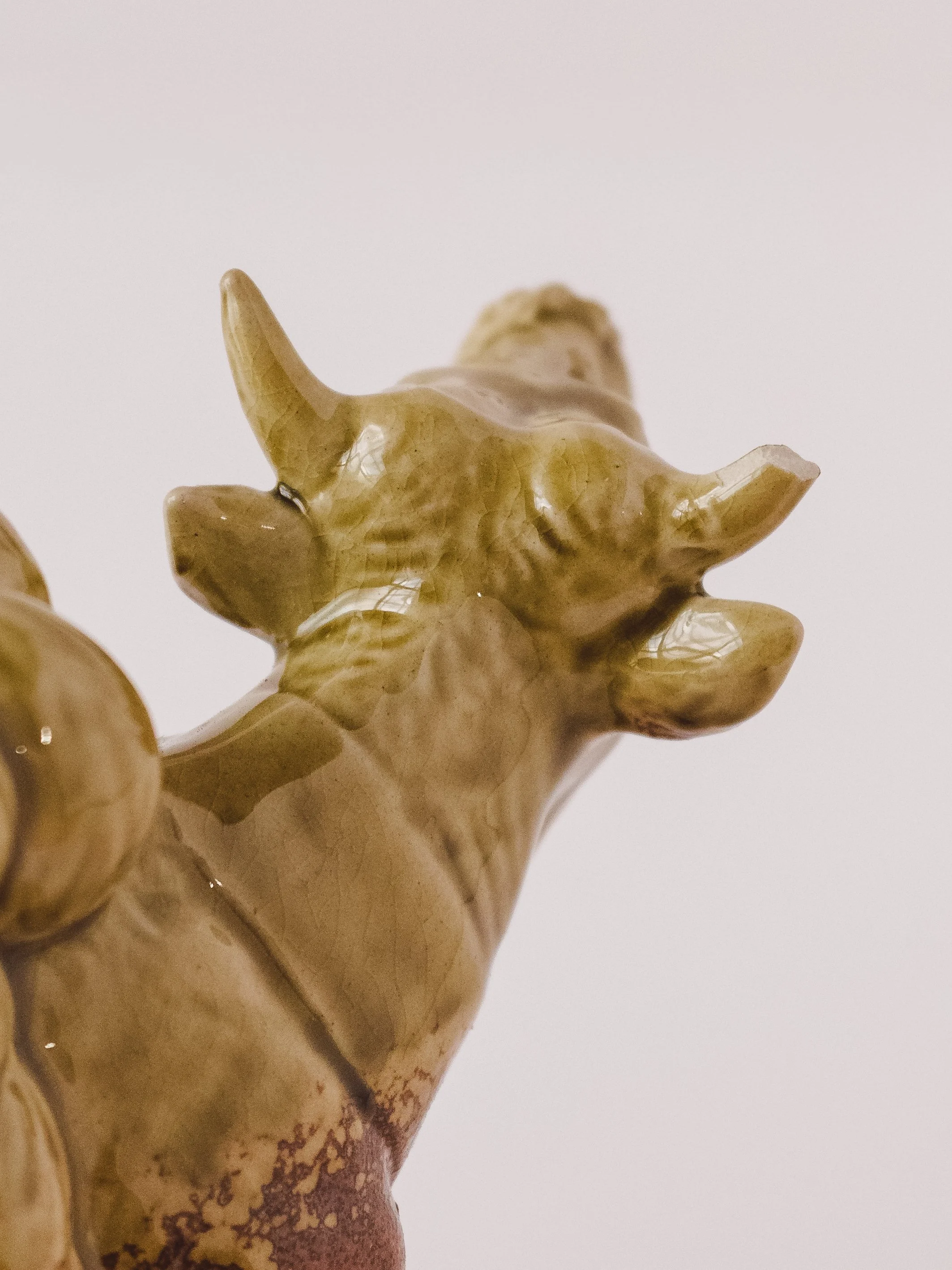
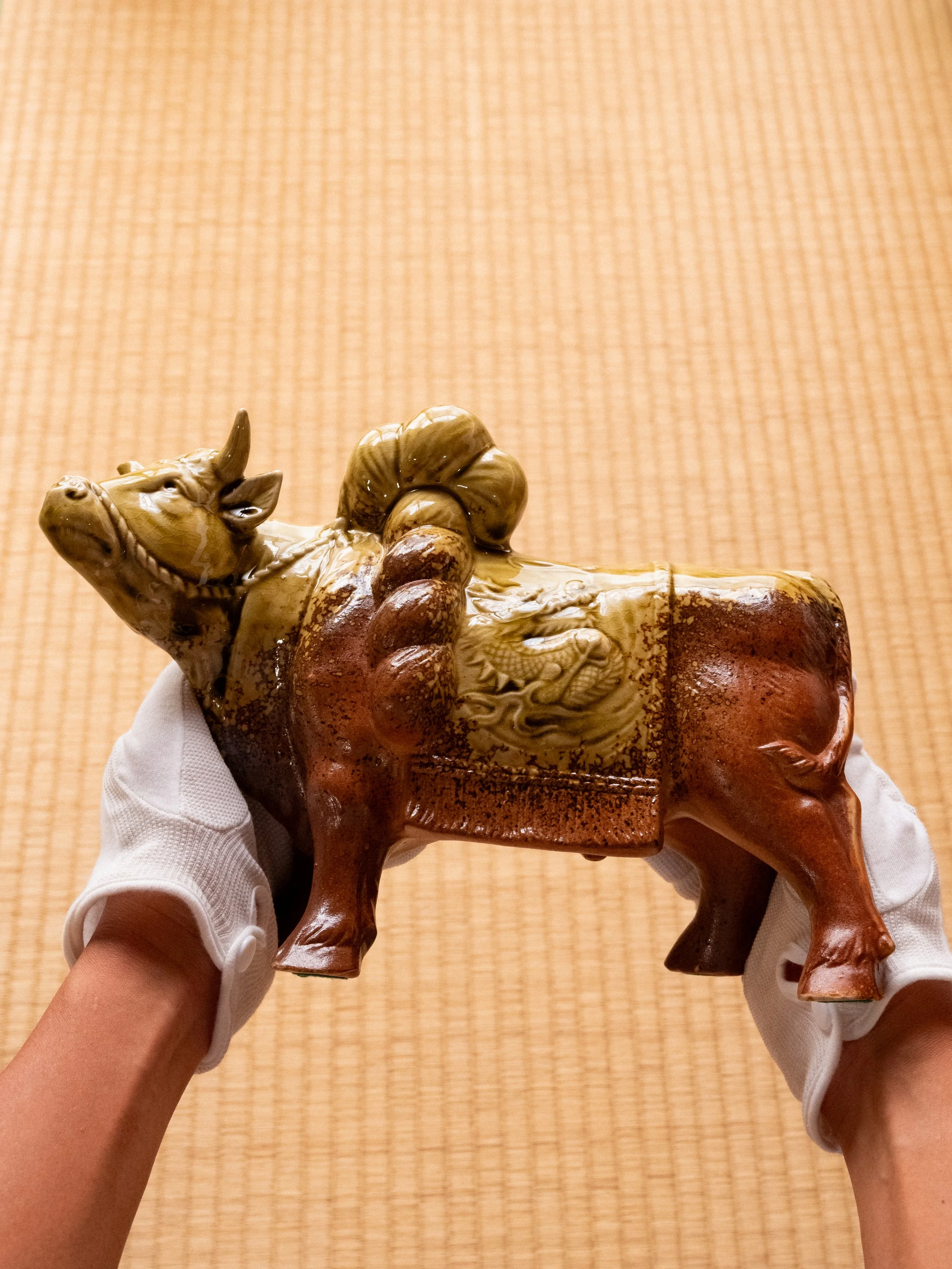
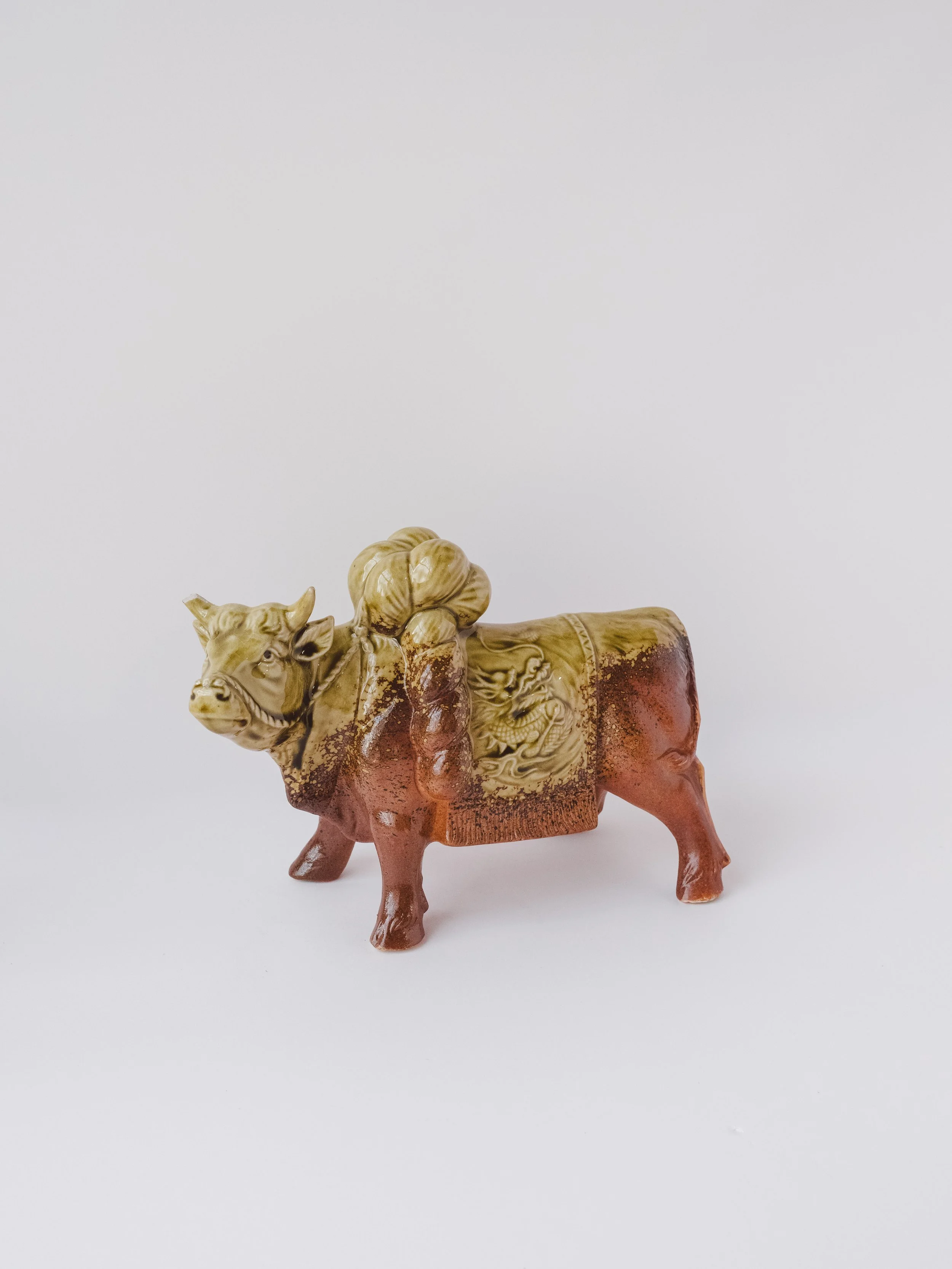
A stocky ox stands four-square under its cargo — a heavy Shigaraki stoneware figure of a pack ox, low to the ground, a great roped bundle lashed crosswise over its back and a fringed ceremonial drape falling down each flank. The horned head lifts on a thick neck, ears out, a modelled rope looped through the muzzle, so that the animal reads not as a wild beast but as a working ox mid-haul, patiently carrying wealth from one place to the next.

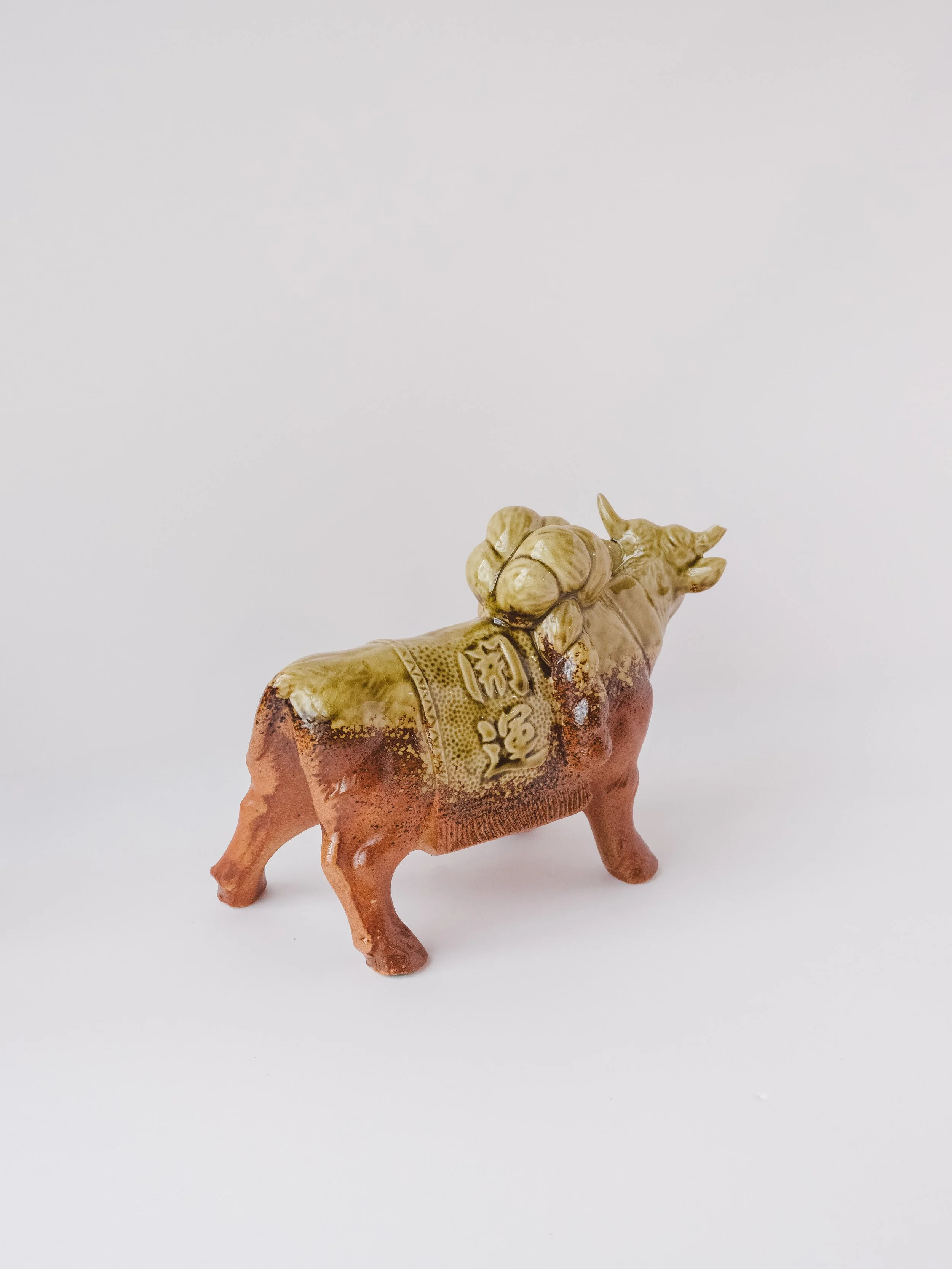
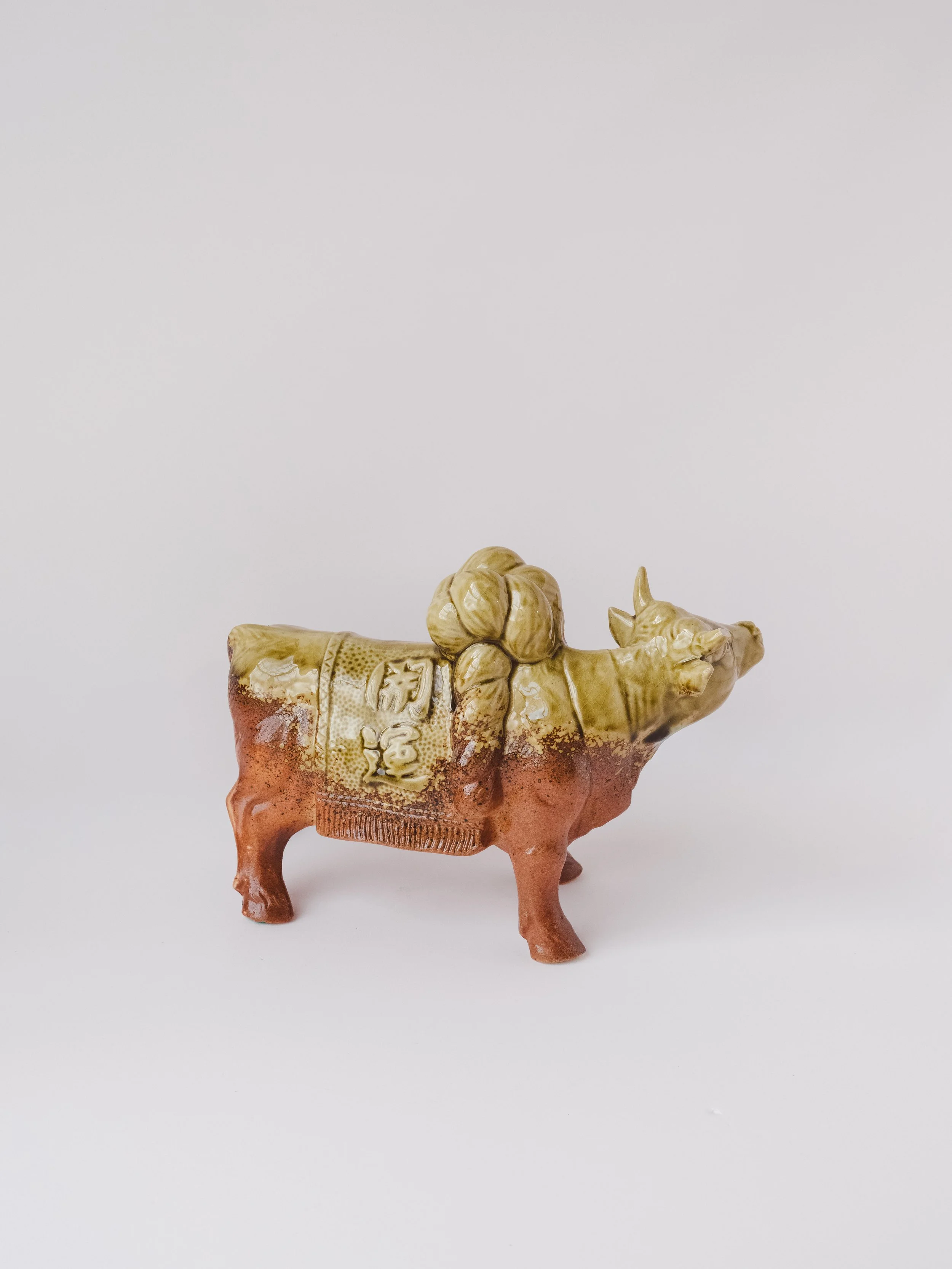
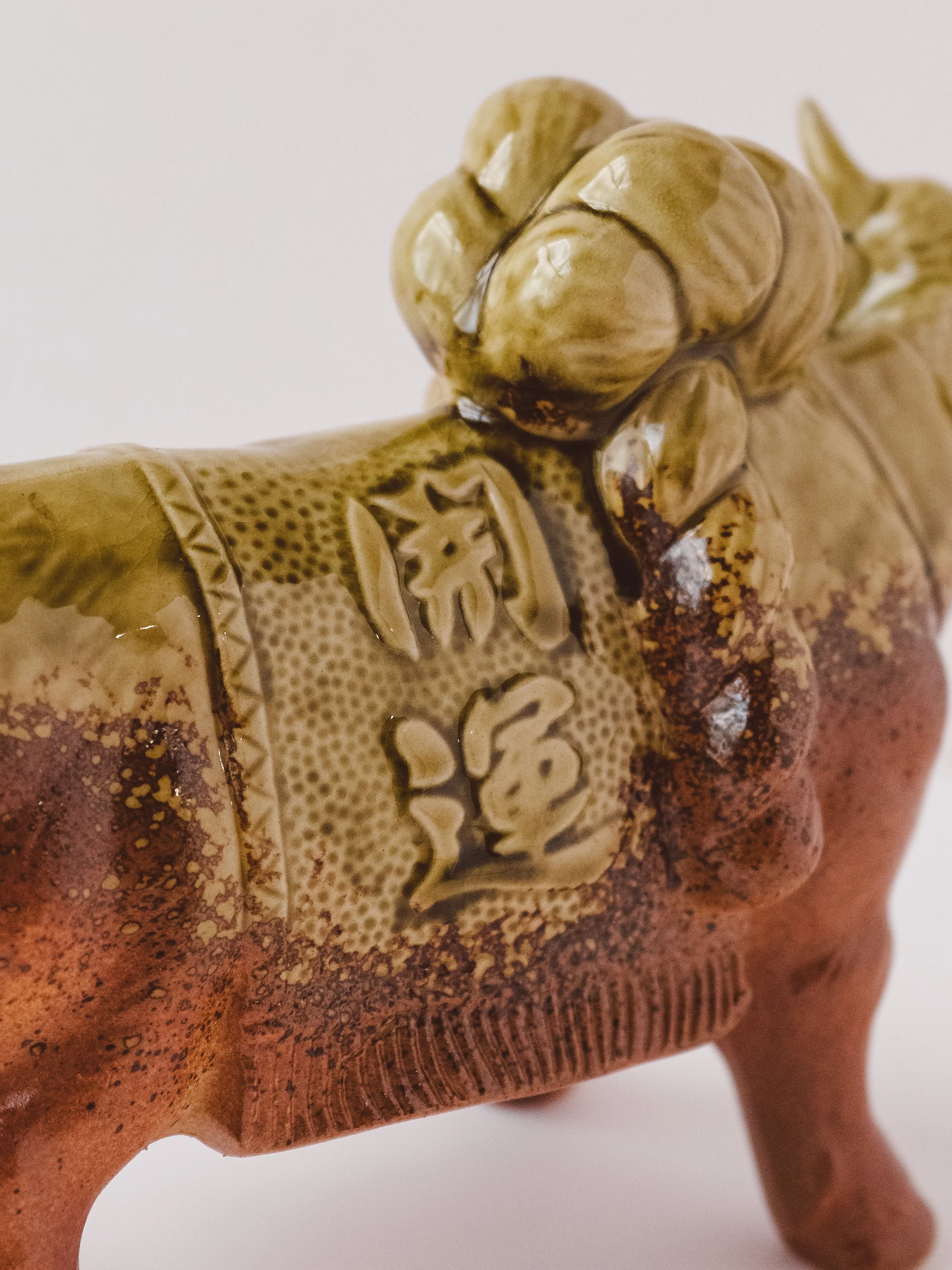
The surface is where the piece earns its presence. The glaze is split high-to-low: the back, head, and bundle run a deep, glassy olive-green that pools amber in every carved recess, while the belly and legs drop to the bare, iron-red fired clay of Shigaraki — matte, sandy, flecked where the two zones break into each other. It is a deliberate re-staging of the accidental "landscape" (景色 / keshiki) that the old wood-kilns produced by chance: fire-colour below, molten ash-glaze above.

【 The Function 】

A substantial auspicious ornament (縁起物 / engimono) — an ox of the zodiac loaded with fortune, made to sit on a shelf, a cabinet, an entrance console, or a tokonoma alcove. At twenty-three centimetres long and near a kilogram it has real deskside weight and is meant to hold a space.

【 The Texture 】

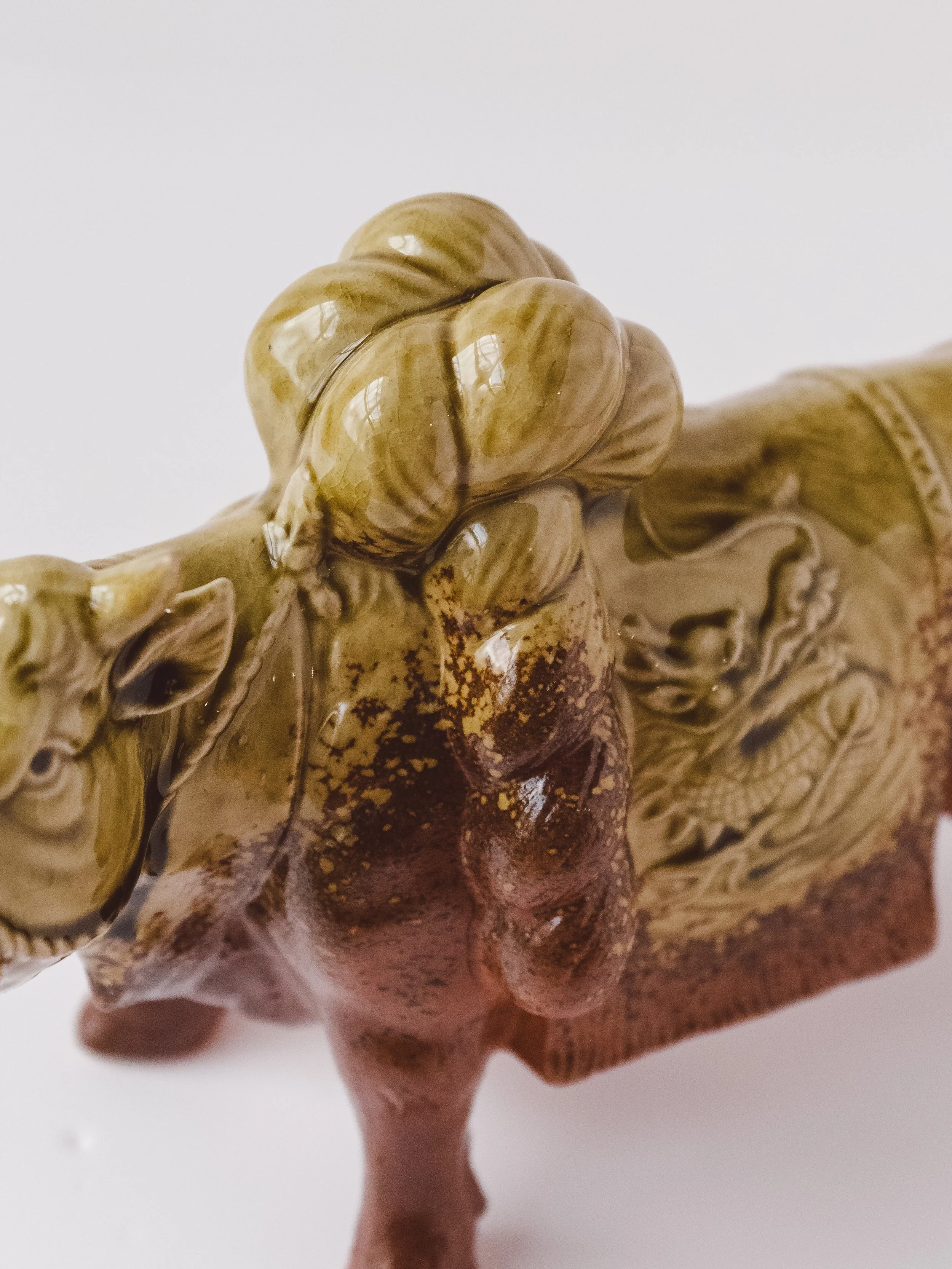
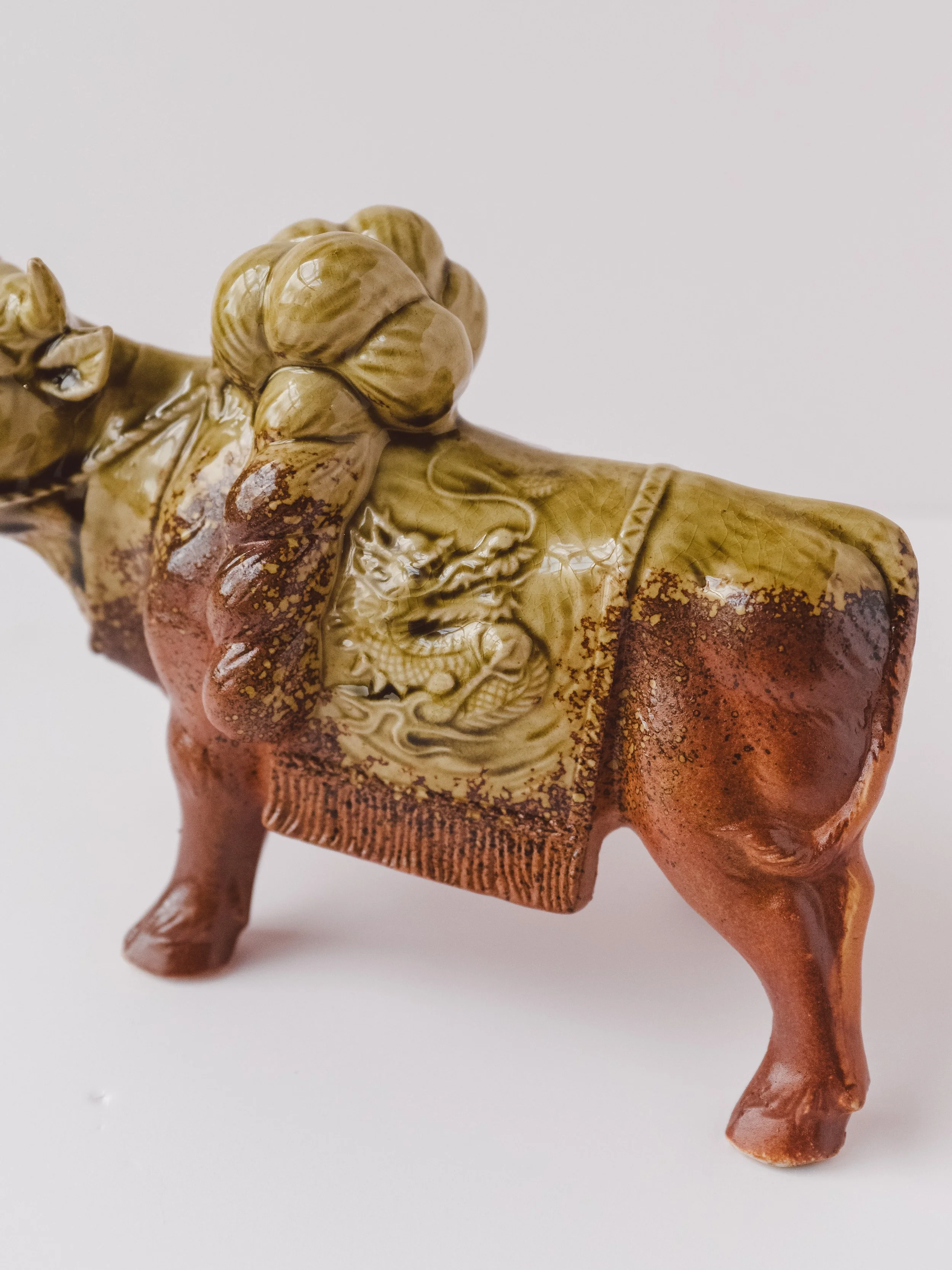
Two surfaces in one object. Above: a thick, glassy, crazed olive glaze, smooth and wet-looking, dark in the hollows of the rope, the drape, and the dragon relief. Below: raw fired stoneware — fine, dry, faintly gritty, the colour of scorched earth — with a speckled transition where glaze meets clay.

【 Presence 】

Grounded and deliberate. The low centre of gravity, the broad body, and the split of dark glaze over red earth give the piece a weight and gravity out of proportion to its size — a quiet, planted object rather than a decorative one.

Provenance Note: Sourced from a private collection in Japan.

【 The Concept 】

A stocky ox stands four-square under its cargo — a heavy Shigaraki stoneware figure of a pack ox, low to the ground, a great roped bundle lashed crosswise over its back and a fringed ceremonial drape falling down each flank. The horned head lifts on a thick neck, ears out, a modelled rope looped through the muzzle, so that the animal reads not as a wild beast but as a working ox mid-haul, patiently carrying wealth from one place to the next.

The surface is where the piece earns its presence. The glaze is split high-to-low: the back, head, and bundle run a deep, glassy olive-green that pools amber in every carved recess, while the belly and legs drop to the bare, iron-red fired clay of Shigaraki — matte, sandy, flecked where the two zones break into each other. It is a deliberate re-staging of the accidental "landscape" (景色 / keshiki) that the old wood-kilns produced by chance: fire-colour below, molten ash-glaze above.

【 The Function 】

A substantial auspicious ornament (縁起物 / engimono) — an ox of the zodiac loaded with fortune, made to sit on a shelf, a cabinet, an entrance console, or a tokonoma alcove. At twenty-three centimetres long and near a kilogram it has real deskside weight and is meant to hold a space.

【 The Texture 】

Two surfaces in one object. Above: a thick, glassy, crazed olive glaze, smooth and wet-looking, dark in the hollows of the rope, the drape, and the dragon relief. Below: raw fired stoneware — fine, dry, faintly gritty, the colour of scorched earth — with a speckled transition where glaze meets clay.

【 Presence 】

Grounded and deliberate. The low centre of gravity, the broad body, and the split of dark glaze over red earth give the piece a weight and gravity out of proportion to its size — a quiet, planted object rather than a decorative one.

Provenance Note: Sourced from a private collection in Japan.

【Context】

  • Identity: A ceramic figure of an ox — the second animal of the zodiac (丑 / ushi) — shown as a nigyū, a laden pack ox. In an agrarian society the ox was the engine of the fields, and so it stands for diligence, patience, and steady, unglamorous accumulation; in feng shui it is a figure of stable wealth.
  • Origin: Japanese — Shigaraki ware (信楽焼), one of the Six Ancient Kilns (六古窯) of Japan, worked since the medieval period from the coarse, fire-resistant clay of the old Lake Biwa beds.
  • Technique: Slip-cast stoneware, hand-finished, then glazed in two zones to imitate the keshiki — the prized "scenery" of fire-colour (緋色 / hiiro) and natural ash-glaze (ビードロ / bidoro) that Shigaraki's unglazed wood-firing once produced by accident.
  • Material: Iron-rich Shigaraki stoneware, part-glazed olive-green over exposed red clay.
  • Motif: A dense stack of good-luck imagery. The roped bundle is the load of a wealth-bringing beast — read as rice bales (俵) or the treasure sack of Daikokuten, god of fortune. One flank carries the two characters kaiun (開運, "opening of luck") in raised relief on a stippled ground; the other carries a dragon (龍) coiling through clouds. Ox and dragon set earth against heaven — patient, grounded saving paired with sudden, soaring rise.
  • Construction: A single hollow ceramic form, self-standing on four legs, the drape and cargo modelled integrally.

【 Dimensions (Approx.) 】

  • Length: 23 cm (9.1 in)
  • Height: 22 cm (8.7 in)
  • Width: 7 cm (2.8 in)
  • Weight: 0.985 kg (2.17 lb)