【 The Concept 】
A small blue-and-white porcelain incense burner guarded by three lions. A round, full body stands on three short, curved feet; a lion’s head rises from each side as a handle, and on the domed lid a third lion crouches as the knob, tail curling up behind it. All three lions are painted in deep cobalt blue, their curly manes and bulging eyes modelled in relief. Around the body runs a continuous landscape painted in shades of blue: distant mountains, a willow and leafy trees, a pavilion with a curved roof by the water, small boats with figures, and birds flying across the open sky. A band of blue spiral scrolls rings the mouth, and the lid is pierced with openings so that the smoke of incense can drift out. It is a scene of quiet hills and water, watched over by three fierce little guardians.
【 The Lion Guardians 】
In Japan the shishi, the lion, came from China with Buddhism and became one of the great protective creatures of East Asian art. Pairs of lions guard the gates of temples and shrines, and lions on incense burners, bells and ritual objects were thought to keep evil away from sacred places. In Buddhism, the Buddha’s teaching was compared to the lion’s roar, which silences all other voices. A lion on an incense burner therefore protects twice over: the smoke purifies the room, and the lion guards it.
The same Chinese lion also travelled south to Okinawa, where it became the shisa, the beloved lion-dog that sits on the roofs and gates of Okinawan houses. The lions on this incense burner are its cousins from the Japanese mainland.
【 The Three-Legged Form 】
The shape of the burner, a round body on three legs, goes back to the ding, the three-legged bronze vessel of ancient China, used in rituals and long seen as a symbol of authority and stability. Standing firmly on three points, it became one of the classic forms for incense burners in China and Japan.
【 Kutani and the Village of Hachiman 】
This burner is Kutani ware, the porcelain of Ishikawa Prefecture on the Sea of Japan coast, famous for its bold enamel colours and also for refined blue-and-white painting. In the Komatsu area, after the Wakasugi kiln burned down in 1836, potters moved to the neighbouring district of Hachiman, which grew into a major centre of production, known in particular for porcelain figures and ornaments. The skill of modelling lions and other figures, for which Hachiman became known, can be seen here in the three crisp little lions.
【 The Landscape in Blue 】
Painting in cobalt blue alone, without other colours, is called sometsuke. It relies entirely on the brush: the depth of the blue, the softness of the wash and the sharpness of the line. Landscapes of mountains and water, called sansui, are among its favourite subjects. In the East Asian tradition such scenes are not maps of real places but images of an ideal retreat, far from the noise of the world. When incense is lit and its smoke rises above the painted hills, the little scene on the burner seems to come alive with mist.
【 What Owning This Piece Brings 】
・ Protection for the home. Three lion guardians, long believed to keep evil away.
・ A moment of calm. Lighting incense in a burner painted with mountains and water is a small ritual of quiet and reflection.
・ Classic blue and white. Cobalt on white porcelain suits both Asian and Western interiors.
・ A signed piece. It comes in its original wooden box, inscribed by the kiln.
A thoughtful gift for a lover of incense, meditation or blue-and-white porcelain, or for anyone who would like a small guardian for the home.
【 How to Use It 】
Use it with incense cones, short sticks laid on a bed of ash, or small pieces of incense wood on charcoal. Fill the bowl with ash first so that the porcelain does not become too hot, and use it on a heat-resistant surface. It is equally beautiful simply as an ornament on a shelf.
【 Where to Place It 】
On a desk, a bookshelf, a home altar, beside a meditation space or in a tokonoma alcove. Turn it from time to time: the landscape runs all the way around.
【 Care 】
Allow it to cool completely after use, then empty the ash and wipe it with a soft cloth. The glazed outside can be washed gently by hand; dry it well, especially the unglazed interior and feet. Avoid sudden temperature changes. Lift it by the body, not by the lion handles or the lid knob.
【 Reading the Object 】
A porcelain incense burner in blue and white. Round body on three short curved feet, each decorated on the outside with a small stylized motif and unglazed at the tip. Two lion-head handles project from the shoulders; a crouching lion with upturned tail forms the knob of the domed lid. The lid is pierced with openings and painted with small landscape details. A band of spiral scrolls surrounds the mouth. The body carries a continuous landscape with mountains, trees, a pavilion, boats with figures and flying birds. The interior is unglazed. On the base, inside a blue double circle, a small recessed centre carries a mark painted in blue. Comes in a wooden box inscribed in ink “sometsuke sansui kōro” (blue-and-white landscape incense burner) with the name of the kiln in Kutani and a red seal.
【 Presence 】
Cool, refined and watchful. A landscape of mountains and water, guarded by three small lions.
Archive Note: The number in the name (1836) marks the year potters moved to the Hachiman district of Komatsu after the Wakasugi kiln burned down, the beginning of Hachiman’s growth as a Kutani production centre. NOT the date this piece was made.
Provenance Note: Sourced from a private household in Japan. A Kutani ware blue-and-white incense burner, marked on the base, in its original wooden box inscribed and sealed by the kiln.


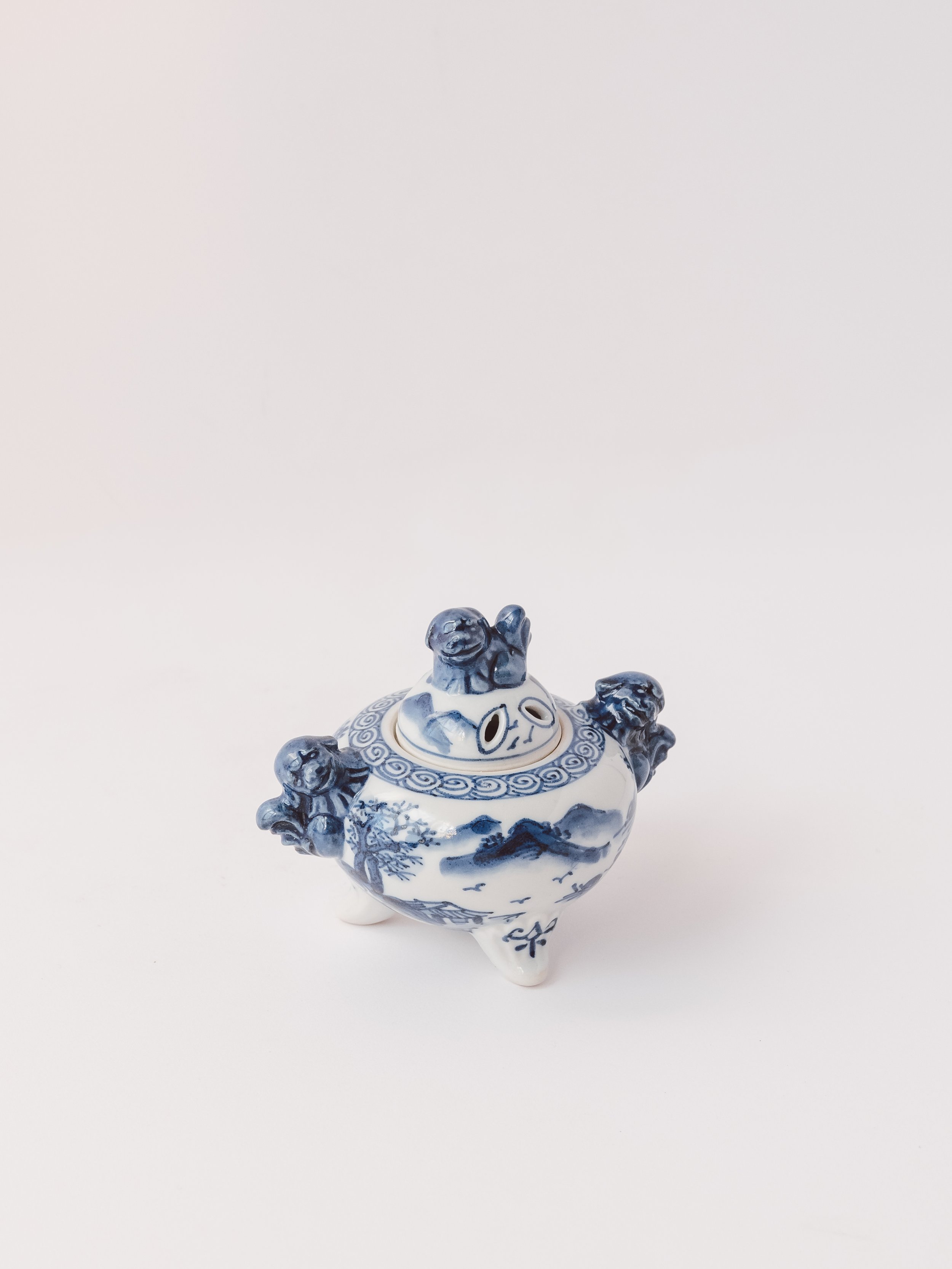 Image 1 of 10
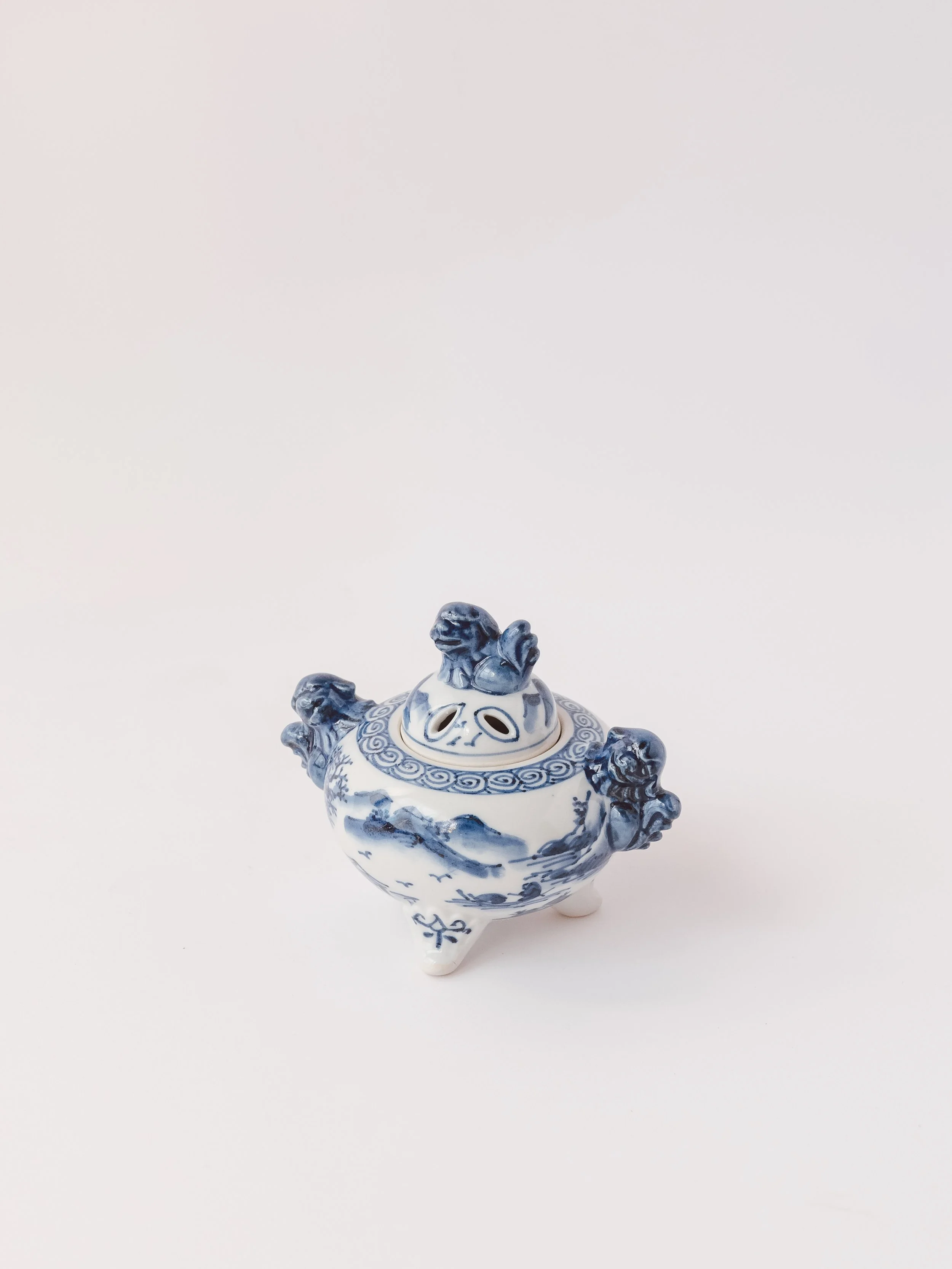 Image 2 of 10
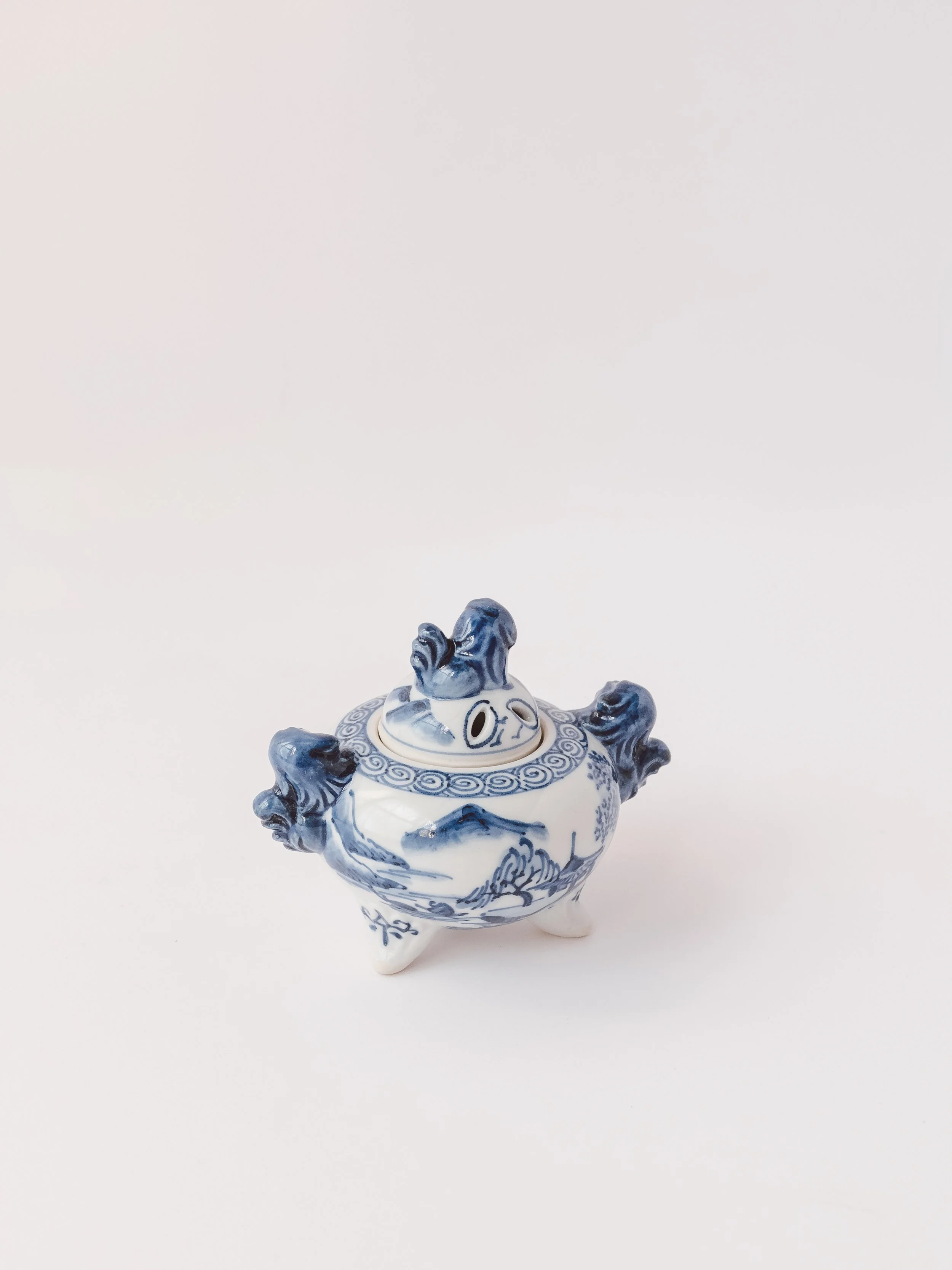 Image 3 of 10
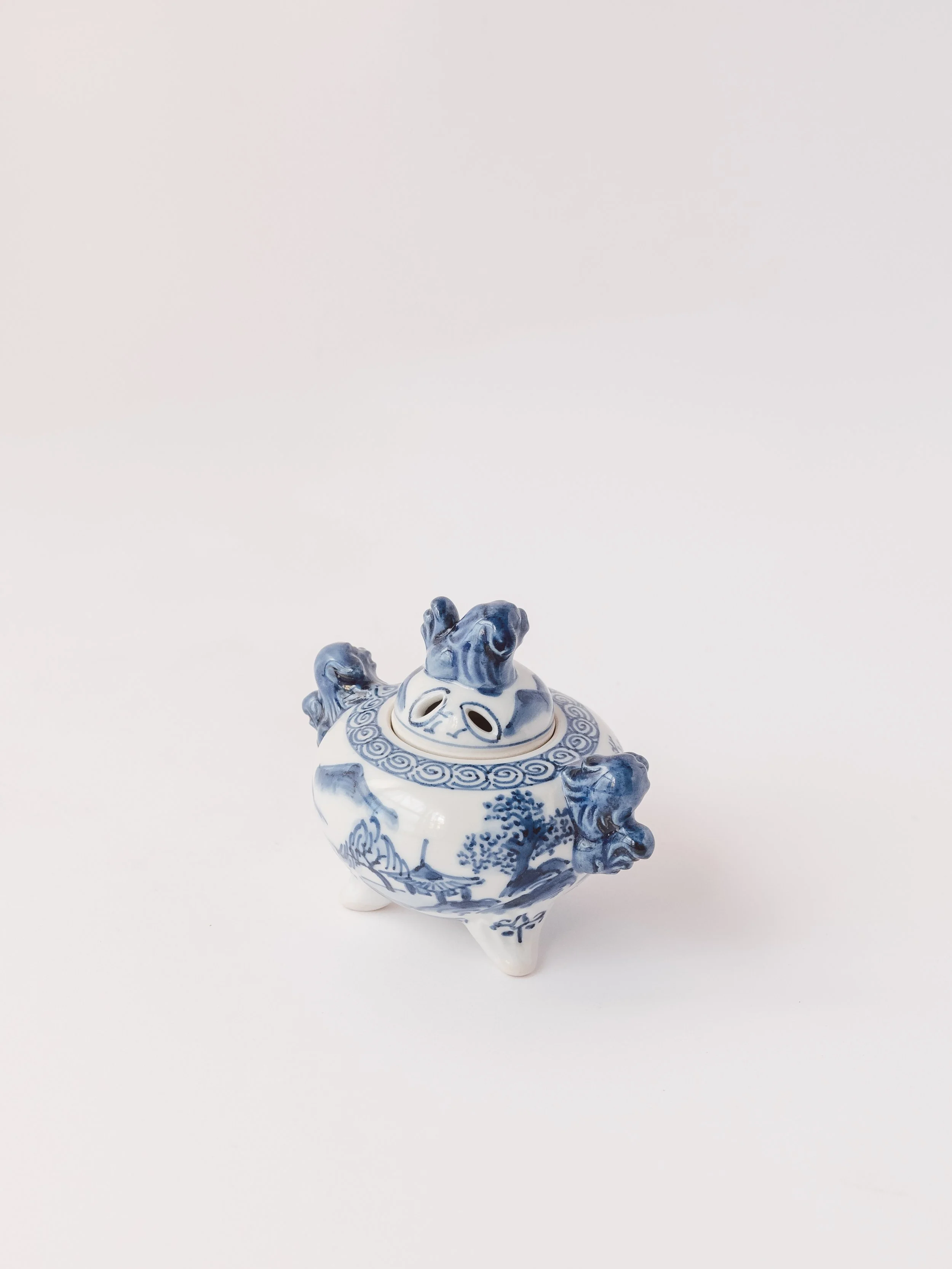 Image 4 of 10
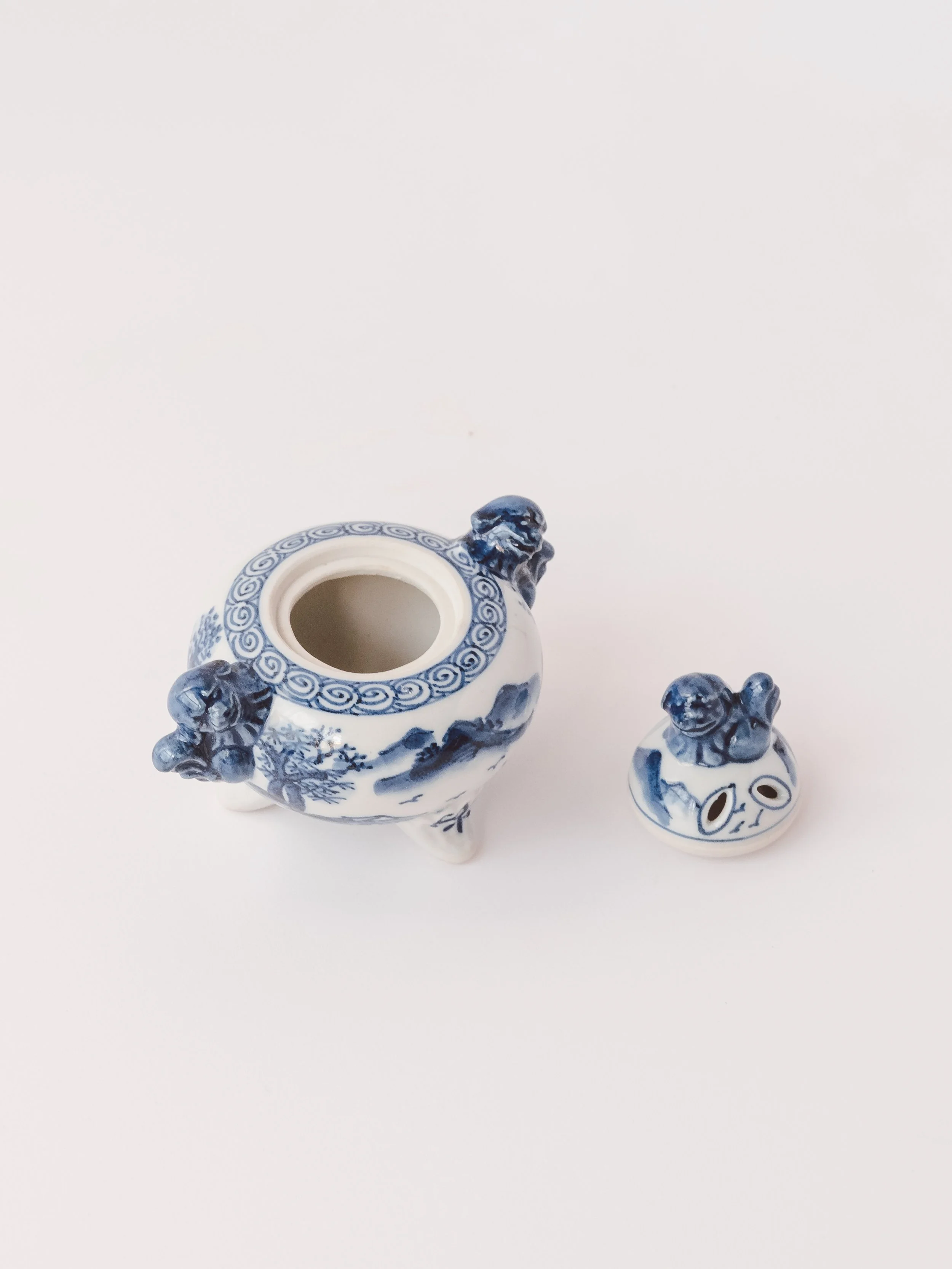 Image 5 of 10
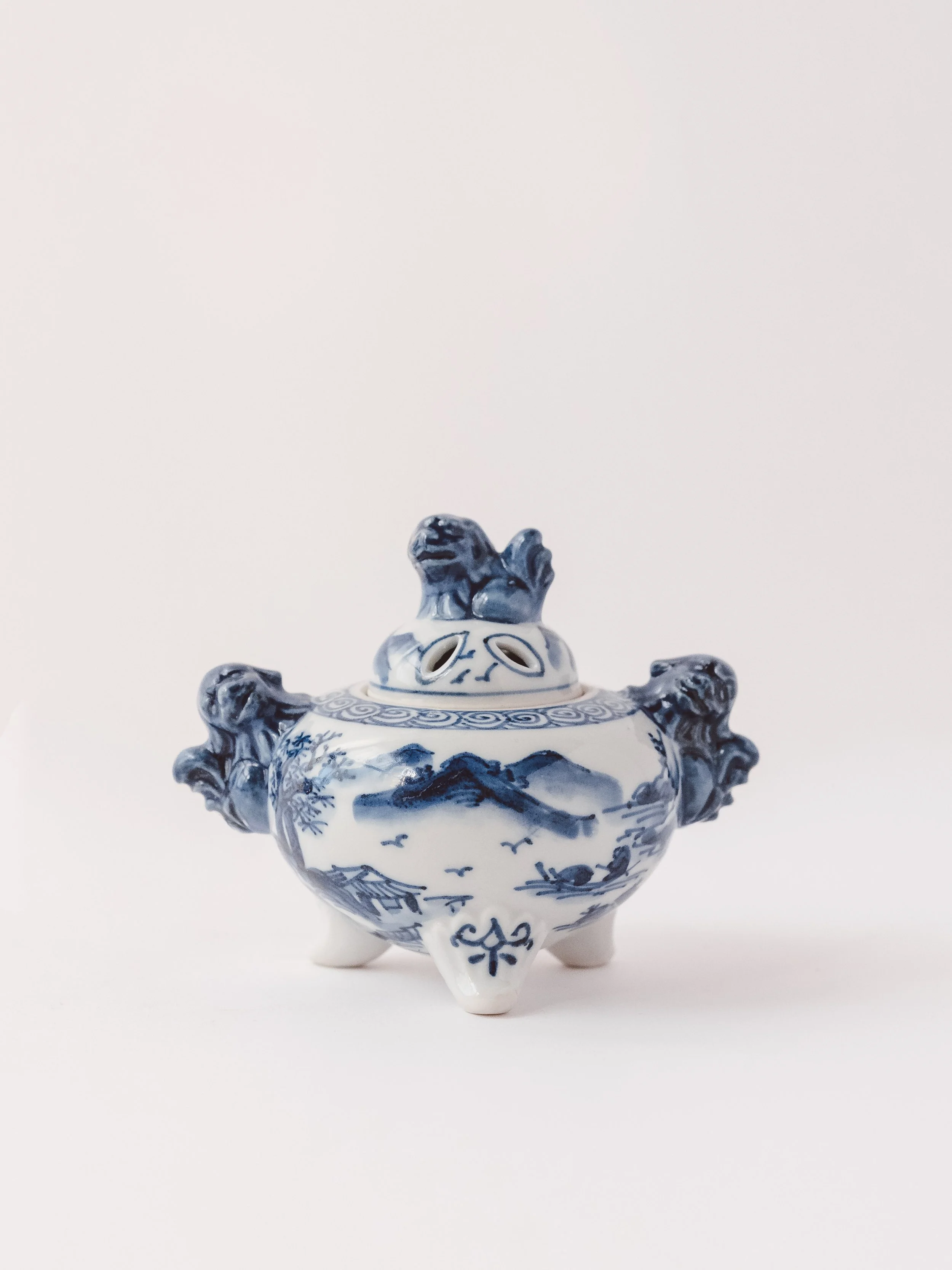 Image 6 of 10
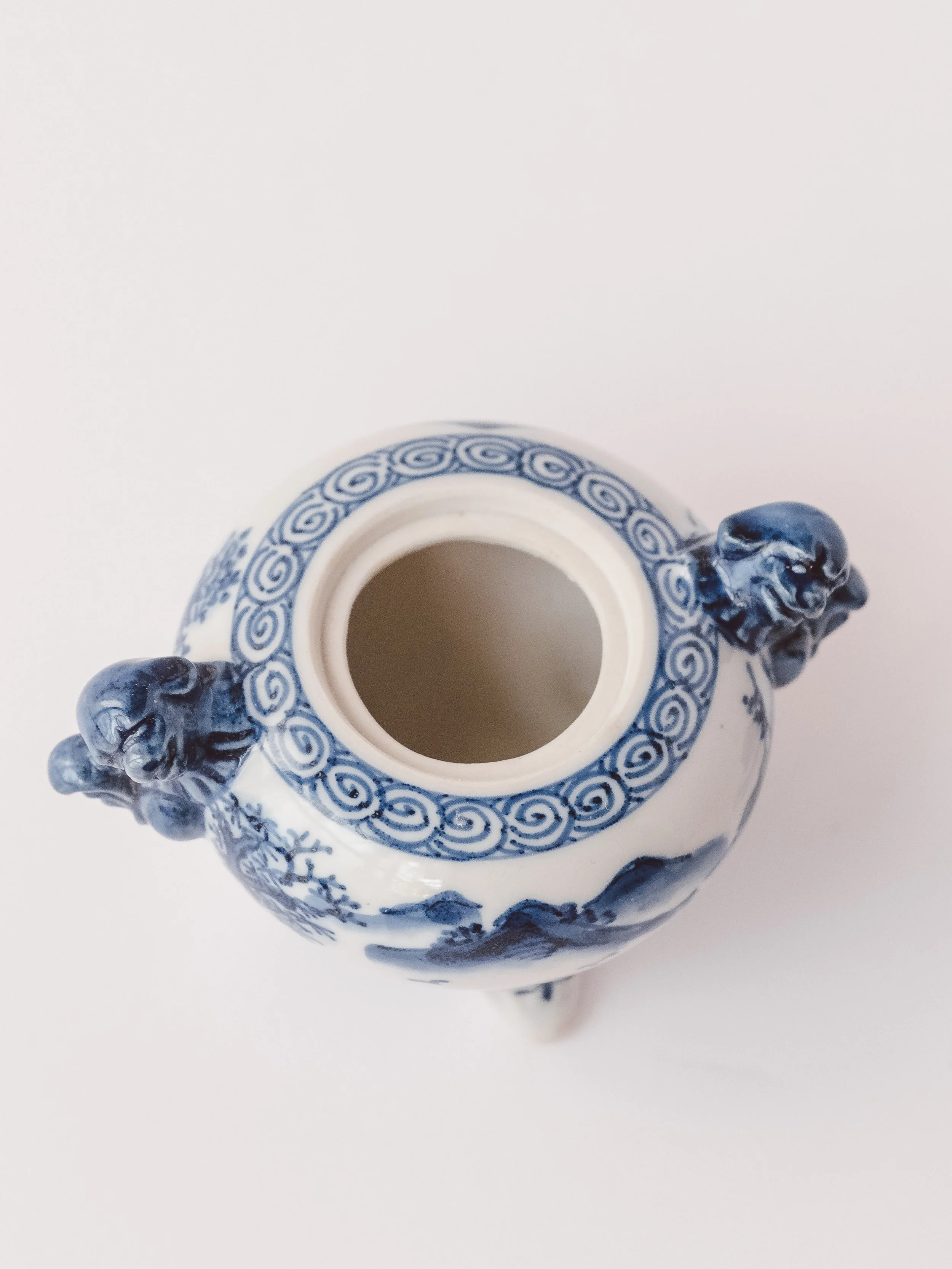 Image 7 of 10
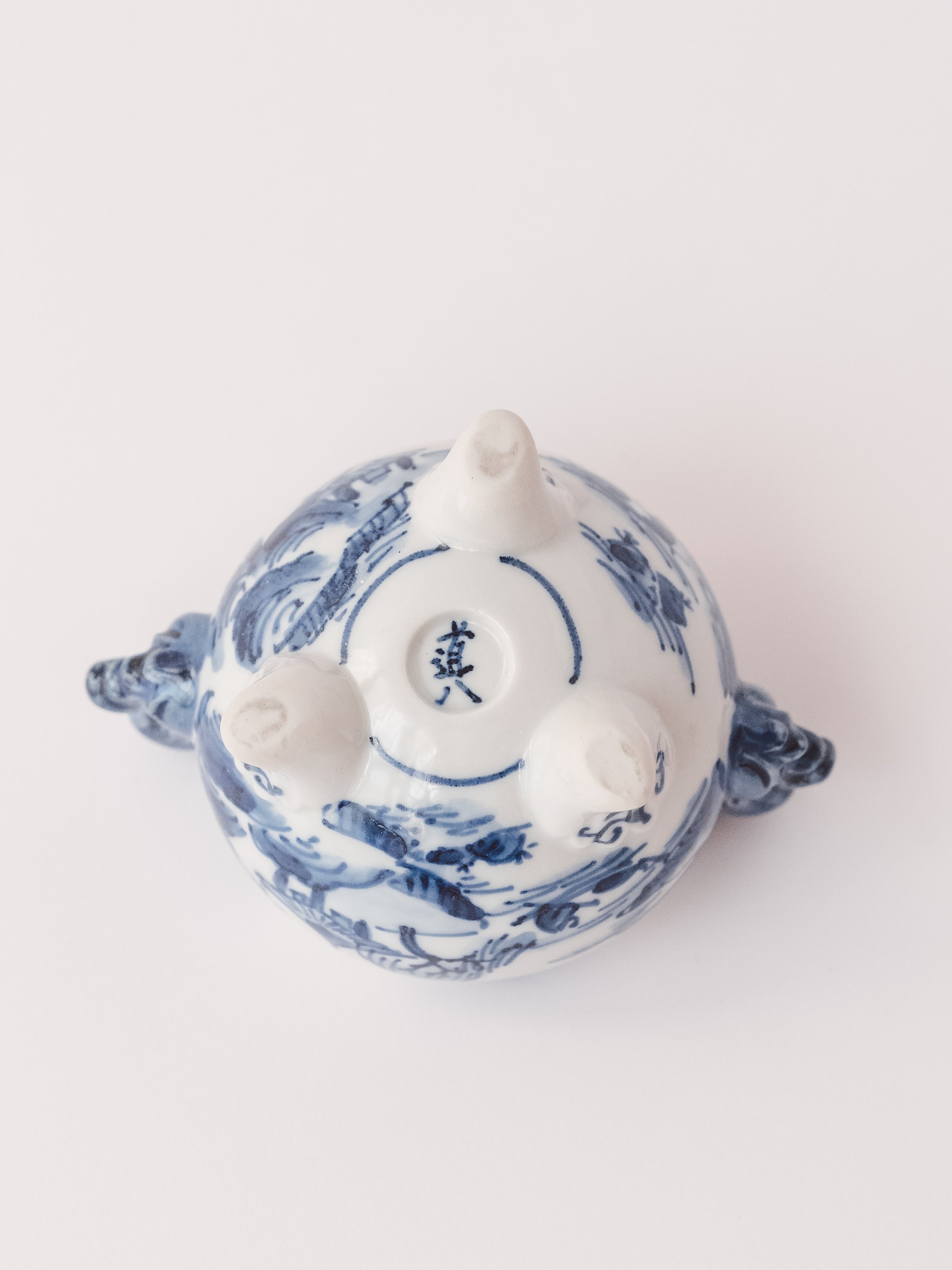 Image 8 of 10
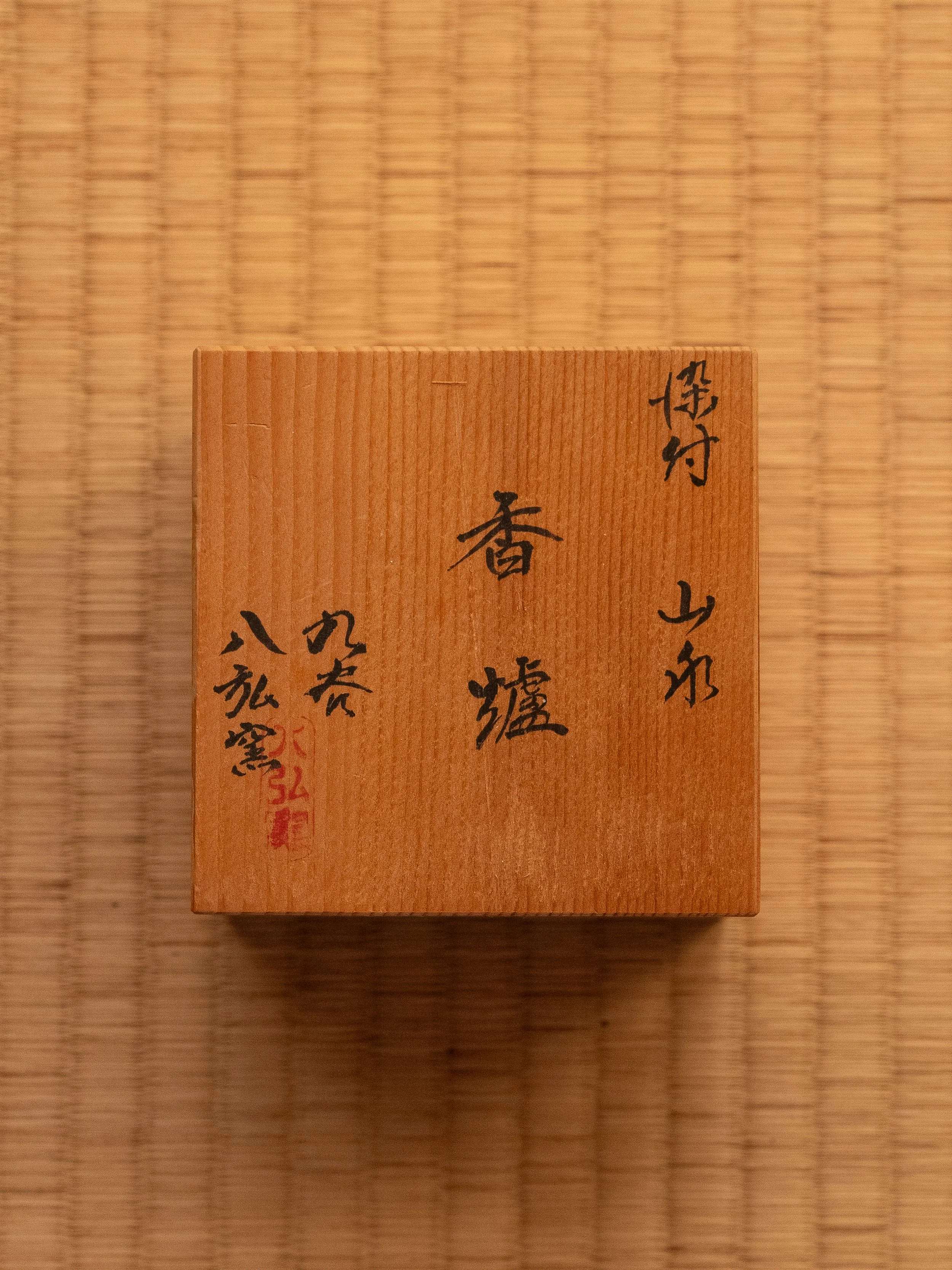 Image 9 of 10
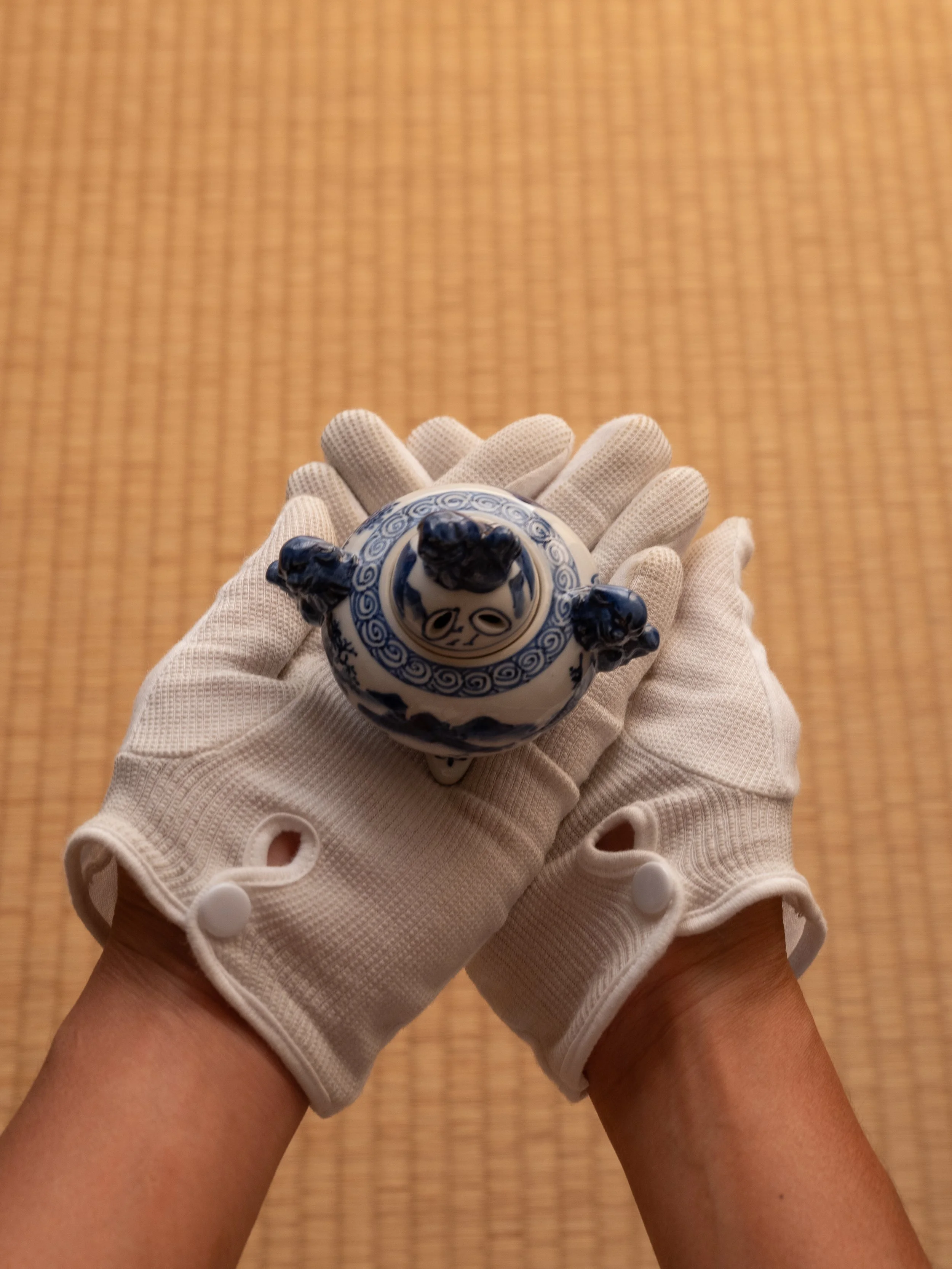 Image 10 of 10