【 The Concept 】
A very small standing tiger, nine centimetres long, hand-woven entirely from the pale golden stems of broom corn — the very plant used to make the traditional brooms of Kanuma, in Tochigi Prefecture. It stands squarely on four short, straight, cleanly cut legs; the head is lifted, the mouth is open, and a single small patch of vivid vermilion inside the mouth reads as a tiger's tongue mid-roar. The long tail rises from the rump in a single generous arc, curling forward over the back and toward the head. The body — head, back, flanks and tail — is wrapped rhythmically with a dense black cord that lays the tiger's stripes across the golden straw at regular intervals. A small tuft of a few fine straw stems is left projecting forward from the upper front of the head — the exact intent of this detail is not clear from the piece alone. Nine grams in the hand, more toy than sculpture, and yet everything about it — the roaring pose, the striped body, the sweep of the tail — is unmistakably a tiger: an entire folk-art idea of the Year of the Tiger, compressed into the width of a palm.
【 What Kibigara-zaiku Is 】
Kibigara-zaiku (きびがら細工) is a folk craft from Kanuma, in the mountains of central Tochigi Prefecture, in which small animal figures — the twelve zodiac creatures, cranes, tortoises and other auspicious motifs — are hand-woven from the dried stems of hōkigusa, the broom corn plant grown locally for making brooms. The name "kibigara" refers to those stems: the material that is left over, or set aside, when broom corn is being selected and processed for broom-making. The technique itself — the wetting, binding, twisting and tying of the fibres — is drawn directly from the broom-maker's own craft. To learn kibigara detail work is, in a very literal sense, to inherit the broom-maker's hands. Kanuma's own municipal materials describe kibigara-zaiku as a form of good-luck folk craft made from the stems of the broom plant, expressing zodiac animals and auspicious creatures in hand-woven form.
【 Why the Tiger, and Why It Matters Here 】
The tiger is the third animal of the Japanese-Chinese zodiac cycle — the Year of the Tora (寅). In Japanese folk belief the tiger is an emblem of courage, of household protection, and of a swift, decisive turn of fortune; a small woven tiger set on a shelf or a household altar carries the wish that a coming year, or a coming venture, will move with a tiger's directness. The tiger has always held a slightly special place in the kibigara repertoire, because the plant material lends itself so naturally to the striping — a straight-sided pale body, cleanly wrapped at regular intervals with dark thread, becomes the tiger's coat almost by definition. This piece is one of the twelve zodiac animals in the kibigara workshop's line, and it is the piece for anyone born in the Year of the Tiger, or preparing a home for one to come.
【 The Kanuma Broom Tradition Behind It 】
To understand this small tiger it helps to look at the broom that stands behind it. The Kanuma broom — Kanuma-bōki — has been made in this area since the late Edo period, traditionally traced to the local magistrate Arai Kiemon, who is said to have introduced broom-corn seeds to the district around 1842. Since then the whole area has grown, dried, sorted and woven this one plant into brooms of unusual refinement. But not every stalk is fit to become a broom; and as demand for domestic brooms fell in the twentieth century, the craftsmen of Kanuma found a second life for both the surplus stems and their own accumulated skill. From that came kibigara-zaiku — first developed in the mid-twentieth century — in which the same material and the same trained hands are used to make small animals, cranes, tortoises and zodiac figures for the household shelf rather than the household floor. In that sense the piece in front of you is not a decoration invented in isolation; it is the broom's other life.
【 Reading the Object 】
The composition works from the floor up.
Four short, straight legs — cut from thicker culms of the broom corn and left in their natural pale golden colour — plant the tiger on the surface, splayed out at just enough of an angle to make the small body stable.
The body is a horizontal oval mass of pale broom-corn stems, bound tightly together and wrapped horizontally at seven or eight regular intervals with a dense black cord. The cord is the piece's whole colour scheme: dark against light, rhythmic across the length, unmistakably the classical tiger stripe reduced to a folk symbol.
The head is lifted and set well forward at the shoulder line. It is made from the same pale straw folded and bound into a small blunt muzzle, with two small pricked ears above and the mouth left open at the front. Inside the mouth, a small piece of intense vermilion cloth or thread reads as the tongue. Two or three fine broom-corn stems are left projecting forward from the upper front of the head — by their position they are not whiskers (they sit above the muzzle rather than to its sides), nor a straightforward reading of eyes; we present them honestly as a small tuft of straw stems whose exact intent is not certain from the piece alone. The face carries no separately worked eyes; the tiger reads by silhouette, the black stripes just behind the head standing in for the mask.
The tail is the piece's most theatrical gesture: a single continuous bundle of straw rising from the rump, curling upward and forward over the back in one clean arc, and wrapped along its whole length by the same black cord that makes the body stripes. The tail visually extends the animal's roar — the tiger is not sitting quietly; it is caught mid-cry, tail up.
【 The Object 】
A hand-woven zodiac tiger, standing free on its own four legs. Very light in the hand — nine grams — yet dimensionally stable. Meant to be looked at from the side (the whole silhouette of the roaring, tail-up tiger) and from a little above (to catch the vermilion inside the mouth).
【 Where to Place It 】
On a shelf, a windowsill, a tokonoma alcove, an entrance console, a study desk, or a household altar. In its traditional role it is often set out at the New Year of a Tora year, together with a written wish or a small offering, and kept in the home through that year as a small guardian; but it stands equally well as a permanent ornament for anyone born in the Year of the Tiger, or as a small guardian by an entrance the whole year round. Keep it out of direct sunlight and away from humidifiers, open windows in the rain, and the reach of curious pets and small children — the whiskers and tail are fragile by nature.
【 Care 】
Dust with a soft dry brush or a gentle puff of air, always in the direction of the fibre. Do not wipe with a wet cloth. Do not spray with liquid cleaners. Keep it in a stable dry indoor environment. If the piece is ever moved, lift it by the body — never by the tail, whiskers or legs.
【 Function & What It Brings 】
Keep it, place it, or give it. As a folk art it is a compact, honest example of a specifically Kanuma tradition — the broom-maker's craft reborn as household iconography. As a talisman it carries the tiger's classical role: courage, decisive movement, household protection, a favourable turn of the year. A very fitting gift for a Year of the Tiger, for a child or an elder born in a Tiger year, for a housewarming, or for anyone who keeps a small collection of Japanese zodiac folk figures.
【 The Texture 】
Pale golden broom-corn stems, dry and softly matte, with the plant's natural longitudinal fibres visible under close light. Dense black cord with a slight matte texture wraps the body and the tail at regular intervals as the tiger's stripes. A small patch of intense vermilion inside the mouth reads as the tongue. A small tuft of a few fine straw stems projects forward from the upper front of the head. The four legs are straight, cleanly cut, pale.
【 Presence 】
Small, alert, deliberately theatrical. This is not a sleeping tiger but a roaring one — head up, mouth open, tail lifted and arced forward over the back. Its beauty is not in polish but in the truthfulness of its material and the confidence with which the striping and the tail are set in place.
Archive Note: The number in the name (1962) references the year in which kibigara-zaiku is credited as having been conceived as a distinct folk craft in Kanuma — developed as a way to carry the broom-maker's material and technique into a new generation, at a time when demand for the traditional Kanuma broom itself was falling. It is NOT the date this particular piece was made.
Provenance Note: Sourced from a private household in Japan. A hand-woven Year-of-the-Tiger (寅) figure in the tradition of Kanuma kibigara-zaiku (鹿沼きびがら細工), Tochigi Prefecture; a folk craft rooted in the local Kanuma broom (鹿沼箒) tradition of broom-corn cultivation and hand-binding. Attributed to the Kanuma kibigara-zaiku tradition rather than to a specific individual maker.
Condition Note: Sold as acquired, in very good condition. The naturally uneven ends of the projecting straw tuft on the head, the slight variations in the woven body, and the visible longitudinal fibre of the broom-corn stems are inherent features of a hand-woven kibigara piece, not damage. The tail, projecting head tuft and legs are fragile by design; please handle by the body and keep out of direct light and humidity. Please see the photographs as part of the description.
【 The Concept 】
A very small standing tiger, nine centimetres long, hand-woven entirely from the pale golden stems of broom corn — the very plant used to make the traditional brooms of Kanuma, in Tochigi Prefecture. It stands squarely on four short, straight, cleanly cut legs; the head is lifted, the mouth is open, and a single small patch of vivid vermilion inside the mouth reads as a tiger's tongue mid-roar. The long tail rises from the rump in a single generous arc, curling forward over the back and toward the head. The body — head, back, flanks and tail — is wrapped rhythmically with a dense black cord that lays the tiger's stripes across the golden straw at regular intervals. A small tuft of a few fine straw stems is left projecting forward from the upper front of the head — the exact intent of this detail is not clear from the piece alone. Nine grams in the hand, more toy than sculpture, and yet everything about it — the roaring pose, the striped body, the sweep of the tail — is unmistakably a tiger: an entire folk-art idea of the Year of the Tiger, compressed into the width of a palm.
【 What Kibigara-zaiku Is 】
Kibigara-zaiku (きびがら細工) is a folk craft from Kanuma, in the mountains of central Tochigi Prefecture, in which small animal figures — the twelve zodiac creatures, cranes, tortoises and other auspicious motifs — are hand-woven from the dried stems of hōkigusa, the broom corn plant grown locally for making brooms. The name "kibigara" refers to those stems: the material that is left over, or set aside, when broom corn is being selected and processed for broom-making. The technique itself — the wetting, binding, twisting and tying of the fibres — is drawn directly from the broom-maker's own craft. To learn kibigara detail work is, in a very literal sense, to inherit the broom-maker's hands. Kanuma's own municipal materials describe kibigara-zaiku as a form of good-luck folk craft made from the stems of the broom plant, expressing zodiac animals and auspicious creatures in hand-woven form.
【 Why the Tiger, and Why It Matters Here 】
The tiger is the third animal of the Japanese-Chinese zodiac cycle — the Year of the Tora (寅). In Japanese folk belief the tiger is an emblem of courage, of household protection, and of a swift, decisive turn of fortune; a small woven tiger set on a shelf or a household altar carries the wish that a coming year, or a coming venture, will move with a tiger's directness. The tiger has always held a slightly special place in the kibigara repertoire, because the plant material lends itself so naturally to the striping — a straight-sided pale body, cleanly wrapped at regular intervals with dark thread, becomes the tiger's coat almost by definition. This piece is one of the twelve zodiac animals in the kibigara workshop's line, and it is the piece for anyone born in the Year of the Tiger, or preparing a home for one to come.
【 The Kanuma Broom Tradition Behind It 】
To understand this small tiger it helps to look at the broom that stands behind it. The Kanuma broom — Kanuma-bōki — has been made in this area since the late Edo period, traditionally traced to the local magistrate Arai Kiemon, who is said to have introduced broom-corn seeds to the district around 1842. Since then the whole area has grown, dried, sorted and woven this one plant into brooms of unusual refinement. But not every stalk is fit to become a broom; and as demand for domestic brooms fell in the twentieth century, the craftsmen of Kanuma found a second life for both the surplus stems and their own accumulated skill. From that came kibigara-zaiku — first developed in the mid-twentieth century — in which the same material and the same trained hands are used to make small animals, cranes, tortoises and zodiac figures for the household shelf rather than the household floor. In that sense the piece in front of you is not a decoration invented in isolation; it is the broom's other life.
【 Reading the Object 】
The composition works from the floor up.
Four short, straight legs — cut from thicker culms of the broom corn and left in their natural pale golden colour — plant the tiger on the surface, splayed out at just enough of an angle to make the small body stable.
The body is a horizontal oval mass of pale broom-corn stems, bound tightly together and wrapped horizontally at seven or eight regular intervals with a dense black cord. The cord is the piece's whole colour scheme: dark against light, rhythmic across the length, unmistakably the classical tiger stripe reduced to a folk symbol.
The head is lifted and set well forward at the shoulder line. It is made from the same pale straw folded and bound into a small blunt muzzle, with two small pricked ears above and the mouth left open at the front. Inside the mouth, a small piece of intense vermilion cloth or thread reads as the tongue. Two or three fine broom-corn stems are left projecting forward from the upper front of the head — by their position they are not whiskers (they sit above the muzzle rather than to its sides), nor a straightforward reading of eyes; we present them honestly as a small tuft of straw stems whose exact intent is not certain from the piece alone. The face carries no separately worked eyes; the tiger reads by silhouette, the black stripes just behind the head standing in for the mask.
The tail is the piece's most theatrical gesture: a single continuous bundle of straw rising from the rump, curling upward and forward over the back in one clean arc, and wrapped along its whole length by the same black cord that makes the body stripes. The tail visually extends the animal's roar — the tiger is not sitting quietly; it is caught mid-cry, tail up.
【 The Object 】
A hand-woven zodiac tiger, standing free on its own four legs. Very light in the hand — nine grams — yet dimensionally stable. Meant to be looked at from the side (the whole silhouette of the roaring, tail-up tiger) and from a little above (to catch the vermilion inside the mouth).
【 Where to Place It 】
On a shelf, a windowsill, a tokonoma alcove, an entrance console, a study desk, or a household altar. In its traditional role it is often set out at the New Year of a Tora year, together with a written wish or a small offering, and kept in the home through that year as a small guardian; but it stands equally well as a permanent ornament for anyone born in the Year of the Tiger, or as a small guardian by an entrance the whole year round. Keep it out of direct sunlight and away from humidifiers, open windows in the rain, and the reach of curious pets and small children — the whiskers and tail are fragile by nature.
【 Care 】
Dust with a soft dry brush or a gentle puff of air, always in the direction of the fibre. Do not wipe with a wet cloth. Do not spray with liquid cleaners. Keep it in a stable dry indoor environment. If the piece is ever moved, lift it by the body — never by the tail, whiskers or legs.
【 Function & What It Brings 】
Keep it, place it, or give it. As a folk art it is a compact, honest example of a specifically Kanuma tradition — the broom-maker's craft reborn as household iconography. As a talisman it carries the tiger's classical role: courage, decisive movement, household protection, a favourable turn of the year. A very fitting gift for a Year of the Tiger, for a child or an elder born in a Tiger year, for a housewarming, or for anyone who keeps a small collection of Japanese zodiac folk figures.
【 The Texture 】
Pale golden broom-corn stems, dry and softly matte, with the plant's natural longitudinal fibres visible under close light. Dense black cord with a slight matte texture wraps the body and the tail at regular intervals as the tiger's stripes. A small patch of intense vermilion inside the mouth reads as the tongue. A small tuft of a few fine straw stems projects forward from the upper front of the head. The four legs are straight, cleanly cut, pale.
【 Presence 】
Small, alert, deliberately theatrical. This is not a sleeping tiger but a roaring one — head up, mouth open, tail lifted and arced forward over the back. Its beauty is not in polish but in the truthfulness of its material and the confidence with which the striping and the tail are set in place.
Archive Note: The number in the name (1962) references the year in which kibigara-zaiku is credited as having been conceived as a distinct folk craft in Kanuma — developed as a way to carry the broom-maker's material and technique into a new generation, at a time when demand for the traditional Kanuma broom itself was falling. It is NOT the date this particular piece was made.
Provenance Note: Sourced from a private household in Japan. A hand-woven Year-of-the-Tiger (寅) figure in the tradition of Kanuma kibigara-zaiku (鹿沼きびがら細工), Tochigi Prefecture; a folk craft rooted in the local Kanuma broom (鹿沼箒) tradition of broom-corn cultivation and hand-binding. Attributed to the Kanuma kibigara-zaiku tradition rather than to a specific individual maker.
Condition Note: Sold as acquired, in very good condition. The naturally uneven ends of the projecting straw tuft on the head, the slight variations in the woven body, and the visible longitudinal fibre of the broom-corn stems are inherent features of a hand-woven kibigara piece, not damage. The tail, projecting head tuft and legs are fragile by design; please handle by the body and keep out of direct light and humidity. Please see the photographs as part of the description.


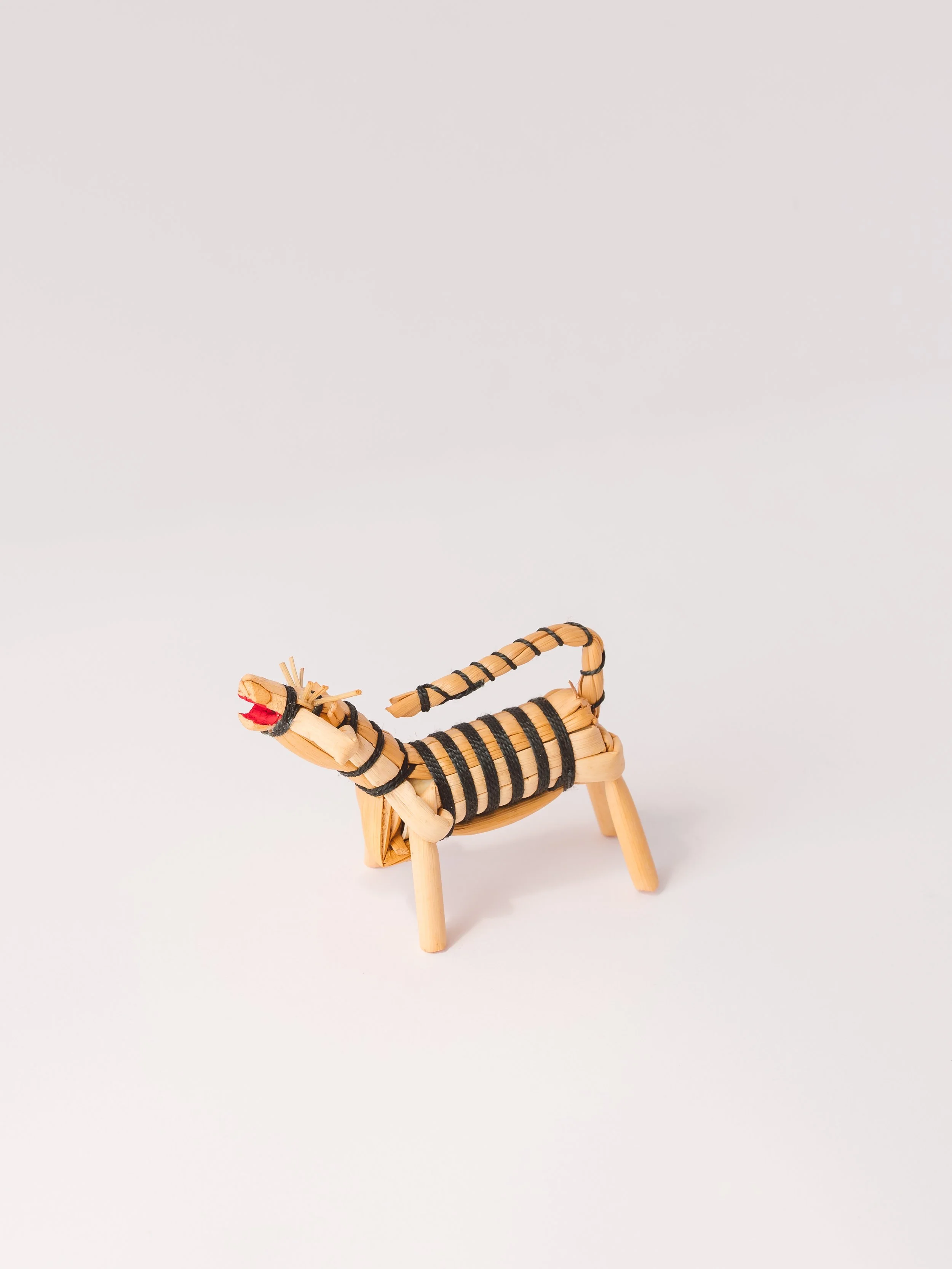 Image 1 of 11
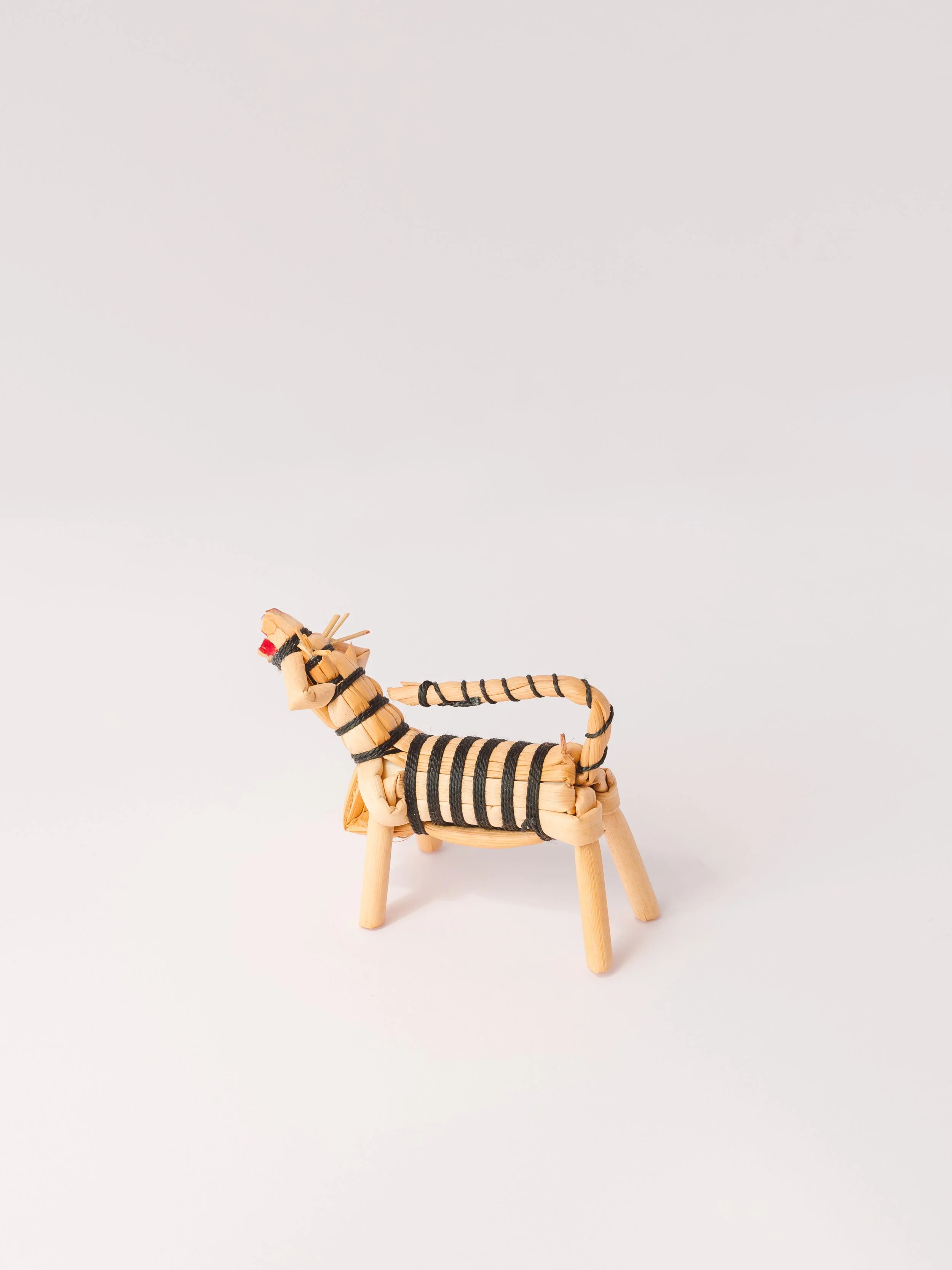 Image 2 of 11
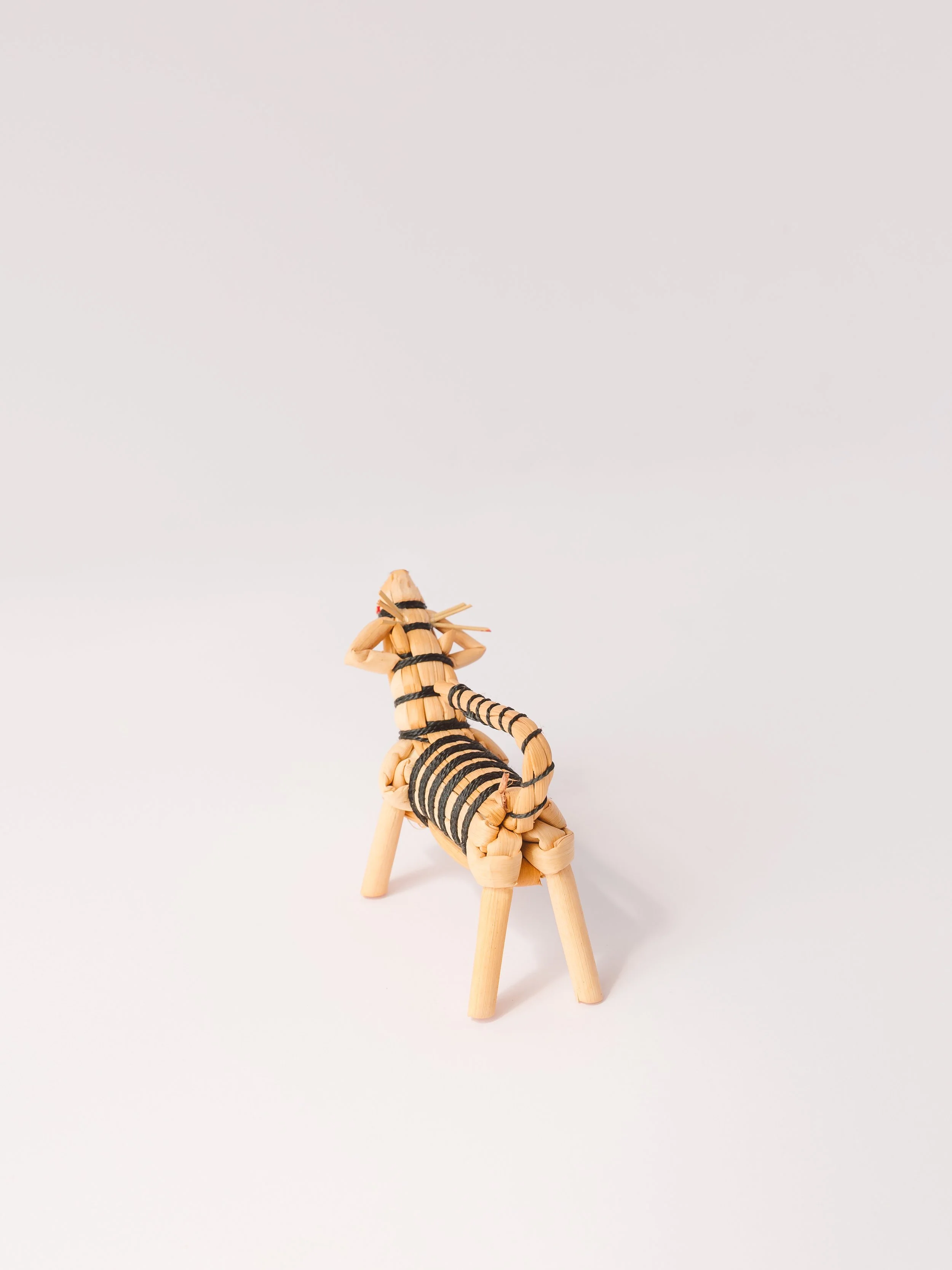 Image 3 of 11
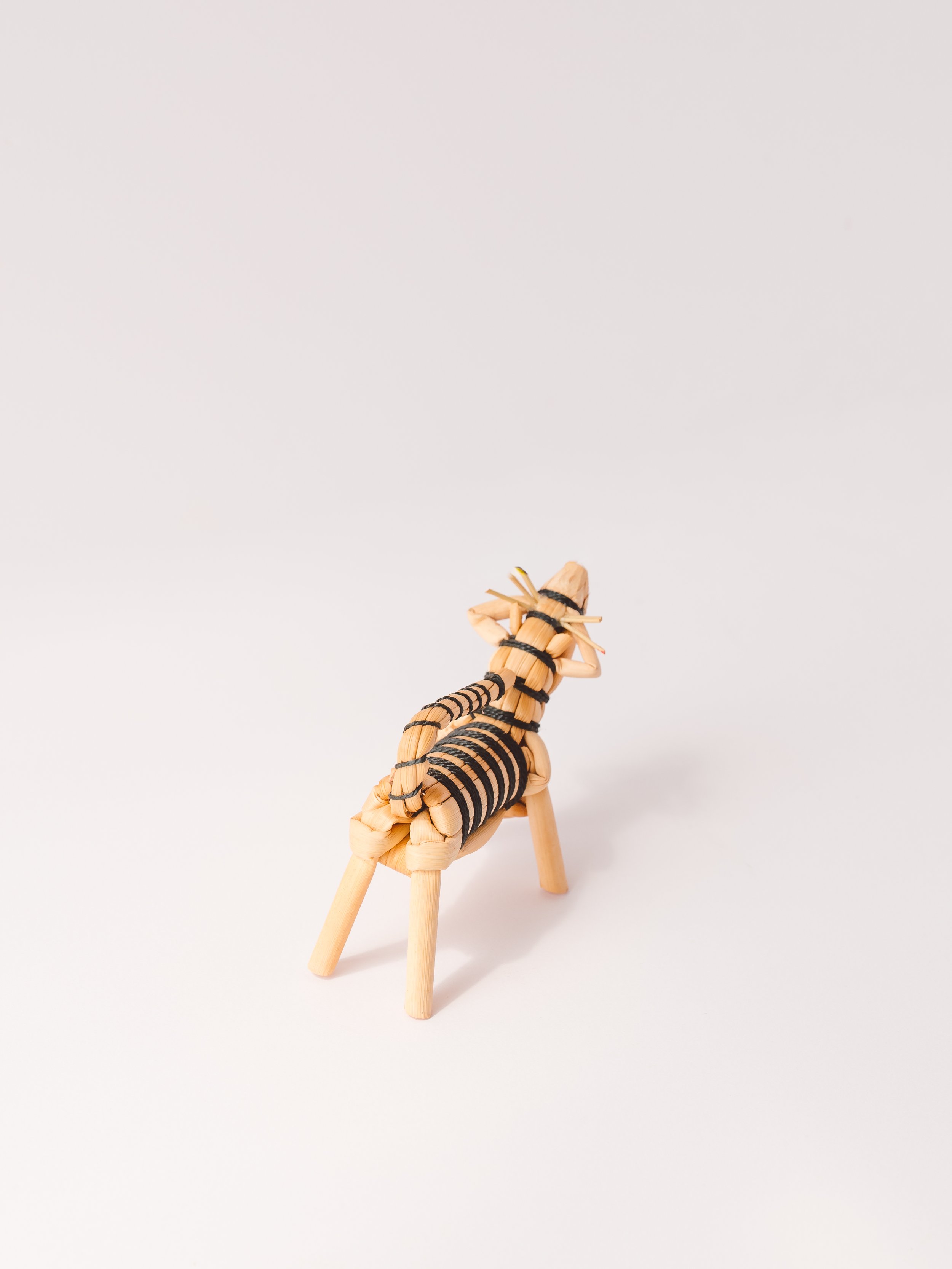 Image 4 of 11
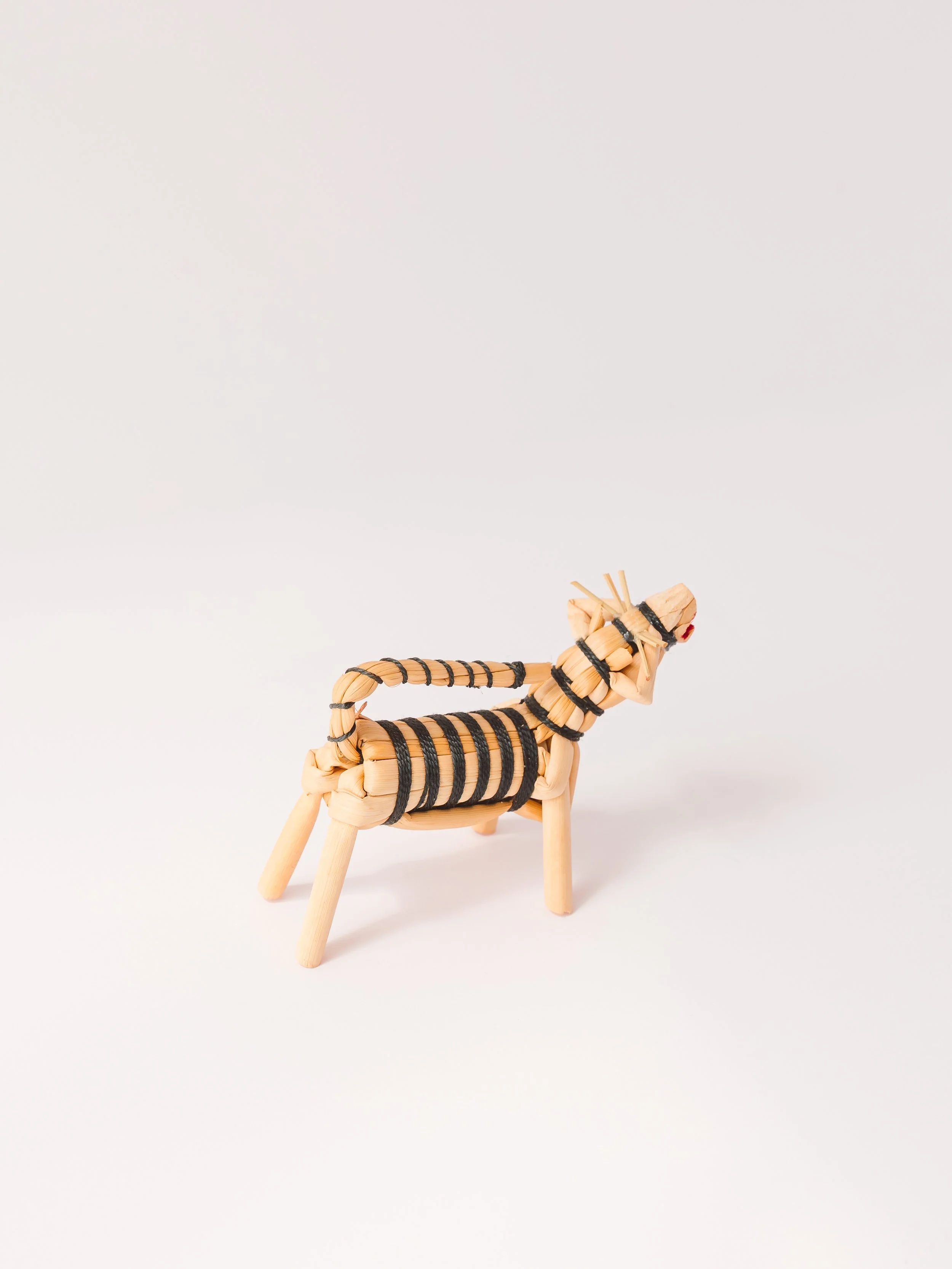 Image 5 of 11
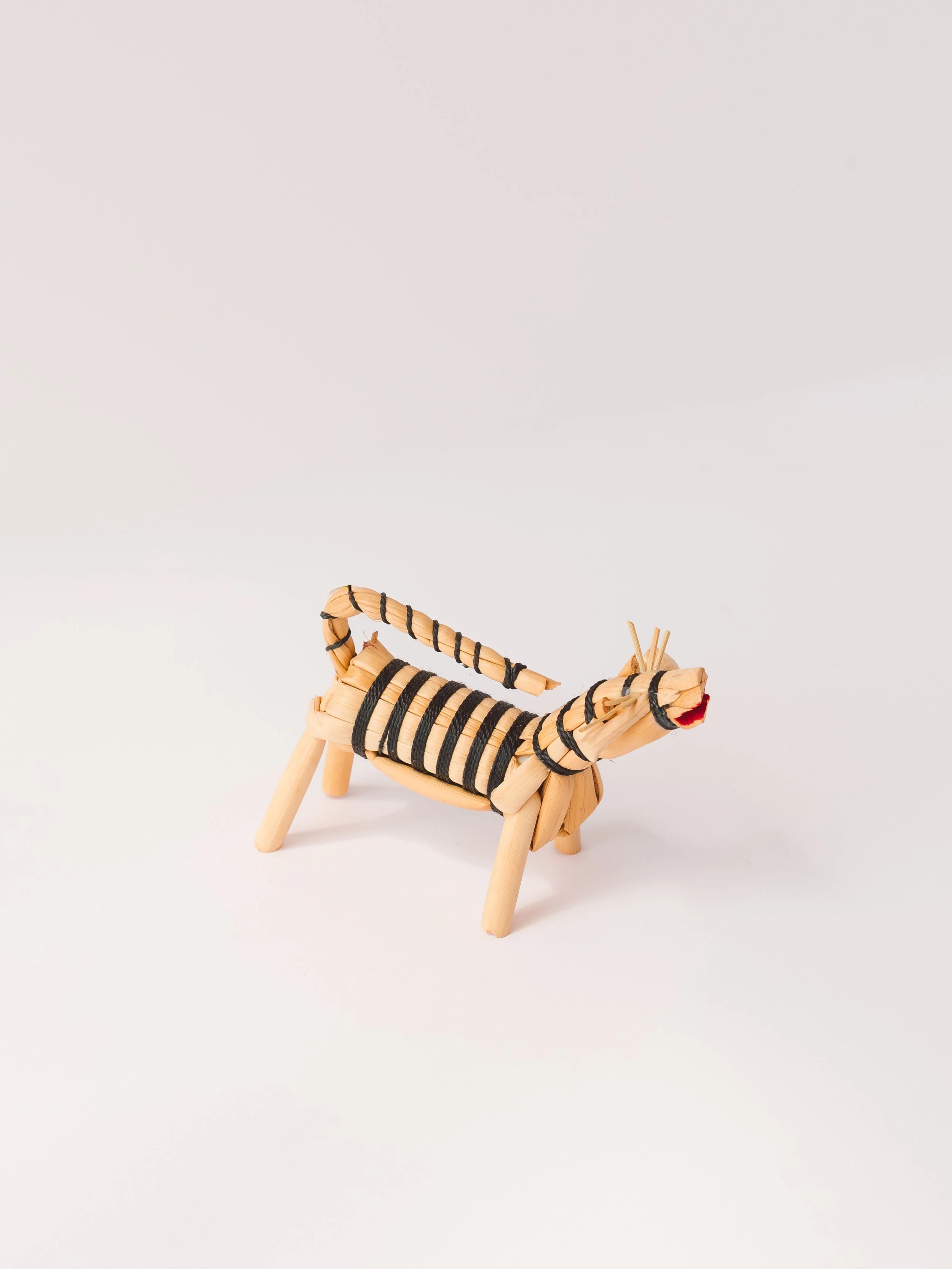 Image 6 of 11
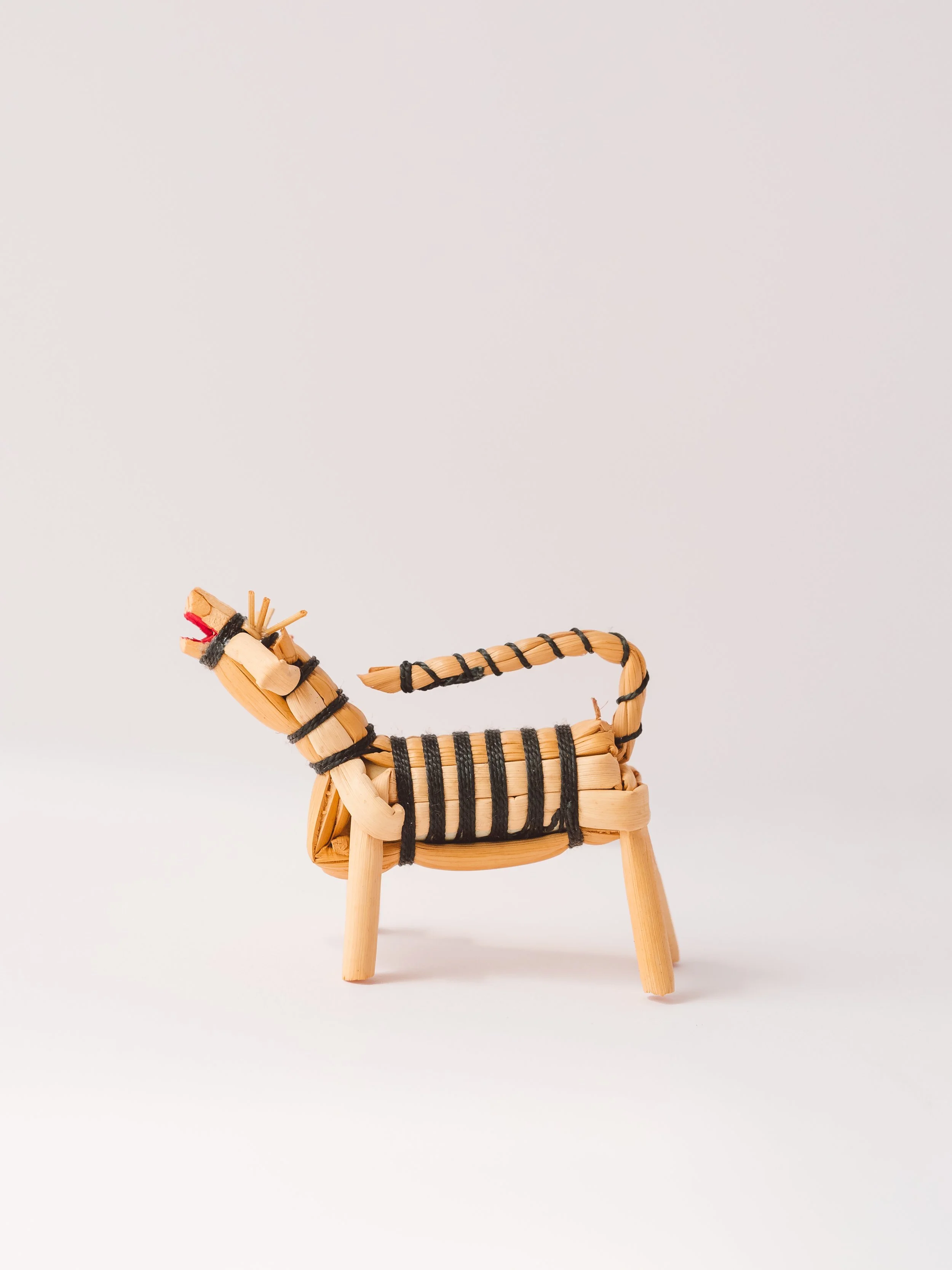 Image 7 of 11
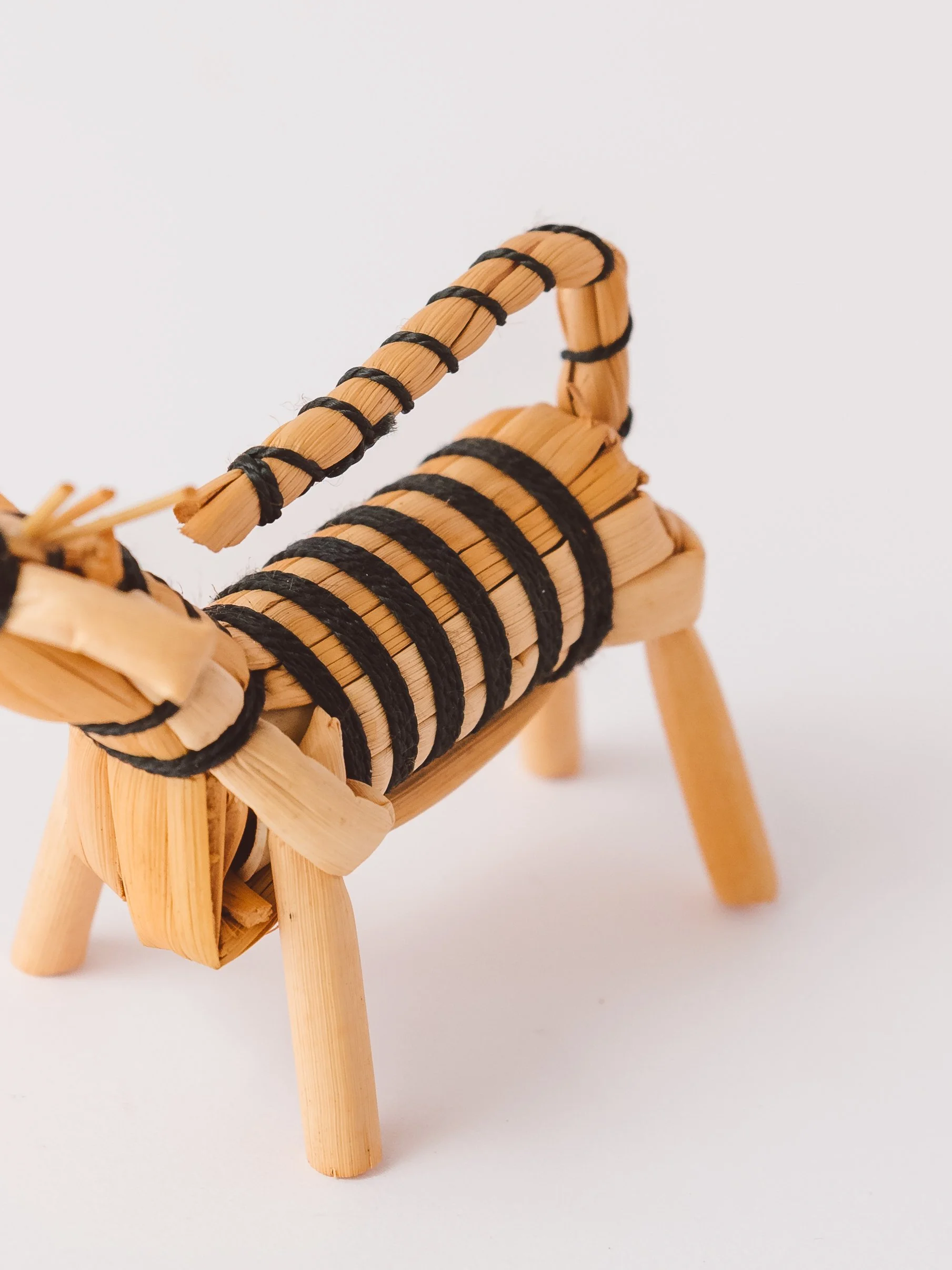 Image 8 of 11
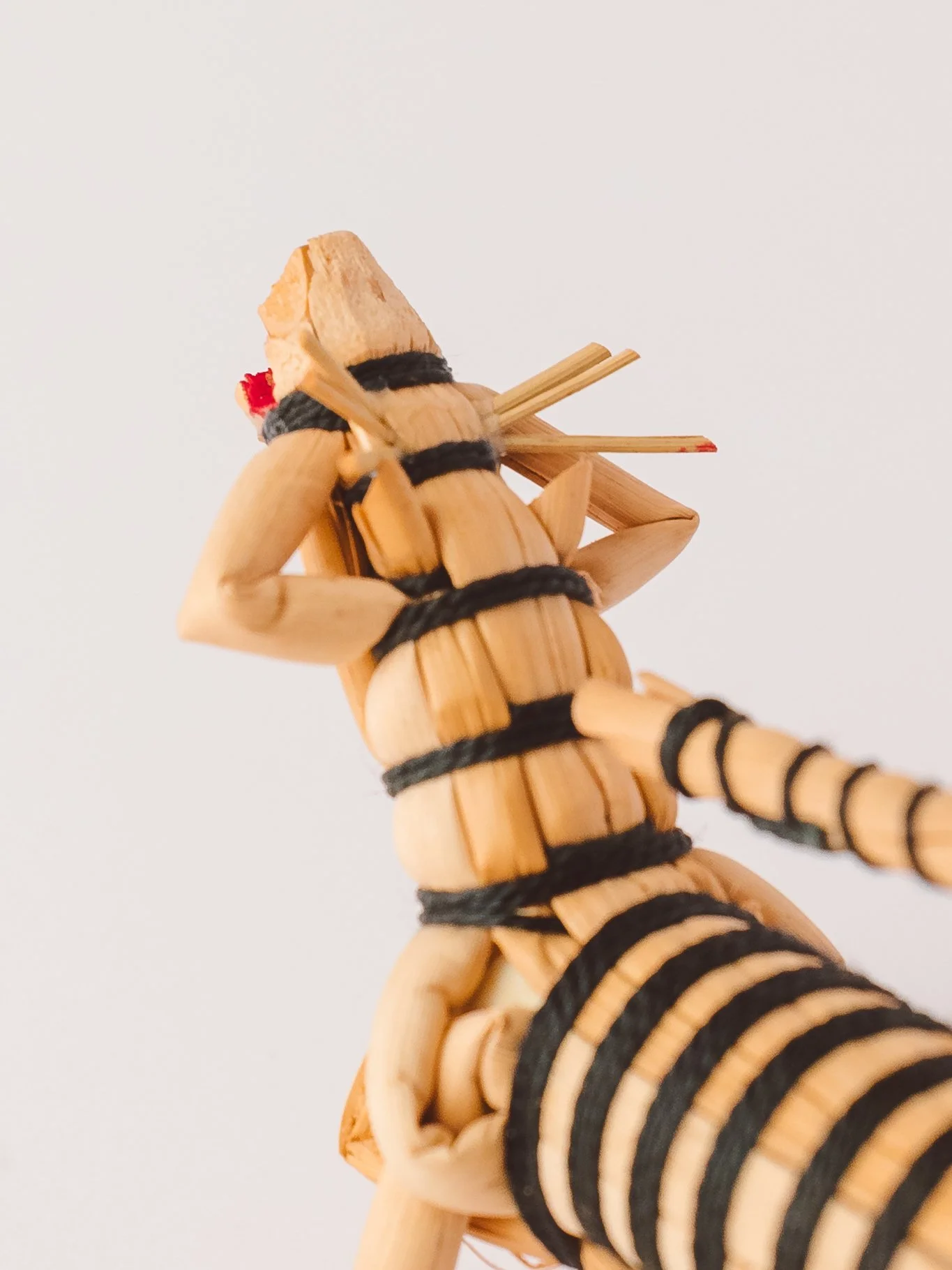 Image 9 of 11
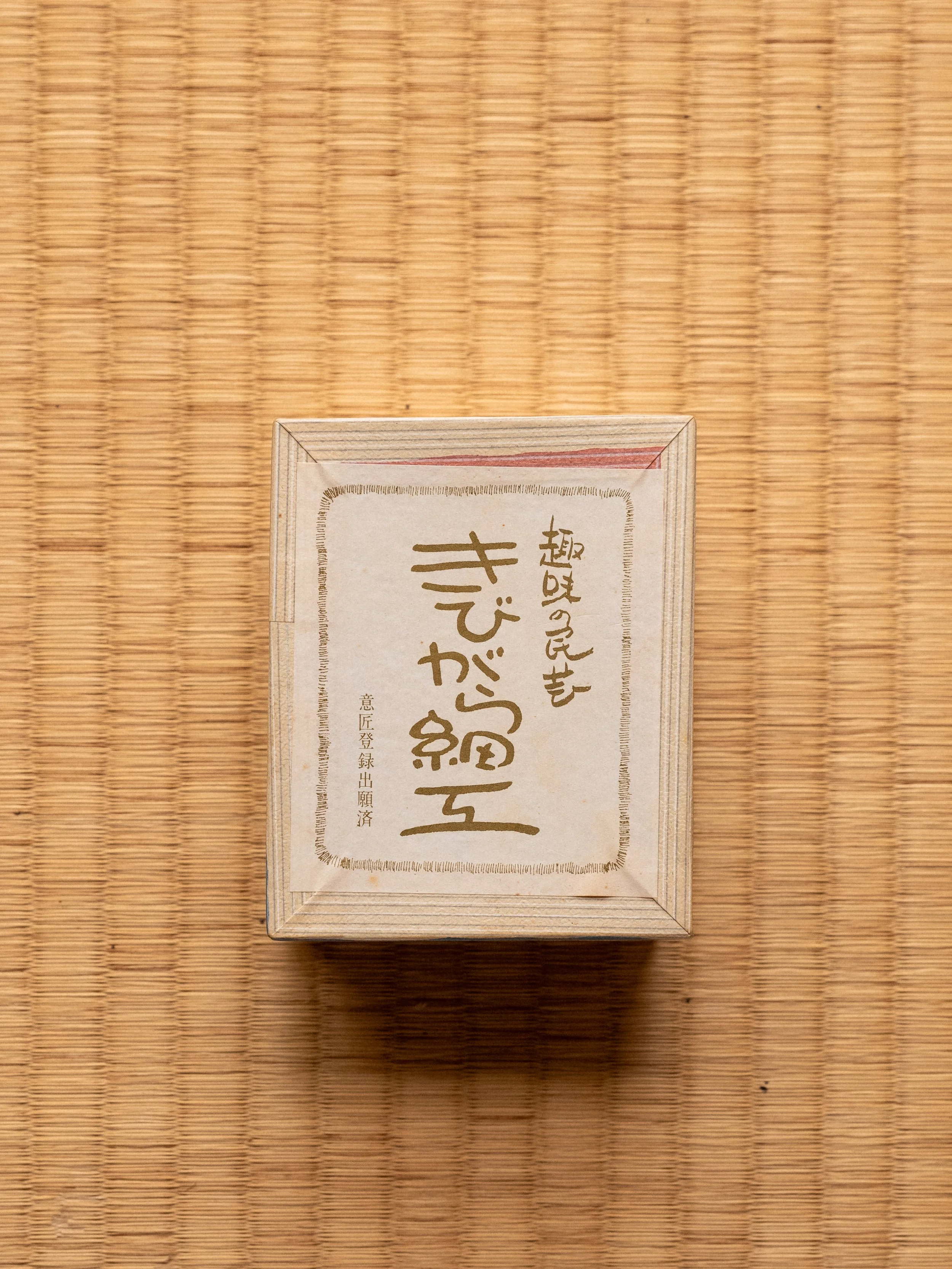 Image 10 of 11
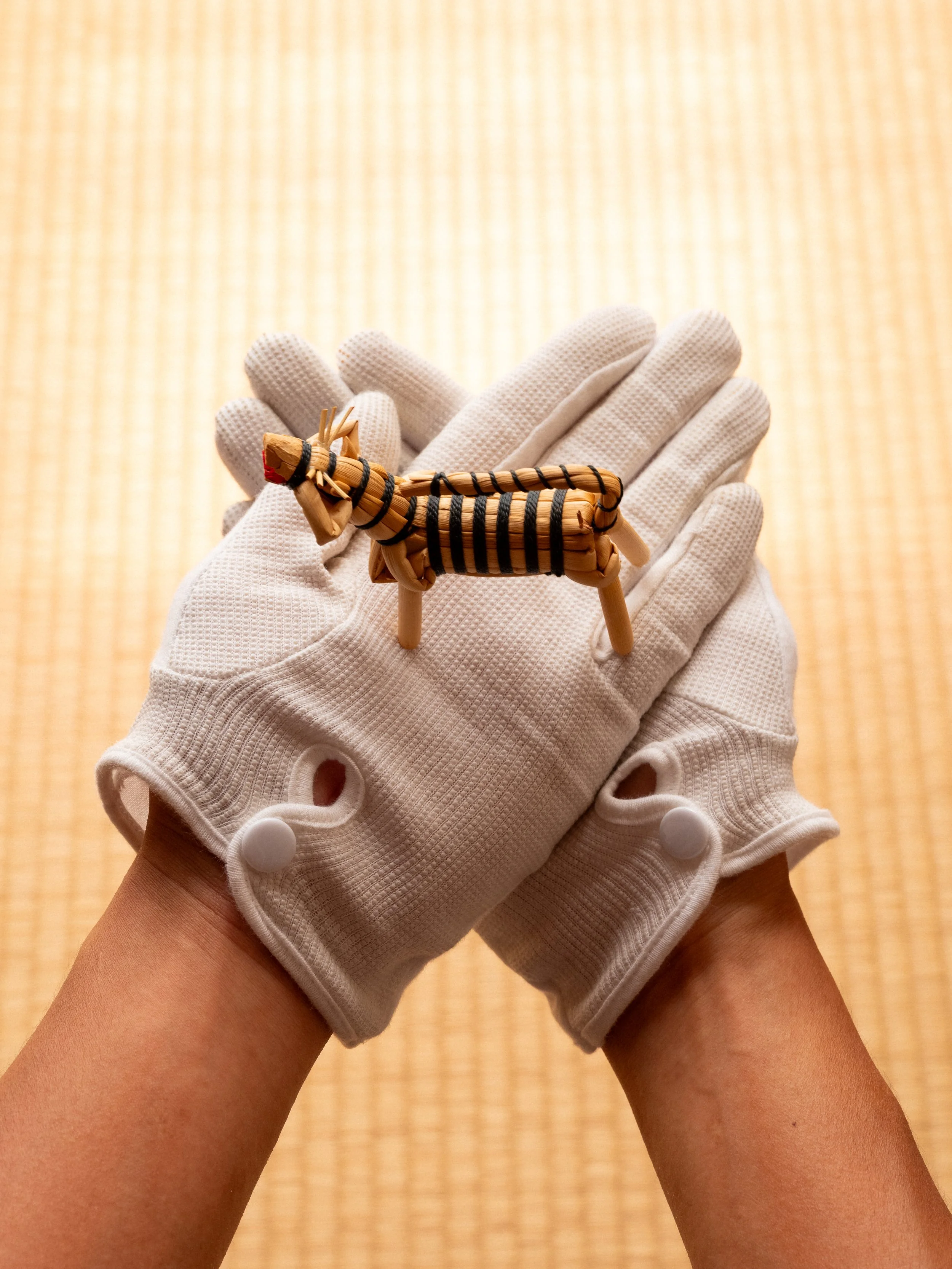 Image 11 of 11