【 The Concept 】
A sixteen-centimetre standing ceramic figure — a modern potter's homage to one of the most famous prehistoric sculptures in Japan, the Middle Jōmon-period female dogū known as the Jōmon Venus (縄文のヴィーナス), Japan's first prehistoric clay figurine to be designated a National Treasure. The body follows the original: two small pointed breasts high on a smooth chest, a great rounded pregnant belly, wide low hips, and short conjoined legs that give the whole figure its stable, self-supporting stand. Where the original carried a hat-brimmed round head, however, this modern piece has done something different: the head has been reshaped as a shallow round bowl — a small hearth — rimmed with the incised, coiled decoration of Jōmon pottery and just touched at the rim by drips of natural ash glaze from the wood-fired kiln. The whole piece is a single hand-worked mass of iron-rich unglazed stoneware, warm sandy brown, its surface still bearing the pinches, scars and finger-drags of its making. It is at once a sculpture in the ancient dogū vocabulary and a fully functional modern incense burner — a five-thousand-year-old wish for fertility and household continuity, quietly re-set as a small altar for palo santo, kōboku incense, cone incense or white sage.
【 What a Jōmon Dogū Is 】
Dogū (土偶) are small ceramic humanoid figures made in Japan across the long Jōmon period — the Neolithic hunter-gatherer age of the archipelago that ran, in its long form, from around 14,000 BCE to about 300 BCE. Roughly twenty thousand dogū have been excavated across the country, most of them from the east and north of Honshū, and almost every one was found deliberately broken, as though the figure itself had been used in a ritual and the ritual required its destruction. Scholars generally read them as ritual objects tied to fertility, safe childbirth, healing and the cycles of life — dogū tend to represent women, and often, as here, pregnant women. A small class of dogū, however, escaped the ritual breaking and have come down to us whole; five of these are today designated National Treasures. Of those five, the earliest to receive the designation — in 1995 — was the piece known as the Jōmon Venus.
【 The Original: The Jōmon Venus 】
The original Jōmon Venus is a 27-centimetre standing clay figure of a pregnant woman, found in 1986 at the Tanabatake site in the city of Chino in Nagano Prefecture, at the foot of the central Japanese Alps. It is dated to the Middle Jōmon period, roughly five thousand years ago. The figure is famous for two things: the extraordinary swelling of the belly and hips, which almost every scholar reads as a specific depiction of a pregnant woman; and the material — fine iron-rich clay tempered with a subtle mica, so that under the right light the surface glints faintly, giving the whole piece a warmth unusual in a Jōmon dogū. Its head is a flat round crown, its face schematic, its arms mere stubs, its legs joined into a single stable base. It is the piece from which every later Japanese sculptor who has taken up the pregnant standing form has been quoting. It was the first Jōmon dogū elevated to the rank of National Treasure of Japan in 1995.
【 This Modern Homage 】
This piece is not an archaeological object, and does not present itself as one. It is a contemporary ceramic homage — made in the vocabulary and the material of the Jōmon Venus, at a hand-scale one degree smaller than the original (sixteen centimetres to the original's twenty-seven), and modified in one important way: the head has been reshaped from a solid crown into a shallow round bowl, so that the finished figure functions as a kōro (incense burner) as well as a sculpture. The body honours the original faithfully. The head opens the tradition outward, into the modern uses of quiet burning — palo santo, kōboku, cone incense, white sage — that people now keep on a desk or an altar for meditation, for a room's cleansing, for a settled beginning to the day.
【 Reading the Object 】
The composition works vertically, from the base up.
The base is a pair of short, conjoined legs, cleanly integrated into a single wide stand — the same solution the original Jōmon Venus uses for the problem of standing up a pregnant clay figure. A shallow central groove between the thighs and up over the belly is the direct quotation of the original's own centre line.
The hips and belly are the great rounded volume of the piece, swelling forward and to the sides with the specific, unmistakable shape of a woman near the end of pregnancy. The maker has kept the surface of this mass smooth and softly modelled, letting the volume itself do all the work.
Above the belly a clear waist gathers the figure inward, and then two small pointed breasts rise from the chest — a schematic, restrained treatment, again faithful to the original.
The head is where the modern maker has departed from the archaeological source. Instead of the original's solid flat crown, this piece carries a small shallow round bowl on a short neck: the ash-cup, the hearth. Its rim is decorated on the outside with the coiled and incised patterns of Jōmon pottery, and it is just touched at the lip and around the sides by drips of natural green-brown ash glaze from the wood-fired kiln — the only overtly glazed part of the piece. Two small round knob-ears sit on either side of the bowl at the position of the original's ears.
The whole surface is honest hand-work: the pinch marks of the shaping fingers, the drag of a wet fingertip, small pocks and rills in the clay, and, in a few places on the belly and back, the shallow impressed marks of the Jōmon cord-pattern from which the tradition takes its name.
【 A Vessel for Small Fires 】
The hollow at the top is the piece's working chamber. A small pierced vent allowed steam and gas to escape safely during the high-temperature firing, and today it is where the smoke of a small burning offering rises. The bowl comfortably takes a wood chip of palo santo, a stick of high-quality kōboku (fragrant incense wood), a cone of Japanese incense, or a pinch of white sage. Set on a small ceramic or stone plate, so no residual heat reaches the surface beneath, the piece becomes a small daily altar — a five-thousand-year-old form quietly holding a modern practice.
【 The Object 】
A substantial, hand-worked, satisfyingly heavy stoneware figure — sixteen centimetres tall, three hundred and eighty grams in the hand — self-supporting on its own conjoined-leg base, with a small functional incense hearth at the top of the head. Meant to be looked at from the front (the whole pregnant silhouette), from the side (the depth of the belly), and from slightly above (to see the incised Jōmon-pattern rim of the bowl).
【 Where to Place It 】
On a household altar, a study desk, a low bookshelf, a mantel, an entrance console, or in a tokonoma alcove. Because the piece is designed to hold a small burning offering it should sit on a heat-tolerant surface — a small ceramic saucer or a stone tile — or on a wooden surface with an incense-safe underplate. Kept cold as a pure sculpture it is equally at home. In its traditional dogū role it belongs somewhere the eye returns to often — the wish it carries (fertility, safe passage, the continuity of the household) is a daily one, not an occasional one.
【 Care 】
Dust with a soft dry cloth or brush. If cleaning is truly needed, wipe with a slightly damp soft cloth on the smooth clay body and dry immediately; do not soak, do not use solvents or abrasives. If used with palo santo, incense or sage, allow the piece to cool completely before handling, empty any ash with a soft brush, and store dry. The hand-worked surface finger-marks, small pocks in the clay, incised Jōmon patterns, and the drips of natural ash glaze around the bowl rim are all inherent features of the piece and are not to be scrubbed away.
【 Function & What It Brings 】
Keep it, place it, use it, or give it. As a piece of Japanese ceramics it is a serious contemporary carrier of the Jōmon dogū tradition — the oldest continuous ceramic sculpture tradition on the archipelago — in the form of one of that tradition's most beloved images. As a household object it is a fully functional small incense burner for palo santo, kōboku, cone incense or sage. As a talisman it carries the classical dogū wish — fertility, safe passage, the continuity of a household — with the added specificity of the Jōmon Venus form. A very fitting gift for a wedding, a new home, an expected child, a milestone birthday, or for anyone who keeps a small daily altar of quiet burning at home.
【 The Texture 】
Unglazed iron-rich stoneware, warm sandy brown, smooth on the belly and hips and finger-worked on the back, with small hand-shaping marks and shallow Jōmon cord impressions visible under close light. A ring of natural ash glaze — green, amber and dark brown — sits along the rim and outer wall of the small bowl at the head, catching the light where the rest of the surface reads as bare clay. Cool, dense and pleasantly weighty in the hand.
【 Presence 】
Still, grounded, quietly ceremonial. Not a display sculpture of the polished modern kind but a piece that carries the presence of a very old form — the standing pregnant woman — into a modern room, and gives it a working purpose in that room. Its beauty is not in polish but in the confidence with which the maker has taken up a five-thousand-year-old vocabulary and asked it to do a small daily job.
Archive Note: The number in the name (1995) references the year in which the original Jōmon Venus — the Middle Jōmon female dogū excavated at the Tanabatake site in Chino, Nagano — was designated a National Treasure of Japan, the first Jōmon-era clay figurine to receive that status. It marks the source and the tradition this modern piece honours — not the date this piece was made.
Provenance Note: Sourced from a private collection in Japan. A contemporary hand-worked stoneware homage to the Jōmon Venus (縄文のヴィーナス), reshaped so that the head serves as a functional shallow bowl for palo santo, kōboku, cone incense or white sage. Not an archaeological object; presented honestly as a modern ceramic piece in the Jōmon dogū idiom. Attributed to that tradition rather than to a specific kiln or individual maker.
Condition Note: Sold as acquired, in excellent condition. The hand-worked finger-marks, small surface pocks and shallow incised Jōmon-pattern lines on the body, and the drips of natural ash glaze around the bowl rim, are inherent features of a wood-fired hand-built piece of this kind, not damage. The safety vent hole at the crown is part of the design. No cracks through the body. Please see the photographs as part of the description.
【 The Concept 】
A sixteen-centimetre standing ceramic figure — a modern potter's homage to one of the most famous prehistoric sculptures in Japan, the Middle Jōmon-period female dogū known as the Jōmon Venus (縄文のヴィーナス), Japan's first prehistoric clay figurine to be designated a National Treasure. The body follows the original: two small pointed breasts high on a smooth chest, a great rounded pregnant belly, wide low hips, and short conjoined legs that give the whole figure its stable, self-supporting stand. Where the original carried a hat-brimmed round head, however, this modern piece has done something different: the head has been reshaped as a shallow round bowl — a small hearth — rimmed with the incised, coiled decoration of Jōmon pottery and just touched at the rim by drips of natural ash glaze from the wood-fired kiln. The whole piece is a single hand-worked mass of iron-rich unglazed stoneware, warm sandy brown, its surface still bearing the pinches, scars and finger-drags of its making. It is at once a sculpture in the ancient dogū vocabulary and a fully functional modern incense burner — a five-thousand-year-old wish for fertility and household continuity, quietly re-set as a small altar for palo santo, kōboku incense, cone incense or white sage.
【 What a Jōmon Dogū Is 】
Dogū (土偶) are small ceramic humanoid figures made in Japan across the long Jōmon period — the Neolithic hunter-gatherer age of the archipelago that ran, in its long form, from around 14,000 BCE to about 300 BCE. Roughly twenty thousand dogū have been excavated across the country, most of them from the east and north of Honshū, and almost every one was found deliberately broken, as though the figure itself had been used in a ritual and the ritual required its destruction. Scholars generally read them as ritual objects tied to fertility, safe childbirth, healing and the cycles of life — dogū tend to represent women, and often, as here, pregnant women. A small class of dogū, however, escaped the ritual breaking and have come down to us whole; five of these are today designated National Treasures. Of those five, the earliest to receive the designation — in 1995 — was the piece known as the Jōmon Venus.
【 The Original: The Jōmon Venus 】
The original Jōmon Venus is a 27-centimetre standing clay figure of a pregnant woman, found in 1986 at the Tanabatake site in the city of Chino in Nagano Prefecture, at the foot of the central Japanese Alps. It is dated to the Middle Jōmon period, roughly five thousand years ago. The figure is famous for two things: the extraordinary swelling of the belly and hips, which almost every scholar reads as a specific depiction of a pregnant woman; and the material — fine iron-rich clay tempered with a subtle mica, so that under the right light the surface glints faintly, giving the whole piece a warmth unusual in a Jōmon dogū. Its head is a flat round crown, its face schematic, its arms mere stubs, its legs joined into a single stable base. It is the piece from which every later Japanese sculptor who has taken up the pregnant standing form has been quoting. It was the first Jōmon dogū elevated to the rank of National Treasure of Japan in 1995.
【 This Modern Homage 】
This piece is not an archaeological object, and does not present itself as one. It is a contemporary ceramic homage — made in the vocabulary and the material of the Jōmon Venus, at a hand-scale one degree smaller than the original (sixteen centimetres to the original's twenty-seven), and modified in one important way: the head has been reshaped from a solid crown into a shallow round bowl, so that the finished figure functions as a kōro (incense burner) as well as a sculpture. The body honours the original faithfully. The head opens the tradition outward, into the modern uses of quiet burning — palo santo, kōboku, cone incense, white sage — that people now keep on a desk or an altar for meditation, for a room's cleansing, for a settled beginning to the day.
【 Reading the Object 】
The composition works vertically, from the base up.
The base is a pair of short, conjoined legs, cleanly integrated into a single wide stand — the same solution the original Jōmon Venus uses for the problem of standing up a pregnant clay figure. A shallow central groove between the thighs and up over the belly is the direct quotation of the original's own centre line.
The hips and belly are the great rounded volume of the piece, swelling forward and to the sides with the specific, unmistakable shape of a woman near the end of pregnancy. The maker has kept the surface of this mass smooth and softly modelled, letting the volume itself do all the work.
Above the belly a clear waist gathers the figure inward, and then two small pointed breasts rise from the chest — a schematic, restrained treatment, again faithful to the original.
The head is where the modern maker has departed from the archaeological source. Instead of the original's solid flat crown, this piece carries a small shallow round bowl on a short neck: the ash-cup, the hearth. Its rim is decorated on the outside with the coiled and incised patterns of Jōmon pottery, and it is just touched at the lip and around the sides by drips of natural green-brown ash glaze from the wood-fired kiln — the only overtly glazed part of the piece. Two small round knob-ears sit on either side of the bowl at the position of the original's ears.
The whole surface is honest hand-work: the pinch marks of the shaping fingers, the drag of a wet fingertip, small pocks and rills in the clay, and, in a few places on the belly and back, the shallow impressed marks of the Jōmon cord-pattern from which the tradition takes its name.
【 A Vessel for Small Fires 】
The hollow at the top is the piece's working chamber. A small pierced vent allowed steam and gas to escape safely during the high-temperature firing, and today it is where the smoke of a small burning offering rises. The bowl comfortably takes a wood chip of palo santo, a stick of high-quality kōboku (fragrant incense wood), a cone of Japanese incense, or a pinch of white sage. Set on a small ceramic or stone plate, so no residual heat reaches the surface beneath, the piece becomes a small daily altar — a five-thousand-year-old form quietly holding a modern practice.
【 The Object 】
A substantial, hand-worked, satisfyingly heavy stoneware figure — sixteen centimetres tall, three hundred and eighty grams in the hand — self-supporting on its own conjoined-leg base, with a small functional incense hearth at the top of the head. Meant to be looked at from the front (the whole pregnant silhouette), from the side (the depth of the belly), and from slightly above (to see the incised Jōmon-pattern rim of the bowl).
【 Where to Place It 】
On a household altar, a study desk, a low bookshelf, a mantel, an entrance console, or in a tokonoma alcove. Because the piece is designed to hold a small burning offering it should sit on a heat-tolerant surface — a small ceramic saucer or a stone tile — or on a wooden surface with an incense-safe underplate. Kept cold as a pure sculpture it is equally at home. In its traditional dogū role it belongs somewhere the eye returns to often — the wish it carries (fertility, safe passage, the continuity of the household) is a daily one, not an occasional one.
【 Care 】
Dust with a soft dry cloth or brush. If cleaning is truly needed, wipe with a slightly damp soft cloth on the smooth clay body and dry immediately; do not soak, do not use solvents or abrasives. If used with palo santo, incense or sage, allow the piece to cool completely before handling, empty any ash with a soft brush, and store dry. The hand-worked surface finger-marks, small pocks in the clay, incised Jōmon patterns, and the drips of natural ash glaze around the bowl rim are all inherent features of the piece and are not to be scrubbed away.
【 Function & What It Brings 】
Keep it, place it, use it, or give it. As a piece of Japanese ceramics it is a serious contemporary carrier of the Jōmon dogū tradition — the oldest continuous ceramic sculpture tradition on the archipelago — in the form of one of that tradition's most beloved images. As a household object it is a fully functional small incense burner for palo santo, kōboku, cone incense or sage. As a talisman it carries the classical dogū wish — fertility, safe passage, the continuity of a household — with the added specificity of the Jōmon Venus form. A very fitting gift for a wedding, a new home, an expected child, a milestone birthday, or for anyone who keeps a small daily altar of quiet burning at home.
【 The Texture 】
Unglazed iron-rich stoneware, warm sandy brown, smooth on the belly and hips and finger-worked on the back, with small hand-shaping marks and shallow Jōmon cord impressions visible under close light. A ring of natural ash glaze — green, amber and dark brown — sits along the rim and outer wall of the small bowl at the head, catching the light where the rest of the surface reads as bare clay. Cool, dense and pleasantly weighty in the hand.
【 Presence 】
Still, grounded, quietly ceremonial. Not a display sculpture of the polished modern kind but a piece that carries the presence of a very old form — the standing pregnant woman — into a modern room, and gives it a working purpose in that room. Its beauty is not in polish but in the confidence with which the maker has taken up a five-thousand-year-old vocabulary and asked it to do a small daily job.
Archive Note: The number in the name (1995) references the year in which the original Jōmon Venus — the Middle Jōmon female dogū excavated at the Tanabatake site in Chino, Nagano — was designated a National Treasure of Japan, the first Jōmon-era clay figurine to receive that status. It marks the source and the tradition this modern piece honours — not the date this piece was made.
Provenance Note: Sourced from a private collection in Japan. A contemporary hand-worked stoneware homage to the Jōmon Venus (縄文のヴィーナス), reshaped so that the head serves as a functional shallow bowl for palo santo, kōboku, cone incense or white sage. Not an archaeological object; presented honestly as a modern ceramic piece in the Jōmon dogū idiom. Attributed to that tradition rather than to a specific kiln or individual maker.
Condition Note: Sold as acquired, in excellent condition. The hand-worked finger-marks, small surface pocks and shallow incised Jōmon-pattern lines on the body, and the drips of natural ash glaze around the bowl rim, are inherent features of a wood-fired hand-built piece of this kind, not damage. The safety vent hole at the crown is part of the design. No cracks through the body. Please see the photographs as part of the description.


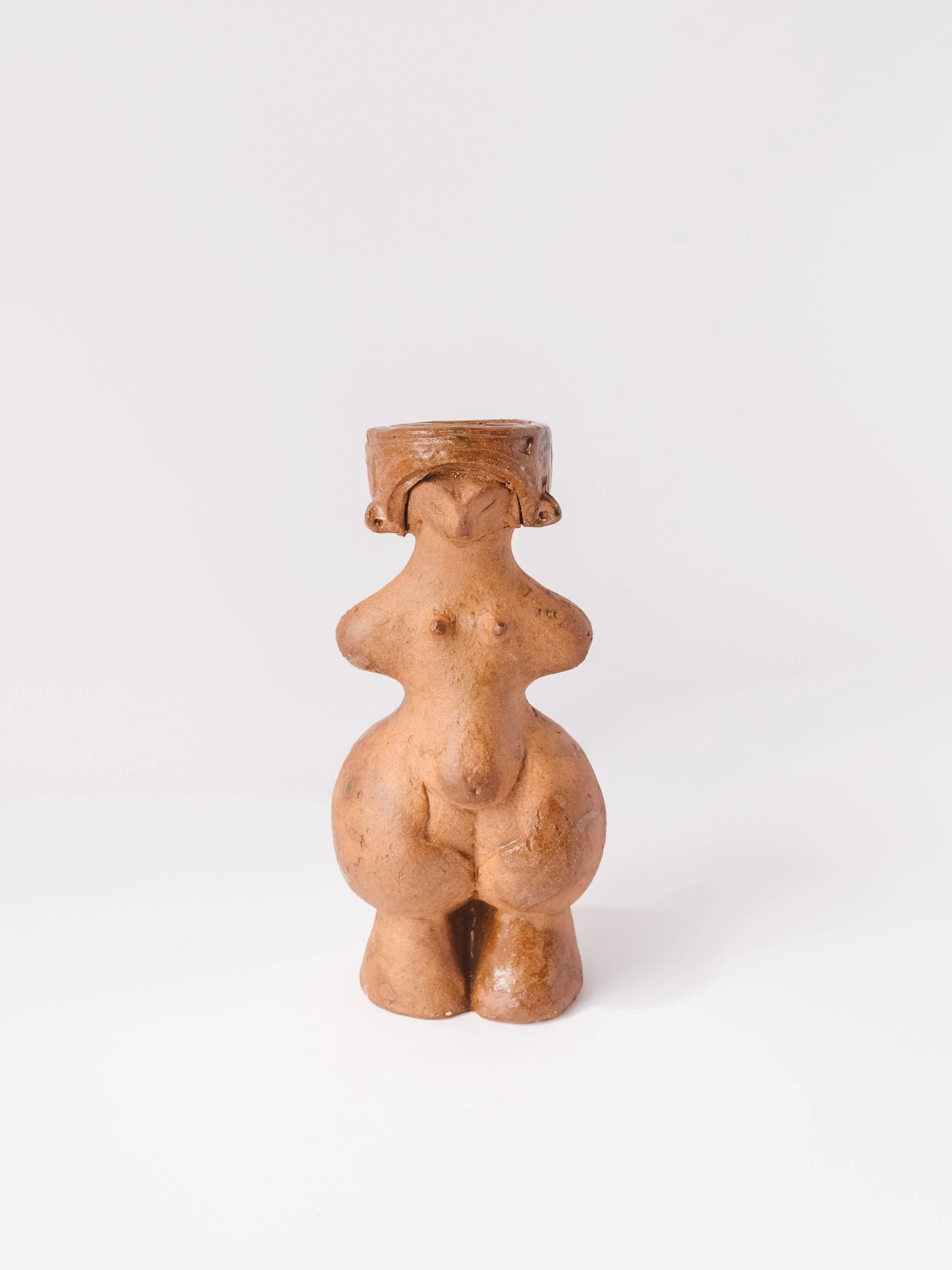 Image 1 of 16
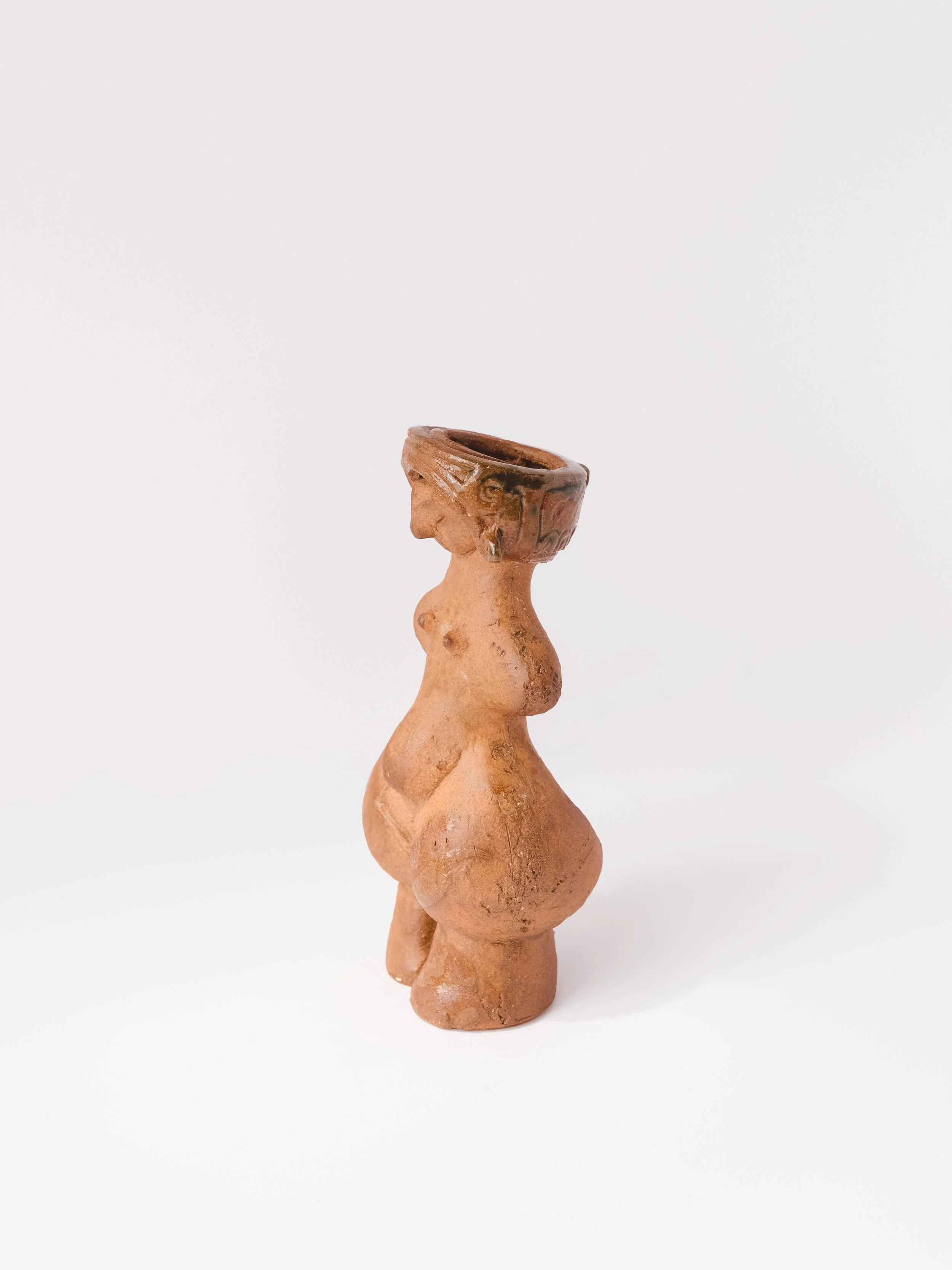 Image 2 of 16
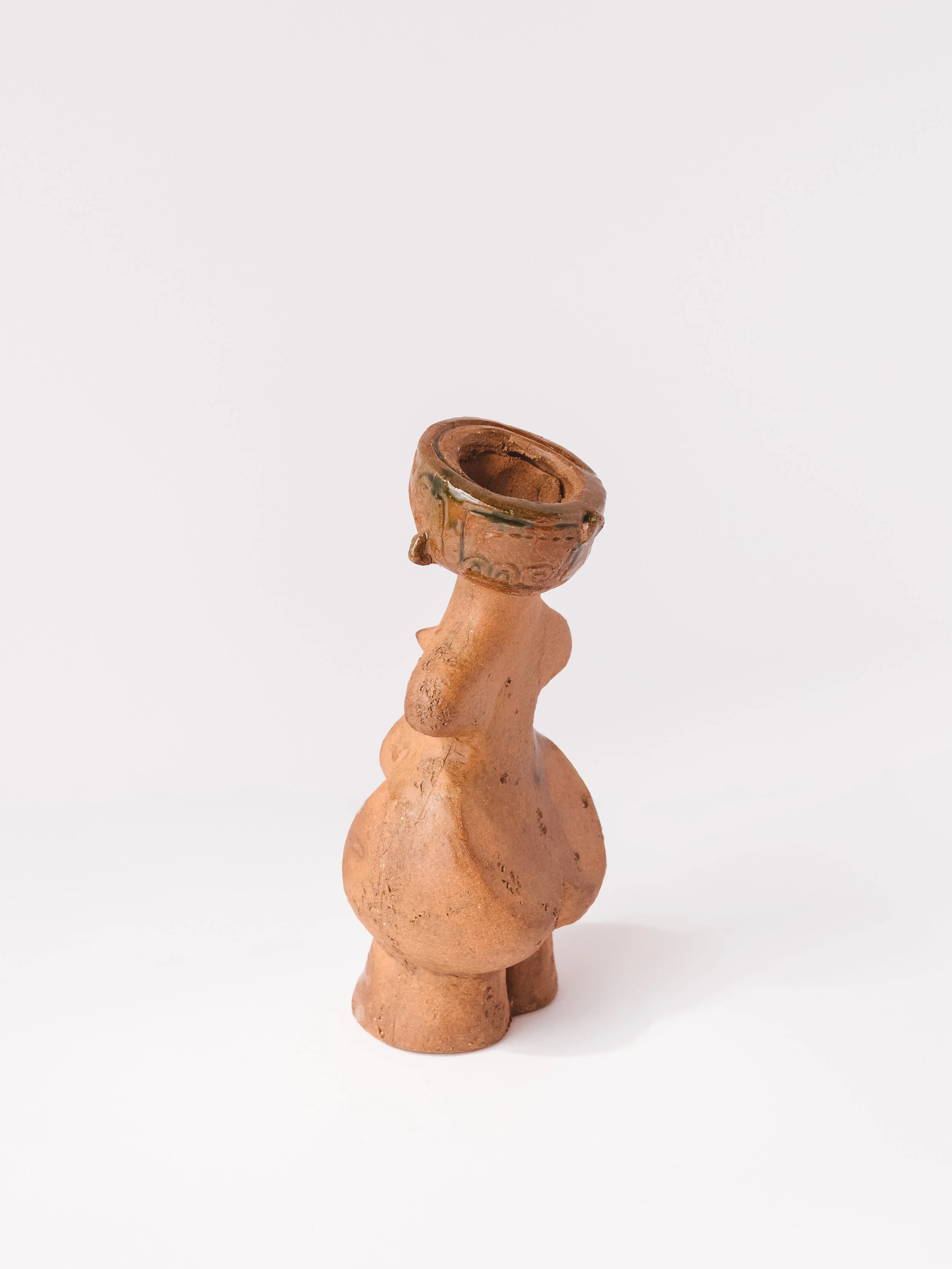 Image 3 of 16
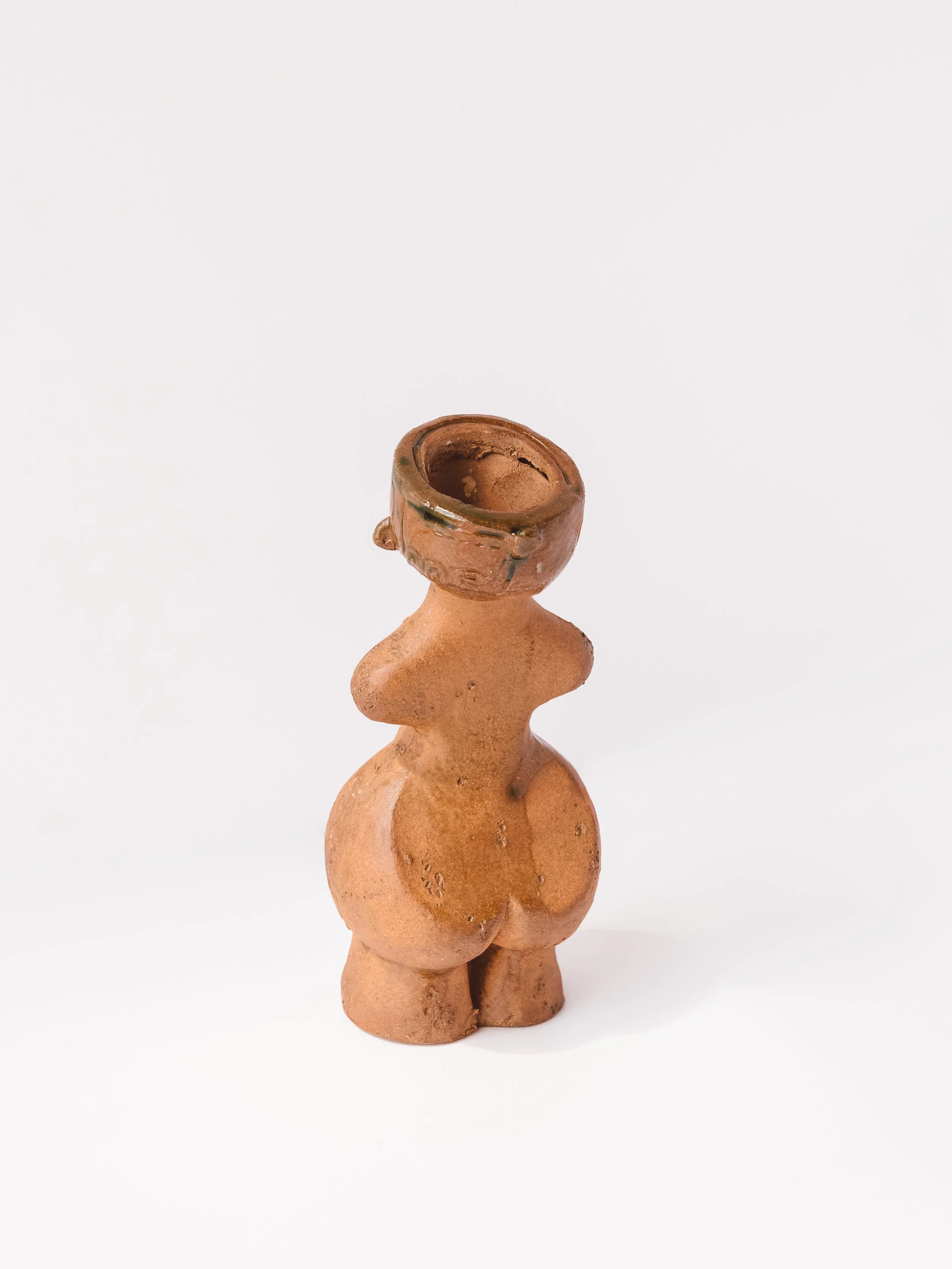 Image 4 of 16
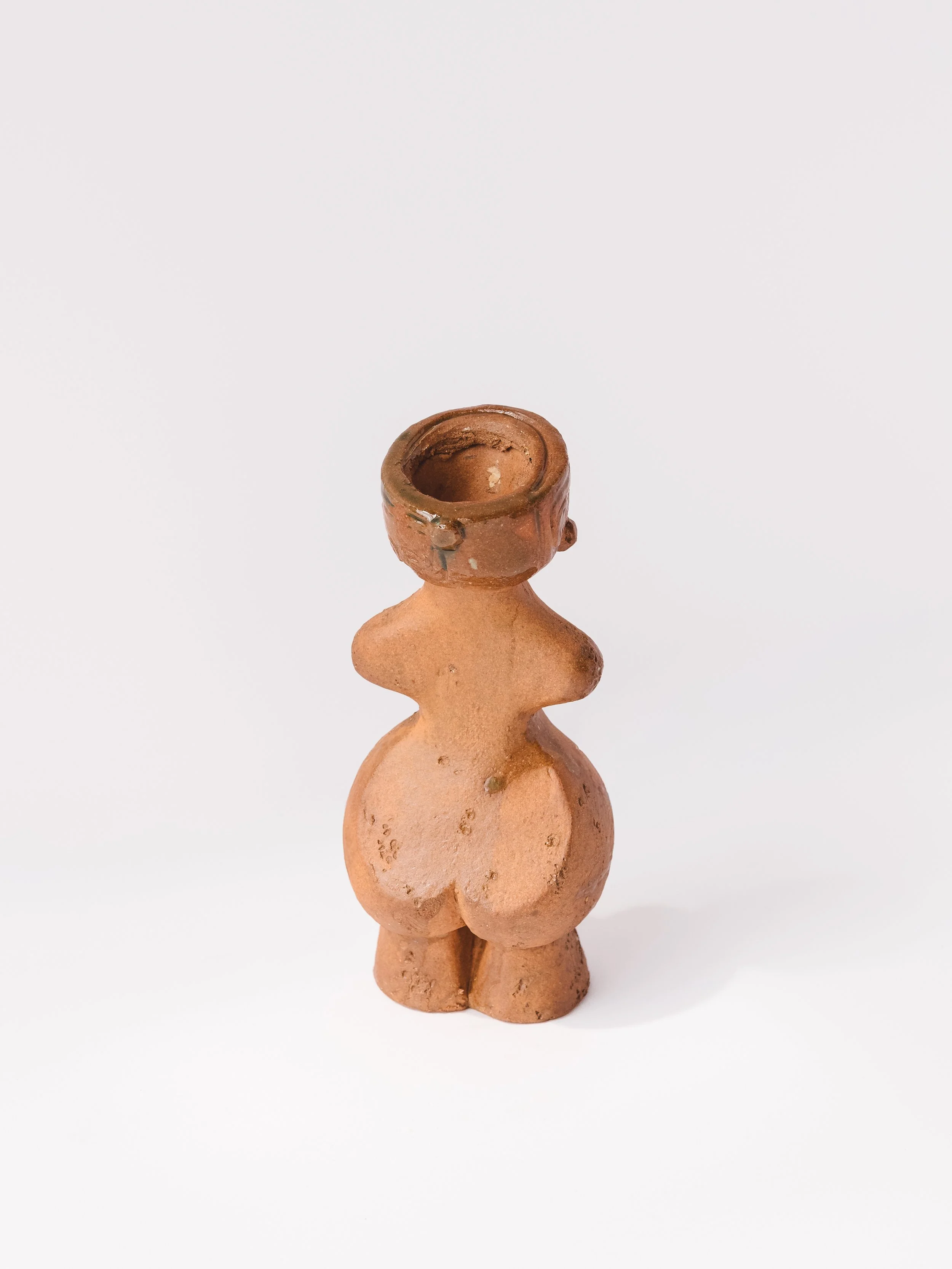 Image 5 of 16
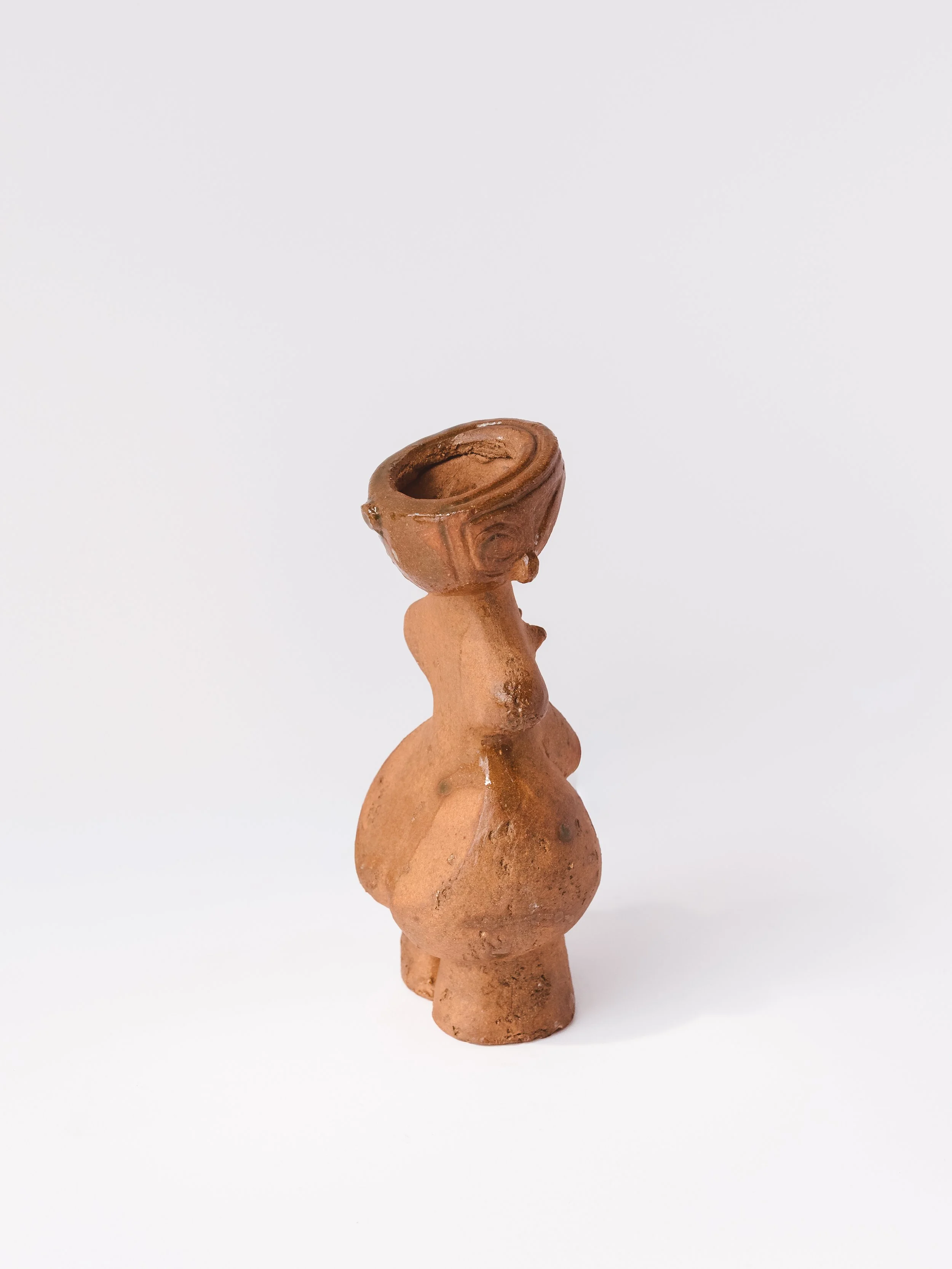 Image 6 of 16
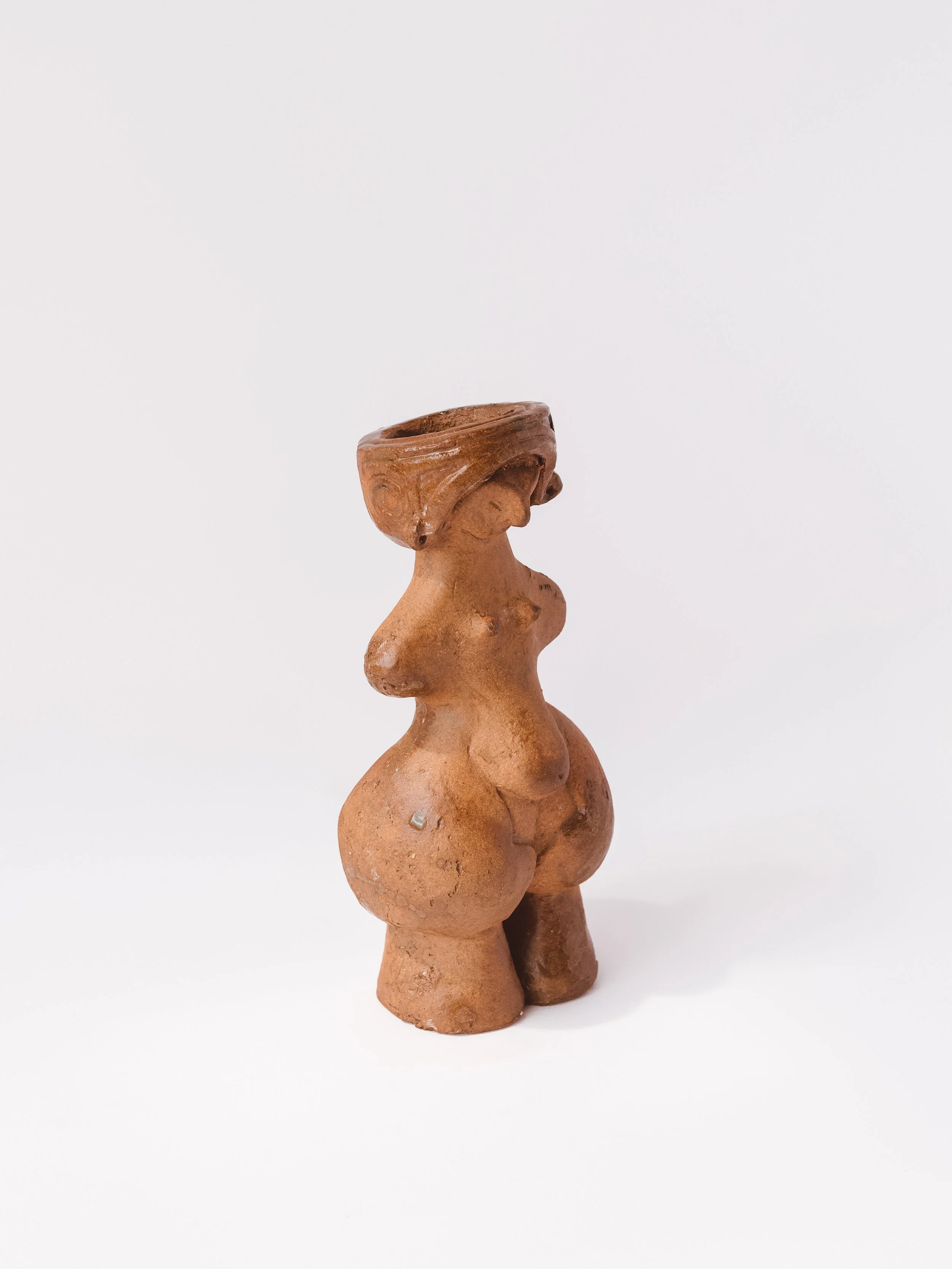 Image 7 of 16
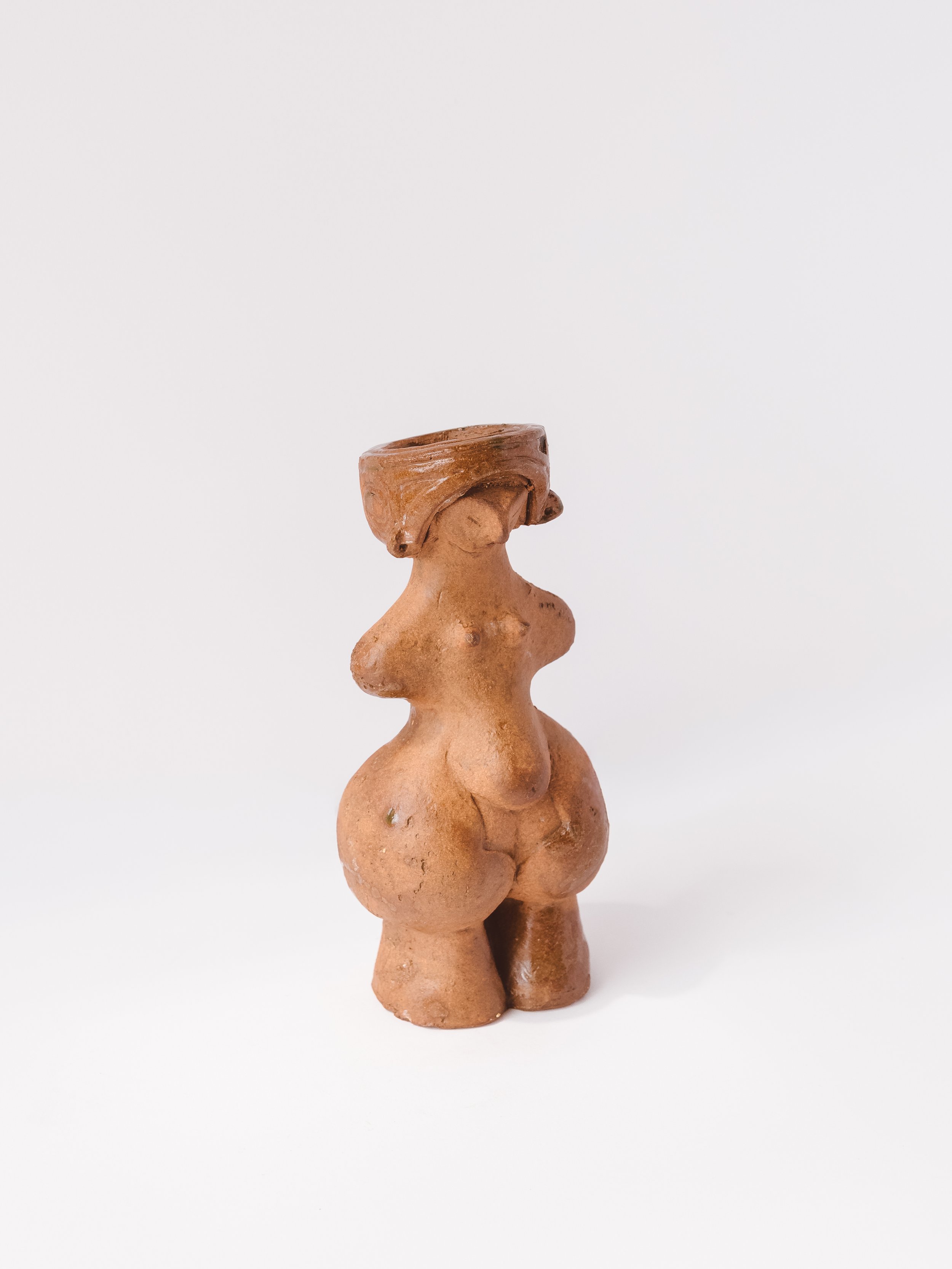 Image 8 of 16
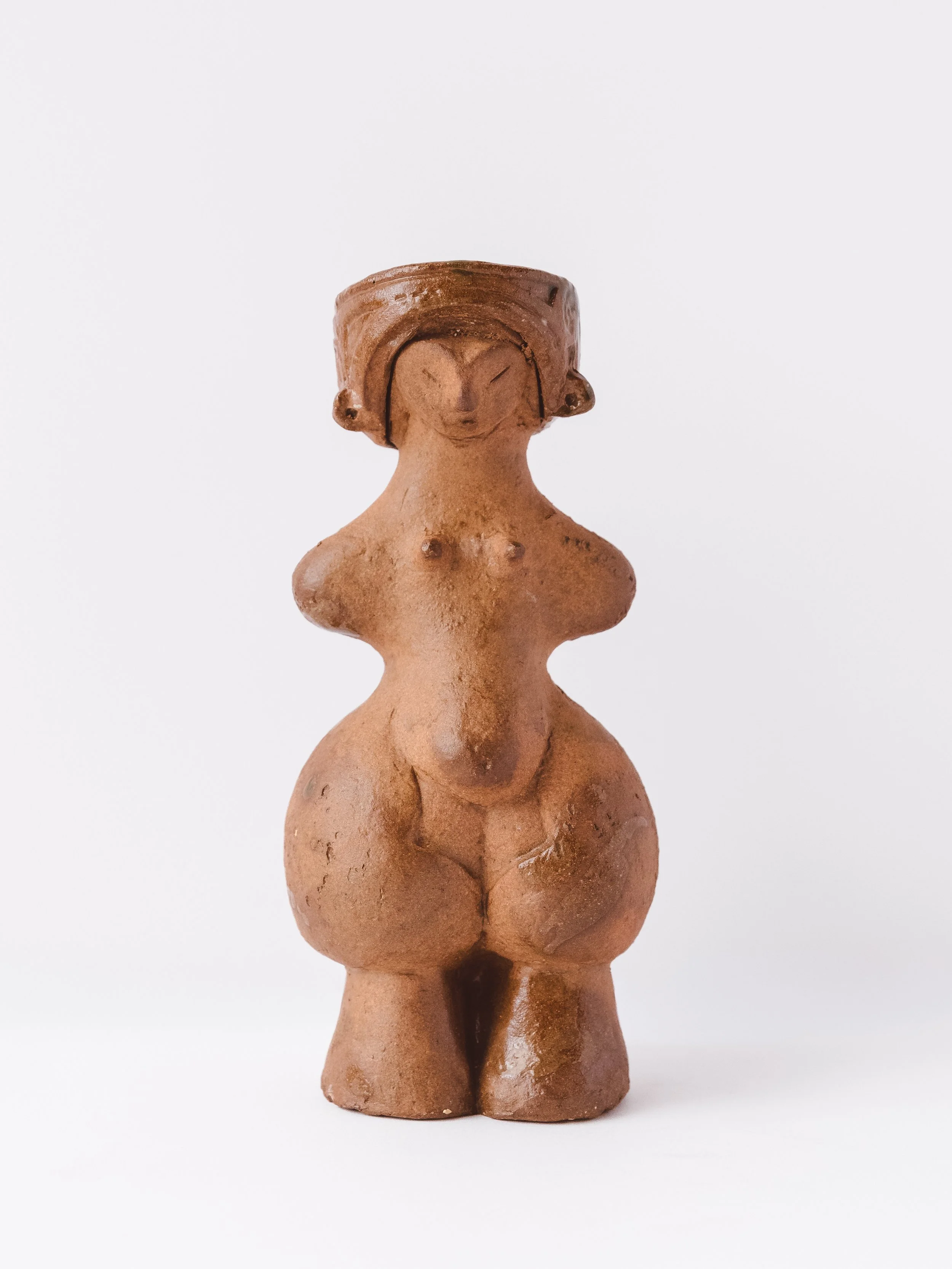 Image 9 of 16
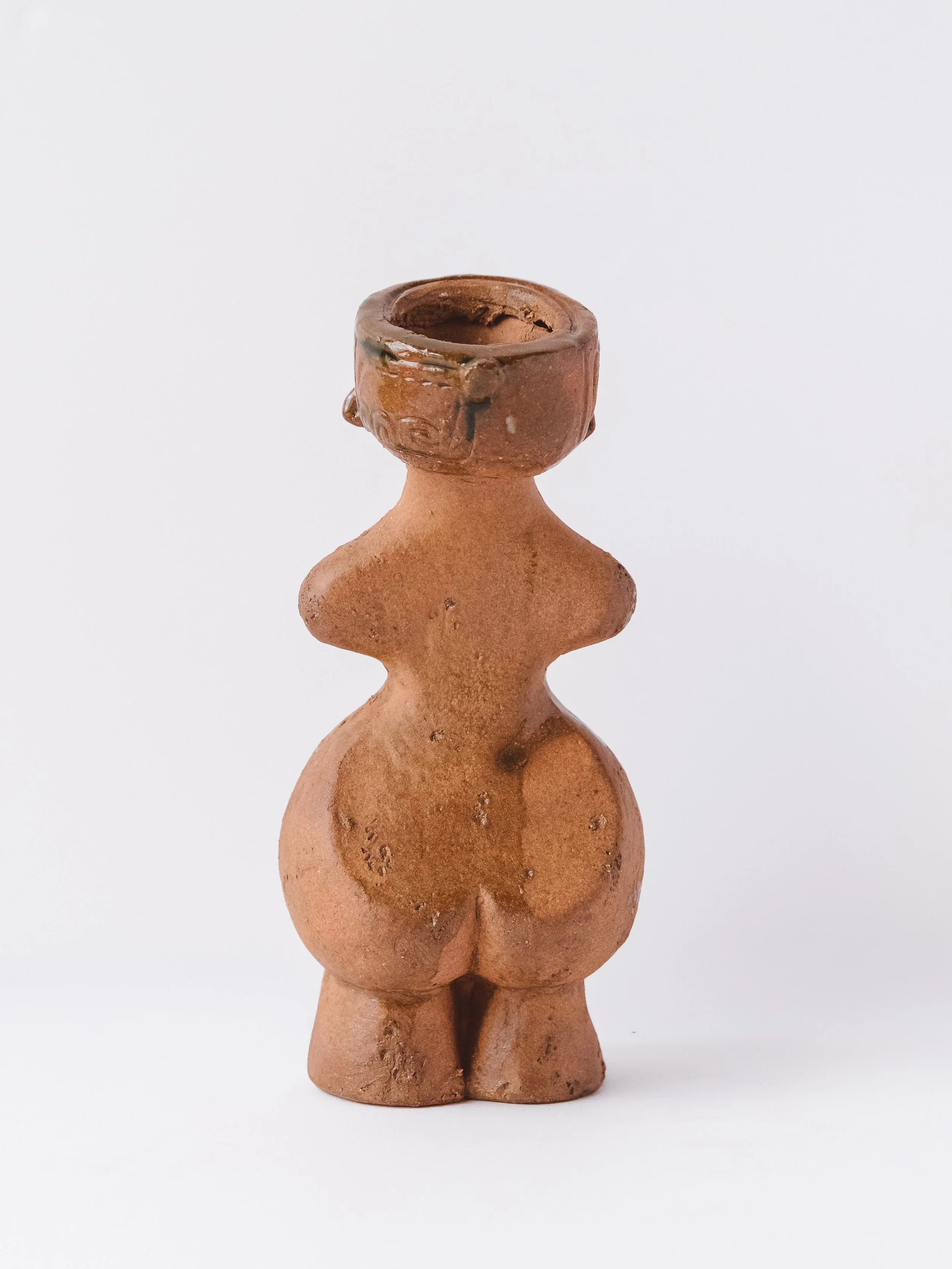 Image 10 of 16
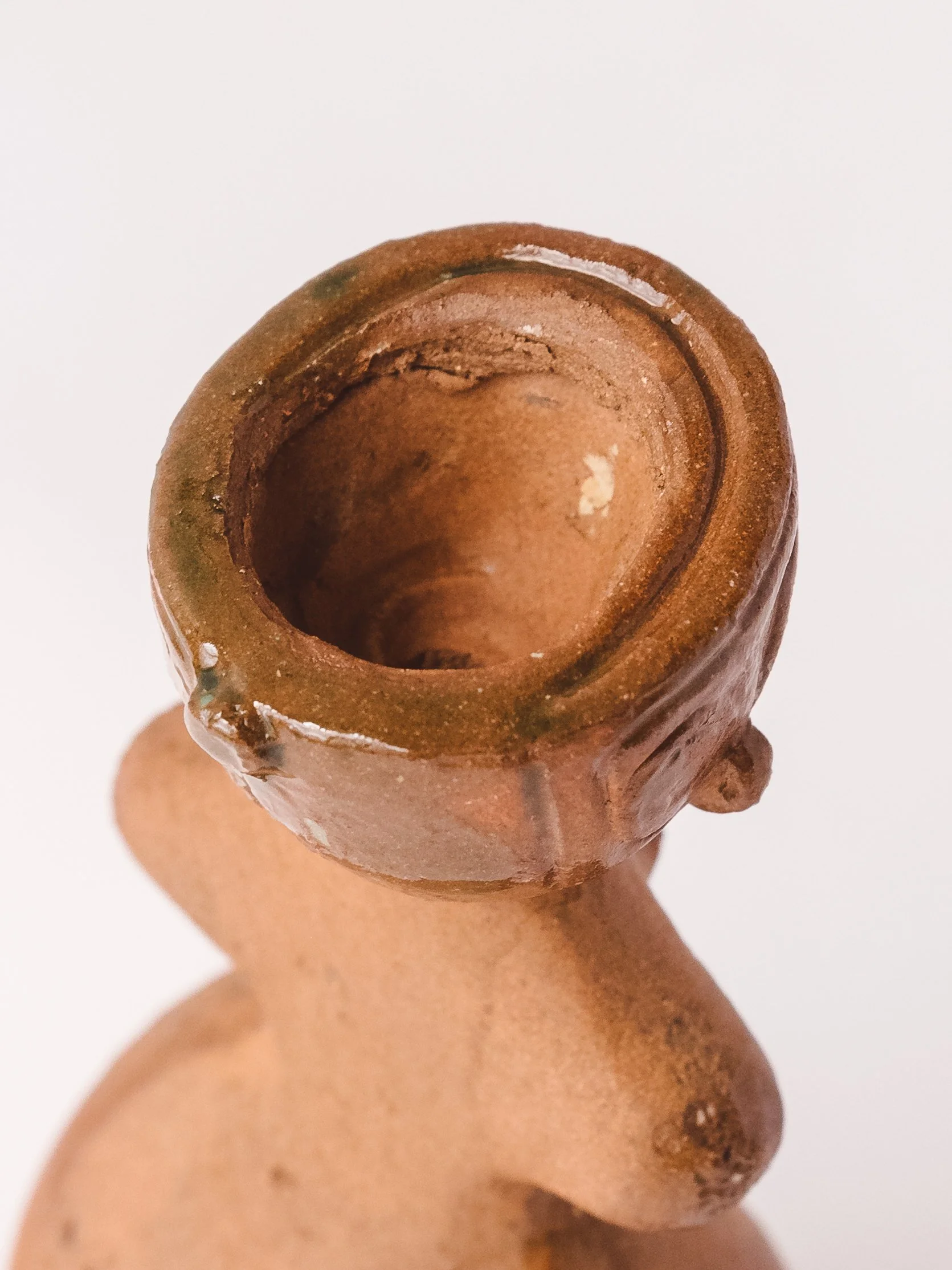 Image 11 of 16
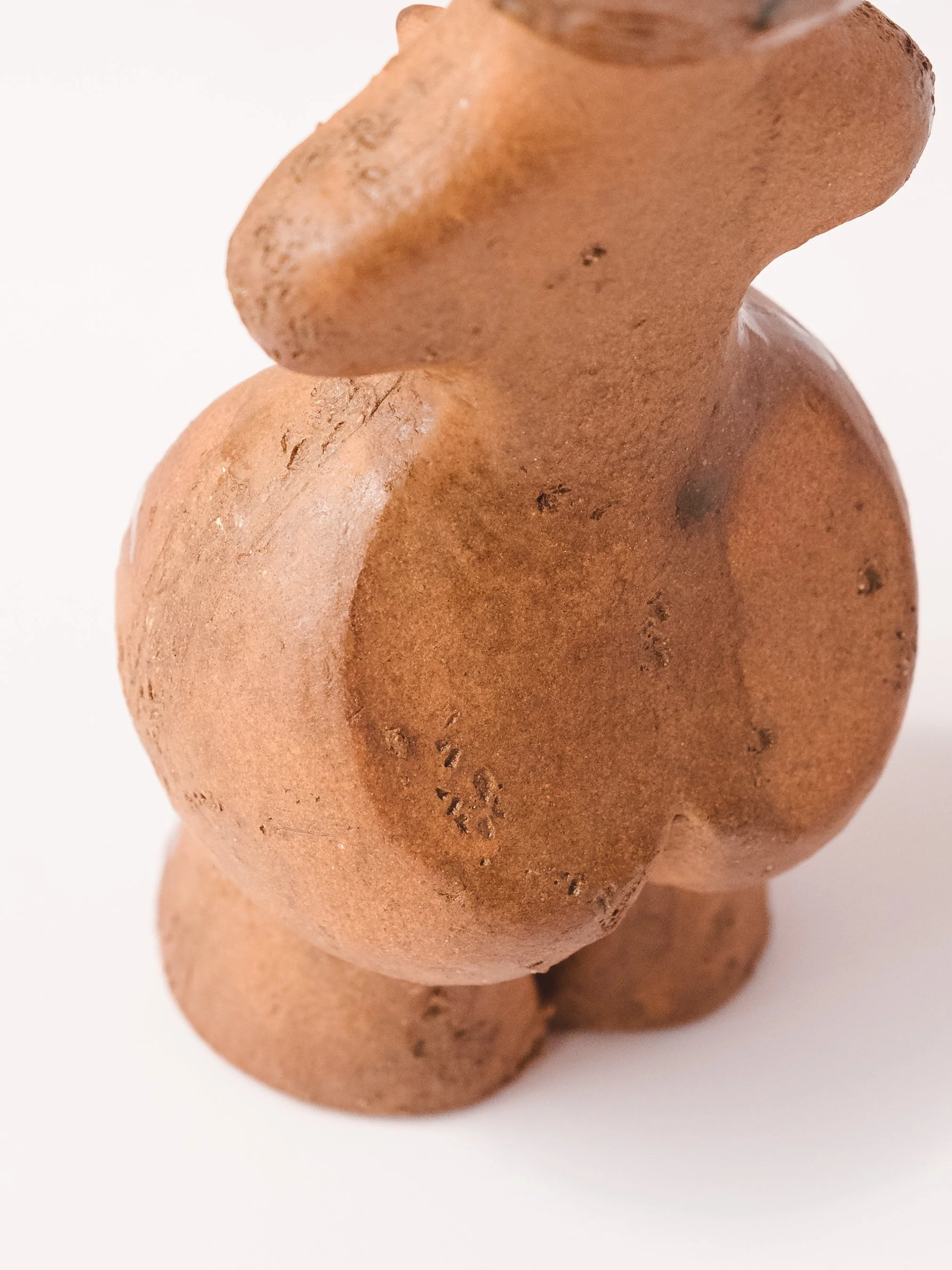 Image 12 of 16
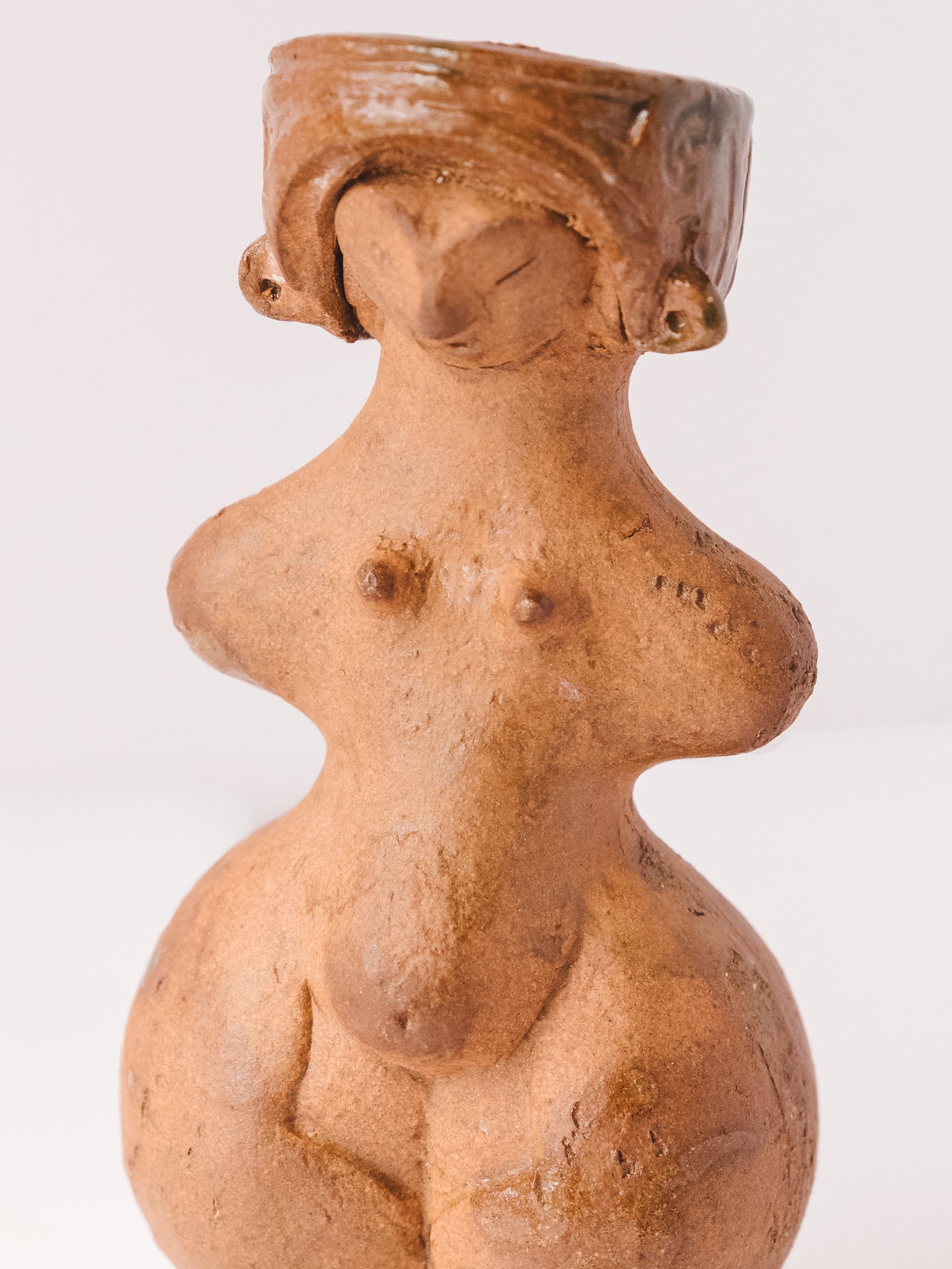 Image 13 of 16
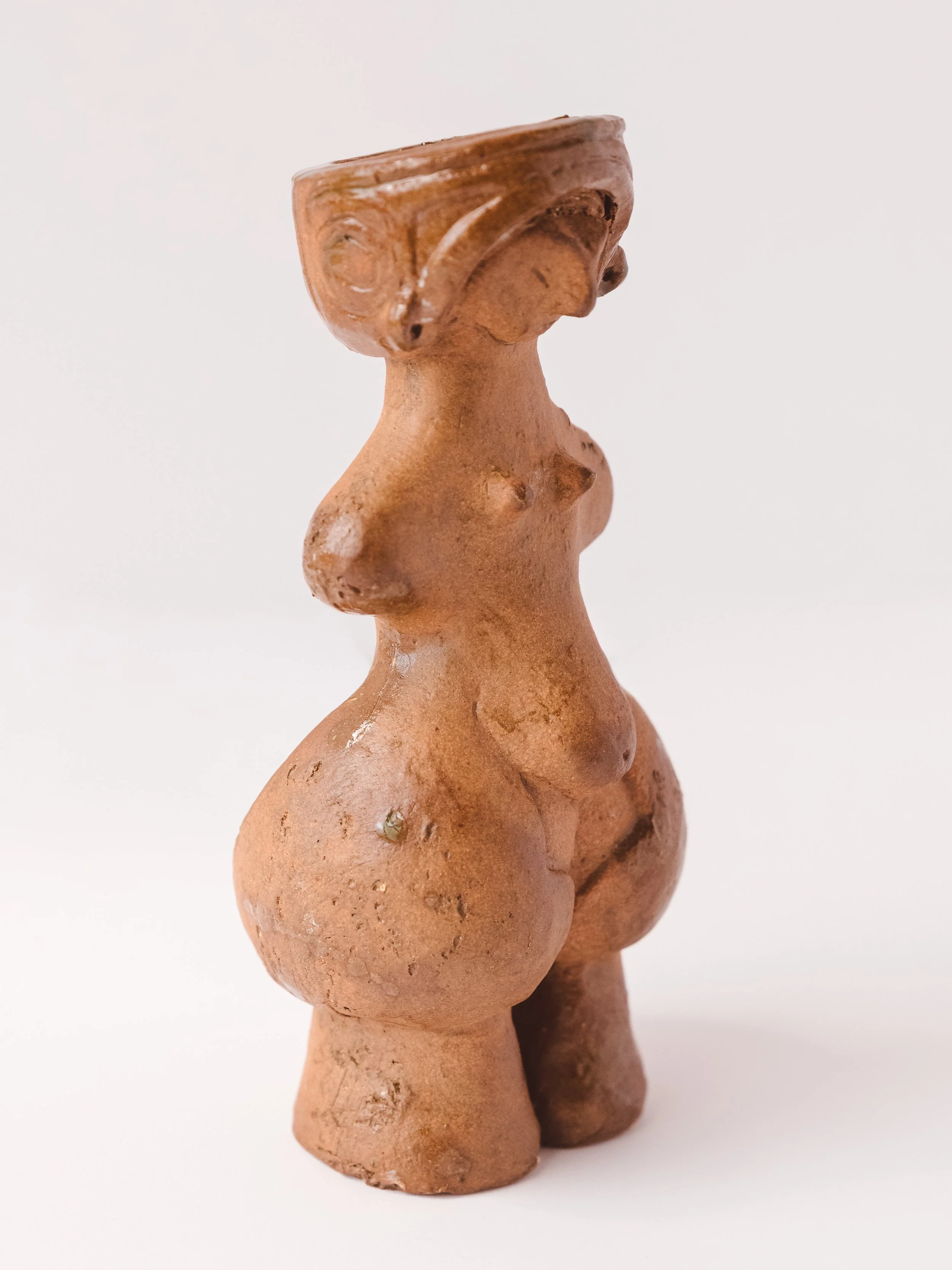 Image 14 of 16
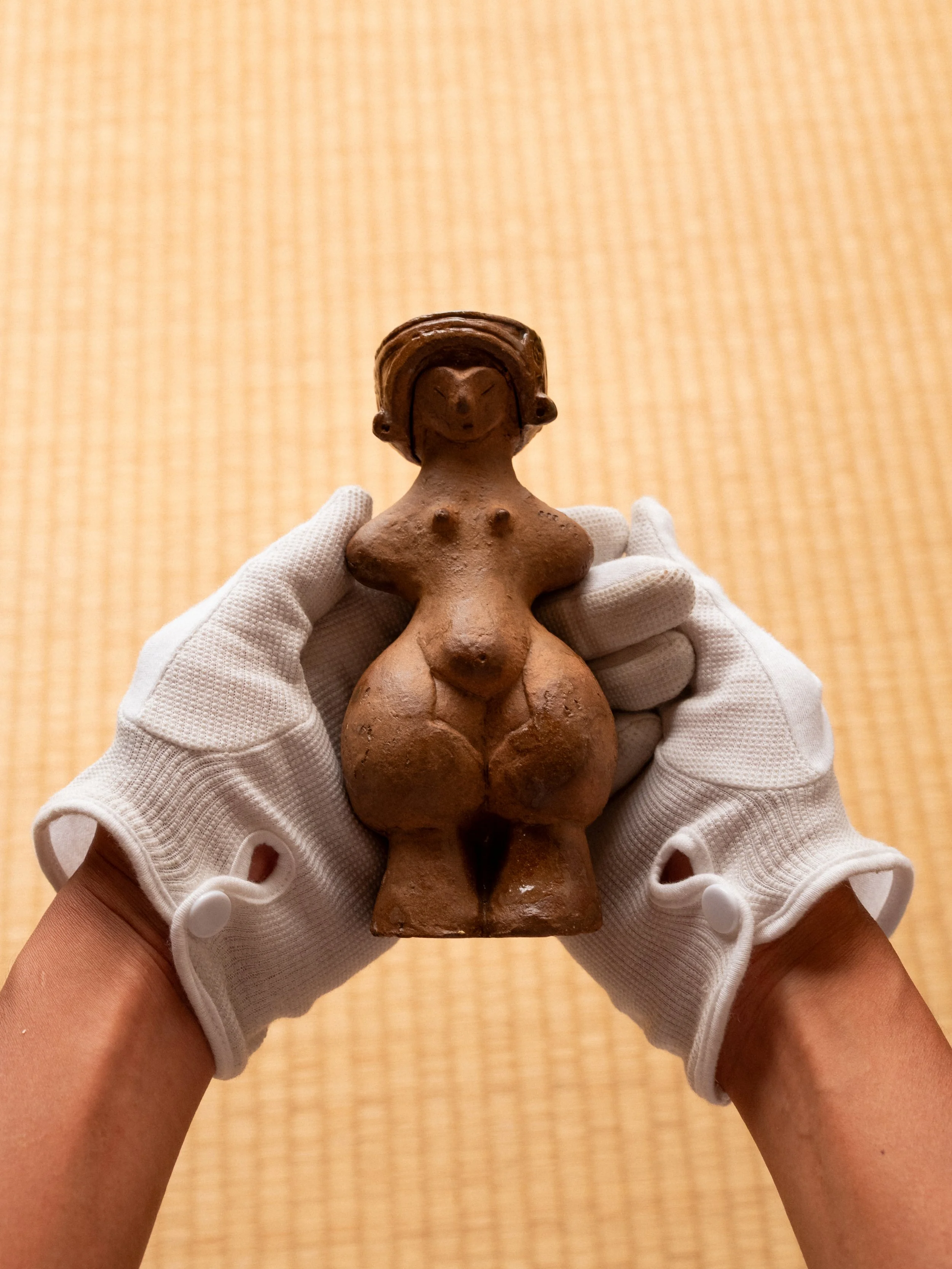 Image 15 of 16
 Image 16 of 16