【 The Concept 】
Three tiny cast-iron figures, each about four centimetres tall, modelled on three of the most famous types of dogū, the clay figures of Japan’s prehistoric Jomon period. On the left stands a flat, cross-shaped figure with a wide head, almond eyes and a round, open mouth, as if calling out; small round breasts and a navel mark its body. In the centre is the goggle-eyed figure, with a crown of knobs on its head, two enormous slit eyes and a body covered in curling scrolls. On the right sits the praying figure, knees drawn up, hands pressed together before its chest, its round mouth open in what might be a chant or a song. Cast in iron with a soft, silvery-dark sheen and a fine sand-cast texture, they are small enough to sit together in the palm of one hand, yet each keeps the character of its ancient original, front and back.
【 The Flat Figure: Sannai-Maruyama 】
The flat, slab-shaped dogū is made from a thin sheet of clay, with head, arms and body spread out like a cross. At the great Sannai-Maruyama site in Aomori, a settlement occupied for well over a thousand years in the Early and Middle Jomon period, some 2,000 clay figures have been found, the largest number from any site in Japan. Among them is the largest of all slab-shaped figures, 32 centimetres long, now an Important Cultural Property. Its wide-open mouth, echoed in this little figure, has fascinated visitors ever since.
【 The Goggle-Eyed Figure 】
The goggle-eyed dogū belongs to the Final Jomon period and to the Kamegaoka culture of northern Japan. Its name, shakōki dogū, comes from its huge slit eyes, which reminded early scholars of the snow goggles worn by the Inuit of the Arctic. The figure first became famous through the example found at the Kamegaoka site in Tsugaru, Aomori, and today a giant goggle-eyed dogū, affectionately called “Shako-chan,” covers the front of the local railway station. When a train arrives, its eyes light up in seven colours.
【 The Praying Figure: A National Treasure 】
The praying dogū, the Gasshō Dogū, was found in July 1989 at the Kazahari I site in Hachinohe, Aomori. About 3,500 years old, from the late Jomon period, it was discovered complete, as if it had been set down in a corner of a house. Where it had once broken, the cracks still show traces of repair with natural asphalt, used by the Jomon people as glue. Someone had cared enough to mend it. In 2009 it was designated a National Treasure of Japan, and it is now displayed at the Korekawa Jomon Museum in Hachinohe.
【 Nambu Iron in the Kitchen 】
These little figures are cast in iron in the tradition of Nambu ironware from Iwate Prefecture, best known for its heavy iron kettles. Small iron figures of this kind are made not only to be displayed but to be used: placed in a kettle when boiling water, they are said to help add a little iron to it, and in the Japanese kitchen a piece of iron is a traditional helper for keeping the deep purple of pickled eggplant and the glossy black of simmered black beans. So these ancient figures can spend their days on a shelf, or go to work in the kitchen.
【 What Owning This Piece Brings 】
・ Three icons of the Jomon world. The flat figure, the goggle-eyed figure and the praying figure, together in one small set.
・ A charming display. Lined up on a desk, a windowsill or a bookshelf, they are full of personality.
・ A useful companion. Cast iron that can also be used in the traditional way in a kettle or pot.
・ Something to share. A set of three can be kept together or given one each to family or friends.
A delightful gift for a lover of archaeology, Japanese culture or cooking, or for anyone who enjoys small things with big stories.
【 Where to Place It 】
On a desk, a windowsill, a bookshelf or a kitchen shelf. They stand firmly on their own and also make charming paperweights for small notes.
【 Care 】
These are cast iron. Keep them dry. If you use them in water, take them out after boiling with tongs or a spoon (they will be hot), dry them completely and store them dry to prevent rust. Do not put them in a microwave or dishwasher. We recommend washing them in hot water before first use in the kitchen. A little rust is natural to iron and can be rubbed off with a soft brush.
【 Reading the Object 】
A set of three miniature cast-iron figures. 1) Slab-shaped dogū: flat, cross-shaped body with short arms; wide head with dotted edge; almond eyes, small nose, round open mouth; two round breasts and a navel; rows of dotted lines and a fringed lower edge; on the back, a patterned head with two short tails and a line down the spine. 2) Goggle-eyed dogū: crown of knobs on the head; large oval eyes with horizontal slits and dotted borders; scroll patterns on the body and back; short flared base. 3) Praying dogū: seated with knees raised, hands joined before the chest; oval eyes, open round mouth and incised patterns on the face and legs; a topknot on the head; on the back, a smooth curved back and folded legs. Silvery-dark iron with a soft sheen and fine cast texture. Each stands on its own.
【 Presence 】
Small, sturdy and full of character. Three voices from the Jomon world, together again.
Archive Note: The number in the name (2009) marks the year the Gasshō Dogū, the praying figure of Hachinohe, was designated a National Treasure of Japan. NOT the date this piece was made.
Provenance Note: Sourced in Japan. A set of three miniature cast-iron figures modelled on Jomon dogū, in the Nambu ironware tradition of Iwate. Modern reproductions, not archaeological originals.


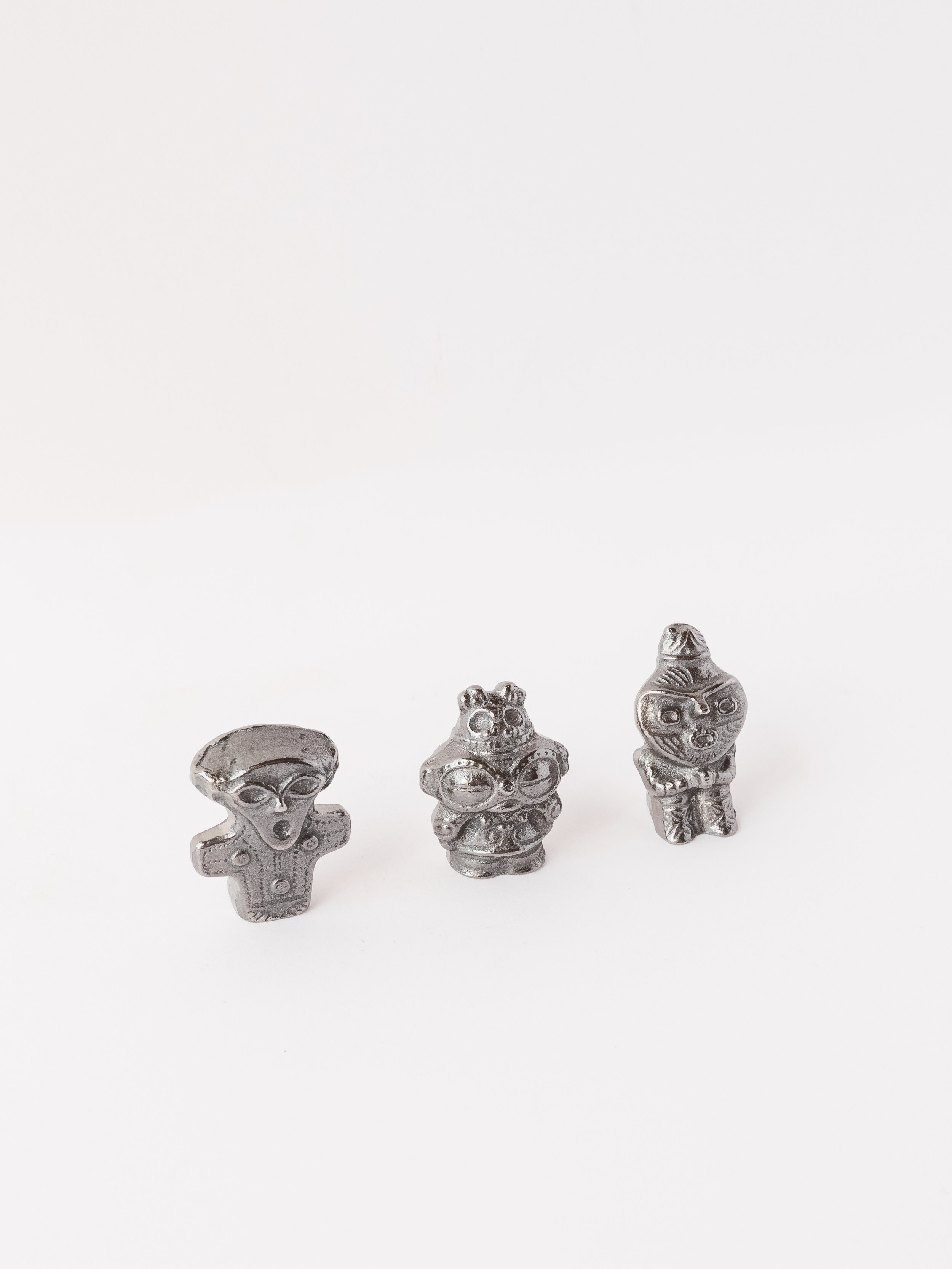 Image 1 of 8
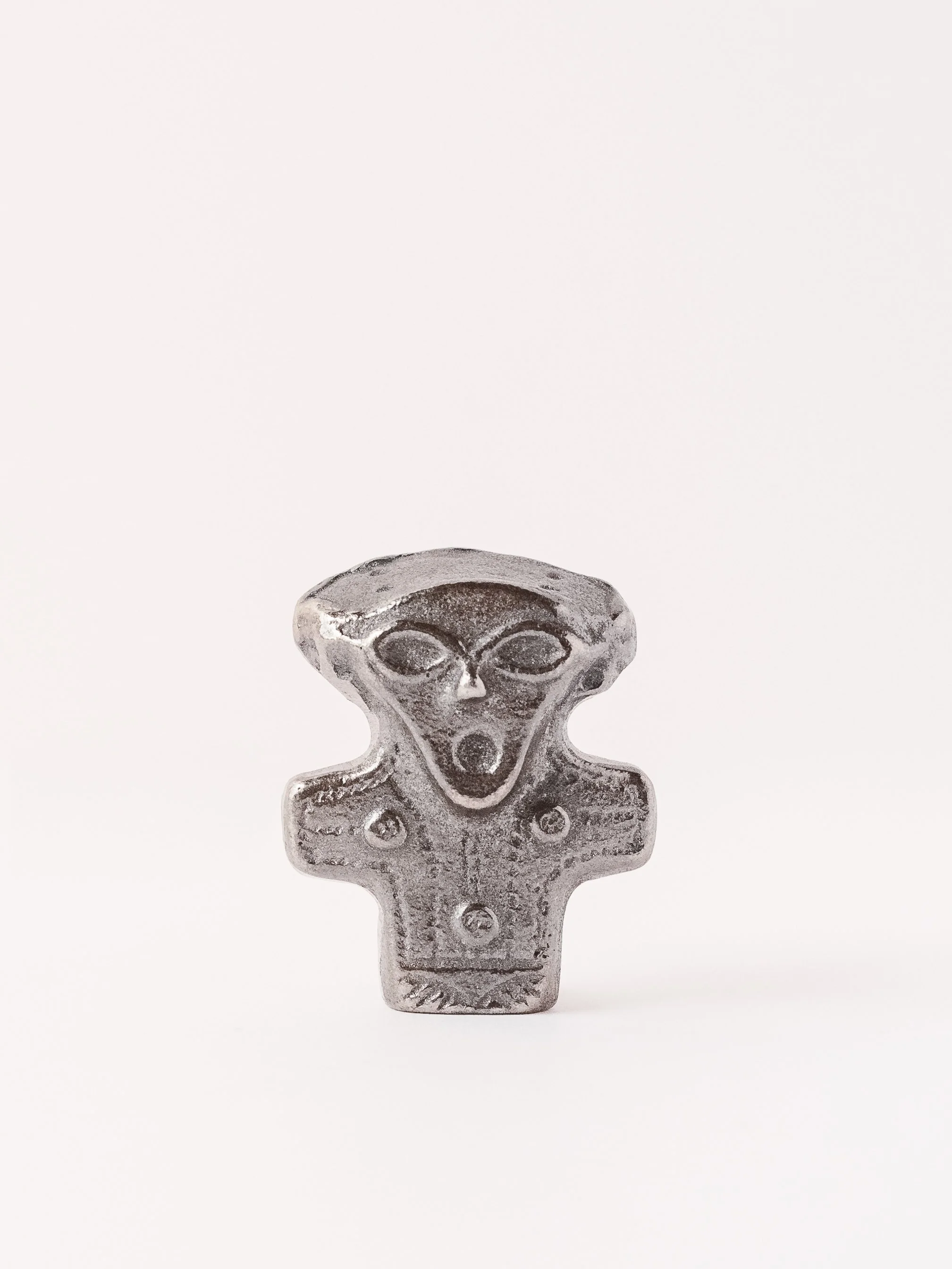 Image 2 of 8
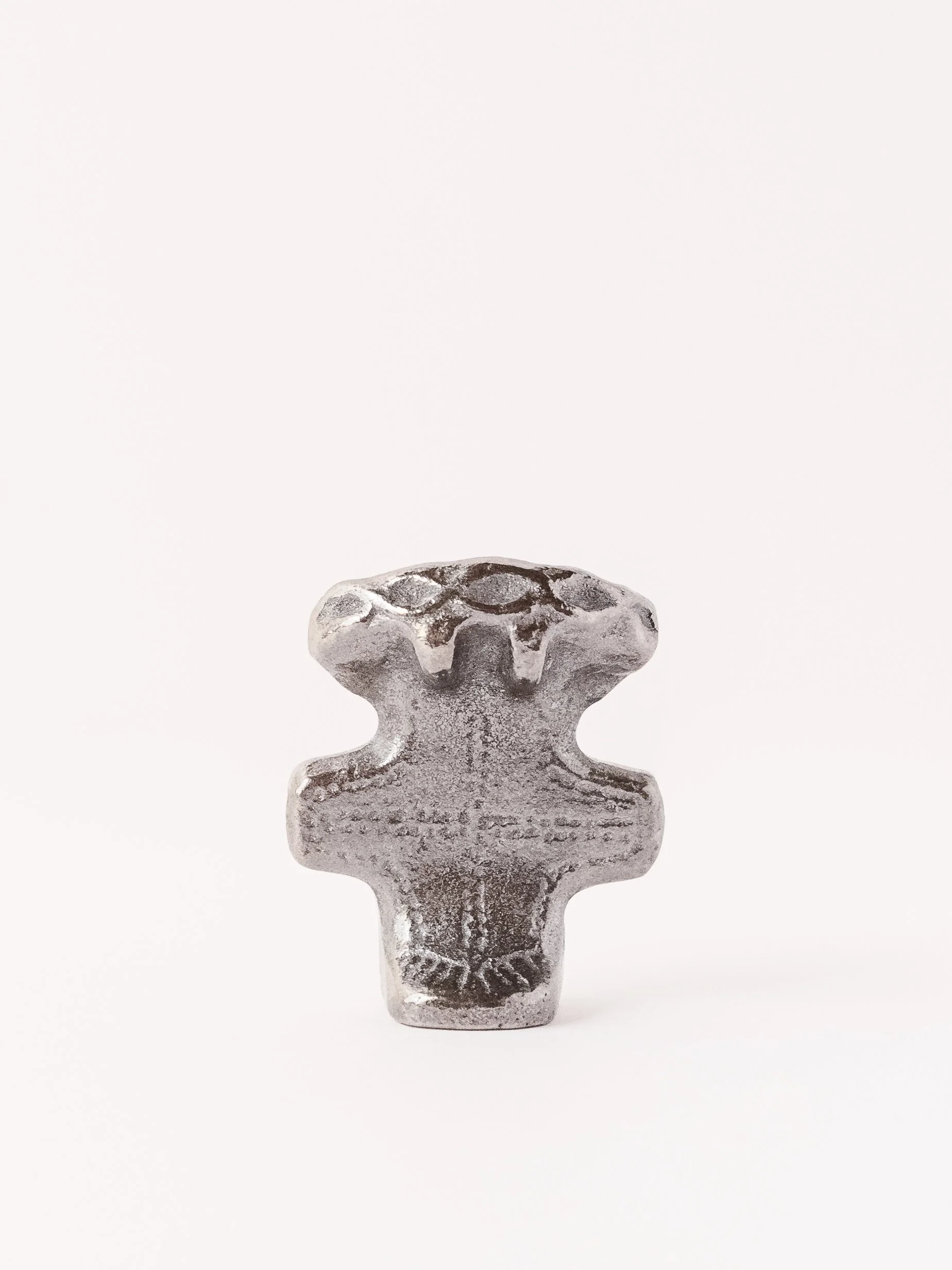 Image 3 of 8
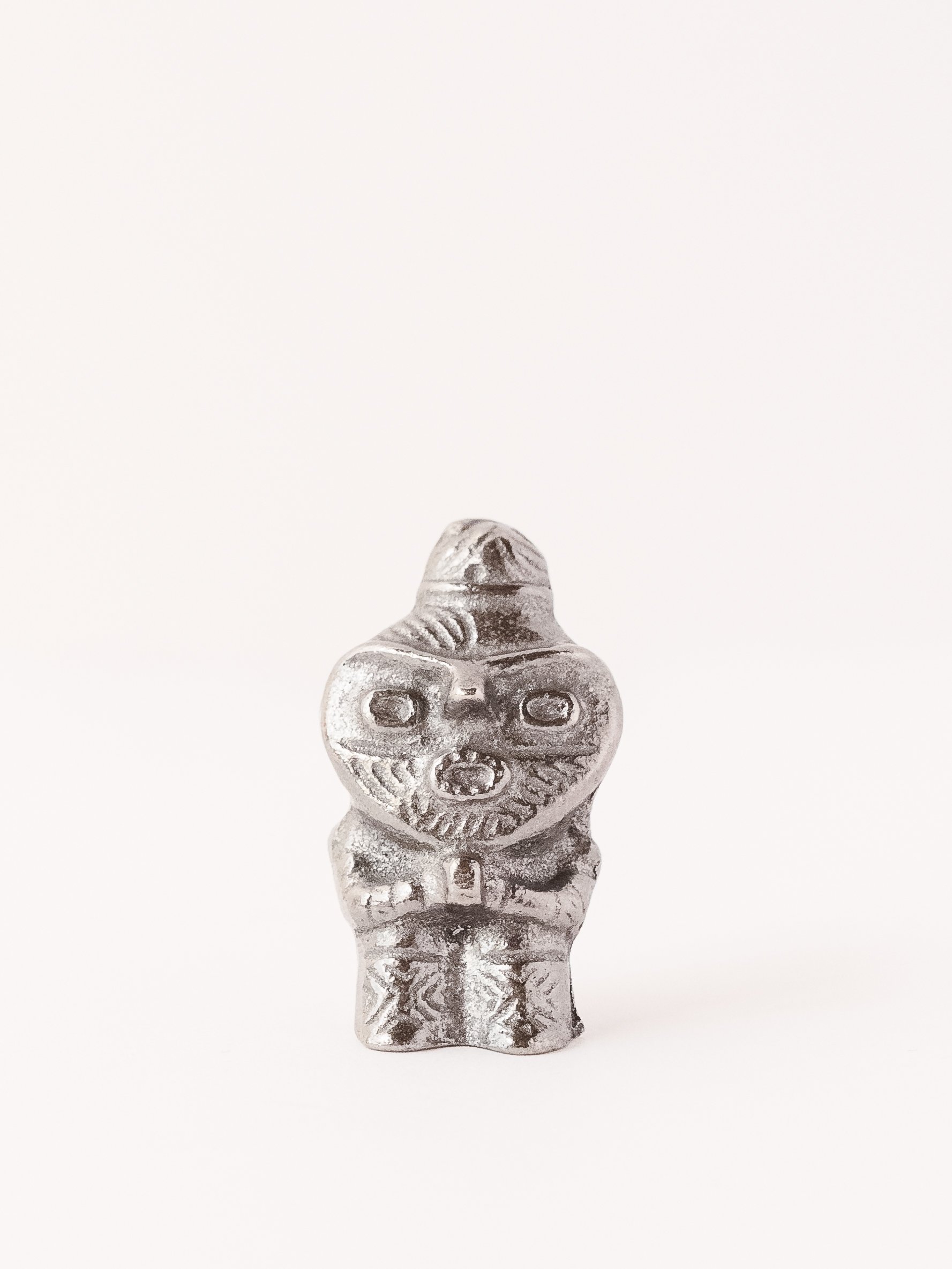 Image 4 of 8
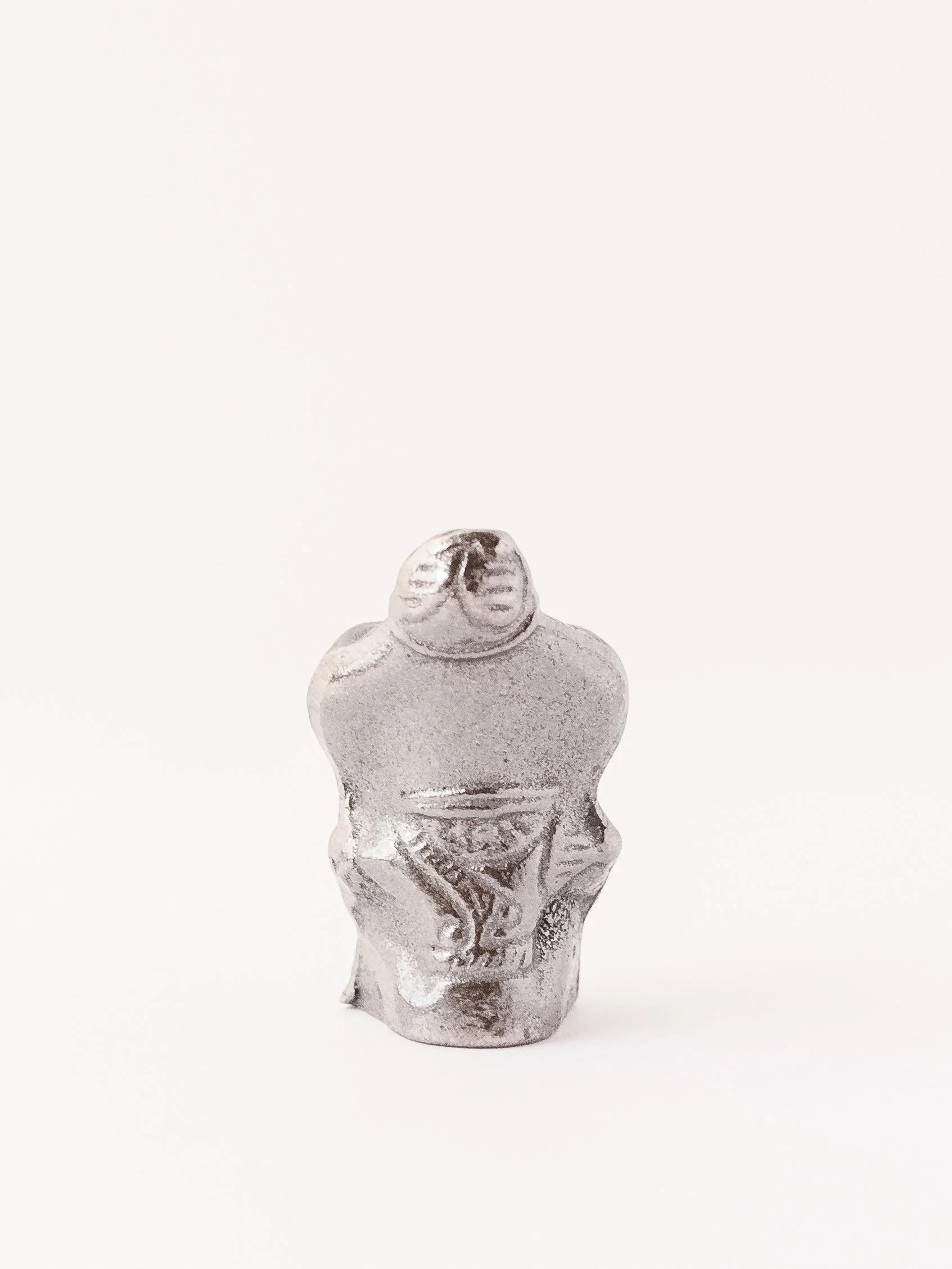 Image 5 of 8
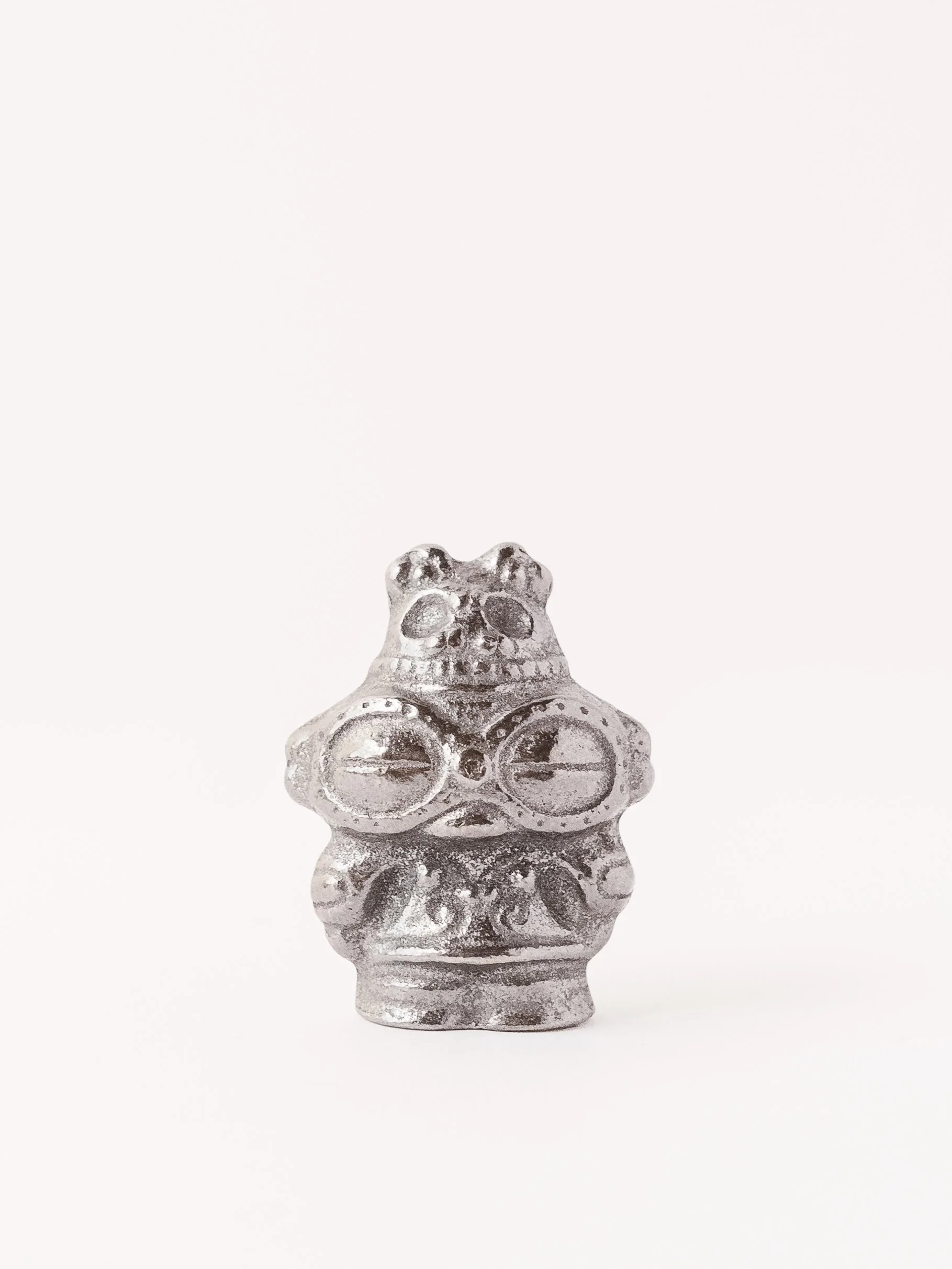 Image 6 of 8
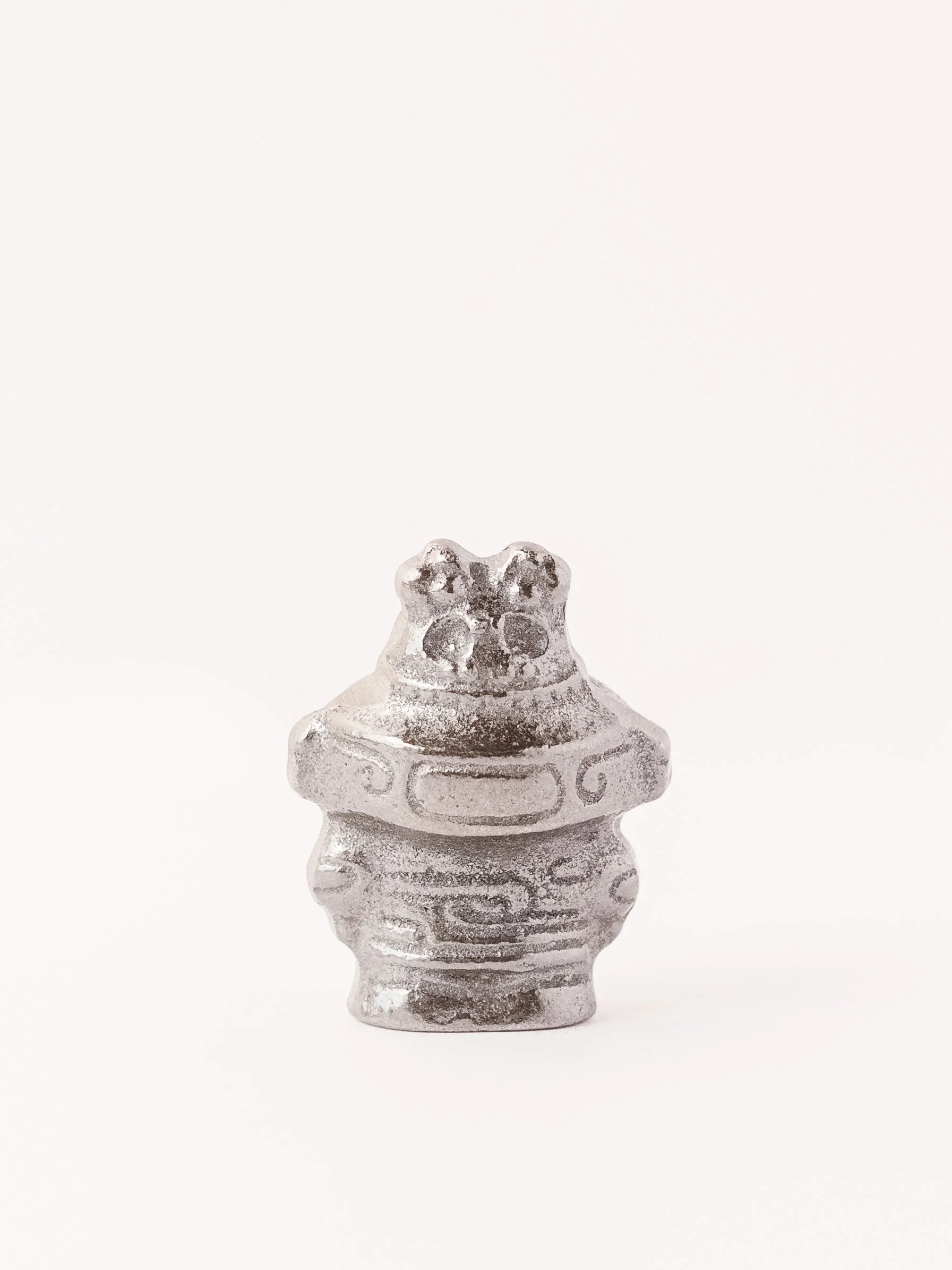 Image 7 of 8
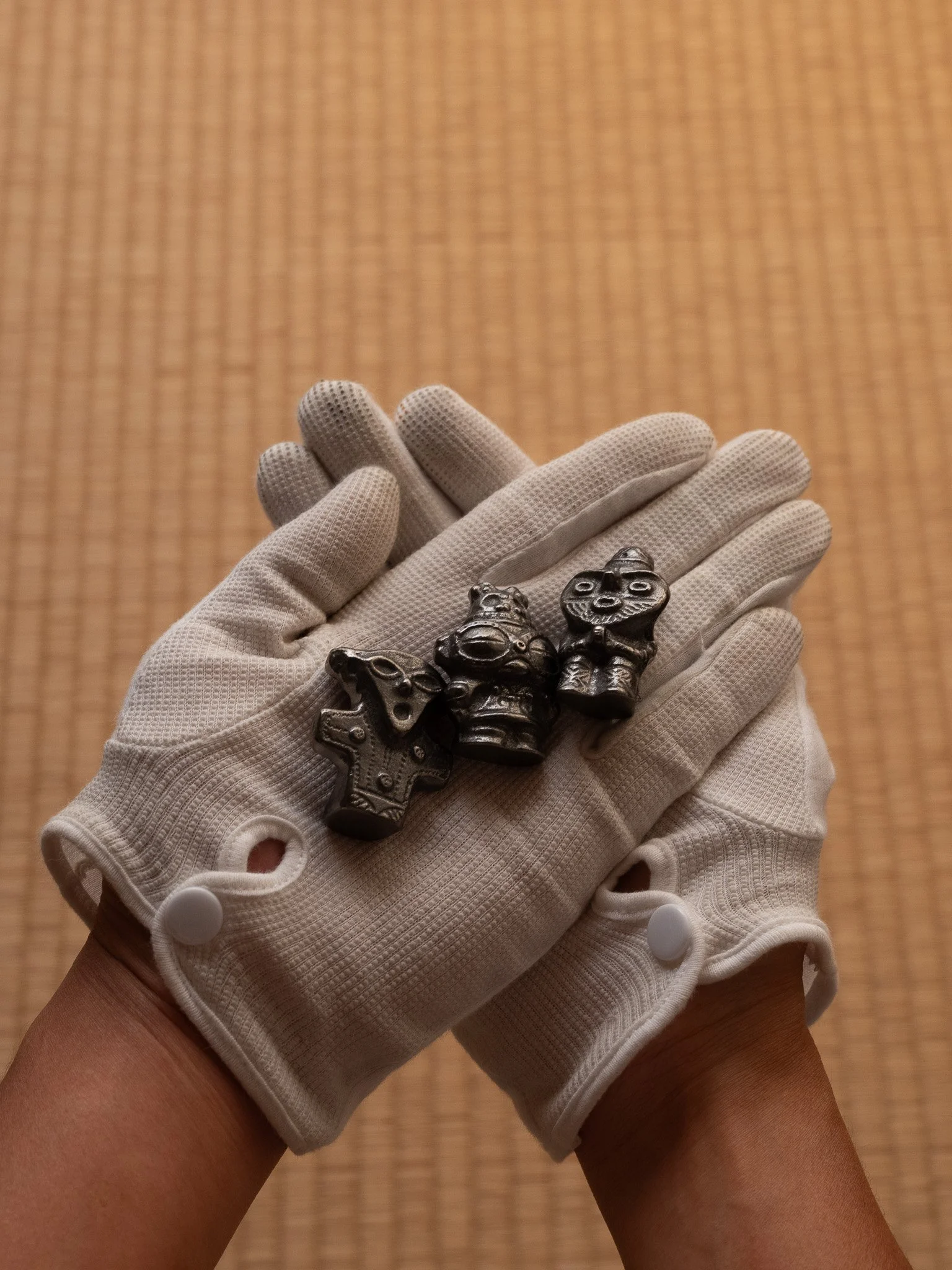 Image 8 of 8