HANAGASA 1963

$240.00

【 The Concept 】

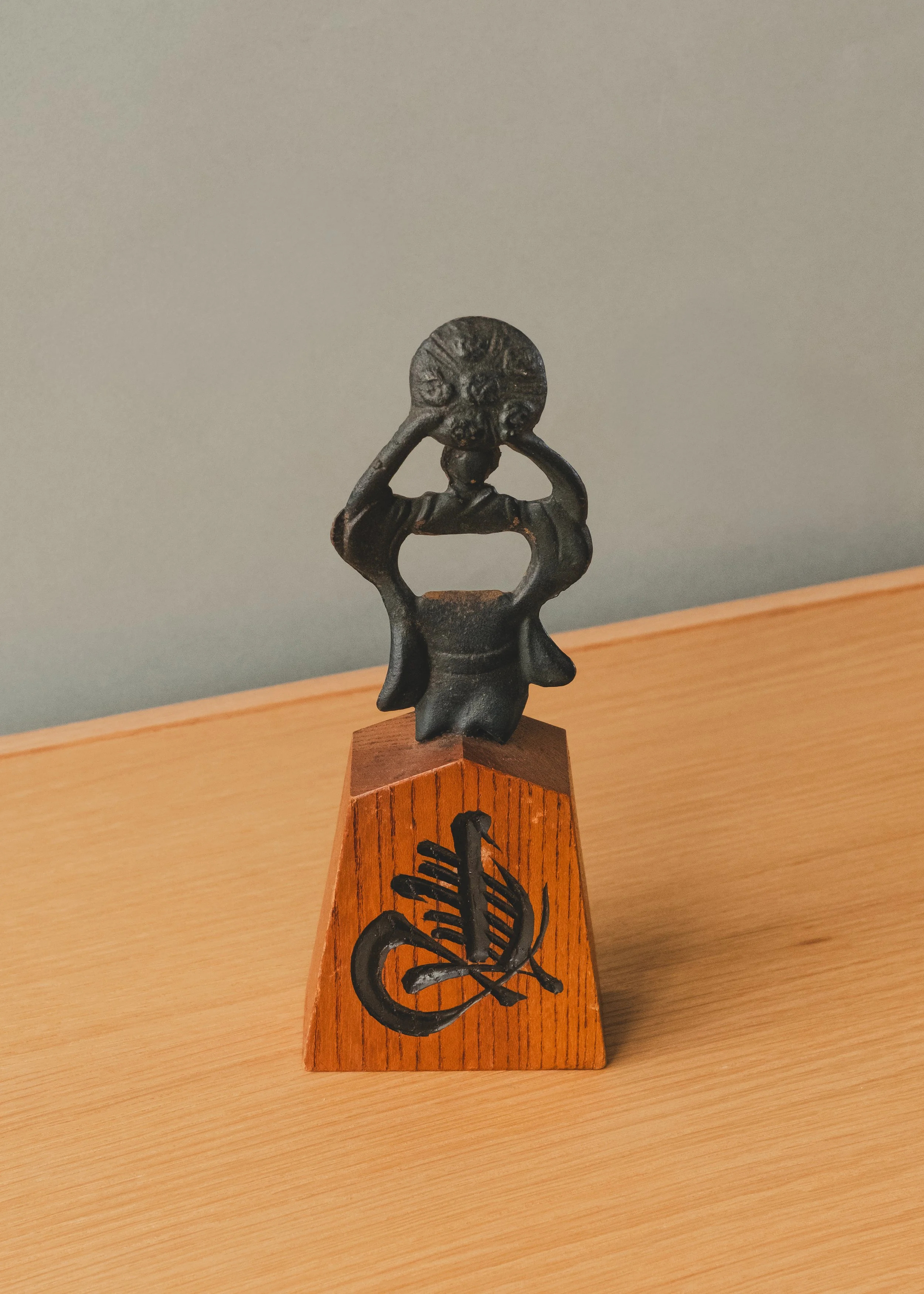
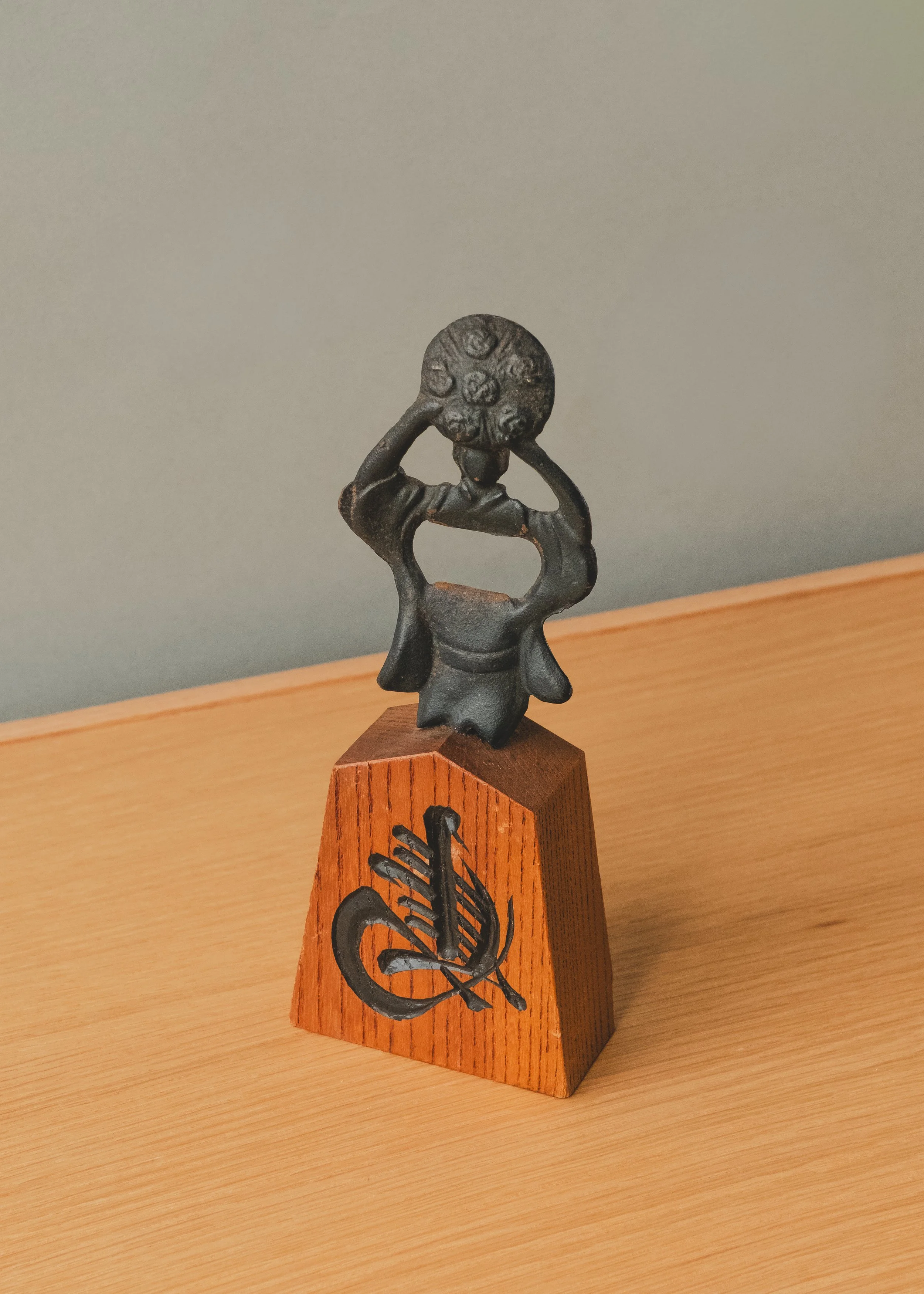
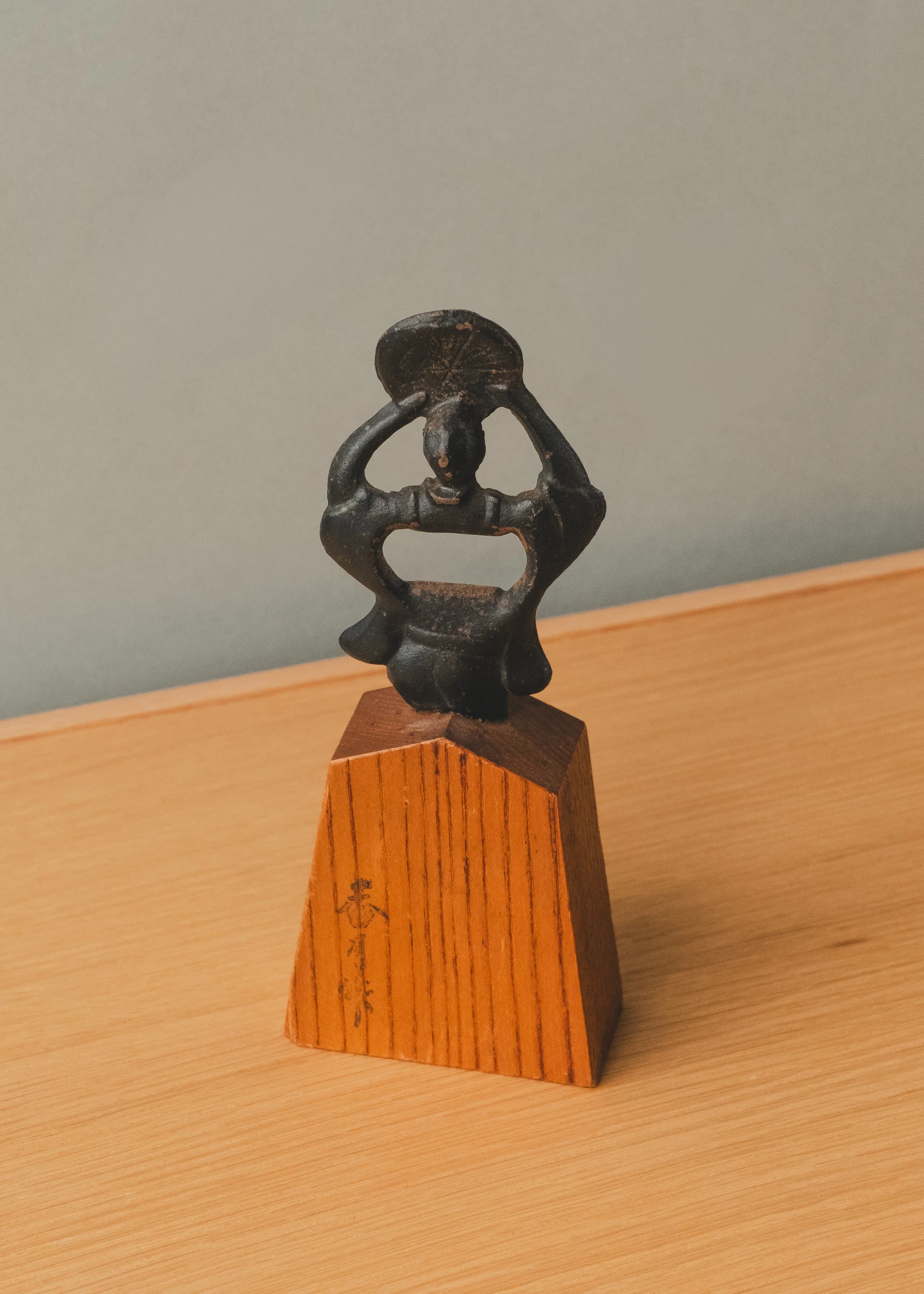
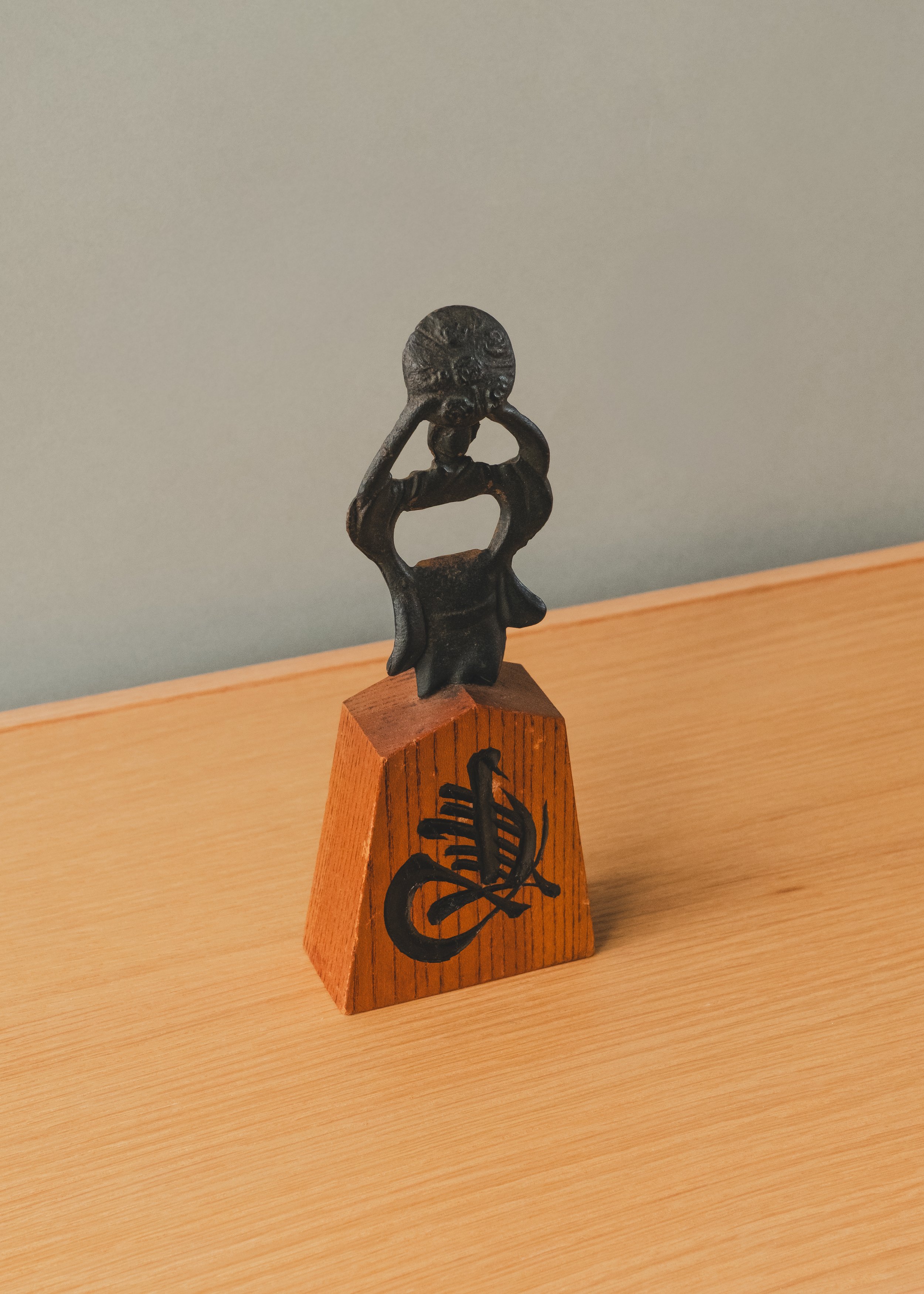
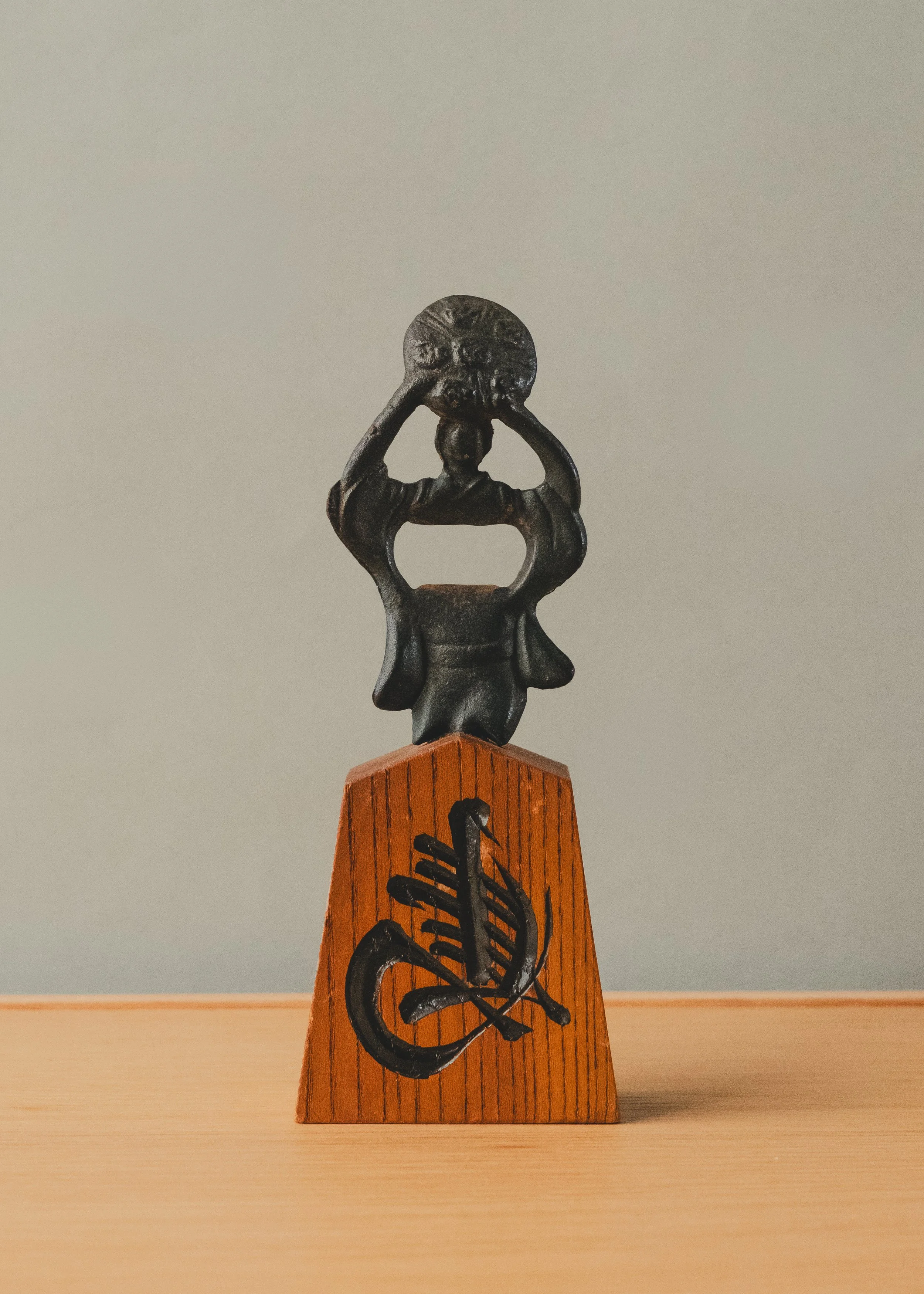
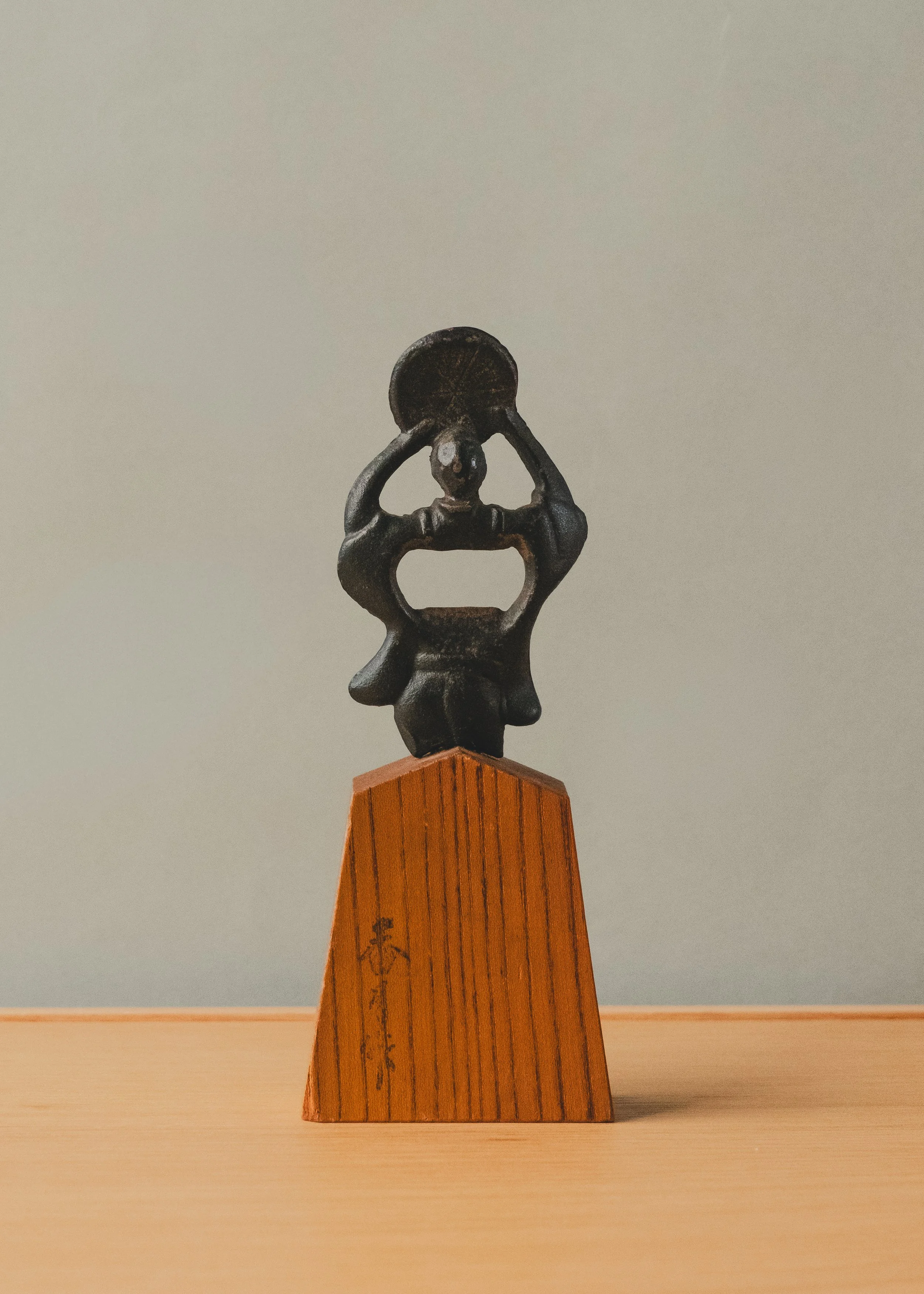
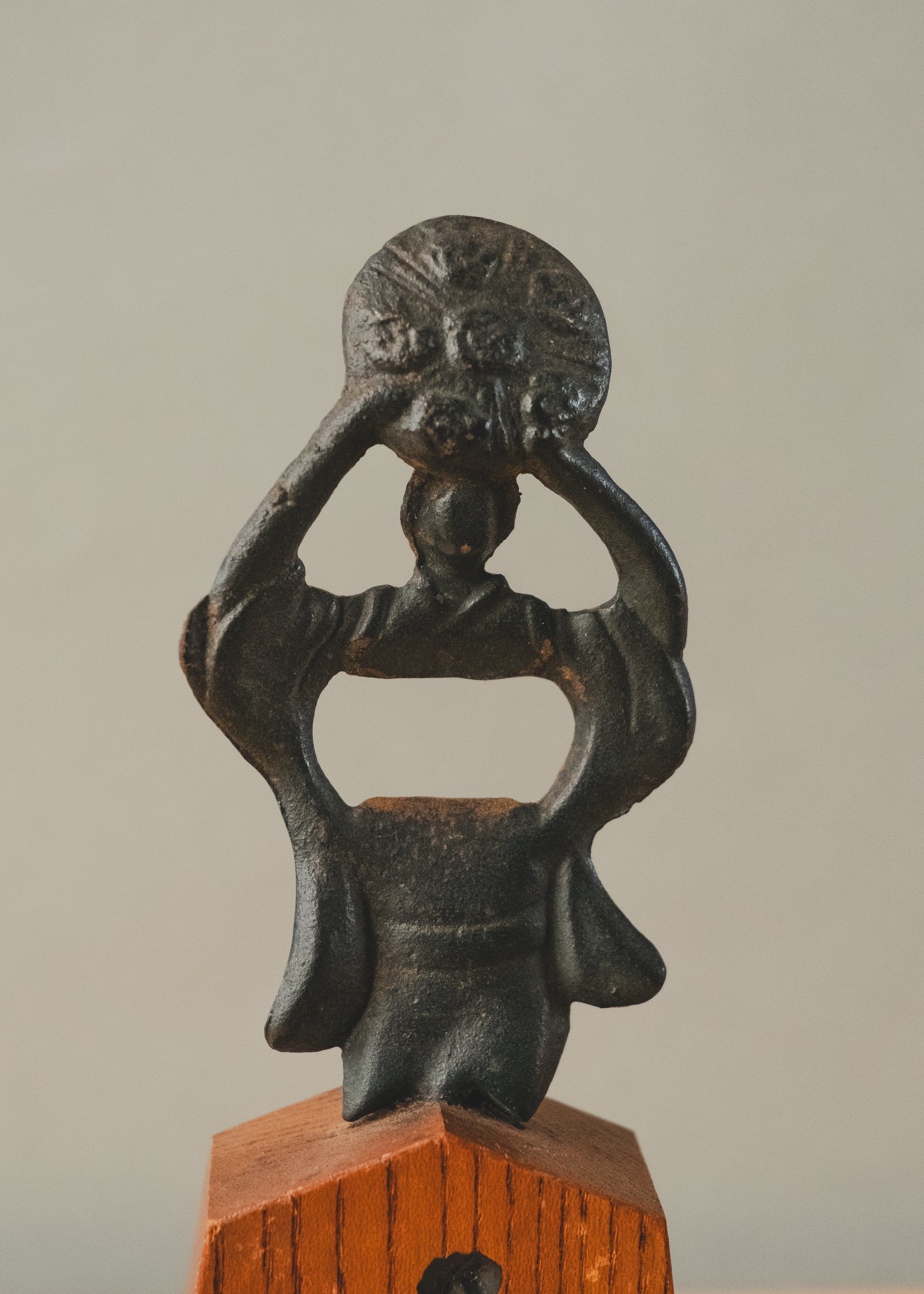
The dancer lifts a flower-covered hat above her head and the crowd disappears. In the original festival, hundreds of women move in unison through the streets of northern Japan, each holding a hat rimmed with blossoms, each face hidden beneath the brim. An anonymous ironsmith cut one of them out of the procession and cast her in iron — not as a figure, but as a silhouette. No face. No depth. Just the outline of a woman frozen at the moment the hat goes up and the sleeves spread wide. He fixed her permanently to a wooden pedestal carved in the shape of a fortune tile, with the character for long life chiseled into the face and painted black. She opens bottles. She holds still. She has been doing both since 1963.

【 The Function 】

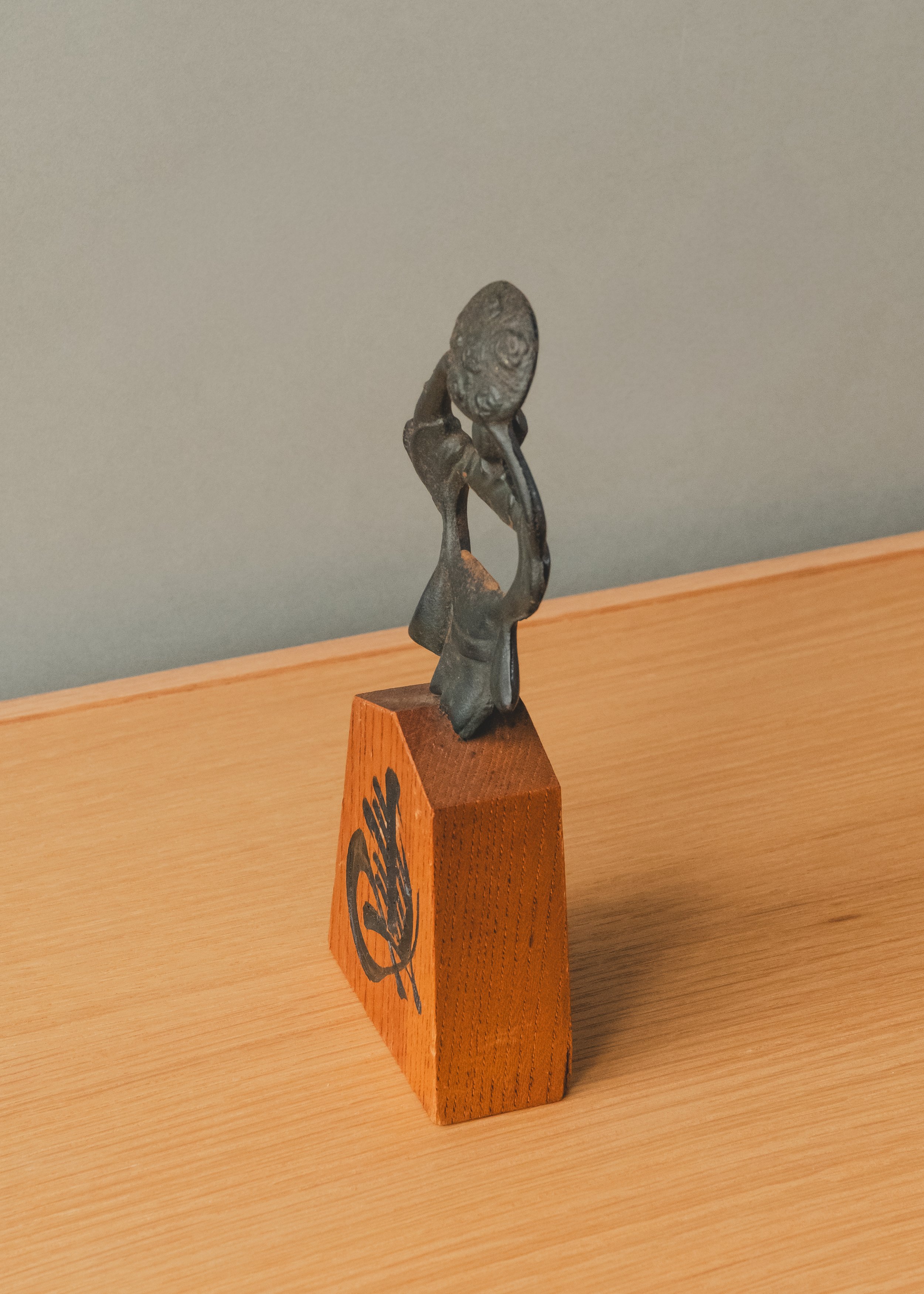
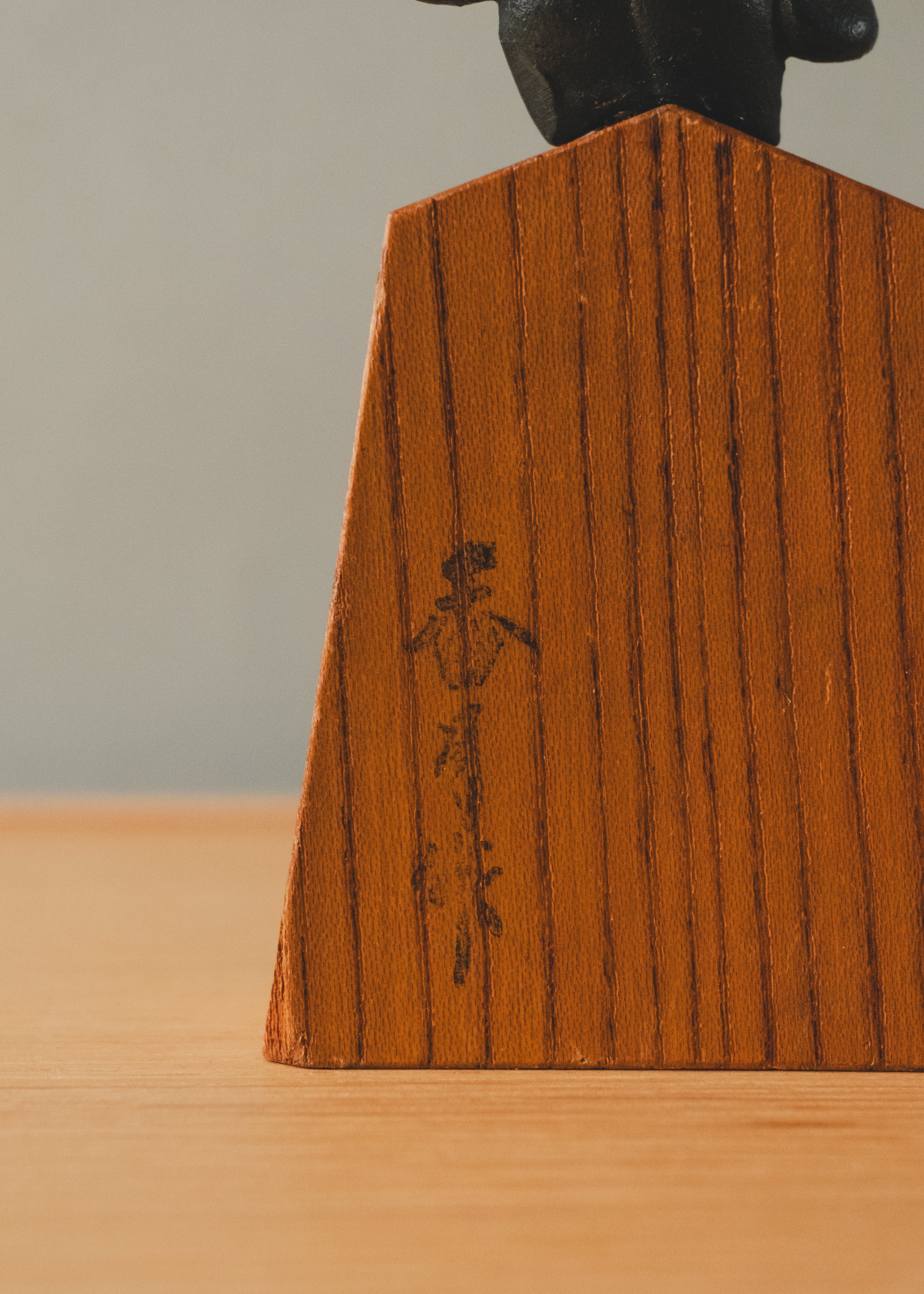
A bottle opener fused to a wooden pedestal. The iron silhouette and the wooden base are one object — they do not come apart. The opening hook sits at the dancer's chest, where a gap in the silhouette catches a bottle cap and levers it off. Grip the pedestal, tilt the cap against the hook, and the weight of the whole object does the rest. When the bottle is open, set her back on the desk. The pedestal is a five-sided tile — the shape used in the game of generals — with the character for long life carved into the wood and sealed in black.

【 The Texture 】

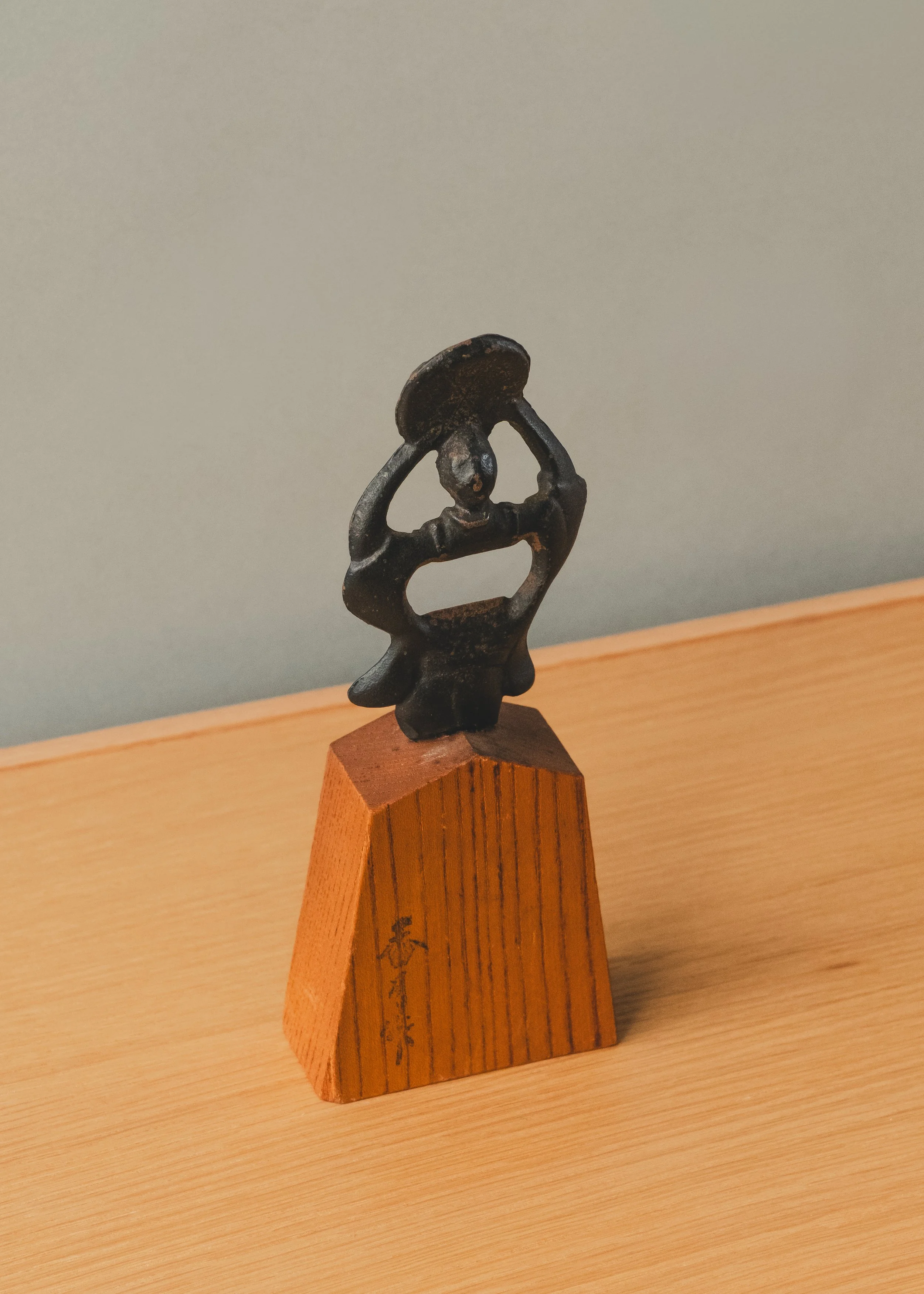
Cast iron, uncoated, darkened to a deep black-brown through kiln oxidation. The surface carries the fine grain of the sand mold — matte, dry, and cool. The silhouette is flat and thin, cut clean at every edge. The flower hat shows small raised bumps where the blossoms sit. The sleeves taper to points. The pedestal is natural hardwood — warm amber with visible grain running vertically. The character on the front is not painted on — it is carved into the wood and filled with black pigment, so the strokes sit slightly below the surface. On the reverse, a maker's inscription is brushed in ink, though time has faded it to the point where the characters are difficult to read without turning the piece toward the light. Iron and wood. Cold and warm. Two materials that never pretend to be the same thing.

【 Presence 】

It stands seventeen centimeters tall and reads as a shadow pinned to a block of wood. The iron absorbs every light in the room. The wood reflects just enough to glow. From a distance it could be a chess piece. Up close it is a dancer who never comes down from the pose. The pedestal keeps her upright on any surface — desk, shelf, mantel. She is the thinnest object in the room and the hardest to ignore.

Sourced from a private collection in northern Japan.

【 The Concept 】

The dancer lifts a flower-covered hat above her head and the crowd disappears. In the original festival, hundreds of women move in unison through the streets of northern Japan, each holding a hat rimmed with blossoms, each face hidden beneath the brim. An anonymous ironsmith cut one of them out of the procession and cast her in iron — not as a figure, but as a silhouette. No face. No depth. Just the outline of a woman frozen at the moment the hat goes up and the sleeves spread wide. He fixed her permanently to a wooden pedestal carved in the shape of a fortune tile, with the character for long life chiseled into the face and painted black. She opens bottles. She holds still. She has been doing both since 1963.

【 The Function 】

A bottle opener fused to a wooden pedestal. The iron silhouette and the wooden base are one object — they do not come apart. The opening hook sits at the dancer's chest, where a gap in the silhouette catches a bottle cap and levers it off. Grip the pedestal, tilt the cap against the hook, and the weight of the whole object does the rest. When the bottle is open, set her back on the desk. The pedestal is a five-sided tile — the shape used in the game of generals — with the character for long life carved into the wood and sealed in black.

【 The Texture 】

Cast iron, uncoated, darkened to a deep black-brown through kiln oxidation. The surface carries the fine grain of the sand mold — matte, dry, and cool. The silhouette is flat and thin, cut clean at every edge. The flower hat shows small raised bumps where the blossoms sit. The sleeves taper to points. The pedestal is natural hardwood — warm amber with visible grain running vertically. The character on the front is not painted on — it is carved into the wood and filled with black pigment, so the strokes sit slightly below the surface. On the reverse, a maker's inscription is brushed in ink, though time has faded it to the point where the characters are difficult to read without turning the piece toward the light. Iron and wood. Cold and warm. Two materials that never pretend to be the same thing.

【 Presence 】

It stands seventeen centimeters tall and reads as a shadow pinned to a block of wood. The iron absorbs every light in the room. The wood reflects just enough to glow. From a distance it could be a chess piece. Up close it is a dancer who never comes down from the pose. The pedestal keeps her upright on any surface — desk, shelf, mantel. She is the thinnest object in the room and the hardest to ignore.

Sourced from a private collection in northern Japan.

【Context】

  • Identity: Anonymous Provincial Ironwork / Festival Silhouette Opener.
  • Origin: Northern Province (Historic Metalware & Woodcraft Region), Japan.
  • Technique: Sand-Cast Iron, Kiln Oxidation, Hand-Carved Hardwood Pedestal, Ink Inscription.
  • Function: Bottle Opener / Standing Sculpture / Fortune Object.
    

【 Dimensions (Approx.) 】

  • Height: 17 cm (6.7 in)
  • Width: 9 cm (3.5 in)
  • Depth: 3 cm (1.2 in)
  • Weight: 162 g (5.7 oz)
 

RELATED ARCHIVAL SPECIMENS

SCARLET SENTINELS 1960
$185.00

【 The Concept 】

In the Japanese zodiac, the first position belongs to the mouse. Not the dragon, not the tiger — the mouse. The smallest animal in the cycle was given the task of beginning everything. In folk belief, this creature serves a second role: it is the chosen messenger of the god of wealth and harvest. Where the mouse appears, prosperity follows. Where two appear together, the message is twice as certain. An anonymous craftsman in a coastal province understood both roles. They formed two figures from earth — one seated in formal posture, one crouching low as if about to move — dressed them both in red, and placed a clay sphere inside each so that every time they are lifted, a dry rattle sounds from within. The red is not decorative. In Japanese tradition, this color has one purpose: to repel what should not be allowed near.

【 The Function 】

Both figures are dorei — clay bells. Each houses a loose clay sphere that strikes the inner wall when lifted, producing a brief, percussive rattle. In folk practice, this sound served to clear a threshold, a desk, a bedside — any space where misfortune might settle. The larger figure sits upright in ceremonial posture, hands folded. The smaller one crouches forward, alert. Together they create a pair that covers stillness and motion, ceremony and vigilance.

【 The Texture 】

The bodies are white — an unglazed, chalky ground that holds light without reflecting it. Over this, the red garments are painted with a matte mineral pigment that has aged into a warm, uneven tone — darker in the folds, thinner at the edges. The eyes are simple black dots. The whiskers are single brushstrokes. On the back of the larger figure, characters are pressed into the clay before firing — a mark that ties these objects to a specific shrine district in Japan's southern coastal region. The surface is dry, warm, and rough in the way that only unfired earth can be.

【 Presence 】

They are small enough to share a windowsill. The larger one commands attention; the smaller one earns it. Place them together and they become a conversation — one still, one ready. One guarding, one scouting. The rattle is faint, almost private, audible only to the person holding them. That is the point. The protection they offer was never meant to be loud.

Sourced from a private collection in southern coastal Japan.

BRONZE STEED 1963
$220.00

【 The Concept 】

The horse stands with a horseshoe fused to its back. In the West, a horseshoe nailed above a door catches luck before it passes. In Japan, a horse facing left pulls people toward you — customers, guests, fortune. An anonymous metalsmith in western Japan cast both ideas into one object: a bronze horse with a horseshoe ring rising from its spine, designed to open bottles and hold down paper with equal conviction. lies flat on a desk and does nothing until you need it. Then it does two things no other object on the desk can do.

【 The Function 】

A paperweight and a bottle opener. The body is dense enough to pin a stack of letters flat without sliding. The horseshoe ring at the top hooks under a bottle cap and levers it off in a single motion — the weight of the horse becomes the counterbalance. When it is not opening anything, it stands. When it is not holding anything down, it watches. Most desk objects do one thing. This one does two, and looks better than both.

【 The Texture 】

Cast bronze, finished in a patinated green-black that deepens at the edges and lightens where the surface rises. The color is not paint — it is the metal itself, oxidized and sealed through a traditional hot-lacquer process. The body carries a fine herringbone pattern across the saddle area, scored into the original mold by hand. The legs are simplified into flat paired ridges, pressed into the same plane as the body.The eyes are small, set deep, and expressionless — closer to a temple horse than a living one. The horseshoe ring shows eight square nail holes cast into its circumference. The surface is matte, cool to the touch, and heavy in the hand before the eye expects it.

【 Presence 】

It lies flat on a desk and reads as a bronze relief until someone picks it up. The green-black surface absorbs light the way old metal does — no shine, no reflection, just mass. At 192 grams it is thin but dense. The horseshoe ring rises from the body just enough to hook a finger or a bottle cap. It is the kind of thing a guest picks up, turns over, and asks about. That is the point.

Sourced from a private collection in western Japan.

TIGER NOD 1960
$235.00

【 The Concept 】

Japan has no tigers. It never did. But for centuries, the tiger was the most feared and revered animal in the Japanese imagination — borrowed from Chinese legend, absorbed into Buddhist scripture, and elevated to the status of a household protector. An anonymous craftsman in a western province took this borrowed beast and built it from paper. Layers of handmade washi pasted over a wooden mold, dried, split open, hollowed out, sealed shut, and painted by hand. The result is a tiger that weighs almost nothing — 59 grams — and nods its head at the slightest vibration. A draft from an open window. A footstep across the room. The weight of a hand placed on the desk beside it.

【 The Function 】

A nodding figure. The head is not fixed to the body. It balances on a weighted pivot inside the neck, designed to move with any disturbance in the air around it. In folk tradition, this motion was not entertainment. It was believed to scatter stagnant energy, to keep a room from settling into stillness long enough for misfortune to find a place to rest. Set it on a shelf near a child's bed, and it watches. Set it on a desk, and it agrees with everything you write.

【 The Texture 】

Paper over air. The body is hollow — a shell of layered washi sealed with gofun, a calcium-powder base ground from oyster shells. Over this, a bright yellow covers the entire form, and black stripes are painted freehand in confident, uneven lines that follow the curve of the body rather than any template. The nose is painted blue. The mouth is open and red. The ears are lined in red. The eyes are wide, white, and startled — not frightened, but alert, as if the tiger has just noticed something no one else has seen. The tail curves upward. The claws are marked in red.

【 Presence 】

It weighs less than a letter. That is the point. A tiger made of paper is not a contradiction — it is a statement about what protection actually requires. Not weight. Not iron. Not stone. Just the willingness to keep nodding, keep watching, keep facing the door, long after everything heavier has been moved aside.

Sourced from a private collection in western Japan.