【 The Concept 】
Japan has no tigers. It never did. But for centuries, the tiger was the most feared and revered animal in the Japanese imagination — borrowed from Chinese legend, absorbed into Buddhist scripture, and elevated to the status of a household protector. An anonymous craftsman in a western province took this borrowed beast and built it from paper. Layers of handmade washi pasted over a wooden mold, dried, split open, hollowed out, sealed shut, and painted by hand. The result is a tiger that weighs almost nothing — 59 grams — and nods its head at the slightest vibration. A draft from an open window. A footstep across the room. The weight of a hand placed on the desk beside it.
【 The Function 】
A nodding figure. The head is not fixed to the body. It balances on a weighted pivot inside the neck, designed to move with any disturbance in the air around it. In folk tradition, this motion was not entertainment. It was believed to scatter stagnant energy, to keep a room from settling into stillness long enough for misfortune to find a place to rest. Set it on a shelf near a child's bed, and it watches. Set it on a desk, and it agrees with everything you write.
【 The Texture 】
Paper over air. The body is hollow — a shell of layered washi sealed with gofun, a calcium-powder base ground from oyster shells. Over this, a bright yellow covers the entire form, and black stripes are painted freehand in confident, uneven lines that follow the curve of the body rather than any template. The nose is painted blue. The mouth is open and red. The ears are lined in red. The eyes are wide, white, and startled — not frightened, but alert, as if the tiger has just noticed something no one else has seen. The tail curves upward. The claws are marked in red.
【 Presence 】
It weighs less than a letter. That is the point. A tiger made of paper is not a contradiction — it is a statement about what protection actually requires. Not weight. Not iron. Not stone. Just the willingness to keep nodding, keep watching, keep facing the door, long after everything heavier has been moved aside.
Sourced from a private collection in western Japan.
【 The Concept 】
Japan has no tigers. It never did. But for centuries, the tiger was the most feared and revered animal in the Japanese imagination — borrowed from Chinese legend, absorbed into Buddhist scripture, and elevated to the status of a household protector. An anonymous craftsman in a western province took this borrowed beast and built it from paper. Layers of handmade washi pasted over a wooden mold, dried, split open, hollowed out, sealed shut, and painted by hand. The result is a tiger that weighs almost nothing — 59 grams — and nods its head at the slightest vibration. A draft from an open window. A footstep across the room. The weight of a hand placed on the desk beside it.
【 The Function 】
A nodding figure. The head is not fixed to the body. It balances on a weighted pivot inside the neck, designed to move with any disturbance in the air around it. In folk tradition, this motion was not entertainment. It was believed to scatter stagnant energy, to keep a room from settling into stillness long enough for misfortune to find a place to rest. Set it on a shelf near a child's bed, and it watches. Set it on a desk, and it agrees with everything you write.
【 The Texture 】
Paper over air. The body is hollow — a shell of layered washi sealed with gofun, a calcium-powder base ground from oyster shells. Over this, a bright yellow covers the entire form, and black stripes are painted freehand in confident, uneven lines that follow the curve of the body rather than any template. The nose is painted blue. The mouth is open and red. The ears are lined in red. The eyes are wide, white, and startled — not frightened, but alert, as if the tiger has just noticed something no one else has seen. The tail curves upward. The claws are marked in red.
【 Presence 】
It weighs less than a letter. That is the point. A tiger made of paper is not a contradiction — it is a statement about what protection actually requires. Not weight. Not iron. Not stone. Just the willingness to keep nodding, keep watching, keep facing the door, long after everything heavier has been moved aside.
Sourced from a private collection in western Japan.


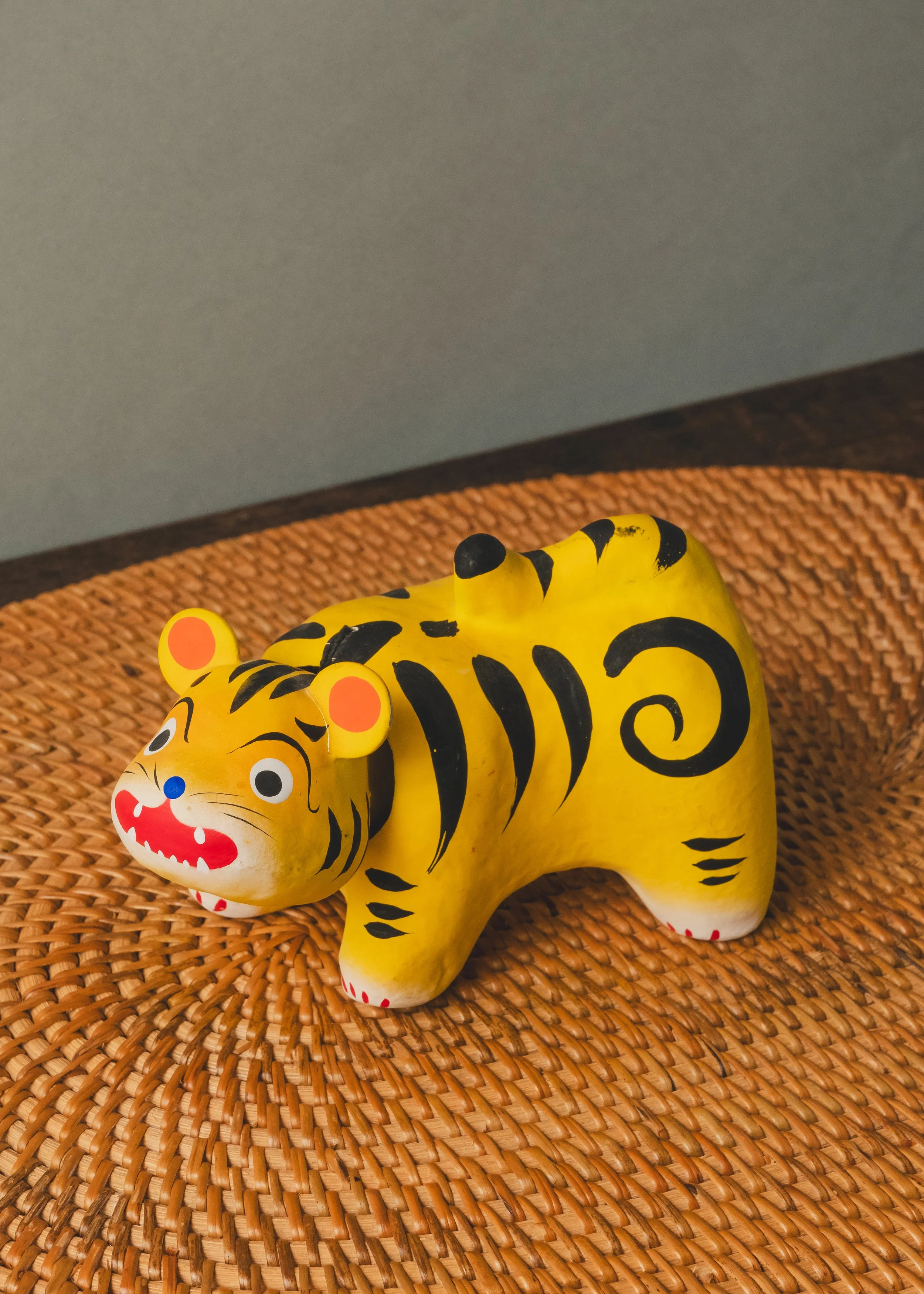 Image 1 of 14
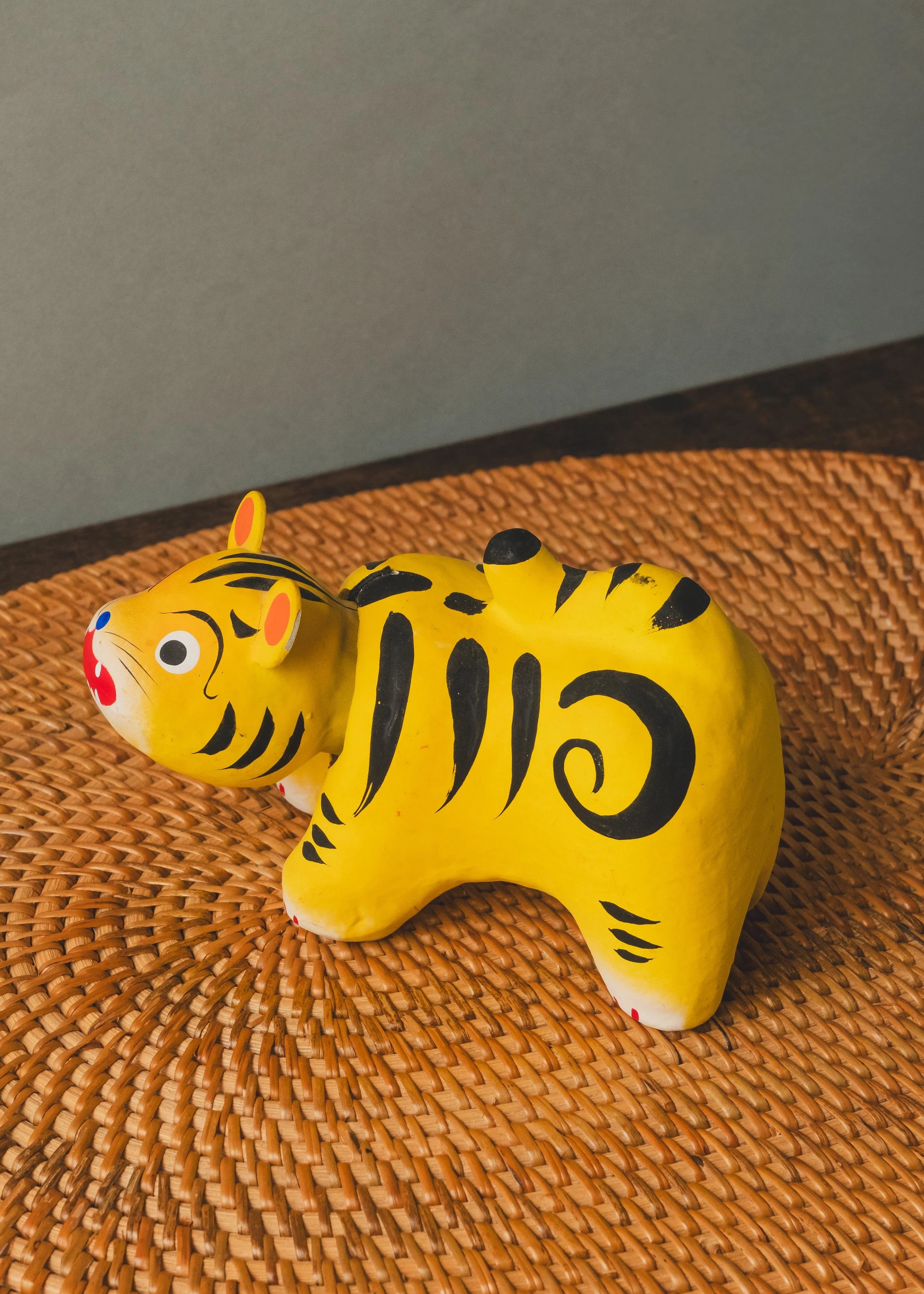 Image 2 of 14
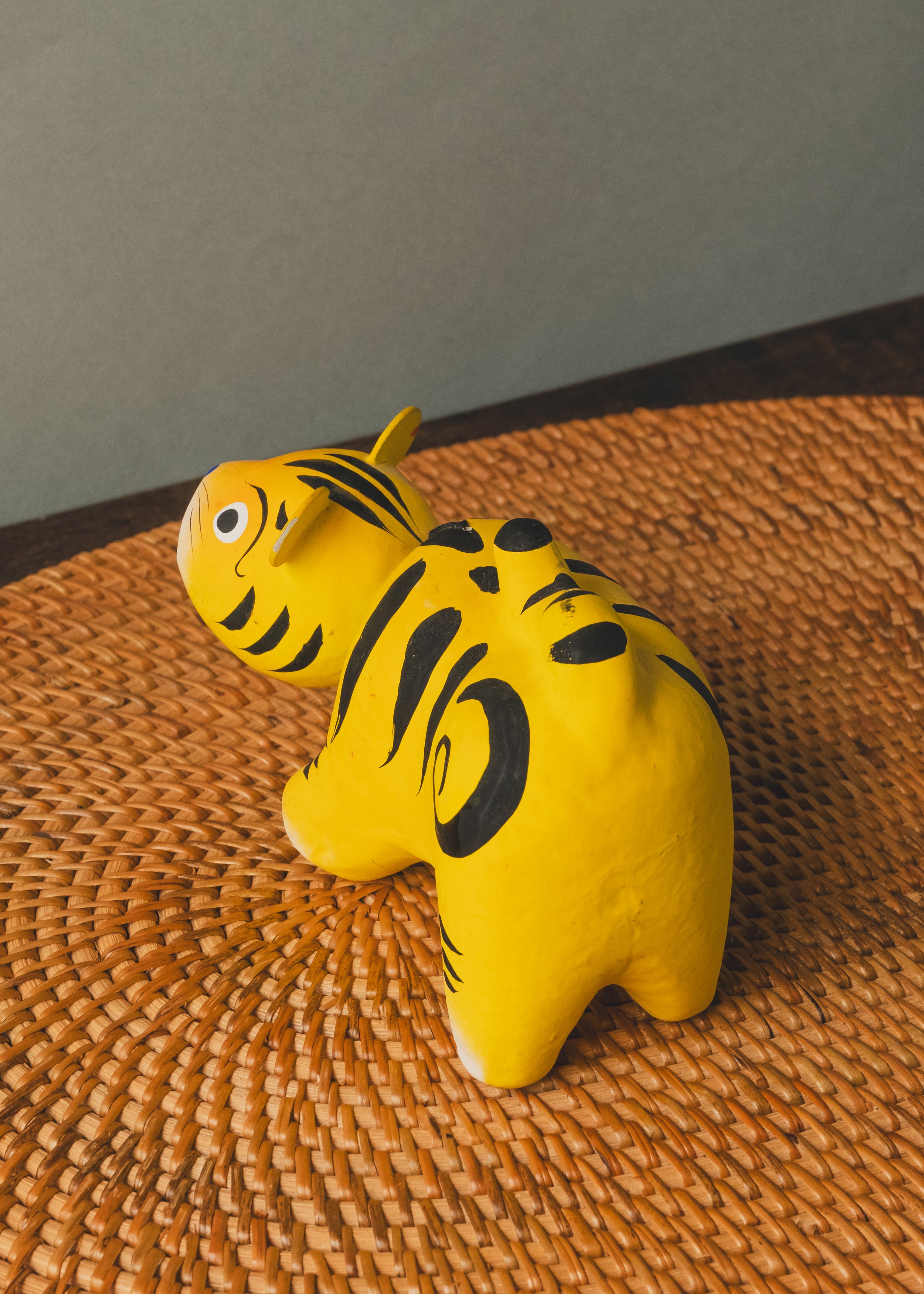 Image 3 of 14
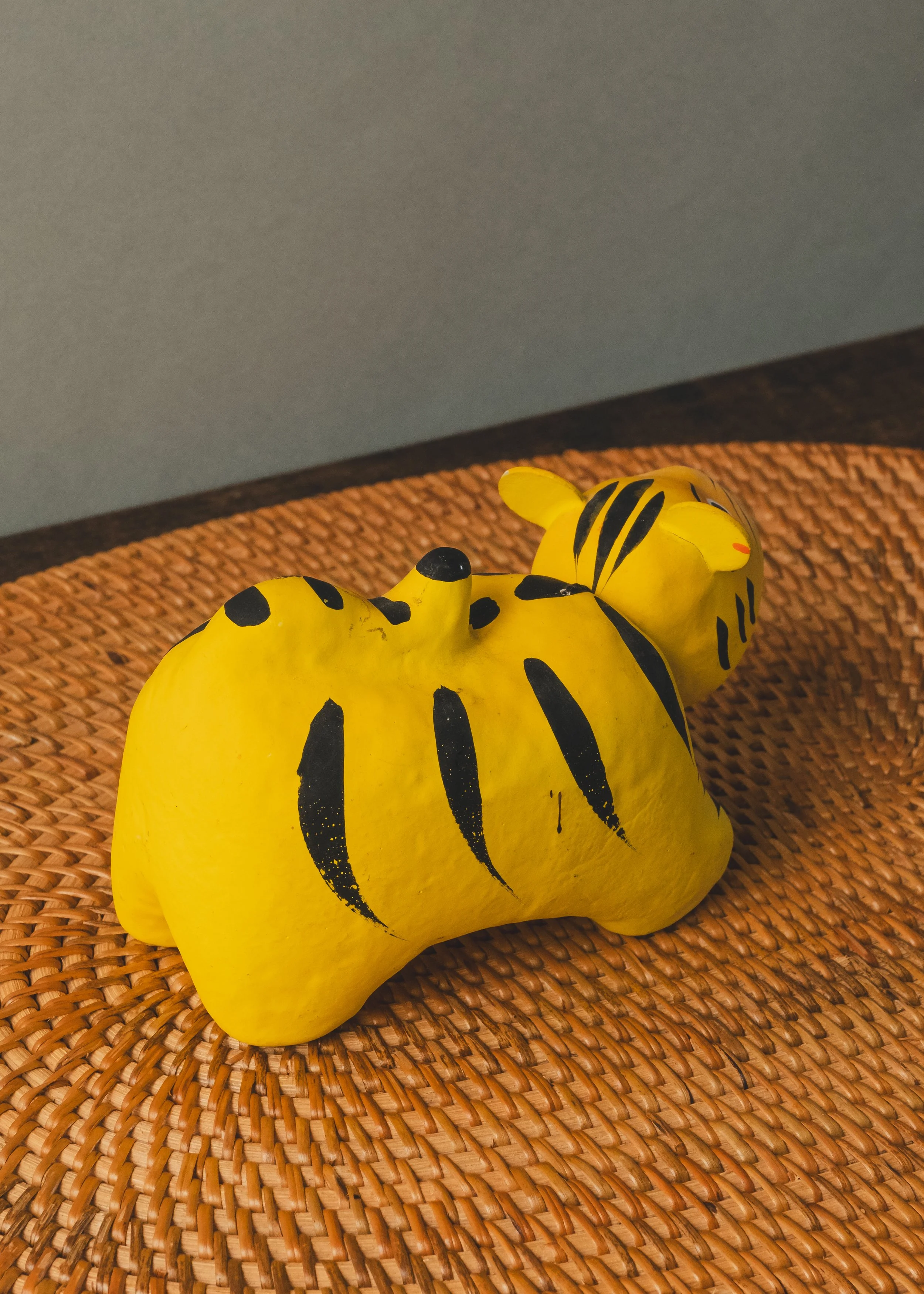 Image 4 of 14
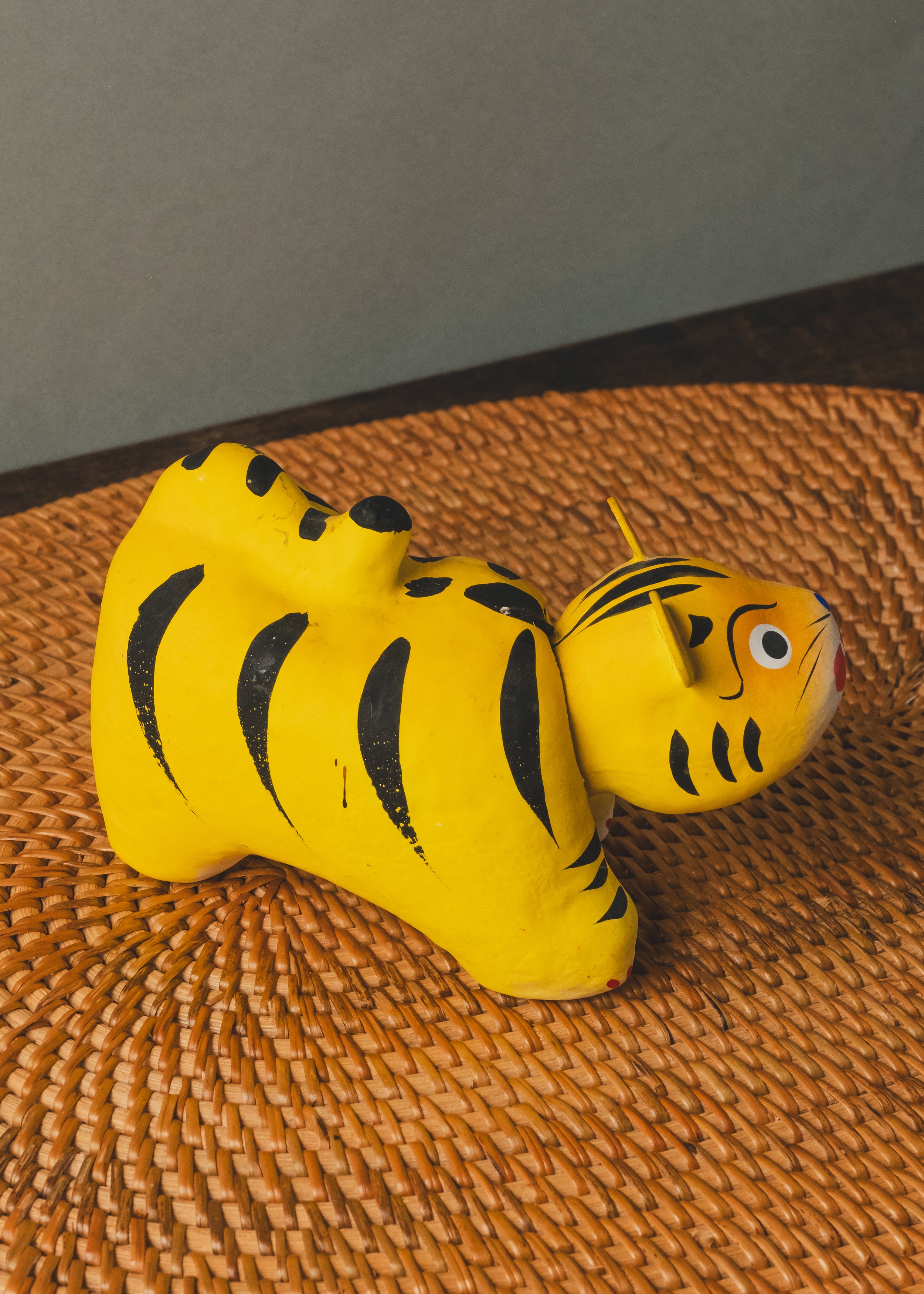 Image 5 of 14
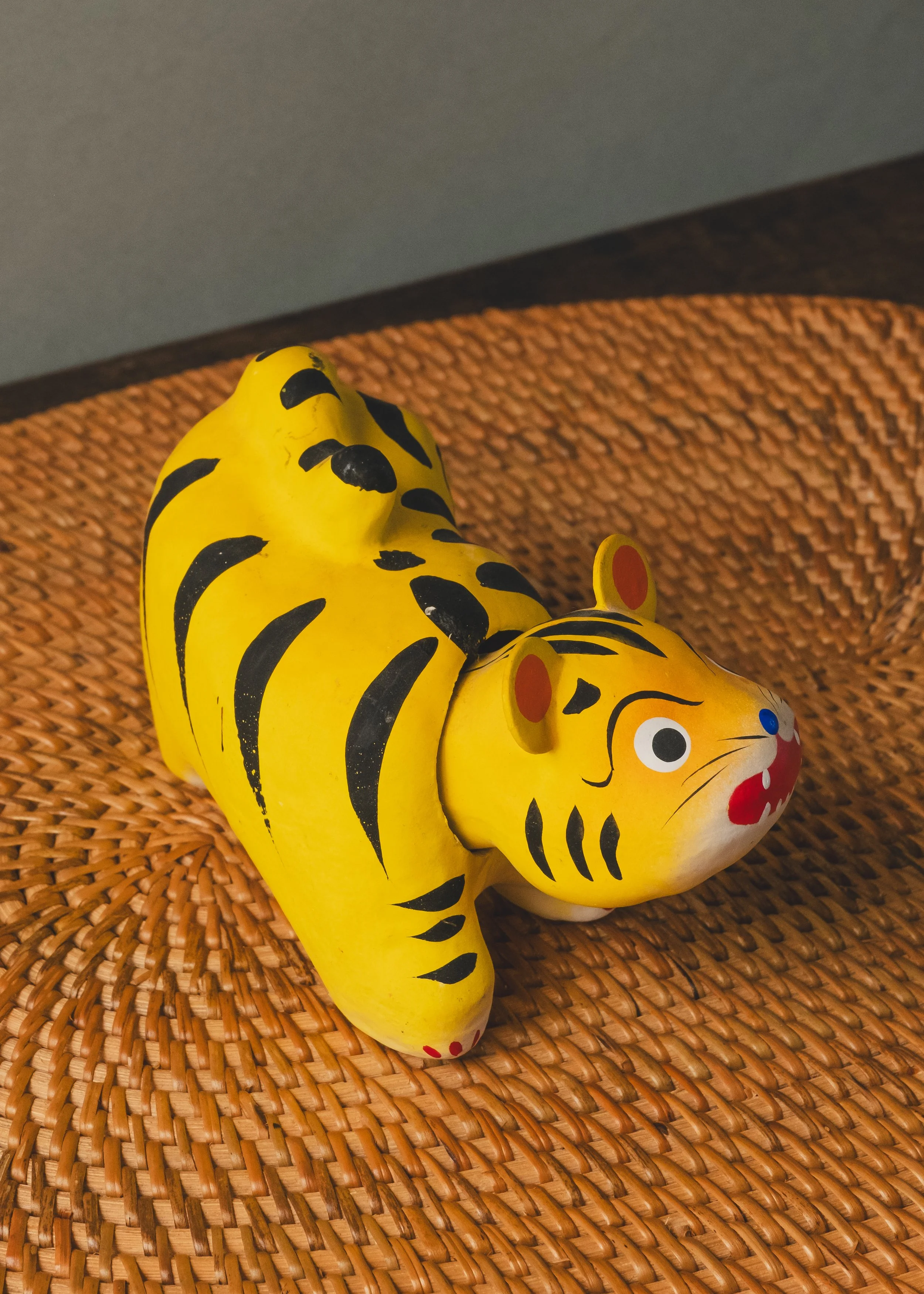 Image 6 of 14
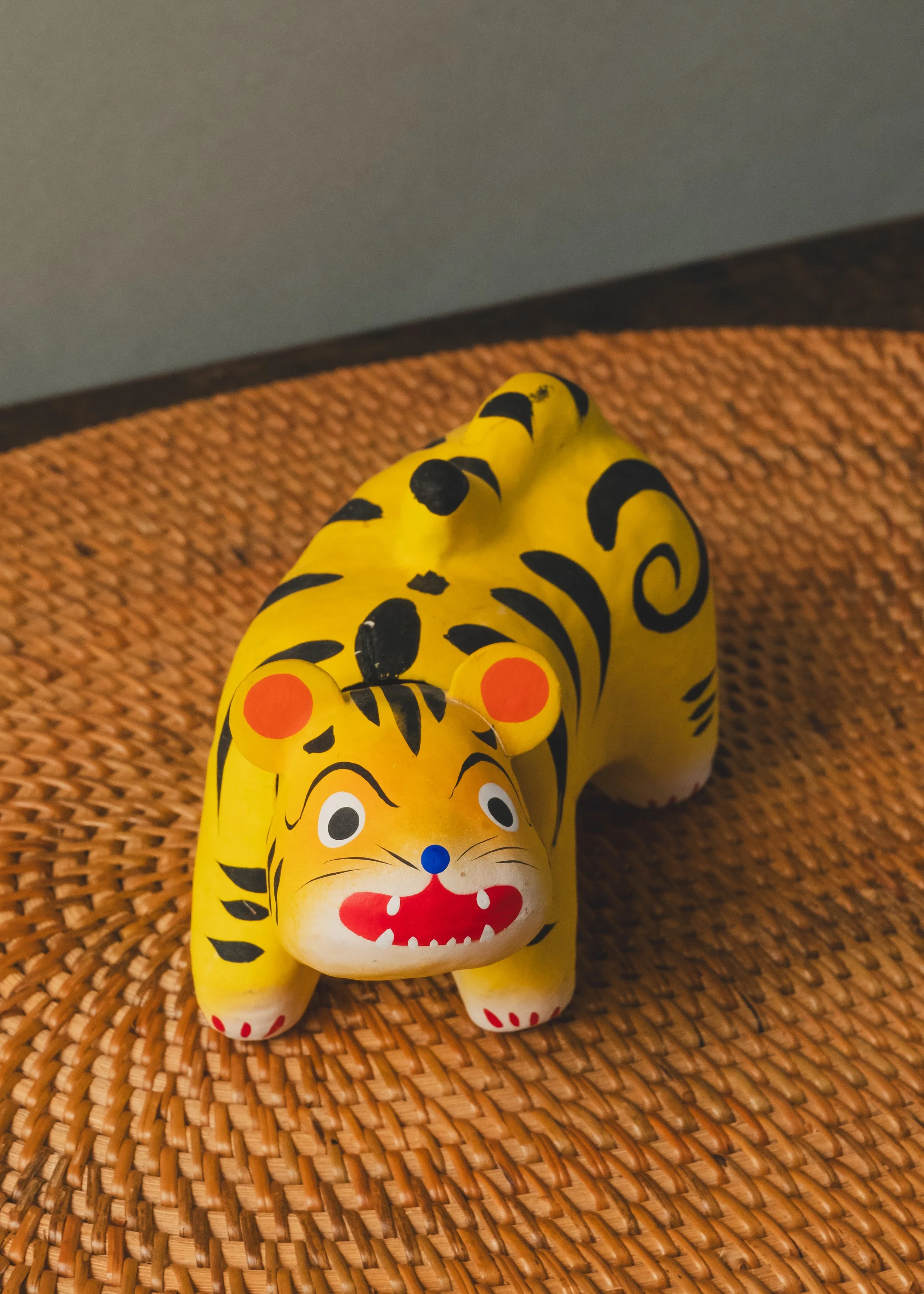 Image 7 of 14
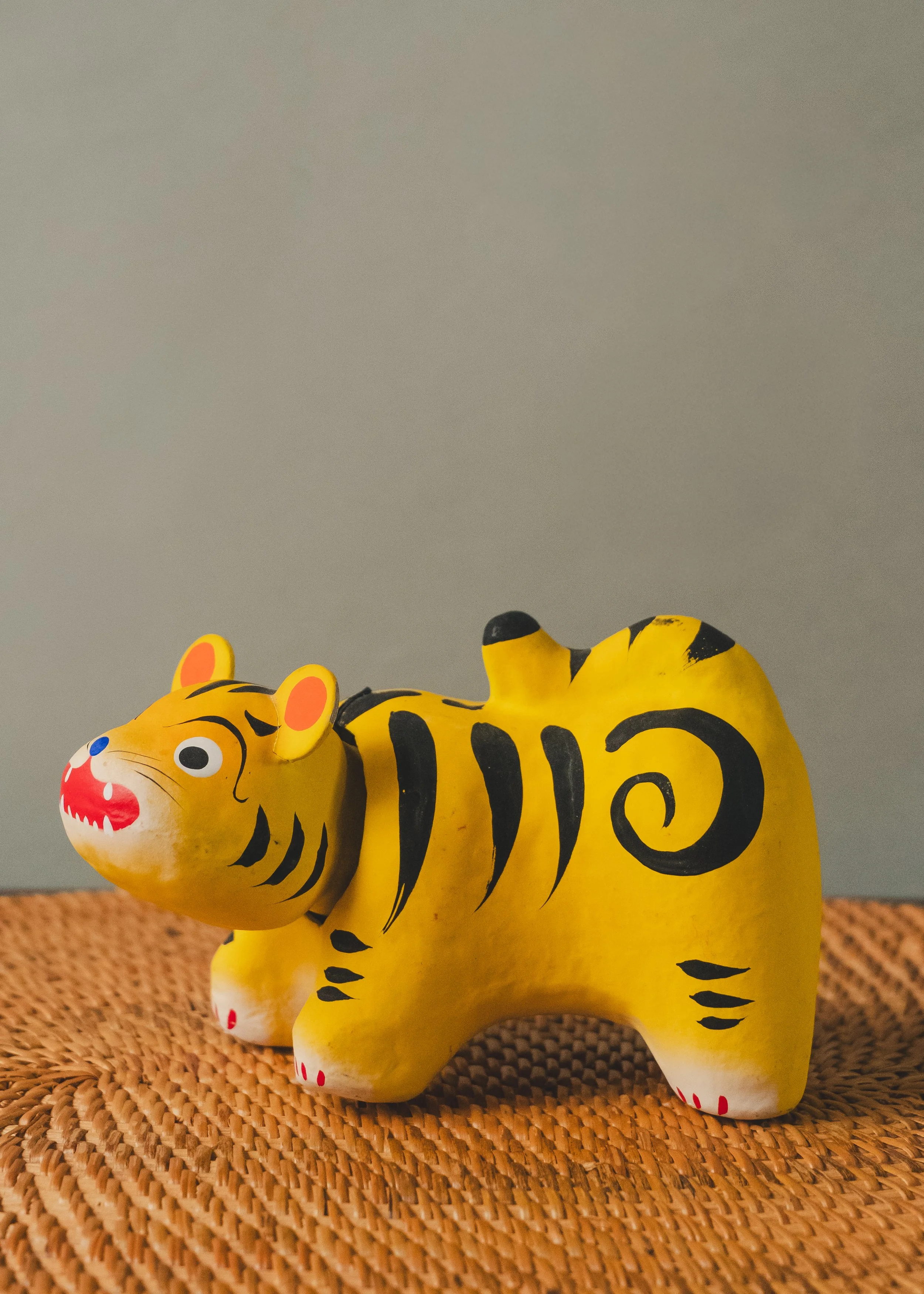 Image 8 of 14
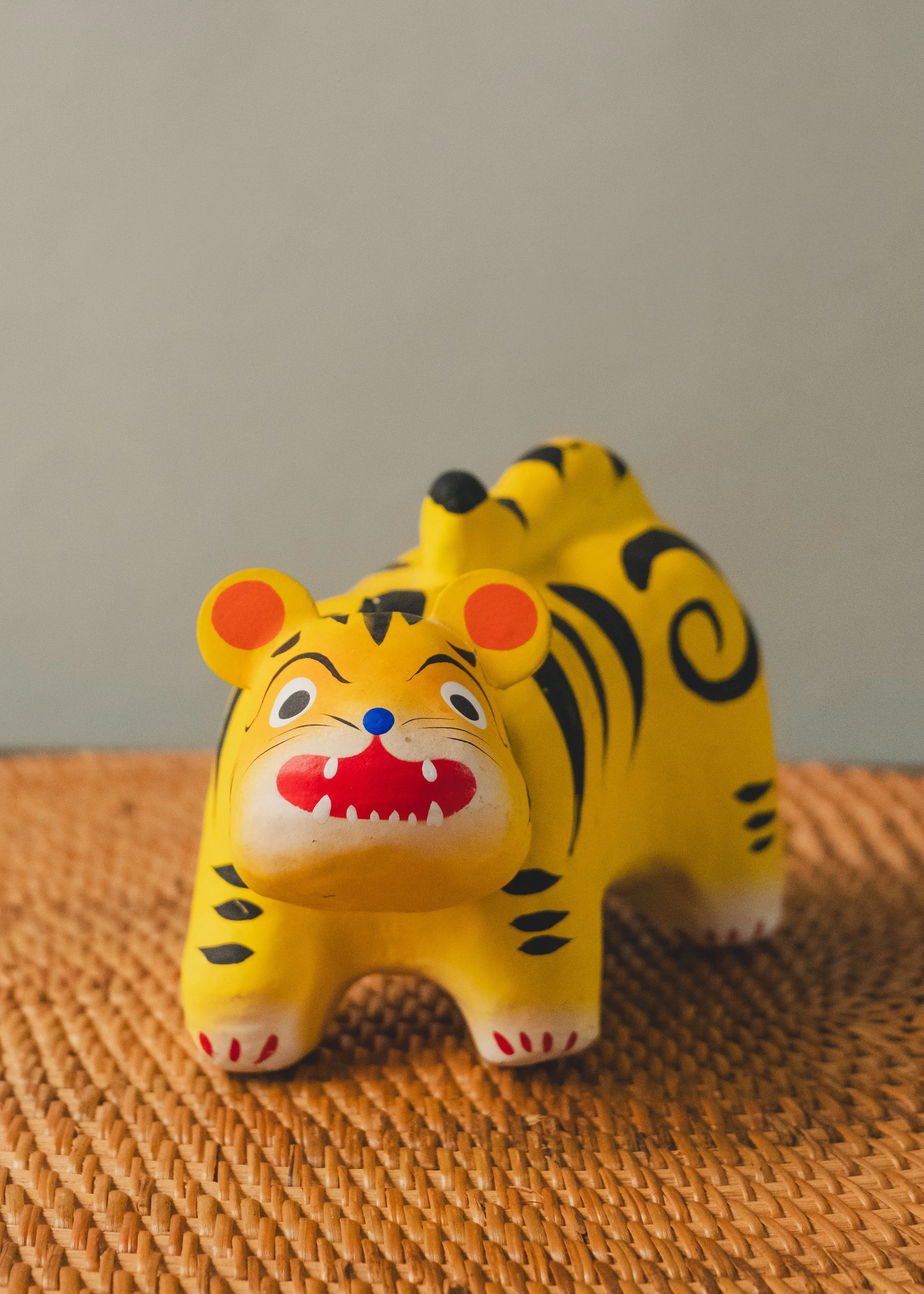 Image 9 of 14
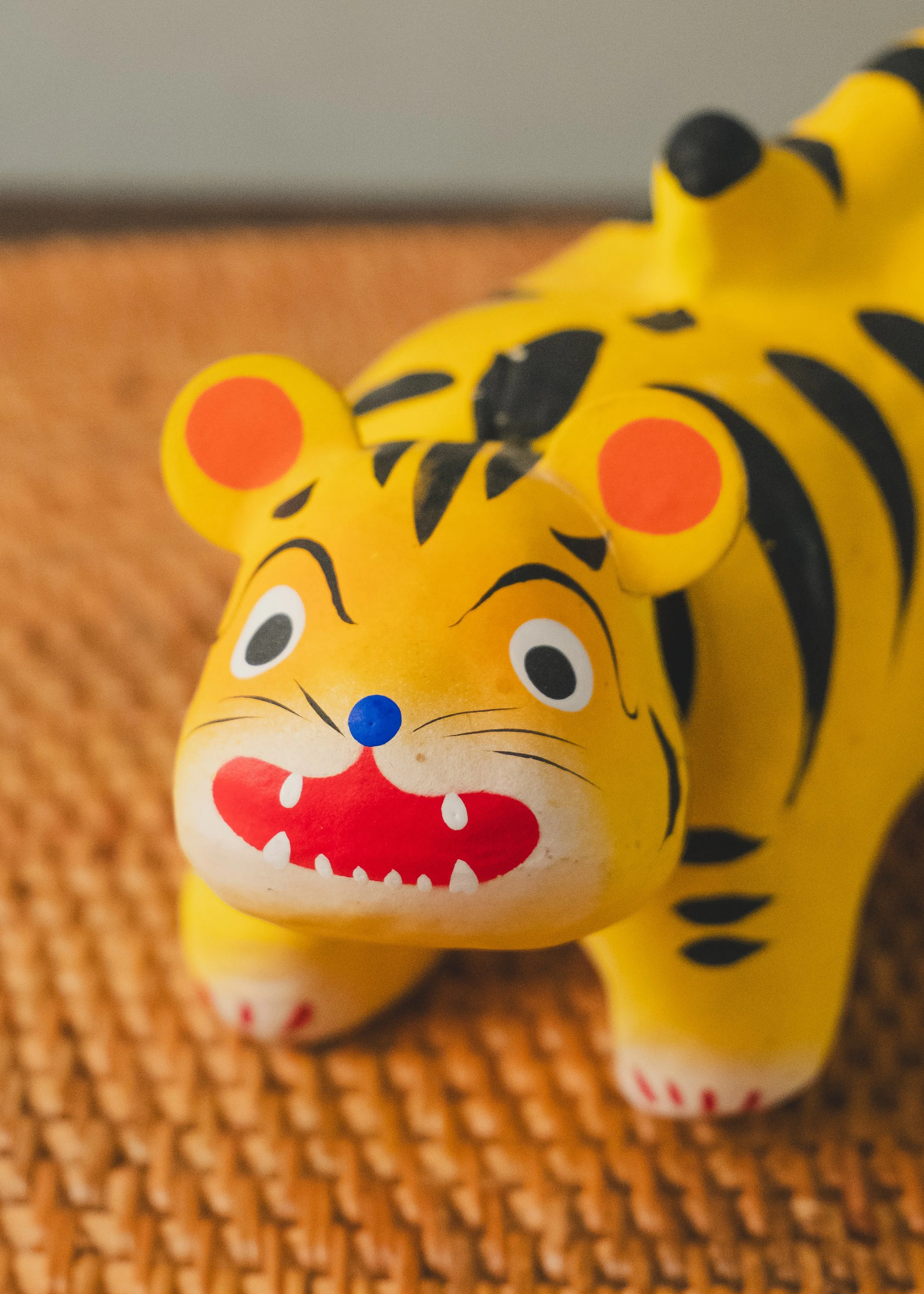 Image 10 of 14
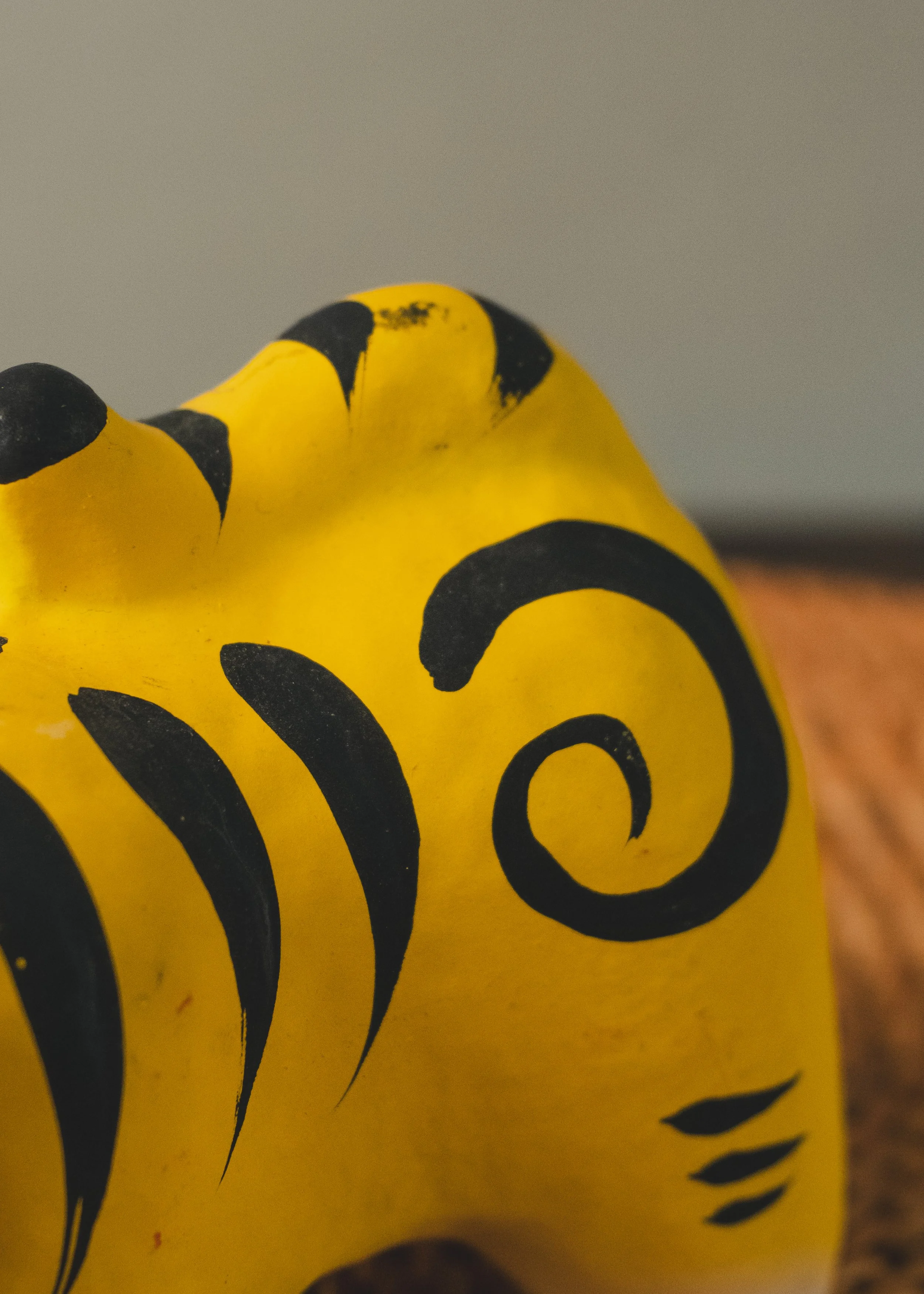 Image 11 of 14
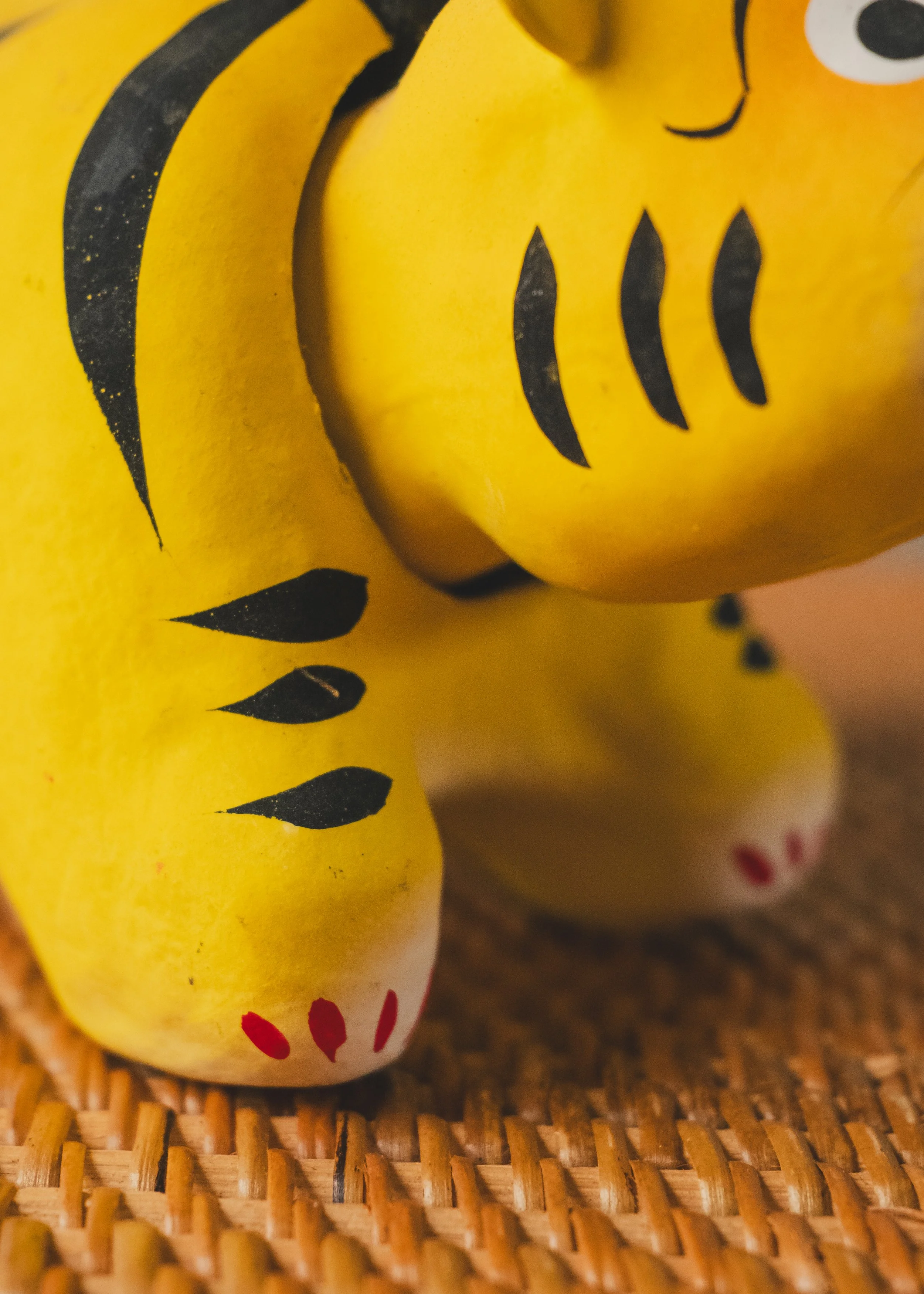 Image 12 of 14
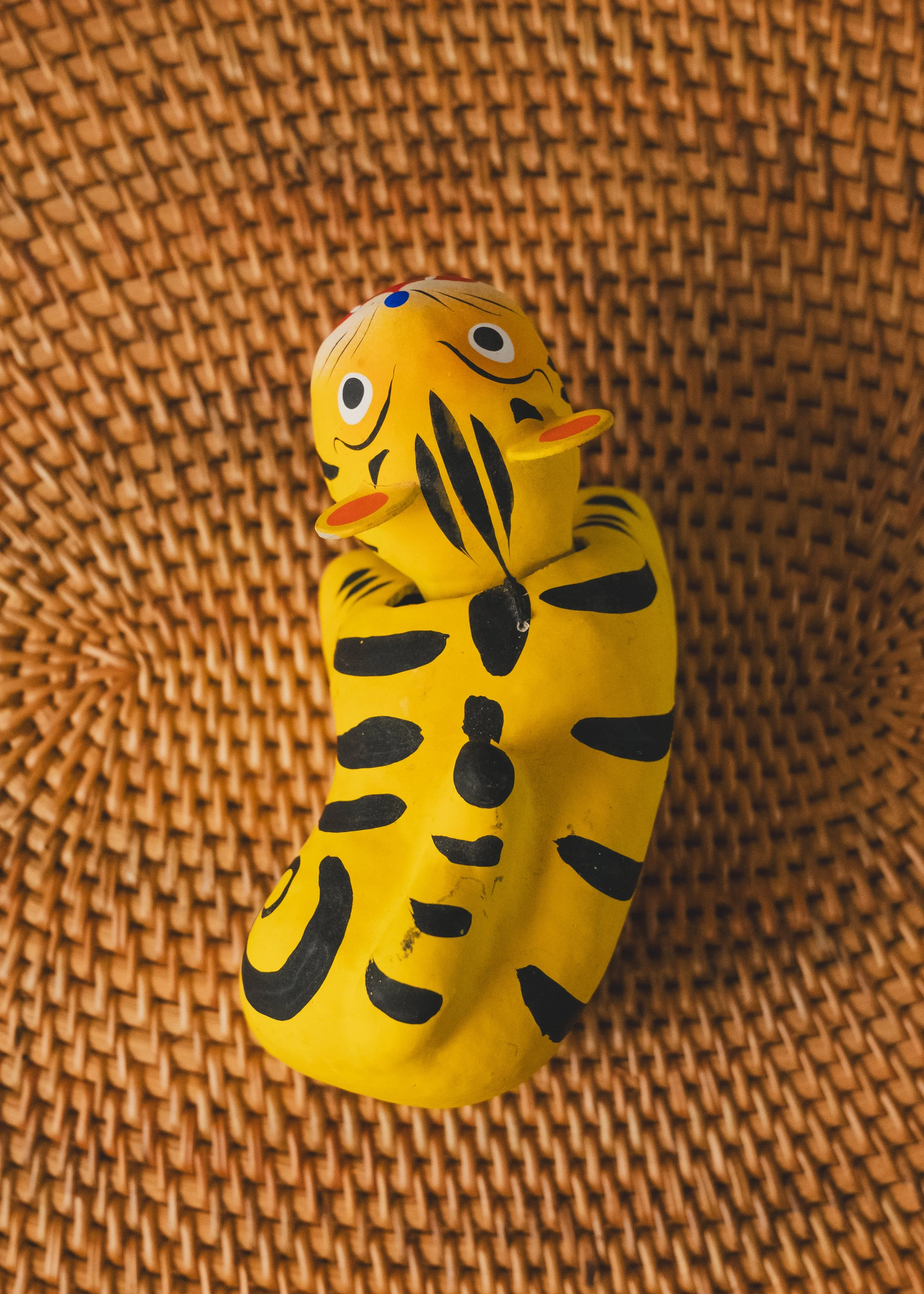 Image 13 of 14
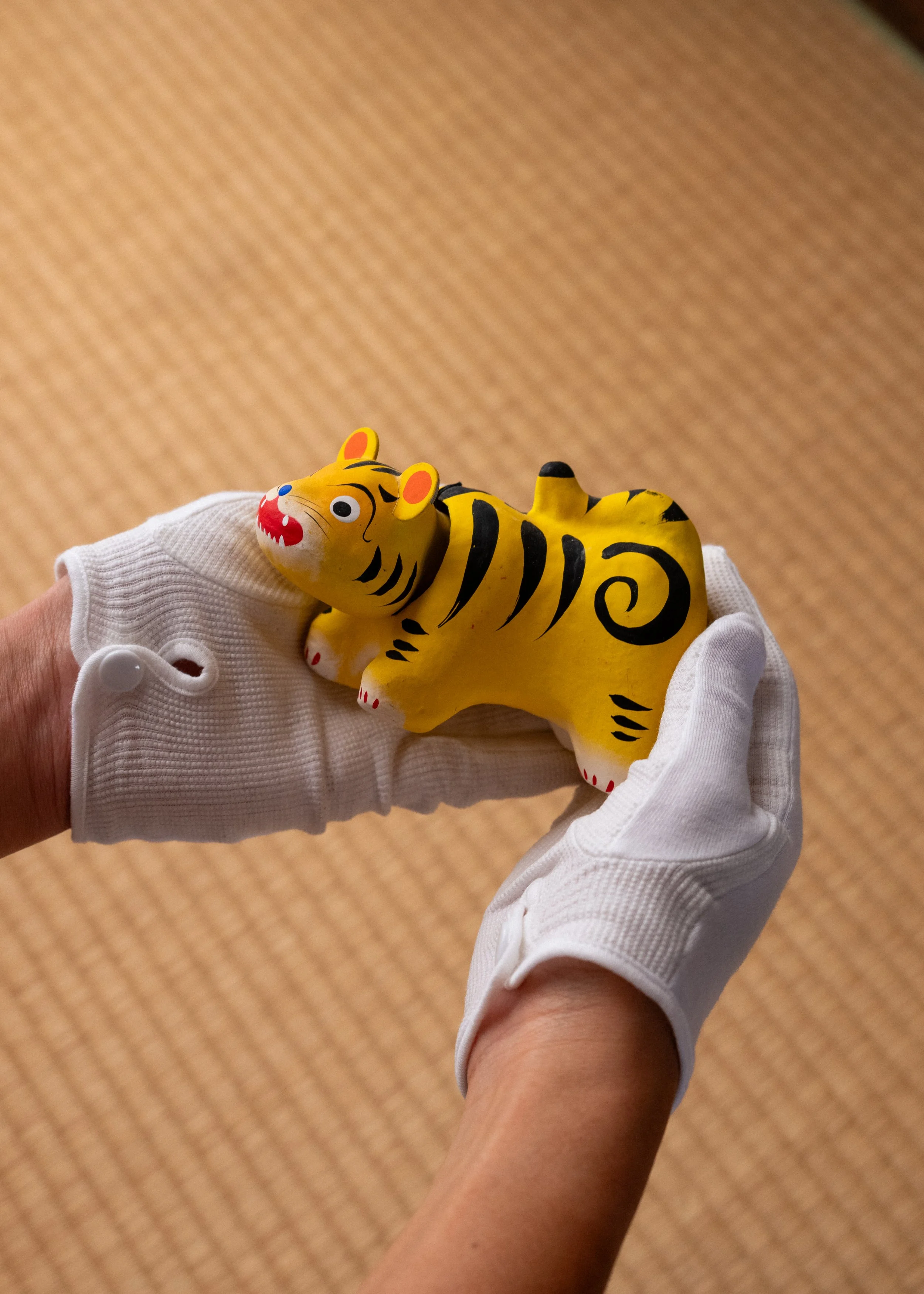 Image 14 of 14