【 The Concept 】
A hand-built clay figure of a person sitting deep in thought: knees drawn up to the chest, one arm wrapped around them, and the other bent upward so that the hand rests against the cheek. It is modelled on the Hozue Dogū, the “chin-on-hand” figure of the late Jomon period from Hachinohe in northern Japan, about 3,500 years old. The head rises to a central peak marked with a fine incised line, with two rounded lobes swelling out at either side. A raised T-shaped ridge forms the brows and nose, the eyes are small round rings, and the round mouth is slightly open, as if the figure were about to sigh. Two small breasts sit on the chest, and the arms and legs are covered in fine incised hatching. The clay has been fired dark, almost black, with warm beige earth showing through in the hollows, so that it looks as if it has just been lifted from the ground. It is one of the most human images to come down from the Jomon world: someone who has stopped, sat down, and is simply thinking.
【 The Thinker, 3,500 Years Before Rodin 】
Most Jomon figures stand stiffly, wide-eyed and other-worldly. The Hozue Dogū does something almost no other prehistoric figure does: it rests its cheek in its hand. It is a gesture everyone recognises at once, the posture of worry, longing, daydreaming or quiet reflection. Thousands of years before Auguste Rodin sat his Thinker on a rock, a potter in northern Japan shaped the same feeling in clay.
No one knows exactly what the gesture meant to the people who made it. Some archaeologists read it as a person lost in thought, perhaps grieving or praying for a family member. Others suggest it may show someone holding a painful cheek or tooth, made as a charm to take the pain away. Still others see the folded arms and legs as a way of holding the spirit inside the figure. Whatever its first meaning, it speaks to us directly: the feeling of sitting still with something on your mind is as old as humanity.
【 The Seated Figures of Hachinohe 】
The original comes from the Kazahari I site in Hachinohe, Aomori Prefecture, a late Jomon village that also gave Japan one of its most famous archaeological treasures: the Gasshō Dogū, the “Praying Dogū,” found in 1989 and designated a National Treasure in 2009. Seated figures with bent knees are a special type of late Jomon dogū from northern Japan, and the praying figure and the thinking figure are often seen as a pair: one with hands pressed together in prayer, the other with a hand resting quietly against the cheek. The originals are kept at the Korekawa Jomon Museum in Hachinohe.
【 What a Dogū Is 】
Dogū are clay figures made during the Jomon period, the long age of hunter-gatherer life in Japan that lasted from around 14,000 to 2,300 years ago. Most are found broken, and one widely held theory is that they acted as stand-ins: a person’s illness or injury was transferred to the figure, which was then broken so that the suffering would leave. Others see them as prayers for birth, harvest and renewal. Seated figures like this one, however, seem to have been made to be kept and looked at, quiet companions in the life of the household.
【 What Owning This Piece Brings 】
・ A companion for reflection. On a desk or a reading shelf, the Thinker of the Jomon world is a gentle reminder to slow down, sit with a question, and let thoughts settle.
・ Comfort in difficult times. Whether it shows grief, worry or a prayer for healing, the figure carries the sense of someone who understands. Many people find it quietly reassuring.
・ A link to the deep past. Few objects show so clearly that people 3,500 years ago felt what we feel today.
・ The look of an excavated piece. The dark, earthy, hand-built surface gives it the presence of an archaeological find, without the fragility or the price of an original.
A fitting gift for a writer, a student, a therapist or teacher, a lover of archaeology, or anyone who spends a lot of time thinking.
【 Where to Place It 】
On a desk, a bookshelf or a windowsill, where it can sit at eye level and “think” alongside you. It looks especially good among books, stones, plants and other natural materials. Soft side lighting brings out the incised lines and the warm earth in the hollows.
【 Care 】
This is unglazed fired clay: keep it dry and dust it with a soft, dry brush. Do not wash it or use cleaning products. Handle with both hands and support it from beneath; avoid lifting it by the arms or head.
【 Reading the Object 】
A seated clay figure, knees raised, one arm wrapped around the knees and the other bent upward with the hand against the cheek. Head with a central peak marked by an incised line and two rounded lobes at the sides; T-shaped raised brow and nose ridge; small round ring eyes; a round, slightly open mouth. Two small breasts on the chest. Fine incised hatching on the arms and legs and over the back, with a small hole on the back. Dark, blackened fired clay with beige earth showing in the hollows; matt, sandy texture with fine lines where the coils of clay were joined. It stands on its own, resting on its rounded seat and feet.
【 Presence 】
Quiet, human and deeply calm. A figure from 3,500 years ago, still sitting with its thoughts.
Archive Note: The number in the name (2021) marks the year the Jomon Prehistoric Sites in Northern Japan, including the Korekawa site in Hachinohe, were inscribed as a UNESCO World Heritage Site. NOT the date this piece was made.
Provenance Note: Sourced from a private household in Japan. A hand-built fired-clay figure modelled on the Hozue Dogū of the Kazahari I site, Hachinohe. A modern recreation, not an archaeological original. Attributed to the tradition of Jomon replica pottery rather than to a specific maker.


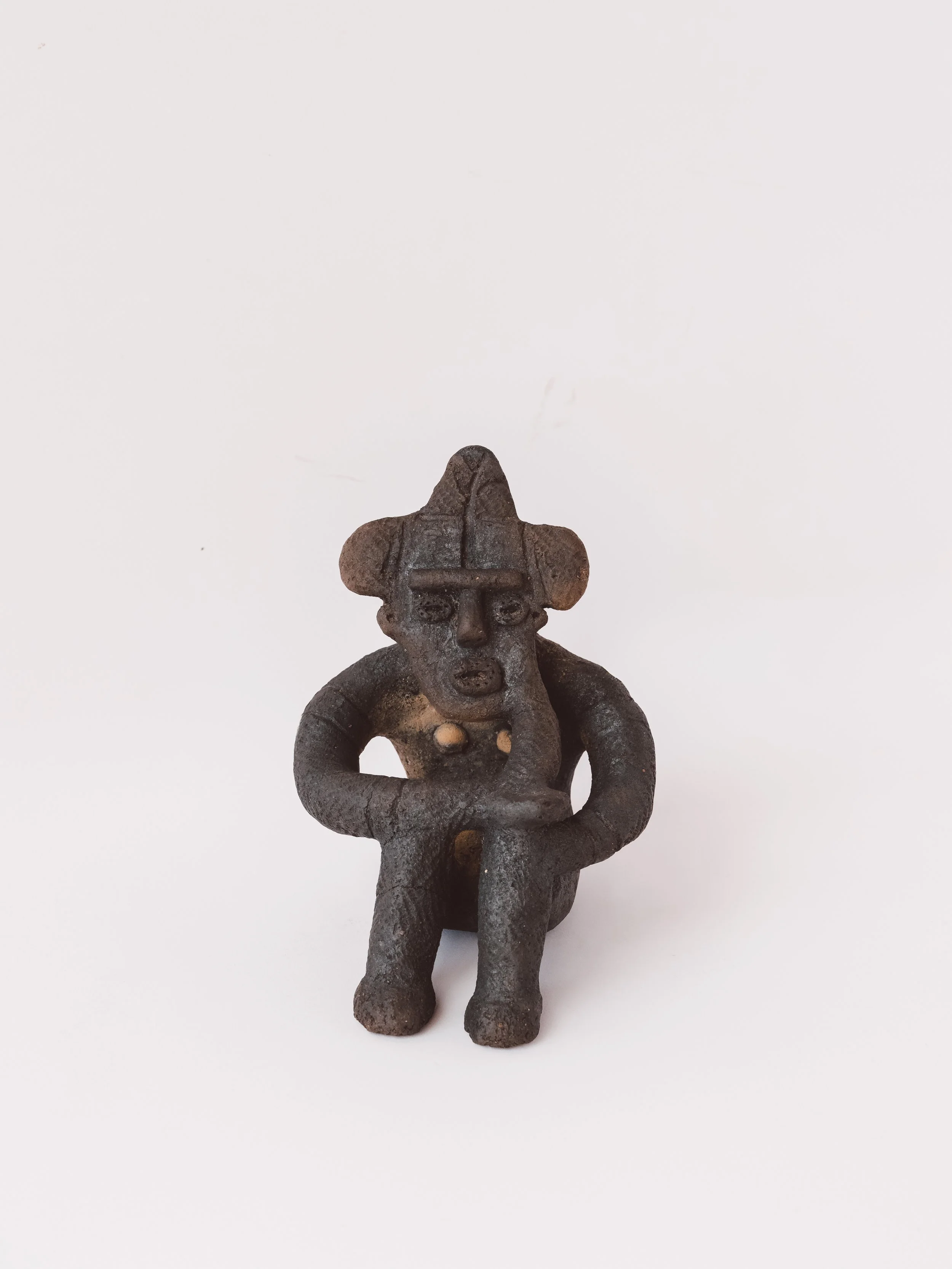 Image 1 of 9
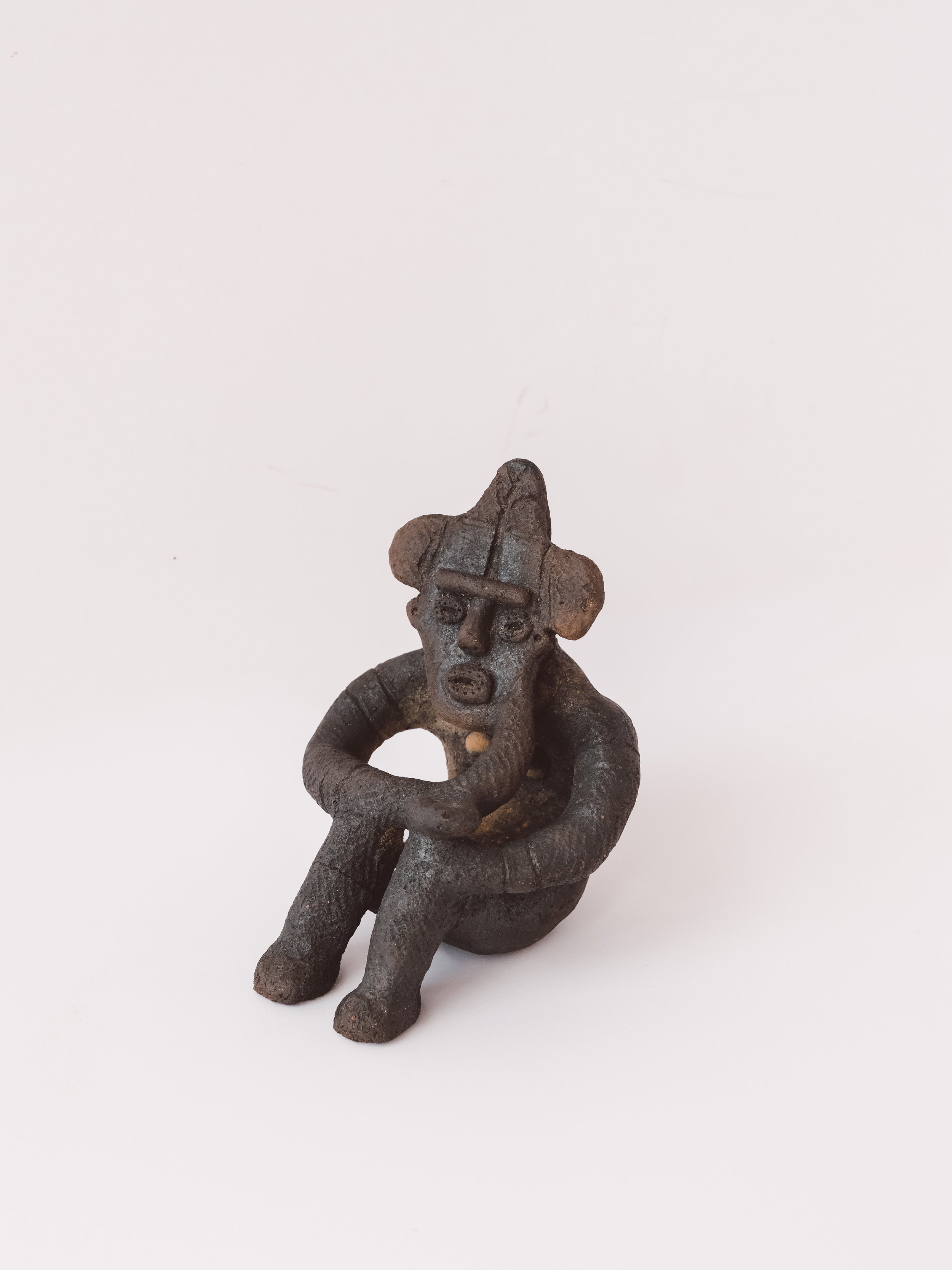 Image 2 of 9
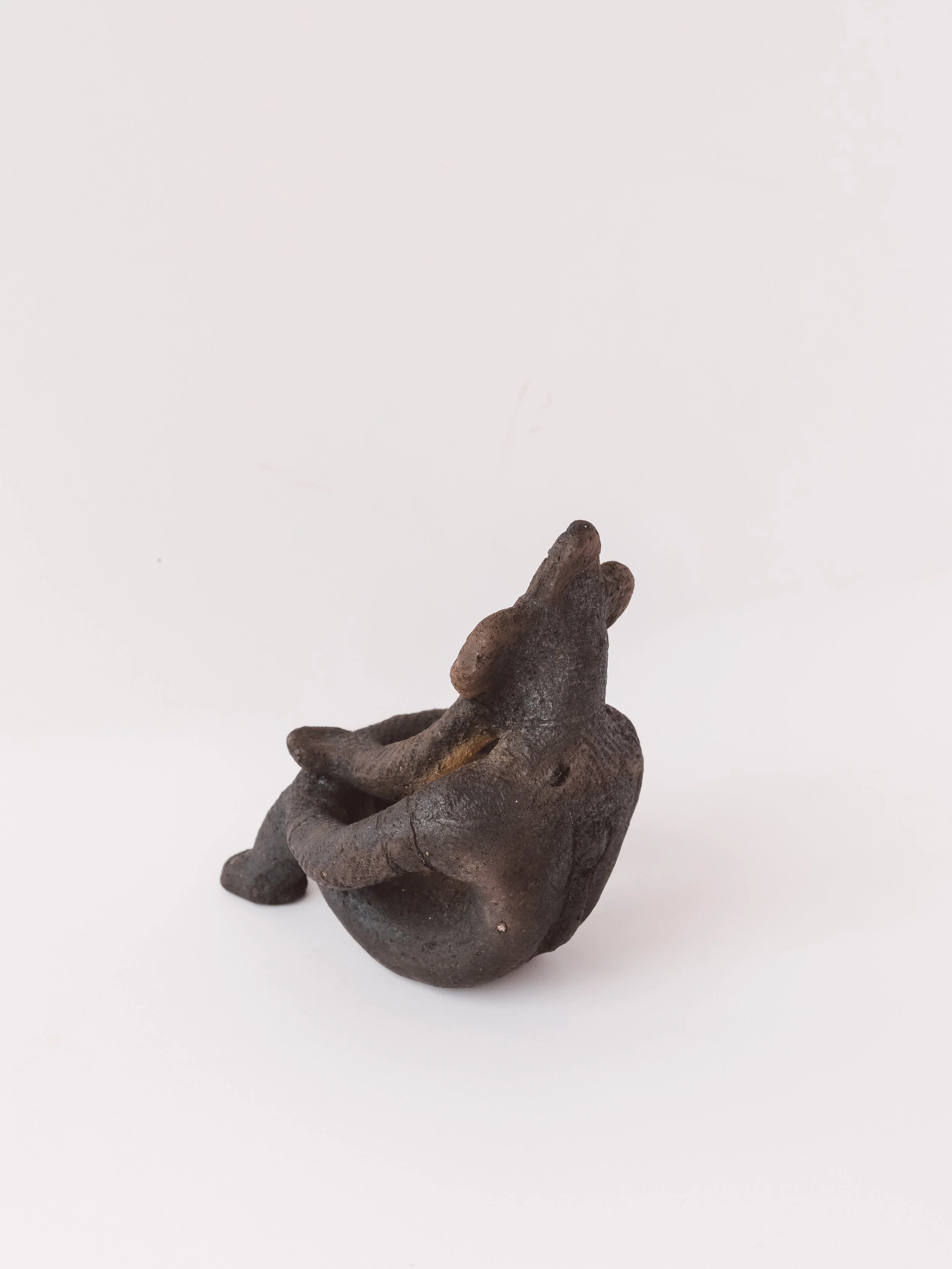 Image 3 of 9
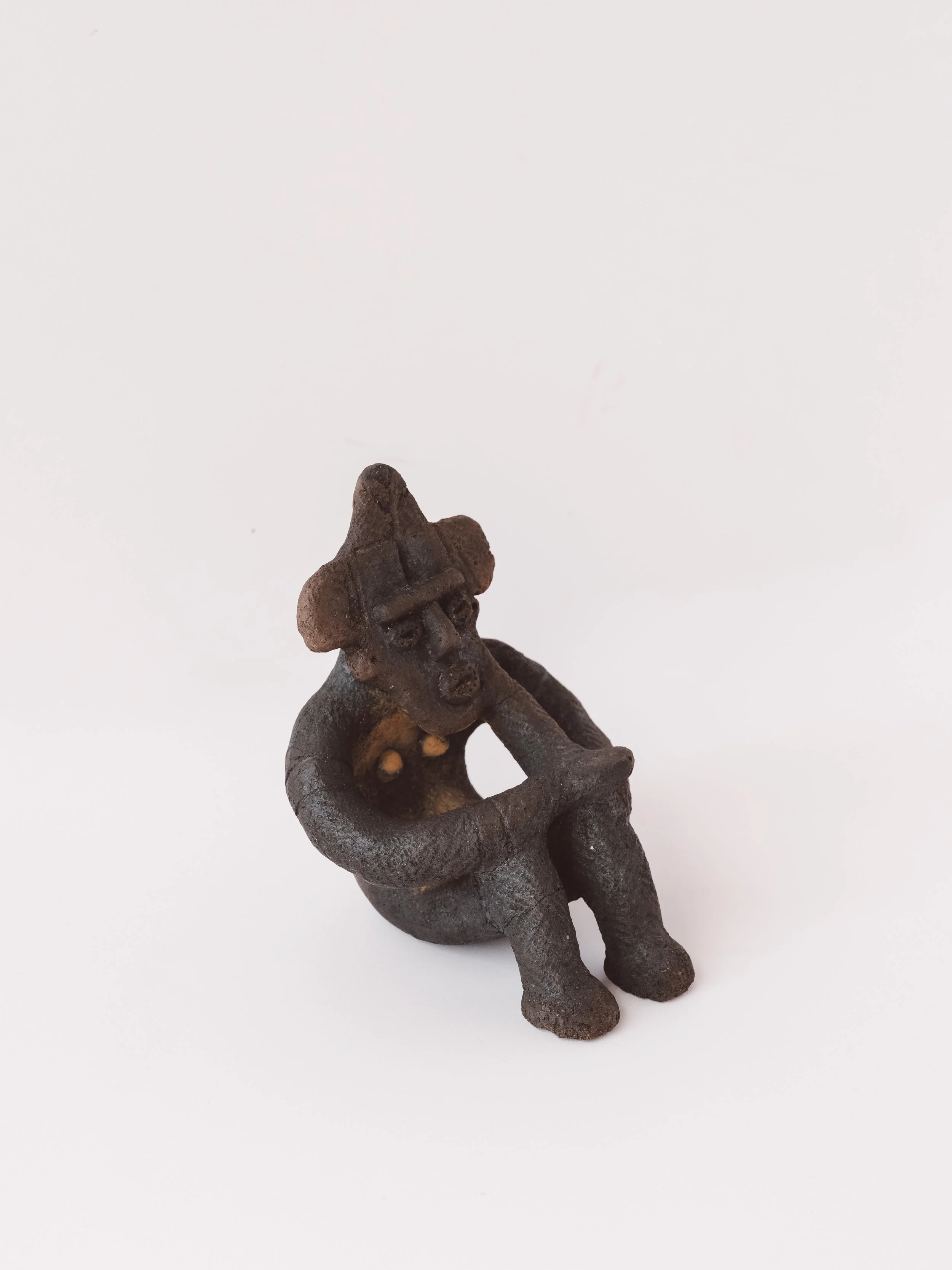 Image 4 of 9
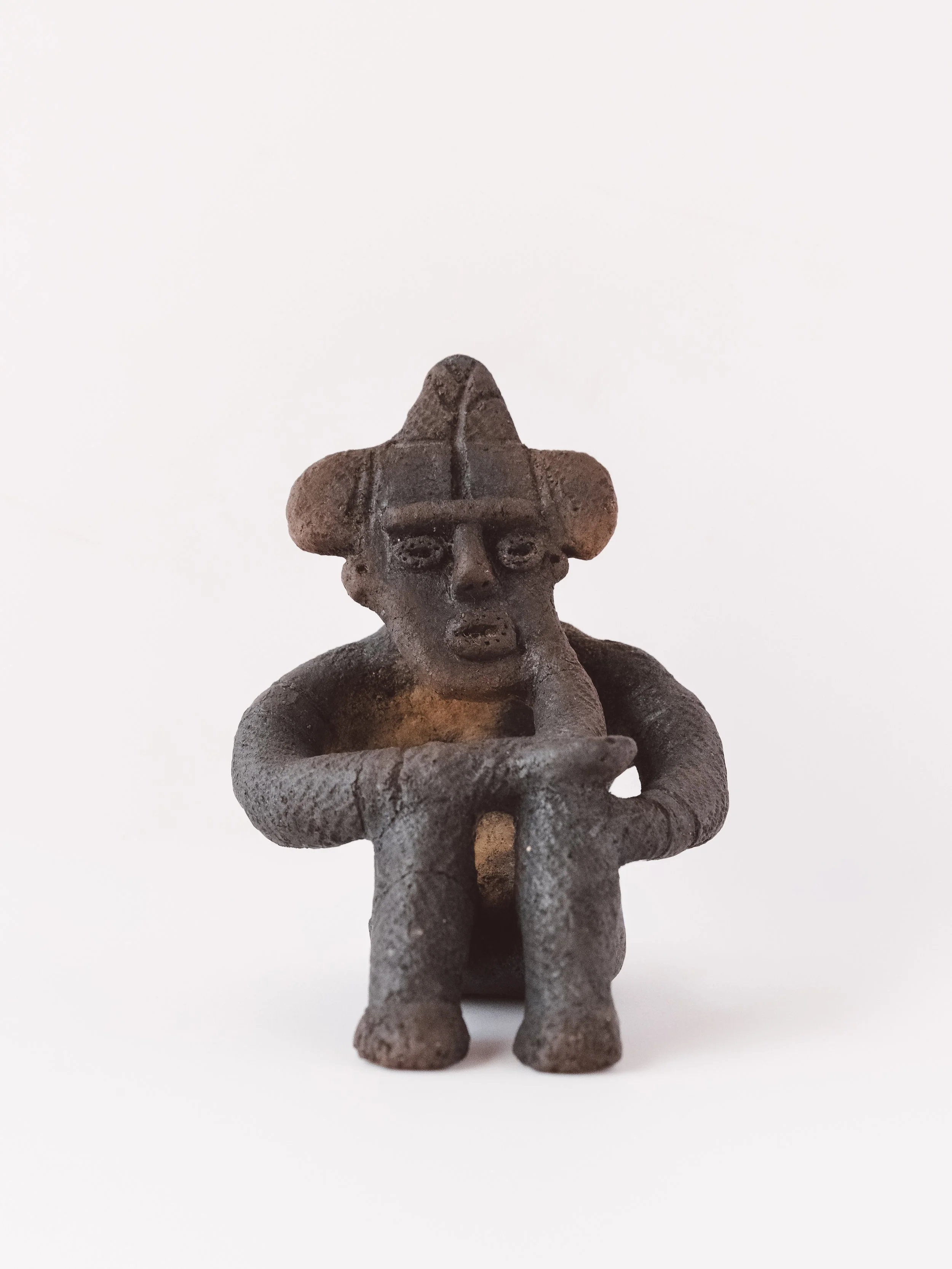 Image 5 of 9
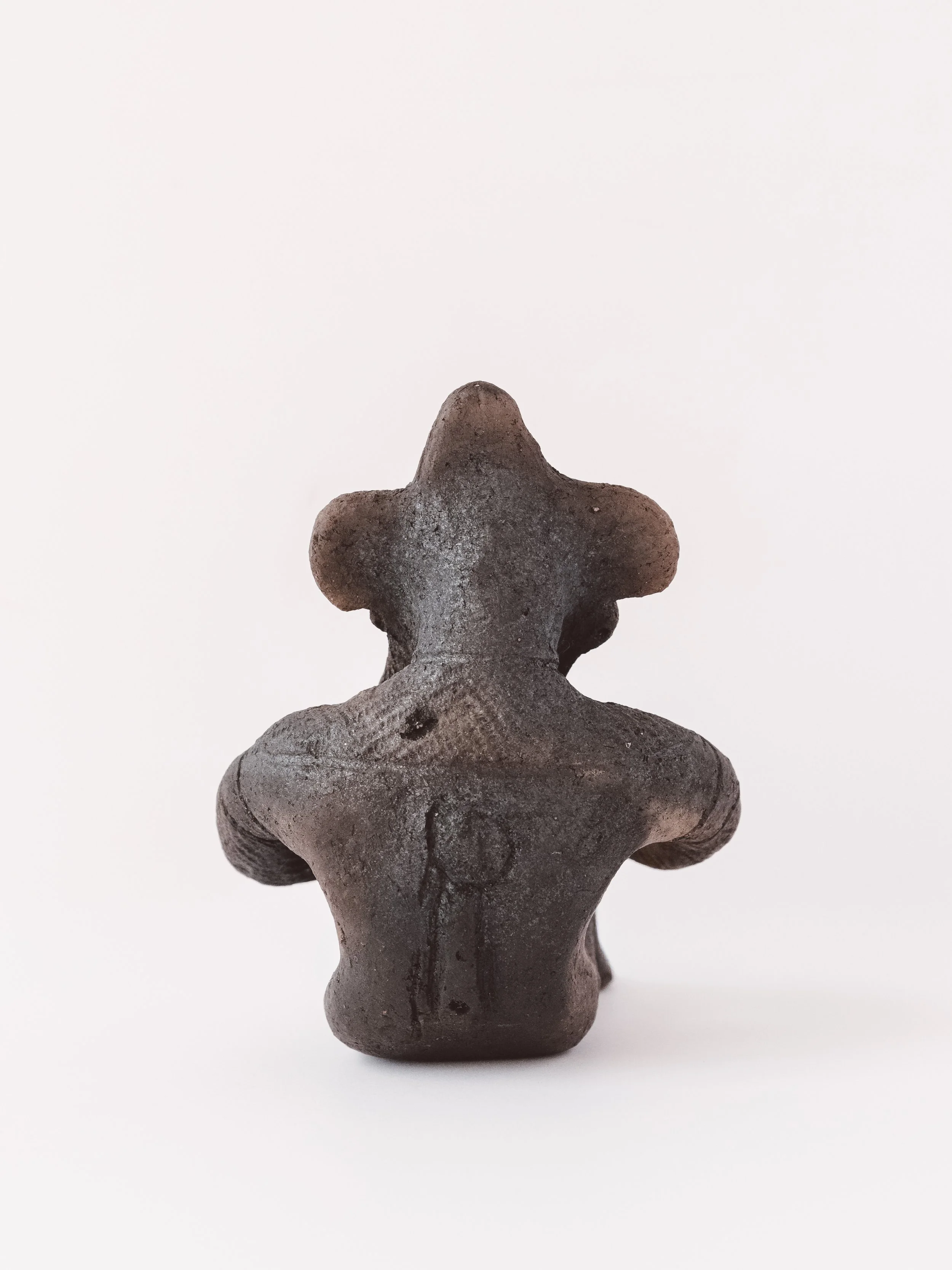 Image 6 of 9
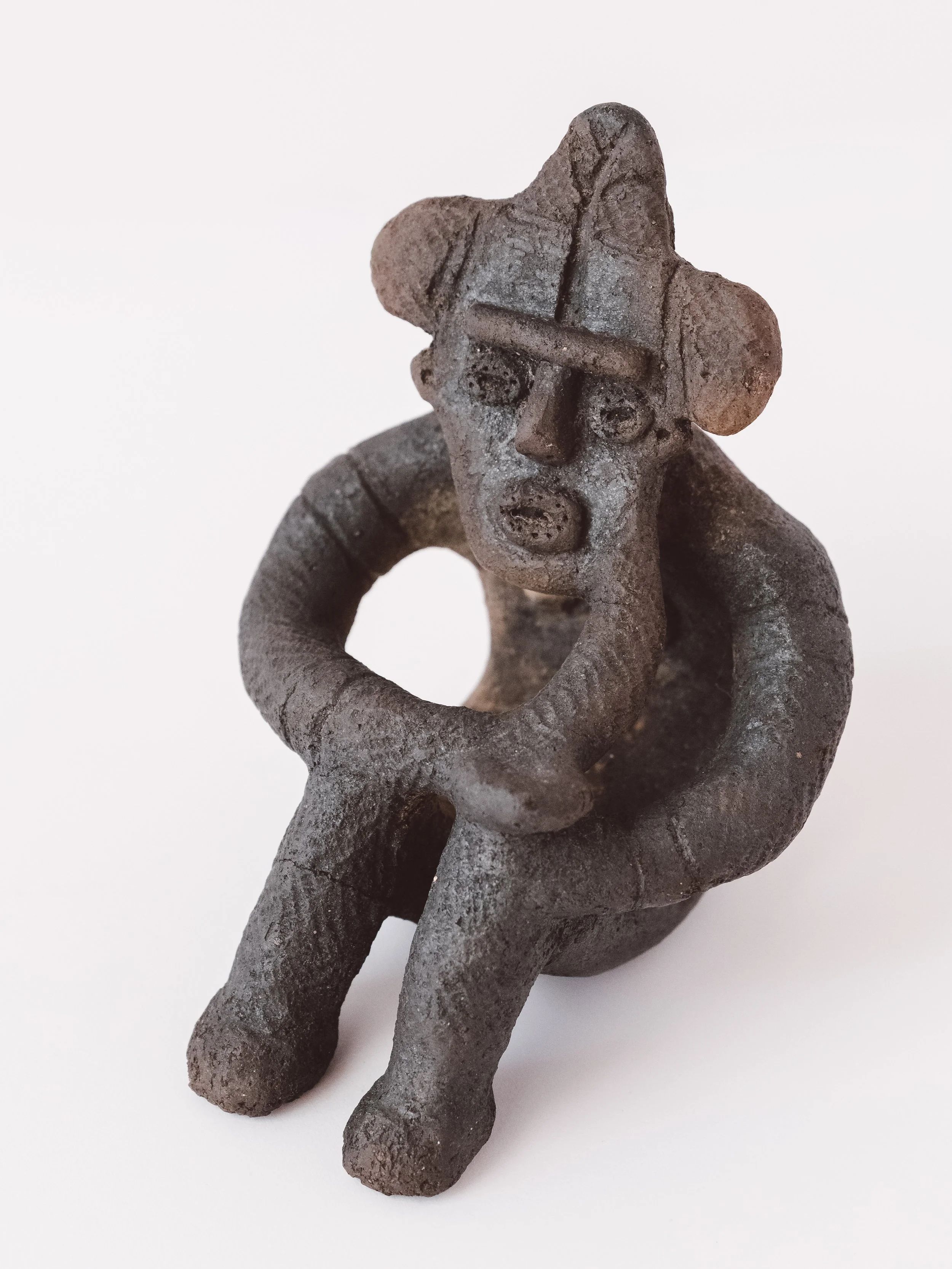 Image 7 of 9
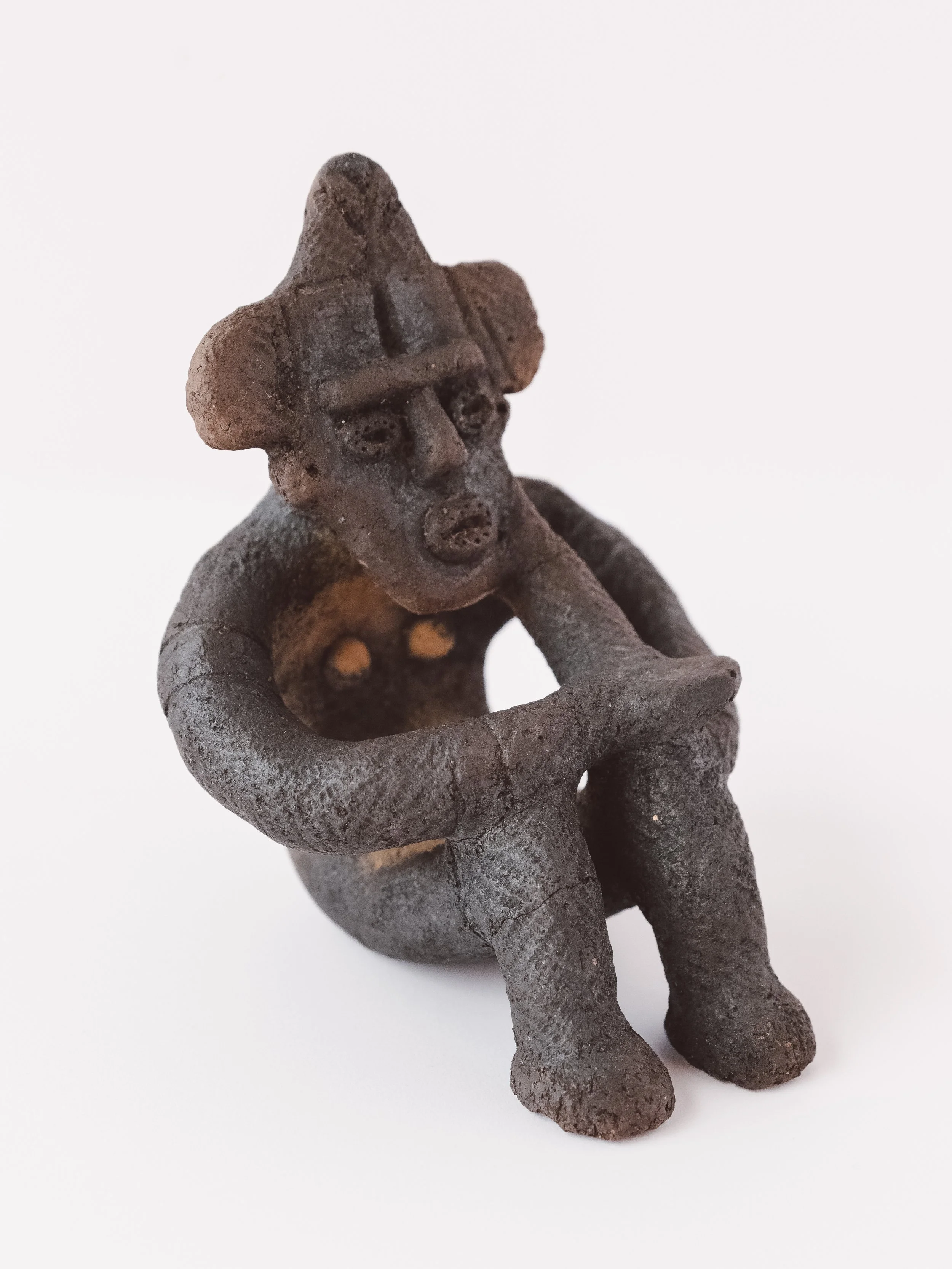 Image 8 of 9
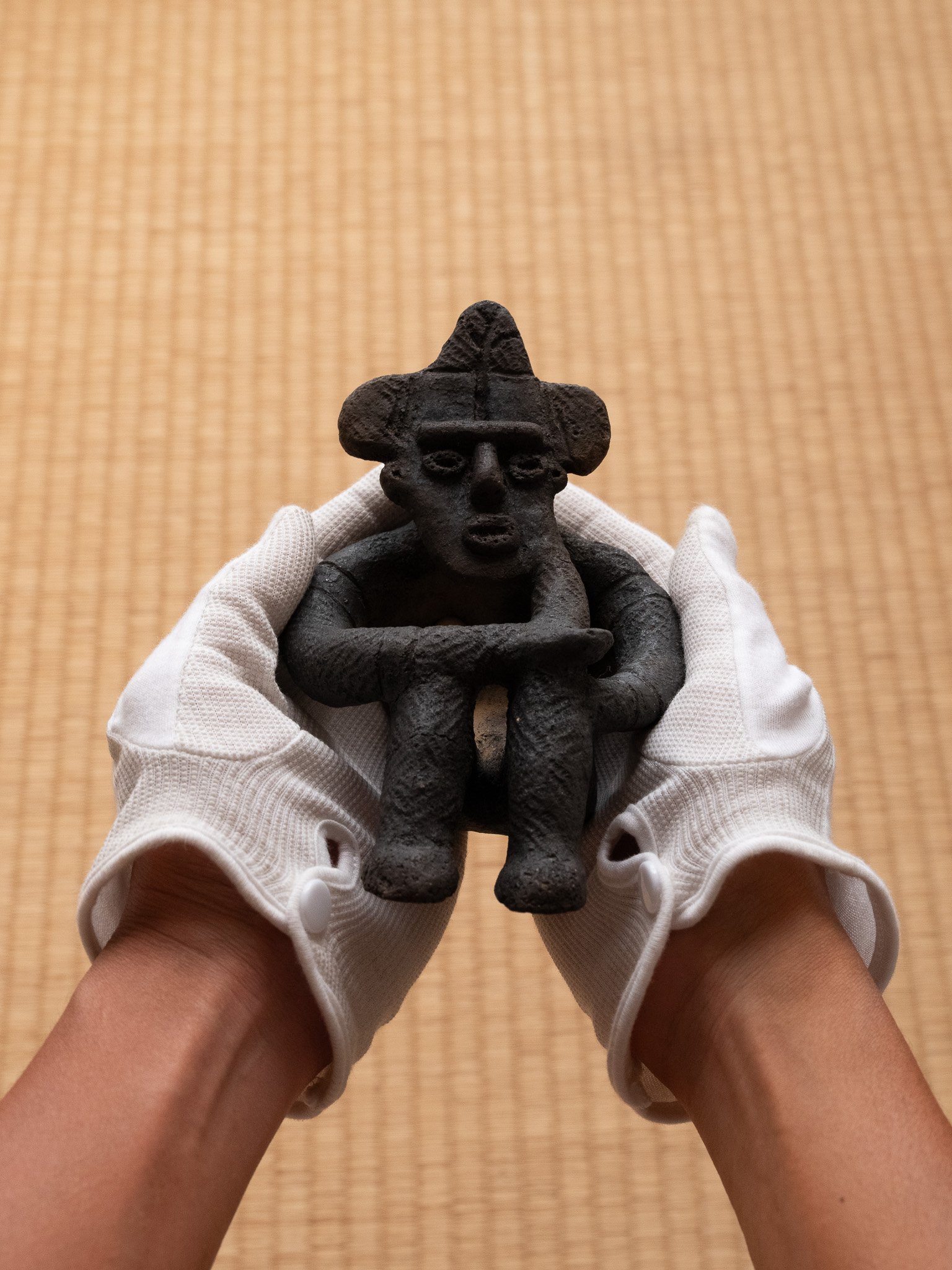 Image 9 of 9