【 The Concept 】
A small lidded box in the shape of a crab, glazed a deep, glossy amber brown. The lid is the crab’s shell: two round black eyes set at the front, the claws folded neatly in at the top corners, and the walking legs tucked tight along both sides, so that the whole animal fits into one compact, rounded form. On the broad back, a few soft grooves trace the lines of the shell. Lift the shell and the body beneath becomes a little bowl, its outside modelled with the curled legs of the underside. Where the glaze runs thin over the ridges it glows a warm honey colour; where it pools in the grooves it turns almost black, giving the crab its depth and shine.
【 The Crab in Japan 】
In Japan the crab is a familiar and well-loved creature, a part of seasonal food, folk tales and craft. Its hard shell has long been read as a symbol of protection, and its firm, unyielding claws as the grip that holds on to good fortune once it arrives. Crab shapes appear on tea utensils, incense boxes, paperweights and tableware, and a small crab-shaped box like this one sits naturally among them: playful on the outside, useful on the inside.
【 The Crabs with Warriors’ Faces 】
The most famous crab legend in Japan comes from the sea. In 1185, at the Battle of Dan-no-ura in the strait between Honshū and Kyūshū, the Heike (Taira) clan was finally defeated by the Genji (Minamoto). As the battle was lost, the child emperor Antoku was taken into the sea, and many Heike warriors followed him beneath the waves. Ever since, fishermen in those waters have told of a small crab whose shell bears the pattern of a fierce, grimacing human face. They call it heikegani, the Heike crab, and say the souls of the drowned warriors live on in its shell.
The astronomer Carl Sagan later used this story to explain artificial selection: if fishermen threw back the crabs whose shells looked most like a samurai face, over the centuries those faces would have become ever more common.
【 The Monkey and the Crab 】
Every Japanese child knows the folk tale Saru Kani Gassen, “The Battle of the Monkey and the Crab.” A crab trades her rice ball for a persimmon seed from a clever monkey, plants it and patiently raises it into a tree. When the fruit ripens, the crab cannot climb the tree, so the monkey climbs up, eats the fruit himself and throws a hard persimmon at her. With the help of her friends, a chestnut, a bee and a heavy rice mortar, the crab’s side then teaches the monkey a lesson; in many tellings the monkey finally apologises and shares the persimmons. The crab is the hero of patience, hard work and fair play.
【 The Crab in Chinese Scholar Art 】
In China, the crab has also been a symbol of success in the imperial civil service examinations. The word for its shell, jia, also means “first rank,” and crab motifs were placed on a scholar’s desk as a wish to pass with top honours. Through Chinese scholarly taste, the crab entered Japanese tea culture too, where crab-shaped lid rests and incense boxes became treasured utensils.
【 What Owning This Piece Brings 】
・ Protection. The crab’s hard shell is a small emblem of safety and of being well guarded.
・ Good fortune held fast. Like the crab’s claws, it carries the wish that the luck which comes to you stays with you.
・ Success in study and work. Through the scholar’s symbol of “first rank,” it suits a desk, a study, or anyone facing an exam.
・ A story in every lid. Each time you lift the shell, the box reveals what it is keeping safe inside.
A thoughtful gift for a seafood lover, a student, someone born under the sign of Cancer, or anyone who enjoys a small object with a sense of humour.
【 How to Use It 】
The box is the right size for rings, earrings, keys, coins, hair pins or small keepsakes on a dresser or desk. It can also hold incense cones, salt, or a small serving of pickles, sweets or delicacies at the table, a way of serving that turns the opening of the lid into a little moment of surprise. If you intend to use it for food, please treat it as a vintage piece and use it with care.
【 Where to Place It 】
On a dressing table, beside the entrance as a tray for keys, on a desk, or on a shelf among other ceramics. In soft side light the glossy glaze shows its full range of honey and dark-chocolate tones.
【 Care 】
Hand-wash gently in lukewarm water and dry thoroughly, especially the unglazed rims. Avoid the dishwasher, microwave, and sudden changes in temperature. Lift the lid with both hands and set it down gently; the rims of the lid and bowl are unglazed and can chip if knocked together.
【 Reading the Object 】
A two-part lidded box in the form of a crab. The lid forms the shell: a broad, flat back with soft incised lines tracing the shell, two raised black glaze eyes at the front, folded claws at the upper corners, and segmented legs tucked along the sides. The bowl is oval, its outside modelled in relief with the curled legs of the underside. A glossy amber-brown glaze of the kind known in Japan as ame-yū (“candy glaze”) covers the outside of both parts and the inside of the bowl, pooling dark in the hollows. The rims where lid and bowl meet are left unglazed, showing a pale beige clay; the inside of the lid is unglazed. On the base, an unglazed oval foot rim is broken by four small notches. No maker’s mark.
【 Presence 】
Warm, glossy and quietly humorous. A small crab keeping something safe beneath its shell.
Archive Note: The number in the name (1185) marks the year of the Battle of Dan-no-ura, the origin of the legend of the heikegani, the crab with a warrior’s face. NOT the date this piece was made.
Provenance Note: Sourced from a private household in Japan. A vintage Japanese glazed ceramic lidded box. No maker’s mark; the kiln is unidentified.


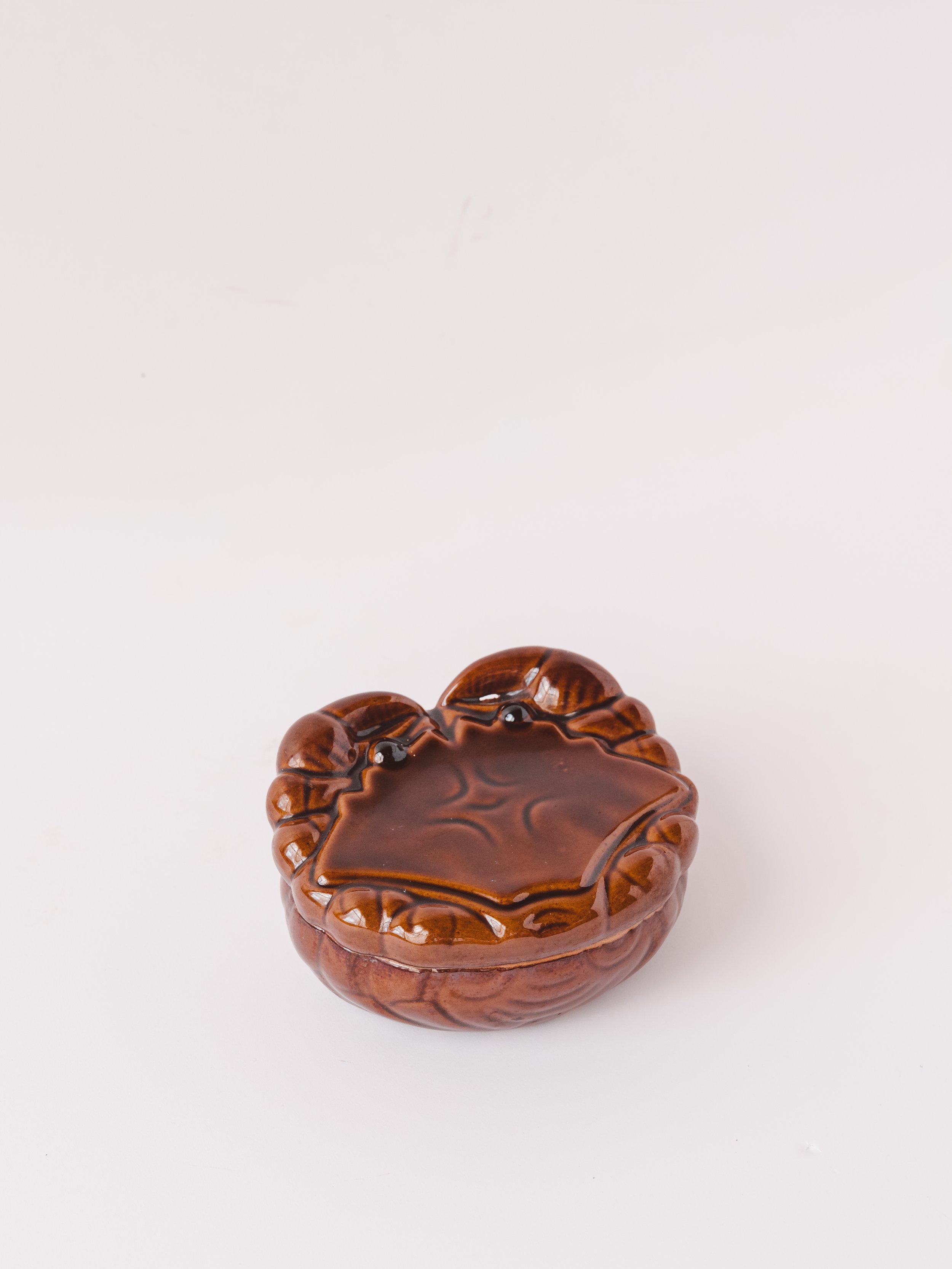 Image 1 of 8
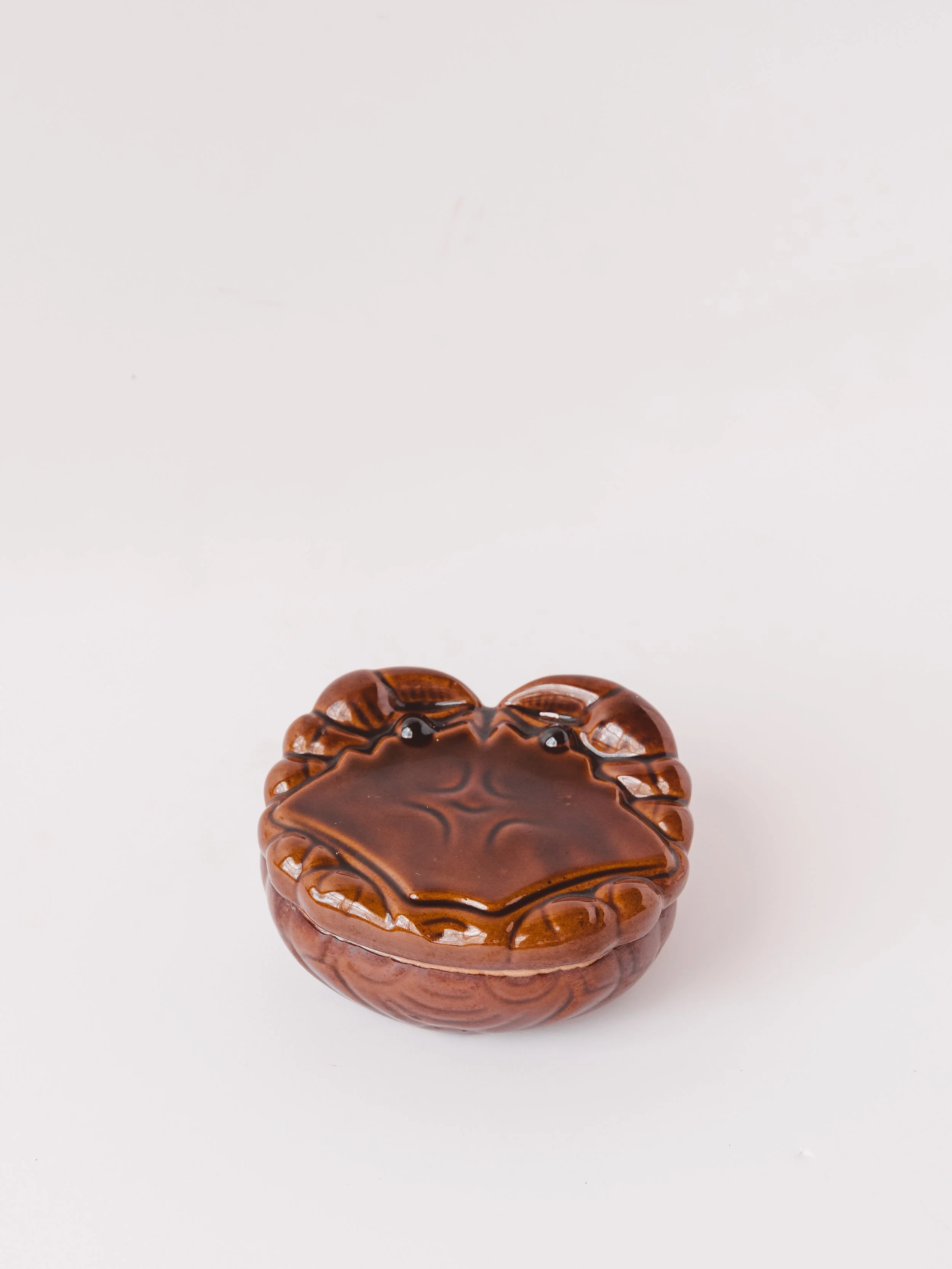 Image 2 of 8
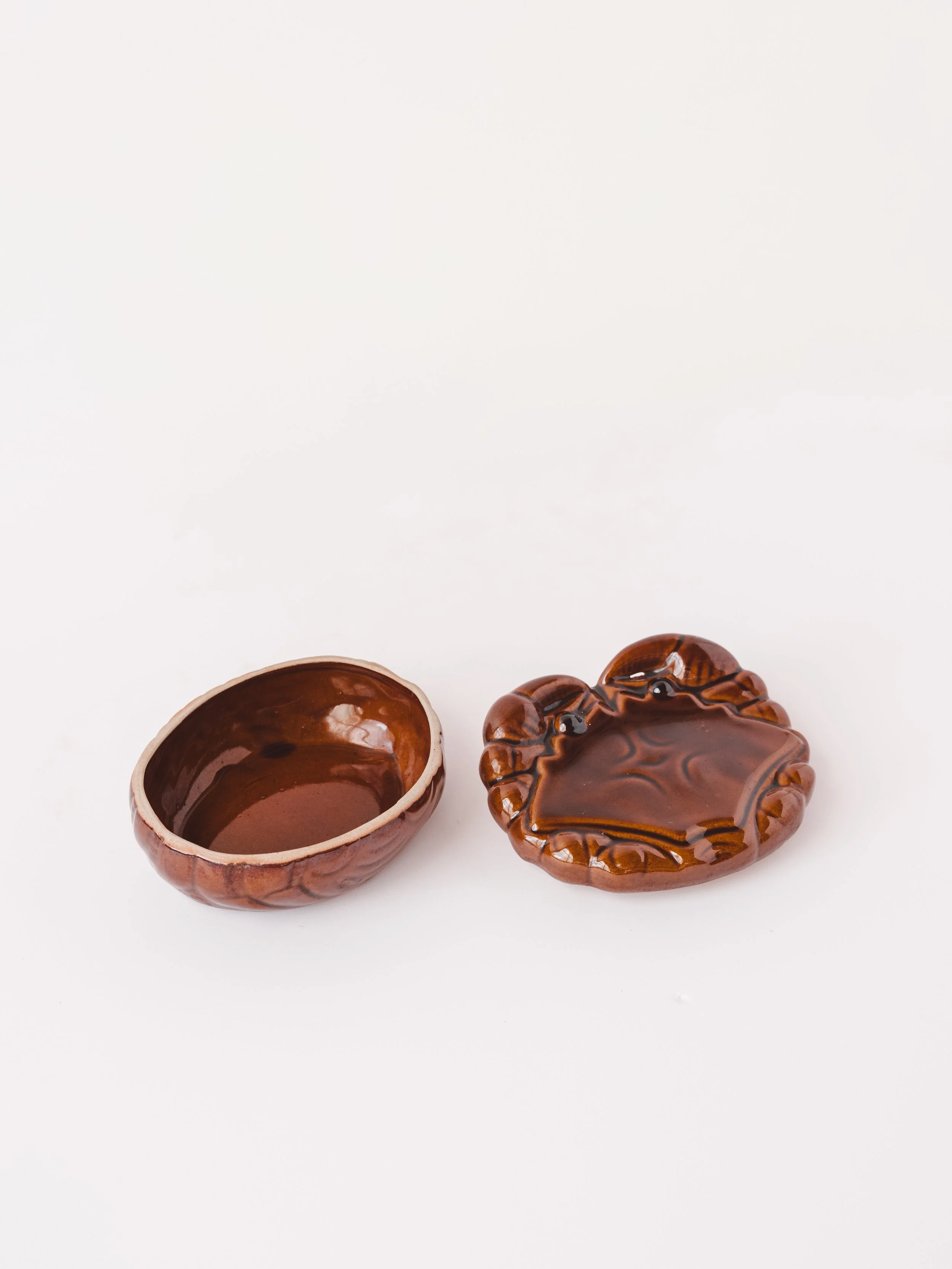 Image 3 of 8
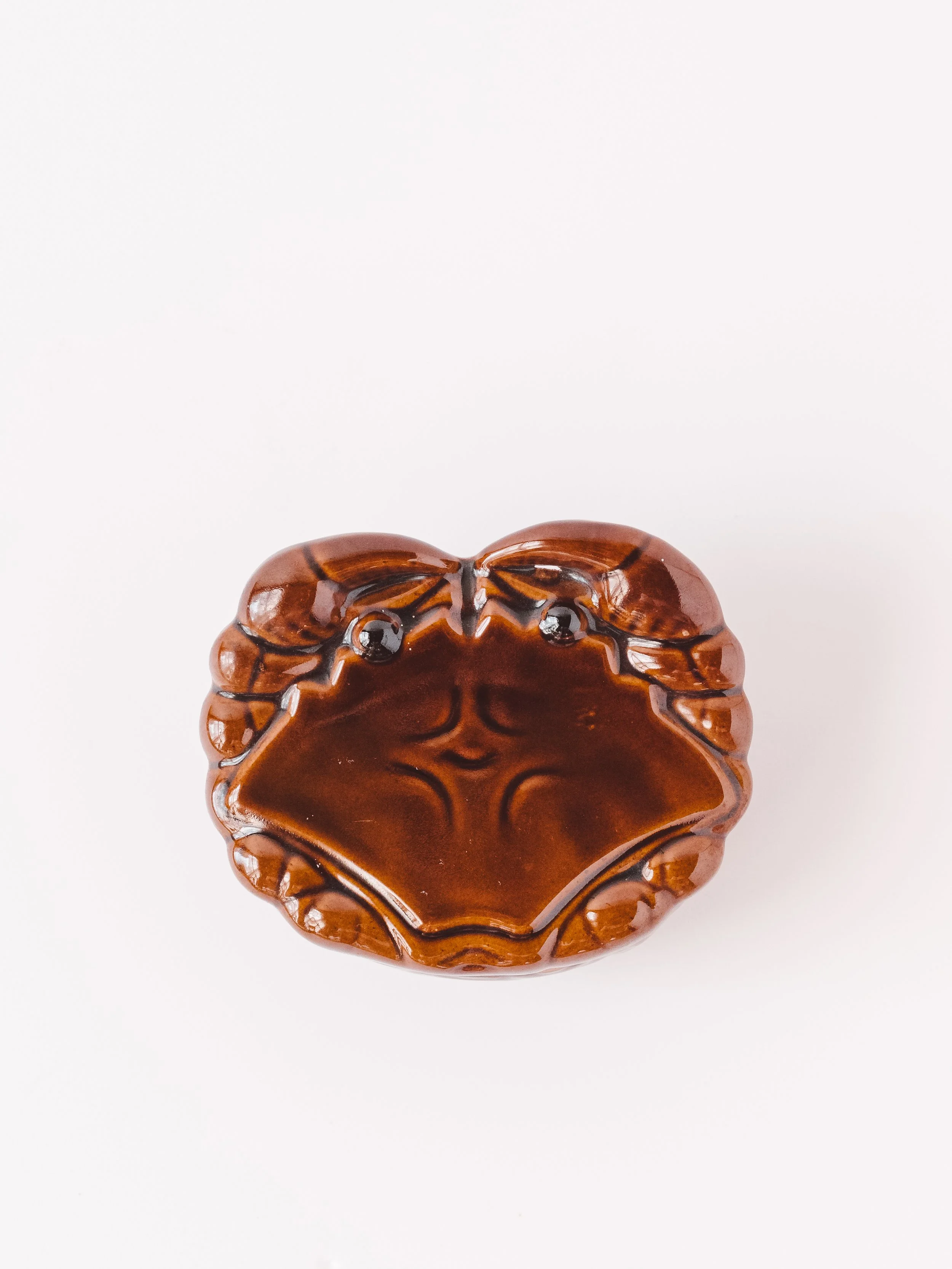 Image 4 of 8
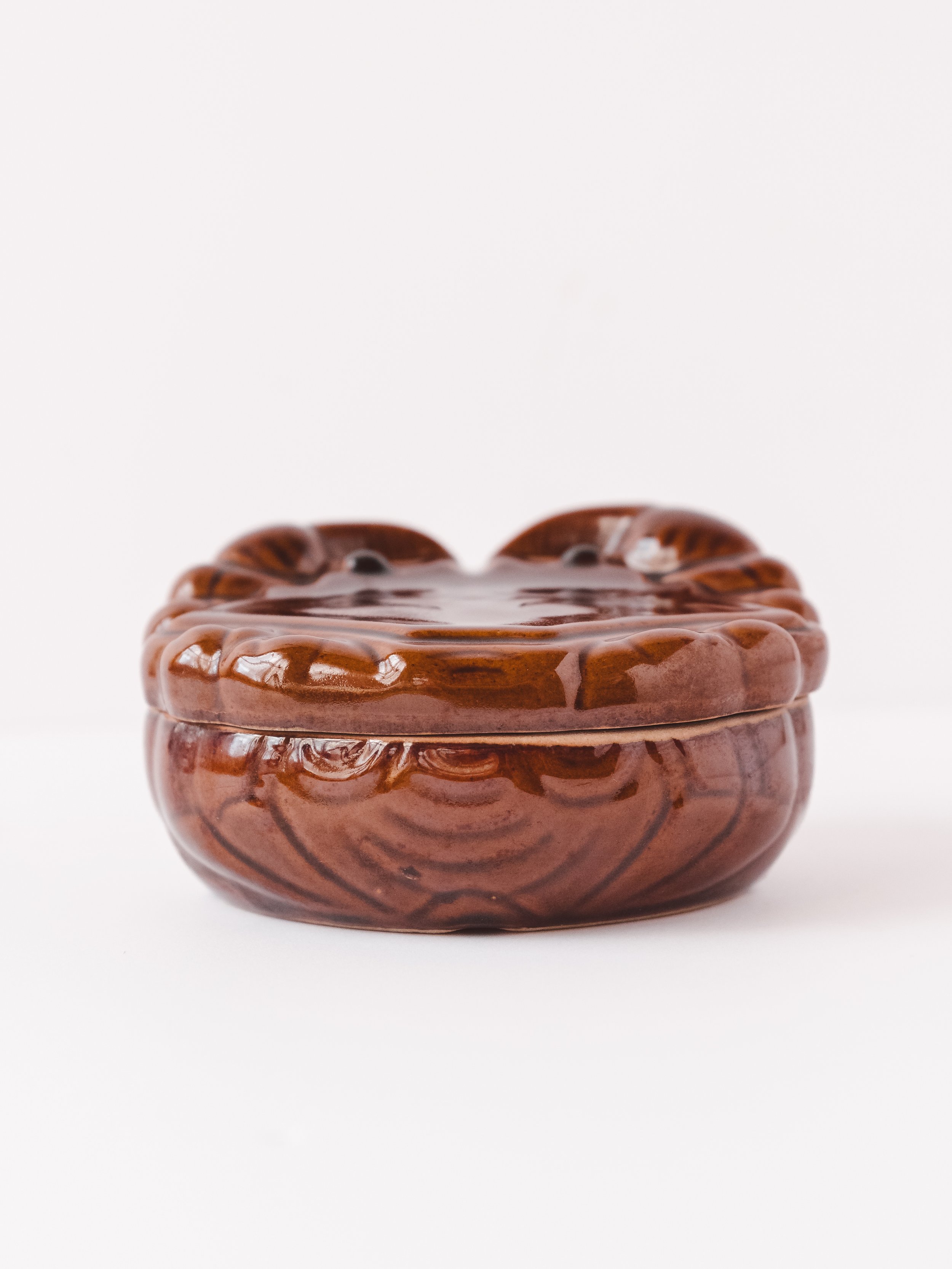 Image 5 of 8
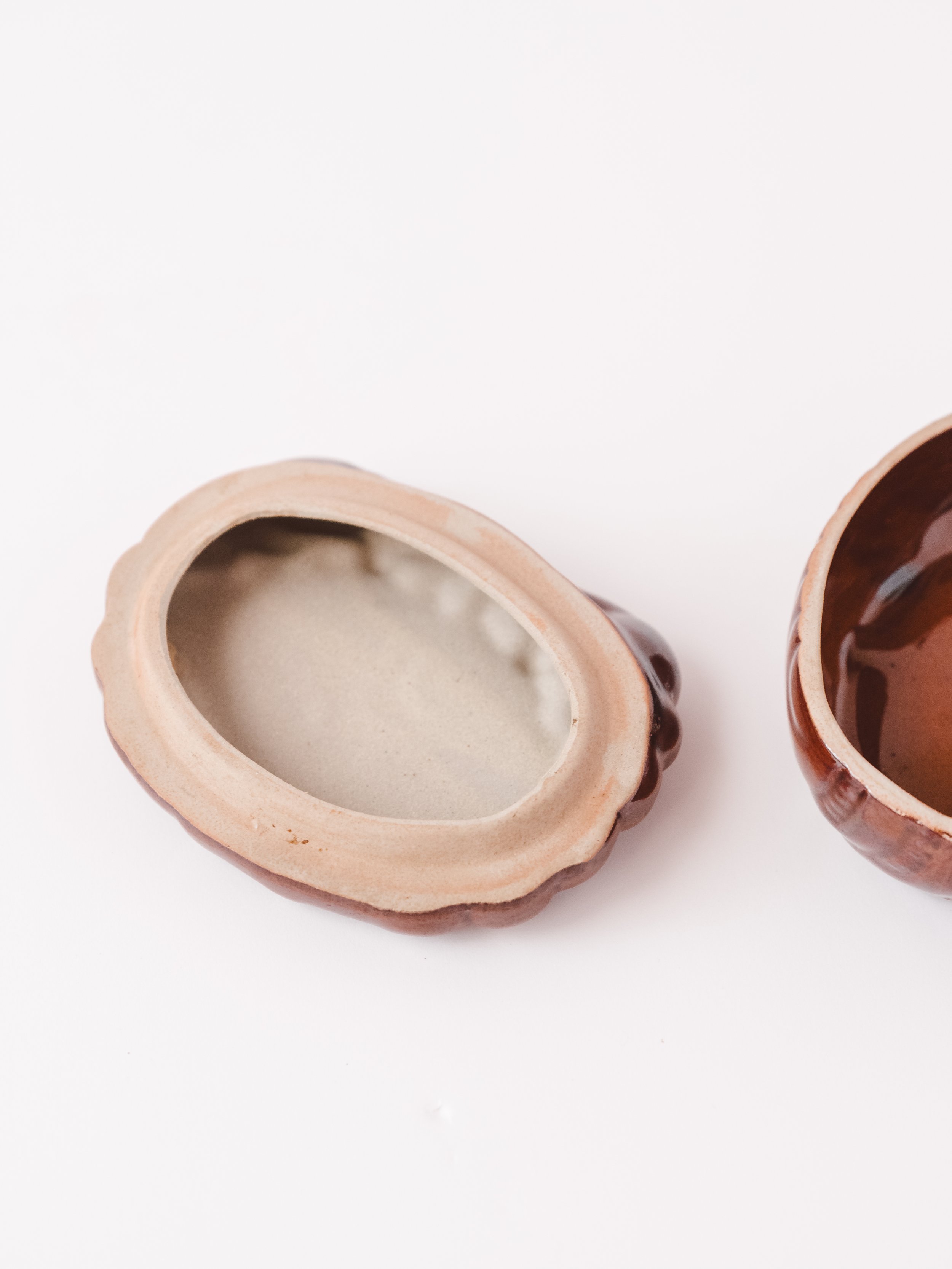 Image 6 of 8
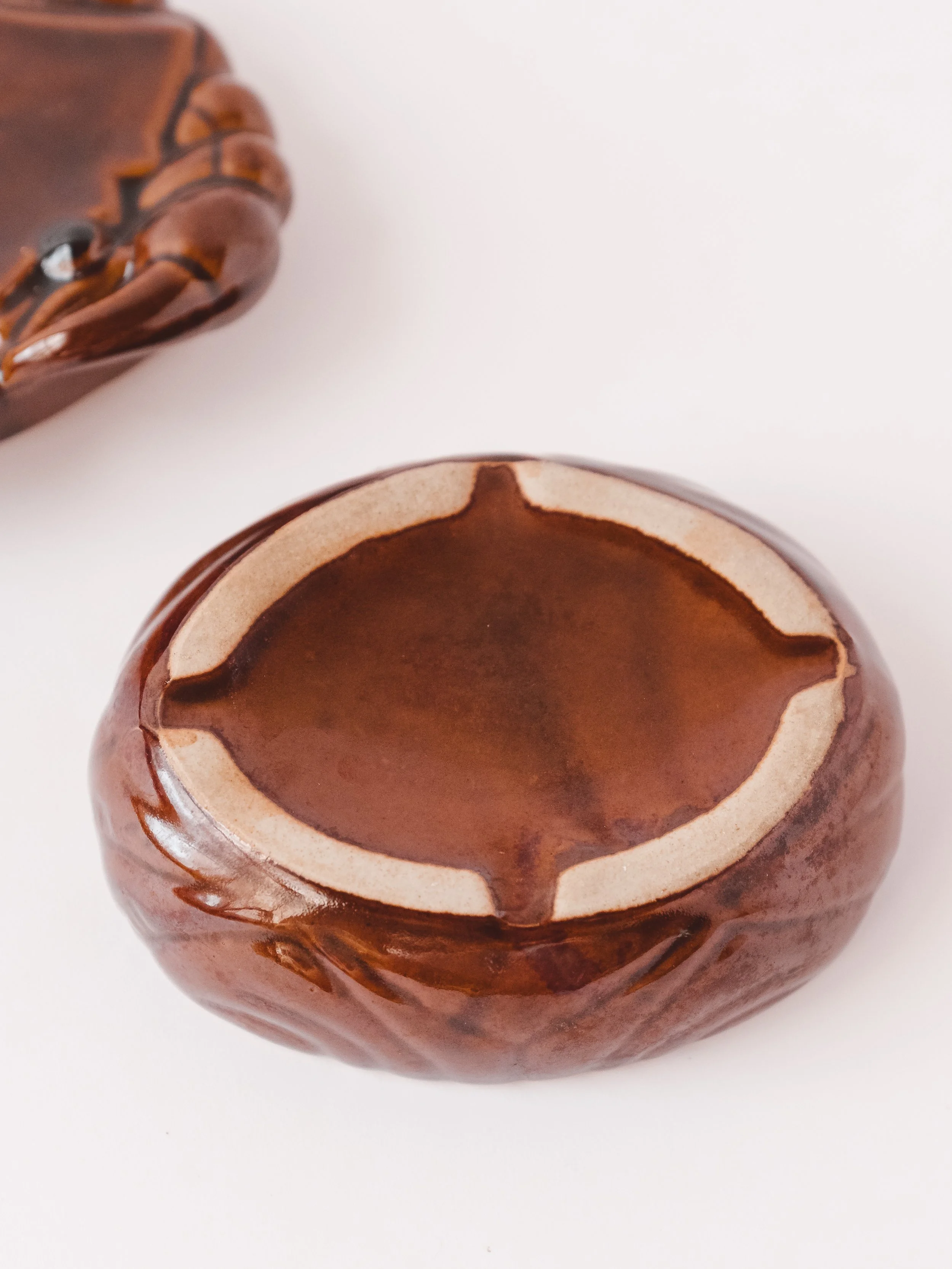 Image 7 of 8
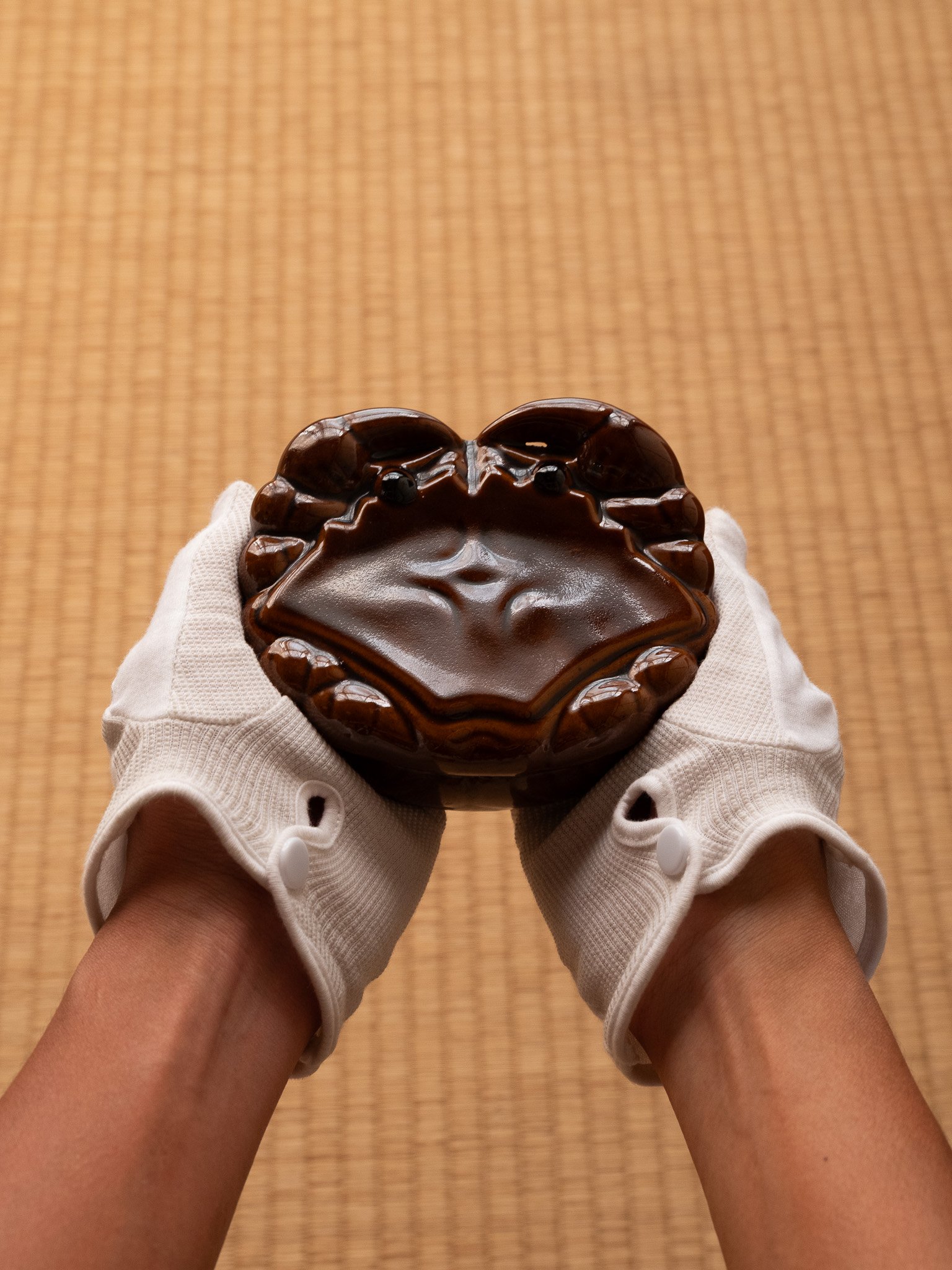 Image 8 of 8