【 The Concept 】
A warrior stands in quiet readiness. His helmet is studded with rivets, cheek guards frame a calm face with narrow, open eyes, and his whole body is wrapped in armor scored line by line. One hand grips the hilt of a long sword, and on his back he carries a quiver of arrows.
This terracotta figure is modeled on Haniwa Keikō no Bujin, the “Warrior in Armor,” one of the most famous ancient sculptures in Japan and a National Treasure held by the Tokyo National Museum.
【 Guardians of the Ancient Tombs 】
Haniwa are unglazed clay figures that were set out on and around the great burial mounds (kofun) of ancient Japan. Most were simple cylinders, but some took the form of houses, animals and people. The original Warrior in Armor was made in the 6th century, in the late Kofun period, and was excavated in Iizuka-chō, in the city of Ōta in Gunma Prefecture. It stands about 130 cm tall and is thought to portray a person of high status.
On June 8, 1974, it became the first haniwa ever designated a National Treasure of Japan.
【 The Warrior’s Equipment 】
The original records the equipment of an elite warrior in remarkable detail. His helmet, with cheek guards and a neck guard at the back, is a form found only in the Japanese islands. His armor appears to have been made of small iron plates laced together. A long, heavy sword hangs at his waist. On his left wrist is a tomo, a guard that protected the wrist when drawing a bow, and on his back is a quiver holding five arrows with their heads pointing up.
This figure carries those same details: the studded helmet, the striped armor, the sword gripped in the right hand, the band at the left wrist, and the quiver on the back. Here the maker gave it four arrowheads, rising like the fingers of a hand.
【 Once in Full Color 】
Today the Warrior in Armor is the color of fired earth, but it was not always so. During its recent dismantling and restoration, analysis showed that the original had been painted in three colors, white, red and gray. The museum has since revealed a color reconstruction, showing how bright the warrior once looked. Researchers have also identified four other haniwa that may have come from the same workshop.
【 From Haniwa to Giant 】
The warrior’s silent dignity has reached far beyond archaeology. In 1966, the film studio Daiei released Daimajin, a trilogy of special-effects period films about a giant stone god who awakens to punish tyrants, and the Warrior in Armor is said to have been the model for the giant’s look. A quiet clay figure from a 6th-century tomb became one of the icons of Japanese film.
【 Haniwa in Miyazaki 】
Far to the south, in Miyazaki Prefecture, haniwa became a beloved local craft. In Miyazaki’s Heiwadai Park, a haniwa garden displays about 500 handmade haniwa replicas among the trees. This figure comes from that tradition: a gold label on the skirt reads “MADE IN JAPAN / MIYAZAKI,” and a round mark is stamped into the clay at the back of the base.
【 What Owning This Piece Brings 】
・A hand-finished replica of one of Japan’s most celebrated ancient sculptures
・Warm, unglazed terracotta with dark-washed incised lines that bring out every plate of the armor
・A calm, timeless face that suits both modern and traditional interiors
・A story that runs from 6th-century tombs to the Tokyo National Museum and Japanese cinema
A thoughtful gift for lovers of archaeology, Japanese history, samurai culture or film.
【 Where to Place It 】
On a bookshelf or desk, beside books on history and art. In an entryway, where a guardian belongs. Against a plain wall with side light, where the deep lines of the armor cast fine shadows.
【 Care 】
Unglazed terracotta. Dust with a soft, dry brush and avoid water, which can stain the clay. Lift it with both hands, supporting the body and base rather than the helmet or arms.
【 Reading the Object 】
・Helmet: domed and studded with rows of rivets, with cheek guards framing the face
・Face: narrow pierced eyes and a small mouth, calm and without expression
・Armor: vertical plates and cross-hatched lines, with tied fastenings at the chest
・Arms: shoulder guards; the right hand grips a long sword held across the front, a wrist guard (tomo) on the left arm
・Back: a quiver with four arrowheads pointing upward
・Base: a flared, skirt-like base with incised armor patterns; hollow inside, as ancient haniwa were
・Marks: a gold label reading MADE IN JAPAN / MIYAZAKI, and a round stamped mark at the back of the base
【 Presence 】
Steady and silent. The figure does not move or threaten; it simply stands guard, as the original has for almost fifteen centuries.
Archive Note
The year 1974 refers to the designation of the original Warrior in Armor as a National Treasure. It is not the production date of this piece. This is a later replica, and its production date is unknown.
Provenance Note
Sourced in Japan. A reproduction made in Miyazaki, according to its label; not an archaeological artifact.


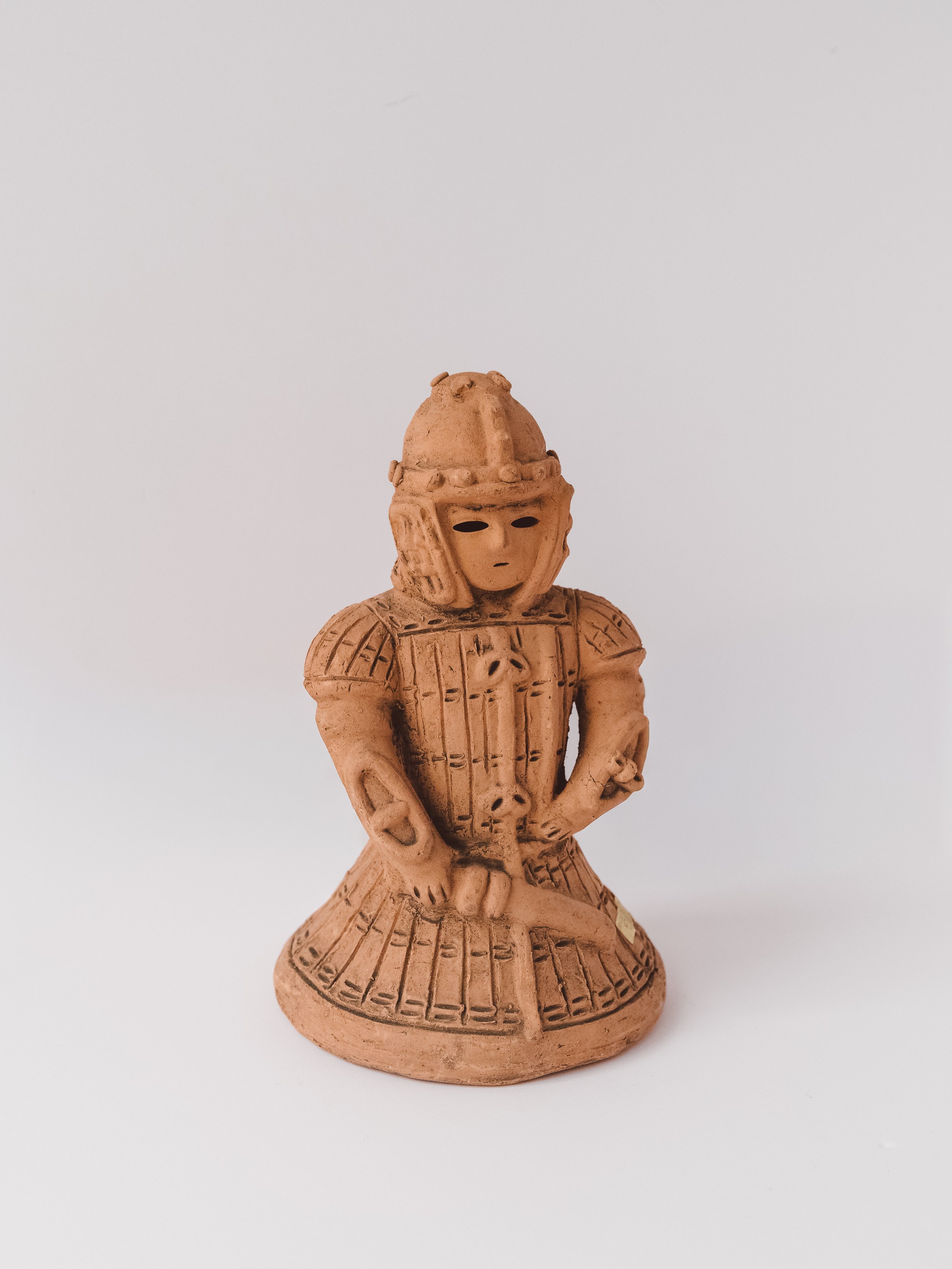 Image 1 of 15
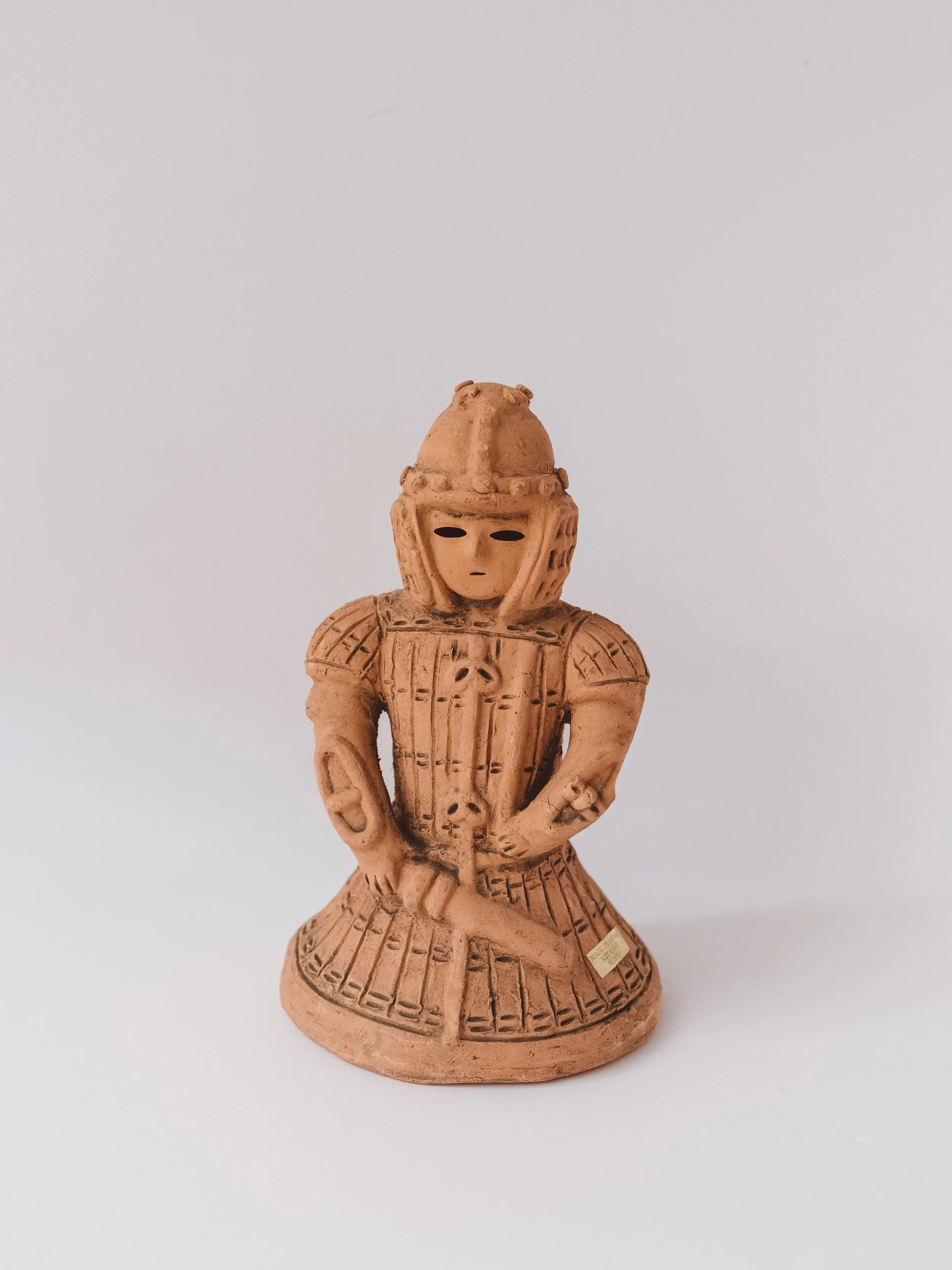 Image 2 of 15
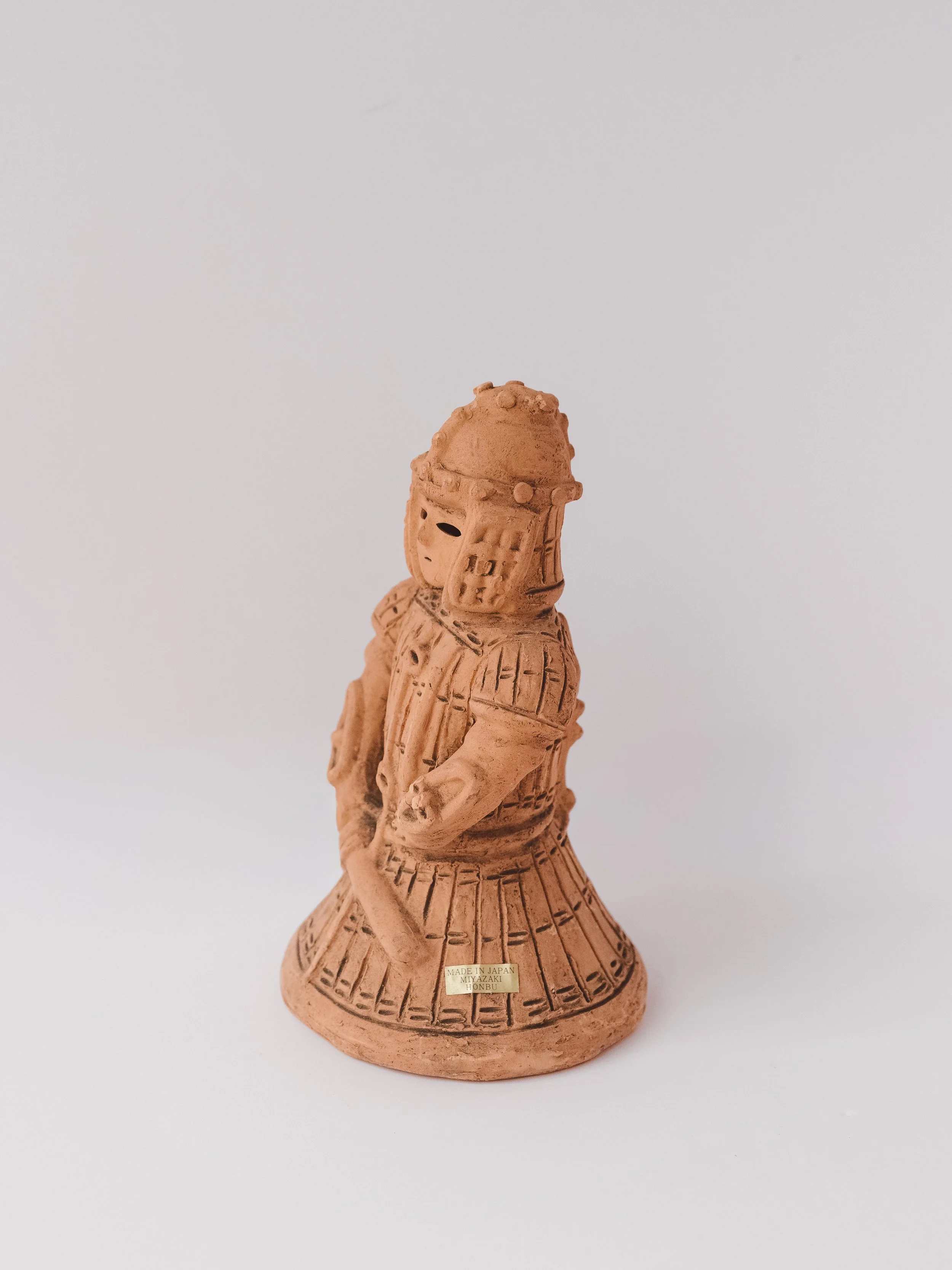 Image 3 of 15
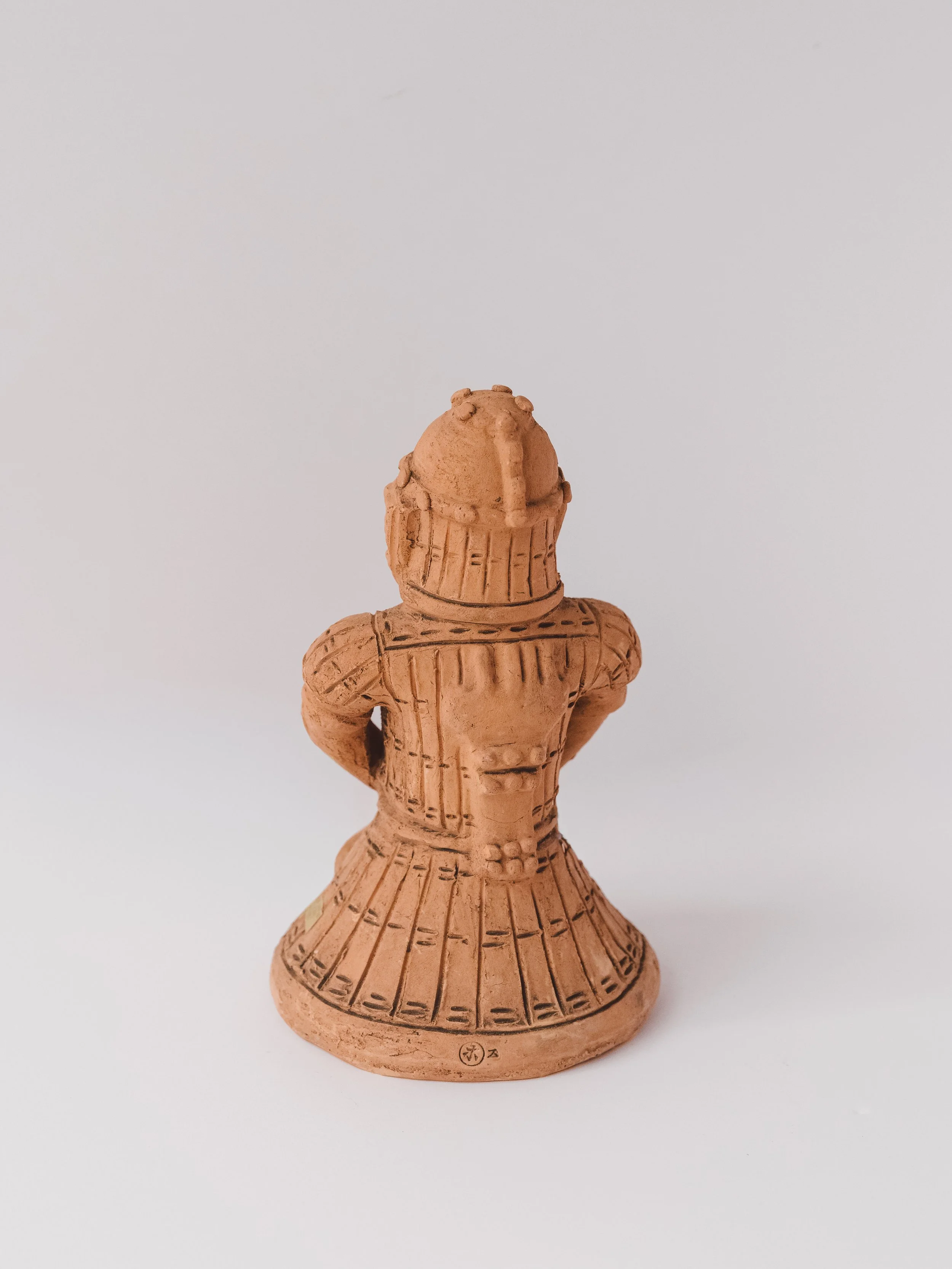 Image 4 of 15
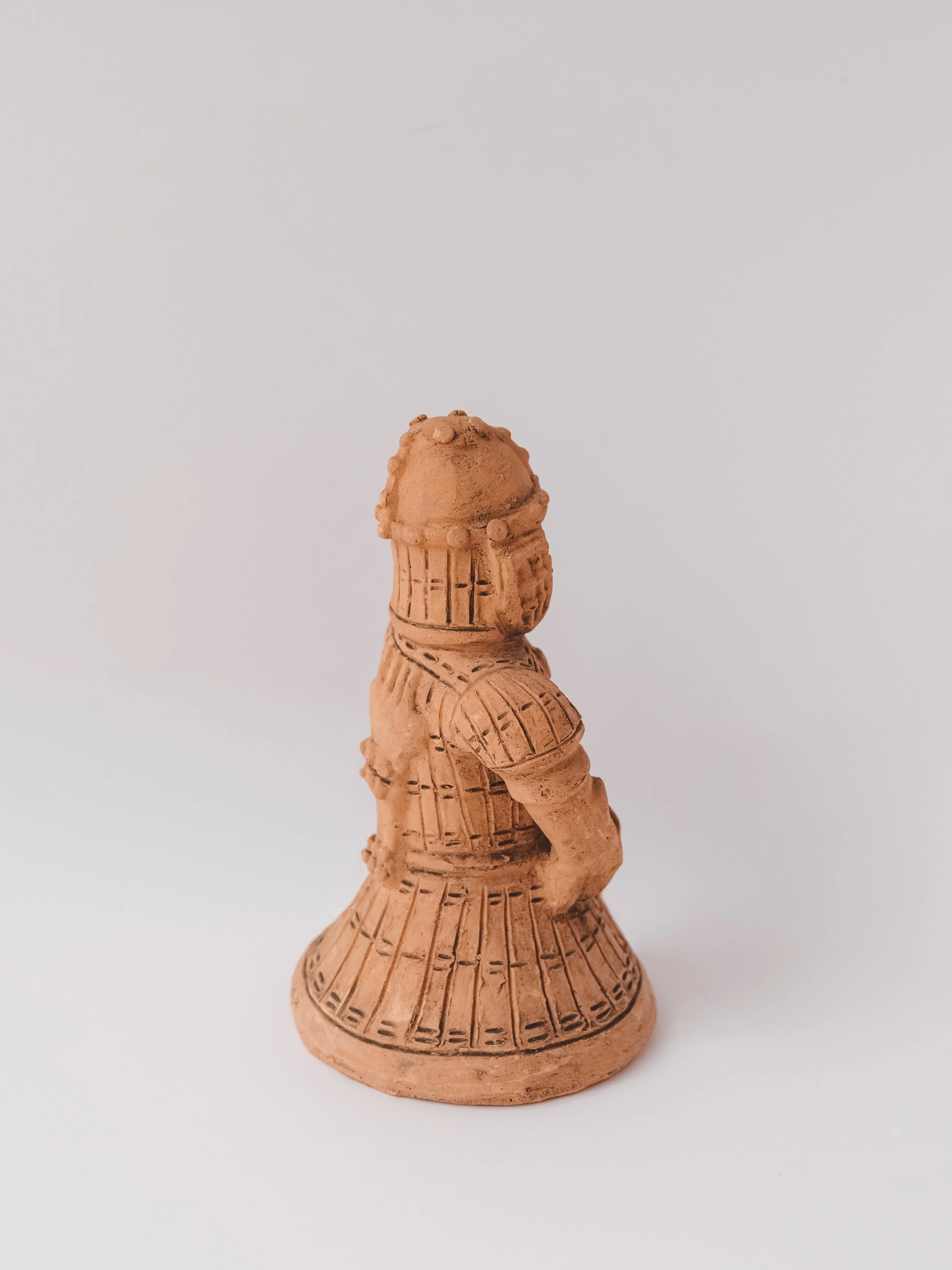 Image 5 of 15
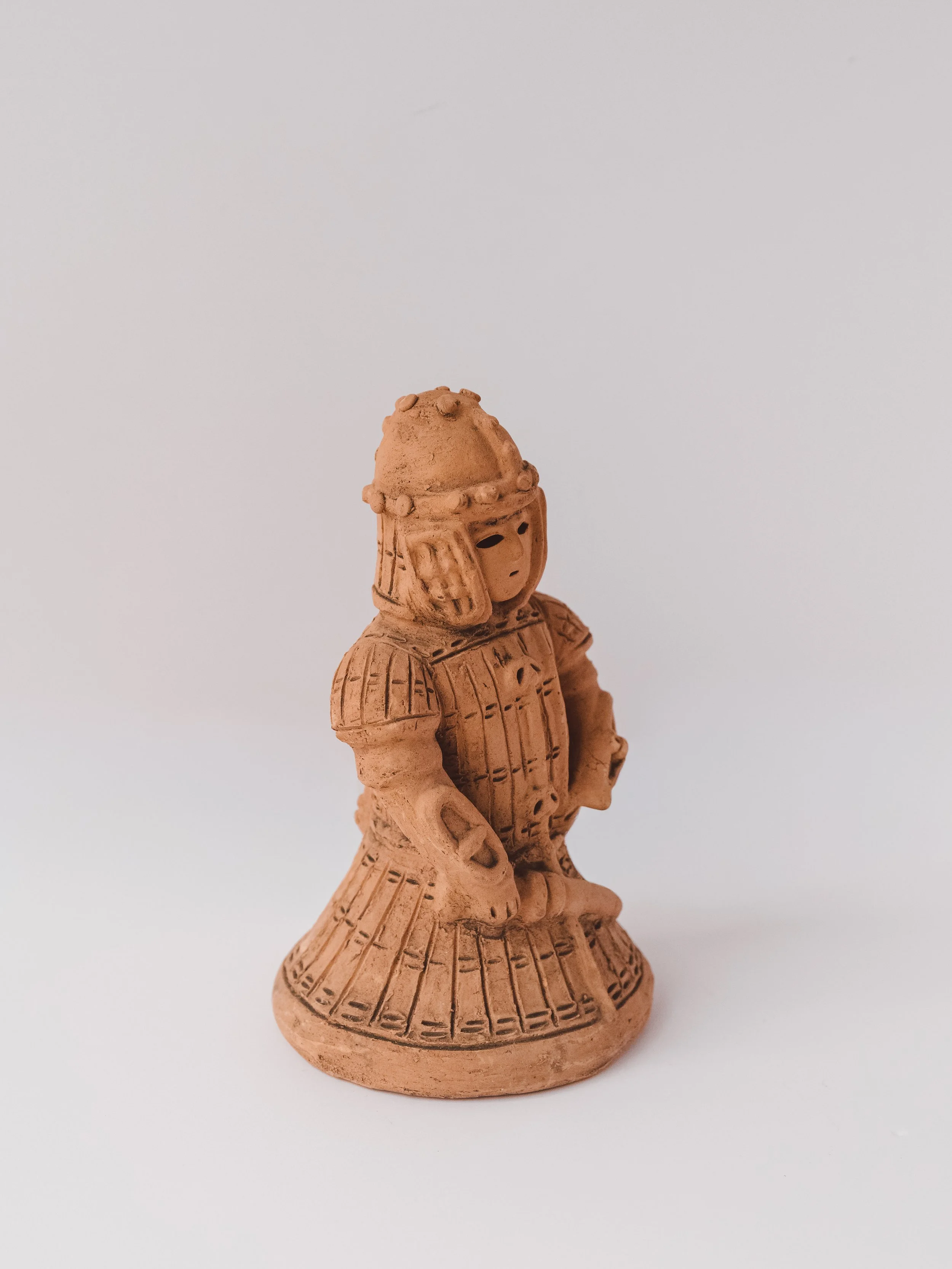 Image 6 of 15
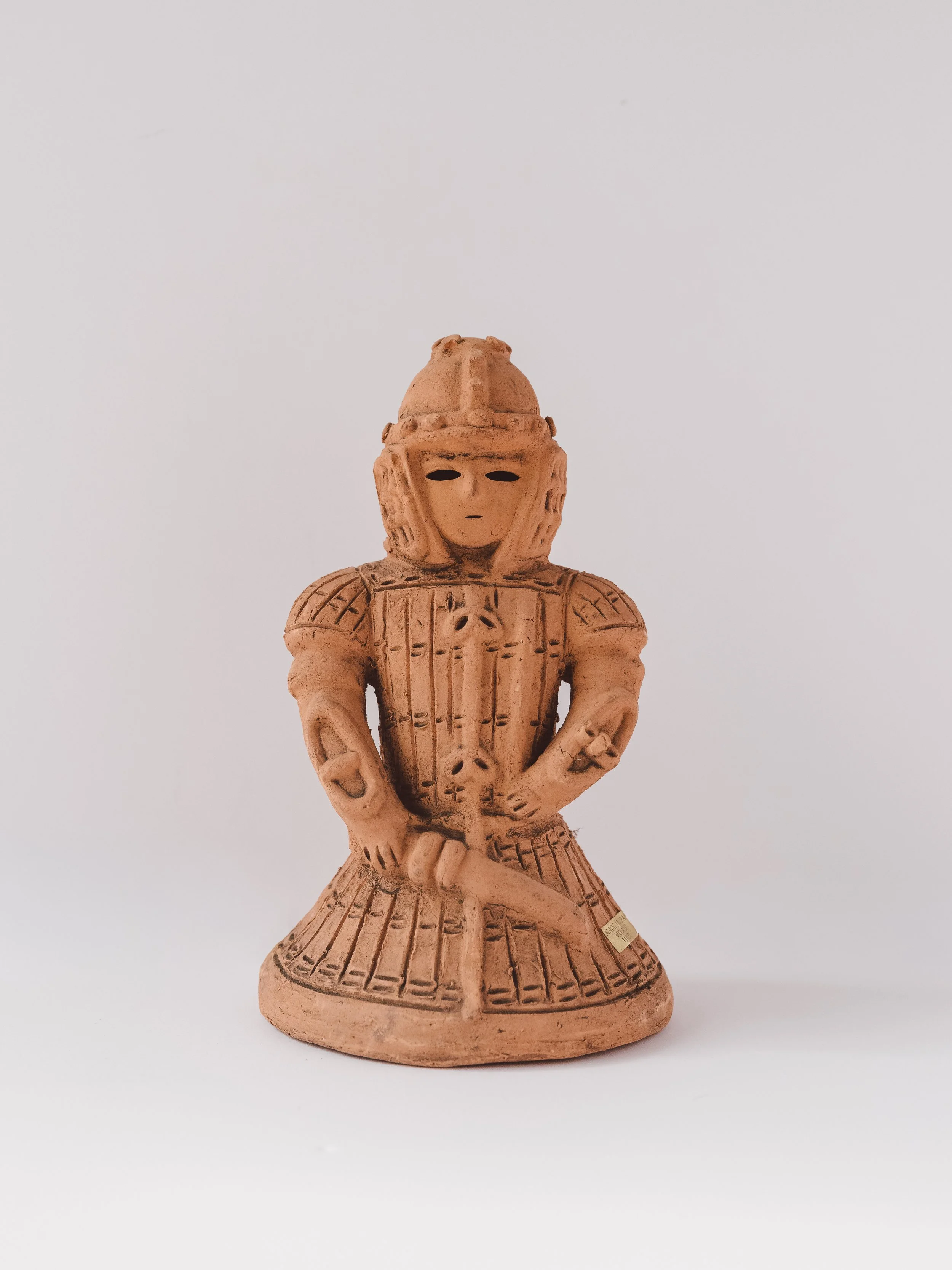 Image 7 of 15
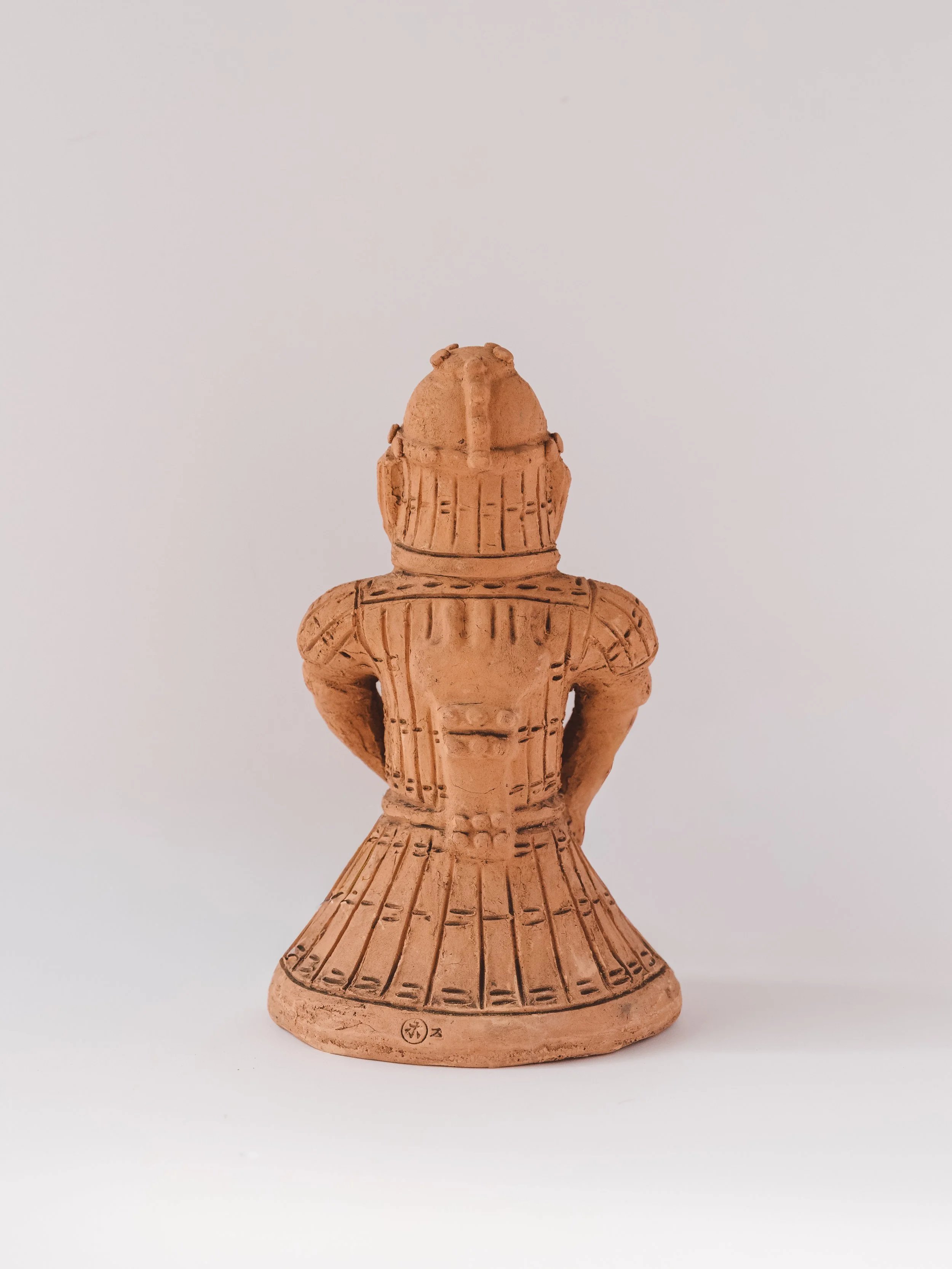 Image 8 of 15
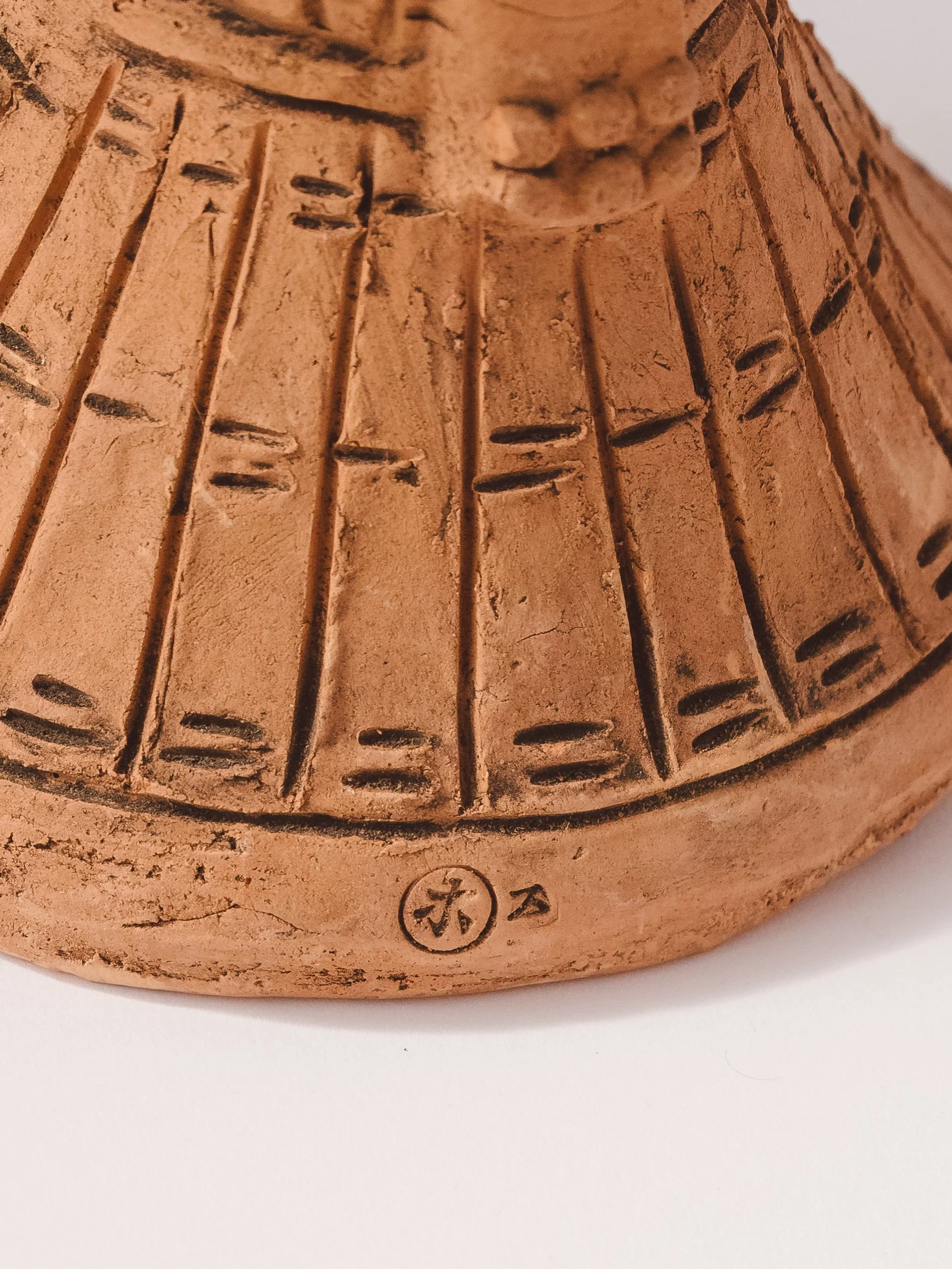 Image 9 of 15
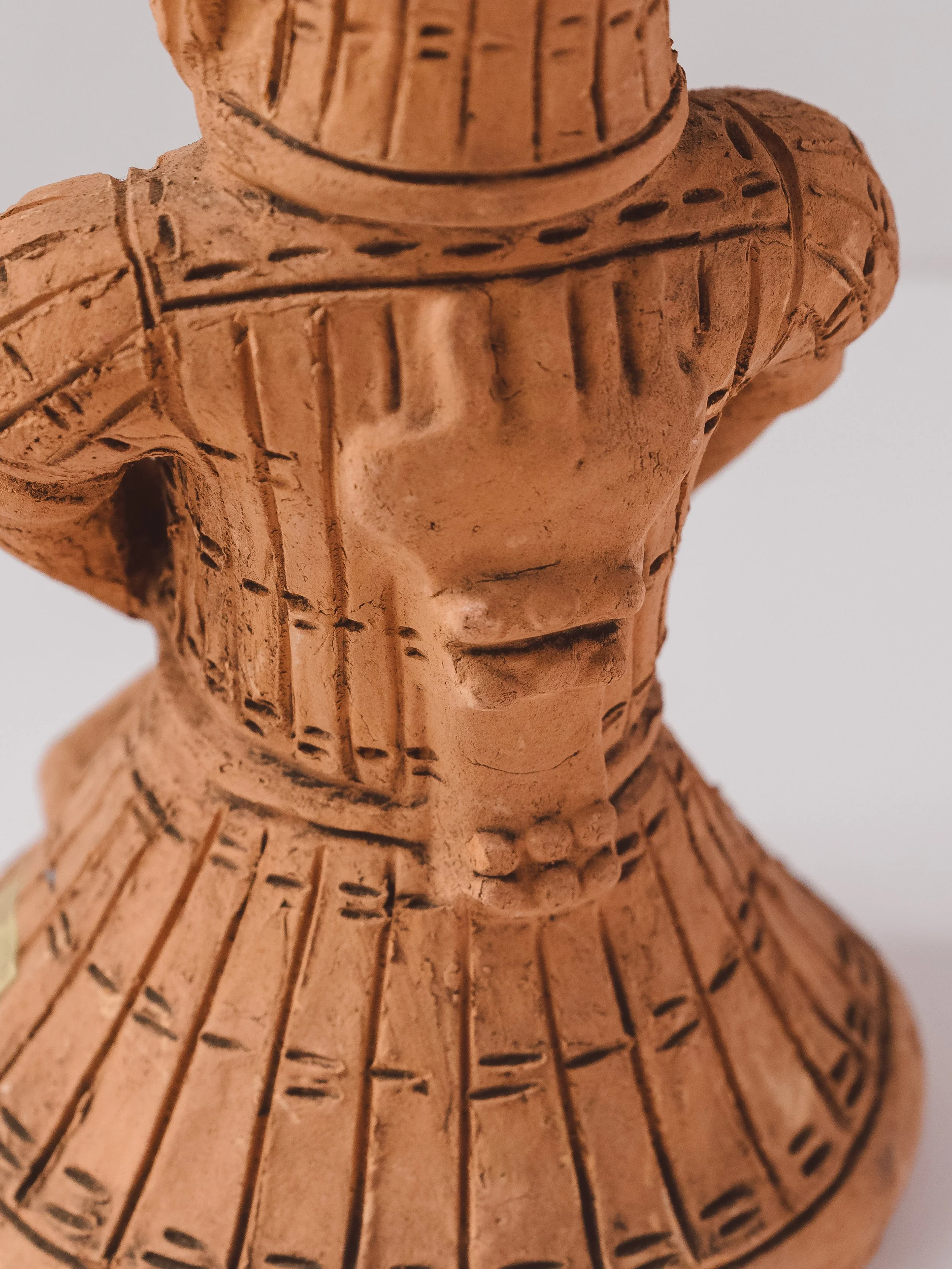 Image 10 of 15
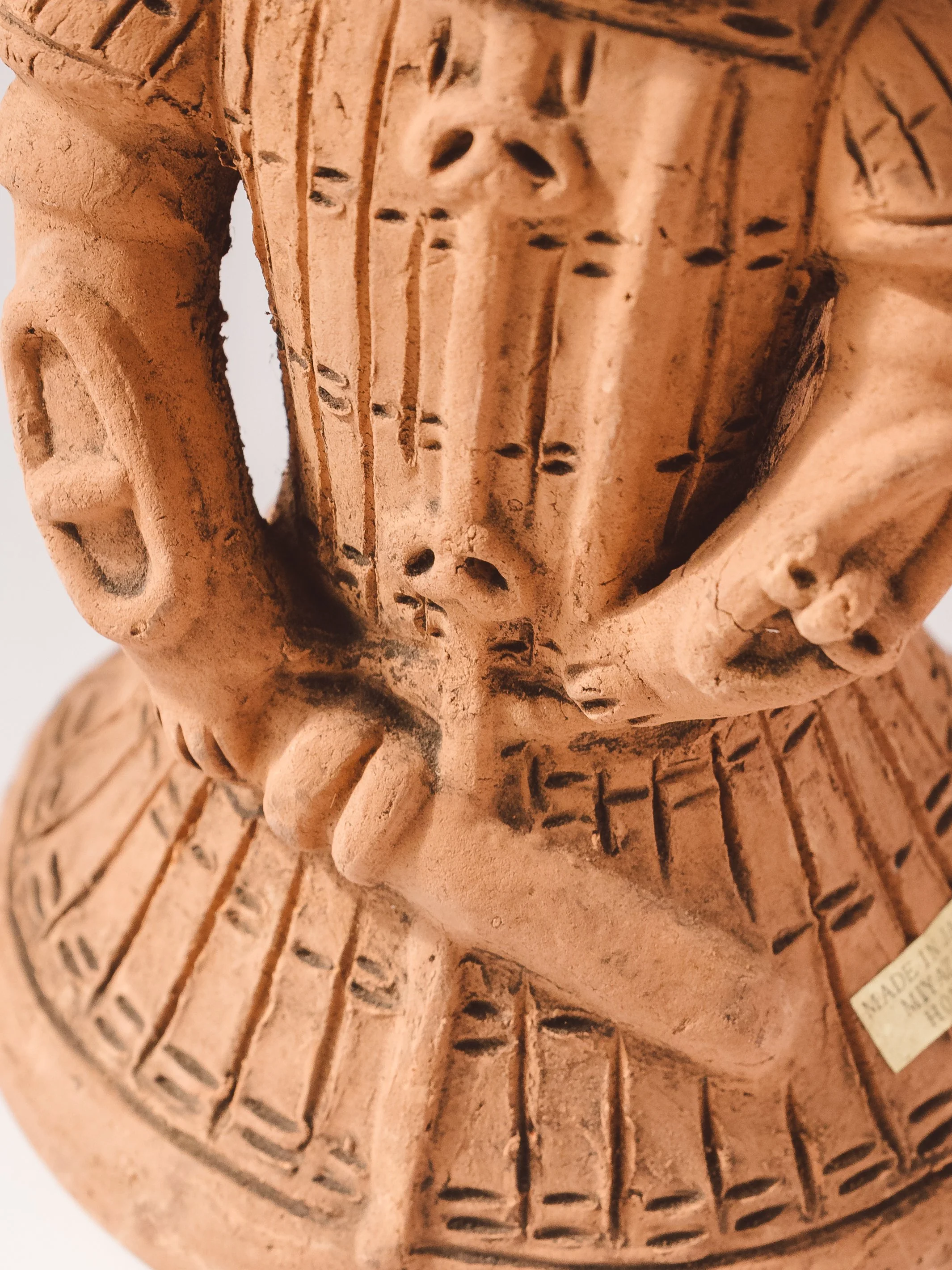 Image 11 of 15
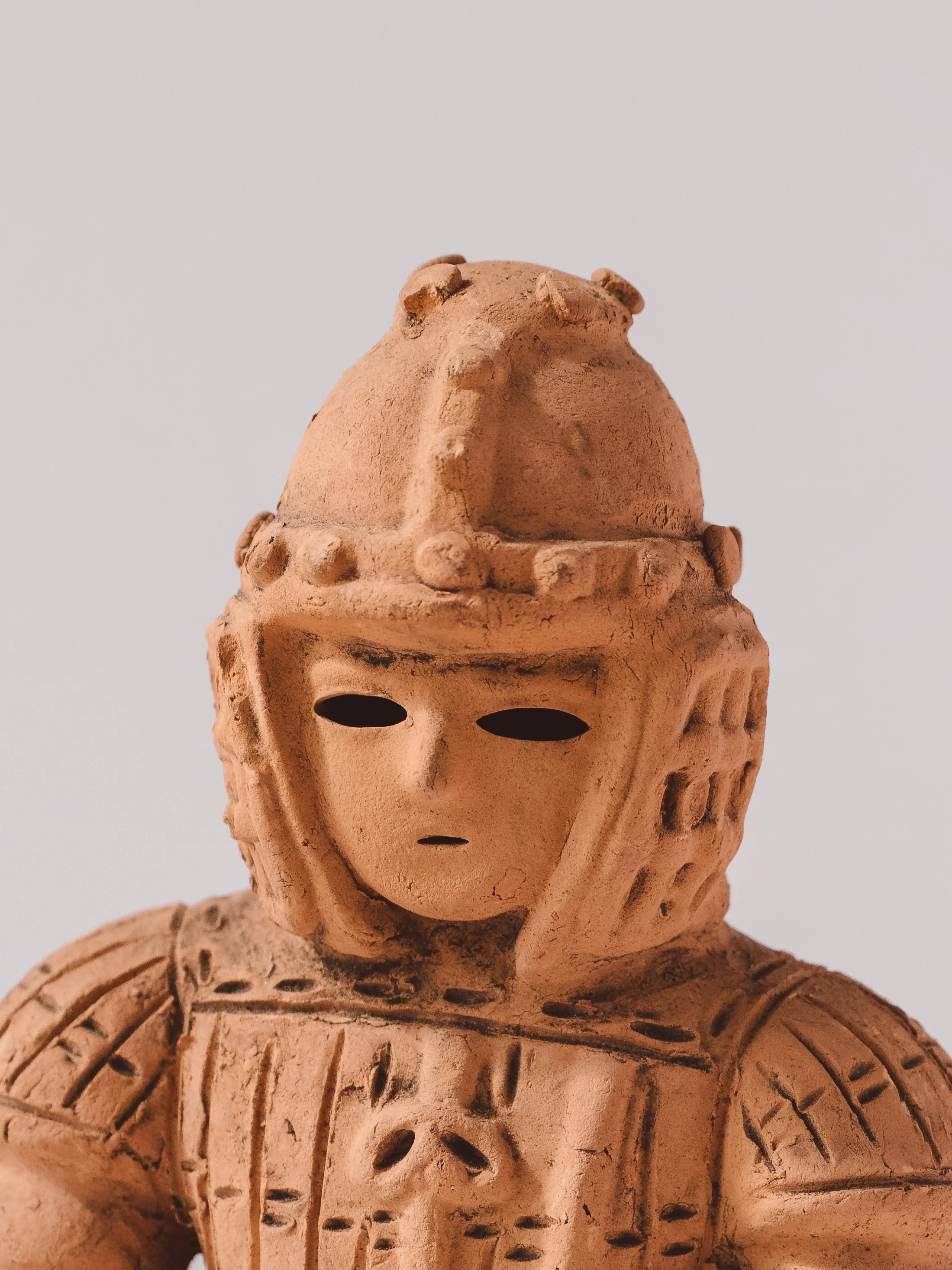 Image 12 of 15
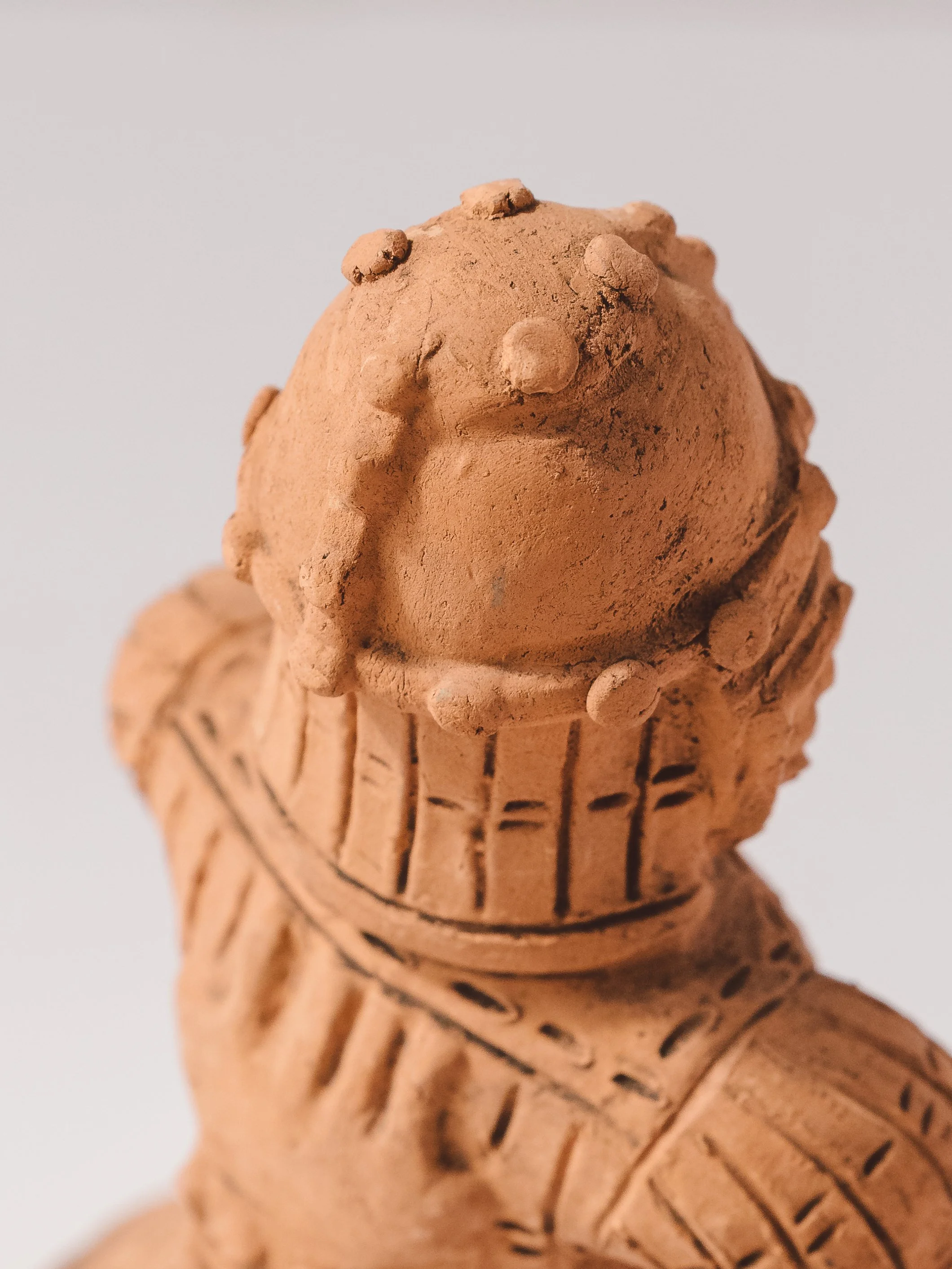 Image 13 of 15
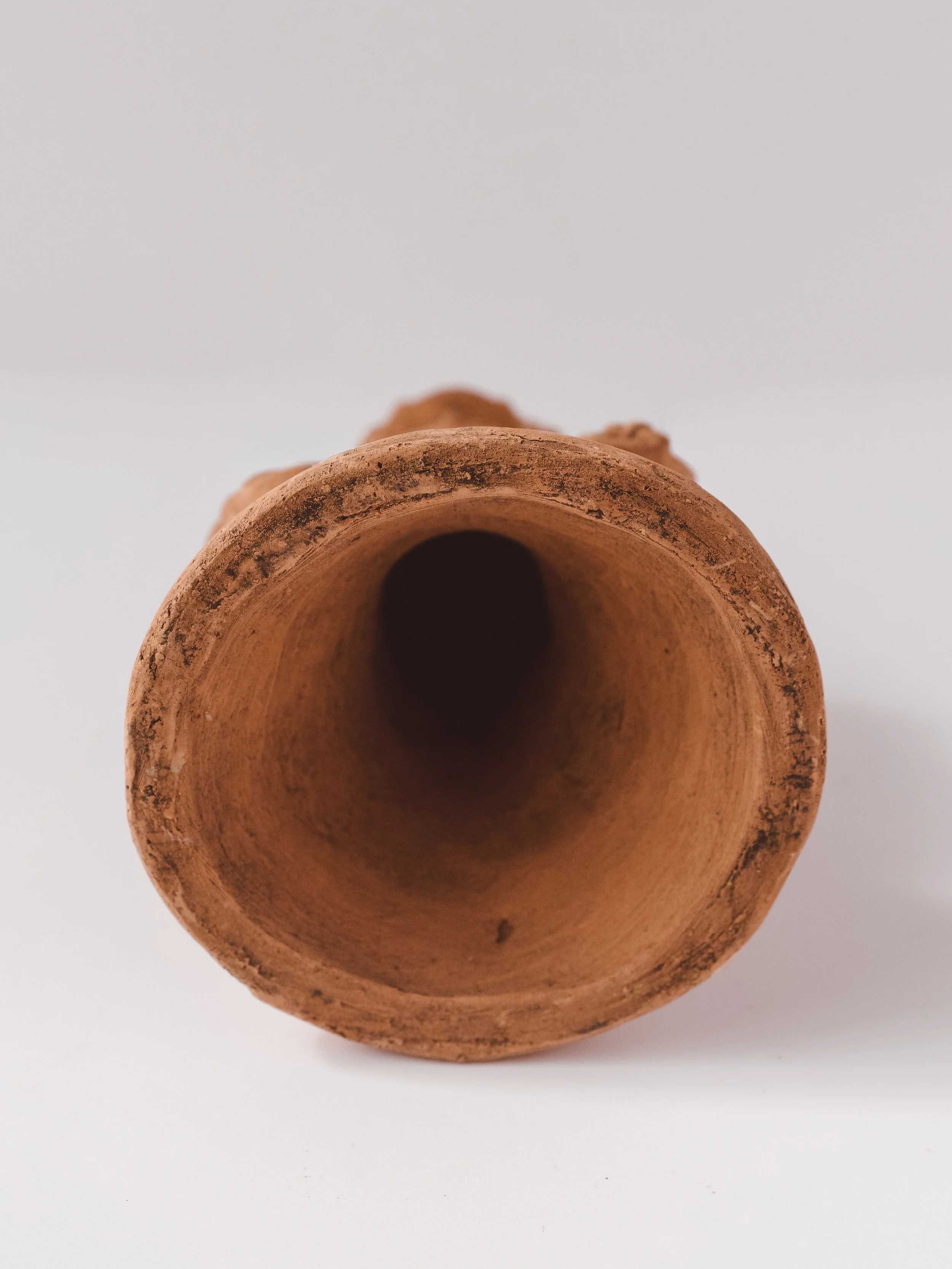 Image 14 of 15
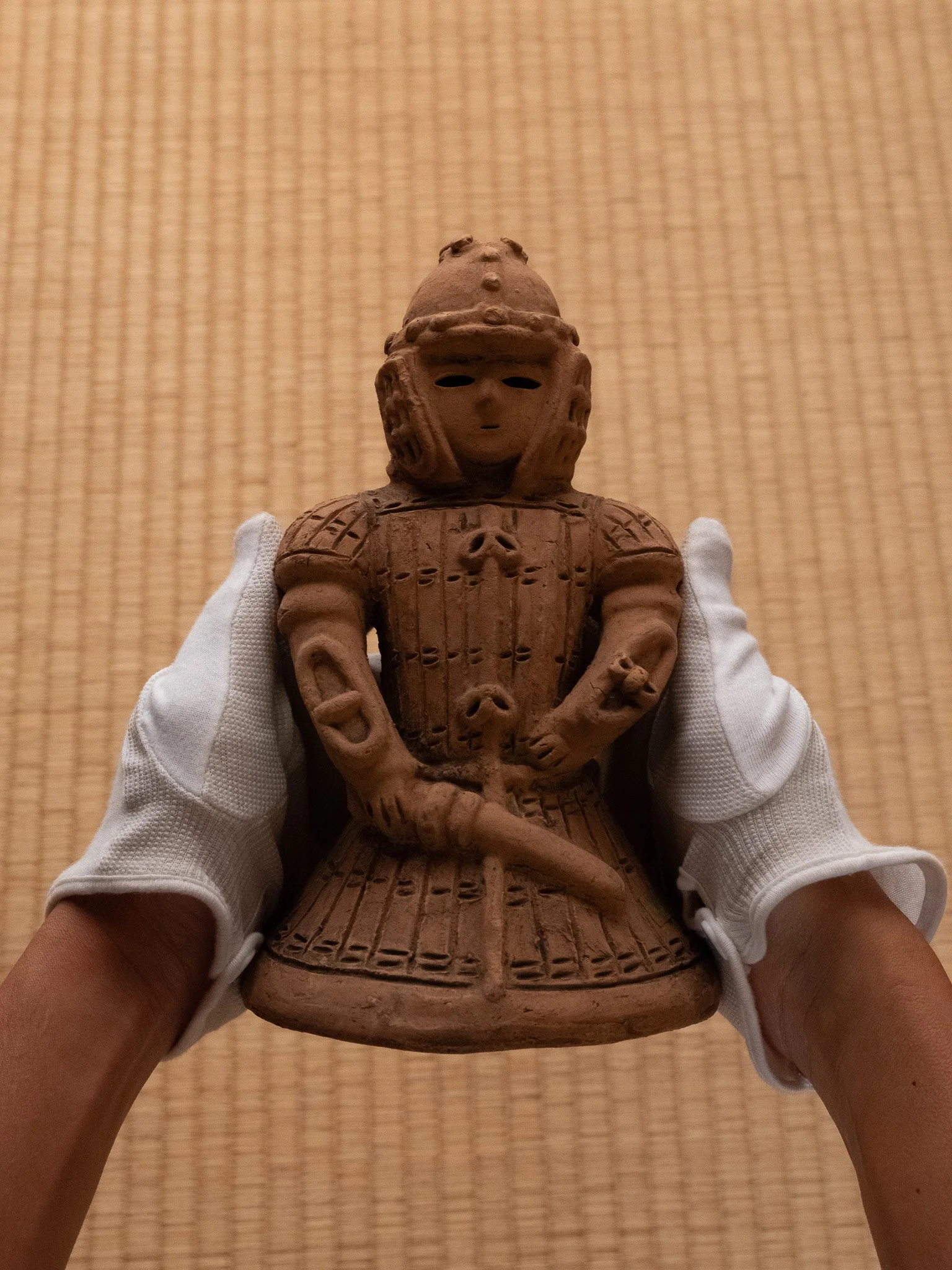 Image 15 of 15