【 The Concept 】
An elephant mid-stride. One foreleg swings forward and the great body leans into the step, head raised and facing ahead, the trunk hanging relaxed with its tip curling gently inward — an elephant simply walking on, calm and deliberate. It is carved from a single block of warm golden hardwood, base and all, and finished with the soft wax-like glow that oiled tropical wood gives without any heavy varnish. Small inlaid eyes, a single short pale tusk on the left, and pale inlaid toenails complete it — the right tusk, once inlaid to match, has been lost. This is not a souvenir trinket. It is a Thai wood-carving in a long and sacred tradition, made to stand quietly in a home as a guardian of wealth, family, and good fortune.
【 The Elephant in Thailand 】
Nowhere is the elephant more revered than in Thailand, where it sits at the crossroads of Buddhism, Hindu myth, and national history. In Buddhist tradition the Buddha's mother dreamed of a white elephant entering her side before his birth, so the elephant — the white elephant above all — became a sign of the Buddha's coming and of pure, exalted spirit; and because the Buddha calmed the raging elephant Nalagiri with nothing but boundless compassion, the elephant stands for wisdom, patience, and the victory of a peaceful mind over force. In the Hindu myth woven through Thai culture it is cosmic: Airavata (Thai Erawan), the great elephant, is the mount of Indra, god of thunder and rain, an emblem of the clouds and of abundance — Thais even call the Milky Way "the white elephant's road" — while Ganesha, the elephant-headed god, is the beloved remover of obstacles and patron of wisdom and success. And in the history of the old northern kingdom of Lanna, elephants carried kings into battle and, in peacetime, hauled the great teak logs down from the mountains, bound to their mahouts by a lifelong trust. To carve an elephant from that same teak is to honor all of it at once.
【 Trunk Down: What It Means 】
In feng shui the elephant draws up water — and water means wealth — through its trunk, so it is a powerful magnet for prosperity and knowledge. The direction of the trunk simply changes how. A raised trunk throws fortune upward and outward — active, celebratory luck. A lowered trunk, as here, does the opposite and just as auspicious thing: it draws wealth in and stores it, grounding a household, guarding what has been earned, and — because a lowered, inward-curling trunk echoes a mother gathering her calf — it carries strong associations with fertility, family, and long life. Both are lucky; a trunk-down elephant is the one you keep for a home's steady prosperity and protection rather than a fast rise. Tradition even holds that a pair of trunk-down elephants placed in the west of a bedroom, their trunks stroked each night, are a charm for children.
【 An Asian Elephant, Truly Seen 】
The carver knew this animal. Look at the head — two distinct domes with a dip between them — the small, squarish ears, and the gently arched back: these are the marks of the Asian elephant (Elephas maximus), not the African, and they are rendered exactly. The tusks — the left one still in place — identify it as a male, a tusker, the elephant of dignity that leads the herd. That realism and this walking, weight-shifting pose belong to the carving tradition of northern Thailand around Chiang Mai, where generations have learned to "read the grain" and cut a living animal — not a stiff, frontal idol — out of solid wood.
【 The Wood 】
This is a dense, golden tropical hardwood — teak or a close relative — of the kind southeast Asian carvers have prized for centuries. Such woods carry natural oils deep in the grain, which is why the surface glows like wax from polishing alone, resists water, and shrugs off insects without chemical treatment; teak was trusted enough to deck ocean liners and warships. The whole piece, elephant and rocky base together, is cut from one block — ichiboku-zukuri, single-block carving, which leaves no glued-on legs or trunk to fail and demands that the maker see the finished form inside the timber before the first cut. Fine parallel chisel-work textures the ears, the leg joints, and the skin folds, set against the smooth, polished sweep of the body — a deliberate contrast of rough and refined.
【 The Details 】
The tusks and the rounded toenails are inlaid — pale bone or light wood set into the darker body, the traditional touch that gives a carved elephant its finished, lifelike accents. On an elephant carving the projecting tusks are the fragile part, easily knocked loose in handling or transit; here the left tusk remains while the right has been lost from its socket. The rounded toenail inlays are all present.
【 Care 】
Oiled hardwood likes to stay fed. Dust it with a soft dry cloth; keep it out of direct heat and drying sun. Once or twice a year, wipe on a little teak or other natural furniture oil along the grain and buff off the excess, and the wood will hold its deep golden color and never dry to a grey, cracked surface. A fine natural line or two in the grain is the wood breathing, not a flaw.
【 Function & What It Brings 】
Keep it, place it, or give it. As a talisman it is aimed at a settled kind of fortune — wealth drawn in and held, a home and family protected — which makes it a natural piece for an entrance, a living room, or an office, and a fitting gift for a housewarming, a new baby, or anyone building something to last. As an object it is simply warm and good to live with: a solid, hand-carved hardwood animal with real weight in the hand and a surface that invites touch.
【 The Texture 】
Solid oiled hardwood, golden to reddish brown, glossy and smooth over the body, finely chisel-cut on the ears, legs, and skin. Cool and dense and notably heavy for its size — the heft of a good tropical hardwood. The tusk and toenails are smooth pale inlay.
【 Presence 】
Calm, grounded, benevolent. The forward gaze, the relaxed hanging trunk, and the slow, deliberate step give it the gentle gravity of the animal itself, while the golden wood and glassy polish make it glow softly on any shelf.
Archive Note: The number in the name (1989) references the year Thailand banned commercial logging of its natural teak forests — the turning point that shaped modern Thai teak carving. It is NOT the date this piece was made.
Provenance Note: Sourced from a private collection in Japan. A Thai-tradition hardwood carving; the wood is a teak-type tropical hardwood, identified by eye and not laboratory-tested.
Condition Note: Sold as acquired, in good vintage condition. Carved from a single block. The left tusk is present; the right tusk is missing, lost from its socket. The toenail inlays are all present. Fine natural grain lines and the chisel texture are features of hand-carved solid wood, not damage. Please see the photographs as part of the description.
【 The Concept 】
An elephant mid-stride. One foreleg swings forward and the great body leans into the step, head raised and facing ahead, the trunk hanging relaxed with its tip curling gently inward — an elephant simply walking on, calm and deliberate. It is carved from a single block of warm golden hardwood, base and all, and finished with the soft wax-like glow that oiled tropical wood gives without any heavy varnish. Small inlaid eyes, a single short pale tusk on the left, and pale inlaid toenails complete it — the right tusk, once inlaid to match, has been lost. This is not a souvenir trinket. It is a Thai wood-carving in a long and sacred tradition, made to stand quietly in a home as a guardian of wealth, family, and good fortune.
【 The Elephant in Thailand 】
Nowhere is the elephant more revered than in Thailand, where it sits at the crossroads of Buddhism, Hindu myth, and national history. In Buddhist tradition the Buddha's mother dreamed of a white elephant entering her side before his birth, so the elephant — the white elephant above all — became a sign of the Buddha's coming and of pure, exalted spirit; and because the Buddha calmed the raging elephant Nalagiri with nothing but boundless compassion, the elephant stands for wisdom, patience, and the victory of a peaceful mind over force. In the Hindu myth woven through Thai culture it is cosmic: Airavata (Thai Erawan), the great elephant, is the mount of Indra, god of thunder and rain, an emblem of the clouds and of abundance — Thais even call the Milky Way "the white elephant's road" — while Ganesha, the elephant-headed god, is the beloved remover of obstacles and patron of wisdom and success. And in the history of the old northern kingdom of Lanna, elephants carried kings into battle and, in peacetime, hauled the great teak logs down from the mountains, bound to their mahouts by a lifelong trust. To carve an elephant from that same teak is to honor all of it at once.
【 Trunk Down: What It Means 】
In feng shui the elephant draws up water — and water means wealth — through its trunk, so it is a powerful magnet for prosperity and knowledge. The direction of the trunk simply changes how. A raised trunk throws fortune upward and outward — active, celebratory luck. A lowered trunk, as here, does the opposite and just as auspicious thing: it draws wealth in and stores it, grounding a household, guarding what has been earned, and — because a lowered, inward-curling trunk echoes a mother gathering her calf — it carries strong associations with fertility, family, and long life. Both are lucky; a trunk-down elephant is the one you keep for a home's steady prosperity and protection rather than a fast rise. Tradition even holds that a pair of trunk-down elephants placed in the west of a bedroom, their trunks stroked each night, are a charm for children.
【 An Asian Elephant, Truly Seen 】
The carver knew this animal. Look at the head — two distinct domes with a dip between them — the small, squarish ears, and the gently arched back: these are the marks of the Asian elephant (Elephas maximus), not the African, and they are rendered exactly. The tusks — the left one still in place — identify it as a male, a tusker, the elephant of dignity that leads the herd. That realism and this walking, weight-shifting pose belong to the carving tradition of northern Thailand around Chiang Mai, where generations have learned to "read the grain" and cut a living animal — not a stiff, frontal idol — out of solid wood.
【 The Wood 】
This is a dense, golden tropical hardwood — teak or a close relative — of the kind southeast Asian carvers have prized for centuries. Such woods carry natural oils deep in the grain, which is why the surface glows like wax from polishing alone, resists water, and shrugs off insects without chemical treatment; teak was trusted enough to deck ocean liners and warships. The whole piece, elephant and rocky base together, is cut from one block — ichiboku-zukuri, single-block carving, which leaves no glued-on legs or trunk to fail and demands that the maker see the finished form inside the timber before the first cut. Fine parallel chisel-work textures the ears, the leg joints, and the skin folds, set against the smooth, polished sweep of the body — a deliberate contrast of rough and refined.
【 The Details 】
The tusks and the rounded toenails are inlaid — pale bone or light wood set into the darker body, the traditional touch that gives a carved elephant its finished, lifelike accents. On an elephant carving the projecting tusks are the fragile part, easily knocked loose in handling or transit; here the left tusk remains while the right has been lost from its socket. The rounded toenail inlays are all present.
【 Care 】
Oiled hardwood likes to stay fed. Dust it with a soft dry cloth; keep it out of direct heat and drying sun. Once or twice a year, wipe on a little teak or other natural furniture oil along the grain and buff off the excess, and the wood will hold its deep golden color and never dry to a grey, cracked surface. A fine natural line or two in the grain is the wood breathing, not a flaw.
【 Function & What It Brings 】
Keep it, place it, or give it. As a talisman it is aimed at a settled kind of fortune — wealth drawn in and held, a home and family protected — which makes it a natural piece for an entrance, a living room, or an office, and a fitting gift for a housewarming, a new baby, or anyone building something to last. As an object it is simply warm and good to live with: a solid, hand-carved hardwood animal with real weight in the hand and a surface that invites touch.
【 The Texture 】
Solid oiled hardwood, golden to reddish brown, glossy and smooth over the body, finely chisel-cut on the ears, legs, and skin. Cool and dense and notably heavy for its size — the heft of a good tropical hardwood. The tusk and toenails are smooth pale inlay.
【 Presence 】
Calm, grounded, benevolent. The forward gaze, the relaxed hanging trunk, and the slow, deliberate step give it the gentle gravity of the animal itself, while the golden wood and glassy polish make it glow softly on any shelf.
Archive Note: The number in the name (1989) references the year Thailand banned commercial logging of its natural teak forests — the turning point that shaped modern Thai teak carving. It is NOT the date this piece was made.
Provenance Note: Sourced from a private collection in Japan. A Thai-tradition hardwood carving; the wood is a teak-type tropical hardwood, identified by eye and not laboratory-tested.
Condition Note: Sold as acquired, in good vintage condition. Carved from a single block. The left tusk is present; the right tusk is missing, lost from its socket. The toenail inlays are all present. Fine natural grain lines and the chisel texture are features of hand-carved solid wood, not damage. Please see the photographs as part of the description.


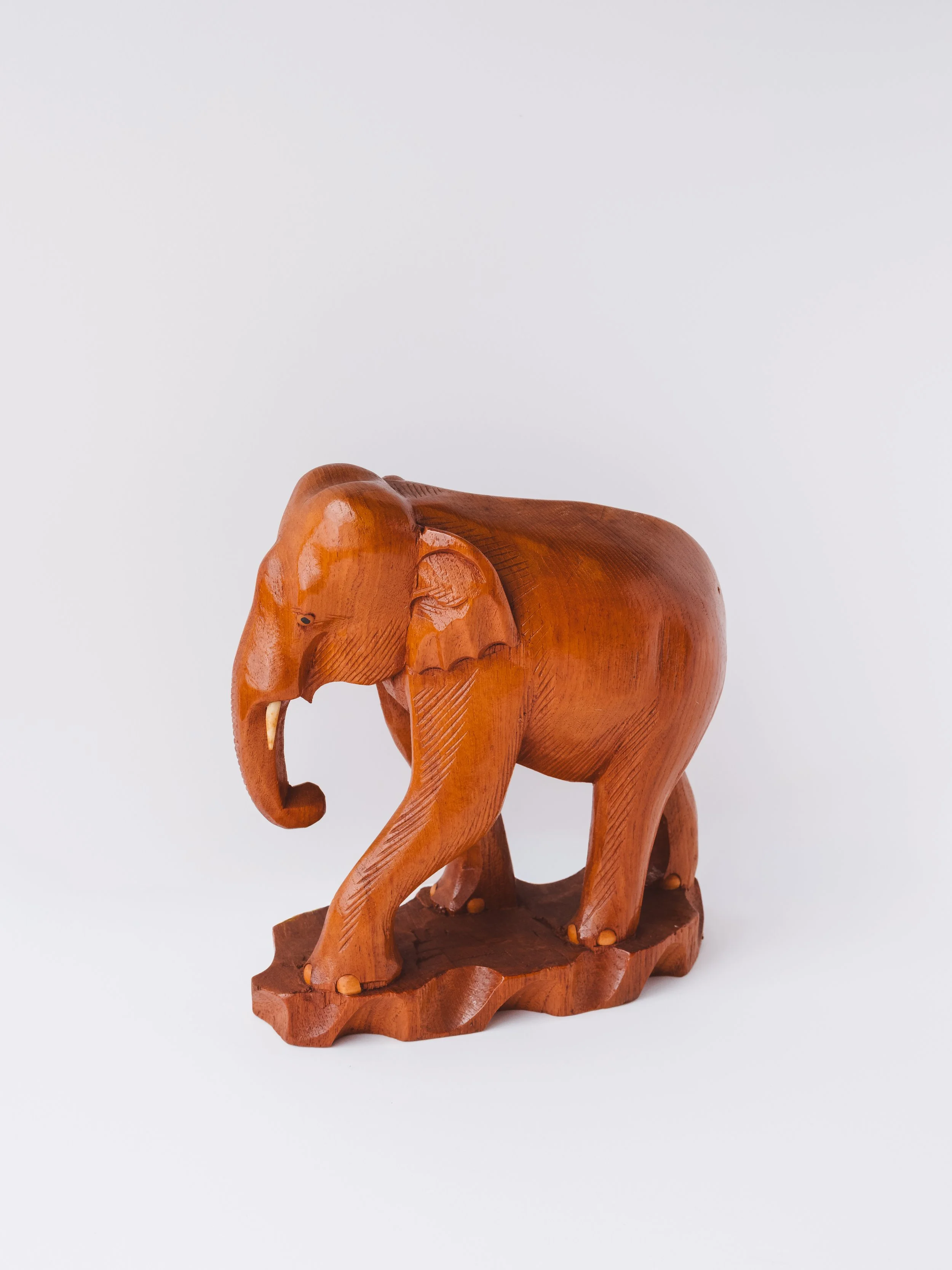 Image 1 of 12
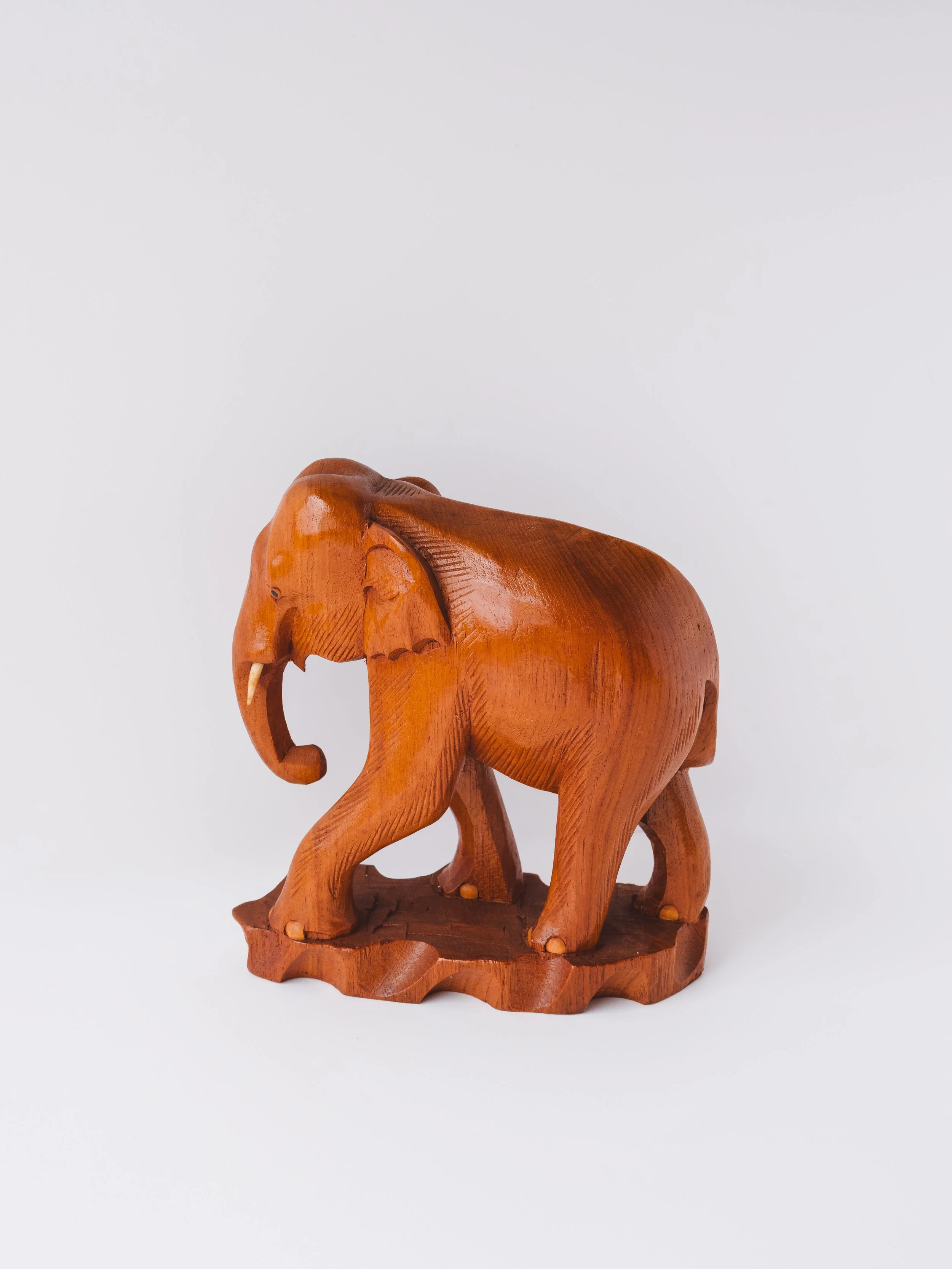 Image 2 of 12
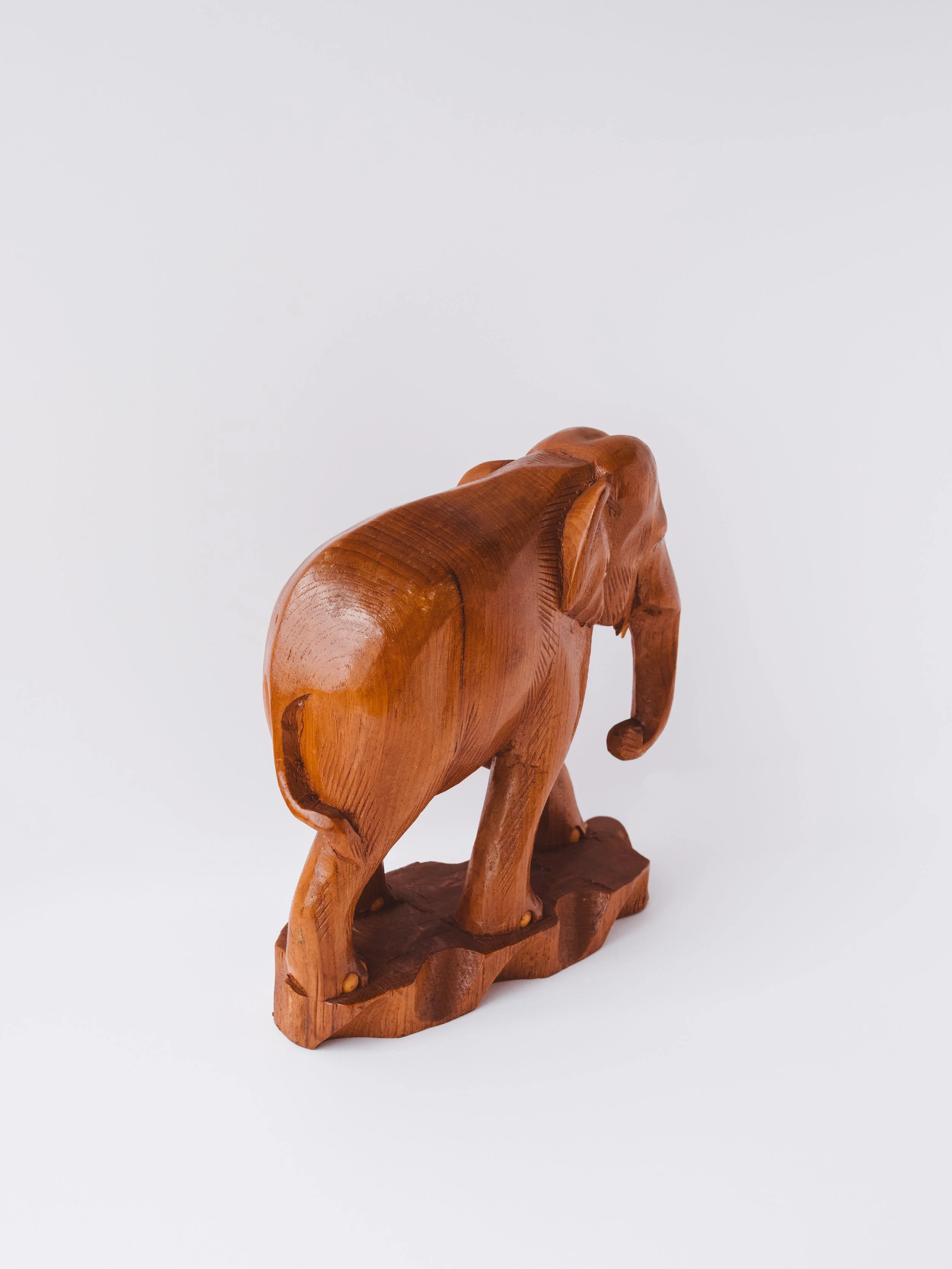 Image 3 of 12
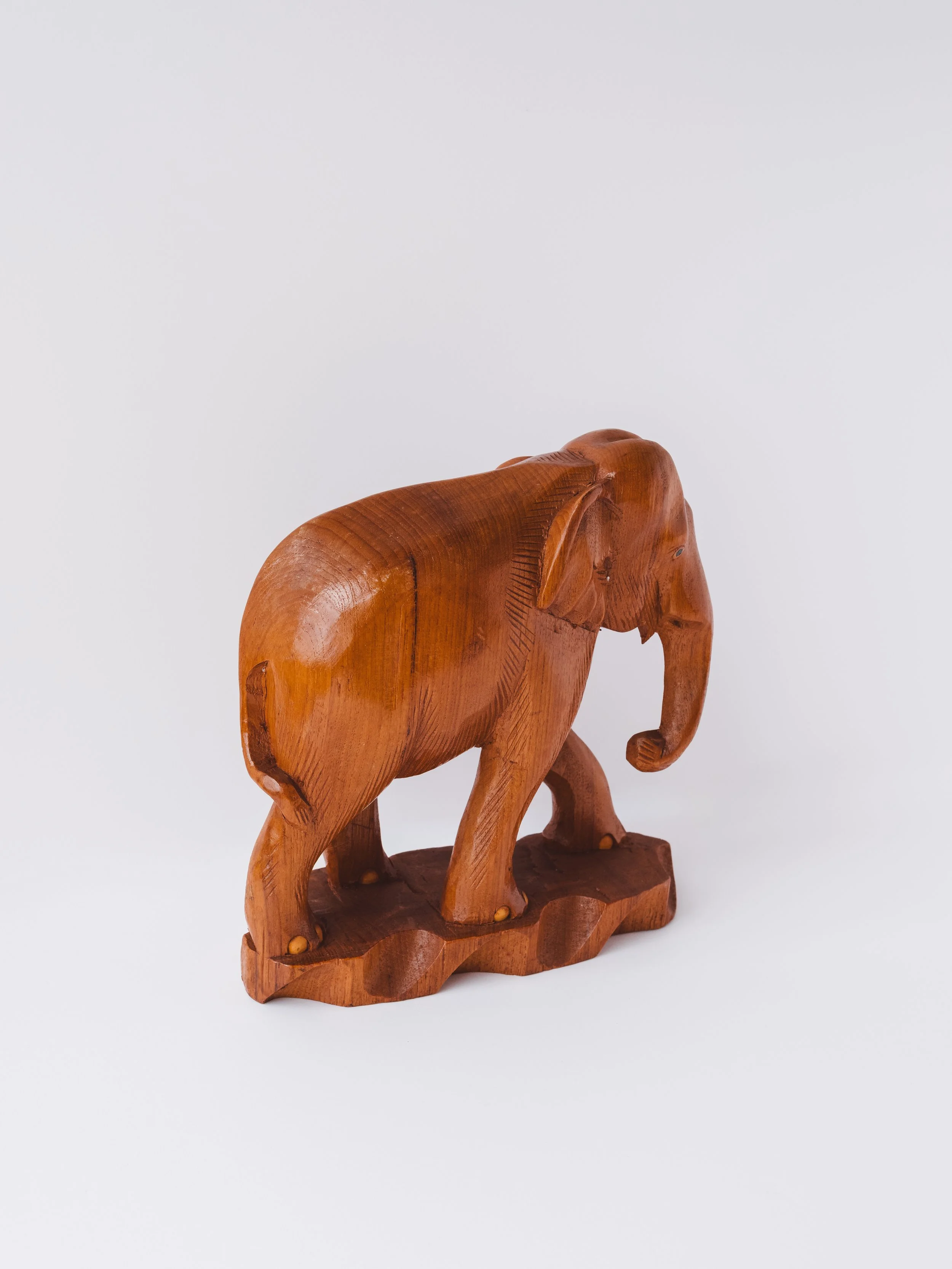 Image 4 of 12
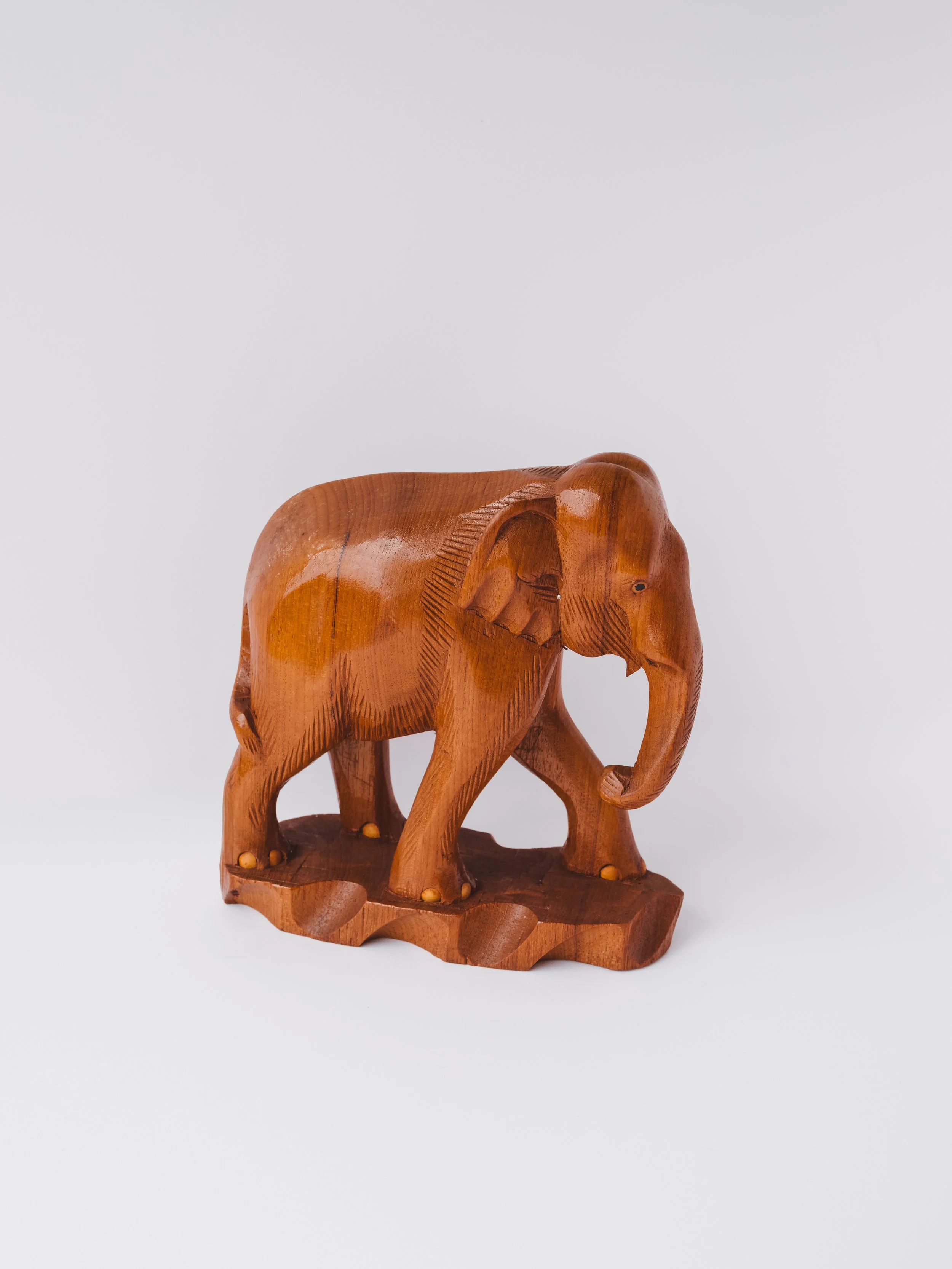 Image 5 of 12
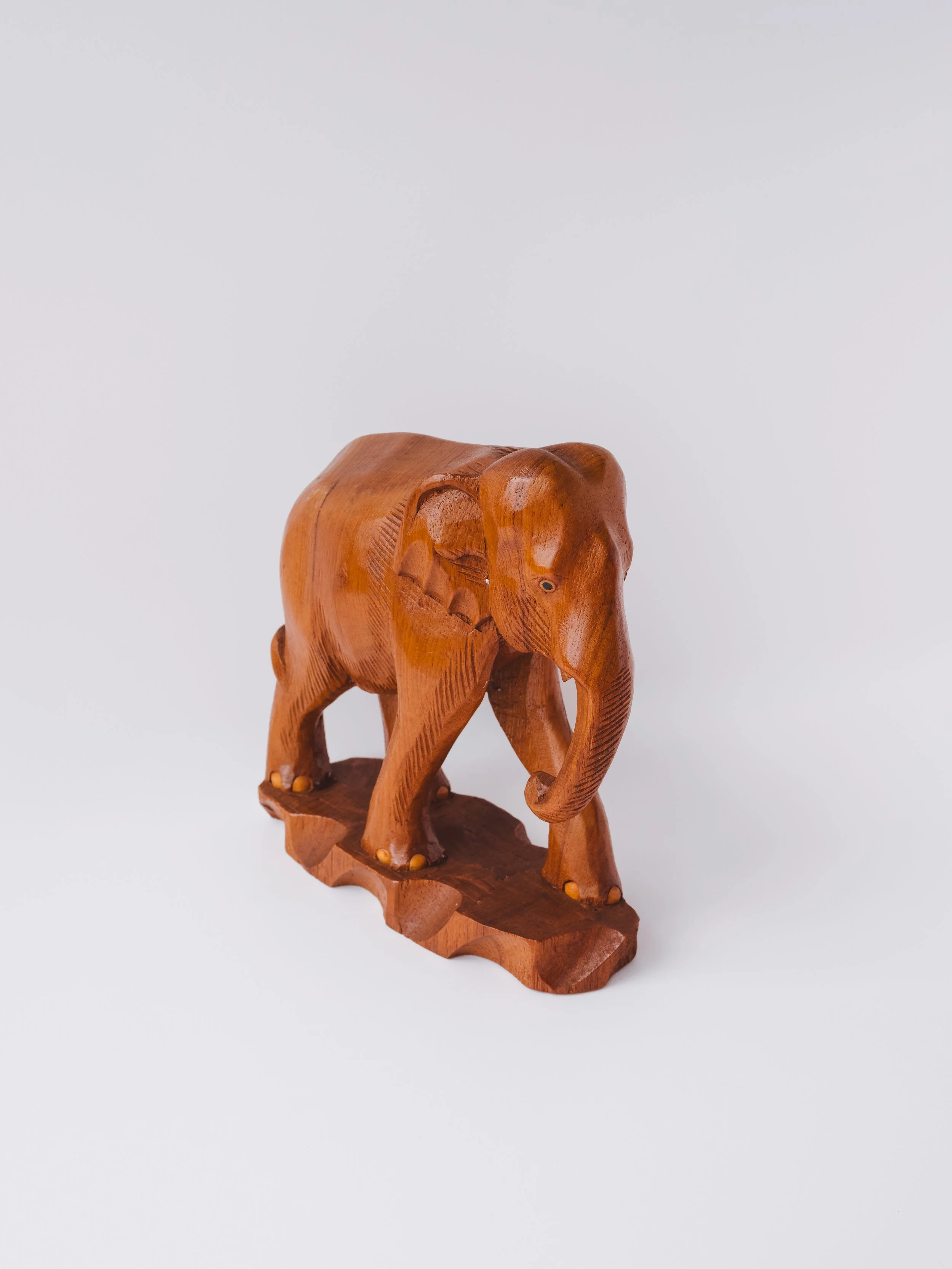 Image 6 of 12
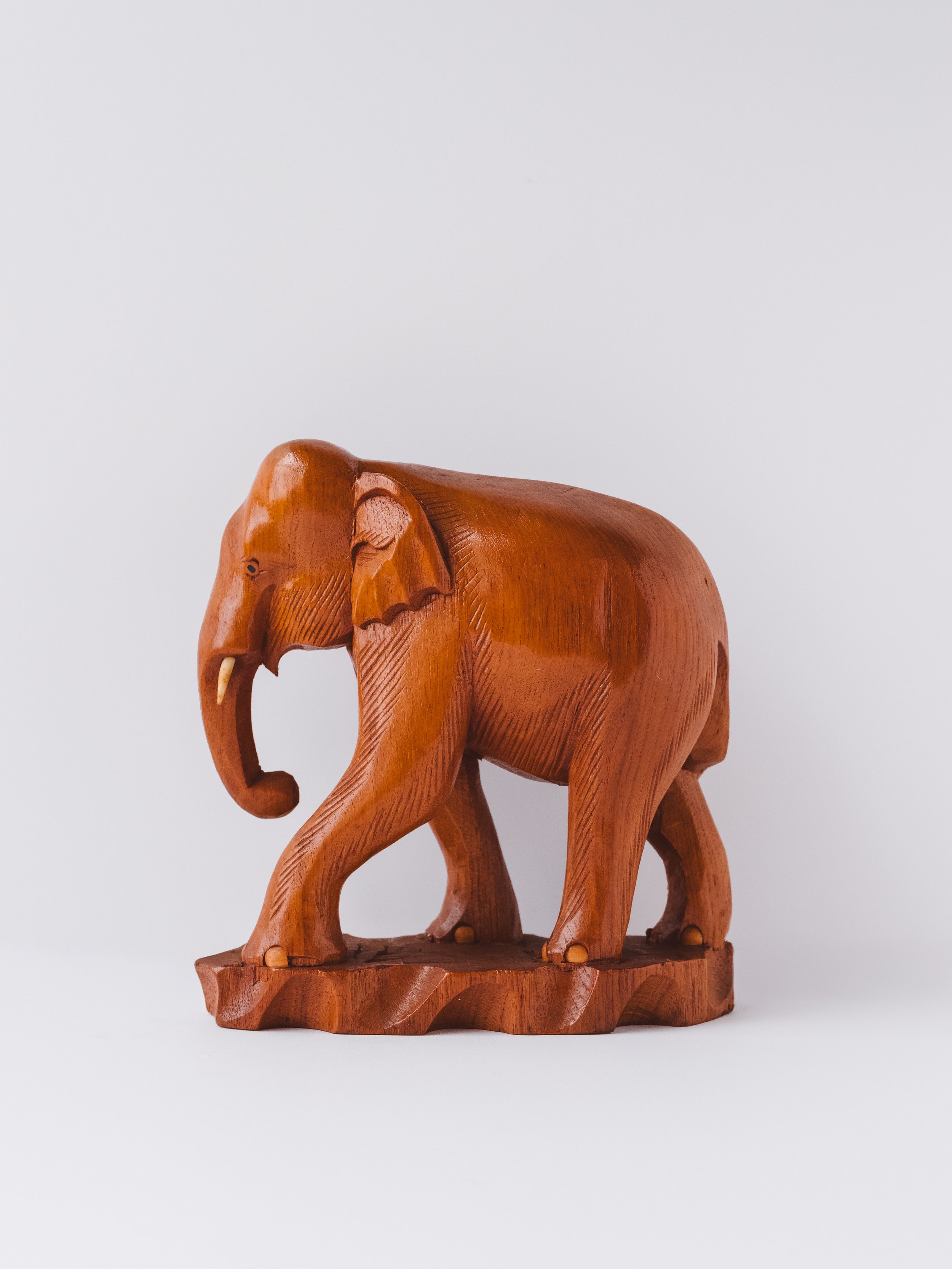 Image 7 of 12
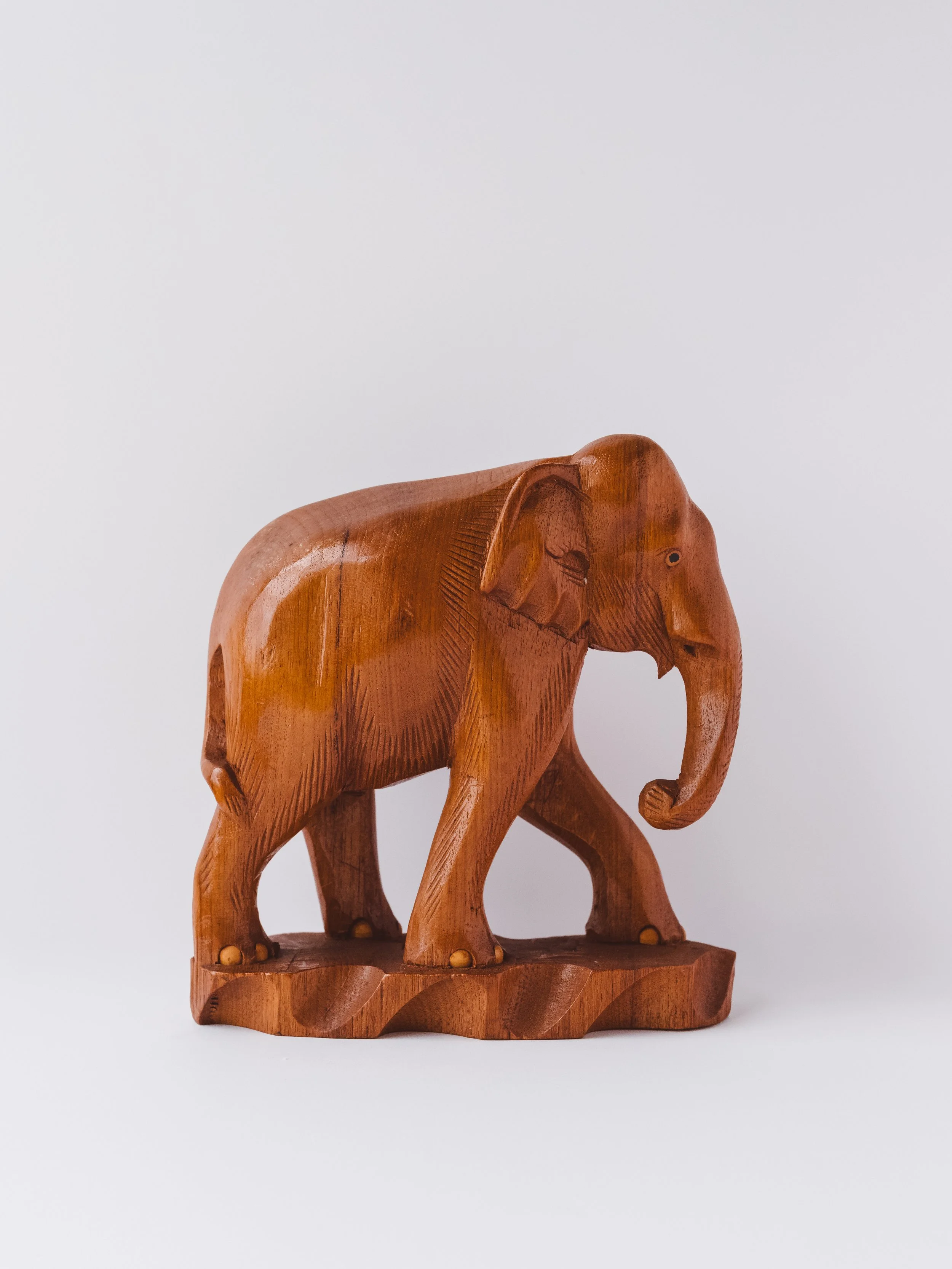 Image 8 of 12
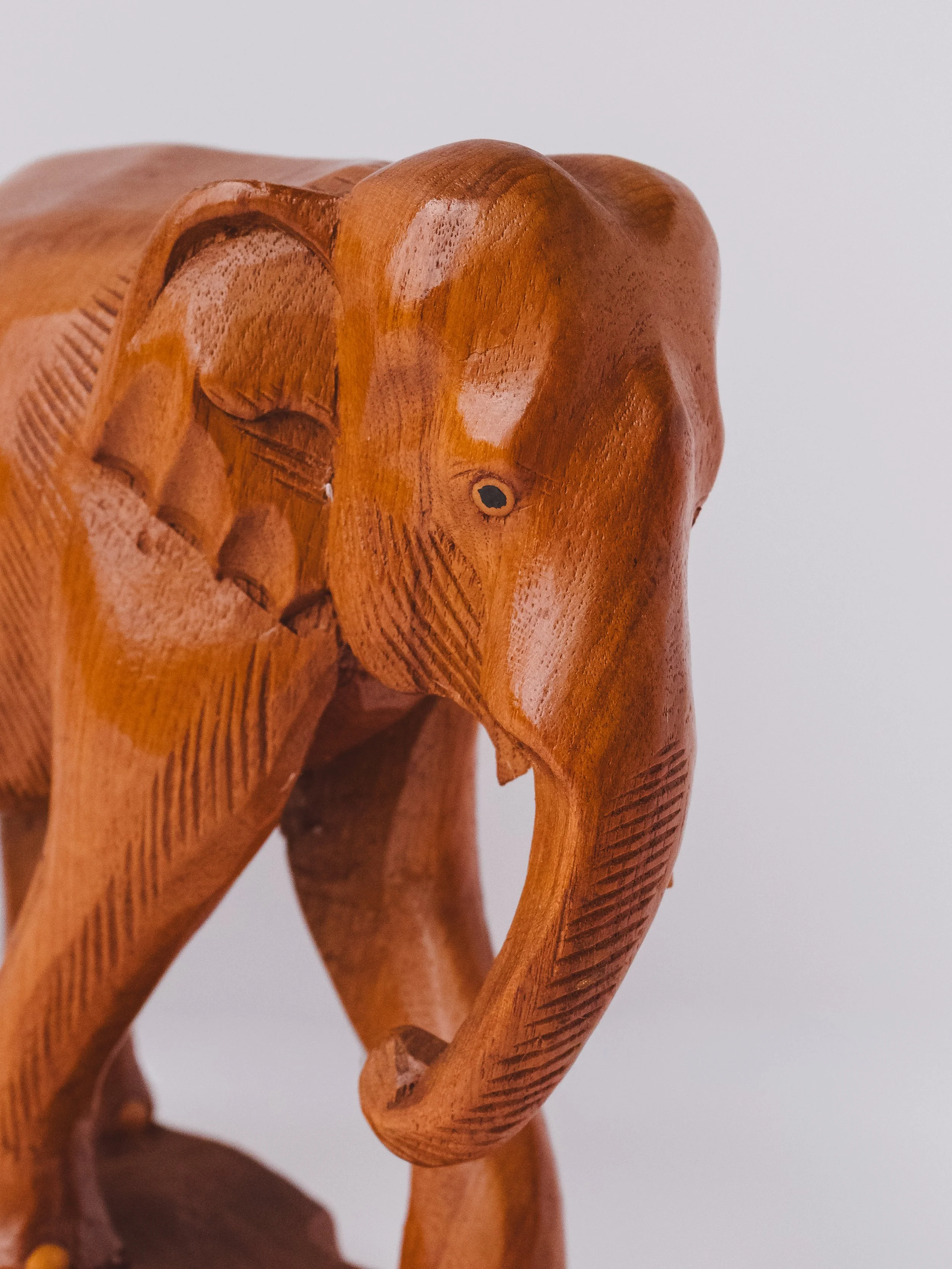 Image 9 of 12
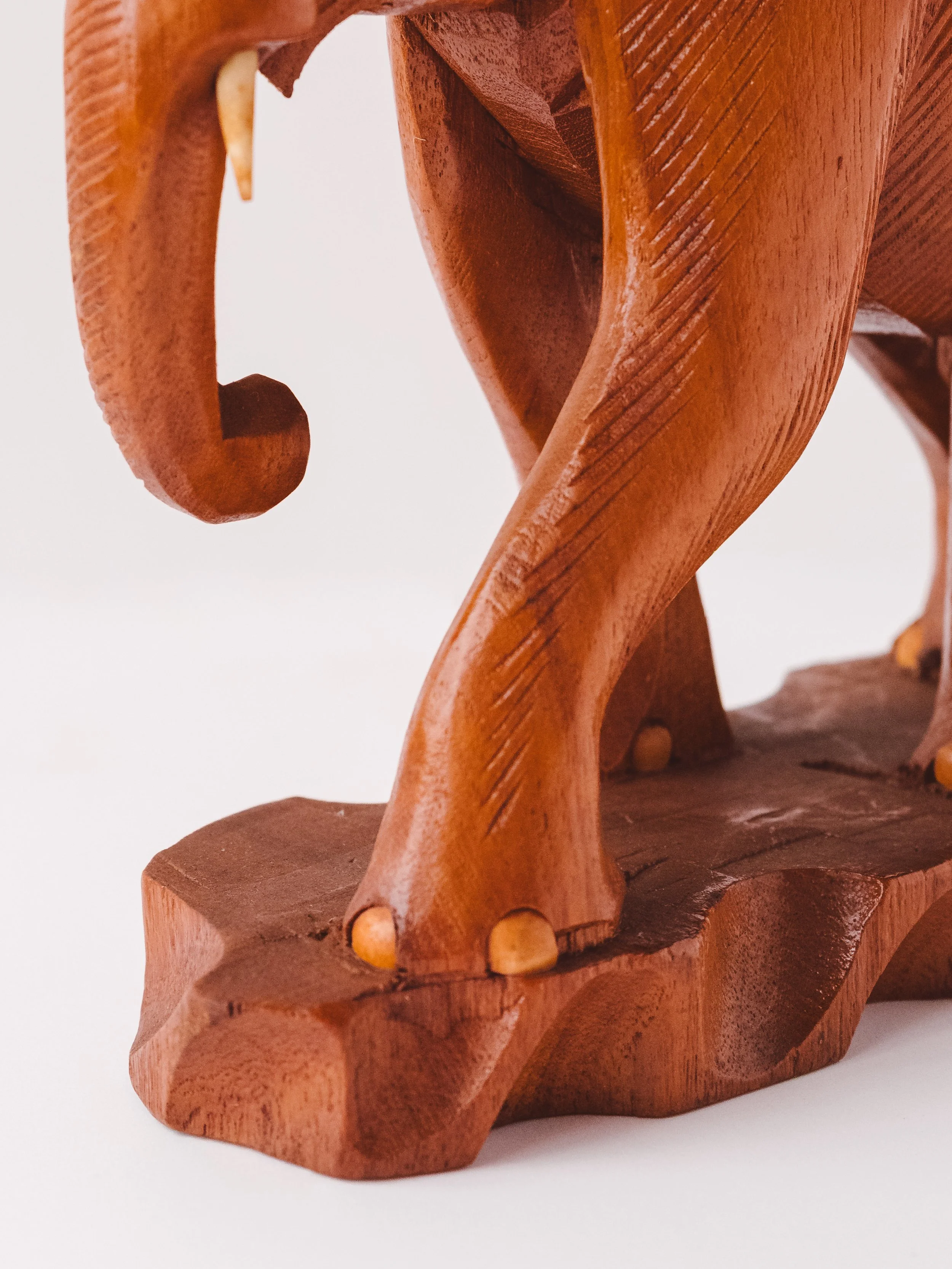 Image 10 of 12
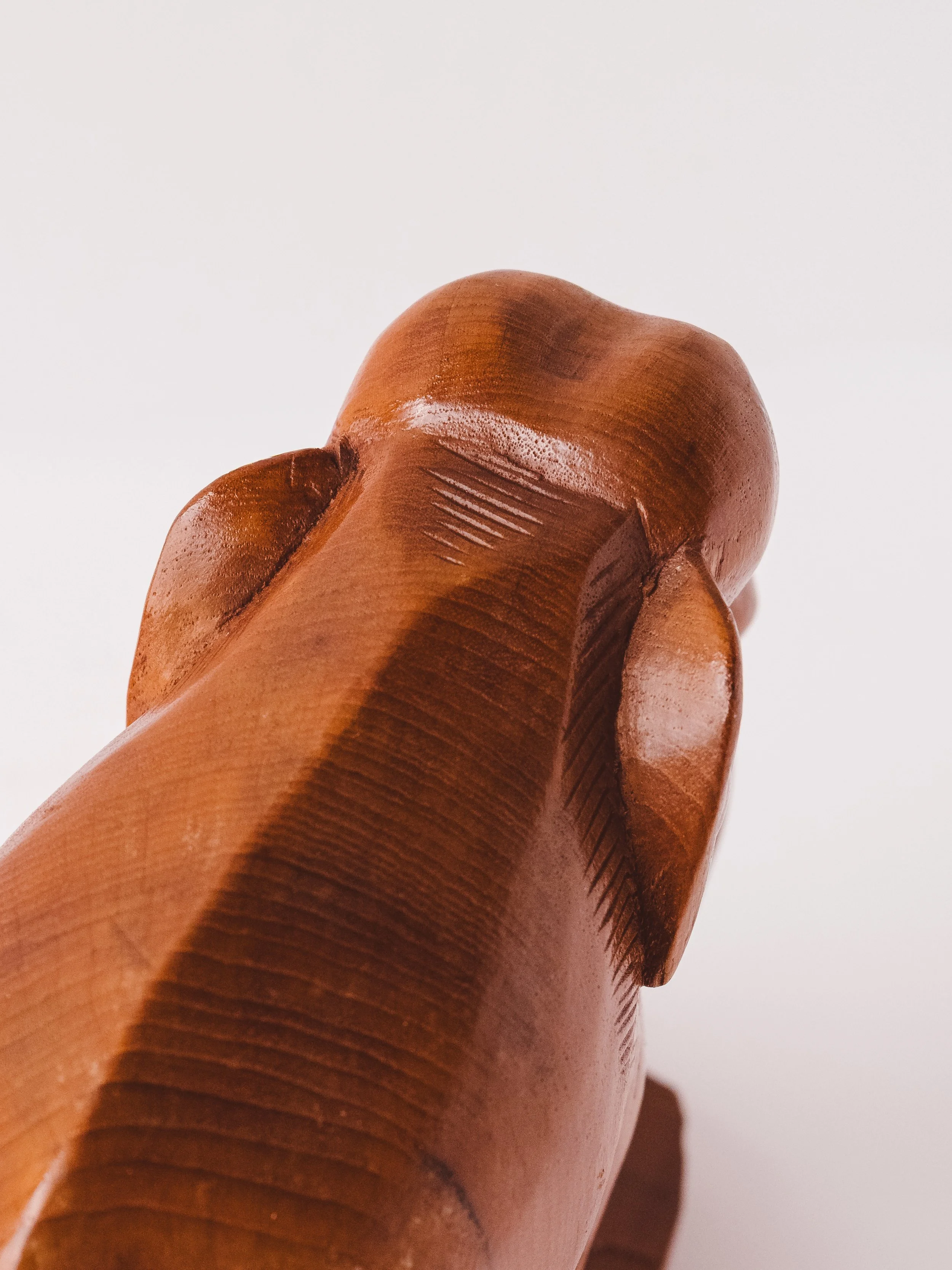 Image 11 of 12
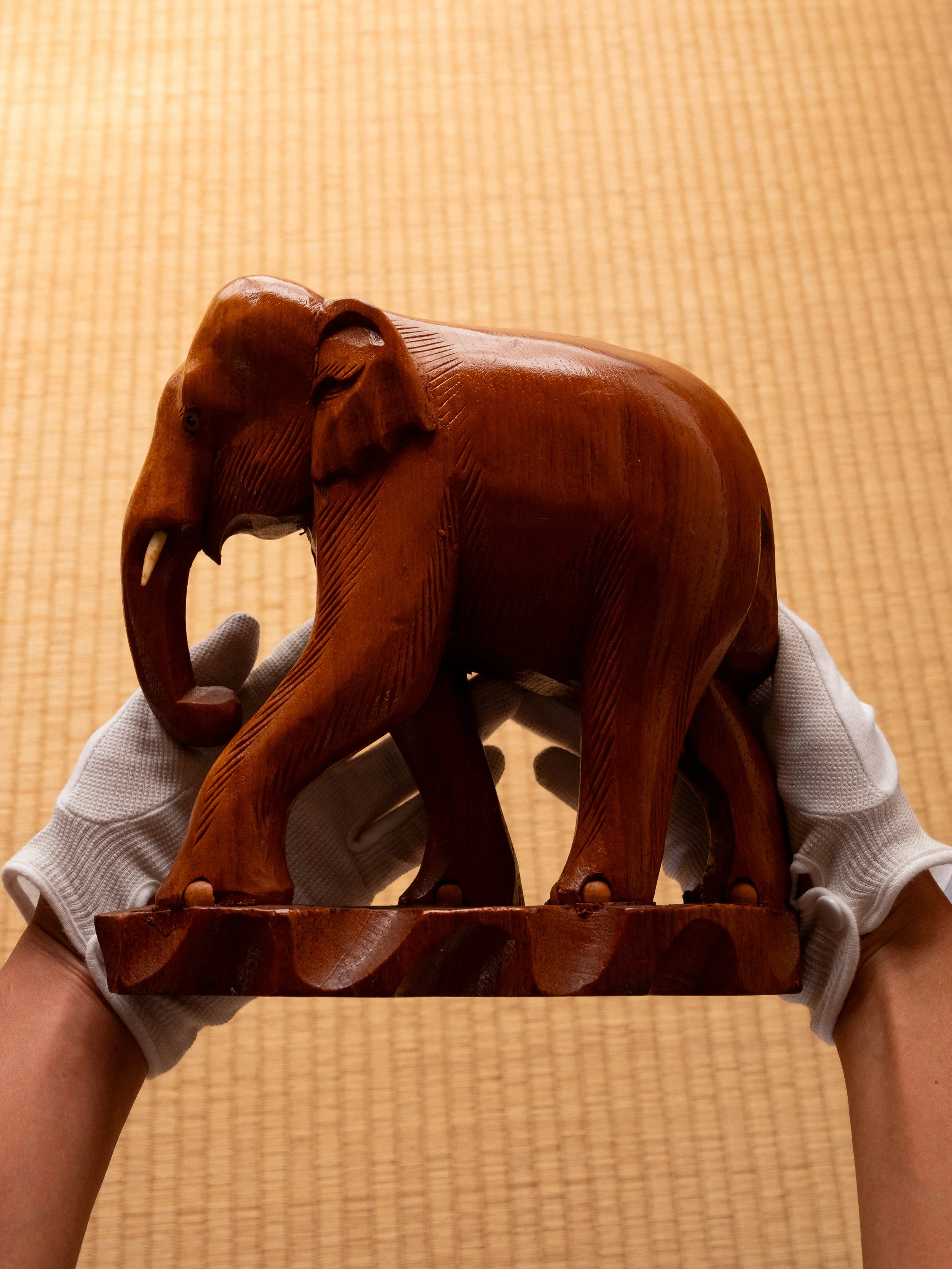 Image 12 of 12