【 The Concept 】
A standing figure with four children on it. One is held against the chest, cradled in the left arm. Three more are at the feet, on the lotus base, arms raised, reaching up. None of them are clothed. The largest is barely the height of the figure's knee.
This is a memorial object. In Japan, figures of this kind are made for children who were never born, or who died before they could be named — pregnancies lost to miscarriage, to stillbirth, to termination. The standing figure is the guardian assigned to them. His name in the older language means, literally, earth womb, and he took a vow not to accept enlightenment for himself until every last being had been brought out of suffering first. In practice, this meant he became the one who went where no one else was willing to go.
Where he goes is a riverbank. In the folk account, children who die before their parents cannot cross to the far side, because dying first is understood as a debt to the parents that has not been repaid. So they remain on the near bank, in the dark, and try to repay it: they build small towers out of river stones, one for the mother, one for the father. Demons come and knock the towers down. The children begin again. This continues without end. Then the guardian arrives, scatters the demons with his staff, and gathers the children into his robes, and tells them that from today they should think of him as their parent.
That is the moment this object depicts. Not the grief. The arrival.
【 The Function 】
560 grams, 15 centimeters tall, 5 centimeters across at the base. Cast alloy under gold plating — dense, heavier than it looks, entirely stable on its round lotus foot. The staff is a separate component: a thin metal rod set into the closed right fist, ringed at the top, running down past the children to the base.
Objects at this scale were made for the home rather than the temple. A full-size memorial figure stands in a temple courtyard and is visited on particular days. This one sits on a shelf and is lived with. It exists because a loss of this kind is frequently private — unregistered, unannounced, difficult to raise in conversation — and because a private grief still requires somewhere to be put.
【 The Texture 】
Gold, but old gold, and further gone than most. The plating is mottled across its whole surface in brown running to rust-red, and on the highest, most exposed places — the shaved crown of the head, the ring of the halo — it has darkened past gold altogether into a deep, matte rust-brown, as if the light had been slowly taken out of it. Under a lamp the figure does not gleam. It smoulders — brightest in the sheltered folds of the robe where the gold has been protected, dulled and rusted where the surface has stood most exposed.
The staff has gone furthest. It has corroded to a rough, dark iron-brown along its whole length, with faint rust bleeding onto the robe where the two meet — set against the gold it is unmistakably a different material of a different age. This is not a flaw. The gold is the body of something that does not decay. The staff is the tool it uses in a place that does.
The four children are still the brightest surfaces on the object. Where the robes have darkened and the head has rusted, the small bodies have kept more of their gold — the particular polish of the parts of a thing that get touched more often than the rest.
【 Presence 】
The other devotional figures in this archive stand alone. GILT MERCY extends a hand to no one in particular. RADIANT EMISSARY carries its staff toward a destination it does not name. LOTUS SOVEREIGN presides from a throne. They are complete in themselves, and the space around them is empty on purpose.
This figure is not alone, and is not complete. Something is happening to it. Four children are climbing it, gripping it, being carried by it, and its posture — feet planted, weight level, staff down, one arm closed around a body — is the posture of something that has stopped walking in order to be climbed. It is not going anywhere. It has arrived, and it is staying, and the arriving and the staying are the entire content of what it does.
The face is calm. The eyes are half-open, angled slightly down. It is not looking at the viewer and it is not looking at the children it already has. It is looking at the ground a short distance in front of its own feet, which is where the next one will appear.
Provenance Note: Sourced from a private collection in the Kansai region, Japan.
Condition Note: A vintage devotional figure, sold as acquired. The gold-plated surface has aged and oxidised throughout — darkened and rust-mottled over the head, halo, and staff in particular — with honest wear consistent with age; the aging is more advanced than on comparable examples. Structurally sound and stable on its base. The staff is a separate rod set into the fist.
【 The Concept 】
A standing figure with four children on it. One is held against the chest, cradled in the left arm. Three more are at the feet, on the lotus base, arms raised, reaching up. None of them are clothed. The largest is barely the height of the figure's knee.
This is a memorial object. In Japan, figures of this kind are made for children who were never born, or who died before they could be named — pregnancies lost to miscarriage, to stillbirth, to termination. The standing figure is the guardian assigned to them. His name in the older language means, literally, earth womb, and he took a vow not to accept enlightenment for himself until every last being had been brought out of suffering first. In practice, this meant he became the one who went where no one else was willing to go.
Where he goes is a riverbank. In the folk account, children who die before their parents cannot cross to the far side, because dying first is understood as a debt to the parents that has not been repaid. So they remain on the near bank, in the dark, and try to repay it: they build small towers out of river stones, one for the mother, one for the father. Demons come and knock the towers down. The children begin again. This continues without end. Then the guardian arrives, scatters the demons with his staff, and gathers the children into his robes, and tells them that from today they should think of him as their parent.
That is the moment this object depicts. Not the grief. The arrival.
【 The Function 】
560 grams, 15 centimeters tall, 5 centimeters across at the base. Cast alloy under gold plating — dense, heavier than it looks, entirely stable on its round lotus foot. The staff is a separate component: a thin metal rod set into the closed right fist, ringed at the top, running down past the children to the base.
Objects at this scale were made for the home rather than the temple. A full-size memorial figure stands in a temple courtyard and is visited on particular days. This one sits on a shelf and is lived with. It exists because a loss of this kind is frequently private — unregistered, unannounced, difficult to raise in conversation — and because a private grief still requires somewhere to be put.
【 The Texture 】
Gold, but old gold, and further gone than most. The plating is mottled across its whole surface in brown running to rust-red, and on the highest, most exposed places — the shaved crown of the head, the ring of the halo — it has darkened past gold altogether into a deep, matte rust-brown, as if the light had been slowly taken out of it. Under a lamp the figure does not gleam. It smoulders — brightest in the sheltered folds of the robe where the gold has been protected, dulled and rusted where the surface has stood most exposed.
The staff has gone furthest. It has corroded to a rough, dark iron-brown along its whole length, with faint rust bleeding onto the robe where the two meet — set against the gold it is unmistakably a different material of a different age. This is not a flaw. The gold is the body of something that does not decay. The staff is the tool it uses in a place that does.
The four children are still the brightest surfaces on the object. Where the robes have darkened and the head has rusted, the small bodies have kept more of their gold — the particular polish of the parts of a thing that get touched more often than the rest.
【 Presence 】
The other devotional figures in this archive stand alone. GILT MERCY extends a hand to no one in particular. RADIANT EMISSARY carries its staff toward a destination it does not name. LOTUS SOVEREIGN presides from a throne. They are complete in themselves, and the space around them is empty on purpose.
This figure is not alone, and is not complete. Something is happening to it. Four children are climbing it, gripping it, being carried by it, and its posture — feet planted, weight level, staff down, one arm closed around a body — is the posture of something that has stopped walking in order to be climbed. It is not going anywhere. It has arrived, and it is staying, and the arriving and the staying are the entire content of what it does.
The face is calm. The eyes are half-open, angled slightly down. It is not looking at the viewer and it is not looking at the children it already has. It is looking at the ground a short distance in front of its own feet, which is where the next one will appear.
Provenance Note: Sourced from a private collection in the Kansai region, Japan.
Condition Note: A vintage devotional figure, sold as acquired. The gold-plated surface has aged and oxidised throughout — darkened and rust-mottled over the head, halo, and staff in particular — with honest wear consistent with age; the aging is more advanced than on comparable examples. Structurally sound and stable on its base. The staff is a separate rod set into the fist.


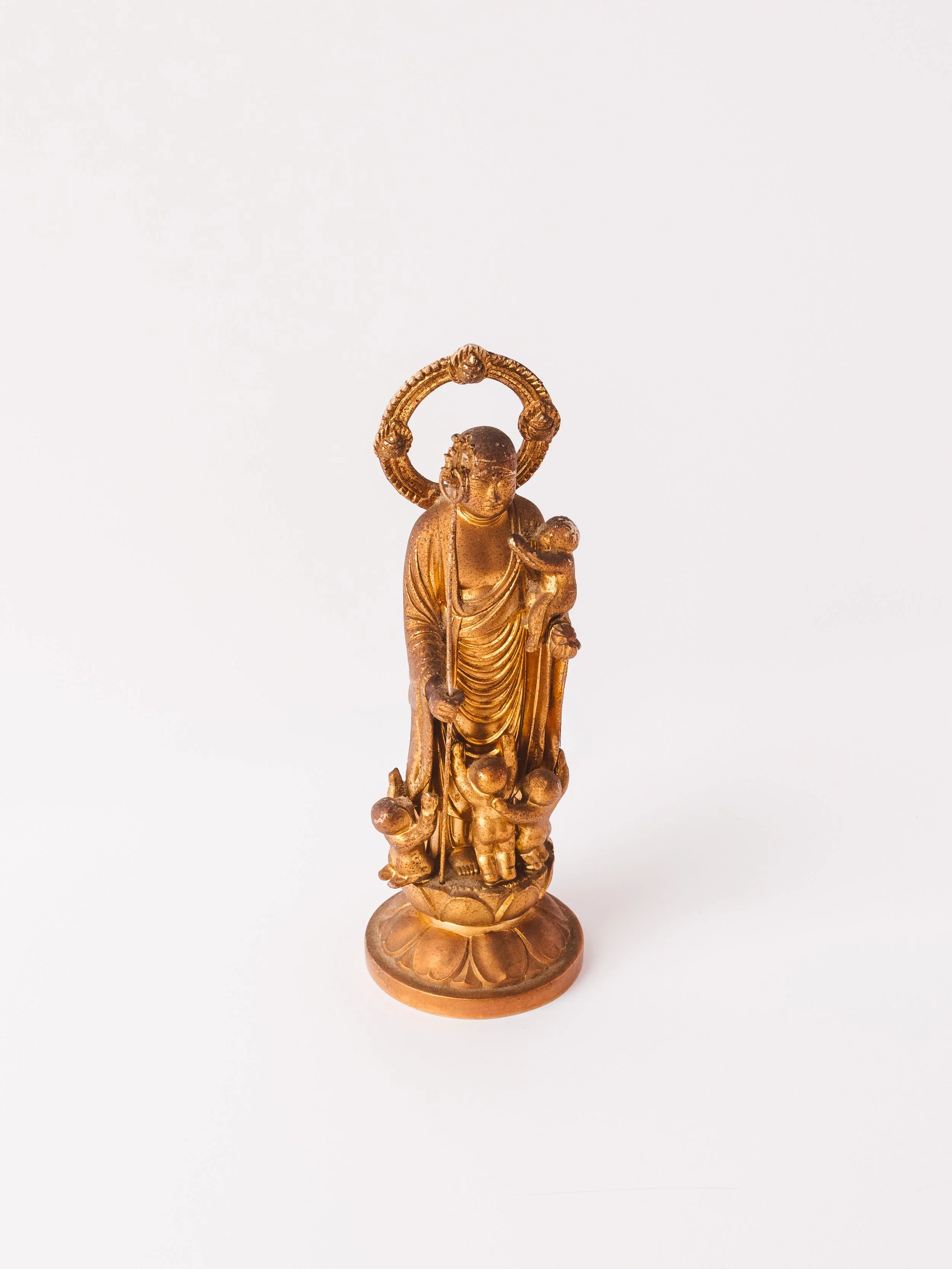 Image 1 of 11
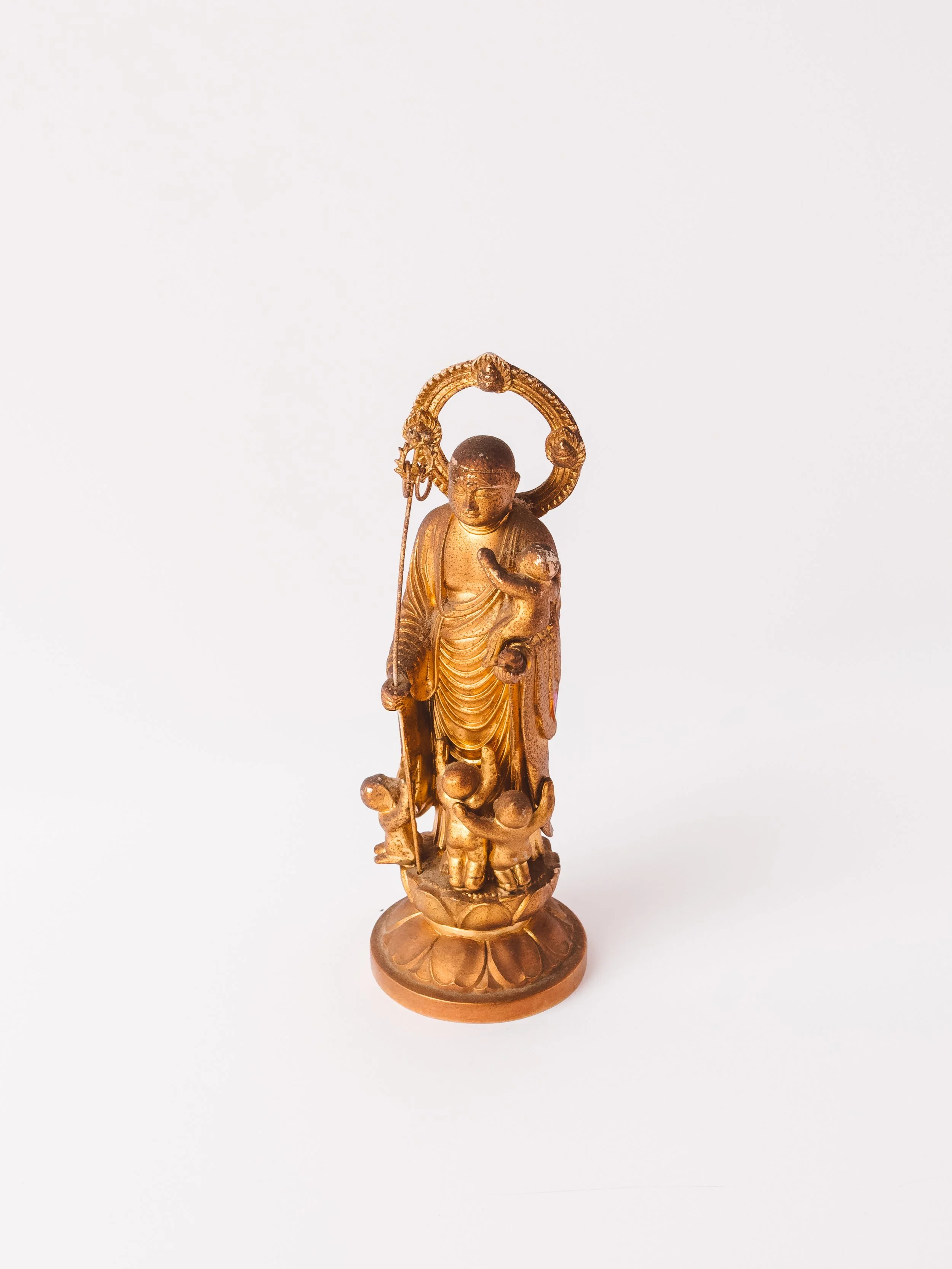 Image 2 of 11
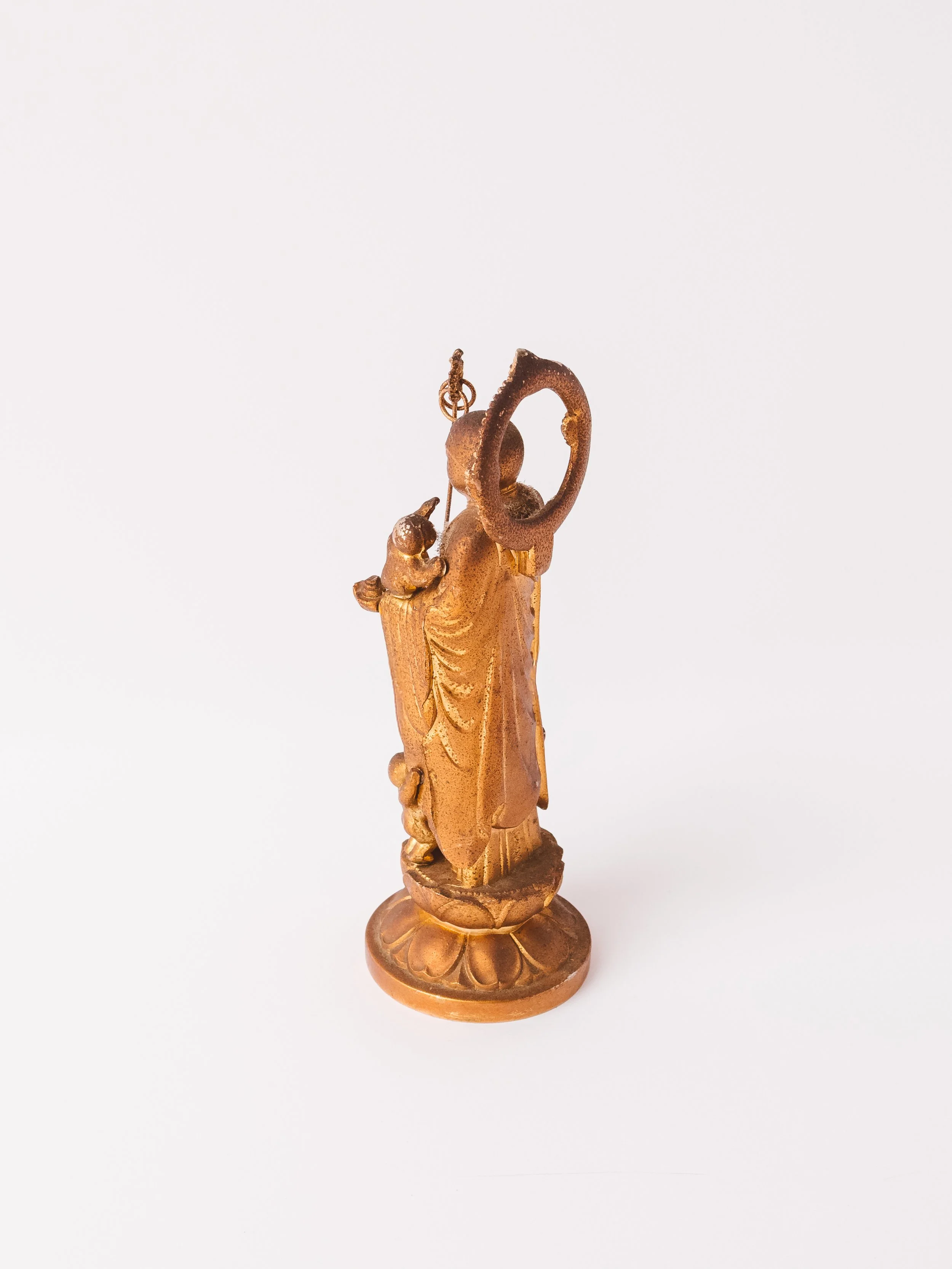 Image 3 of 11
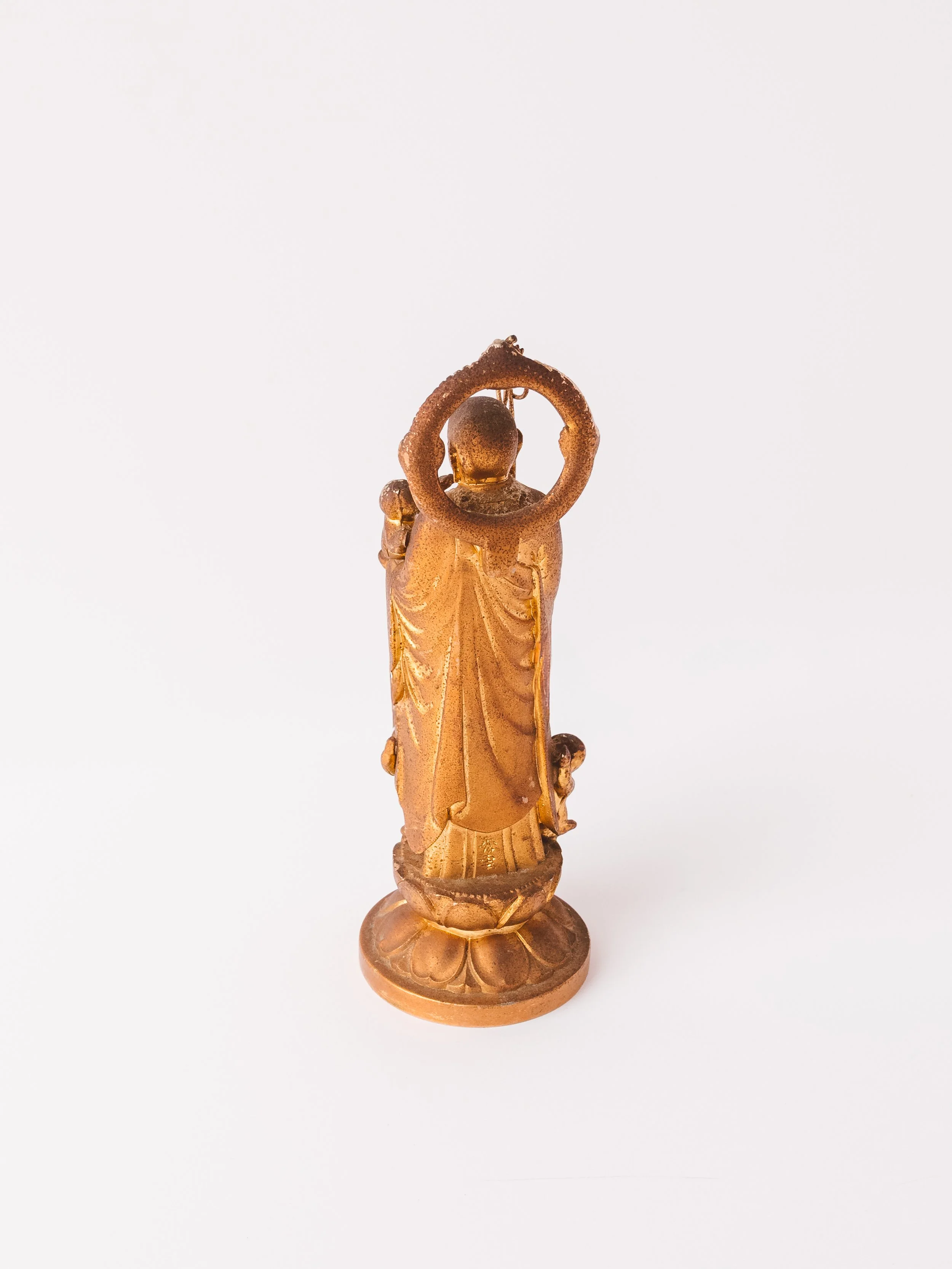 Image 4 of 11
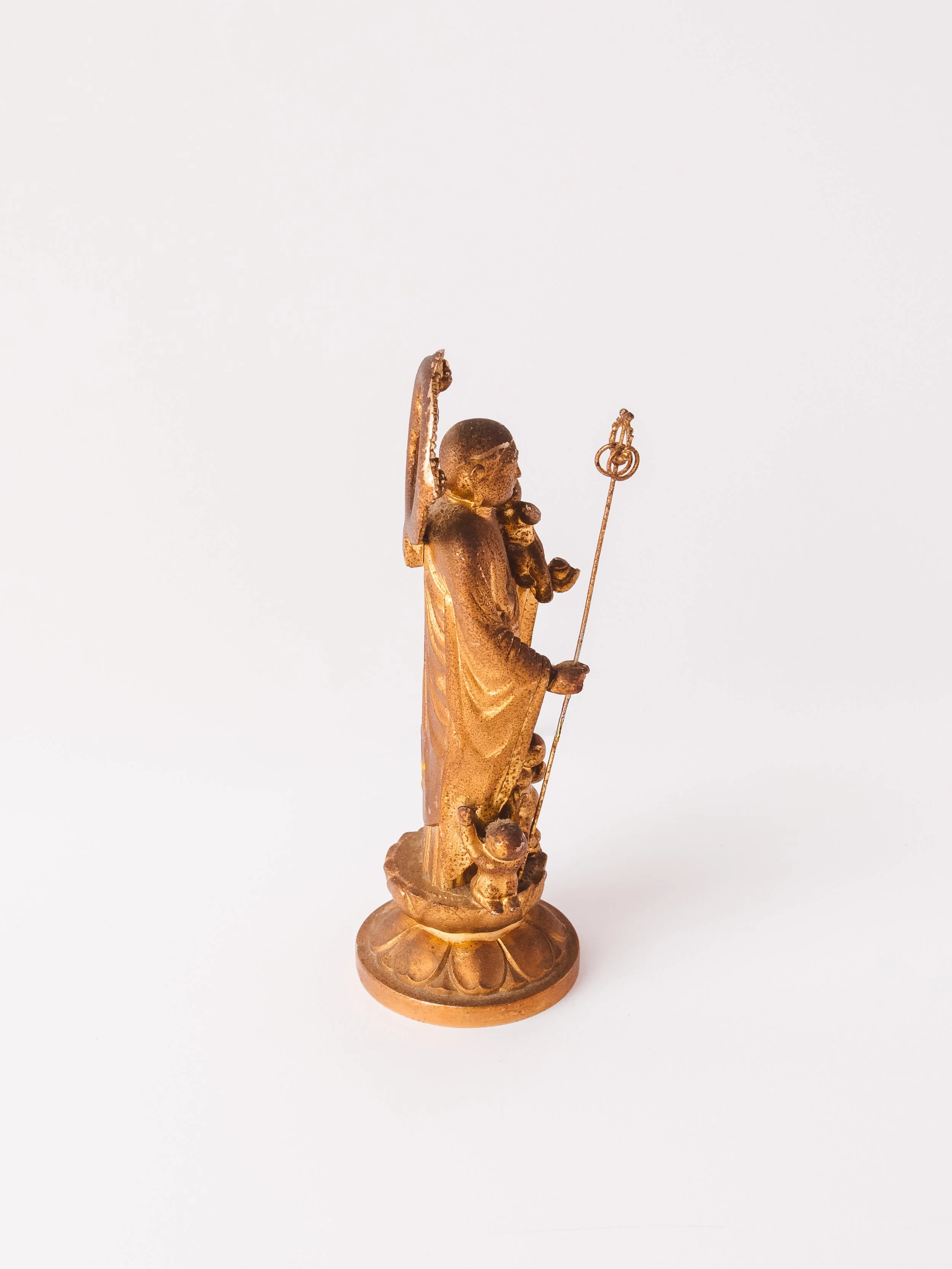 Image 5 of 11
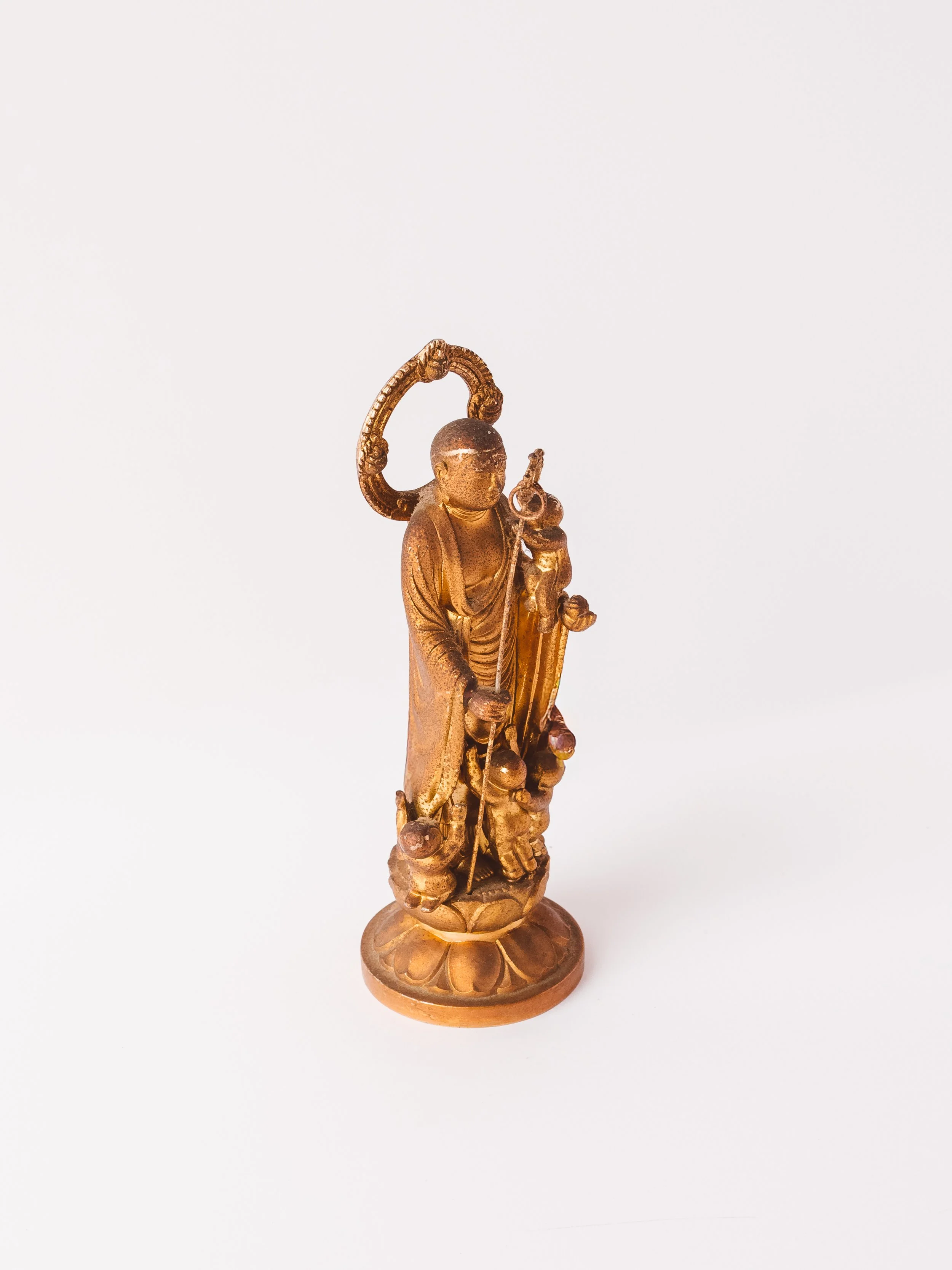 Image 6 of 11
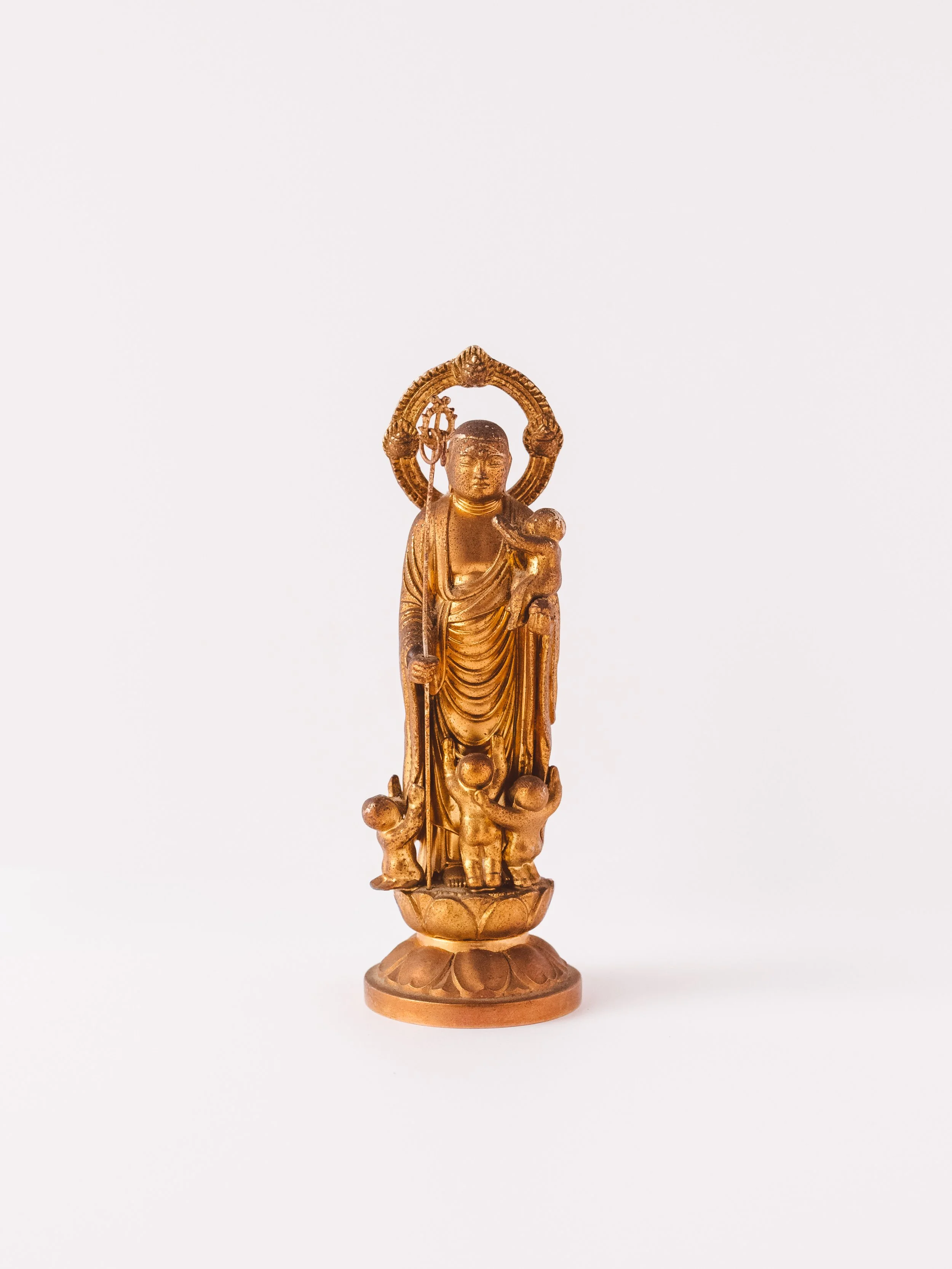 Image 7 of 11
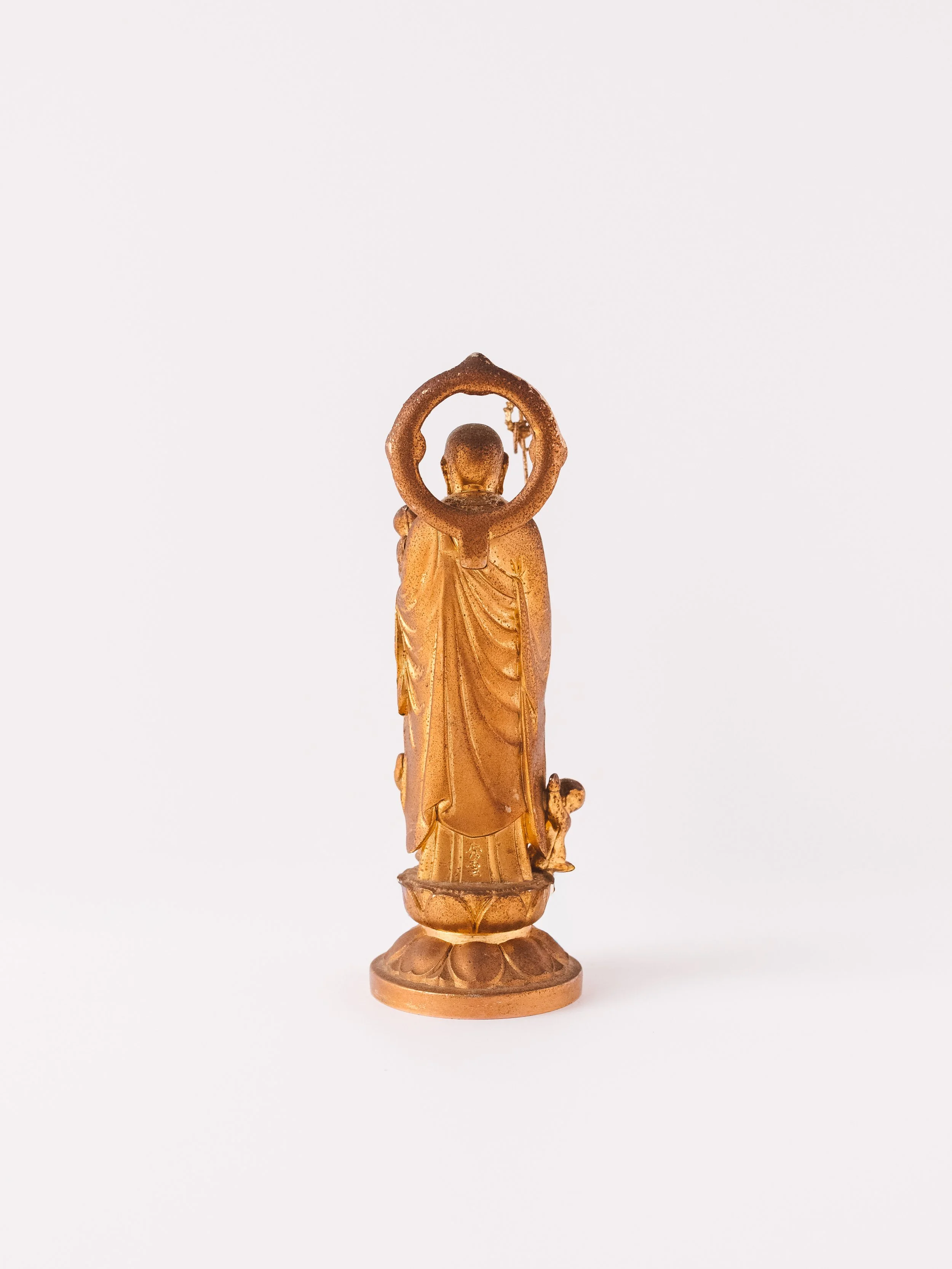 Image 8 of 11
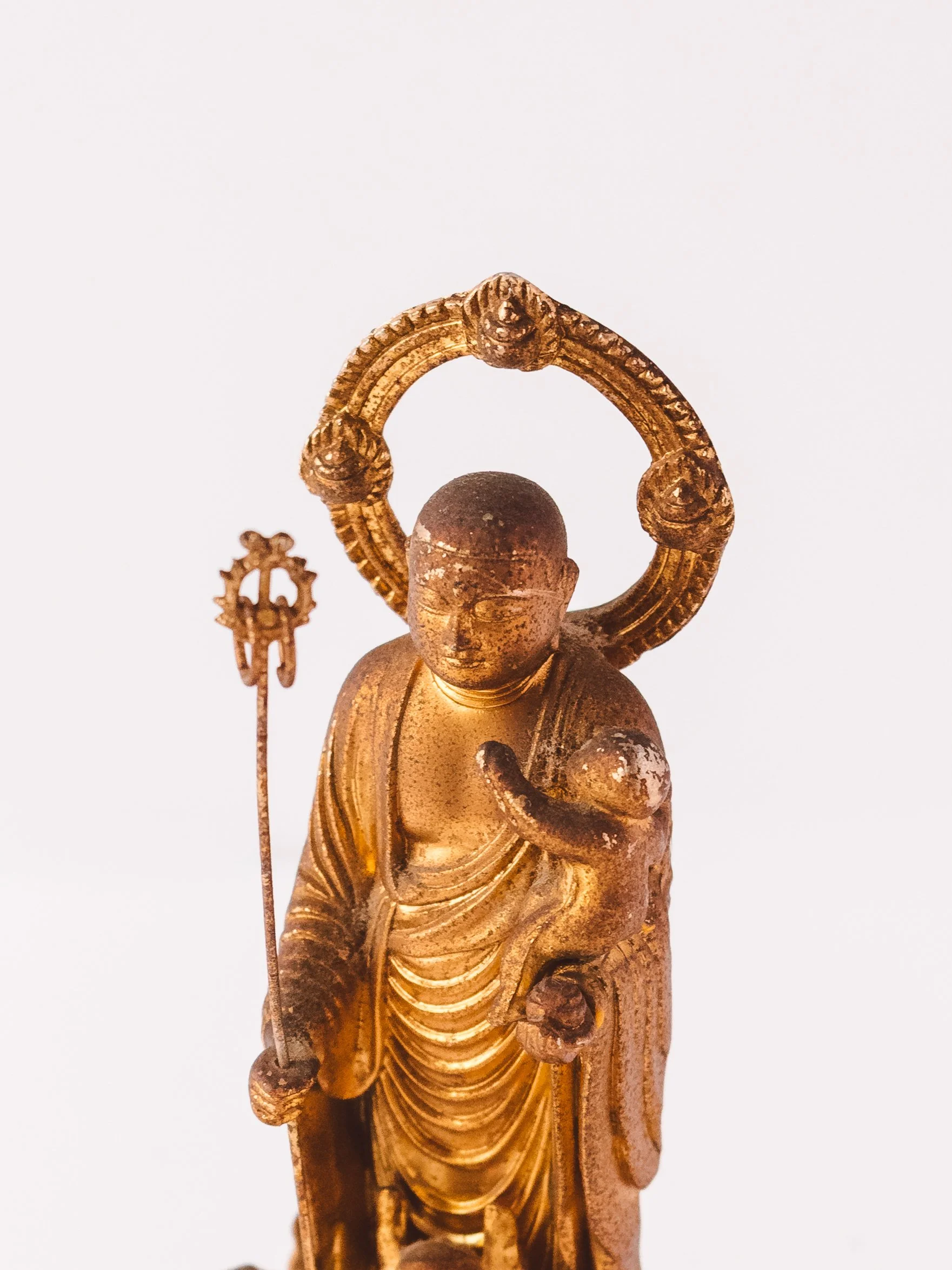 Image 9 of 11
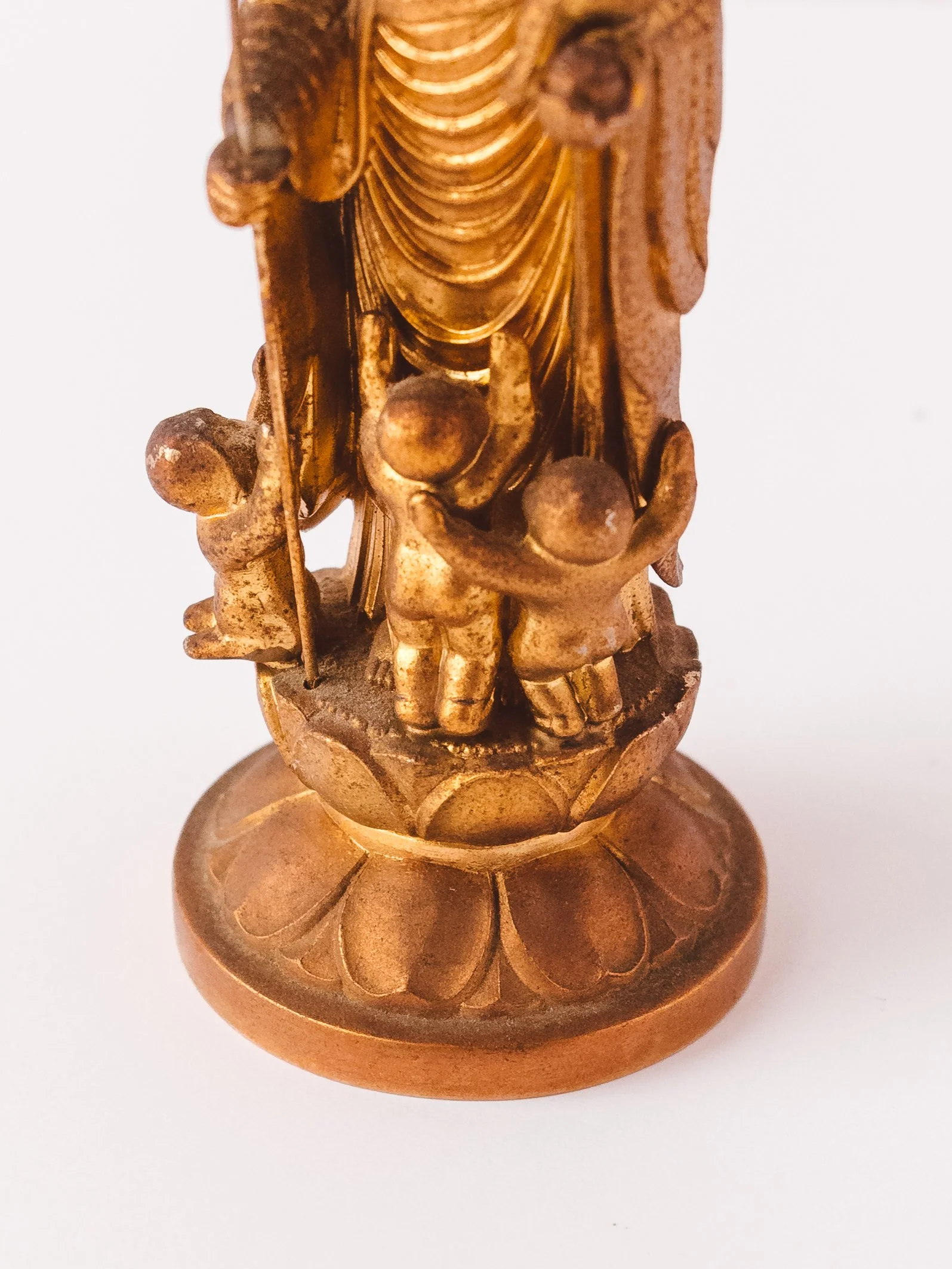 Image 10 of 11
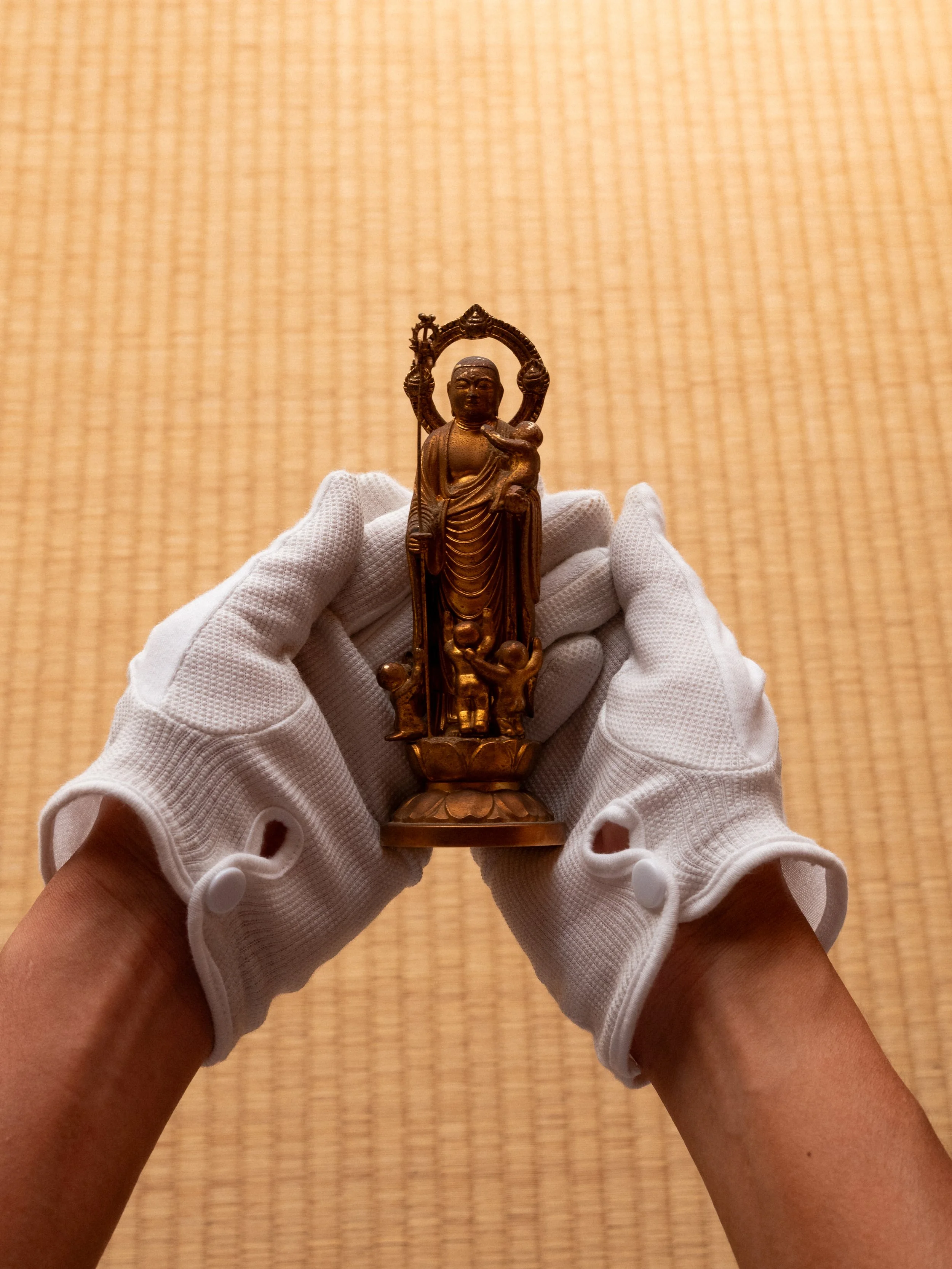 Image 11 of 11