【 The Concept 】
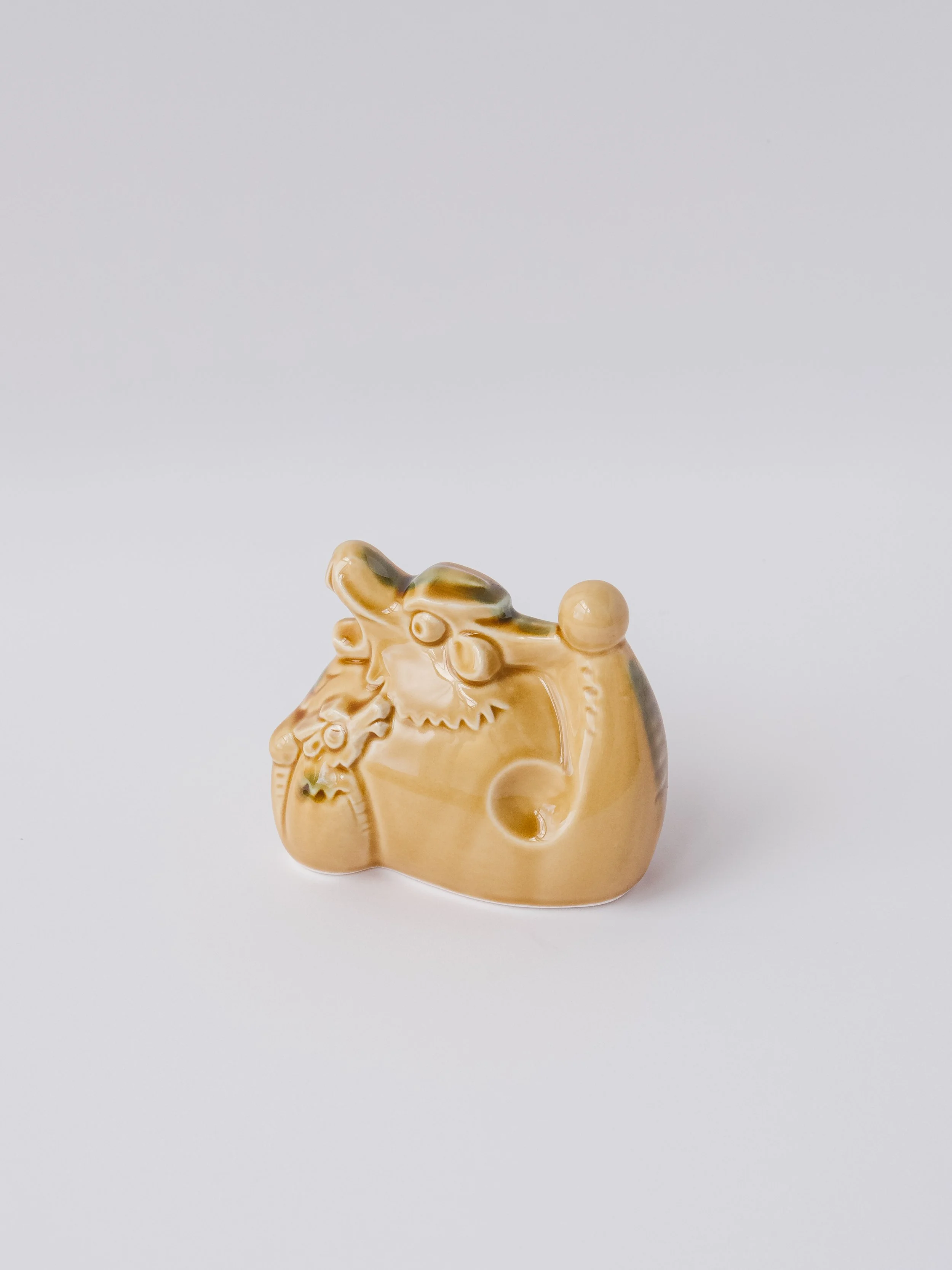
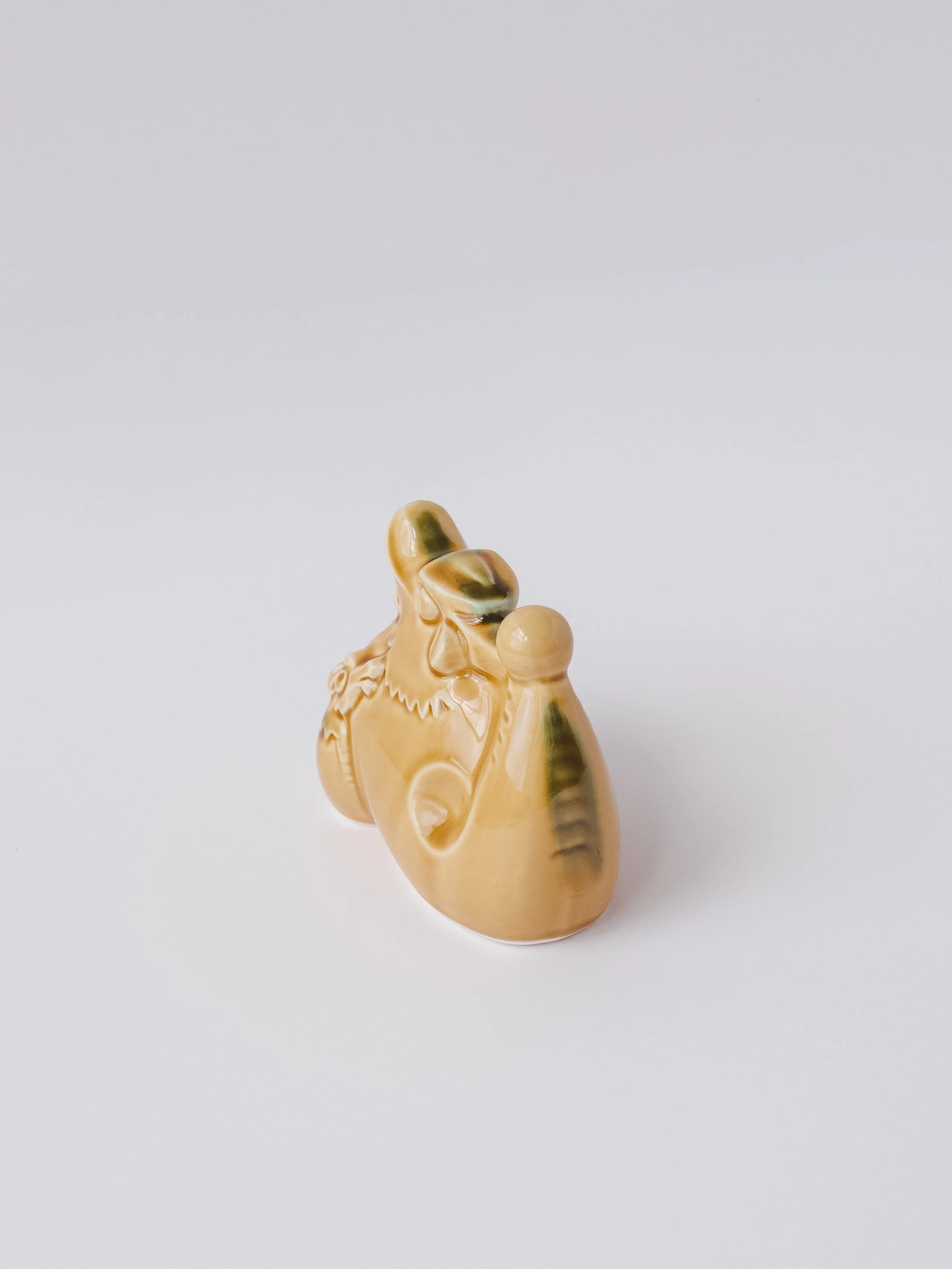
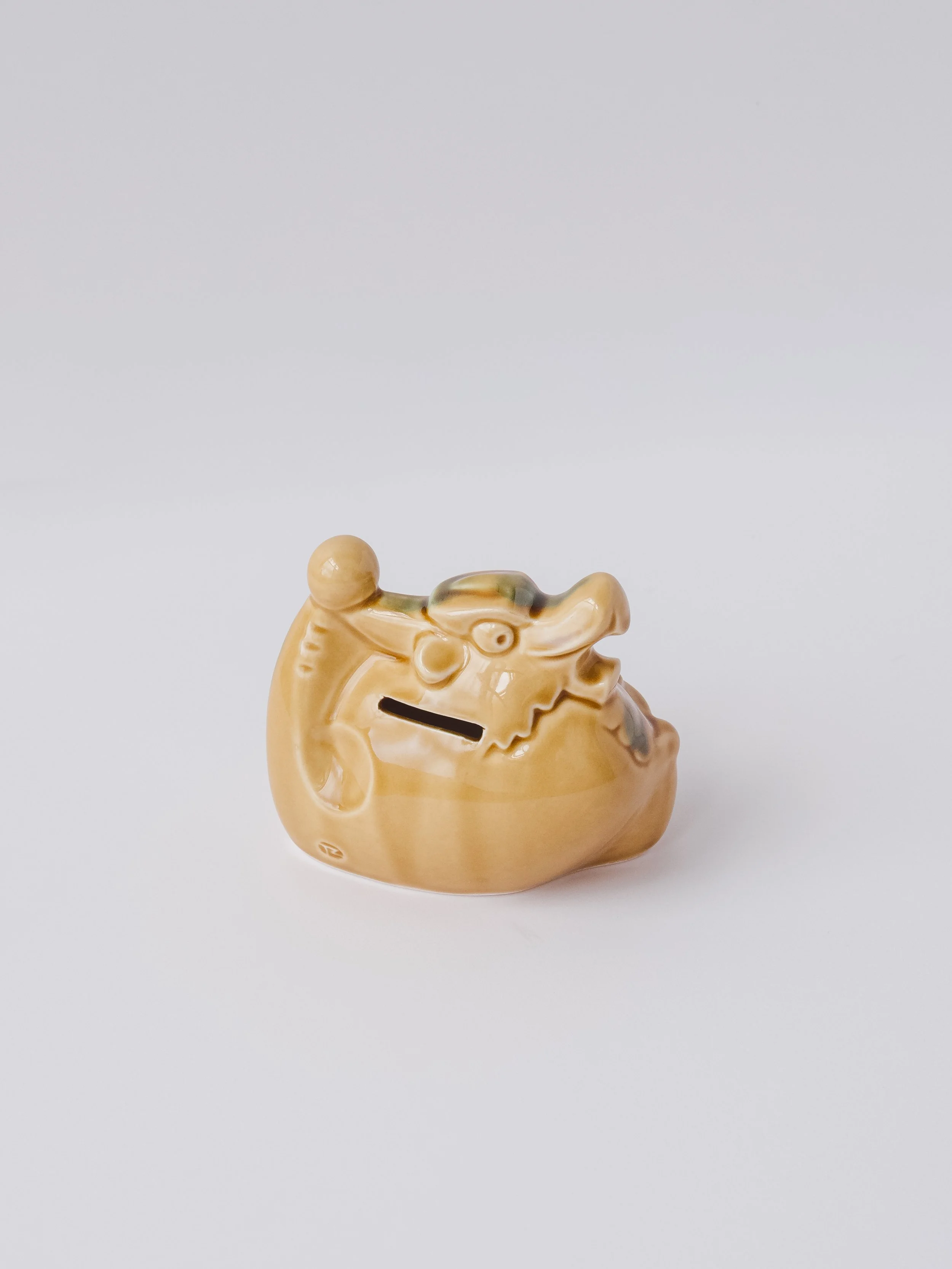
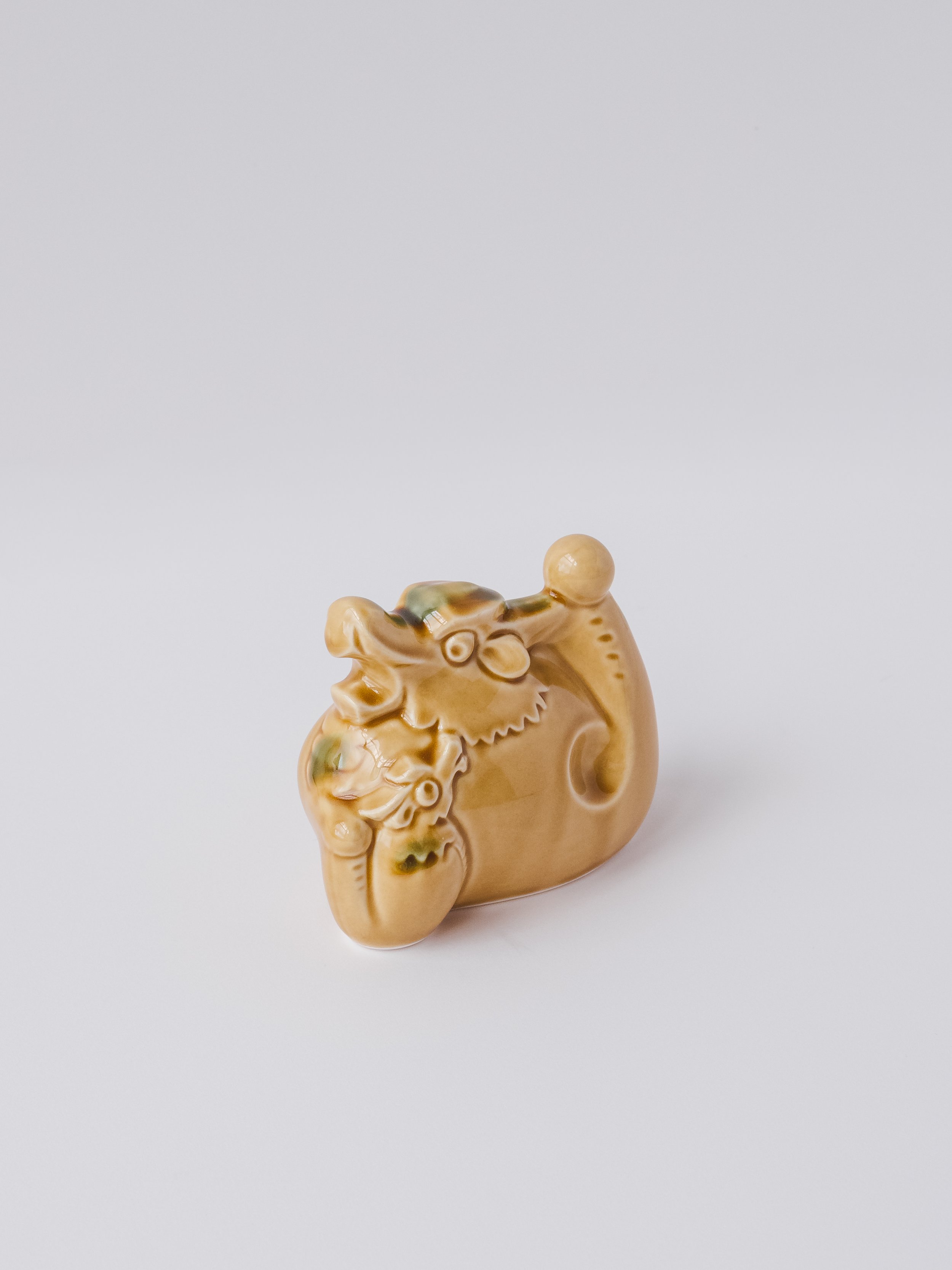
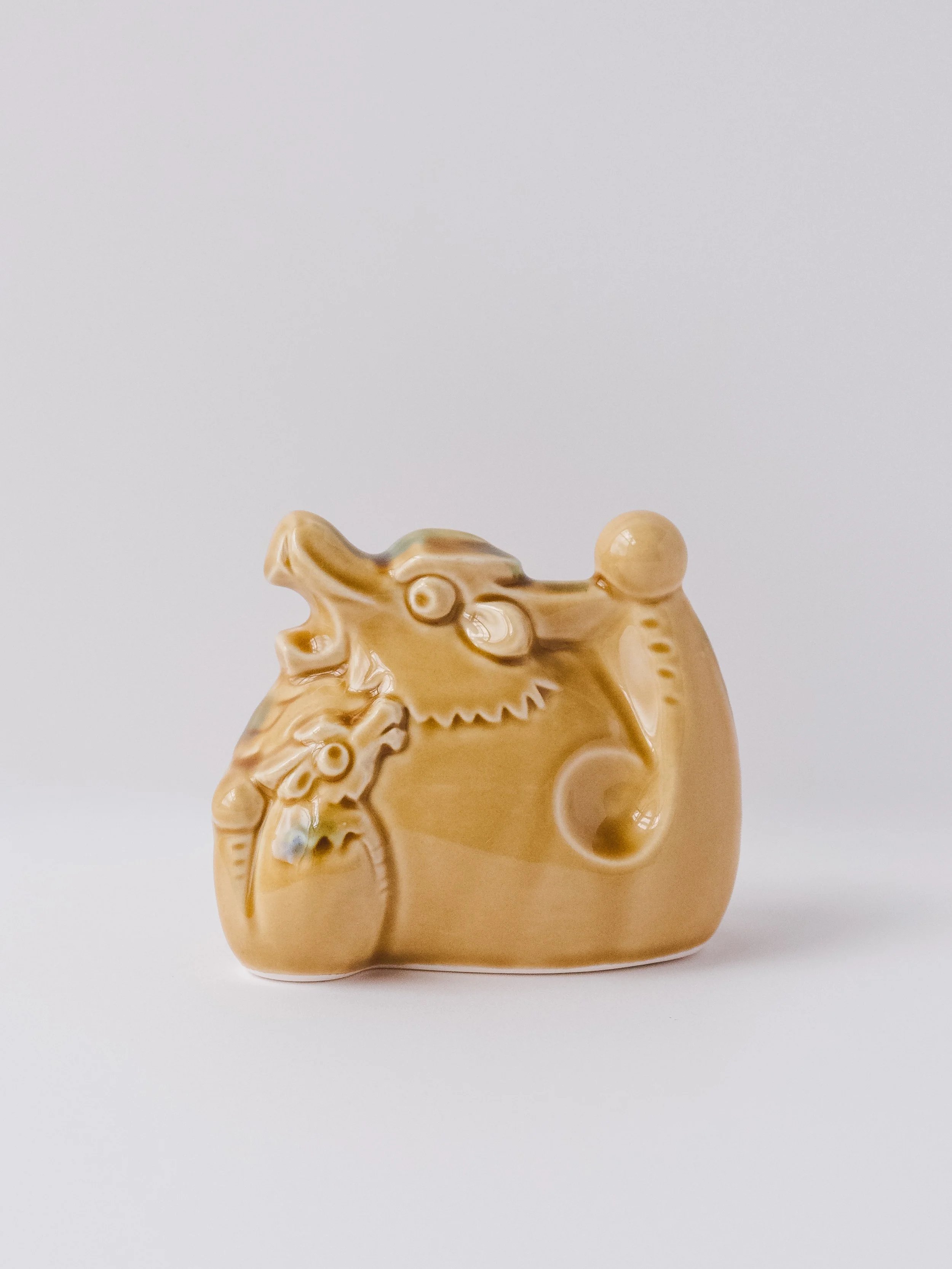
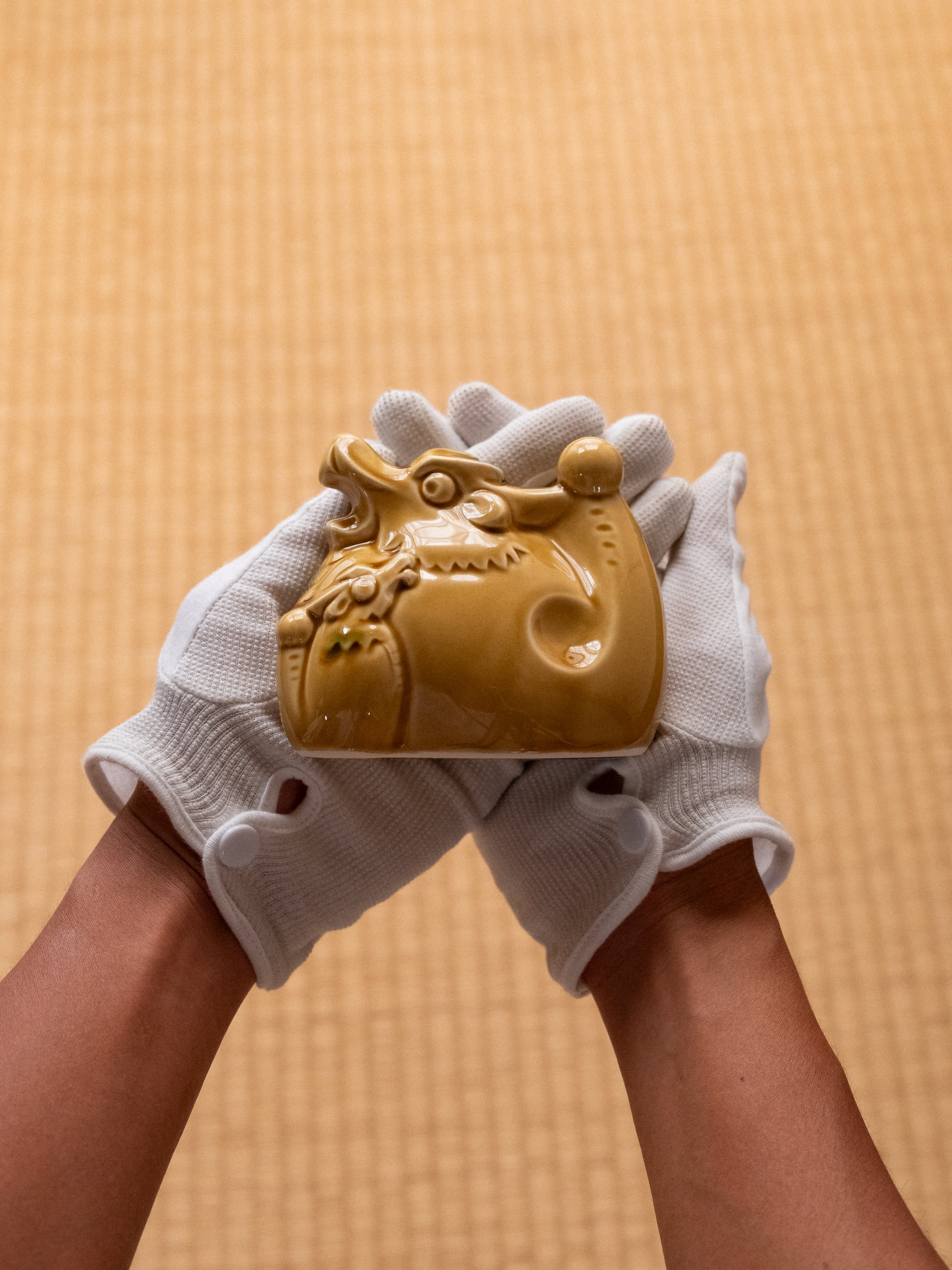
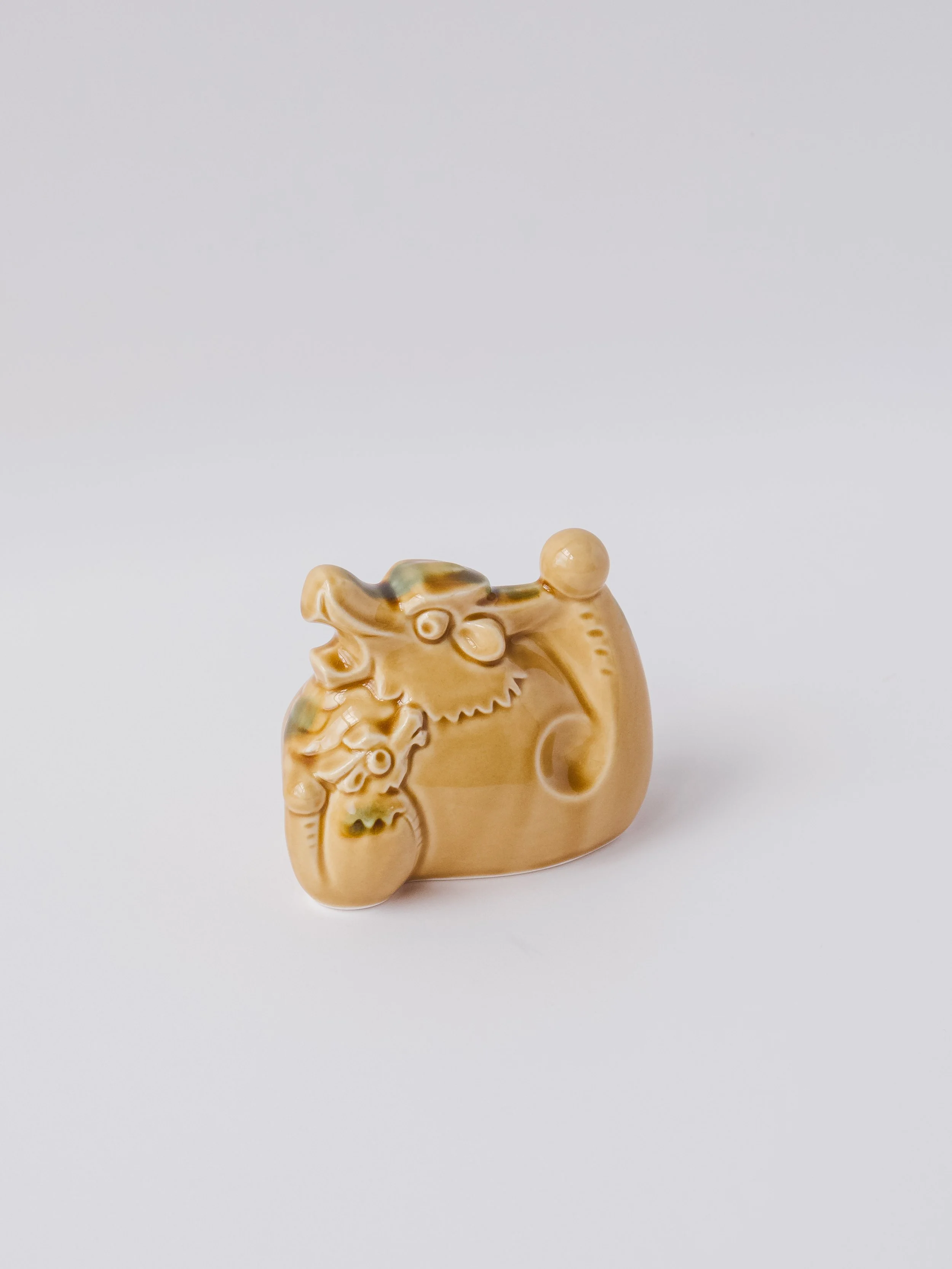
A dragon coiled into a compact, rounded knot, its head lifted and its tail swept up over its back to hold a single round jewel aloft. Tucked against its chest, held in one foreleg, is a small second dragon — the whelp — looking out from the parent's coil. The whole thing is modelled as one soft, low, glossy mass: not the fierce, clawing dragon of a temple beam, but a domestic, protective one, curled around its young and its treasure.
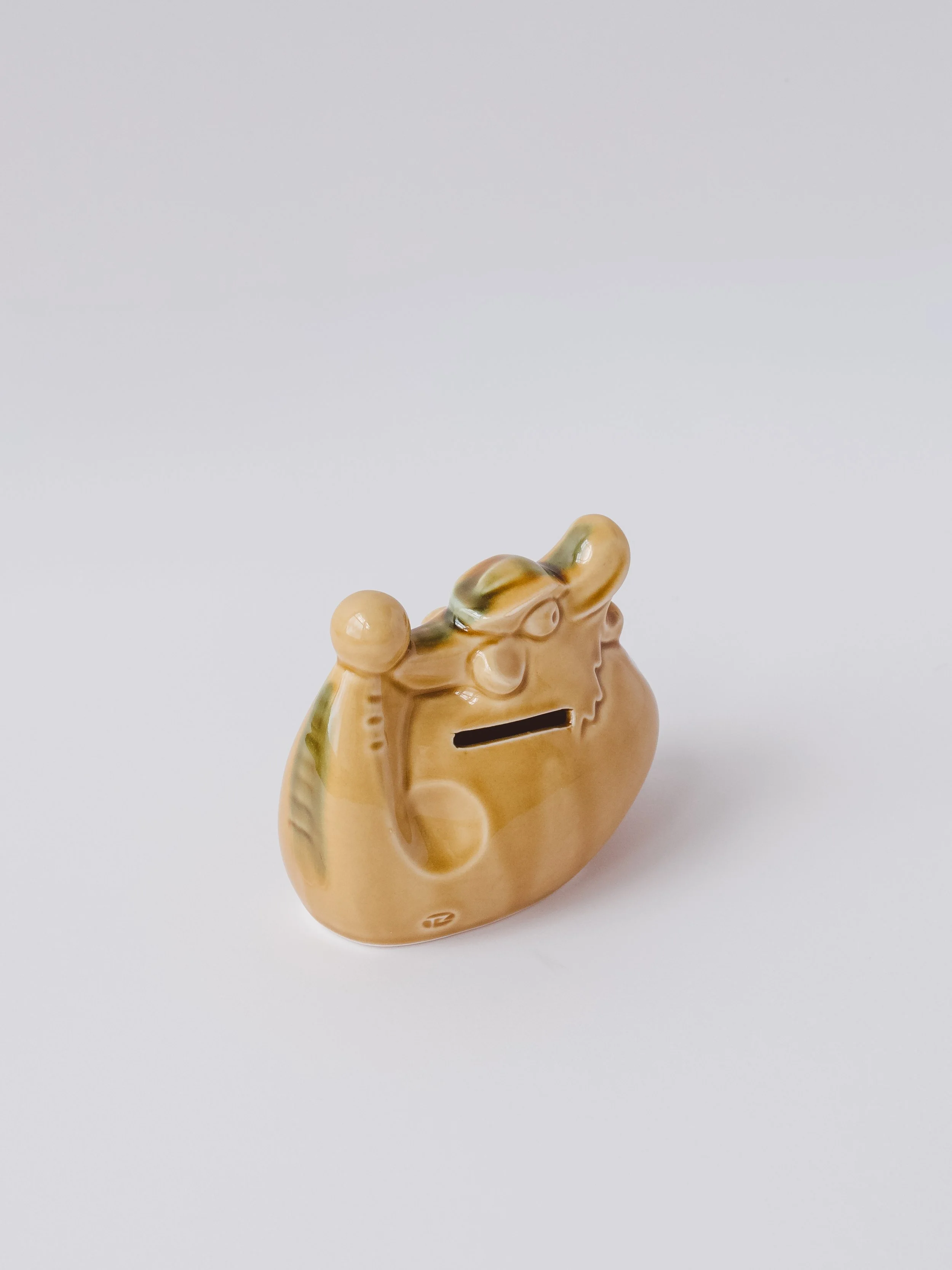
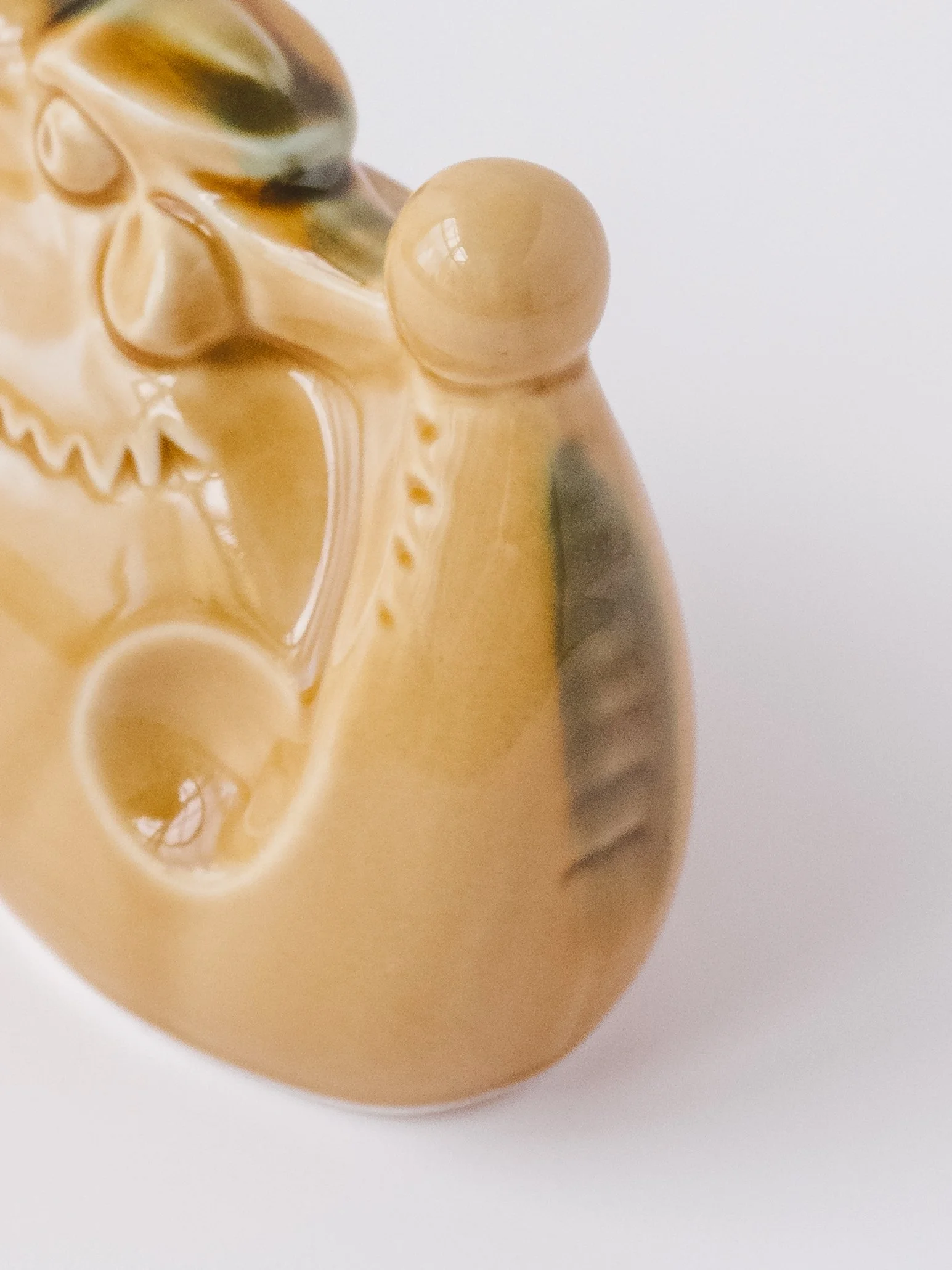
The glaze does most of the work. The body is a warm amber (飴釉 / ame-yū), glassy and even, and over it, at the crown of the head, along the mane, over the whelp, and down the raised tail, runs a loose wash of green that has been let to flow and pool where it will — the old nagashi (釉流し, poured-glaze) manner, so that no two pieces break exactly alike. Fine tooled lines give the beard its zigzag, the mane its ridges, the flank its single scrolling coil.
【 The Function 】
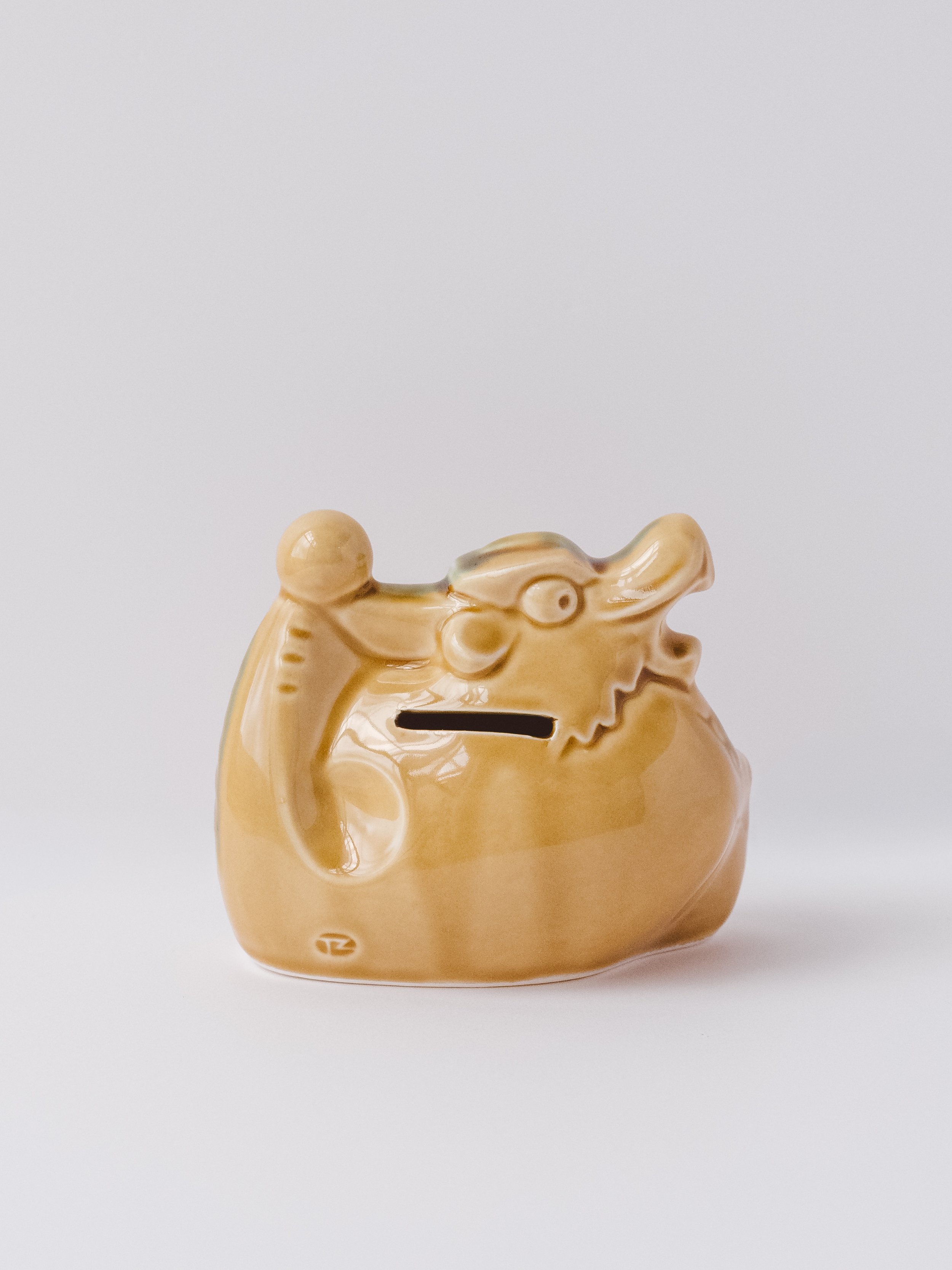
A coin bank (貯金箱 / chokinbako) in the form of a Year-of-the-Dragon zodiac ornament — a New-Year and year-round auspicious figure, small and rounded, made to sit on a shelf, a desk, or a tokonoma alcove. A coin slot is cut into the side of the body. It has real weight for its size and sits low and stable.
【 The Texture 】
High-gloss amber glaze, smooth and wet-looking, with soft green runs where the second glaze was poured and allowed to drift. The colour deepens in every tooled recess — the beard, the mane, the coil, the dotted markings along the tail — and thins to bright gold on the rounded high points. The base rim is left as bare white body where it stood in the kiln.
【 Presence 】
Small, round, and warm. It reads at a glance as a single glossy amber pebble of a thing, and then resolves into a whole family scene — parent, child, and jewel — wound into one form. Calm rather than fierce; a good-luck object that invites handling.
Provenance Note: Sourced from a private collection in Japan.
【 The Concept 】
A dragon coiled into a compact, rounded knot, its head lifted and its tail swept up over its back to hold a single round jewel aloft. Tucked against its chest, held in one foreleg, is a small second dragon — the whelp — looking out from the parent's coil. The whole thing is modelled as one soft, low, glossy mass: not the fierce, clawing dragon of a temple beam, but a domestic, protective one, curled around its young and its treasure.
The glaze does most of the work. The body is a warm amber (飴釉 / ame-yū), glassy and even, and over it, at the crown of the head, along the mane, over the whelp, and down the raised tail, runs a loose wash of green that has been let to flow and pool where it will — the old nagashi (釉流し, poured-glaze) manner, so that no two pieces break exactly alike. Fine tooled lines give the beard its zigzag, the mane its ridges, the flank its single scrolling coil.
【 The Function 】
A coin bank (貯金箱 / chokinbako) in the form of a Year-of-the-Dragon zodiac ornament — a New-Year and year-round auspicious figure, small and rounded, made to sit on a shelf, a desk, or a tokonoma alcove. A coin slot is cut into the side of the body. It has real weight for its size and sits low and stable.
【 The Texture 】
High-gloss amber glaze, smooth and wet-looking, with soft green runs where the second glaze was poured and allowed to drift. The colour deepens in every tooled recess — the beard, the mane, the coil, the dotted markings along the tail — and thins to bright gold on the rounded high points. The base rim is left as bare white body where it stood in the kiln.
【 Presence 】
Small, round, and warm. It reads at a glance as a single glossy amber pebble of a thing, and then resolves into a whole family scene — parent, child, and jewel — wound into one form. Calm rather than fierce; a good-luck object that invites handling.
Provenance Note: Sourced from a private collection in Japan.