【 The Concept 】
A dragon coiled in jade-green glaze, with a bottle hidden inside it. This is a vessel for awamori — the rice spirit distilled in Japan's southern Ryukyu islands, the country's oldest distilled liquor — and above all for its aged form, kūsū, the spirit that families once laid down at a child's birth and opened decades later, grown rounder and sweeter with every year in the jar. A drink measured in time asks for a container that honours it, and here the plain bottle has been remade as sculpture.
Every part of the form carries meaning. The dragon that arches over the vessel is the water-god of these islands — bringer of rain, keeper of the springs — and good water is the first thing any spirit is made of, so to wrap the bottle in a dragon is to thank the source. The wheel of the zodiac last came to rest on the dragon in 2024, the year this piece takes its name from, and will not turn to it again until 2036. Around the base, riding banks of auspicious cloud, stand the seven gods of fortune: the fat-bellied god of wealth, the fisher-god with his sea bream, the armoured guardian with his halberd and pagoda, the long-headed elders of long life. And at the centre of it all, pressed large into the smooth belly of the bottle, a single character — kotobuki, 寿 — long life, celebration, the blessing of years. The dragon rules the sky, the gods hold the earth, and between them the vessel makes one quiet argument: that time itself is the thing worth keeping.
Where GILDED BOAR renders a wish in gold, this renders time in jade.
【 The Function 】
Unlike stationary decor, this piece began as a working vessel — a cork still seated in the spout at the dragon's crown, and the near-perfect ring of open space beneath the dragon's arching body shaped, exactly, to take a carrying hand. Empty now, it steps into the second life the islands always intended for it: the ornament that outlasts its contents, set on a shelf, an entryway, a cabinet of good omen, and kept for the fortune it carries rather than the spirit it once held.
【 The Texture 】
Celadon is glaze pretending to be stone. A single pale green skin — the colour of jade, of shallow water over pale sand — covers the whole piece, and the deep carving does the rest. The glaze runs and gathers in the cut lines, darkening to a deep sea-green in the dragon's scales, the folds of the gods' robes, the spirals of cloud, while it thins over every raised edge — a horn tip, a knuckle, the stroke of the 寿 — to a near-white where the pale clay shows through. One colour becomes a hundred, and the surface reads as carved light. Against that cool glass skin the cork alone is warm: matte, porous, organic, the one honest reminder that this is a bottle.
【 Presence 】
A substantial thing — wider than it is tall, and heavier in the hand than it looks — that holds a room the way a stone holds a garden. It catches and softens the light along its glazed ridges, shifting through the day from near-white to deep green as the room brightens and dims. Set it where it can be circled and read, base and dragon and character each rewarding a second look; it does not so much decorate a space as preside over it.
Sourced from a private collection in the Ryukyu Islands (Okinawa), Japan.
【 The Concept 】
A dragon coiled in jade-green glaze, with a bottle hidden inside it. This is a vessel for awamori — the rice spirit distilled in Japan's southern Ryukyu islands, the country's oldest distilled liquor — and above all for its aged form, kūsū, the spirit that families once laid down at a child's birth and opened decades later, grown rounder and sweeter with every year in the jar. A drink measured in time asks for a container that honours it, and here the plain bottle has been remade as sculpture.
Every part of the form carries meaning. The dragon that arches over the vessel is the water-god of these islands — bringer of rain, keeper of the springs — and good water is the first thing any spirit is made of, so to wrap the bottle in a dragon is to thank the source. The wheel of the zodiac last came to rest on the dragon in 2024, the year this piece takes its name from, and will not turn to it again until 2036. Around the base, riding banks of auspicious cloud, stand the seven gods of fortune: the fat-bellied god of wealth, the fisher-god with his sea bream, the armoured guardian with his halberd and pagoda, the long-headed elders of long life. And at the centre of it all, pressed large into the smooth belly of the bottle, a single character — kotobuki, 寿 — long life, celebration, the blessing of years. The dragon rules the sky, the gods hold the earth, and between them the vessel makes one quiet argument: that time itself is the thing worth keeping.
Where GILDED BOAR renders a wish in gold, this renders time in jade.
【 The Function 】
Unlike stationary decor, this piece began as a working vessel — a cork still seated in the spout at the dragon's crown, and the near-perfect ring of open space beneath the dragon's arching body shaped, exactly, to take a carrying hand. Empty now, it steps into the second life the islands always intended for it: the ornament that outlasts its contents, set on a shelf, an entryway, a cabinet of good omen, and kept for the fortune it carries rather than the spirit it once held.
【 The Texture 】
Celadon is glaze pretending to be stone. A single pale green skin — the colour of jade, of shallow water over pale sand — covers the whole piece, and the deep carving does the rest. The glaze runs and gathers in the cut lines, darkening to a deep sea-green in the dragon's scales, the folds of the gods' robes, the spirals of cloud, while it thins over every raised edge — a horn tip, a knuckle, the stroke of the 寿 — to a near-white where the pale clay shows through. One colour becomes a hundred, and the surface reads as carved light. Against that cool glass skin the cork alone is warm: matte, porous, organic, the one honest reminder that this is a bottle.
【 Presence 】
A substantial thing — wider than it is tall, and heavier in the hand than it looks — that holds a room the way a stone holds a garden. It catches and softens the light along its glazed ridges, shifting through the day from near-white to deep green as the room brightens and dims. Set it where it can be circled and read, base and dragon and character each rewarding a second look; it does not so much decorate a space as preside over it.
Sourced from a private collection in the Ryukyu Islands (Okinawa), Japan.


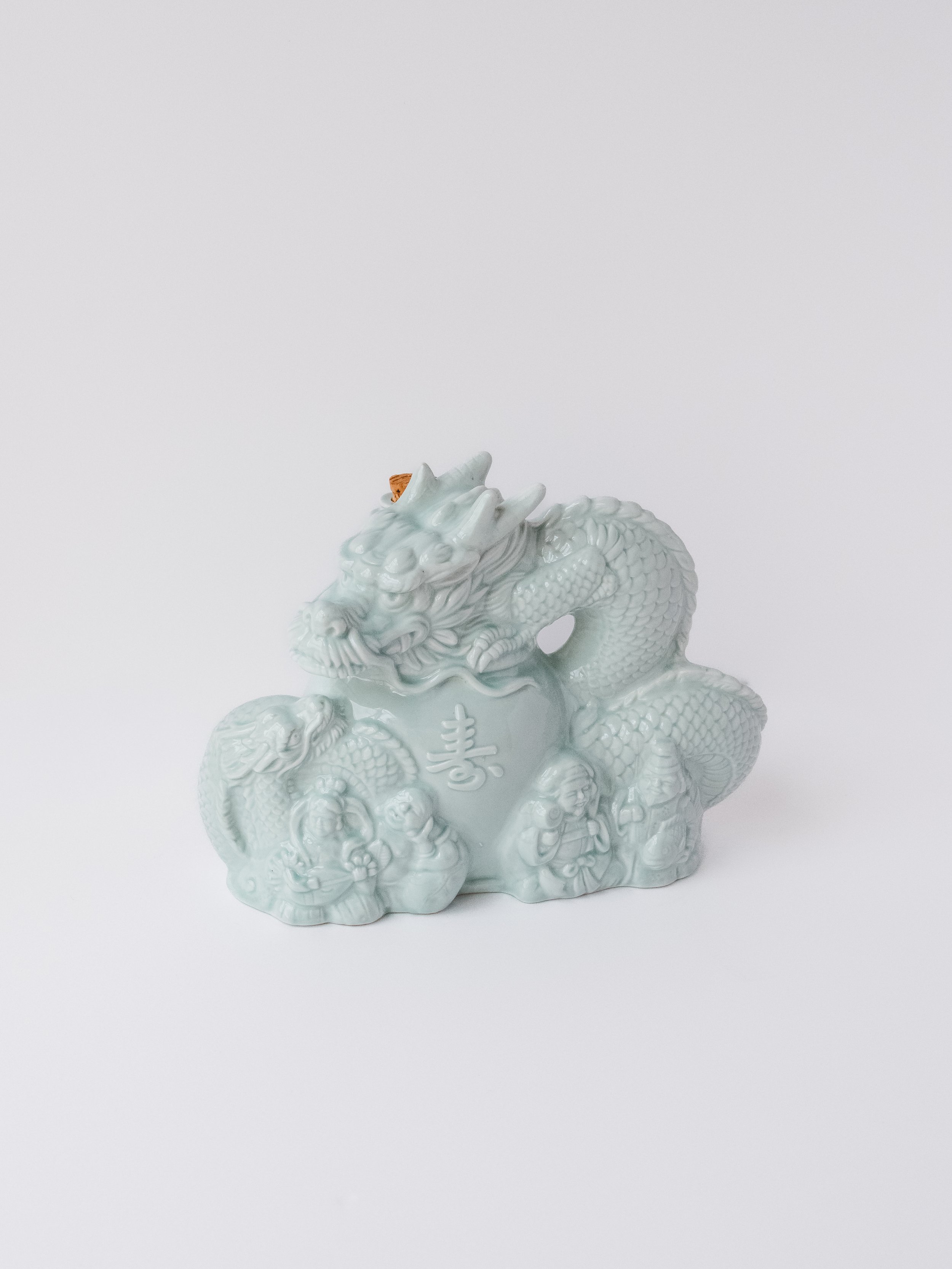 Image 1 of 15
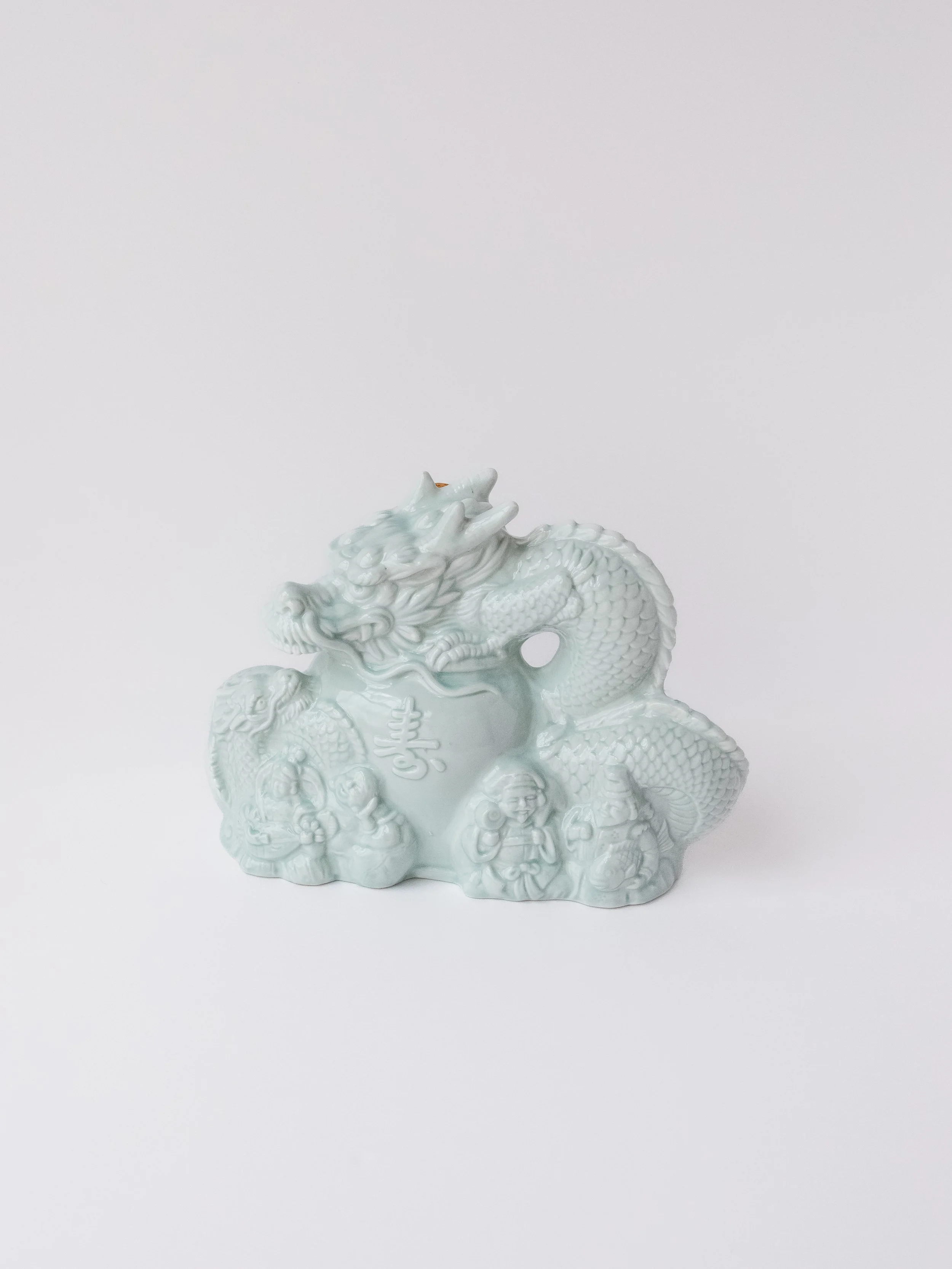 Image 2 of 15
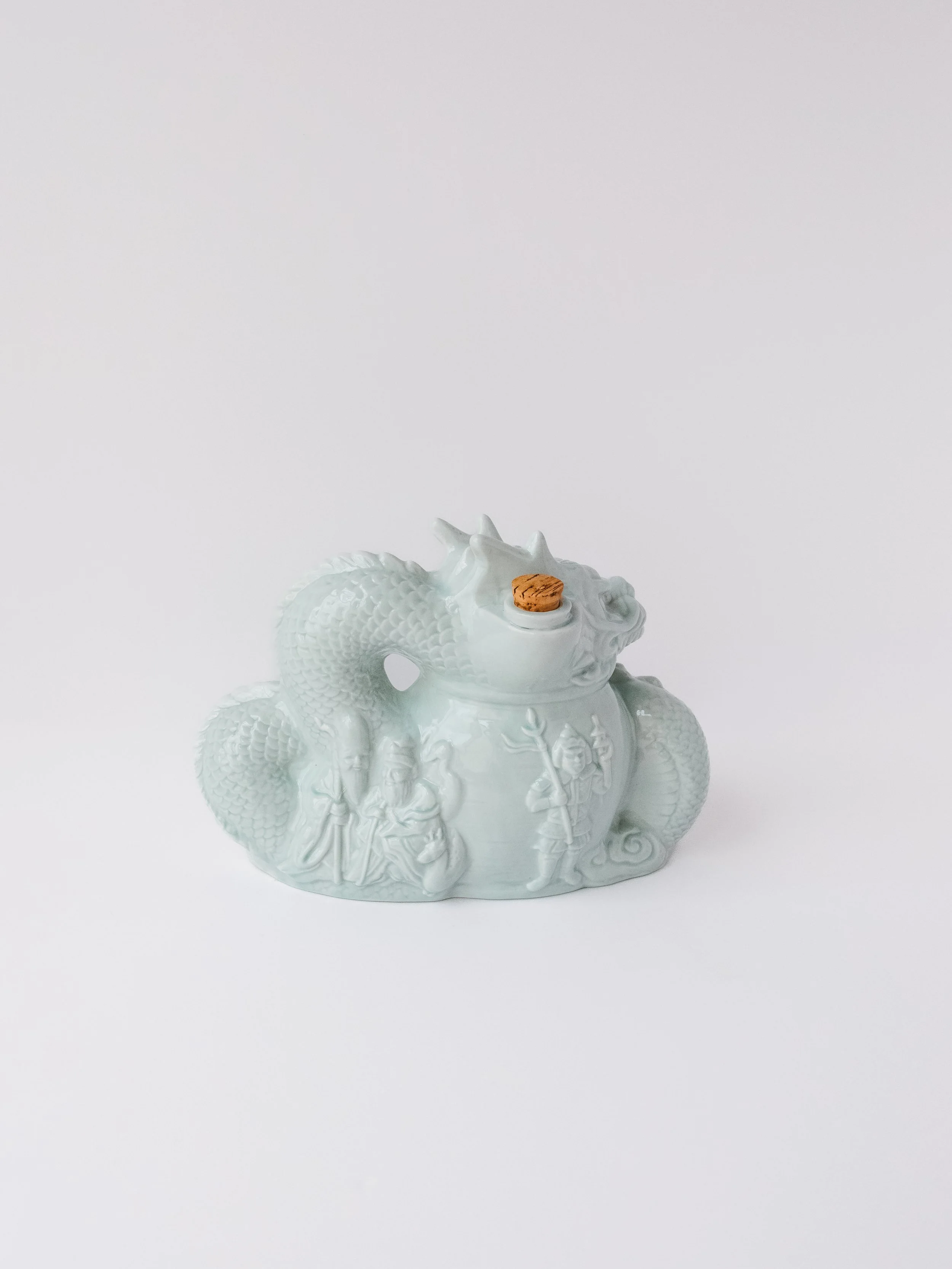 Image 3 of 15
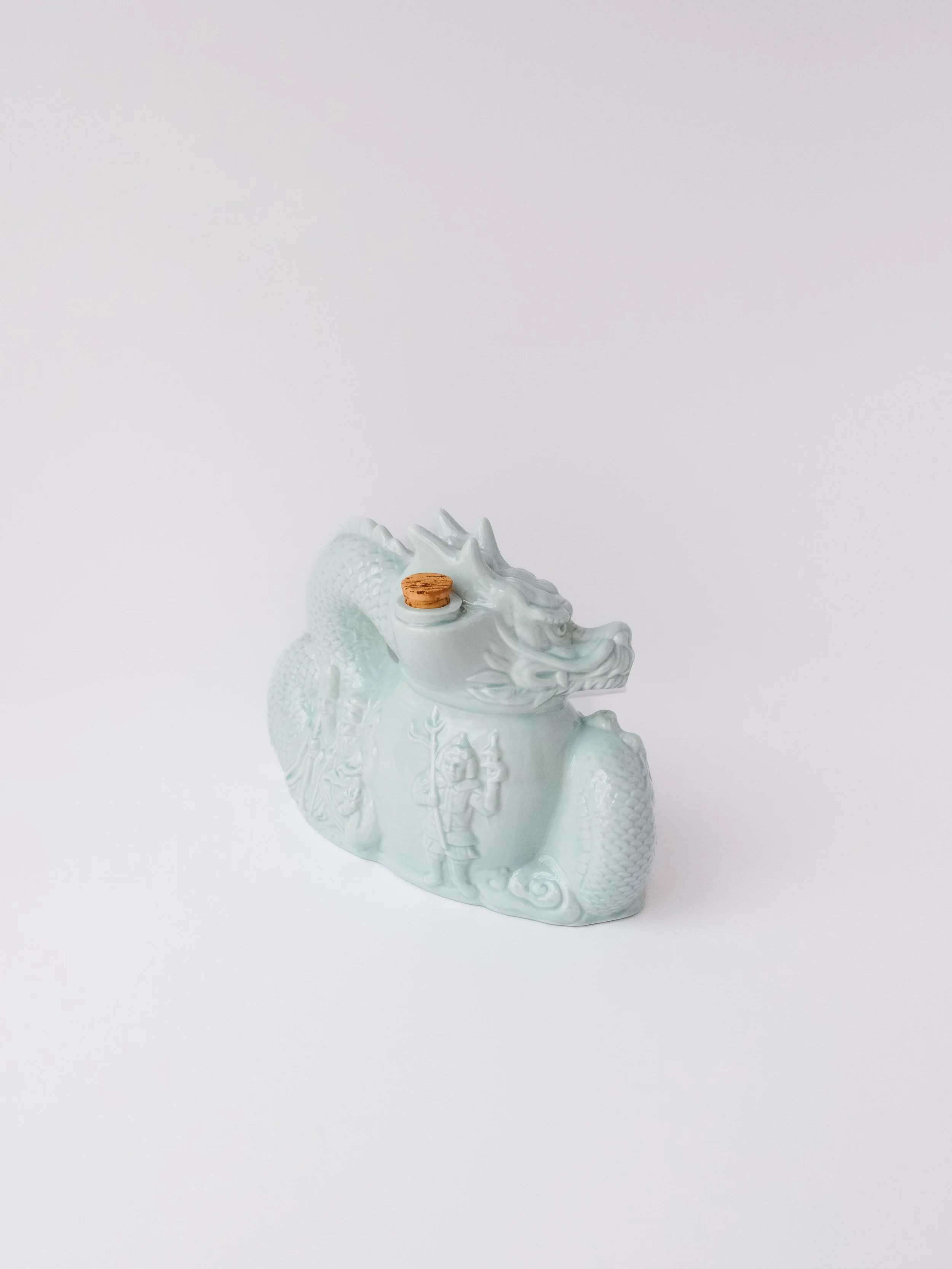 Image 4 of 15
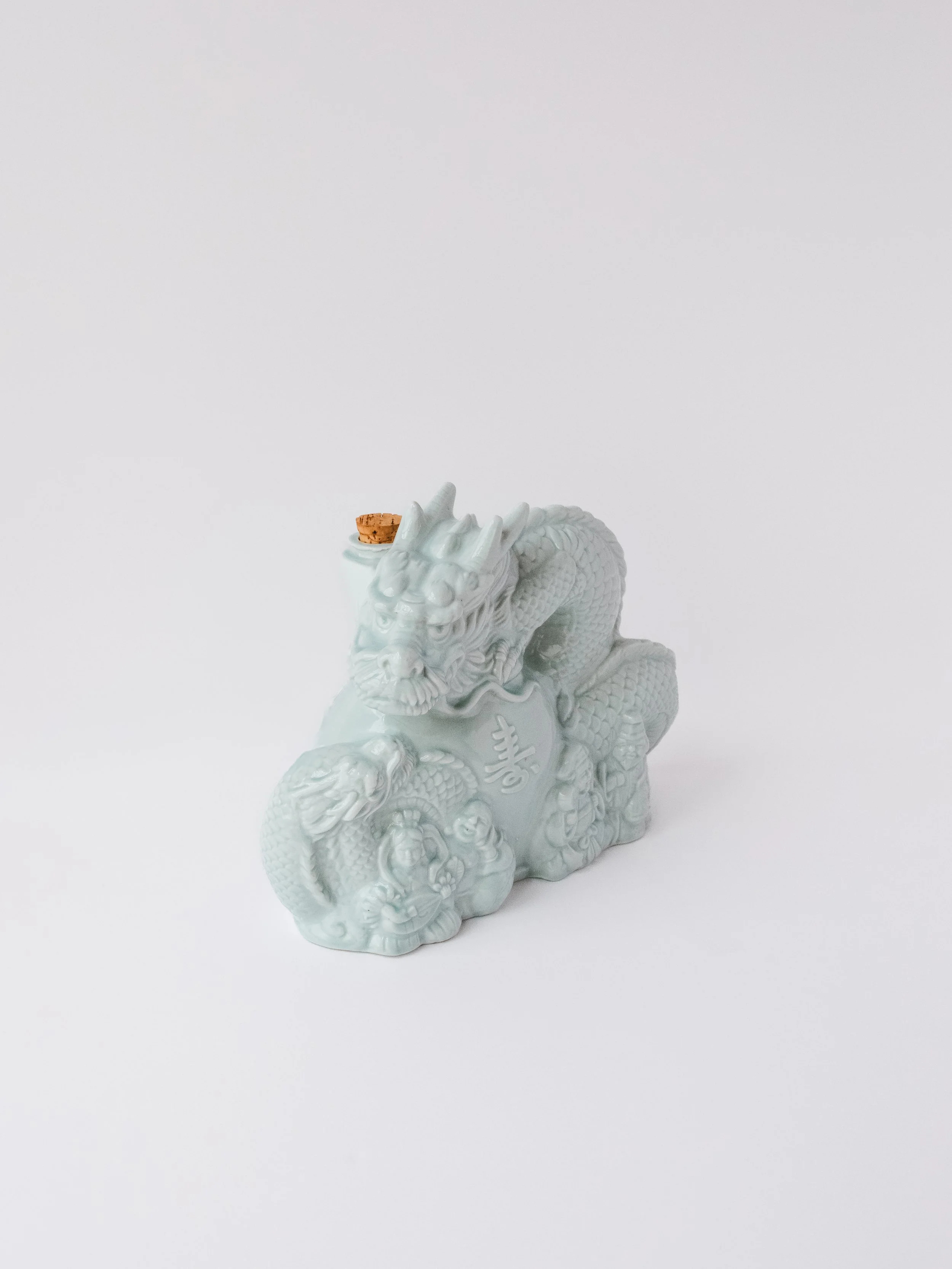 Image 5 of 15
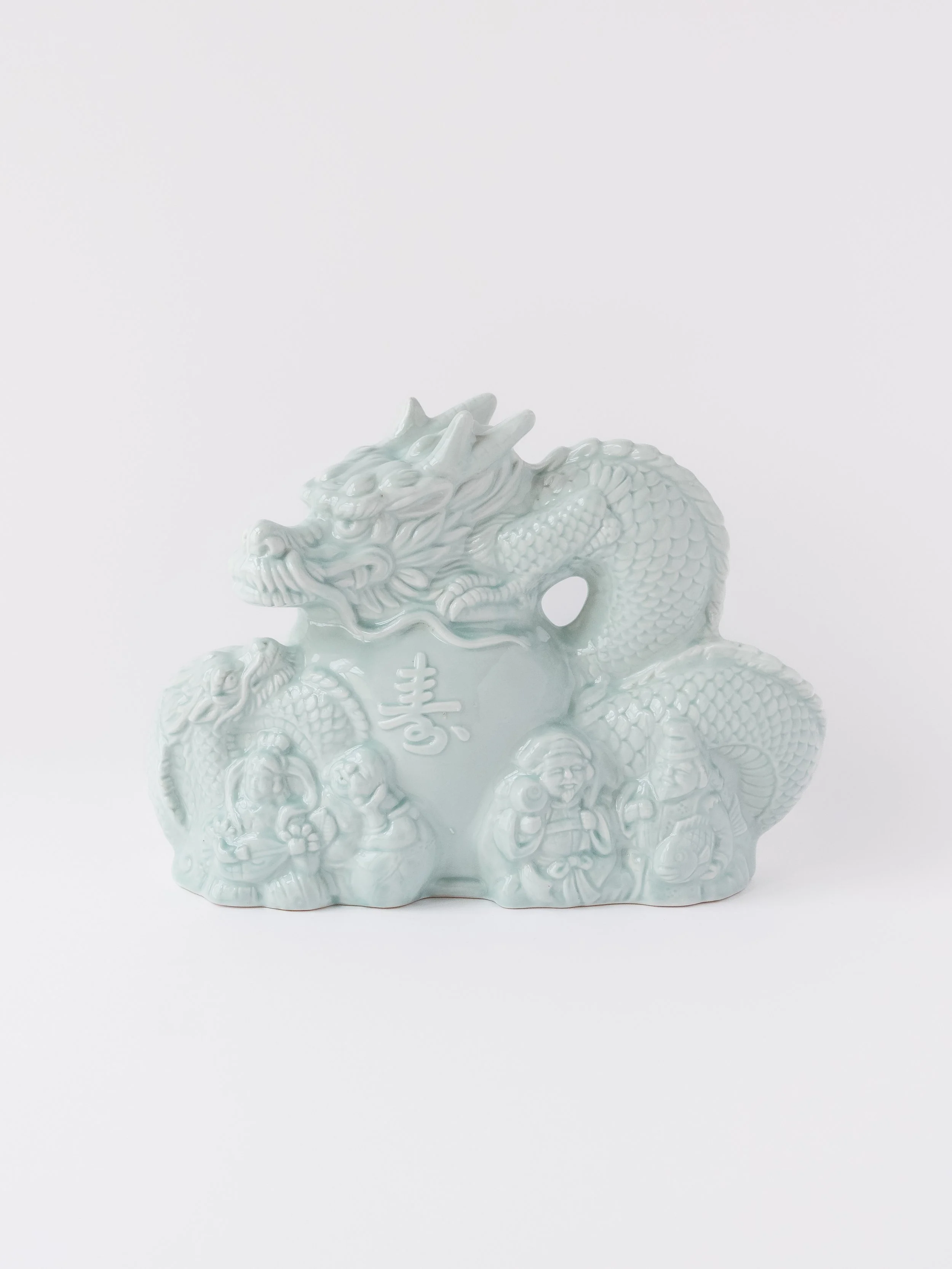 Image 6 of 15
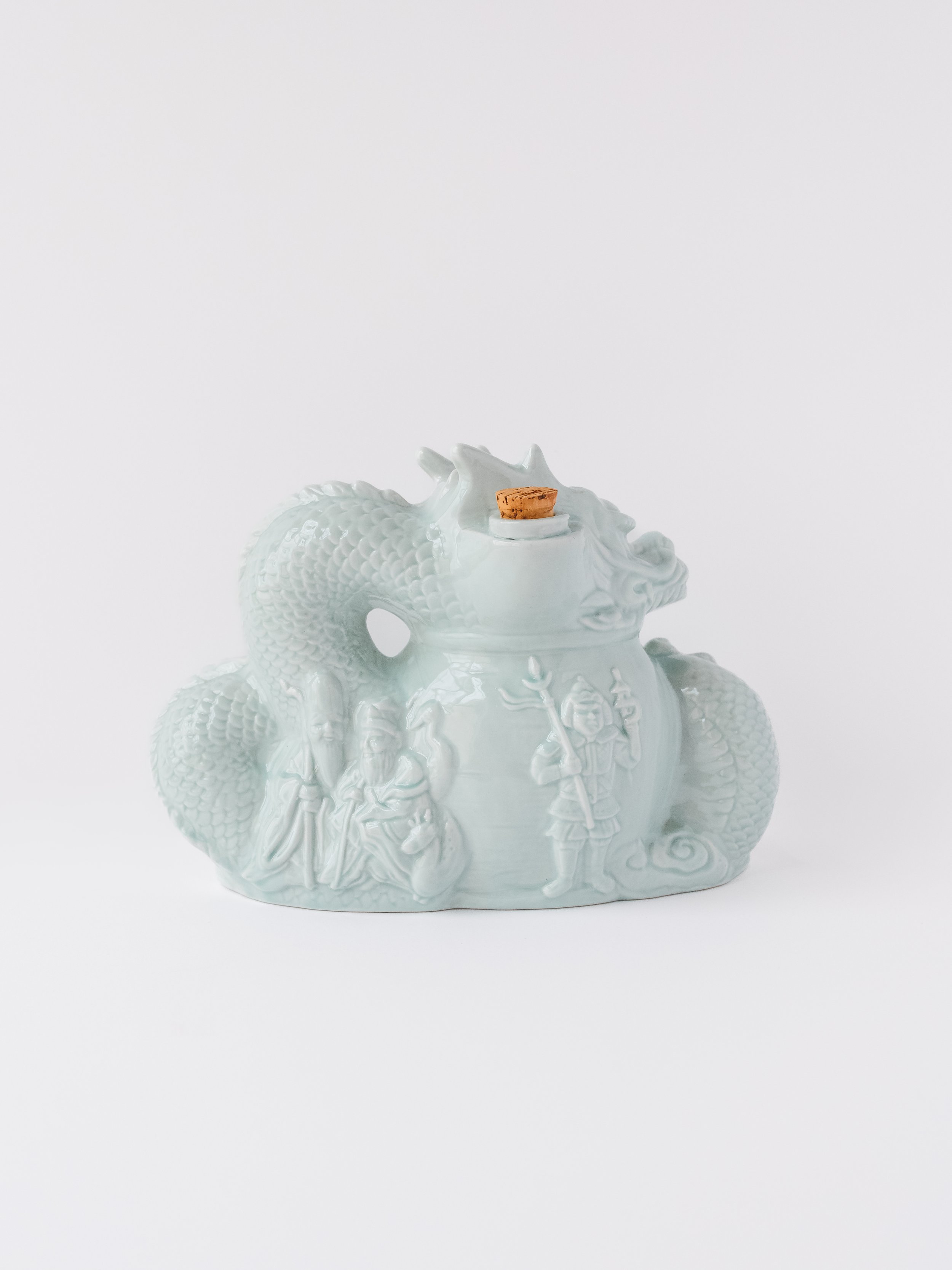 Image 7 of 15
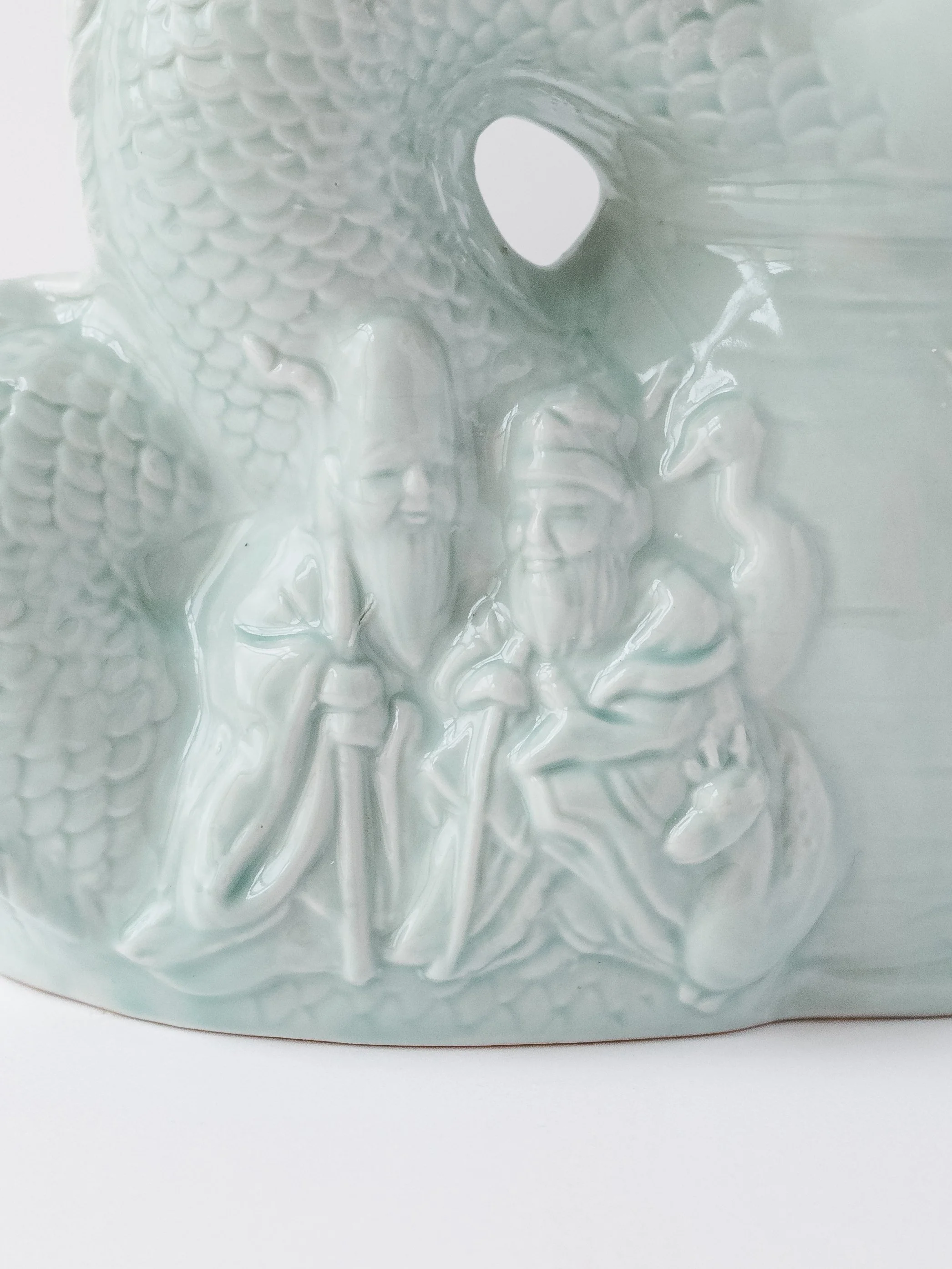 Image 8 of 15
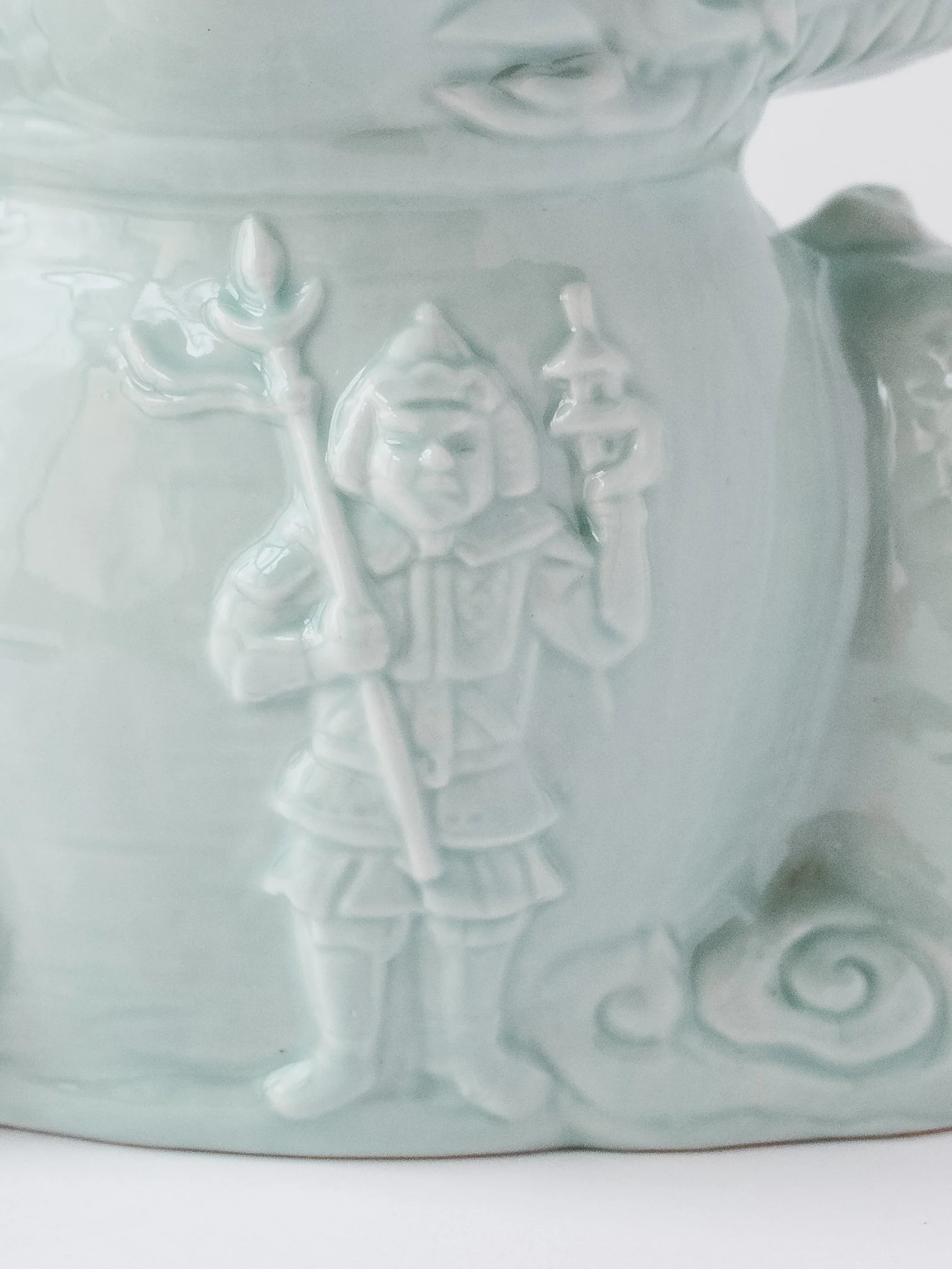 Image 9 of 15
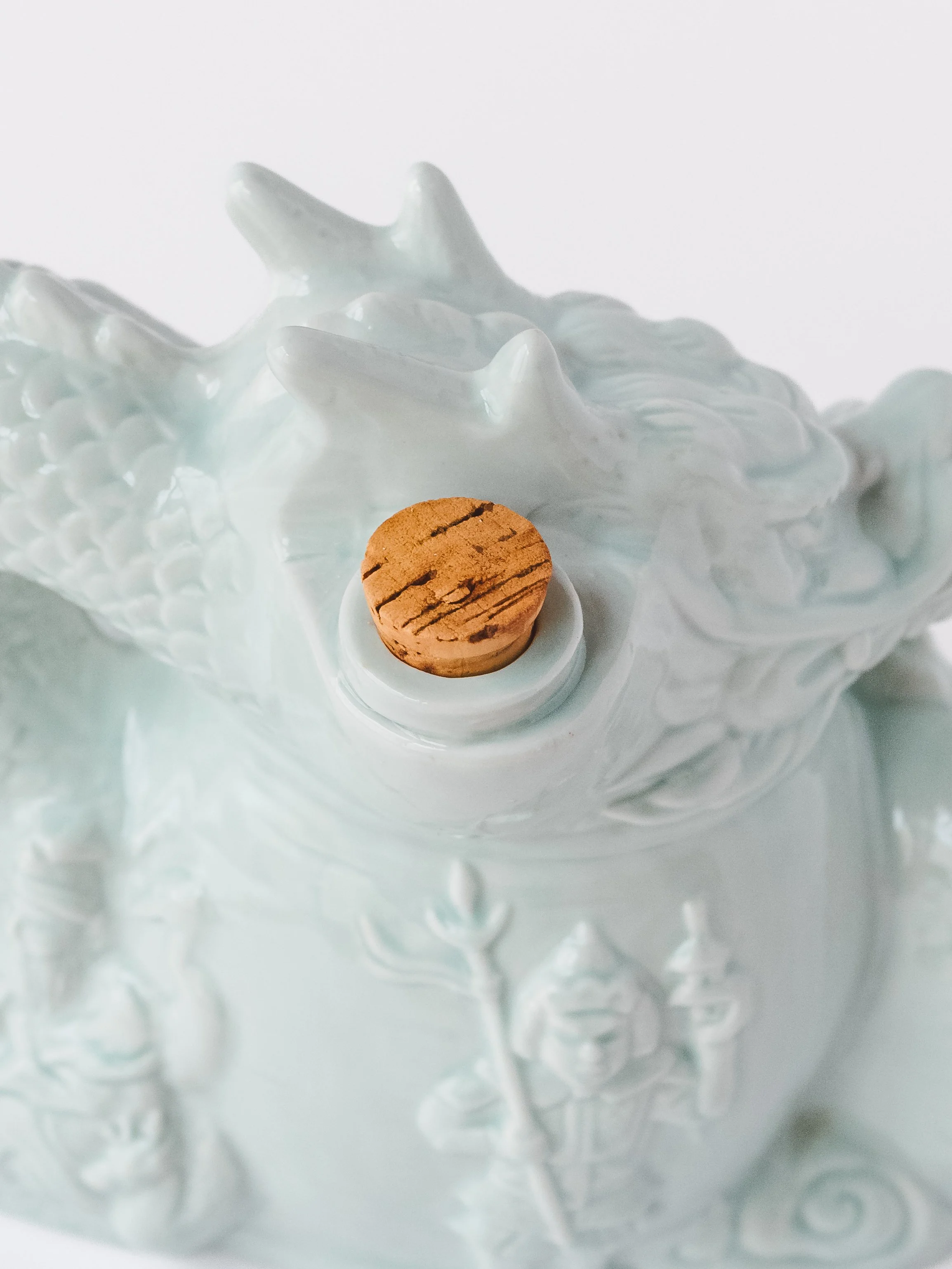 Image 10 of 15
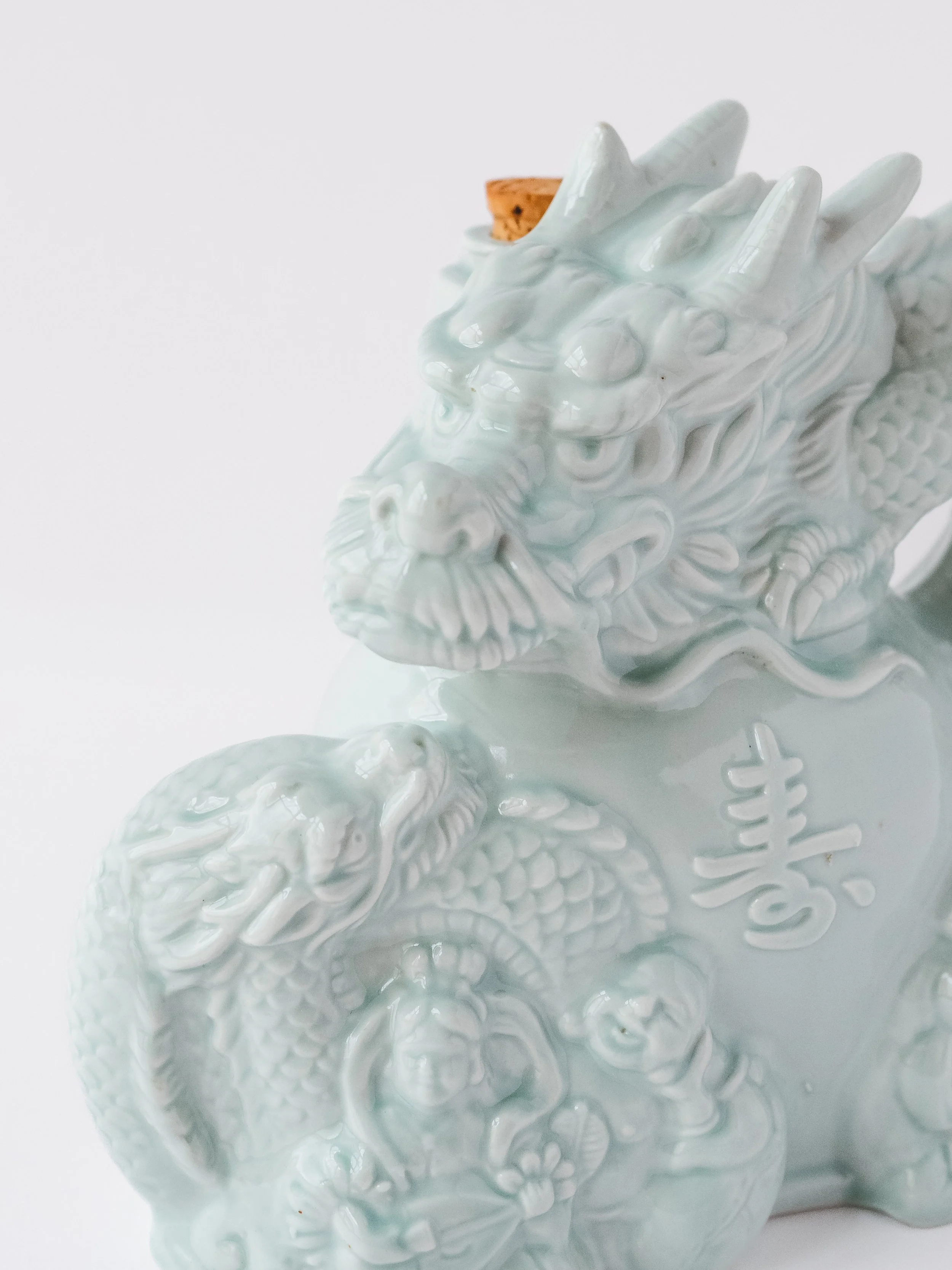 Image 11 of 15
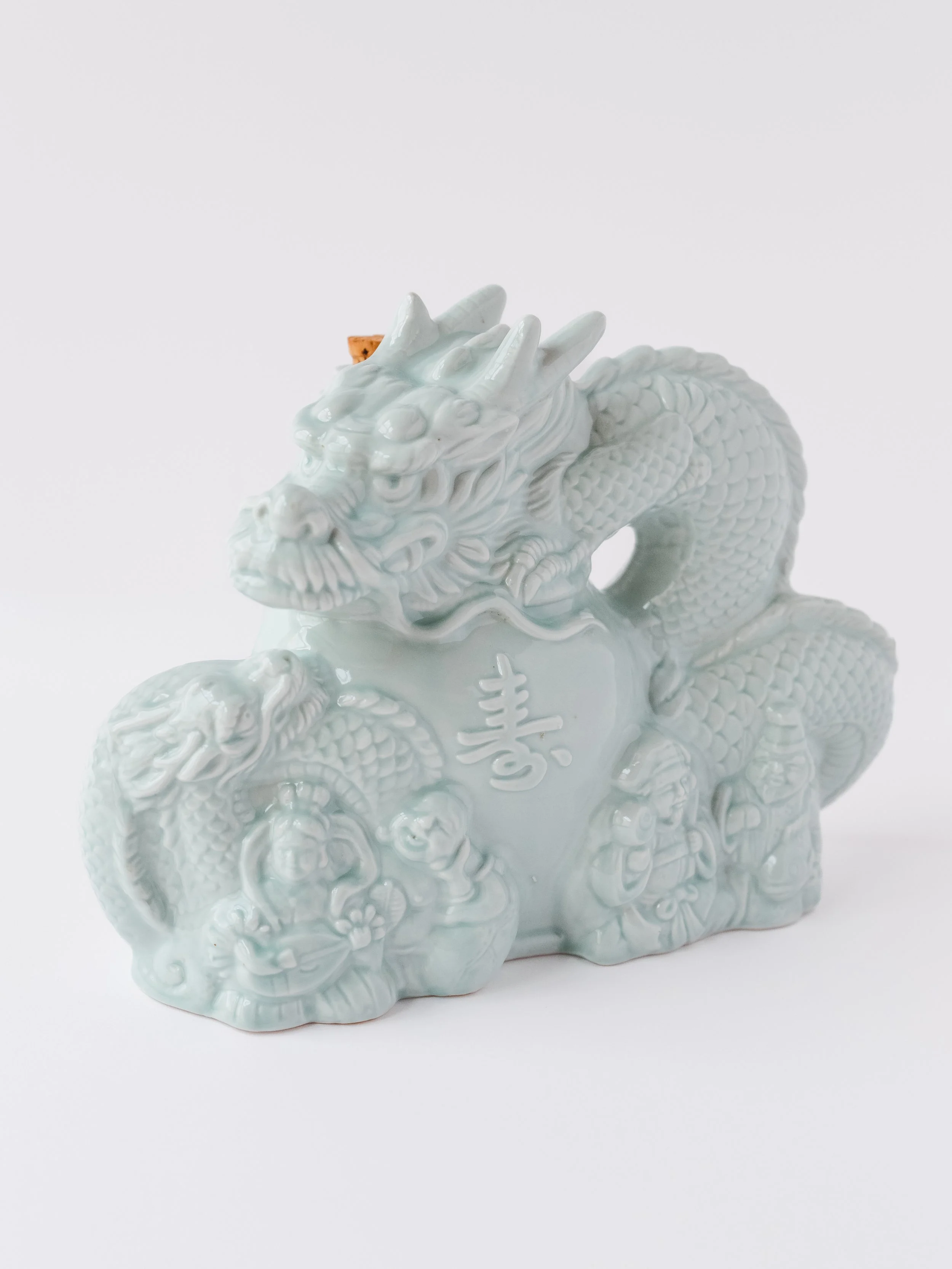 Image 12 of 15
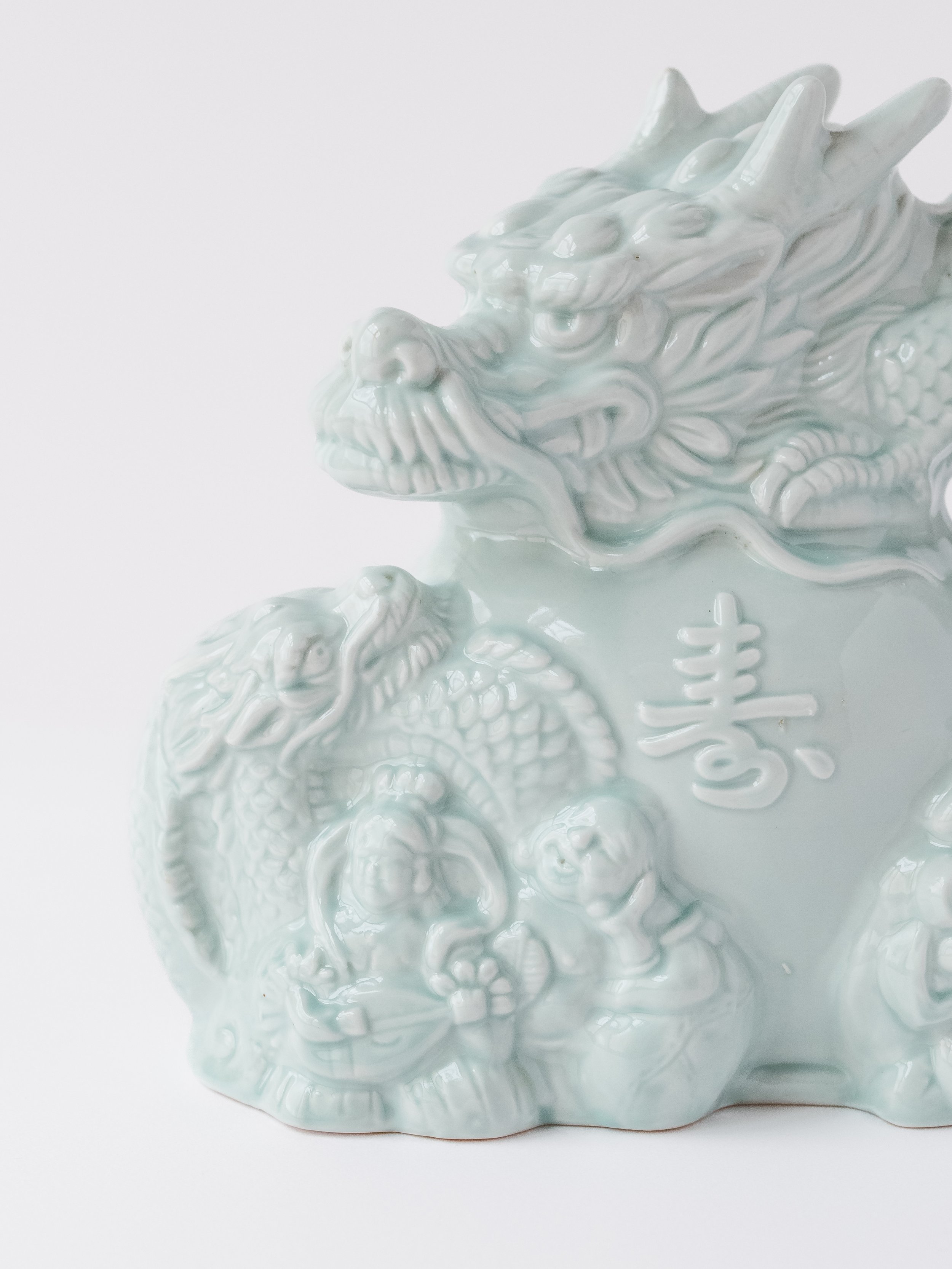 Image 13 of 15
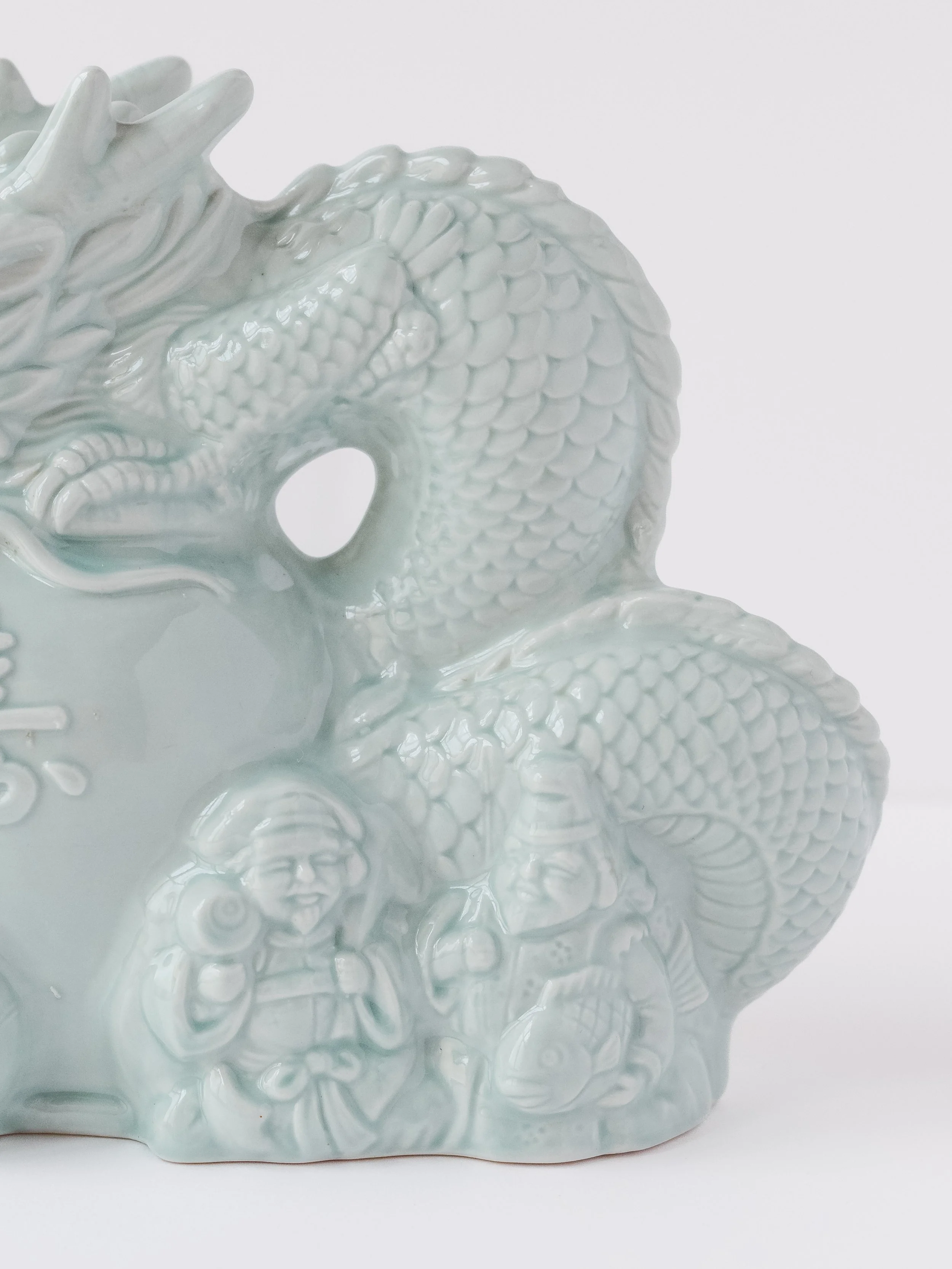 Image 14 of 15
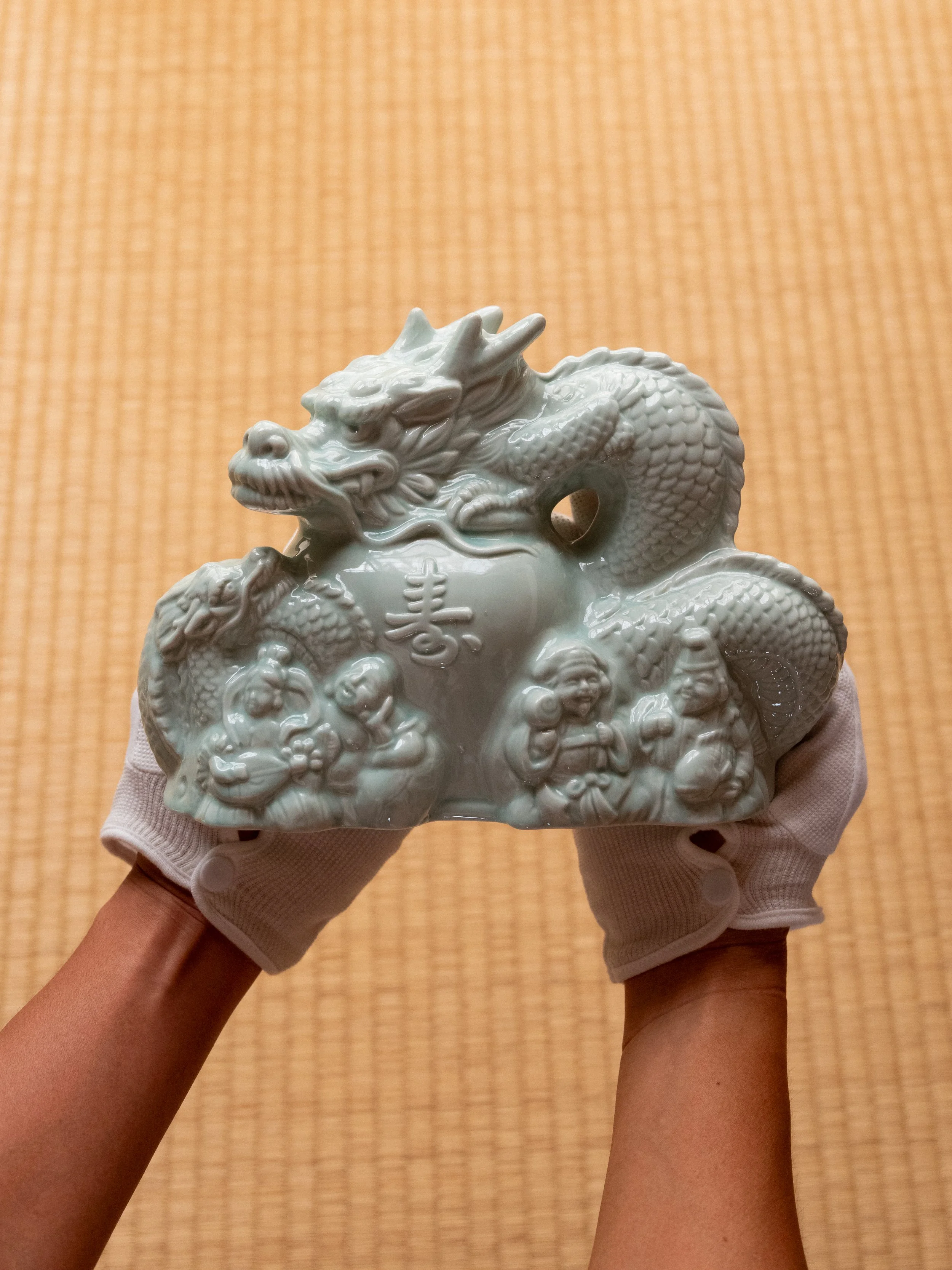 Image 15 of 15