【 The Concept 】
A small crab in unglazed Bizen stoneware, made to do one quiet job in the tea room: to hold the lid of the iron kettle. Its legs spread wide and low, its claws are folded in front of it, two tiny eyes bulge from the front edge of its shell — and the top of the shell is pressed into a shallow hollow, exactly where the hot kettle lid comes to rest. It is a futaoki, a lid rest, and the crab is one of the oldest and most honoured forms that humble object can take. Nothing about its surface was painted by a hand: the deep brown and the pale orange flashes across its back were left there by fire and ash in a wood-burning kiln. It comes in its original paper-covered box, hand-labelled in brush: kani futaoki, "crab lid rest" — the way a Japanese household has kept it, wrapped and put away between tea gatherings, for many years.
【 Why a Crab Sits in the Tea Room 】
In the tea ceremony, every movement has its place. When the host lifts the lid from the kettle, or rests the bamboo ladle between scoops of hot water, these things must be set down somewhere clean — and that place is the futaoki. Most lid rests are simple: a short section of green bamboo, a plain ring of pottery. But the tea tradition also remembers seven special forms, the Shichishu Futaoki (七種蓋置), "Seven Kinds of Lid Rest," associated with the great tea master Sen no Rikyū: the incense-burner lid (hoya), the trivet (gotoku), the three-leaf (mitsuba), the little man leaning on a rim (ikkanjin), the turban shell (sazae), the three dolls (mitsuningyō) — and the crab (kani).
Among the seven the crab is the one with the most personality: a living creature from the shoreline, set right beside the kettle as if it had wandered in from the garden pond to watch. There is also a small joke hidden in it that tea people enjoy. A crab never walks straight ahead; it moves sideways. In the tea room the host too moves in careful, indirect steps, never rushing, never taking the straight line when the graceful one will do. And a crab carries its own house on its back — here it carries the lid of the kettle, taking the weight each time without complaint.
Rikyū himself famously summed up the whole art of tea in a single short verse: tea is nothing more than boiling water, making tea, and drinking it. The objects he favoured follow the same idea — ordinary things, a crab, a shell, a piece of bamboo, raised to dignity by the care with which they are used.
【 Bizen: Fired, Never Glazed 】
Bizen-yaki (備前焼), from the village of Imbe in Okayama Prefecture, is one of Japan's Six Ancient Kilns, and its roots go back more than a thousand years. Its rule is simple and strict: no glaze, no painting. The clay — dug from the rice paddies and hillsides around Imbe and aged for years before use — is packed into long climbing kilns and fired with red pine for ten days or more, far longer than almost any other pottery in the world. Everything you see on a Bizen piece is the record of that fire: where the flame licked, where the ash fell, where one piece sheltered another. No two pieces ever come out alike.
That long, hard firing makes Bizen famously tough, and the old potters' saying boasts of it: "A Bizen mortar won't break even if you throw it; a Bizen water jar keeps water from spoiling; a Bizen sake flask makes the sake taste better." In the Momoyama period of the late sixteenth century, the founding tea masters turned away from polished Chinese porcelain and chose rough, honest wares instead — and Bizen was among the very first they chose. Bizen was designated a national Traditional Craft of Japan in 1982, and in 2017 its home region was named a Japan Heritage site.
【 What Owning This Piece Brings 】
・ A place at the heart of the tea ritual. Whether you practise chanoyu formally or simply make tea at home with care, the lid rest is the object that says: slow down, and set things down properly. It turns a hurried cup into a small ceremony.
・ A small piece of Rikyū's taste. The crab has belonged to the classic repertoire of the tea room for more than four centuries. To place one beside your kettle is to join a line of tea people stretching back to the sixteenth century.
・ Protection and resilience. In Japanese folk belief the crab, with its armoured shell and strong claws, is a small guardian. And because a crab can regrow a lost claw, it quietly carries the meaning of recovery and renewal — a fitting companion after a difficult season.
・ A conversation piece. Guests always notice the crab. In the tea room that is part of its job: a futaoki with a story gives everyone something gentle to talk about.
Off the tea tray it works just as well: as a rest for a teapot lid, a spoon, a pen, a brush, a pair of chopsticks, or simply as a small earth-coloured creature keeping watch on a desk. A fitting gift for a tea practitioner, a potter, a lover of Japanese ceramics — or anyone born under the sign of Cancer.
【 Crabs in Japanese Stories 】
Crabs walk through Japanese folklore more often than you might expect. Every Japanese child knows Saru Kani Gassen, "The Battle of the Monkey and the Crab": a clever monkey tricks a crab out of her persimmons, and her children take their revenge with the help of a chestnut, a bee, a cow-pat and a heavy stone mortar. The moral is that patience and honesty win in the end — very much the crab's character.
On the Inland Sea, not far from where Bizen is fired, fishermen tell of the Heike crab, whose shell seems to carry the angry face of a samurai. Legend says they are the spirits of the Heike warriors who drowned in the great sea battle of Dan-no-ura in 1185, and fishermen who catch one throw it back out of respect.
And there is an old proverb: "A crab digs its hole to fit its own shell" (kani wa kōra ni nisete ana o horu) — each of us lives according to our own size and nature. It is a very tea-room kind of wisdom, and our small crab, with its hollow shaped exactly to hold one kettle lid, lives up to it perfectly.
【 Where to Place It 】
Beside the kettle or on the tea tray; on a desk as a pen or spoon rest; or on a shelf among small ceramics and stones. Place it where the light falls low across it from the side — the fire marks on the shell and the texture of the legs come alive in raking light. In the tea room it traditionally sits on the tatami or on the lower shelf of the utensil stand, close to the kettle, at a height where guests can see it.
【 Care 】
Wipe with a soft cloth; rinse in plain water if needed and dry well. No soap soaking, no dishwasher. Bizen darkens and softens with use — that is welcome.
【 Reading the Object 】
One crab in unglazed high-fired stoneware: legs spread wide on both sides, claws folded in front, two small raised eyes at the front edge of the shell, and a shallow hollow pressed into the top of the shell as the lid rest. Deep brown body with pale orange fire-flashes across the shell and legs; a soft natural sheen where the ash has melted in the kiln.
【 Presence 】
Small, low, patient. A creature that sits and holds — and a little bit of the seashore, brought indoors to keep the kettle company.
Archive Note: The number in the name (1522) is the birth year of Sen no Rikyū, the tea master traditionally associated with the Seven Kinds of Lid Rest, of which the crab is one. NOT the date this piece was made.
Provenance Note: Sourced from a private household in Japan. A Bizen-ware crab lid rest (kani futaoki) in its original paper-covered box with a handwritten label. Attributed to the Bizen tradition rather than to a specific kiln or individual maker.
Condition Note: Very good vintage condition. Fire-flashes and colour variations are natural kiln effects, not damage. Box shows age-appropriate wear. No chips or cracks.


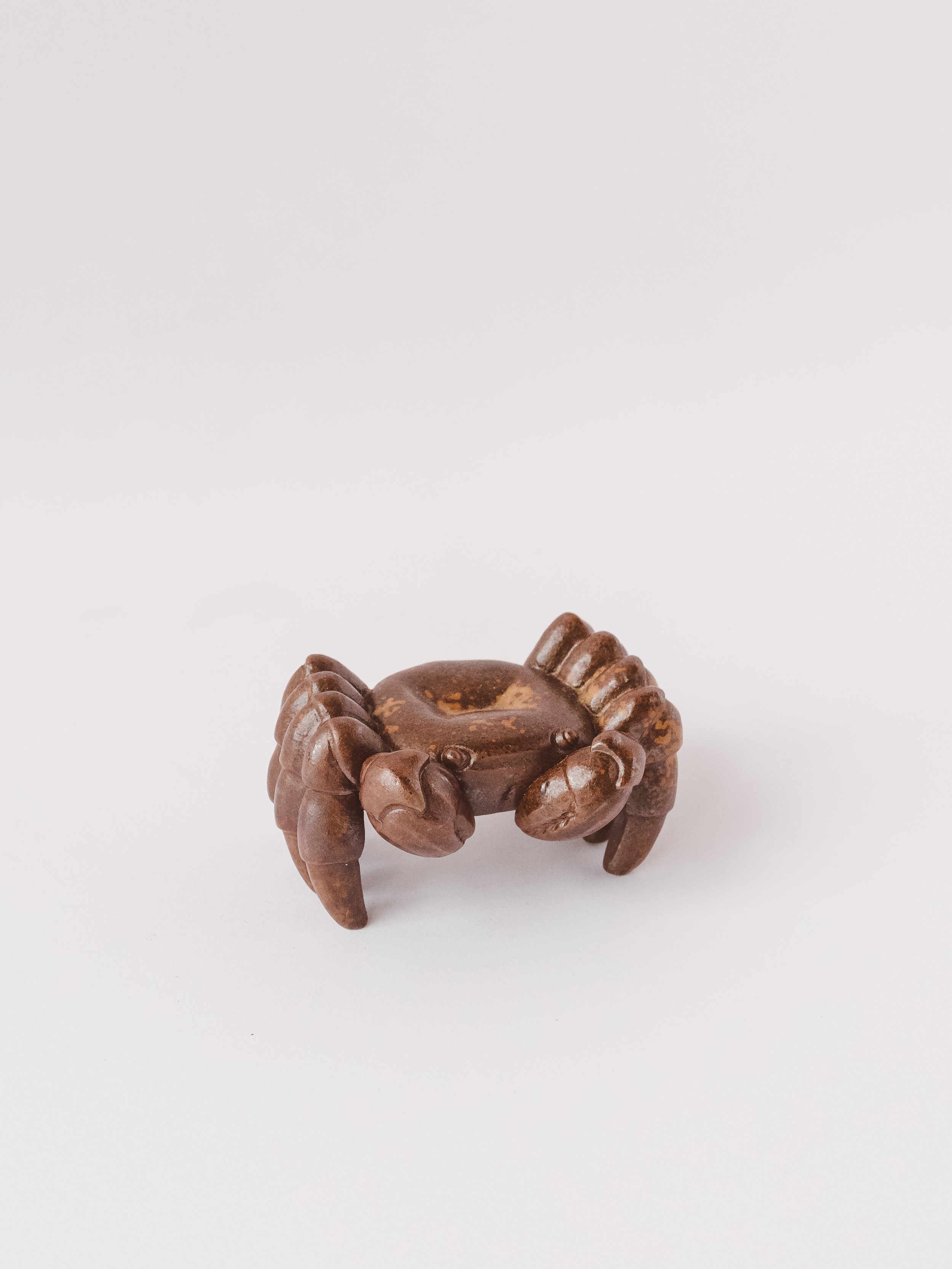 Image 1 of 13
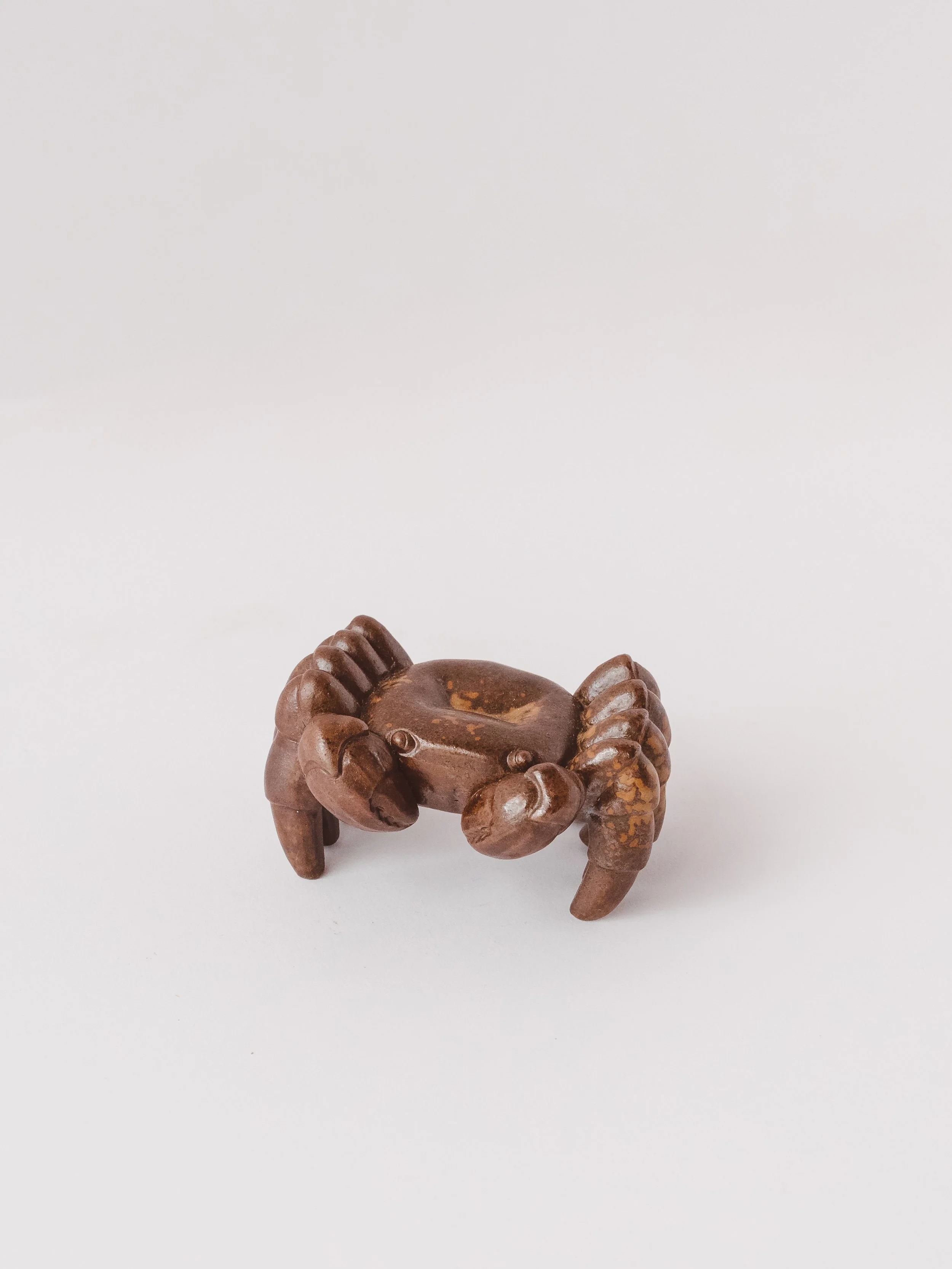 Image 2 of 13
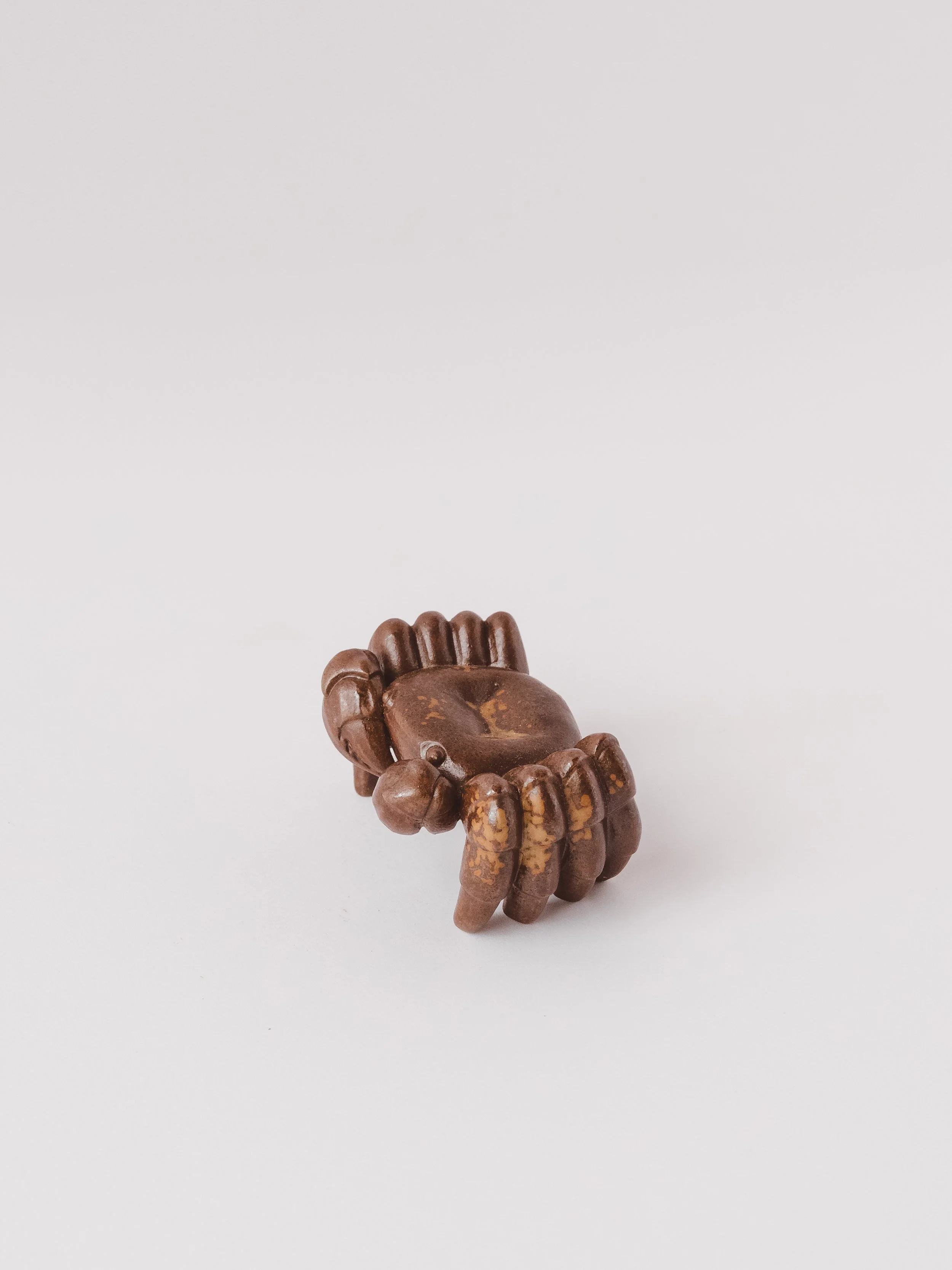 Image 3 of 13
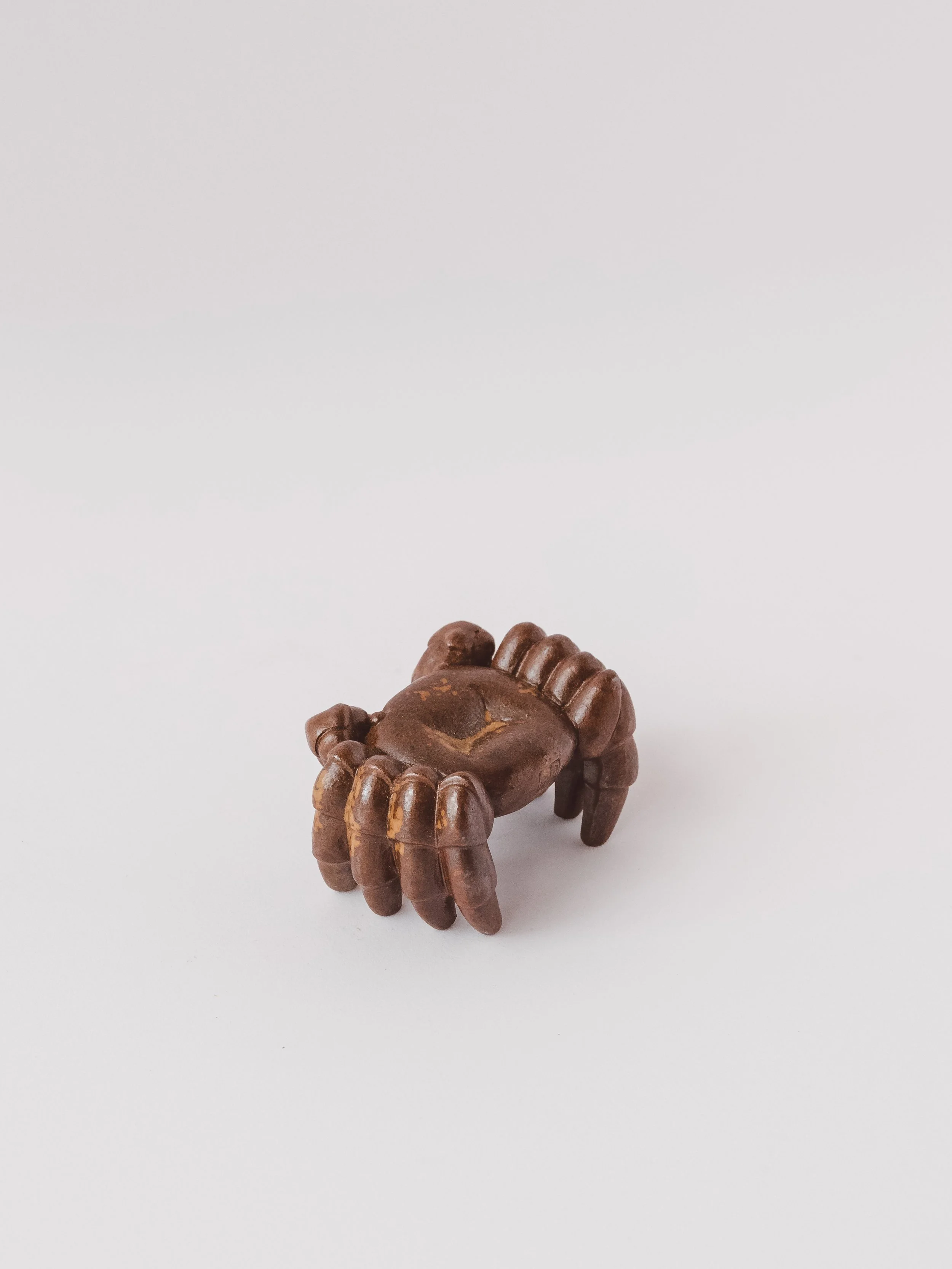 Image 4 of 13
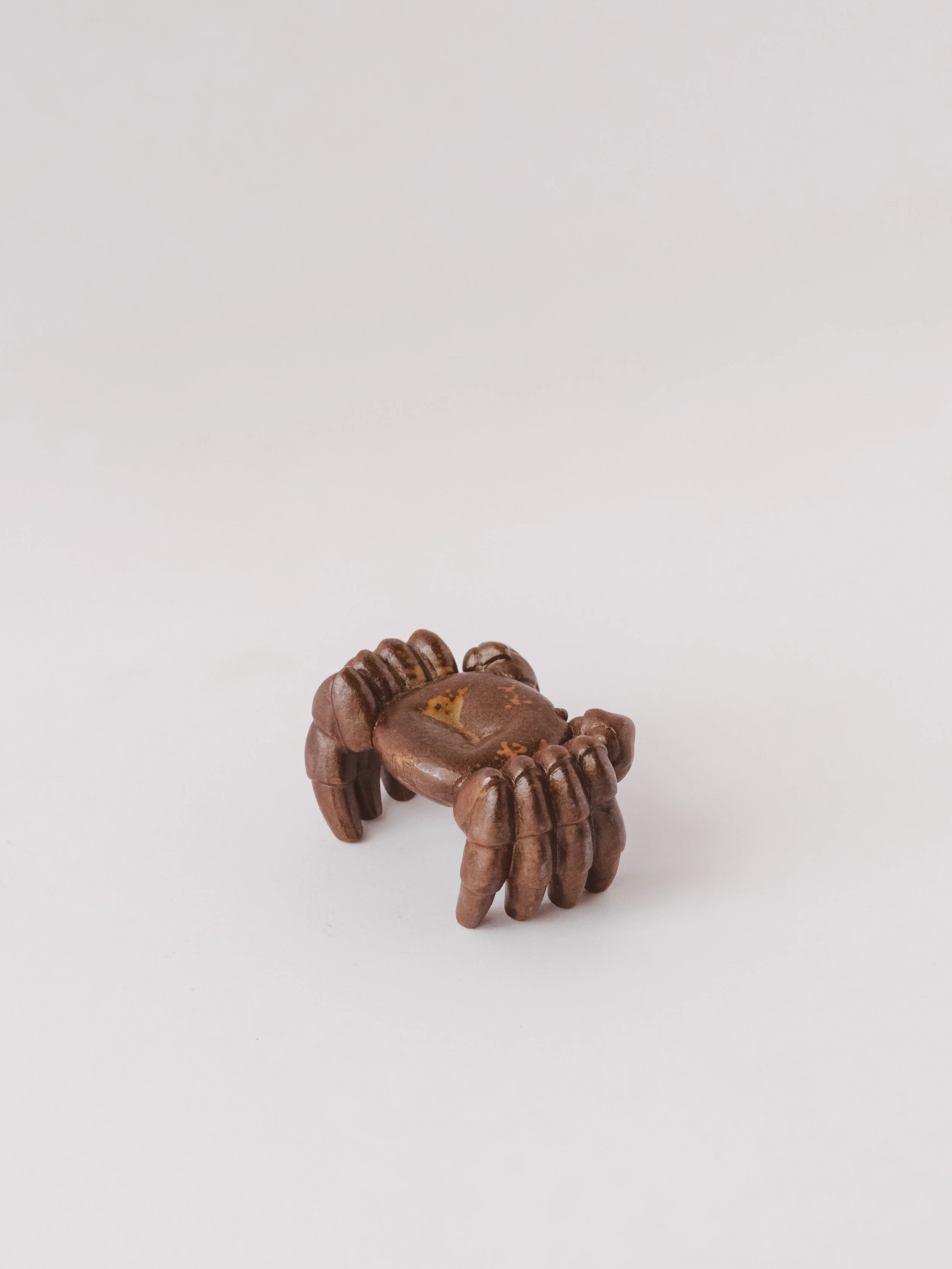 Image 5 of 13
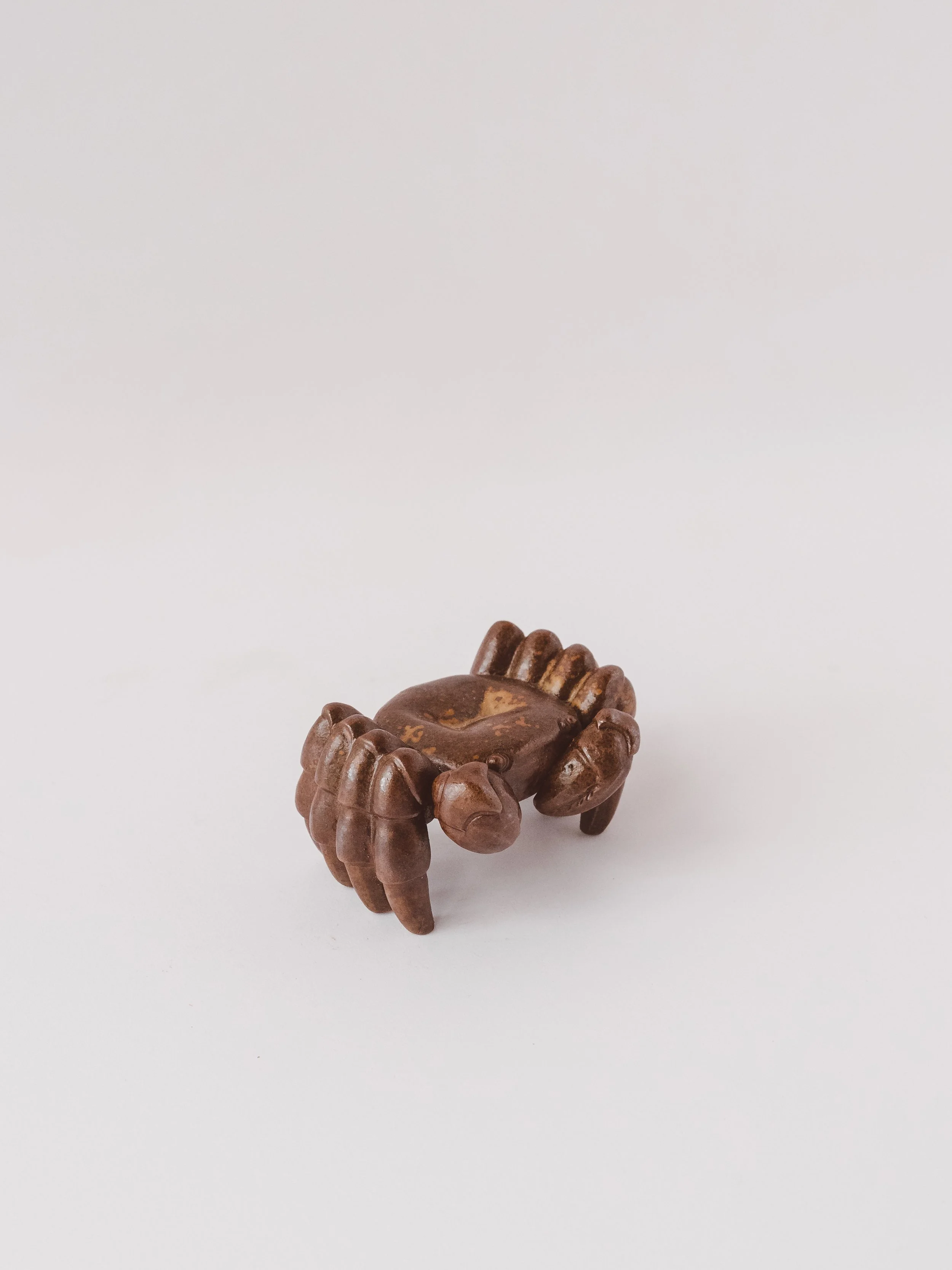 Image 6 of 13
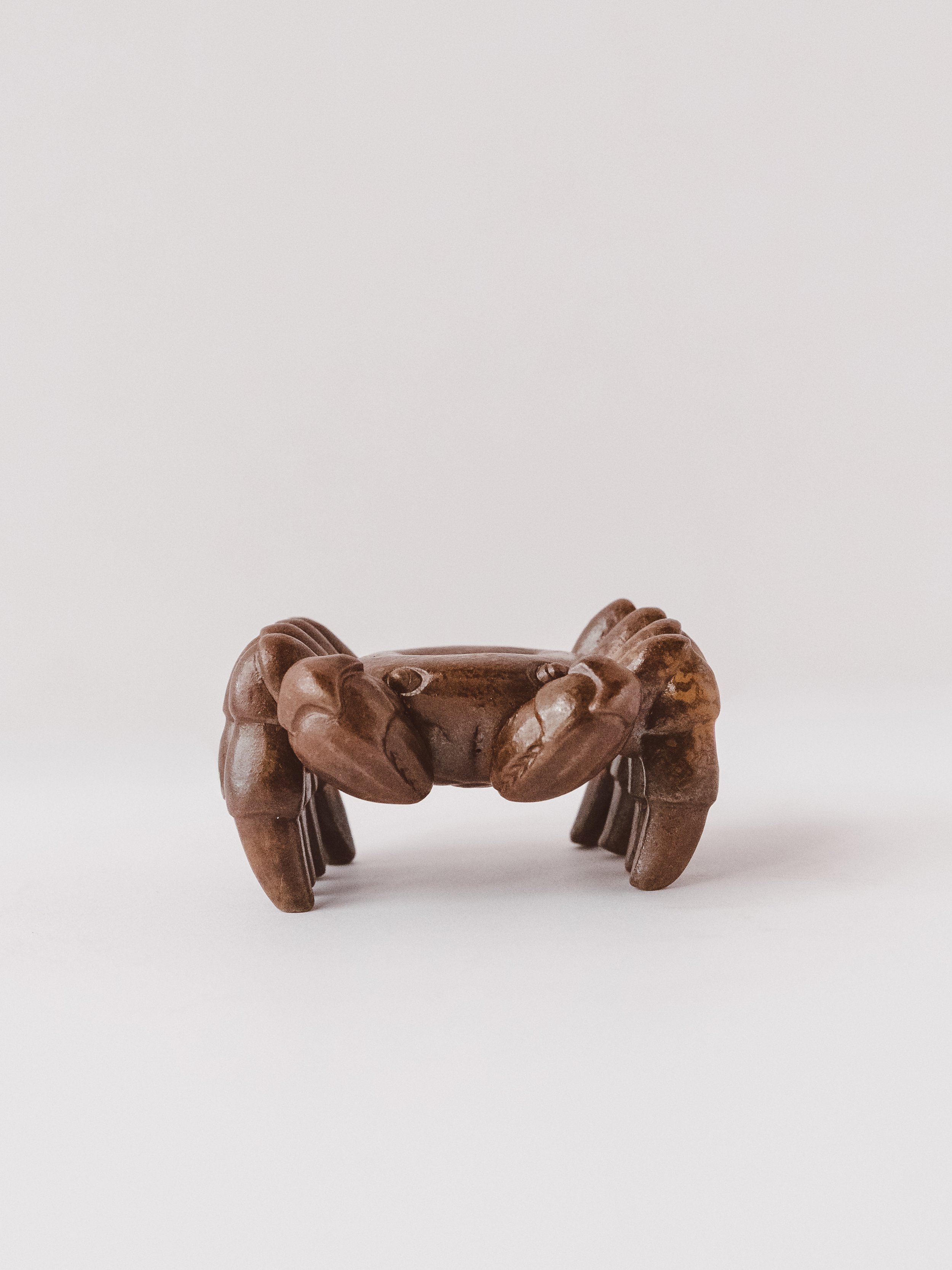 Image 7 of 13
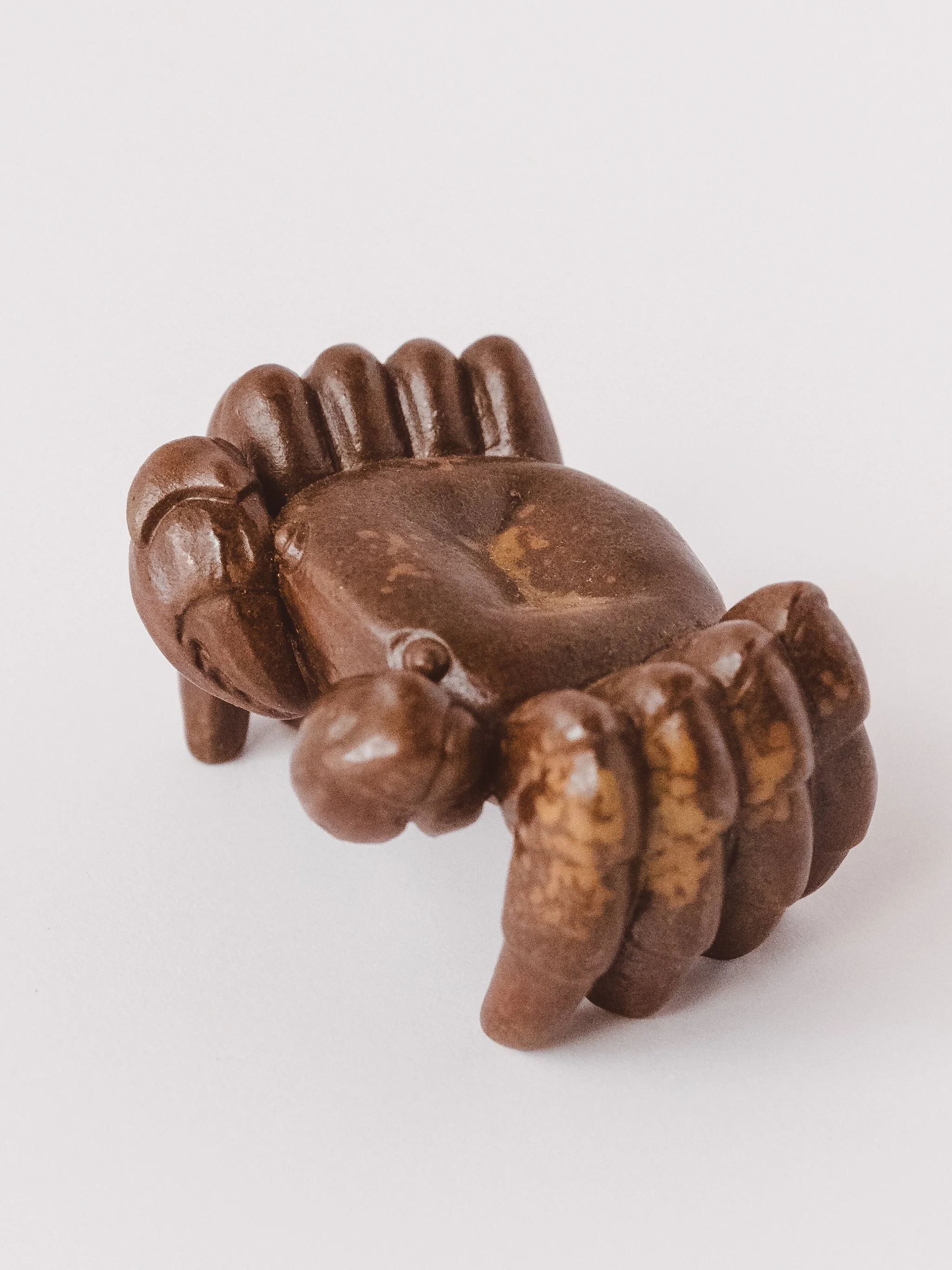 Image 8 of 13
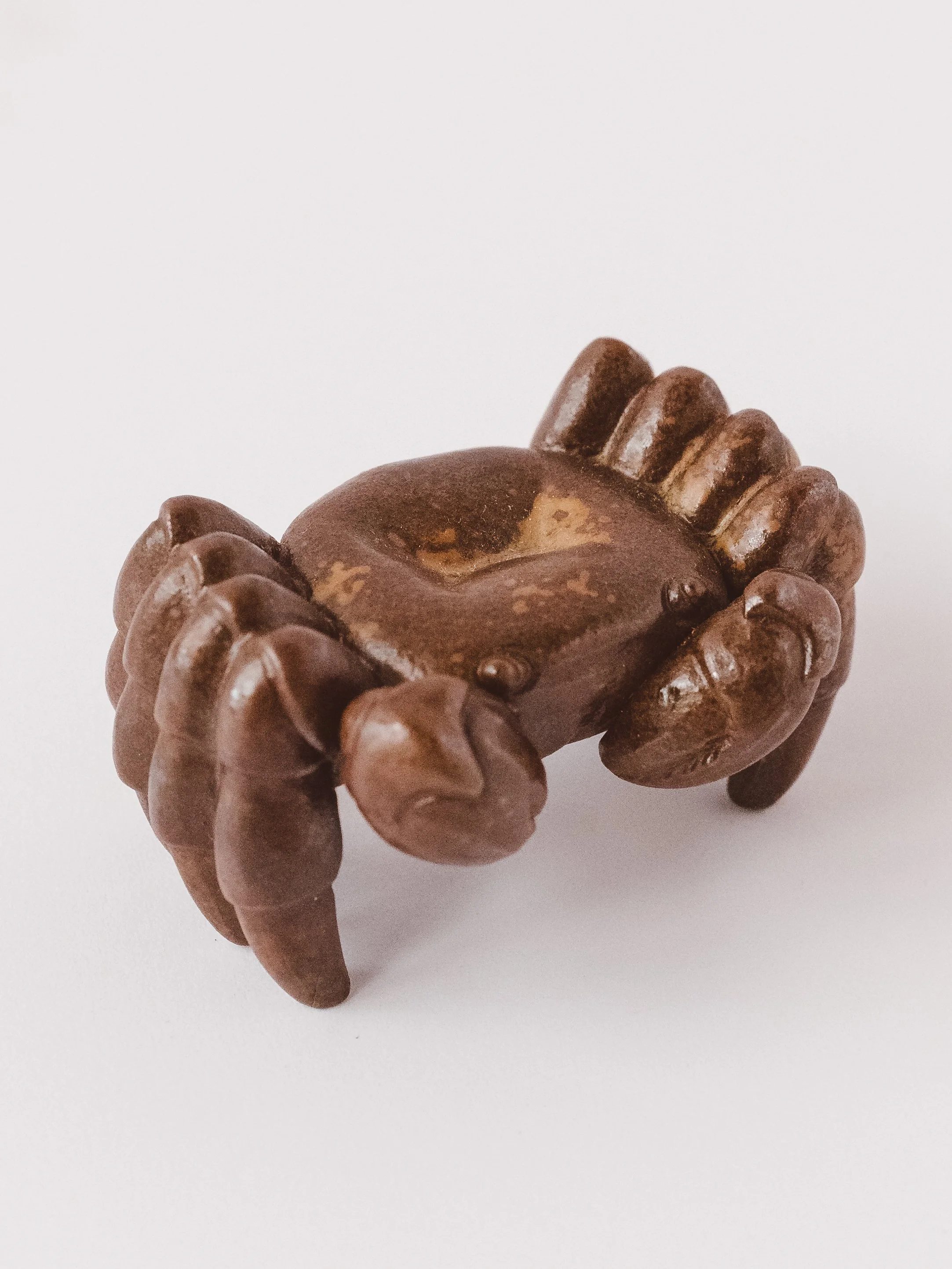 Image 9 of 13
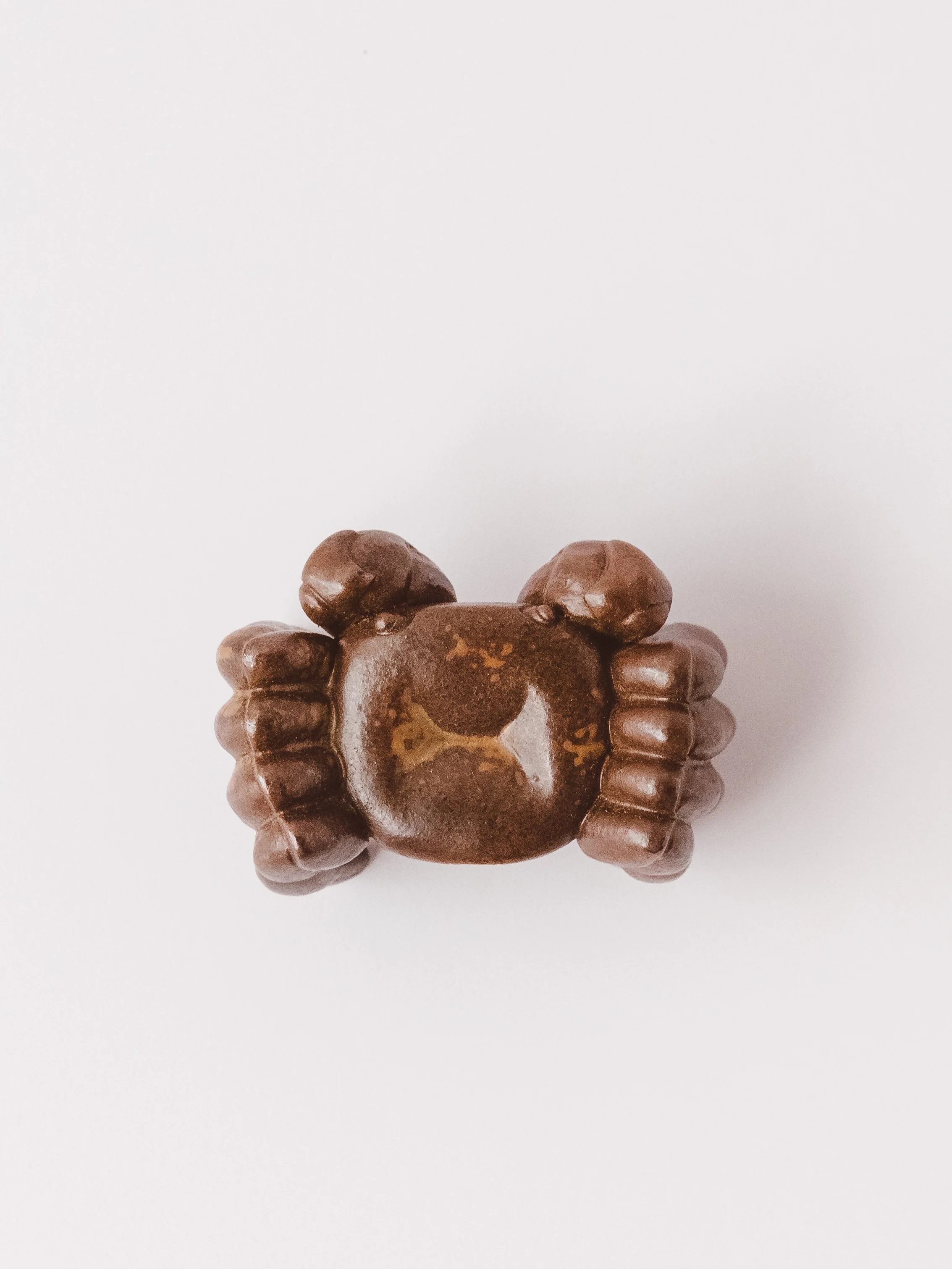 Image 10 of 13
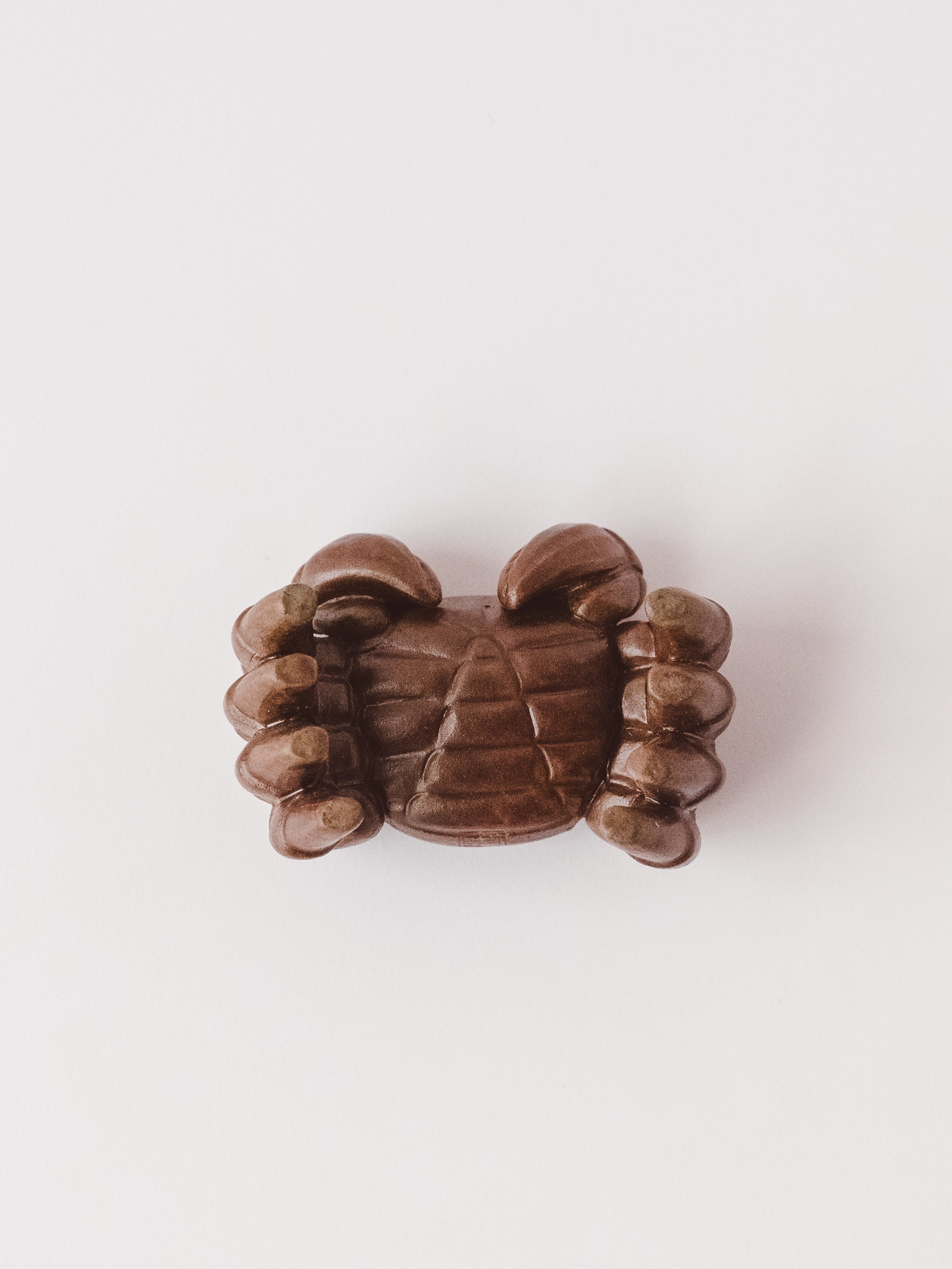 Image 11 of 13
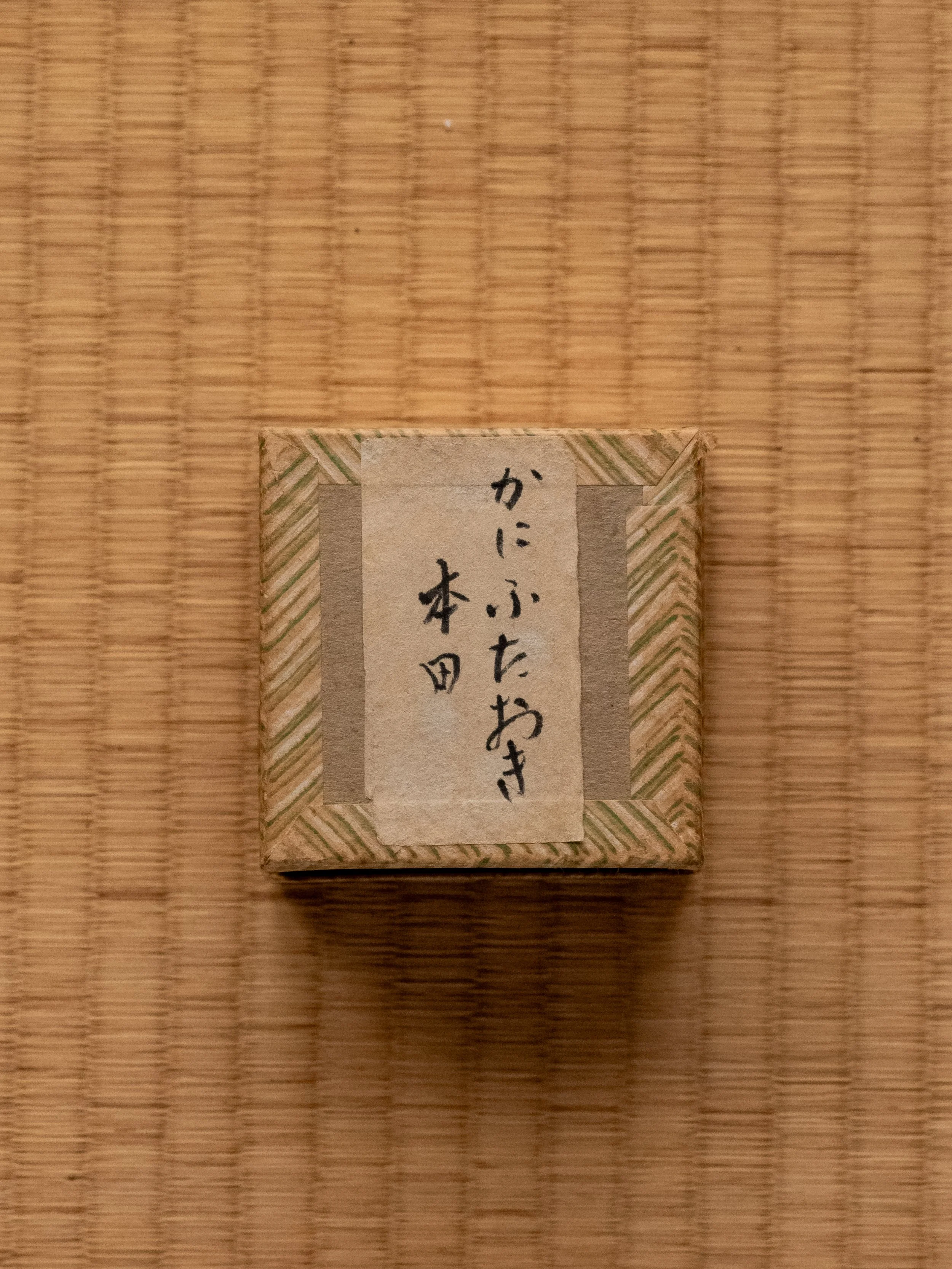 Image 12 of 13
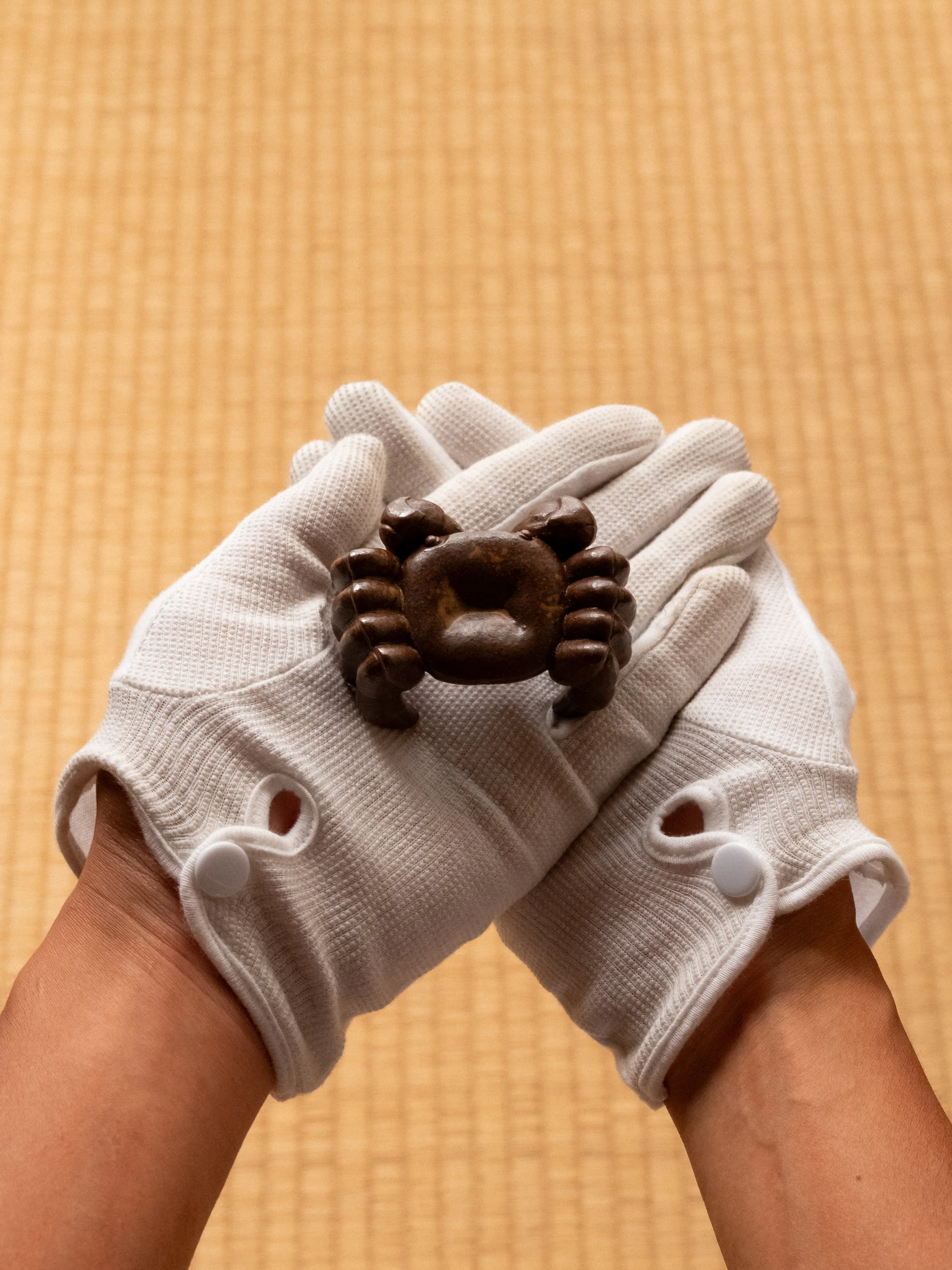 Image 13 of 13