【 The Concept 】
A porcelain incense burner in the shape of a peacock gathered into a perfect sphere. The round body is glazed a deep, mirror-like black and wrapped in vertical bands of crackled gold leaf and silver leaf, scattered all over with small teardrop-shaped peacock feathers in red, white and turquoise. From the top of the sphere rises the bird’s white porcelain head, painted with fine red scrolls and turquoise leaves, with a gold-rimmed turquoise eye, a hooked cobalt-blue beak, a crest swept back behind, and a gold collar patterned with red and blue zigzags at the neck. The sphere opens at the middle: inside, a separate white porcelain disc holds the incense, and when it burns, the smoke rises out through a small gold chimney on top of the peacock’s head. It is a piece of Arita porcelain, from the town where Japan’s first porcelain was made four hundred years ago, and it brings together the oldest of Japan’s porcelain traditions with a bold, modern sense of colour and gold.
【 The Peacock That Eats Poison 】
In Japan the peacock is far more than a beautiful bird. Because peacocks eat scorpions and venomous snakes without harm, Buddhism made the peacock a symbol of the power to swallow poison and turn it into good. That power took the form of a deity, Kujaku Myōō, the “Peacock Wisdom King,” who rides a peacock and protects people from calamity, illness and evil. In esoteric Buddhism, rituals to Kujaku Myōō were performed to stop epidemics, bring rain in times of drought, and protect the nation. The legendary mountain ascetic En no Gyōja, founder of Japan’s mountain-worship tradition, was said to have gained his supernatural powers by chanting the peacock deity’s spell.
The peacock’s feathers carry their own meaning. In Buddhist images, Kujaku Myōō holds a single peacock feather in one hand as a sign of that protective power. In imperial China, a peacock feather worn on the hat was one of the highest honours the emperor could grant an official. Here small peacock feathers are scattered across the whole sphere, as if the bird had wrapped itself in its own finest plumage. And in East Asian art the peacock is also a bird of beauty, nobility and good fortune, often painted with peonies as a wish for prosperity and a happy home.
【 Arita: Where Japanese Porcelain Began 】
In 1616, according to tradition, a Korean potter known in Japan as Ri Sanpei discovered fine white porcelain stone at Izumiyama in Arita, in what is now Saga Prefecture on the island of Kyushu. It was the birth of Japanese porcelain. Within a few decades, Arita porcelain was being shipped from the nearby port of Imari by the Dutch East India Company to Europe, where it was known simply as “Imari” and filled the palaces of kings. Its success was so great that European makers tried for years to copy it, and the early Meissen factory in Germany produced its own versions of Arita designs. In 2016 Arita celebrated four hundred years of porcelain, and its kilns are still working today.
This piece shows the modern side of that long tradition: a black ground, crackled gold and silver leaf applied by hand, and enamel colours painted over the glaze, all on fine white Arita porcelain.
【 The Ten Virtues of Incense 】
Incense came to Japan with Buddhism in the sixth century and, by the fifteenth, had become an art of its own, kōdō, “the way of fragrance,” one of Japan’s three classical refined arts alongside the tea ceremony and flower arrangement. Japanese incense lovers still quote a short list called the Ten Virtues of Incense, said to have been written in China and made popular in Japan by the Zen monk Ikkyū. Among them: incense purifies body and mind, removes impurity, keeps you alert, is a companion in solitude, brings a moment of peace amid busy days, and even a little is enough. Lighting incense in a burner like this one is a small daily ritual: a few minutes in which the room fills with fragrance and the mind slows down.
【 What Owning This Piece Brings 】
・ Protection for the home. Like the Peacock Wisdom King who swallows poison, the peacock is a guardian against misfortune and bad influences, and its feathers carry that protective power into the room.
・ A daily moment of calm. Lighting incense and watching the smoke rise from the peacock’s head is a simple, beautiful ritual for meditation, reading or the end of the day.
・ Beauty and good fortune. Gold, silver and the peacock together carry the wish for prosperity, elegance and a happy household.
・ Four hundred years of porcelain. It brings into the home a piece of the town where Japanese porcelain was born.
A fitting gift for a new home, a wedding, a lover of incense or meditation, or a collector of Japanese porcelain.
【 Where to Place It 】
On a shelf, a side table, a meditation space or a tokonoma alcove, with the peacock’s face turned toward the room, which is traditionally treated as the front of an incense burner. Even unlit, it is a striking decorative piece: place it where light can move across the gold and silver leaf.
【 Care 】
Place incense cones or short sticks on the porcelain disc inside. After lighting, leave the lid off for a moment until the incense is burning steadily, then close it. Clean with a soft cloth; residue on the inside of the lid can be wiped with lukewarm water. Do not use abrasive cleaners or a dishwasher, which may damage the gold and silver leaf.
【 Reading the Object 】
A spherical lidded incense burner in porcelain, divided at the middle into lid and bowl, on a low white foot ring with blue lines. Black glaze with vertical bands of crackled gold leaf and silver leaf, and small teardrop-shaped peacock feathers in red, white and turquoise. The peacock’s head rises from the lid: white porcelain with red scrolls and turquoise leaves, a gold-rimmed turquoise eye, a cobalt-blue hooked beak with a gold line, a swept-back crest, and a gold collar with red and blue zigzags; a gold chimney with a small hole on top lets the smoke out. Inside, a pale glazed bowl with a gold-toned rim, small air holes in the wall, and a separate white porcelain disc with raised dots to hold the incense. A kiln mark in a double square frame on the base.
【 Presence 】
Bold, glittering and full of life. A guardian bird of gold and black, quietly breathing fragrance into the room.
Archive Note: The number in the name (1616) marks the year, according to tradition, that porcelain stone was discovered at Izumiyama in Arita, the beginning of Japanese porcelain. NOT the date this piece was made.
Provenance Note: Sourced from a private household in Japan. An Arita porcelain incense burner with a kiln mark on the base. Attributed to the Arita porcelain tradition rather than presented as the work of a named maker.


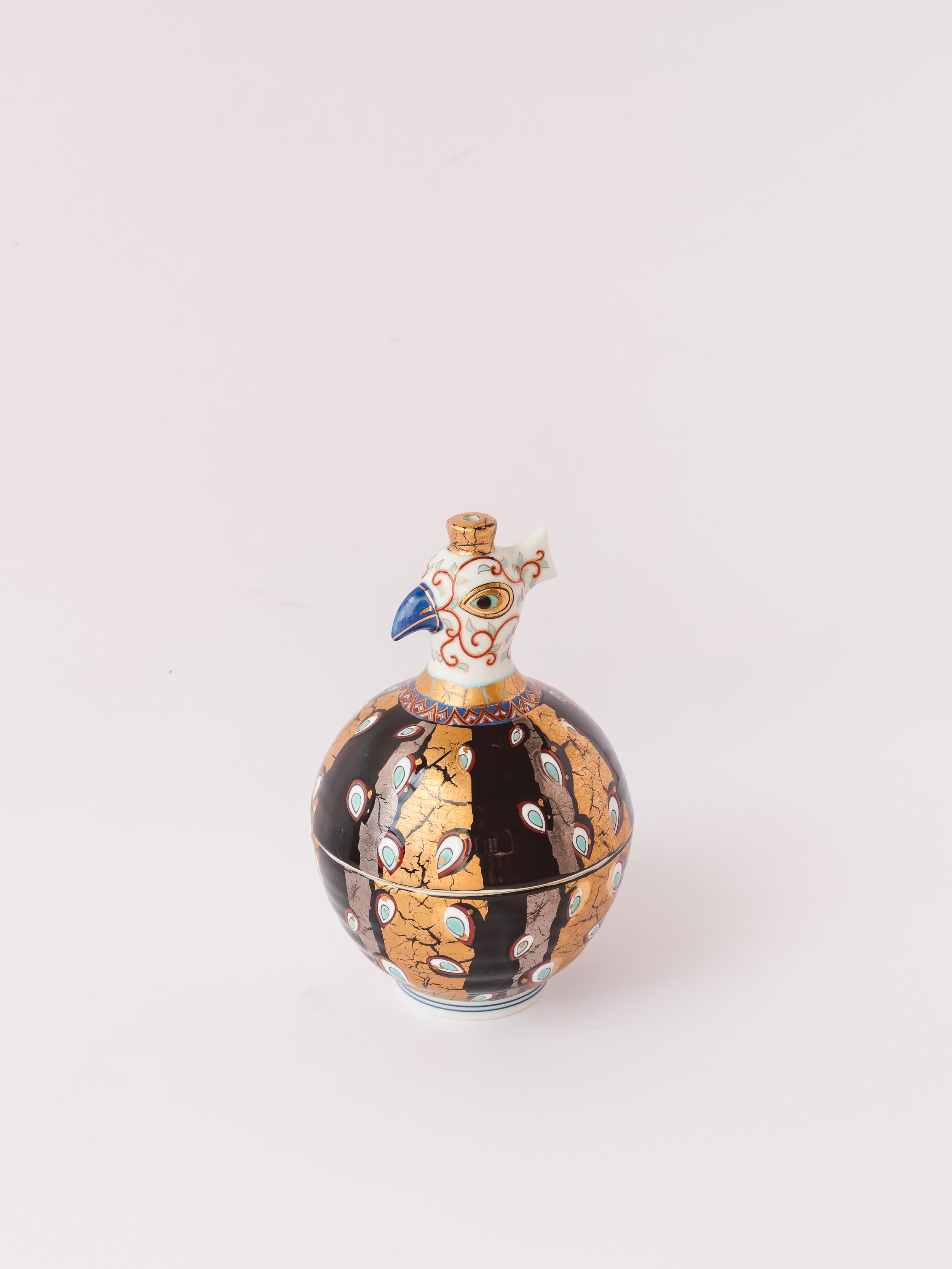 Image 1 of 12
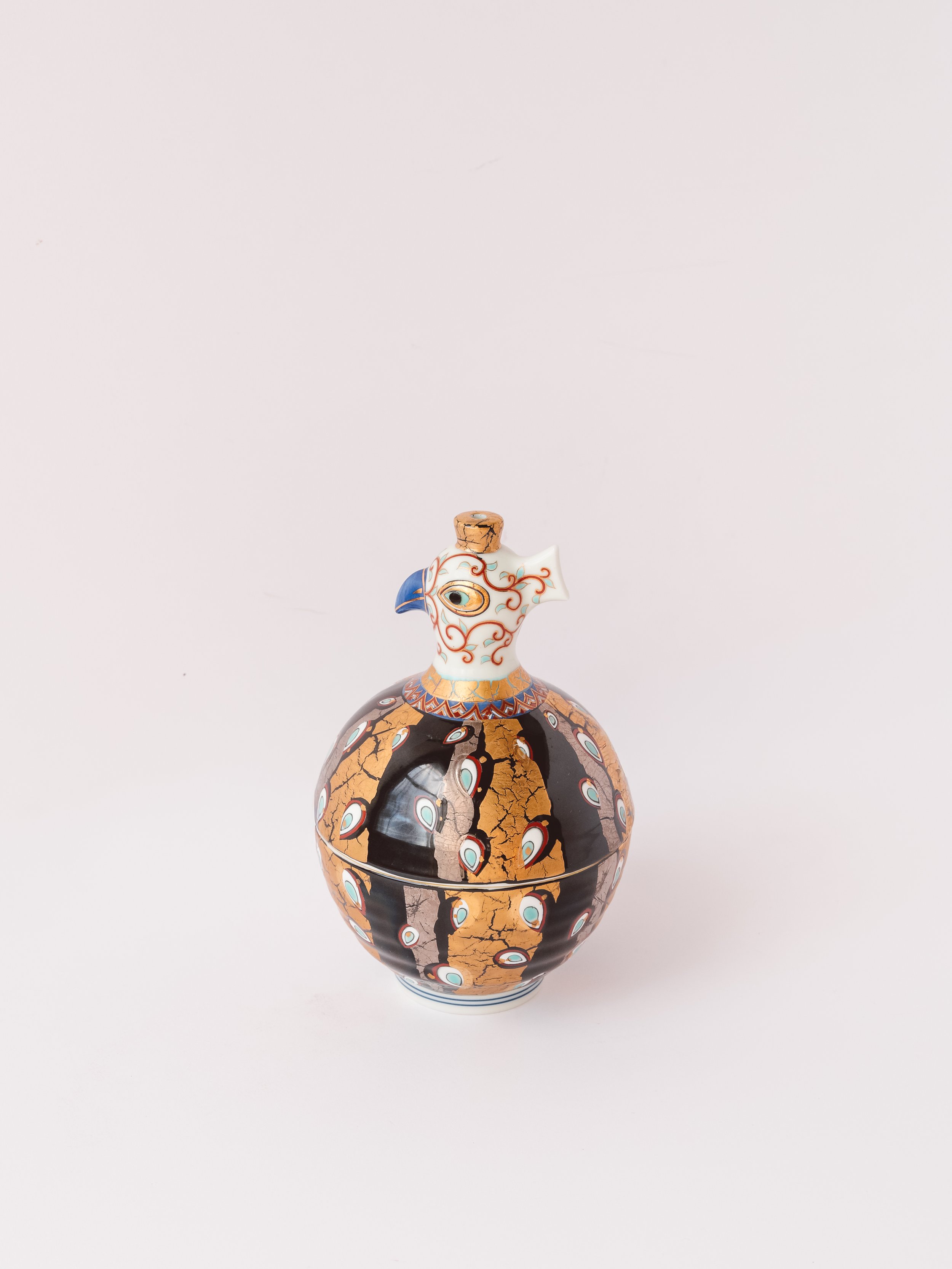 Image 2 of 12
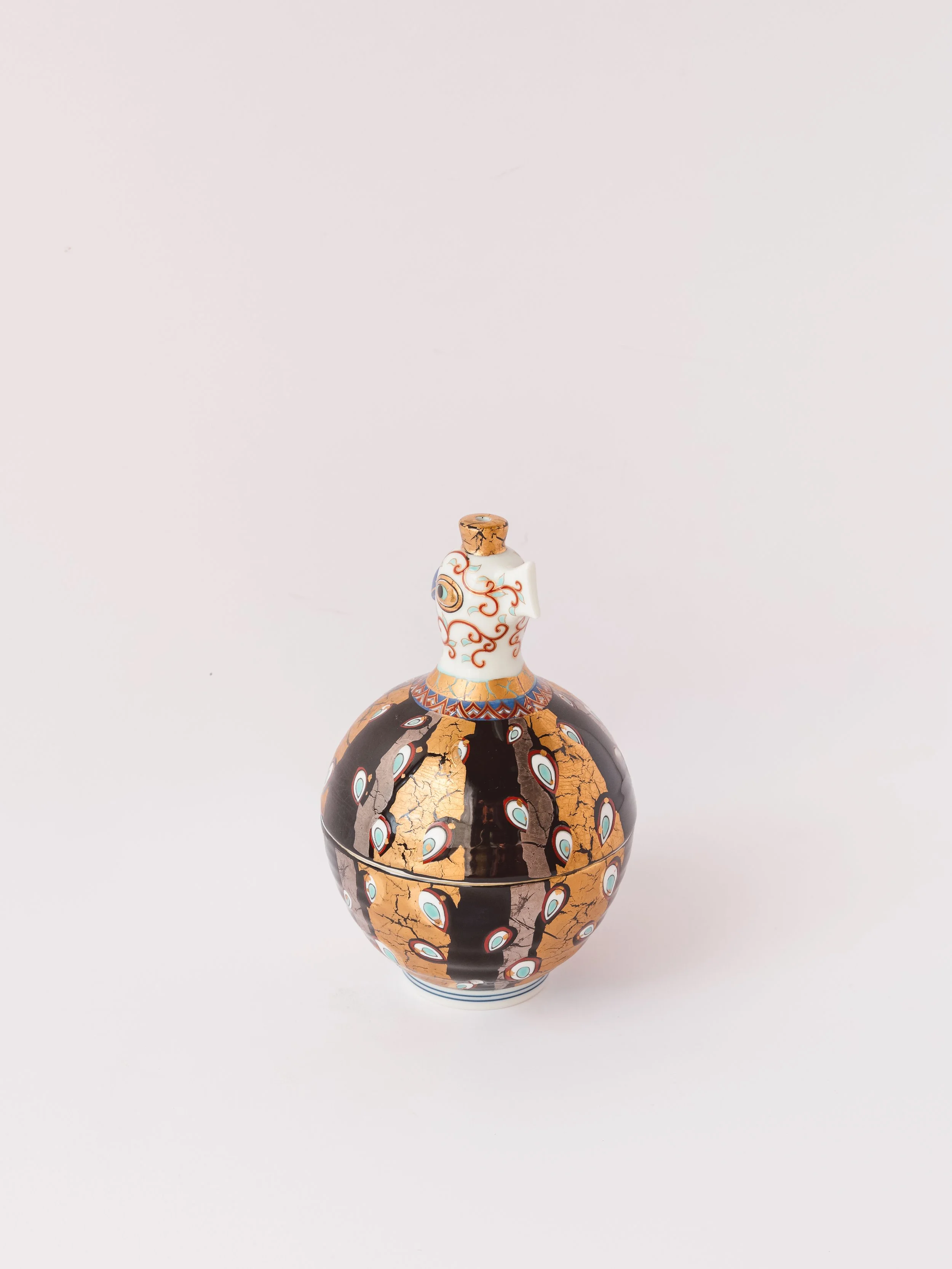 Image 3 of 12
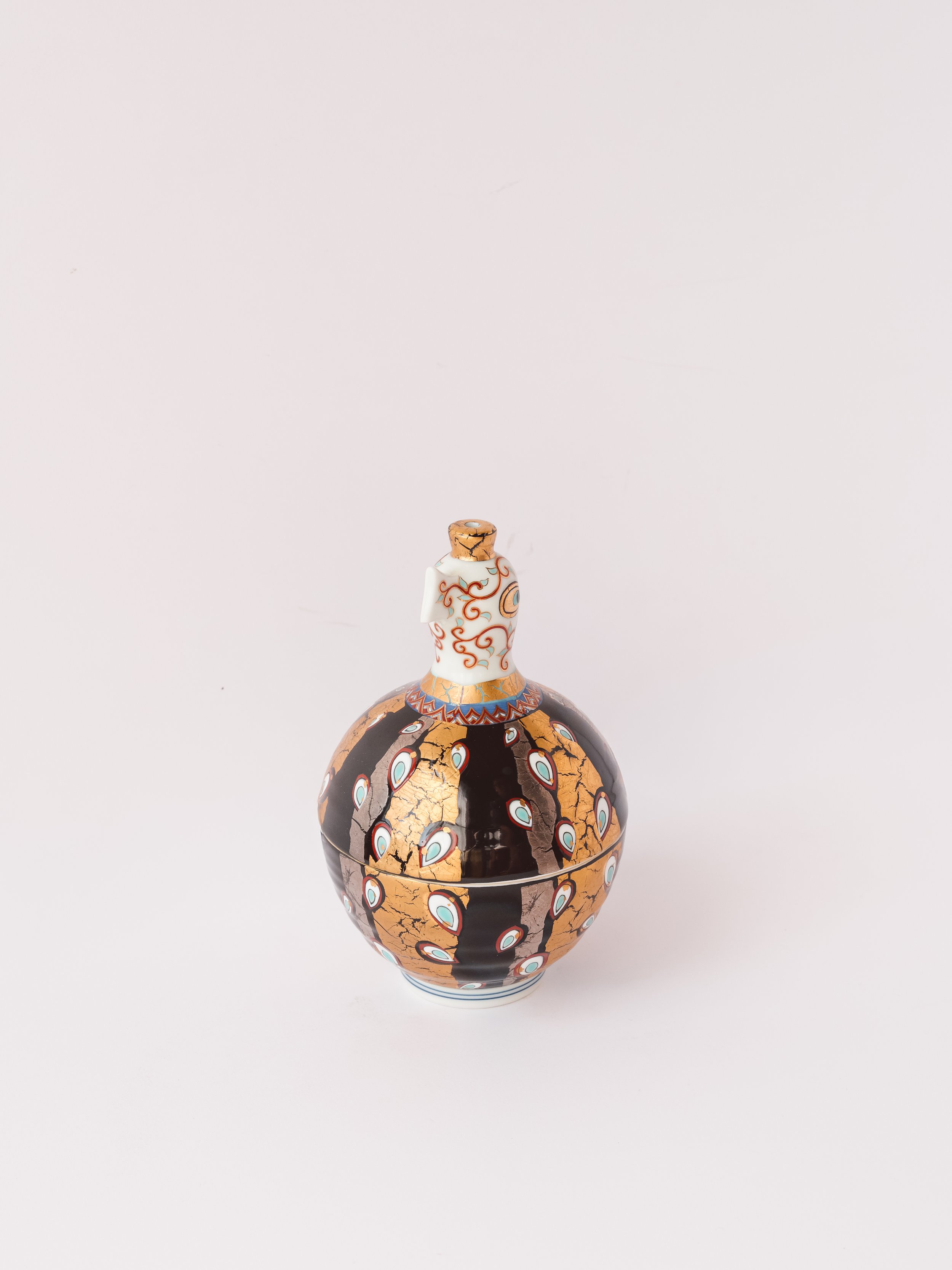 Image 4 of 12
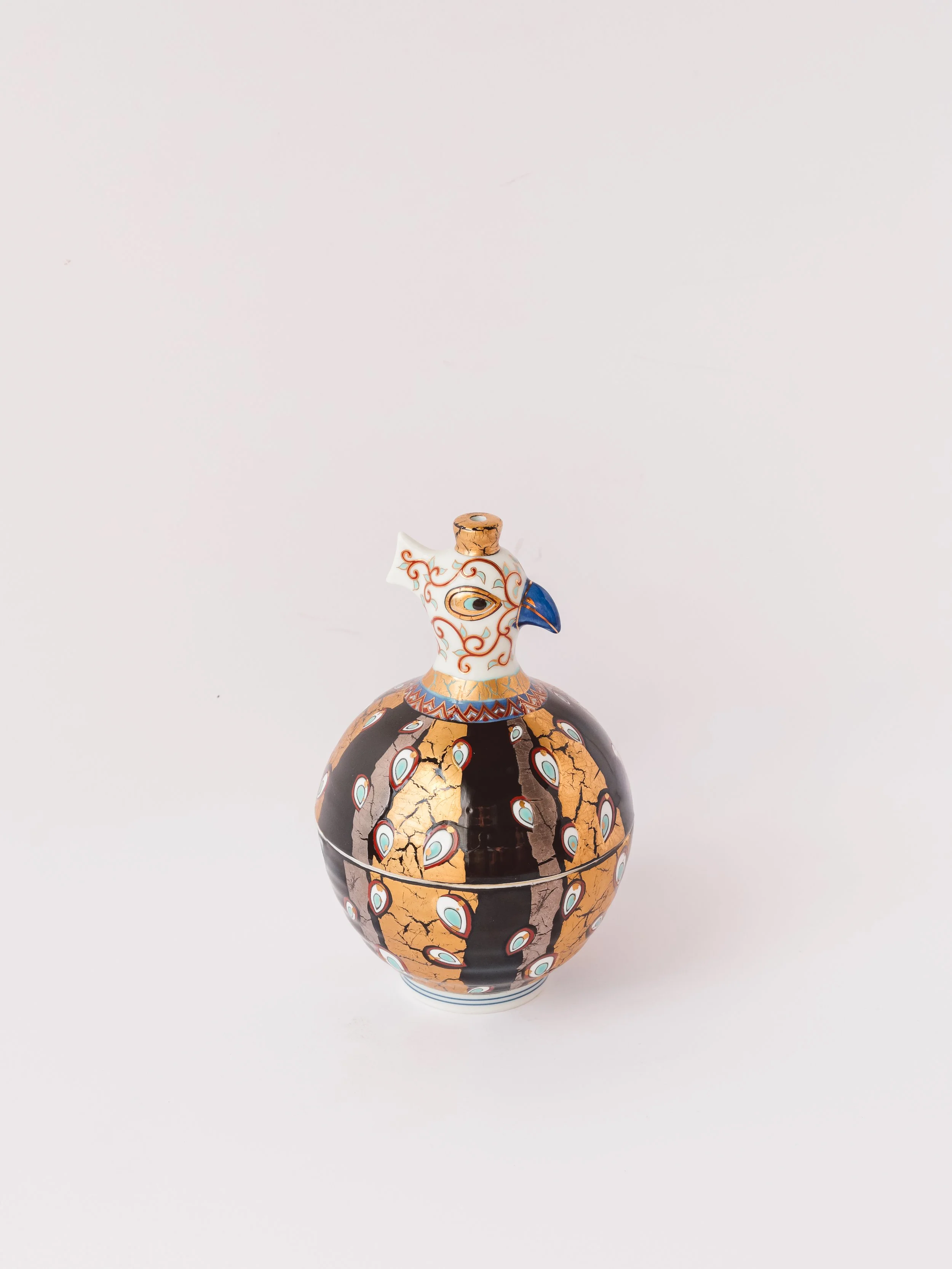 Image 5 of 12
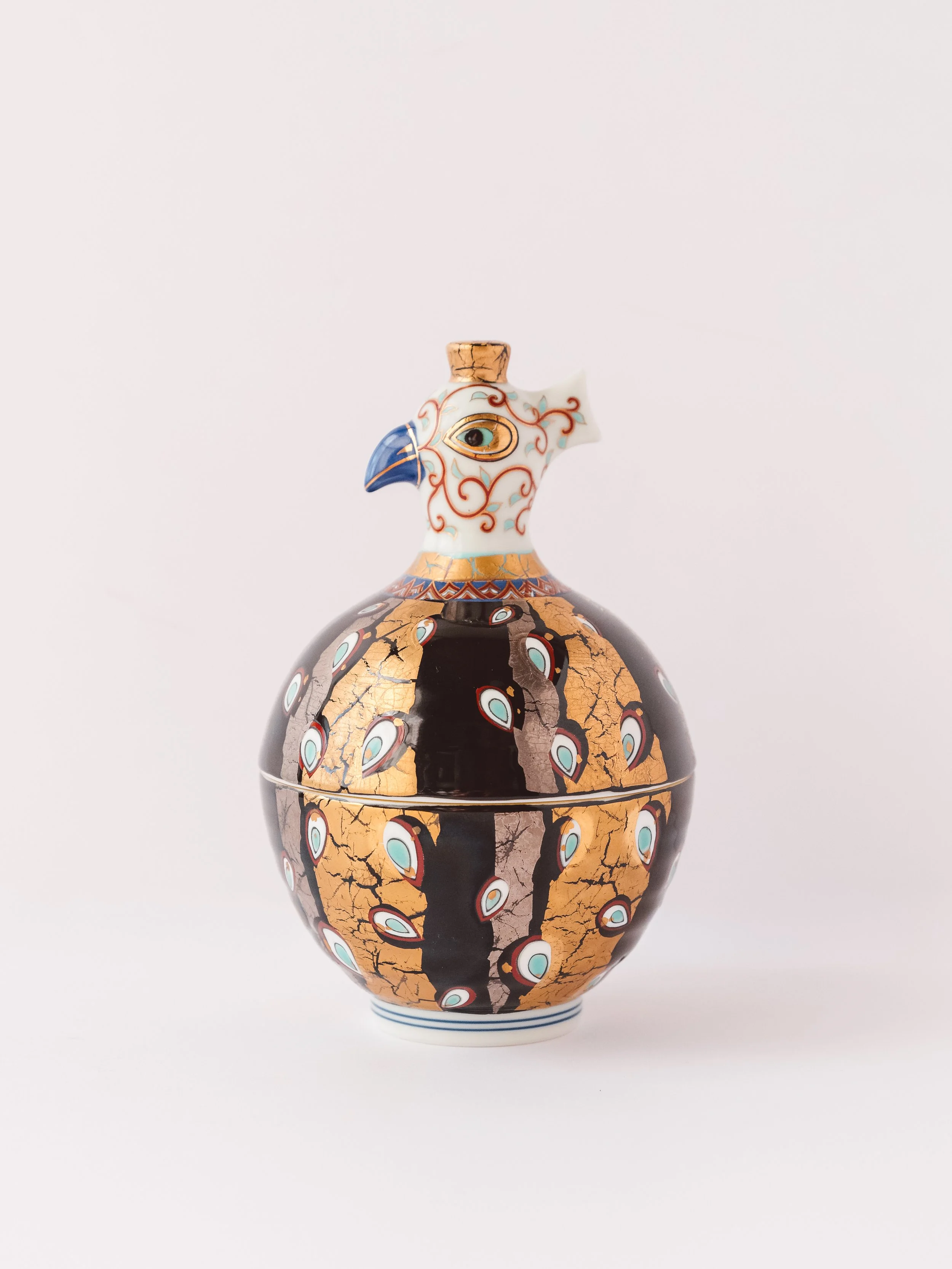 Image 6 of 12
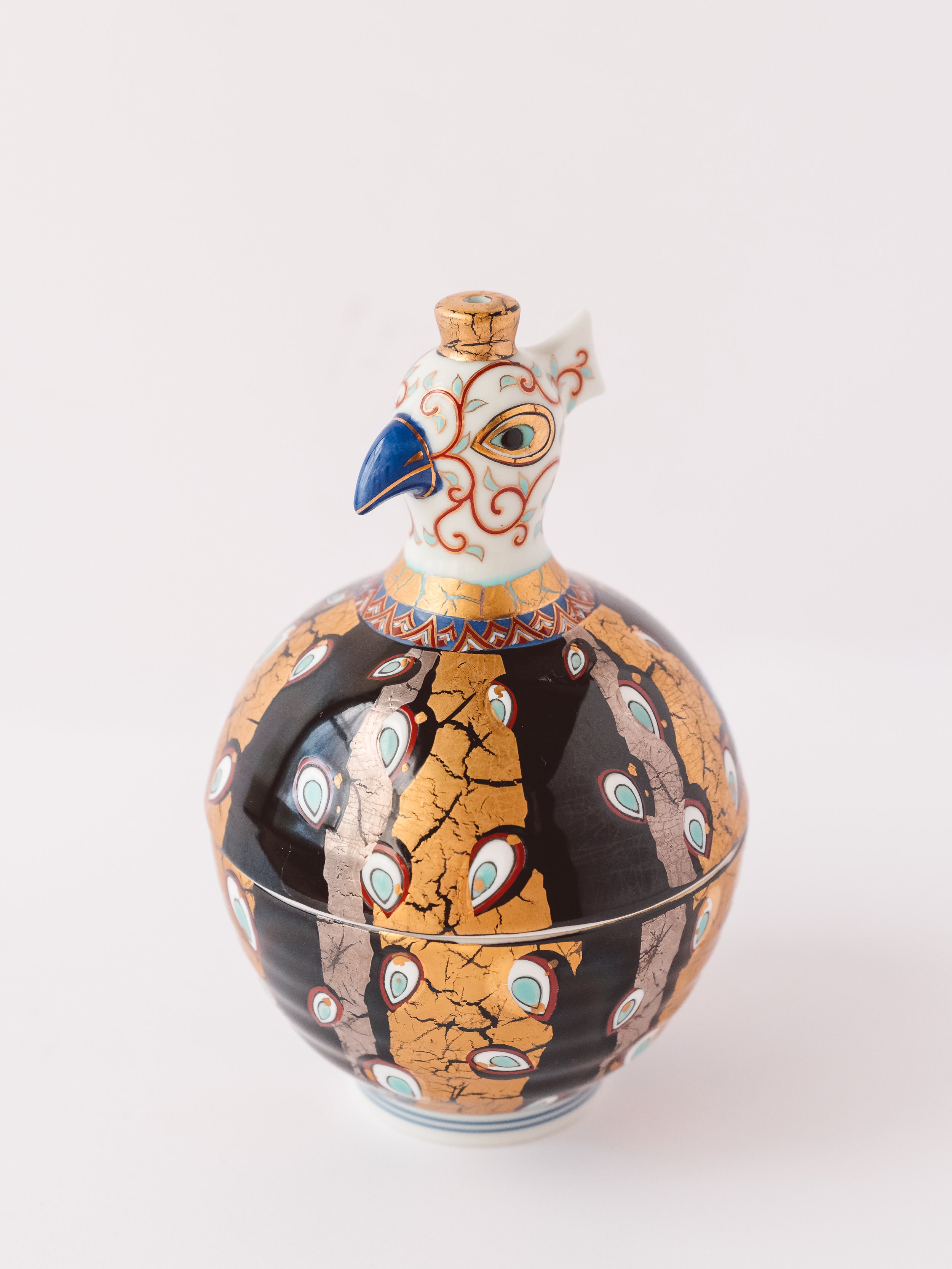 Image 7 of 12
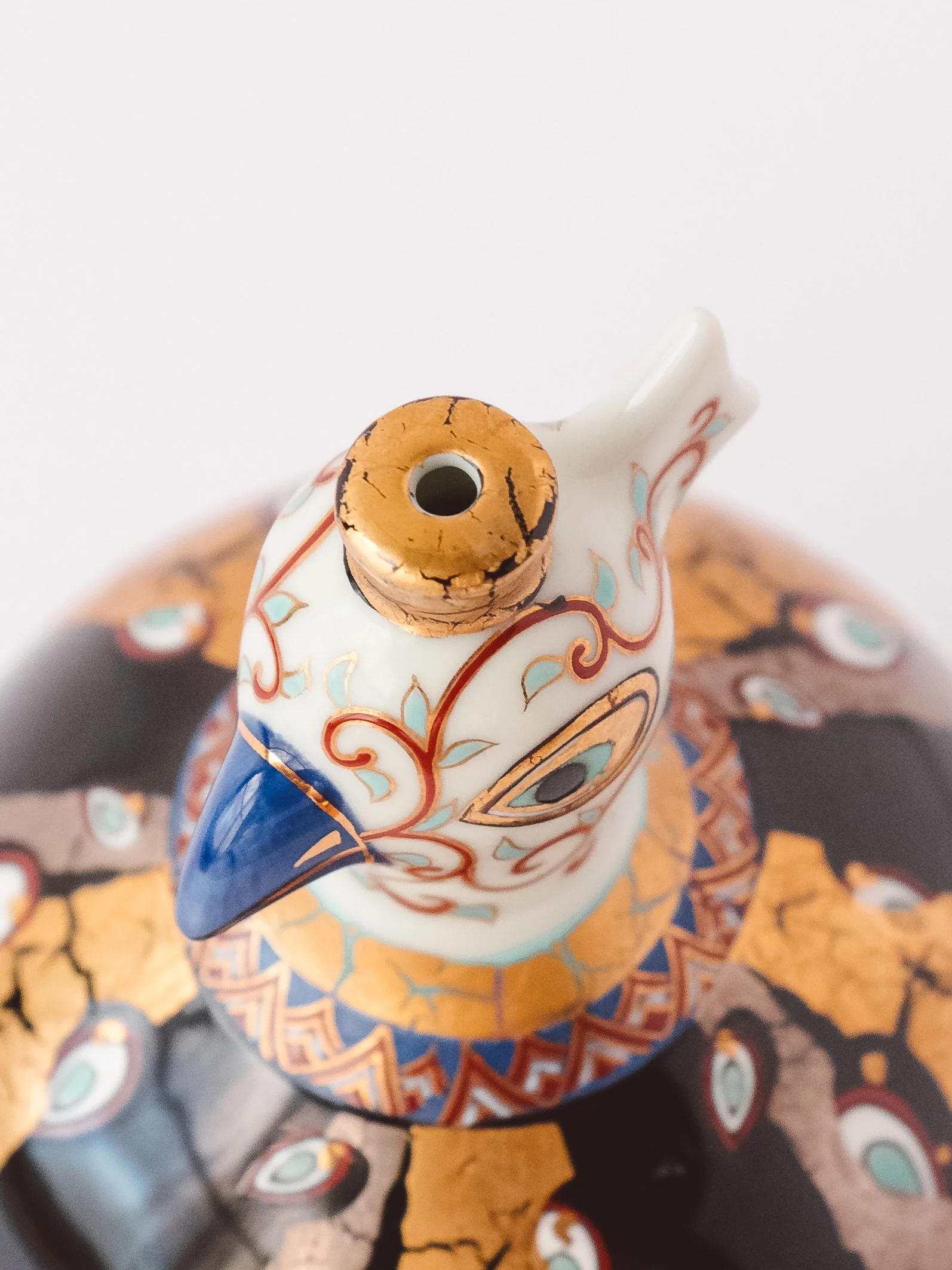 Image 8 of 12
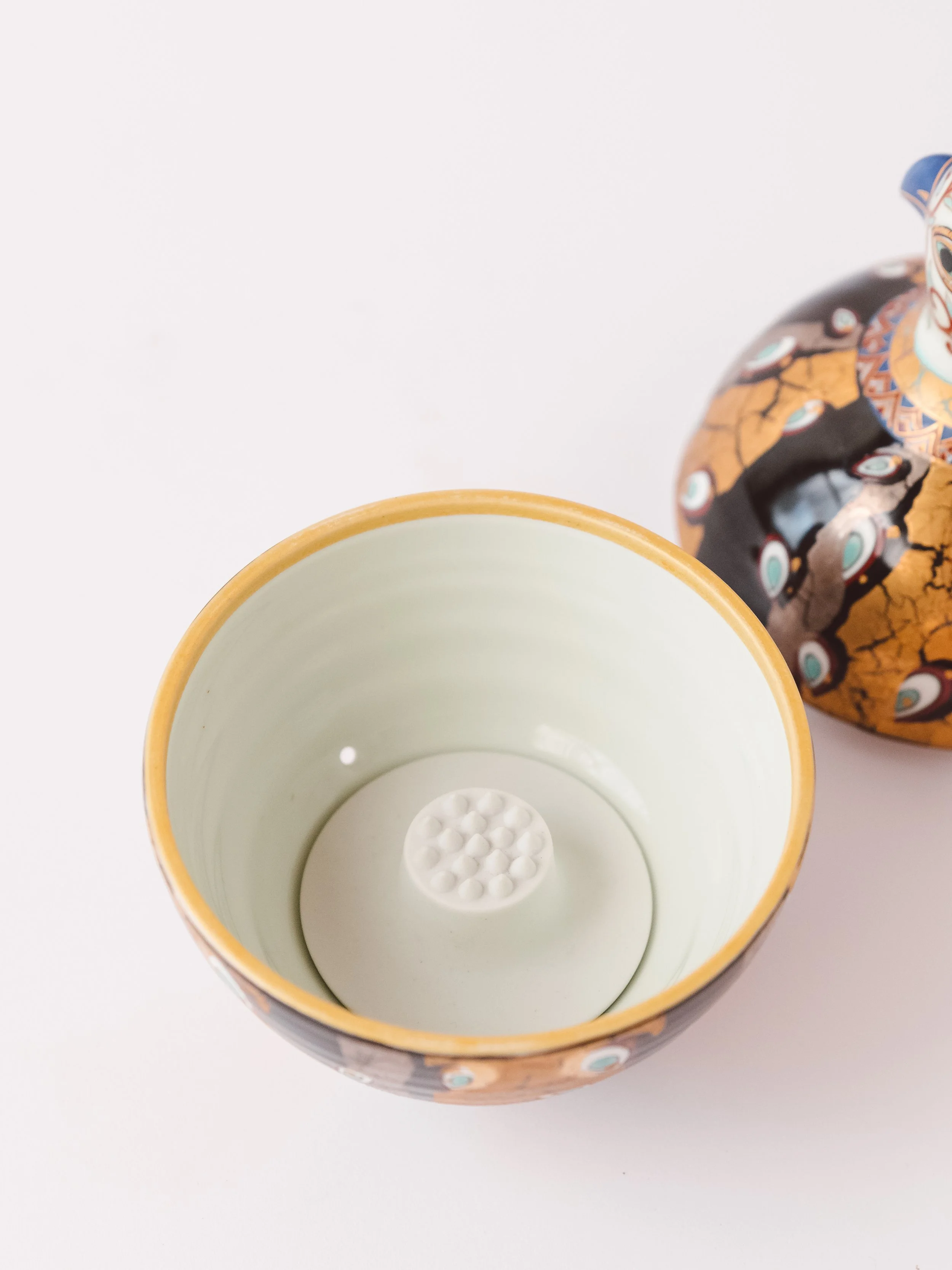 Image 9 of 12
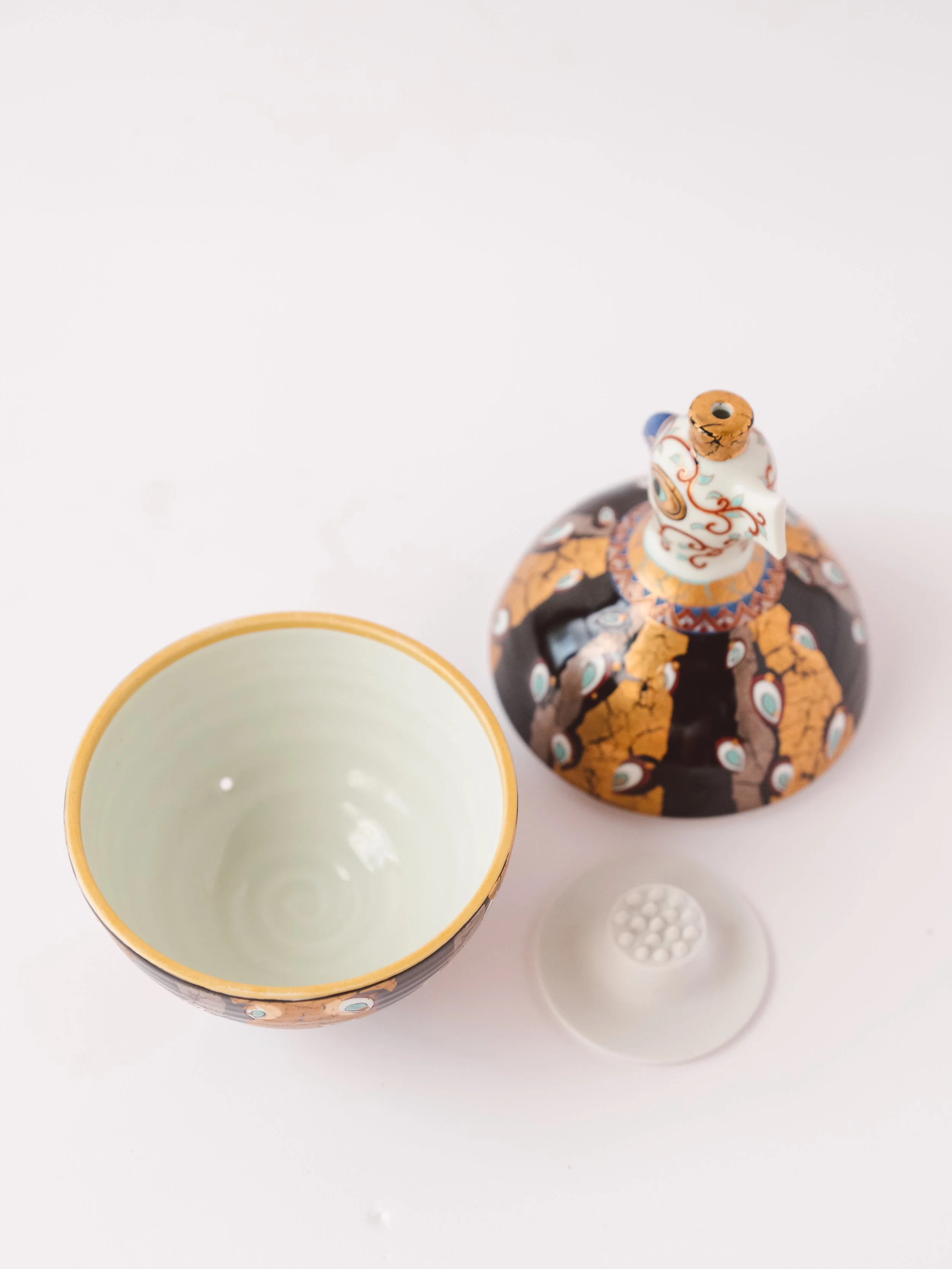 Image 10 of 12
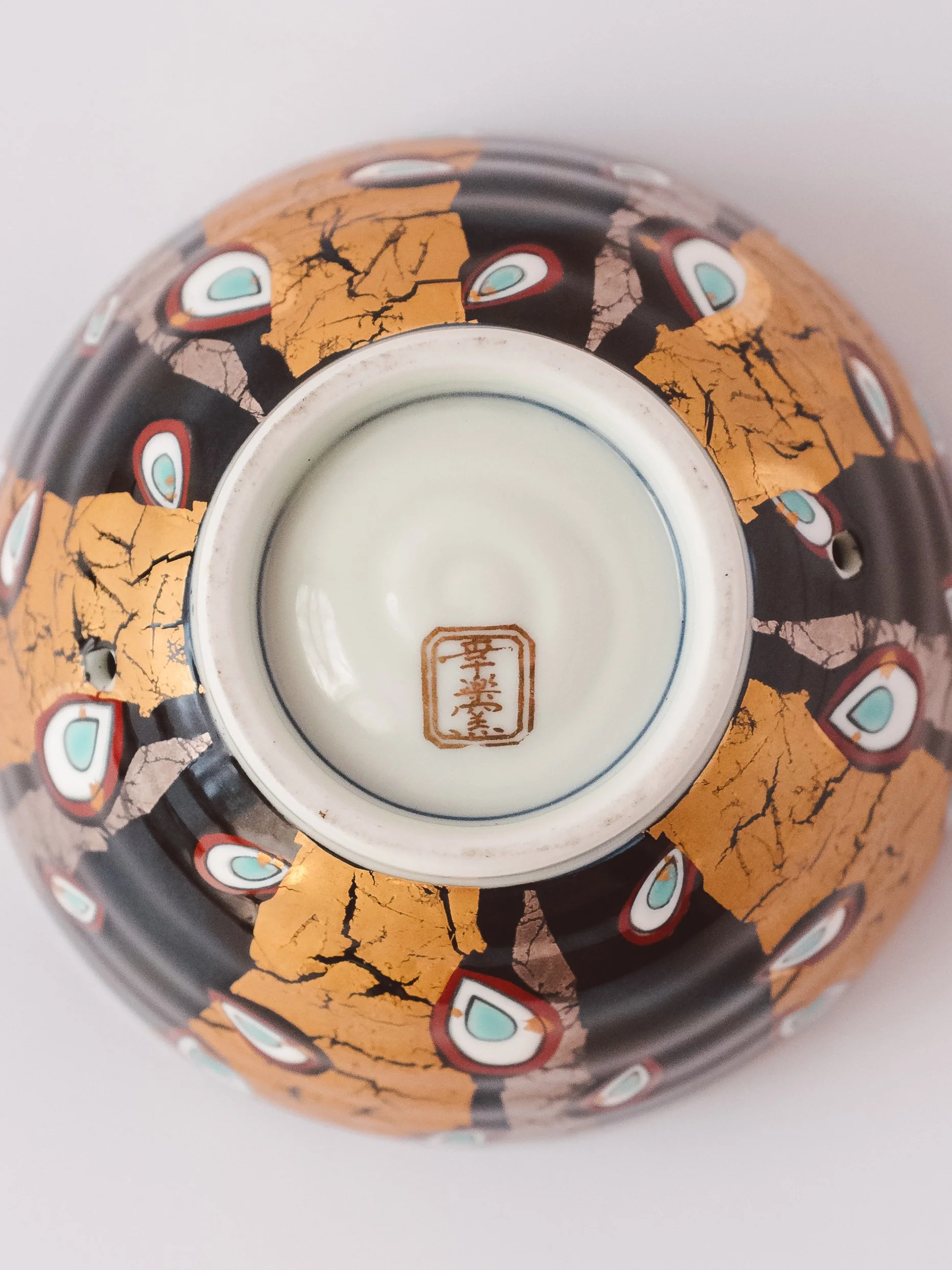 Image 11 of 12
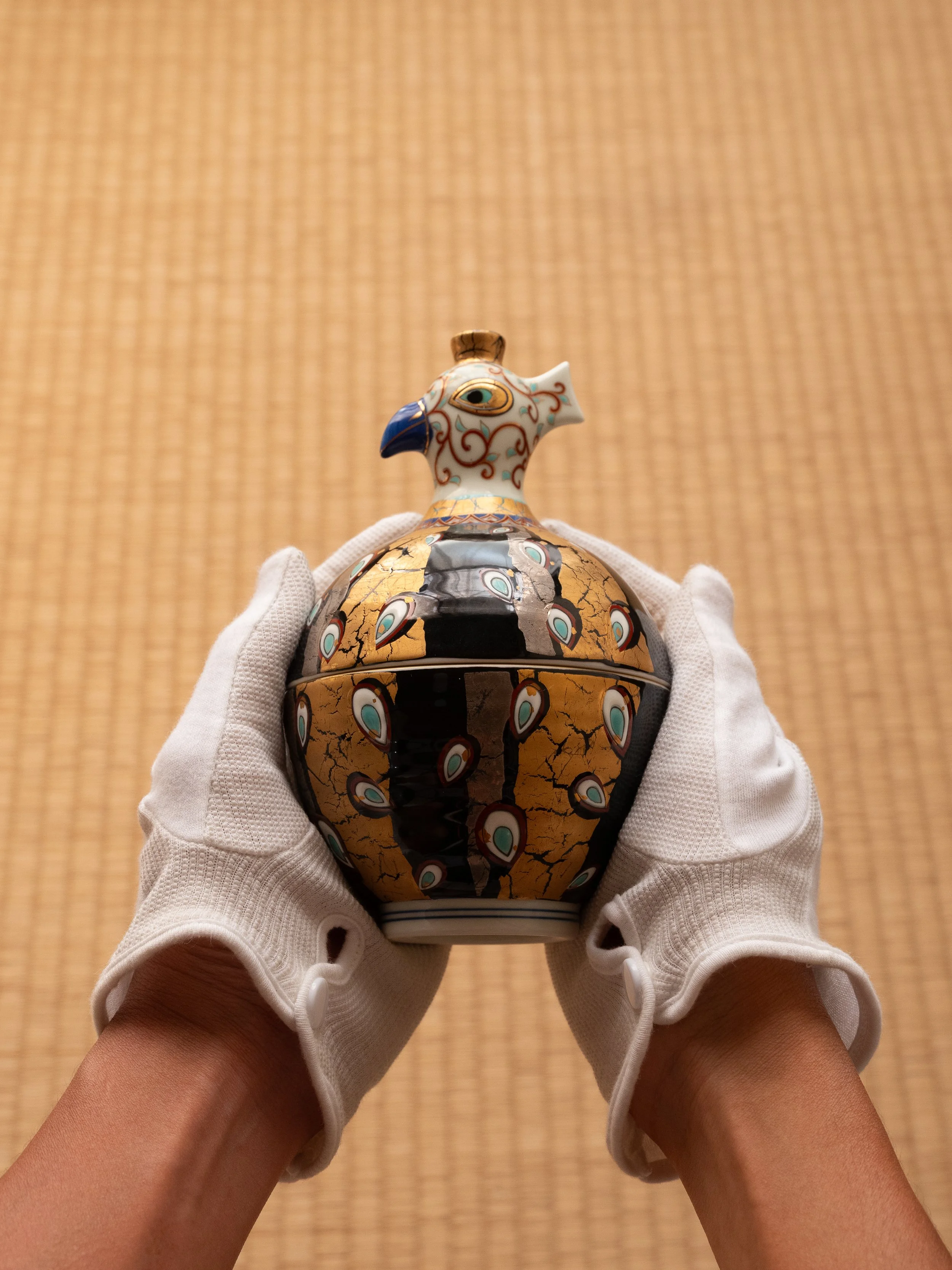 Image 12 of 12