【 The Concept 】
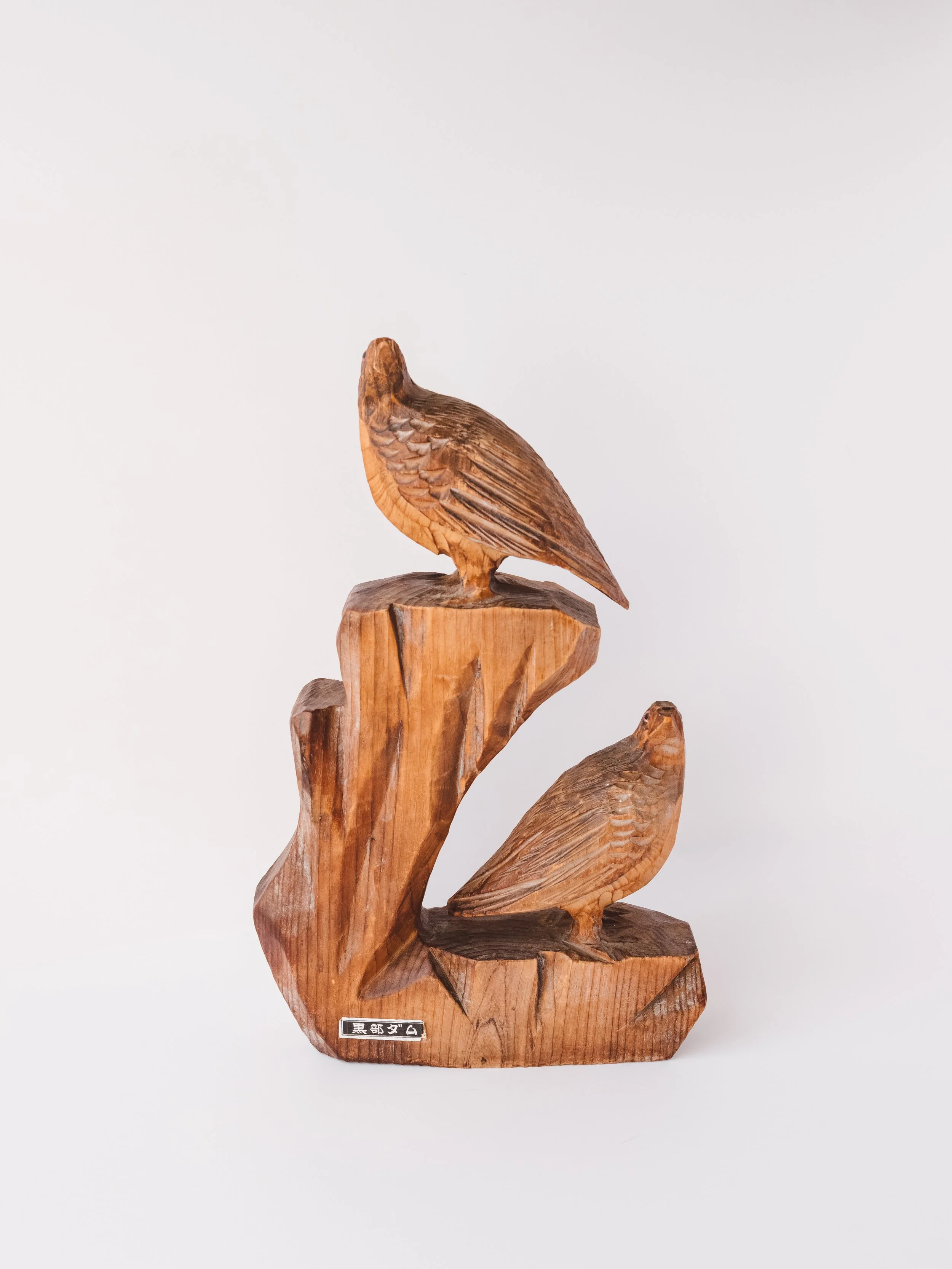
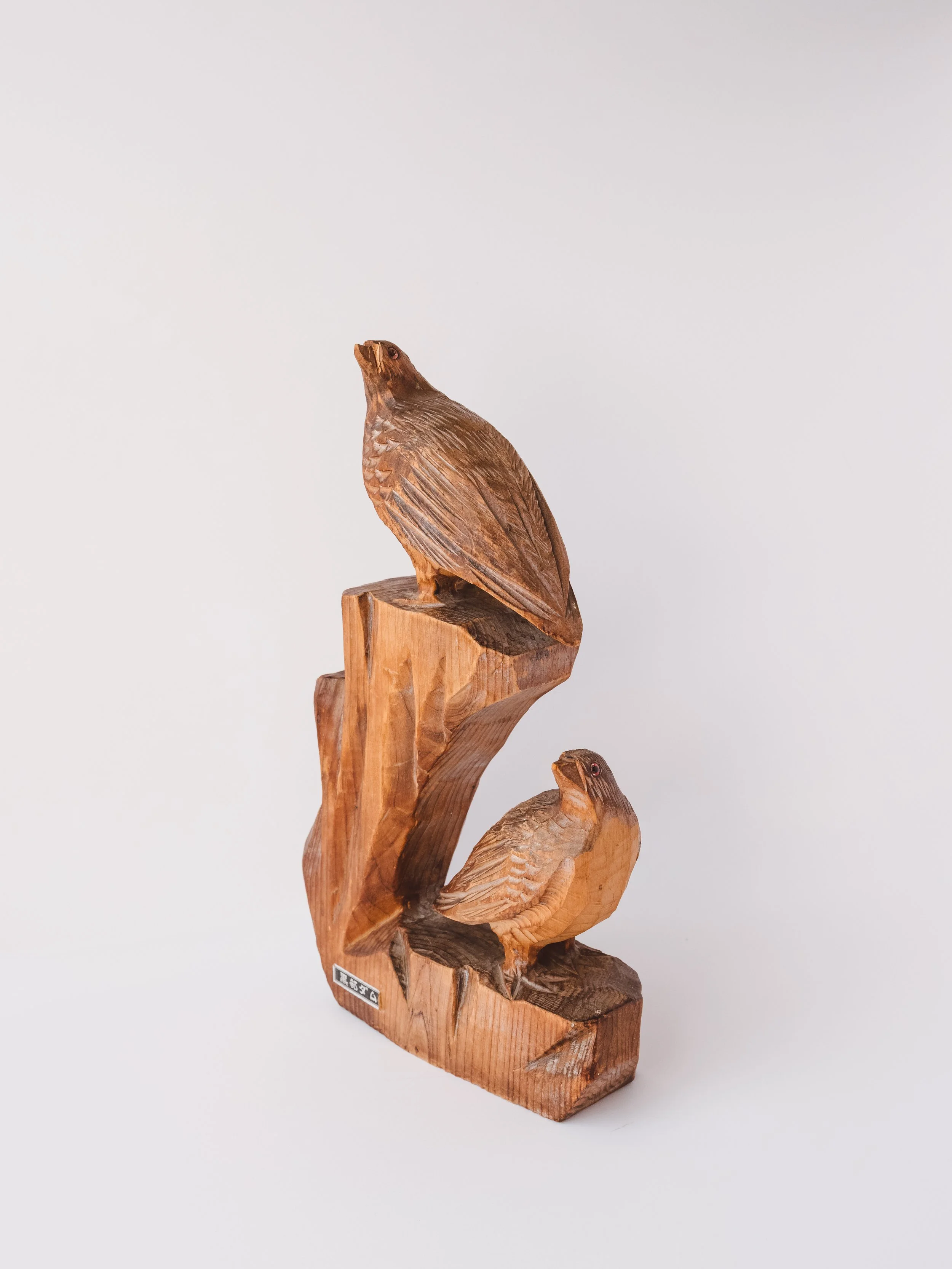
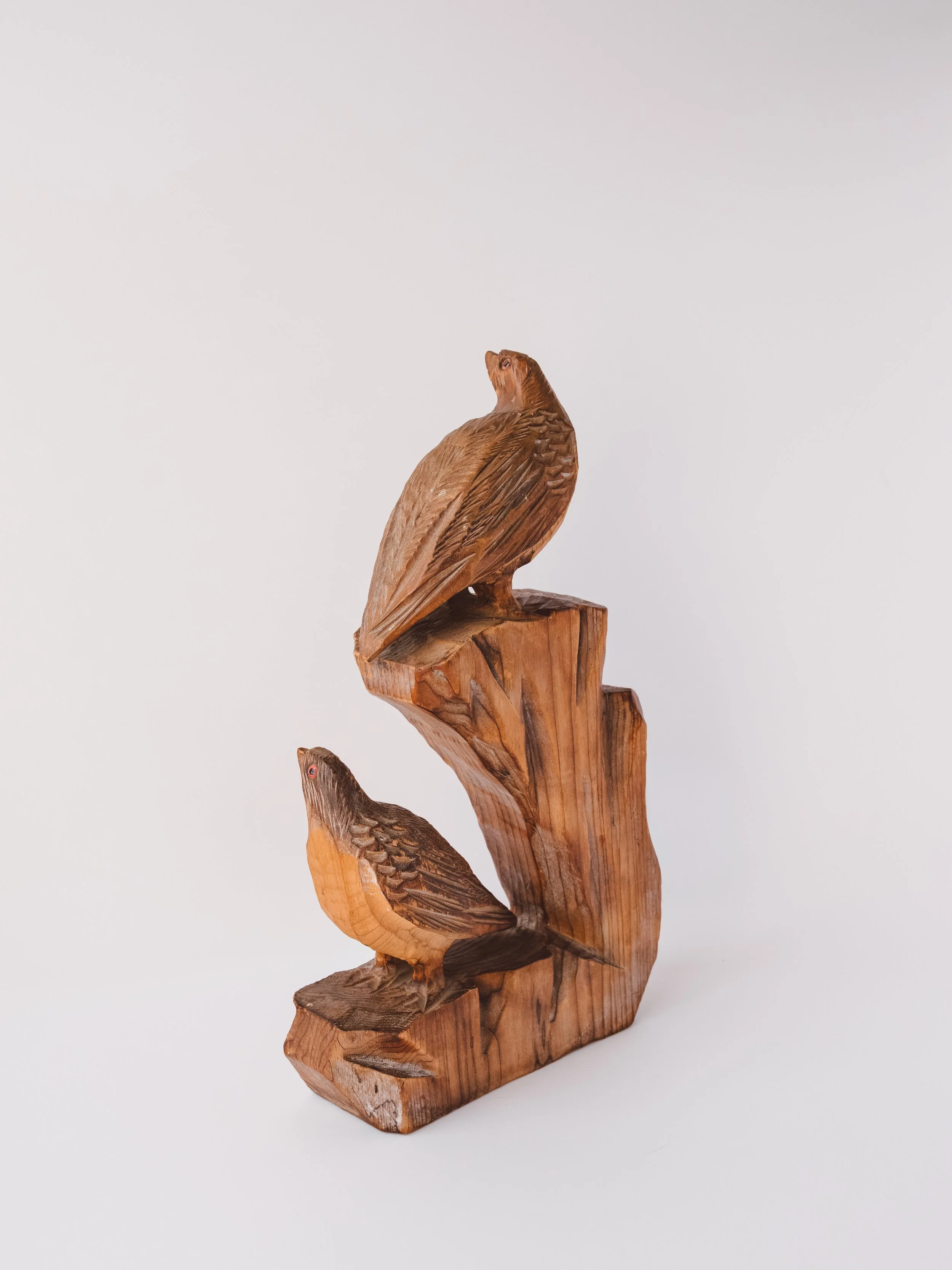
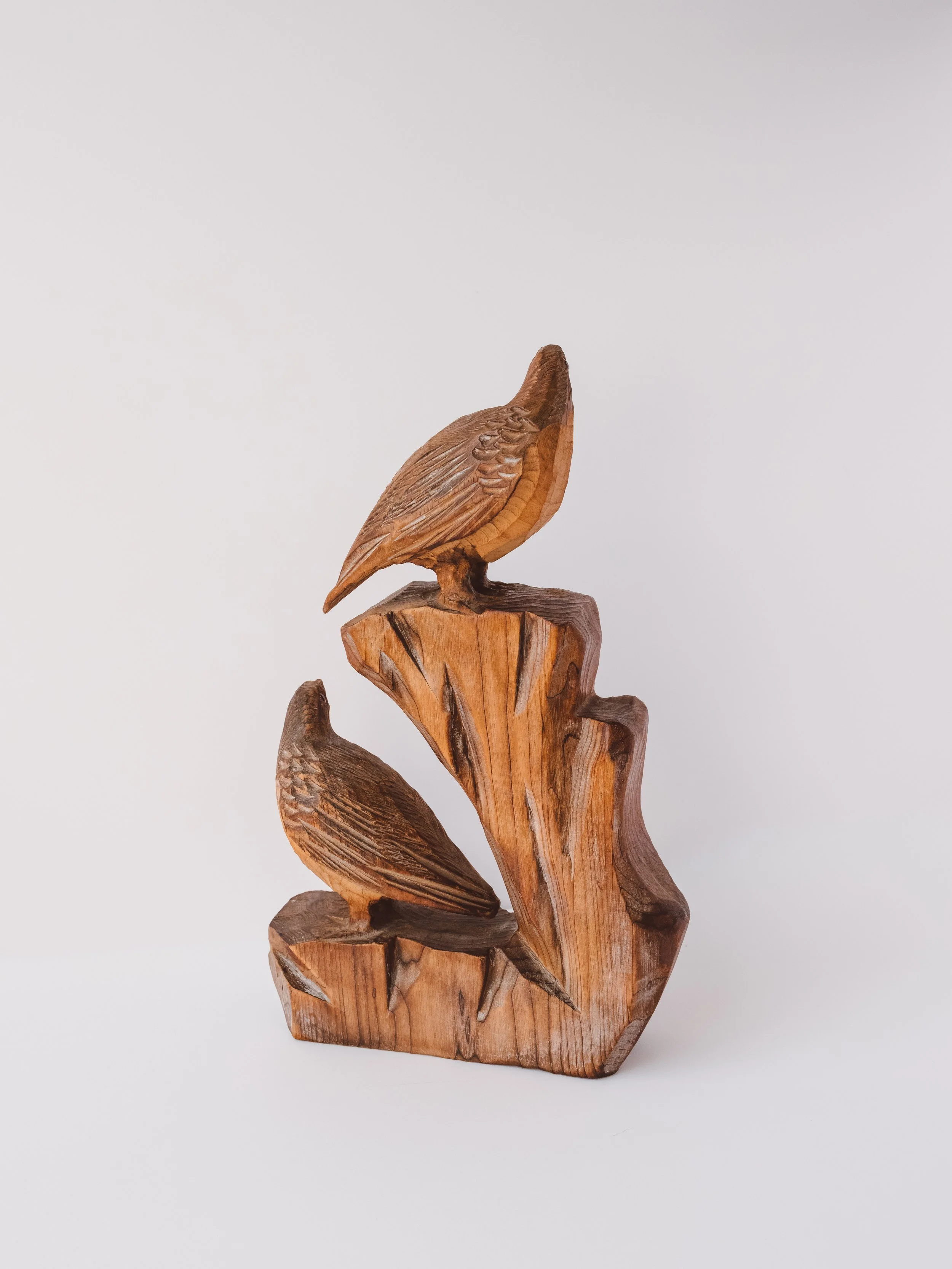
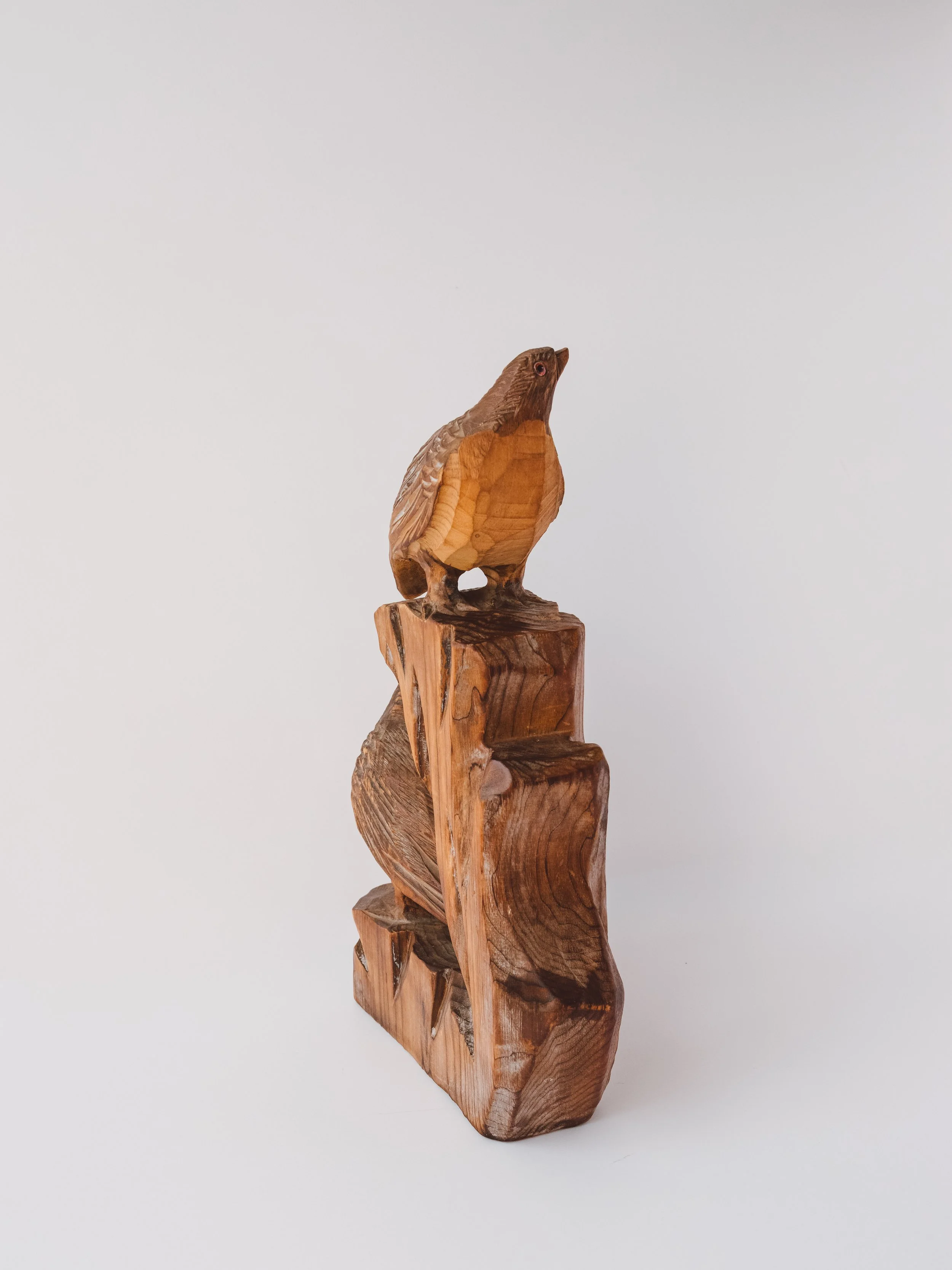
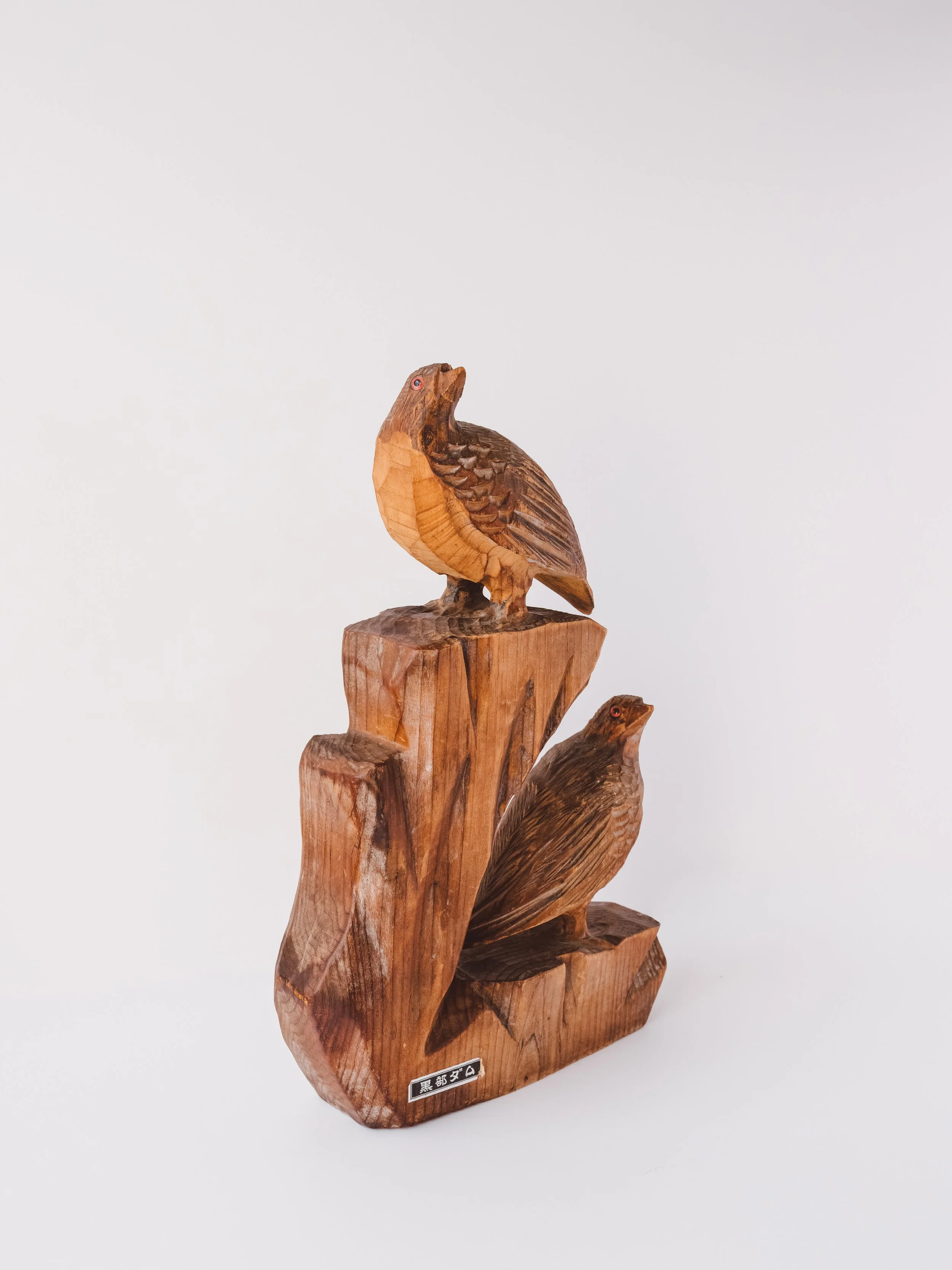
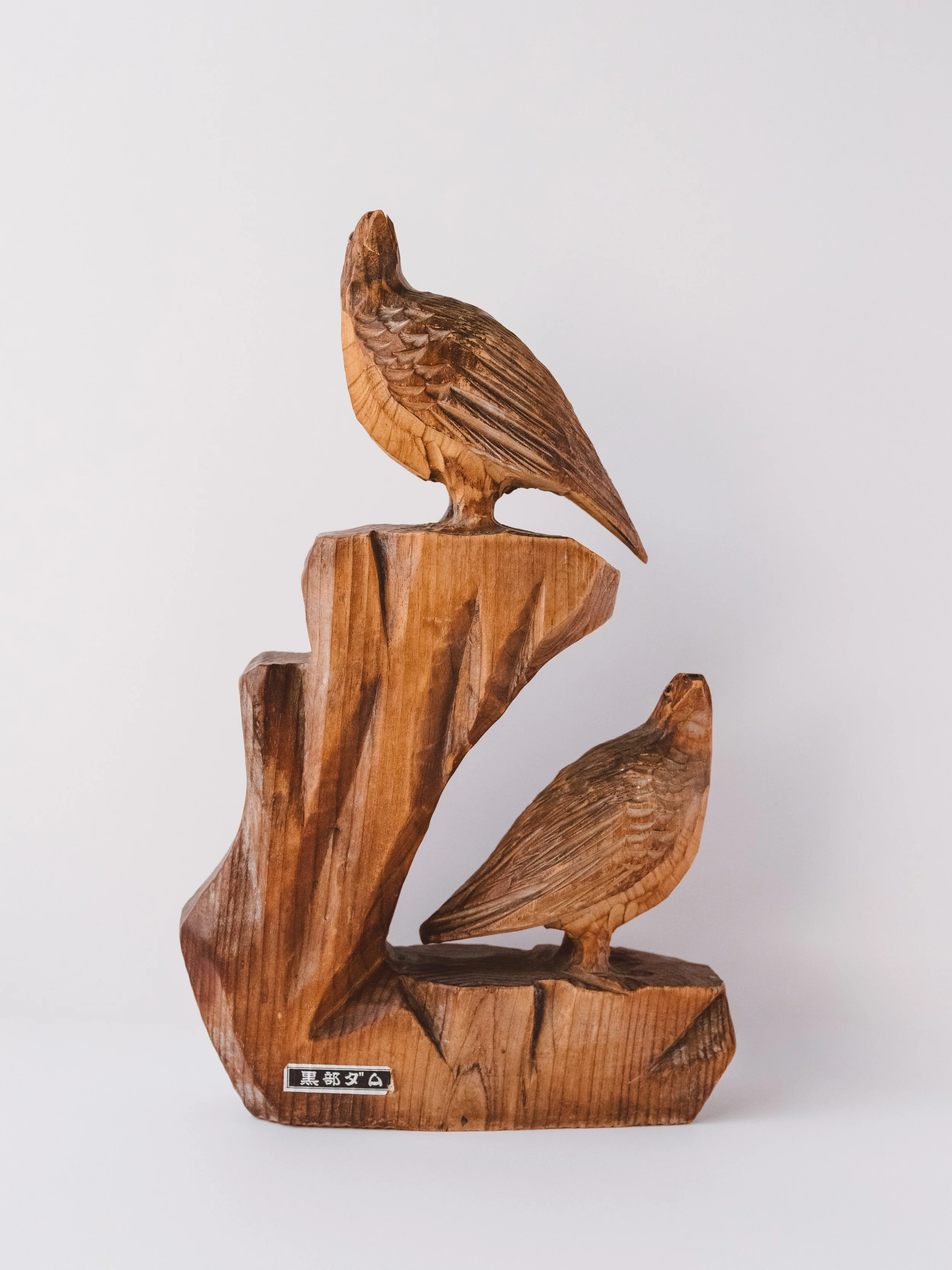
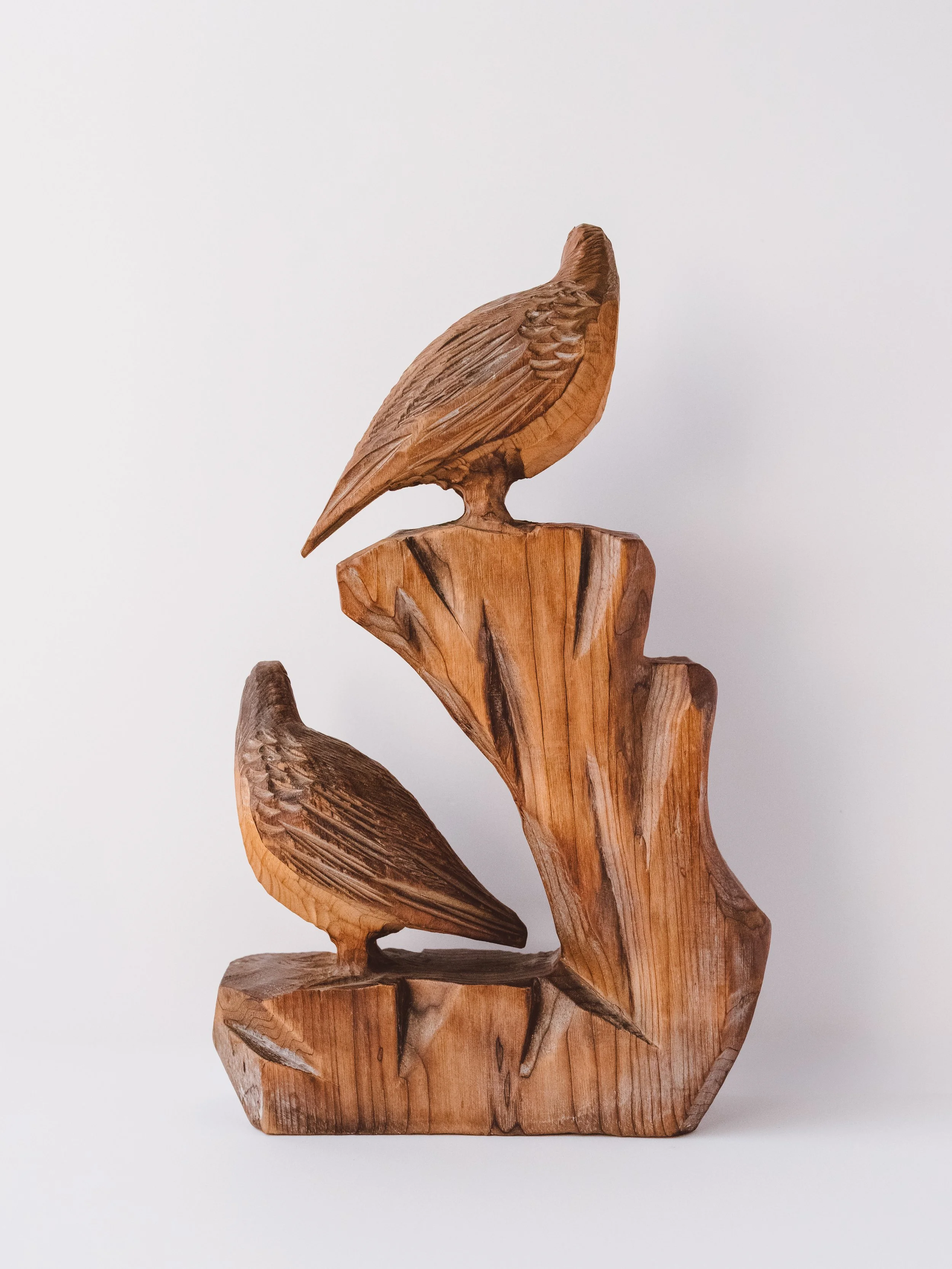
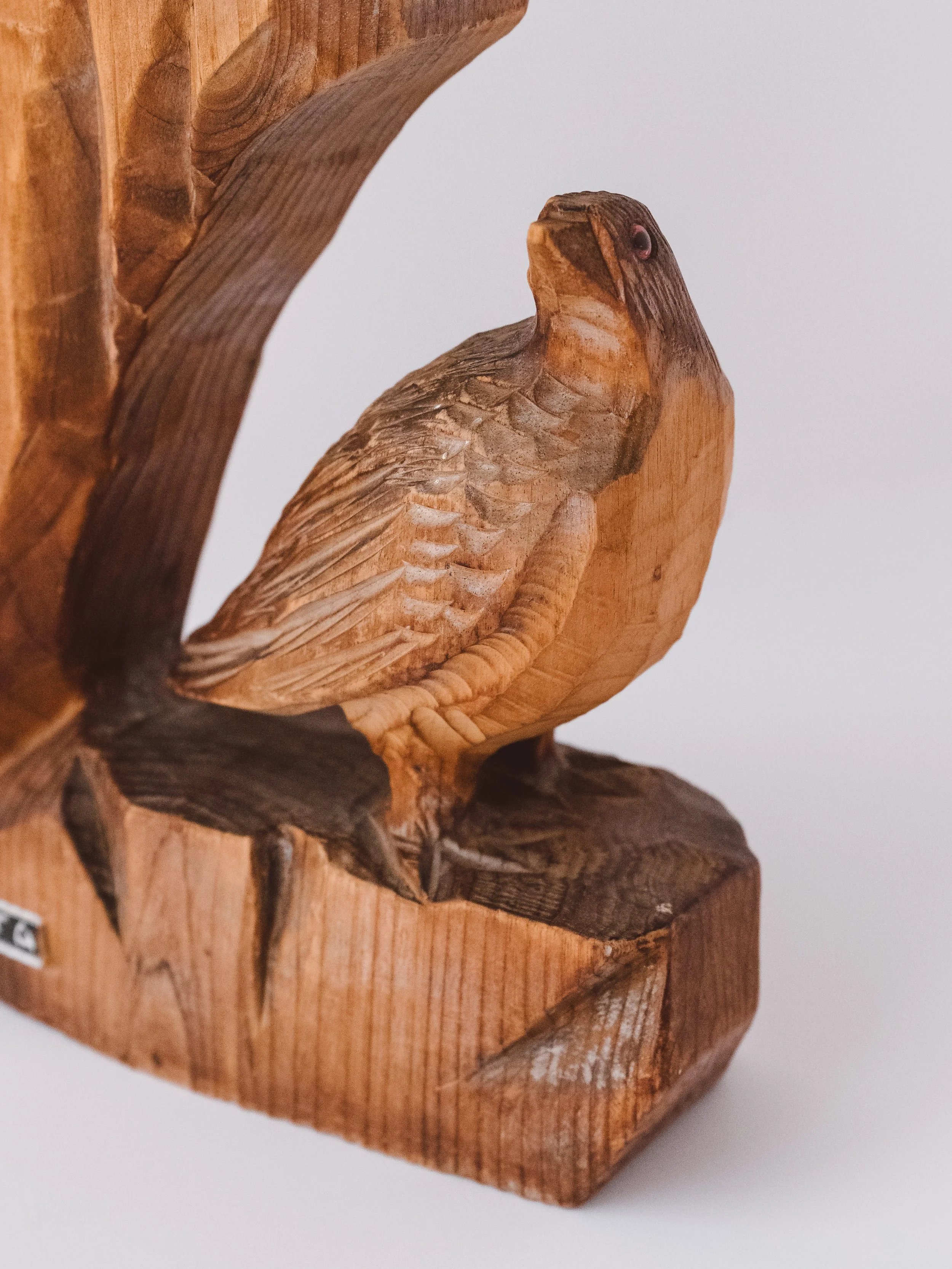
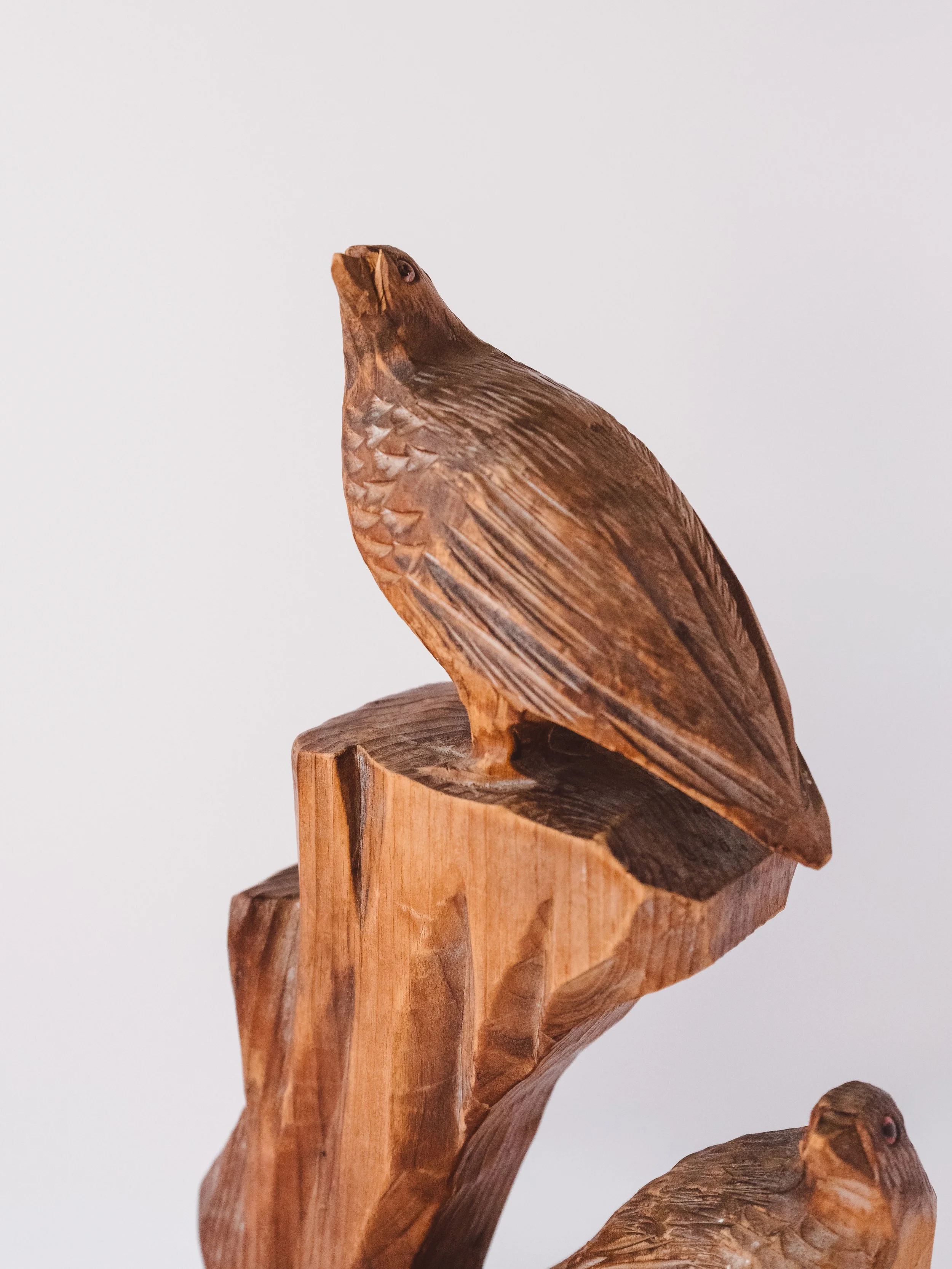
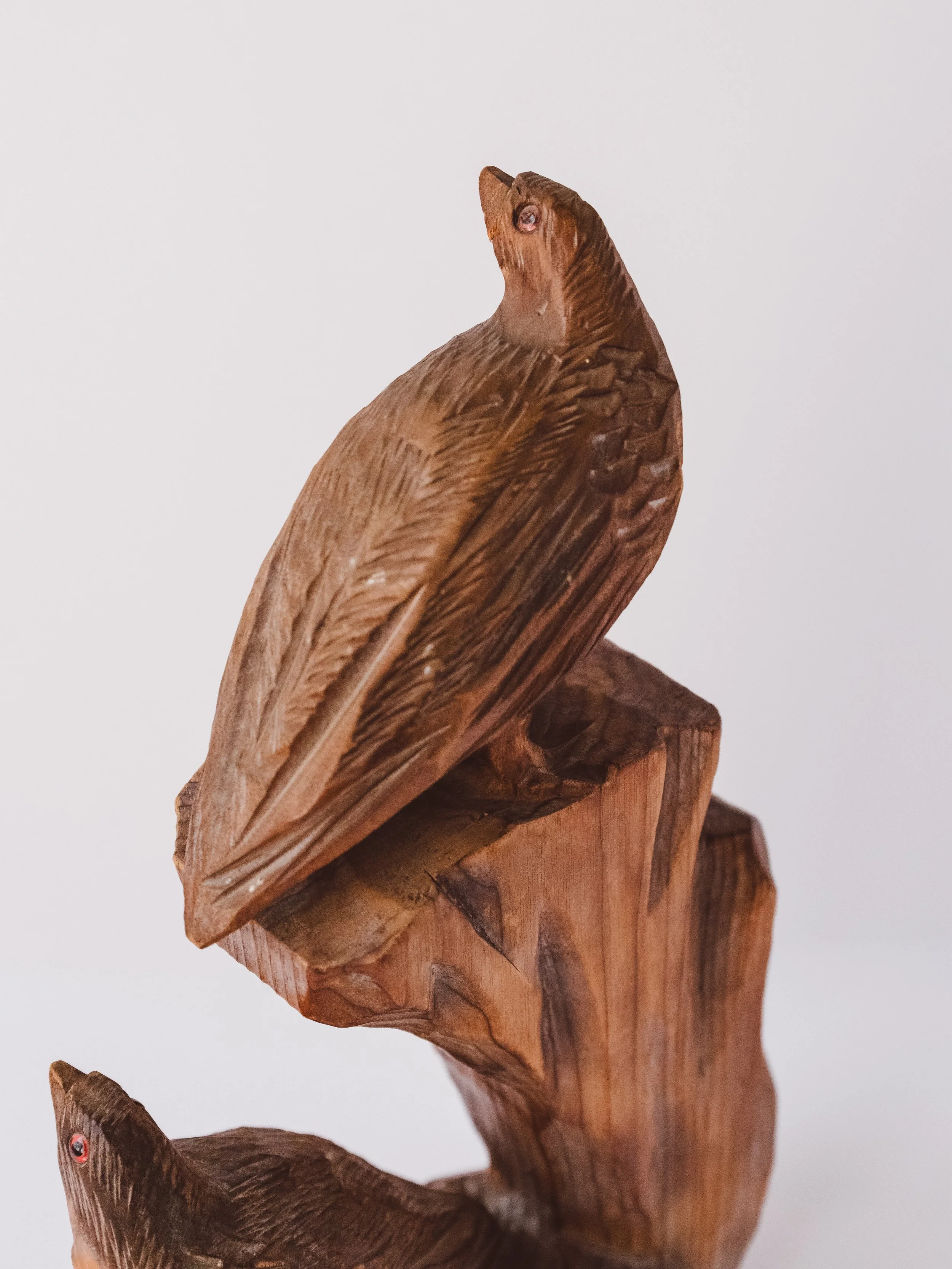
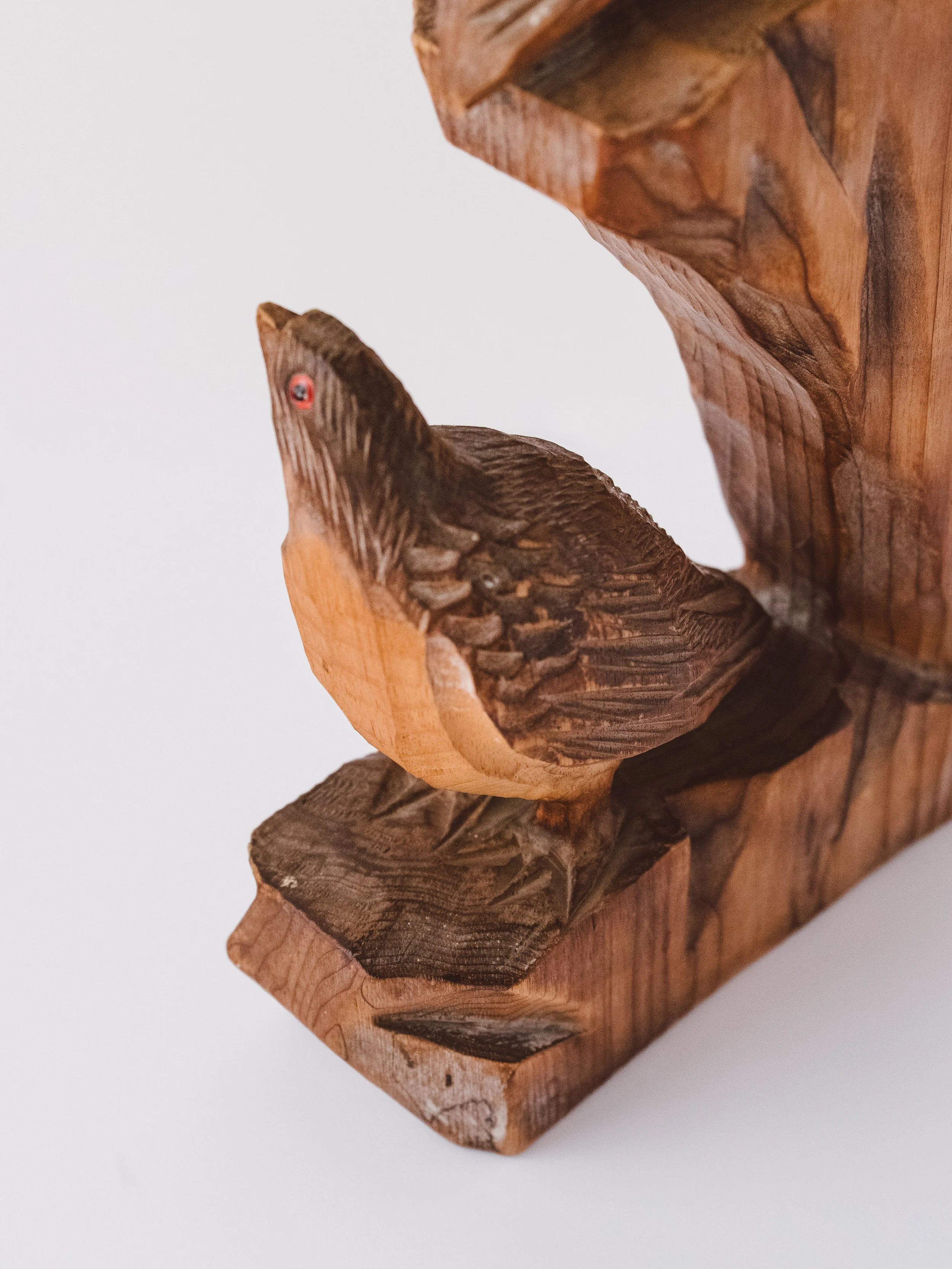
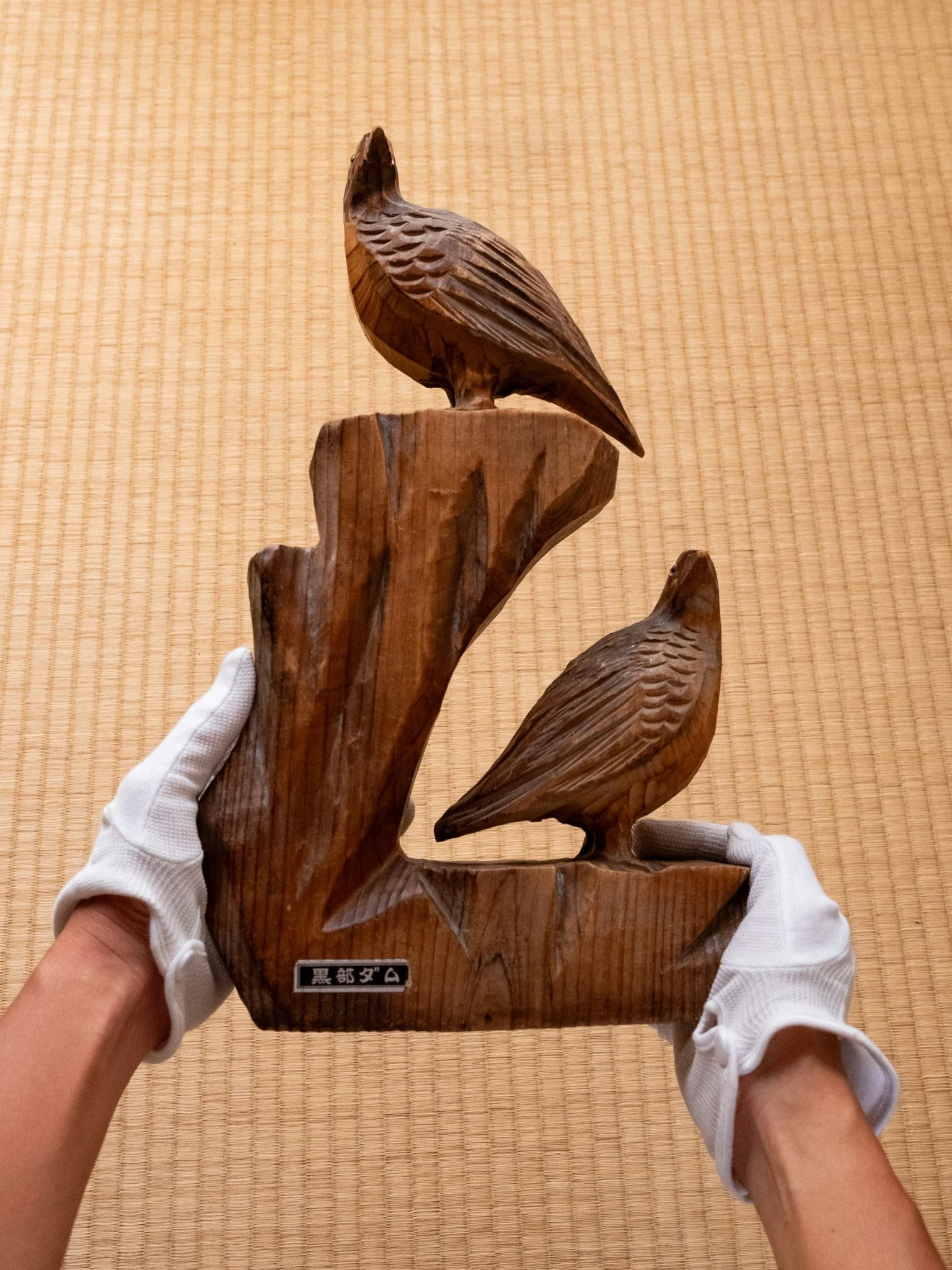
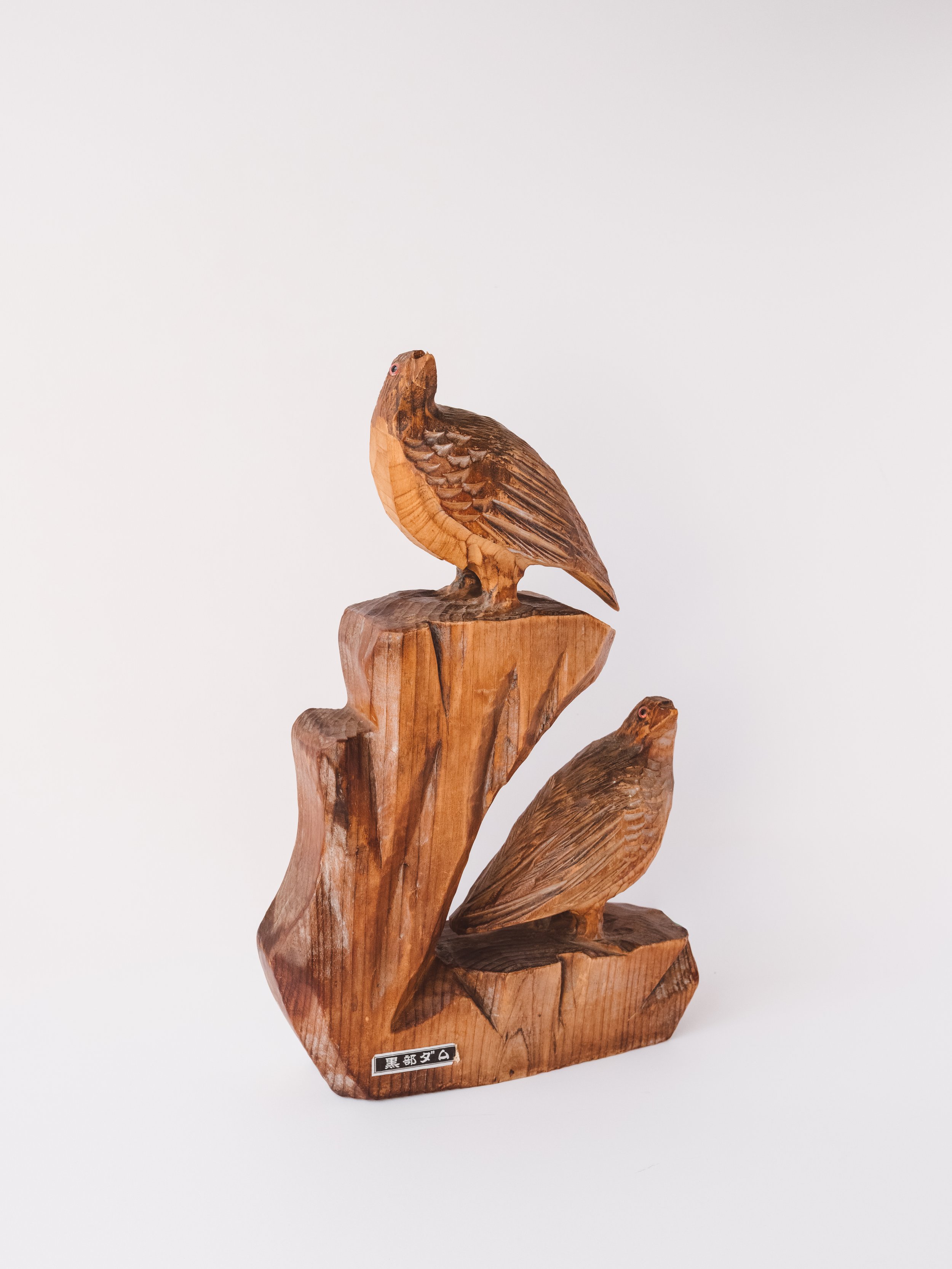
Two ptarmigan on a crag, carved from a single upright block of wood. One bird stands at the summit, the other on a ledge below and to the side, both with heads tipped back to look up into the open air — the pose of birds at home on a high, windswept peak. The rock they stand on is left deliberately raw and angular, cut in bold vertical facets that read as weathered stone or a storm-bleached tree, so that the soft, rounded birds and the harsh mountain read as one continuous piece of timber.
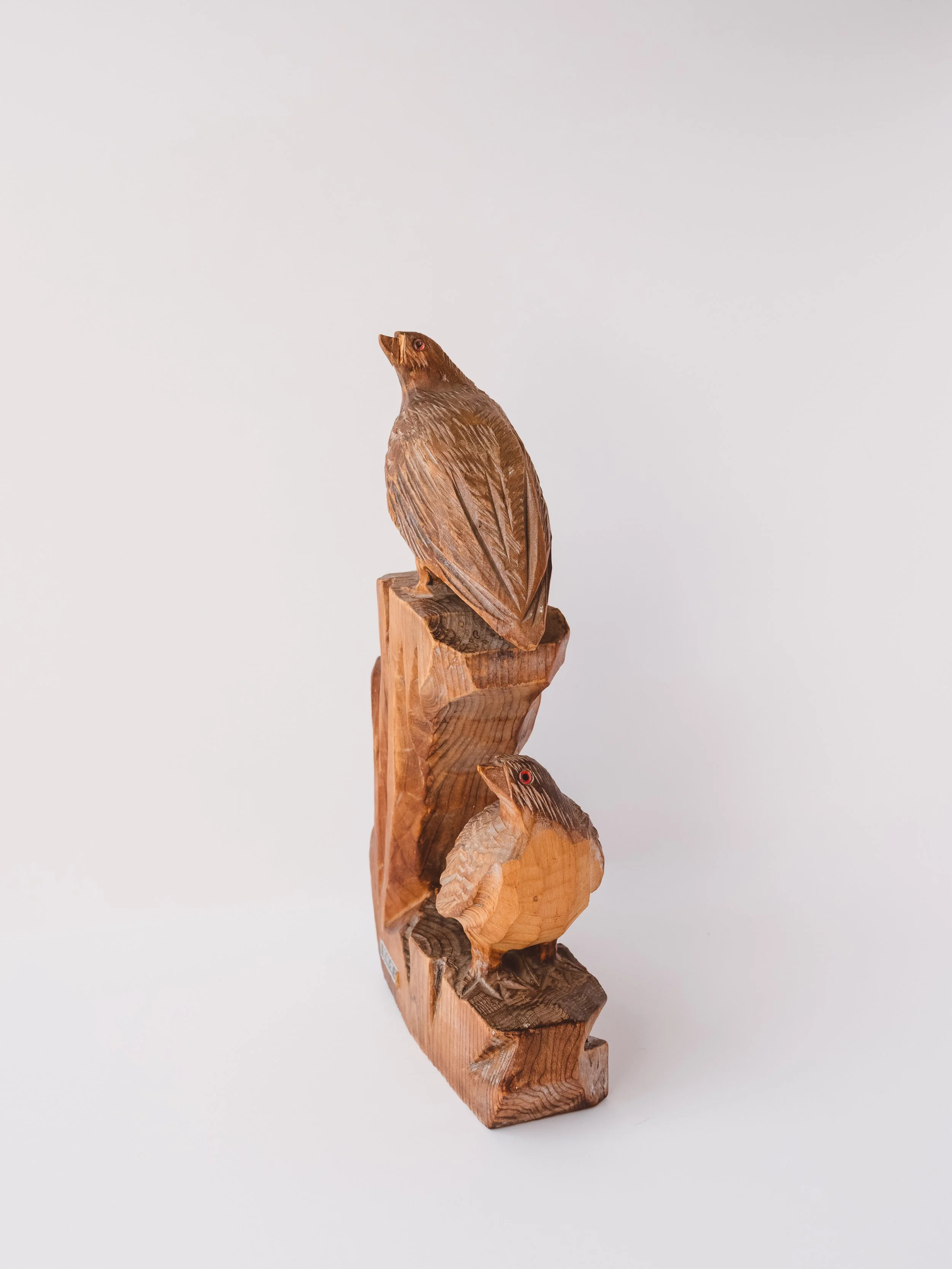
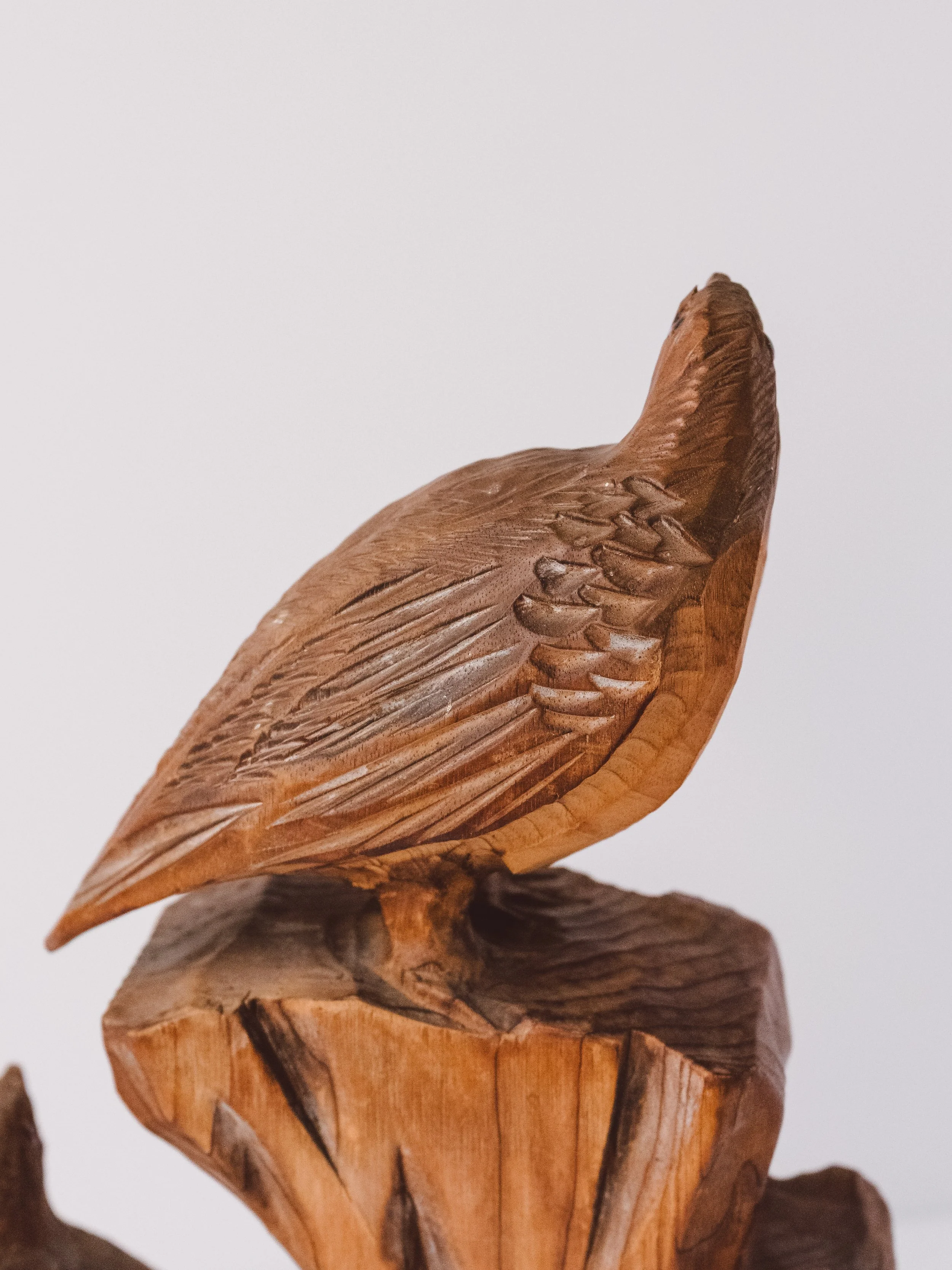
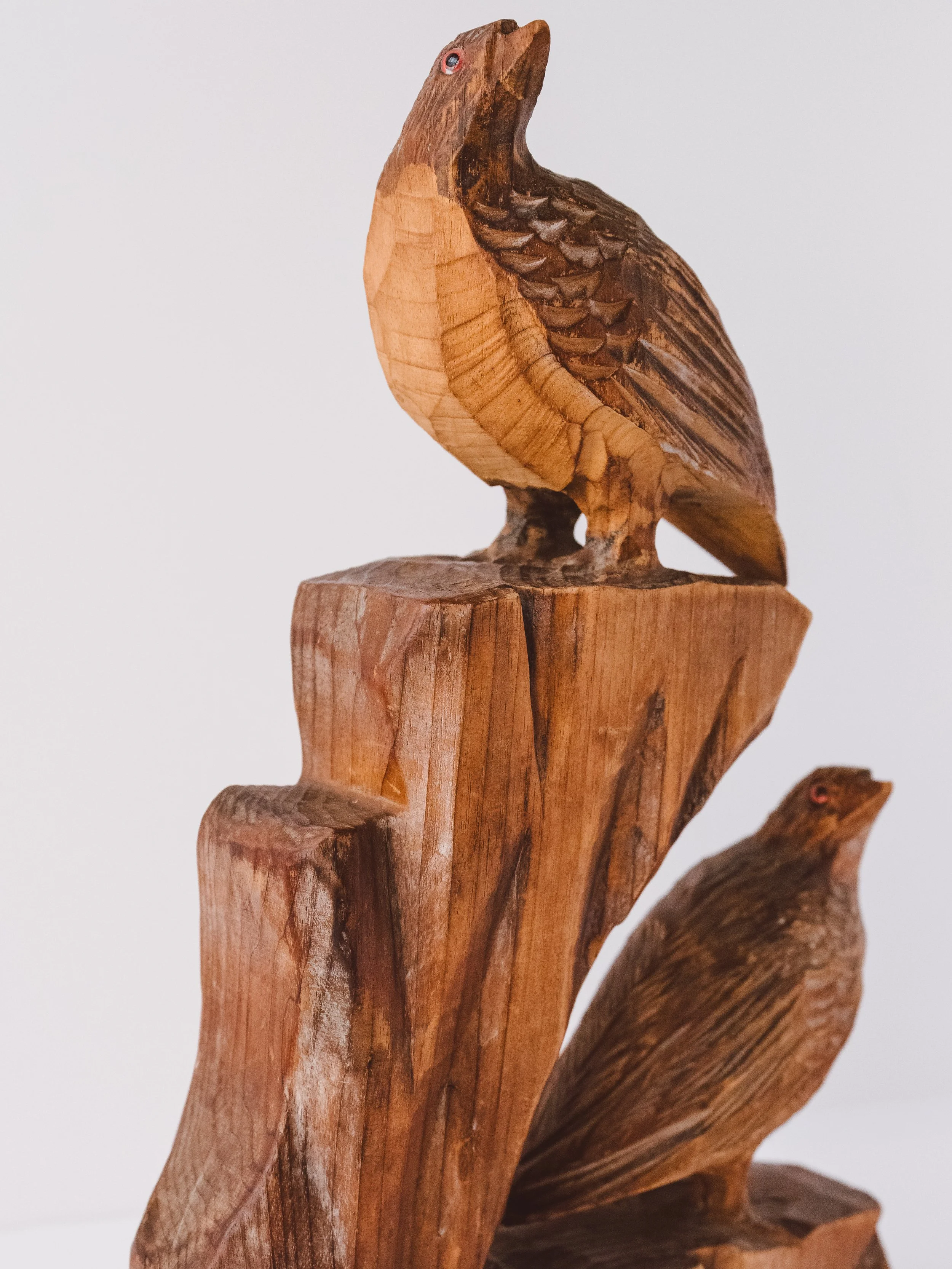
This is single-knife carving (一刀彫 / ittobori): the chisel and blade marks are left standing rather than sanded away. Rows of crescent cuts become the overlapping feathers of the breast and folded wings; long straight strokes become the flight feathers of the tail; deep, rough gouges become the rock. Nothing is painted — the whole effect is built from cut facets and the natural grain of the wood, pale gold in the worked hollows and deepening to a warm brown on the raised planes. Only the eyes are added: small inset beads ringed in red, which catch the light and give each bird a sharp, alert gaze.
【 The Function 】
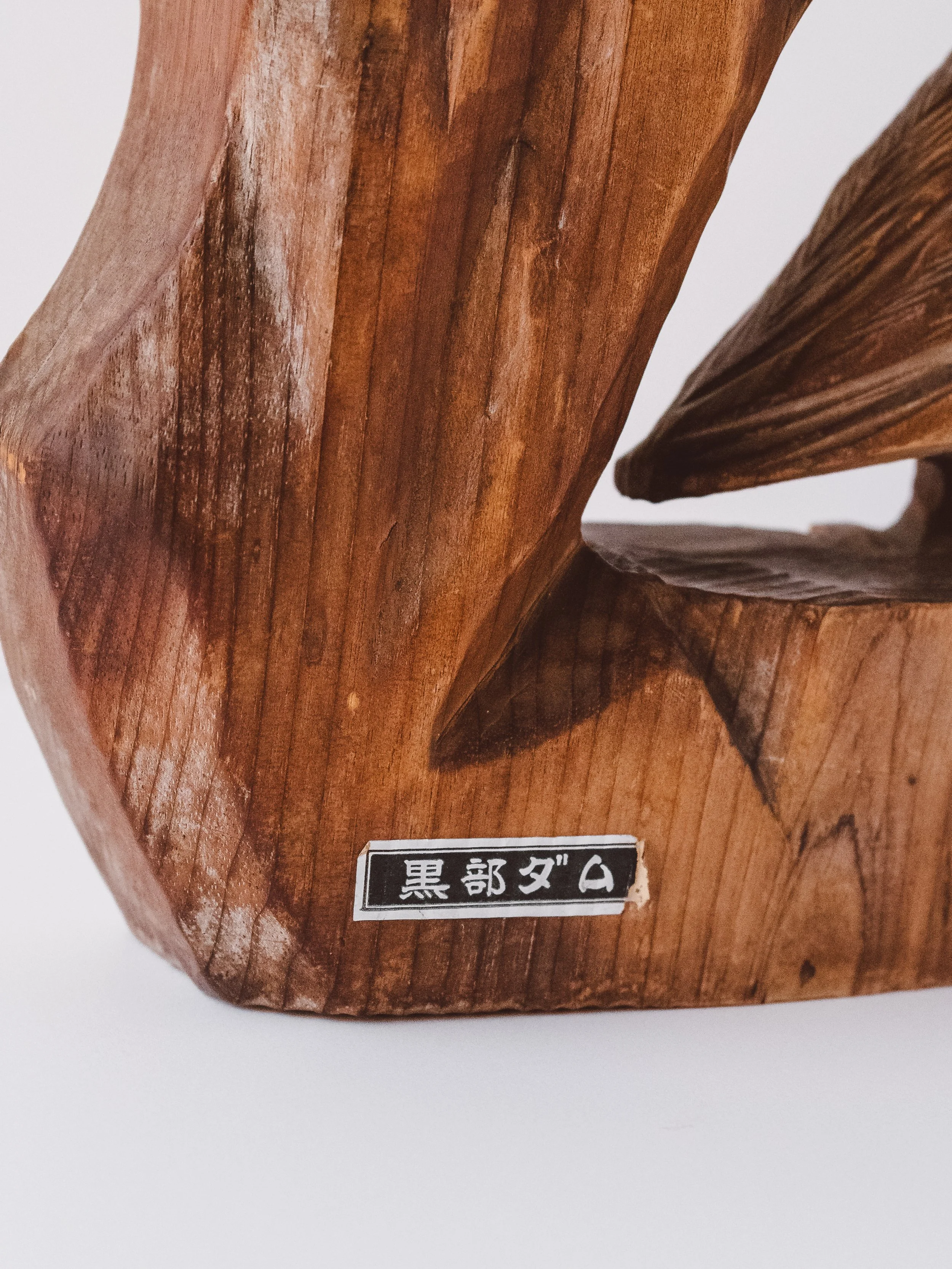
A mountain souvenir (土産 / miyage) of the Tateyama–Kurobe high country, made to stand in an alcove or on a shelf as a memento of the peaks. At thirty-eight centimetres tall it has real vertical presence — a floor-of-the-alcove or mantel object rather than a small trinket. A small black nameplate reading Kurobe Dam (黒部ダム) is set into the front of the base.
【 The Texture 】
All cut facets and open grain. The birds are worked in tight, rhythmic rows of blade-marks — crisp scalloped feathering over the breast, finer combed lines on the wings — while the rock is left in broad, deep, vertical gouges. Bare unfinished wood throughout, smooth only where the grain has been burnished by handling.
【 Presence 】
Upright and characterful. The tall, narrow composition and the two upturned heads carry the eye from the base to the summit; the raw rock gives it a rugged, hand-hewn weight. It reads as both a wildlife study and a piece of mid-century mountain folk craft.
Provenance Note: Sourced from a private collection in Japan.
Condition Note: A vintage piece in good original condition, sold as acquired. The upper bird has an old chip to the beak tip that had already been repaired before it came to us; it is stable. Unpainted natural wood throughout.
【 The Concept 】
Two ptarmigan on a crag, carved from a single upright block of wood. One bird stands at the summit, the other on a ledge below and to the side, both with heads tipped back to look up into the open air — the pose of birds at home on a high, windswept peak. The rock they stand on is left deliberately raw and angular, cut in bold vertical facets that read as weathered stone or a storm-bleached tree, so that the soft, rounded birds and the harsh mountain read as one continuous piece of timber.
This is single-knife carving (一刀彫 / ittobori): the chisel and blade marks are left standing rather than sanded away. Rows of crescent cuts become the overlapping feathers of the breast and folded wings; long straight strokes become the flight feathers of the tail; deep, rough gouges become the rock. Nothing is painted — the whole effect is built from cut facets and the natural grain of the wood, pale gold in the worked hollows and deepening to a warm brown on the raised planes. Only the eyes are added: small inset beads ringed in red, which catch the light and give each bird a sharp, alert gaze.
【 The Function 】
A mountain souvenir (土産 / miyage) of the Tateyama–Kurobe high country, made to stand in an alcove or on a shelf as a memento of the peaks. At thirty-eight centimetres tall it has real vertical presence — a floor-of-the-alcove or mantel object rather than a small trinket. A small black nameplate reading Kurobe Dam (黒部ダム) is set into the front of the base.
【 The Texture 】
All cut facets and open grain. The birds are worked in tight, rhythmic rows of blade-marks — crisp scalloped feathering over the breast, finer combed lines on the wings — while the rock is left in broad, deep, vertical gouges. Bare unfinished wood throughout, smooth only where the grain has been burnished by handling.
【 Presence 】
Upright and characterful. The tall, narrow composition and the two upturned heads carry the eye from the base to the summit; the raw rock gives it a rugged, hand-hewn weight. It reads as both a wildlife study and a piece of mid-century mountain folk craft.
Provenance Note: Sourced from a private collection in Japan.
Condition Note: A vintage piece in good original condition, sold as acquired. The upper bird has an old chip to the beak tip that had already been repaired before it came to us; it is stable. Unpainted natural wood throughout.