

Ephemeral Gravity.
Part II: The Architecture of the Ephemeral
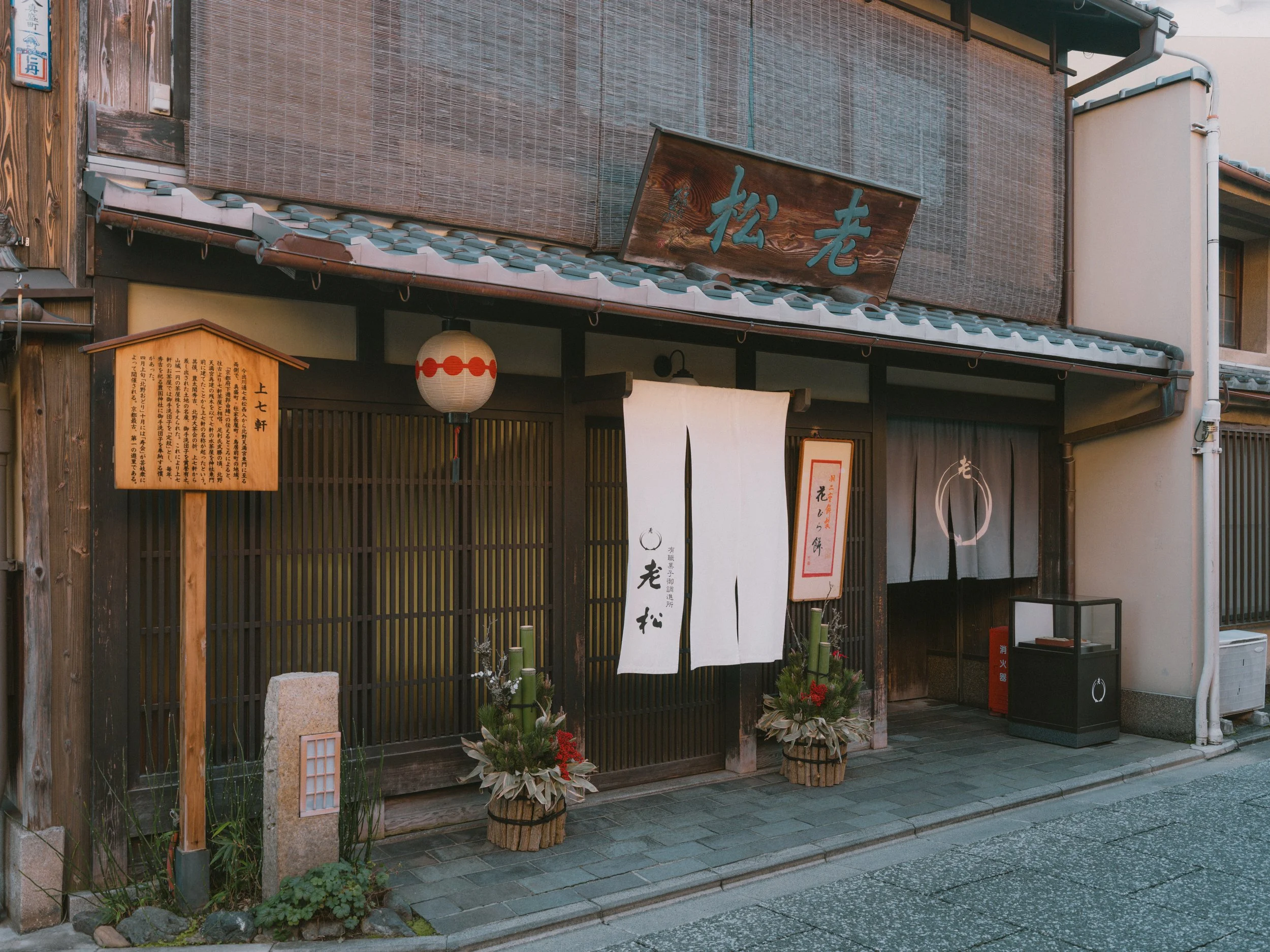
The Threshold of Tradition.
Standing before the noren (curtain), one realizes this is not merely a shop. It is a fortress of silence amidst the modern city. The weathered wood and the ink-brushed lantern signal that time flows differently inside these walls. We cross this threshold not to consume, but to observe.
The Atmosphere of Discipline
In Part I, we observed the discipline of the "Anonymous Hands." In Part II, we shift our gaze to the silent partners of this creation: the tools, the atmosphere, and the fleeting nature of the result.
Entering a Kyoto wagashi workshop is like stepping inside a living organism. The air is thick with the scent of steamed azuki beans and damp wood. Here, time does not flow in seconds, but in the slow transfer of heat.
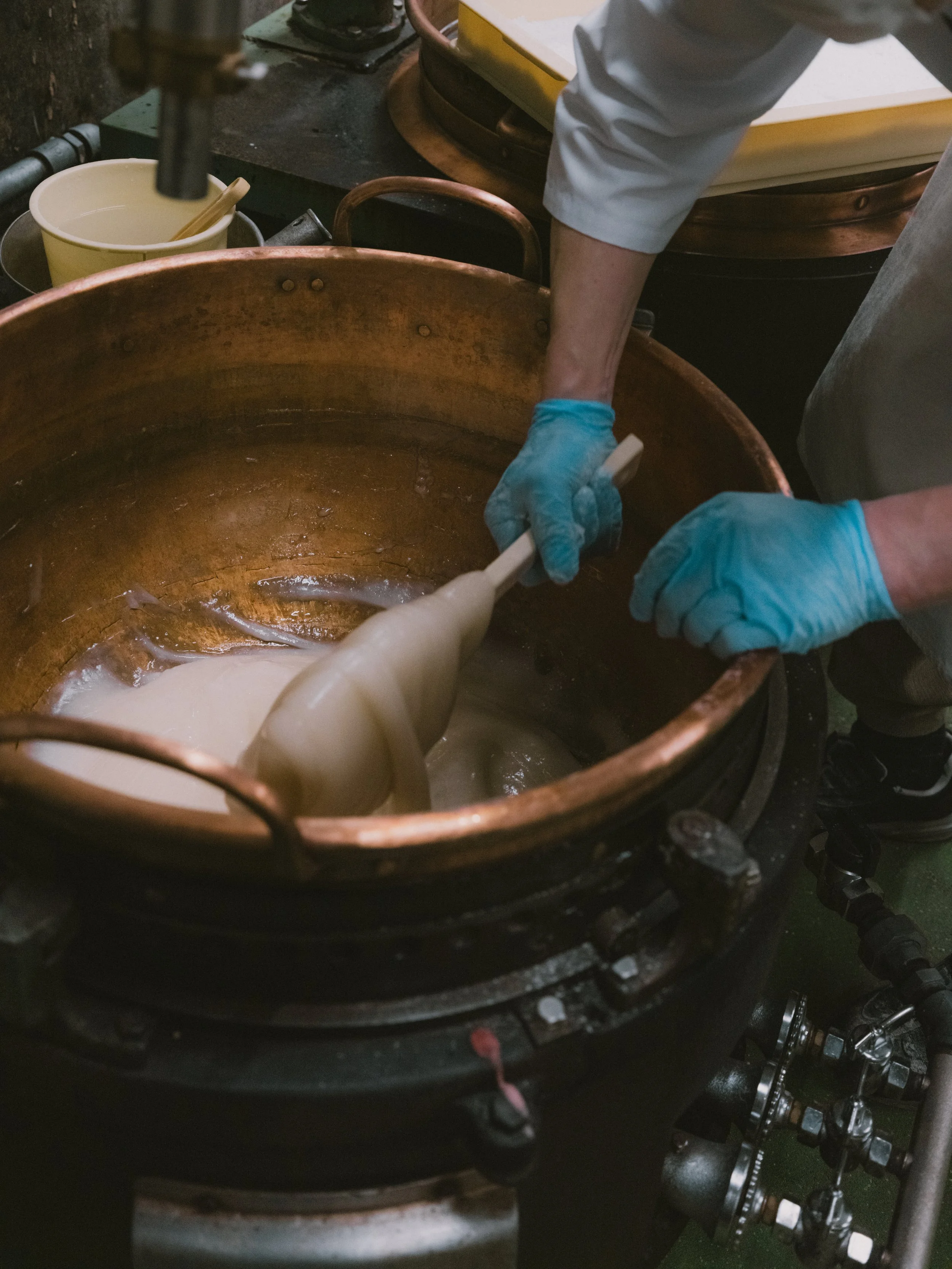
The Copper Patina (Material Integrity)
Look at the copper cauldron (sawari) pictured above.It is battered, darkened, and etched with the scars of a thousand mornings. It is not new, yet it is perfect. In the world of Mingei, we often speak of iron and clay. But here, copper is the protagonist.
Inside this heavy metal skin, a "White Ocean" of bean paste and rice flour is born. It is physical, viscous, and demanding. The artisan relies on copper's terrifyingly high thermal conductivity to transform the liquid sugar into a solid form in an instant. Just as we trust our Nambu Tekki ironware to hold heat, they trust copper to transmit it. It is a dialogue between metal and ingredient, mediated by fire.
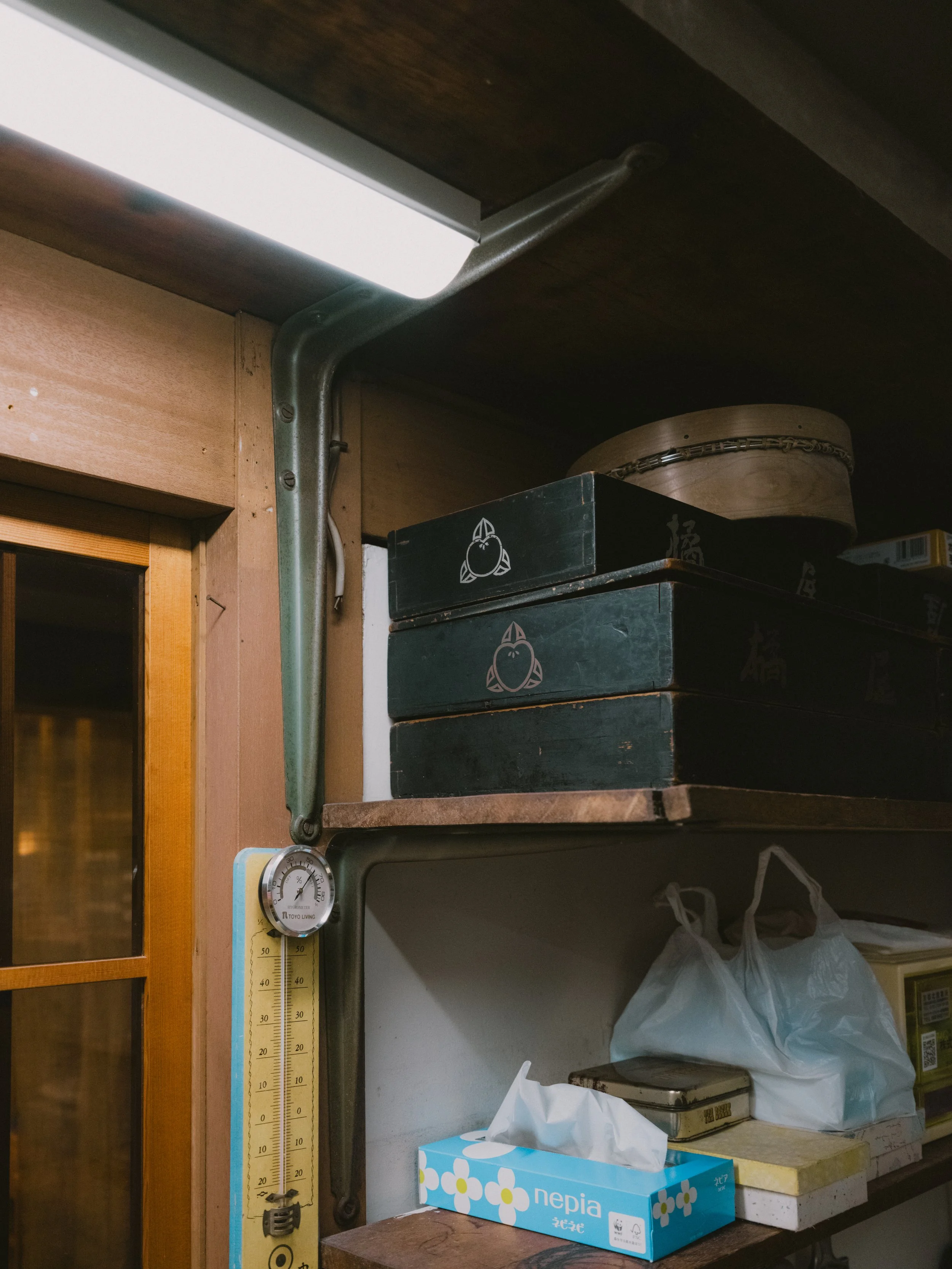
The Analog Pulse
On the workshop wall hangs an old thermometer, encased in wood. It is analog, stained, and purely functional. Beside it sit stacks of lacquered wooden boxes (banju), bearing the family crest, waiting to carry the day’s work.
Nothing here is digital. There are no touch screens or timers. The workshop relies on physical feedback—the steam rising, the color of the paste, the texture against the spatula. It reminds us of the vintage artifacts we rescue: objects born from an era when things were measured by human senses, not algorithms.
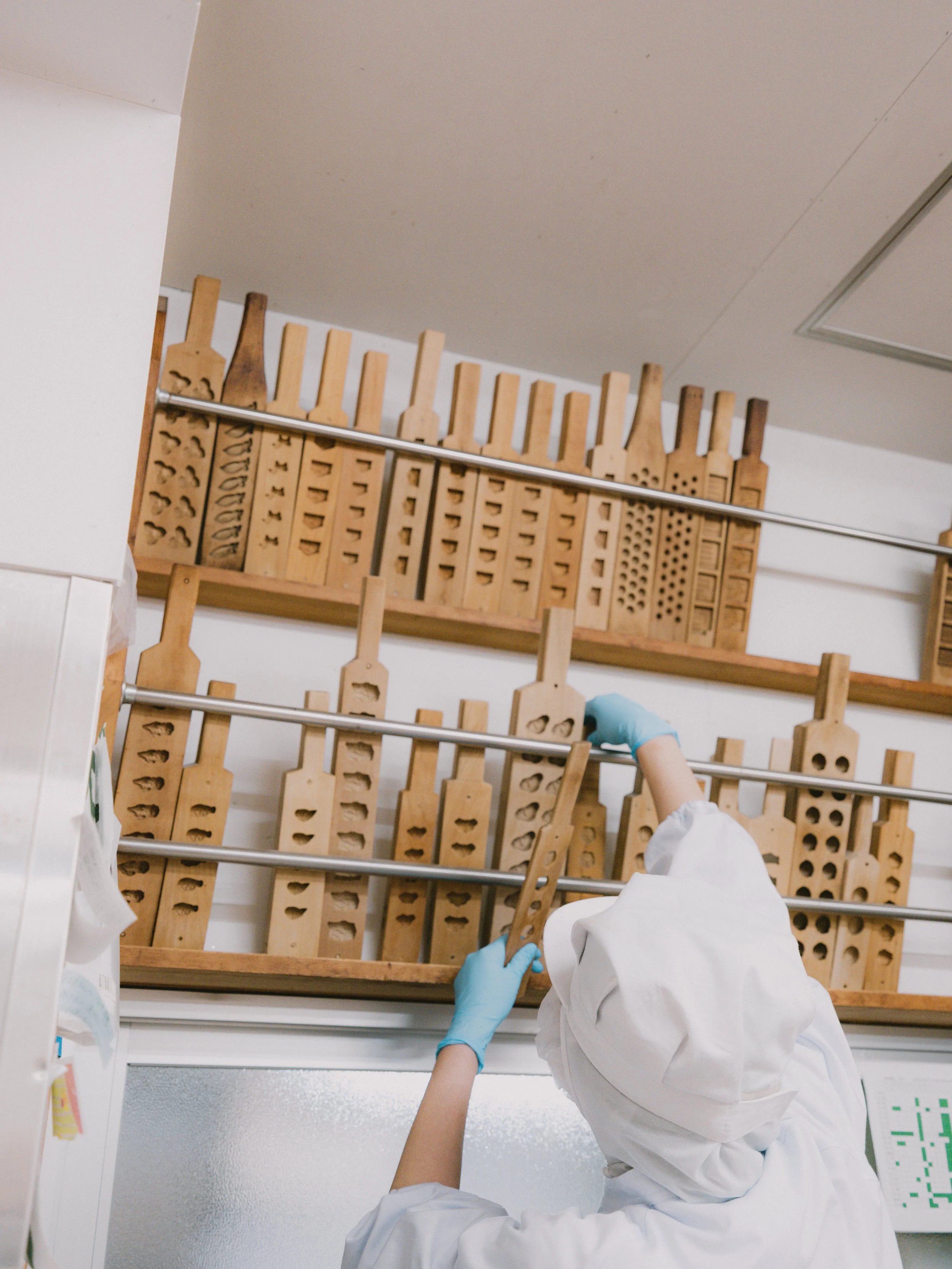
The Library of Forms
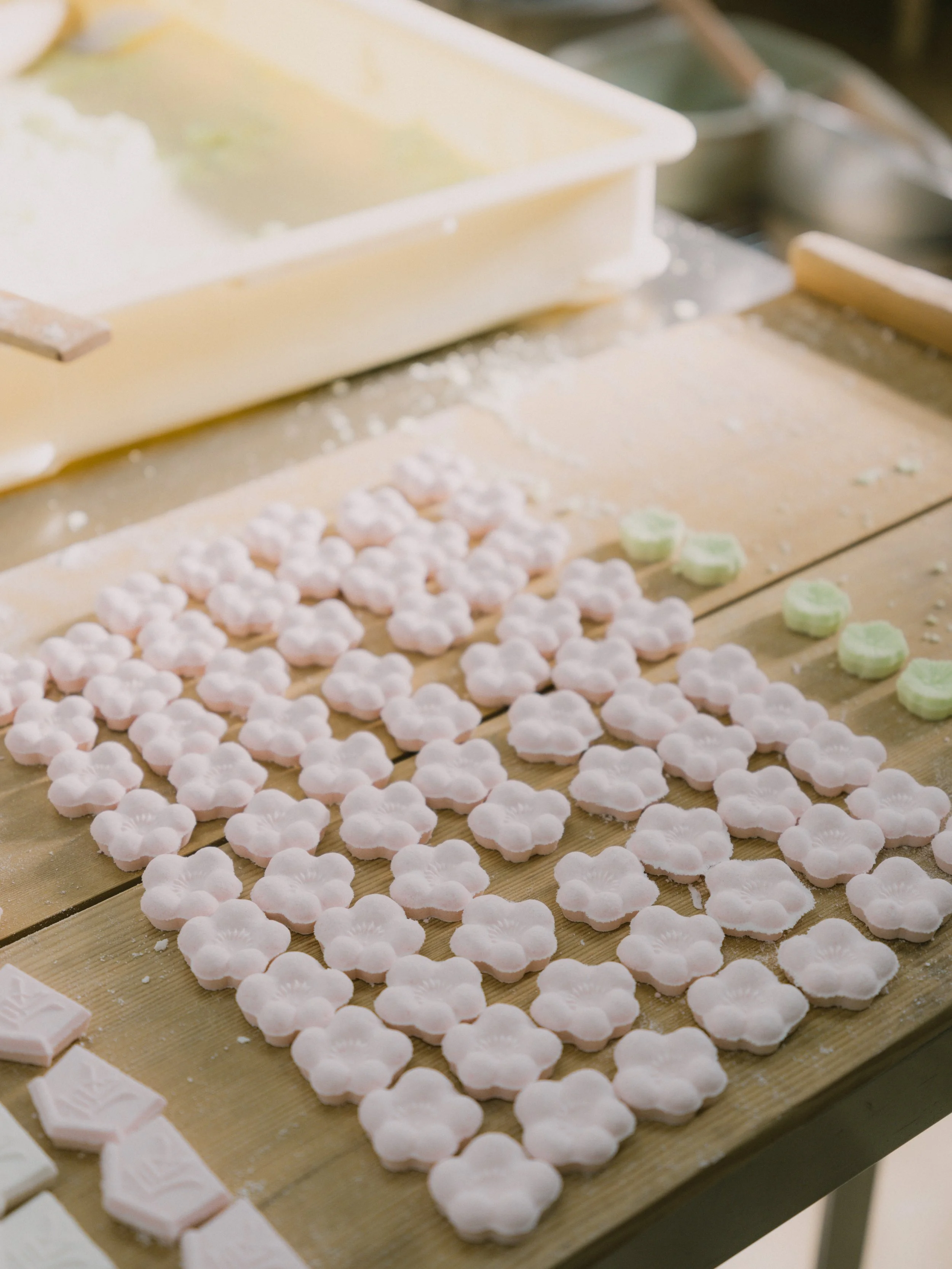
Look at the shelves lining the workshop walls. This is a library, but not of books. It is a library of Forms.
These wooden molds (kashigata) are the negatives of the sweets. Carved by anonymous sculptors decades or even centuries ago, they hold the memory of seasons—a cherry blossom from 1920, a maple leaf from 1950.
The sweet itself is ephemeral, vanishing in a moment. But its geometry is preserved eternally in this wood. This resonates deeply with our own mission at MINGEI 1926: to protect the vessel (the mold) that holds the spirit.
Colors of "Fading Memory"
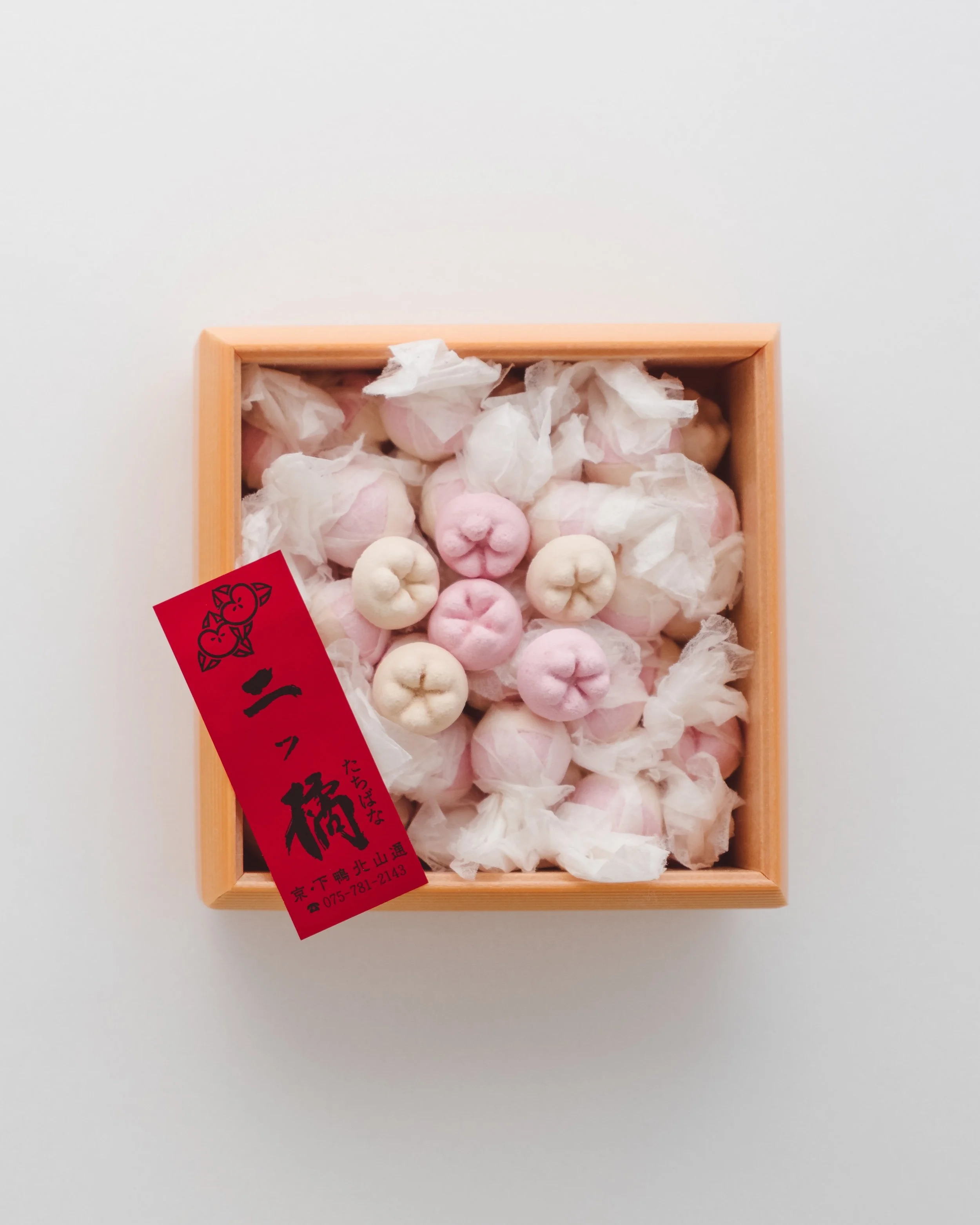
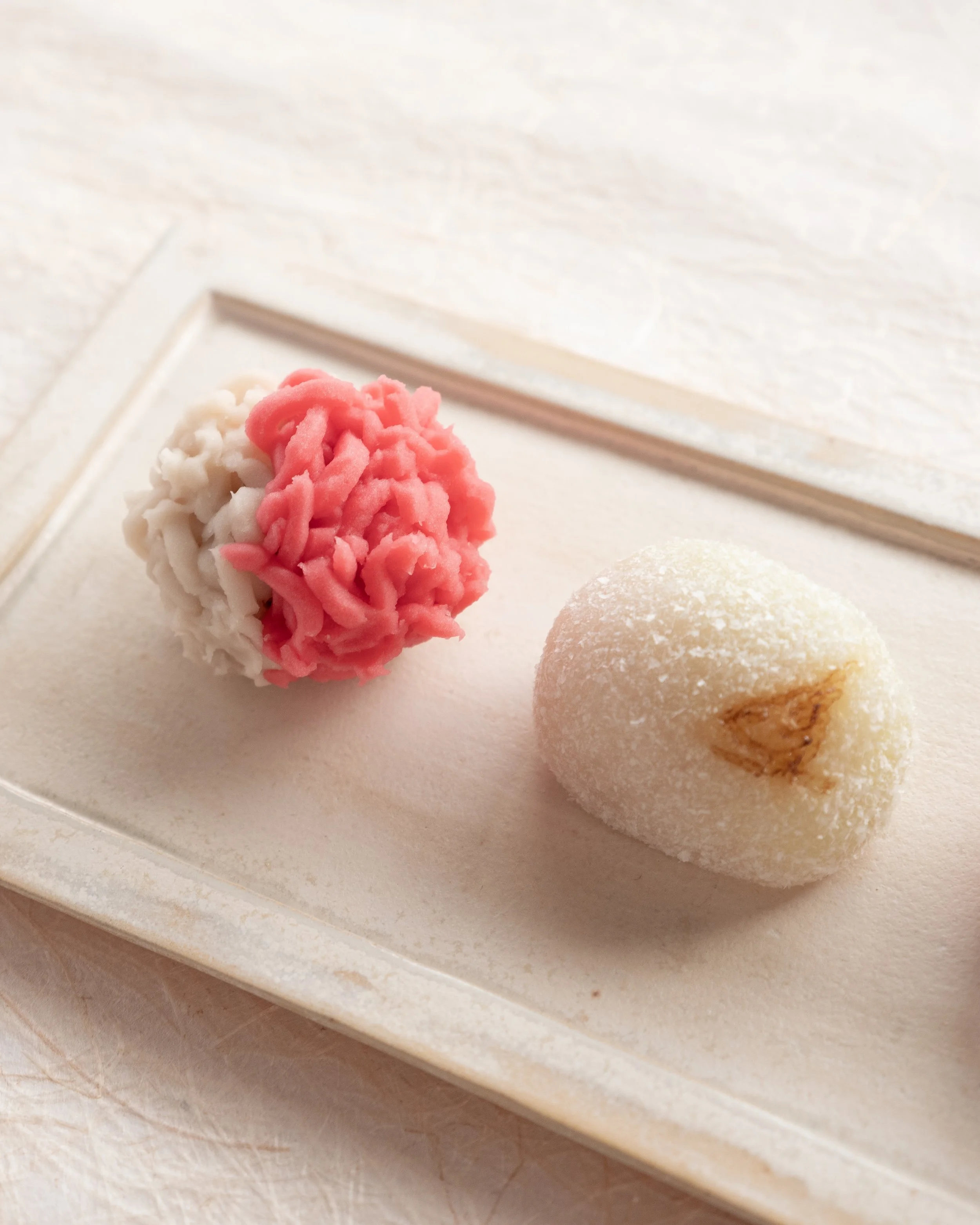
The colors of these pieces are not chosen from a standard palette. They are not pink; they are the memory of a blossom. They are not green; they are the suggestion of moss after rain.
This ambiguity is intentional. In Western confectionary, sugar often screams for attention with bright saturation. In Kyoto, sugar whispers. The visual language here—much like the rusted patina of an old iron kettle—respects the "Shadows" that Jun'ichirō Tanizaki praised. It asks the viewer to lean in, to engage, and to complete the color with their own imagination.
The Archive of Five Minutes
Why does a gallery of "permanent" antiques document such "temporary" sweets?
Because "Permanence" needs "Ephemerality" to define its existence.
We acquire a 1960s Iron Bull or a 1970s Lunar Talisman to anchor our rooms. They are the immovable guardians. But life itself is fluid and fleeing, just like this Wagashi.
When you place this fleeting sugar sculpture onto a permanent ceramic tray, a perfect circle is formed. The heavy protects the light. The eternal holds the momentary. This specific sweet will disappear the moment it is consumed. But the discipline that created it—and the aesthetic eye that chose it—remains recorded in our archive.
Silence is not just the absence of noise.
It is the taste of time.
