【 The Concept 】
A tiny square box in warm red clay. On the lid, framed by a border of interlocking spirals, an ox stands in a meadow beneath leafy branches, its head turned toward you. Soft green fills the hollows of the relief, so the ox, the leaves and the grasses seem to rise out of a pool of shade.
In size and form it follows the kōgō, the small lidded container that holds incense in the Japanese tea ceremony.
【 The Ox of the God of Learning 】
In Japan the ox is the sacred messenger of Tenjin, the deified scholar and statesman Sugawara no Michizane (845–903). Exiled far from the capital, Michizane died in 903. As an ox-cart carried his body toward burial, the ox suddenly lay down and would not move another step. This was taken as a sign that Michizane wished to rest exactly where the ox had stopped, and he was buried there.
Ever since, statues of reclining oxen have stood at shrines dedicated to Tenjin, the god of learning. Visitors stroke these oxen and pray for good fortune.
【 The Ox as the True Self 】
In Zen Buddhism the ox has a deeper meaning. The Ten Ox-Herding Pictures, a set of ten images with verses from Song-dynasty China, tell the story of a herdsman who searches for a lost ox, finds its tracks, catches it, tames it and rides it home. The ox is the herdsman’s own true self, and the ten pictures trace the path of practice toward awakening. They are still studied in Zen today.
In China, the ox also belongs to the legend of the sage Laozi. When he saw the Zhou dynasty in decline, he set out for the west. At a mountain pass the gatekeeper begged him to leave his teaching behind, and Laozi wrote a book of about five thousand characters, the Tao Te Ching, before departing. In later art he is often shown making that journey on the back of an ox.
【 The Border of Spirals 】
The squared spirals around the lid are raimon, the “thunder pattern.” It is one of the oldest ornaments in East Asia, used on bronze vessels in China more than three thousand years ago, and said to represent flashes of lightning. Here it frames the quiet pastoral scene like a carved picture frame.
【 What Owning This Piece Brings 】
・The ox, a symbol of patience, steady effort and success in learning
・A wish for good luck in study, in the tradition of the god of learning
・A true small kōgō form for incense, or a tiny box for treasured things
・A thoughtful token for the Year of the Ox, or for anyone born in it
A thoughtful gift for students, teachers, tea practitioners or collectors of small Japanese ceramics.
【 How to Use It 】
Hold a few pieces of kneaded incense or incense pellets, or keep rings, earrings or other small keepsakes. Set it on a desk or study shelf as a quiet charm for learning.
【 Care 】
Wipe with a soft, dry cloth. Avoid soaking, which can affect the green coloring in the relief. Handle with care and avoid knocking the edges.
【 Reading the Object 】
・Form: a small square box with softened corners and a fitted lid
・Lid: a recessed panel with an ox in relief, leafy branches above and grasses below
・Color: warm red clay, with green filling the hollows of the relief and the border
・Border: a band of squared spirals (raimon) around the panel
・Base: flat, with a small impressed seal mark
【 Presence 】
Small enough to sit in the palm, with a whole quiet meadow on its lid.
Archive Note
The year 903 refers to the death of Sugawara no Michizane and the legend of the ox that would not move. It is not the production date of this piece.
Provenance Note
Sourced in Japan. Maker and production date unknown.


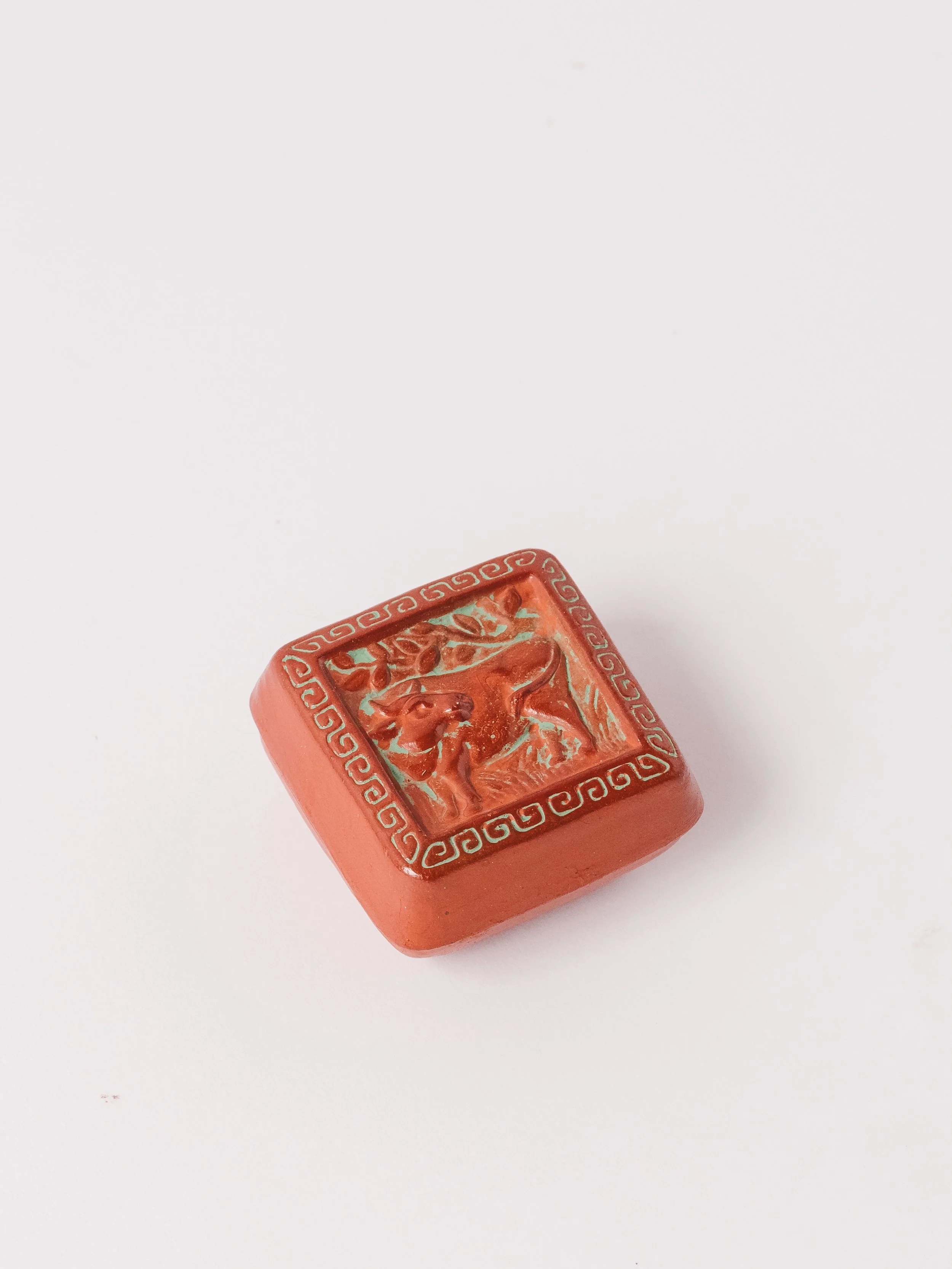 Image 1 of 5
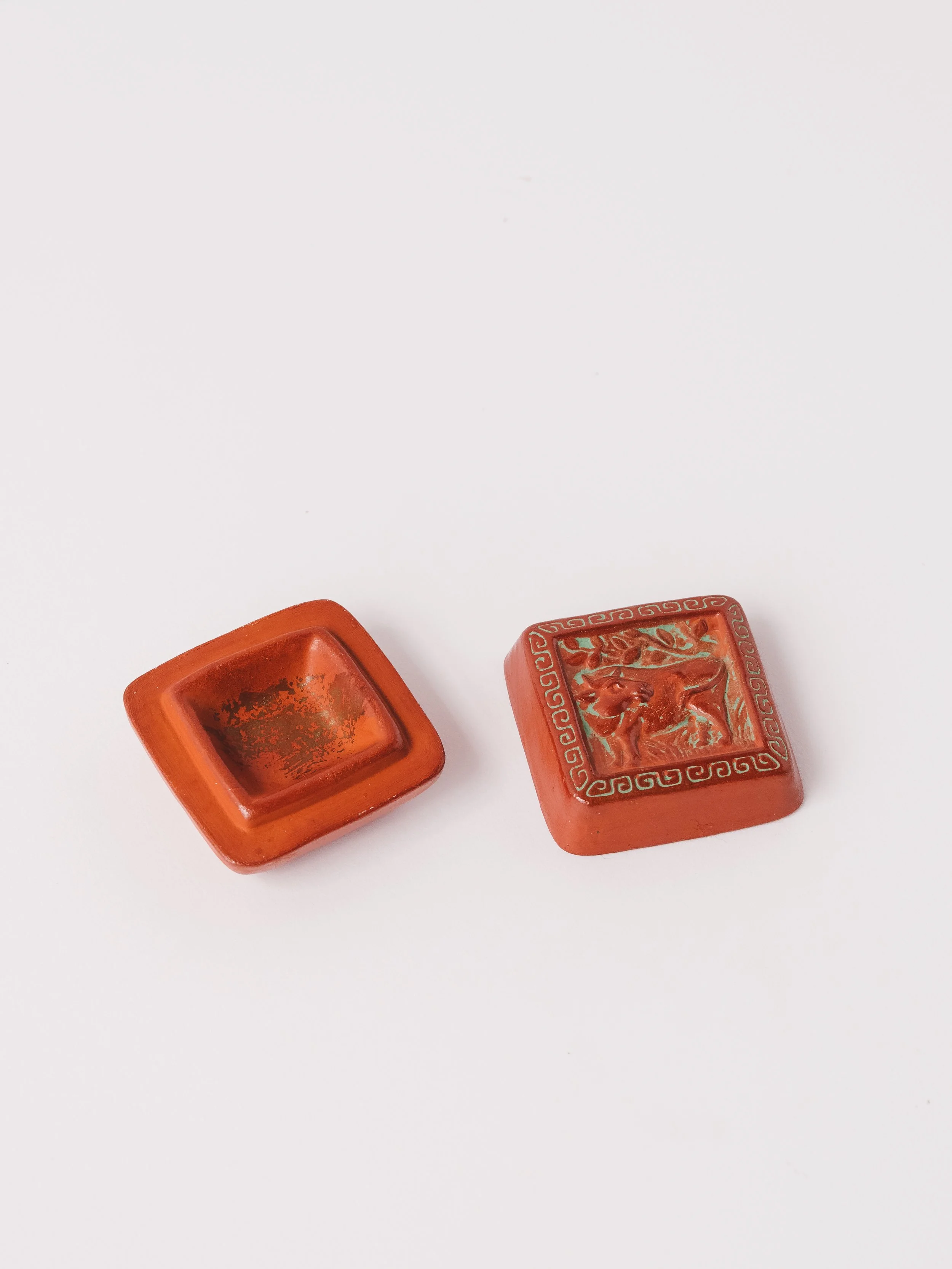 Image 2 of 5
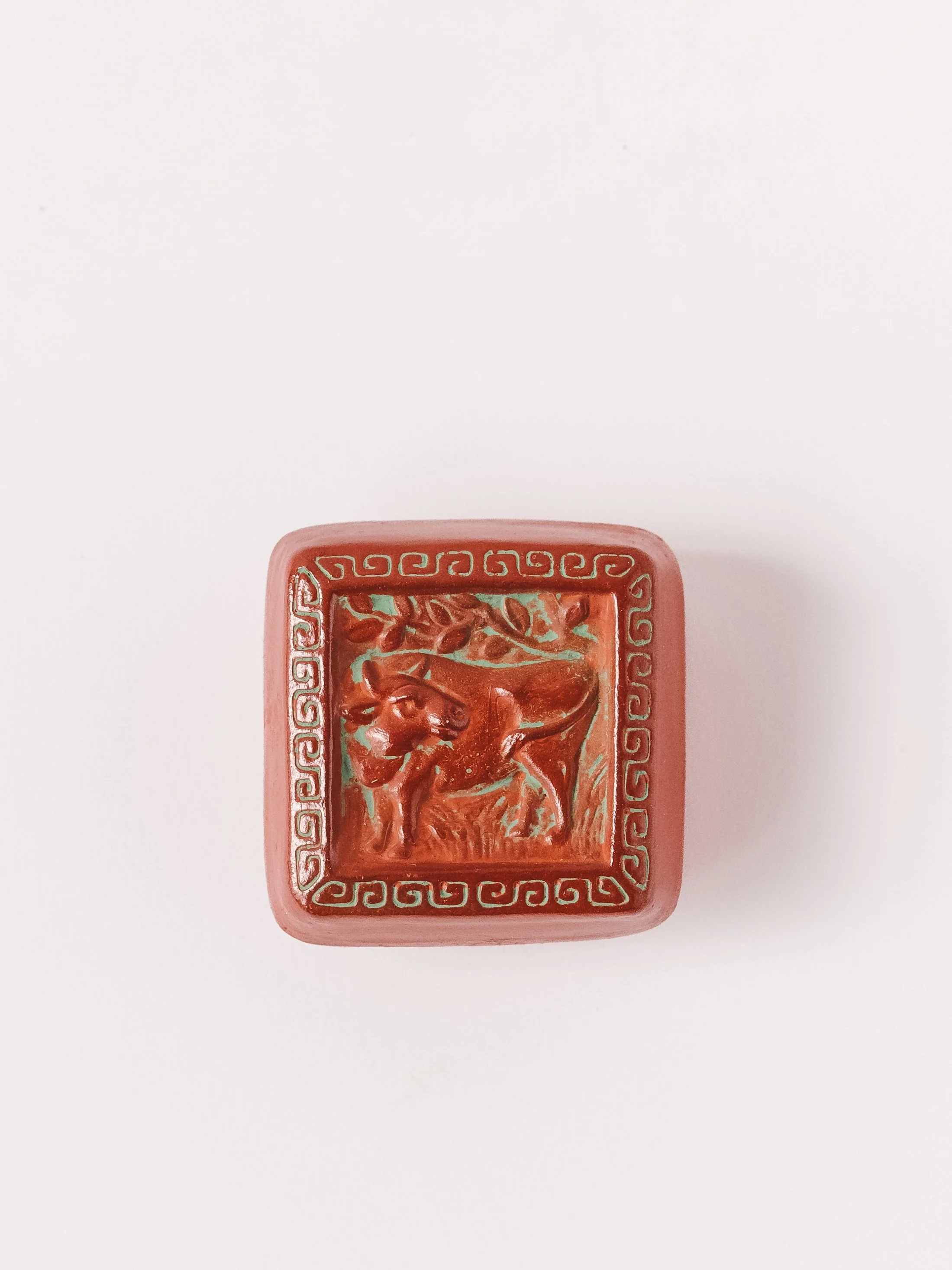 Image 3 of 5
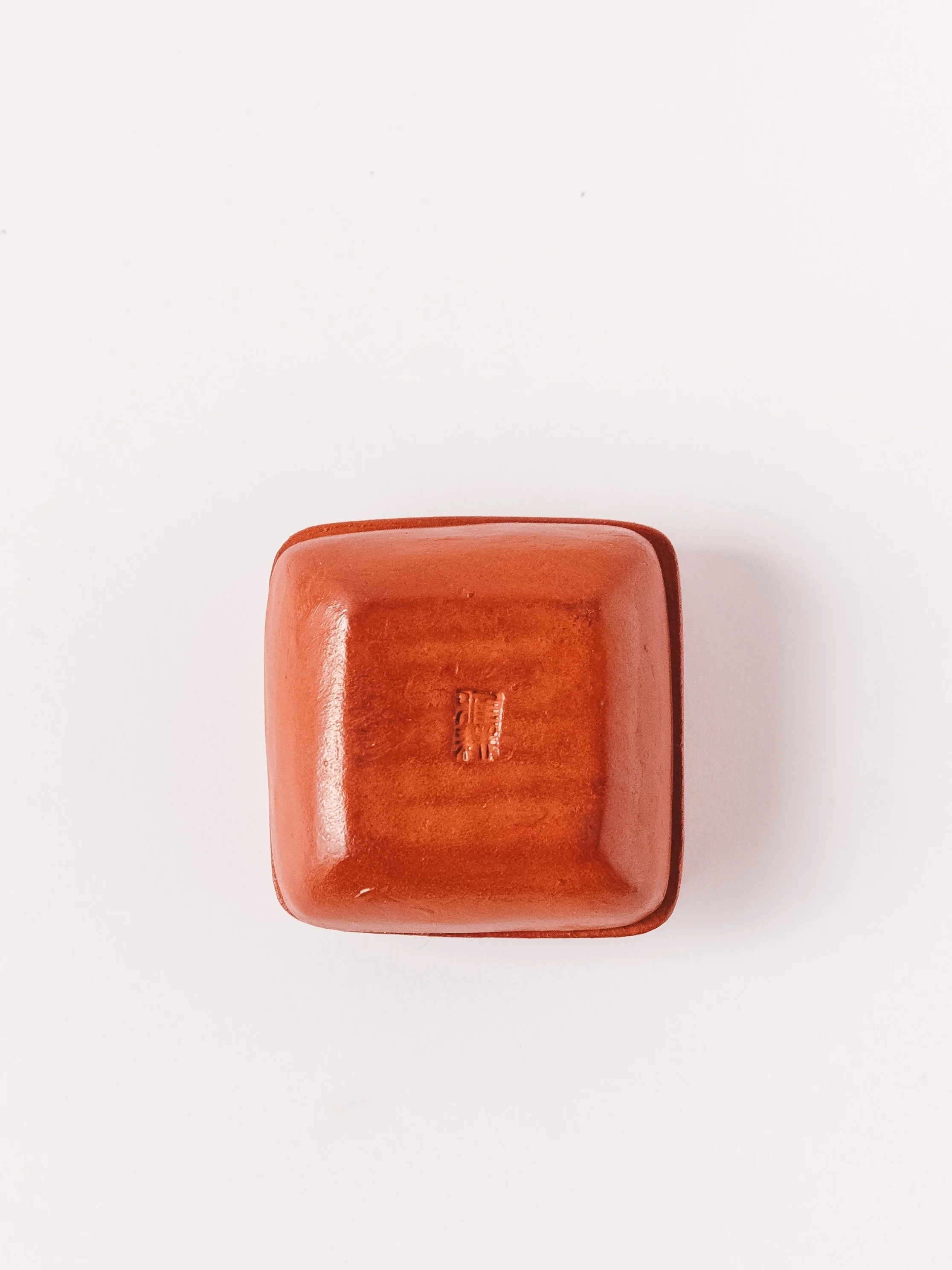 Image 4 of 5
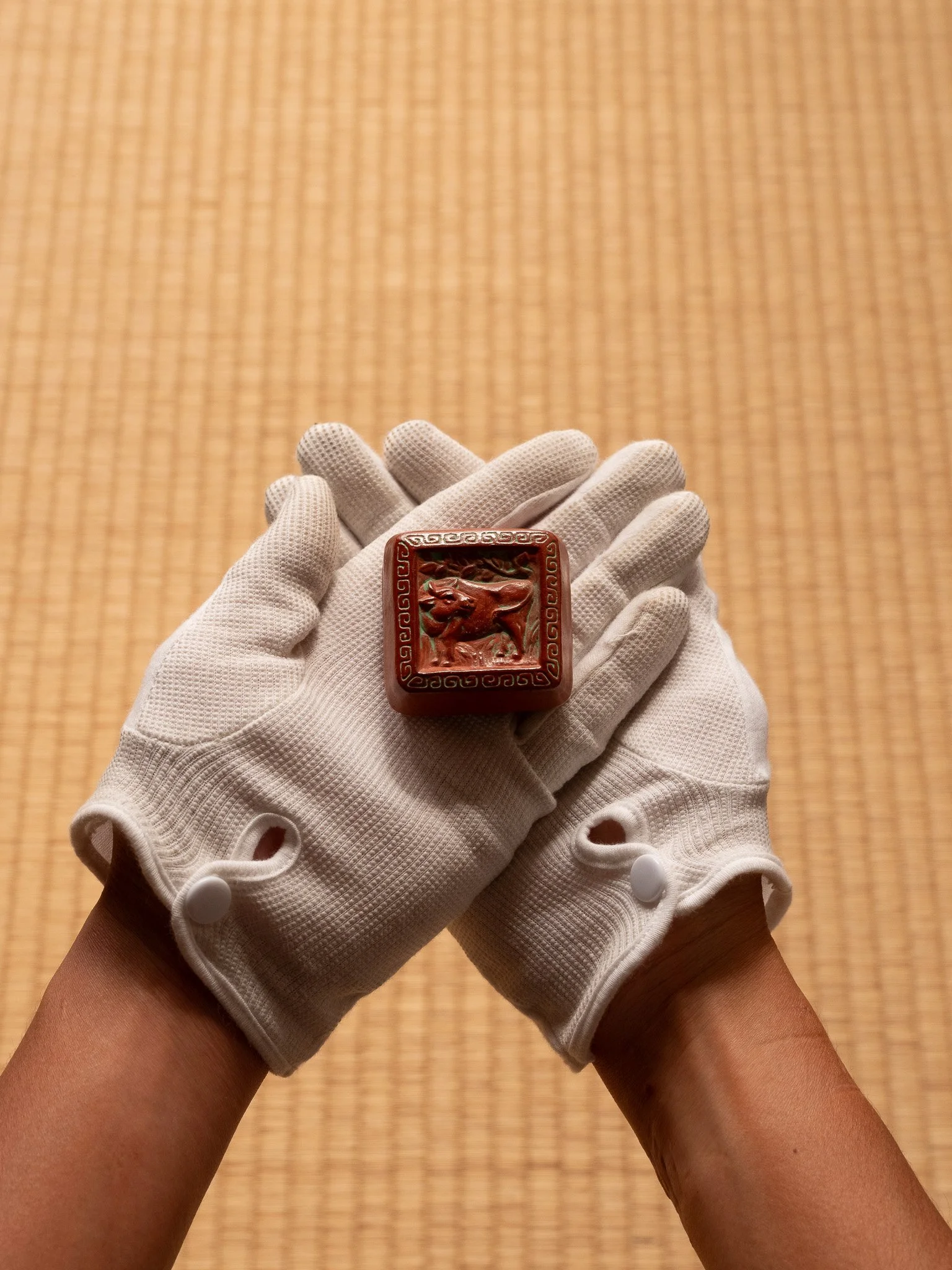 Image 5 of 5