【 The Concept 】
A slender figure of Kannon, the bodhisattva of compassion, stands on a double lotus with eyes lowered. A hood falls softly over her head and shoulders, a beaded necklace rests at her throat, and her robes ripple down to bare feet. In the crook of her right arm she holds a ruyi, a curving scepter with a cloud-shaped head; her left hand is raised gently before her chest.
The figure is made of wood with a warm reddish-brown finish, and comes in a red box printed with calligraphy.
【 The One Who Hears the Cries of the World 】
Kannon began in India as Avalokiteśvara, “the lord who looks down.” In China, early translators rendered the name as Guanshiyin, “the one who perceives the sounds of the world,” and the seventh-century pilgrim-scholar Xuanzang translated it as Guanzizai, “the one who sees freely.” The Lotus Sutra teaches that Kannon appears in thirty-three different forms, taking whatever shape a suffering person needs.
One of the best-loved of those forms is the White-Robed Kannon, who wears a white robe drawn over her head. White here stands for a pure, awakened mind. This image spread from China to Korea and Japan, where Zen monks embraced it as an expression of the clear, still mind of meditation. The hooded robe on this figure follows that tradition.
【 The Ruyi: “As You Wish” 】
Ruyi means “as you wish.” Its humble origin is said to be a back scratcher: with it, you could reach the itch you could not reach by hand, exactly as you wished. In time it became a ceremonial object held by monks when giving sermons and leading rituals, and in Chinese legend a ruyi raised in the air could bring forth whatever one desired. In Kannon’s hand, it promises that prayers will be answered.
【 The Kannon Who Would Not Leave 】
A famous legend tells of a Japanese monk named Egaku who, in 858, tried to bring a sacred image of Kannon home from China. Near a small island off the Chinese coast, his ship stopped and would not move. Only when the image was carried ashore did the ship sail on, so Egaku built a temple there and enshrined it. The image became known as the “Kannon Who Would Not Leave,” and that island grew into one of the most important places of Kannon worship in all of China.
【 Kannon in Disguise 】
After Christianity was banned in Japan in the 17th century, hidden Christians kept their faith alive in secret. Many prayed before Chinese white porcelain figures of Kannon, which looked enough like the Virgin Mary to serve as her image while appearing to officials as ordinary Buddhist statues. These figures are now called Maria Kannon. The gentle, hooded, robed Kannon, like the one on this figure, was the form that made this quiet act of faith possible.
【 What Owning This Piece Brings 】
・Kannon, the bodhisattva of compassion, as a calm presence in the home
・The ruyi, a symbol of wishes fulfilled, in her hand
・A slender figure that fits a small shelf, desk or home altar
・A red calligraphy box, ready for giving
A thoughtful gift for anyone drawn to Buddhism or meditation, or for someone going through a difficult time.
【 Where to Place It 】
On a shelf or small altar at eye level or above, in a quiet corner of the home. Beside a meditation cushion or reading chair. In a place where you pause each day.
【 Care 】
Dust with a soft, dry brush. Avoid water, direct sunlight and strong heat, which can affect the wood and finish. Lift it by the base and body, not by the head or the ruyi.
【 Reading the Object 】
・Figure: a standing Kannon with lowered eyes and a small mark on the forehead
・Head: a hood draped over the head and shoulders, with finely lined hair at the brow
・Hands: a cloud-headed ruyi held in the right arm, the left hand raised before the chest
・Robes: a beaded necklace at the throat and flowing, layered robes; bare feet
・Base: a double lotus pedestal on a round plinth
・Finish: reddish-brown, darker in the folds
・Box: red box printed with calligraphy
【 Presence 】
Quiet and upright, with a gaze that rests gently on whoever stands before her.
Archive Note
The year 858 refers to the legend of the Kannon Who Would Not Leave. It is not the production date of this piece.
Provenance Note
Sourced in Japan, with its box. Maker and production date unknown.


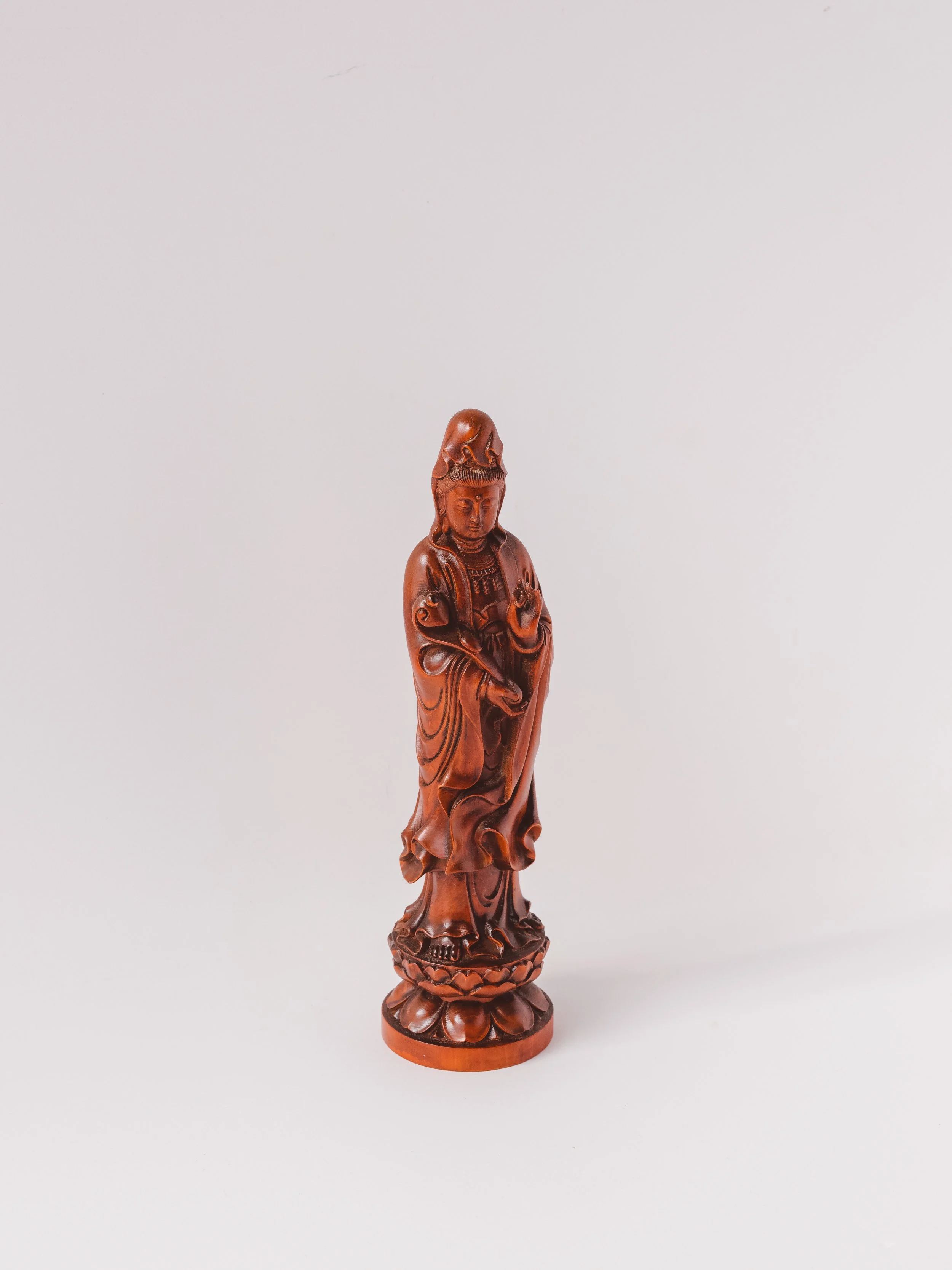 Image 1 of 13
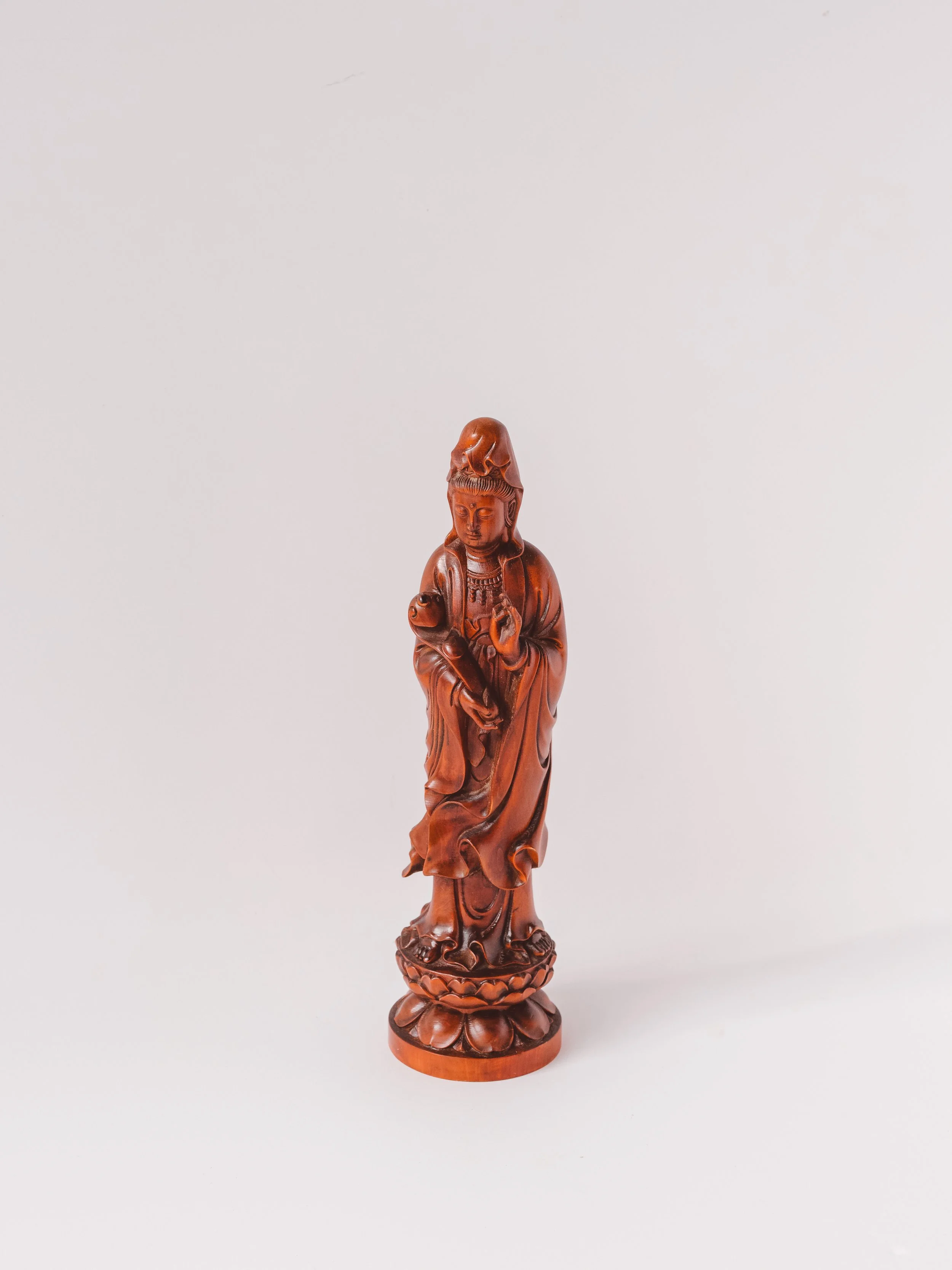 Image 2 of 13
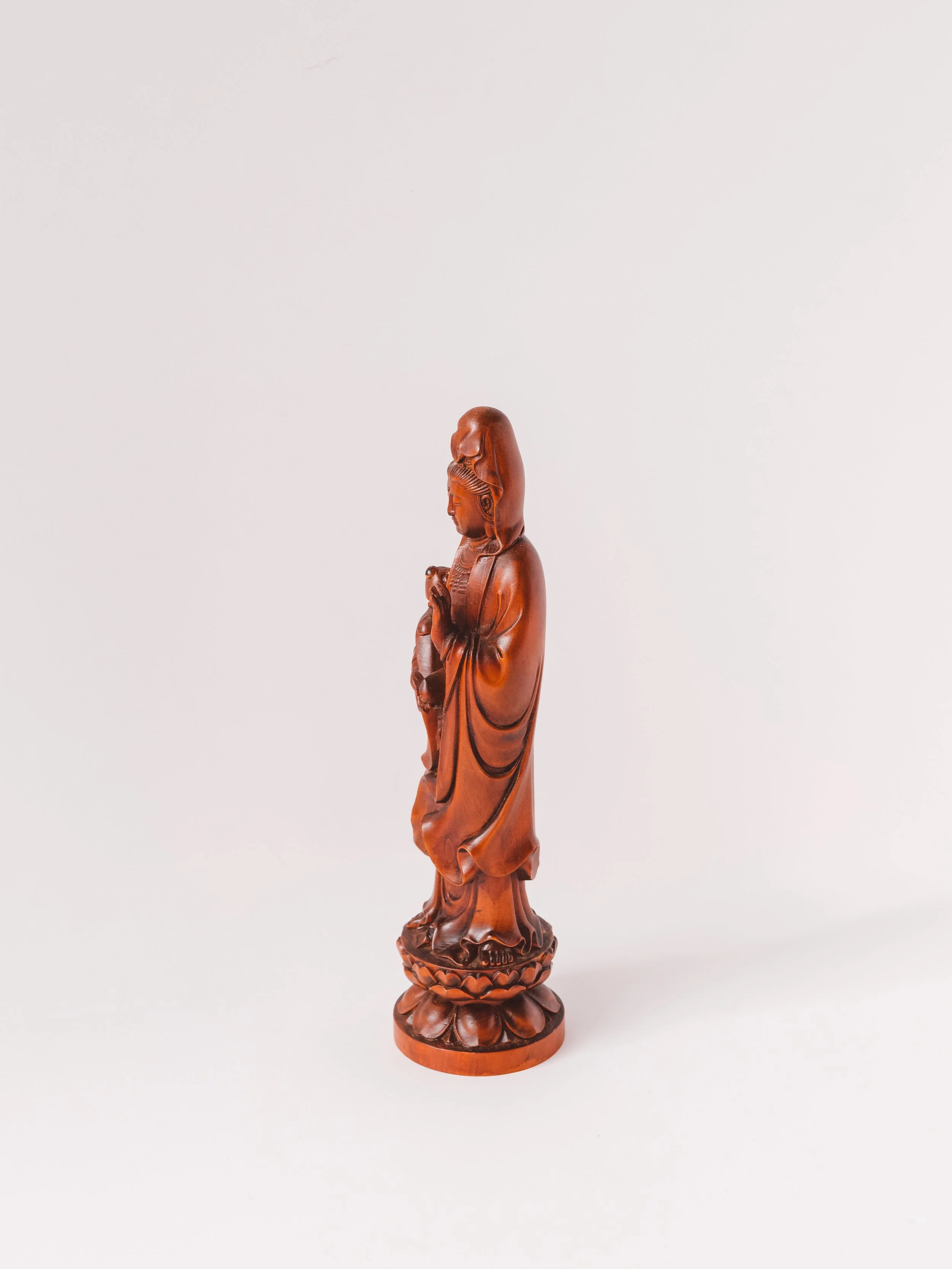 Image 3 of 13
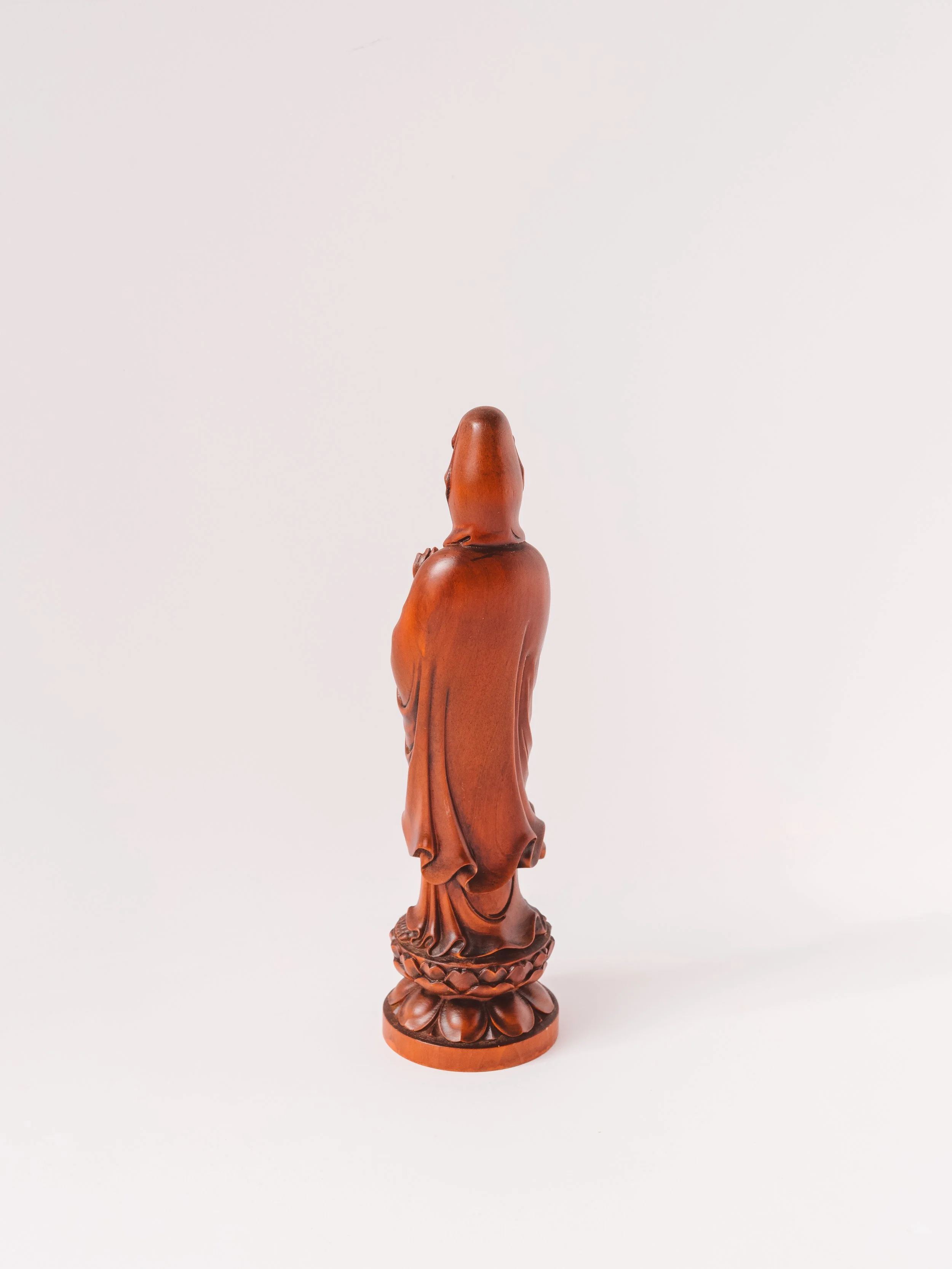 Image 4 of 13
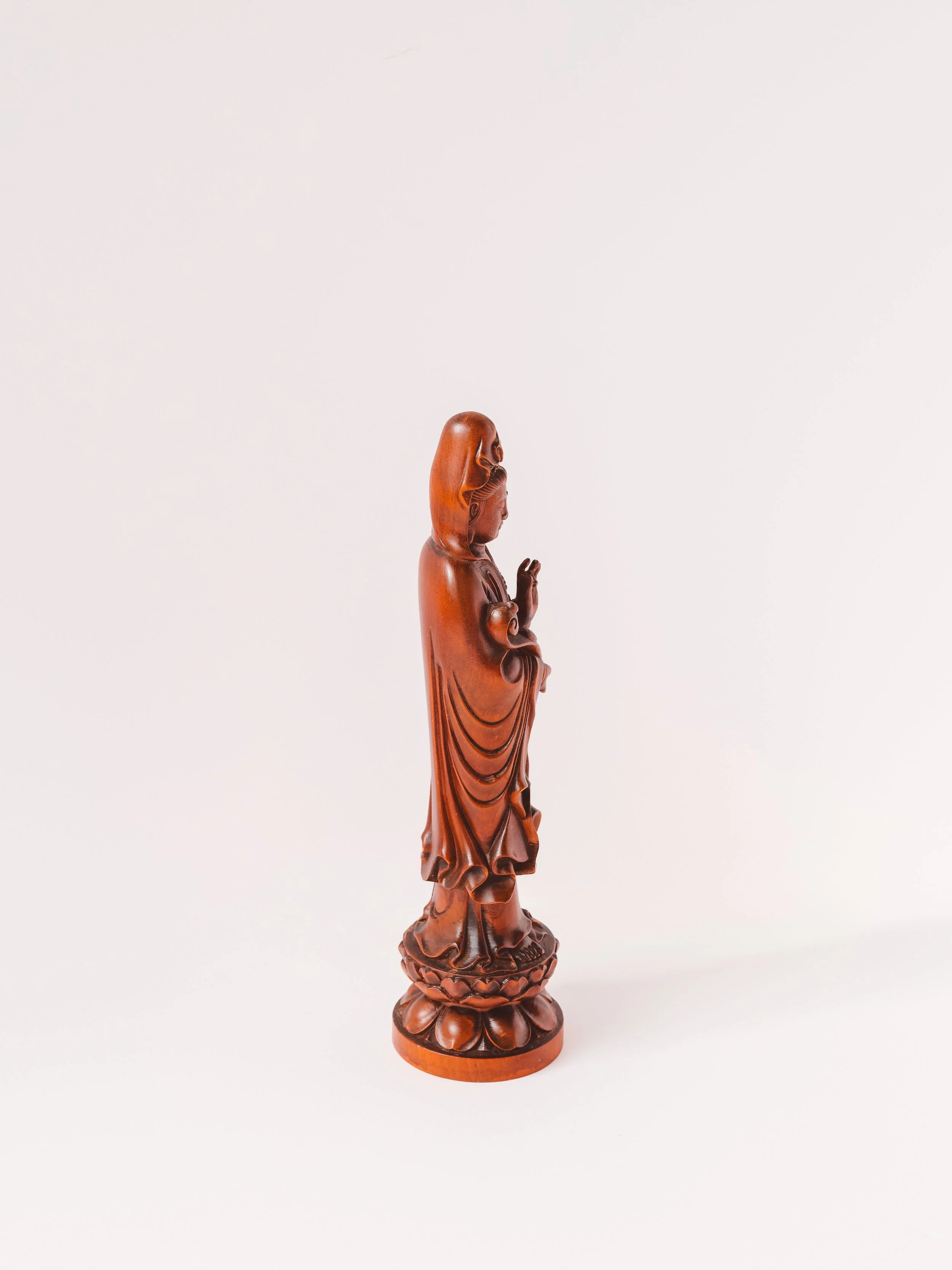 Image 5 of 13
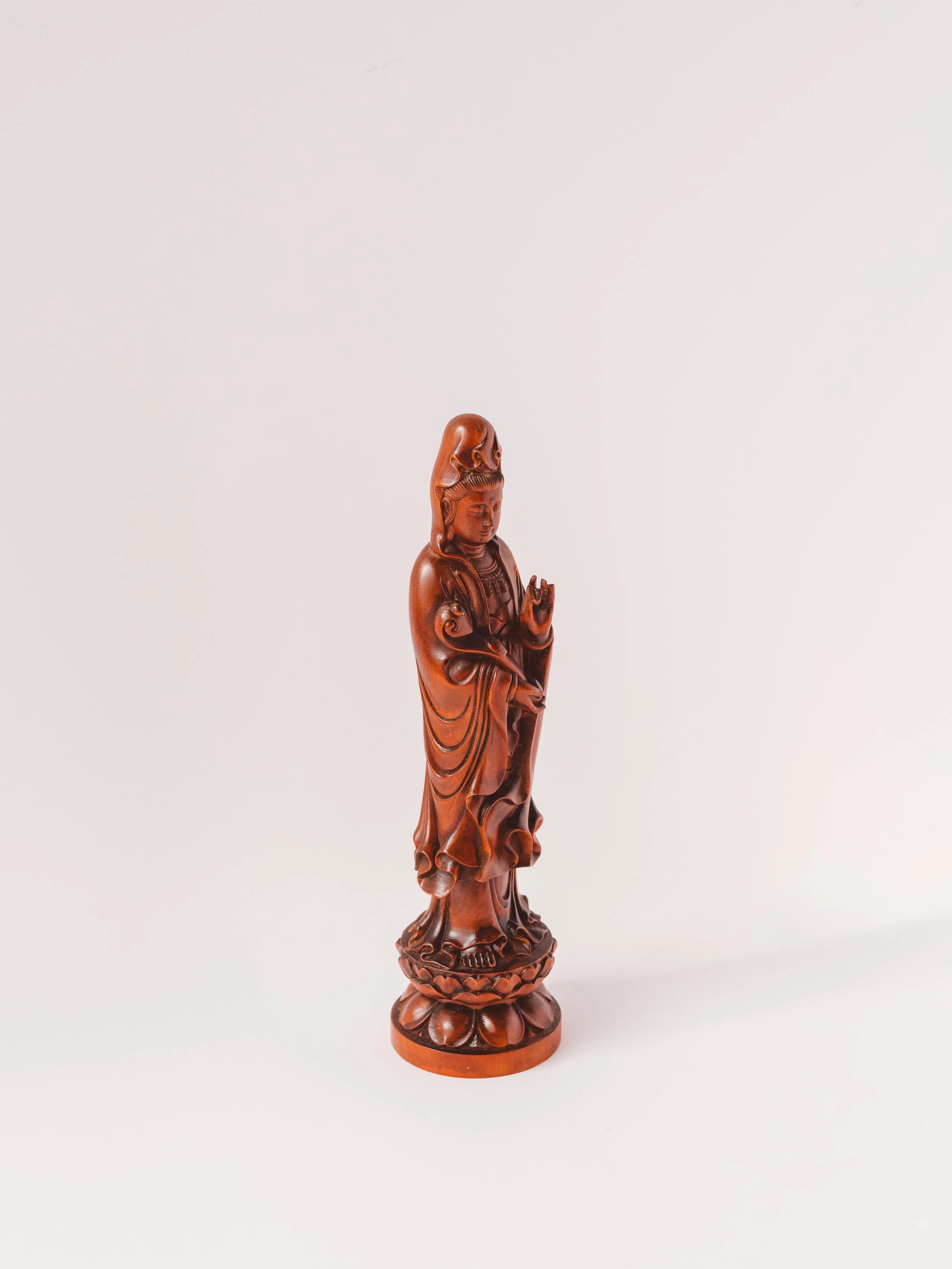 Image 6 of 13
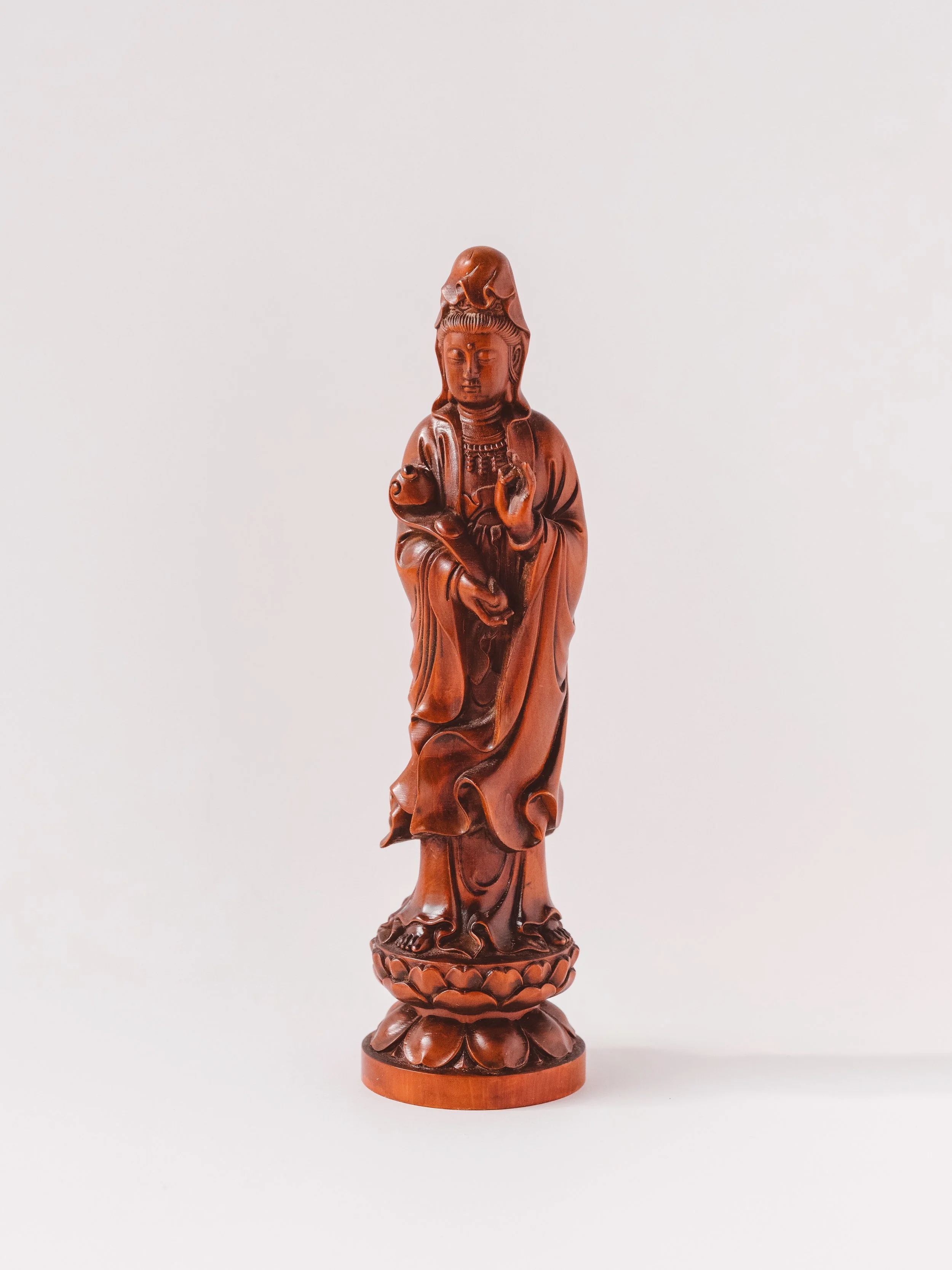 Image 7 of 13
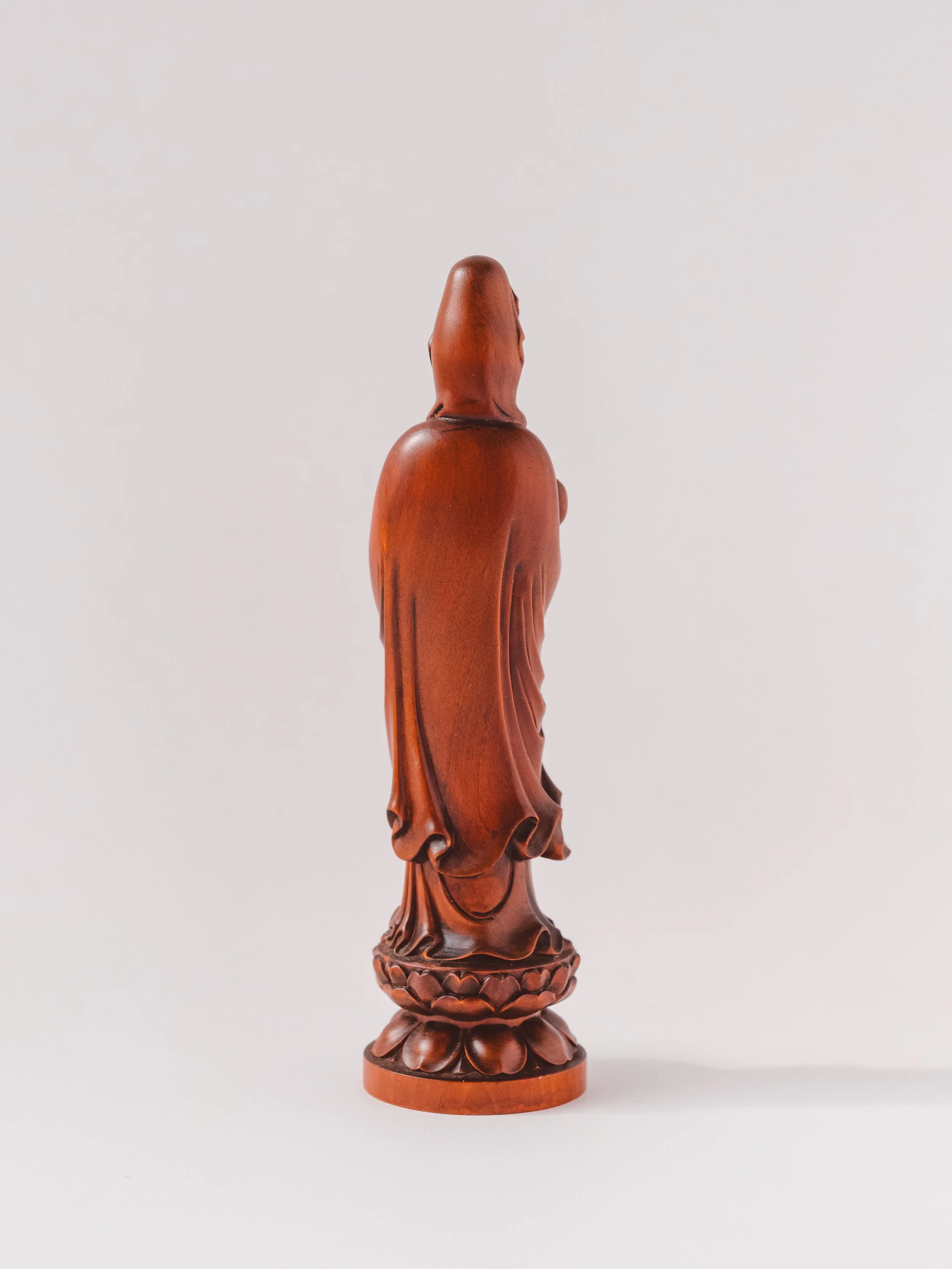 Image 8 of 13
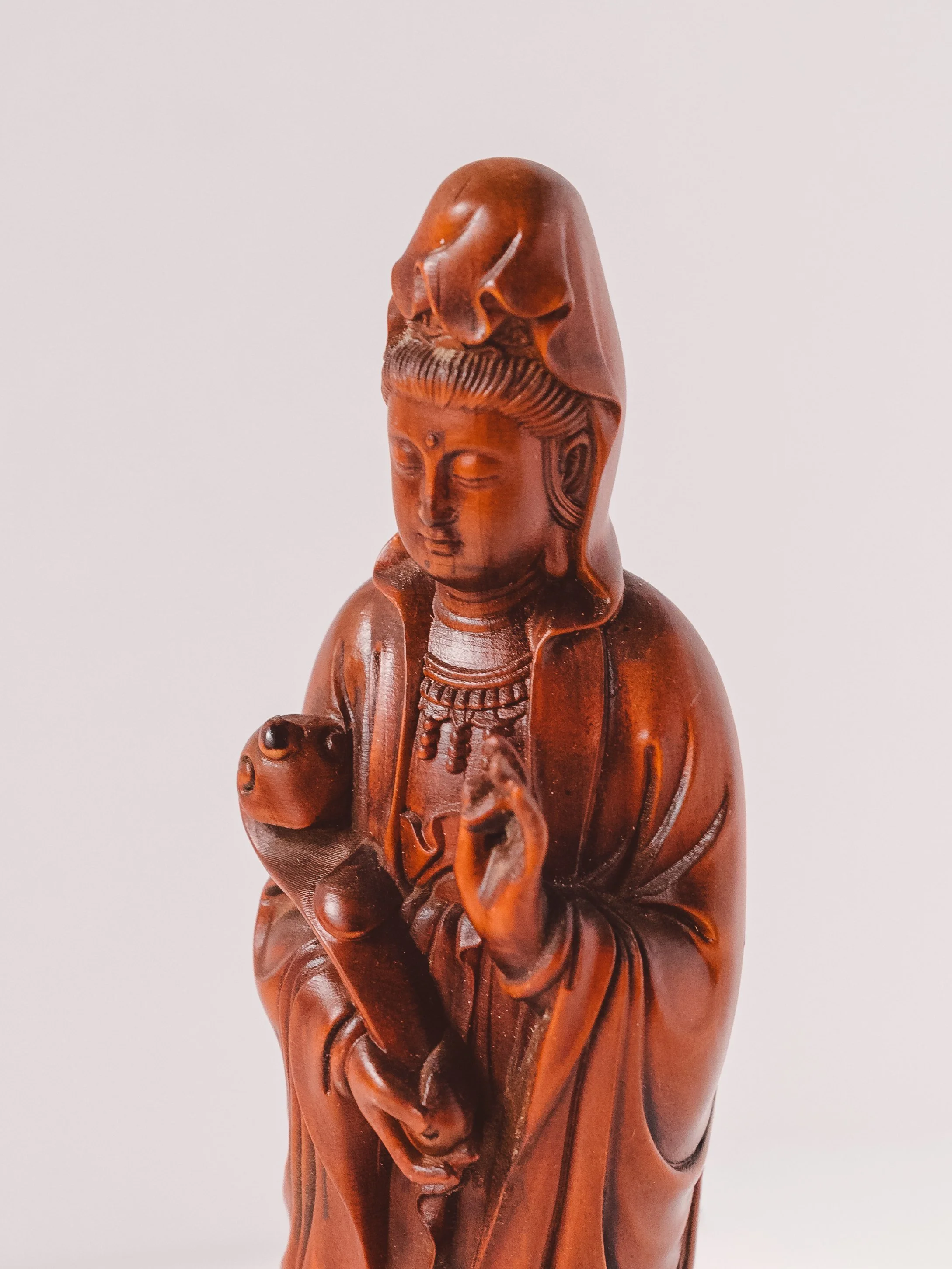 Image 9 of 13
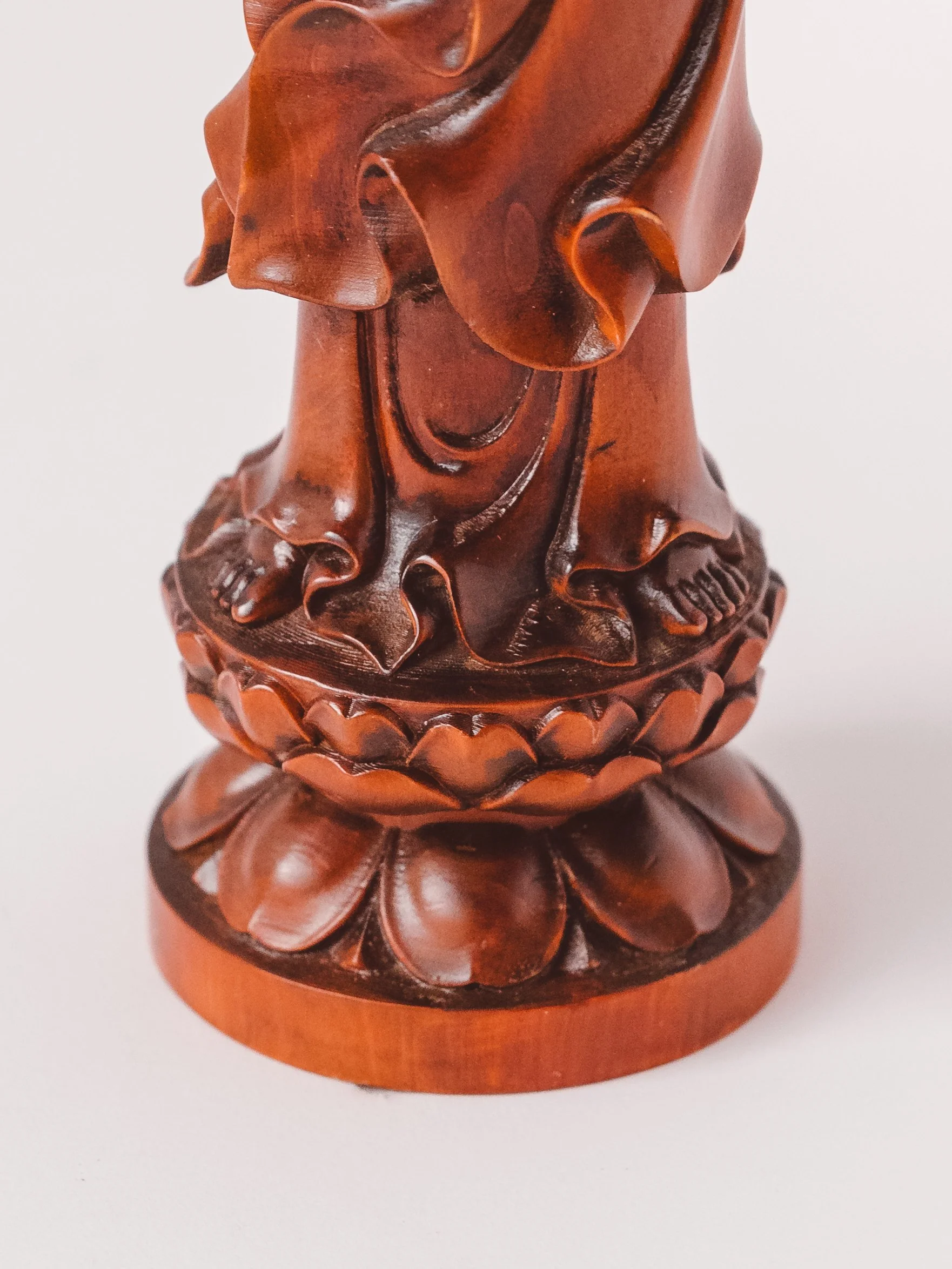 Image 10 of 13
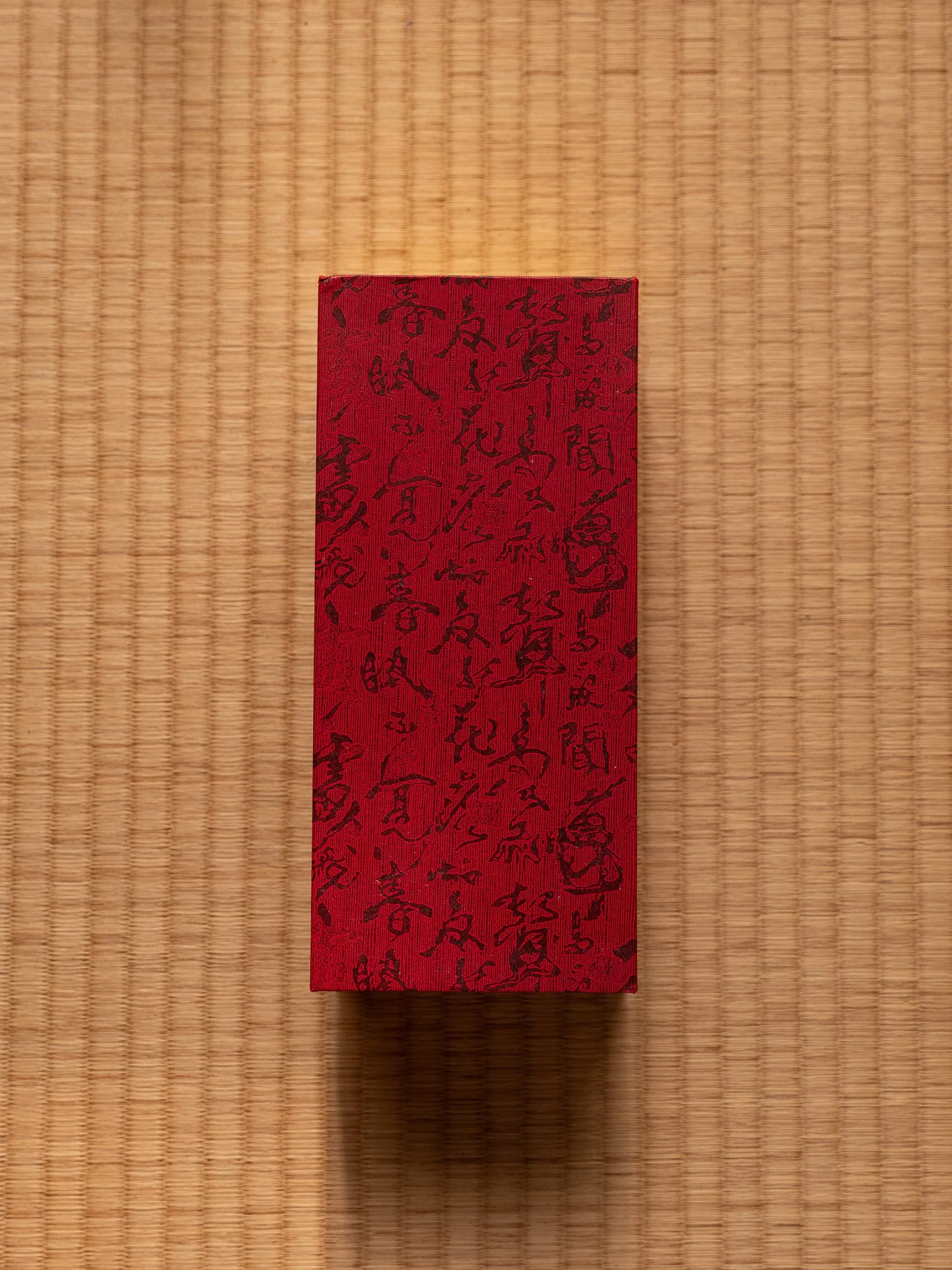 Image 11 of 13
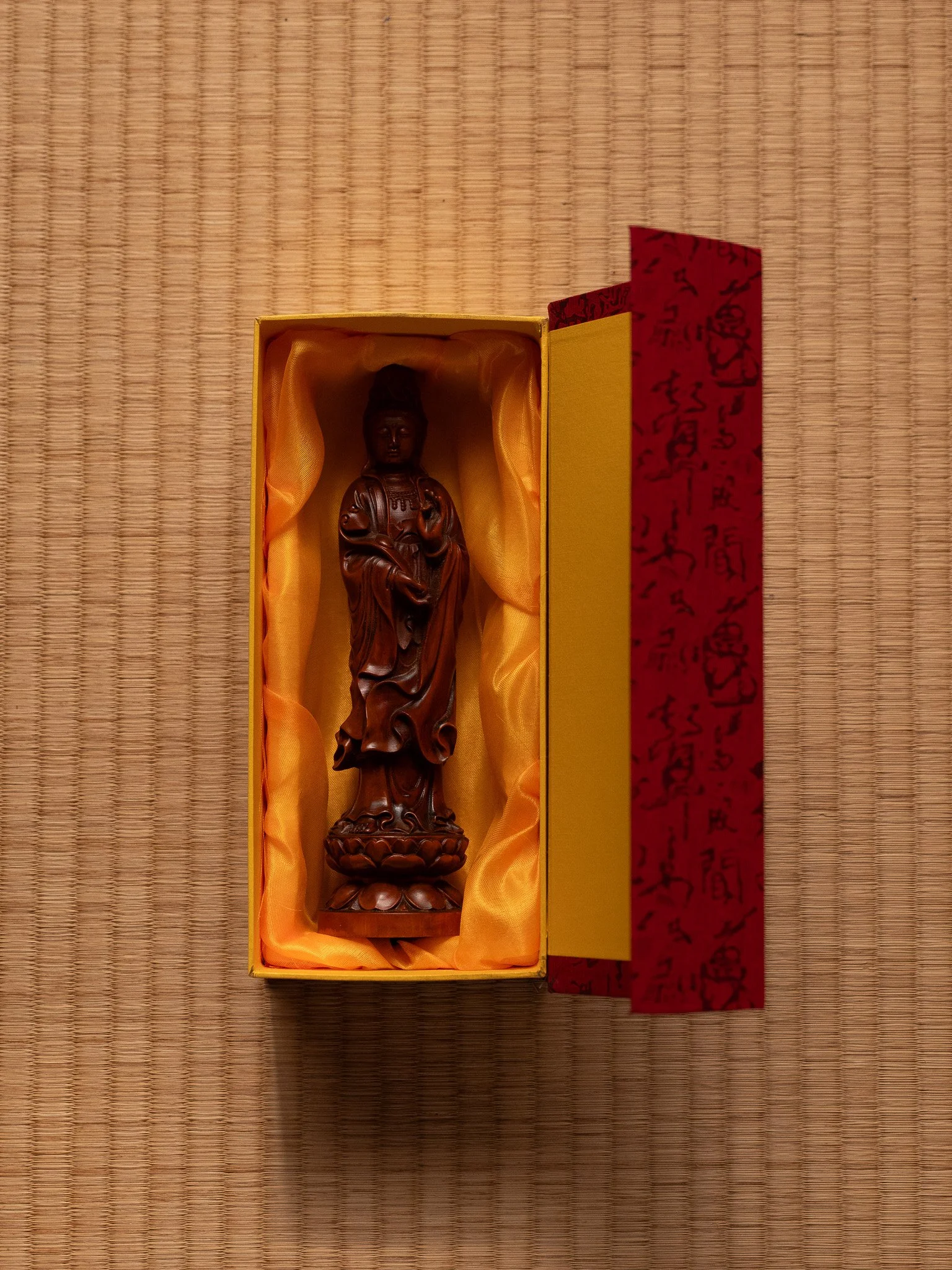 Image 12 of 13
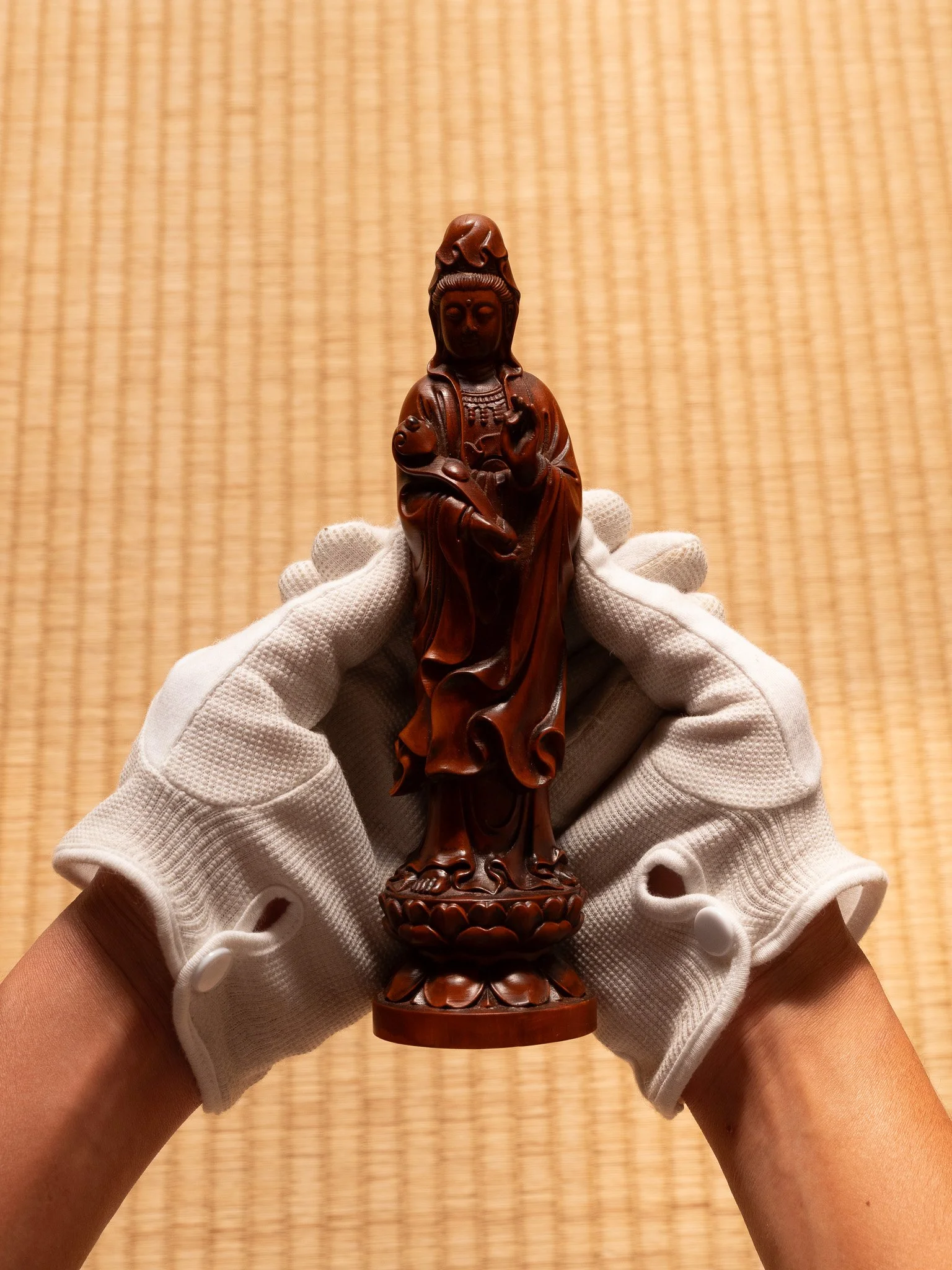 Image 13 of 13