【 The Concept 】
A Synthesis of Ancient Iron and Post-War Longing.
This specimen is a remarkable artifact reflecting the socio-cultural pivot of Japan during the high-growth period of the late Showa era. During this time, traditional ironware—once limited to the austere world of the tea ceremony—was forced to reinvent itself for the modern, Westernized dining table.
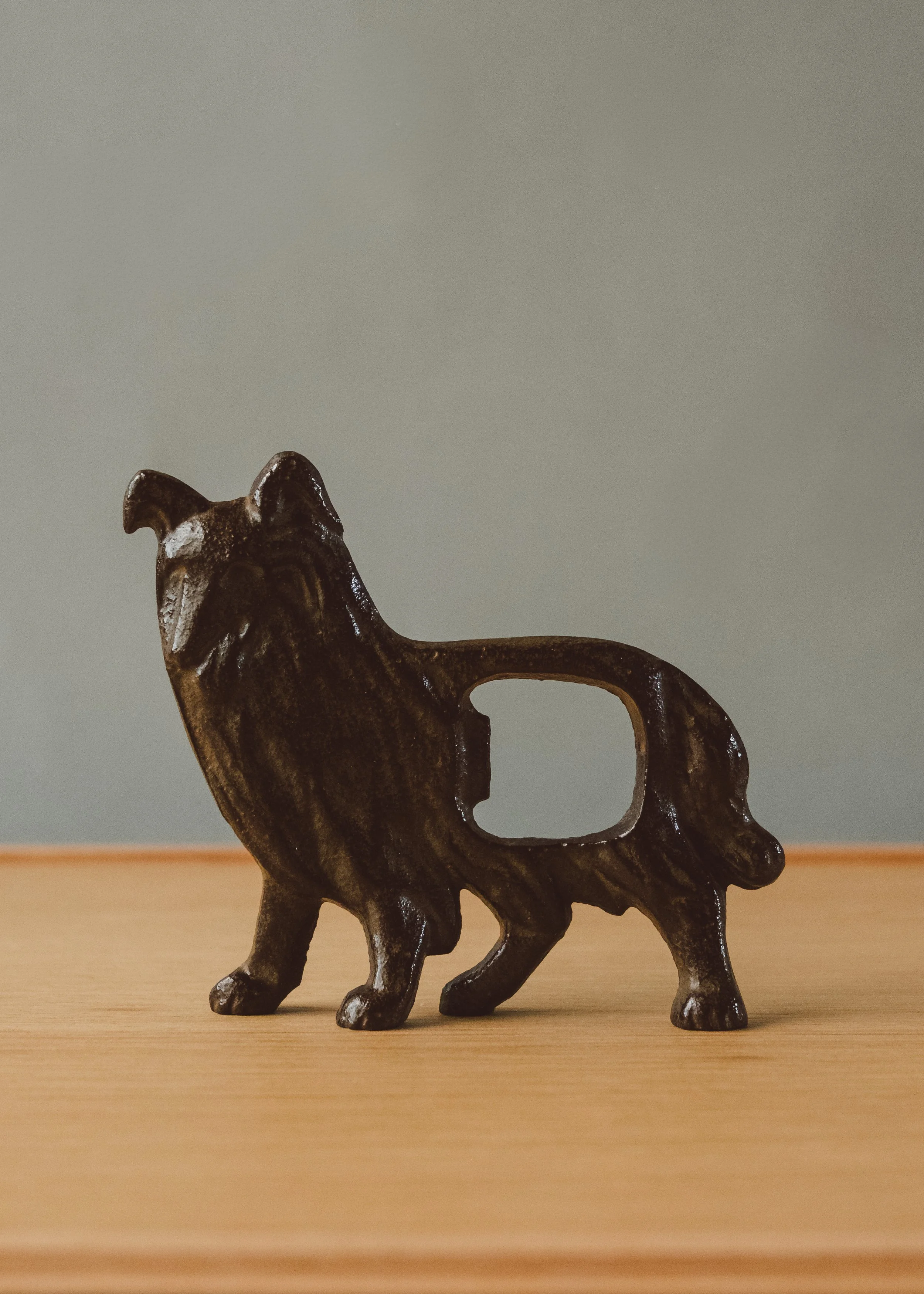
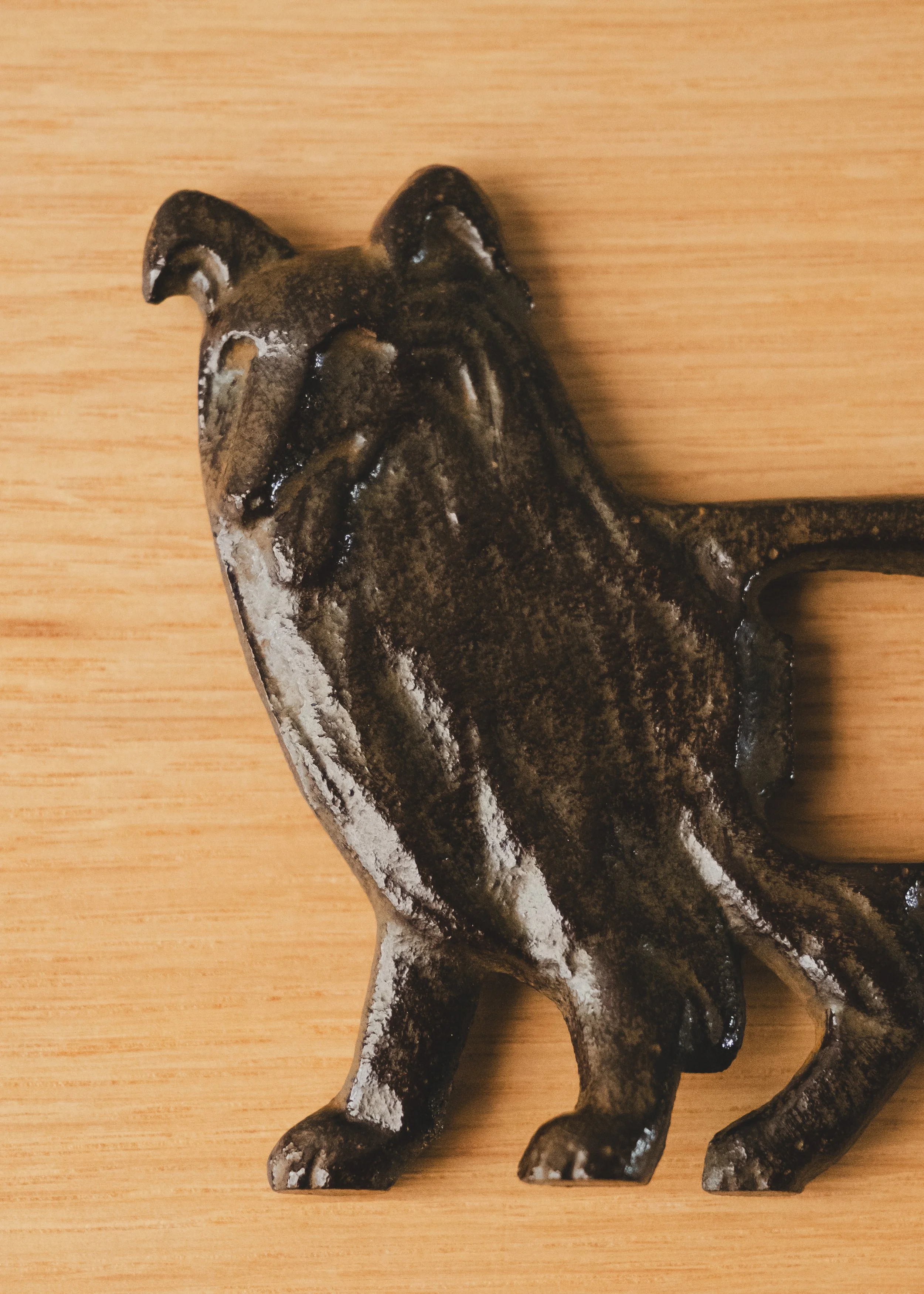
The choice of the "Collie" is not arbitrary. In mid-20th century Japan, this specific breed became a visual shorthand for the "Ideal Western Life," popularized by global media and a newfound focus on the domestic hearth. This anonymous designer captured the essence of the Rough Collie—the "Sentinel of Fidelity"—and froze its organic alertness in the uncompromising density of cast iron. It represents a rare moment where folk craft functionality met the soaring aspirations of a society embracing the future.
【 The Function 】
Ergonomics Hidden in Grace.
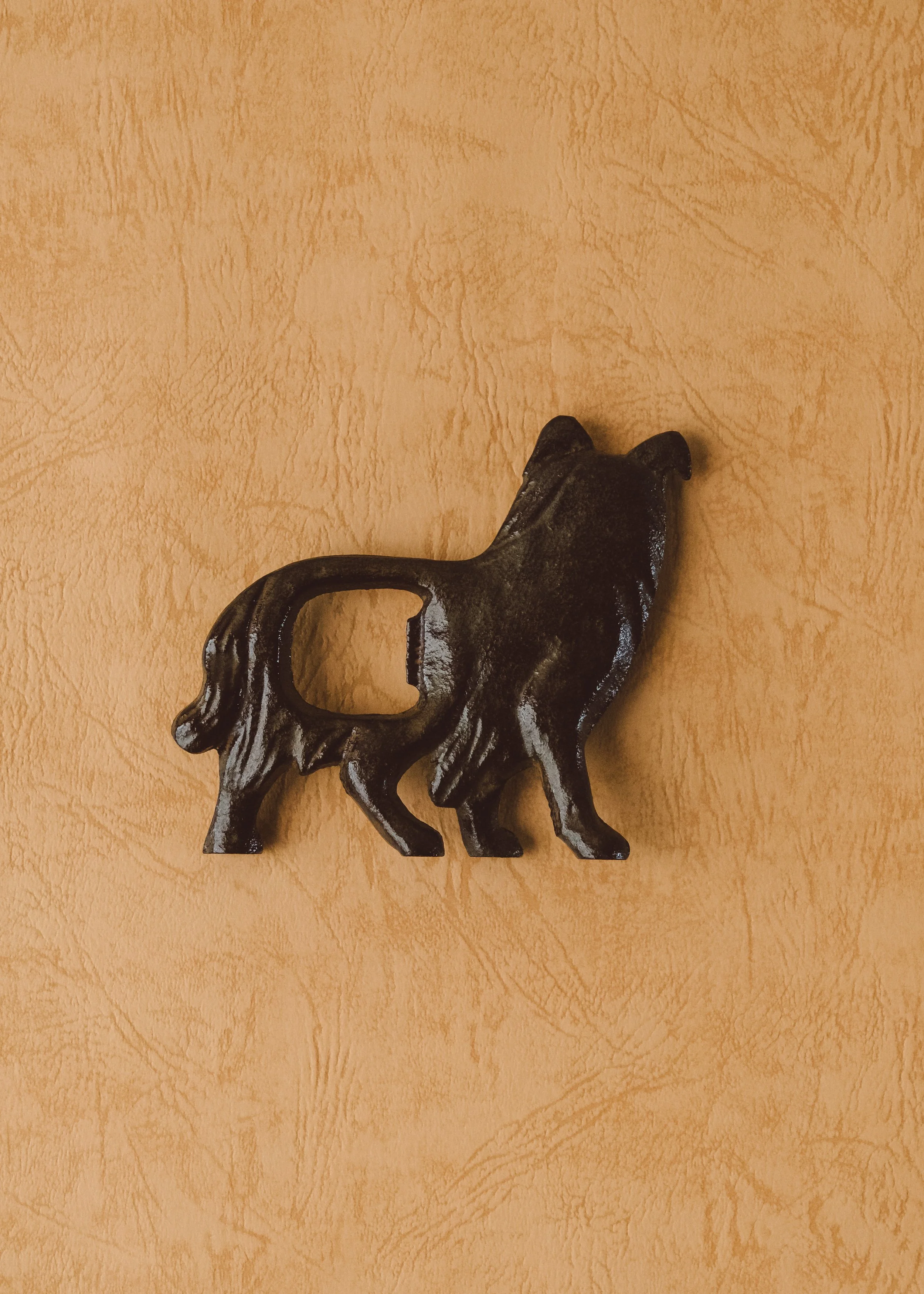
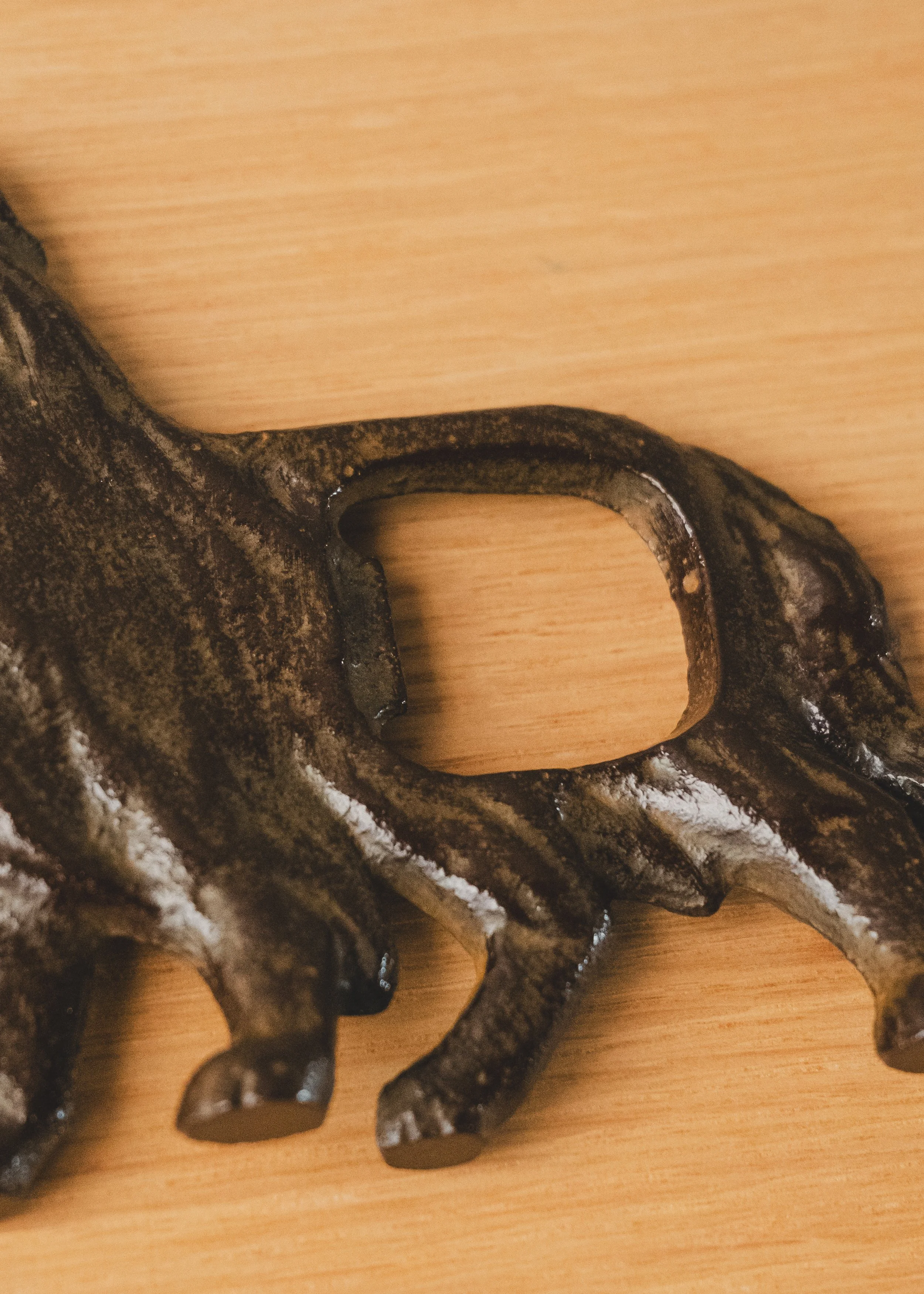
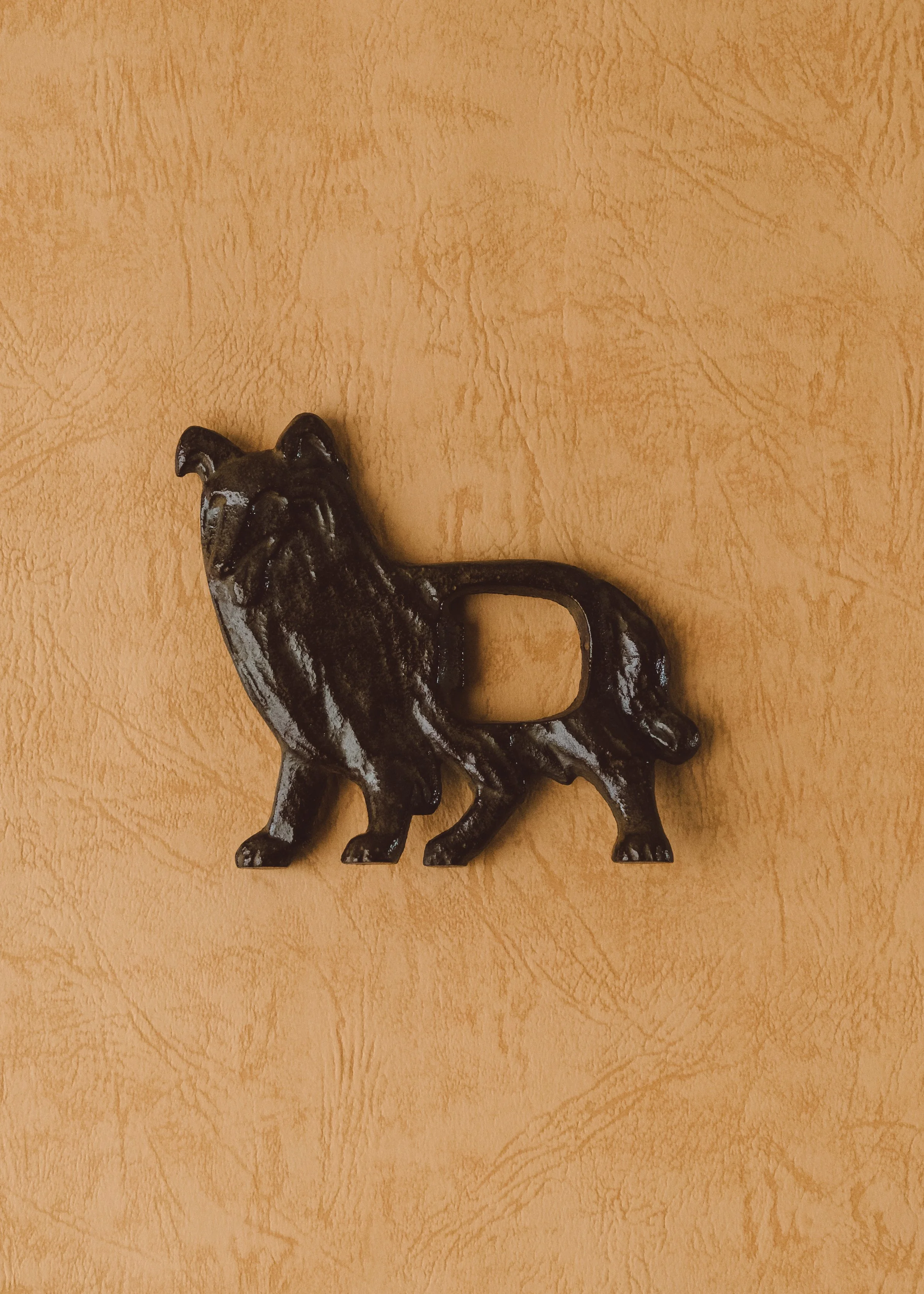
While primarily recognized today as a sculptural desk companion, this object was engineered with absolute mechanical precision. The "Negative Space" carved beneath the dog’s abdomen is not merely an aesthetic choice; it is a meticulously calibrated lever.
By grasping the elongated snout and neck—which serve as a natural handle—the user utilizes the iron’s rigid strength to engage the crown cap of a glass bottle. The weight of approx. 220g provides a counter-balancing stability, turning a mundane domestic act into a moment of tactile satisfaction. When at rest, the four-legged stance is balanced with an "Uncanny Alertness," as if the iron spirit is watching over the user’s study or dining room.
【 Material & Craft 】
Forced from the Earth at 1,500 Degrees.
Crafted in the Iwate Prefecture using the legendary Nambu Tekki casting technique, this dog is a product of volcanic history. The surface texture—known as Ihada (Skin of the Earth)—is achieved through sand-casting, where molten iron is hand-poured at temperatures exceeding 1,500 degrees Celsius.
To achieve the deep charcoal-to-umber luster, the object underwent "Kama-yaki" (kiln firing), creating an initial oxidation layer. This was followed by a traditional finishing technique involving the hand-application of botanical resins or lacquers on the heated metal. This process not only prevents oxidation but ensures that the canine’s coat possesses a "Matted Shine" that improves with human touch, absorbing oils over decades to develop a rich, museum-quality Patina.
【 Presence 】
A Tactile Reminder of Human Fidelity.
In Japanese folklore, the dog has always served as a guardian (守り神 - Mamorigami) and a symbol of protection against invisible misfortune. Placing this iron Collie on a desk or a walnut bookshelf creates an anchor point of "Gravity" in an increasingly weightless, digital workspace.
It speaks to the Cultural Investor who values the friction of material history over the smoothness of plastic convenience. Whether utilized for its intended purpose of opening a chilled beverage or simply positioned as an ornament, its "Turning Back" (Mikaeri) posture symbolizes the act of reflecting on the past while standing firmly in the present.
【 The Concept 】
A Synthesis of Ancient Iron and Post-War Longing.
This specimen is a remarkable artifact reflecting the socio-cultural pivot of Japan during the high-growth period of the late Showa era. During this time, traditional ironware—once limited to the austere world of the tea ceremony—was forced to reinvent itself for the modern, Westernized dining table.
The choice of the "Collie" is not arbitrary. In mid-20th century Japan, this specific breed became a visual shorthand for the "Ideal Western Life," popularized by global media and a newfound focus on the domestic hearth. This anonymous designer captured the essence of the Rough Collie—the "Sentinel of Fidelity"—and froze its organic alertness in the uncompromising density of cast iron. It represents a rare moment where folk craft functionality met the soaring aspirations of a society embracing the future.
【 The Function 】
Ergonomics Hidden in Grace.
While primarily recognized today as a sculptural desk companion, this object was engineered with absolute mechanical precision. The "Negative Space" carved beneath the dog’s abdomen is not merely an aesthetic choice; it is a meticulously calibrated lever.
By grasping the elongated snout and neck—which serve as a natural handle—the user utilizes the iron’s rigid strength to engage the crown cap of a glass bottle. The weight of approx. 220g provides a counter-balancing stability, turning a mundane domestic act into a moment of tactile satisfaction. When at rest, the four-legged stance is balanced with an "Uncanny Alertness," as if the iron spirit is watching over the user’s study or dining room.
【 Material & Craft 】
Forced from the Earth at 1,500 Degrees.
Crafted in the Iwate Prefecture using the legendary Nambu Tekki casting technique, this dog is a product of volcanic history. The surface texture—known as Ihada (Skin of the Earth)—is achieved through sand-casting, where molten iron is hand-poured at temperatures exceeding 1,500 degrees Celsius.
To achieve the deep charcoal-to-umber luster, the object underwent "Kama-yaki" (kiln firing), creating an initial oxidation layer. This was followed by a traditional finishing technique involving the hand-application of botanical resins or lacquers on the heated metal. This process not only prevents oxidation but ensures that the canine’s coat possesses a "Matted Shine" that improves with human touch, absorbing oils over decades to develop a rich, museum-quality Patina.
【 Presence 】
A Tactile Reminder of Human Fidelity.
In Japanese folklore, the dog has always served as a guardian (守り神 - Mamorigami) and a symbol of protection against invisible misfortune. Placing this iron Collie on a desk or a walnut bookshelf creates an anchor point of "Gravity" in an increasingly weightless, digital workspace.
It speaks to the Cultural Investor who values the friction of material history over the smoothness of plastic convenience. Whether utilized for its intended purpose of opening a chilled beverage or simply positioned as an ornament, its "Turning Back" (Mikaeri) posture symbolizes the act of reflecting on the past while standing firmly in the present.