【 The Concept 】
A Bull That Does Not Move, and Does Not Need To. In the agrarian imagination of Japan, the bull was never a symbol of aggression. It was a symbol of endurance — the animal that pulled the plow through frozen ground, that stood its ground when the weather turned, that outlasted the season through sheer refusal to stop. An anonymous craftsman understood that. They translated that understanding into fired clay, stripped away every decorative impulse, and left only the essential geometry of the animal: the weight of the shoulders, the raised head, the stillness that is not passivity but concentration.
The face is barely a face. Two gentle convex forms where the eyes should be. Enough to suggest intelligence, not enough to impose it. The rest is left to the room, to the light, to the person who reaches out and touches it.
【 The Function 】
This object was shaped to anchor a surface — a desk, a shelf, a ledge where things of consequence are placed. Its broad, low stance grips whatever it is set upon with a quiet authority. Documents do not shift beneath it. Neither does the eye.
But an object that sits on a desk for decades becomes something else. It becomes the thing the hand reaches for without thinking, that marks the corner of serious work. Modern collectors use it as a desk sentinel, a shelf anchor — picked up, set down, picked up again. Each time it is touched it absorbs a little more warmth, a little more familiarity.
【 The Texture 】
The surface is a deep, unbroken matte black — light-absorbing, completely devoid of gloss. It does not reflect the room; it absorbs it. Run a thumb across the back. The clay beneath the finish is smooth but not slippery, carrying a warmth that metal cannot replicate. The black is not paint applied to a surface — it is fired into the body of the clay itself, a permanent bond between color and form that will not chip, will not fade, and will outlast the furniture it sits on.
【 Presence 】
There is a tendency, in the modern interior, toward objects that are light, thin, and temporary. This bull is none of those things. Place it on a walnut desk, a raw concrete shelf, or beside a stack of books that will not be moved. It will not compete with anything else in the room. It will simply be the stillest thing there, and the room will organise itself around it quietly.
It is the object that guests notice last and remember longest. Not because it demands attention — it does not — but because when they finally pick it up, the form fits the hand in a way they did not expect.
Sourced from a private collection in northern Japan.
【 The Concept 】
A Bull That Does Not Move, and Does Not Need To. In the agrarian imagination of Japan, the bull was never a symbol of aggression. It was a symbol of endurance — the animal that pulled the plow through frozen ground, that stood its ground when the weather turned, that outlasted the season through sheer refusal to stop. An anonymous craftsman understood that. They translated that understanding into fired clay, stripped away every decorative impulse, and left only the essential geometry of the animal: the weight of the shoulders, the raised head, the stillness that is not passivity but concentration.
The face is barely a face. Two gentle convex forms where the eyes should be. Enough to suggest intelligence, not enough to impose it. The rest is left to the room, to the light, to the person who reaches out and touches it.
【 The Function 】
This object was shaped to anchor a surface — a desk, a shelf, a ledge where things of consequence are placed. Its broad, low stance grips whatever it is set upon with a quiet authority. Documents do not shift beneath it. Neither does the eye.
But an object that sits on a desk for decades becomes something else. It becomes the thing the hand reaches for without thinking, that marks the corner of serious work. Modern collectors use it as a desk sentinel, a shelf anchor — picked up, set down, picked up again. Each time it is touched it absorbs a little more warmth, a little more familiarity.
【 The Texture 】
The surface is a deep, unbroken matte black — light-absorbing, completely devoid of gloss. It does not reflect the room; it absorbs it. Run a thumb across the back. The clay beneath the finish is smooth but not slippery, carrying a warmth that metal cannot replicate. The black is not paint applied to a surface — it is fired into the body of the clay itself, a permanent bond between color and form that will not chip, will not fade, and will outlast the furniture it sits on.
【 Presence 】
There is a tendency, in the modern interior, toward objects that are light, thin, and temporary. This bull is none of those things. Place it on a walnut desk, a raw concrete shelf, or beside a stack of books that will not be moved. It will not compete with anything else in the room. It will simply be the stillest thing there, and the room will organise itself around it quietly.
It is the object that guests notice last and remember longest. Not because it demands attention — it does not — but because when they finally pick it up, the form fits the hand in a way they did not expect.
Sourced from a private collection in northern Japan.


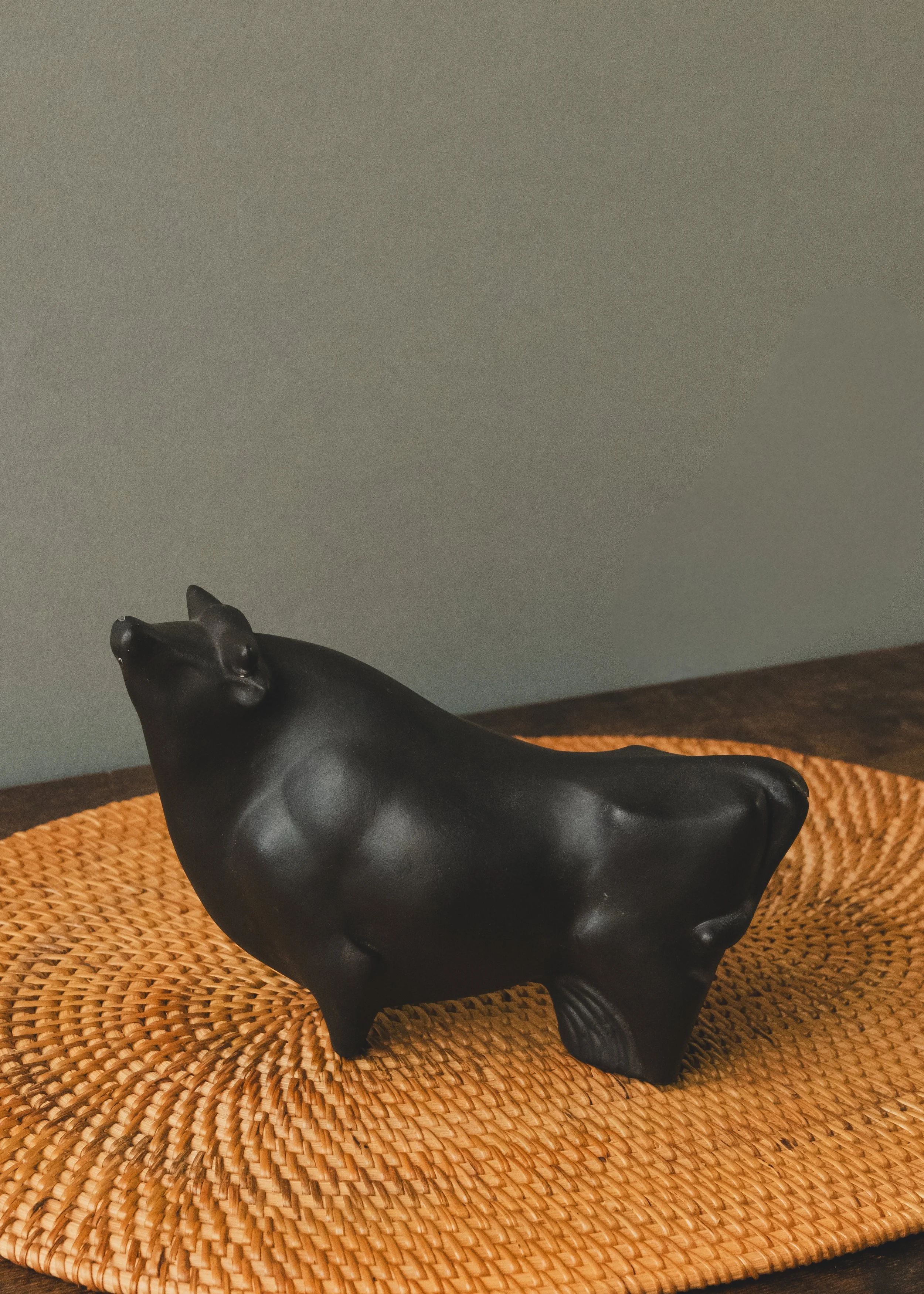 Image 1 of 12
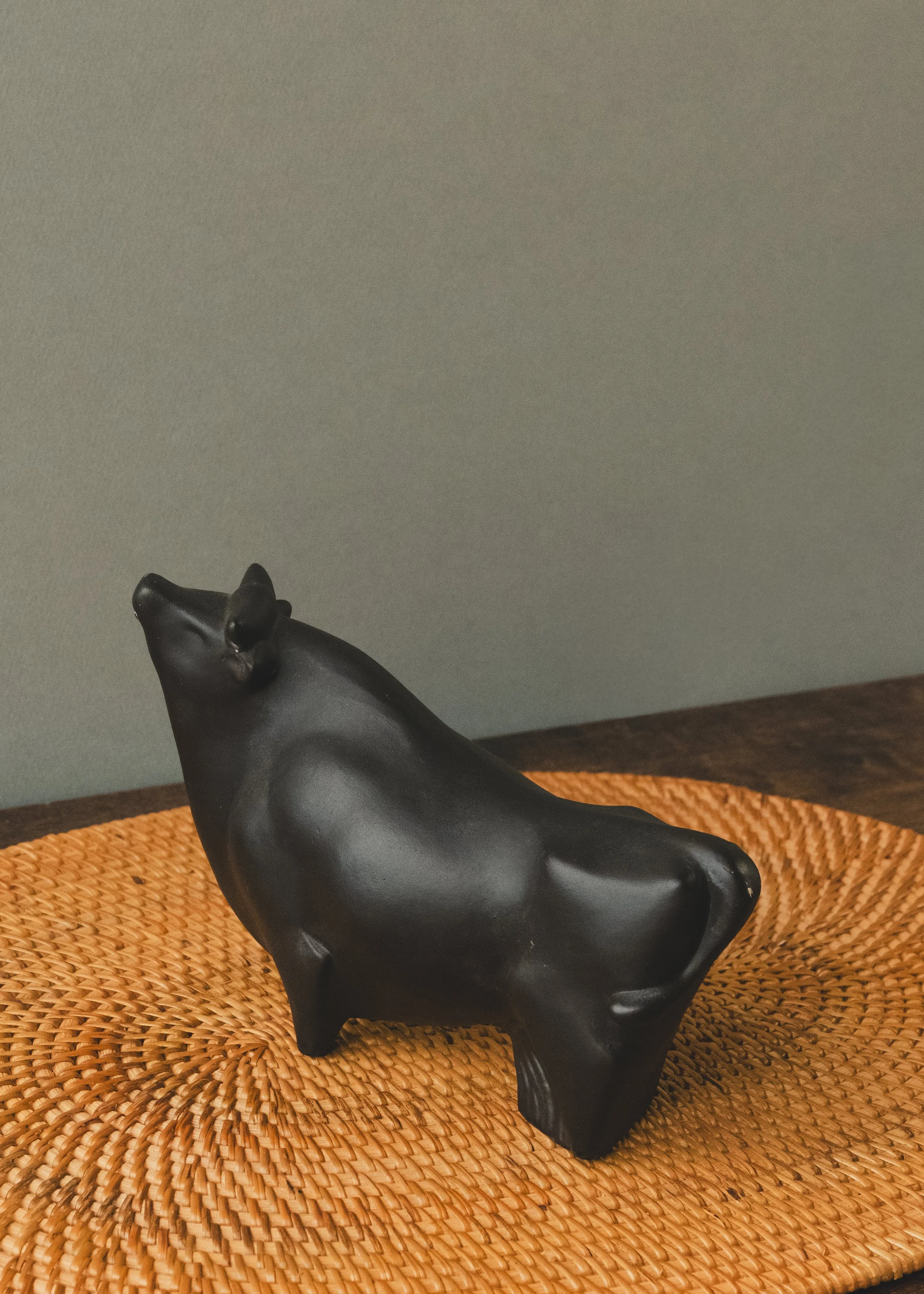 Image 2 of 12
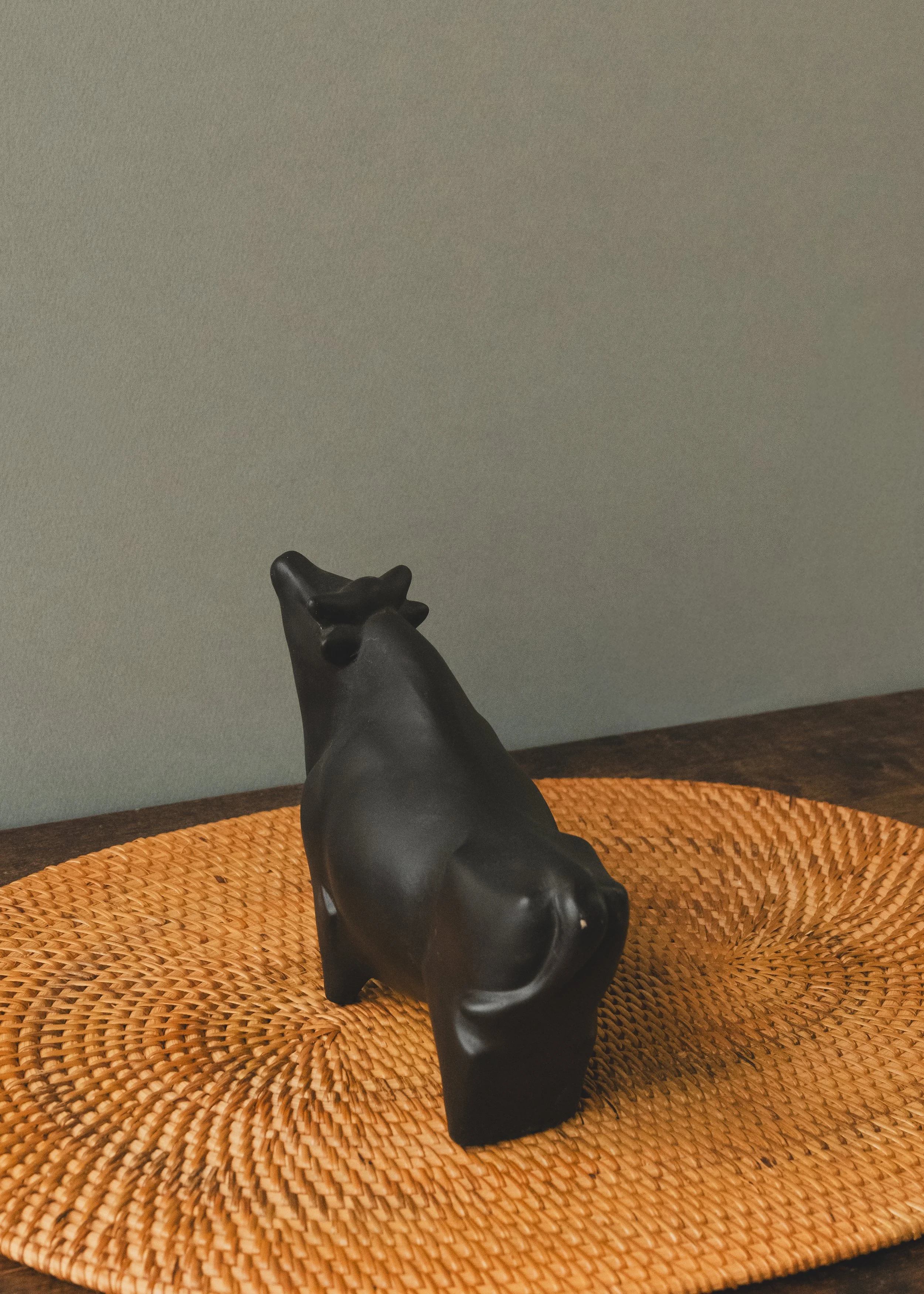 Image 3 of 12
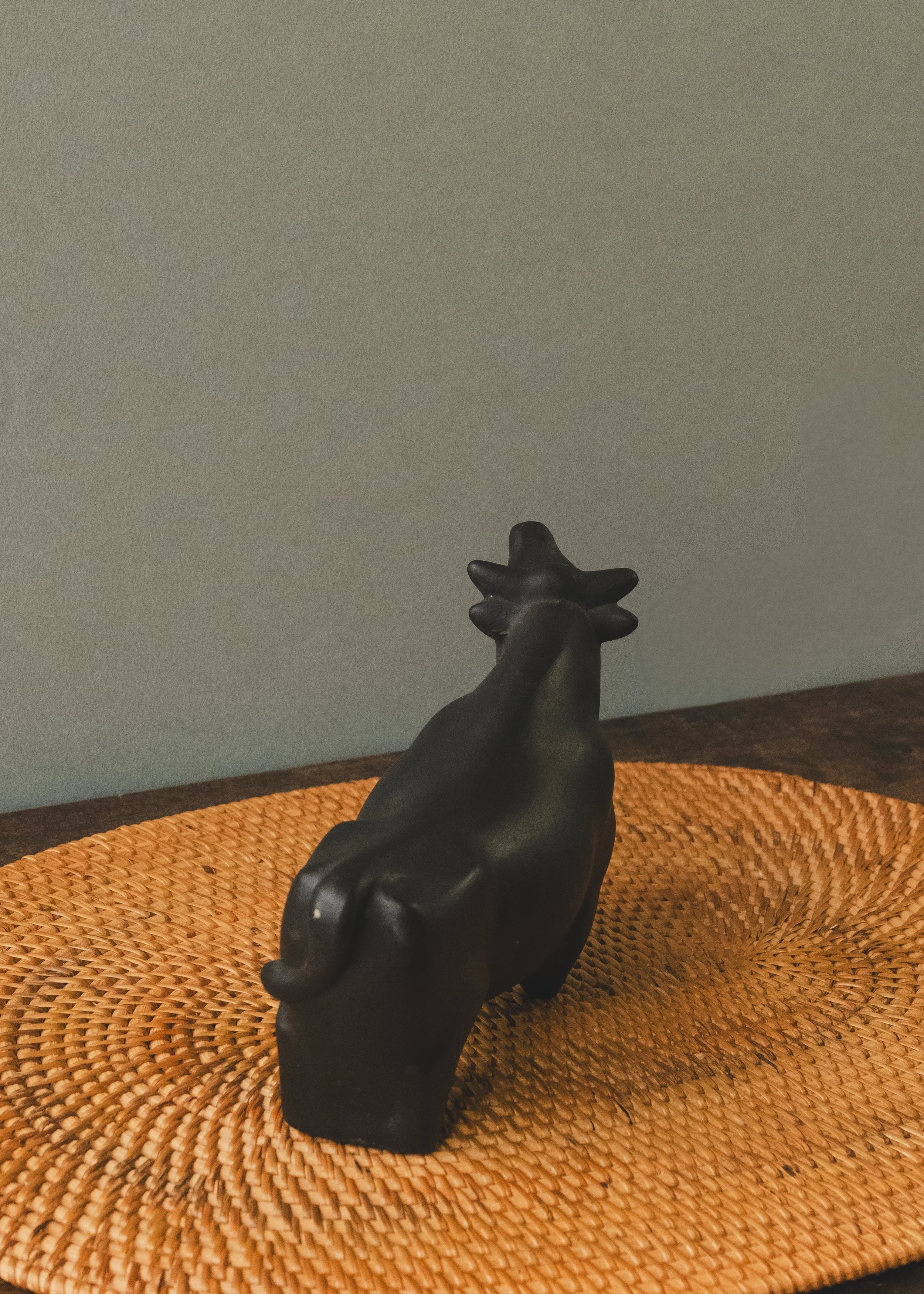 Image 4 of 12
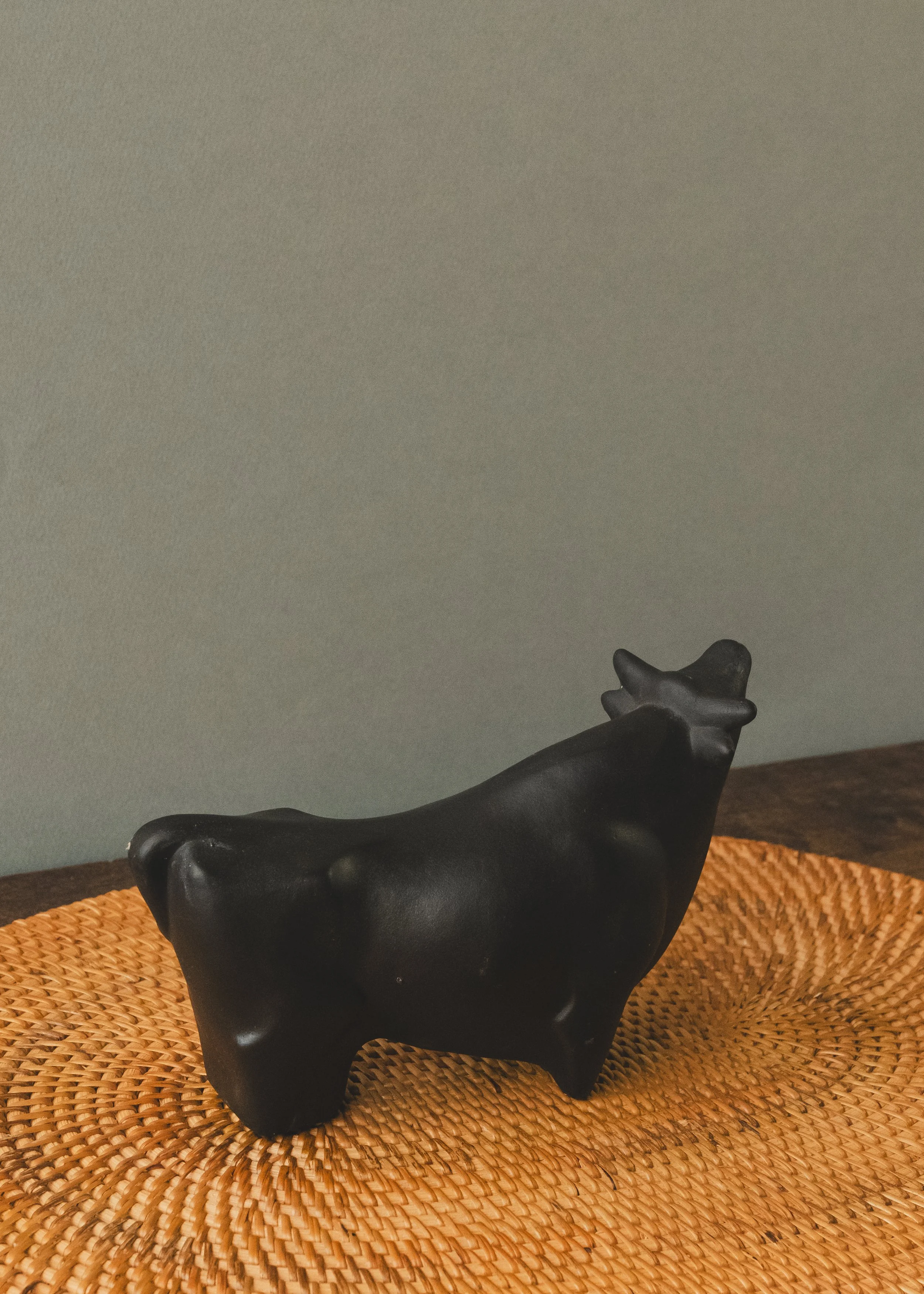 Image 5 of 12
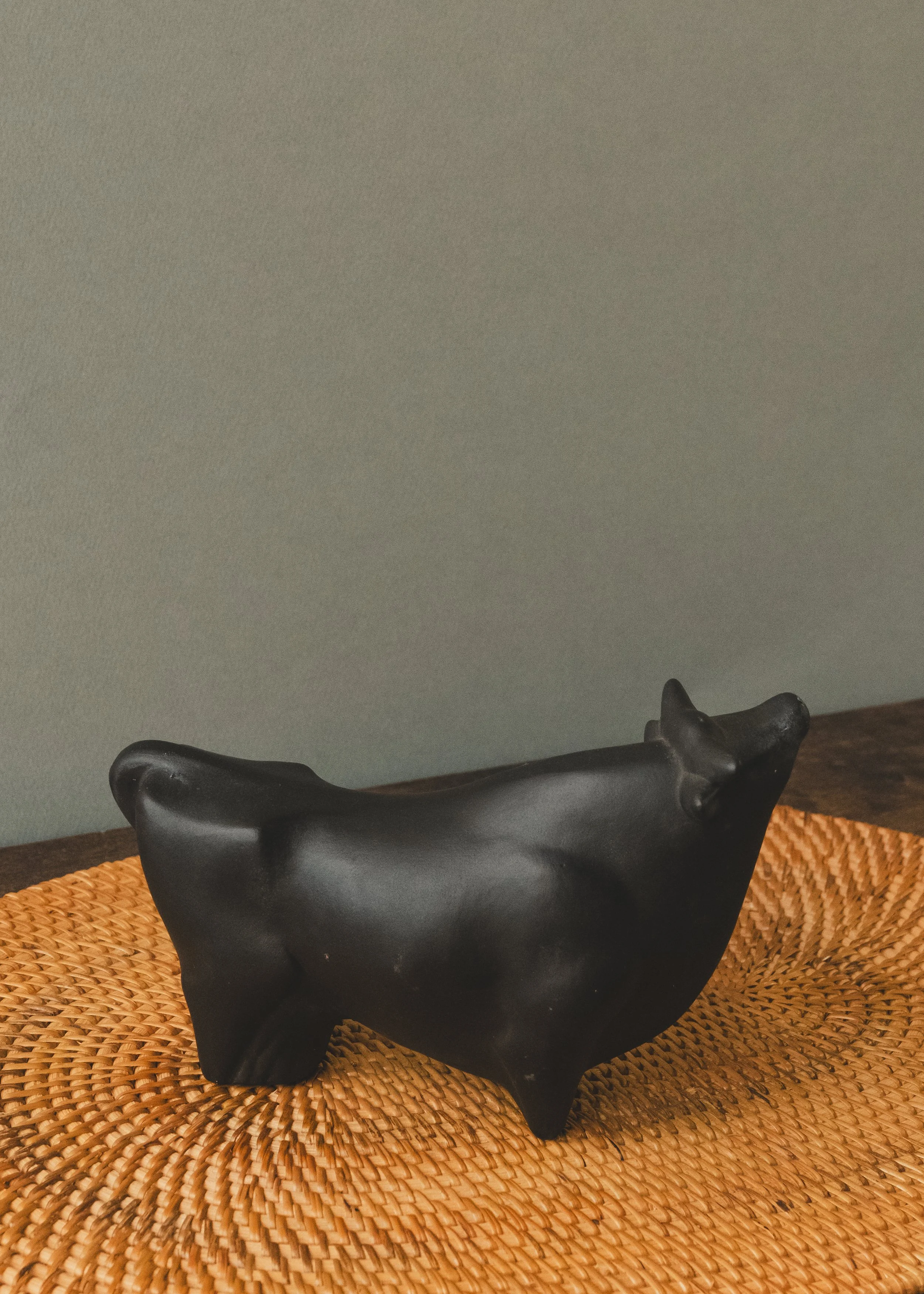 Image 6 of 12
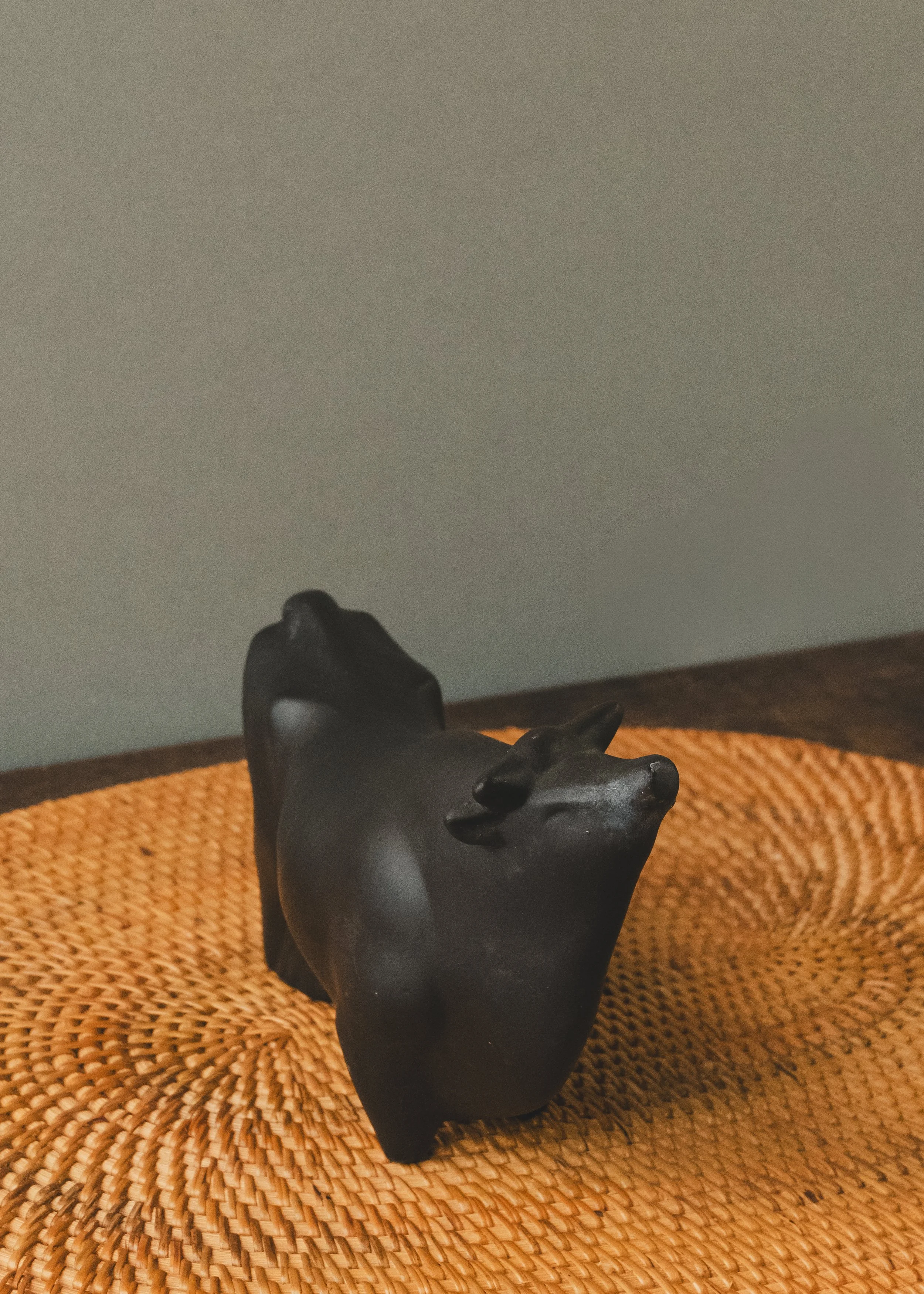 Image 7 of 12
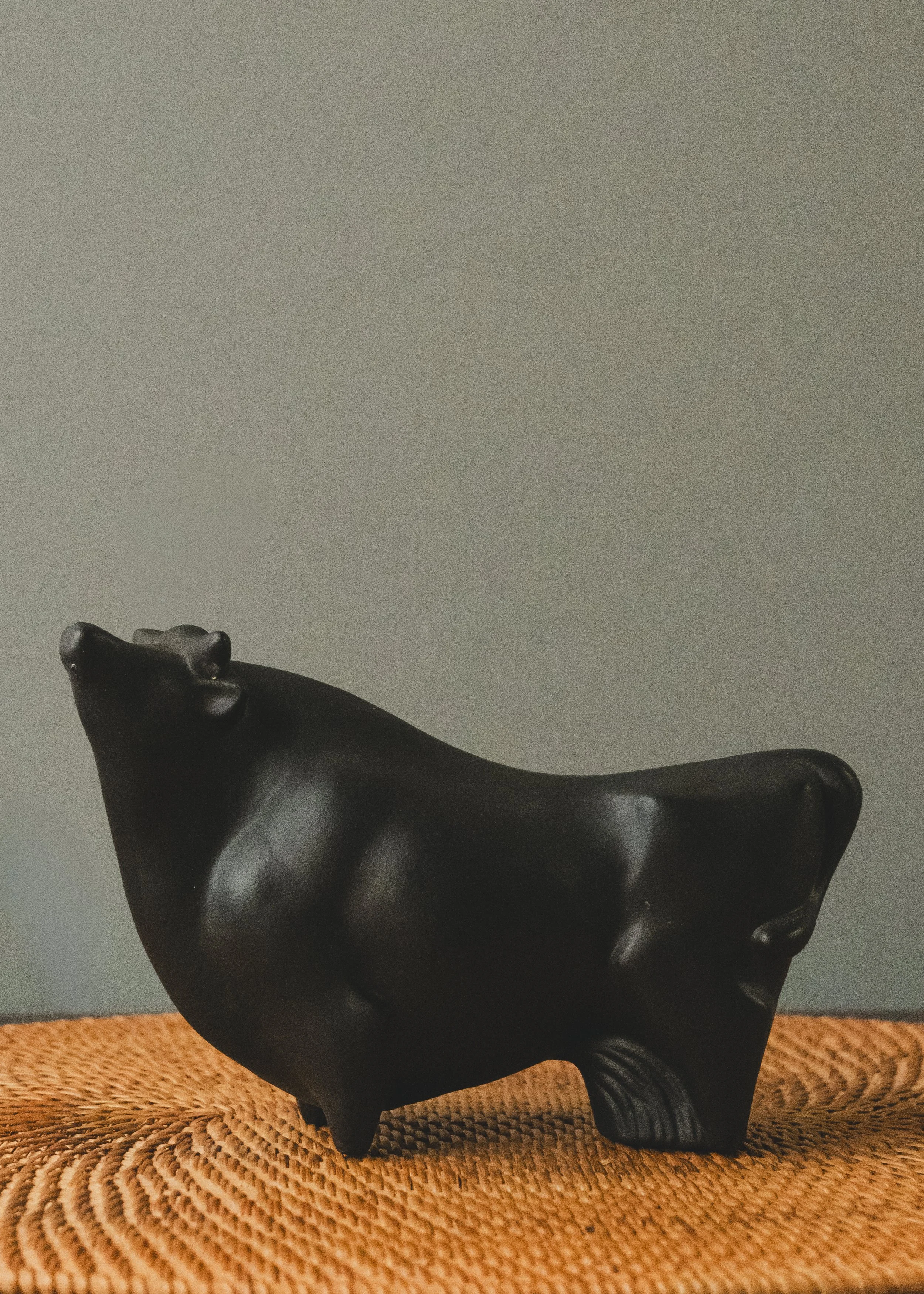 Image 8 of 12
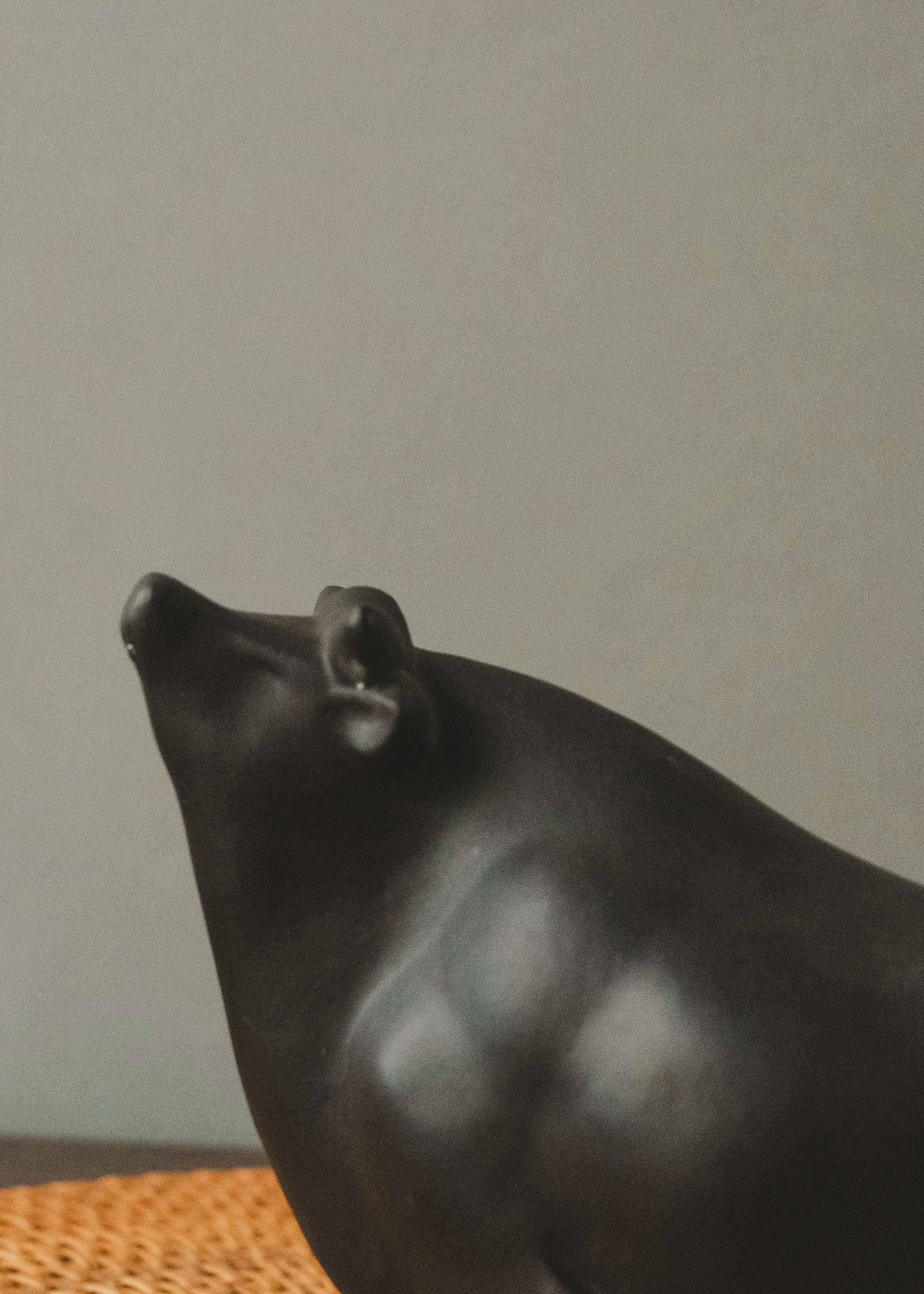 Image 9 of 12
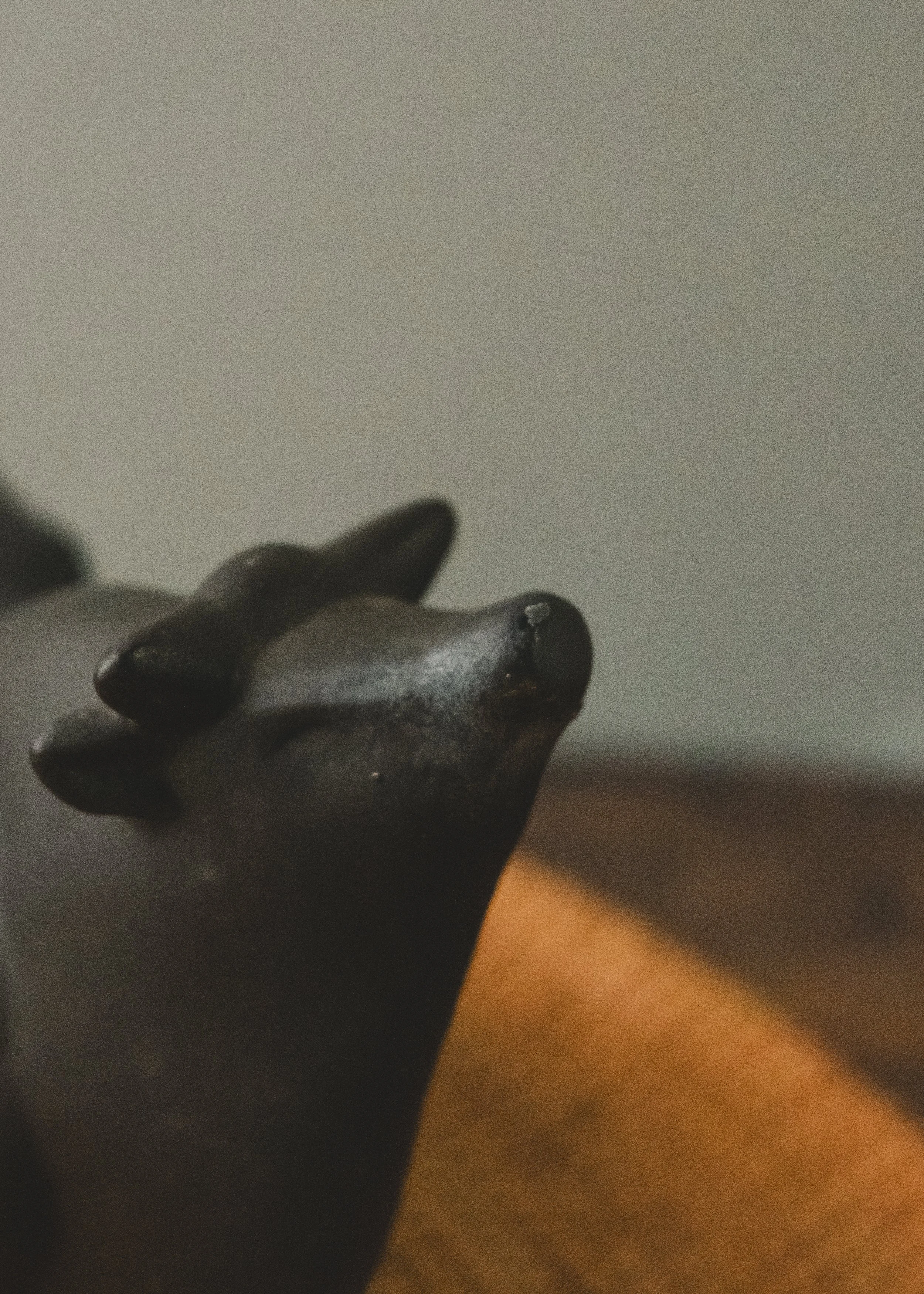 Image 10 of 12
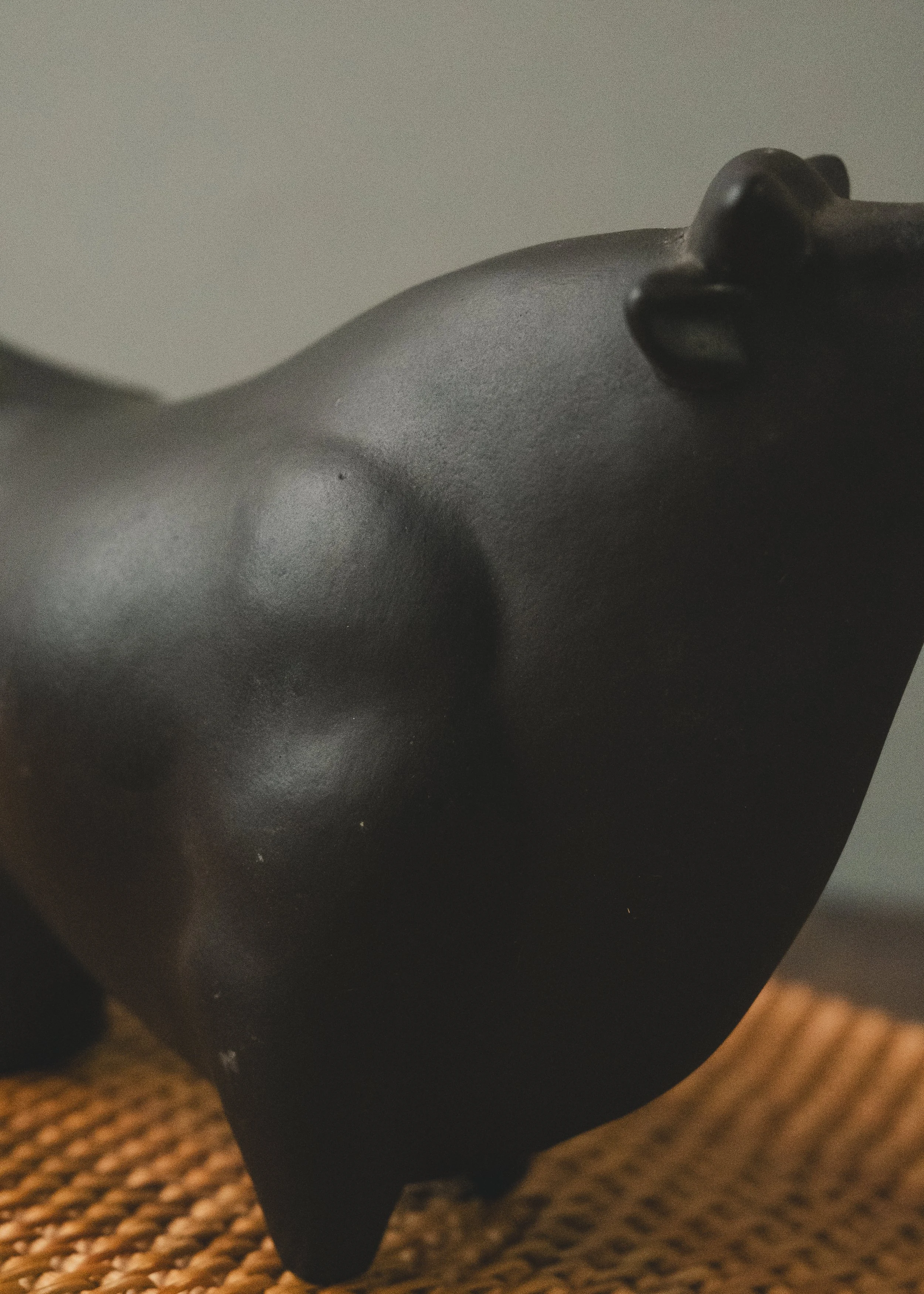 Image 11 of 12
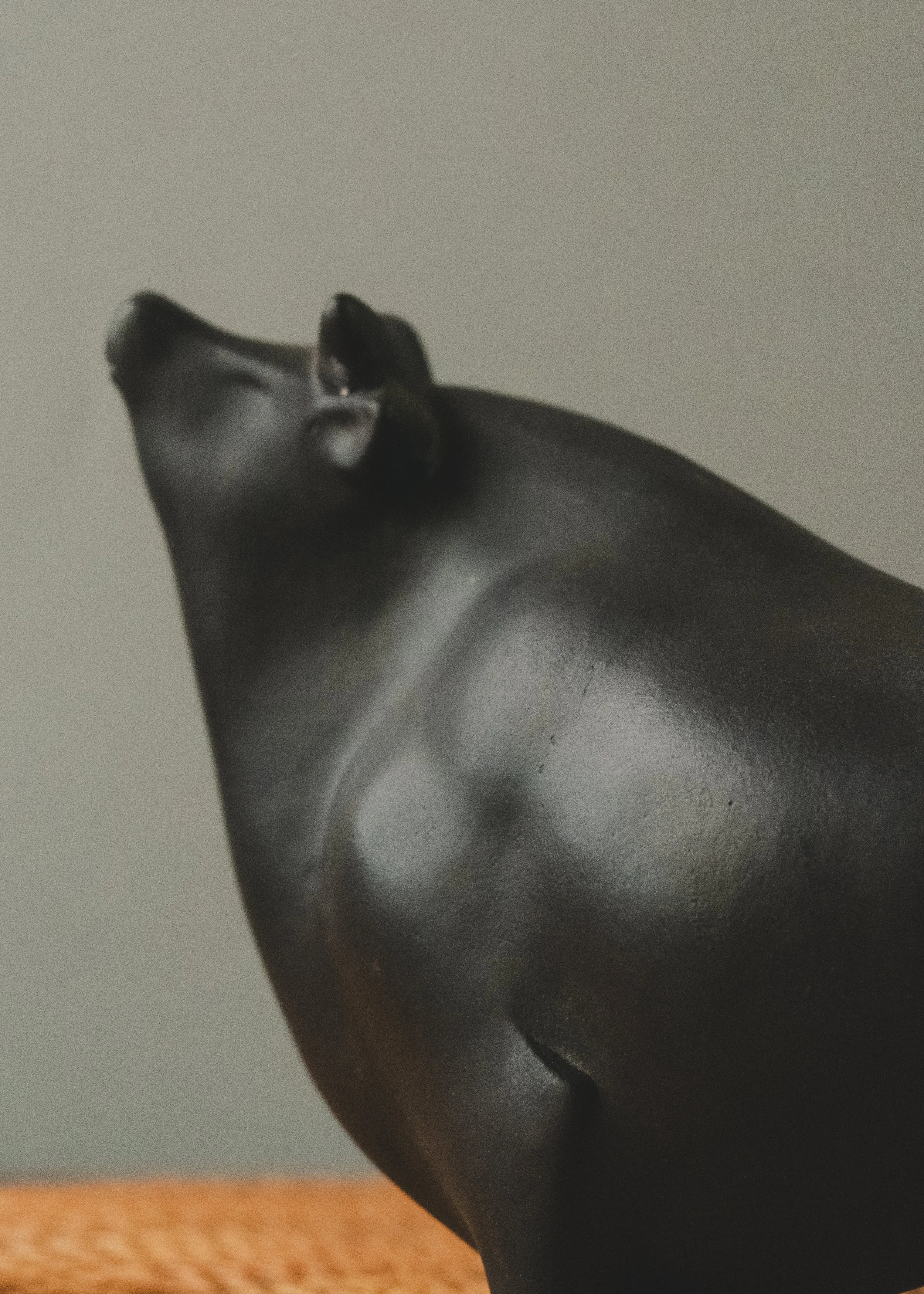 Image 12 of 12