【 The Concept 】
A red oni and a blue oni stand shoulder to shoulder, as close as two people can be. The red one grins with fangs showing and grips a studded iron club; the blue one smiles shyly, hands folded at the chest. Turn them around and you find the red oni’s arm reaching around the blue one’s back, with a twist of straw rope threaded through a hole in that arm and tied in a knot.
In Japan, oni are the horned ogres of folklore. Here they appear not as monsters, but as a devoted couple.
【 Oni, Fear and Protection 】
Oni are the most famous villains of Japanese folklore: horned, fanged, wearing tiger-skin loincloths and carrying iron clubs. Every February at Setsubun, families throw roasted beans and shout “Oni wa soto, fuku wa uchi!” (“Out with the oni, in with good fortune!”).
Yet their fearsome power has always been put to good use as well. Roof-end tiles shaped like oni faces, called onigawara, have been placed on buildings in China, Korea and Japan since ancient times to keep evil away. A creature strong enough to frighten anyone is also strong enough to stand guard.
The iron club in the red oni’s hand gives Japan a well-known proverb: oni ni kanabō, “an iron club for an oni,” meaning to give even more strength to someone who is already strong.
【 The Oni Couple Who Changed Their Ways 】
Japanese legend has its own famous oni couple. Zenki and Goki, “the oni in front and the oni behind,” were husband and wife who once lived in the mountains and harmed people. The ascetic En no Gyōja, founder of the mountain practice of Shugendō, is said to have hidden their youngest child, so that they felt the grief of parents who had lost a child. Understanding at last the pain they had caused others, the couple mended their ways and served him.
Zenki walked ahead with an iron axe to clear the path; Goki followed behind with a jar of sacred water and a pack of seeds. Statues of En no Gyōja are often flanked by the pair, and their descendants are said to have kept lodgings for mountain pilgrims for generations, with one family still doing so today.
【 The Red Oni Who Cried 】
The pairing of red and blue oni is also beloved through a children’s story by Hamada Hirosuke, first published in 1933 and known today as Naita Akaoni, “The Red Oni Who Cried.” A kind red oni longs to be friends with the villagers, but they are afraid of him. His friend the blue oni offers to play the villain and cause trouble, so that the red oni can drive him away and win the villagers’ trust. The plan works, but the blue oni then leaves for good so that no one will doubt his friend. It is a story of friendship and sacrifice that generations of Japanese children have grown up with.
【 What Owning This Piece Brings 】
・A pair of oni who keep evil away, smiling instead of scowling
・A symbol of partnership: two very different characters holding on to each other
・Stories to share, from the reformed oni couple of legend to The Red Oni Who Cried
・Bright, hand-painted color, with a straw rope knotted through the embracing arm
A thoughtful gift for a wedding, an anniversary, a couple’s new home, or a friend who is always on your side.
【 Where to Place It 】
Near the entrance, where guardians traditionally stand. On a shelf or desk where two people share a home. Around Setsubun in early February, as a cheerful seasonal display.
【 Care 】
Dust with a soft, dry brush. Avoid water and rubbing, which can lift the hand-painted colors. Keep the straw rope away from moisture.
【 Reading the Object 】
・Red oni: green hair, two striped yellow horns, wide grin with fangs, holding a black iron club studded with dots
・Blue oni: black hair, a striped yellow horn, a gentle smile with small fangs, hands folded at the chest
・Loincloths: green and grey, both spotted in black like tiger skin
・Back: the red oni’s arm reaches around the blue oni’s back; a straw rope is threaded through a hole in the arm and knotted
・Feet: yellow-painted toenails
【 Presence 】
Loud colors, big grins and a warm embrace: impossible to look at without smiling.
Archive Note
The year 1933 refers to the first publication of the story later known as The Red Oni Who Cried. It is not the production date of this piece.
Provenance Note
Sourced in Japan. Production date unknown.


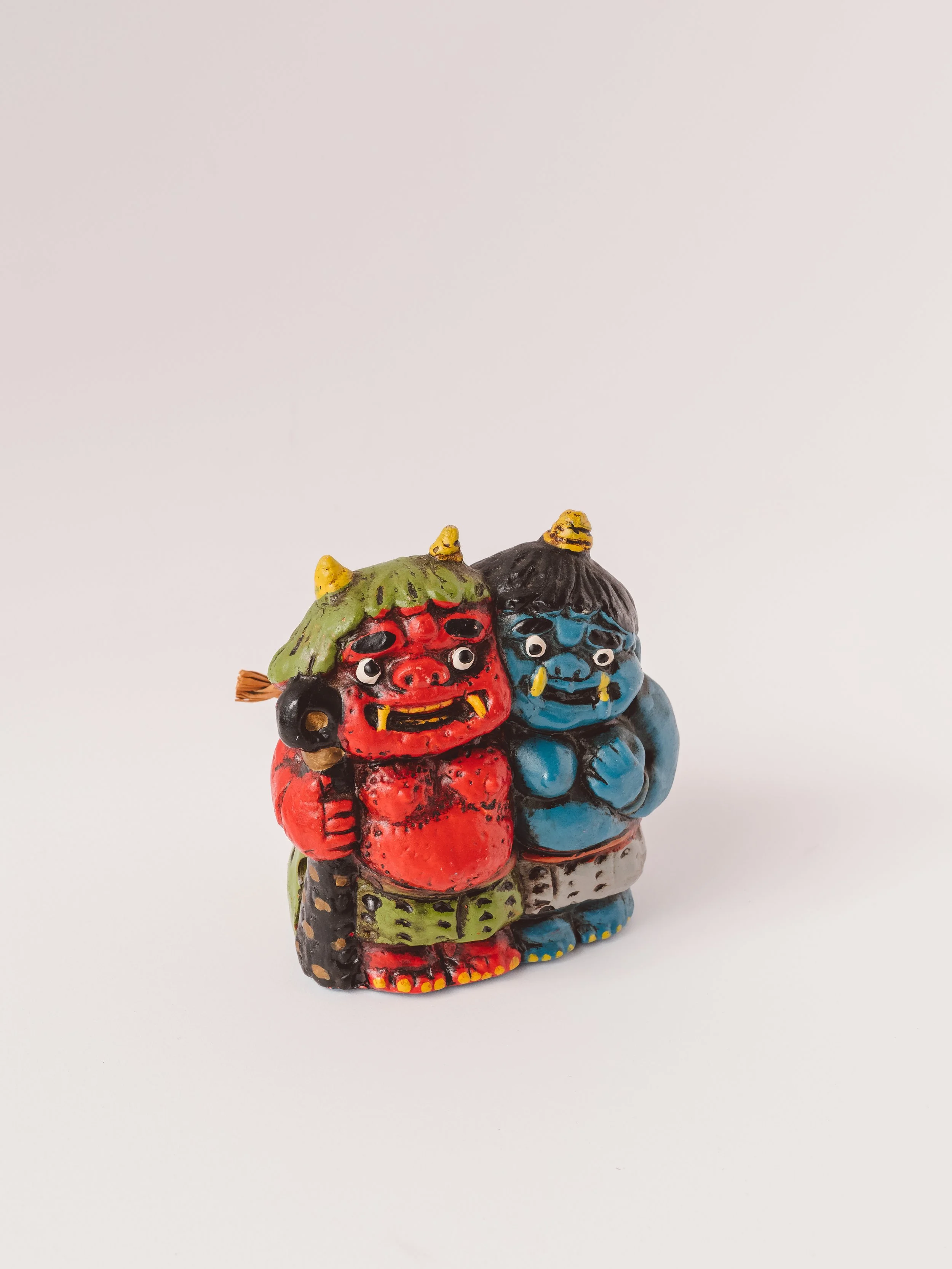 Image 1 of 7
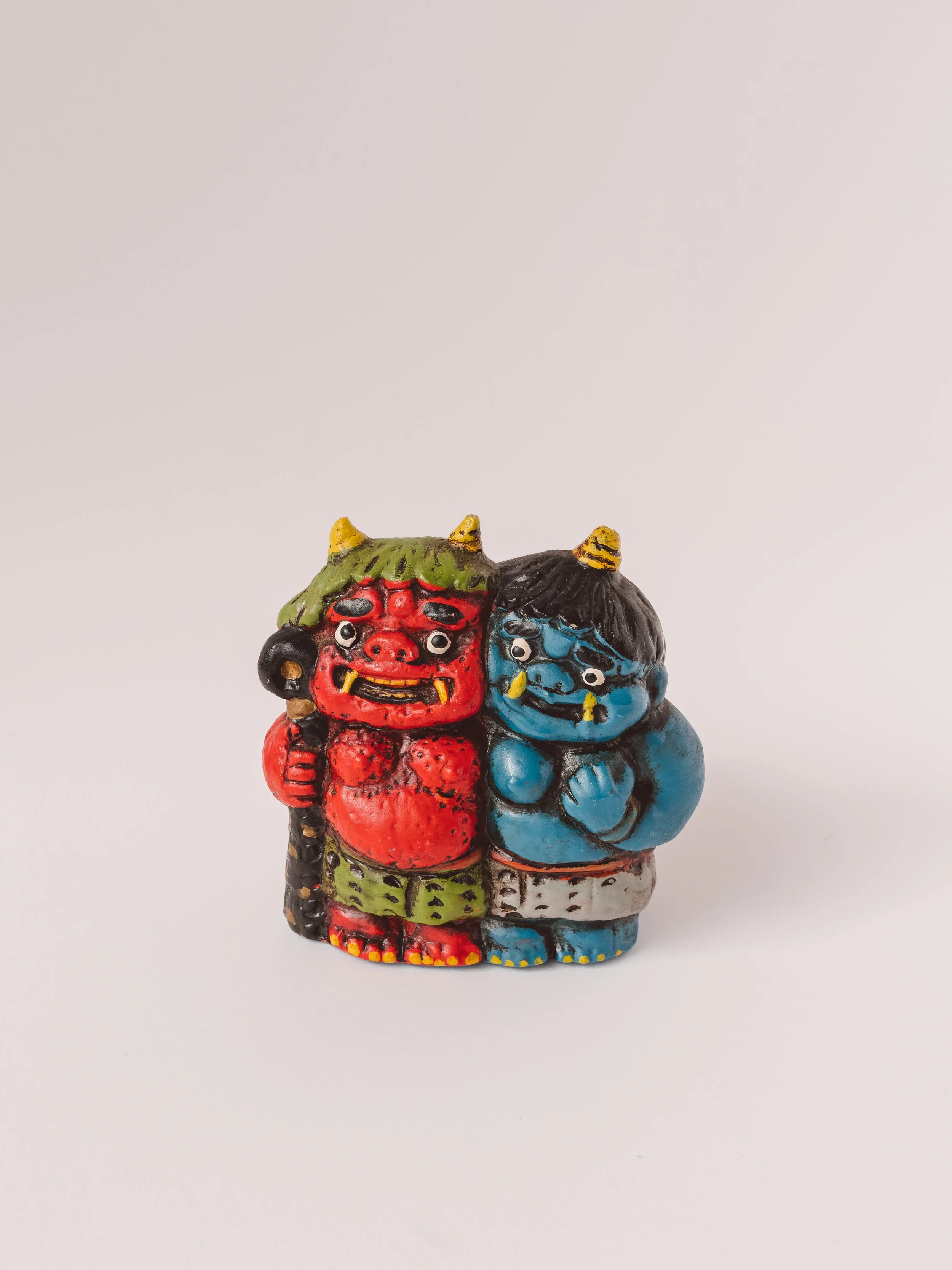 Image 2 of 7
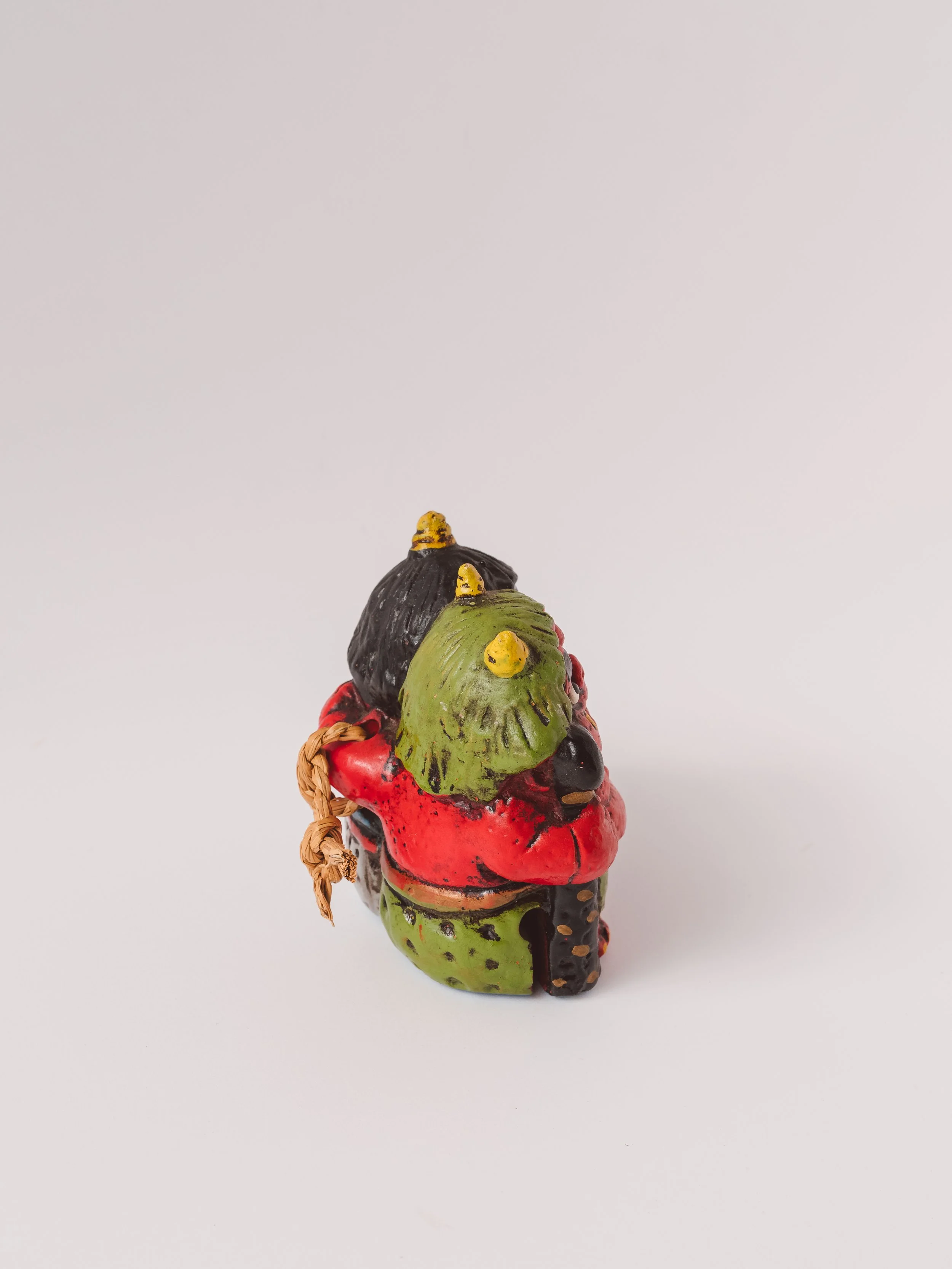 Image 3 of 7
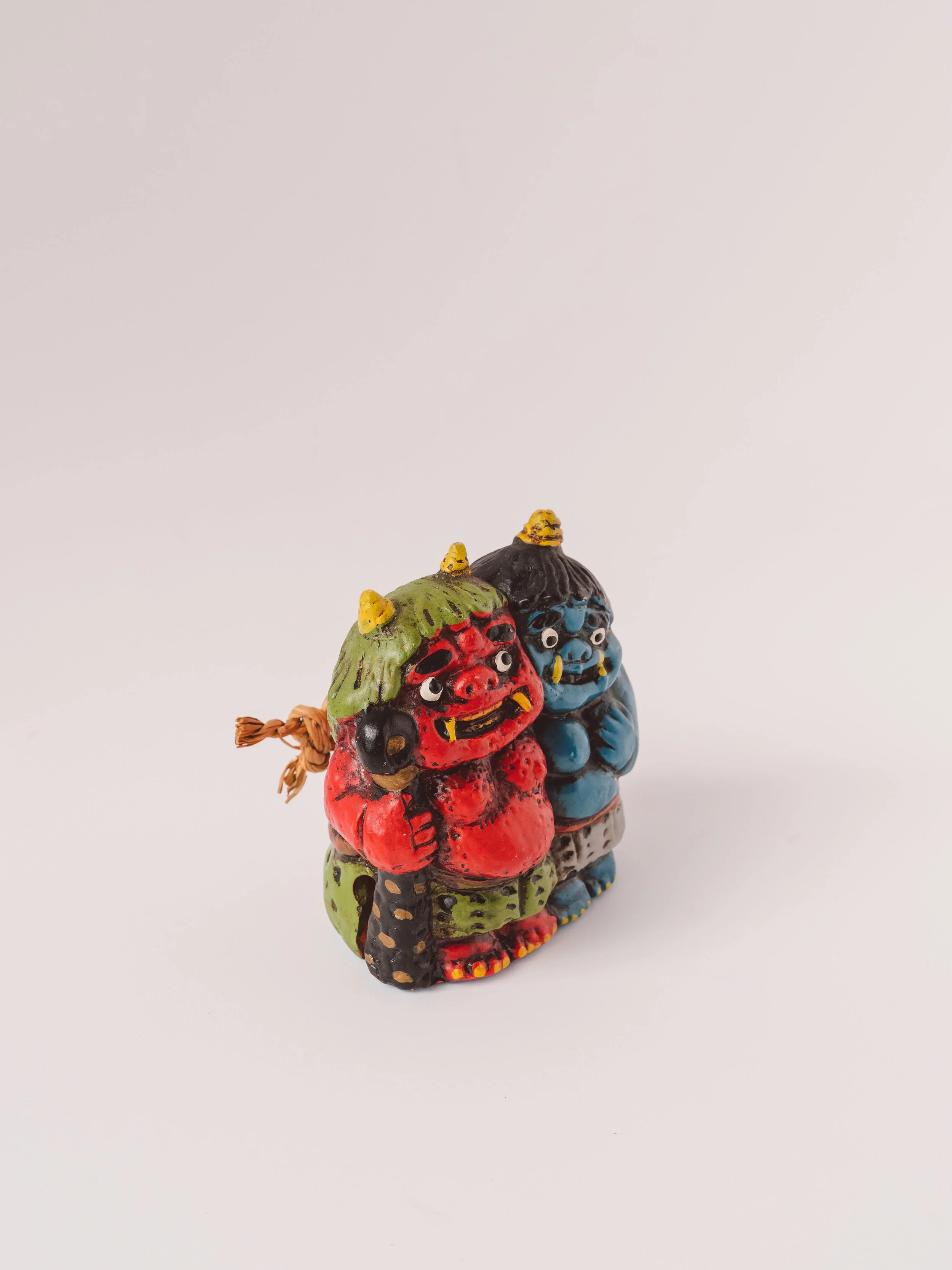 Image 4 of 7
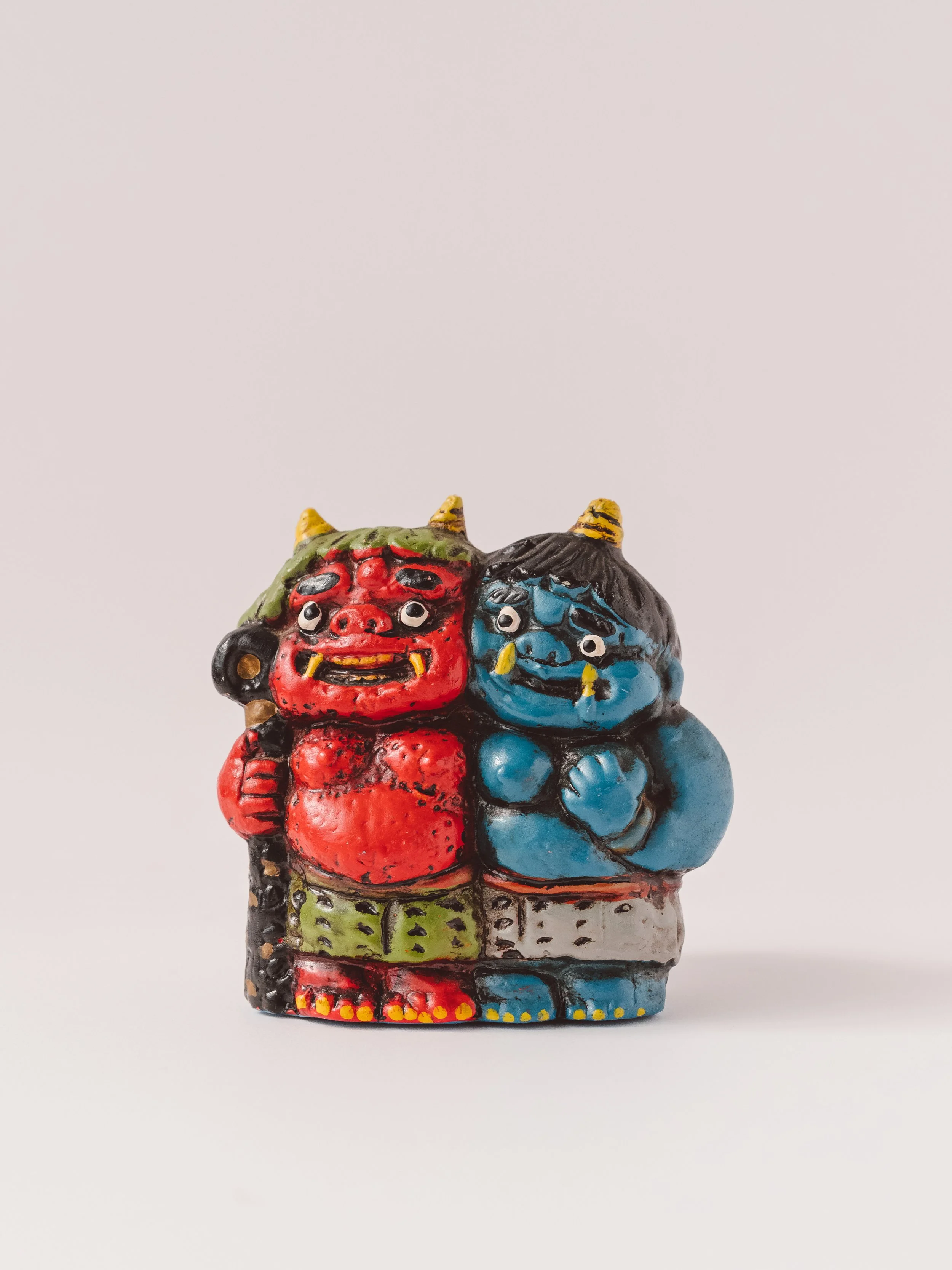 Image 5 of 7
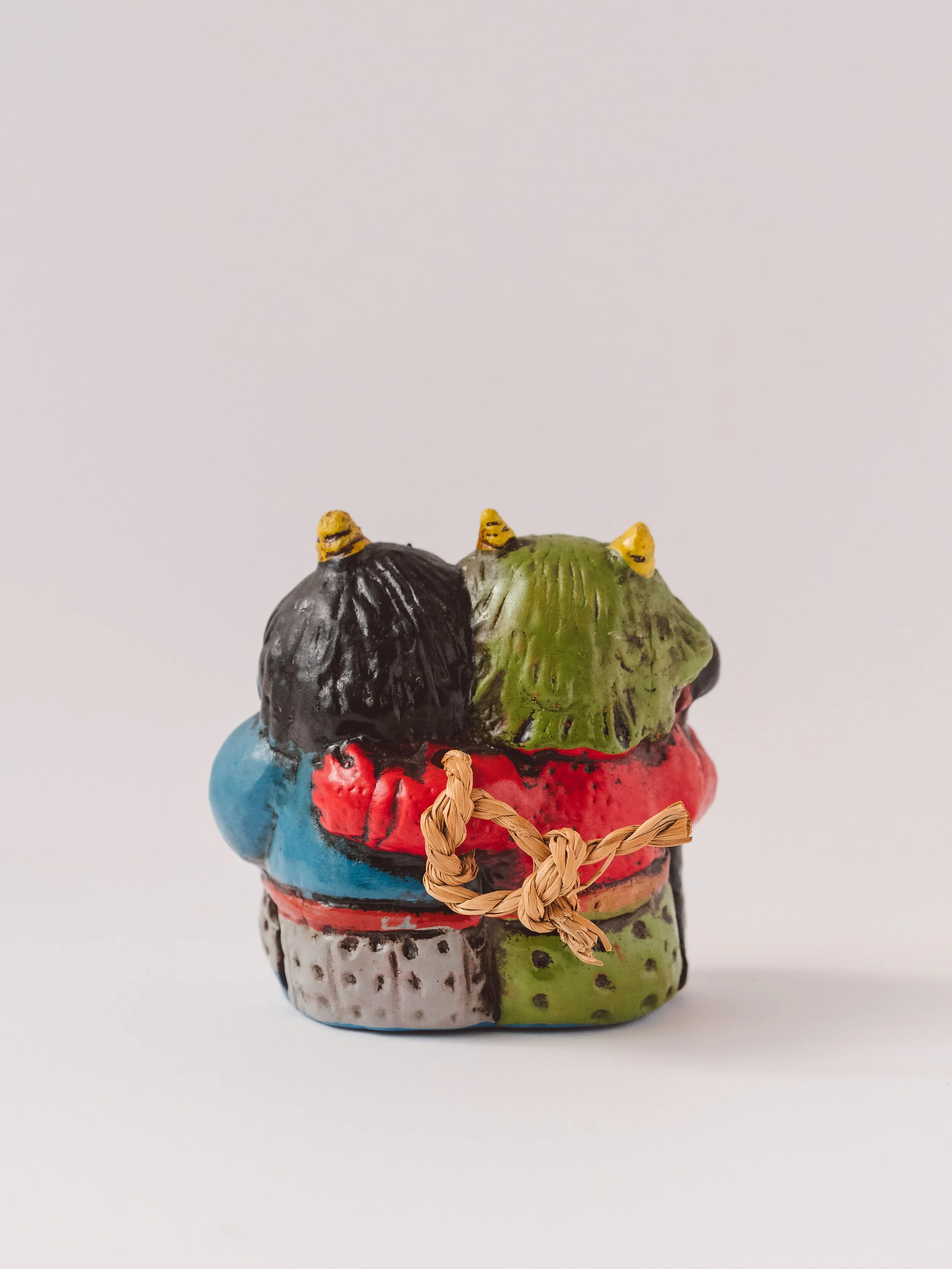 Image 6 of 7
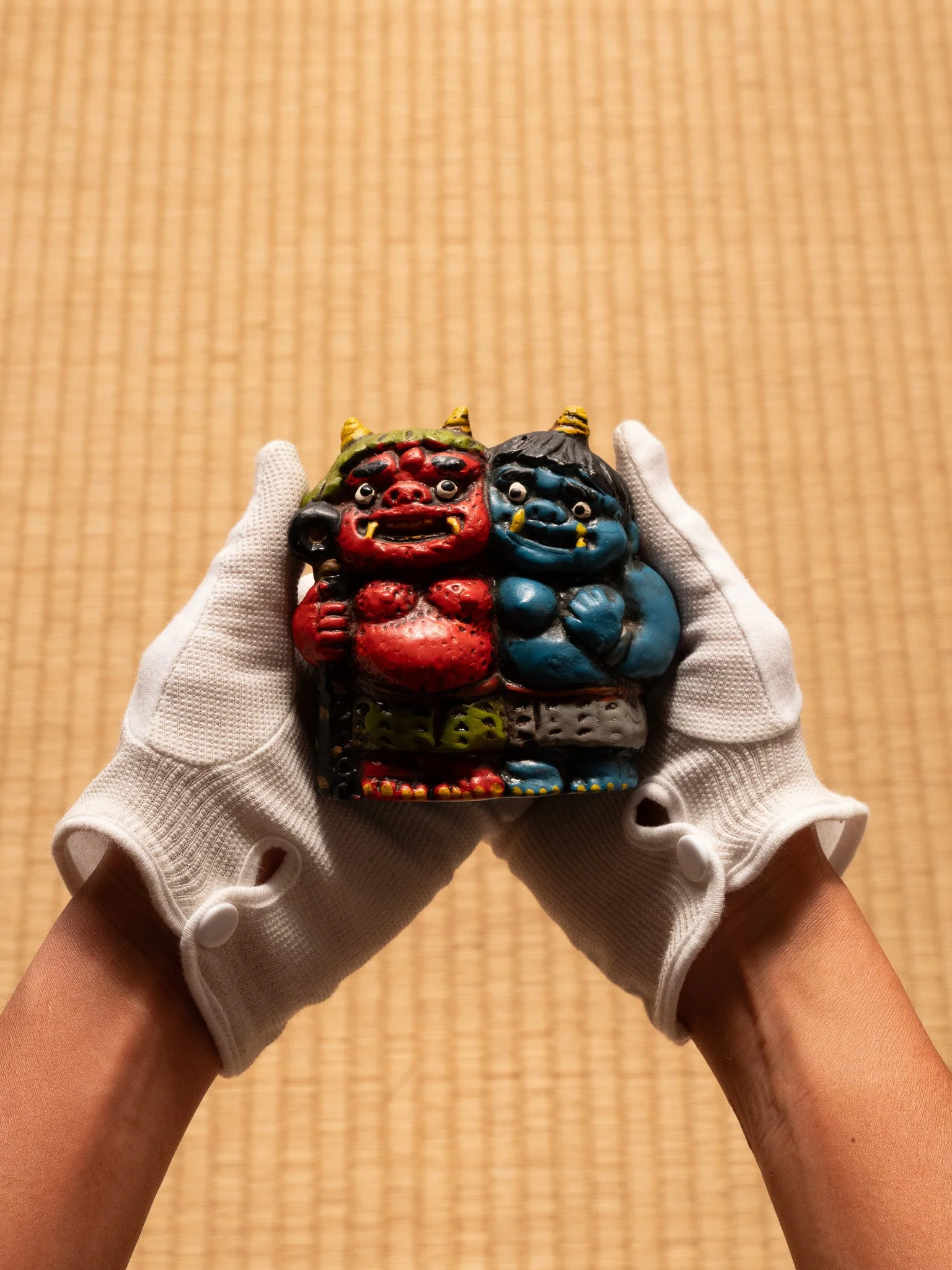 Image 7 of 7