

 Image 1 of 11
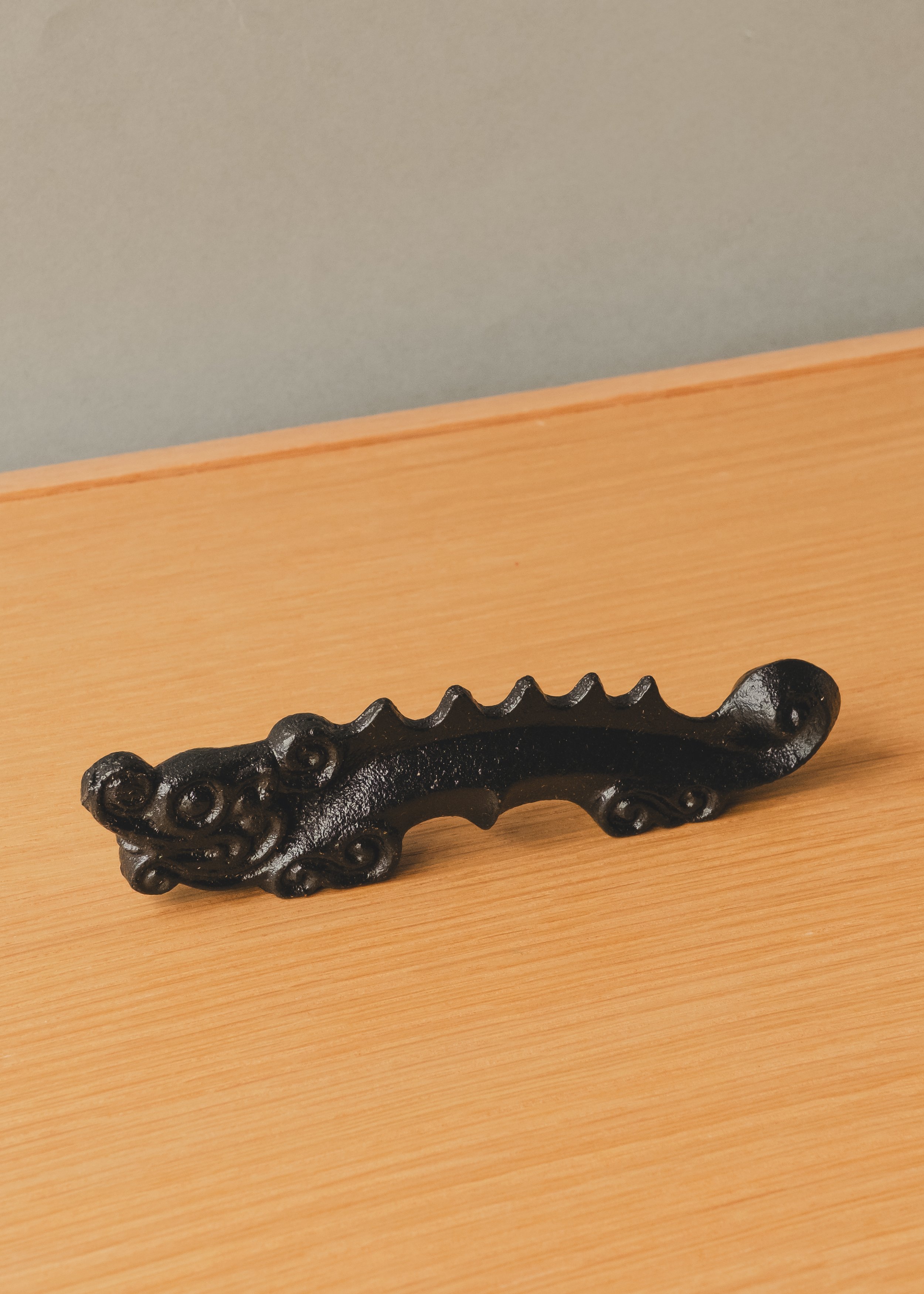 Image 2 of 11
 Image 3 of 11
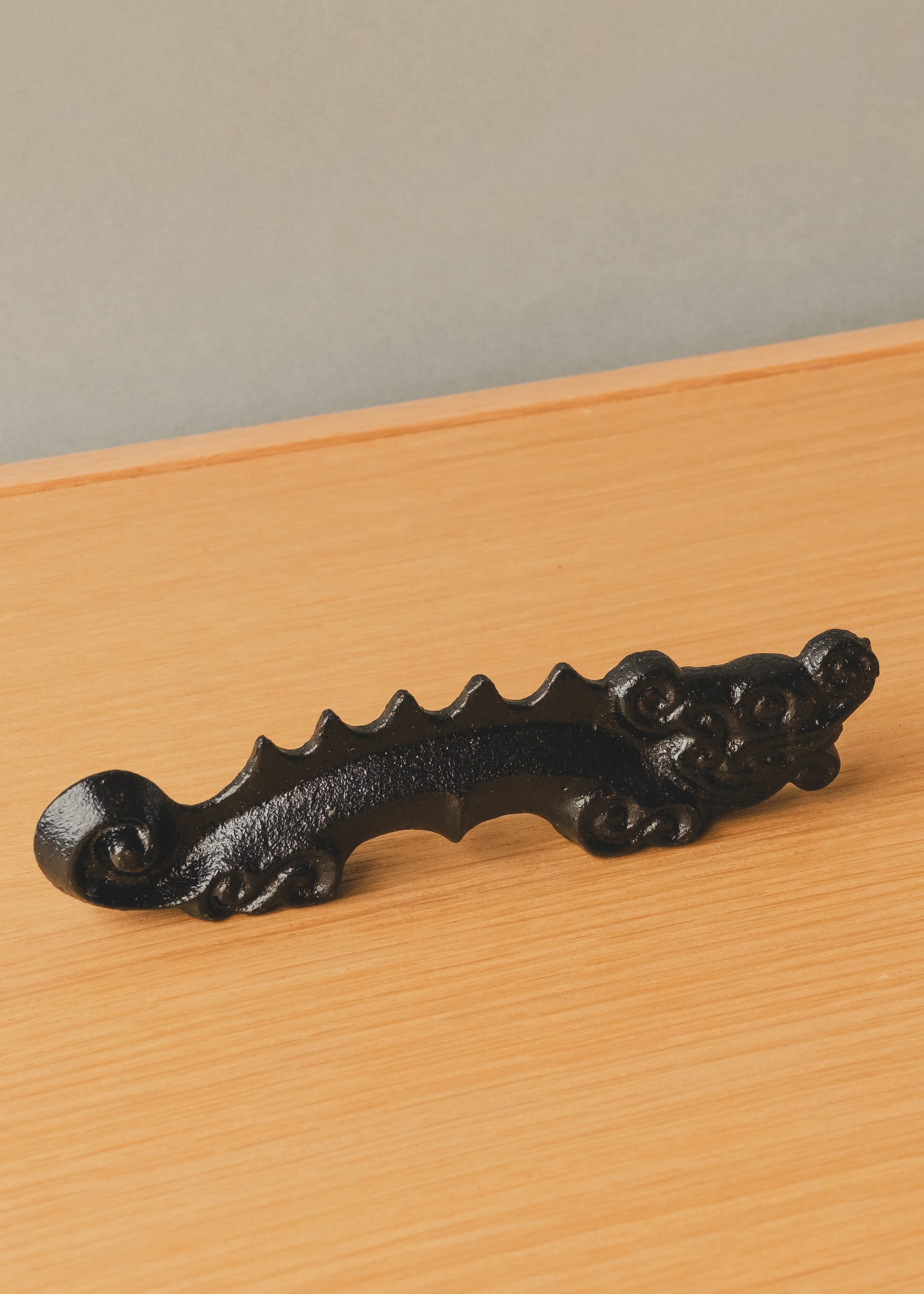 Image 4 of 11
 Image 5 of 11
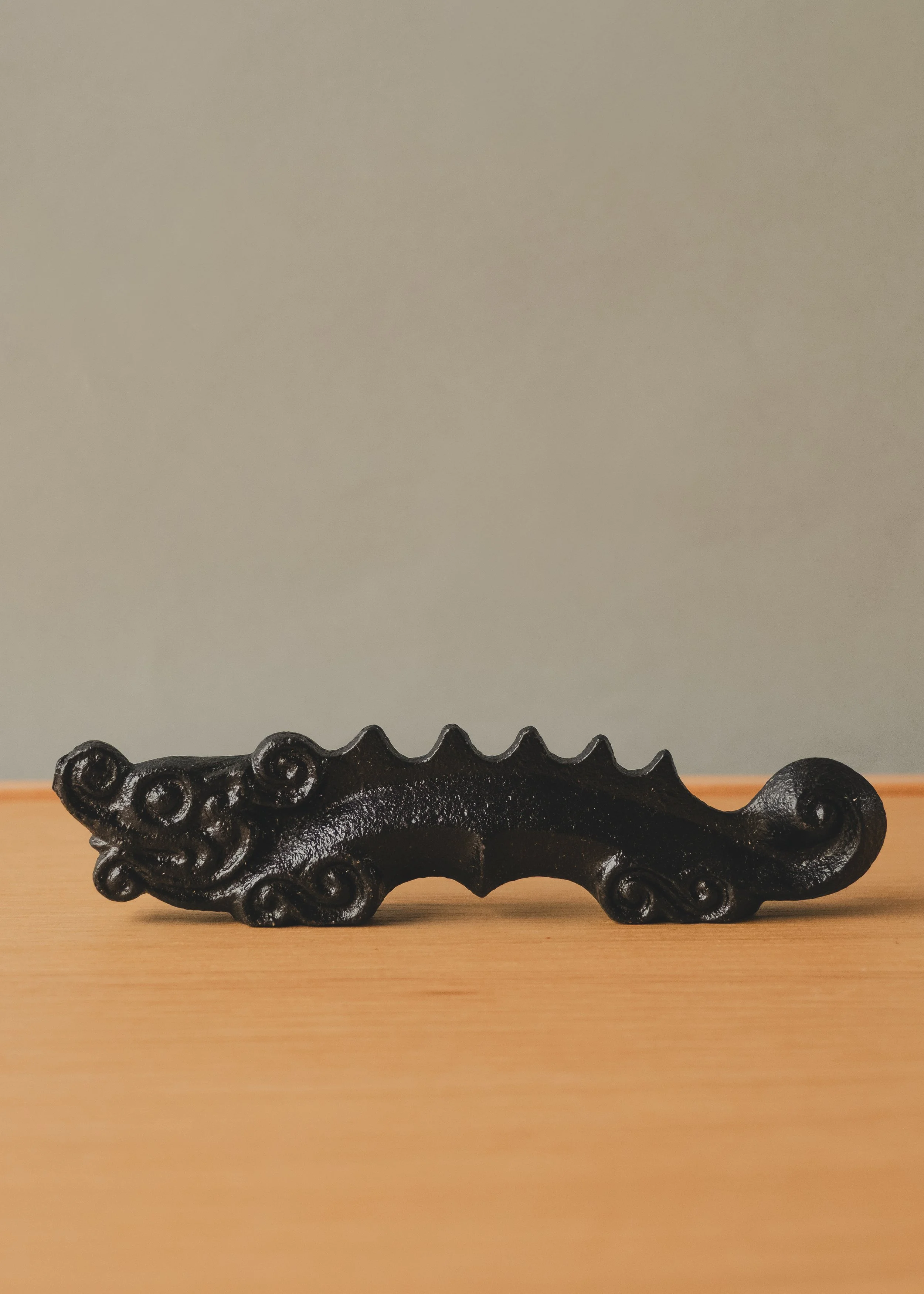 Image 6 of 11
 Image 7 of 11
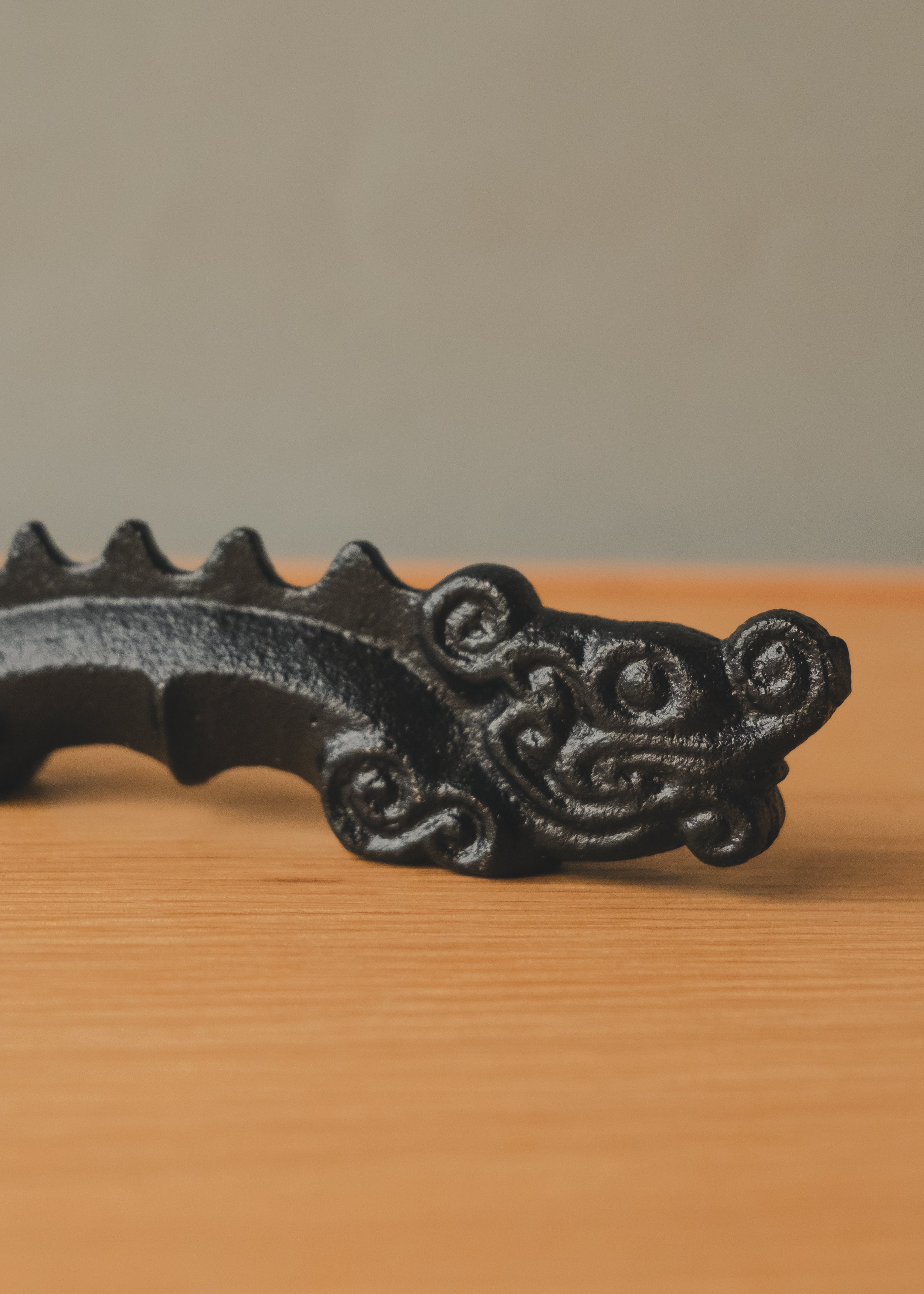 Image 8 of 11
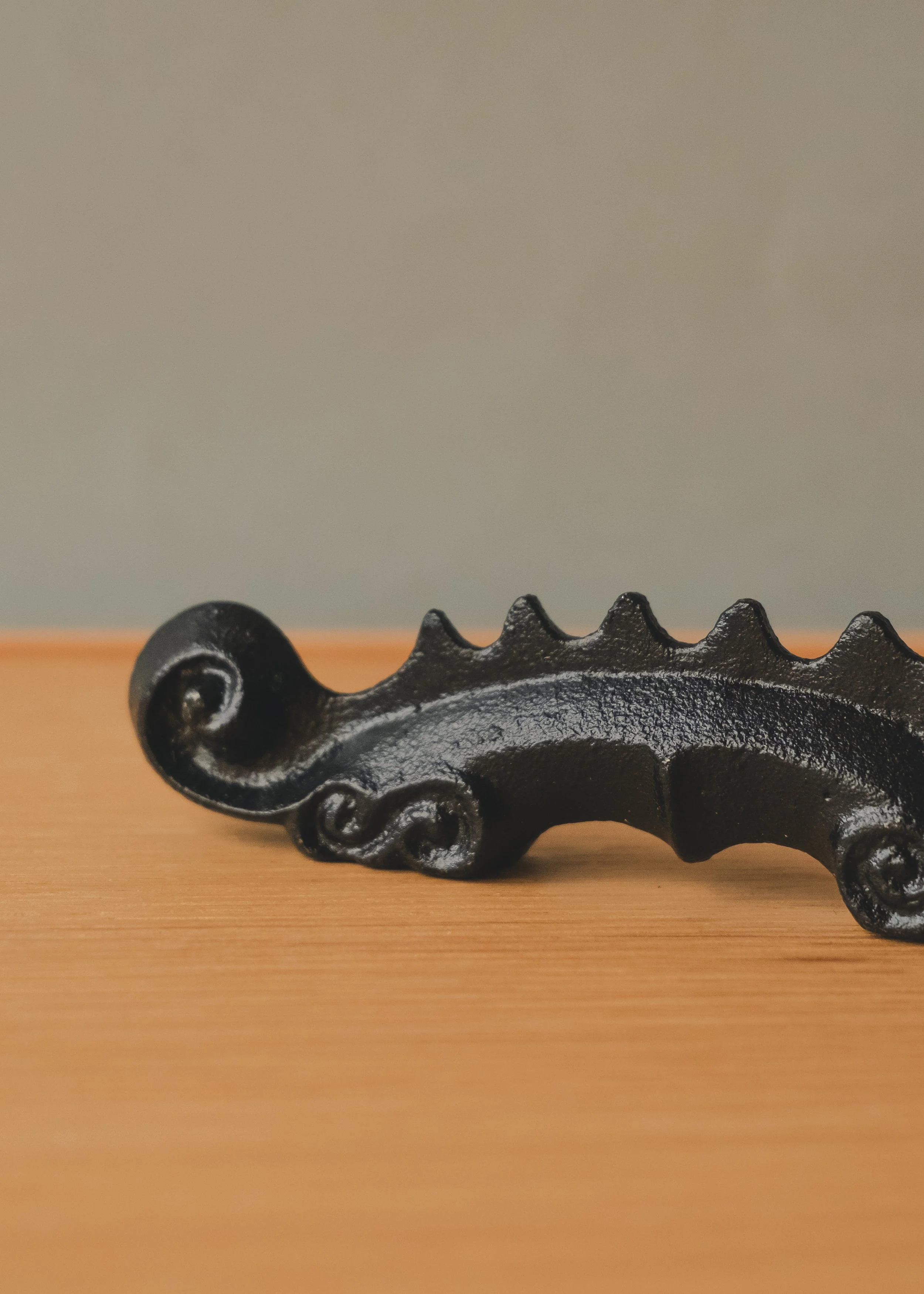 Image 9 of 11
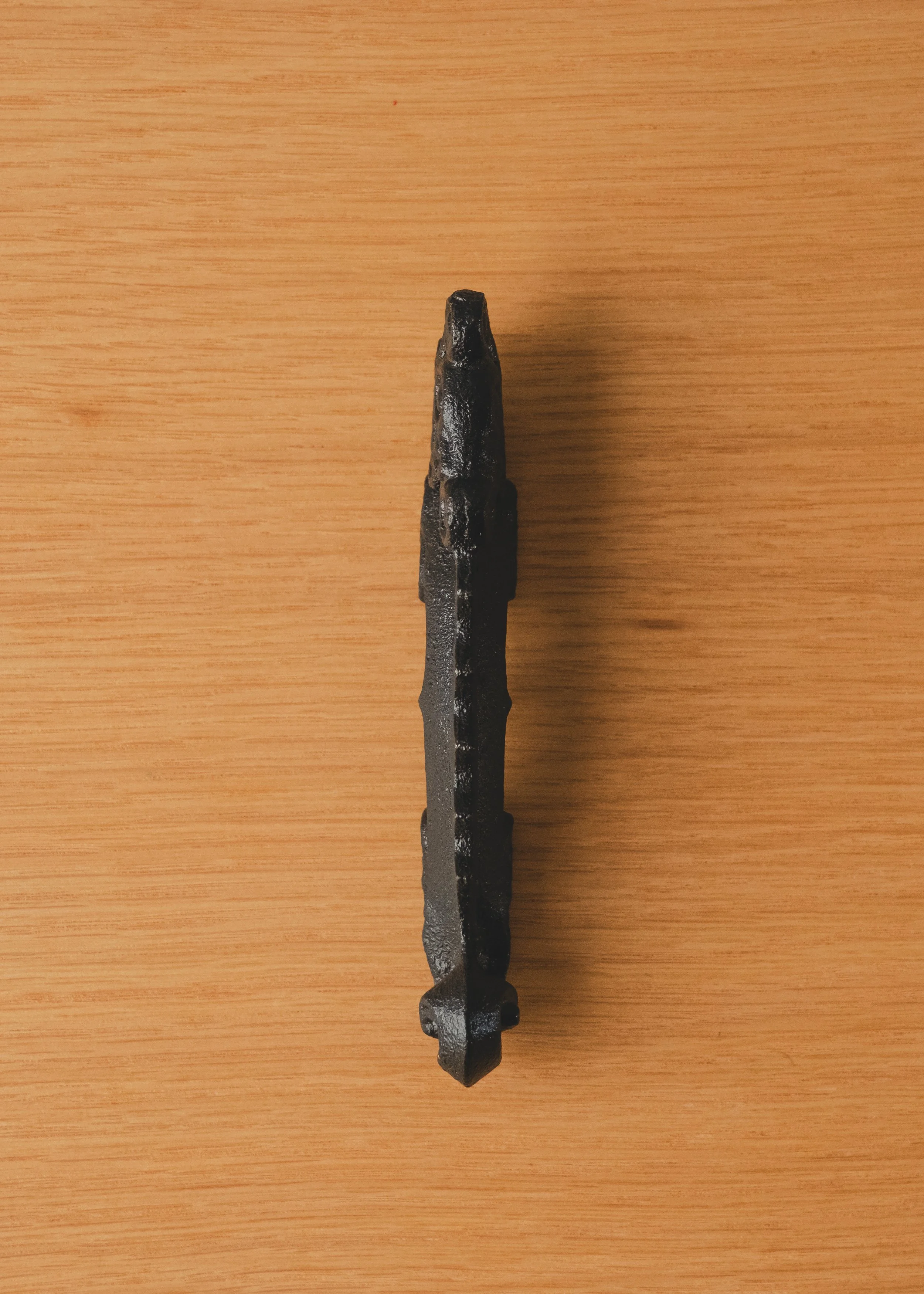 Image 10 of 11
 Image 11 of 11
【Context】
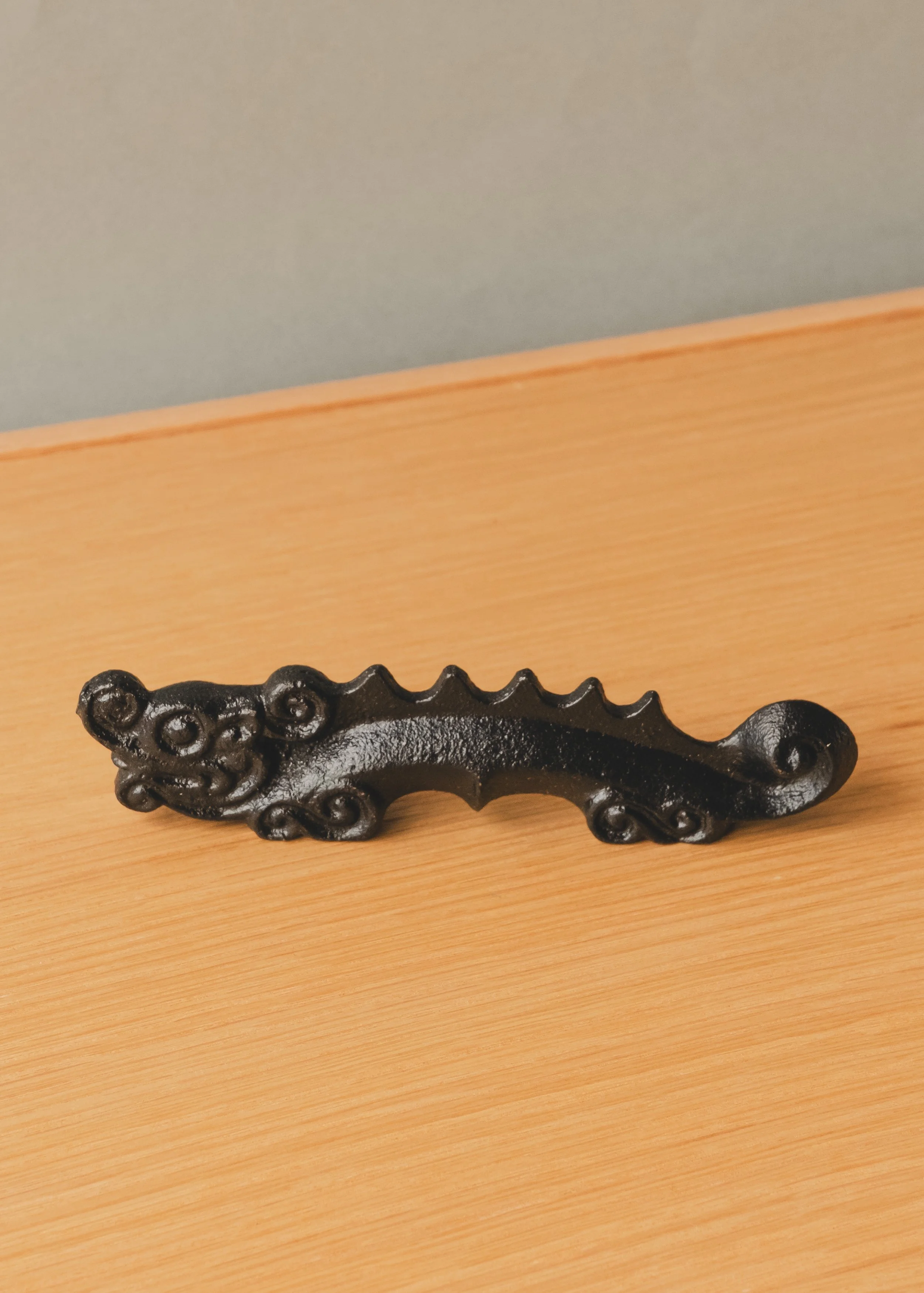
Identity: Anonymous Provincial Ironwork / Dragon-Form Desk Object.Origin: Northern Province (Historic Ironware Region), Japan.Technique: Sand-Cast Iron, Kamayaki Oxidation, Lacquer Finish.Function: Paperweight / Brush Rest / Desk Guardian.
【 Dimensions (Approx.) 】
Width: 13 cm (5.1 in)Height: 3 cm (1.2 in)Depth: 1.5 cm (0.6 in)Weight: 177 g (6.2 oz)
RELATED ARCHIVAL SPECIMENS
【 The Concept 】
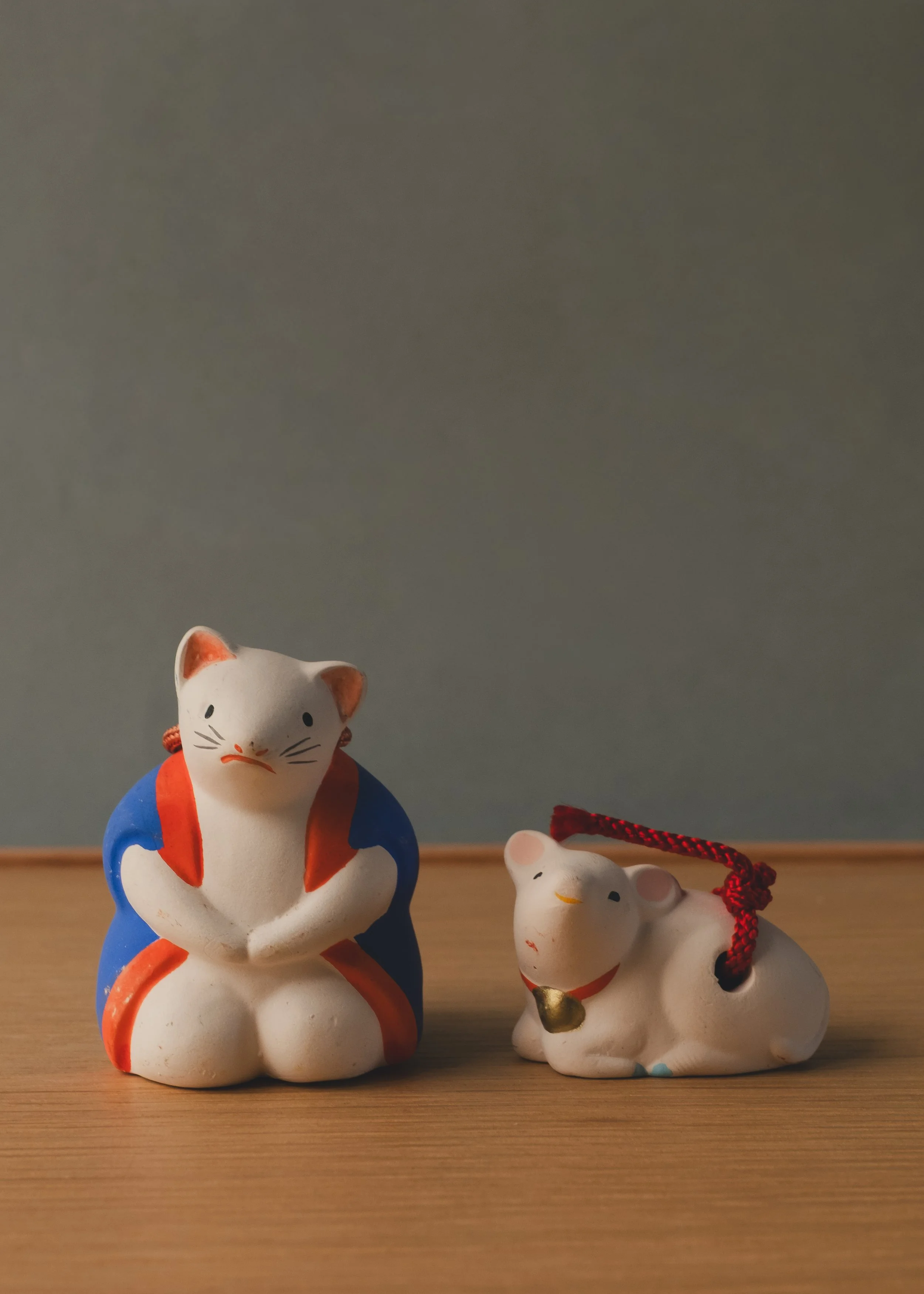
In the Japanese zodiac, the first position belongs to the mouse. Not the dragon, not the tiger — the mouse. The smallest animal in the cycle was given the task of beginning everything. In folk belief, this creature serves a second role: it is the chosen messenger of the god of wealth and harvest. Where the mouse appears, prosperity follows. Where two appear together, the message is twice as certain. An anonymous craftsman in a coastal province understood both roles. They formed two figures from earth — one seated in formal posture, one crouching low as if about to move — dressed them both in red, and placed a clay sphere inside each so that every time they are lifted, a dry rattle sounds from within. The red is not decorative. In Japanese tradition, this color has one purpose: to repel what should not be allowed near.
【 The Function 】
Both figures are dorei — clay bells. Each houses a loose clay sphere that strikes the inner wall when lifted, producing a brief, percussive rattle. In folk practice, this sound served to clear a threshold, a desk, a bedside — any space where misfortune might settle. The larger figure sits upright in ceremonial posture, hands folded. The smaller one crouches forward, alert. Together they create a pair that covers stillness and motion, ceremony and vigilance.
【 The Texture 】
The bodies are white — an unglazed, chalky ground that holds light without reflecting it. Over this, the red garments are painted with a matte mineral pigment that has aged into a warm, uneven tone — darker in the folds, thinner at the edges. The eyes are simple black dots. The whiskers are single brushstrokes. On the back of the larger figure, characters are pressed into the clay before firing — a mark that ties these objects to a specific shrine district in Japan's southern coastal region. The surface is dry, warm, and rough in the way that only unfired earth can be.
【 Presence 】
They are small enough to share a windowsill. The larger one commands attention; the smaller one earns it. Place them together and they become a conversation — one still, one ready. One guarding, one scouting. The rattle is faint, almost private, audible only to the person holding them. That is the point. The protection they offer was never meant to be loud.
Sourced from a private collection in southern coastal Japan.
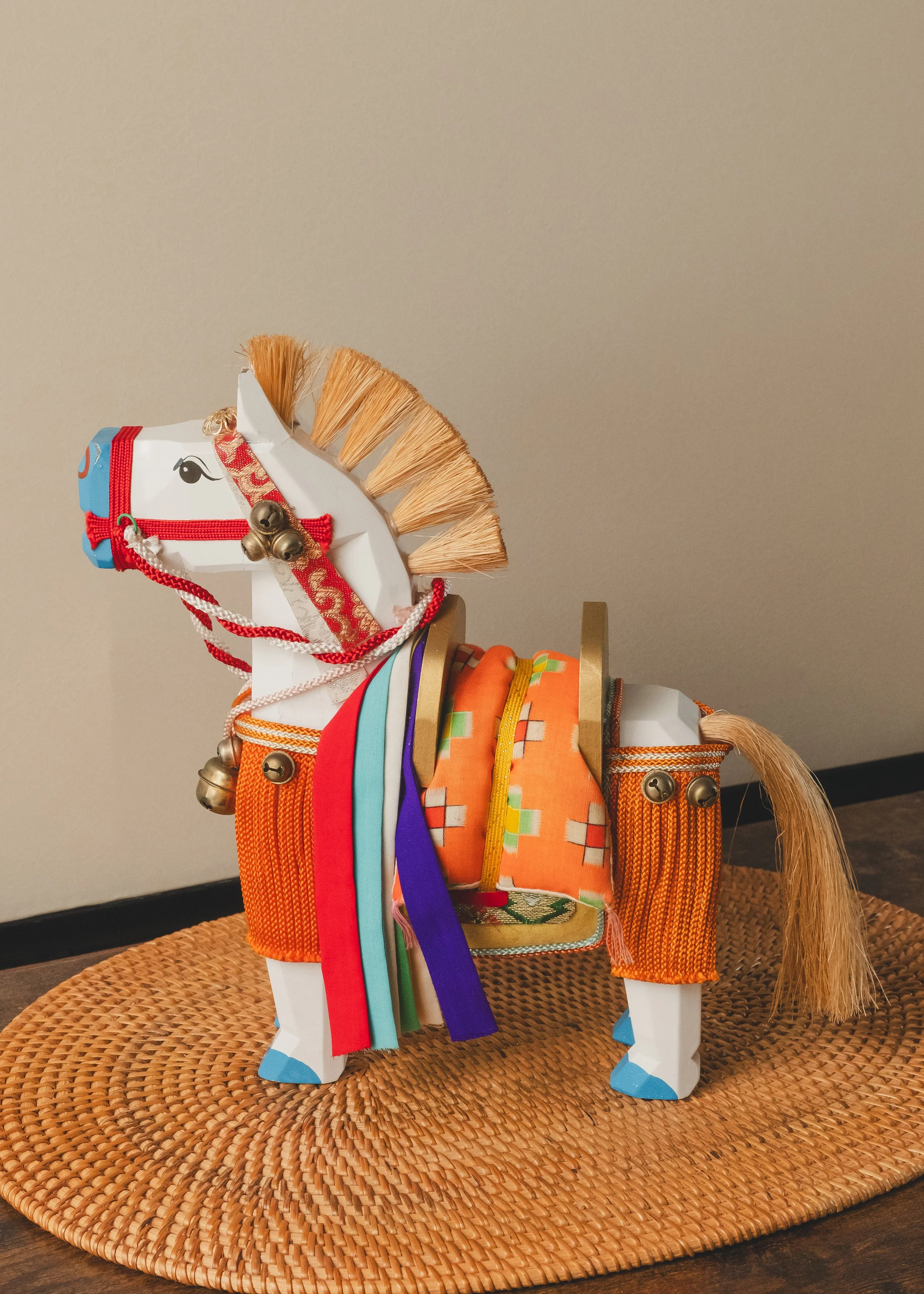
【 The Concept 】
In the northern provinces of Japan, the horse was not livestock. It lived inside the house, under the same roof, separated from the family by a single wall. When the rice planting was done and the animal had nothing left to carry, the family dressed it — not in a saddle, but in armor, bells, ribbons, and silk. They walked it to the shrine of the horse god and said thank you. An anonymous woodcarver took this procession and carved it into a single standing figure: a white horse in full ceremonial dress, wearing more decoration than the people who walk beside it. It does not move. It does not need to. The bells do the talking.
【 The Function 】
A standing figure. Twenty-six centimeters tall, carved from light timber in an interlocking construction — body, neck, and legs shaped separately, then fitted together. The horse wears a layered textile coat in orange with a woven cross-hatch pattern, tied at the belly. Ribbons in red, blue, green, and purple hang from the sides. Small brass bells are knotted to the harness with twisted cord. Shake the figure gently and the bells sound — a faint, dry chime that the Japanese government listed among the hundred sounds worth preserving.
【 The Texture 】
Carved timber sealed with gesso and painted in flat, opaque color. The body is white — clean, chalky, and matte. The hooves are sky blue. The ears are lined in red. A gold medallion sits on the forehead. The mane and tail are natural plant fiber, pale blonde, cut blunt and left to fall. The textile coat is real cloth — not painted on — with a printed pattern stitched and glued to the wooden body. The bells are real metal, small enough to fit on a fingertip, strung on red-and-white twisted cord. Every surface is a different material: wood, cloth, fiber, metal. The hand moves from smooth to rough to soft to cold in a single pass.
【 Presence 】
It is the tallest and most decorated object in any room it enters. The white body and orange coat make it impossible to ignore. The ribbons hang still until someone walks past, and then they move. The bells stay silent until someone picks it up, and then they ring. It stands the way the real horse stands at the shrine — still, patient, and covered in more gratitude than it knows what to do with.
Sourced from a private collection in northern Japan.
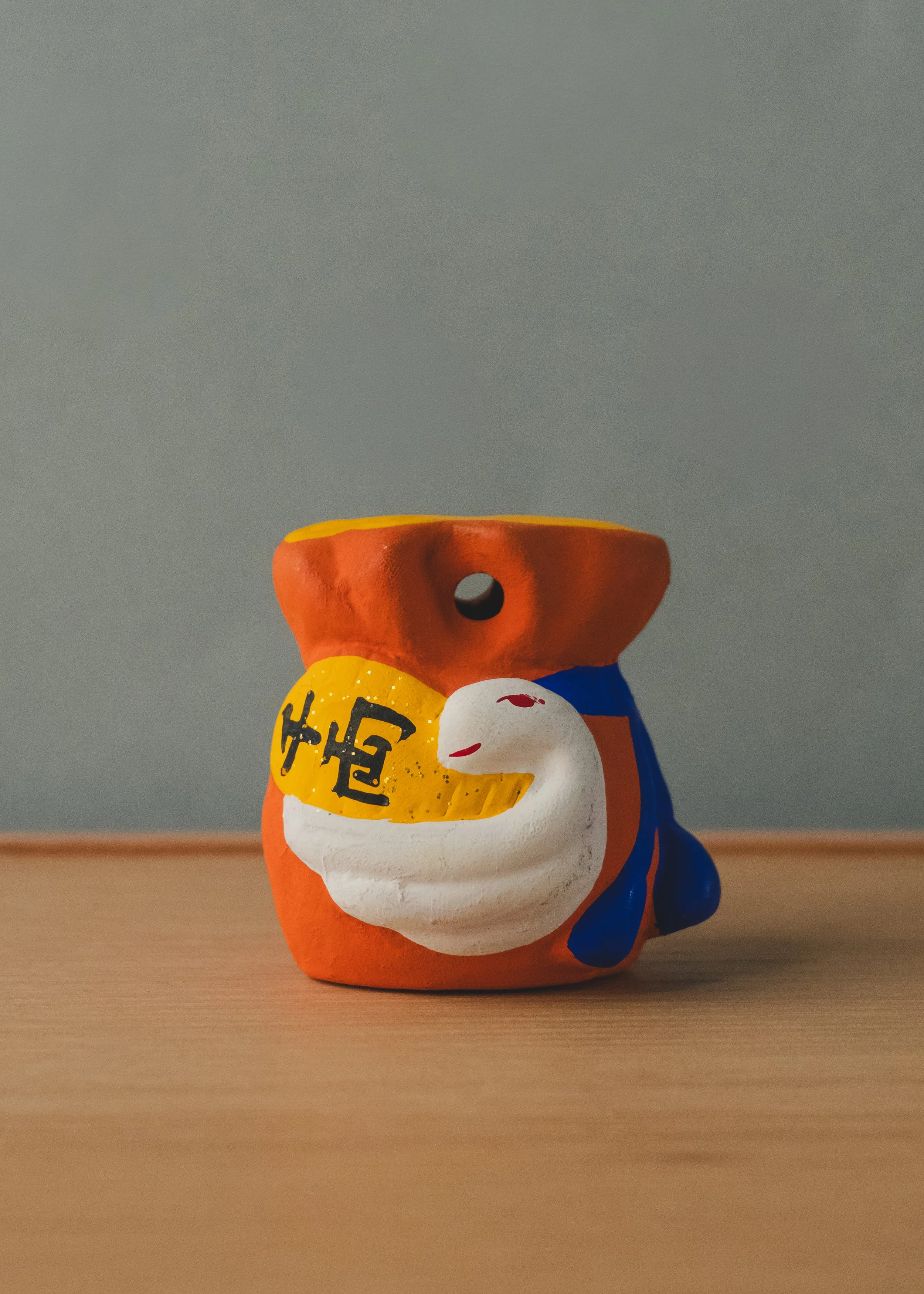
【 The Concept 】
In Japanese folk belief, the white snake is the one animal that carries money toward you instead of away. Not because it is greedy — because it serves the deity of wealth, and the deity trusts it to choose who receives what. An anonymous ceramicist took this belief and built it into a clay bell: a white snake coiled on top of an orange drawstring purse, clutching a gold coin marked with the character for its own zodiac year. The purse is full. The snake is not leaving. The coin is not for spending. It is for keeping — because in this tradition, money shown to a white snake stays.
【 The Function 】
A clay bell and a fortune vessel. Shake it and a small clay sphere sealed inside the body strikes the walls and produces a dry, earthen rattle. Set it down and the snake watches the room from the top of its purse. In the tradition it comes from, this object is placed near the entrance of a home or beside a cash register — wherever money enters. The purse holds what comes in. The snake guards what stays. The coin declares the terms.
【 The Texture 】
Fired clay sealed with gofun and painted with mineral pigment bound in nikawa. The purse body is a warm orange — somewhere between persimmon and vermillion — with a blue band tied around the waist and small yellow flowers scattered across the surface. The snake is matte white, coiled once around the top of the purse, its body smooth and unscaled. Its eyes are red dots. Its mouth is a thin red line. The gold coin it holds is painted in flat yellow with the zodiac character brushed in black. The back of the bell carries a narrow slit where the sound escapes. The surface is chalky and dry to the touch — no gloss, no varnish, no modern coating.
【 Presence 】
It fits inside a closed hand. The orange is the loudest color in any room it enters. The white snake is the quietest thing on top of it. That contrast is the design — something bright enough to attract attention, guarded by something still enough to keep it. Place it where the money comes in. The snake will handle the rest.
Sourced from a private collection in western Japan.