【 The Concept 】
In the northern provinces of Japan, the horse was not livestock. It lived inside the house, under the same roof, separated from the family by a single wall. When the rice planting was done and the animal had nothing left to carry, the family dressed it — not in a saddle, but in armor, bells, ribbons, and silk. They walked it to the shrine of the horse god and said thank you. An anonymous woodcarver took this procession and carved it into a single standing figure: a white horse in full ceremonial dress, wearing more decoration than the people who walk beside it. It does not move. It does not need to. The bells do the talking.
【 The Function 】
A standing figure. Twenty-six centimeters tall, carved from light timber in an interlocking construction — body, neck, and legs shaped separately, then fitted together. The horse wears a layered textile coat in orange with a woven cross-hatch pattern, tied at the belly. Ribbons in red, blue, green, and purple hang from the sides. Small brass bells are knotted to the harness with twisted cord. Shake the figure gently and the bells sound — a faint, dry chime that the Japanese government listed among the hundred sounds worth preserving.
【 The Texture 】
Carved timber sealed with gesso and painted in flat, opaque color. The body is white — clean, chalky, and matte. The hooves are sky blue. The ears are lined in red. A gold medallion sits on the forehead. The mane and tail are natural plant fiber, pale blonde, cut blunt and left to fall. The textile coat is real cloth — not painted on — with a printed pattern stitched and glued to the wooden body. The bells are real metal, small enough to fit on a fingertip, strung on red-and-white twisted cord. Every surface is a different material: wood, cloth, fiber, metal. The hand moves from smooth to rough to soft to cold in a single pass.
【 Presence 】
It is the tallest and most decorated object in any room it enters. The white body and orange coat make it impossible to ignore. The ribbons hang still until someone walks past, and then they move. The bells stay silent until someone picks it up, and then they ring. It stands the way the real horse stands at the shrine — still, patient, and covered in more gratitude than it knows what to do with.
Sourced from a private collection in northern Japan.
【 The Concept 】
In the northern provinces of Japan, the horse was not livestock. It lived inside the house, under the same roof, separated from the family by a single wall. When the rice planting was done and the animal had nothing left to carry, the family dressed it — not in a saddle, but in armor, bells, ribbons, and silk. They walked it to the shrine of the horse god and said thank you. An anonymous woodcarver took this procession and carved it into a single standing figure: a white horse in full ceremonial dress, wearing more decoration than the people who walk beside it. It does not move. It does not need to. The bells do the talking.
【 The Function 】
A standing figure. Twenty-six centimeters tall, carved from light timber in an interlocking construction — body, neck, and legs shaped separately, then fitted together. The horse wears a layered textile coat in orange with a woven cross-hatch pattern, tied at the belly. Ribbons in red, blue, green, and purple hang from the sides. Small brass bells are knotted to the harness with twisted cord. Shake the figure gently and the bells sound — a faint, dry chime that the Japanese government listed among the hundred sounds worth preserving.
【 The Texture 】
Carved timber sealed with gesso and painted in flat, opaque color. The body is white — clean, chalky, and matte. The hooves are sky blue. The ears are lined in red. A gold medallion sits on the forehead. The mane and tail are natural plant fiber, pale blonde, cut blunt and left to fall. The textile coat is real cloth — not painted on — with a printed pattern stitched and glued to the wooden body. The bells are real metal, small enough to fit on a fingertip, strung on red-and-white twisted cord. Every surface is a different material: wood, cloth, fiber, metal. The hand moves from smooth to rough to soft to cold in a single pass.
【 Presence 】
It is the tallest and most decorated object in any room it enters. The white body and orange coat make it impossible to ignore. The ribbons hang still until someone walks past, and then they move. The bells stay silent until someone picks it up, and then they ring. It stands the way the real horse stands at the shrine — still, patient, and covered in more gratitude than it knows what to do with.
Sourced from a private collection in northern Japan.


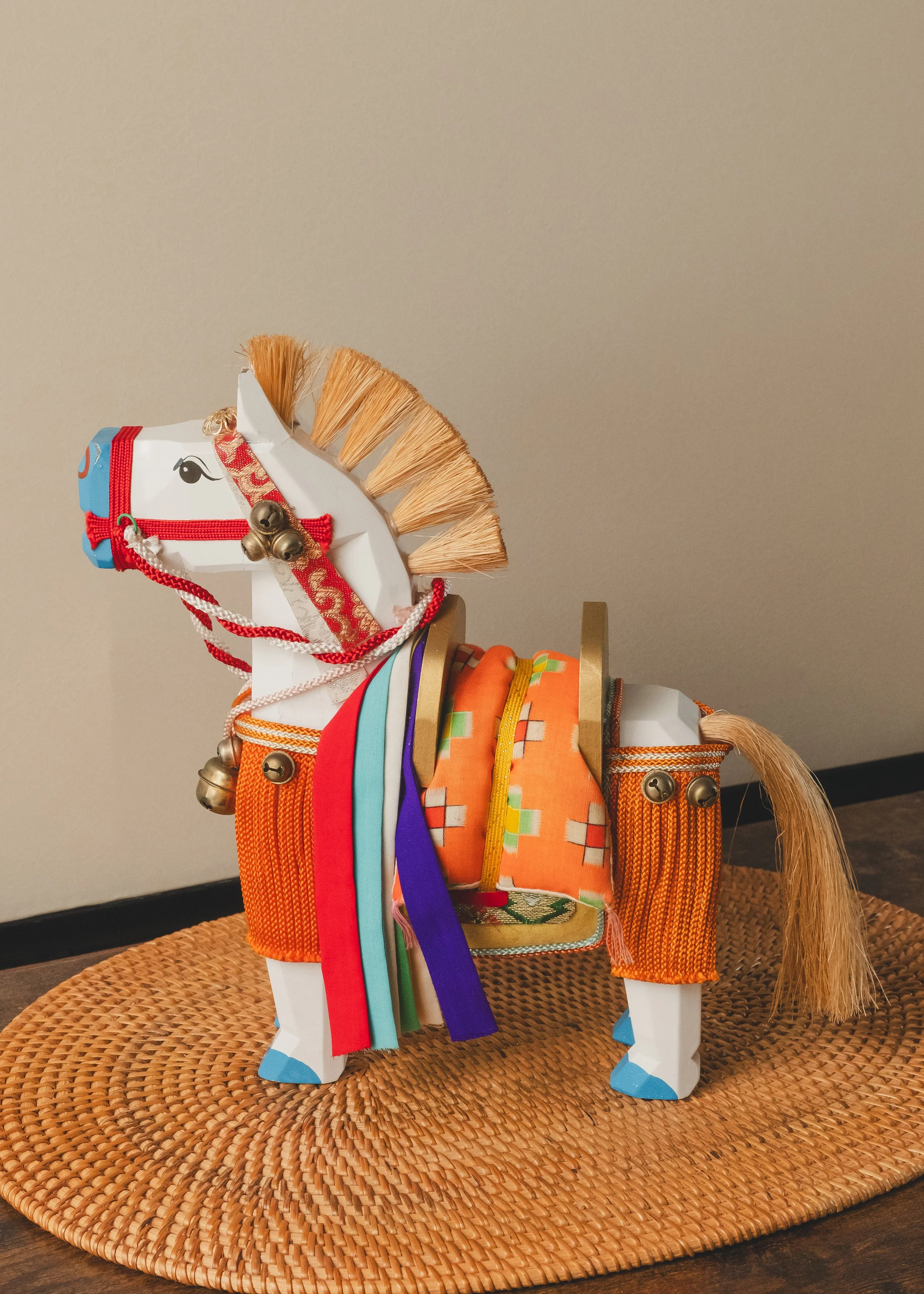 Image 1 of 11
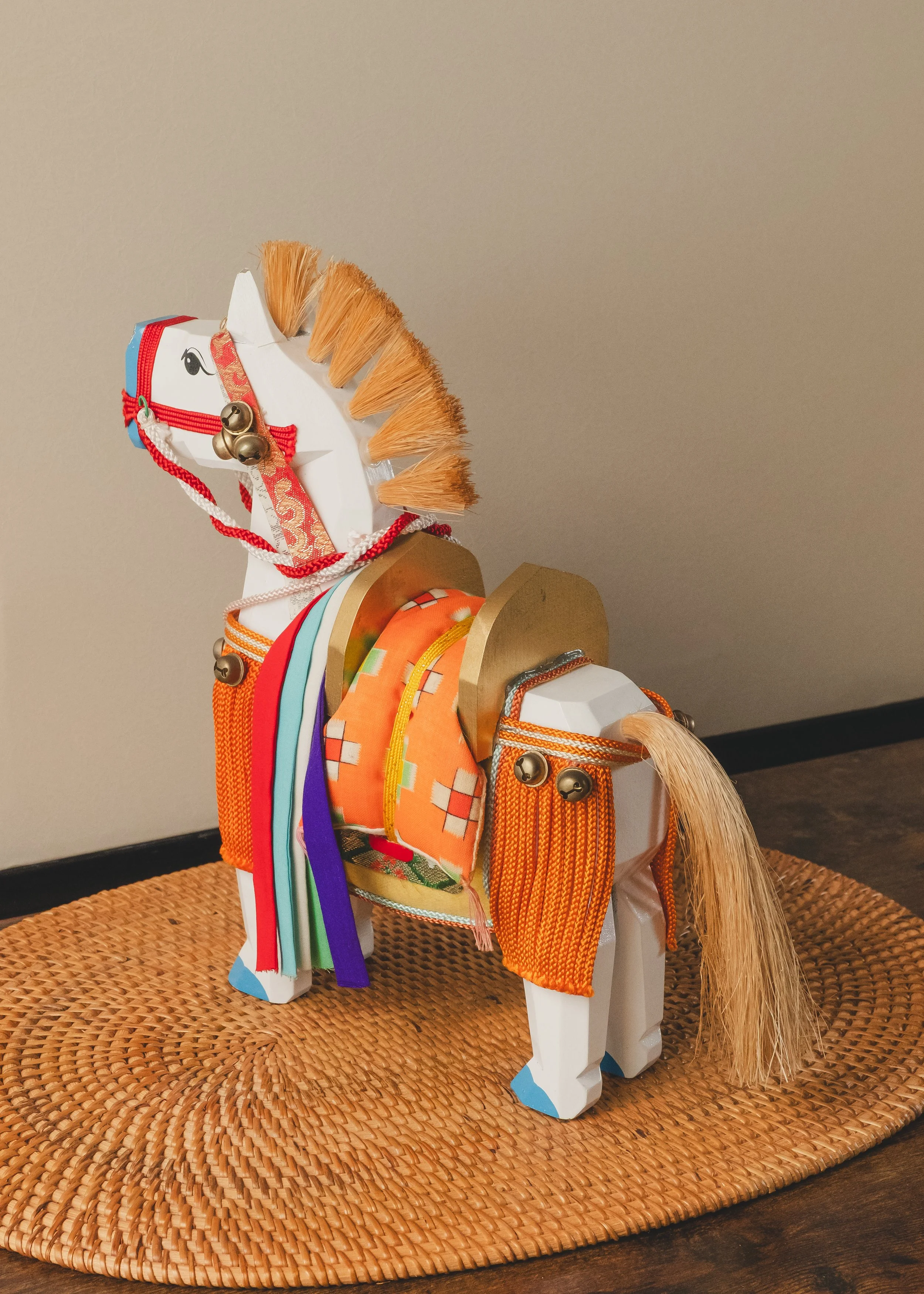 Image 2 of 11
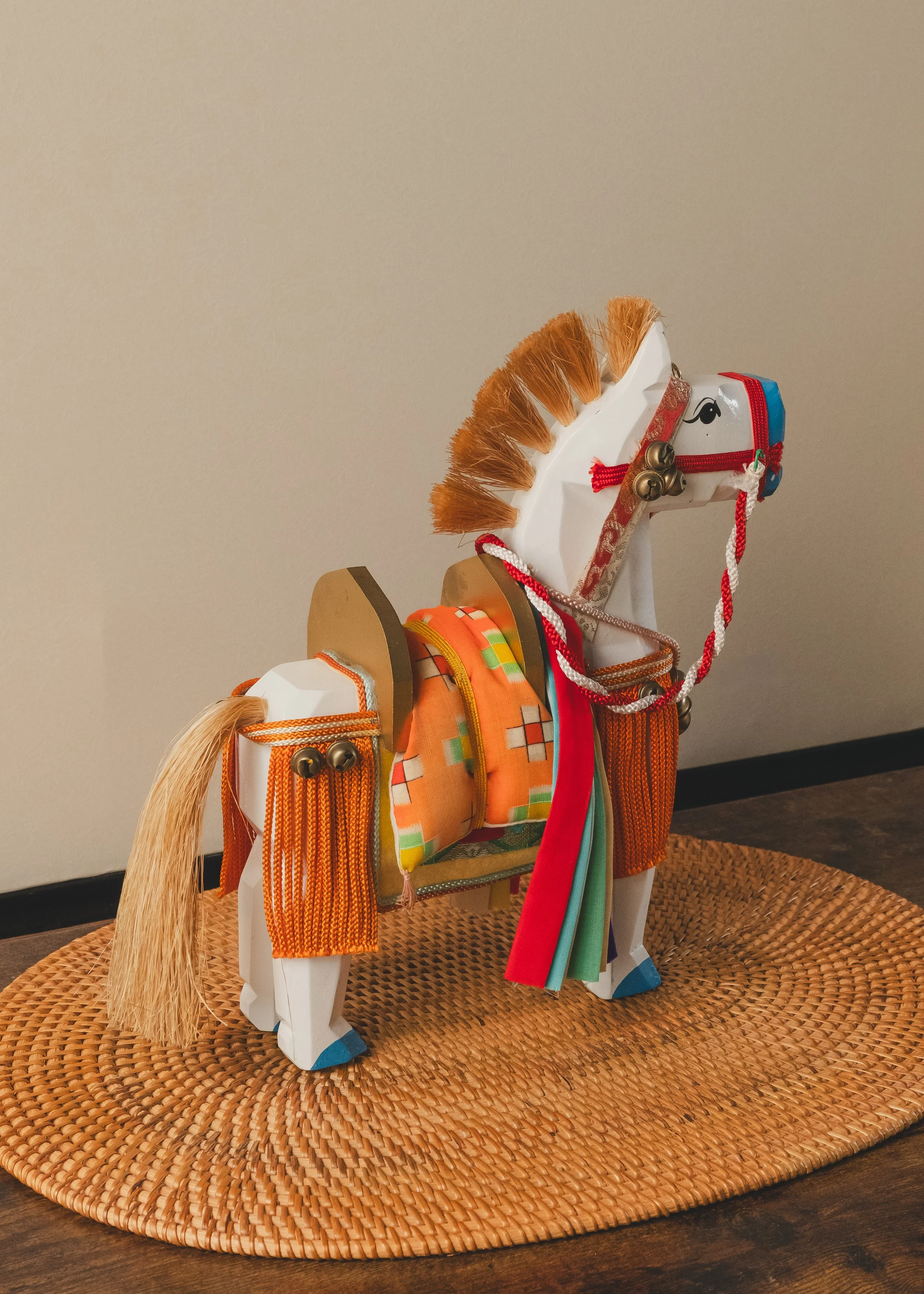 Image 3 of 11
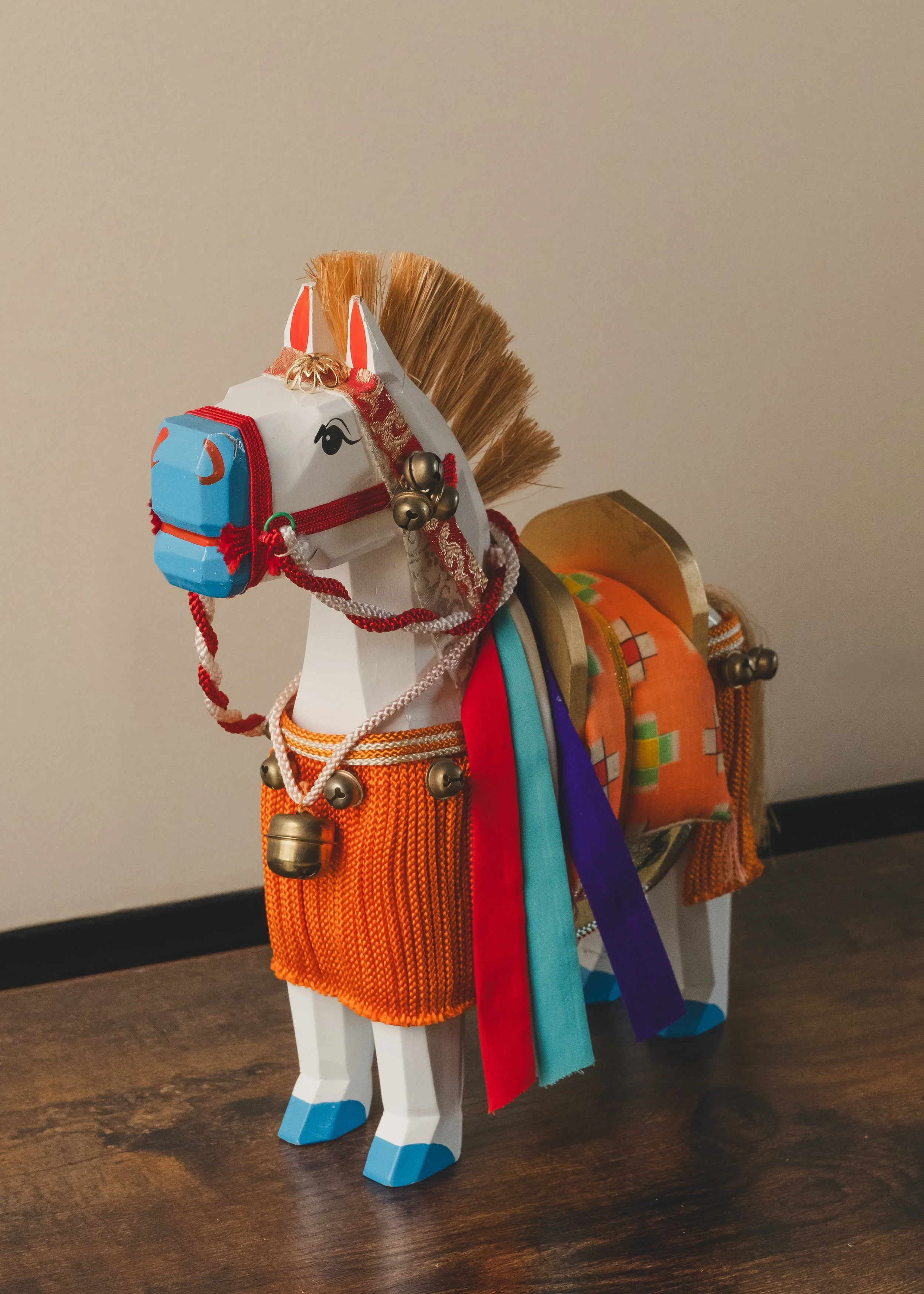 Image 4 of 11
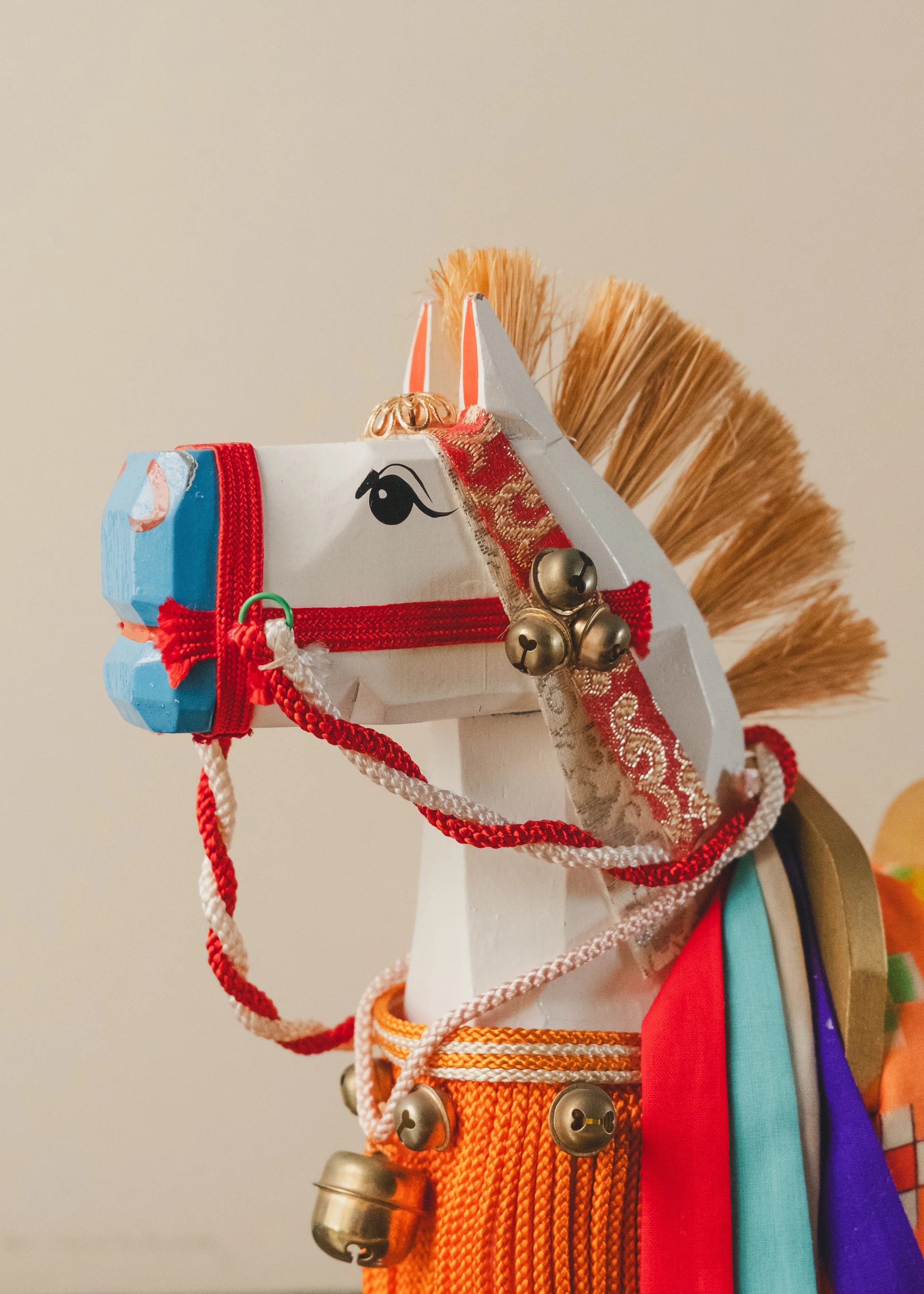 Image 5 of 11
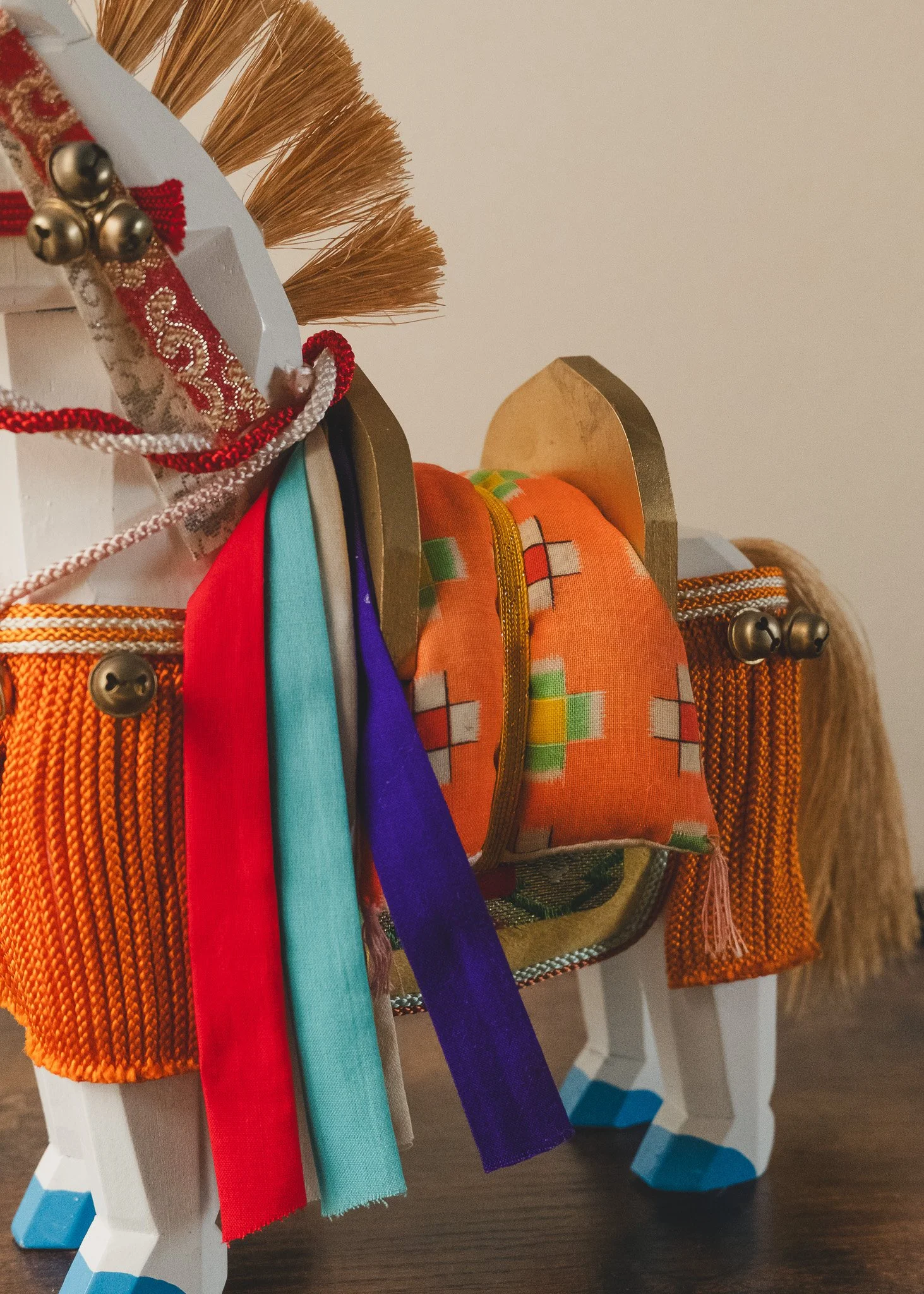 Image 6 of 11
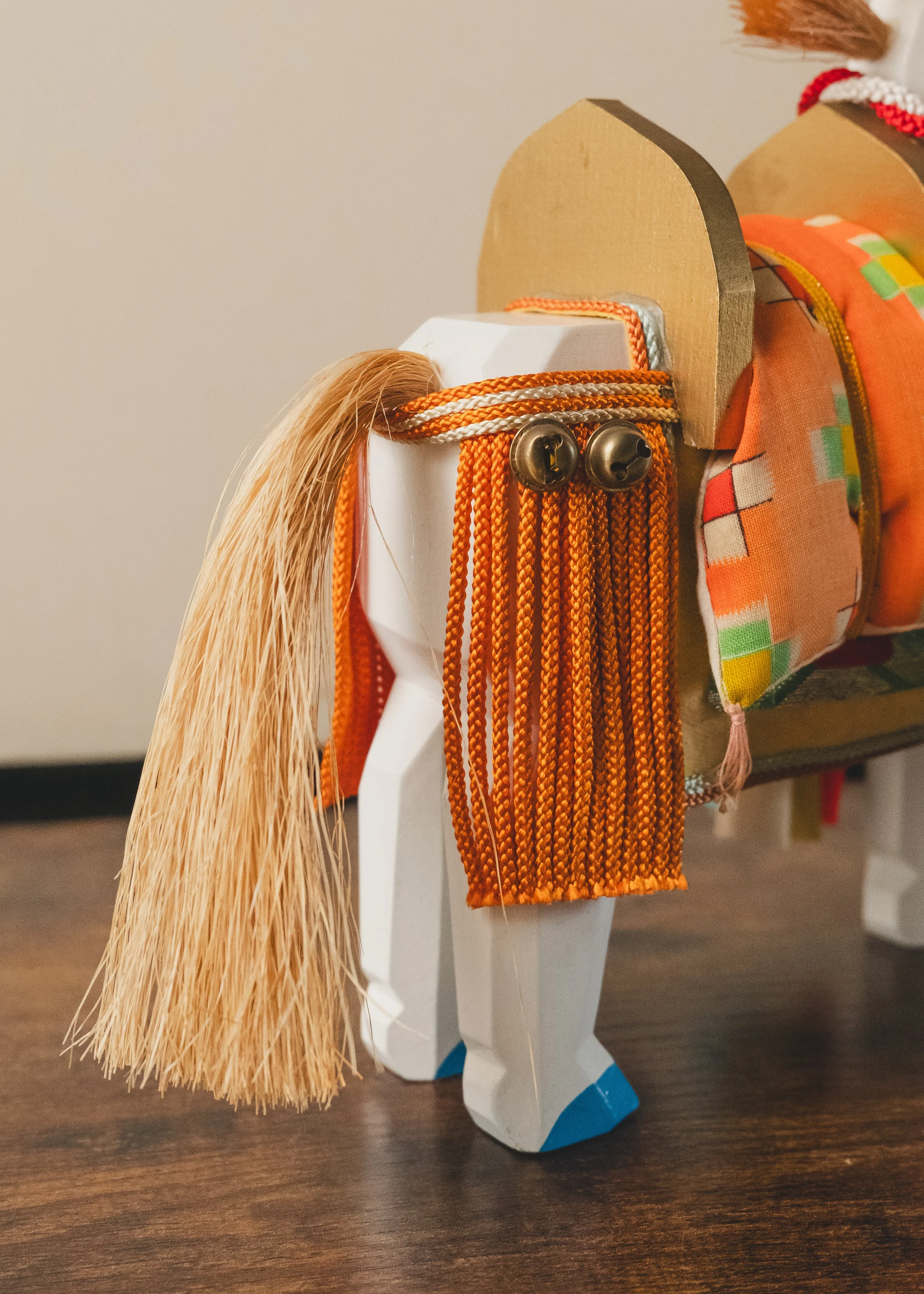 Image 7 of 11
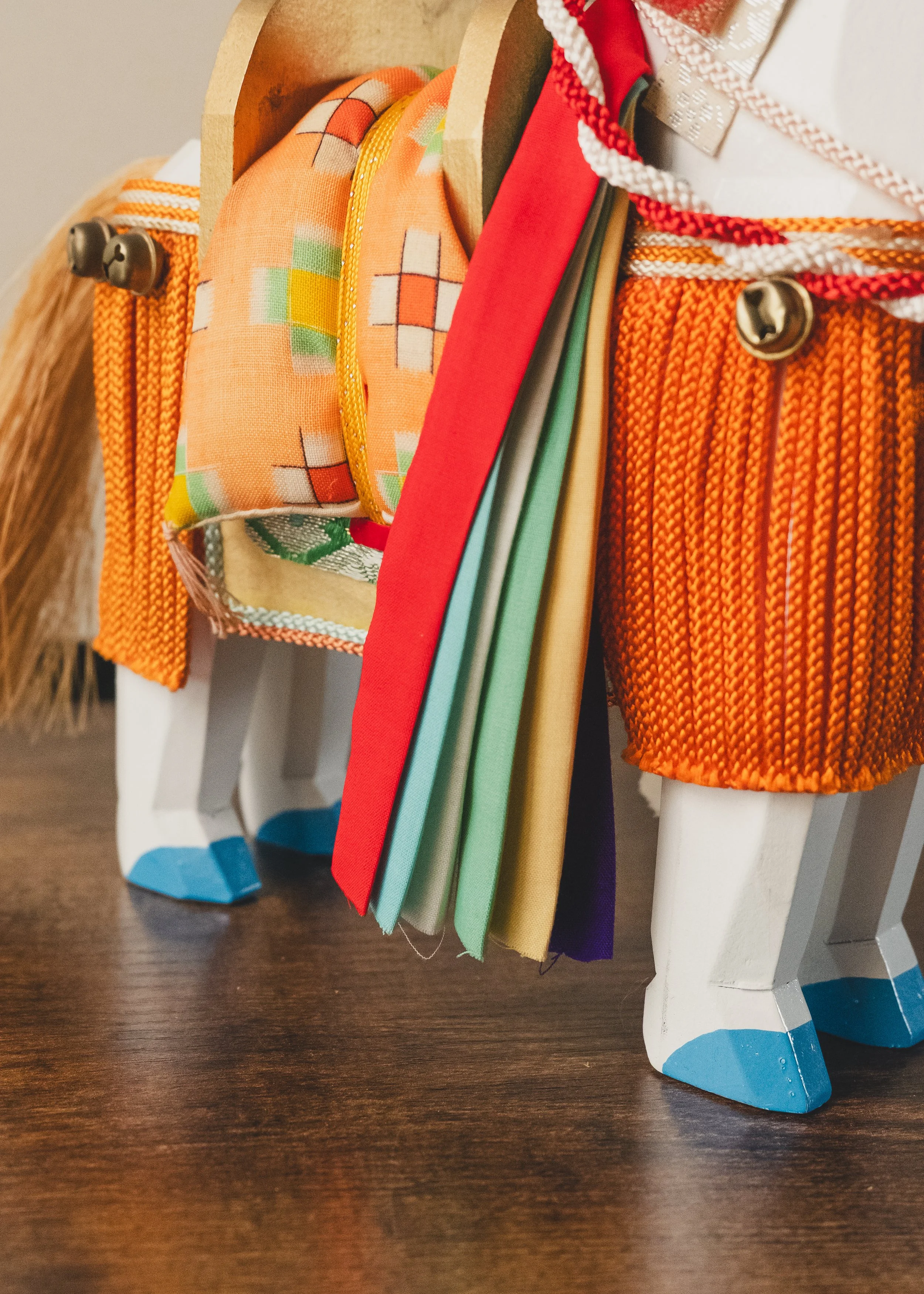 Image 8 of 11
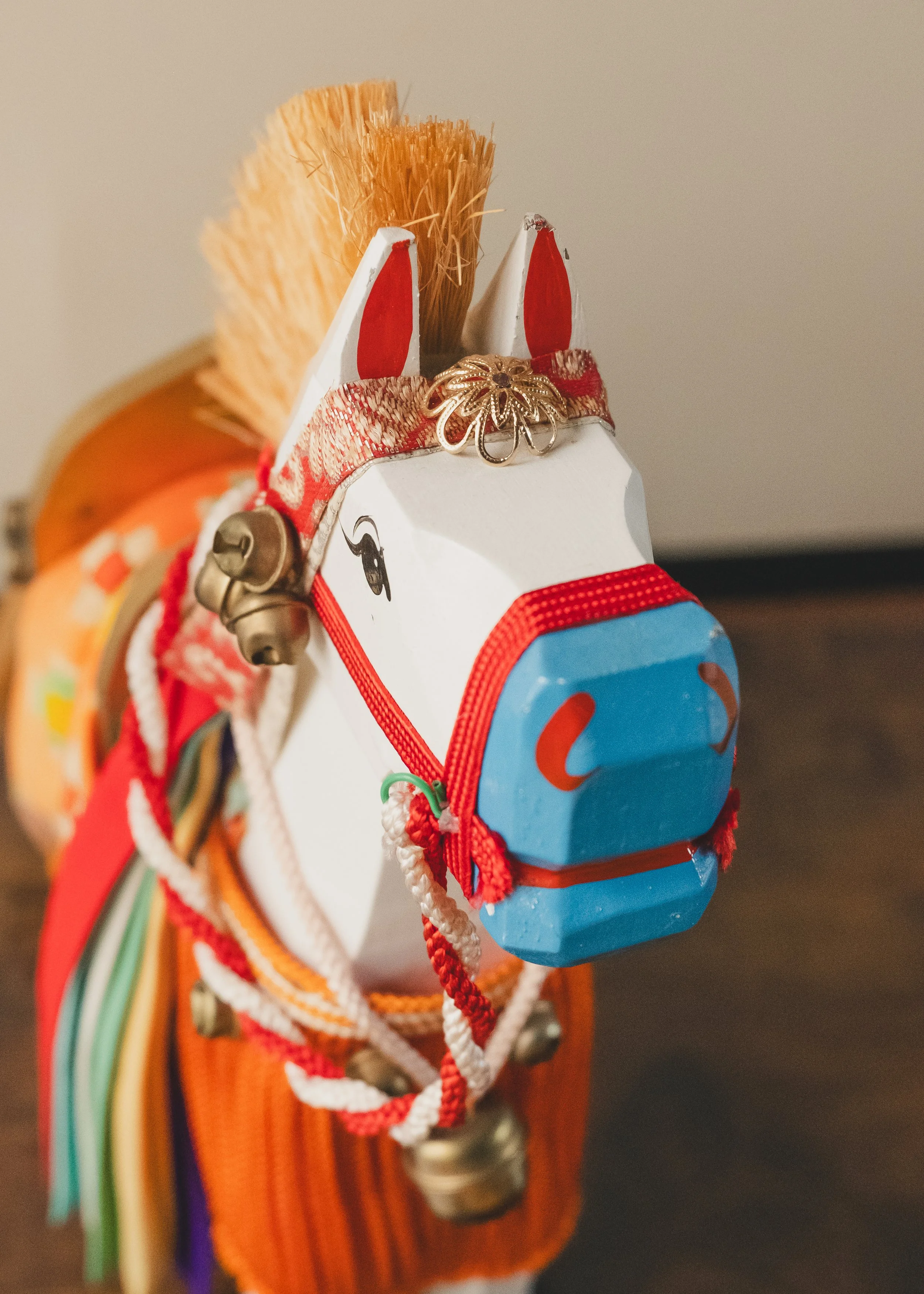 Image 9 of 11
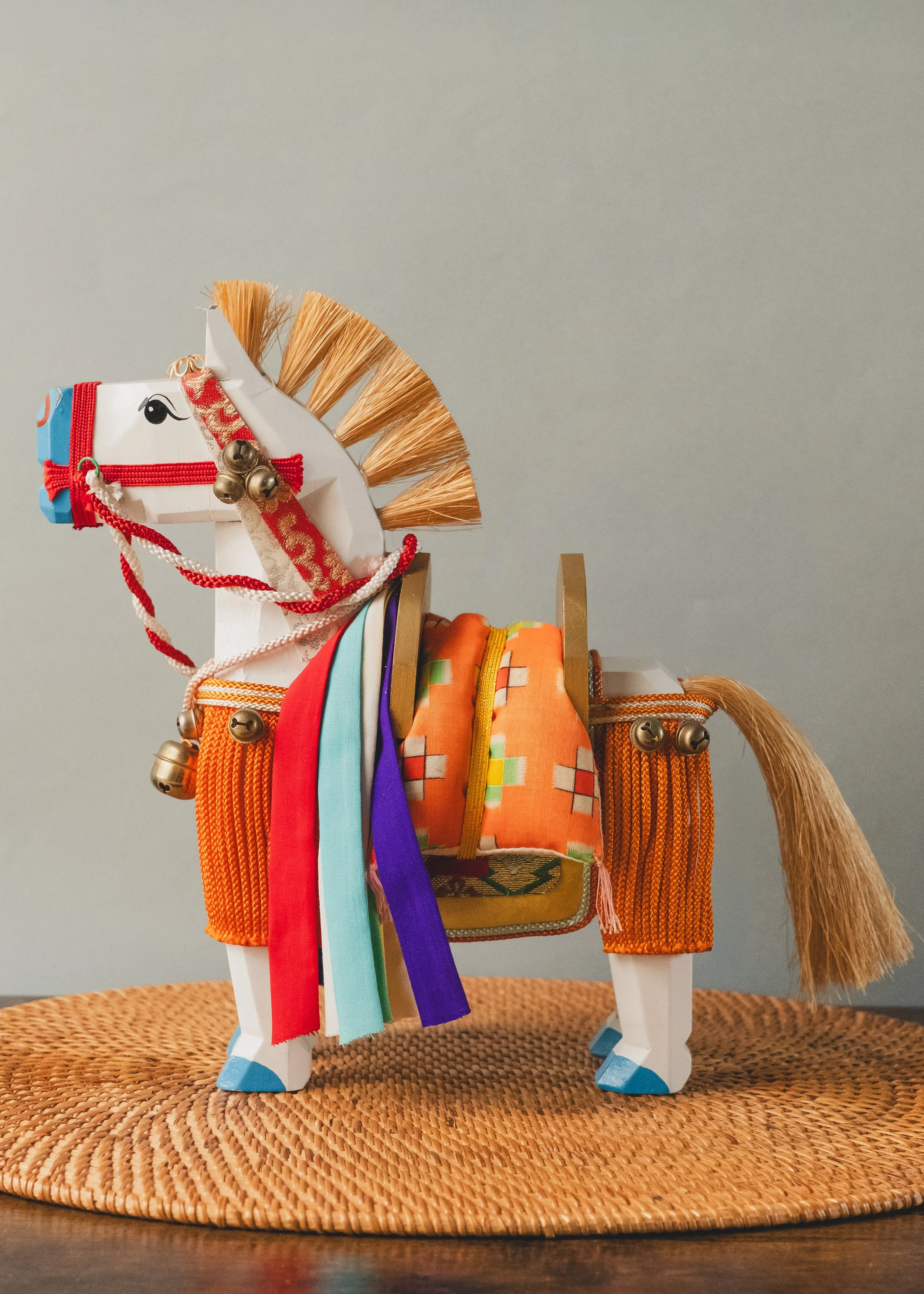 Image 10 of 11
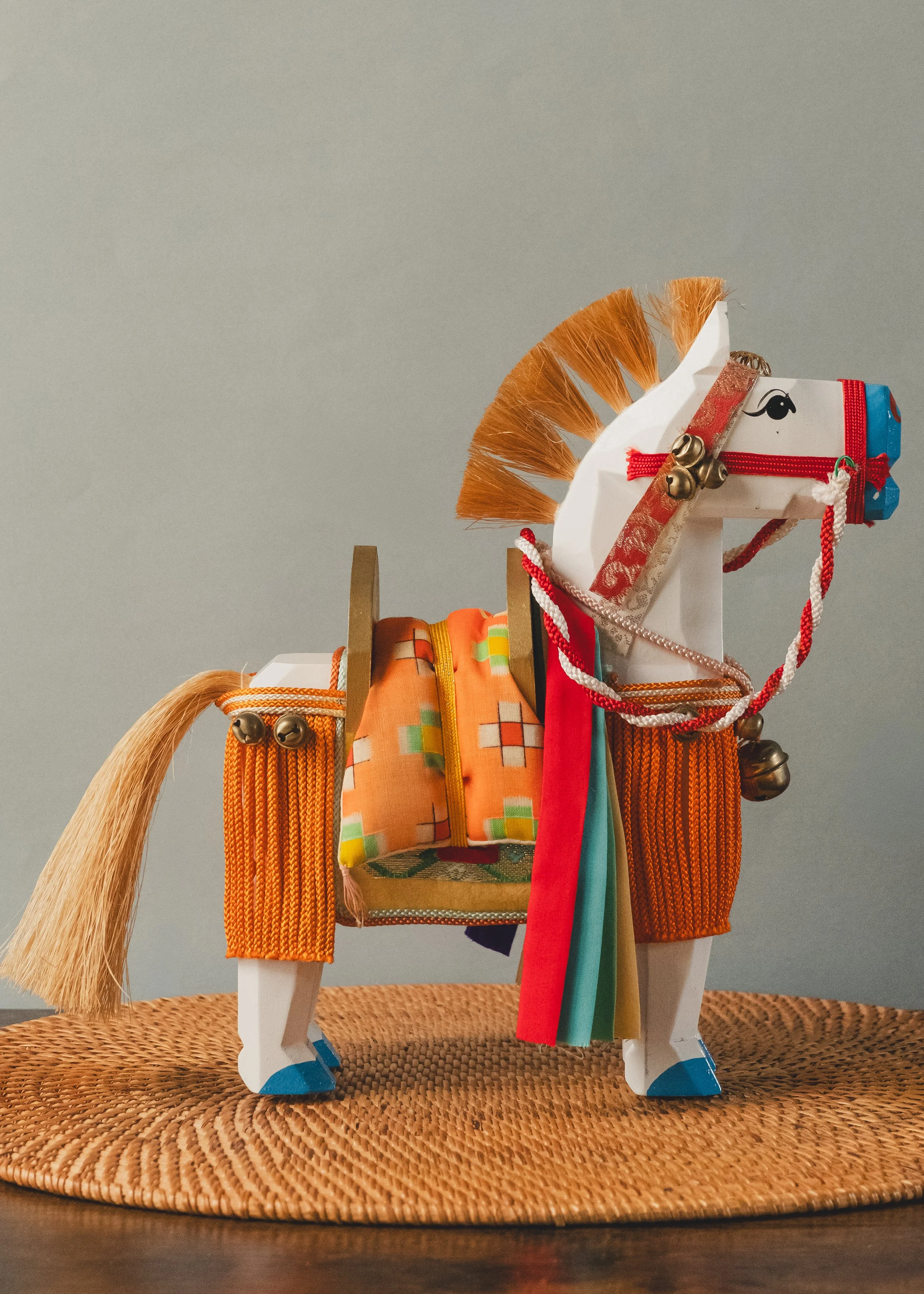 Image 11 of 11