

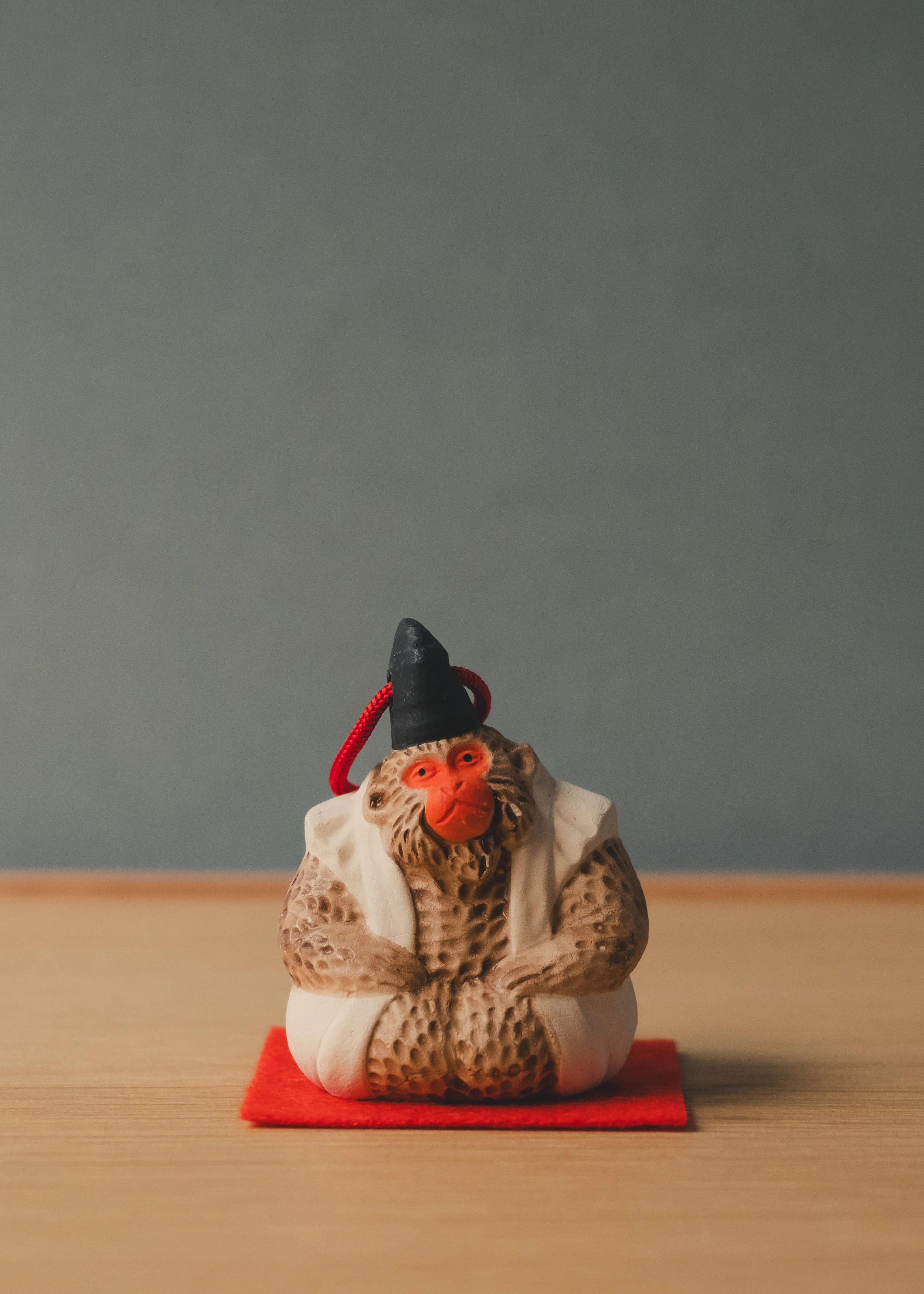
 Image 1 of 7
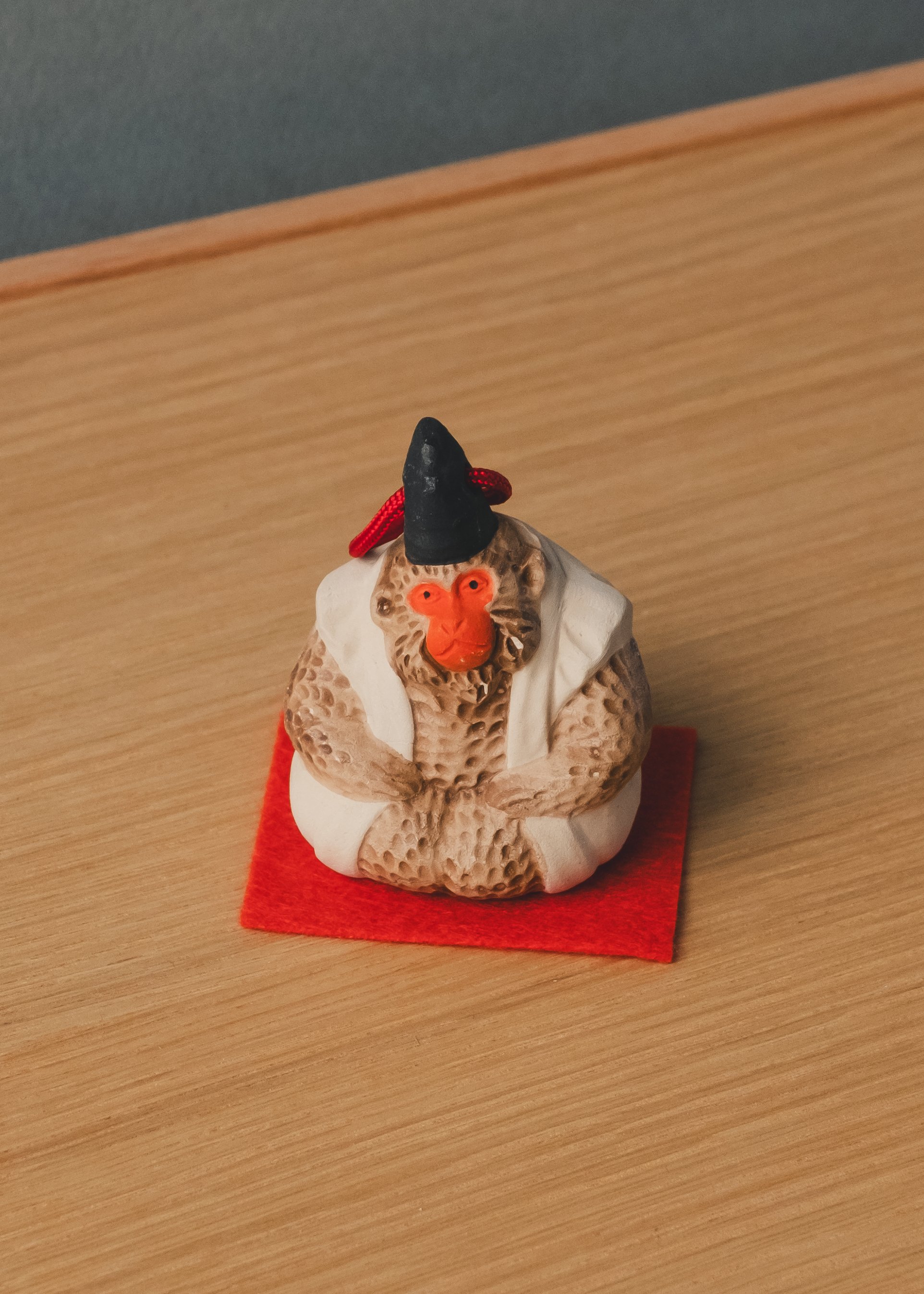 Image 2 of 7
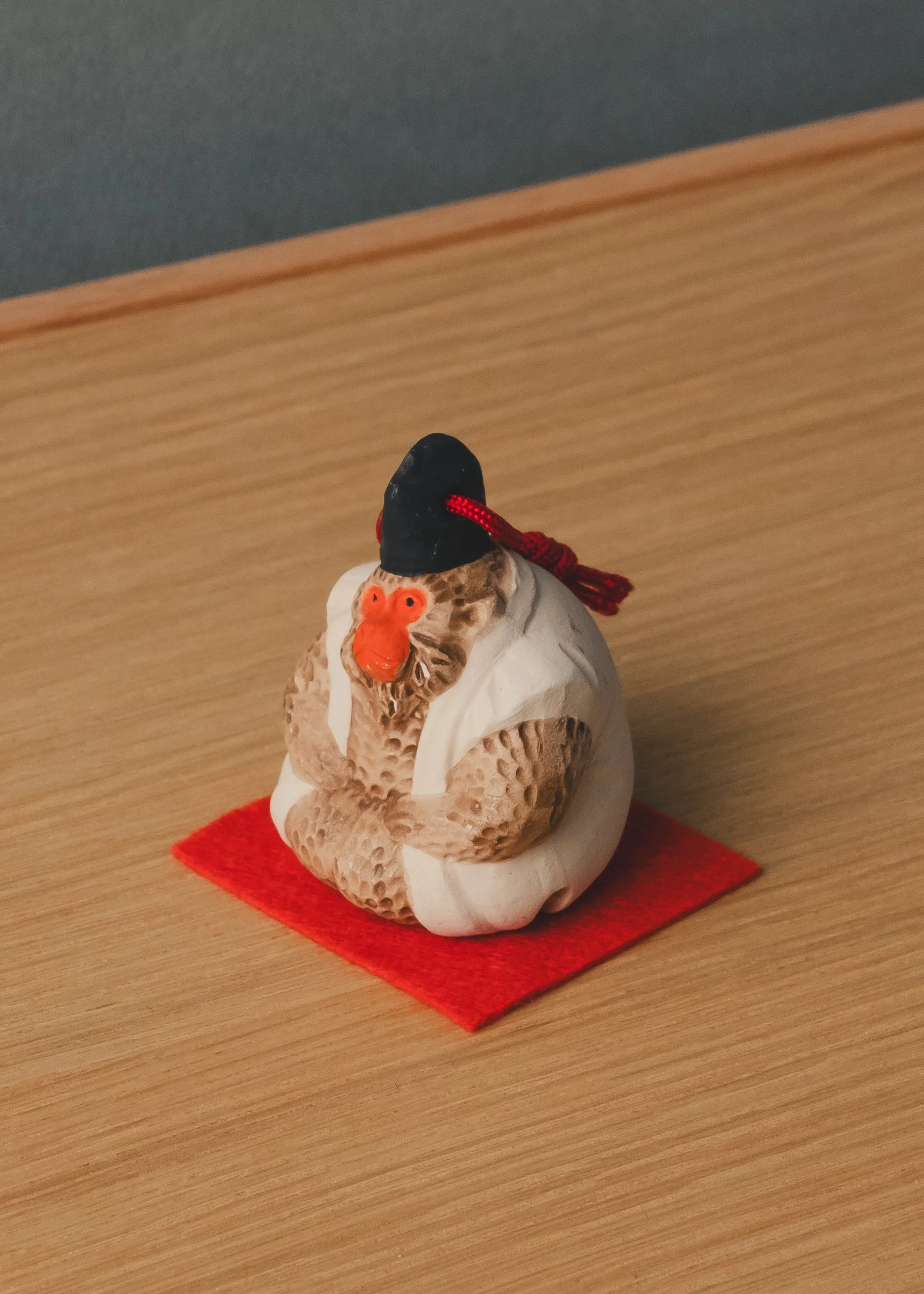 Image 3 of 7
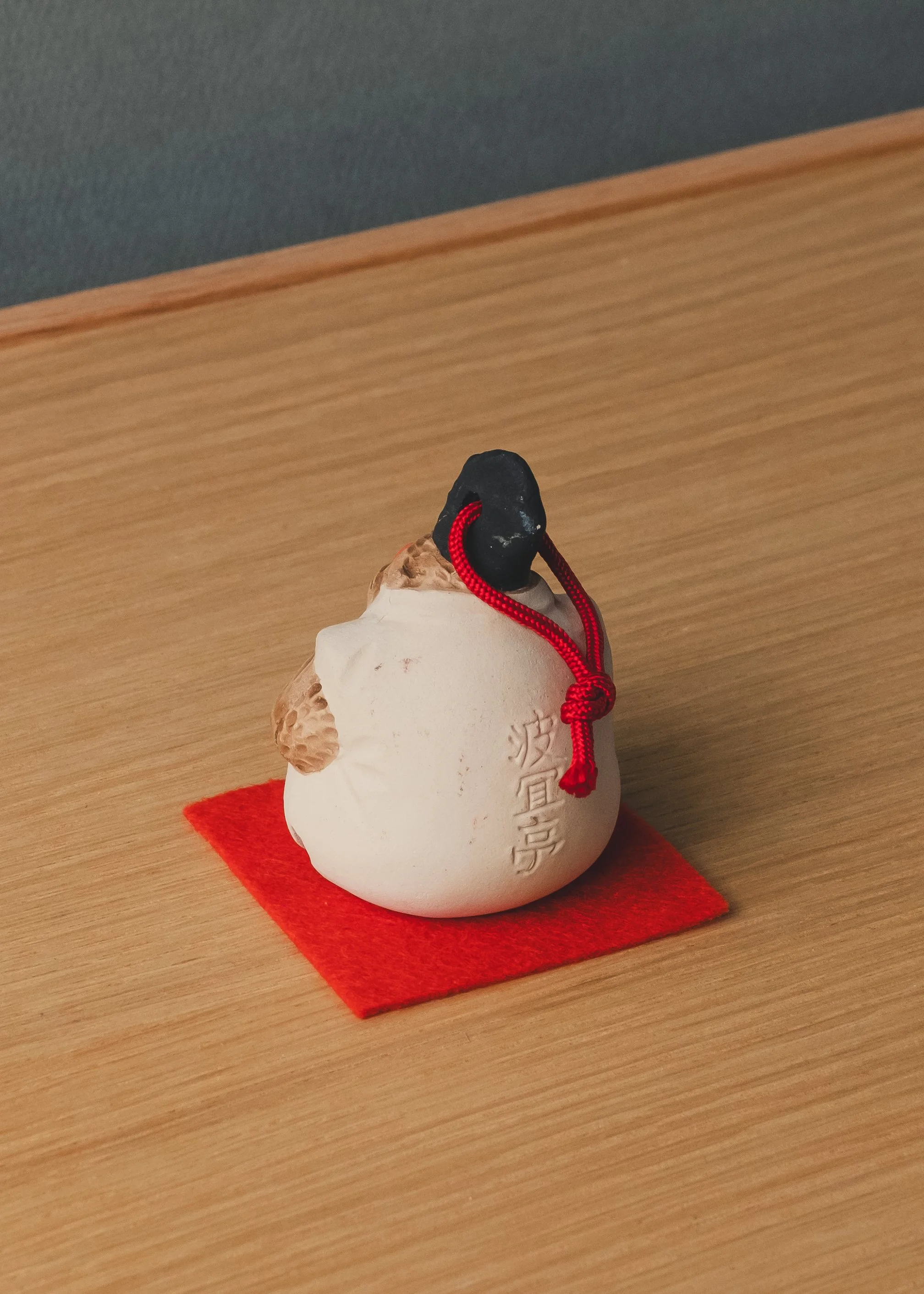 Image 4 of 7
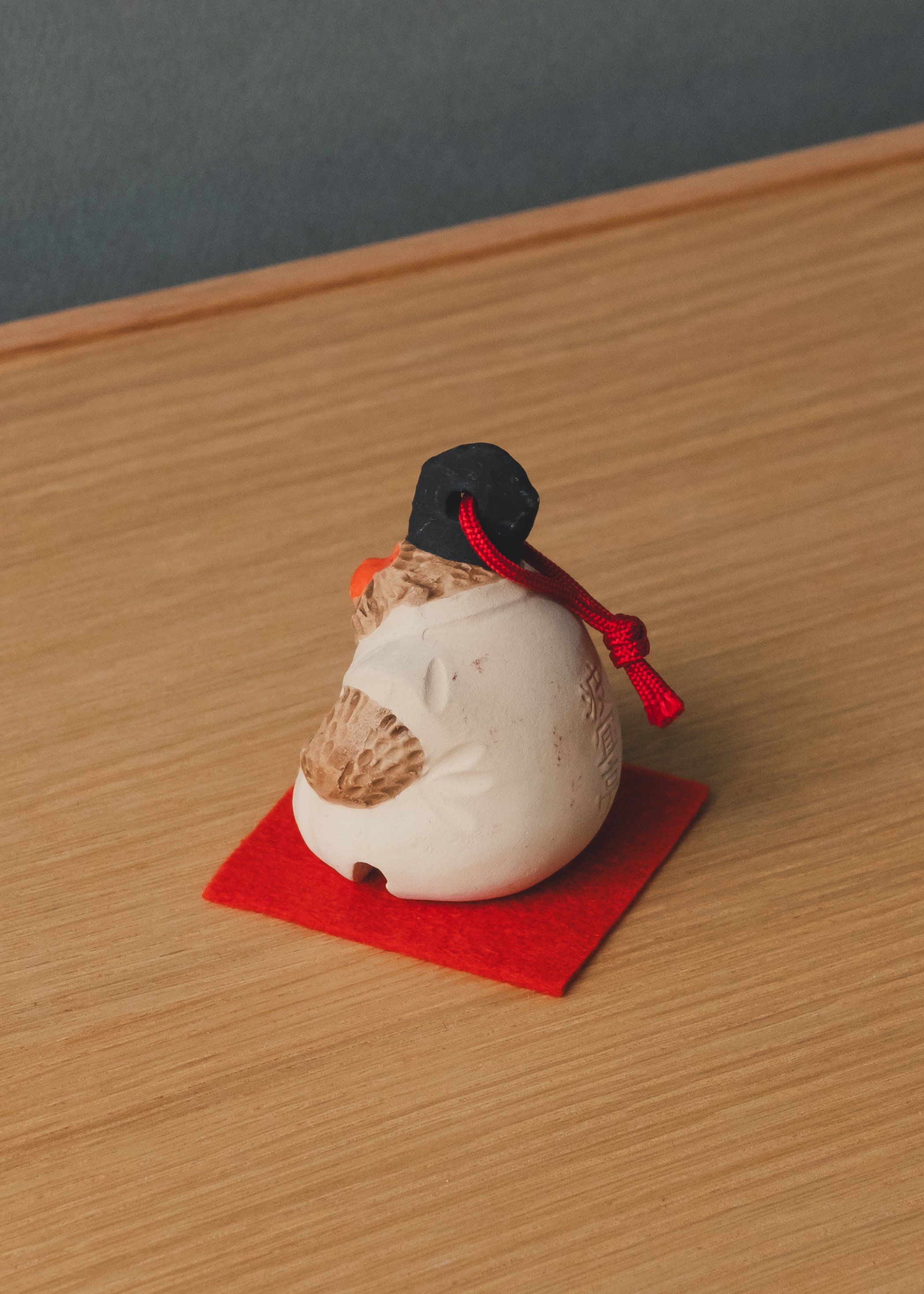 Image 5 of 7
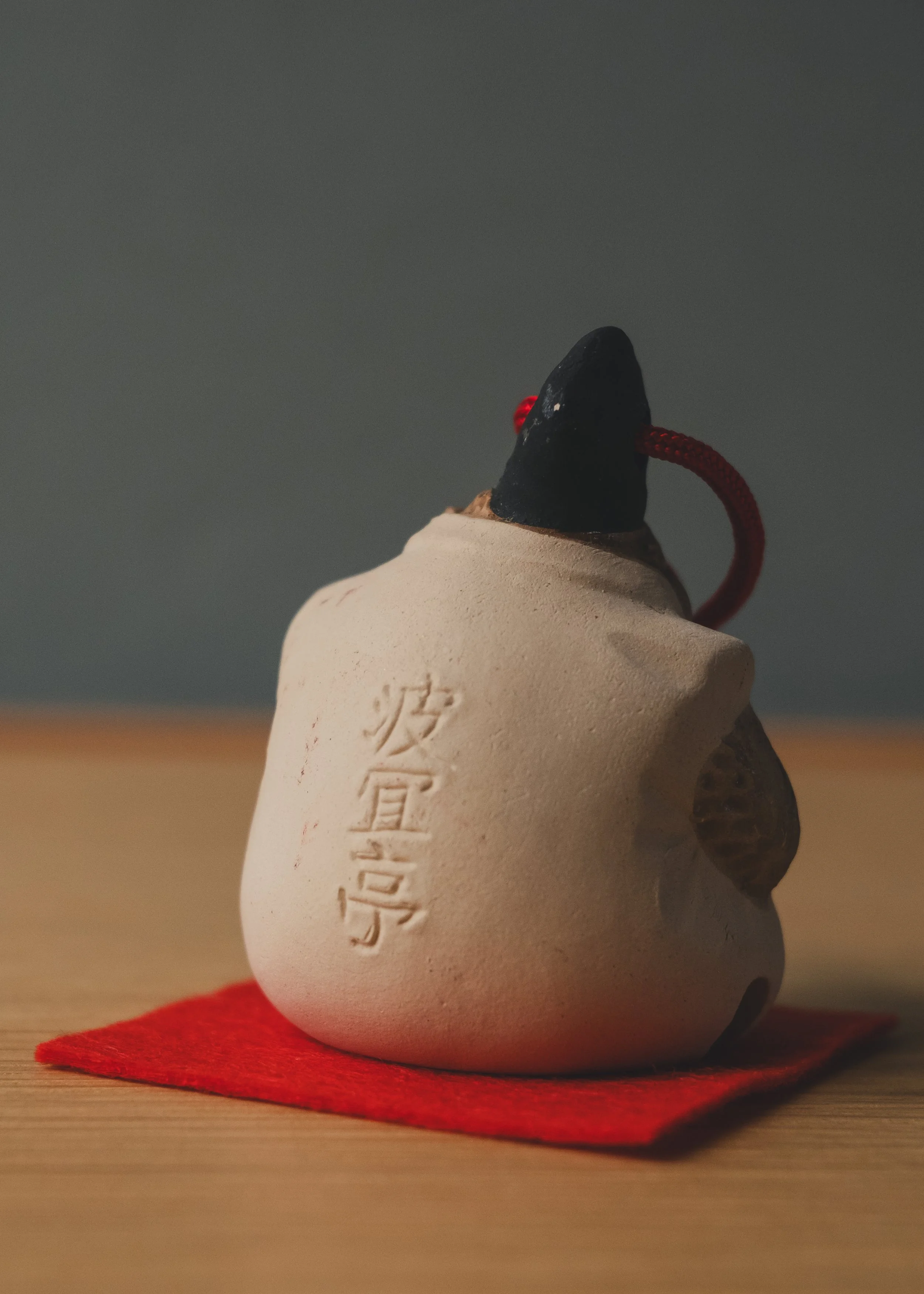 Image 6 of 7
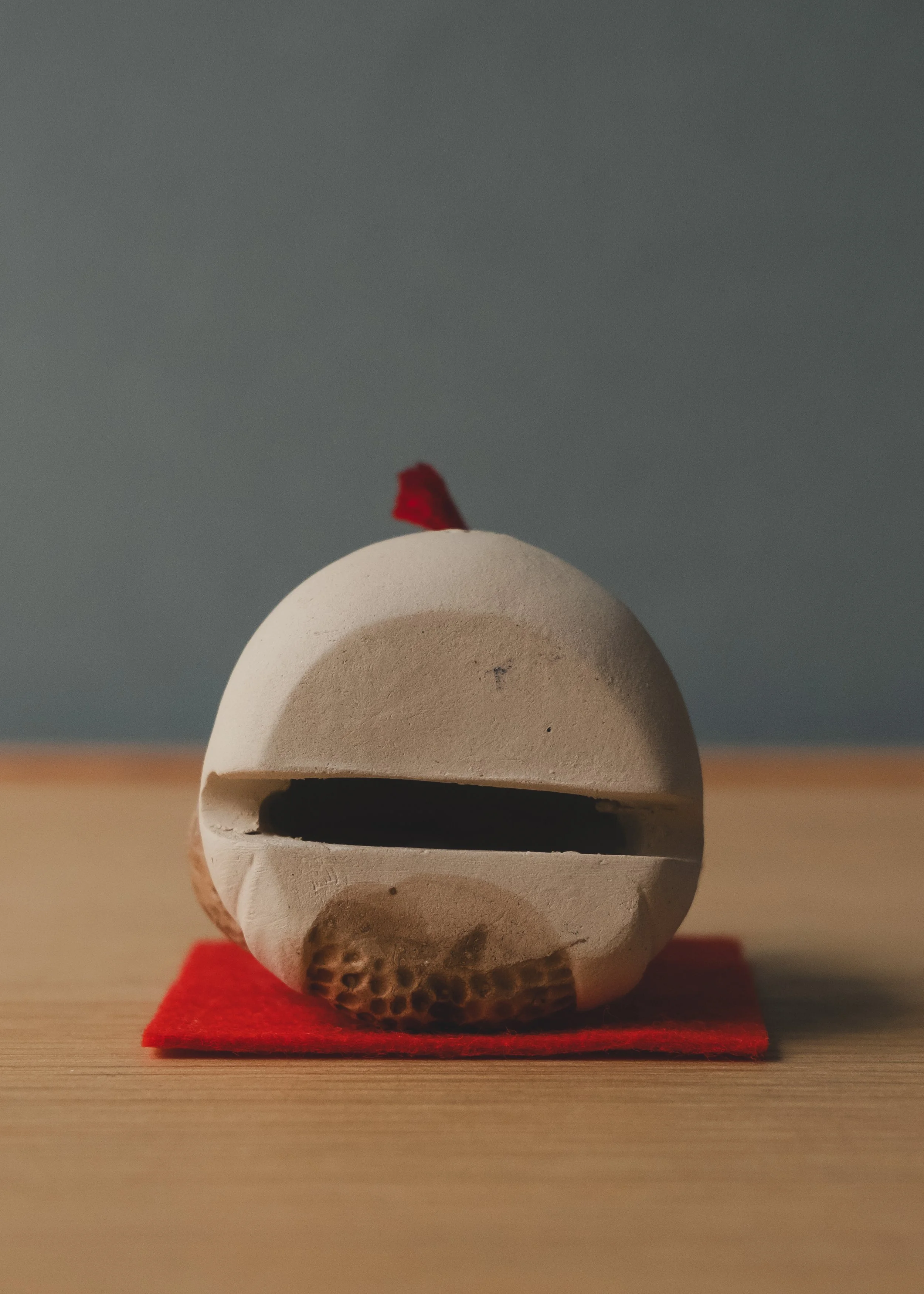 Image 7 of 7
【Context】
Identity: Anonymous Provincial Ceramic / Ritual Talisman.Origin: Central Province (Historic Ceramic Region), Japan.Technique: Hand-Formed Clay with Mineral Pigment.Function: Dorei (Clay Bell) / Desk Talisman / Ceremonial Guardian.
【 Dimensions (Approx.) 】
Height: 5.5 cm (2.2 in)Width: 4 cm (1.6 in)Weight: 0.042 kg (0.09 lbs)
RELATED ARCHIVAL SPECIMENS
【 The Concept 】
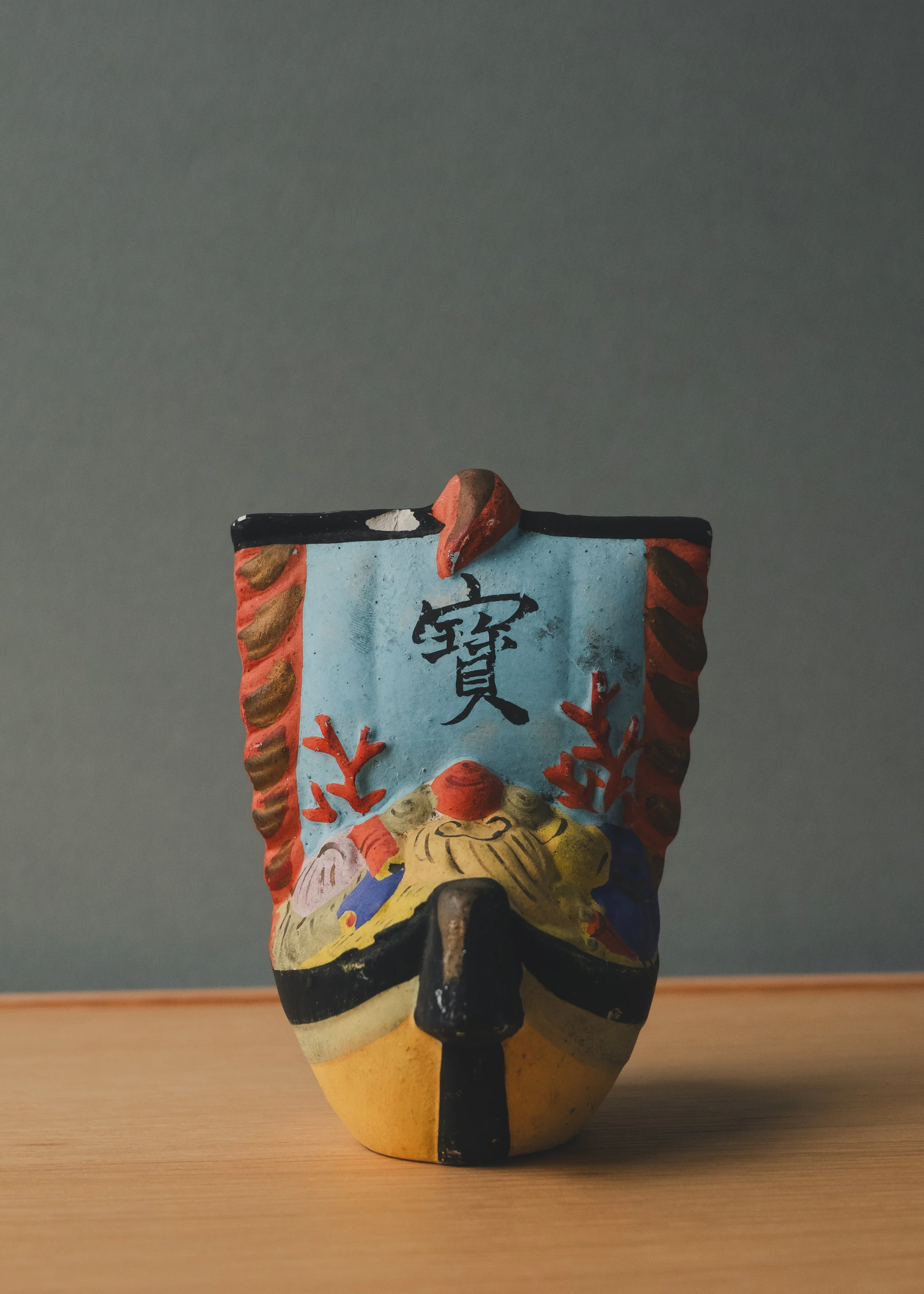
A ship arrives from nowhere — loaded beyond reason. Golden bales rise from its deck in a tight pyramid. Red coral branches frame a pale blue sail bearing a single character: "treasure." In Japan, this vessel has no port of origin and no captain. It exists only as a vehicle for belief — the conviction, held for centuries, that fortune does not grow from within but arrives from across the water, unannounced, carrying everything a household could need. An anonymous craftsman in the early twentieth century translated that belief into fired clay and mineral pigment, compressing an entire mythology of abundance into an object that fits between two open hands.
【 The Function 】
This object was designed to be placed — deliberately, with intention — in the corner of a room where prosperity is invited to enter. In traditional practice, the bow of the ship faces inward, toward the center of the home, so that its cargo flows into the household rather than away from it. It is not a passive ornament. It is a directional instrument, calibrated by centuries of folk logic to channel good fortune through the geometry of its placement.
【 The Texture 】
The surface is unglazed clay finished with hand-applied mineral pigment — matte, porous, and warm to the touch in a way that glazed ceramics never achieve. The blue of the sail has softened from its original intensity to a quiet, chalky tone. The gold of the rice bales has matured into a dignified ochre. The red coral is built up in slight relief, giving the fingers something to discover that the eyes might miss.
This object carries the visible evidence of a century spent in service. Small chips along the upper edge of the sail. Faint discoloration where generations of hands have lifted it from the same spot. Dust that has settled into recesses and become part of the surface. These are not flaws to be overlooked — they are the physical record of an object that was placed on a shelf, believed in, and never discarded. In a market saturated with pristine reproductions, these marks are precisely what cannot be faked. They are the difference between an object that was made and an object that was lived with.
【 Presence 】
At twelve centimeters, this ship does not dominate a shelf. It occupies it with the quiet authority of something that has been placed in the same spot for a hundred years. The sail faces forward. The cargo is stacked high. The message is not subtle — it is a direct, unapologetic request for abundance, encoded in clay and color. Place it on an entryway console, a bookshelf, or beside a window where light enters. Let the bow point inward. The rest is between you and the ship.
Sourced from a private collection in northern Japan.
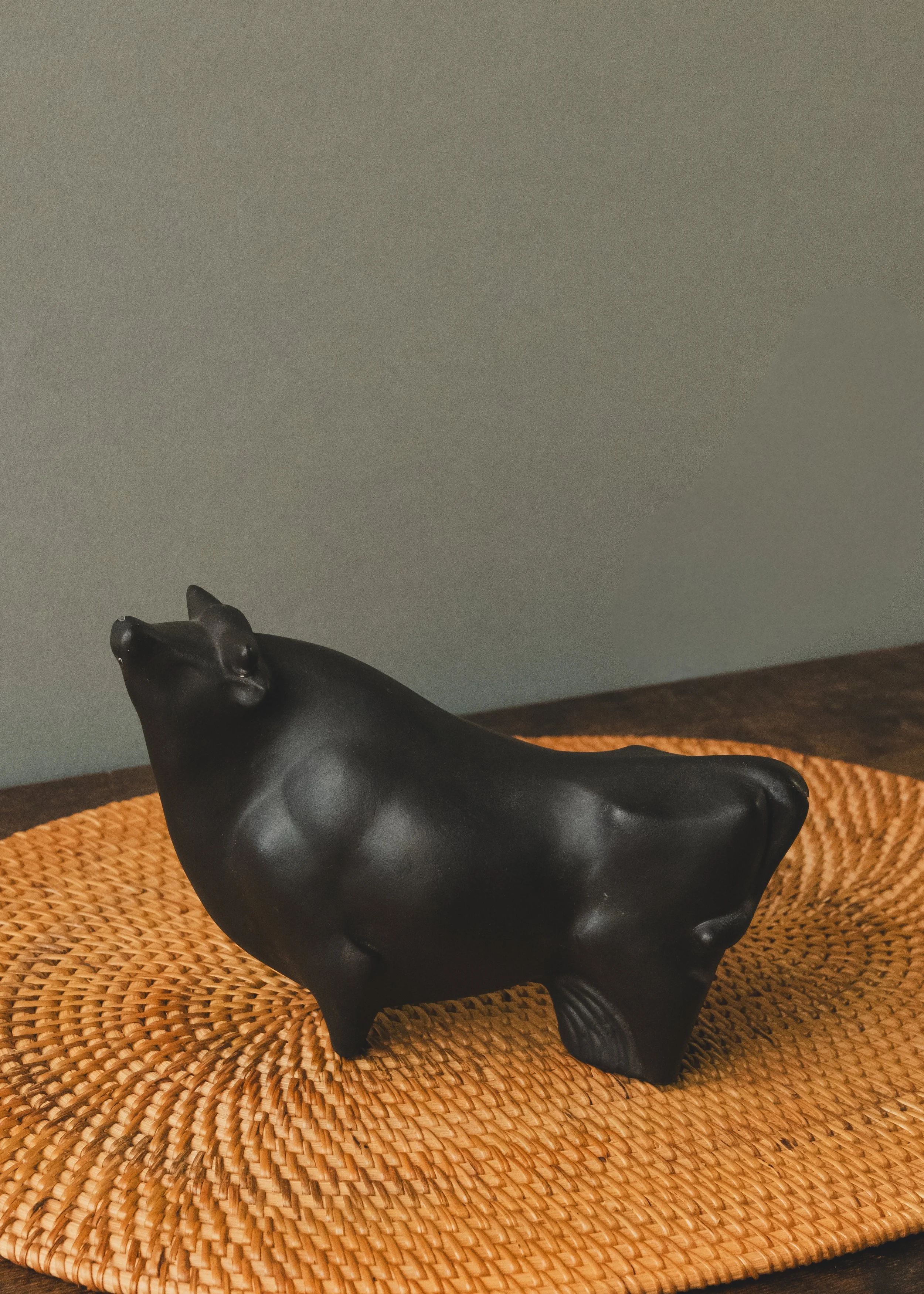
【 The Concept 】
A Bull That Does Not Move, and Does Not Need To. In the agrarian imagination of Japan, the bull was never a symbol of aggression. It was a symbol of endurance — the animal that pulled the plow through frozen ground, that stood its ground when the weather turned, that outlasted the season through sheer refusal to stop. An anonymous craftsman understood that. They translated that understanding into fired clay, stripped away every decorative impulse, and left only the essential geometry of the animal: the weight of the shoulders, the raised head, the stillness that is not passivity but concentration.
The face is barely a face. Two gentle convex forms where the eyes should be. Enough to suggest intelligence, not enough to impose it. The rest is left to the room, to the light, to the person who reaches out and touches it.
【 The Function 】
This object was shaped to anchor a surface — a desk, a shelf, a ledge where things of consequence are placed. Its broad, low stance grips whatever it is set upon with a quiet authority. Documents do not shift beneath it. Neither does the eye.
But an object that sits on a desk for decades becomes something else. It becomes the thing the hand reaches for without thinking, that marks the corner of serious work. Modern collectors use it as a desk sentinel, a shelf anchor — picked up, set down, picked up again. Each time it is touched it absorbs a little more warmth, a little more familiarity.
【 The Texture 】
The surface is a deep, unbroken matte black — light-absorbing, completely devoid of gloss. It does not reflect the room; it absorbs it. Run a thumb across the back. The clay beneath the finish is smooth but not slippery, carrying a warmth that metal cannot replicate. The black is not paint applied to a surface — it is fired into the body of the clay itself, a permanent bond between color and form that will not chip, will not fade, and will outlast the furniture it sits on.
【 Presence 】
There is a tendency, in the modern interior, toward objects that are light, thin, and temporary. This bull is none of those things. Place it on a walnut desk, a raw concrete shelf, or beside a stack of books that will not be moved. It will not compete with anything else in the room. It will simply be the stillest thing there, and the room will organise itself around it quietly.
It is the object that guests notice last and remember longest. Not because it demands attention — it does not — but because when they finally pick it up, the form fits the hand in a way they did not expect.
Sourced from a private collection in northern Japan.
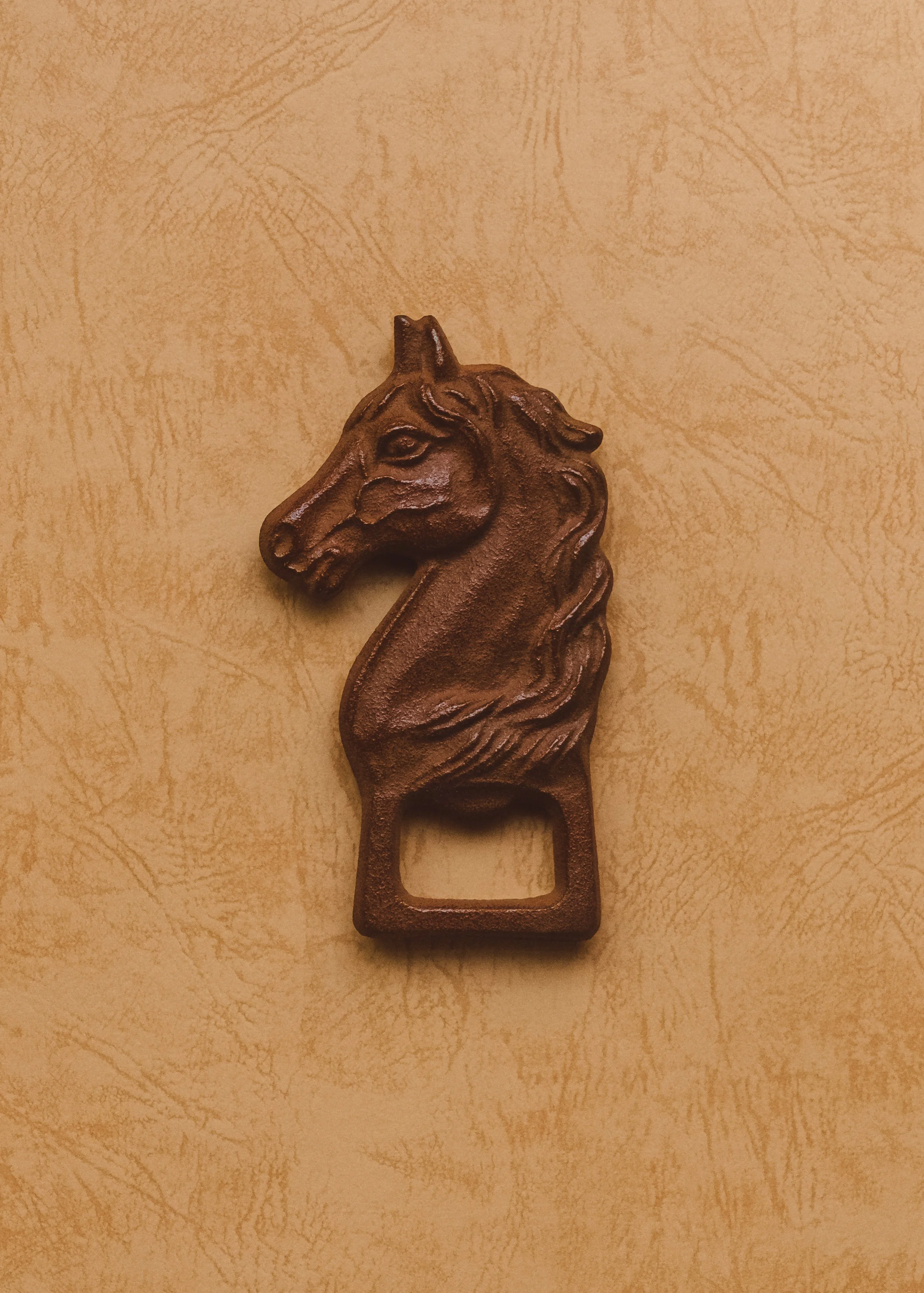
【 The Concept 】
A Horse Forged from the Memory of a Province. In the northern highlands of Japan, the horse was never merely an animal. It was a military asset, a spiritual offering, and the economic backbone of a region that sent its finest cavalry to shape the course of feudal history. This anonymous craftsman understood that inheritance. They distilled nine hundred years of that culture into the palm of the hand — not in clay or wood, but in the uncompromising permanence of cast iron.
The horse stands in profile. Still. Alert. It does not perform. It holds its ground with the quiet authority of something that has outlasted the civilization that created it.
【 The Function 】
Form and Force, Unified. This object was engineered as a bottle opener — but that description fails to account for its true nature. The horse's silhouette is not decoration applied over a tool; it is the tool. The precise geometry of the lower body forms a lever calibrated to engage crown caps with a single, decisive downward motion. The weight of the iron — dense, volcanic, uncompromising — provides the counter-balance. The result is not convenience. It is ceremony.
When not in use, it sits as a paperweight on a desk, a sentinel at the edge of a shelf. The function does not disappear. It simply waits.
【 The Texture 】
The Skin of the Earth, Fired Twice. The surface carries a deep, dark lacquer — applied by hand to heated iron in a process that bonds pigment directly to the metal's grain. The finish is not smooth in the way of manufactured goods; it possesses a subtle texture, a warmth that shifts between charcoal and deep umber depending on the light. Run a thumb across the surface. It resists. It does not flex. It does not yield. This is what iron feels like when it has been made properly.
【 Presence 】
A Counterweight to Everything Disposable. This object has survived decades in a culture that rarely preserves things without function. That it is here, intact, with its original box — is itself a statement. Place it on a raw oak surface or against a concrete wall. It does not decorate the space; it anchors it. It speaks to the person who has grown tired of owning things that weigh nothing and mean less.
Sourced from a private collection in Iwate Prefecture, Northern Japan.