【 The Concept 】
A wooden raichō, the Japanese rock ptarmigan, stands tall on a crag with its head lifted, as if listening to the mountain wind. A small red mark glows above its eye. Beneath its feet, the top of a real birch log has been carved into rough rock, while the lower half keeps its white bark.
The raichō is one of Japan’s most cherished wild birds, and for centuries its image has been kept in homes as a charm against thunder and fire.
【 The Bird of the High Peaks 】
The raichō lives only above about 2,400 metres, in the zone above the tree line among creeping pines and snowfields. It is a survivor of the Ice Age, and Japan’s population is the southernmost rock ptarmigan population in the world. In 1955 it was designated a Special Natural Monument of Japan.
It changes its coat with the seasons: pure white in winter, and in summer a mottled pattern of black and brown. The male in summer carries a bright red comb above the eye, the detail shown on this carving.
Japan’s raichō are known for being calm around people. Since ancient times, the deep mountains were believed to be home to the gods, and the raichō was cherished as an incarnation of the mountain deity; one view holds that this long history is why the bird still does not fear people today.
【 The Thunder Bird 】
Raichō means “thunder bird.” Mountain climbers once believed that carrying a raichō feather on the ascent would protect them from lightning. The feathers were also kept against evil and illness, and at one mountain lodge they were sold for a hundred mon each. In more recent times, paper charms printed with the raichō were handed out to homes in the lowlands as charms against fire.
【 The Painting That Survived the Fire 】
The bird also appears in a poem attributed to the retired Emperor Go-Toba, describing the raichō living peacefully, hidden in the shade of pines on a sacred mountain. An old inscription tells how a picture of the raichō was later presented to the retired emperor’s palace by a court noble. In 1708, during the great fire of the Hōei era, the pavilion where that picture hung is said to have escaped the flames, and the raichō’s reputation as a guardian against fire grew from there.
【 What Owning This Piece Brings 】
・The raichō, a traditional guardian against thunder and fire, for the home
・A rare high-mountain bird, shown in its summer coat with the male’s red comb
・A real birch log base, bringing the feeling of cool mountain forests indoors
・A story to share: the bird that does not fear people, and the painting that survived a great fire
A thoughtful gift for hikers and climbers, birdwatchers, or anyone who loves the mountains.
【 Where to Place It 】
On a bookshelf or desk, beside maps and mountain photographs. Near the kitchen or entrance, in the old spirit of a charm against fire. Side light brings out the carved feathers and the facets of the rock.
【 Care 】
Dust with a soft, dry brush. Keep away from direct sunlight, heat and humidity, which can loosen the birch bark. Do not use water or polish. Lift it by the base, not by the bird.
【 Reading the Object 】
・Bird: standing upright with the head raised, beak slightly open
・Head: inset black eyes and a red comb above the eye
・Feathers: carved in layered rows, darker along the wings and back
・Base: a birch log, carved into rock facets at the top, with natural white bark below
・Inscription: three characters brushed in ink on a carved face of the base
【 Presence 】
Alert and still, like a bird that has just heard thunder in the distance.
Archive Note
The year 1708 refers to the great fire of the Hōei era and the legend of the raichō painting. It is not the production date of this piece.
Provenance Note
Sourced in Japan. Maker and production date unknown.


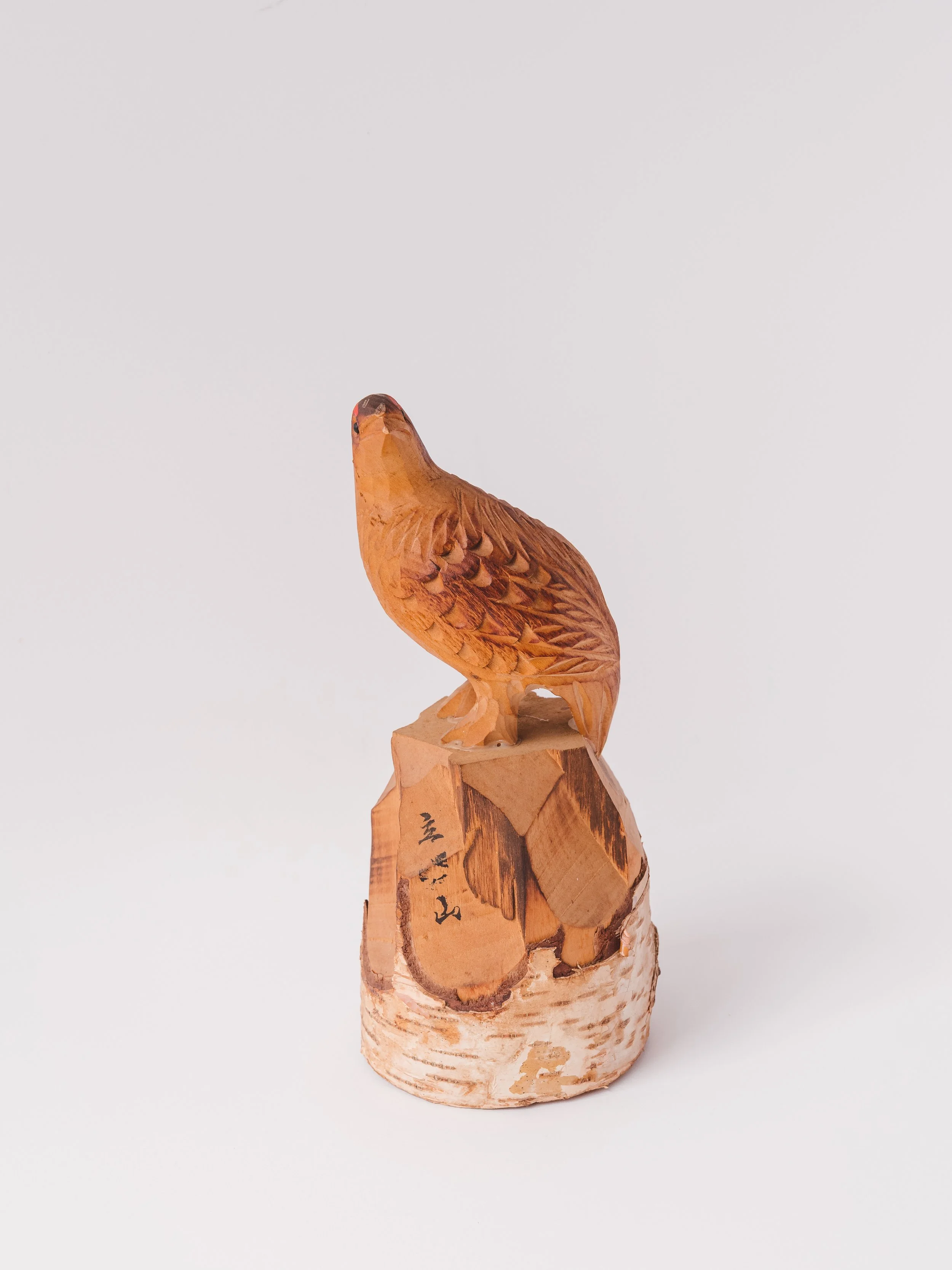 Image 1 of 10
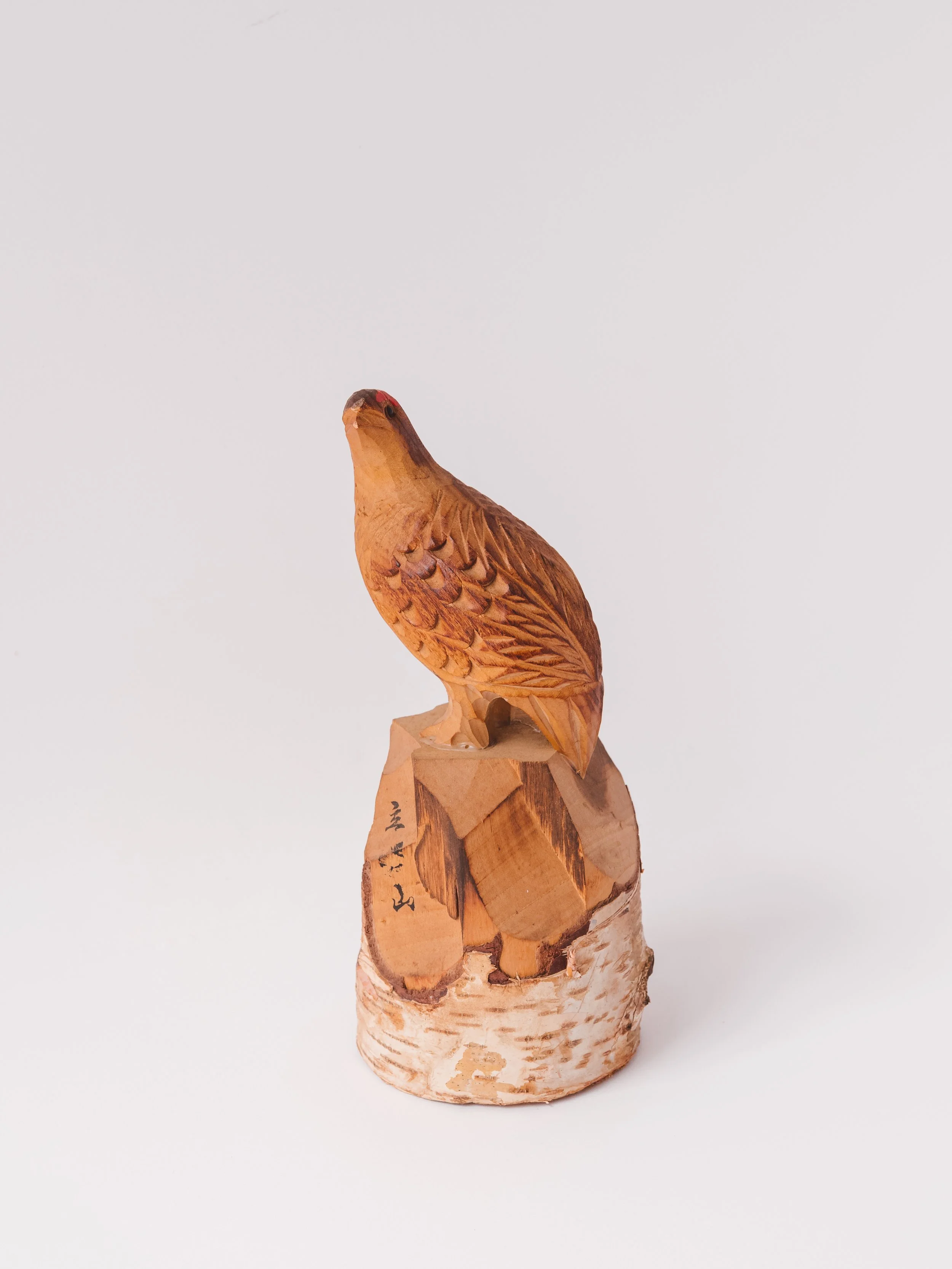 Image 2 of 10
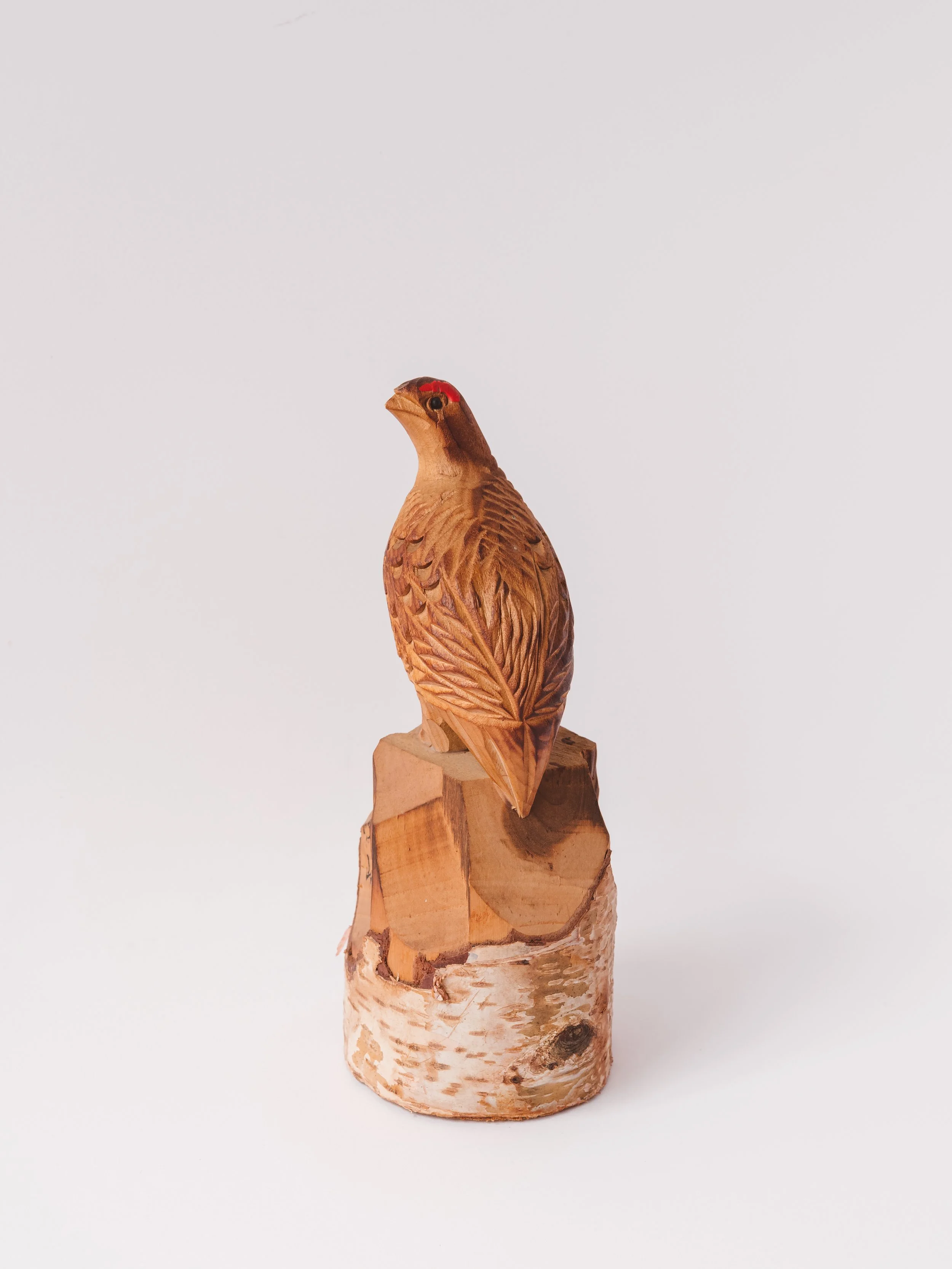 Image 3 of 10
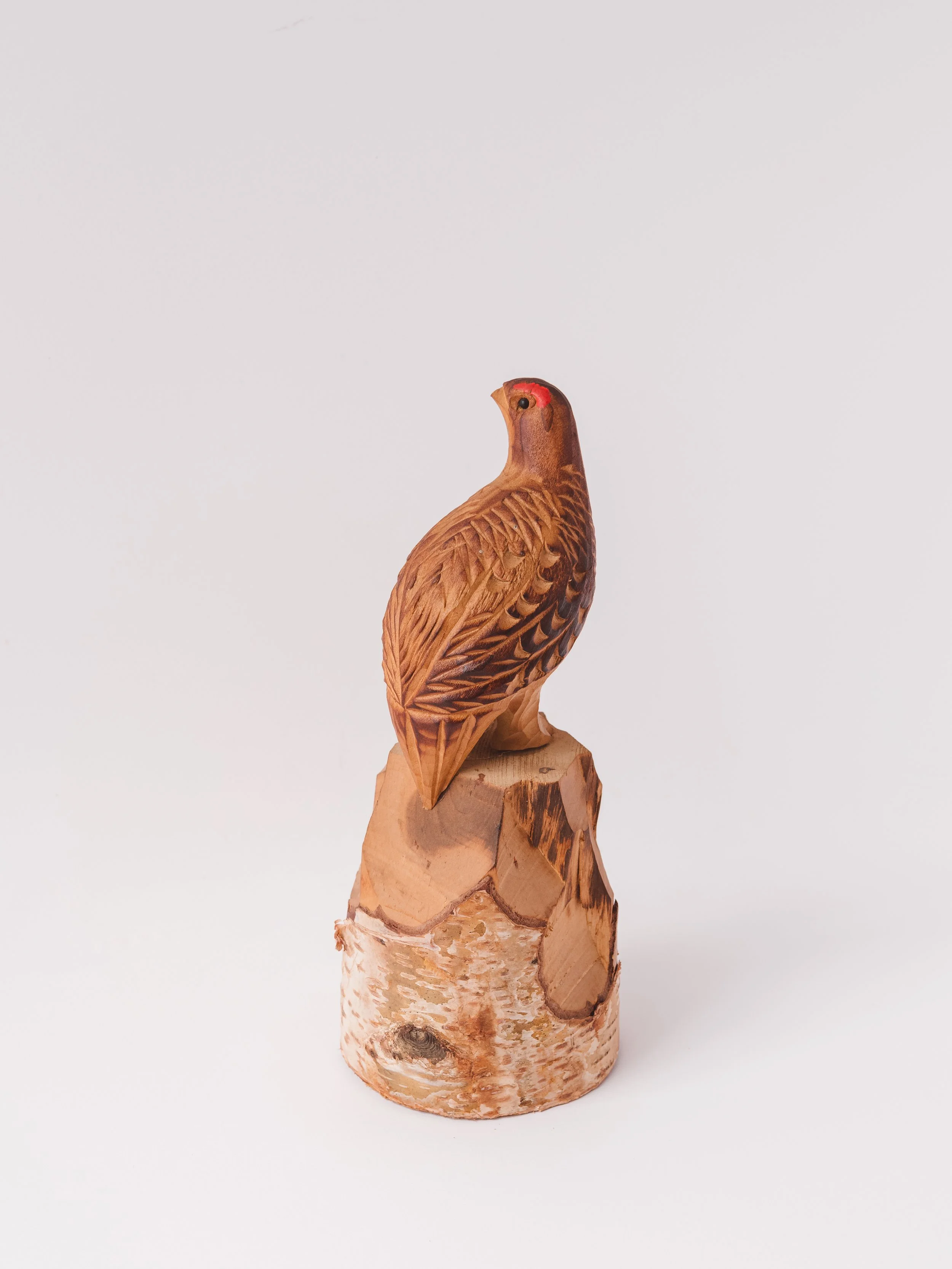 Image 4 of 10
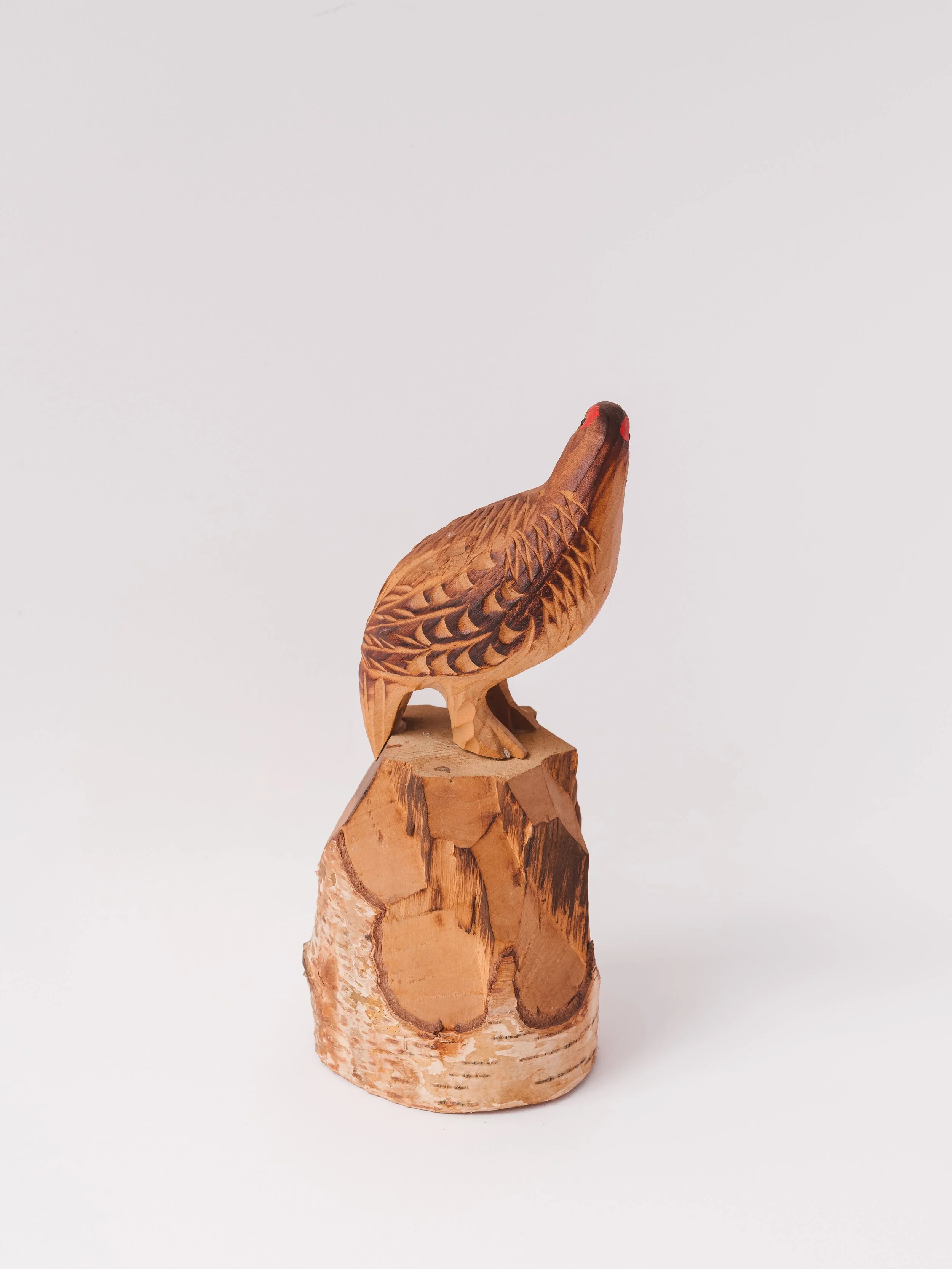 Image 5 of 10
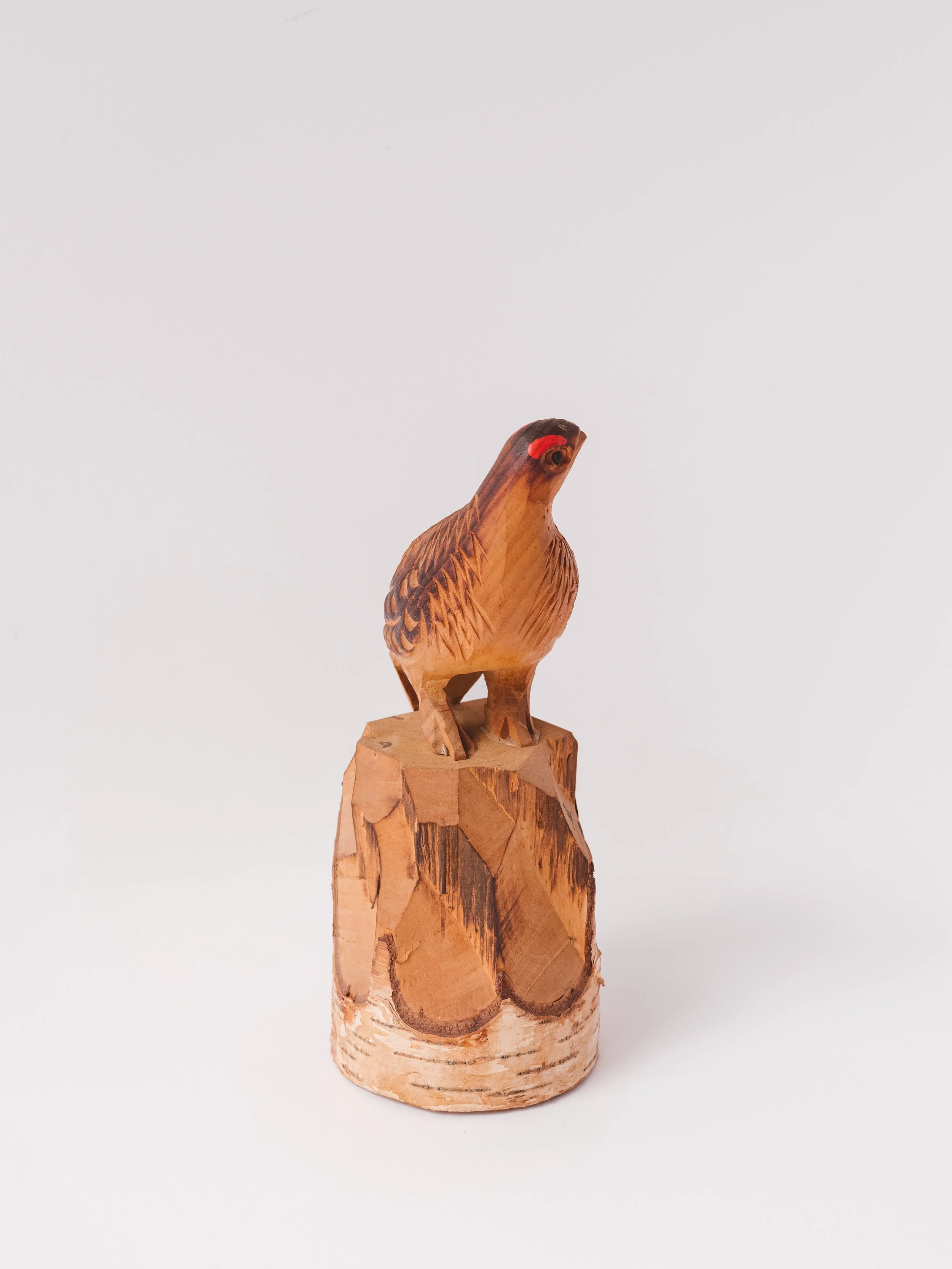 Image 6 of 10
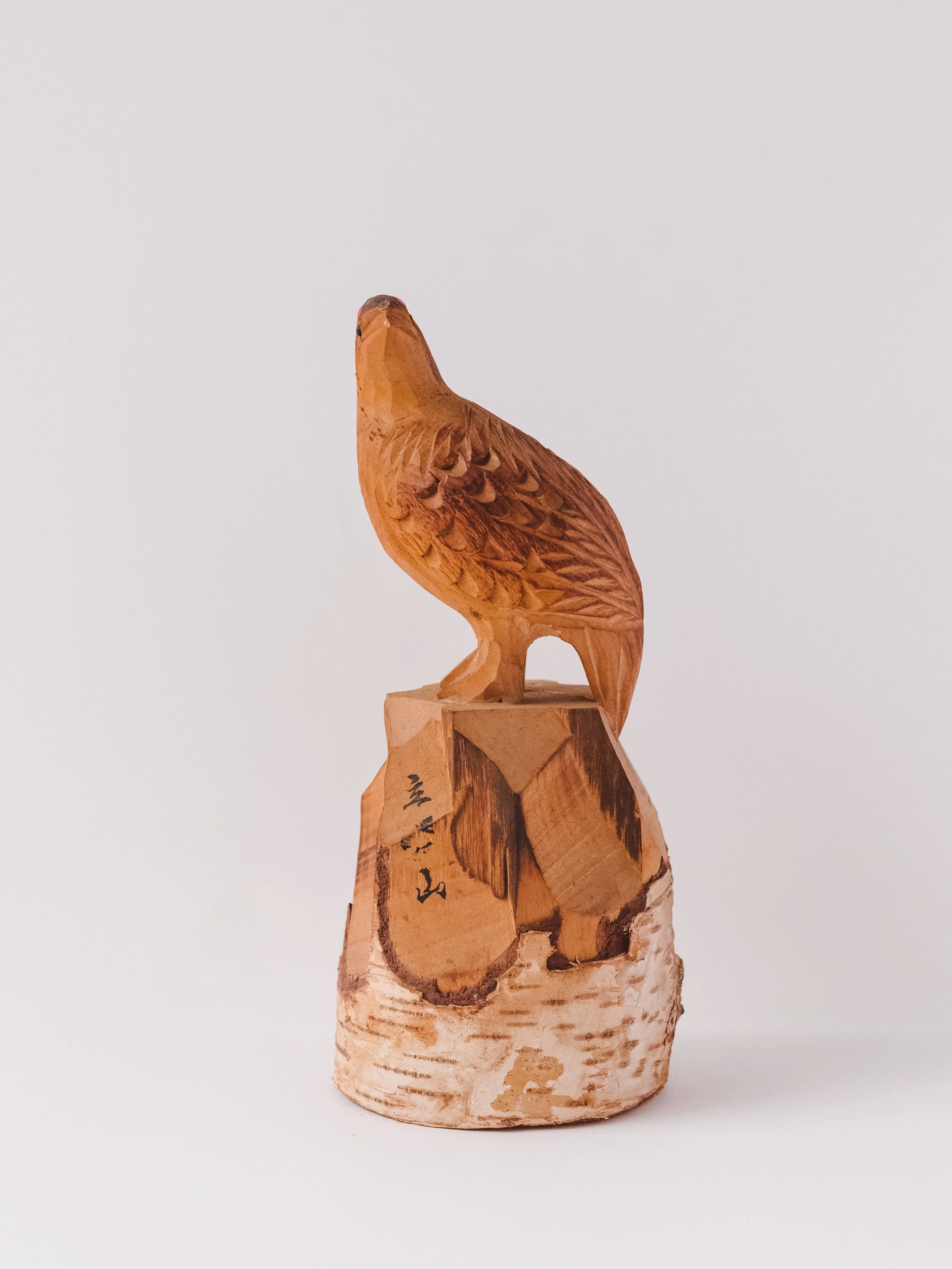 Image 7 of 10
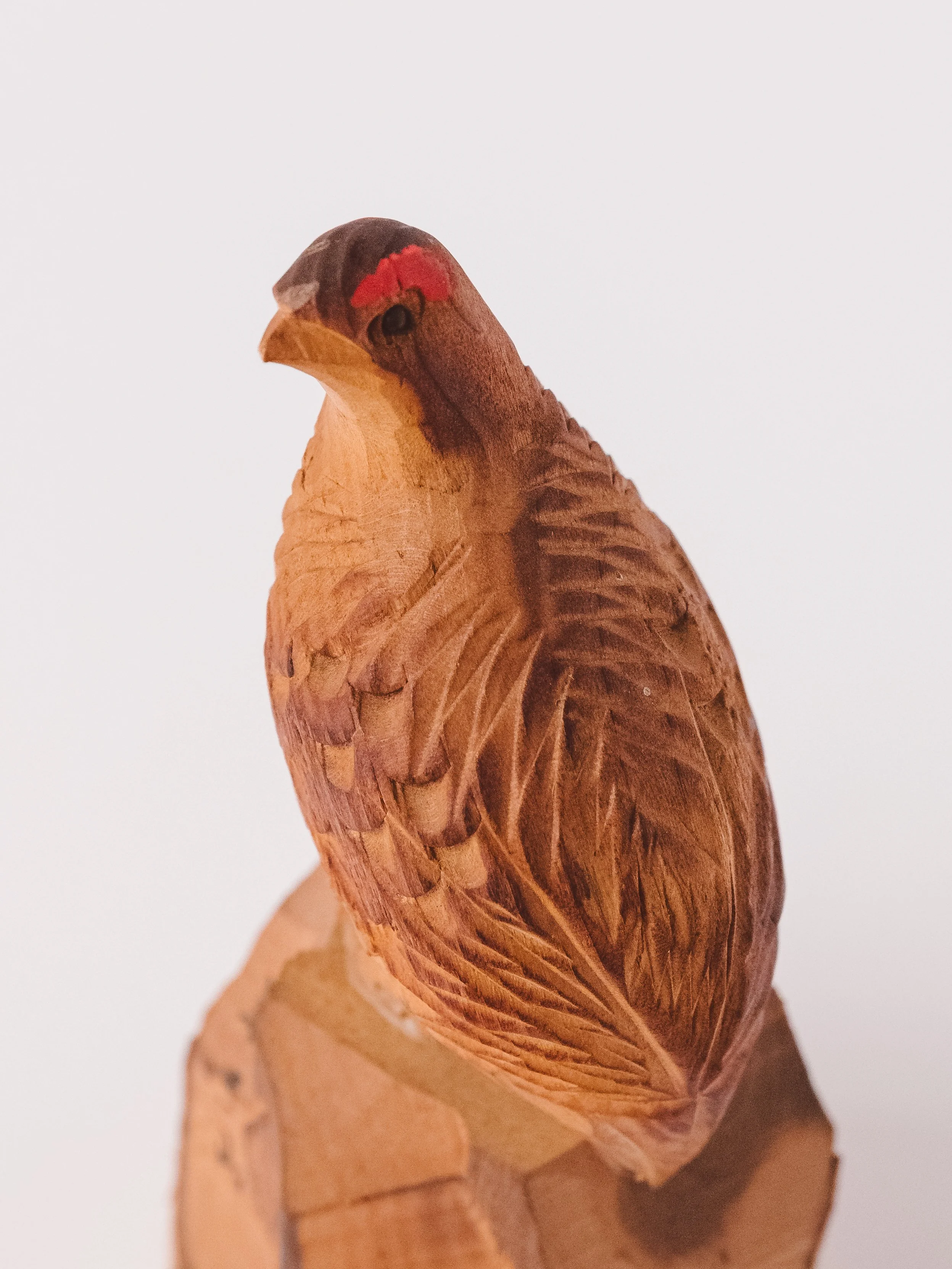 Image 8 of 10
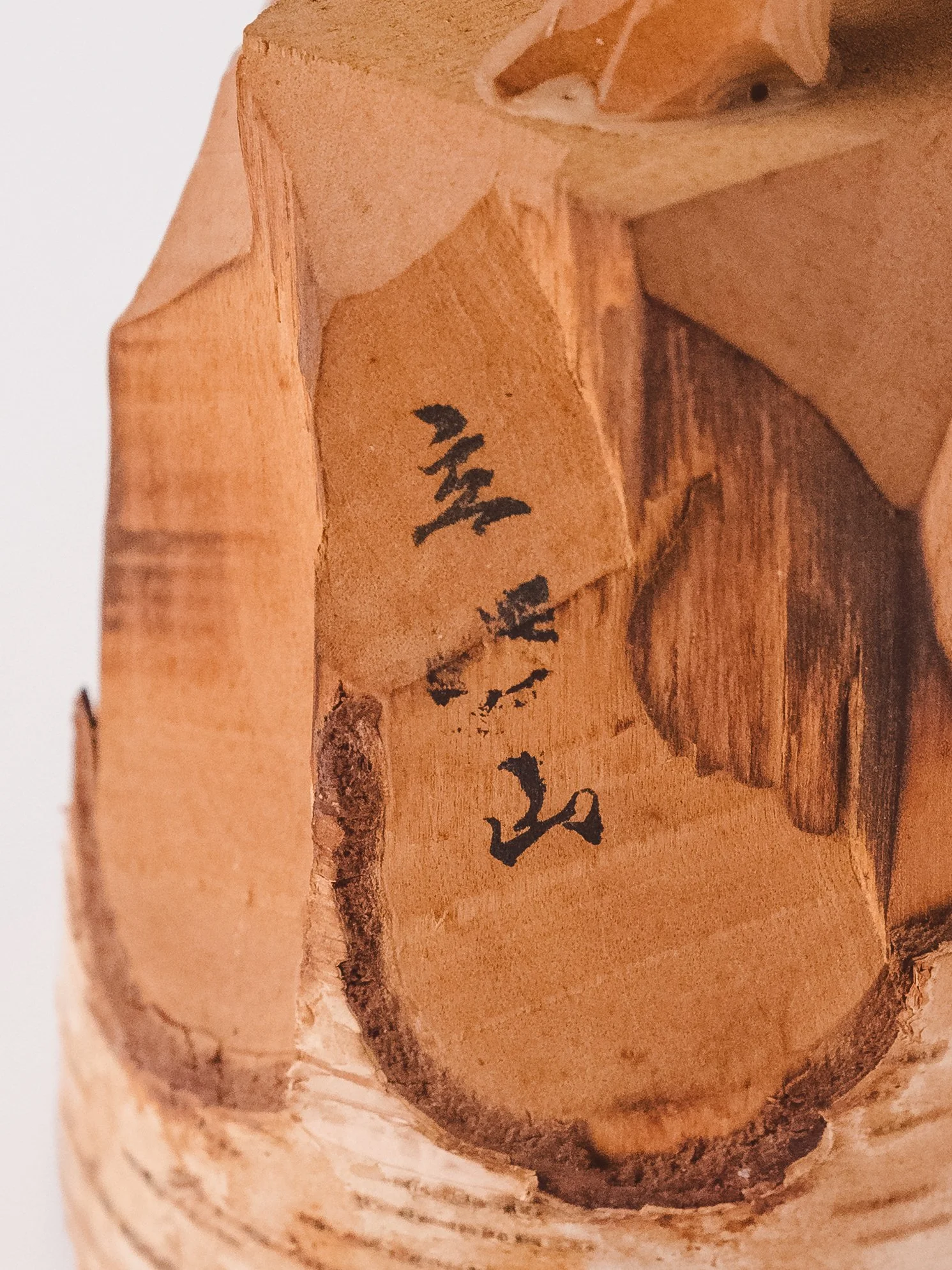 Image 9 of 10
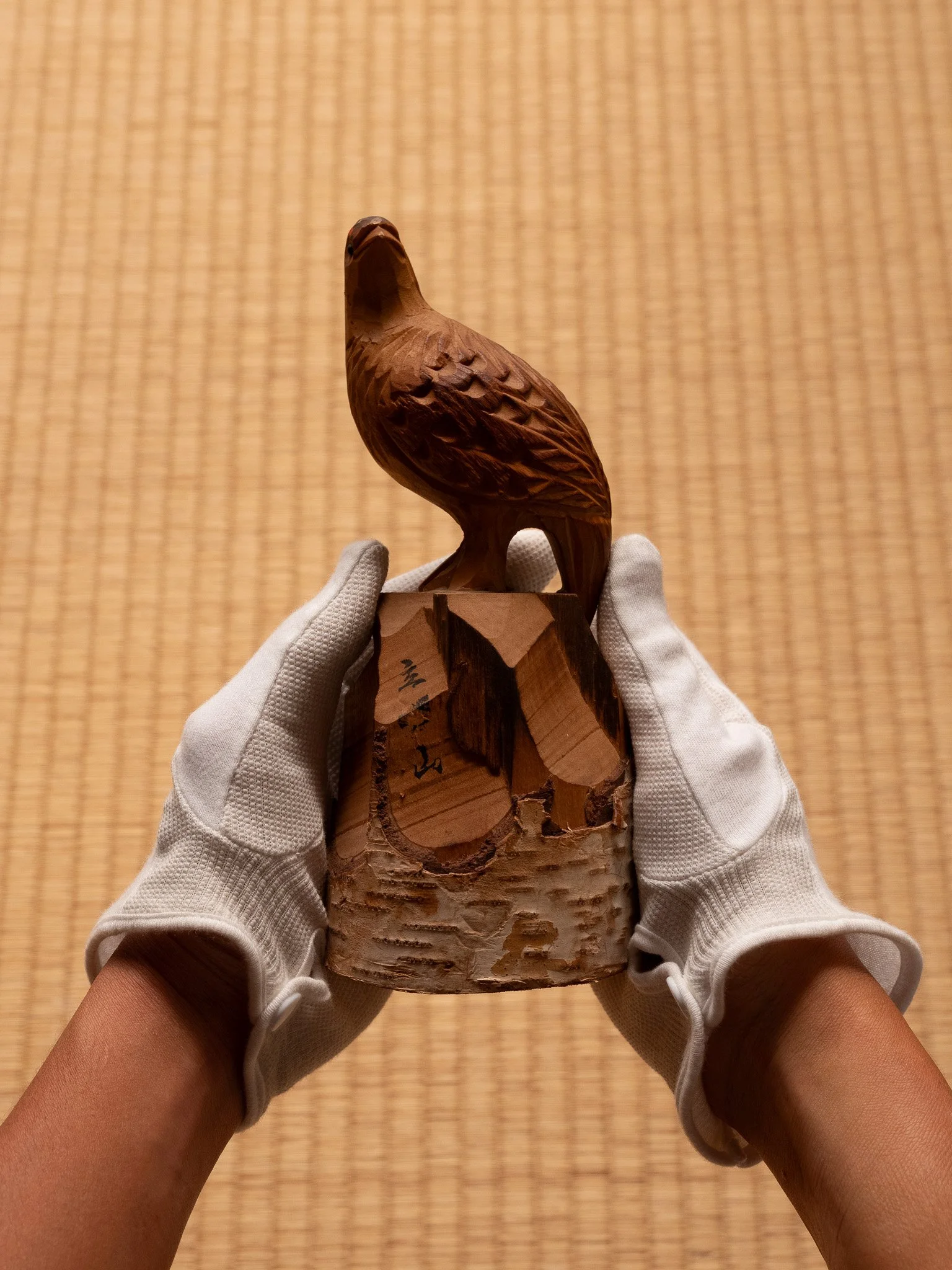 Image 10 of 10