【 The Concept 】
Two dogs, sold together, carved by a grandfather for a grandchild. That is the provenance. Not a factory, not a workshop, not a studio — a family member, sitting with a block of wood and a set of blades, making something for someone small enough to hold it in both hands.
The parent stands 19 centimeters tall on four straight legs, head forward, ears up, tail curled tight against the back. The body is built from carved planes, shaped by blade and then sealed under a clear varnish that gives the entire surface a smooth, glossy finish. The wood beneath is visible through the coating — pale, warm, grained — but the surface itself is slick to the touch, polished by the varnish into something closer to lacquerware than raw timber. Triangular ears, a squared chest, cylindrical legs, and a thick curled tail carved as a single mass fused to the spine.
The child stands 8.5 centimeters tall in the same posture. Same ears, same tail, same forward gaze. But smaller, darker, more worn. The surface carries a deep brown-black stain that has been rubbed away at every edge — the tips of the ears, the ridge of the nose, the point of each paw — exposing pale wood beneath. This is not damage. It is the record of being held.
They are the only objects in this archive made by one specific person for one specific person. Every other piece was produced for a market. These were produced for a child.
【 The Function 】
285 grams combined. The parent weighs 255 grams — solid wood, dense enough to feel like a tool in the hand. The child weighs 30 grams, small enough to disappear inside a closed fist. Both stand without support on any flat surface, balanced by their wide-set legs and low center of gravity. In their original context, carved dog figures were kept on household shelves as protectors — the dog's association with loyalty and vigilance made it a guardian of the home. A parent-child pair extended the protection to the family's youngest members: safe birth, safe growth, safe passage through childhood.
【 The Texture 】
The parent is pale wood sealed under a clear varnish. The carved planes of the body are smooth to the touch — no raw edges, no rough grain, no splinters. The varnish gives the surface a gentle sheen that catches light in long, soft bands rather than sharp fragments. The grain of the wood is visible through the transparent coating, confirming that each figure was carved from a single block. The curled tail, the triangular ears, and the squared muzzle are not attached — they are continuous with the body, left thick and solid to prevent breakage.
The child is the opposite in tone but identical in method. A dark stain — brown verging on black — covers the entire surface, but decades of handling have worn it away at every protruding edge. The ears are pale at the tips. The nose is pale at the bridge. The paws are pale where they meet the ground. The contrast between the dark body and the exposed wood at the extremities creates a natural highlight map that no painter could replicate — it follows the exact topography of human touch.
【 Presence 】
They stand side by side, both facing forward, both watching. The parent is taller than anything nearby. The child is small enough to overlook until you notice it standing in the same posture, at the same angle, with the same silent attention. The scale difference is dramatic — the child is less than half the parent's height — but the formal similarity is total. Same ears. Same tail. Same legs. Same gaze. They are not interacting. They are not looking at each other. They are looking at the same thing, together, from the same direction, and that shared orientation is what makes them a pair.
HEWN HOSTS overflow with abundance. QUIET KIN exchange a silent glance. WHITTLED WATCH stand shoulder to hip, facing out, watching whatever comes. They are not welcoming it. They are not ignoring it. They are simply present for it — the way a grandfather is present for a grandchild: standing nearby, saying nothing, making sure.
Sourced from a private collection in the Kansai region, Japan. Carved by hand as a personal gift from a grandfather to a grandchild.
【 The Concept 】
Two dogs, sold together, carved by a grandfather for a grandchild. That is the provenance. Not a factory, not a workshop, not a studio — a family member, sitting with a block of wood and a set of blades, making something for someone small enough to hold it in both hands.
The parent stands 19 centimeters tall on four straight legs, head forward, ears up, tail curled tight against the back. The body is built from carved planes, shaped by blade and then sealed under a clear varnish that gives the entire surface a smooth, glossy finish. The wood beneath is visible through the coating — pale, warm, grained — but the surface itself is slick to the touch, polished by the varnish into something closer to lacquerware than raw timber. Triangular ears, a squared chest, cylindrical legs, and a thick curled tail carved as a single mass fused to the spine.
The child stands 8.5 centimeters tall in the same posture. Same ears, same tail, same forward gaze. But smaller, darker, more worn. The surface carries a deep brown-black stain that has been rubbed away at every edge — the tips of the ears, the ridge of the nose, the point of each paw — exposing pale wood beneath. This is not damage. It is the record of being held.
They are the only objects in this archive made by one specific person for one specific person. Every other piece was produced for a market. These were produced for a child.
【 The Function 】
285 grams combined. The parent weighs 255 grams — solid wood, dense enough to feel like a tool in the hand. The child weighs 30 grams, small enough to disappear inside a closed fist. Both stand without support on any flat surface, balanced by their wide-set legs and low center of gravity. In their original context, carved dog figures were kept on household shelves as protectors — the dog's association with loyalty and vigilance made it a guardian of the home. A parent-child pair extended the protection to the family's youngest members: safe birth, safe growth, safe passage through childhood.
【 The Texture 】
The parent is pale wood sealed under a clear varnish. The carved planes of the body are smooth to the touch — no raw edges, no rough grain, no splinters. The varnish gives the surface a gentle sheen that catches light in long, soft bands rather than sharp fragments. The grain of the wood is visible through the transparent coating, confirming that each figure was carved from a single block. The curled tail, the triangular ears, and the squared muzzle are not attached — they are continuous with the body, left thick and solid to prevent breakage.
The child is the opposite in tone but identical in method. A dark stain — brown verging on black — covers the entire surface, but decades of handling have worn it away at every protruding edge. The ears are pale at the tips. The nose is pale at the bridge. The paws are pale where they meet the ground. The contrast between the dark body and the exposed wood at the extremities creates a natural highlight map that no painter could replicate — it follows the exact topography of human touch.
【 Presence 】
They stand side by side, both facing forward, both watching. The parent is taller than anything nearby. The child is small enough to overlook until you notice it standing in the same posture, at the same angle, with the same silent attention. The scale difference is dramatic — the child is less than half the parent's height — but the formal similarity is total. Same ears. Same tail. Same legs. Same gaze. They are not interacting. They are not looking at each other. They are looking at the same thing, together, from the same direction, and that shared orientation is what makes them a pair.
HEWN HOSTS overflow with abundance. QUIET KIN exchange a silent glance. WHITTLED WATCH stand shoulder to hip, facing out, watching whatever comes. They are not welcoming it. They are not ignoring it. They are simply present for it — the way a grandfather is present for a grandchild: standing nearby, saying nothing, making sure.
Sourced from a private collection in the Kansai region, Japan. Carved by hand as a personal gift from a grandfather to a grandchild.


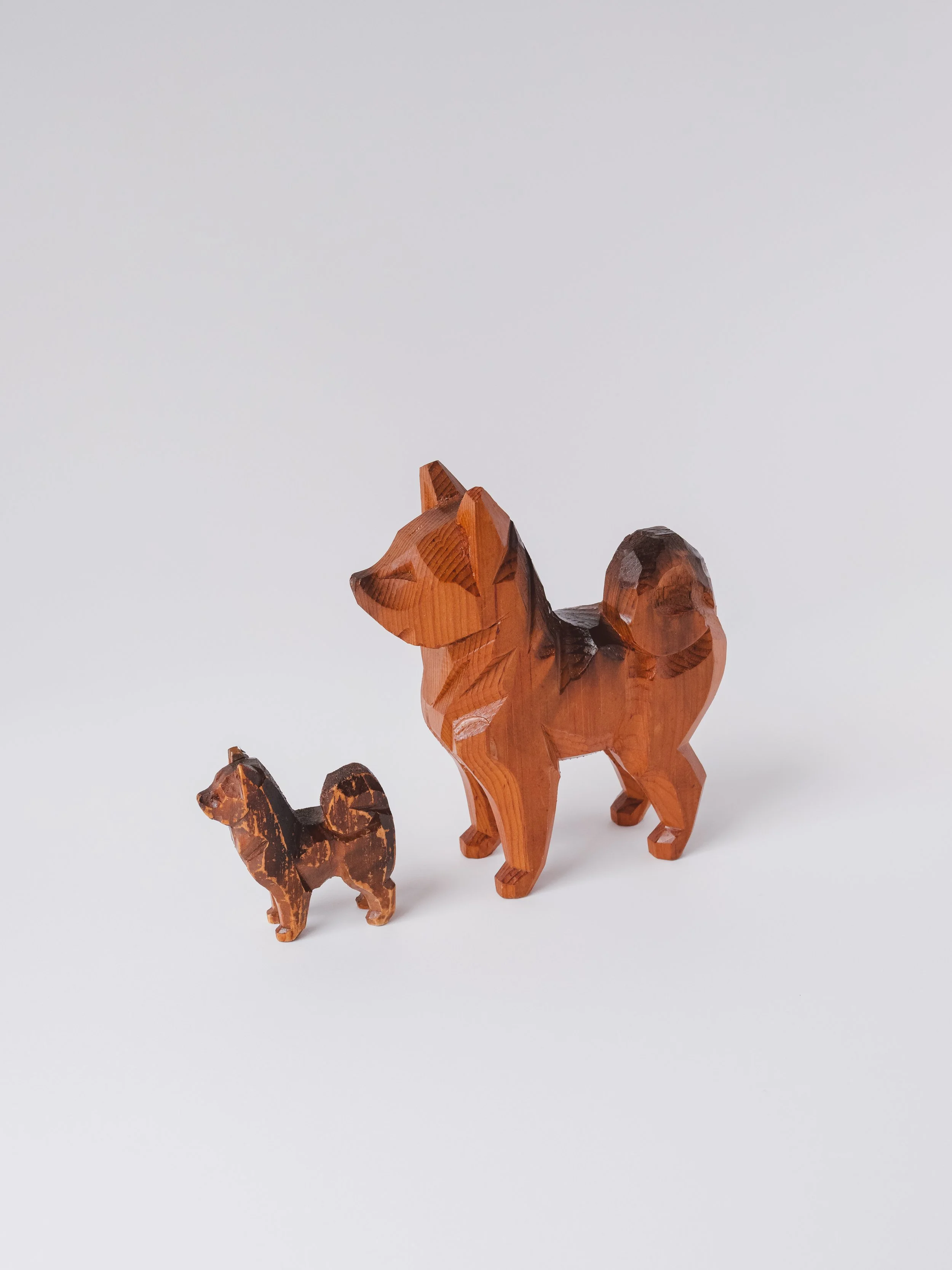 Image 1 of 17
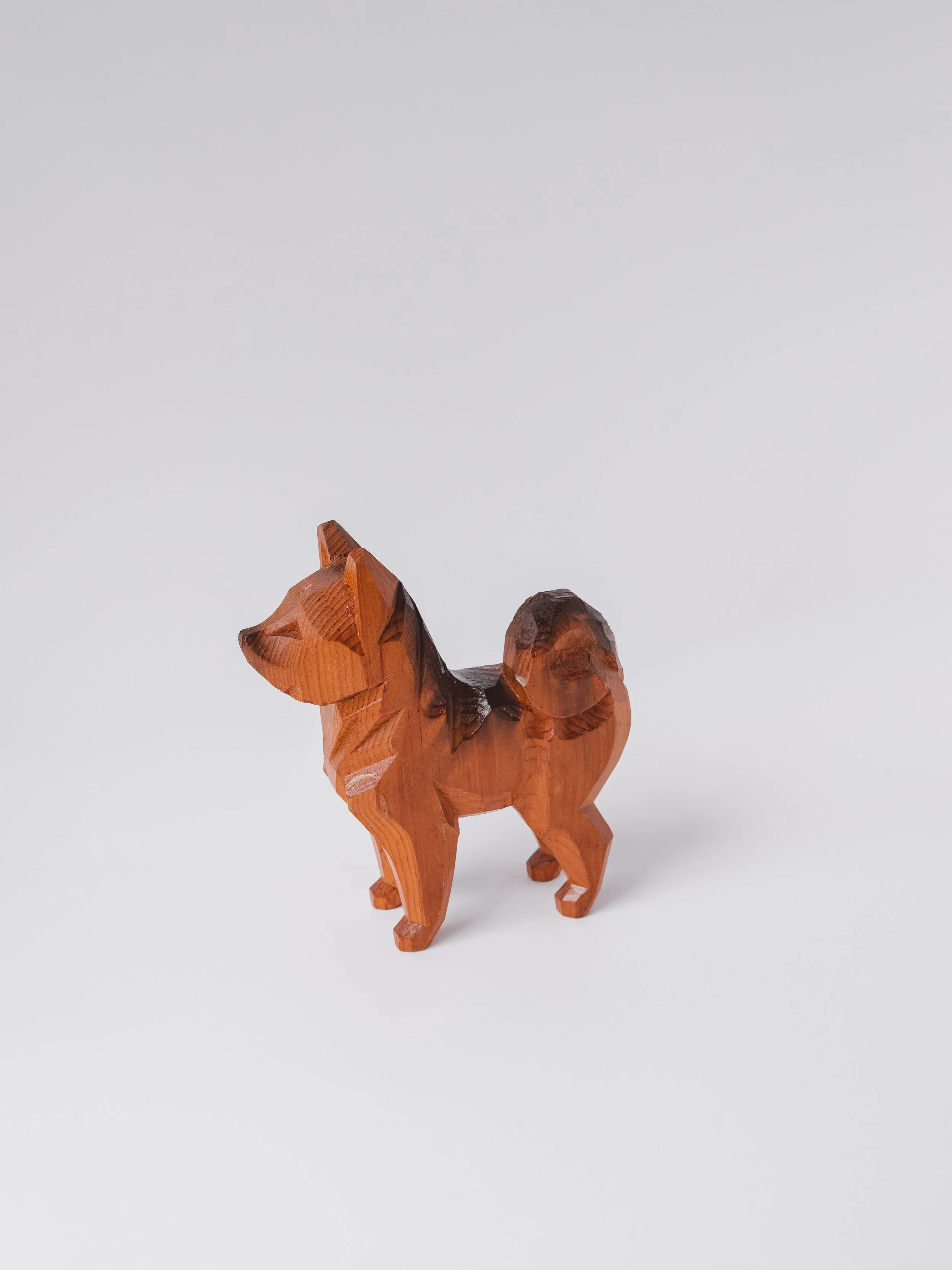 Image 2 of 17
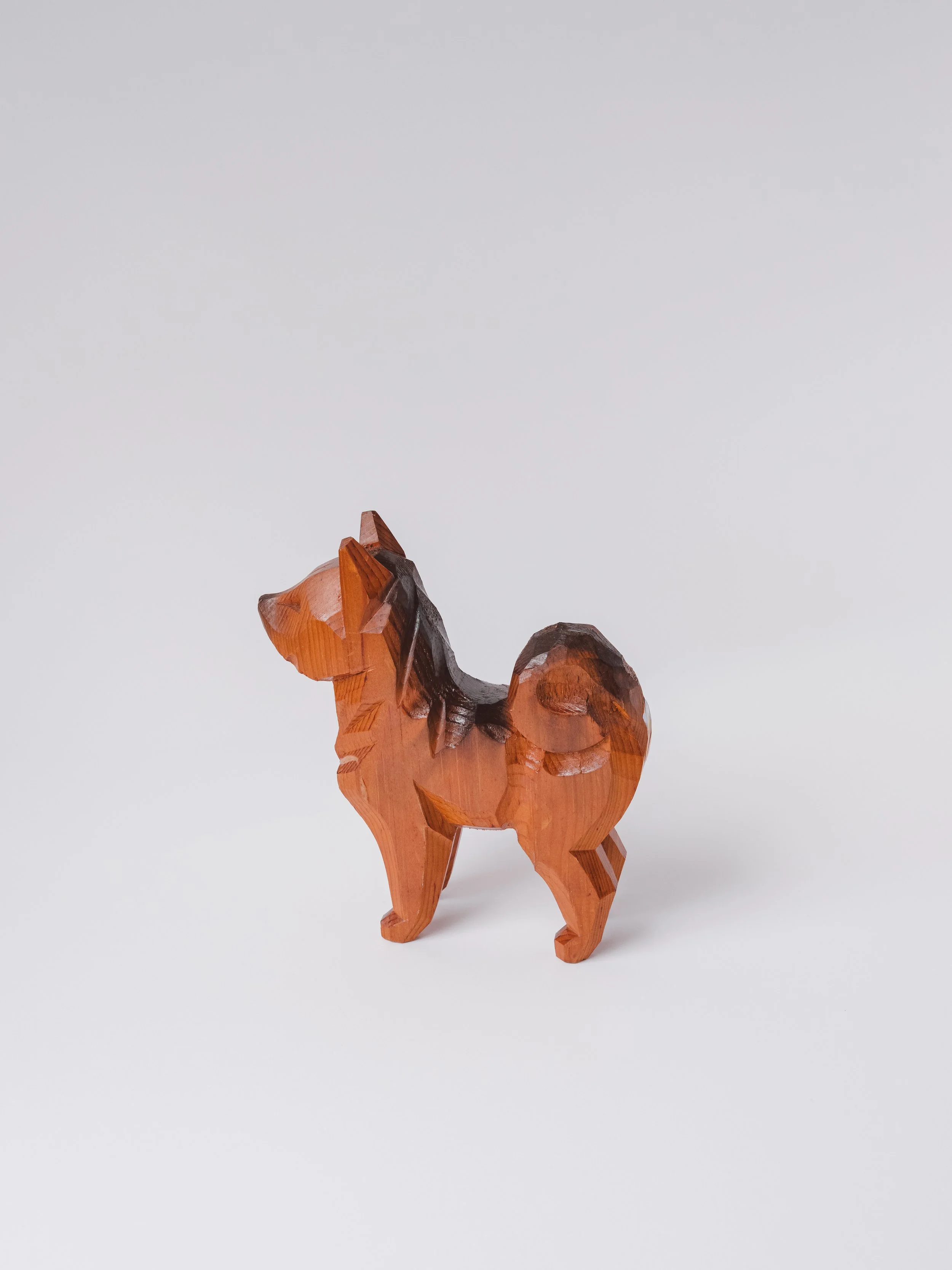 Image 3 of 17
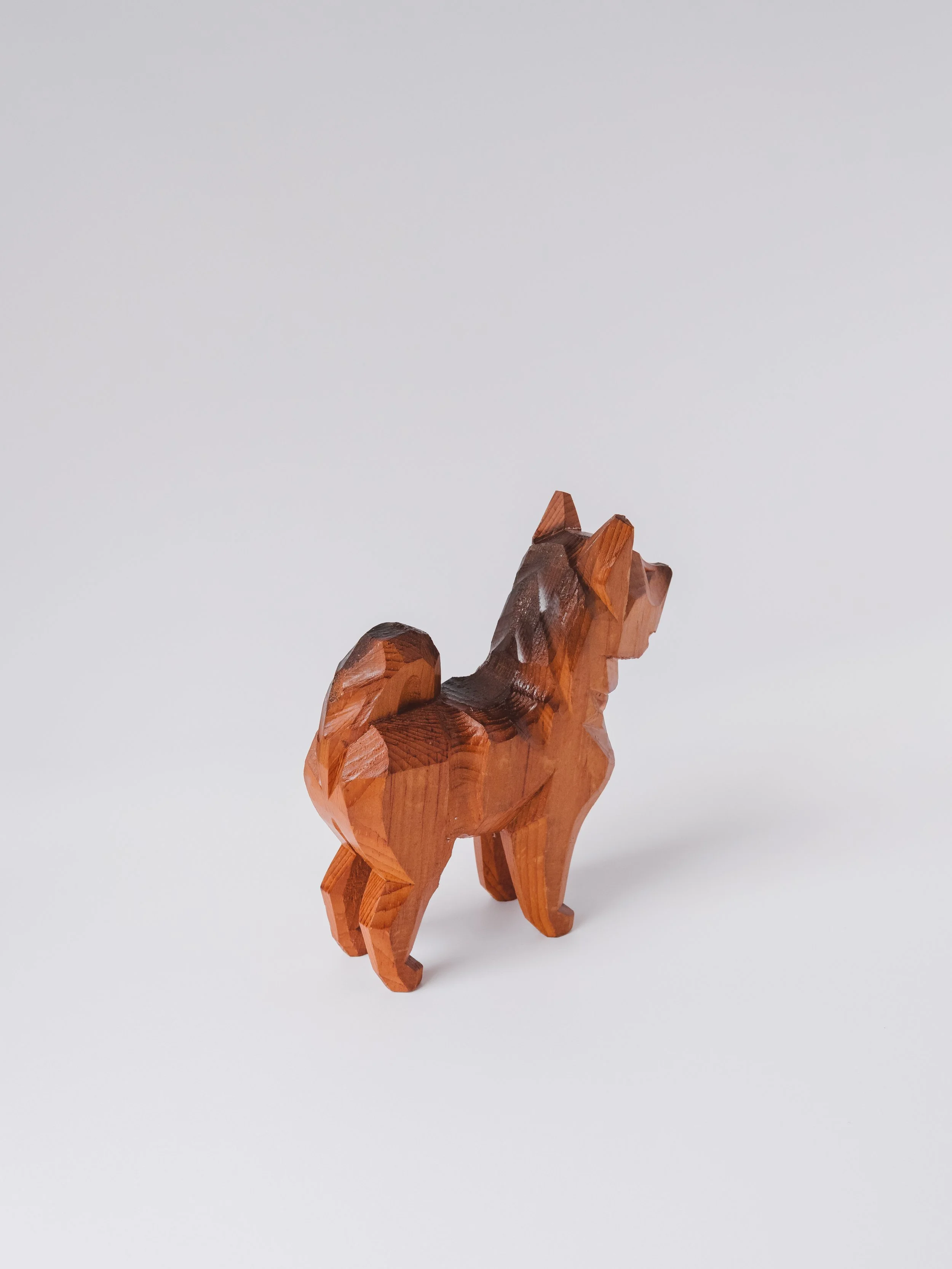 Image 4 of 17
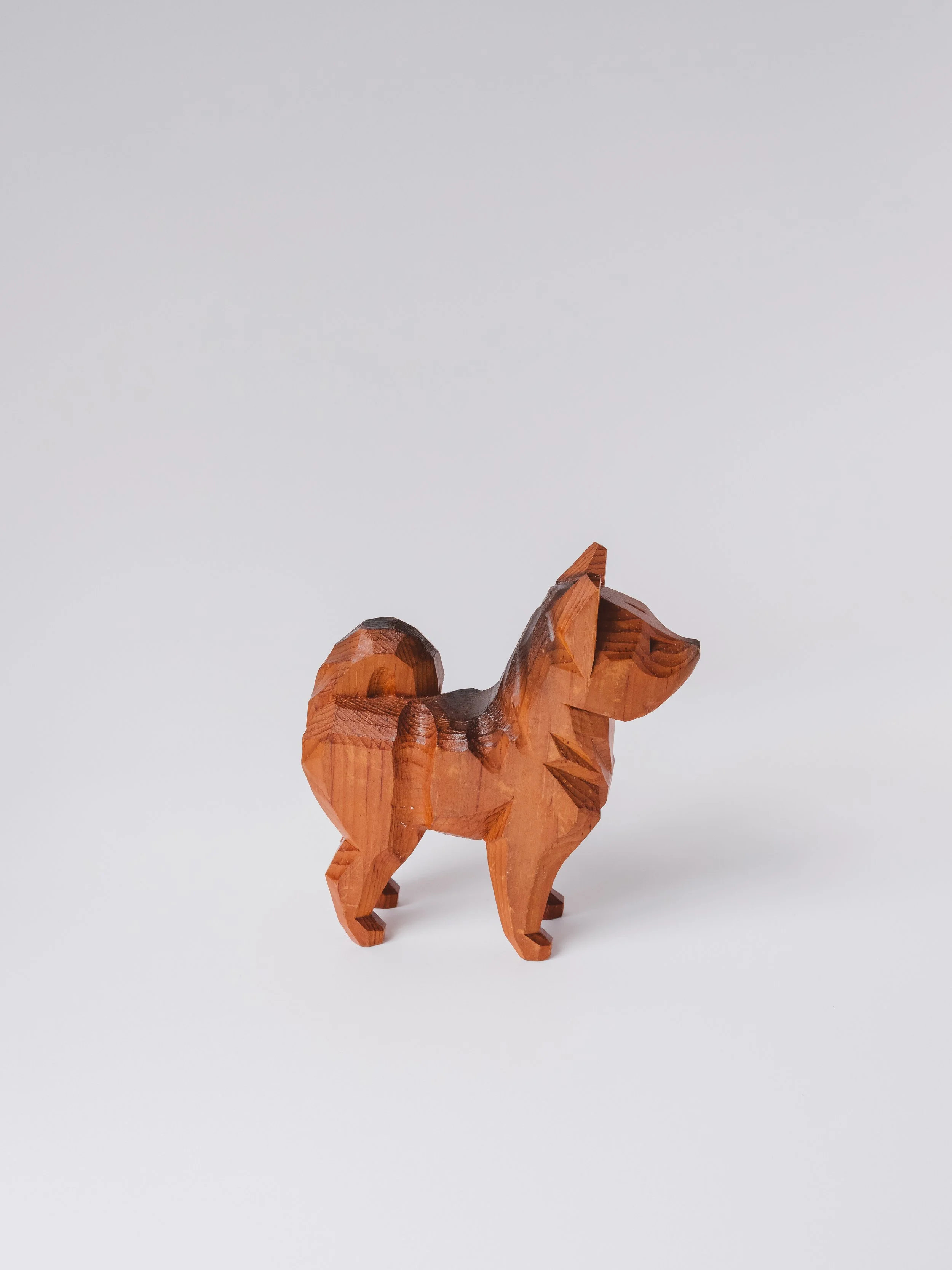 Image 5 of 17
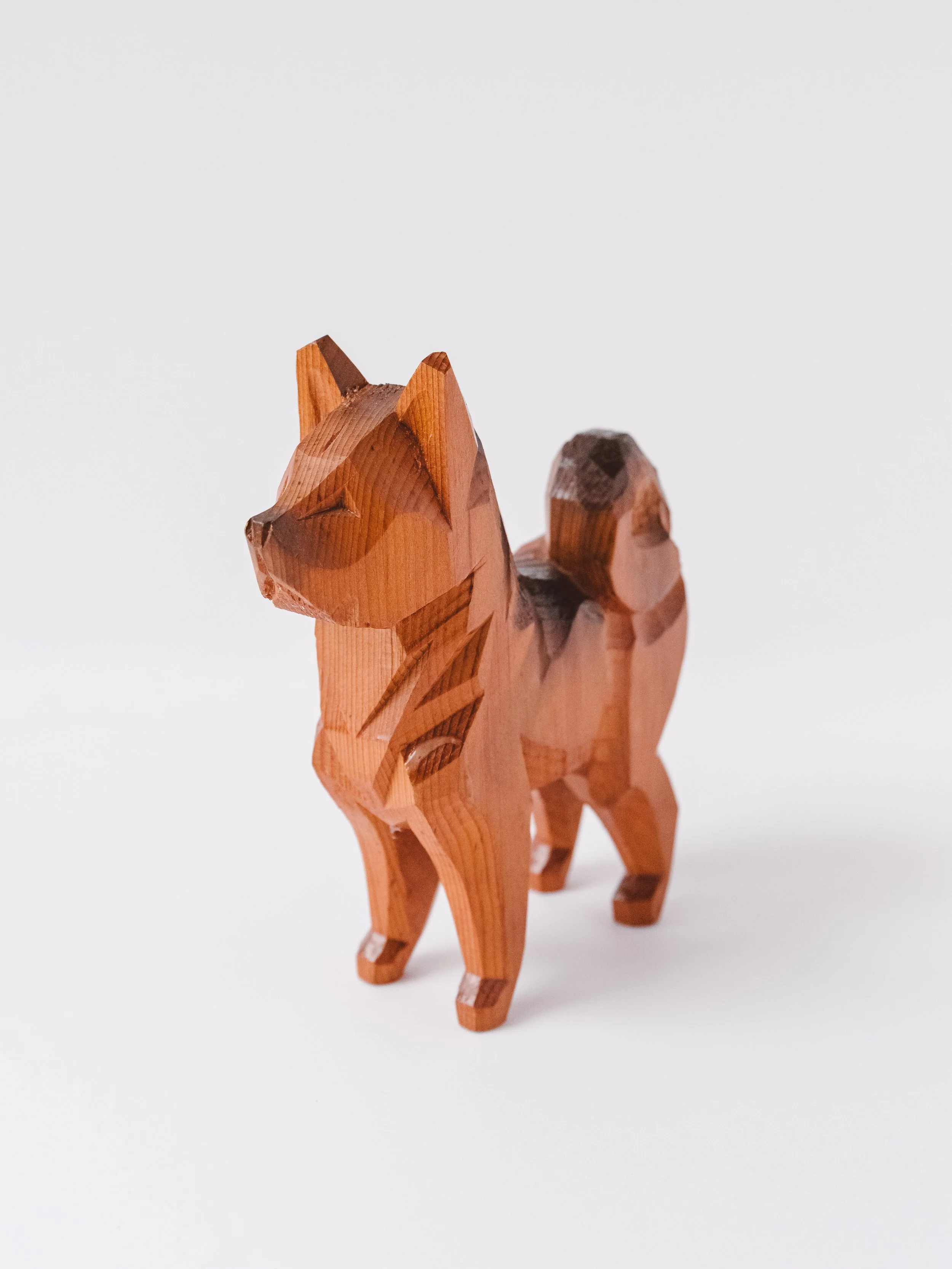 Image 6 of 17
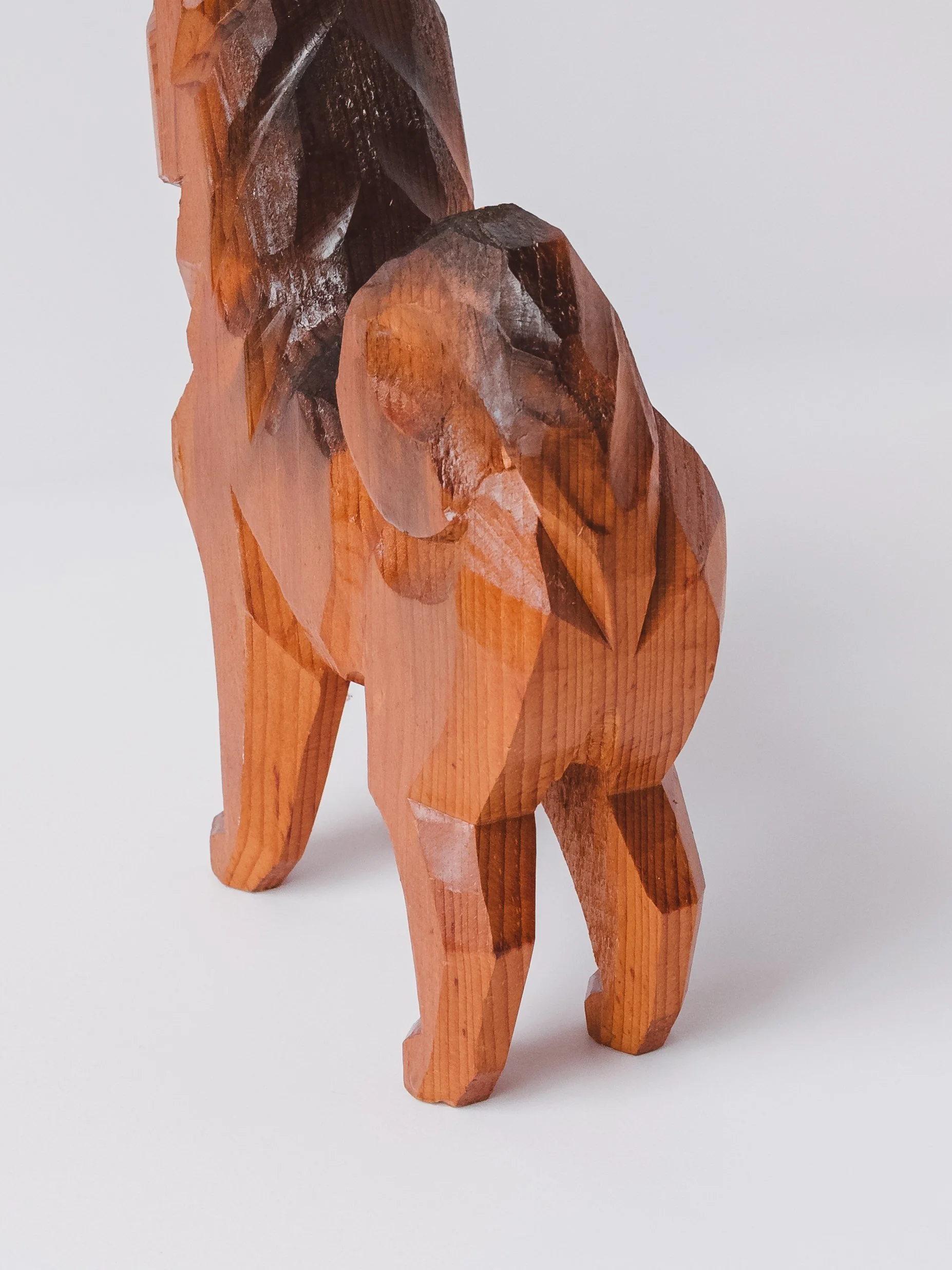 Image 7 of 17
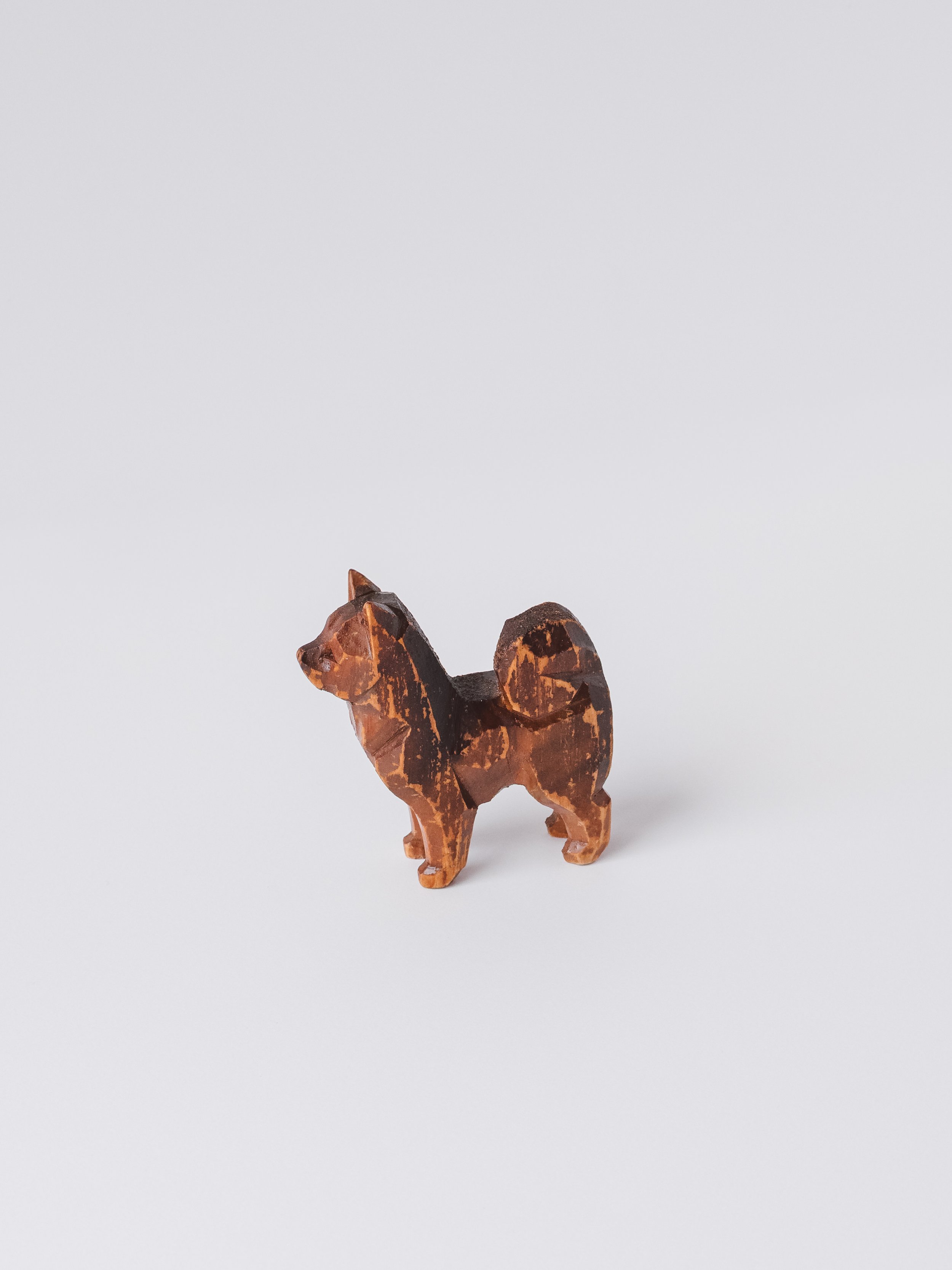 Image 8 of 17
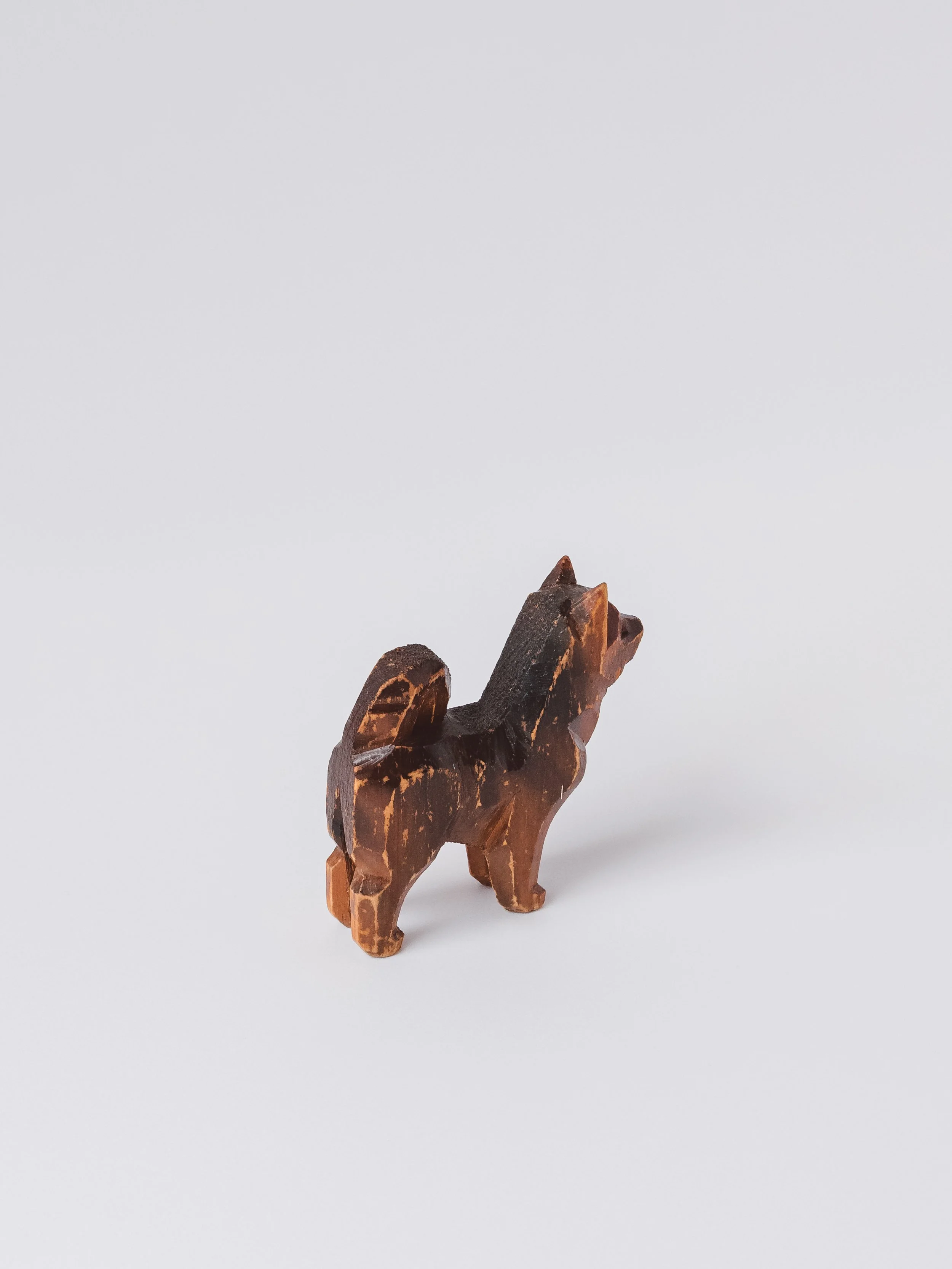 Image 9 of 17
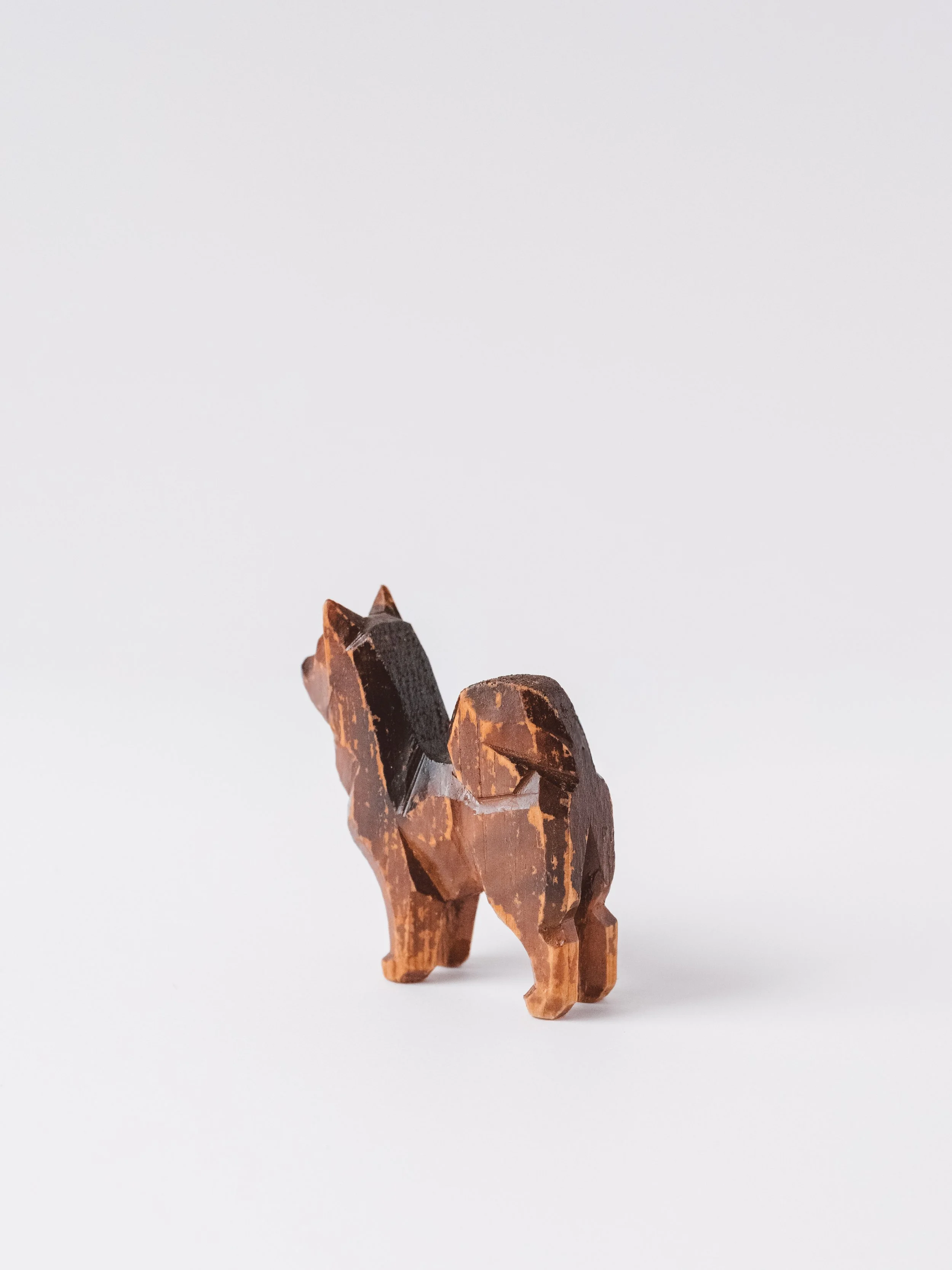 Image 10 of 17
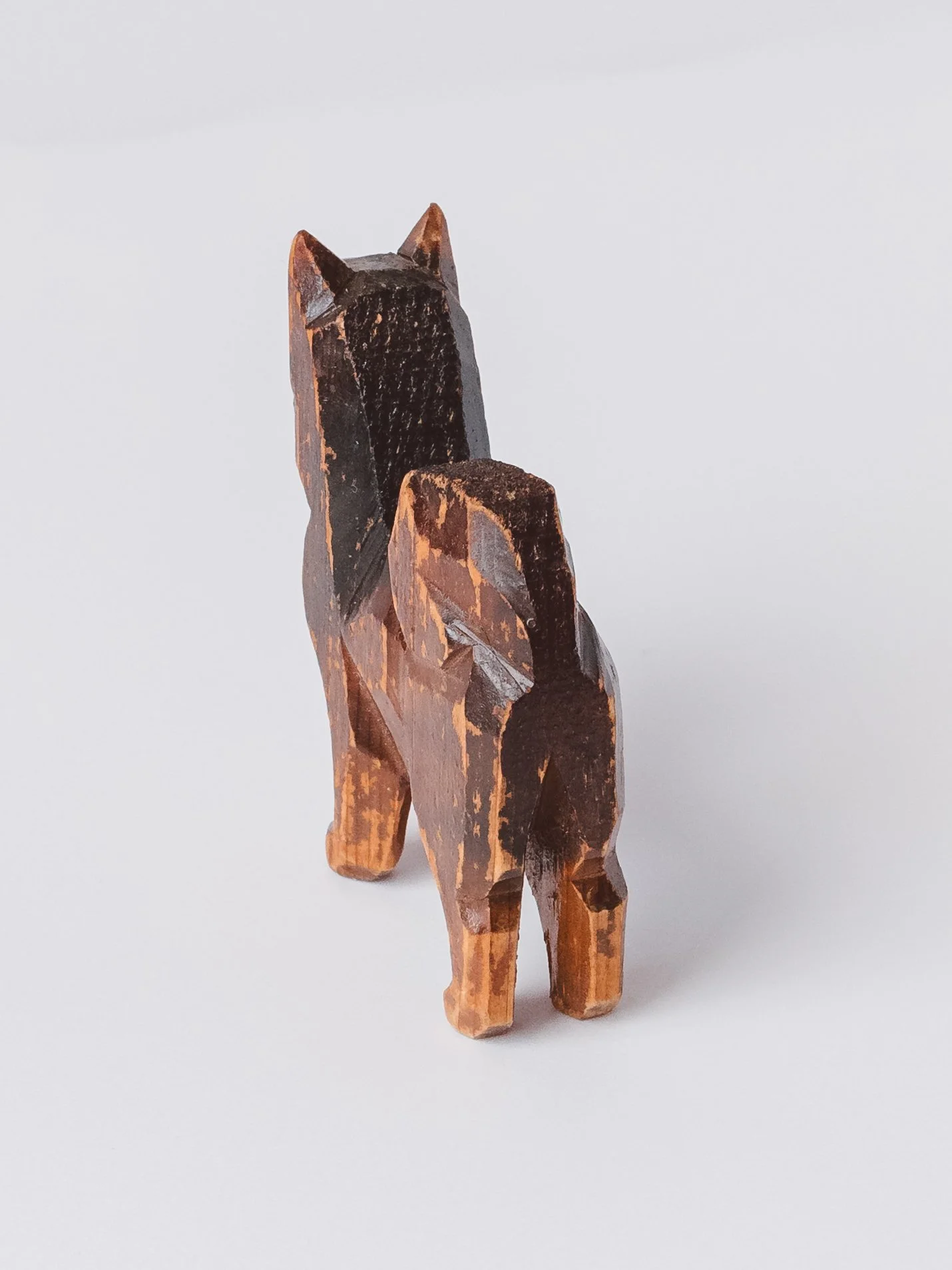 Image 11 of 17
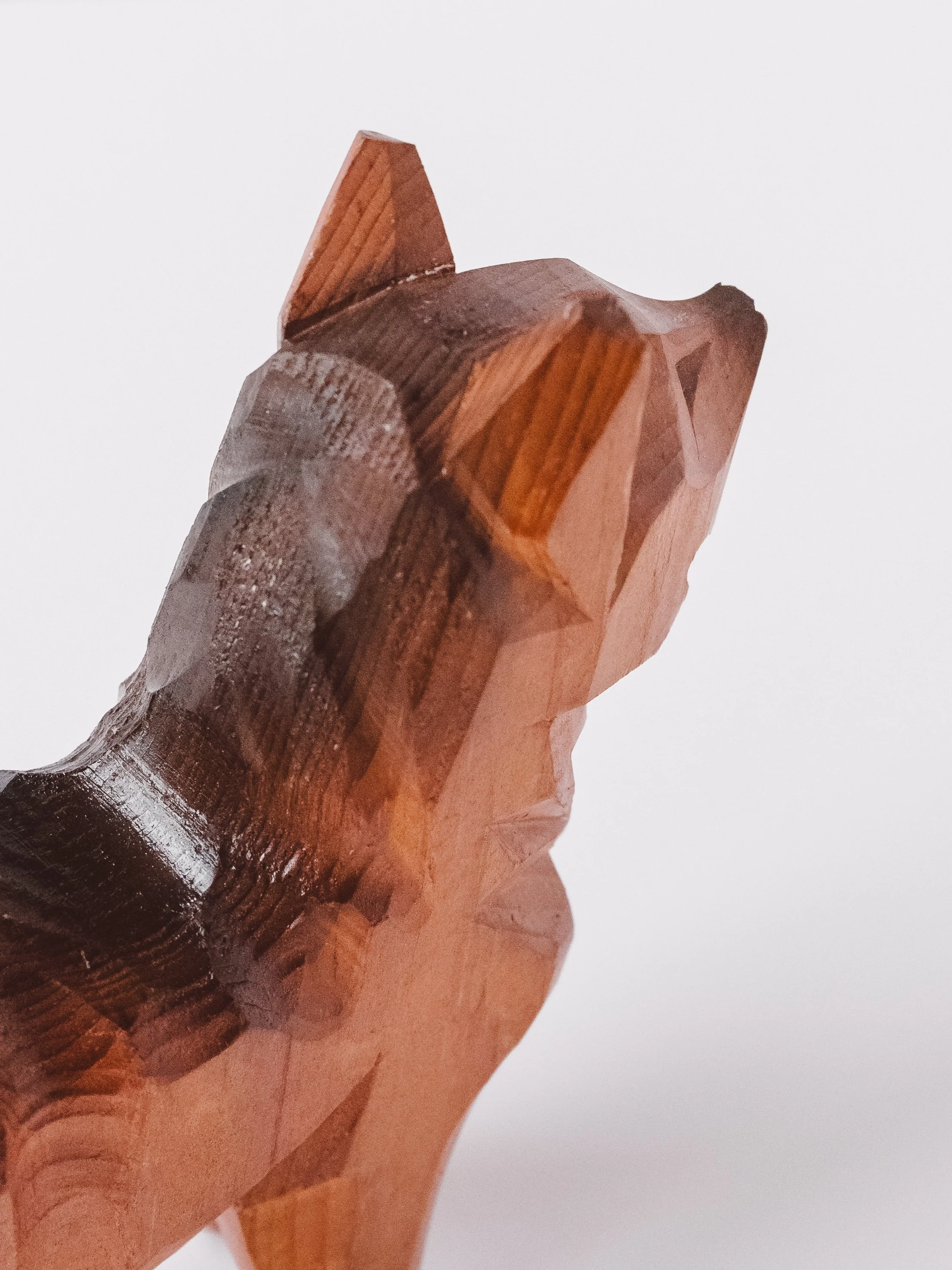 Image 12 of 17
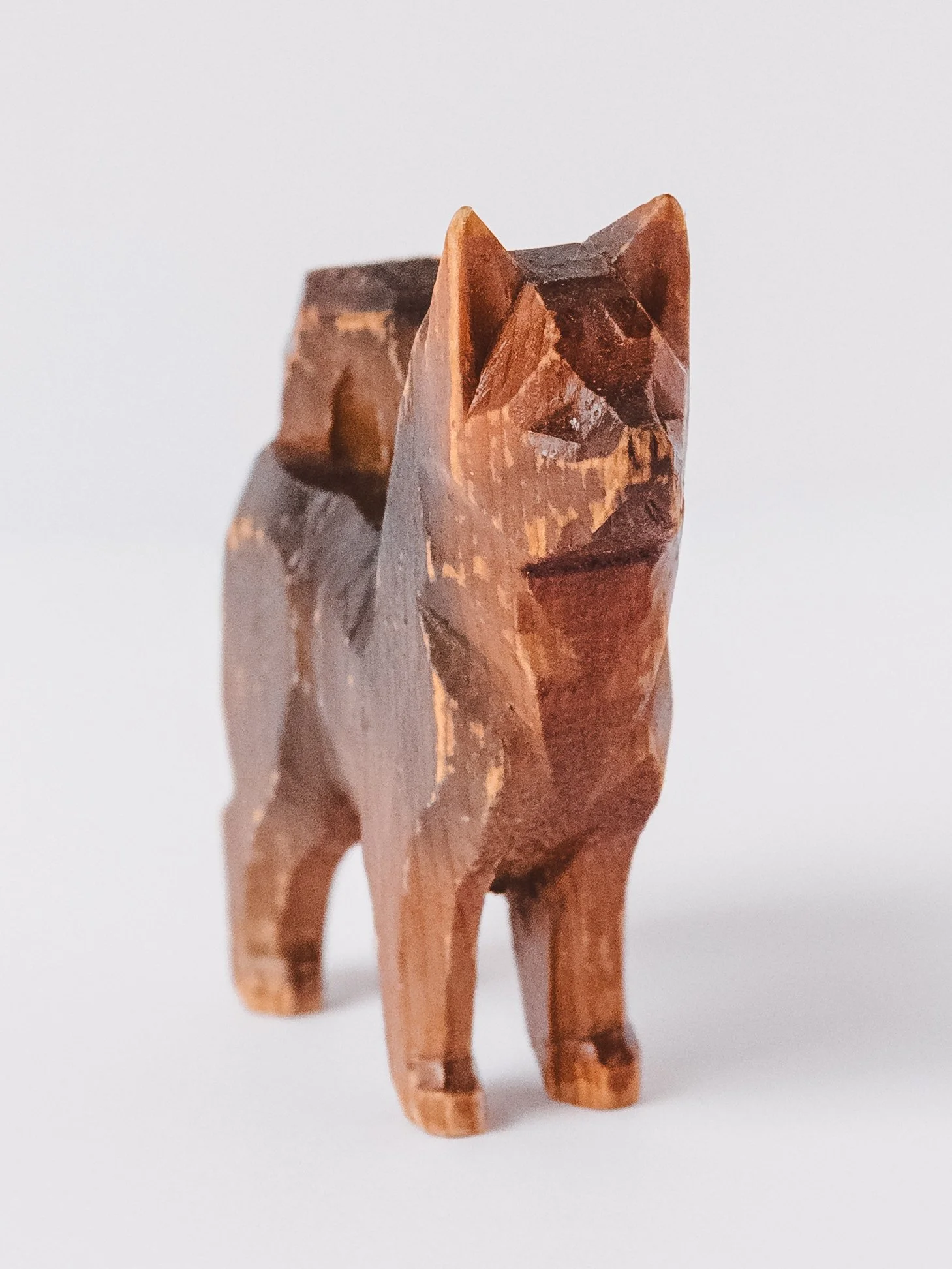 Image 13 of 17
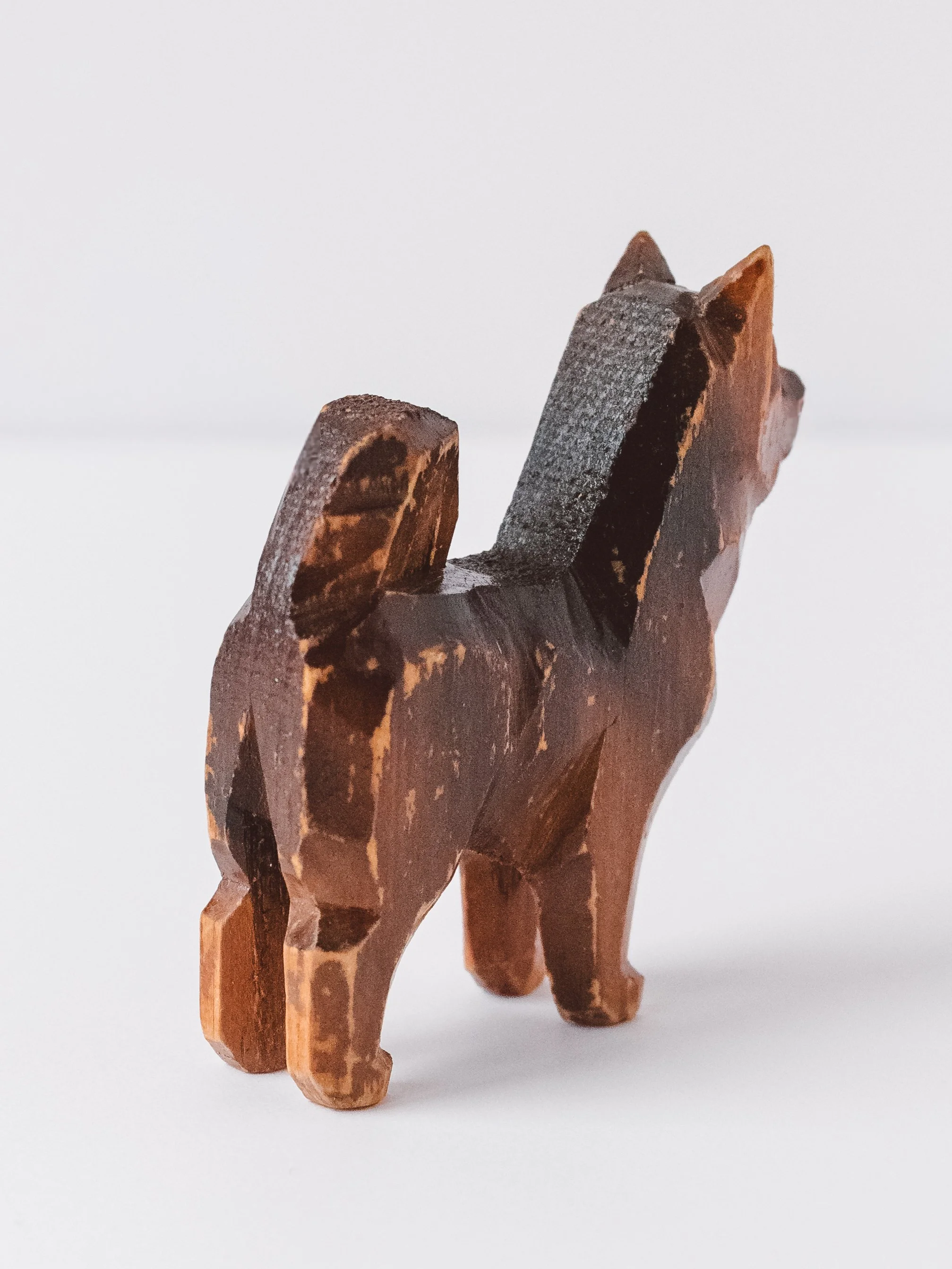 Image 14 of 17
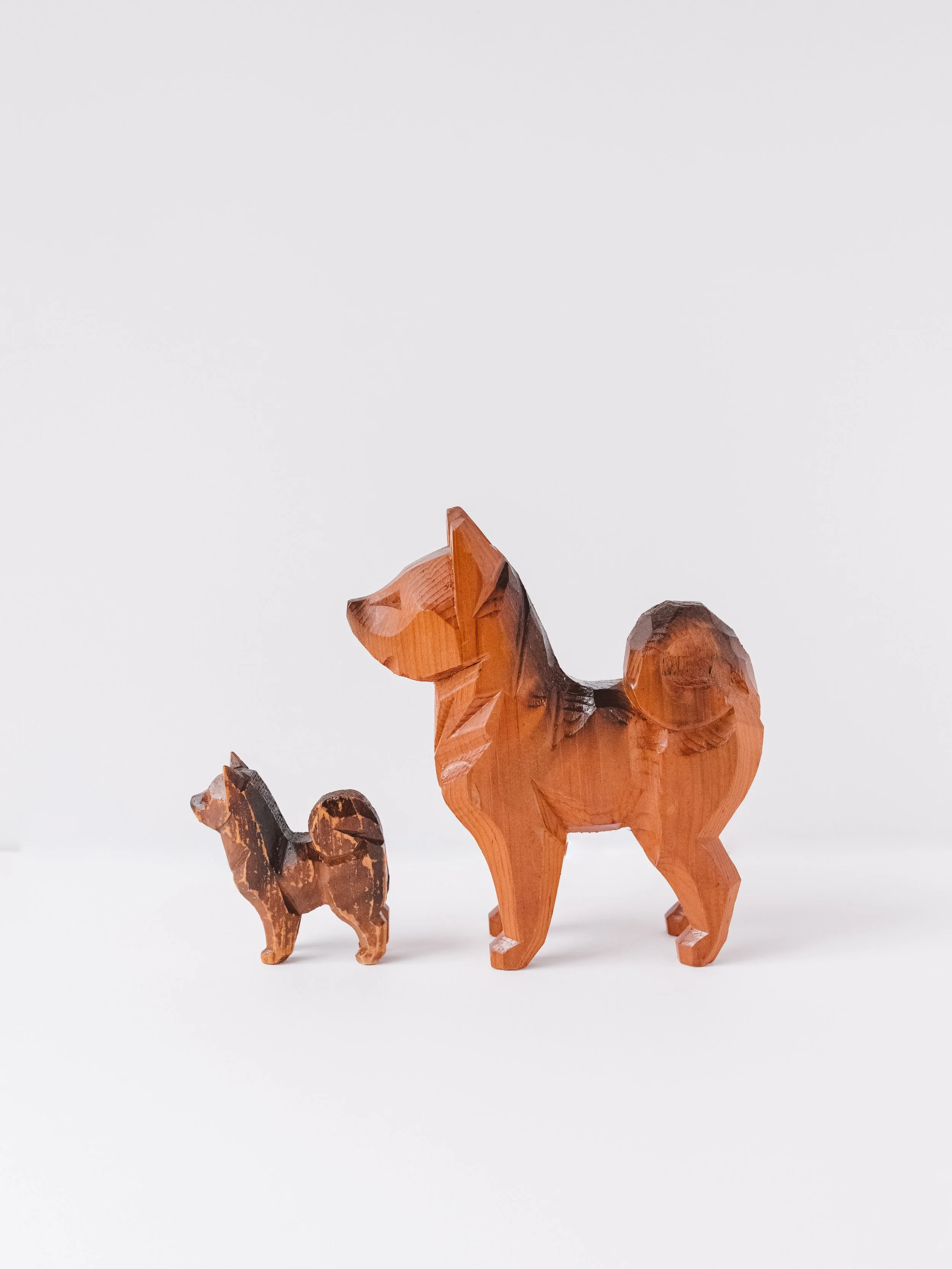 Image 15 of 17
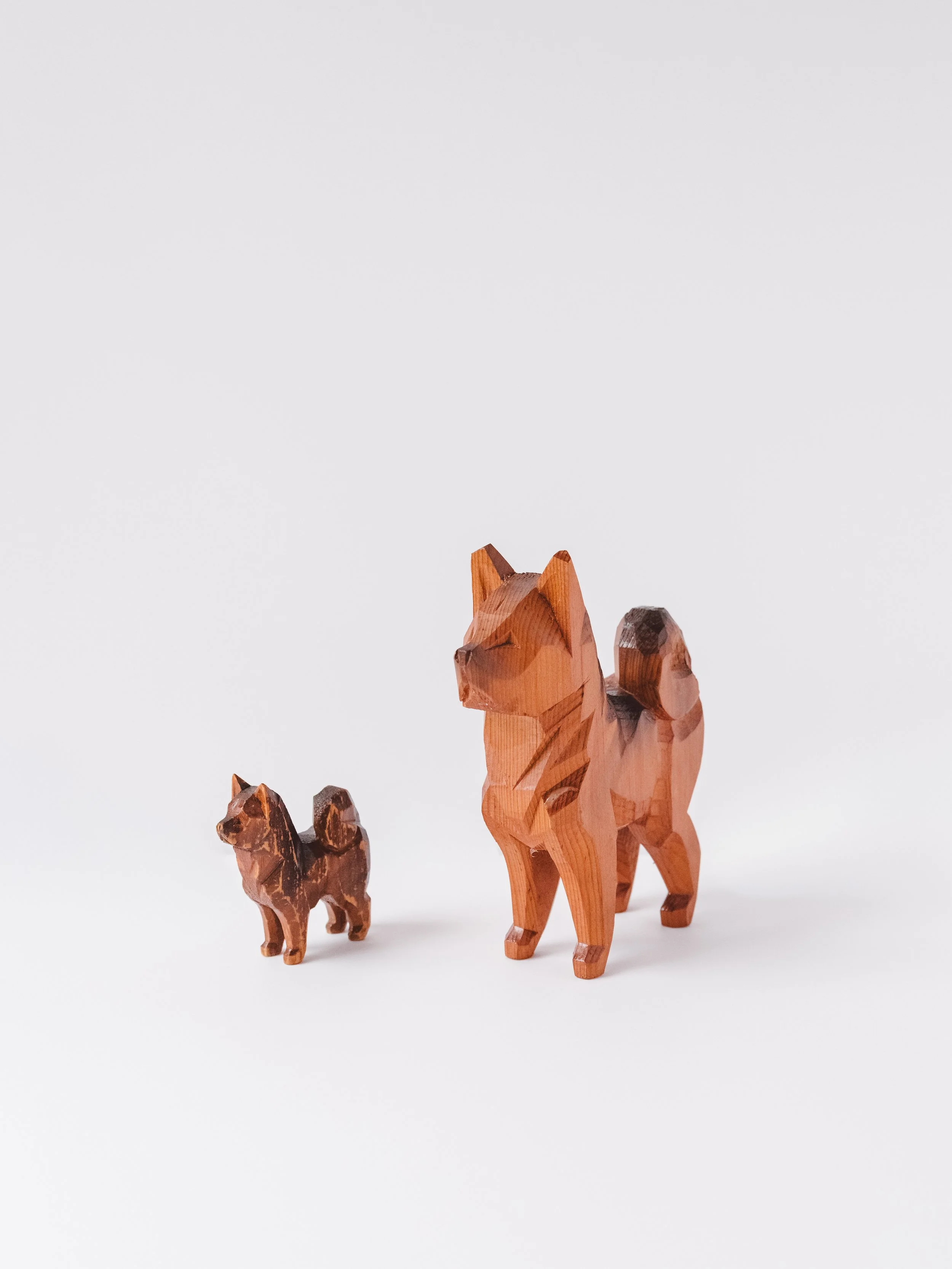 Image 16 of 17
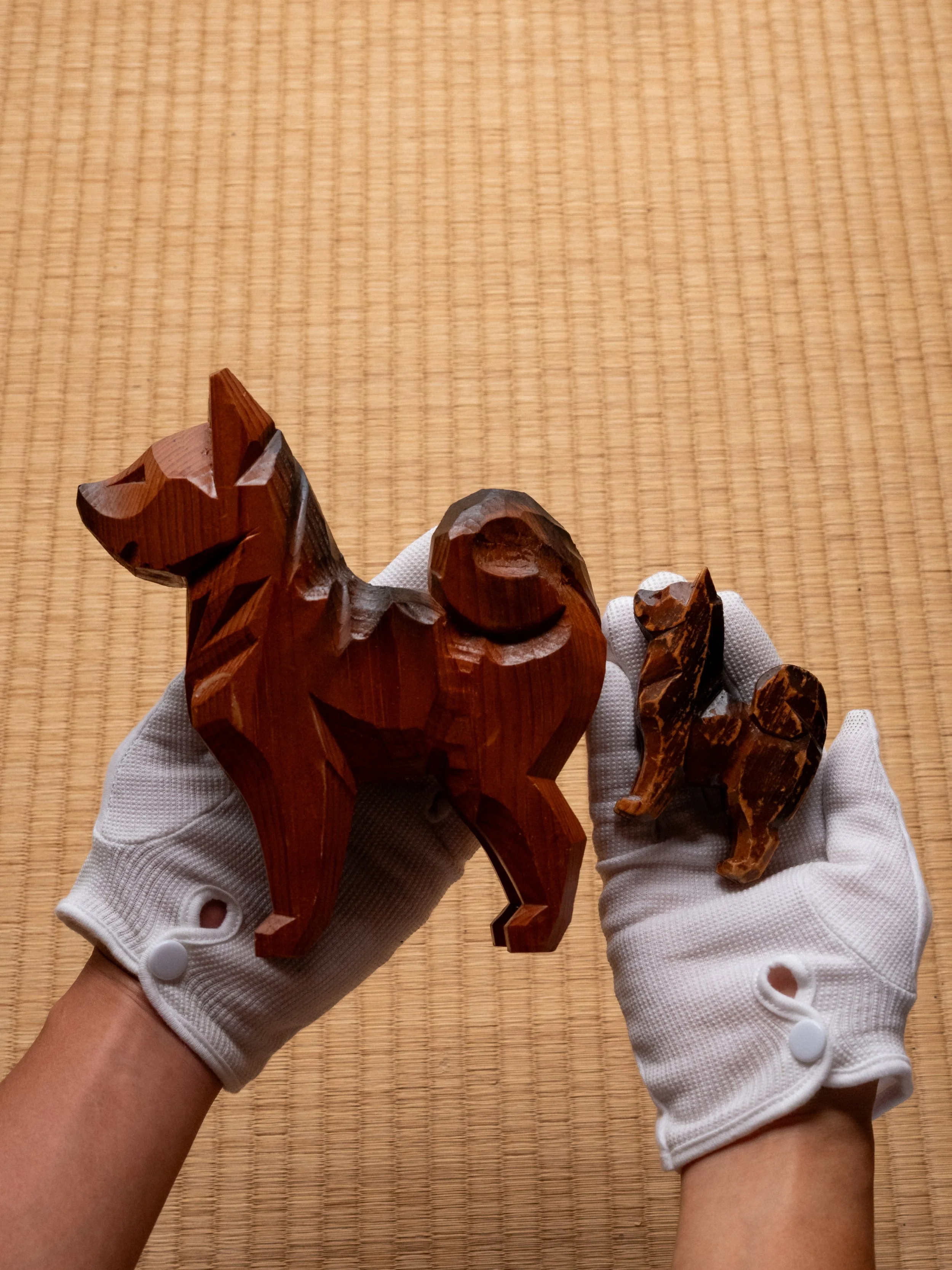 Image 17 of 17