【 The Concept 】
Ancestral myth digitized in ceramic.
This palm-sized artifact is a paradoxical masterpiece of 1960s Japanese design. At first glance, its sharply faceted surface resembles low-polygon 3D graphics—a futuristic aesthetic that seems decades ahead of its time. However, the origin of this silhouette traces back over 1,000 years to the ancient wooden toys of Northern Japan, specifically the "Miharu-koma."
It is a fusion of ancient folklore and Showa-era industrial design. By stripping away realistic curves and replacing them with flat geometric planes, the anonymous designer transformed a traditional amulet for childbirth and harvest into a modernist object that fits seamlessly into the contemporary digital age.
【 The Function 】
A Kinetic Sculpture of the Dining Table.
Though primarily an object of admiration, its utilitarian design is witty and precise. The cavity carved into the rear is not an accident; it is engineered to hold Tsumayoji (Japanese wooden toothpicks) or small matches. When filled, the wooden sticks fan out to form the horse's tail, completing the creature's silhouette with the owner’s interaction.
Its ultra-thin footprint (Depth: 2.5cm) was a necessary evolution for the crowded Japanese dining table, allowing it to slip silently between bowls and dishes—a modest guardian of the family meal.
【 Material & Craft 】
Industrial warmth of the Slip-Cast technique.
Crafted in the kiln heartlands of Aichi Prefecture, this piece utilizes "Slip Casting" (Deisho-ikomi)—a technique where liquid clay is poured into plaster molds to create lightweight, hollow forms. The sharp ridges of the polygon shape were chosen not just for style, but to ensure the clay released cleanly from the mold. It is an aesthetic born of engineering necessity.
The surface is coated in a deep Iron-Amber glaze (Ameyu), with hand-painted accents of sacred vermilion red on the harness and face—a traditional color believed to ward off illness and misfortune. The slight pooling of glaze in the geometric valleys adds a depth that only fire can produce.
【 Presence 】
A small guardian against modern noise.
This Archaic Polygon does not need a large shelf. It thrives next to a keyboard, on a stack of books, or as a witty centerpiece on a minimalist coffee table.
In Japan, the horse is a symbol of "forward momentum" and "rising luck," as it never runs backward. Place this geometric spirit on your desk to serve as a reminder of progress, protection, and the timeless beauty of simplification.
【 The Concept 】
Ancestral myth digitized in ceramic.
This palm-sized artifact is a paradoxical masterpiece of 1960s Japanese design. At first glance, its sharply faceted surface resembles low-polygon 3D graphics—a futuristic aesthetic that seems decades ahead of its time. However, the origin of this silhouette traces back over 1,000 years to the ancient wooden toys of Northern Japan, specifically the "Miharu-koma."
It is a fusion of ancient folklore and Showa-era industrial design. By stripping away realistic curves and replacing them with flat geometric planes, the anonymous designer transformed a traditional amulet for childbirth and harvest into a modernist object that fits seamlessly into the contemporary digital age.
【 The Function 】
A Kinetic Sculpture of the Dining Table.
Though primarily an object of admiration, its utilitarian design is witty and precise. The cavity carved into the rear is not an accident; it is engineered to hold Tsumayoji (Japanese wooden toothpicks) or small matches. When filled, the wooden sticks fan out to form the horse's tail, completing the creature's silhouette with the owner’s interaction.
Its ultra-thin footprint (Depth: 2.5cm) was a necessary evolution for the crowded Japanese dining table, allowing it to slip silently between bowls and dishes—a modest guardian of the family meal.
【 Material & Craft 】
Industrial warmth of the Slip-Cast technique.
Crafted in the kiln heartlands of Aichi Prefecture, this piece utilizes "Slip Casting" (Deisho-ikomi)—a technique where liquid clay is poured into plaster molds to create lightweight, hollow forms. The sharp ridges of the polygon shape were chosen not just for style, but to ensure the clay released cleanly from the mold. It is an aesthetic born of engineering necessity.
The surface is coated in a deep Iron-Amber glaze (Ameyu), with hand-painted accents of sacred vermilion red on the harness and face—a traditional color believed to ward off illness and misfortune. The slight pooling of glaze in the geometric valleys adds a depth that only fire can produce.
【 Presence 】
A small guardian against modern noise.
This Archaic Polygon does not need a large shelf. It thrives next to a keyboard, on a stack of books, or as a witty centerpiece on a minimalist coffee table.
In Japan, the horse is a symbol of "forward momentum" and "rising luck," as it never runs backward. Place this geometric spirit on your desk to serve as a reminder of progress, protection, and the timeless beauty of simplification.


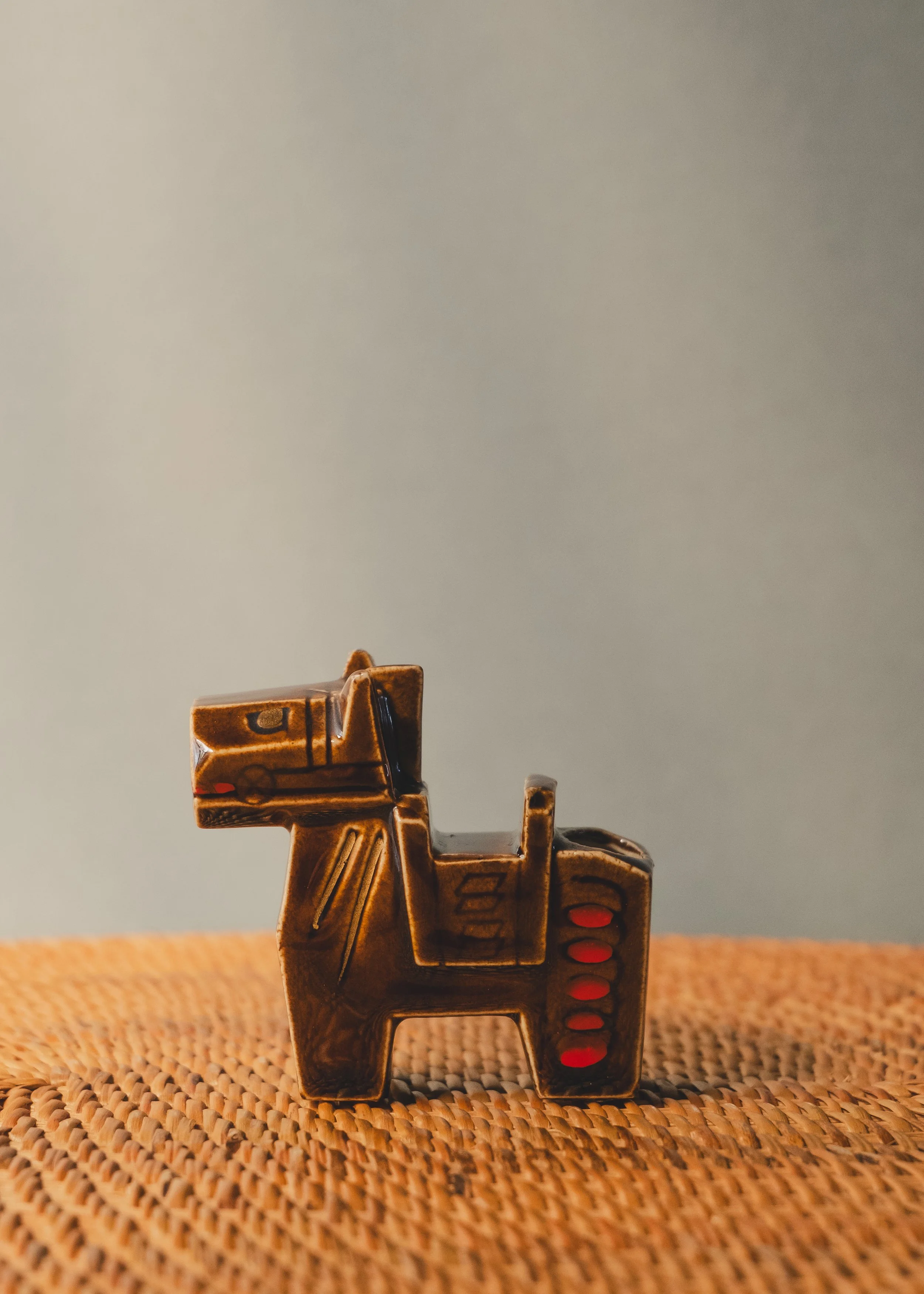 Image 1 of 12
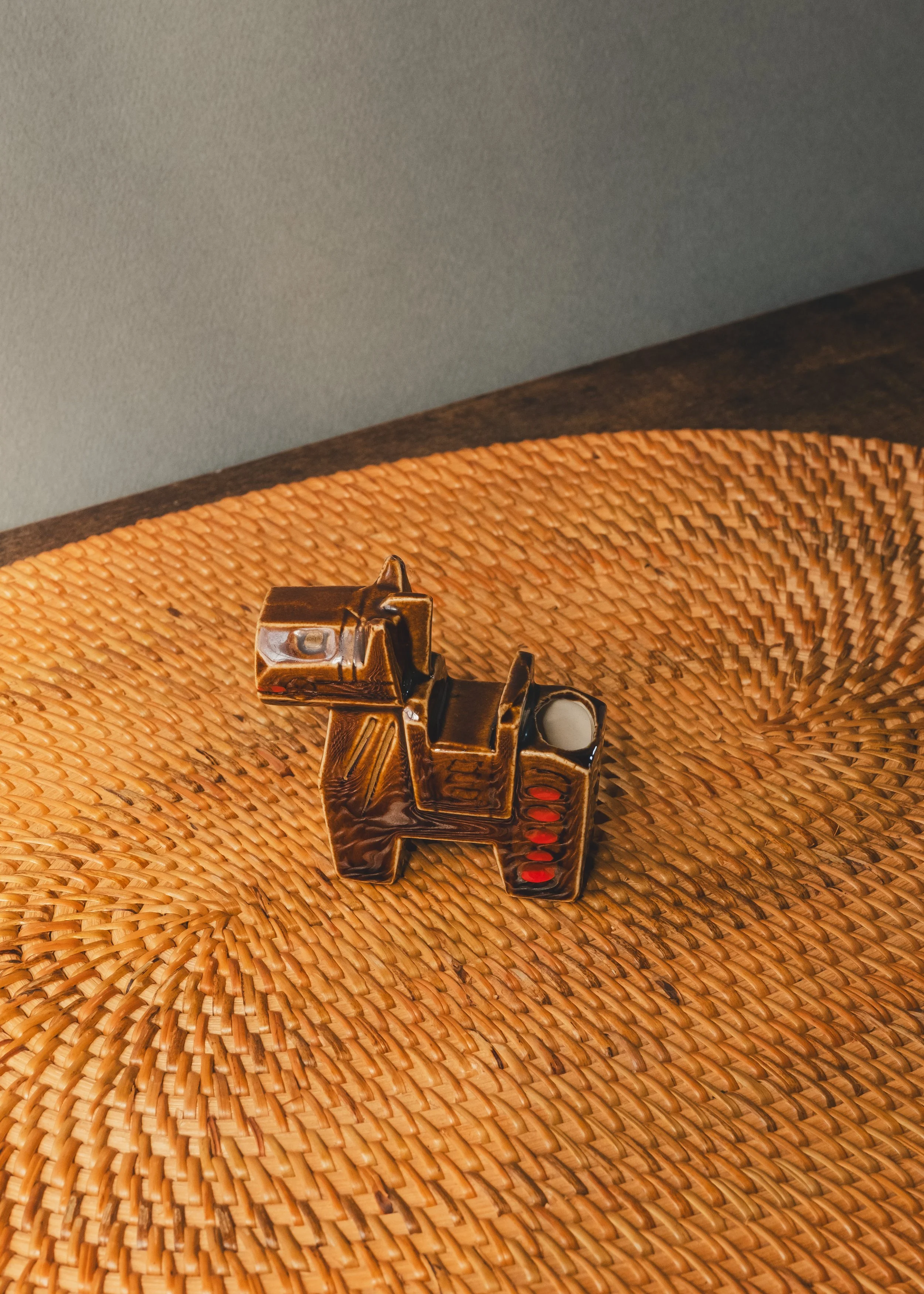 Image 2 of 12
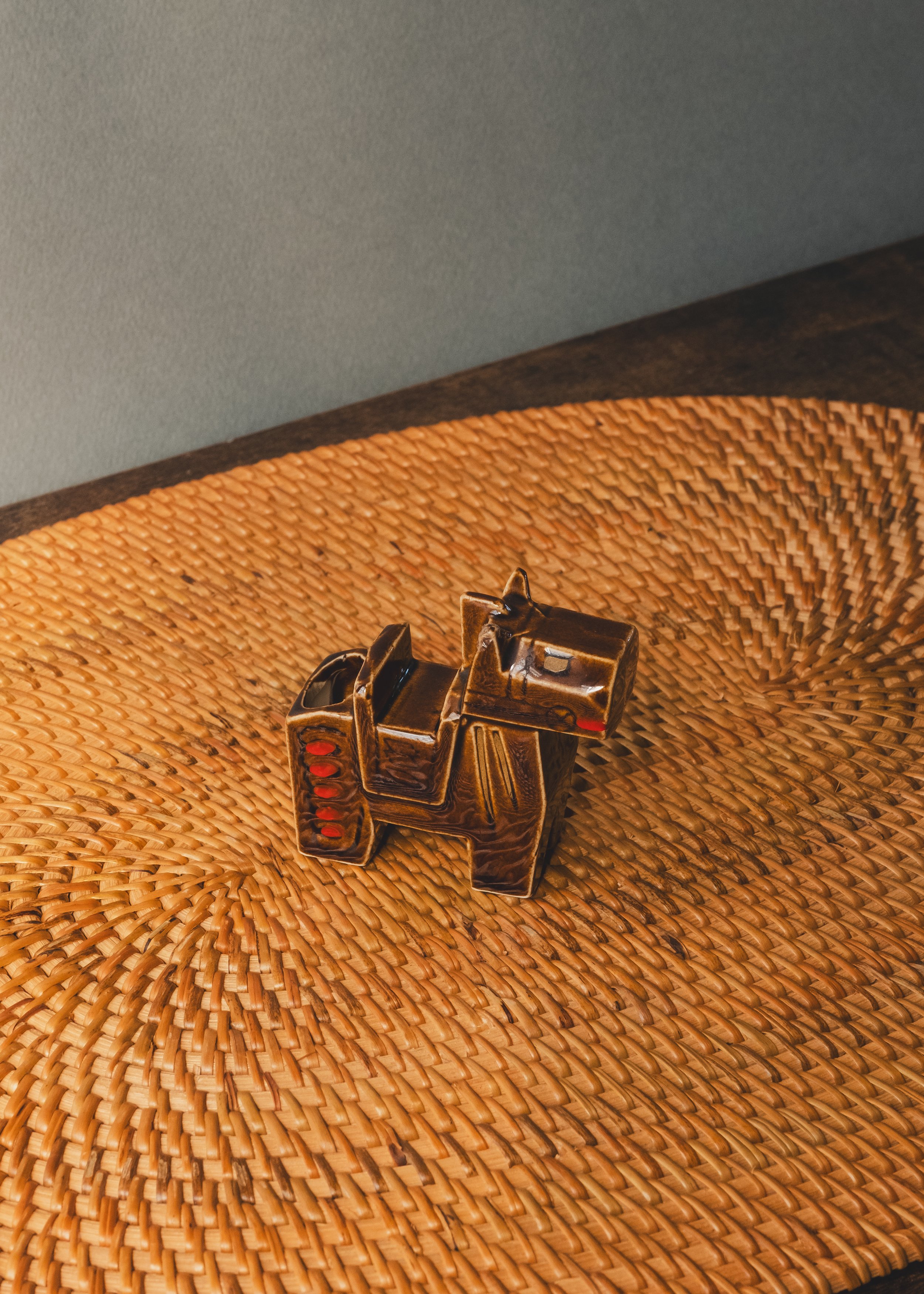 Image 3 of 12
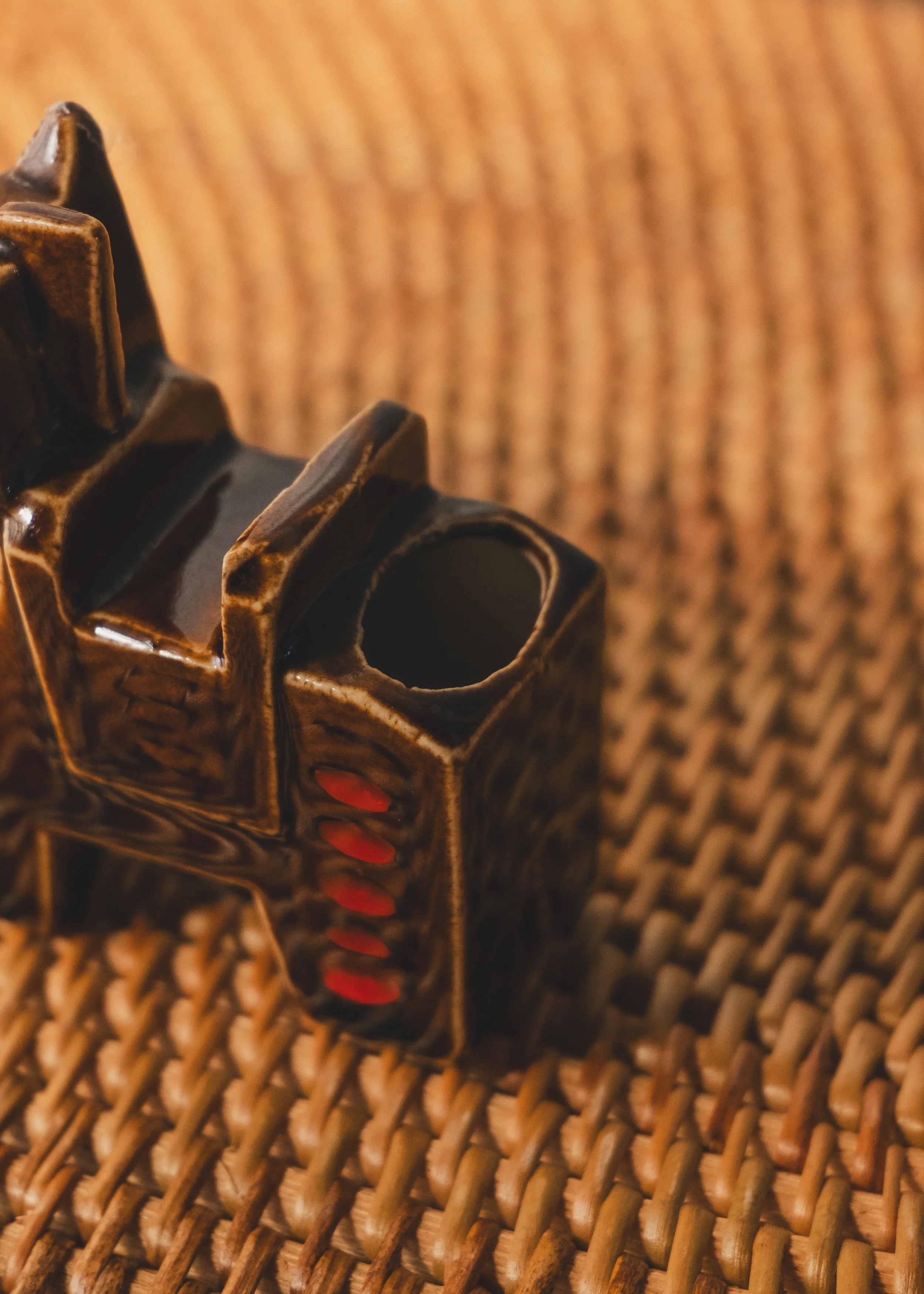 Image 4 of 12
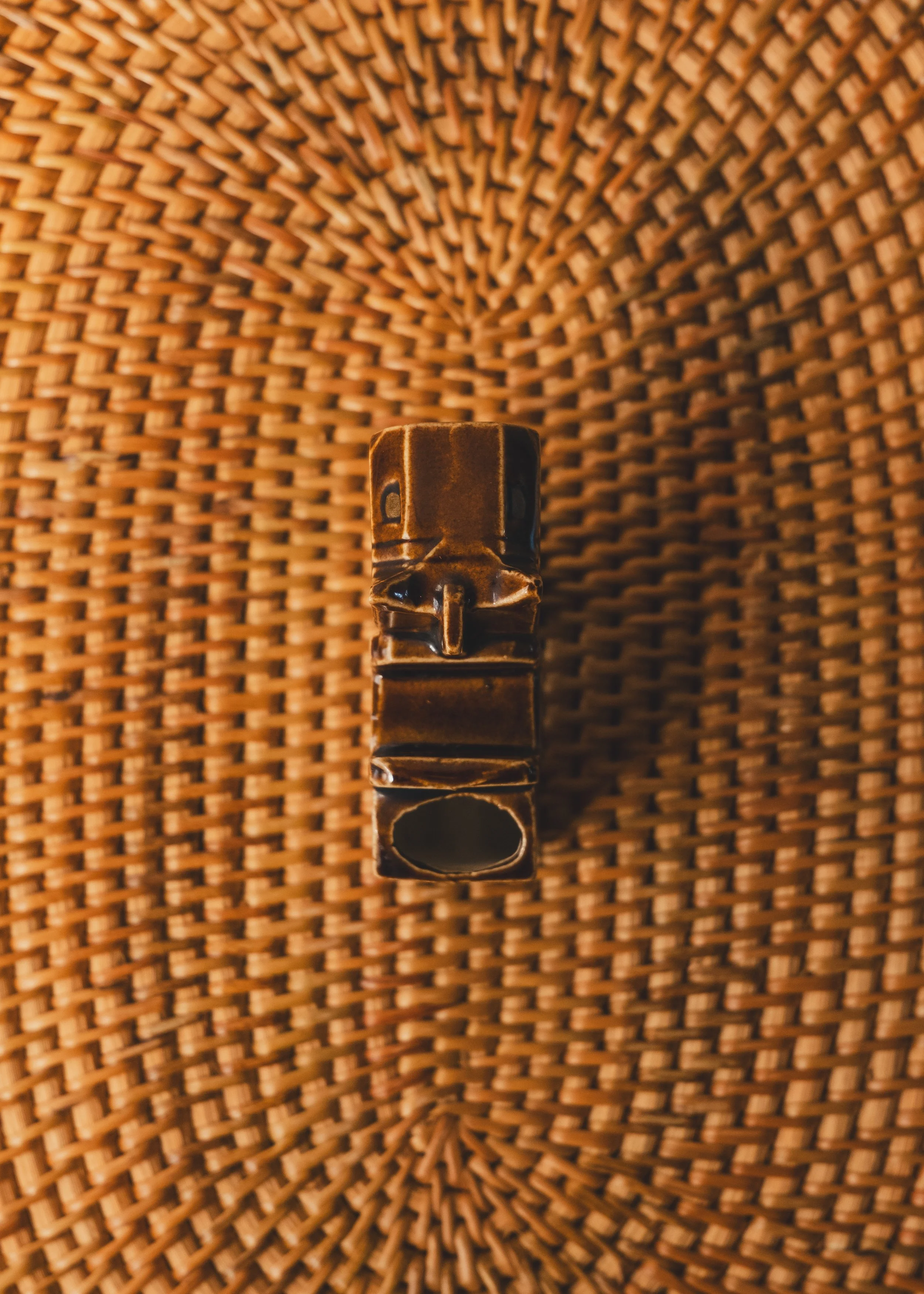 Image 5 of 12
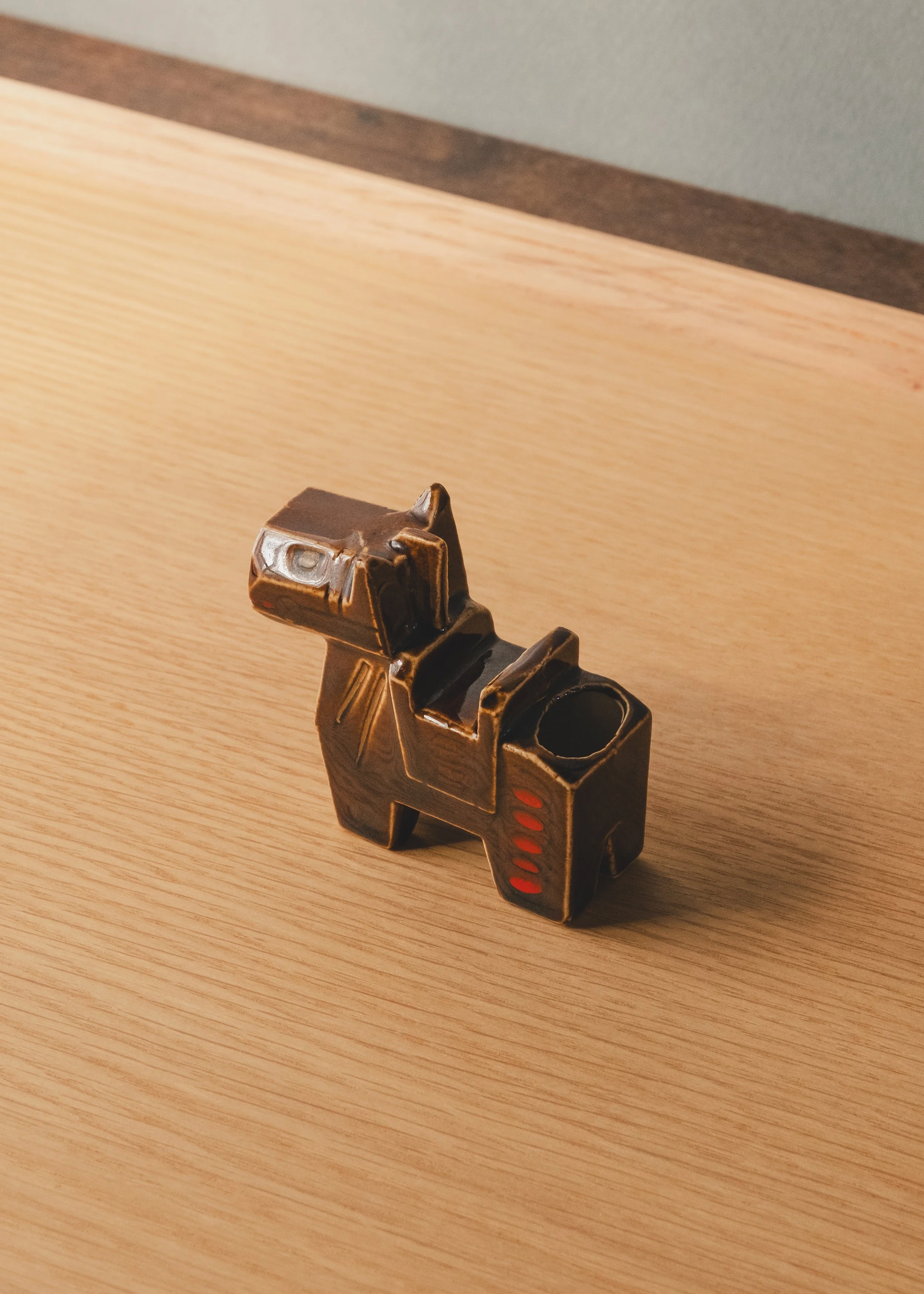 Image 6 of 12
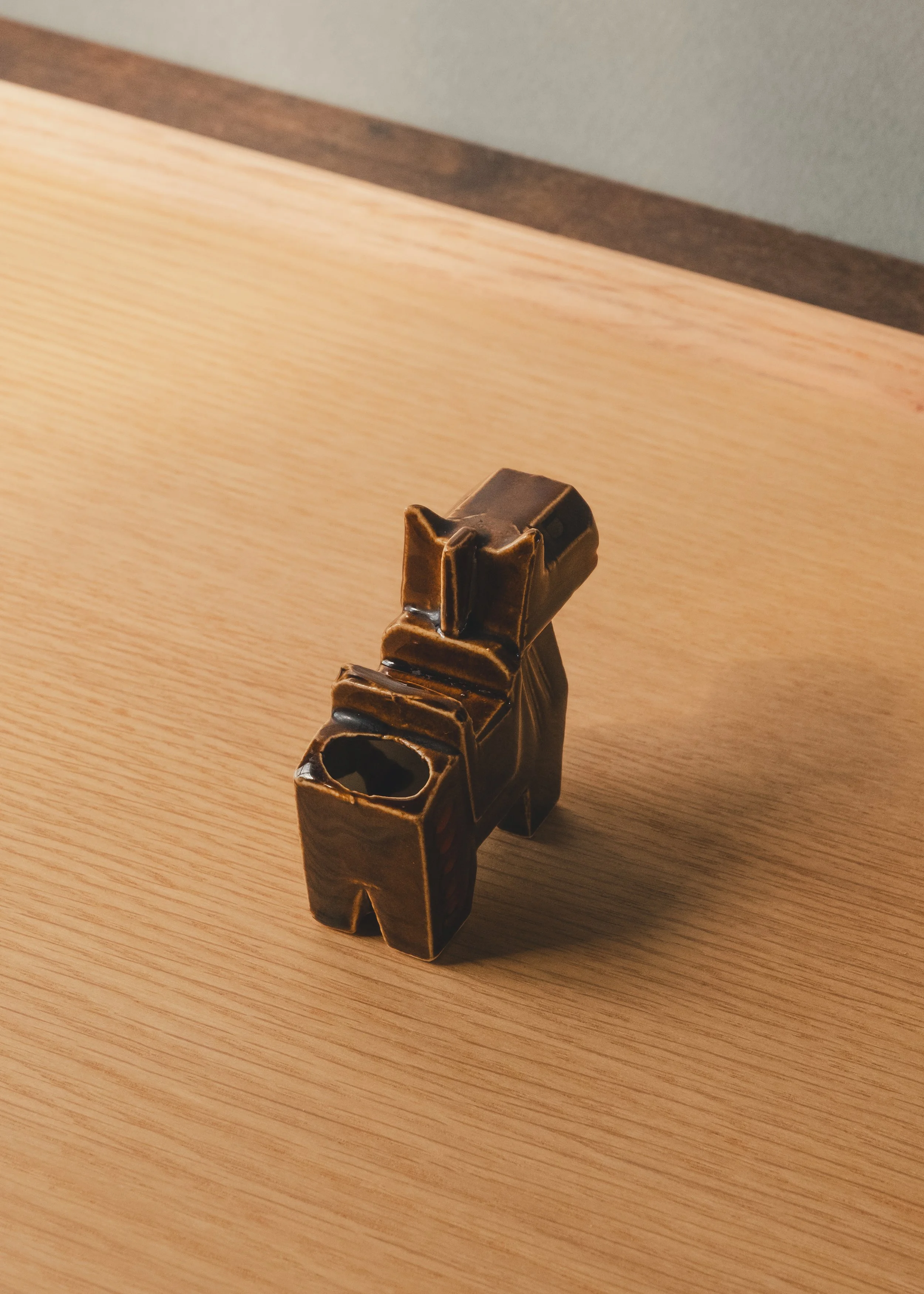 Image 7 of 12
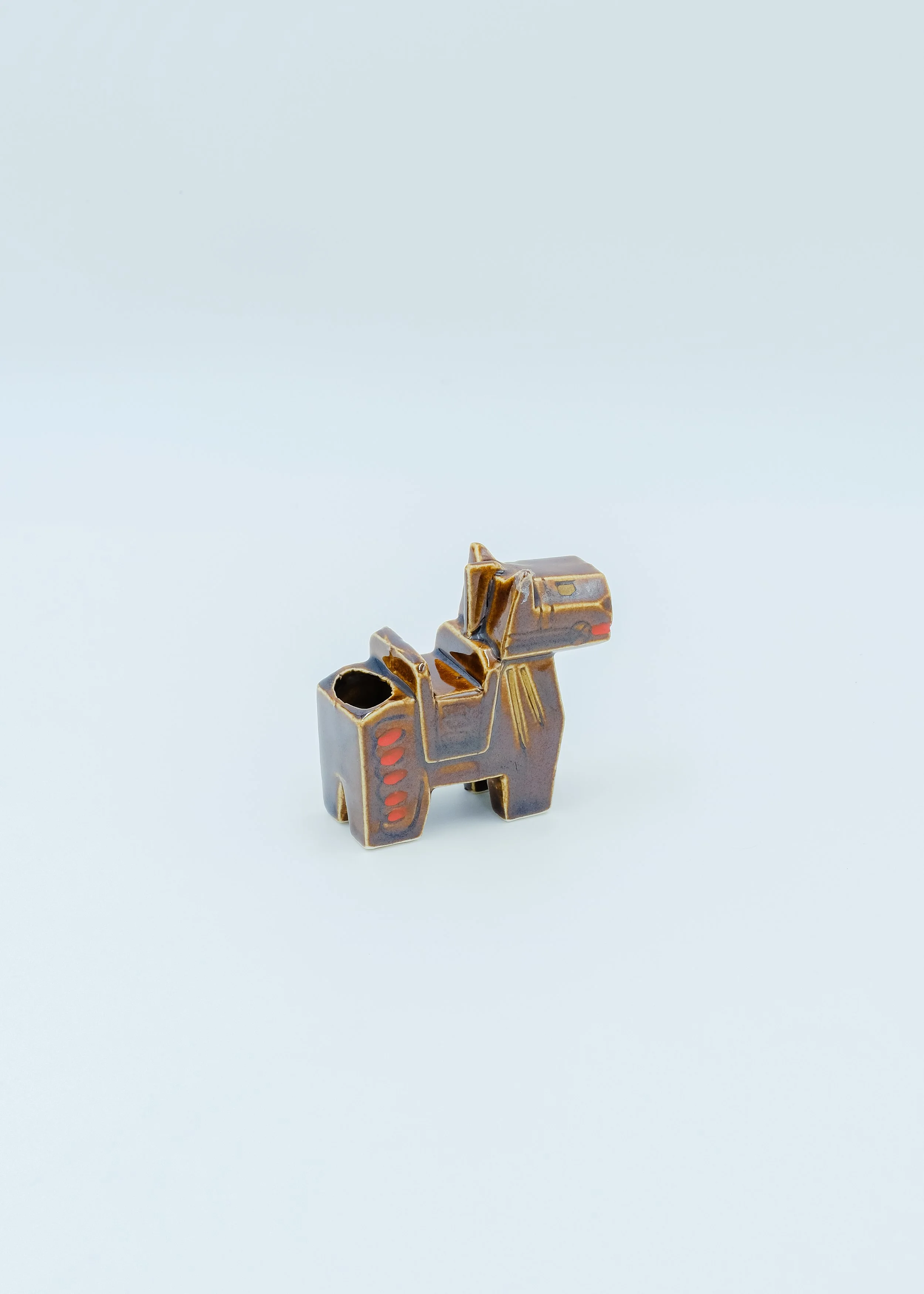 Image 8 of 12
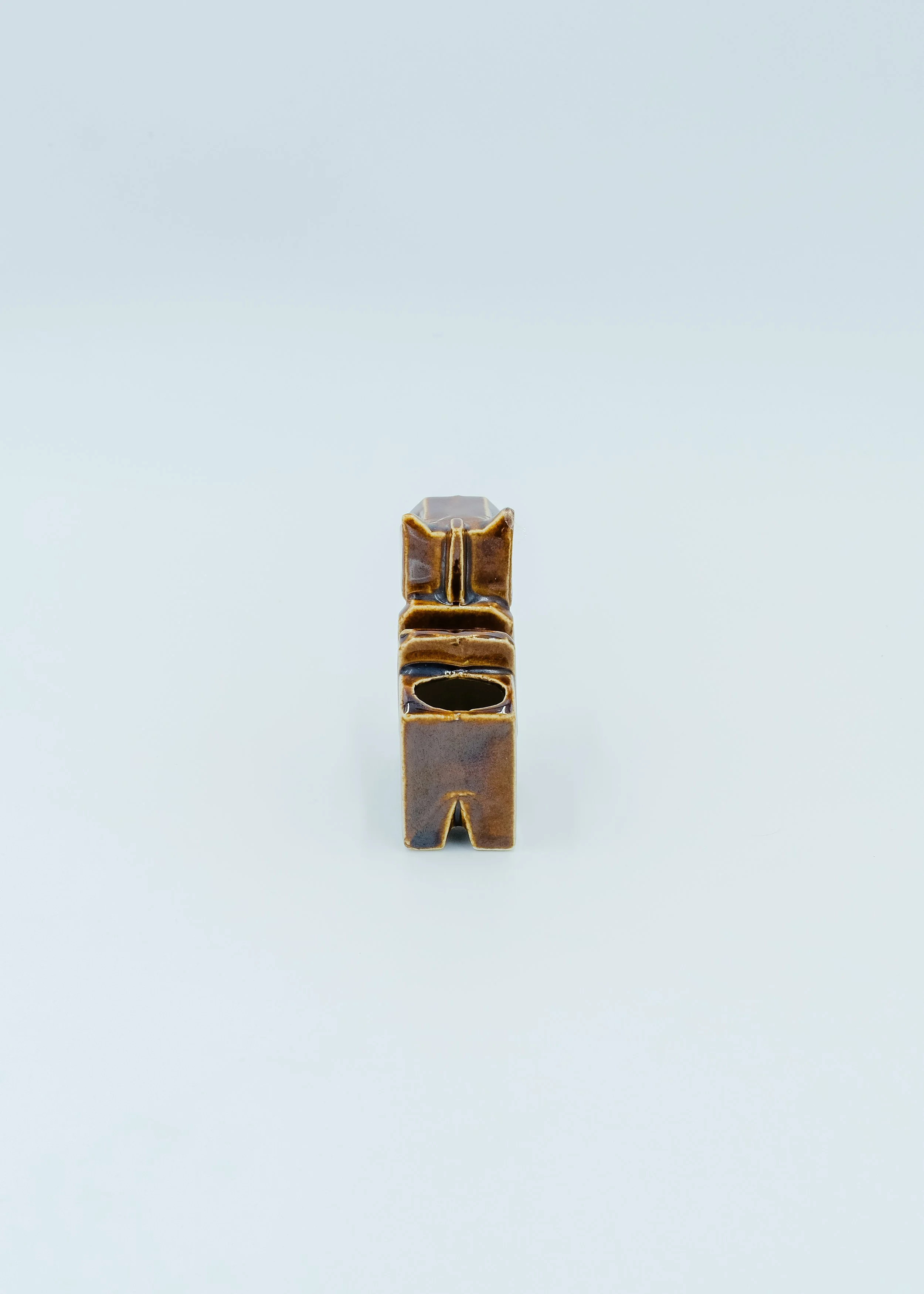 Image 9 of 12
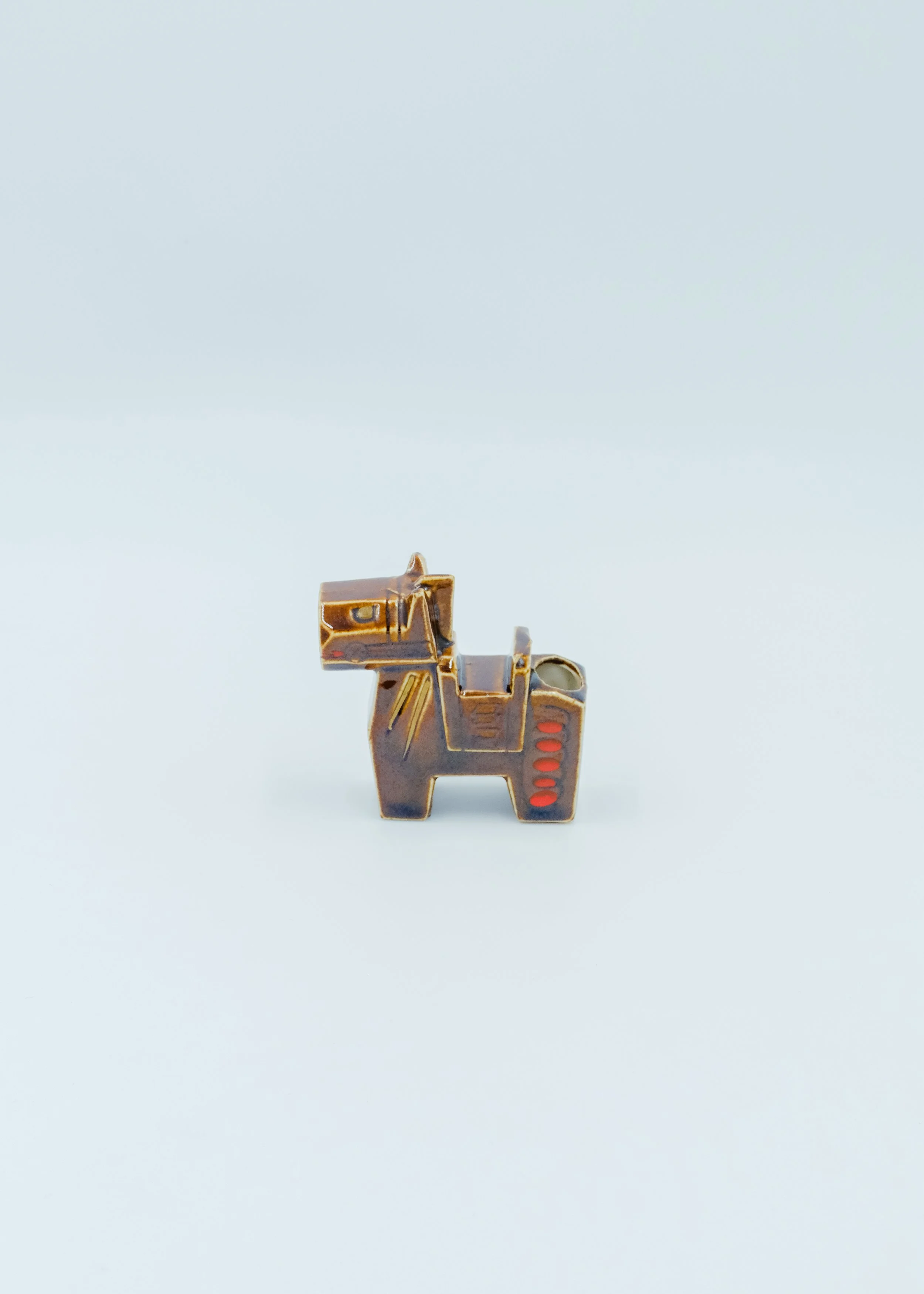 Image 10 of 12
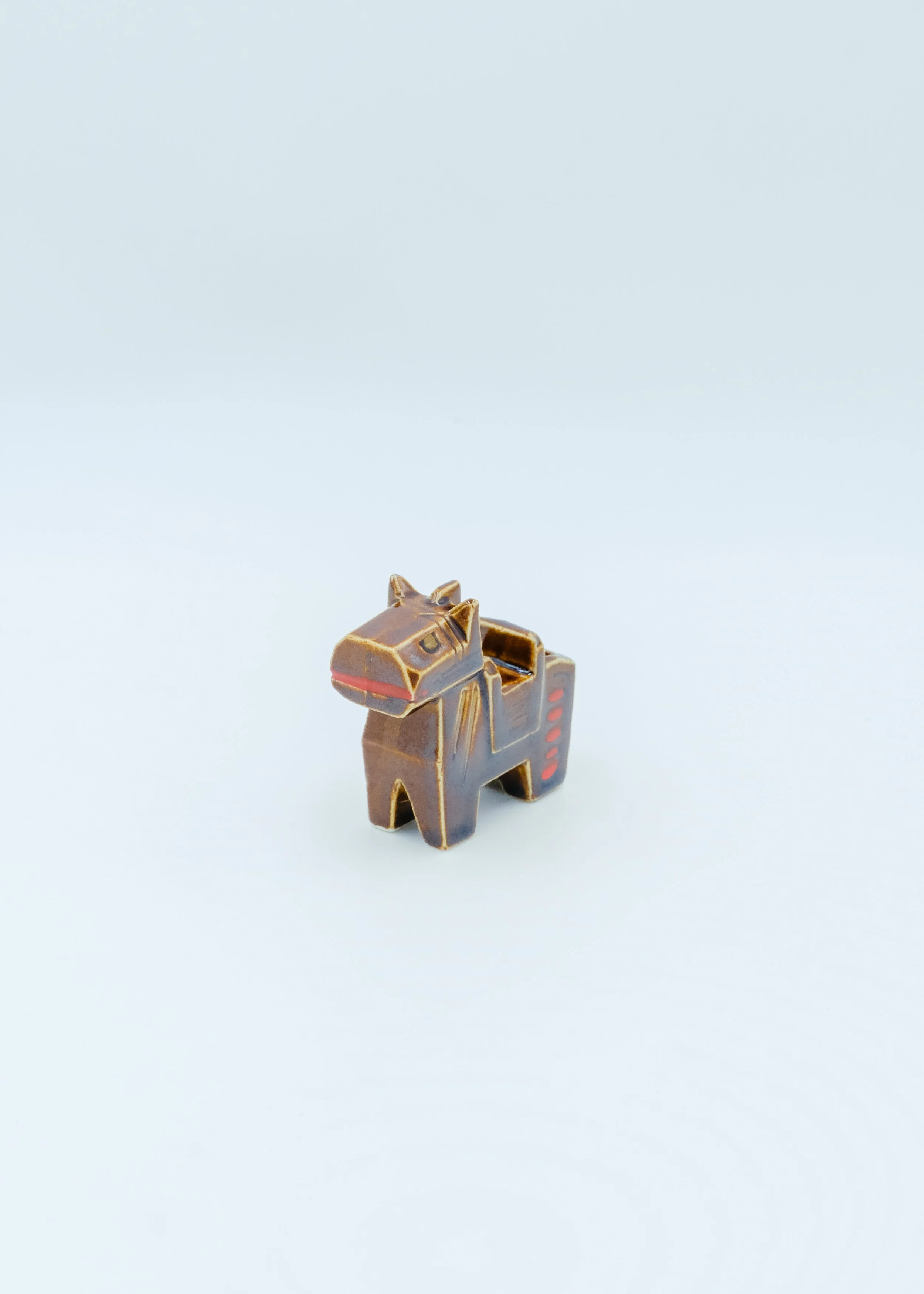 Image 11 of 12
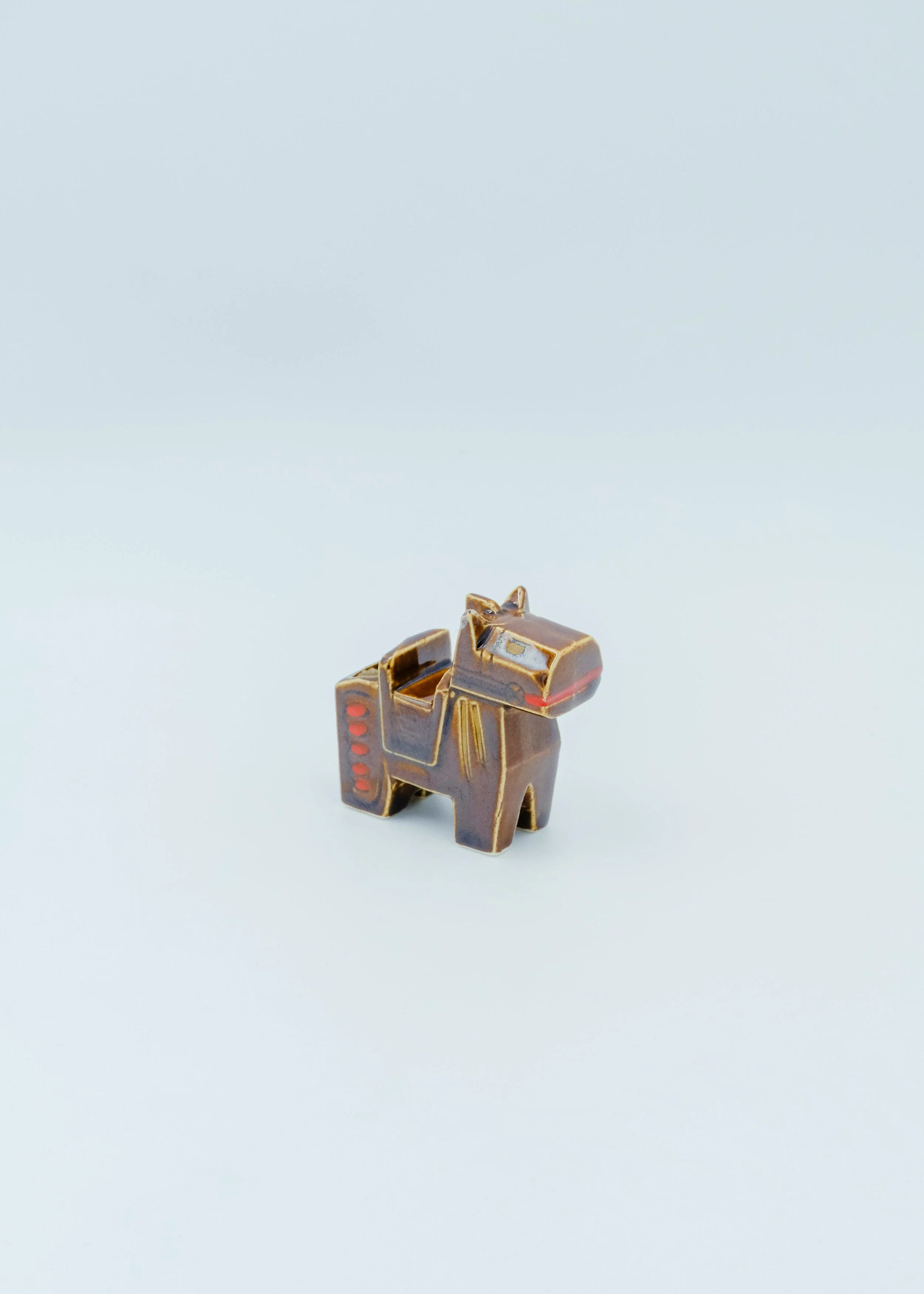 Image 12 of 12