【 The Concept 】
A child sits holding a drum just smaller than its own torso. The mouth is closed, but the corners carry the faintest trace of a smile — not wide enough to call an expression, just enough to suggest that whatever this child is guarding against, it is not afraid. On the drum face, a triple-comma spiral — a pattern older than any written record in the region where this figure was made. Its meaning has shifted across centuries: water, fire protection, divine communication. Here, painted in red and black on a yellow ground, it serves all three at once.
The figure was shaped from river clay, fired at low heat, and painted in pigments bound with animal glue — a method designed to be impermanent. The colors were meant to fade. The surface was meant to wear. In the folk tradition this figure belongs to, a toy that loses its paint has done its job: it has absorbed what it was meant to absorb. The bare patches of exposed clay visible across the head, back, and drum are not damage. They are evidence of use — decades of hands, of seasons, of proximity to the life it was made to protect.
The child wears a traditional belly-covering garment tied at the neck and waist with orange cord, leaving the back and shoulders bare — a style associated with vigorous, healthy children in Japanese folk culture. The collar is trimmed in vermilion red, a color placed deliberately at the throat as a barrier against illness. Over a deep indigo ground, white plum blossoms are scattered freehand across the front of the garment, each with a cluster of orange dots at its center. Between the flowers, golden branches and green leaves are brushed in by hand — thin strokes suggesting new growth after a long winter. The plum is the first tree to flower after the cold. A symbol of endurance chosen not for decoration, but as a prayer: that this child, like the plum, would survive.
【 The Function 】
342 grams of fired clay, low and wide, built to sit without tipping. The broad, flat base and compact posture give it the stability of something much heavier. In its original context, figures like this were placed at a child's bedside as protective talismans — objects meant to stand between illness and the body they guarded. In a modern context, it is a grounding presence: handmade, imperfect, and heavier than expected.
【 The Texture 】
Unglazed clay beneath remnants of crushed-shell white, vermilion red, deep indigo, and flecks of green. Where the paint remains, it is matte and chalky — pigment bound by animal glue to a porous surface, with no lacquer, no sealant, no shine. Where it has fallen away, the bare bisque-fired clay shows through in pale grey-brown, warm to the touch and faintly rough. The brushwork on the garment is entirely freehand — no stamps, no stencils, no two blossoms identical. Each orange dot at the center of each flower was placed by a single loaded brush tip, and the slight irregularity of spacing and pressure gives the pattern a rhythm that no machine could produce. The contrast between painted surface and exposed clay creates an unintentional topography — a map of everywhere this figure has been held, bumped, or set down over the course of its life.
【 Presence 】
Color survives in fragments: a streak of red across the drum, indigo in the folds of the child's garment, black in the hair and the spiral on the drum face. These are the colors of a northern winter palette — chosen not for subtlety but for visibility, made to cut through months of grey sky and white snow. Even faded, even incomplete, they still pull the eye. The figure sits low, looks forward, holds its drum, and says nothing. That silence, combined with the visible evidence of everything it has survived, is what gives it weight far beyond its 342 grams.
Sourced from a private collection in the Kansai region, Japan.
【 The Concept 】
A child sits holding a drum just smaller than its own torso. The mouth is closed, but the corners carry the faintest trace of a smile — not wide enough to call an expression, just enough to suggest that whatever this child is guarding against, it is not afraid. On the drum face, a triple-comma spiral — a pattern older than any written record in the region where this figure was made. Its meaning has shifted across centuries: water, fire protection, divine communication. Here, painted in red and black on a yellow ground, it serves all three at once.
The figure was shaped from river clay, fired at low heat, and painted in pigments bound with animal glue — a method designed to be impermanent. The colors were meant to fade. The surface was meant to wear. In the folk tradition this figure belongs to, a toy that loses its paint has done its job: it has absorbed what it was meant to absorb. The bare patches of exposed clay visible across the head, back, and drum are not damage. They are evidence of use — decades of hands, of seasons, of proximity to the life it was made to protect.
The child wears a traditional belly-covering garment tied at the neck and waist with orange cord, leaving the back and shoulders bare — a style associated with vigorous, healthy children in Japanese folk culture. The collar is trimmed in vermilion red, a color placed deliberately at the throat as a barrier against illness. Over a deep indigo ground, white plum blossoms are scattered freehand across the front of the garment, each with a cluster of orange dots at its center. Between the flowers, golden branches and green leaves are brushed in by hand — thin strokes suggesting new growth after a long winter. The plum is the first tree to flower after the cold. A symbol of endurance chosen not for decoration, but as a prayer: that this child, like the plum, would survive.
【 The Function 】
342 grams of fired clay, low and wide, built to sit without tipping. The broad, flat base and compact posture give it the stability of something much heavier. In its original context, figures like this were placed at a child's bedside as protective talismans — objects meant to stand between illness and the body they guarded. In a modern context, it is a grounding presence: handmade, imperfect, and heavier than expected.
【 The Texture 】
Unglazed clay beneath remnants of crushed-shell white, vermilion red, deep indigo, and flecks of green. Where the paint remains, it is matte and chalky — pigment bound by animal glue to a porous surface, with no lacquer, no sealant, no shine. Where it has fallen away, the bare bisque-fired clay shows through in pale grey-brown, warm to the touch and faintly rough. The brushwork on the garment is entirely freehand — no stamps, no stencils, no two blossoms identical. Each orange dot at the center of each flower was placed by a single loaded brush tip, and the slight irregularity of spacing and pressure gives the pattern a rhythm that no machine could produce. The contrast between painted surface and exposed clay creates an unintentional topography — a map of everywhere this figure has been held, bumped, or set down over the course of its life.
【 Presence 】
Color survives in fragments: a streak of red across the drum, indigo in the folds of the child's garment, black in the hair and the spiral on the drum face. These are the colors of a northern winter palette — chosen not for subtlety but for visibility, made to cut through months of grey sky and white snow. Even faded, even incomplete, they still pull the eye. The figure sits low, looks forward, holds its drum, and says nothing. That silence, combined with the visible evidence of everything it has survived, is what gives it weight far beyond its 342 grams.
Sourced from a private collection in the Kansai region, Japan.


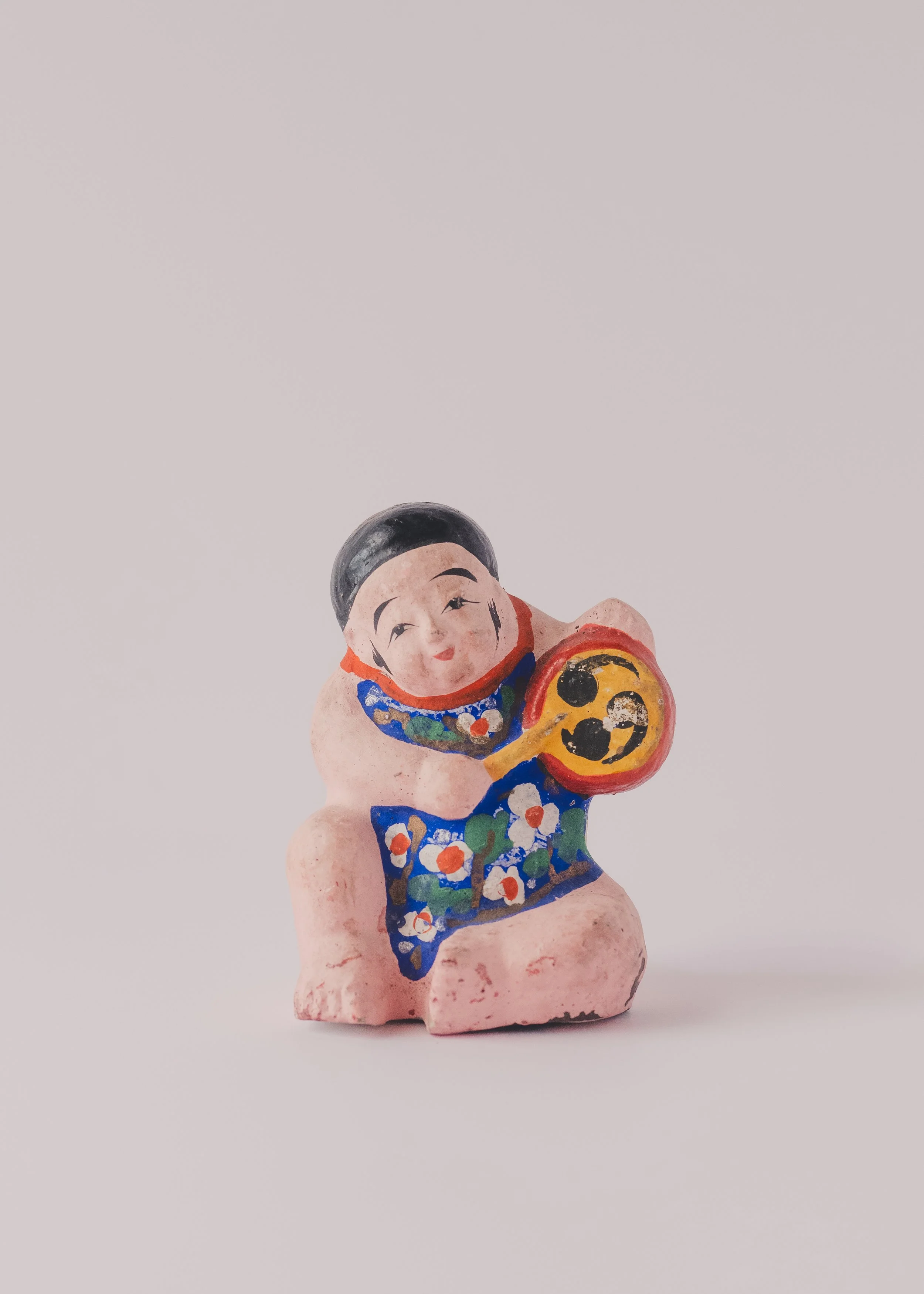 Image 1 of 9
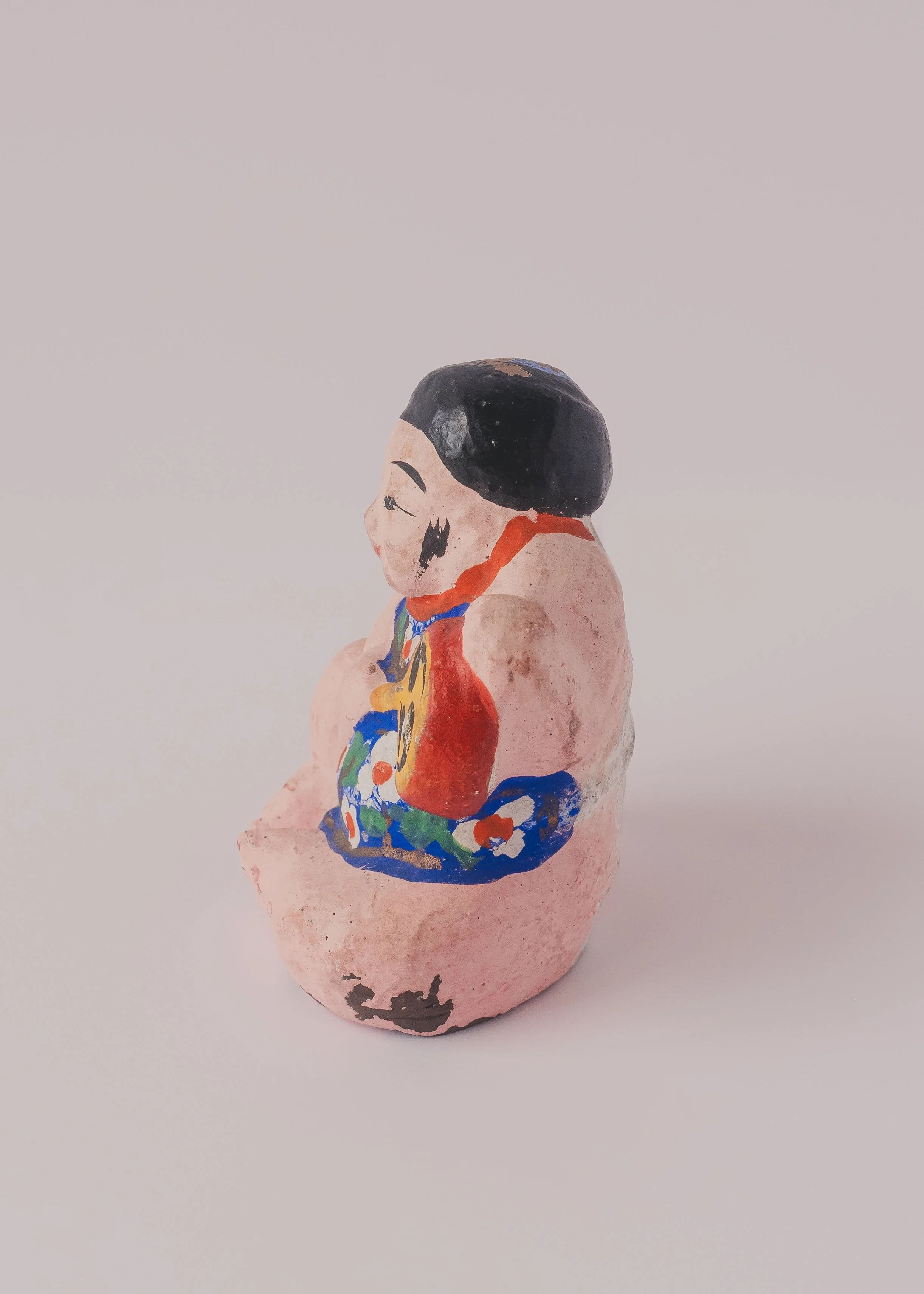 Image 2 of 9
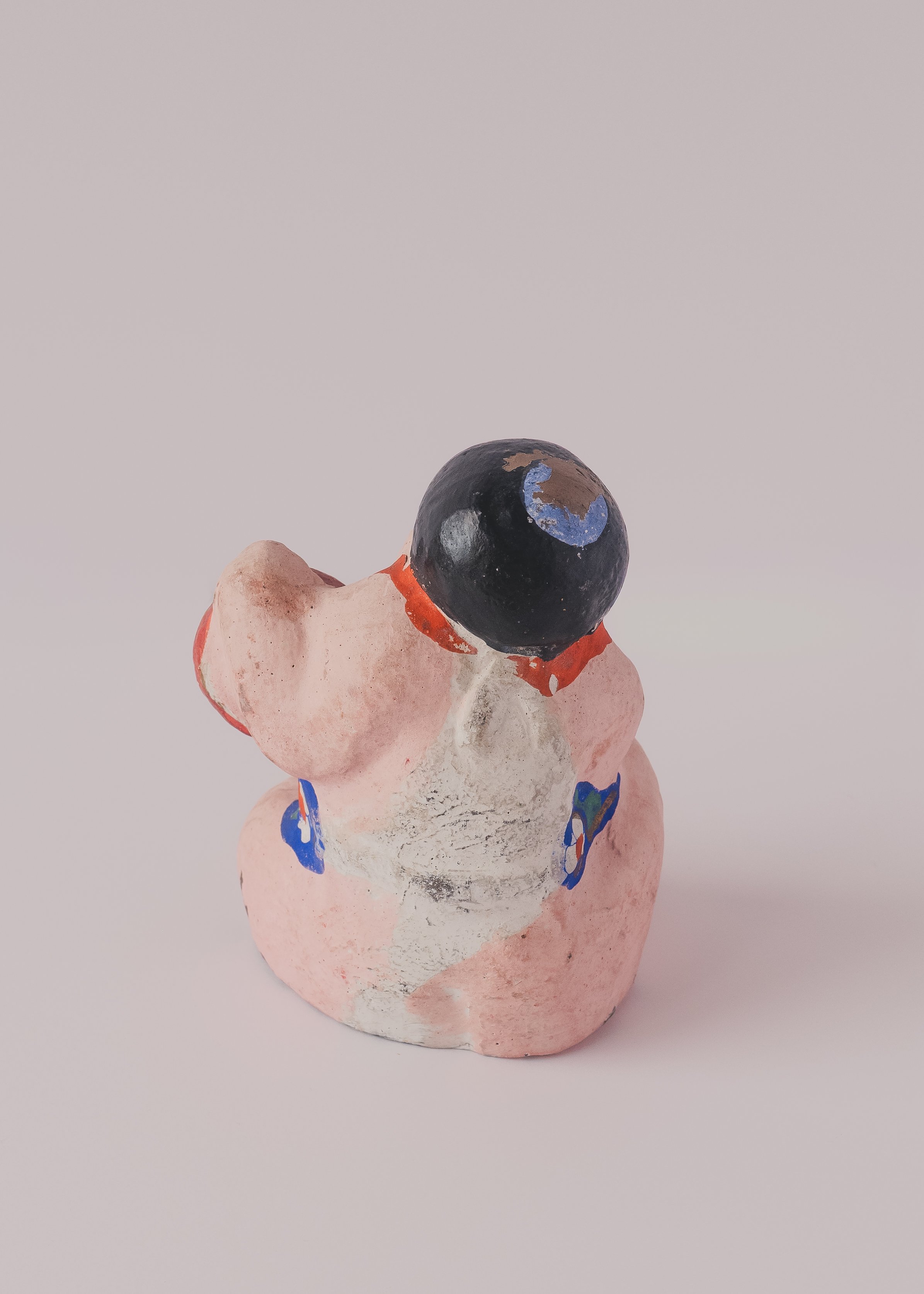 Image 3 of 9
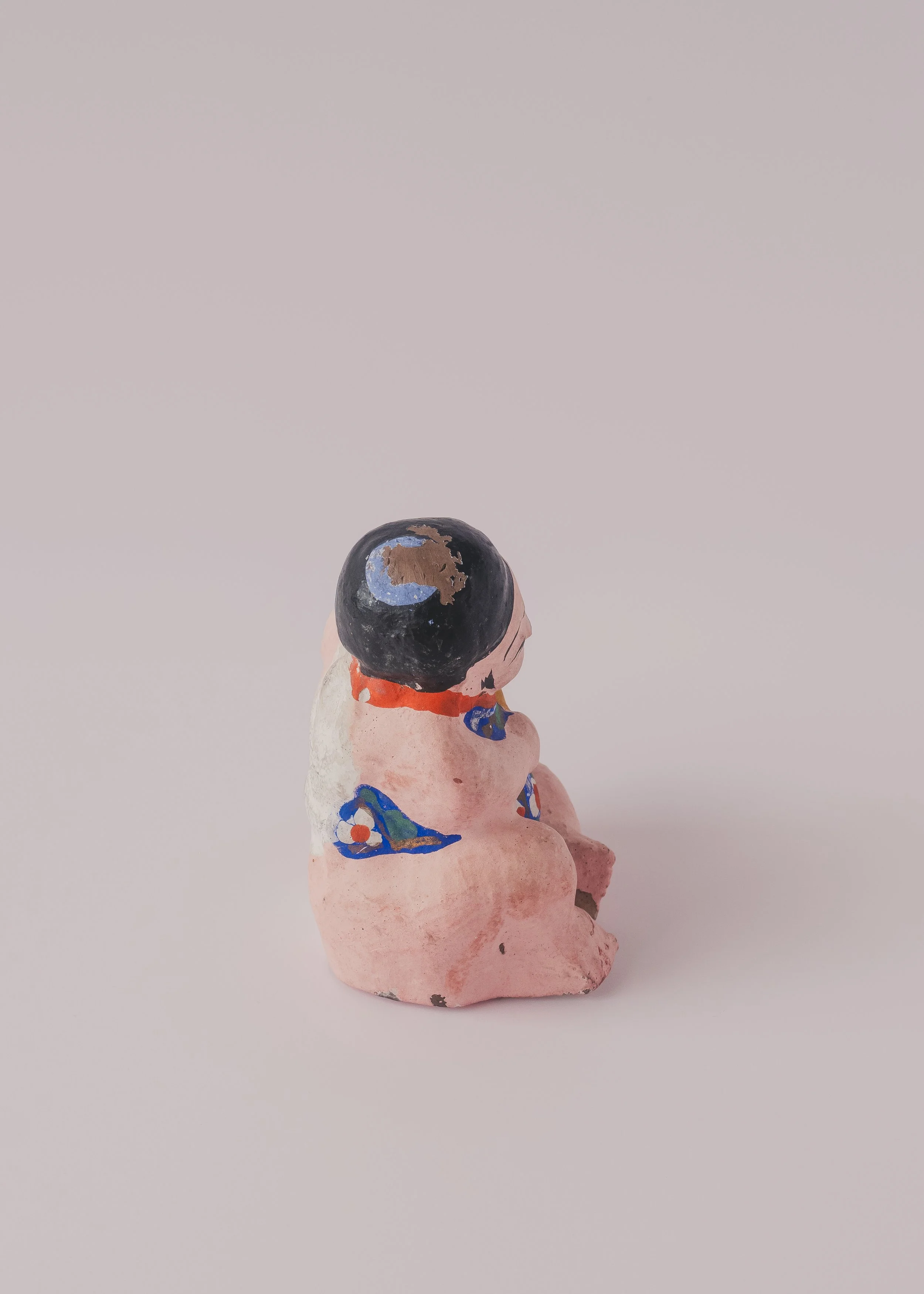 Image 4 of 9
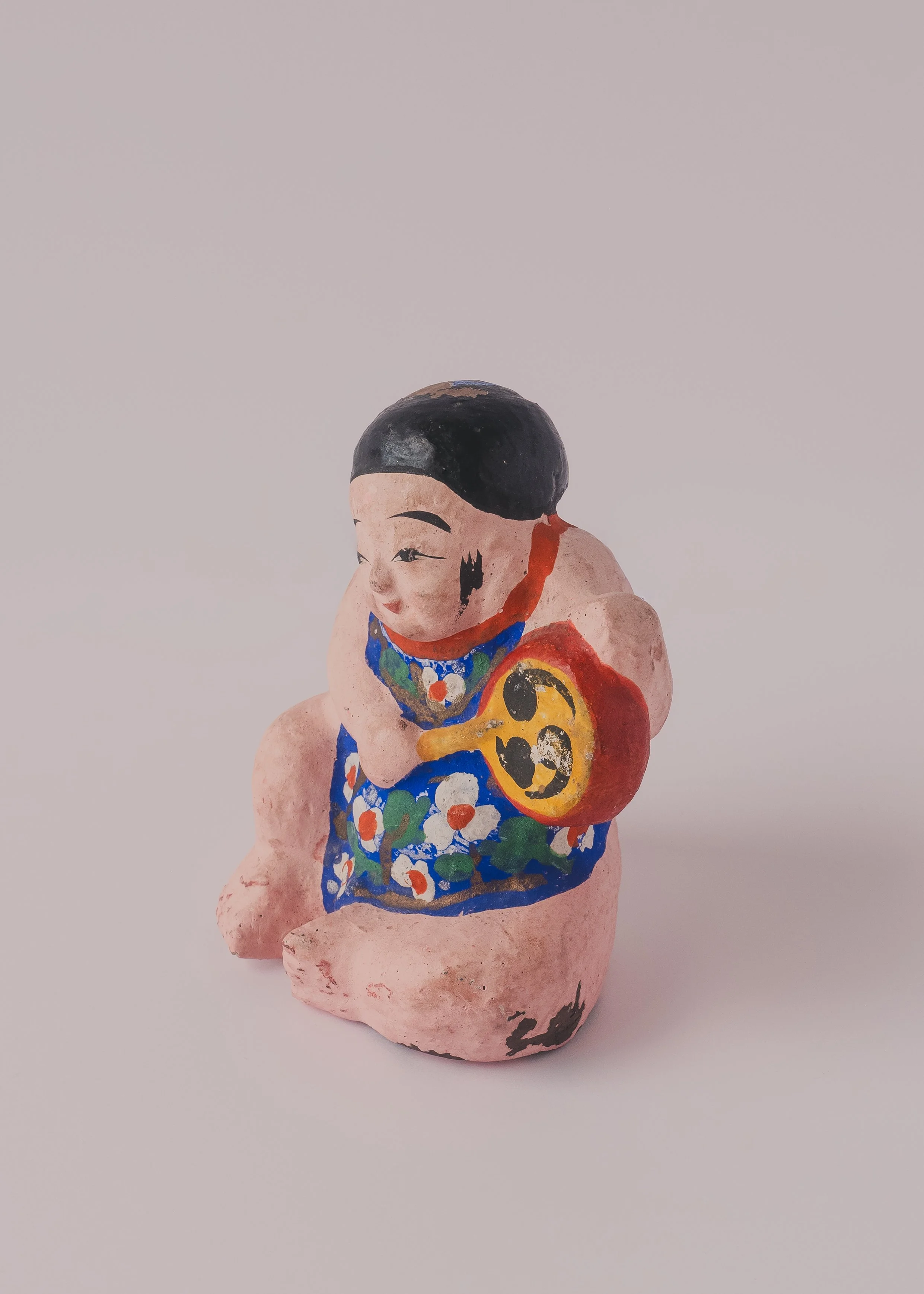 Image 5 of 9
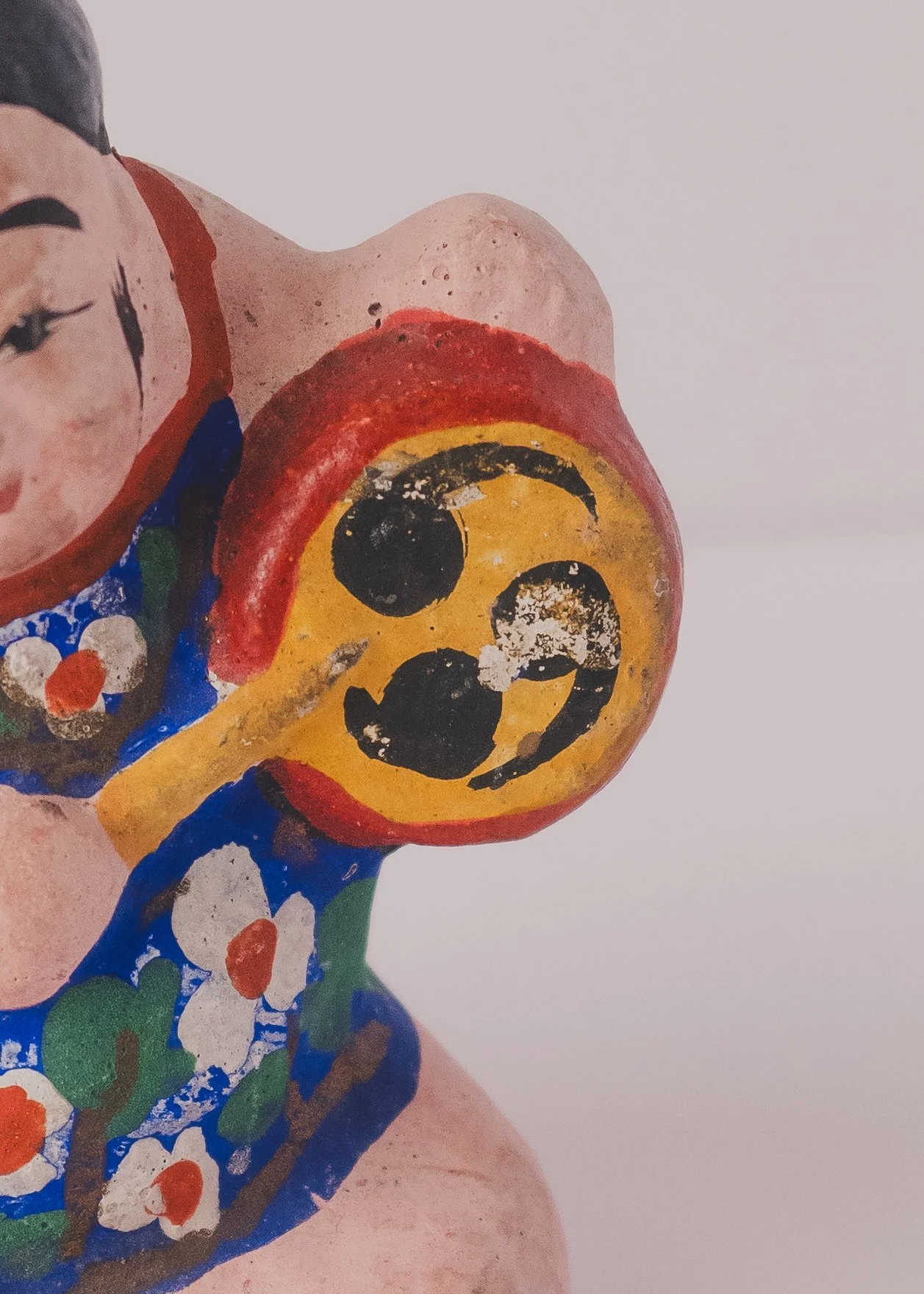 Image 6 of 9
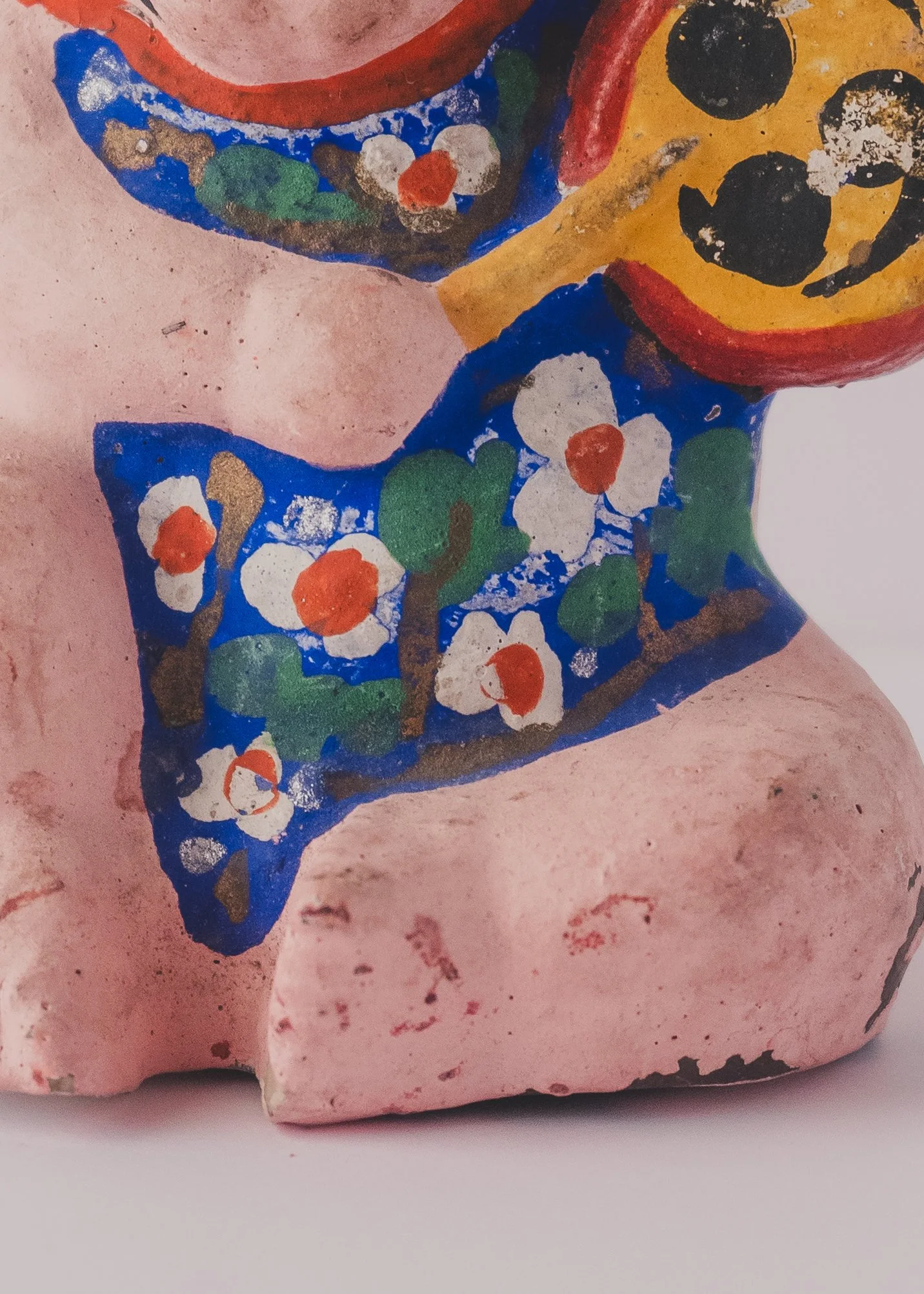 Image 7 of 9
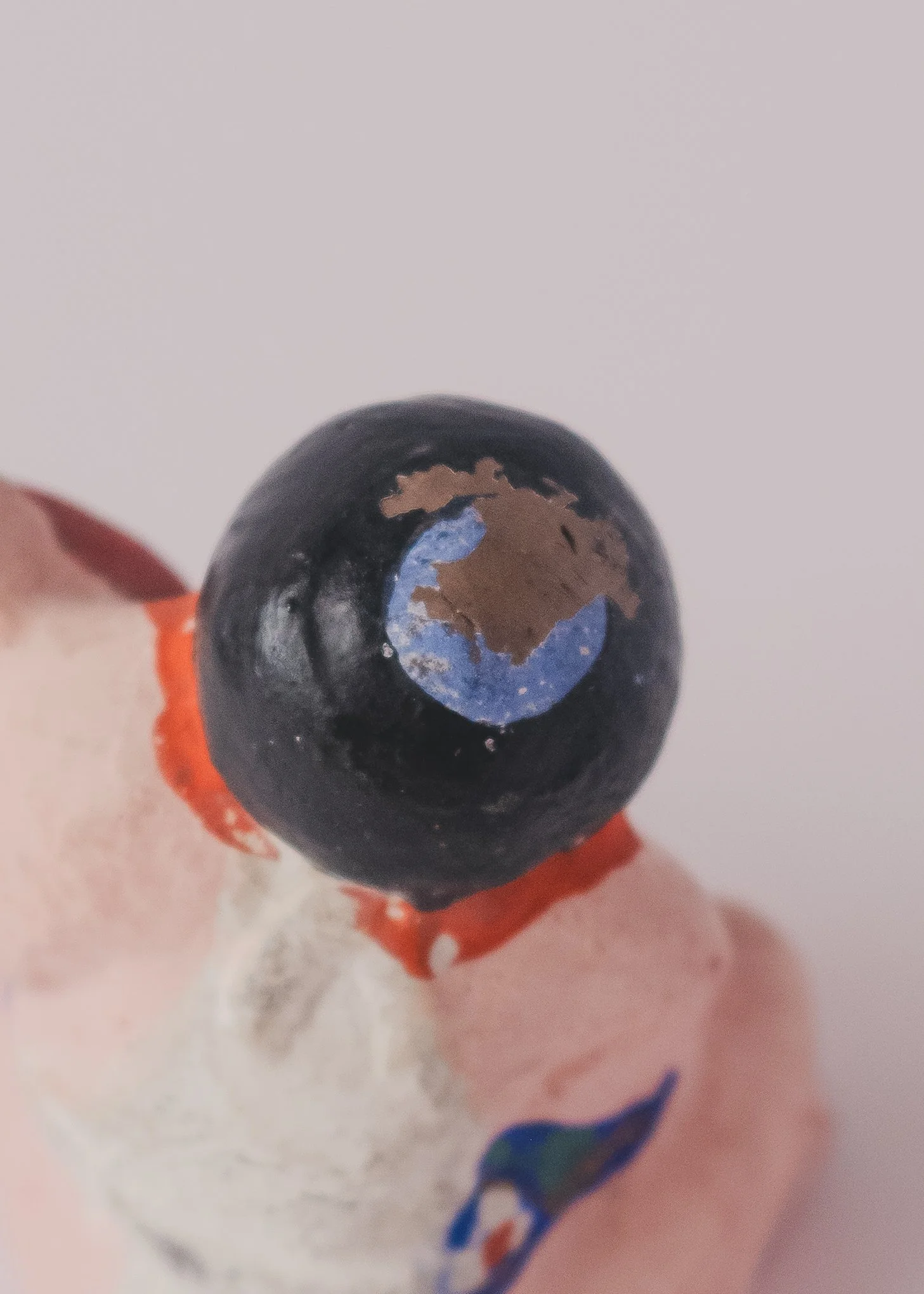 Image 8 of 9
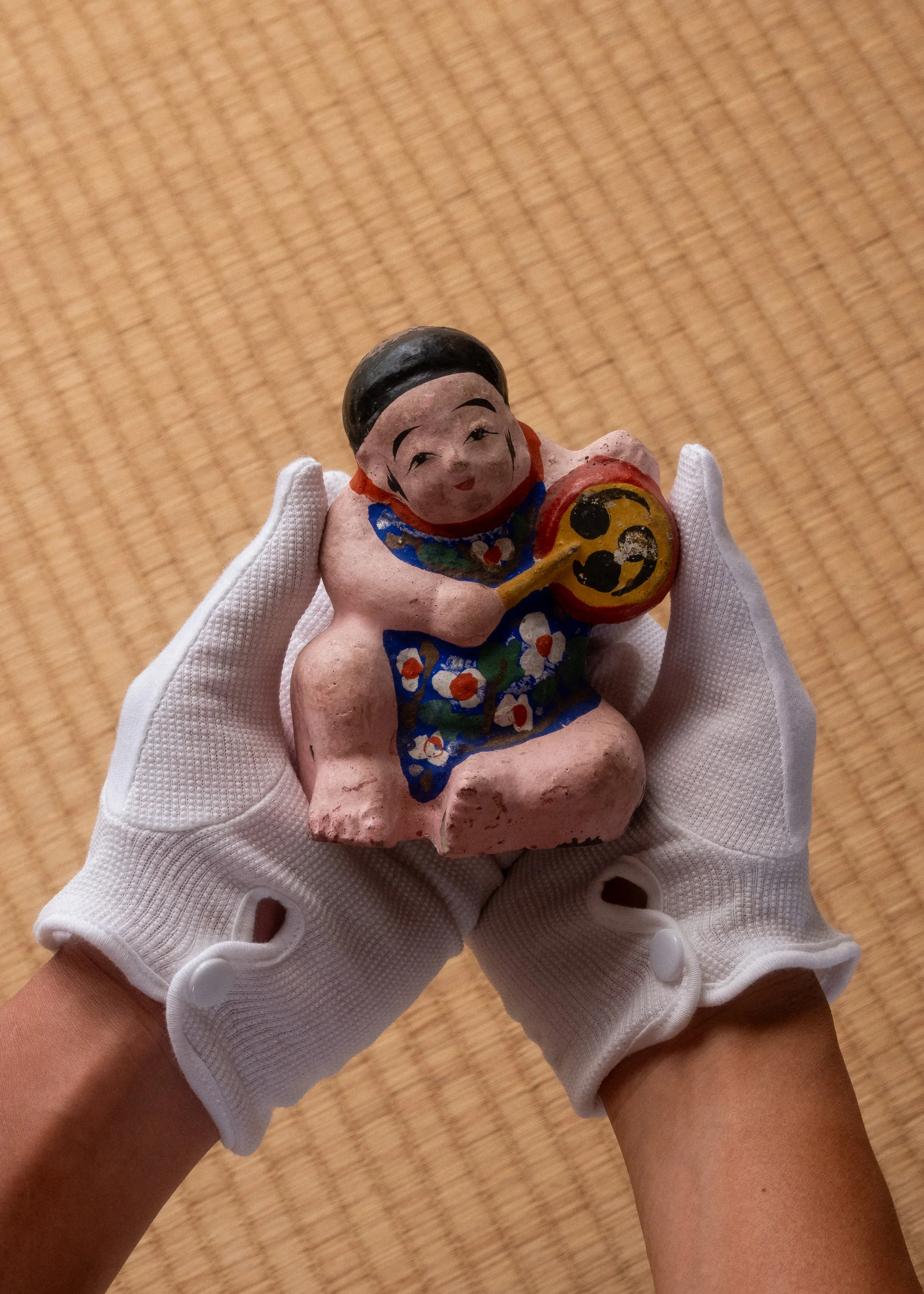 Image 9 of 9